
Research article · 2022 · Full text
International Journal of Agriculture Extension and Social DevelopmentAnalysis of women empowerment in cassava production and processing as a means of household poverty status in Kuje area Council, Abuja
Volume 5(1) · Pages 10–14 · DOI: 10.33545/26180723.2022.v5.i1a.117 ↗
Research areasCassava research and cyanideMicrofinance and Financial Inclusion
Abstract
Author-writtenIn Kuje Area Council, Abuja, research was conducted to examine women's empowerment in cassava production as a means of reducing household poverty. The 100 respondents for the study were chosen using a simple random sampling procedure. The study's precise objectives were met using descriptive statistics. The average age of the responders was found to be 40.62. The majority of the respondents were married, with an average household size of 6.08 people. The majority of the respondents had a secondary education and an average of 6.12 years of experience. The respondents' average farm size was 2.47 hectares, with an annual income of N187,241.37. Demand for Cassava products is the most important factor influencing the intensity of Cassava production and processing in the research region, while the ADP is the most important source of empowerment initiative among women Cassava farmers. Access to inputs is the greatest impediment to women's empowerment in the research area. Government and even commercial extension groups should ensure that agro-inputs are widely available and accessible to women Cassava farmers, particularly in the study area, it was proposed. In addition, financial institutions should ensure that agro-loans are made available to women farmers and that gender obstacles that prevent women from accessing credit are addressed.
Summary
Source-checkedPlain-language reading of the full paper, prepared with AI and checked against the text. Each point links to the authors' own words.
Why it matters
- Cassava is a critical staple food crop in Nigeria and serves as the third-largest source of food carbohydrates in tropical regions. View evidence ↗
- Because it can be grown using family labor and simple tools like hoes and machetes, cassava is often the preferred crop for women farmers with limited resources. View evidence ↗
- Despite their importance to food security, women farmers are frequently excluded from agricultural decision-making and policy development. View evidence ↗
What they did
- The researchers used a simple random sampling technique to select 100 participants from five communities: Gaube, Kuchiyako, Paseli, Rubochi, and Lanto. View evidence ↗
- Data was collected directly from the 100 respondents using a structured questionnaire. View evidence ↗
- The study analyzed the collected data using descriptive statistics, specifically means, percentages, and frequencies. View evidence ↗
What they found
- The average age of the respondents was 40.69 years, with 61% of the group being 40 years old. View evidence ↗
- The strongest factor influencing the intensity of cassava production and processing was the demand for cassava products, cited by 45% of respondents. View evidence ↗
- The Agricultural Development Programme (ADP) was identified as the primary source of empowerment, cited by 33% of the women. View evidence ↗
- The most significant barrier to women's empowerment in the region is low access to farm inputs, reported by 80% of the respondents. View evidence ↗
- Cultural factors were identified as a major constraint to empowerment by 50% of the participants. View evidence ↗
What it means
- The authors recommend that government and private extension groups ensure agro-inputs are more widely available and accessible to women cassava farmers. View evidence ↗
- The authors suggest that financial institutions remove gender-based barriers to ensure women farmers can access agricultural loans. View evidence ↗
Visual summary
2 visualsIllustrations explain the paper; charts are replotted from the paper's own table values.
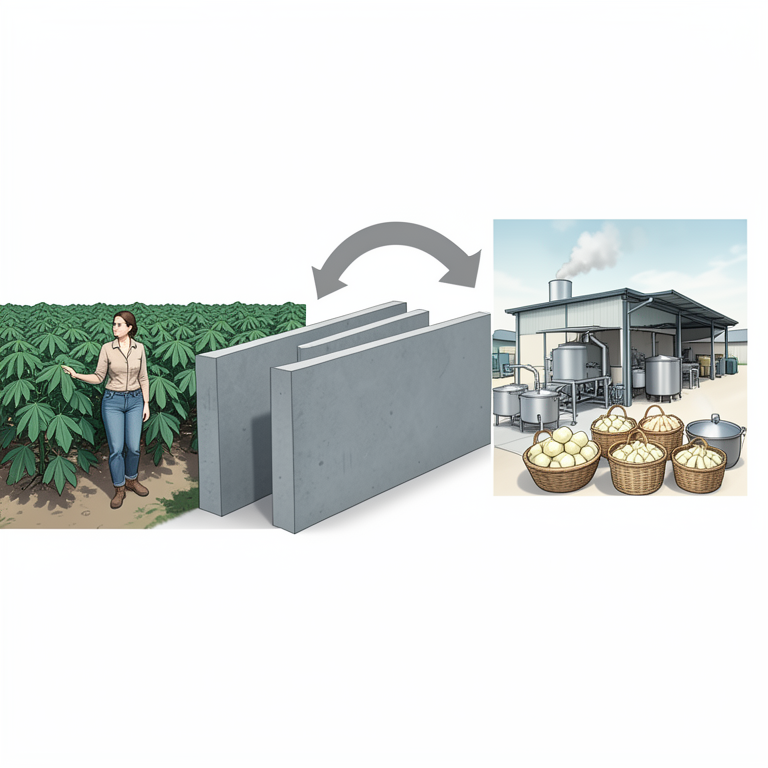
Barriers to Women's Empowerment
AI-generated conceptual illustration (female cassava farmers in a rural Nigerian field). It explains the idea and does not show study data.
View source evidence ↗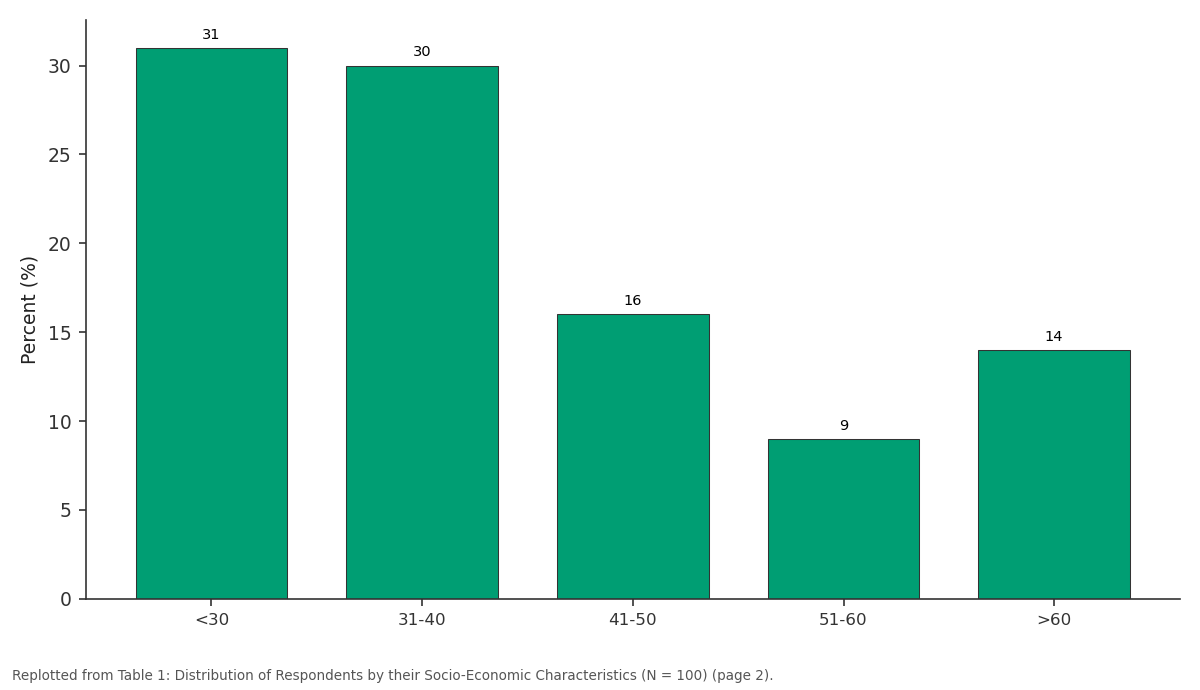
Percent (%): <30 vs 31-40 vs 41-50 vs 51-60 vs >60
Replotted from Table 1 (page 2) of the original paper. Every bar is the paper's own table value.
View source evidence ↗Figures & tables
From the original paper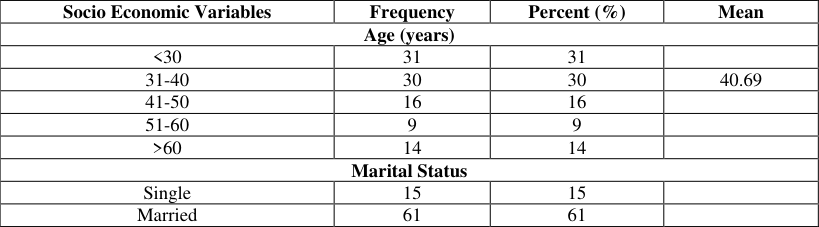 Table 1
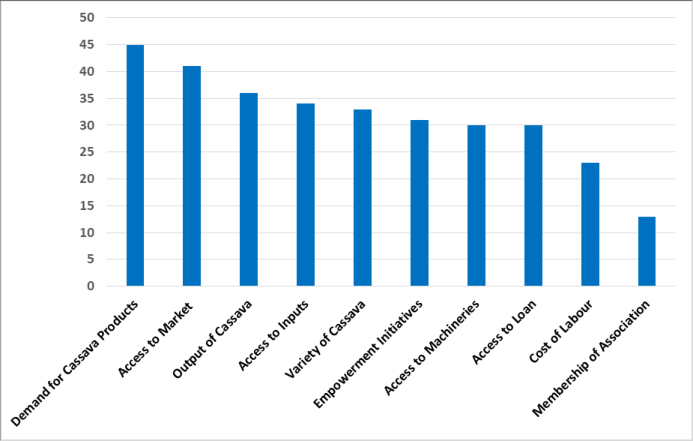 Figure 1
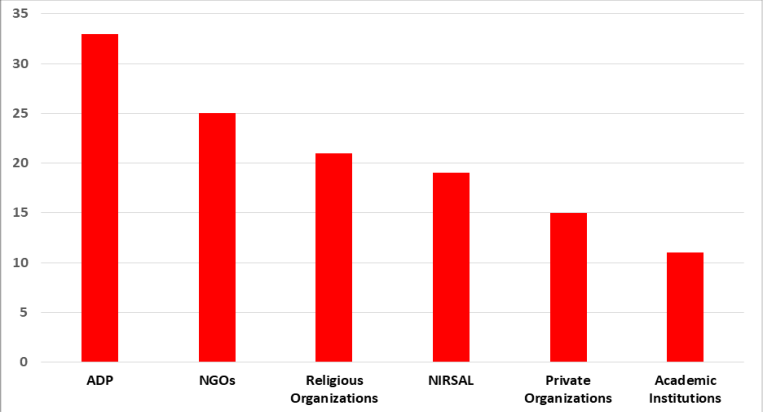 Figure 2
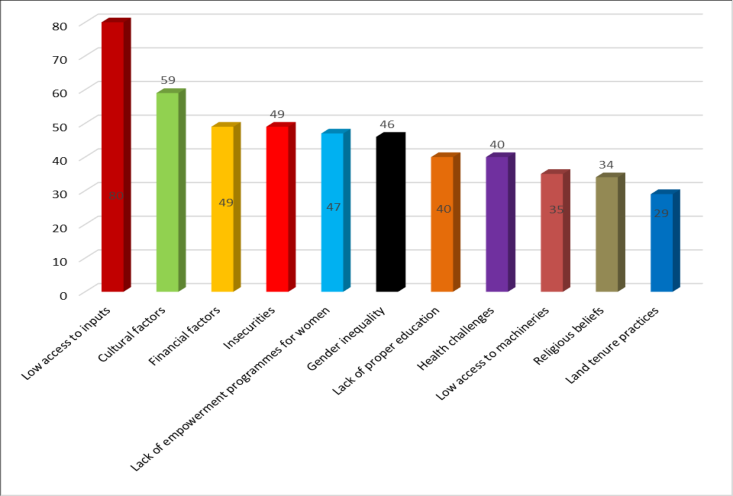 Figure 3
Introduction
Cassava (Manihot spp.) is the third-largest source of food carbohydrates in the tropics (Iheke, 2008) [6] . It is a staple food crop in most parts of Nigeria, consumed in different forms, as gari, fufu, chips, and many other forms (Uche & Aprioku, 2008) [11] . According to the Food and Agriculture Organization (FAO) (2013) [4] , Nigeria is the world's largest producer of cassava with a production of about 37.5 million metric tonnes annually. Cassava may be propagated with family labour, and primitive equipment like hoe and machete, which has made it a crop of choice among resource-poor women farmers. The crop is mostly cultivated by smallholder farmers in rural communities and is majorly consumed in the form of garri or fufu (Iheke, 2008) [6] . It can however be processed into several other products including cassava chips, flour, pellets, adhesives, alcohol, and even starch which is used as raw materials for livestock feed, alcohol/ethanol, textiles, confectionery, wood and food industries (Iheke, 2008) [6] . One of its major features is the special ability it has to bridge the gap in food security and poverty alleviation (Clair & Etukudo, 2000) [2] . Women empowerment has been described as the increase in the total wellbeing of the women including social, educational, spiritual or economic strength; both individuals and groups of women. Essentially, the process of uplifting women economically, socially and politically is referred to as the empowerment of women. (Shettar, 2015) [11] . These women and mostly traditionally underprivileged in society, and empowerment refers to the process of guarding them against all forms of violence, discrimination and bias. Women empowerment entails the building of a community or society, a political environment, in which women can literally breathe and express themselves without any fear of exploitation, oppression, discrimination, apprehension, or negative self-worth which is usually associated with being a woman in a traditionally male dominated structure (Shettar, 2015) [11] . The importance of women in confronting the problems of agricultural productivity and development cannot be overstated. To put it another way, their significance in terms of food security and economic stability cannot be overstated (Rahman, 2008) [9] . Female farmers, on the other hand, have little or no say in agricultural policies and decision-making. Most programs aimed at ensuring food security overlook the crucial role played by women in the food production chain (Rahman, 2008) [9] . The main objective of the study is to www.extensionjournal.com analyse women empowerment in Cassava production as a means of household poverty status in Kuje Area Council, Abuja. The specific objectives of the study are to: Describe the socio-economic characteristics of Cassava women farmers and processors in the study area. Determine the factors that influence the intensity of Cassava production among farmers and processors. Identify the sources of empowerment of the Cassava farmers and processors. Identify the constraints militating against women empowerment in the study area
Research Methodology Study Area
Research Methodology Study Area
Sampling Technique
The study's respondents were chosen using a simple random sampling technique. A total of twenty (20) women farmers from five communities were chosen at random for the study. Gaube, Kuchiyako, Paseli, Rubochi, and Lanto are among the communities. A total of 100 people took part in the survey.
Data Collection
Primary data was used for the study. A well-structured questionnaire was used to collect the data from the 100 respondents for the study.
Data Analysis
Descriptive statistics including frequency, percentage and mean were used to analyse the data used for the study.
Results and Discussion Socioeconomic Characteristics of Respondents
The socioeconomic characteristics of the women farmers and processors in the research region are presented in Table 1. The age distribution of the respondents revealed that the majority (61%) of the respondents were 40 years old, with a mean age of 40.69. This indicates that the majority of the responders are relatively young people who are actively engaged in agricultural operations. This is in line with the findings of Kimaro et al. (2015) [7] , who found that the majority of farmers working in agriculture were between the ages of 30 and 35. The majority of the respondents (61%) were married, 24 percent were widowed, and 15% were single, according to the marital status of the respondents. Farmers, particularly in rural areas, have a tendency to marry young, which helps provide additional labor for farming activities (Muhammad-Lawal et al., 2009) [8] . Table 1 also shows that the majority of respondents (53 percent) had a household size of 6-10 individuals. Only 6% of the respondents had a home size between 11 and 15 individuals, whereas 41% of the respondents had a household size between 1 and 5. The respondents' average household size was 6.08.
| Socio Economic Variables | Frequency | Percent (%) | Mean |
|---|---|---|---|
| Age (years) | |||
| <30 | 31 | 31 | |
| 31-40 | 30 | 30 | 40.69 |
| 41-50 | 16 | 16 | |
| 51-60 | 9 | 9 | |
| >60 | 14 | 14 | |
| Marital Status | |||
| Single | 15 | 15 | |
| Married | 61 | 61 |
Table text extracted from the original PDF; superscript letters are shown inline. The original table image is below.
View original table image
The result for the level of education of the respondents show that most (41%) of the respondents had secondary school education while 27% of them had no formal education. About 19% of the respondents had primary education while 13% had tertiary education. Formal education affords the farmers the ability to process information and could also serve as a catalyst for adoption among women. According to Ani (2002) [1] , education enhances production among food crops farmers, which is a product of their efficiency in utilizing new innovations. The result further shows that the major occupation among the respondents was farming according to 74% of the respondents. Table 1 shows that 27% of the respondents had a farming experience of between 3 to 4 years while 26% had a farming experience of between 1 and 2 years. About 18% of the respondents had a farming experience of at least 10 years, 16% had a farming experience of between 7 to 10 years, and 13% of the respondents had 5 to 6 years of farming experience. The average years of experience of the respondents was 6.12. Farming experience is very important and according to Galadima (2014) [5] the more farming experience farmers acquire, the easier it is for them to make sound decisions as regards resource allocation. The result for farm size of respondents reveals that 87% of the respondents 3 hectares of farmland or less, with an average farmland of 2.47ha. This indicates that most of the women farmers are smallholder farmers. The average annual income of the respondents was N187,241.37. This shows that most of the women farmers practice subsistence farming and this is in line with Ezra and Yahaya (2013) [3] .
Factors Influencing the Intensity of Cassava Production and Processing in the Study Area
The parameters determining the intensity of Cassava production and processing in the study area are depicted in Figure 1. According to the findings, demand for cassava products has the greatest impact on the intensity of cassava production and processing in the research area, with 45 percent. In addition, 41% of respondents claimed that market access has a significant impact on the intensity of Cassava cultivation and processing. Cassava output, access to inputs, and type of Cassava all had a 36 percent, 34 percent, and 33 percent influence on the intensity of Cassava production and processing in the research area, respectively. Other factors that influence agricultural production and processing in the research area include empowerment initiatives (31%), availability to credit (30%), access to machinery (30%), and labor costs (30%). (23 percent). Meanwhile, only 13% of respondents said that membership in an association has an impact on the intensity of Cassava production and processing in the research area.
Sources of Empowerment for Women Cassava Farmers and Processors in the Study Area
The result for the sources of empowerment for women Cassava farmers and processors in the study area in Figure 2 shows that the most prominent source of empowerment for the women farmers and processors in the study area is the Agricultural Development Programme (ADP) as indicated by 33% of the respondents. Also, 25% of the respondents indicated that they have benefitted from empowerment initiatives from Non-Governmental Organizations (NGOs), while 21% of them have benefitted from empowerment programmes from religious organizations in the study area. Other sources of empowerment for the women Cassava farmers and processors include Nigeria Incentive-Based Risk Sharing System for Agricultural Lending (NIRSAL) (19%), private organizations (15%) and academic institutions (11%).
Constraints Militating Against Women Empowerment in the Study Area
Figure 3 shows the result of the constraints militating against women's empowerment in the study area. From the result, low access to farm inputs is the biggest challenge faced by the women farmers in the study area as opined by 80% of the respondents. Also, cultural factors are another major constraint that limits effective women empowerment in the study area according to 50% of the respondents. Financial factors, insecurities, lack of empowerment programmes and gender inequalities in 49%, 49%, 47% and 46% of the responses respectively also constitute major constraints to women empowerment in the study area. Other constraints include lack of proper education, health challenges, low access to machinery, religious beliefs, and land tenure practices.
Conclusion and Recommendation
According to the findings of this study, the majority of respondents are still in the active age group, with an average age of 40.62. The majority of the respondents were married, with an average household size of 6.08, indicating that they are likely to have family labour. The majority of female farmers and processors had completed high school and had an average of 6.12 years of experience. The respondents' average farm size was 2.47 hectares, with an annual income of N187,241.37. This shows that the majority of them are small-scale farmers. Demand for Cassava products is the most important factor influencing the intensity of Cassava production and processing in the research region, while the ADP is the most important source of empowerment initiatives among women Cassava farmers. Meanwhile, access to inputs is the greatest impediment to women's empowerment in the research area. Based on these findings, the study, therefore, recommends the following: Agro inputs should be widely available and accessible to women Cassava farmers, especially in the study area, via the government and even private extension groups. Financial institutions should ensure that agro-loans are made available for women farmers, and they should ensure that gender barriers that limit the ability of women to access credits are removed. The government should work with traditional leaders, religious leaders and opinion leaders to ensure that cultural and religious hindrances to women's empowerment and effective participation in economic activities are abolished.
References
7 in the original paper- Ezra LG, Yahaya H. Analysis of land tenure system among rice farmers in Awe Local Government Area of Nasarawa State, Nigeria. International Journal of Management and Development. 2013;3(1):9-15.
- Iheke OR. Technical efficiency of cassava farmers in south eastern Nigeria: Stochastic frontier approach. Agricultural Journal. 2008;3(2):152-156.
- Kimaro PJ, Towo NN, Benson HM. Determinants of rural youth's participation in agricultural activities: the case of Kahe East ward in Moshi rural district, Tanzania. International Journal of Economics, Commerce and Management. 2015;3(2):31-33.
- Muhammad-Lawal A, Omotesho OA, Falola A. Technical Efficiency of Youth Participation in Agriculture: A Case Study of Youth-In-Agriculture Programme in Ondo State, South-Eastern Nigeria, Nigeria Journal of Agriculture, Food and Environment. 2009;5(1):20-26.
- Rahman SA. Women's involvement in agriculture in northern and southern Kaduna State. Journal of Gender Studies. 2008;17(1):17-26.
- Shettar RM. A Study on Issues and Challenges of Women Empowerment in India. IOSR Journal of Business and Management (IOSR-JBM). 2015;17(4):13-19.
- Uche FI, Aprioku JS. The phytochemical constituents, analgesic and anti-inflammatory effects of methanol extract of Jatropha curcas leaves in mice and Wister albino rats. Journal of Applied Sciences and Environmental Management. 2008;12(4):99-102.
Cited by 6
From OpenAlex, OpenCitations and reference lists read by Scinovex
- Assessment of climate variability and effective coping strategies used by rice farmers in Abuja, Nigeria
Cecilia Ijachi, Samson Olayemi Sennuga, Osho-Lagunju Bankole, Emeka Franklin Okpala, Timipre Joseph Preyor · International Journal of Agriculture and Food Science · 2023
The study is on the assessment of climate variability and effective coping strategies used by rice farmers in Abuja Nigeria. Climate variability issues have been discussed in the media currently because of its important to agriculture. This study was guided by four objectives. The primary data were collected using 200 well-structured questionnaires and multistage sampling techniques from 2 rural communities (Dobi and Dukpa) in the study area. Analyses of data were carried out using descriptive statistics such as percentages and frequency while coping strategies used by rice farmers were achiev
- A critical appraisal of mammography utilization in Nigeria: Challenges and prospects ↗
Thomas Anthony Awolowo, Olujobi Babatunde A, Gbala Michael Olumide, Abayomi Olawale Ayobami, Fawole Tolulope Samuel, Adebisi Mathew Olumide et al. · International Journal of Radiology and Diagnostic Imaging · 2025
Background: Mammography is a critical tool for the early detection of breast cancer, reducing morbidity and mortality rates.However, in Nigeria, its utilization remains limited due to infrastructural deficits, financial barriers, and sociocultural factors.Addressing these challenges is vital to improving women's health outcomes and aligning with global standards for cancer control.Objective: To critically appraise mammography utilization in Nigeria, focusing on challenges,
- Social economic factors influencing adoption of non-farm poverty coping strategies in Kuje area council, Abuja, Nigeria
Callister Amina Ekele, Samson Olayemi Sennuga, Joseph Bamidele, Funso Omolayo Alabuja, Bankole Osho-Lagunju · International Journal of Agriculture and Food Science · 2023
In spite of an abundance of human and material resources, poverty is a reality in emerging countries and has recently been increasing quickly, particularly in Nigeria. The study evaluated socioeconomic factors impacting rural women in Kuje Area Council, Abuja's use of non-farm poverty coping mechanisms. Determine the socioeconomic traits of rural women farmers; assess the poverty coping mechanisms used by rural women farmers; identify socioeconomic factors influencing the adoption of poverty coping mechanisms by rural women farmers; and identify barriers associated with poverty coping mechanis
- Multidimensional poverty and health security in selected rural communities of Enugu state ↗
C. S. Onwe, Ogayi · International Journal of Social Science and Education Research · 2025
This study investigates the impact of multidimensional poverty on health security in selected rural communities of Enugu State, Nigeria. Employing a quantitative research design, the study employed descriptive statistics and logit regression models to analyses primary data collected from 324 respondents. Three core objectives guide the analysis: to assess how multidimensional poverty influences access to healthcare, to determine its effect
- Gender-responsive budgeting and women’s socio-economic empowerment in Sub-Saharan Africa: A comparative study of Nigeria, Rwanda, and South Africa ↗
Ibiyinka Ibiyemi Rotimi · International Journal of Political Science and Governance · 2025
In Sub-Saharan Africa, where there are significant differences between men and women, gender-responsive budgeting (GRB) has become very important for improving women’s standings. GRB in Nigeria, Rwanda, and South Africa is compared in this research since the three countries differ in politics, institutions, and finances. Under the guidance of feminist politics and gender and development, the study analyses the way
- Exploring the factors influencing the adoption of ICT tools among rice farmers in southwest and north Central Nigeria ↗
Oluremi Atinuke Elusoji, Edwin Ejoga Idu, Julius Ajah · International Journal of Communication and Information Technology · 2023
This study delves into the multifaceted factors that shape the integration of Information and Communication Technology (ICT) tools within the agricultural landscape, focusing on rice farmers in Southwest and North Central Nigeria. The adoption of ICT tools in agriculture holds immense potential for enhancing productivity, sustainability, and overall socio-economic development. However, understanding the determinants of this adoption is crucial for…