
Research article · 2023 · Full text
International Journal of Agriculture and Food ScienceSocial economic factors influencing adoption of non-farm poverty coping strategies in Kuje area council, Abuja, Nigeria
Volume 5(1) · Pages 107–116 · DOI: 10.33545/2664844x.2023.v5.i1b.129 ↗
Research areasAgricultural risk and resilience
Abstract
Author-writtenIn spite of an abundance of human and material resources, poverty is a reality in emerging countries and has recently been increasing quickly, particularly in Nigeria. The study evaluated socioeconomic factors impacting rural women in Kuje Area Council, Abuja's use of non-farm poverty coping mechanisms. Determine the socioeconomic traits of rural women farmers; assess the poverty coping mechanisms used by rural women farmers; identify socioeconomic factors influencing the adoption of poverty coping mechanisms by rural women farmers; and identify barriers associated with poverty coping mechanisms used by the rural women farmer. These were the specific objectives of the study. The rural women farming households in the research area were chosen using a multi-stage sampling procedure. Descriptive statistics were used to examine the data, including frequency, mean score, percentages, and the statistical package for social science (SPSS) version 23. According to the results of the socioeconomic factors impacting the usage of poverty coping techniques, the majority of respondents (26%) were between the ages of 50 and 59, (74%) were married, had households with six to ten members, and (56%) had no formal education. It is clear from the study that the rural women farmers in the study area lived in extreme poverty. Hawking was a common approach for living with poverty, and it was followed by the tailoring industry, an increase in the number of hours worked each day, the weaving industry, and home trading, among other strategies. According to the findings, the biggest obstacles rural women farmers face in overcoming poverty are high transportation costs, inadequate finances, limited access to credit, limited access to land, poor education, and sociocultural restrictions (Purdah), According on the study's findings, the following suggestions were made: In order to strengthen their adopting behavior, managerial skills, and adaptability for diverse coping techniques, farmers must be encouraged to participate in educational programs such as adult education, skill acquisition and training, conferences, and workshops.
Summary
Source-checkedPlain-language reading of the full paper, prepared with AI and checked against the text. Each point links to the authors' own words.
Why it matters
- Poverty is a growing reality in emerging countries, with a particularly rapid increase observed in Nigeria. View evidence ↗
- Rural women in Nigeria are among the most affected by extreme poverty, often unable to meet basic survival needs. View evidence ↗
- Non-farm enterprises are used by farm households to generate additional income, which helps reduce poverty and improve living conditions. View evidence ↗
The question
- The study aimed to evaluate the socioeconomic factors that influence how rural women in the Kuje Area Council of Abuja use non-farm strategies to cope with poverty. View evidence ↗
What they did
- The researchers used a multi-stage sampling technique to select 200 rural women farmers from ten randomly chosen ADP extension cells within the Kuje Area Council. View evidence ↗
- Data was collected via a three-section questionnaire covering socioeconomic characteristics, the adoption of poverty coping mechanisms, and associated limitations. View evidence ↗
- The study employed descriptive statistics (frequencies, percentages, and mean scores) and multiple regression analysis to evaluate the data. View evidence ↗
What they found
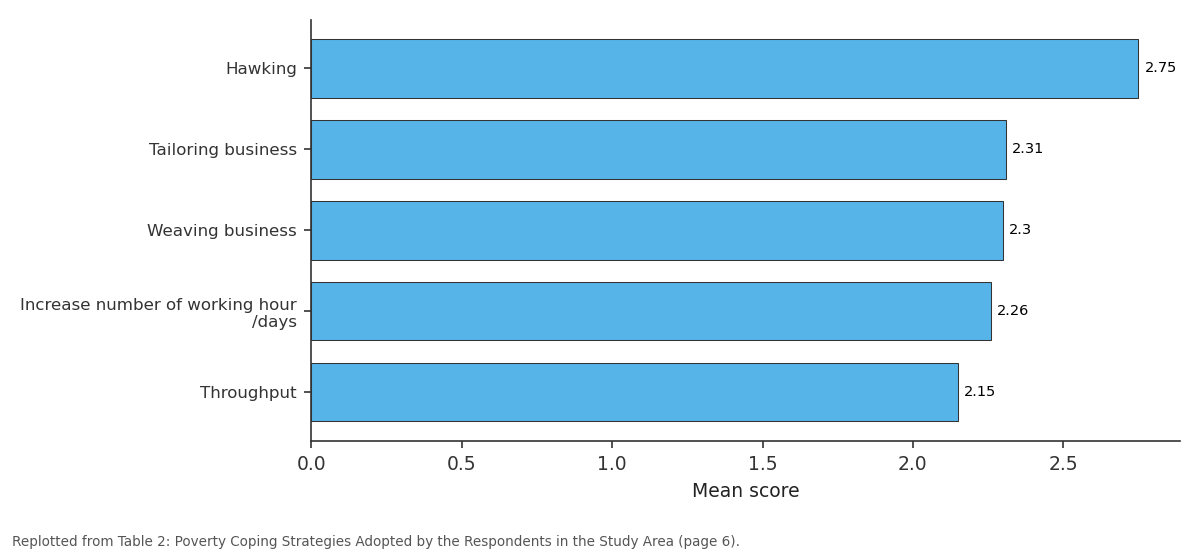
- The most highly adopted coping mechanisms were hawking (mean 2.75), tailoring (2.31), weaving (2.30), increasing working hours (2.26), and throughput (2.15). View evidence ↗
- Marital status was found to be a statistically significant factor influencing the adoption of poverty coping mechanisms. View evidence ↗
- Education level was statistically significant at 5% with a negative coefficient, indicating that lower education levels correlate with a decline in the adoption of coping mechanisms. View evidence ↗
What it means
- The authors conclude that rural women farmers in the study area live in a state of extreme poverty. View evidence ↗
- The authors recommend policies to increase access to education, reducing bureaucratic barriers to credit, and improving rural road networks to lower transportation costs. View evidence ↗
Visual summary
1 visualsIllustrations explain the paper; charts are replotted from the paper's own table values.
Mean score: Hawking vs Tailoring business vs Weaving business vs Increase number of... vs Throughput
Replotted from Table 2 (page 6) of the original paper. Every bar is the paper's own table value.
View source evidence ↗Figures & tables
From the original paper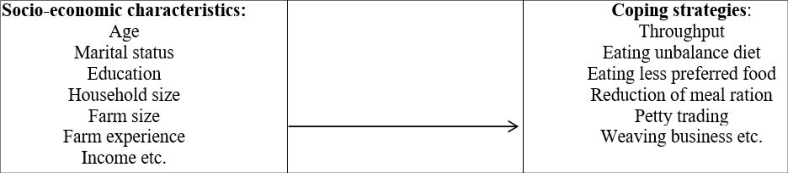 Figure 1
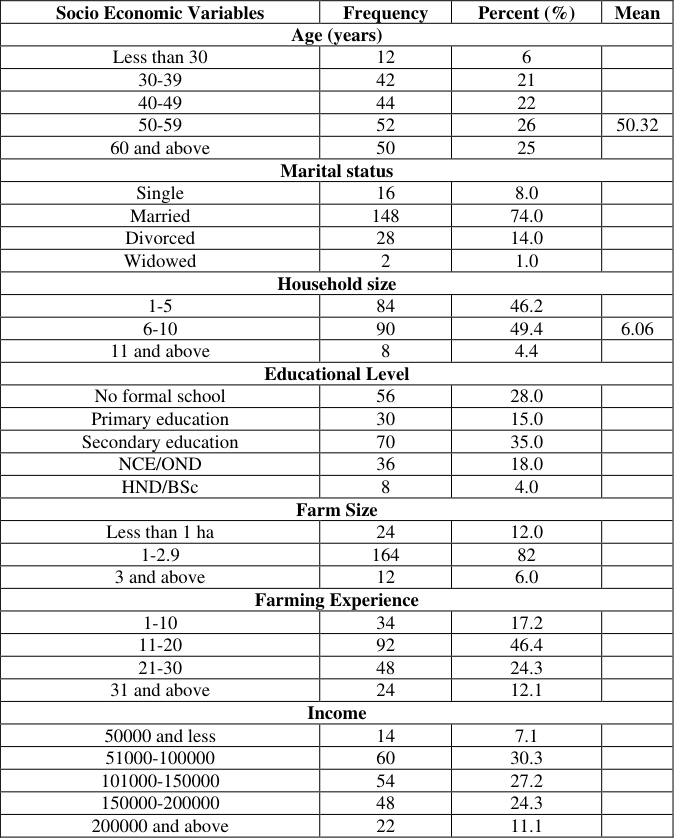 Table 1
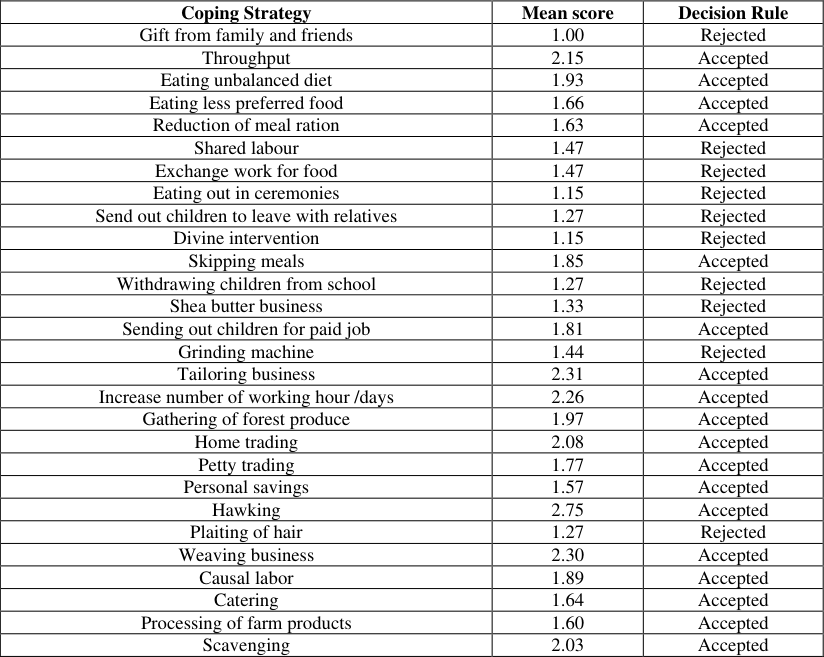 Table 2
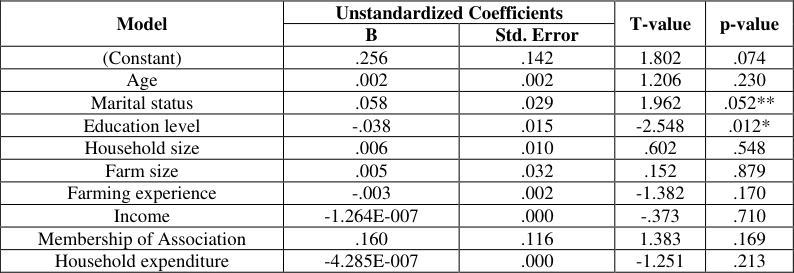 Table 3
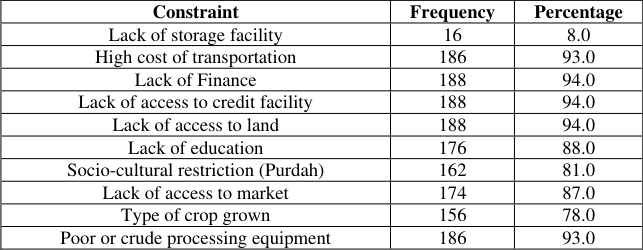 Table 4
Introduction
Poverty is one of the obstacles rural women in developing nations face when participating in agricultural and non-agricultural activities; poverty is defined as the absence of basic resources, such as assets and income (Girei et al., 2016; Sennuga et al. 2020a) [15,32] . Despite having an abundance of both human and material resources, poverty is a reality that has been spreading quickly recently, especially in developing nations. In spite of this, Nigeria suffers from extreme poverty and rising inequality. Nigerians have surpassed Indians in the number of people living in extreme poverty, according to a Global Poverty Clock (2018) research. The report also reveals that the number of Nigerians living in extreme poverty is increasing by six people every minute, which is the greatest rate in the world. According to the report, Nigeria has an estimated 87 million people living in extreme poverty as of the end of May 2018. According to the analysis, the Sustainable Development Goal (SDG) of the United Nations to end extreme poverty by 2030 may not be feasible. Abject poverty is defined as making less than $1.90 per day, which means that over 87 million people in Nigeria live on less than $2 a day. The bulk of people who live in rural areas-who are unable to meet even the most basic demands for existence because of extreme poverty-are rural women (Alfa et al. 2022; Achichi et al., 2023) [6,1] .
Government and nongovernmental organizations in Nigeria have established a number of institutions to address the poverty that women and Nigeria as a whole are experiencing. Among the many other excellent examples are the formation of programs like the National Land Development Authority (NALDA), the Better Life Programme (BLP), and the National Directorate for Employment (NDE). Nevertheless, none of these initiatives had much of an influence on the problems related to poverty and how it affected the livelihood activities of women farmers in the nation. Non-farm ventures are one of the popular methods employed by farm households in developing nations to enhance their well-being referenced in Asfaw et al. (2017) [9] . Households engage in non-farm enterprise activities because they provide additional income that aids in improving living conditions and reducing poverty. Farmers' non-farm enterprise revenue is a supplement to their income from the agricultural sector (Aluko et al., 2021) [7] . Coping strategies are any transitory, short-term responses to immediate needs. Victims of situations use them to lessen their negative impact (Intergovernmental panel on climate change-IPCC, 2015) [18] People and places may have different coping mechanisms. In other words, a non-farm poverty coping strategy refers to actions taken outside of agriculture to address or lessen poverty. Age, education, income, household size, farm size, and associations are socioeconomic characteristics that affect how rural women farmers cope with poverty outside of their farms. According to Shehu and Abubakar (2015) [35] , the decision to participate in a non-farm enterprise is significantly influenced by the age of the family head. Families with younger heads are more likely to diversify into non-farm enterprise activities, whereas families with older heads are less likely to do so. Families with more members are more likely than those with fewer members to engage in non-farm business activities (Abubakar and Shehu, 2015; Sennuga et al., 2020b) [35,33] . The majority of respondents in the study area had some type of formal education, according to Oppong-Yeboah (2015) [19] , suggesting that there is potential for increased production because education will give rural women farmers access to useful information about new agricultural innovations, which when adopted will increase their productivity. A farmer's level of education determines how poor they are. In line with (Camilus, 2015) [10] . Rural women farmers play crucial roles in ensuring household food security because they produce a significant amount of the world's food, provide for their families, are the keepers of traditional knowledge, and preserve agro-biodiversity. They also use a variety of strategies to boost and diversify their income and sources of livelihood. To ensure the food security of their families and to diversify their sources of income in order to combat poverty, rural women engage in both farm and non-farm activities. Organization for Food and Agriculture, 2018 [14] .
Objectives of the Study
This study's main goal is to evaluate the socioeconomic variables that influence how rural women farmers in the FCT utilize non-farm poverty coping mechanisms.
The study's particular goals will be too 1. Identify the socio-economic characteristics of target population in the study area.
Analyze the coping mechanisms used by the
respondents in the research area to deal with poverty.
3. Identify the socioeconomic elements that affect the research area's respondents' use of poverty coping strategies. 4. Identify constraints associated with poverty coping strategies by the rural women farmers in the study area.
Literature Review Concept of Poverty
Low income is only one aspect of poverty. Beyond this straightforward idea, it denotes poor health and education, a lack of information and communication, the inability to exercise one's political and human rights, and a lack of selfrespect, self-confidence, and dignity (Oluwatayo, 2014) [27] . The multifaceted phenomena of poverty have an impact on the physical, moral, and psychological well-being of people. [27,5] . According to Girei et al. (2016) [15] , poverty has emerged as one of the most well-known phenomena, providing a number of obstacles for women participating in agricultural and non-agricultural activities in developing nations. A factor that prevents a person from achieving their well-being is known as poverty. In other terms, poverty is the absence of material possessions, income, and assets.
In recent years, poverty has been on the rise, especially in developing nations. The global indignation over poverty, as many people are apparently living in abject poverty and experiencing chronic hunger, is also undisputed (Simpa, 2014) [36] . This is the case in Nigeria today, when women fall short of their expected positive roles, society suffers significantly in terms of creating lasting peace, order, stability, growth, and sustainable development. No wonder Nigeria is today mired in a state of chronic crisis that is characterized by a social milieu that includes everything from terrorism to ethno-religious strife to corruption, all of which threaten the very basis of the nation's corporate existence as a political entity (Umar, 2015; Ezike et al., 2022) [38,13] .
Socio-Economic Factors of Rural Women Farmers Age
Age is the duration of a person's existence, measured in years. It has been observed that age affects attitude, social interactions, and role-playing. The tendency for elderly rural women to use various coping mechanisms to deal with poverty increases (Girei et al., 2016) [15] . Moreover, Oppong-Yeboah (2015) [29] noted that 62% of the farming population was youthful and active, suggesting that farmers might contribute positively to agricultural productivity and function as brokers of innovation transfer.
In his study, (Girei et al., 2016) [15] noted that 75.1% of the respondents were between the ages of 21 and 40. This shows that the majority of women in this age group are still relatively young and active, and they may use this energy to endure the pressure put on them as a result of being denied their social and political requirements. As respondents' ages advance, they will become less engaged in their occupations, agricultural work, and other non-farm activities than they formerly were (Oluwatayo, 2014; Adangara et al., 2022) [27,2] .
Education
Due to its impact on a person's financial situation, education or literacy raises people's status. Similar to this, Oppong-Yeboah (2015) [29] found that the majority of respondents in the study area had some type of formal education, suggesting that there is potential for increased production as a result of education giving farmers access to knowledge about new agricultural innovations that they can use to increase their productivity. In a similar vein, Jwanya et al.
(2014) [20] stated that the majority of farmers in Plateau State had formal education.
Similar to what Iyela and Ikwuakam (2015) [19] found, the majority of respondents were literate, suggesting that they could use a variety of ways to deal with difficulties associated to poverty. Also, according to Akeweta et al.
(2014) [3] , the literacy and numeracy levels of the respondents are sufficient to support their businesses. It follows that an increase in educational attainment would result in a decrease in respondents' poverty status since people are more likely to use different poverty coping mechanisms as their education level rises. It has been found that those who have completed some forms of schooling are more likely to adjust to their surroundings rapidly, which helps them deal with any negative consequences that may inevitably occur. Achieving educational progress may also be a key factor in reducing poverty among women farmers in rural areas (Iyela and Ikwuakam, 2015; Ana et al., 2022) [19, 8] .
Marital Status
In African families, the marital status of the household is typically used to gauge its stability. Generally speaking, married family heads are thought to be more stable in their farming endeavors than unmarried heads. More than three quarters (80%) of the respondents were married, according to Oppong-Yeboah (2015) [29] . This high percentage of married respondents suggests that family labor may be accessible for agricultural production in the study area. In their study, Girei et al. (2016) [15] noted that the majority of the respondents were married. This suggests that early marriage is a common occurrence in the studied area. This might be as a result of the fact that the majority of family members take their relationships outside of marriage extremely seriously and value their time spent with one another (Olayemi et al., 2021; Lai-Solarin et al., 2022) [26,21] .
Household size
The number of people living under the same roof and eating from the same pot; the larger the household size, the more likely a household is impoverished. On the other hand, the higher the household no, the more available household labor for increasing poverty-coping activities (Girei et al., 2016) [15] . The number of households provides a greater advantage for adopting and implementing various poverty coping measures (Iyela and Ikwuakam, 2015) [19] . Similarly, Oppong Yeboah (2015) [29] discovered that the average household size in the study region was 7 individuals. This indicates that family labor would be readily available for farming operations and non-farm activities as needed. Because a typical traditional farmer's major source of labor is his family, household size determines the availability of family labor for agricultural operations (Nimzing et al., 2022) [22] .
Farm Size
A bigger benefit for implementing various poverty coping strategies is the number of households (Iyela and Ikwuakam, 2015) [19] . The average household size in the study region, according to Oppong Yeboah (2015) [29] , was 7 people. This suggests that when family labor is required for farming operations or other non-farm activities, it will be easily accessible. Given that a typical traditional farmer's primary source of labor is his family, household size affects the amount of family labor that is available for agricultural operations.
Coping Strategies
According to Holzmann (2001) [16] , coping techniques are methods used to lessen the effects of a danger after it has already happened. Individual under-saving or borrowing, relocation, the sale of labor (including that of children), a reduction in food intake, or reliance on public or private transfers are the major methods of coping. According to Snel and Staring (2001) [37] , the term "coping strategies" refers to all the carefully considered actions that people and households in low socioeconomic status use to cut back on their spending or generate some extra income so they can afford to pay for basic necessities (food, clothing, and shelter) and stay above the poverty line in their community (Nwali et al., 2021; Owoicho et al., 2023) [23,30] . So, coping mechanisms are a set of deliberate actions based on an analysis of potential courses of action. Poor socioeconomic households make decisions based on the options that are proportionately most beneficial to them out of the sometimes-restricted options available to them. This does not imply that these strategies always achieve their objective.
Theoretical Framework Theories of Poverty Coping Strategy
This study on poverty coping strategies is guided by conflict theory developed by Karl Marx and Friedrich Engel which explain why the poor struggles with poverty and their effort to cope with it by employing various form of strategies. Marxist theory help to raise the awareness on the peoples mind especially to the low level class. That, one of the means for them to get rid from poor and un-conducive life situation and get their social service is through struggle. The bourgerious oppresses the proletariat (laboring class) as a result the laboring class struggles to get out of poverty. Women of Nigeria as elsewhere in West Africa, actively participate in non-agricultural activities such as craft and dying, weaving and spinning, food processing, bead making, hair dressing, soap making and disinfectant, retail trade and other home-based informal activities to improve their livelihood in order to live their state of laboring class (proletariat) and attain the state of middle class. Nonetheless, it is also claimed that women are the ones who experience poverty the most globally. The open secret about poverty in Africa, according to Hunter-Gault (2006) [17] , is that it has a woman's face. The burden of being the backbone of rural economies, farming small plots, selling fruits and vegetables, and providing for their families while frequently traveling long distances to markets via dirt roads that are largely impassable, especially during long rainy seasons, makes women in rural areas the most vulnerable to poverty (Hunter Gault, 2006; Obagbemi et al., 2022) [17,24] . This suggests that women are typically found to be poorer than men, which accounts for a troubling global trend. It also suggests that perhaps the yardstick to evaluate how poor a person is their level of well-being. Nigeria, which has a population of about 140 million people and nearly 68 million women (or around 49%), is currently known for the feminization of poverty, which is common in other sub-Saharan African nations. The truth is that Nigerian women are poorer than Nigerian males. The research of Oluwatoyin (2013) [28] has also supported the feminization of poverty in Nigeria, a nation where the majority of women are subsistence farmers.
Conceptual Framework
The study's fundamental assumptions are outlined in its conceptual framework. It demonstrates the connection between the independent variables and the dependent variable. The respondents' socioeconomic features and methods of subsistence served as the independent variables, whereas the dependable variables included gifts from family and friends, begging, scavenging, and eating an imbalanced diet, among other things. The framework assumes that the socioeconomic characteristics of the respondents (such as age, household size, educational attainment, and marital status) will have a direct impact on the type of livelihood activities they select as well as their coping mechanisms. For example, women in their prime years are better able to use active coping mechanisms.
Research Methodology Description of the Study Area
The Federal Capital Territory will be the location of this investigation (FCT), depicts Abuja, which situated in the middle of Nigeria between latitudes 8°25 and 9°25 and longitudes 6°45 and 7°45. The actual city, which takes up 275.3 square kilometers of the territory's 8, 000 square kilometers, is bordered by four states: Niger to the north and across the west; Nassarawa to the east and south east; Kogi to the south west; and Kaduna to the northeast. In 2006, there were 1, 408, 239 people living there, but in 2010, there were 2, 245, 000 people (Enekwechi, 2016) [12] . The six Area Councils that make up the FCT are Kuje, Municipal, Gwagwalada, Abaji, Bwari, and Kwali. People in the area primarily work as civil servants, farmers, and traders, among other jobs. There is extensive production of crops such rice, maize, yams, cassava, sorghum, and millet. Kuje is the location of the area councils in focus. Its geographic coordinates are 8° 53' 47" North, 7° Population, Sampling Procedure and Samples Size 100 rural women farmers in FCT will be the study's target group. The study will be carried out in the FCT's ADP zone in Abuja. The rural women farming household will be chosen for this study using a multi-stage sampling technique. Kuje area council will be purposefully chosen in the initial phase. Stage 9 ADP extension blocks in the second were specifically chosen because they are comparatively more rural and have a large proportion of women who work in agriculture. Ten (10) of the thirty-two (32) ADP extension cells in the Kuje ADP extension blocks will be chosen. Last but not least, 20 rural women farmers will be chosen at random from each of the ten cells, for a total sample size of 200 Makcit et al. (2022) [34] .
Methods of Data Collection
A well-structured questionnaire will be utilized as the study's instrument, and it will be administered by the researcher and skilled ADP enumerators who are familiar with the area and its native tongues. This will make it possible for the researcher to gather the necessary data for the investigation. Three (3) sections made up the questionnaires. The socioeconomic features of rural women farmers are covered in Section A. Household factors including age, marital status, family size, etc. are discussed.
Adoption of coping mechanisms for poverty in Section B. and Section C, limitations on poverty coping techniques
Adoption of coping mechanisms for poverty in Section B. and Section C, limitations on poverty coping techniques
Data Analysis
To accomplish the goals, descriptive and inferential statistics will both be used. Descriptive statistics will be used to accomplish Objectives 1, 2, and 4. The mean score, table, percentages, and frequency were the descriptive statistics tools that were used. To achieve objective (iii), multiple regression was performed, and Mean Score was used to analyze the study's adoption rate. An average score on a 4-point scale was used to gauge the respondents' adoption levels. This formula was used to get the respondents' mean score based on a 43-point scale: 3+2+1+0=6. In order to evaluate whether there was a high level of adoption, the cutoff was 6/4 = 1.5.
Results and Discussion
Results and Discussion
Socio-Economic Characteristic of the Respondents in the Study Area
The socioeconomic traits of rural women farmers in the research region are shown in Table 1. According to the study's findings (table 1), the majority (26%) of the rural women included in the study were between the ages of 50 and 59. The majority of the women were in their active reproductive years because the average age was 50.32. Age is a significant socioeconomic factor that directly impacts women's fitness. The strength and propensity to embrace and successfully use agricultural technologies increases with the age of the farmer. Moreover, women have a tendency to take care of themselves and fight poverty effectively the younger they are. This outcome is consistent with those of Oluwatayo (2014) [27] , who found that the majority of the rural women farmers in the study are still in their active ages and are still capable of carrying out a variety of farm and non-farm tasks. Table 1's findings show that (35%) of the research area's rural women received a formal education. An significant factor in agricultural output, effective technological adoption will ease cultural practices, knowledge of poverty, and coping mechanisms. The chart also reveals that 28% of the female farmers in rural areas lacked a formal education. Iyela and Ikwuakam (2015) [19] found that people with some level of education tend to cope with situations by quickly adapting to them, which improves any negative effects that may likely come their way. Attainment of educational development may also serve as an important determinant for poverty reduction among women farmers in rural areas. The findings of Eboiyeh (2013) [11] that illiteracy significantly leads to poverty status were supported by this result. The findings suggest that having insufficient educational attainment will influence how they choose the best coping mechanisms to use. The majority (82%) of study respondents possessed between 1.1 and 2.9 hectares of farmland, classifying them as smallscale farmers. This shows that rural women farmers still operate on a relatively limited scale in the research area. This may not be unrelated to the ongoing problem with the land tenure system, which has led to dispersed land ownership. The findings support Akinola's (2011) [4] assertion that small-scale farming is still the norm in Nigeria. According to the findings in Table 1, the majority (42.7%) of the rural women farmers in the research area have between 11 and 20 years of experience in farming.
| Socio Economic Variables | Frequency | Percent (%) | Mean |
|---|---|---|---|
| Age (years) | |||
| Less than 30 | 12 | 6 | |
| 30-39 | 42 | 21 | |
| 40-49 | 44 | 22 | |
| 50-59 | 52 | 26 | 50.32 |
| 60 and above | 50 | 25 | |
| Marital status | |||
| Single | 16 | 8.0 | |
| Married | 148 | 74.0 | |
| Divorced | 28 | 14.0 | |
| Widowed | 2 | 1.0 | |
| Household size | |||
| 1-5 | 84 | 46.2 | |
| 6-10 | 90 | 49.4 | 6.06 |
| 11 and above | 8 | 4.4 | |
| Educational Level | |||
| No formal school | 56 | 28.0 | |
| Primary education | 30 | 15.0 | |
| Secondary education | 70 | 35.0 | |
| NCE/OND | 36 | 18.0 | |
| HND/BSc | 8 | 4.0 | |
| Farm Size | |||
| Less than 1 ha | 24 | 12.0 | |
| 1-2.9 | 164 | 82 | |
| 3 and above | 12 | 6.0 | |
| Farming Experience | |||
| 1-10 | 34 | 17.2 | |
| 11-20 | 92 | 46.4 | |
| 21-30 | 48 | 24.3 | |
| 31 and above | 24 | 12.1 | |
| Income | |||
| 50000 and less | 14 | 7.1 | |
| 51000-100000 | 60 | 30.3 | |
| 101000-150000 | 54 | 27.2 | |
| 150000-200000 | 48 | 24.3 | |
| 200000 and above | 22 | 11.1 |
Table text extracted from the original PDF; superscript letters are shown inline. The original table image is below.
View original table image
Understanding poverty and useful coping mechanisms may be made easier with experience. As they say, the best teacher is experience, and from this study we can deduce that rural women farmers may still struggle to cope with poverty given their significantly smaller number of years of experience. This finding is consistent with the findings of Girei et al. (2016) [15] , who said that the majority of the respondents had more than 11 years of farming experience.
The ability to comprehend poverty and useful coping mechanisms may be aided by experience. As they say, the best teacher is experience, and based on this study, it appears that rural women farmers may still struggle to cope with poverty because they have a lower relative level of experience. The majority of the respondents had more than 11 years of farming experience, according to Girei et al.
(2016) [15] , who also reported this result. Poverty coping strategies adopted by the respondents in the study area The study's dependent variable was how people coped with poverty. In order to determine the degree of use, a weighted score was assigned to each of the twenty-eight coping methods that were hypothesized for the study based on expert consultations and the literature that was accessible. Table 2 displayed the various coping mechanisms used by the farmers. According to the findings, the farmers used a variety of coping mechanisms to lessen the effects of poverty, including scavenging, hunting, personal savings, gathering forest produce, eating an unbalanced diet, petty trading, eating less preferred food, home trading, reducing meal rations, operating a tailoring business, throughput, skipping meals, increasing the number of working hours/days, using casual labor, operating a weaving business, and processing farm produce. The results unambiguously show that the farmers' top five coping mechanisms were increased working hours per day, hawking, throughput, weaving, and tailoring businesses. According to the results, several parents received additional income by instructing their children to hawk groundnuts, sachet water, and other items in an effort to alleviate poverty. The socioeconomic parameters impacting the use of poverty coping mechanisms by rural women farmers were displayed in Table 2. According to the findings, R2 was estimated to be 0.212, which suggests that 21% of changes in the degree to which different coping strategies were adopted were caused by socioeconomic features and 79% by variables not included in the model. Statistics was assessed to be 3.648, indicating that the variable was well described and that it will be influenced by the co-movement of the independent variables when coping methods for poverty are used. According to the findings married status was statistically significant at 1%, whereas education was significant at 5%. Education was statistically significant at 5% and had a negative coefficient. Hence, low levels of education will result in a decline in the adoption of poverty coping mechanisms. This might be the case because poorly educated rural women farmers are less likely to be aware of and knowledgeable about using various coping mechanisms.
| Coping Strategy | Mean score | Decision Rule |
|---|---|---|
| Gift from family and friends | 1.00 | Rejected |
| Throughput | 2.15 | Accepted |
| Eating unbalanced diet | 1.93 | Accepted |
| Eating less preferred food | 1.66 | Accepted |
| Reduction of meal ration | 1.63 | Accepted |
| Shared labour | 1.47 | Rejected |
| Exchange work for food | 1.47 | Rejected |
| Eating out in ceremonies | 1.15 | Rejected |
| Send out children to leave with relatives | 1.27 | Rejected |
| Divine intervention | 1.15 | Rejected |
| Skipping meals | 1.85 | Accepted |
| Withdrawing children from school | 1.27 | Rejected |
| Shea butter business | 1.33 | Rejected |
| Sending out children for paid job | 1.81 | Accepted |
| Grinding machine | 1.44 | Rejected |
| Tailoring business | 2.31 | Accepted |
| Increase number of working hour /days | 2.26 | Accepted |
| Gathering of forest produce | 1.97 | Accepted |
| Home trading | 2.08 | Accepted |
| Petty trading | 1.77 | Accepted |
| Personal savings | 1.57 | Accepted |
| Hawking | 2.75 | Accepted |
| Plaiting of hair | 1.27 | Rejected |
| Weaving business | 2.30 | Accepted |
| Causal labor | 1.89 | Accepted |
| Catering | 1.64 | Accepted |
| Processing of farm products | 1.60 | Accepted |
| Scavenging | 2.03 | Accepted |
Table text extracted from the original PDF; superscript letters are shown inline. The original table image is below.
View original table image
Their lack of education may prevent them from being creative enough. This is consistent with the preceding distribution of responses, which demonstrates unequivocally that roughly 15% of the rural women farmers were educated up to the eighth grade. The fact that the marital variable is positive and significant at the 1% level suggests that more couples in the study area were engaged in agriculture. The high proportion of married couples working in agriculture may be a result of the need for family labor to supplement hired help in agronomic methods. This outcome is consistent with the findings of Olasunkanmi et al. (2012) [25] , who noted a rise in the number of married couples working in agriculture. Similar to this, oppong-yeboah (2015) [29] noted that a higher number of respondents were married, which is a sign that family labor may be accessible for agricultural production given the research area's high proportion of married respondents.
International Journal of Agriculture and Food Science https://www.agriculturaljournals.com The findings in table 3 demonstrated the difficulty rural women farmers had in finding effective coping mechanisms for their poverty. The majority of respondents, 93%, 94%, 94%, 94%, 88%, 81%, and 78% poor or crude processing equipment, agreed that the constraints faced by rural women farmers included high transportation costs, inadequate finance, inadequate access to credit, inadequate access to land, inadequate education, socio-cultural restrictions (Purdah), the type of crop grown, and poor or crude processing equipment. Insufficient storage facilities were also cited by 8% of rural women farmers as a barrier to their adoption of a coping mechanism. Inadequate storage facilities were not cited by eight percent of the rural women farmers as a key barrier to the adoption of poverty coping mechanisms in the study area (see Table 5). The majority of rural women farmers (93%) also concurred that the high cost of transportation was a significant barrier to the adoption of poverty coping mechanisms in the research area. Using poverty coping mechanisms requires accessible transportation infrastructure to deliver farm output to the farm. As a result, the rural women will be able to adopt ways for coping with poverty and receive a high return on their investments. This outcome is consistent with what Iyela and Ikuawkam (2015) [19] discovered. Insufficient storage facilities were not a major barrier to adopting poverty coping techniques in the study area, according to 8 percent of the rural women farmers, as shown in Table 4. Furthermore, a large majority (93%) of the rural women farmers believed that the high cost of transportation was a significant barrier to the adoption of poverty coping mechanisms in the research area. Adoption of poverty coping mechanisms depends on the availability of affordable transportation infrastructure to deliver farm produce to the farm. Because of this, rural women will be able to invest money well and have extra cash to use for coping with poverty. This results concurs with that of Iyela and Ikuawkam (2015) [19] . A large majority (94%) believed that having insufficient access to land was a key barrier to using poverty-coping techniques. This may be the case because a lack of available land will ultimately result in a small amount of cultivable land, a small yield, and a little amount of income and purchasing power. Together, these drawbacks will negatively influence the coping mechanisms used by rural women farmers. This outcome is consistent with Simpa's (2014) [35] research, which stated that rural women farmers' inability to obtain land was a significant obstacle to overcoming poverty. According to the findings, the majority (88%) of rural women farmers said that a lack of education prevented them from using coping mechanisms. This is because rural women farmers would be more knowledgeable and enlightened the more educated they are. They will be guided by this information as they adopt various poverty coping mechanisms. Through education, they can learn how to diversify their sources of income and perhaps even learn a little about how to start their own business. The findings of Eboiyeh (2013) [11] that illiteracy significantly leads to poverty status were supported by this result. The majority of rural women (81%) thought that sociocultural restrictions were a significant barrier to the adoption of coping mechanisms by rural women farmers. This might be the case because preventing women from freely interacting with their peers or taking part in social events would prevent them from learning about poverty coping techniques. They think that knowledge is power, and social engagement is one method for rural women to learn about different coping mechanisms. When women are confined, they progressively lose their identity and feeling of community in social interactions and significant discussions about how to cope with poverty. This finding is consistent with that of Iyela and Ikwuakam (2015) [19] , who claimed that Purdah, a socio-cultural limitation, was one of the main challenges faced by rural women farmers in their study area. Most (93%) of the rural women farmers were of the opinion that Inadequate or Crude Processing Equipment was a major limitation faced in the use of poverty coping techniques. This is because coping mechanisms that require a processing plant to implement will be difficult to adopt without proper processing equipment. This supported the conclusion of Girei et al. (2016) [15] , who noted that substandard or rudimentary storage and processing equipment is one of the main challenges faced by rural women farmers.
| Constraint | Frequency | Percentage |
|---|---|---|
| Lack of storage facility | 16 | 8.0 |
| High cost of transportation | 186 | 93.0 |
| Lack of Finance | 188 | 94.0 |
| Lack of access to credit facility | 188 | 94.0 |
| Lack of access to land | 188 | 94.0 |
| Lack of education | 176 | 88.0 |
| Socio-cultural restriction (Purdah) | 162 | 81.0 |
| Lack of access to market | 174 | 87.0 |
| Type of crop grown | 156 | 78.0 |
| Poor or crude processing equipment | 186 | 93.0 |
Table text extracted from the original PDF; superscript letters are shown inline. The original table image is below.
View original table image
| Model | Unstandardized Coefficients | — | T-value | p-value |
|---|---|---|---|---|
| B | Std. Error | |||
| (Constant) | .256 | .142 | 1.802 | .074 |
| Age | .002 | .002 | 1.206 | .230 |
| Marital status | .058 | .029 | 1.962 | .052** |
| Education level | -.038 | .015 | -2.548 | .012* |
| Household size | .006 | .010 | .602 | .548 |
| Farm size | .005 | .032 | .152 | .879 |
| Farming experience | -.003 | .002 | -1.382 | .170 |
| Income | -1.264E-007 | .000 | -.373 | .710 |
| Membership of Association | .160 | .116 | 1.383 | .169 |
| Household expenditure | -4.285E-007 | .000 | -1.251 | .213 |
Table text extracted from the original PDF; superscript letters are shown inline. The original table image is below.
View original table image
Summary
Rural women farmers in the Kuje Area councils of Abuja were asked to rate the socioeconomic factors that affected their use of non-farm poverty coping strategy. The rural women farming households were chosen for this study using a multistage selection approach, resulting in a sample size of 200. Data were gathered using a standardized questionnaire. 200 of the 210 questionnaires distributed to the field were returned; six were not, four were not filled out completely, and 200 were therefore considered legitimate. Data analysis was done using descriptive statistical methods. Descriptive statistics, including frequency, mean score, percentages, and multiple regression, were used to examine the data. The analyses were conducted using SPSS version 23 (Statistical Package for Social Science). The majority (54.3%) of the rural women in the study were between the ages of 50 and 59, according to the socioeconomic characteristics of the rural women farmers in the study region. (74%) had a spouse. (35%) had a formal education, and (49%) had a family of six to ten people. Small-scale farming was practiced by (82%), whose farms ranged in size from 1 to 2.9 hectares. The majority (42.7%) of them have been farmers for between 11 and 20 years. Most rural women farmers (34%) make between 51, 000 and 100, 000 Naira annually.
Conclusion
It is clear from the study that the rural women farmers in the study area lived in extreme poverty. The rural women farmers in the study area have been combining various strategies to deal with poverty, including scavenging, hawking, personal savings, gathering forest produce, eating an unbalanced diet, petty trading, choosing lesser-preferred foods, home trading, reducing meal rations, running a tailoring business, throughput, skipping meals, extending workdays, running a weaving business, and processing farm produce. When it comes to limiting the effects of poverty, the numerous coping mechanisms used by rural farmers are particularly important. As a result, their effectiveness is constrained by other socioeconomic characteristics like age, marital status, education, farm size, and income.
Recommendation
The study's findings led to the following recommendations being made. 1. Policies are required to boost farmers' access to education in order to help them diversify their revenue streams by working in a variety of businesses and better their management of precious resources. Encouraging farmers to participate in educational initiatives such adult education, skill development and training, conferences, and workshops to develop their managerial abilities, adoptive behavior, and adaptability for various coping mechanisms in an effort to reduce poverty. 2. The responders' coping strategies only have a temporary impact. As a result, access to more sustainable incomegenerating activities needs to be improved. Government should develop measures that are intended to lessen the bureaucratic rules that prevent women from obtaining bank credit or credit from other sources. 3. The rural road network should be improved, and new ones should be built, to make it easier to carry agricultural inputs into rural regions and farmers' produce to urban areas while reducing the impact of high transportation costs.
Figures and tables from the paper
References
33 in the original paper- Achichi C, Sennuga SO, Osho-Lagunju B, Alabuja FO. Effect of Farmers' Socioeconomic Characteristics on Access to Agricultural Information in Gwagwalada Area Council, Abuja. Discoveries in Agriculture and Food Sciences. 2023;10(5):28-47.
- Adangara UM, Sennuga SO, Ezinne EM, Barnabas TM, Alabuja FO. Effect of Information Sources on Farmers' adoption of Sawah Eco-Technology in Rice Production in Kwali Area Council -FCT, Nigeria. Acta Scientific Agriculture. 2022;6(7):03-09.
- Akeweta NJ, Ndaghu AA, Kefas PD. Livelihood as Poverty Coping Strategy of Rural Women in Song Local Government Area, Adamawa State. International Journal of Agriculture Innovations and Research. 2014;3(1):190-197.
- Akinola. The effect of climate variability on maize production in Nigeria. Tropical and Subtropical Agroecosystems; c2010. p. 14-15. Retrieved 22-9-2018.
- Akomolafe JK, Sennuga SO, Bamidele J, OshoLagunju B, Alabuja FO. Assessment of Cassava Production towards Household Food Security in Bwari Area Council, Abuja, Nigeria. Indiana Journal of Agriculture and Life Sciences. 2023;3(2):1-7.
- Alfa MK, Sennuga SO, Barnabas TM, Alabuja FO, Ebhohon A. Effects of Information and Communication Technology on Youths Participation in Sesame Seed Production in Kwali Area Council, Abuja, Nigeria, Journal of Media & Management. 2022;169 4(04):1-6.
- Aluko KJ, Sennuga SO, Ezinne ME. Exploring Smallholder Farmers' Perception on the Uptake of Agricultural Innovations in Kuje Area Council, Abuja. International Journal of Agricultural Economics. 2021;6(6):315-323.
- Anas HA, Sennuga SO, Barnabas TM, Alabuja FO, Okpala EF. Smallholder Women's Perceptions on the International Journal of Agriculture and Food Science https://www.agriculturaljournals.com Barriers to Promoting and Processing Local Rice in Gwagwalada Area Council, Abuja, Nigeria. International Journal of Current Research & Academic Review. 2022;10(6):27-36.
- Asfaw A, Simane B, Hassen A, Bantider A. Determinants of non-farm livelihood diversification: evidence from rainfed-dependent smallholder farmers in north central Ethiopia (Woleka sub-basin). Development Studies Research. 2017;4(1):22-36.
- Camillus BB. The Role of Rural Women Farmers in Household Food Security in Cross River State, Nigeria. Global Advanced Research Journal of Agricultural Science. 2015;4(3):137-144.
- Eboiyehi FA. Elderly Widows and Poverty: Empirical Evidence from Rural Nigeria. The Journal of International Social Research. 2013;26(6):105-120. Access From www.Sosyalarastirmalar.Com on 20/5/2018
- Enekwechi C. FCT Kwali Area Council and Sahin Magic Wind. Vanguard Newspaper ltd, December, 2016;12:5.
- Ezike DN, Sennuga SO, Afolayan OA. Factors Affecting Farmers Adoption of Improved Agricultural Technologies in Cassava Production and Processing in Kuje Area Council, Abuja. International Journal of Agricultural Research Pesticides and Biofertilizers. 2022;3(4):1-6.
- Food and Agricultural Organisation (FAO). Rural Women and Family Farming. Agriculture and Food. 2018;4(2):485-500. DOI: 10.3934/agrfood.2019.2.485
- Girei AA, Abdullahi A, Ismaila G. Determinants of Poverty Coping Strategies among Women Farmers in Yola South Local Government Area of Adamawa State, Nigeria. Asian Research Journal of Agriculture. 2016;2(4):1-9.
- Hunter-Gault C. Land ownership Elusive in South Africa's Poor; c2006. www.npr.org/2006/08/7/5624419/land-ownershipelusive-forsouth-Africa-poor/accessed 04/09/2015.
- IPCC. Managing the Risks of Extreme Events and Disasters to Advance Climate Change Adaptation. A Special Report of Working Groups I and II of the Intergovernmental Panel on Climate Change. Cambridge, UK: Cambridge University Press; c2015. Retrieved on 2-3-2023
- Iyela A, Ikwuakam OT. Poverty Coping Strategies of Rural Women Dwellers of Batagarawa Local Government Area of Katsina State, Nigeria. Mediterranean Journal of Social Sciences. 2015;6(6):296-306.
- Jwanya BA, Dawang NC, Mashat IM, Gojing BS. Technical Efficiency of Rain-Fed Irish Potato Farmers in Plateau State, Nigeria: A Stochastic Frontier Approach. Developing Country Studies. 2014;4(22):3439.
- Lai-Solarin WI, Adeoye WA, Sennuga SO. Technology Adoption Capabilities of Small Farm Dairy Cattle Holders in Gwagwalada, Abuja: Effects of Asymmetric Information and Extension Approaches. International Journal of Agricultural Economics. 2022;6(2):315-323.
- Nimzing MM, Sennuga SO, Ezinne ME. Analysis of women empowerment in cassava production and processing as a means of household poverty status in Kuje area Council, Abuja. International Journal of Agriculture Extension and Social Development. 2022;5(1):10-14.
- Nwali PN, Sennuga SO, Emeka O. Evaluation of Smallscale Women Farmers' Utilization of ICT in Accessing Agricultural Information in Gwagwalada Area Council, Abuja, Nigeria. Green Reports. 2022;3(7):34-38.
- Obagbemi SD, Bamidele J, Bako H, Alabuja FO, Ajayi AH, Sennuga SO. Effects of Micro Credit Scheme on Rice Production among Smallholder Farmers in Kwali Area Council, Abuja. European Journal of Business and Management Research. 2022;7(6):26-34.
- Olasunkanmi JB, Omitoyin BO, Ipinmoroti MO. Social structure of fish farmers Osun State, South-Western Nigeria. Biological and Environmental Sciences Journal for the Tropics. 2012;9(1):12-26.
- Olayemi SS, Temitope AB, Ayo OA. Assessment of the Constraints Associated with the Processing of Paddy Rice: A Case Study of Smallholder Farmers in Gwagwalada, Abuja. Journal of Current Trends in Agriculture, Environment and Sustainability. 2021;2(1):1-7.
- Oluwatayo IB. Gender Dimensions of Poverty and Coping Options among Smallholder Farmers in Eastern Nigeria. Mediterranean Journal of Social Sciences. 2014;5(27):49-53.
- Oluwatoyin DA. Women and Poverty Alleviation Programmes in Nigeria: The Napep Approach. Academic Journal of Interdisciplinary Studies. 2013;2(3):515-521.
- Owoicho A, Sennuga SO, Bamidele J, Osho-Lagunju B, Alabuja FO. Analysis of Gender Issues in Access to Land among Farmers in Karu Local Government Area of Nassarawa State, Nigeria. Journal of Media & Management. 2023;5(2):2-8.
- Makcit NM, Sennuga SO, Emeana EM. Analysis of women empowerment in cassava production and International Journal of Agriculture and Food Science https://www.agriculturaljournals.com processing as a means of household poverty status in Kuje Area Council, Abuja. Int J Agric Ext Soc Dev. 2022;5(1):10-14. DOI: 10.33545/26180723.2022.v5.i1a.117
- Shehu A, Abubakar N. Determinants of Participation of Farm Households in Non-Farm Enterprise Activities in Rural Nigeria. International Journal of Economics, Commerce and Management. 2015;3(6):57-71.
- Simpa JO. Poverty Determinants among FemaleHeaded Household Rural Farmers in Nasarawa State, Nigeria. Production Agricultural Technology. 2014;10(1):93-109. Available at www.patnsukjournal.net/currentissue/accessed 11/06/2018.
- Snel E, Staring R. Poverty, Migration, and Coping Strategies: An Introduction. Focal-European Journal of Anthropology. 2001;38(2001):7-22.
- World Poverty Clock. The Start of a New Poverty Narrative, by Homi Kharas, Kristofer Hamel, and Martin Hofer; c2018. Available: https://www.brookings.edu/blog/future development/2018/06/19/the-start-of-a-new-povertynarrative.
Cited by 1
From OpenAlex, OpenCitations and reference lists read by Scinovex
- Socio-economic factors affecting the adoption of farm chemicals by small-scale rice farmers in Abuja, Nigeria ↗
Julius Ajah, Unamba FC, Samson Olayemi Sennuga, Joseph Bamidele, Sunday Suleman Onjewu, Adebisi Olateju Omole · Journal of Agricultural Science and Practice · 2023
This study examines the socio-economic factors influencing the adoption of farm chemicals among small-scale rice farmers in Abuja, Nigeria, with four specific objectives. Questionnaire was used to solicit for information from 200 rice farmers for the study. Descriptive statistics and logit regression model were employed to analyze the primary data. The study's findings revealed that approximately 27.5% of farm chemical…
❝ 0PDF