
Research article · 2023 · Full text
International Journal of Agriculture and Food ScienceAssessment of climate variability and effective coping strategies used by rice farmers in Abuja, Nigeria
Volume 5(1) · Pages 137–143 · DOI: 10.33545/2664844x.2023.v5.i1b.133 ↗
Research areasAgricultural risk and resilienceClimate change impacts on agriculture
Abstract
Author-writtenThe study is on the assessment of climate variability and effective coping strategies used by rice farmers in Abuja Nigeria. Climate variability issues have been discussed in the media currently because of its important to agriculture. This study was guided by four objectives. The primary data were collected using 200 well-structured questionnaires and multistage sampling techniques from 2 rural communities (Dobi and Dukpa) in the study area. Analyses of data were carried out using descriptive statistics such as percentages and frequency while coping strategies used by rice farmers were achieved using coping strategies index (CSI). Majority (45%) of the rice farmers between the ages of 41- 50 (88%) were married. The study has identified that climate variability has effects on rice production; multiple coping strategies were used by rice farmers in the study area to cope with climate variability and the most effective coping strategies used by farmers are the Adjustment of rice planting calendar based on the onset of the rain and Adoption of recommended improved rice production strategies from all the multiple coping strategies. Therefore the study recommended the following: training on soil and water management in rice production is essential factor in averting the adverse effect of rainfall variability on national rice yield. There is need for government at all levels to engage extension agents who should teach farmers the climate friendly practices that mitigate climate variability and also disseminates the most effective coping strategies to farmers. Plant breeders should help to develop rice varieties that can survive higher flood, drought, pest and diseases resistant.
Summary
Source-checkedPlain-language reading of the full paper, prepared with AI and checked against the text. Each point links to the authors' own words.
Why it matters
- Rice is a critical global staple crop, providing approximately half of the calories for nearly 50% of the world's population. View evidence ↗
- Nigeria relies heavily on rice imports, spending approximately US $480 million annually for over 3 million tons of rice. View evidence ↗
What they did
- The researchers surveyed 200 rice farmers, split equally between two rural communities: Dobi and Dukpa. View evidence ↗
- Data was gathered through a combination of structured questionnaires and personal interviews. View evidence ↗
- Coping strategies were analyzed using frequencies, percentages, and a Coping Strategy Index (CSI), while effectiveness was rated on a 3-point Likert scale. View evidence ↗
What they found
- The majority of surveyed farmers were married (88.7%), male (79%), and aged between 41 and 50 years (45.3%). View evidence ↗
- Most farmers (62.1%) operated on a small scale, with farm sizes ranging from 6 to 10 hectares. View evidence ↗
- An overwhelming majority (98.5%) of farmers believe climate variability causes multiple negative effects, including stunted growth, low yields, and increased pest infestation. View evidence ↗
- Farmers widely believe in the use of improved varieties (98.5%) and drought-resistant varieties (97.5%) to mitigate climate variability. View evidence ↗
- Using improved rice varieties had the highest Coping Strategy Index (13.3), while constructing drainage systems had a lower index (8.4). View evidence ↗
- The most effective strategies identified by farmers were adjusting the planting calendar based on rain onset (55.7%) and adopting recommended improved production strategies (53.2%). View evidence ↗
What it means
- The authors conclude that climate variability negatively impacts rice production and that farmers rely on multiple strategies, with planting calendar adjustments and improved production strategies being the most effective. View evidence ↗
- The authors recommend training farmers in soil and water management, increasing government engagement of extension agents for climate-friendly practices, and developing more resilient rice varieties. View evidence ↗
Visual summary
3 visualsIllustrations explain the paper; charts are replotted from the paper's own table values.
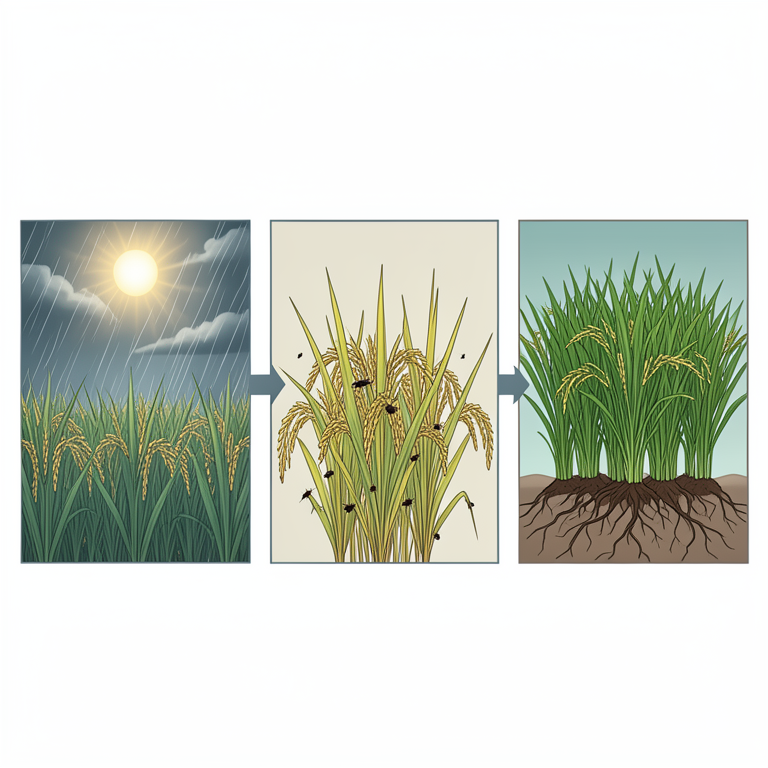
Climate Impact and Response Cycle
AI-generated conceptual illustration (Rice plants (Oryza sativa) in a field). It explains the idea and does not show study data.
View source evidence ↗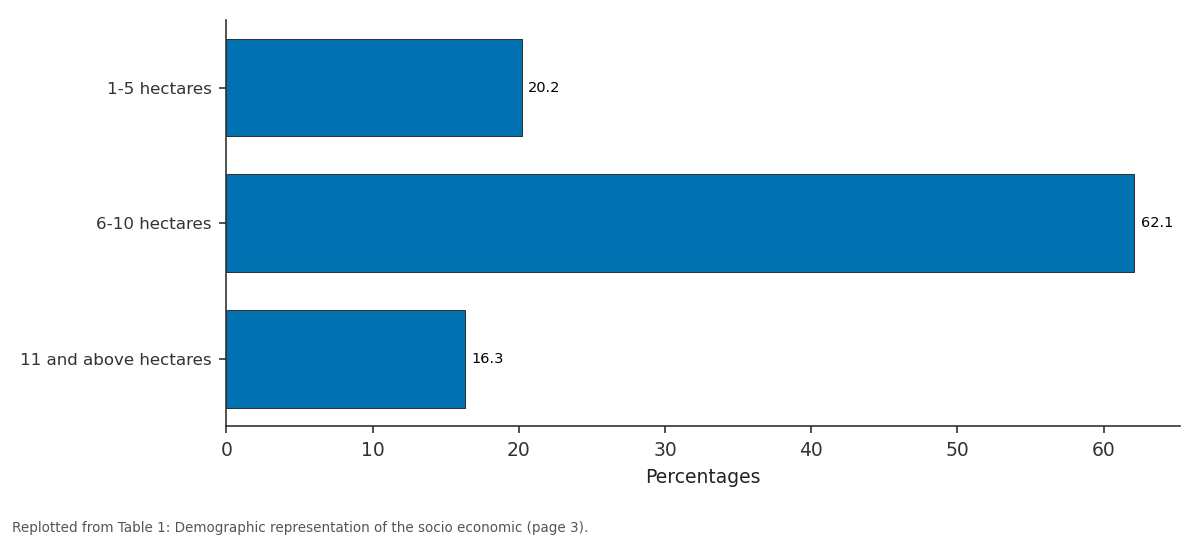
Percentages: 1-5 hectares vs 6-10 hectares vs 11 and above hectares
Replotted from Table 1 (page 3) of the original paper. Every bar is the paper's own table value.
View source evidence ↗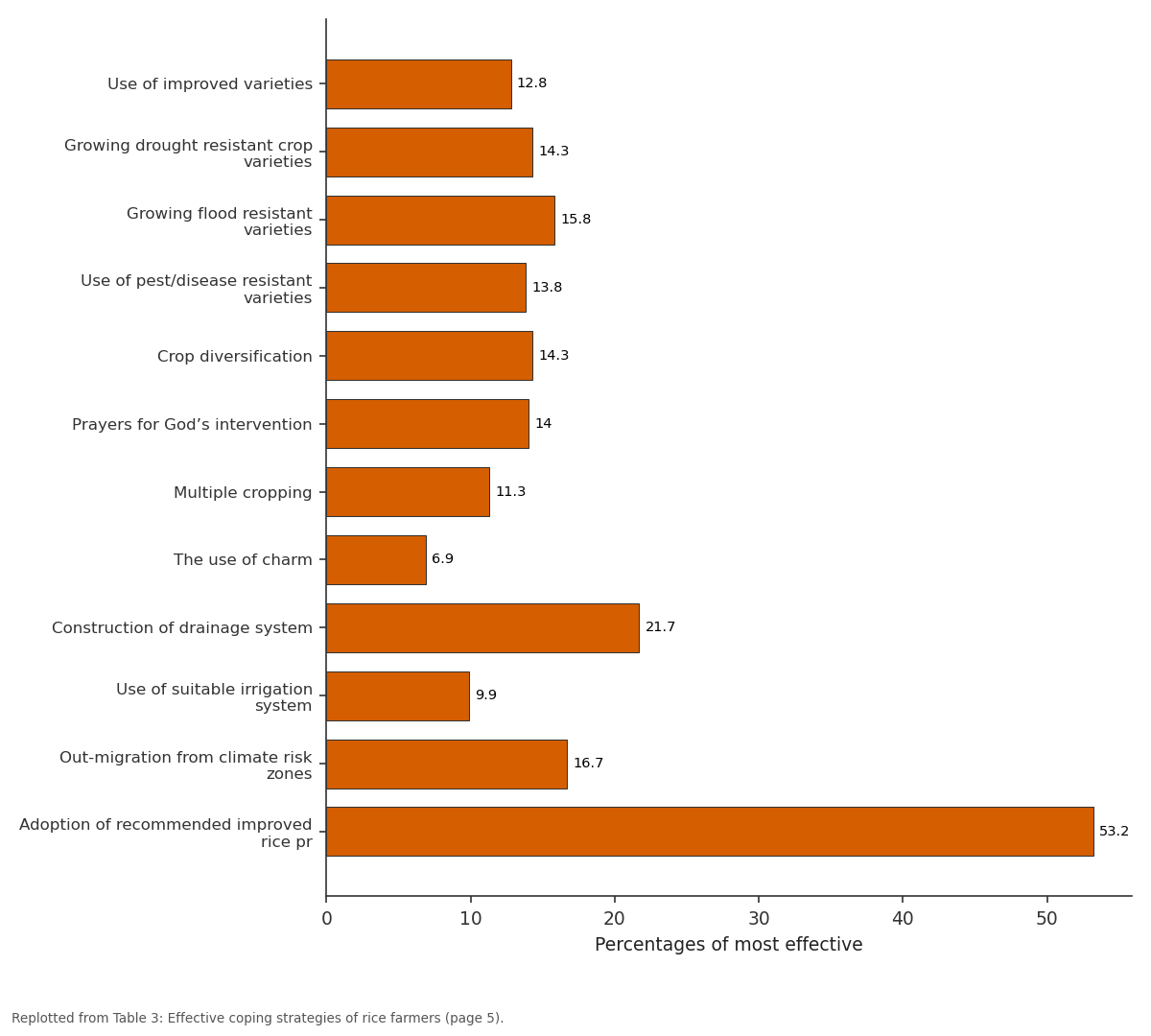
Percentages of most effective: Use of improved... vs Growing drought... vs Growing flood resistant... vs Use of pest/disease... vs Crop diversification
Replotted from Table 3 (page 5) of the original paper. Every bar is the paper's own table value.
View source evidence ↗Figures & tables
From the original paper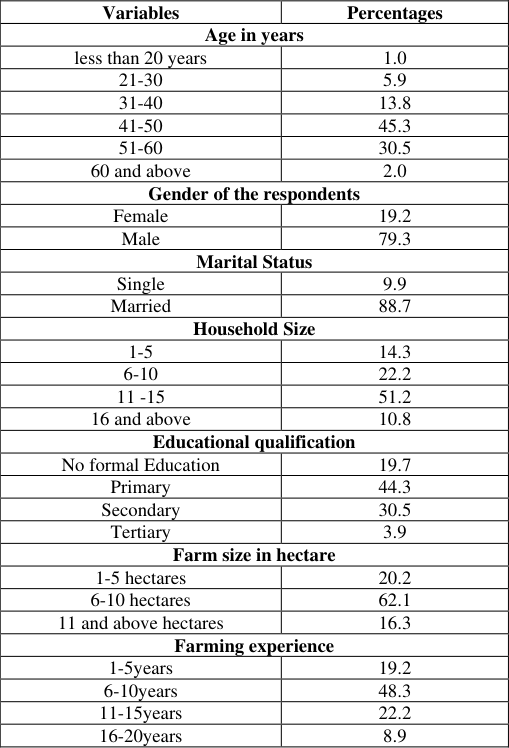 Table 1
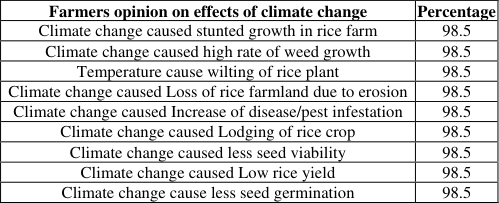 Table 2
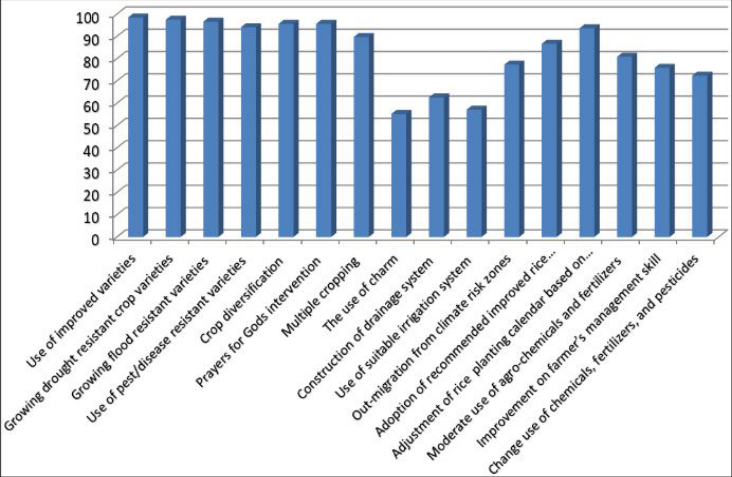 Figure 1
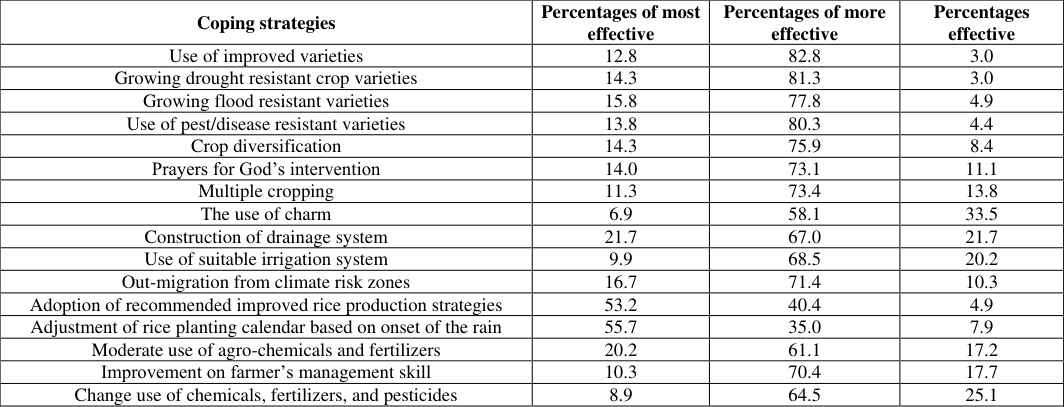 Table 3
Introduction
Rice (Oryza sativa L.) is one of the primary staple crop and the source of half the calories for nearly 50% of the world's population. Rice is a famous staple food which is a large proportion of the average household diet (Ahmed, et al., 2016; Achichi, et al., 2023) [4,2] . Rice is a valuable cereal crop that is grown and consumed all over the world. It is a staple dish in various African countries, including Nigeria, where it accounts for a significant amount of the diet on a regular basis (Lu, et al., 2018; Adangara et al., 2022) [51,3] . The global demand for rice is anticipated to increase by 28% by 2050 (Temitokpe, et al., 2022) [41] . However, global rice production is stagnated by 35% in all rice-growing regions (Zhu, et al., 2018) [44] . Rice production in African nations, especially Nigeria, relies largely on the natural weather conditions of the locality. Unexpected changes in the climatic condition of Nigeria are evident in increased desert encroachment and extreme droughts in the Northern region (Alfa, et al., 2022; Akomolafe, et al., 2023) [9,8] . Similarly, Onyegbula, and Oladeji (2017) [33] attested that Rice production is highly dependent on environmental factors which are the most important among several factors that influence agricultural production. Climate variability is a significant global phenomenon that poses threat to the sustainability of the environment and all facets of human development, making it a matter of urgency politically and social concern. According to Muhammad, et al., (2017) [24] , Rice production in Nigeria at is largely rain-fed, which means it depends completely on the weather and all the uncertainties that arise as a result of the changing climate. In Nigeria, rice consumption is quickly expanding because there is a shift in consumer preferences, rising population, rising economic levels, and fast urbanization.
The country is significantly reliant on rice imports, which total over 3 million tons per year and amount to about US $480 million (Kamai et al., 2020; Aluko, et al., 2021; Anas, et al., 2022) [18,10,12] . It was reported by Udemezue (2018) [43] that Nigeria is one of one hundred and nine, largest rice producers in Africa and one of the largest consumers on the whole continent. Consequently, Kayode, et al., (2021) [19] opined that Climate variability has resulted to so many challenging environmental issues that is a global concern. Rice farmers therefore employ several methods that is adaptable to environmental hazards. Changes in precipitation patterns and increased temperatures have led to adverse growth conditions in crop schedules, leading to shorter seasons and lower rice output (Muluneh, 2021; Ezike et al., 2022) [25,14] . However, Aderinoye and Abdulbaki (2021) [47] stated that Agriculture, as practiced widely in Nigeria and other developing countries, is highly subjected to climate variability. In the same vein, Tiamiyu, et al., (2015) [42] , reported that extreme rainfall variability causes environmental challenges such as floods, gully erosion, drought and desertification which have serious effects on rice yield. Many Studies have proved that before a country can move forward towards economic stability, there must be a considerable growth in Agricultural production (O 'Donnell, 2012; Lai-Solarin, et al., 2022; Nimzing, et al., 2022) [29,20,26] . In addition, IFPRI (2016b) [17] reported that as a result of rain-fed rice growing system, low input and the use of local varieties is the reason for low productivity in rice production. Onyekwena (2016) [35] observed that seventy seven percent of rice production in Nigeria is rain-fed therefore prone to climate variety effects such as drought, flood, late rain etc. The average yield in rain-fed rice production is between one to three tonnes per hectare in Nigeria as reported by IFPRI, (2016b) [17] . The meaning of the word "coping" can be certain behavioral and psychological activities which people used, master, tolerate, diminish or eliminate periods or situations of stress. If farmers and key stakeholders understand this concept, it will help them to provide sufficient conditions for implementing such practices for the conservation of agriculture, as coping is one of the most important ways of addressing the effect climate variability on agriculture generally. However, Kayode et al., (2021) [19] concluded that due to the effects of global climate variability and its alarming increase in the impact on farmers' activities in our communities, the use of conservation practices and agro biodiversity has to be stepped up among farmers. The ability of farmers to address any type of environmental hazard especially climate variability plays an important role in decision making about input allocations that affect suppliers. Environmental dangers have been regarded as one of the most pressing issues confronting developing world. The total global health burden from pollution is carried mostly by rural communities; also climate variability has negative effects on the environment, it has a wide range of implication for people's lives, especially in agriculture (Nwali, et al., 2022; Obagbemi et al., 2022, Owoich et al., 2023) [27][28]48] . Theory of climate variability reviewed in to guide the study is known as the Cultural Theory of Risk (CTR). Cultural theory of risk (CTR) is used to understand coping to risk and climate variability is serves as a risk to agriculture. The theory was developed by Mary Douglas and colleagues (Ratner, 1992; Olayemi, et al., 2021) [31,46] . It is all about how different social organizations and institutional cultures viewed and managed risk in different ways and how they formed different forum in response to risk. CTR explain that people view risk in different ways. It holds that there are four competing world views about risk namely egalitarian, hierarchist, individualist and fatalist which are classified according to cultural function. People used specific view to select awareness to certain danger. CTR has shown how people change their risk preferences based on different experiences and contexts over time (Bellamy and Hulme 2011; Sennuga, et al., 2020) [13,40] . In every community people view risk differently and respond in different ways and methods. Because of the diversity in worldview concerning risk there is need to reflect multiples approach to response to climate change risk. The second theory reviewed in the study is the theory of Best and worst scaling theory (BWS). Louviere and Woodworth (1990) [45] reported that BWS method was first developed by Jordan Louvriere in1987. He stated that BWS method is used in rating and ranking scales because it does not only forces respondents to discriminate amongst items but also helps them to compare both intra-and inter attributes. The theory explains how respondents provide or choose top and bottom ranked items from a list. This enables farmers to place a significant importance on the use of these strategies in order to enhance their coping strategies and capacity (Moussa, Zakou and Agada 2015; Sennuga et al., 2020a) [23,40] . Farmers has to maximize their utility when they decided to choose one coping strategy to cope with climate variability as the best and another as the worst. The understanding and determination of the best and most important and the use of effective strategies will enhance farmers' resilience against climate variability effect. This will also enable nongovernmental organizations, the development partners and the government to consider farmers view so as to optimize their interventions before preparing and executing projects designed for them. BWS theory works with rating and ranking scales. Any results that is gotten from BWS can easily be interpreted (Flynn, et al. 2007; Amadou, 2014) [49,11] . The BWS method has recently been used to determine preferences for sustainable farming practices (Sackett, Shupp and Tonsor, 2013; Sennuga et al., 2020b) [37,39] . This study focuses on the effective coping strategies used by rice farmers in the Federal Capital Territory in Nigeria. The specific objectives of this study are to: Describe the socio-economic characteristics of the rice farmers in the study area. Examine the effects of climate variability on rice yields in the study area. Assess the coping strategies used by rice farmers to cope with climate variability in the study area. Identify the effective coping strategies used by rice farmers to cope with climate variability in the study area.
Materials and Methods
This study was conducted in Gwagwalada area council of the Federal Capital Territory of Nigeria. The Federal Capital Territory (FCT) lies between latitudes 80 0 25 1 and 9 0 25 1 North of the equator and longitude 6 0 45 1 and 7 0 [53] .
Population of the study and research design
The study was conducted in two rural communities (Dukpa and Dobi) and both communities are similar in agro climatic, ethnic group, religion and cultural settings. Their climatic and agronomic condition is the same. They also have access to extension services. A well-structured questionnaire was used to generate data for the study.
Sample Size and Sampling Techniques
The FCT is made up of six areas council; namely Abaji, Bwari, Gwagwalada, Municipal, kuje and Kwali. The study was conducted in Gwagwalada Agricultural Development Project zone of FCT. Gwagwalada have four (4) ADP extension blocks; namely Dobi, Gwagwalada central, paiko and zuba. A multi-stage sampling technique was used to select the rice farming household for this study. In the first stage two ADP zone was purposively selected out of the four ADP zone in Gwagwalada, in the second stage two ADP extension blocks (Dobi and Dukpa) was selected purposively based on their high intensity in rice farming activities.
Data collection
The sample size for the study was 200 rice farmers. It consists of 100 rice farmers from each community. That is 100 rice farmers will be selected from Dobi and 100 from Dukpa respectively. The primary data was collected using a well-structured questionnaire coupled with personal interview to elicit information from the respondents. Information obtained from respondents was based on the objectives of the study. Questionnaire was administered by the researcher and a well-trained ADP enumerator who understand the locality and their local languages.
Data analysis
The socio-economic characteristics of the rice farmers was analyzed using descriptive statistics such as frequency-and percentages. To examine the effects of climate variability on rice yields, a Yes or No scale was used in the study. A list of possible effects of and coping strategies on climate variability on rice yield were identified from the literature alongside field observations. The different coping strategies used by rice farmers in the study area was measured using frequency, percentages and coping strategy index (CSI)
Coping strategy index (CSI) for individual coping strategies was computed to find out how many farmers responded as using a particular climate variability coping strategies. The effective coping strategies used by rice farmers to cope with climate variability in the study area was measured using three Point Likert-type scales of most effective (3) more effective (2) effective (1) respectively. years in the study area. This implies that they were middle age farmers and are still within their economic and active age that could handle any of the cultural practices in rice production. This result is in line with the findings of Onyegbula, (2017) [33] who reported that majority of rice farmers were between the age bracket of 41 to 50 years hence still in their active age. Also the results in table 1 shows the gender of the respondents 79 percent is male while 19.2 per cent are females. That means men were more involved in rice production than women in the study area. This might be because of the lucrative nature of the rice production or the practices in most of the agrarian communities in Nigeria that made some crops gender based. This result agrees with Olasunmkami, Baniro and Aloro (2012) [30] which stated that more males were involved in rice production. Results in table 1 also indicate that most farmers 88.7 percent are married. This implies that more couples were involved in rice production in the study area.
| Variables | Percentages |
|---|---|
| Age in years | |
| less than 20 years | 1.0 |
| 21-30 | 5.9 |
| 31-40 | 13.8 |
| 41-50 | 45.3 |
| 51-60 | 30.5 |
| 60 and above | 2.0 |
| Gender of the respondents | |
| Female | 19.2 |
| Male | 79.3 |
| Marital Status | |
| Single | 9.9 |
| Married | 88.7 |
| Household Size | |
| 1-5 | 14.3 |
| 6-10 | 22.2 |
| 11 -15 | 51.2 |
| 16 and above | 10.8 |
| Educational qualification | |
| No formal Education | 19.7 |
| Primary | 44.3 |
| Secondary | 30.5 |
| Tertiary | 3.9 |
| Farm size in hectare | |
| 1-5 hectares | 20.2 |
| 6-10 hectares | 62.1 |
| 11 and above hectares | 16.3 |
| Farming experience | |
| 1-5years | 19.2 |
| 6-10years | 48.3 |
| 11-15years | 22.2 |
| 16-20years | 8.9 |
Table text extracted from the original PDF; superscript letters are shown inline. The original table image is below.
View original table image
Results and Discussions
The high level of couples' involvement in rice production may be due to the high demand of labor for agronomic practices by the family to add up to the hired labour. This result is in line with Olasunkanmi et al. (2012) [30] who reported that more couples are involved in rice production.
In table 1 the result shows that majority 51.2 percent fell within the range of 11-15 household members with the rest respondents having more or high household members. This result connotes the practices in the farming community in Nigeria where large families provide farm labour. This result is in agreement with Ajah, (2014) [5] who reported that the mean household size of rice farmers was 8.
The results in Table 1 further indicates that majority 74.8 percent of the respondent had formal education of which 44.3 per cent of them has primary education. This finding is in line with Akinola, (2011) [7] and Ajah, (2014) [5] which posit that rice farmers have spent an average of 10 and 8 years in school respectively. Table 1 also shows that majority 62.1 percent of the respondent has farm size of 6-10 hectares, hence are termed small-scale farmers. This suggests that rice farming in Abuja is still predominantly on small scale level. This might be connected to the perennial issue of land tenure system which has resulted to fragmented land holdings. The result agrees with Akinola, (2011) [7] and Imolehin and Wada, (2011) [16] who reported that rice farming in Nigeria is still predominantly on small scale level. Majority 48.3 percent of the rice farmers in the study area have between 6-10 years of experience in rice production from the results in table 1. Experience may facilitate the understanding of climate variability and applicable coping strategies as well. Experience they say is the best teacher, however from this study we can infer that rice farmers may still have issues with coping with climate change. Effects of climate change on rice production: survey 2023.
From the results in table 2, majority (98.5%) of the rice farmers in the study area are of the opinion that climate variability results to stunted growth in rice; high rate of weed growth; Wilting of rice plant; loss of farmland due to erosion; Increase of disease/pest infestation; lodging of rice crops; less seed viability; Low rice yield and less seed germination. Wilting of rice plant, loss of farmland due to erosion and flood, lodging of rice crops and increase in disease/pest infestation Weed can have either positive or negative effects on rice. However, the negative consequences are more hence can result to reduce rice yield. This finding is in line with the Mbah, Ezeano and Saror (2016) [22] which stated that variability in climate causes stunted growth in rice crops and increase in growth of weeds. The result in figure 1 indicated that planting improved rice varieties can be used to cope with climate variability; the coping strategies index is calculated to be 13.3. This finding is in line with Oluyole et al. (2013) [32] which stated that farmers in their study area used improved crop varieties, chemical fertilizers and pesticides as coping strategy to reduce the adverse effect of climate variability. It further reveal that growing drought resistant crops varieties can be used to cope with climate variability with the coping index of 13.2 growing flood resistant rice varieties can be used to cope with climate variability with the coping strategies index of 13.0, diversification and Prayers for God's intervention can be used to cope with climate variability with the coping index of 12.9, the use of pest/disease resistant varieties can be used to cope with climate variability with the coping strategies index of 12.7, adjustment of rice planting calendar based on onset of the rain can be used to cope with climate variability with coping strategy index of 12.6 which agrees with the findings of Ajayi, [6] who reported that farmers in his study area used early planting with first rain especially for crops like rice to mitigate climate variability. Figure 1 also shows that multiple cropping can be used to cope with climate variability and the coping strategies index is calculated to be 12.1, and the adoption of recommended improved rice production can be used to cope with climate variability with the coping strategies index of 11.7. This is in line with the findings of Saliu, Jude, Yusuf, Alhassan, Samuel (2015) [38] who found out that most of the rice farmers in their study area used recommended agronomic practice to mitigate climate variability. About 80.8 percent of rice farmers in the study area are of the opinion that moderate use of agro-chemicals and fertilizers can be used to cope with climate variability with the coping strategies index of 10.9. The coping strategies index of the responses on Out-migration from climate risk zones as mechanism to cope with climate was calculated to be 10.4. The coping strategies index of the responses on the improvement on farmer's management skill can be used to cope with climate variability was calculated to be 10.2. Figure 1 further revealed that the change use of chemicals, fertilizers, and pesticides can be used to cope with climate variability with the coping strategies index of 10.9. The construction of drainage system could be used as well to mitigate climate variability, and the coping strategies index of the responses was calculated to be 8.4. Figure 1 results also indicated the use of suitable irrigation system as a means to cope with climate variability with a coping strategies index of 7.7. Additionally, the result in table 3 indicated that charm can be used to cope with climate variability, and the coping strategies index of the responses was calculated to be 7.4. The results displayed in figure 1 and narrated above stipulates that most of the rice farmers in the study area used multiple coping strategies to cope with climate variability. However, table 3 show that the most effective coping strategies used by rice farmers in the study area are Adjustment of rice planting calendar based on onset of the rain which has about 55.7 percent and the Adoption of recommended improved rice production strategies which has about 53.2 percent. From the result from in table 3, it is observed that rice farmers in the study area are of the opinion that almost all the coping strategies employed in coping with climate variability are effective.
| Coping strategies | Percentages of most effective | Percentages of more effective | Percentages effective |
|---|---|---|---|
| Use of improved varieties | 12.8 | 82.8 | 3.0 |
| Growing drought resistant crop varieties | 14.3 | 81.3 | 3.0 |
| Growing flood resistant varieties | 15.8 | 77.8 | 4.9 |
| Use of pest/disease resistant varieties | 13.8 | 80.3 | 4.4 |
| Crop diversification | 14.3 | 75.9 | 8.4 |
| Prayers for God’s intervention | 14.0 | 73.1 | 11.1 |
| Multiple cropping | 11.3 | 73.4 | 13.8 |
| The use of charm | 6.9 | 58.1 | 33.5 |
| Construction of drainage system | 21.7 | 67.0 | 21.7 |
| Use of suitable irrigation system | 9.9 | 68.5 | 20.2 |
| Out-migration from climate risk zones | 16.7 | 71.4 | 10.3 |
| Adoption of recommended improved rice production strategies | 53.2 | 40.4 | 4.9 |
| Adjustment of rice planting calendar based on onset of the rain | 55.7 | 35.0 | 7.9 |
| Moderate use of agro-chemicals and fertilizers | 20.2 | 61.1 | 17.2 |
| Improvement on farmer’s management skill | 10.3 | 70.4 | 17.7 |
| Change use of chemicals, fertilizers, and pesticides | 8.9 | 64.5 | 25.1 |
Table text extracted from the original PDF; superscript letters are shown inline. The original table image is below.
View original table image
| Farmers opinion on effects of climate change | Percentage |
|---|---|
| Climate change caused stunted growth in rice farm | 98.5 |
| Climate change caused high rate of weed growth | 98.5 |
| Temperature cause wilting of rice plant | 98.5 |
| Climate change caused Loss of rice farmland due to erosion | 98.5 |
| Climate change caused Increase of disease/pest infestation | 98.5 |
| Climate change caused Lodging of rice crop | 98.5 |
| Climate change caused less seed viability | 98.5 |
| Climate change caused Low rice yield | 98.5 |
| Climate change cause less seed germination | 98.5 |
Table text extracted from the original PDF; superscript letters are shown inline. The original table image is below.
View original table image
Coping strategies used by rice farmers to mitigate climate variability
Coping strategies used by rice farmers to mitigate climate variability
Conclusion
The study is on the assessment of climate variability and effective coping strategies used by rice farmers in Abuja, Nigeria. The study has identified types of climate variability and their effect on rice production; coping strategies used by farmers to cope with climate variability and the most effective coping strategies. From the findings, it is revealed that climate variability affects rice production in the study area, and all the rice farmers employed multiple coping strategies to cope with climate variability among which Adjustment of rice planting calendar based on onset of the rain and Adoption of recommended improved rice production strategies were the most effective coping strategies from all the multiple coping strategies.
Recommendations
Based on the findings the following recommendations and conclusion were made.
1. In other to improve rice production potential of FCT and Nigeria at large, Training on soil and water management in rice production is an essential factor in averting the adverse effect of rainfall variability on national rice yield. 2. In addition, there is need for government at all levels to engage extension agents who should teach farmers climate friendly practices that mitigate climate variability and also disseminates the most effective coping strategies to farmers in another state in Nigeria. 3. Plant breeders should help to develop rice varieties that can survive higher flood, drought, pest and diseases resistant.
References
46 in the original paper- Achichi C, Sennuga SO, Osho-Lagunju B, Alabuja FO. Effect of Farmers' Socioeconomic Characteristics on Access to Agricultural Information in Gwagwalada Area Council, Abuja. Discoveries in Agriculture and Food Sciences. 2023;10(5):28-47.
- Adangara UM, Sennuga SO, Ezinne EM, Barnabas TM, Alabuja FO. Effect of Information Sources on Farmers' adoption of Sawah Eco-Technology in Rice Production in Kwali Area Council -FCT, Nigeria. Acta Scientific Agriculture. 2022;6(7):03-09.
- Ahmed MS, Bashar MK, Wazuddin M, Shamsuddin AKM. Morpho-physicochemical study of Jessobalam rice (Oryza sativa L.) accession of Bangladesh. Asian Journal of Crop Science. 2016;8:13-23.
- Ajah J, Ajah FC. Socio-economic Determinants of Small-scale Rice Farmers' Output in Abuja, Nigeria. Asian Journal of Rural Development. 2014;4(2):16-24.
- Ajayi JO. Awareness of climate change and implications for attaining the millennium development goals (MDGS) in Niger Delta Region of Nigeria. AGRIS Economics and Informatics. 2014;6(1):3-11.
- Akinola A, Hassan R. Impact of climate change on rice agriculture in Nigeria. Tropical and Subtropical AgroEcosystems; c2011. p. 14-15. Retrieved 22-2-2023
- Akomolafe JK, Sennuga SO, Bamidele J, OshoLagunju B, Alabuja FO. Assessment of Cassava Production towards Household Food Security in Bwari Area Council, Abuja, Nigeria. Indiana Journal of Agriculture and Life Sciences. 2023;3(2):1-7.
- Alfa MK, Sennuga SO, Barnabas TM, Alabuja FO, Ebhohon A. Effects of Information and Communication Technology on Youths Participation in Sesame Seed Production in Kwali Area Council, Abuja, Nigeria. Journal of Media & Management. 2022;1694(04):1-6.
- Aluko KJ, Sennuga SO, Ezinne ME. Exploring Smallholder Farmers' Perception on the Uptake of Agricultural Innovations in Kuje Area Council, Abuja. International Journal of Agricultural Economics. 2021;6(6):315-323.
- Amadou Z. 'Consumers' preferences for quality and safety attributes of milk products', Article Presented at the Conference of CORAF Held, Niamey; c2014. Retrieved 22-9-2018
- Anas HA, Sennuga SO, Barnabas TM, Alabuja FO, Okpala EF. Smallholder Women's Perceptions on the Barriers to Promoting and Processing Local Rice in Gwagwalada Area Council, Abuja, Nigeria. International Journal of Current Research & Academic Review. 2022;10(6):27-36.
- Bellamy R, Hulme M. Beyond the tipping point: Understanding perceptions of abrupt climate change and their implications. Weather, Climate, and Society. 2011;3(1):48-60.
- Ezike DN, Sennuga SO, Afolayan OA. Factors Affecting Farmers Adoption of Improved Agricultural Technologies in Cassava Production and Processing in Kuje Area Council, Abuja. International Journal of Agricultural Research Pesticides and Biofertilizers. 2022;3(4):1-6.
- Teshome Y. Evaluation of rice production and productivity marketing system in small producer farmers in Ethiopia. International Journal of Agriculture and Nutrition. 2021;3(1):33-40.
- Imolehin ED, Wada AC. Meeting the Rice Production and Consumption Demands of Nigeria with Important Technologies. FAO: Agriculture and Consumer Protection Unit; c2011. Retrieved on 2-3-2023
- Lai-Solarin WI, Adeoye WA, Sennuga SO. Technology Adoption Capabilities of Small Farm Dairy Cattle Holders in Gwagwalada, Abuja: Effects of Asymmetric Information and Extension Approaches. International Journal of Agricultural Economics. 2022;6(2):315-323.
- Moursy ARA, Hassan MNA, Elhefny TMA. Sampling and analysis of soil and water: A review. Int. J Geogr Geol. Environ. 2022;4(2):34-41.
- Mbah EN, Ezeano CI, Saror SF. analysis of climate change effects among rice farmers in Benue State, Nigeria. Current Research in Agricultural Sciences. 2016;3(1):7-15.
- Moussa T, Zakou A, Agada BD. Evaluating farmers' adaptation strategies to climate change: A case study of Kaou local government area, Tahoua State, Niger Republic. Jàmbá -Journal of Disaster Risk Studies. 2015;4(3):17-26.
- Muhammad A, Yahaya TI, Ojoye S, Muhammed SY. Rice Farmers' Adaptation Strategies to Climate Change in Minna and Environs, Nigeria. Direct Research Journal of Agriculture and Food Science. 2017;5(12):417-426.
- Muluneh MG. Impact of climate change on biodiversity and food security: A global perspective-a review article. Agriculture and Food Security. 2021;10:36, 5.
- Nimzing MM, Sennuga SO, Ezinne ME. Analysis of women empowerment in cassava production and processing as a means of household poverty status in Kuje area Council, Abuja. International Journal of Agriculture Extension and Social Development. 2022;5(1):10-14.
- Nwali PN, Sennuga SO, Emeka O. Evaluation of Smallscale Women Farmers' Utilization of ICT in Accessing Agricultural Information in Gwagwalada Area Council, Abuja, Nigeria. Green Reports. 2022;3(7):34-38.
- Obagbemi SD, Bamidele J, Bako H, Alabuja FO, Ajayi AH, Sennuga SO. Effects of Micro Credit Scheme on Rice Production among Smallholder Farmers in Kwali Area Council, Abuja. European Journal of Business and Management Research. 2022;7(6):26-34.
- O'Donnell CJ. 'Non parametric Estimates of the Components of Productivity and Profitability Change in U.S Agriculture. American Journal of Agricultural Economics. 2012;94(4):873-890.
- Olasunmkami M, Baniro, Janet O Aloro. Technical Efficiency in Swamp and Upland Rice Production in Osun State. Scholarly Journal of Science. 2012;3(1):31-45.
- Olayemi SS, Temitope AB, Ayo OA. Assessment of the Constraints Associated with the Processing of Paddy Rice: A Case Study of Smallholder Farmers in Gwagwalada, Abuja. Journal of Current Trends in Agriculture, Environment and Sustainability. 2021;2(1):1-7.
- Oluyole KA, Emaku LA, Aigbekaen EO, Oduwole O. Overview of the trend of climate change and its effect on cocoa production in Nigeria. World Journal of Agricultural Research. 2013;1(1):10-3.
- Onyegbula CB. Rice farmers perception of effects of climate change on rice development stages in Niger State Journal of Agricultural Extension and Rural Development. 2017;9(2):14-19.
- Onyegbula CB, Oladeji JO. Utilization of climate change adaptation strategies among rice farmers in three states of Nigeria. Journal of Agricultural Extension and Rural Development. 2017;9(10):223229.
- Punia V, Dr. Singh D, Dr. Khinchi SS. Analyzing and suitability of yield crop in western district of Haryana. International Journal of Geography, Geology and Environment 2021;3(2):128-132.
- DOI:10.18052/www.scipress.com/ILNS.49.63 2015 Science Press Ltd., Switzerland p 63-68
- Sennuga OS, Baines RN, Conway JS, Naylor RK. Role of Information and Communication Technologies (ICTs) in Enhancing Food Utilization among Smallholder Farmers' Households in Northern Nigeria. International Journal of Information and Knowledge Management. 2020;10(1):24-32.
- Sennuga SO, Baines RN, Conway JS, Naylor RK. Effect of Smallholders Socio-Economic Characteristics on Farming Households' Food Security in Northern Nigeria. International Journal of Economics and Sustainable Development. 2020;11(4):140-150.
- Temitope OO, Abiodun AO, Chijioke UE. Does Adoption of Climate Change Adaptation Strategy Improve Food Security? A Case of Rice Farmers in Ogun State, Nigeria" Land, MDPI. 2022;11(11):1-16.
- Tiamiyu SA, Jude NE, Yusuf TM, Maji AT, Bakare SO. Rainfall variability and its effects on yield of rice in Nigeria. International Letters of Natural Sciences. 2015;49:63-68.
- Udemezue JC. Analysis of rice production and consumption trends in Nigeria. Journal of Plant Sciences and Crop Protection. 2018;1(3):305.
- Zhu Q, Liu X, Hao T, Zeng M, Shen J, Zhang F, et al. Modelling soil acidification in typical Chinese cropping systems. Sciences Total Environ. 2018;613:1339-1348.
- Woodworth PL. A search for accelerations in records of European mean sea level. International Journal of Climatology. 1990;10(2):129-43.
- Helman GB, Ratner SR. Saving failed states. Foreign Policy. 1992;(89):3-20.
- Mohamad O, AlKhoury N, Abdul-Baki MN, Alsalkini M, Shaaban R. Workplace violence toward resident doctors in public hospitals of Syria: Prevalence, psychological impact, and prevention strategies: A cross-sectional study. Human Resources For Health. 2021;19:1-1.
- Owoicho A, Sennuga SO, Bamidele J, Osho-Lagunju B, Alabuja FO. Analysis of Gender Issues in Access to Land among Farmers in Karu Local Government Area of Nassarawa State, Nigeria. Journal of Media & Management. 2023;5(2):2-8.
- Flynn T, Louvriere J, Peters T, Coast J. Best-worst scaling: What it can do for health care research and how to do it. Journal of Health Economics. 2007;1(26):171189.
- Mathew EY, Dodo JD, Maton SM, Dalen MB. Assessment of persistent organic pollutants in soil and water of Kara Bisichi, Barkin Ladi Lga of Plateau state, Nigeria. International Journal of Advanced Chemistry Research. 2021;3(2):04-11.
- Egbe GD, Sennuga SO, Lai-Solarin WI, Adeoye WA. Crop farmers' perceptions on climate change's impact on farm produce in Gwagwalada Area Council, Abuja. Int J Agric Extension Social Dev. 2022;5(1):15-20. DOI:10.33545/26180723.2022.v5.i1a.118
- Lu HP, Luo T, Fu HW, Wang L, Tan YY, Huang JZ. Resistance of rice to insect pests mediated by suppression of serotonin biosynthesis. Nature Plants. 2018;4(6):338-343.
Cited by 8
From OpenAlex, OpenCitations and reference lists read by Scinovex
- A lightweight detection model for rice grain with dense bonding distribution based on YOLOv5s ↗
Dongquan Chen, Wenbin Sun, Kang Xu, Yiren Qing, Guiquan Zhou, Ranbing Yang · Computers and Electronics in Agriculture · 2025
Accurate counting of rice grains plays a critical role in rice breeding and thousand-grain weight measurement. However, the accuracy of existing algorithms is insufficient under conditions of high-density and densely bonded rice grain distribution. To quickly and accurately detect high-density and densely bonded rice grains with as many grains as possible, this study developed a lightweight model based on YOLOv5s.…
❝ 6PDF - Assessing rainfall and extreme weather variability for climate resilient agricultural production systems in Nigeria ↗
Olawale Emmanuel Olayide, Tunrayo Alabi, John A. Oyedepo, Richardson U. Okechukwu · Research Square · 2024
Abstract Nigeria's food production heavily relies on smallholder rainfed agriculture. Unfortunately, this sector is highly vulnerable to the negative impacts of climate change, such as floods and droughts. It is crucial to examine the frequency, intensity, and magnitude of these events and develop effective mitigation and adaptation strategies to ensure the resilience of Nigeria's agricultural system. This study analyses rainfall…
❝ 6PDF - A critical review of the Nigerian inflationary factors ↗
Elsie Medley Dokubo, Samson Olayemi Sennuga, Joseph Bamidele, Osho-Lagunju Bankole, Alabuja Funso Omolayo, Tena M Banabars · International Journal of Arts Humanities and Social Studies · 2023
The results of this study have demonstrated that regardless the government's efforts to regulate and control the economy and prevent inflation, inflation still happens in Nigeria. If the Nigerian government fails to establish new industries that could manufacture our goods, the country's reliance on imports will increase and inflation will continue to occur. Government policies are another factor that contributes
- Community-based coping strategies for climate variability in rice farming: Extension and social development perspectives
M. C. Pereira, Carlos Henrique Zanini Martins · International Journal of Agriculture Extension and Social Development · 2025
This review explores coping strategies for climate variability in rice farming, drawing on reports and data from prominent agricultural organizations such as the Food and Agriculture Organization (FAO) and the World Bank. It highlights the challenges posed by climate change to rice production and the adaptation and mitigation strategies required to sustain rice farming. The paper discusses various strategies, including adjusting crop management practices, implementing technological innovations, and fostering community-based initiatives. The integration of policy measures and institutional supp
- Impact of climatic changes on rice biology: Genetic, physiological, and ecological perspectives
Ole Kristian Nilsen · International Journal of Biology Sciences · 2025
Rice (Oryza sativa L.) is a staple food for over half of the global population, making its productivity and quality essential for food security. Climate change, characterized by rising temperatures, altered precipitation patterns, and an increased frequency of extreme weather events, poses significant challenges to rice cultivation. This paper explores the multifaceted impacts of climate change on rice biology, focusing on genetic, physiological, and ecological aspects. It discusses strategies to enhance resilience through breeding, agronomic practices, and ecosystem-based approaches to safegu
- Horticultural techniques to mitigate the effects of climate change on rice cultivation
Kristian Holm · International Journal of Horticulture and Food Science · 2025
Rice is the staple food for more than half of the global population, yet its cultivation faces unprecedented threats from climate change. Rising temperatures, irregular rainfall, salinity intrusion, and pest-disease surges undermine productivity and increase vulnerability in both irrigated and rainfed systems. Conventional responses such as breeding and chemical inputs are insufficient in isolation. Horticultural techniques—broadly understood as agronomic practices that manipulate soil, water, canopy, and ecological interactions—offer pragmatic and locally adaptable pathways for resilience. Th
- Assessing the role of education in climate resilience: A case study of rice farmers in the Mekong Delta, Vietnam ↗
Sofia R. Costa · International Journal of Advanced Academic Studies · 2024
This paper evaluates the role of education in enhancing climate resilience among rice farmers in the Mekong Delta, Vietnam, a region significantly impacted by climate change. Through a case study approach, the paper investigates how educational programs can improve farmers' understanding of climate change and encourage the adoption of climate-smart agricultural practices. Using data from surveys and interviews with local
- Exploring the factors influencing the adoption of ICT tools among rice farmers in southwest and north Central Nigeria ↗
Oluremi Atinuke Elusoji, Edwin Ejoga Idu, Julius Ajah · International Journal of Communication and Information Technology · 2023
This study delves into the multifaceted factors that shape the integration of Information and Communication Technology (ICT) tools within the agricultural landscape, focusing on rice farmers in Southwest and North Central Nigeria. The adoption of ICT tools in agriculture holds immense potential for enhancing productivity, sustainability, and overall socio-economic development. However, understanding the determinants of this adoption is crucial for…