
Research article · 2025 · Full text
International Journal of Biology SciencesImpact of climatic changes on rice biology: Genetic, physiological, and ecological perspectives
Volume 7(7) · Pages 206–208 · DOI: 10.33545/26649926.2025.v7.i7c.464 ↗
Research areasRice Cultivation and Yield Improvement
Abstract
Author-writtenRice (Oryza sativa L.) is a staple food for over half of the global population, making its productivity and quality essential for food security. Climate change, characterized by rising temperatures, altered precipitation patterns, and an increased frequency of extreme weather events, poses significant challenges to rice cultivation. This paper explores the multifaceted impacts of climate change on rice biology, focusing on genetic, physiological, and ecological aspects. It discusses strategies to enhance resilience through breeding, agronomic practices, and ecosystem-based approaches to safeguard rice cultivation in the face of climate change.
Summary
Source-checkedPlain-language reading of the full paper, prepared with AI and checked against the text. Each point links to the authors' own words.
Why it matters
- Rice is a critical global staple food that supports more than half of the world's population, making its stability vital for food security. View evidence ↗
- Climate change threatens rice cultivation through increased extreme weather, shifting rainfall, and rising temperatures. View evidence ↗
The question
- The paper aims to examine how climate change affects rice biology from genetic, physiological, and ecological perspectives. View evidence ↗
What they did
- The author reviews various resilience strategies, including ecosystem-based approaches, agronomic practices, and breeding. View evidence ↗
What they found
- Higher levels of atmospheric CO₂ can decrease the concentrations of essential nutrients in rice, specifically zinc, iron, and protein. View evidence ↗
- High temperatures during the flowering stage can cause spikelet sterility, which results in lower rice yields. View evidence ↗
- Rising temperatures shorten the vegetative and reproductive phases of rice, reducing the time available for grain filling and lowering overall yields. View evidence ↗
- While increased CO₂ may boost photosynthesis, these gains can be offset by water scarcity and temperature stress. View evidence ↗
- Changes in precipitation and warmer temperatures can increase the spread and population of rice pests and diseases. View evidence ↗
- Temperature rises increase pest prevalence, with the Rice Stem Borer increasing by 50% (28-33 °C) and the Brown Planthopper increasing by 35% (30-35 °C). View evidence ↗
- Rice cultivation is a major contributor to the emission of methane, a powerful greenhouse gas. View evidence ↗
- The Alternate Wetting and Drying (AWD) method improves water use efficiency to 70-80% (compared to 50-60% traditionally) and reduces methane emissions to 100-150 kg/ha (compared to 250-350 kg/ha). View evidence ↗
- Specific genes associated with stress tolerance include OsHSP101 for thermal tolerance, OsDREB1 for drought, and OsSOD1 (superoxide dismutase). View evidence ↗
What it means
- The author concludes that climate-resilient breeding, integrated farming, and sustainable practices like AWD are promising solutions for maintaining rice production. View evidence ↗
- To ensure long-term food security, the author recommends that these adaptation strategies be implemented on a global scale. View evidence ↗
Visual summary
2 visualsIllustrations explain the paper; charts are replotted from the paper's own table values.
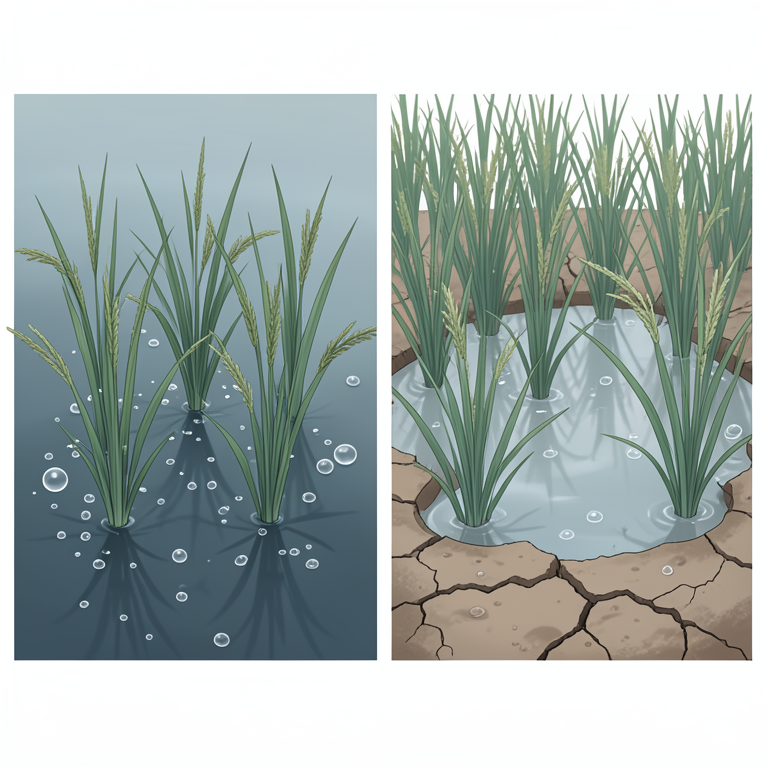
Traditional vs AWD Comparison
AI-generated conceptual illustration (rice plants in paddy fields). It explains the idea and does not show study data.
View source evidence ↗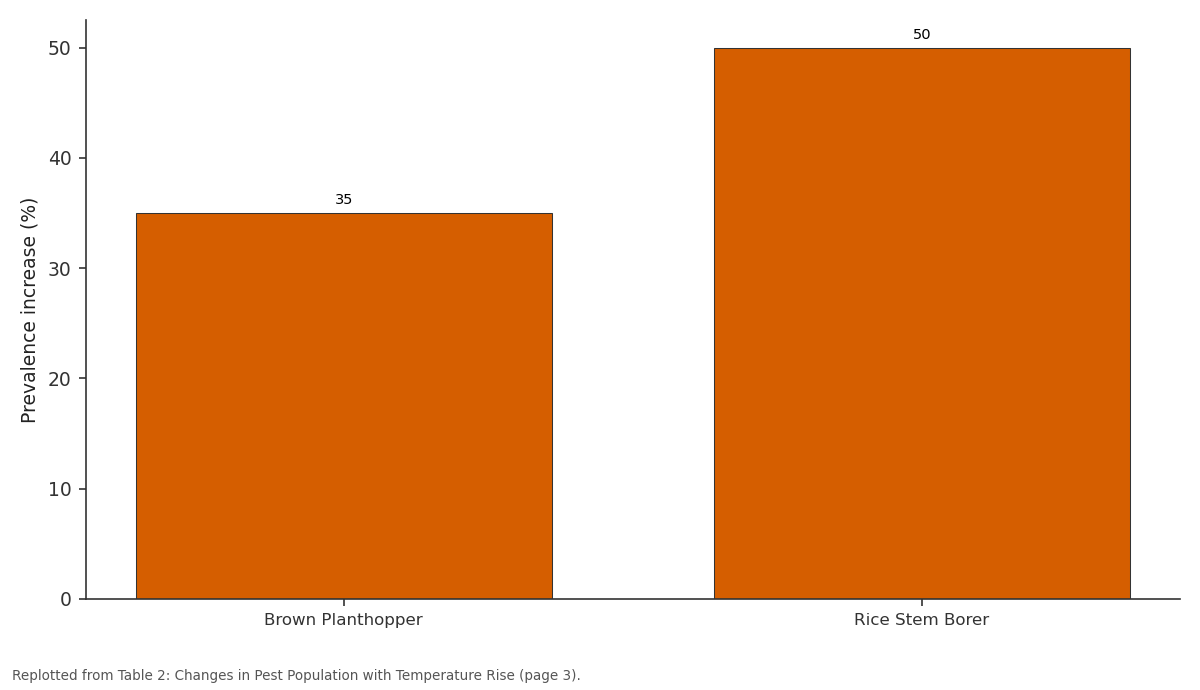
Prevalence (increased with temperature rise): Brown Planthopper vs Rice Stem Borer
Replotted from Table 2 (page 3) of the original paper. Every bar is the paper's own table value.
View source evidence ↗Figures & tables
From the original paper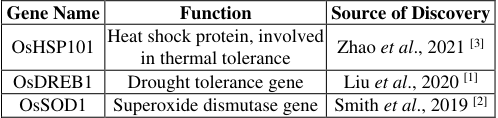 Table 1
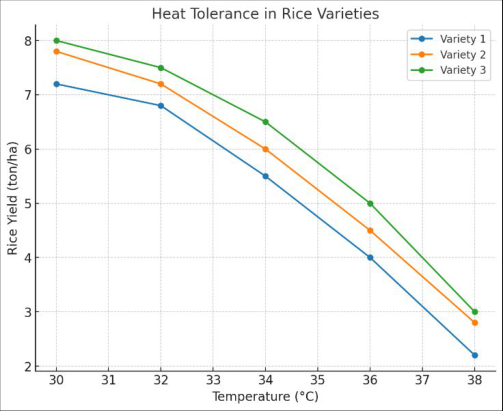 Figure 1
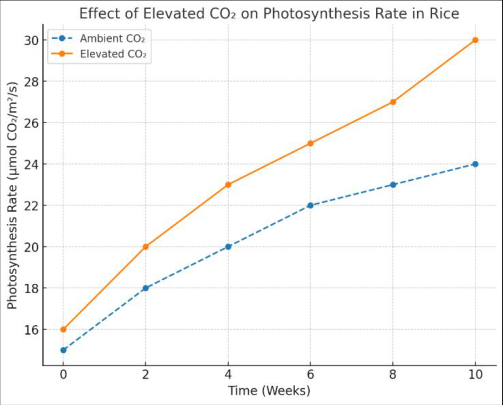 Figure 2
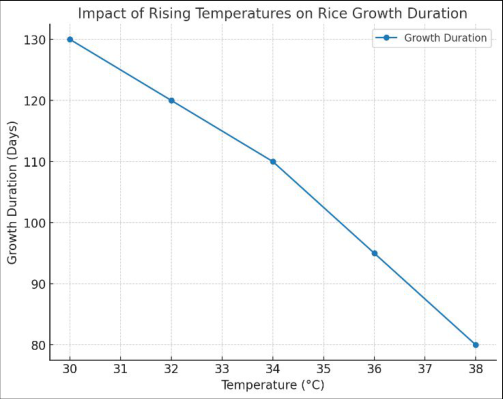 Figure 3
 Table 2
 Table 3
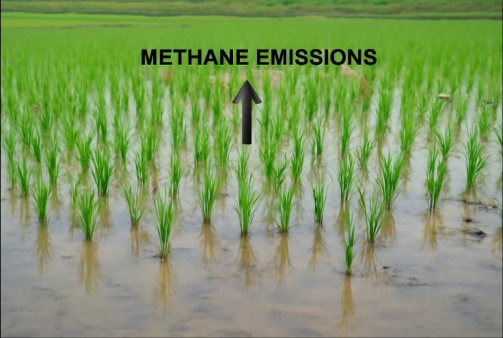 Figure 4
Introduction
Rice is a critical food crop, providing sustenance for over 3 billion people worldwide. However, the changing climate, marked by rising temperatures, shifting rainfall patterns, and the intensification of extreme weather events, threatens its production. The effects of climate change on rice biology are complex and wide-ranging, impacting its genetics, physiology, and the surrounding ecosystems. To ensure food security, it is essential to understand how these changes influence rice growth and develop strategies to mitigate their impacts. Genetically, rice has evolved to adapt to a variety of environmental conditions, but climate change is pushing these natural adaptations to their limits. Heat stress, drought, and flooding are becoming more common, altering the genetic landscape of rice varieties. Breeding programs have been working to identify and introduce heat-and drought-tolerant genes, which can help ensure stable yields under changing climate conditions. Similarly, elevated carbon dioxide (CO₂) levels, while beneficial for photosynthesis, have been shown to reduce the nutritional content of rice, especially essential nutrients like protein, iron, and zinc, exacerbating nutritional deficiencies globally (Zhao et al., 2021) [3] . The physiological impacts of climate change are also significant. Increased temperatures during key growth stages, such as flowering, can lead to spikelet sterility and lower yields. Water stress, both from drought and flooding, can reduce rice growth and grain quality. Physiological responses, such as altered photosynthesis rates and changes in growth duration, are crucial for understanding how rice will fare under future climate scenarios (Liu et al., 2020) [1] . Ecologically, rice farming interacts with surrounding ecosystems, and climate change is altering pest populations, water management, and methane emissions from rice fields. Warmer temperatures are likely to expand the range of pests and diseases that affect rice crops, while changes in water availability may affect the methods used to manage rice cultivation. Integrated farming systems and sustainable agronomic practices may help mitigate some of these impacts, but significant adaptation strategies are needed (Smith et al., 2019) [2] .
Genetic Impacts on Rice Biology 2.1 Heat Tolerance
Elevated temperatures during the flowering period have been shown to reduce rice yields due to spikelet sterility. Research on heat tolerance in rice focuses on identifying genes that can provide resistance to heat stress. By utilizing advanced breeding techniques such as marker-assisted selection (MAS), breeders are developing rice varieties that can withstand high temperatures and maintain productivity under heat stress conditions (Zhao et al., 2021) [3] .
Drought and Submergence Resistance
As climate change leads to more frequent droughts and floods, it is crucial to identify and introduce genes for drought and submergence tolerance in rice. Through genomic research, rice varieties with enhanced tolerance to both drought and flooding are being developed, enabling farmers to grow rice in environments that are increasingly subject to water stress (Liu et al., 2020) [1] .
Nutritional Quality
Increasing atmospheric CO₂ levels have been shown to reduce the concentrations of essential nutrients in rice, including protein, iron, and zinc. This reduction in nutrient content, referred to as the "hidden hunger" effect, could worsen malnutrition globally, particularly in regions where rice is a staple food. Identifying genetic pathways that can maintain or enhance nutrient levels under elevated CO₂ is an essential area of research (Smith et al., 2019) [2] . [3] OsDREB1 Drought tolerance gene Liu et al., 2020 [1] OsSOD1 Superoxide dismutase gene Smith et al., 2019 [2]
Physiological Responses to Climate Change 3.1 Photosynthesis and Water Use Efficiency
Higher CO₂ concentrations may enhance rice
photosynthesis, but this benefit can be counteracted by the negative effects of temperature stress and water scarcity. In some studies, elevated CO₂ has shown increased water use efficiency, which could help mitigate water stress in ricegrowing areas. However, the overall effect of climate change on rice photosynthesis remains complex and depends on regional climatic conditions (Liu et al., 2020) [1] .
Growth Duration and Yield
Increasing temperatures are expected to shorten the growth duration of rice, leading to reduced yields. Shortened vegetative and reproductive phases result in less time for grain filling, which directly impacts rice productivity.
Managing growth duration through breeding and agronomic practices is essential to mitigate this effect (Smith et al., 2019) [2] .
Grain Quality
Changes in temperature and water availability can affect the size, texture, and nutritional content of rice grains. As climate-induced stressors increase, the quality of rice, including its size, shape, and nutritional profile, may decrease, reducing its marketability and affecting food security globally (Zhao et al., 2021) [3] .
Ecological Impacts on Rice Ecosystems 4.1 Pest and Disease Dynamics
Warmer temperatures and altered precipitation patterns can expand the range and increase the proliferation of pests and diseases that affect rice crops. This includes insects like the rice stem borer and diseases such as rice blast. These pests and diseases not only reduce yield but also increase the need for pesticides, further complicating rice management efforts (Smith et al., 2019) [2] .
Methane Emissions
Rice fields are a significant source of methane emissions, a potent greenhouse gas. Changes in water management practices, such as flooding and draining of fields, influence methane production. Climate change is expected to intensify the need to balance rice production with sustainable water management practices to reduce greenhouse gas emissions (Zhao et al., 2021) [3] .
Adaptation Strategies
Developing heat-and drought-tolerant rice varieties is crucial to maintaining rice production under climate change. Advanced breeding methods, including genetic engineering and genome editing, can speed up the development of climate-resilient varieties (Liu et al., 2020) [1] . Sustainable practices such as alternate wetting and drying (AWD) can reduce water usage and methane emissions while maintaining high yields. Other practices, such as adjusting planting dates and utilizing efficient irrigation techniques, are also critical to adapting to changing climate conditions. Integrated farming systems, such as rice-fish or ricelivestock systems, provide ecological resilience and enhance biodiversity, allowing rice cultivation to better withstand the pressures of climate change.
Conclusion
Climate change presents a significant and multifaceted threat to rice biology, impacting its genetics, physiology, and the surrounding ecosystems. As temperatures rise and weather patterns become more erratic, rice production faces growing challenges from heat stress, water scarcity, and shifting pest dynamics. The genetic adaptations of rice, while impressive, are being tested by these new stresses, highlighting the need for advanced breeding strategies aimed at enhancing heat, drought, and flood tolerance. Simultaneously, the nutritional content of rice is being affected by elevated CO₂ levels, exacerbating global malnutrition issues. Physiologically, rice plants are struggling to adapt to the combined stressors of altered precipitation and increasing temperatures. Shortened growth durations and reduced grain quality are direct consequences, and these trends are likely to intensify unless mitigation strategies are effectively implemented. Changes in the ecological dynamics surrounding rice farming, particularly pest and disease proliferation, underscore the complex relationship between rice cultivation and broader environmental changes. Adaptation strategies, such as breeding climate-resilient varieties, incorporating sustainable agricultural practices like alternate wetting and drying (AWD), and utilizing integrated farming systems, offer promising solutions. However, the urgency of climate action requires that these strategies be applied at a global scale to ensure the longterm sustainability of rice production and food security.
The resilience of rice farming in the face of climate change will depend not only on scientific and technological advancements but also on the collective efforts of farmers, researchers, and policymakers. Through continuous innovation and sustainable practices, rice cultivation can be safeguarded, ensuring that it remains a vital source of nutrition for billions worldwide.
Figures and tables from the paper
| Gene Name | Function | Source of Discovery |
|---|---|---|
| OsHSP101 | Heat shock protein, involved in thermal tolerance | Zhao et al., 2021 [3] |
| OsDREB1 | Drought tolerance gene | Liu et al., 2020 [1] |
| OsSOD1 | Superoxide dismutase gene | Smith et al., 2019 [2] |
Table text extracted from the original PDF; superscript letters are shown inline. The original table image is below.
View original table image
| Pest Species | Prevalence (increased with temperature rise) | Temperature Range Impacted (°C) |
|---|---|---|
| Brown Planthopper | +35% | 30-35 °C |
| Rice Stem Borer | +50% | 28-33 °C |
Table text extracted from the original PDF; superscript letters are shown inline. The original table image is below.
View original table image
| Parameter | Traditional Method | AWD Method |
|---|---|---|
| Water Use Efficiency (%) | 50-60% | 70-80% |
| Methane Emissions (kg/ha) | 250-350 | 100-150 |
Table text extracted from the original PDF; superscript letters are shown inline. The original table image is below.
View original table image
References
11 in the original paper- Liu J, Zhang X, Wang T. Physiological responses of rice to heat stress and water scarcity: Implications for climate adaptation. Field Crops Res. 2020;253:107805.
- Smith M, Brown A, Johnson P. Ecological impacts of climate change on rice farming systems: Pest and disease dynamics. Agric Syst. 2019;174:34-45.
- Zhao D, Tang C, Li X. Genetic adaptations of rice to climate change: Breeding for heat, drought, and submergence tolerance. Rice Sci. 2021;28(4):225-236.
- Peng S, Khush GS. The impact of climate change on global rice production and the development of resilient rice varieties. Glob Food Secur. 2019;23:77-82.
- Wahid A, Close TJ. Heat stress and temperature extremes: Impact on rice production and management strategies. Rice Sci. 2019;26(1):1-12.
- Venu P, Singh R. Effect of rising CO₂ on rice growth and its implications for nutritional quality. Environ Sci Technol. 2020;54(5):3115-3124.
- Kumar S, Yadav R. Drought tolerance in rice: Insights into genetic and physiological mechanisms. Biol Plant Stress. 2018;24(2):105-116.
- Ijachi C, Sennuga SO, Osho-Lagunju B, Okpala EF, Preyor TJ. Assessment of climate variability and effective coping strategies used by rice farmers in Abuja, Nigeria. Int J Agric Food Sci. 2023;5(1):137143.
- Basso B, Smith GA. The role of sustainable agronomy practices in mitigating climate change effects on rice ecosystems. Agron J. 2020;112(3):2371-2384.
- Van der Veen P, White R. Pest management under climate change: Implications for integrated rice farming systems. J Agric Entomol. 2020;35(4):355-370.
- Raj S, Sharma N. Integrated water management for climate-resilient rice farming. Agric Water Manag. 2021;240:106276.