
Research article · 2022 · Full text
International Journal of Research in AgronomyMorphological and yield performance of Brachiaria grass in response to NPS fertilizer and harvesting stage at Wondogenet, Ethiopia
Volume 5(2) · Pages 190–196 · DOI: 10.33545/2618060x.2022.v5.i2c.168 ↗
Research areasAgriculture and Rural Development ResearchAgronomic Practices and Intercropping SystemsAfrican Botany and Ecology Studies
Abstract
Author-writtenThe study was conducted to assess the effect of NPS fertilizer and harvesting stage on the morphological character and yield performance of Brachiaria grass at Wondogenet, Southern Ethiopia. Five levels of NPS (0, 50, 100, 150, and 200 kg/ha) and that of the four harvesting stages (45, 60, 75, and 90 days) after total clearing were used as experimental factors. The experiment was conducted in a 5x4 factorial arrangement of treatments in a randomized complete block design with 3 replications. Data on the agronomic and yield performance of the grass were collected at each harvesting stage and subjected to a general linear model for the statistical analysis system. Results showed that except plant height, all morphological parameters and total dry matter yield of the grass were significantly (p < 0.05) affected by interactions of NPS fertilizer and harvesting stage. Except for leaf to stem ratio, which was increased with increasing NPS fertilizer level but decreased with the extended harvesting stage, all agronomic parameters and total dry matter yield were significantly increased with increasing NPS fertilizer level and extended harvesting stage. The total dry matter yield obtained at 150 kg/ha NPS fertilizer application combined with 90 days of the harvest was statistically similar to the yield recorded for 200 kg/ha NPS application at 90 days of harvest but higher than the other. Based on the finding of this research, it can be concluded that utilization of 150 kg/ha NPS fertilizer level combined with 90 days of harvest could be used in the cultivation of Brachiaria grass to achieve higher dry matter yield in the study area and similar agro ecology. Further investigation is needed relating to harvesting frequency, the chemical composition of the grass, and the economic feasibility of the experiment to confirm the present finding.
Summary
Source-checkedPlain-language reading of the full paper, prepared with AI and checked against the text. Each point links to the authors' own words.
Why it matters
- Livestock productivity in Ethiopia is hindered by several factors, with the shortage of feed in both quantity and quality being the most limiting constraint. View evidence ↗
- Brachiaria grass is a valuable improved forage crop because it adapts to various soils, resists diseases, tolerates heavy grazing, and helps sequester carbon. View evidence ↗
- Fertilizer application can increase fodder yield by improving nutrient utilization and plant growth, necessitating the identification of optimal fertilizer levels and harvesting stages for Brachiaria grass. View evidence ↗
The question
- The study aimed to evaluate how different levels of NPS fertilizer and various harvesting stages affect the growth and yield of Brachiaria grass in Wondogenet, Southern Ethiopia. View evidence ↗
What they did
- The study utilized Mulato II grass, a Brachiaria hybrid (CIAT 36087) developed by CIAT. View evidence ↗
- Morphological data, including plant height, number of tillers, number of leaves, and leaf length per tiller, were measured using the mean of five randomly selected plants per plot. View evidence ↗
- To determine dry matter yield and leaf-to-stem ratio, 500g samples were separated into leaves and stems and oven-dried at 65°C for 72 hours. View evidence ↗
What they found
- The number of tillers per plant (NTPP) increased with higher NPS fertilizer levels and longer harvesting stages, peaking at 200 kg/ha NPS and 90 days. View evidence ↗
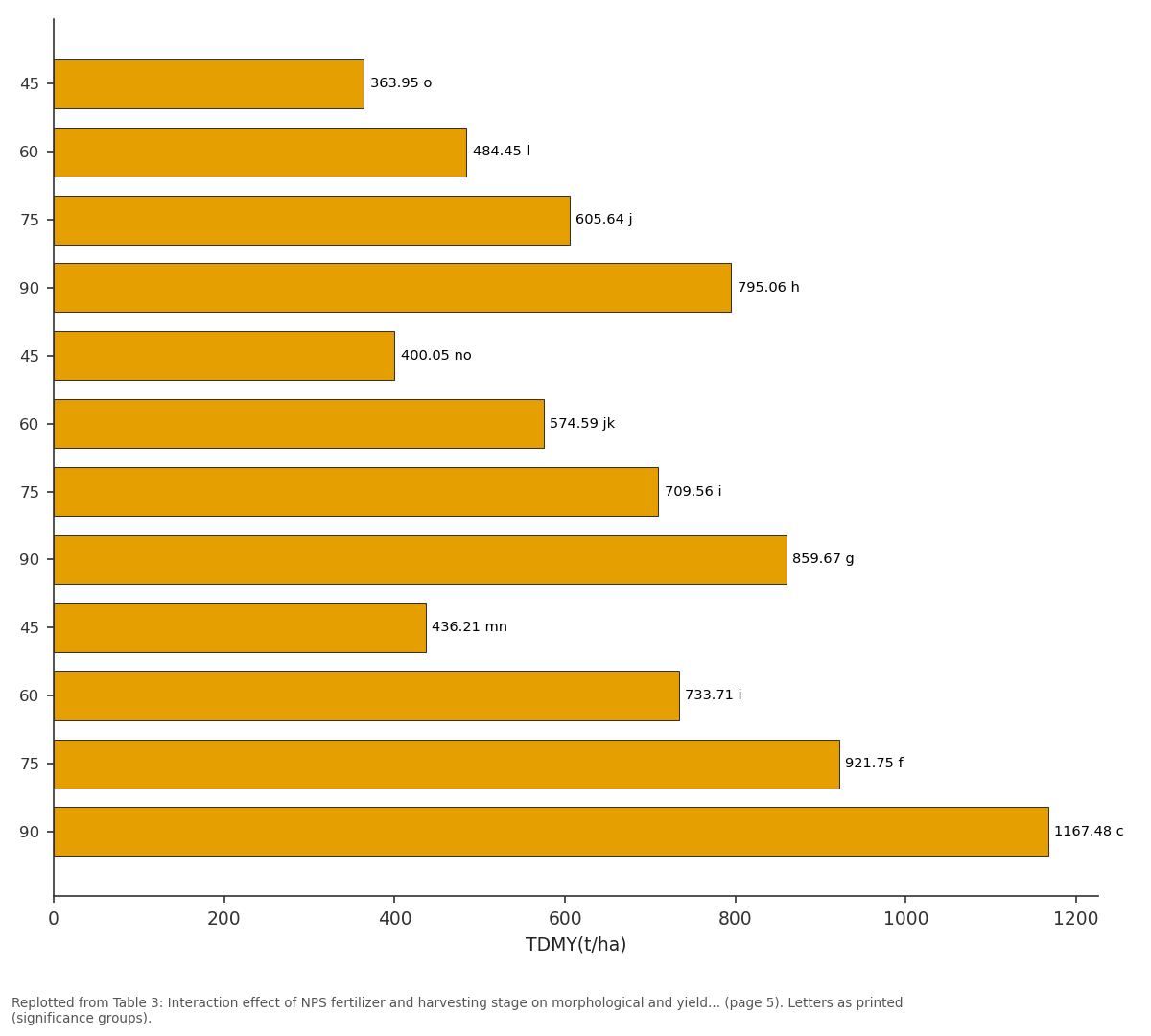
- The number of leaves per plant (NLPP) increased with higher fertilizer levels and extended harvesting, with the highest counts observed at 150 and 200 kg/ha NPS at 90 days. View evidence ↗
- Leaf length per tiller (LLPT) increased with higher NPS fertilizer and longer harvesting stages, reaching its maximum at 150 and 200 kg/ha NPS at 90 days. View evidence ↗
- Total dry matter yield (TDMY) was highest at 150 and 200 kg/ha NPS at 90 days, and lowest in the control group and at 50 kg/ha NPS with 45-day harvesting. View evidence ↗
- The dry leaf-to-stem ratio increased with higher NPS fertilizer but decreased as the harvesting stage was extended, with the highest ratio at 200 kg/ha NPS at 45 days. View evidence ↗
- Plant height (PH) increased consistently with higher NPS fertilizer levels and longer harvesting stages, with the tallest plants resulting from 150 and 200 kg/ha NPS. View evidence ↗
What it means
- The authors conclude that applying 150 kg/ha of NPS fertilizer and harvesting at 90 days is the most appropriate strategy for maximizing Brachiaria grass production in the study area. View evidence ↗
- The authors state that further research is required regarding harvesting frequency, chemical composition, and economic feasibility to confirm the study's findings. View evidence ↗
Visual summary
2 visualsIllustrations explain the paper; charts are replotted from the paper's own table values.
NLPP(Count): 45 vs 60 vs 75 vs 90 vs 45
Replotted from Table 3 (page 5) of the original paper. Every bar is the paper's own table value.
View source evidence ↗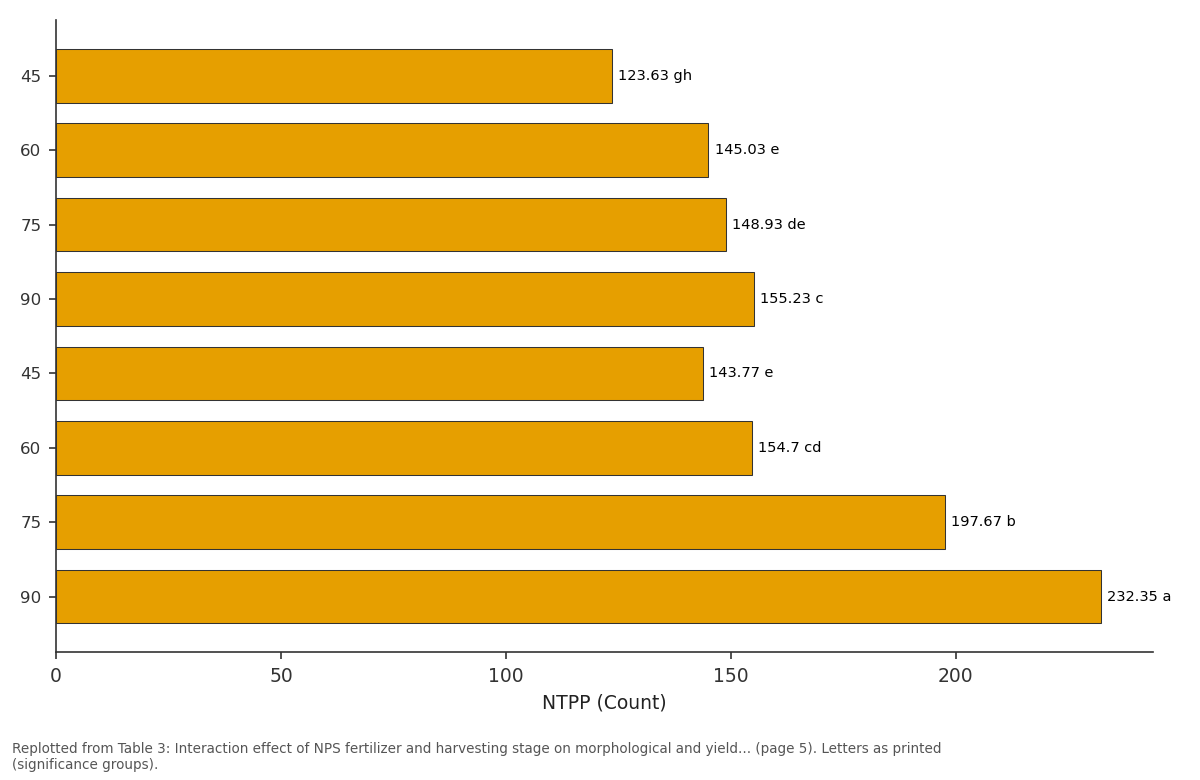
Variables / NTPP (Count): 45 vs 60 vs 75 vs 90 vs 45
Replotted from Table 3 (page 5) of the original paper. Every bar is the paper's own table value.
View source evidence ↗Figures & tables
From the original paper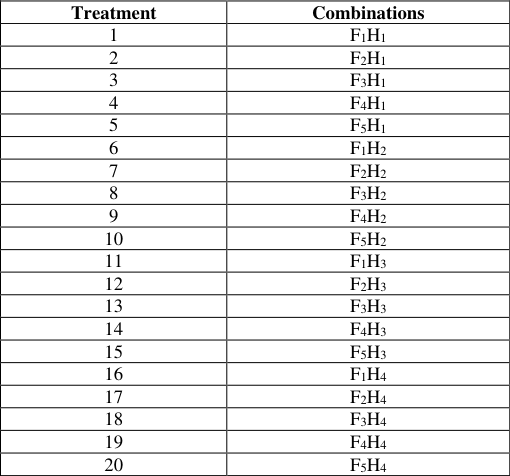 Table 1
 Table 2
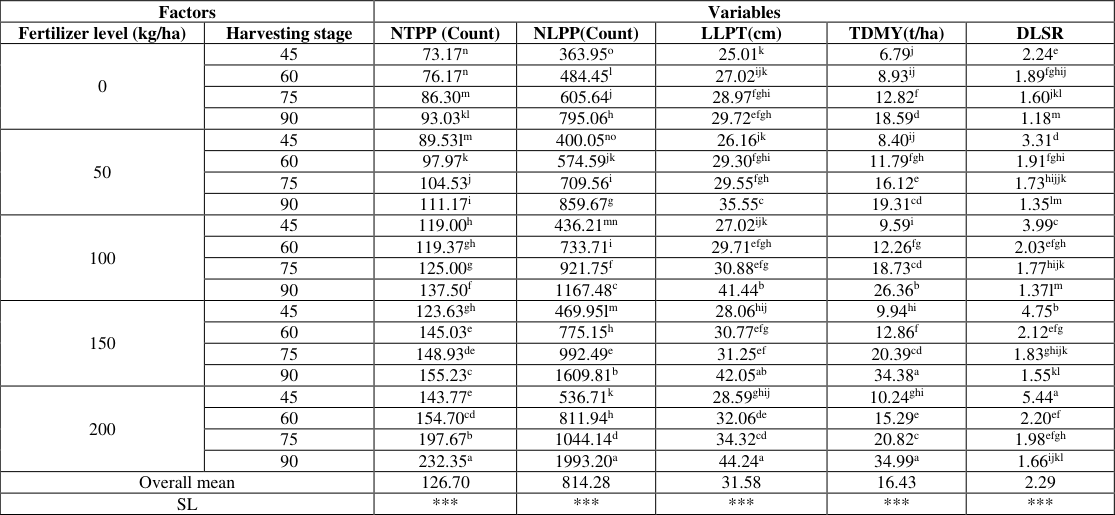 Table 3
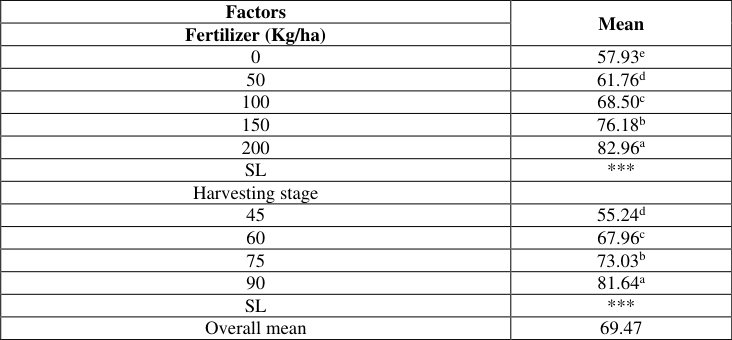 Table 4
Introduction
Despite the sizeable population and significant importance of livestock in Ethiopia, animal productivity is low due to different constraints like inadequate feed, widespread diseases, poor health care services, the poor genetic potential of indigenous animals, and lack of good husbandry practices [1,2] . Among the mentioned factors, the most limiting one is a shortage of feed in terms of quantity and quality [2] , and for the sustainable solution to seasonal deficiencies in feed availability and quality, the growing of improved forage varieties through the cultivation of improved forages and offer them to animals during critical periods in their production cycle and when other sources of feeds are in short supply has received considerable attention for complementing the conventional feed resources, especially in areas where feed shortage is the main constraint for livestock productivity [3,4] . Among the improved forage crops, Brachiaria grass is an important species to integrate into the existing farming system due to its adaptation to many soil types [5] , resistance to many diseases [6, 7] , withstands heavy grazing, and sequesters carbon through its large roots system with enhanced nitrogen use efficiency and minimize greenhouse gas emissions [8,9] . Brachiaria grass can be easily cultivated, develops rapidly, and yields high amounts of dry matter and green forage of higher quality when managed properly and grow at medium to high altitudes below 1800 meter above sea level [10] . The productivity of the forage crops can be influenced by many factors like plant species [11] , stage of growth [12] , fertilizer [13,14] , harvesting stage [13] , and fertilizer levels and harvesting stage are key factors, which contribute to the morphological characteristics, yield, and quality of forage grasses. These conditions vary greatly across agro-ecological areas [3] . Higher fodder yield with fertilizer application is due to their favorable effects on plant water relations, light absorption, crop density, plant height, leaf area, and nutrient utilization [15] . Hence, there is a need to determine an appropriate level of fertilizer application and proper harvesting stage to positively affect Brachiaria grass production both in terms of morphological character and yield performance. Therefore, to utilize Brachiaria grass as a potential fodder crop in the study area, the appropriate NPS fertilizer level, and proper harvesting stage are to be determined. Such information appears to be lacking in the study area, and such information is location-specific based on the soil fertility status of an area. Hence, this experiment was conducted with aim of evaluating the effect of NPS fertilizer and harvesting stage on the growth and yield parameters of Brachiaria grass under supplementary irrigation at Wondogenet, Southern Ethiopia.
Materials and Methods
Materials and Methods
Study Area Description
The experiment was conducted at Wondogenet Agricultural Research Center in Southern Ethiopia. Wondogenet is located at 07°19.1' North latitude and 38°30' East longitude. It is located about 267 km south of Addis Ababa with altitude ranges between 1760 and 1920 masl. Its mean annual rainfall and temperature are 1372 mm and 19°C, respectively [16] . The texture of the topsoil (0-25cm) was sandy clay loam with pH 8.84 (1:2.5 soil water suspension) and 0.18 of total nitrogen [17] .
Experimental Materials
The material used in this experiment was Mulato II grass (Brachiaria hybrid CIAT 36087) which was developed by CIAT and introduced to Ethiopia, and also verified for adaptation, yield, and forage quality in the country [10] .
Experimental Design, Treatments, and Procedures
The experiment consists of five NPS fertilizer levels (0, 50,100,150, and 200 Kg/ha) and four harvesting stages (45, 60, 75, and 90 days) after total clearing and is arranged in a randomized complete block design with three replications. The total treatment was 20 and there were 60 total observations in this experiment (Table 1). Based on the experimental design, each treatment was assigned randomly and independently to the experimental units within a block. The gross size of the experimental plot was 3m x 2.1m in length and width, respectively, accommodating five rows per plot and seven plants per row at a spacing of 0.6 and 0.3m between rows and plants. The experimental land was oxen-plowed and harrowing and bed preparation was carried out before planting manually. Hoeing and leveling experimental plot to get fine soil was also done manually. The homogeneity of the experimental unit in each block was considered depending on the slope and fertility of the experimental land. Brachiaria Mulato II grass root split was planted with 0.6m and 0.3m between and within rows, respectively. DAP fertilizer was applied at the rate of 100kg/ha for root establishment at planting. NPS fertilizer was applied after total cut at sixteen weeks based on the experimental set up while urea was applied to all plots uniformly at the rate of 50 kg/ha as top dressing at the second harvesting cycle. The experiment was irrigated once a week when rain was limited, with precautions taken to avoid contamination of treatments by cross flooding, and other management practices (weeding, pest, and disease monitoring) was done uniformly.
| Treatment | Combinations |
|---|---|
| 1 | F1H1 |
| 2 | F2H1 |
| 3 | F3H1 |
| 4 | F4H1 |
| 5 | F5H1 |
| 6 | F1H2 |
| 7 | F2H2 |
| 8 | F3H2 |
| 9 | F4H2 |
| 10 | F5H2 |
| 11 | F1H3 |
| 12 | F2H3 |
| 13 | F3H3 |
| 14 | F4H3 |
| 15 | F5H3 |
| 16 | F1H4 |
| 17 | F2H4 |
| 18 | F3H4 |
| 19 | F4H4 |
| 20 | F5H4 |
Table text extracted from the original PDF; superscript letters are shown inline. The original table image is below.
View original table image
Methods of Data Collection
In this experiment, harvesting was done two times as the first and second harvesting cycles after total clearing during the experimental period.
Morphological data:
Plant morphological characters consisting of plant height (PH), number of tillers per plant (NTPP), number of leaves per plant (NLPP), and leaf length per tiller (LLPT) were measured as the mean of five plants that were randomly selected from the middle rows of each plot at each harvesting stage. Plant height (PH): Plant height was measured from the ground to the tip of the longest leaf at each harvesting stage from five randomly selected shoots. A number of tillers per plant (NTPP): The number of tillers per plant was recorded from randomly selected five plants by counting all shoots arising from the main plant by excluding the main shoot from which the shoots at each harvesting stage and then calculated as average tiller number per plant. The number of leaves per Plant (NLPP): First, the number of leaves per tiller were counted from five randomly selected shoots from the experimental plot at each harvesting stage. The mean was calculated, and then, the total number of leaves per plant was estimated from the tiller number per plant and leaf number per tiller. Leaf length per tiller (LLPT): Leaf length per tiller was measured from five randomly selected tillers taken at their respective growth stages, and then the mean was calculated.
Dry matter yield and dry leaf-to-stem ratio determination Total dry matter yield (TDMY):
To estimate total dry matter yield, harvesting was done two times as the first and second harvest and the total dry matter yield was presented as the total yield from two the harvests. Harvesting was done by hand using a sickle, leaving a stubble height of 8-10 centimeters, and the harvested herbage was weighed freshly in the field using a field balance and an estimated 500 gm sample was taken from each plot to the laboratory. The 500g sample taken from each plot was weighed to know the sample's fresh weight using a sensitive table balance with a sensitivity of 0.01 and manually fractionated into leaf and stem. The separated fresh leaf and stem were weighed using a sensitive table balance, and then ovendried for 72 hours at a temperature of 65 o C. The ovendried samples were weighed to determine dry matter yield. Dry matter yield will be estimated by multiplying the estimated green forage yield with the dry matter content of the herbage [18] .
Dry leaf-to-stem ratio (DLSR):
The dry leaf-to-stem ratio was determined by harvesting samples from each plot at each harvesting stage. The harvested sample was properly measured, and fresh stems and leaves of each harvested sample were separated and weighed. Each sample of the leaf and stem was oven dried for 72 hours at a temperature of 65 0C, and then, the leaf-to-stem ratio was estimated by dividing leaf dry weight by stem dry weight [18] .
Data Analysis
The collected data were subjected to the analysis of variance (ANOVA) using the SAS computer package version 9.4. Mean separation was carried out using the least significant difference (LSD). The model for data analysis consists of the effects of NPS fertilizer level, harvesting stage, and their interaction.
When the interaction was significant (P<0.05) simple effect means were compared, otherwise main effect means were compared.
The model used for data analysis of the experiment was:
Where, Yijk = the response variable (morphological and yield performance of the plant at each fertilizer level and harvesting stage), μ = grand mean, Fi= the factor effect of fertilizers (i=0, 50, 100, 150, and 200 NPS kg/ha), Hj= the factor effect of harvesting stage (j= 45,60,75, and 90 days), (FH)ij= the ij th interaction effect (Fertilizers x harvesting stage) on the response variables βk = the block effect (k= 1, 2, 3), and еijk = the random error
Result and Discussions 3.1 Analysis of the variance
The analysis of plant height (PH), number of tillers per plant (NTPP), number of leaves per plant (NLPP), leaf length per tiller (LLPT), total dry matter yield (TDMY), and dry leaf-tostem ratio (DLSR) are indicated in Table 2. The interaction of NPS fertilizer and the harvesting stage showed a non-significant difference (p>0.05) only for plant height at harvest. NPS fertilizer level and harvesting stage showed a significant influence (p<0.001) on plant height at harvest independently.
| Variables | Factors | — | — | Mean | CV (%) |
|---|---|---|---|---|---|
| Fertilizer | Harvesting stage | Frt*Hs | |||
| PH (cm) | *** | *** | ns | 69.47 | 5.60 |
| NTPP (Count) | *** | *** | *** | 126.70 | 2.78 |
| NLPP (Count) | *** | *** | *** | 814.28 | 2.83 |
| LLPT (cm) | *** | *** | *** | 31.58 | 4.81 |
| TDMY (t/ha) | *** | *** | *** | 16.43 | 8.08 |
| DLSR | *** | *** | *** | 2.29 | 8.32 |
Table text extracted from the original PDF; superscript letters are shown inline. The original table image is below.
View original table image
The number of tillers per plant (NTPP)
The number of tillers per plant was significantly affected (P < 0.001) by the interaction of NPS fertilizer and the harvesting stage (Table 3). NTPP increased as the NPS fertilizer level increased and the stage of harvesting extended. Application of 200 kg/ha NPS fertilizer level combined with 90 days of harvesting stage produces maximum NTPP than the other treatment groups. The increment of NTPP as NPS fertilizer increased from 0-200 kg/ha might be due to the enhanced development of new shoots and encouragement in the development of new tillers. Concurrent with the result of this study, [19] reported that nitrogen triggers the activation of dormant buds and enhances the vegetation sward filling through the highest rate of tiller replacement, which supports a higher proportion of very active healthier young tillers for each plant, which results in higher tiller density and consequently increases biomass production [20] . Also reported that the application of an optimal level of nitrogen fertilizer significantly affects the appearance of new tillers and increases the dynamics of the tiller population in the case of Cenchrus ciliaris. On the other hand, the maximum NTPP observed at the last harvesting stage indicates that the NTPP increased with an increase in harvesting days and this might be due to more vegetative growth of grass as the harvesting stage was delayed. In line with the present finding, [21,22] reported that, as the harvesting stage increased, NTPP increases progressively on Desho grass (Pennisetum pedicellatum Trin.) in Ethiopia. Similarly, [23,24] also reported that harvesting stages can influence the NTPP of Brachiaria grass in Ethiopia. The overall mean (126.70) NTPP obtained in this study was higher than the values 64.84, 31.10, and 54.40 reported [24][25][26] for Brachiaria Mulato II grass in Ethiopia, respectively. This variation could be due to the differences in the agroecology of the study areas, stage of harvesting, and agronomic management of the plants.
| Factors | — | Variables | — | — | — | — |
|---|---|---|---|---|---|---|
| Fertilizer level (kg/ha) | Harvesting stage | NTPP (Count) | NLPP(Count) | LLPT(cm) | TDMY(t/ha) | DLSR |
| 0 | 45 | 73.17n | 363.95o | 25.01k | 6.79j | 2.24e |
| 60 | 76.17n | 484.45l | 27.02ijk | 8.93ij | 1.89fghij | |
| 75 | 86.30m | 605.64j | 28.97fghi | 12.82f | 1.60jkl | |
| 90 | 93.03kl | 795.06h | 29.72efgh | 18.59d | 1.18m | |
| 50 | 45 | 89.53lm | 400.05no | 26.16jk | 8.40ij | 3.31d |
| 60 | 97.97k | 574.59jk | 29.30fghi | 11.79fgh | 1.91fghi | |
| 75 | 104.53j | 709.56i | 29.55fgh | 16.12e | 1.73hijjk | |
| 90 | 111.17i | 859.67g | 35.55c | 19.31cd | 1.35lm | |
| 100 | 45 | 119.00h | 436.21mn | 27.02ijk | 9.59i | 3.99c |
| 60 | 119.37gh | 733.71i | 29.71efgh | 12.26fg | 2.03efgh | |
| 75 | 125.00g | 921.75f | 30.88efg | 18.73cd | 1.77hijk | |
| 90 | 137.50f | 1167.48c | 41.44b | 26.36b | 1.37lm | |
| 150 | 45 | 123.63gh | 469.95lm | 28.06hij | 9.94hi | 4.75b |
| 60 | 145.03e | 775.15h | 30.77efg | 12.86f | 2.12efg | |
| 75 | 148.93de | 992.49e | 31.25ef | 20.39cd | 1.83ghijk | |
| 90 | 155.23c | 1609.81b | 42.05ab | 34.38a | 1.55kl | |
| 200 | 45 | 143.77e | 536.71k | 28.59ghij | 10.24ghi | 5.44a |
| 60 | 154.70cd | 811.94h | 32.06de | 15.29e | 2.20ef | |
| 75 | 197.67b | 1044.14d | 34.32cd | 20.82c | 1.98efgh | |
| 90 | 232.35a | 1993.20a | 44.24a | 34.99a | 1.66ijkl | |
| Overall mean | 126.70 | 814.28 | 31.58 | 16.43 | 2.29 | |
| SL | *** | *** | *** | *** | *** |
Table text extracted from the original PDF; superscript letters are shown inline. The original table image is below.
View original table image
Number of leaves per plant (NLPP)
The number of leaves per plant was significantly affected (P < 0.001) by the interaction of NPS fertilizer and the harvesting stage (Table 3). NLPP increased as the NPS fertilizer level increased and the stage of harvesting extended. Higher NLPP were counted from 150 and 200 kg/ha NPS fertilizer application combined with 90 days harvesting stage after total clearing. The NLPP was increasing with the increment of fertilizer level and this could be attributed to the sufficient supply of nutrient which in turn facilitates plants growth since nitrogen plays a crucial role in the structure of chlorophyll and stimulate the formation of new tissues and phosphorus is also involved in the energy transfer for cellular metabolism. In agreement with the result of this study, [27] reported that the application of phosphorus fertilizer gradually increases plant height and the number of leaves per plant. While the increase of NLPP at all NPS fertilizer levels concerning the advance in the harvesting stage of plants might be due to the development of new shoots bearing on each plant resulting in a greater number of tillers and the number of leaves as the plant matures. In line with this finding, [21] and [22] reported that, as the harvesting stage increased, the number of leaves per plant increases progressively on Desho grass (Pennisetum pedicellatum Trin.) in Ethiopia. Similarly, [23] and [24] also reported that harvesting stages can influence the NLPP of Brachiaria grass in Ethiopia. The overall mean value (814.28) NLPP recorded in this study was higher than the previous finding of [25,26] was 287.70 and 506.60 for Brachiaria Mulato II grass in the lowlands of Ethiopia, respectively. The reason for these differences might be associated with differences in the environmental conditions (type and fertility of soil, temperature, rainfall, and altitude) and management practices applied to the plant.
Leaf length per tiller (LLPT)
Leaf length per tiller of Brachiaria grass was significantly affected (P < 0.001) by the interaction effect of NPS fertilizer and harvesting stage (Table 3). LLPT of the grass was increased as the NPS fertilizer level increased and the harvesting stage extended the largest LLPT was recorded from the application of 150 and 200 kg/ha NPS fertilizer application harvested at 90 days harvesting stage while the shortest was from 50 and 100 kg/ha NPS fertilizer combined with 45 days of harvest and control group (0 kg/ha NPS) at 45 and 60 days harvesting stage after total clearing. The significant increase in LLPT observed by plants treated with the highest rate of NPS fertilizer and increased age of plants could be because fertilizer enhanced growth and consequently influences leaf expansion and development. While the difference in leaf length in the earlier and later days of harvesting might be due to the differences between physiological changes of plants observed during the growing periods. Concurrent with the result of this study [28] reported that the leaf length per plant was lowest at the earlier stage than the later stage of harvest in the case of Napier grass. Other authors [23,24] also reported that the leaf length of Brachiaria grass significantly increased as the harvesting stage increased from 60 to 120 days in northwestern Ethiopia. The mean leaf length (31.58 cm) of the current finding is comparable with the finding of [24,26] which was 30.00 cm and 34.20 cm leaf length for Brachiaria hybrid Mulato II grass in Ethiopia, respectively.
Total dry matter yield (TDMY)
The interaction of NPS fertilizer and the harvesting stage had a significant effect (p<0.001) on the total dry matter yield of Brachiaria grass (Table 3). The total dry matter yield of the grass was significantly increased in response to increasing NPS fertilizer and the delayed harvesting stage. The highest total dry matter yield was recorded from 150 and 200 kg/ha NPS fertilizer application at 90 days of harvest after total clearing while the least was from 50 kg/ha NPS fertilizer at 45 days of harvesting stage and the control group and 45 and 60 days harvesting stage. The significant increase in TDMY with increasing levels of NPS fertilizer could be attributed due to the availability of macronutrients and some secondary nutrients formulated with the blended fertilizer, which could increase the vegetative growth and consequently the biomass yield. This is because, an increased concentration of fertilizer can increase nitrogen uptake and this increase has a positive effect on chlorophyll concentration, photosynthetic rate, leaf expansion, the total number of leaves, and dry matter accumulation [29] . Similarly, the application of phosphorus fertilizer also gradually increased plant height, stem diameter, number of leaves per plant, leaf area per plant, and fodder yield [27] . The report of [30] also reveals that the DMY of the grass component increased as the level of nitrogen fertilizer increased. The higher TDMY at later stages of harvesting was expected as plants were physiologically triggered, which leads to the increased production of tillers and more leaves per plant. All these characteristics would contribute to increased photosynthetic activity and hence higher DM production. The yield increment might be due to the additional tillers developed, which brought an increase in leaf formation, leaf elongation, and stem development [31,32] . The current analysis result was agreeing with the finding of [33][34][35] who reported the highest total DMT observed at the last harvesting stage on wild Brachiaria grasses in different countries. Similarly, [28,32,36,37] reported the highest DMY that was produced from cultivated grasses and natural pastures as harvesting stages were delayed. The TDMY 16.43 t/ha obtained from two harvests in this study is higher than the finding of [24,26] which were 10.38 t/ha and 9.18 t/ha from Brachiaria Mulato II grass in Ethiopia. Similarly, it is also higher than the earlier result of [38] which was 8.30 t/ha in Rwanda. But, it is slightly comparable with 14.59 t/ha DMY reported by [25] for Brachiaria Mulato II grass in Ethiopia.
Dry leaf-to-stem ratio (DLSR)
The interaction effect of NPS fertilizer and the harvesting stage had a significant effect (P < 0.001) on the dry leaf-to-stem ratio of the grass (Table 3). The result of this study indicated that leaf to stem ratio was increased with increasing NPS fertilizer but decreased with the extended harvesting stage. The current study revealed that the highest leaf-to-stem ratio was obtained from 200 kg/ha NPS fertilizer application at 45 days of harvest while the lowest was recorded from the treatment groups treated with 0,50 and 100 kg/ha NPS fertilizer and harvested at 90 days of harvesting stage. The reason for the increment of dry leaf-to-stem ratio as the amount of NPS fertilizer increased might be because nitrogen and phosphorus fertilizer increase leafiness, fodder yield, and digestibility of plants. Regarding the harvesting stage, the decline of the leaf-to-stem ratio with the advancement of the harvesting stage indicated an inverse relationship between the growth of plants and leaf to stem ratio. This could be due to the reduction of plants in leaf proportion and an increase in stem fractions of the grass at the advanced stage of harvesting. Leaf to stem ratio is the best indication of the quality of forages, hence a plant that has a high leaf-to-stem ratio also has high nutrition and digestibility. But, at the early stages of plant growth, the stem of grasses is more easily digestible than the leaf parts of the plant but as growth becomes advanced the digestibility of the stem rapidly declined, while the nutritive value of the leaf parts become slowly decreased [39] . In line with the current result, [32] reported a higher leaf-to-stem ratio for Desho grass at the early harvesting stage (90 and 120 days) compared to the later date (150 days) [40] . Also reported a sharp decline in the value of the leaf-to-stem ratio as the cutting intervals increased.
lant height at harvest (PH)
NPS fertilizer and harvesting stage had a significant effect (P<0.001) on the plant height at harvest of Brachiaria grass but doesn't affect by the interaction of the factors (Table 4). The present result indicated that the increment of PH was consistent with the increment of NPS fertilizer level and longer harvesting stage. The taller PH was recorded from 150 and 200 kg/ha NPS fertilizer application while the shorter one was from 0 and 50 kg/ha NPS fertilizer application. Regarding the harvesting stage, the taller plant height was from 90 days harvesting stage after total clearing while the shorter was from 45 days of the harvesting stage. The significant increase in plant height observed by plants treated with the highest rate of fertilizer level and increased age of plants could be due to an adequate supply of fertilizer that might promote the formation of chlorophyll that in turn resulted in higher photosynthetic activity, vigorous vegetative growth, and taller plants and as the age of plants increased the wellestablished root development and nutrient uptake ability of the grasses which in turn could be manifested by the increment of plant height and leaf length. The result of this finding agrees with the previous finding of [23,24] who reported that the plant height of Brachiaria grass significantly increased as the harvesting stage increased from 60 to 120 days in northwestern Ethiopia. The mean value (69.47 cm) of PH obtained in this study was higher than the earlier finding of [24] which was 28.63 cm for Brachiaria hybrid Mulato II grass in Northwestern Ethiopia. On the other hand, [26] reported 72.31 cm plant height for the same species which was comparable with the current result.
| Factors | Mean |
|---|---|
| Fertilizer (Kg/ha) | |
| 0 | 57.93e |
| 50 | 61.76d |
| 100 | 68.50c |
| 150 | 76.18b |
| 200 | 82.96a |
| SL | *** |
| Harvesting stage | |
| 45 | 55.24d |
| 60 | 67.96c |
| 75 | 73.03b |
| 90 | 81.64a |
| SL | *** |
| Overall mean | 69.47 |
Table text extracted from the original PDF; superscript letters are shown inline. The original table image is below.
View original table image
Conclusions
From the finding of this experiment, Brachiaria grass responded differently to NPS fertilizer and harvesting stage, the main effect of NPS fertilizer, harvesting stage, and their interaction significantly influenced the agronomic and yield performance of Brachiaria grass. Almost all agronomic parameters and total dry matter yield of Brachiaria grass were increased both with increasing NPS fertilizer and delayed harvesting stage. The dry leaf-to-stem ratio was increased with increasing NPS fertilizer but decreased with the extended harvesting stage.
In this regard, the application of 150 kg/ha NPS fertilizer combined with 90 days of harvest after total clearing was found to be the most appropriate level for better Brachiaria grass production in the study area and similar agroecologies. At this level, it produces a higher total dry matter yield than other treatment groups but similar to 200 kg/ha NPS fertilizer application harvested at 90 age after total clearing. Based on the information generated on agronomic and yield parameters, the following recommendations are forwarded. Livestock keepers and forage producers are advised to apply 150 kg/ha NPS fertilizer and harvest at 90 days of harvest to get a better yield from the grass. Further research is needed on harvesting frequency, chemical composition, and economic feasibility of the treatment to confirm the present finding.
References
27 in the original paper- Dawit A, Wegi T. Determination of optimum seed and fertilizer rate for fodder oat in Bale Highland Southeastern Ethiopia. International Journal of Soil and Crop Science. 2014;2(7):73-76.
- Negash D, Animut G, Urgie M, Mengistu S. Chemical composition and nutritive value of oats (Avena sativa) grown in a mixture with vetch (Vicia villosa) with or without phosphorus fertilization in east Shoa Zone, Ethiopia. Journal of Nutrition and Food Sciences. 2017;7:4.
- Vendramini JMB, Desogan AA, Silveira MLA, Sollenberger LE, Queiroz OCM, Anderson WF. Nutritive value and fermentation parameters of warm-season grass silage. The Professional Animal Scientist. 2010;26(2):193200. https://doi.org/10.15232/S1080-7446(15)30580-5
- Maass BL, Midega CA, Mutimura M, Rahetlah VB, Salgado P, Kabirizi JM, et al. Homecoming of Brachiaria: Improved hybrids prove useful for African animal agriculture. East African Agricultural and Forestry Journal. 2015;81(1):71-78. http://dx.doi.org/10.1080/00128325.2015.1041263.
- Arango J, Moreta D, Núñez J, Hartmann K, Domínguez M, Ishitani M, et al. Developing methods to evaluate phenotypic variability in biological nitrification inhibition (BNI) capacity of Brachiaria grasses. Tropical GrasslandsForrajes Tropicales. 2014;2(1):6-8. https://doi.org/10.17138/tgft(2)6-8
- Moreta DE, Arango J, Sotelo M, Vergara D, Rincon A, Ishitani M, et al. Biological nitrification inhibition (BNI) in Brachiaria pastures: A novel strategy to improve ecoefficiency of crop-livestock systems and to mitigate climate change. Tropical Grasslands-Forrajes Tropicales. 2014;2(1):88-91. https://hdl.handle.net/10568/56815.
- Ghanbari-Bonjar A, Lee HC. Intercropped wheat (Triticum aestivum L.) and bean (Vicia faba L.) as a whole-crop forage: effect of harvest time on forage yield and quality. Grass and Forage Science. 2003;58(1):28-36.
- Cop J, Vidrih M, Hacin J. Influence of cutting regime and fertilizer application on the botanical composition, yield and nutritive value of herbage of wet grasslands in Central Europe. Grass and Forage Science. 2009;64(4):454-465. https://doi.org/10.1111/j.1365-2494.2009.00713.x
- Banjaw DT, Dikir W, Gebre A, Geja W, Tsegaye D. Aromatic and Medicinal Plants in Wondogenet Agricultural Research Center Botanical Garden, South Ethiopia. Medicinal and Aromatic Plants (Los Angel). 2016;5(278):2167. DOI: 10.4172/2167-0412.1000278.
- Yirgu T, Mengistu S, Shanku E, Ijara F. Desho grass (Pennisetum. pedicellatum) lines evaluation for herbage yield and quality under irrigation at Wondogenet. American-Eurasian Journal of Agricultural and Environmental Science. 2017;17(5):427-431. https://www.idosi.org/aejaes/jaes17(5)17/9.pdf
- Mengistu A, Mekasha A. Measurements in pasture and forage cropping systems. Ethiopian Institute of Agricultural Research. Technical manual. 2007;18:41. https://agris.fao.org/agris-search/search.do?recordID= ET2009000022
- Mushtaque M, Ishaque M, Ahamd M. Growth and herbage yield of Setaria sphacelata grass in response to varying clipping stages. JAPS, Journal of Animal and Plant Sciences. 2010;20(4):261-265.
- Kizima JB, Mtengeti EJ, Nchimbi-Msolla S. Seed yield and vegetation characteristics of Cenchrus ciliaris as influenced by fertilizer levels, row spacing, and cutting height and season. Livestock Research for Rural Development. 2014;26(8):148.
- Tilahun G, Asmare B, Mekuriaw Y. Effects of harvesting age and spacing on plant characteristics, chemical composition and yield of desho grass (Pennisetum pedicellatum Trin.) in the highlands of Ethiopia. Tropical Grasslands-Forrajes Tropicales. 2017;5(2):77-84. https://doi.org/10.17138/tgft(5)77-84.
- Wassie WA, Tsegay BA, Wolde AT, Limeneh BA. Evaluation of morphological characteristics, yield, and nutritive value of Brachiaria grass ecotypes in northwestern Ethiopia. Agriculture & Food Security. 2018;7(1):1-10. https://link.springer.com/article/10.1186/s40066-018-02394.
- Adnew W, Tsegay BA, Tassew A, Asmare B. Effect of Harvesting stage and Altitude on Agronomic and Qualities of six Brachiaria grass in Northwestern Ethiopia. AgriLife Scientific Journal. 2019;8:1. http://agrolifejournal.usamv.ro/pdf/vol.VIII_1/Art1.pdf.
- Yiberkew N, Mekuriaw Y, Asmare B. Effects of fertilizer types and plant spacings on plant morphology, biomass yield and chemical composition of Brachiaria hybrid mulato ii grass grown in lowlands of Northwest Ethiopia. Scientific Papers: Animal Science and Biotechnologies. 2020;53(1).
- Alem WT. Effects of plant spacing and fertilizer levels on plant morphology of hybrid Brachiaria cv. Mulato II grass in Chagni ranch, Awi zone, Ethiopia. International Journal of Research in Applied, Natural and Social Sciences (IMPACT: IJRANSS). 2021;9(1):17-30. https://doi.org/10.20546/ijcrar.2021.903.006.
- Mahmood MM, Farooq K, Riaz S. Response of potato crop to various levels of NPK. Asian Journal of Plant Sciences (Pakistan). 2003;2:149-151. https://scialert.net/abstract/?doi=ajps.2003.149.151.
- Najm AA, Hadi MHS, Fazeli F, Darzi MT, Shamorady R. Effect of utilization of organic and inorganic nitrogen source on the potato shoots dry matter, leaf area index, and plant height, during the middle stage of growth. International Journal of Agricultural and Biological Sciences. 2010;1(1):26-29. https://publications.waset.org/15448/pdf.
- Nguku S, Musimba N, Njarui D, Mwobobia R, Kaindi E. Effects of Acid Scarification on germination of the genus Brachiaria grass Cultivars. International J Sci Res Innov Technol. 2016;3:45-50. https://www.ijsrit.com/uploaded_all_files/2162555457_j4.p df.
- Asmare B, Demeke S, Tolemariam T, Tegegne F, Haile A, Wamatu J. Effects of altitude and harvesting stages on morphological characteristics, yield and nutritive value of desho grass (Pennisetum pedicellatum Trin.) in Ethiopia. Agriculture and Natural Resources. 2017;51(3):148-153. https://doi.org/10.1016/j.anres.2016.11.001
- Njarui DMG, Wandera FP. Effect of cutting frequency on the productivity of five selected herbaceous legumes and five types of grass in semi-arid tropical Kenya. Tropical Grasslands. 2004;38(3):158-166.
- Hare MD, Phengphet S, Songsiri T, Sutin N, Stern E. Effect of cutting interval on yield and quality of three Brachiaria hybrids in Thailand. Tropical Grasslands -Forrajes Tropicales. 2013;1:84-86. https://www.tropicalgrasslands.info/index.php/tgft/article/vi ew/53/26.
- Feyisa F, Prasad S, Assefa G, Bediye S, Kitaw G, Kehaliew A, et al. Dynamics in nutritional characteristics of natural pasture hay as affected by harvesting stage, storage method, and storage duration in the cooler tropical highlands. African Journal of Agricultural Research. 2014;9(43):32333244. https://doi.org/10.5897/AJAR2014.8652
- Mutimura M, Everson TM. On-farm evaluation of improved Brachiaria grasses in low rainfall and aluminium toxicityprone areas of Rwanda. International Journal of Biodiversity and Conservation. 2012;4(3):137-154. https://doi.org/10.5897/IJBC10.121.
- Wangchuk K, Rai K, Nirola H, Dendup C, Mongar D. Forage growth, yield, and quality responses of Napier hybrid grass cultivars to three cutting intervals in the Himalayan foothills. Tropical Grasslands-Forrajes Tropicales. 2015;3(3):142-150. DOI: 10.17138/TGFT (3)142-150
Cited by 6
From OpenAlex, OpenCitations and reference lists read by Scinovex
- The comparative impact of chemical fertilizers, nano-urea and nano-DAP on growth and yield of wheat crop
Karmnath Kumar, Sucheta Dahiya · International Journal of Advanced Biochemistry Research · 2024
The focus on sustainable agriculture compares the impact of chemical fertilizers, nano-urea, and nano-DAP on the growth and production of wheat crop. According to the results, chemical fertilizers are greatly out performed by nano-urea and nano-DAP, which improves the growth indices and yield. Nano-urea showed the increased nutrient absorption efficiency, which encourages strong plant growth and produces higher-quality grain. Similarly, Nano DAP shows impressive effectiveness through promoting root growth, increasing nutrient uptake, and enhancing photosynthetic efficiency, all of which boost
- Understanding morpho-physiological responses of maize towards ammonium-loaded chitosan nano-fertilizer ↗
Priya Meena, Kinjal Mondal, Vinod Saharan͙, Devendra Jain, Ranjana Bai Yadav, Pokhar Rawal et al. · South Asian Journal of Agricultural Sciences · 2024
Global agriculture is frantically seeking for ways to mitigate the detrimental environmental effect of standard chemical fertilizers. Next-generation fertilizers made from biodegradable, eco-friendly, renewable energy sources may be the answer, allowing for greater nutrient efficiency and a lower environmental footprint. Chitosan nanoparticles (NPs) have recently been characterized as a viable way to improve plant immune systems through slow, controlled, and
- Evaluation of Three Urochloa Hybrid Cultivars in Different Agroecological Zones of the South‐Kivu and Tanganyika Provinces, Eastern Democratic Republic of the Congo ↗
Samy Bashizi Bacigale, Valence Bwana Mutwedu, Yannick Mugumaarhahama, Prince I. Erhahamoba, Kokou Kintché, Janvier Bigabwa Bashagaluke et al. · Advances in Agriculture · 2026
In the eastern Democratic Republic of the Congo (DRC), feed scarcity is listed among the challenges constraining livestock production. This study aimed to evaluate the agronomic performance and farmer preference of three hybrid Urochloa cultivars (Cayman, Cobra, and Mulato‐II) and the local Rhodes grass ( Chloris gayana Kunth) in South‐Kivu and Tanganyika provinces. The forages to be tested were evaluated…
❝ 0PDF - Innovative perspectives and critical implications of nanotechnology in food science ↗
E Akshaya · International Journal of Home Science · 2025
Nanotechnology is transforming food science by introducing ground-breaking solutions that improve food safety, quality, and sustainability. This study examines the cutting-edge uses of nanotechnology in food systems, with an emphasis on nutrition delivery, packaging innovation, contaminant detection, and agricultural breakthroughs. Ten contemporary studies (2021-2024) are analysed to identify breakthroughs and obstacles. The summary examines technology deployment patterns and includes key
- Effect of intra row spacing and NPS fertilizer rate on yield and yield components of Mung bean (Vigna radiata L.) in Arba Minch district, Southern Ethiopia
Aman Abeje, Gizachew Esayas · International Journal of Agriculture and Food Science · 2024
Mung bean is becoming an important pulse crop in dry land areas of Ethiopia. However, its productivity is influenced by intra row spacing and nutrient management in a given environment. Accordingly, a field experiment was conducted to determine the optimum level of intra row spacing and NPS fertilizer rate for enhanced productivity of mung bean in Arba Minch district. It was carried out during the 2021 cropping season and the treatments consisted of factorial combinations of four intra row spacing (5, 10, 15 and 20 cm) with five NPS fertilizer rates (0, 50, 100, 150 and 200 kg ha-1) laid out i
- A study on perception of farmers towards nano dap in Nalgonda district of Telangana
Nulaka Chandana Reddy, Phani Shekar Sistla, P. Radhika, K. Supriya · International Journal of Agriculture Extension and Social Development · 2024
Conventional fertilizers have been crucial in boosting agricultural productivity, greatly enhancing global food security. However, these conventional fertilizers have their own set of disadvantages. Issues such as heavy dependence on imports for both manufactured products & raw materials, fiscal burden of fertilizer subsidy on economy, adverse effects of imbalanced use of fertilizers, Moreover, the inefficiency in nutrient use often results in wastage and pollution. Nano fertilizers are emerging as a promising solution to address the above challenges. By utilizing nanoscale materials, these ad