
Research article · 2020 · Full text
International Journal of Advanced Chemistry ResearchWater, sanitation, hygiene and Swachachh Bharata: An anthropological analysis
Volume 2(1) · Pages 13–16 · DOI: 10.33545/26646781.2020.v2.i1a.17 ↗
Research areasHealthcare and Environmental Waste Management
Abstract
Author-writtenStructure and relative stability of Pdn clusters for n=1–6 were investigated using density functional methods at the B3PW91 level of theory. The structures of the optimized Palladium clusters were investigated and the results are compared with the available experimental values. Stability of the clusters was determined from their relative energy values, binding energies, HOMO-LUMO gap and electronic properties. The binding energy per atom also increases with cluster size. The study revealed that Pd4 and Pd6 are relatively more stable than their neighboring clusters. The most stable isomer for all clusters under investigation is the triplet. The Pd4 and Pd5 showed different Pd-Pd bond lengths due to Jahn-Teller distortion. Stability function and atom addition energy change predict that Pd4, and Pd6 are relatively more stable than their neighboring clusters. Electron affinity (EA), Ionization potential (IP) and electronegativity values suggest that larger clusters have stronger tendency to accept electrons, thereby supporting the relative stability of Pd4 and Pd6. Finally, Collision diameter increases as the cluster size increases.
Summary
Source-checkedPlain-language reading of the full paper, prepared with AI and checked against the text. Each point links to the authors' own words.
Why it matters
- Access to safe drinking water, basic sanitation, and good hygiene is essential for maintaining a healthy, productive, and dignified life. View evidence ↗
- Inadequate water and hygiene conditions lead to significant human and economic costs and worsen societal and gender inequalities, particularly affecting women and children. View evidence ↗
- Improper sanitation in India had a severe economic impact, costing approximately 2.44 trillion rupees (US$ 53.8 billion) annually, or 6.4% of the GDP in 2006. View evidence ↗
The question
- The study aims to explore the attitudes and practices related to water, sanitation, and hygiene among rural residents of the Kondagaon district in Chhattisgarh. View evidence ↗
What they did
- The researcher used observation and interview methods to assess the knowledge and practices of rural people in the Kondagaon district. View evidence ↗
- The study was conducted in Kondagaon, the headquarters of the 27th district of Chhattisgarh, which has a total population of approximately 22,772. View evidence ↗
What they found
- In the studied rural households, well water was the primary source for drinking and cooking in 62.5% of cases. View evidence ↗
- Two-thirds of rural households primarily used piped water for bathing and washing clothes rather than for drinking. View evidence ↗
- The author found that study participants did not link the use of unsafe water to diseases such as diarrhea or chickenpox. View evidence ↗
- In Tandawa village, high levels of engagement in religious activities were associated with a lack of awareness regarding the link between unsafe water and diarrhea. View evidence ↗
- The transition of hygiene knowledge into actual habit is hindered by poverty, outmoded knowledge, lack of willingness, and low interest in community meetings. View evidence ↗
- Participants prioritized hand washing with soap after defecation over hand washing before handling food. View evidence ↗
What it means
- The author recommends developing a national and local implementation strategy for hygiene awareness and creating a system to evaluate the impact of hygiene workshops in rural communities. View evidence ↗
Visual summary
1 visualsIllustrations explain the paper; they do not show study data.
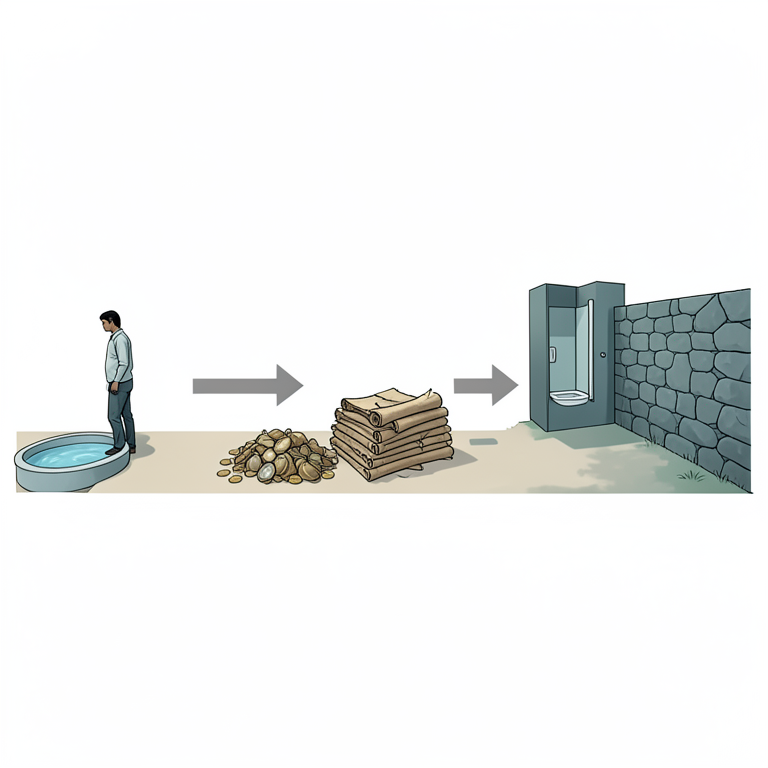
Barriers to Hygiene Habit Formation
AI-generated conceptual illustration (A rural Indian village setting with a hand-washing station and a toilet facility). It explains the idea and does not show study data.
View source evidence ↗Figures & tables
From the original paper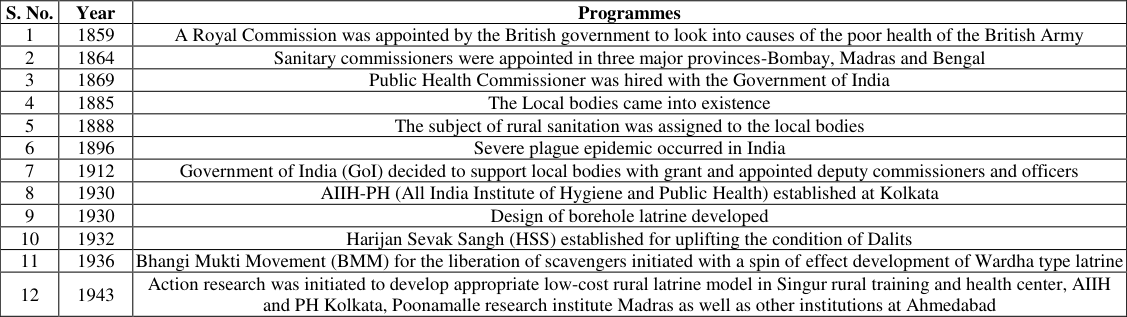 Table 1
Introduction
The paper deals with the 'water, sanitation, and hygiene condition' as well as collect information on the different aspects of living conditions deemed relevantly necessary for decent and healthy living of the household members. The article also explores water, sanitation, and hygiene-related attitudes and practices among individuals living in village settings of Kondagaon district Chhatisgargh. Kondagaon is a headquarters of Kondagaon district separated from the Bastar district on 24 January 2012 and formed as the 27th district of Chhattisgarh in the Indian state of Chhattisgarh. The total population of Kondagaon is about 22,772. Kondagaon district is constituted of 5 blocks, namely Keshkal, Baderajpur, Pharasgaon, Lohandiguda, Kondagaon. A safe and sustainable drinking-water supply, basic sanitation, and good hygiene are vitally fundamental for a qualitatively healthy, well-being, productive and dignified life. Moreover, yet many of the world's poor rural people lack access to an improved water supply (900 million) and improved sanitation facilities (2 billion) (Joint Monitoring Programme for Water and Sanitation, 2006). There can be seen some development and progress in terms of implementation of policy objectives with particular reference to the United Nations Millennium Development Goal for water and sanitation is particularly weak in sub-Saharan Africa (Nagla, 2015) [3] . Poor access to drinking water, healthy cleanliness, and hygiene living conditions results in the bearing of tremendous human and economic reparation costs and reinforces gender and other societal inequalities, most notably for children, women, and girls. Rapidly increasing urban populations, more migration from village to urban areas, rapid infrastructural development, and the feminization of the rural economy are significantly altering the rural context. This 'new rurality' is also affected by external shocks and calamitiessuch as the effects of climate change and globally interdependent markets. Such changes augment the vulnerability of many poor rural people and demand innovative approaches to the provision of agricultural water, sanitation, and hygiene (Prasad and Yadav, 2017) [6] . Improving drinking water conditions and sanitation facilities remains a significant concern globally. Though 90 percent of the world's population has access to drinking water facilities, about 768 million people rely on unimproved drinking water-sources; 83 percent of them residing in rural areas (World Health Organization/ United Nations International Children's Emergency Fund [WHO/UNICEF], 2013; United Nations Millennium Development Goals [UNMDGs], 2013 (UN-Water Report, 2008). Around 1.9 billion people gained access to improved sanitation facilities over two decades (1990 to 2011), with an average rate of 240,000 individuals gaining access every day. Around eight percent of the Indian population is still devoid of clean water, and only twenty-five percent of the population is access to piped water in premises (WHO/ UNICEF Joint Monitoring Programme [JMP], 2013). This current growth rate is not enough to achieve sanitation targets (Target 7.C Halve, by 2015), and the proportion of the population without sustainable access to safe drinking water and basic sanitation are lived realities of India (UN in Water Aid, 2018). Therefore, the idea of Millennium Development Goals (MDGs) was initiated by the government. It was predicted that a daily average increase of 660,000 individuals per day has to be provided with improved sanitation facilities till 2015 if the set target has to be achieved. However, the current trend is showing a gap of eleven percent from the expected target of MDGs to be [1] . Swachh Bharat Abhiyan and Ujjwala Yojana particularly helped make some improvements in goals in aspects of 'clean water and sanitation' and 'affordable and clean energy.' According to the previous study, the burden of diseases on the World could be decreased by 10 percent annually through prevention and preparedness for facilitating improvement in the quality of drinking water and water resource management simultaneously with sanitation and hygiene (Prasad and Yadav, 2019) 7] . A study by the WHO (World Health Organization) shows that to meet Target 7C of the MDGs, an investment of US$11.3 billion per year can give a payback of US$84 billion (Hutton and Haller, 2004) [2] . Sanitation is also one of the major environmental health issues to be addressed. The Joint Monitoring Project (JMP) report of 2013 estimates that half of the Indian population still practice open defecation. A meager 17 percent increase in sanitation facilities to the target population since 1990, can be related to the growth in the community or density of slum dwellers, especially in South-Eastern Asia (Prasad and Srihari, 2017) [7] . Out of 2.5 billion diarrhoeal cases occurring every year among under-five children, more than half occur from Africa and South Asia. The total death toll due to diarrhea is about 1.5 million every year globally. The disease is more severe as it causes more deaths than AIDS, malaria, and measles combined in young children ( UN-Water Report, 2008). Diarrhea is also one of the leading or main causes of undernutrition in children with diarrheal disorders causing 12.6 percent of total deaths in children under the age group of five years (Chambers & von Medezza, 2013) [1] . [7] Inadequate water and sanitation conditions in India not only take a toll on the health of population and mortality but also cause a significant loss to the economy. The impact of improper sanitation alone accounts for 2.44 trillion rupees (US$ 53.8 billion) every year, which was equal to 6.4percent of India's Gross Domestic Product (GDP) in 2006 (Water and Sanitation Programme [WSP], 2011) (UN-Water Report, 2008). Inadequate knowledge and poor practices of storing drinking water can cause severe effects on the health of the population. For the reduction of water-borne diseases, there is a need to understand the current changing trends of attitudes, social behaviors, and practices of individuals living in the urban slums.
Conceptual Understanding
The freshwater and rural sanitation needs of the poor in developing countries, including India. To meet the target of freshwater and rural sanitation for all by the end of 2025 is a challenging task. Some three billion people will have to obtain improved water supplies, and around 4.2 billion improved rural sanitation. The use of technologies must be appropriate and, in particular, simple, affordable, and sustainable. The current study determines to assess knowledge, attitude, and practices regarding water management, rural sanitation, and defecation practices as possible determinants of diseases in the rural population of Madhya Pradesh, India. Existing knowledge regarding safe water, sanitation, and hygiene behavior in the community is shallow. The primary factor behind this could be a low level of education among villagers. The unhealthy surroundings and unhygienic practice of the community create ideal conditions for the spread of water-borne diseases. Health and hygiene education is critical for better use of existing various facilities and also to stop the incidences of water and rural sanitation-related diseases like diarrhea, dysentery, chickenpox, hepatitis, polio, and worm infestation. Inadequate sanitation in rural areas has a direct effect on rural health, including individual, family, communities, and the nation as a whole, having sanitation facilities increases health well-being and economic productivity. Few studies focus that most (65 percent) of the respondents were using soapy water after defecation, and 31 percent were using water alone, and 4 percent were using ash/soil water for hand washing. As hand washing is directly related to social and personal hygiene, it is good practice that this community was using soapy water 65 percent after defecation (Shahid, M. 2014) [13] . In this study, the sanitary knowledge 90 percent and hand washing with soapy water 65 percent of the community people were high. The toilet facility was low (36 percent). So, there should be an extensive health education program and comprehensive awareness for the people of the areas about personal and social hygiene and sanitation. Government and Non-governmental organizations should be involved in the construction of toilets in this community with their full participation. The objective of this study by Pathak was to know the traditional knowledge and social practice of the people about the diseases (in rural areas) related to freshwater and rural sanitation and to see the pattern of water-related diseases in last few years in that area (Pathak, B., 2015) [12] . Similarly, few other studies reveal that almost (77 percent) respondents wash hands before a meal with soapy water. In the study, approximately (66 percent) wash their hands with soap water after defecation followed by a small fraction(16.8 percent) use mud water and (12.8 percent) population washing with water only (Prasad and Yadav, 2019; Pathak, B., 2015) [8,12] . Washing hands after defecations one of the most effective ways to prevent parasitic gastrointestinal infections. The low regularities of hand washing with soap may be attributed to the lack of soap as well as little awareness. Soap, water, and latrines are essential for proper hygiene practice. Even if knowledge of hygiene exists, lack of appropriate resources may negatively affect applicable hand washing practices. A majority of rural people with little knowledge of safe water and sanitation used soapy water for hand washing before a meal and after defecation. People drinking untreated water and people whose houses do not have sanitary latrine suffered more from soil & water transmitted diseases. The objective of these studies is to access water and sanitation hygiene-related attitudes and practices and the quality of water in urban slums (Pathak, B., 2015) [12] . The majority of the participants, 78 percent, perceived that the available water is safe for drinking. Ninety-five percent of the participants observed that the quality of water could affect health. The majority of the participants perceived gastrointestinal tract infection to be the most critical effect of consuming unsafe drinking water. The participants are apparent that hands should be washed before the handling of food. Other perceived critical times of hand washing were after defecation 88 percent, and after eating 75 percent, among other reasons. Almost all participants, 98 percent, disposed of their solid wastes in the community dustbin (Pathak, B., 2015) [12] . The majority of the participants had to walk a distance of ≤30 minutes to fetch water. 88percent of the study participants agreed that their water needs were met. Seventy-five percent of the study participants reported water supply to be available mainly in the morning and evening times. Forty percent of them indicated water shortage for about twice a year, and half of the total participants 50 percent stated water shortage to last for two or more days predominantly seen during the months of April-June. More than half 57 percent of the study participants agreed that there were no problems in the supplied water. The most common issues faced during the water supply included unclean water 28 percent, irregular water supply12 percent, and bad odor 7 percent. Only 33 percent of the study participants cleaned water containers daily. Less than half of the participants 45percent had toilet facilities inside their households, while an equal number used community toilets. Most of the participants, 90 percent, had access to flush/pour flush to piped sewer system type of toilet facility (Ibid, 2015). Concluded part of this study was that the provision of accessible, affordable, and acceptable safe drinking water facilities to every individual of the world, regardless of caste, ethnicity, gender, socio-economic status, and geographical location, is essential. The drive of the study was to gauge knowledge, social behaviors, attitude, and practices regarding freshwater handling as possible elements of illnesses in the rural population. In the majority of households (62.5 percent), well water was being used for drinking and cooking purposes (Prasad and Varma, 2018) [11] . The piped water was being used mainly for washing clothes and bathing in two-third of households in rural areas. In this study, the author found that informants did not associate knowledge of unsafe water with chickenpox, diarrhea, etc. The common reason cited for the causes of diarrhea, and chickenpox, were 'heat,' spicy food, excessive sweets, ingesting mud and mosquitoes (Ibid, 2018). In conclusion, water handling practices in rural areas and the quality assessment in most of the rural households were not satisfactory in the present study. Due to intense engagement in religious activities, most of the people in the study area in Tandawa village were unaware of the close linkage between unsafe drinking water and diarrhea, thus showing an urgent need for health education in this area (Prasad, 2020; Prasad and Varma, 2018) [9,11] .
Concluding Remarks
Indian prime minister, Narendra Modi, said, 'build toilet first and temples later' while on the day of 'Mahatma Gandhi Jayanti' (2 October 2014), launched 'Swachh Bharat Abhiyan' officially. In global scenarios, the World Health Organisation (2004) [2] stated that 1.8 million people die every year from diarrhea diseases. Out of those 1.8 million people, 90 percent of the people are below five years. This happens only in developing countries in the world, including India (Prasad and Srihari, 2017) [7] . WHO based survey reveals that: (1) Good sanitation habit reduces 32 percent diarrhea-related diseases; (2) hygiene education and practice of hand washing can lead to lowering the diarrheal cases up to 45 percent and; (3) the 133 million people are suffering from the helminths infections in the world, which often leads to several problems such as cognitive impairment, massive dysentery or anemia, etc. (Ibid, 2017) Although in Indian scenarios, the census (2011) [3] shows that 5.97 lakhs (total numbers, 5, 97,608) villages exist in India, in which 833.7 million (whole numbers, 833748852) people partly are used to live in those villages. Although in the case of cleanness, National Sample Survey (NSS) [4] shows that 59.4 percent of rural families do not have proper sanitation facilities. It means they are compelled to go for open defecation. Due to open defecation, especially women and children, have been suffering from various problems (Nagla 2015) [3] . Hence, the Indian government has been implementing such program timeto-time from independence onwards through constitutional provisions as well as by the community development program. NGP is one of them that deals with a few objectives [5] : 1. To promote a clean environment and safe sanitation in rural as well as urban areas.
To incentivize the Panchayati Raj Institutions (PRIs) by
Solid and Liquid Waste Management (SLWM) as well as by preventing the free open defecation in villages. 3. To make sure a clean environment with the help of social organizations (NGOs, Trust, Cooperative institutions, etc.) through encouraging the masses as a Nirmal Aviyan (cleaning movement).
Some social hygiene practices were believed to be more critical than others, as showed by hand washing with soap after defecation, but it was not before food handling. Transformation of hygiene-related knowledge and practice into a habit is hampered by some social factors including lack of interest in attending cluster meetings, outmoded knowledge, deep poverty and lack of willingness to the practice. In spite of this, there was an enhancement in traditional knowledge retention and the social practice of hygiene in most cases of rural sites. Frequent cluster meetings and home visits could be a promising approach for creating awareness and encouraging unsuccessful households to adopt hygienic habits. This approach will help them to remain in a continuous learning process and to practice hygiene regardless of poverty and other barriers. After going through the above interpretation, it can be recommended the following as a possible strategy for the implementation and improvement of basic knowledge and practice on water, sanitation, and hygiene in rural communities. For instance, first, an implementation strategy and plan for the Hygiene Awareness should be developed to address the needs of national, regional, and local government. Second, an evaluation strategy should be designed to evaluate the impact of the Hygiene Awareness Workshop on the rural communities in which it has been implemented. Note
Figures and tables from the paper
References
14 in the original paper- Chambers R, Medezza GV. Sanitation and Stunting in India Under nutrition's Blind Spot. Economic and Political Weekly. 2013; 48(25):15-18.
- Hutton Haller. Evaluation of the costs and benefits of water and sanitation improvements at the global level. World Health Organization, 2004. https://apps.who.int/iris/handle/10665/68568
- Nagla BK. Sociology of Sanitation, New Delhi: Kalpaz Publications, 2015.
- Prasad D. Thinking against Caste Hierarchies: An Analysis through Yadav Community, Man in India. 2015; 59(3):527539.
- Prasad Devi. Symbiosis, Reciprocity and Village Exogamy in Two Villages of Uttar Pradesh. South Asian Anthropologist. 2016; 16(2):185-194.
- Prasad D, Yadav S. 'Gramin Parivesh Me Birha Lokgeet: Yek Samajshstriye Vishleshan' (Birha-Folklore in Rural Society: A Sociological Analysis), Bhartiya Samajshastra Sameeksha (A Hindi Journal), 2017; 4(2).
- Prasad Devi, Srihari G. Mapping the Politics of Shauchalaya in Dalit Localities: An Inquiry. 2017; 9(1):19-26.
- Prasad Devi. Caste Identity and Community Feast among Yadav: An Interpretation. In Supurna Banerjee and Nandini Ghosh (eds.), Caste and Gender in Contemporary India: Power, Privilege and Politics. New Delhi: Routledge, 2018, pp. 96-113.
- Prasad D, Yadav Savita. Caste, Ritual and Politics among Yadav Community: An Inquiry. In A. Anji and A. Ranjit kumar (eds.), Gender, Caste and Social Justice. Kalpaz Publications: New Delhi, 2019.
- Prasad Devi. Hindu Dharm Me Karmkand Ke Samajik Pahlu: Yek Aalochnatmak Vivechan (Social Aspect of Hindu's Rites: A critical discussion), Samajik Vimarsh, June-December, 2020; 2(2).
- Prasad Devi, Varma MK. Gramin Sarvajanik Swasthya ke samajik-sanskritik aayamon ka yek tarkik adhyan (A logical study of the socio-cultural dimensions of rural public health). Manav. 2018; 36(2):33-40.
- Shahid M. Clean India: Moving beyond semantics and announcement, Kurukshetra. 2014; 62(12):3-6.
- UN Water Report. 'Tackling a Global Crisis: International Year of Sanitation', 2008.
- Report in Water Aid. 'Tackling the Silent Killer: The Case for Sanitation', London, 2008.
Cited by 5
From OpenAlex, OpenCitations and reference lists read by Scinovex
- Isolation and antimicrobial sensitivity test of Salmonella isolates from selected intensive dairy farms in Bishoftu town, Central Ethiopia
Ephrem Shimelis · International Journal of Biology Sciences · 2023
Salmonella is one of persisting foodborne pathogenic infection particularly food of animal origin including dairy cattle products. Accoringly a cross-sectional study was conducted from July to September 2021 to determine the prevalence and antibiotics resistant of Salmonella in Bishoftu town. To conduct the study 61 samples were collected randomly from the individual lactating cows. The Salmonella was recovered from the samples; conventional culture characterization of Salmonella was conducted by pre-enrichment on the buffered peptone water broth and enrichment in Rappaport- Vassiliadis (RV) b
- Preventing diarrhea through water, sanitation, and hygiene ↗
K Farham, M Petro · International Journal of Advanced Research in Medicine · 2021
Diarrheal diseases remain a leading cause of morbidity and mortality globally, particularly affecting children in low- and middle-income countries. This comprehensive review examines the critical role of water, sanitation, and hygiene (WASH) interventions in reducing the incidence and impact of diarrheal diseases. Through a systematic analysis of existing literature and case studies, the review explores the complex relationship between water…
❝ 1PDF - A study on the root borer pest (Cosmopolites sordidus) affecting banana cultivation and its cosmopolitan distribution in the Bihar region
Rajeev Gupta, Manendra Kumar · International Journal of Agriculture and Nutrition · 2023
The present study investigates the root borer pest (Cosmopolites sordidus) and its impact on banana cultivation in the Bihar region. The root borer pest is a significant threat to the banana industry worldwide, causing extensive economic losses. This research aims to analyze the cosmopolitan distribution of the root borer pest and explore its prevalence, damage potential, and management strategies in Bihar. The findings, based on several research papers, surveys, and field visits, reveal that Cosmopolites sordidus is widely distributed in the Bihar region, affecting banana plantations of both
- Performance and activities of Swachh Bharat Abhiyan in Ayodhya district
Parul Saini, Sangeeta Gupta · International Journal of Agriculture Extension and Social Development · 2023
According to the report of United Nation, it was found that 55% people in India were defecating in the open even after the completion of 60 years of the independence. The government of India took many initiatives but due to irrelevant behaviour in order to address this challenge was responsible for the many risks faced by the respondents. Considering these situations, Swachh Bharat Abhiyan has been introduced by our present Prime Minister Shri Narendra Modi on 2 October 2015 to make dream of clean India a reality by 2019. This mission has led to increase the level of awareness regarding sanita
- Assessment of sanitation and hygiene practices within the framework of the 'Swachh Bharat Abhiyan ↗
KA Refahy, Amir Alsarhan · International Journal of Advanced Community Medicine · 2021
The 'Swachh Bharat Abhiyan,' launched by the Government of India in 2014, has been a monumental initiative aimed at transforming sanitation and hygiene practices across the nation. This review article provides a comprehensive analysis of the impact, challenges, and outcomes of the Swachh Bharat Abhiyan in improving sanitation and hygiene practices in India. Drawing upon a wide range of academic…
❝ 0PDF