
Research article · 2020 · Full text
International Journal of Advanced Chemistry ResearchPhoto catalytic degradation of copper surfactant
Volume 2(2) · Pages 53–55 · DOI: 10.33545/26646781.2020.v2.i2a.63 ↗
Research areasWater Quality Monitoring and Analysis
Abstract
Author-writtenA large number of surfactant containing waste water are discharged into the environment, resulting in harming aquatic life, polluting the water and endangering human health. Therefore, it is important to monitor and control emissions of surfactants in environmental water. Photo catalytic degradation of copper (II) mustard thiourea complex has been carried out in the presence of light and observed spectrophotometric ally. The propose of this study was to assess the efficiency of photo degradation of copper (II) mustard thiourea complex with various concentration of complex in non-aqueous and non-polar solvent benzene. The synthesized complex was characterized by IR, NMR, ESR spectroscopy. Reaction rate is chosen as the photo catalytic activity, which has been controlled by several factors such as catalyst dose, initial concentration of complex, light exposure, polarity of solvent etc. Rate of reaction has been increases with increase in initial concentration and further decreases which was observed by decolourization of complex solution. An original experimental work, the photo catalytic degradation of the CMT using ZnO and benzene as non-polar solvent, is comprehensively described as a case study, in order to provide sufficient guidelines to deal with this subject, in a rational and integrated way. The degradation process of copper surfactant was examined by UV-IR spectroscopy. This photo degradation system may be practical for treatment of wastewater containing surfactants.
Summary
Source-checkedPlain-language reading of the full paper, prepared with AI and checked against the text. Each point links to the authors' own words.
Why it matters
- Surfactant-containing wastewater is frequently discharged into the environment, which poses risks to human health, water quality, and aquatic life. View evidence ↗
- Surfactants are widely used in human activities due to their effective emulsifying and wetting properties. View evidence ↗
- Heterogeneous photocatalysis using semiconductor surfaces is a significant method for purifying air and degrading or mineralizing organic contaminants. View evidence ↗
The question
- The study aimed to evaluate how efficiently a copper (II) mustard thiourea complex degrades under light when using benzene as a non-polar, non-aqueous solvent at various concentrations. View evidence ↗
What they did
- The copper (II) mustard thiourea complex was synthesized by refluxing thiourea ligand and copper mustard soap in a 1:1 ratio in benzene for one hour. View evidence ↗
- Degradation was tested using zinc oxide as the semiconductor and a 200 W tungsten lamp to provide visible light irradiation. View evidence ↗
- A UV-visible spectrophotometer was used to measure the optical density of the solution at regular intervals. View evidence ↗
What they found
- The complex solution changed from dark green-blue to light green after 2 hours, eventually becoming almost colorless after 18 hours of light exposure. View evidence ↗
- Degradation efficiency decreased as concentration increased, with the highest degradation of 76.69863% at a concentration of 0.0005 and the lowest of 44.79% at 0.0012. View evidence ↗
- Initial increases in CMT concentration may increase reaction rates because more molecules are available for excitation and can form monolayers on the ZnO surface. View evidence ↗
- Excessive concentrations decrease degradation efficiency because adsorbed molecules hinder UV absorption and reduce light penetration to the catalyst surface. View evidence ↗
What it means
- The authors conclude that the photocatalytic degradation rate of the CMT complex increases with concentration up to a specific limit, after which it declines. View evidence ↗
- The authors suggest that this photocatalytic degradation system could be a practical method for treating wastewater that contains surfactants. View evidence ↗
- The study suggests that the CMT complex derived from natural oil may inhibit the growth of certain bacteria. View evidence ↗
Visual summary
3 visualsIllustrations explain the paper; charts are replotted from the paper's own table values.
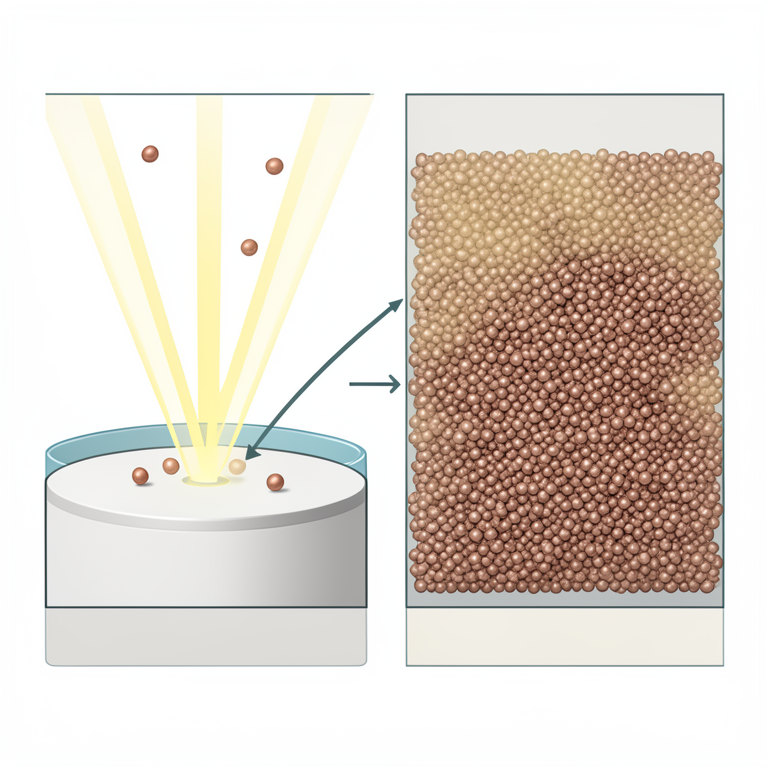
Concentration Effect on Light Penetration
AI-generated conceptual illustration (titanium dioxide semiconductor surface in an aqueous solution containing copper surfactant molecules). It explains the idea and does not show study data.
View source evidence ↗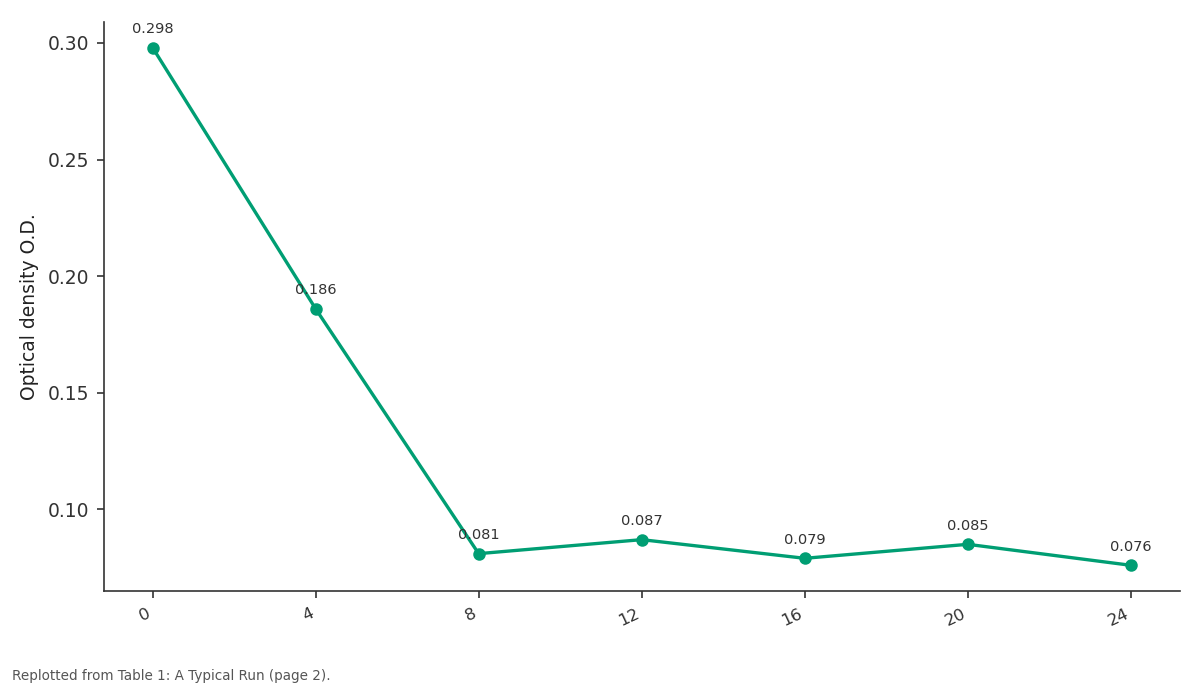
Optical density O.D.: 0 vs 4 vs 8 vs 12 vs 16
Replotted from Table 1 (page 2) of the original paper. Every bar is the paper's own table value.
View source evidence ↗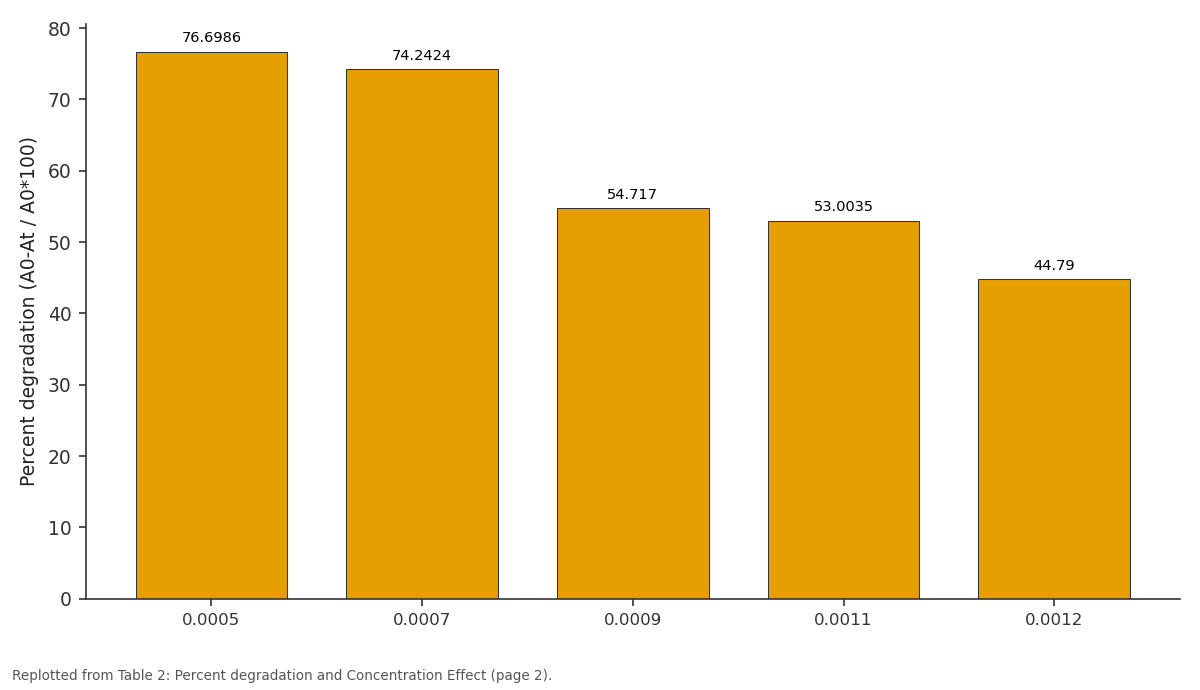
A0-At / A0*100: 0.0005 vs 0.0007 vs 0.0009 vs 0.0011 vs 0.0012
Replotted from Table 2 (page 2) of the original paper. Every bar is the paper's own table value.
View source evidence ↗Figures & tables
From the original paper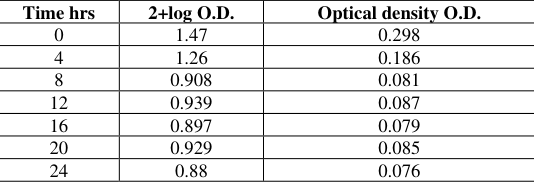 Table 1
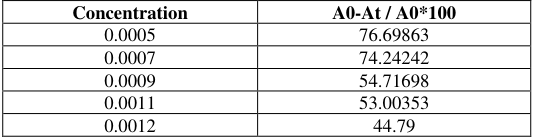 Table 2
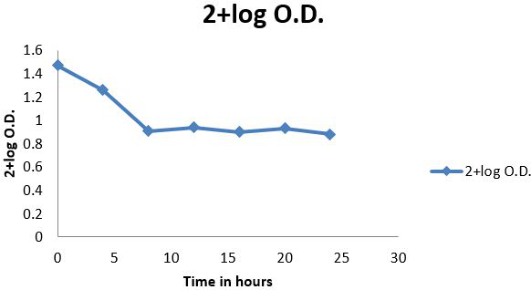 Figure 1
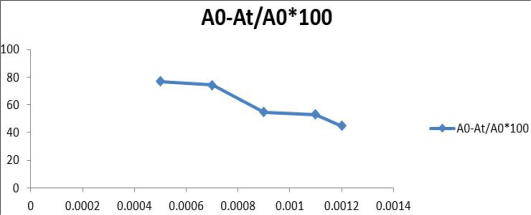 Figure 2
Introduction
A Surfactant development to promote the home washing detergents and prosperity, and the development of household detergents also stimulates the surfactant growth. Surfactants are widespread in several human activities because of a series of excellent performances like wetting and emulsifying. Therefore, it is important to monitor and control emissions of surfactants in environmental water. Photo catalytic processes are well recognized due to its scientific and technological implications. Without the concourse of elevated temperatures and pressures and using light as the energy input this process can allow the possibility of performing chemical reactions aimed at the elimination of pollutant, the production of fuels, the inactivation of bacteria etc.. Heterogeneous photo catalysis on semiconductor surfaces has attracted a lot of attention due to its vast and important applications as degradation and complete mineralization of organic contaminants, air purification etc. [1][2][3] structure of the surfactant Bio-surfactants are widely applied in the petrochemical industry, and are extensively used for emulsification, emulsion breaking, wetting, foaming and antistatic. They also have important applications in the textile, cosmetics, pharmaceutical, food and other fields. Recently, in photo degradation of dyes many transition metals play an important role. Amido black -10 B and Bismarck brown -R were bleached by photo-fen ton reagent [4] . Azure B dye can be successfully degrade using copper hexacyanoferrate (II) as semiconductor which effectively photo degrade different dye molecule to colourless less toxic products [5] . Photo catalytic degradation of dyes (methylene blue) using TiO 2 was studied [6] . Copper (II) pyridyl complex has been synthesized for adsorption as well as photo catalytic degradation of methylene blue (MB) and Rhoda mine B (RhB) dyes and characterized through FT-IR, LC-MS, FE-SEM, TEM and EPR studies [7] . The effects of surfactants on aquatic animals A certain toxicity of surfactants will pass into the animal through animal feeding and skin penetration way. When the surfactant concentration in water is too high, surfactants can enter the gills, blood, kidney, pancreas, gallbladder and liver, and produce aquatic toxicity effect spectroscopic studies and physico-chemical studies of CMT complex was studied earlier [8] . In the present work we have focused on the optimization of degradation of copper (II) smustard thiourea complex in the presence of zinc oxide and in various parameters and its bioactivity.
Experimental
Copper (II) mustard thiourea complex was prepared by refluxing copper mustard soap with thiourea ligand in 1:1 ratio using benzene as solvent for one hour. For this copper mustard soap was prepared by refluxing (direct metathesis) mustard oil in pure form with alcohol and 1N KOH solution for 3 hour. [9] After that neutralization of excess KOH was done by 1N HCl. Saturated solution of copper sulphate was then used for conversion of neutralized soap into copper soap. The photo catalytic degradation was studied in the presence of semiconducting zinc oxide and light source (200 W tungsten lamp) for irradiating the complex solution in visible range. The intensity of light was measured with the help of a solarimeter (Suryamapi model CEL India Model SM 201). The optical density of the solution was recorded at regular time interval by using U.V. visible spectrophotometer (SYSTRONIC MODEL 106).
Results and Discussion
Copper soap and their complex are abbreviated as follows: Copper-mustard soap (CM) Copper-mustard -thiourea complex (CMT) Different rate affecting parameters for % degradation were varied to obtain the maximum rate of degradation for photo catalytic degradation of CMT complex. The results for a typical run are presented in Table : 1 and graphically represented in Figure : 1.
Percent-degradation of CMT complex
Photo catalytic degradation of CMT complex was carried out by using ZnO as semiconductor under light of 34 mWcm -2 .
Complex degradation was initially identified by colour change.
Initially the colour of complex was dark green-blue which was gradually fades to light green after 2 hours. Further light green colour of solution was disappears slowly and solution becomes almost colour less after completion 18 hour light exposure. Percentage degradation of CMT complex was estimated by the following equation [10] .
% degradation = A o -A t / A o *100.
Different rate affecting parameters for % degradation were varied to obtain the maximum rate of degradation for photo catalytic degradation of CMT complex.
Percent degradation
As the initial concentration of CMT increases, more molecules are available for excitation and energy transfer [11] . This dependence is perhaps related to the formation of several monolayers of CMT complex on the ZnO surface, which is favored at high concentrations till the critical level is reached, the surface is not completely covered leading to constant reaction rates [12] . On the other hand, the decrease in degradation efficiency with the increase in concentration occurs due to several reasons. As the initial concentrations of the complex increase more and more, complex molecules have been adsorbed on the surface of the catalyst and significant amount of UV absorption has been hindered by CMT molecules. Hence, the penetration of light to the surface of the catalyst decreases. Results are represented in
Conclusion
The decolouration of the copper soap complexes also suggests that some of Cu +2 ion of the complex may reduced to Cu + or Cu 0 to some extent during the process of degradation by trapping photo generated electron in the system. The literature survey reveals that the presence of oxygen may also affect the photo degradation of complex molecules as the main oxidation products of the esters are keto or hydroxy compounds.
Series of experiments were conducted for analysis the photo catalytic degradation of CMT in various conditions. The rate of photo catalytic degradation of CMT increases by increase in concentration but after a certain limit it decreases. Percent degradation of CMT complex also affected by different parameters and shows variation in rate of degradation. These investigations may conclude that the CMT complex derived from natural oil had an inhibitory effect on the growth of some bacteria.
Acknowledgement
AcknowledgementsThe authors pay their sincere gratitude to Principal, S. D. Govt. College Beawar and Principal, S.P.C Govt College Ajmer for laboratory facilities.
Figures and tables from the paper
| Time hrs | 2+log O.D. | Optical density O.D. |
|---|---|---|
| 0 | 1.47 | 0.298 |
| 4 | 1.26 | 0.186 |
| 8 | 0.908 | 0.081 |
| 12 | 0.939 | 0.087 |
| 16 | 0.897 | 0.079 |
| 20 | 0.929 | 0.085 |
| 24 | 0.88 | 0.076 |
Table text extracted from the original PDF; superscript letters are shown inline. The original table image is below.
View original table image
| Concentration | A0-At / A0*100 |
|---|---|
| 0.0005 | 76.69863 |
| 0.0007 | 74.24242 |
| 0.0009 | 54.71698 |
| 0.0011 | 53.00353 |
| 0.0012 | 44.79 |
Table text extracted from the original PDF; superscript letters are shown inline. The original table image is below.
View original table image
References
11 in the original paper- Hoffmann MR, Martin ST, Choi WY, Bahnemann DW. Environmental Applications of Semiconductor Photo catalysis, Chem. Rev. 1995;95:69-96. Doi: 10.1021/cr00033a004.
- Mills A, Le Hunte S. An overview of semiconductor photo catalysis, J Photo chem. Photo biol. A: Chem. 1997;108:198. Doi:10.1016/S1010-6030(97)00118-4
- Tryk DA, Fujishima A, Honda K. Recent topics in photo electrochemistry: achievements and future prospects Author, Electroc him. Acta. 2000;45:2363-2376.
- Kumar M, Tiwari R, Sharma K, Sharma OP, Sharma MK. Photochemical Treatment of Amido Black -10B Waste Water by Photo-Fenton Reagent, Orient. J Chem. 2011;27(23):1179-1184.
- Upadhyay v, Sharma OP, Jaker S, Sharma RK, Sharma MK, Photo catalytic degradation of Azure B using Copper hexacyanoferrate as semiconductor, Int. J Chem. Sci. 2013;11(1):331-340.
- Reza KM, Kurny ASW, Gulshan F. Parameters affecting the photo catalytic degradation of dyes using TiO 2 : a review, Appl. Water Sci. 2017;7:1569-1578.
- Jain H, Joshi A, Ramchandran CN, Kumar R. Synthesis of a Highly Efficient Multifunctional Copper (II)-Pyridyl Complex for Adsorption and Photocatalytic Degradation of Organic Dyes, Indian J Chem. 2019;4(17):4952-4961. Doi.org/10.1002/slct.201900498
- Sharma R, Tak P, Saxena M, Bhutra R, Ojha KG. Synthesis and Characterization of Antifungal Agents Containing Copper (II) Soaps and Derived from Mustard and Soyabean Oil Tenside Surf. Det. 2008, 45(2).
- Sharma S, Sharma R, Heda LC, Photo catalytic Degradation of Copper (II) Palmitates in Non-Aqueous Media Using ZnO as Photo catalyst, Tenside Surf. Det. 2015;52(6):512-516.
- Avasarala BK, Tirukkovalluri SR, Bojja S. Synthesis, characterization and photo catalytic activity of alkaline earth metal doped titania, Indian J Chem. 2010;49A: 11891196.
- Kiriakidou F, Kondarides DI, Verikios XE. The effect of operational parameters and TiO 2 -doping on the photo catalytic degradation of azo-dyes, Catal Today. 1999;54:119-130.
Cited by 6
From OpenAlex, OpenCitations and reference lists read by Scinovex
- Effect of growth and yield of mustard (Brassica juncea) microgreens on different growing medias in indoor condition
B. Pavan Kumar Naik, G Sekhar, A Suryakumari, G Shiva Govinda Rajulu, K Harshini, L Akhila Sai Deepika · International Journal of Research in Agronomy · 2022
Microgreens are fresh, edible vegetables considered as good nutritional benefits because of presence of their high minerals. Microgreens provides an intense experience that will elevate the overall flavor of any dishes. Microgreen cultivation leads to the biodiversity protection by selecting wild species which gives high nutrient content. In this studies, by using 5 different growing medias as treatments the experiment is conducted. The experimental material comprised of five growing medias like Soil, Water, Vermicompost, Cocopeat and FYM. Observations were recorded in five randomly chosen pla
- Characterization and antibacterial screening of copper surfactants ↗
Asha Kumari Meena · International Journal of Chemical and Biological Sciences · 2022
In the applied areas of research and many industrial processes, the complexes of copper metallic soaps with some aromatic ligands are found very useful, in studying the biocidal activities of above complexes in non-aqueous solvents. These complexes have been analyzed for their characteristics in non-aqueous media and have been derived from copper (II) groundnut soaps with substituted 2-amino-6-ethoxy benzothiazoles. The
❝ 0Found by Scinovex - Effect of genotypes under varying fertility levels and bio-fertilizer inoculation on productivity and profitability of mustard [Brassica juncea (L.) Czern and Coss.]
Preeti Devatwal, Jitu Choudhary, S K YADAV, Ravindra Kumar Jain, Gajanand Jat, Anita Todawat · International Journal of Agriculture and Food Science · 2022
A field experiment “Effect of Genotypes under Varying Fertility Levels and Bio-fertilizer Inoculation on Yield, Yield Attributes and Economics of Mustard {Brassica juncea (L.) Czern & Coss.}’’ was carried out at Instructional Farm of Agronomy, Rajasthan College of Agriculture, Udaipur, Rajasthan during rabi season of 2020-2021 in factorial randomized design (RBD). However, the treatment comprised of four genotypes i.e. Bio-902 (V1), Giriraj (V2), RH-0749 (V3) and NRCHB-101 (V4) and four fertility levels i.e. 75% RDF (F1), 100% RDF (F2), 75% RDF + Bio-fertilizer (F3) and 100% RDF + Bio-fertiliz
- Decomposition by Photocatalysis using Nano-TiO2
TN Mujuru, L Katsidzira · International Journal of Advanced Biochemistry Research · 2021
This research paper delves into the decomposition of organic pollutants using photocatalysis facilitated by nano-sized Titanium Dioxide (nano-TiO2). Focusing on the efficiency and mechanisms of nano-TiO2 as a photocatalyst, the study explores its potential applications in environmental remediation and sustainable waste management. Through systematic experimentation and analysis, this paper aims to contribute significantly to the field of environmental science and photocatalytic technology.
- Utilizing ZnO as a photocatalyst for the photocatalytic decomposition of copper (II) palmitates in non-aqueous environments ↗
Faustin Dongmo, Théodora Kopa Kowa · International Journal of Bioscience and Biochemistry · 2021
This research investigates the efficacy of Zinc Oxide (ZnO) as a photocatalyst in the decomposition of Copper (II) Palmitates within non-aqueous environments. By leveraging the unique photocatalytic properties of ZnO, this study aims to enhance the understanding of chemical reactions in non-aqueous systems, particularly focusing on the environmental applications for the treatment of organic contaminants.
- Photocatalytic degradation of sunfix yellow dye in aqueous ZnO suspension ↗
Md. Delwar Hossen, Tanmoy Ojha, Pijush Kanti Roy, Ashis Kumar Sarker, Md Anamul Haque Shumon, DM Shafiqul Islam · International Journal of Chemical Studies · 2020
The investigation of photodegradation of sunfix yellow dye in aqueous solution of sunfix yellow/ ZnO suspension by sunlight was found to be time dependent UV-visible spectrum photodegradation. The absorption peak for sunfix yellow was found at 415.5 nm in visible region while the absorption of sunfix yellow dye shows disintegrate trend with time and finally disappeared with the increase in