
Research article · 2023 · Full text
International Journal of Agriculture and NutritionA brief review on: Hylocereus undatus (Dragon fruit)
Volume 5(1) · Pages 59–64 · DOI: 10.33545/26646064.2023.v5.i1a.101 ↗
Research areasBotanical Research and Applications
Abstract
Author-writtenThe dragon fruit (Hylocereus undatus) is indigenous to the Americas. Its name comes from it's appearance leather-like skin and scaly spikes on the exterior of the fruits. It is also known as 'pitahaya', strawberry pear, Nobel woman and queen of the night throughout the world Hylocereus undatus is a fast-growing, semi epiphytic vine. The economic lifespan of dragon fruit is more than 20 years and during the full-bearing period, plants are laden with fruits. Dragon fruit market is projected to register a CAGR of 3.9% over the forecast period. Asia-pacific dominates the dragon fruit market both in term production of well as consumption. The article include brief overview of propagation, cultivation, botanical description, taxonomy, photo chemistry and increasing market rate of Hylocereus undatus.
Summary
Source-checkedPlain-language reading of the full paper, prepared with AI and checked against the text. Each point links to the authors' own words.
Why it matters
- Dragon fruit (Hylocereus undatus) is a plant native to the Americas, characterized by a leather-like skin and scaly spikes. View evidence ↗
- The fruit is grown globally because it is commercially valuable, beneficial to health, and hardy, showing high tolerance to drought, temperature, light intensity, and soil salinity. View evidence ↗
- The dragon fruit market is expected to grow at a compound annual growth rate (CAGR) of 3.9%. View evidence ↗
The question
- The authors aim to provide a brief review covering the taxonomy, botanical description, propagation, cultivation, phytochemistry, and market trends of Hylocereus undatus. View evidence ↗
What they did
- Propagation of H. undatus is typically achieved using foot-long lateral branch cuttings. View evidence ↗
- Commercial cultivation often employs high-density planting, ranging from 1,100 to 1,350 plants per hectare. View evidence ↗
What they found
- Plants may take up to 5 years to reach full commercial production, at which point yields are expected to be between 20 and 30 tons per hectare. View evidence ↗
- Phytochemical analysis of methanol and water extracts from dragon fruit seeds reveals the presence of various compounds, including alkaloids, saponins, flavonoids, and phenols. View evidence ↗
- The fruit provides carotene for eyesight and vitamin C, which supplies 10% of the daily recommended value to support the immune system. View evidence ↗
- Ethanolic extract of white dragon fruit flesh contains approximately 85% mixed oligosaccharides, which show greater tolerance to human salivary alpha amylase than insulin. View evidence ↗
- A 50:50 water-ethanol extract of dragon fruit skin demonstrated anti-proliferative activity against human hepatocellular carcinoma cells in a single dose. View evidence ↗
- Quercetin in red dragon fruit skin shows antiulcer activity, with total distress observed in 35% of cases within 2-4 days and 90% within 4-7 days. View evidence ↗
- In rats, dragon fruit flesh extract reduced triglycerides, total cholesterol, LDL, and obesity indices while increasing serum HDL cholesterol. View evidence ↗
What it means
- The authors conclude that Hylocereus undatus is highly resistant to diseases such as malaria and COVID-19. View evidence ↗
- The growth of the dragon fruit market is limited by the fruit's short shelf life. View evidence ↗
Visual summary
1 visualsIllustrations explain the paper; they do not show study data.
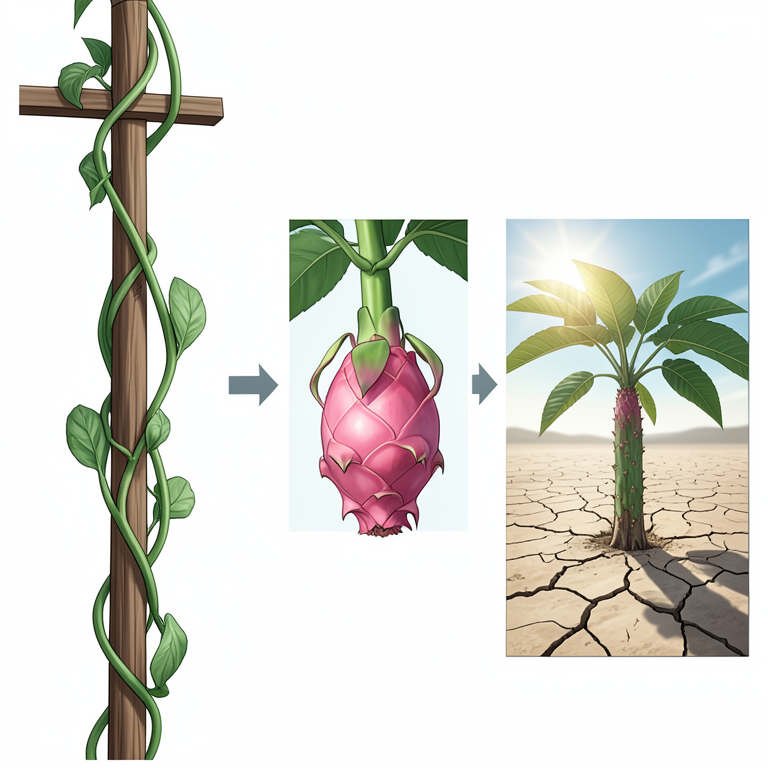
Dragon Fruit Characteristics
AI-generated conceptual illustration (Hylocereus undatus (Dragon fruit) plant). It explains the idea and does not show study data.
View source evidence ↗Introduction
Herbal medicine has now become an integral part of standard healthcare as they are both traditionally as well as ongoing scientific research. The fruit Hylocereus undatus is also known as dragon fruit and pitaya belonging to family Cactaceae. It is an native fruit originating from Mexico and central and south America. It has been cultivated in Vietnam at least from 100 years. Although the pitaya is native to the tropical areas of north, central and south America it is now cultivated world-wide due to its commercial interest, not demanding cultivation requirement i.e. high drought tolerance, easy adaptation to light intensity and high temperature a wide range of tolerance to different soil salinities and benefits to human health (Nobel and La Barrera 2004; Nic et al. 2015; Crane et al. 2020 M) [16,17,18] . it is commercially cultivated in over 20 tropical and sub-tropical countries such as Indonesia, Colombia, Israel, The Philippines, Myanmar, Malaysia, Mexico, Nicaragua, northern Australia, Okinawa (Japan) Sri-Lanka, southern China, southern Florida, Taiwan, Thailand, Vietnam, Bangladesh, The west indies. Pitaya is an exotic fruit due to its shape and very attractive colours of flesh and skin.eg -red flesh with pink skin (Hylocereus polyrhizus; Briton and rose 1920) white flesh with pink skin (Hylocereus undatus, Briton 1918) or redpurple flesh with red skin (Hylocereus costaricensis; Briton and rose 1909) or megalanthus (K Schum ex vaupel) Maran 1953 (Synonym Hylocereus megalanthus)]. The high proportion of the population and economic as the set of Vietnam are located in coastle lowlands, deltas and rular areas which explains why Vietnam has been ranked among the fire countries likely to be most affected by climate change (World bank group 2020) [19] . Particularly, climate changes impact agricultural production due to the increase of salt water instruction and lack of irrigation water in the dry season. Moreover, drought have become a recurrent problem in the miffing river data, already threatened by the increases saline intrusion in the dry season, seriously affecting the crops (Us forest service 2011).
Botanical description Fruit
The fruit is flashy Berry which is oblong and about 4.5 inches (11 cm) thick with red or yellow skin peel with scales and with or without spines the colour of pulp may be pink white red or magenta depending on the species seeds seed are very small numerous and black embedded among the pulp.
Flowers
Flowers are unit hermaphraditic, however some pitaya species and cultivars are self-incompatible. The extremely edible white flower are very large, very fragrant, nocturnal, bell formed and may be inches long(36 cm) and 9 inches wide (23 cm).The stames and labed stigmas are cream colored. 3 to 5 spherical bottons ordinarily emerge on the stem margin; two to three of those could change into flower buds in about 13 days.
Propagation
The H. undatus is most often propagated through cuttings obtained by serving foot -long lateral branches at a stem segment. making a slant cut on the stem end to be inserted into the soil to impressing rooting cutting should be cured in a cool, dry area for 5-7 days before planting mature stems are preferred for cutting, as they are more resistance to insect and snail damage. Cutting may be planted directly in the filed or in pots using a well-drained plotting medium.
Cultivation
Commercial plantings can be done it high density with between 1100 to 1350 plants per hectare, plants can take up to 5 years to come into full commercial production of which stage yields of 20 to 30 tons per hectare can be expected.
Hylocereus has customer -made to measure in dry tropical climates with a moderate quantity of rain. The dragon fruit sets the cactus -like trees 30-50 days once flowering and might typically have 5-6 cycles of harvests each year in various regions. Its free cultivation to become a weed and assisted as cuckoo invasive in some countries.
Phytochemistry initial phytochemical examination shows that the methanol and water extract of pitaya or dragon fruit seeds contained alkaloids, saponins, terpenoids, oils, flavonoids, tannins, phenols, carbohydrates, coumarins and proteins pitaya contains protine, steroids, carbohydrate Alkaloids tanning alkaloids tenants flavonoids and phenolic compounds alkaloids that are present are cholinesterase inhibitors that can be used for Alzheimers disease treat like donepezil, tacrine, rivastigmine and Valentine coumarin that are present in both extracts like phenyl propanoids are antioxidant, antibacterial, anti-tubercular, anti-virap, antifungal and anti -Inflammatory. Saponins includes lupane glycerine, betullnic acid and oleanolic acid can be used to treat type 2 diabetes and also chronic kidney disease.
The oil of pitaya seeds contain omega 3 fatty acids conjugates Linoleic acid, phytosterols and medium chain triglycerides that are beneficial in treating obesity and bone health both condensed tannis such as proanthocyonidins and anthocyanidins and ellagitannins are present with polyphenols being present in the peel. Pitaya peels contain higher amounts of flavonoids that have metal chelating and radial scavenging properties such as Kaempferol, isorhamnetin, quercetin and kaempferol dragon fruit phytoconstituents. These factors are helping in changing the market dynamics of dragon fruit. However, its small shelf life is a restraint in its growth.
Impact of COVID-19 on the global dragon fruit market
While the advent of the Covid-19 pandemic had significant effects on most industries worldwide, the Global Dragon Fruit Market was no exception and witnessed dual impacts of the global crisis. As the governments of different countries worldwide imposed stringent movement restrictions & lockdowns to curb the spread of this disease owing to its severity, people shifted their finances toward necessities only, which in turn, minimized the sales of dragon fruits. Besides, since travel restrictions affected the supply chains across locations, the unavailability of fresh dragon fruits also brought challenges to the market expansion. Yet, on the other hand, as the pandemic situation gradually was coming under control, the governments partially uplifted the restrictions, allowing the recommencement of business operations while abiding by the social distancing & safety norms. It, in turn, reinstated the availability of dragon fruits across different sales channels. Moreover, people were becoming more aware of the positive influence of dragon fruits on health improving metabolism, boosting the immune system, strengthening bones & teeth, blood purification, assisting tissue formation, healing bruises & wounds, and others. It, in turn, demonstrated an upswing in the demand for these fruits amidst the crisis, leading to a temporary hike in revenue generation for the leading players.
Furthermore, with the complete upliftment of limitations by the governments, the market is on the track to recovery and witnessing active participation of the prominent players, expanding their production & distribution capacities, leading the market toward substantial growth.
Health benefits
Dragon fruit can be considered as a super food, being low in calories but high in fibre, antioxidants, phytonutrients, vitamins and minerals, and containing healthy fatty acids and probiotics. Antioxidants are essential to protect cells from free radical damage, which cause chronic disease and ageing. Some of the major antioxidants found in dragon fruit are betacyanins, betaxanthins, Hydroxycinnamates and flavonoids. According to a research article published in the World Journal of Pharmacy and Pharmaceutical Sciences in 2018, 1 the antioxidant activity of the fruit can be helpful in preventing inflammatory conditions such as gouty arthritis.
Hydroxycinnamates have proven anticancer activity, while flavonoids are linked to better brain health and reduced risk of heart disease. In this issue of our Food Safety In-depth Focus, we hear from Dr. Martin Wiedmann, Dr. Xiangyu Deng and Dr. Gilbert Lamothe as they offer their insights into lowering the risk of microbial contamination in a comprehensive roundtable. We also hear from a Professor of Science Policy at the University of Sussex on how food safety has been influenced following the UK's exit from the European Union in.
A phytochemical named captain, which is often used in heart medication, is present in dragon fruit as well.
Lycopene, responsible for the fruit's red colour, is known to lower the risk of developing prostate cancer. Dragon fruit contains a significant amount of carotene, which can improve eyesight, vitamin C to boost the immune system (10 percent of the daily recommended value), B vitamins to aid carbohydrate metabolism, calcium to develop strong bones and teeth, iron for forming healthy red blood cells, and phosphorus to promote tissue and cell growth. Probiotics are excellent for improving digestion and immunity and for lowering intestinal infections. Market Segmentation Based on the Type. Red Dragon Fruit (Hylocereus costaricensis).
White Dragon Fruit (Hylocereus undatus). Yellow Dragon Fruit (Hylocereus megalanthus). White Dragon Fruit (Hylocereus undatus).
Is anticipated to dominate the Global Dragon Fruit Market with the largest share during the forecast period. It owes principally to the easy availability of the white dragon fruits across different sales channels and their immense popularity in salads & beverages with a similar taste to that of a kiwi. Besides, the versatile application of white dragon fruit in multiple dishes adds up to a greater inclination toward this type, contributing to the overall market growth. Moreover, increasing trade chains across regions for the utilization of these fruits in food & beverages & dietary supplements, alongside pharmaceutical applications, further ads to the high demand for white dragon fruits. On the other hand, the demand for Red Dragon Fruit shall also witness an upsurge in the demand and contribute to the overall market growth during the forecast period. Besides, red dragon fruit exhibit higher content of antioxidants than white dragon fruits & is a great food for maintaining eyes, blood, and skin health. Hence, the demand for red dragon fruits is anticipated to accelerate and contribute to the overall market growth in the coming years.
Pharmacological activity
In the treatment of different diseases medicinal herbal plant have demonstrated pharmacological activity dragon fruit have many pharmacological activity as listed in below:
Antimicrobial activity
White dragon fruit flesh ethanolic extract was detected as around 85% of mixed oligosaccharide accur. In contrast to insulin, this oligosaccharide had greater tolerance to human salivary alpha amylase. This is not digested in the stomach, but function as prebiotic that help the stomach.
Antifungal activity
The presence of polyphenol antifungal activity in extract and fraction of flesh and peel of red pitaya fruits are 2 yeasts, Candida albicans, Rhizoctonia solani; four molds: Aspergillus flavus, Fusarium oxysporum, Botrytis cinerea, Cladosporium herbarum which is the research panel that include laboratory control strains obtained from the American type culture collection (ATCC).
Anti-inflammatory activity
Anti-inflammatory action has been performed on dragon fruit. The research was carried out by mixing dragon fruits skin and flesh and separating it with vacuum distilled water, water and drying. Then the result of this will be used for the purpose of bioassay testing against cyclooxygenase-2 (COX-2).
Anticancer activity
Various studies have shown that the flavonoid, betaine in and polyphenol in dragon fruit have an anti-cancer effect. The skin of dragon fruit that has been extracted with a mixture of water and ethanol solvent with ratio of 50:50 has shown anti proliferative activity against human hepatocellular carcinoma cells in just one dose.
Antiulcer activity
The tropical quercetin content in the skin of red dragon fruit (Hylocereus polyrhizus) show antiulcer activity. It can be proven from the result of total distress in 35% of cases within 2 to 4 days and 90% of cases within 4 to 7 days.
Antioxidant activity
Pitaya is considered as fruit that is low in calories but high in nutrition water content sugar mineral and antioxidant H. polyrhizus are known as the red flesh pitaya is rich in battalions which meets the trade interest for antioxidant product and also natural food colorant.
Antidiabetic activity
There are several leaves and fruits that have the potential to be diabetics such as dragon fruit. Several studies have shown that dragon fruit has an antidiabetic activity effect. For patients with Type II Diabetes, the use of red dragon fruit can reduce blood glucose levels.
Antiplatelet activity
Dragon fruit has antiplatelet activity because it contains ethanol and ethyl acetate extract which has have inhibitory effect in concentration dependent manner On platelet aggregation induced by various agonist.
Neuroprotective activity
As mentioned previously, dragon fruit has a myriad of benefits and one of them is related to the Neuroprotective activity of nerve work. The phytochemicals content in dragon fruit plays an active role in Neuroprotective activity, especially when preventing neurodegenerative disease.
Cytoprotective activity
Pitaya is a great source of various for natural antioxidant including ascorbic acid betalains and polyphenol as a fibre rich dragon fruit it help in food digestion.
Hypolipidemic activity
Dragon fruit flesh extract was used to determine Hypolipidemic activity in rats. The extract of dragon fruit flesh could minimize TG, total cholesterol, LDL, and total cholesterol ratio over HDL cholesterol, body weight, Lee index obesity, and could also substantially raise serum HDL cholesterol, total fecal cholesterol, and fat.
Analgesic activity
Pitaya like many other plants contain gallic acid (3, 4, 5-trihydroxybenzoic acid) anorganic substance that exist in plant material that act as antioxidant, antibacterial, antiviral, and analgesic activities.
Conclusion
From the above article it is concluded that Hylocereus undatus have highly resistant to disease like COVID -19, malaria. They are attractive in shape and colour. Dragon fruit maker is increases day by day in worldwide.
Glycolytic genes expression
Glycolytic genes expression
References
20 in the original paper- Le Bellec F, Vaillant F, Pitahaya IE. (Hylocereus spp.): A new fruit crop, a market with a future. Fruits. 2006;61(4):237-250. [CrossRef], [Google Scholar] DOI: 10.1051/fruits:2006021.
- Mizrahi Y. Do We Need New Crops for Arid Regions? A review of fruit species domestication in Israel. Agronomy. 2020;10(12):1995. [CrossRef], [Google Scholar] DOI: 10.3390/agronomy10121995.
- Goenaga R, Marrero A, Pérez D. Yield and fruit quality traits of dragon fruit cultivars grown in Puerto Rico. Hort Technology. 2020;30(6):803-808. [CrossRef], [Google Scholar] DOI: 10.21273/horttech04699-20.
- Sheng K, Wei S, Mei J, Xie J. Chilling Injury, Physicochemical Properties, and Antioxidant Enzyme Activities of Red Pitahaya (Hylocereus polyrhizus) Fruits under Cold Storage Stress. Phyton. 2021;90(1):291-305. CrossRef], [Google Scholar]. DOI: 10.32604/phyton.2020.012985.
- Jalgaonkar K, Mahawar MK, Bibwe B, Kannaujia P. Postharvest Profile, Processing and Waste Utilization of Dragon Fruit (Hylocereus Spp.): A Review. Food Revolution. Int; c2020. p. 1-27. [CrossRef], [Google Scholar] DOI: 10.1080/87559129.2020.1742152.
- Paśko P, Galanty A, Zagrodzki P, Ku YG, Luksirikul P, Weisz M, et al. Bioactivity and cytotoxicity of different species of pitaya fruits-A comparative study with advanced chemo metric analysis. Food Bioscience. 2021;40:2021100888. [CrossRef], [Google Scholar] DOI: 10.1016/j.fbio.2021.100888.
- Verona-Ruiz A, Urcia-Cerna J, Paucar-Menacho LM. Pitahaya (Hylocereus spp.): Culture, physicochemical characteristics, nutritional composition, and bioactive compounds. Scientia Agropecuaria. 2020;11(3):439453. [CrossRef], [Google Scholar] DOI: 10.17268/sci.agropecu.2020.03.16.
- Joshi M, Prabhakar B. Phytoconstituents and pharmacotherapeutic benefits of Pitaya: A wonder fruit. Journal of Food Biochemistry. 2020;44(7):e13260. [PubMed], [CrossRef], [Google Scholar] DOI: 10.1111/jfbc.13260.
- Kårlund A, Moor U, Sandell M, Karjalainen RO. The impact of harvesting, storage and processing factors on health-promoting phytochemicals in berries and fruits. Processes. 2014;2(3):596-624. [CrossRef], [Google Scholar] DOI: 10.3390/pr2030596.
- Paśko P, Tyszka-Czochara M, Trojan S, BobisWozowicz S, Zagrodzki P, Namieśnik J, et al. DOI: 10.1016/j.foodres.2019.108563.
- Dembitsky VM, Poovarodom S, Leontowicz H, Leontowicz M, Vearasilp S, Trakhtenberg S, et al. The multiple nutrition properties of some exotic fruits: Biological activity and active metabolites. Food Research International. 2011;44(7):1671-1701.
- CrossRef], [Google Scholar] DOI: 10.1016/j.foodres.2011.03.003.
- Pérez-Loredo MG, García-Ochoa F, Barragán-Huerta BE. Comparative analysis of betalain content in Stenocereus stellatus fruits and other cactus fruits using principal component analysis. International Journal of Food Properties. 2016;19(2):326-338. [CrossRef], [Google Scholar] DOI: 10.1080/10942912.2015.1022259.
- García-Cruz L, Valle-Guadarrama S, Salinas-Moreno Y, Joaquín-Cruz E. Physical, chemical, and antioxidant activity characterization of pitaya (Stenocereus pruinosus) fruits. Plant Foods Human Nutrition. 2013;68:403-410. [PubMed], [CrossRef] [Google Scholar] DOI: 10.1007/s11130-013-0391-8.
- Giangrieco I, Proietti S, Moscatello S, Tuppo L, Battistelli A, La Cara F, et al. Influence of geographical location of orchards on green kiwifruit bioactive components. Journal of Agricultural and Food Chemistry. 2016;64(68):9172-9179. [PubMed], [CrossRef], [Google Scholar] DOI: 10.1021/acs.jafc.6b03930.
- Garcia-Cruz L, Valle-Guadarrama S, Salinas-Moreno Y, Del Carmen Luna-Morales C. Postharvest quality, soluble phenols, betalains content, and antioxidant activity of Stenocereus pruinosus and Stenocereus stellatus fruit. Postharvest Biology Technology. 2016;111:69-76. [CrossRef], [Google Scholar] DOI: 10.1016/j.postharvbio.2015.07.004s.
- Nobel PS, De La Barrera E. CO 2 uptake by the cultivated hemi epiphytic cactus, Hylocereus undatus. Annals of Applied Biology. 2004;144(1):1-8.
- De-la-Peña C, Nic-Can GI, Galaz-Ávalos RM, AvilezMontalvo R, Loyola-Vargas VM. The role of chromatin modifications in somatic embryogenesis in plants. Frontiers in Plant Science. 2015;6:635.
- Ueda M, Martins R, Hendrie PC, McDonnell T, Crews JR, Wong TL, et al. Managing cancer care during the COVID-19 Pandemic: Agility and collaboration toward a common goal. Journal of the National Comprehensive Cancer Network. 2020;18(4):366-369.
- Kurbucz MT. A joint dataset of official COVID-19 reports and the governance, trade and competitiveness indicators of World Bank group platforms. Data in Brief. 2020;31(10):105881.
Cited by 8
From OpenAlex, OpenCitations and reference lists read by Scinovex
- Microencapsulation of betacyanins accumulated calli, short-term cold storage, and retrieval of callus in Selenicereus undatus (Haw.) D.R. Hunt ↗
Mani Manokari, Mohammad Faisal, Abdulrahman Abdullah Alatar, Mahipal S. Shekhawat · South African Journal of Botany · 2024
The red color of dragon fruit pulp and peel is due to the accumulation of betacyanins . In the present study, callus cultures were established using in vitro germinated seedlings of the white dragon fruit plant ( Selenicereus undatus ). Murashige and Skoog (MS) medium with 6-benzylaminopurine (BAP) at 2.0 mg/L was used to induce red-colored friable callus (92.0 %…
❝ 3PDF - From waste to wealth: Bioactive compounds from Dragon fruit peel and their application ↗
Kanagaraj P, HG Bhatt, SH Akbari · The Pharma Innovation · 2025
Dragon fruit (Hylocereus spp.) peel, comprising 30-35% of the fruit, is a rich source of bioactive compounds such as betacyanins, phenolics, flavonoids, dietary fiber, and pectin. Once considered waste, it now holds promise for sustainable valorization in food, pharmaceutical, and packaging industries. This review highlights the peel’s chemical composition, antioxidant capacity, and therapeutic properties, with emphasis on species like H.…
❝ 1PDF - Importance and advanced production practices for high value dragon fruit (Hylocereus spp.) crop: A review
Pranava Pandey, Pradeep Kumar · International Journal of Research in Agronomy · 2024
Dragon fruit (Hylocereus spp.) crop is an important tropical plant belongs to family cactaceae, it is rich in essential nutrients viz. vitamins, minerals, carbohydrates, dietary fibres and antioxidants compounds. This fruit is popular due to its rich nutritional characteristics. Dragon fruit or pitaya is an unbelievable fruit that provides strong nutraceutical benefits due to its prebiotic function and multiple pharmaceutical and medicinal properties such as anti-oxidant, anti-cancerous, anti-diabetic, anti-microbial and hepato protective characteristics. The fruit also has capacity of wound h
- Influence of different feeding methods of NPK and boron on fruit yield and economic feasibility of dragon fruit (Hylocereus costaricensis)
Lavkush Pandey, Sanjay Pathak, Jagveer Singh, Kuldeep Pandey, Ritesh Singh, Alok Kumar · International Journal of Statistics and Applied Mathematics · 2023
The present study was conducted to assess the impact of water soluble NPK and Boron on fruit yield and economic attributes of newly planted dragon fruit. The application of water soluble NPK and boron per pillar containing three plants were applied for all the treatments by two feeding methods during I year and II year. The experiment trial comprises nine treatments viz. T1-Control, T2-200 g NPK, T3-200 g NPK (50% main roots +50% aerial roots), T4-300 g NPK, T5-300 g NPK (50% main roots +50% aerial roots), T6-200 g NPK + 0.5% Boron, T7-200 g NPK + 0.5% Boron (50% main roots +50% aerial roots),
- Preparation and characterisation of purple dragon fruit (Hylocereus costaricensis) yogurt
Aiswarya VG, Rachana CR · International Journal of Horticulture and Food Science · 2025
This study aimed to develop and characterize purple dragon fruit (Hylocereus costaricensis) yogurt by evaluating its physicochemical, antioxidant, and sensory properties. Yogurt was prepared using standardized milk (3.5% fat, 11.0% solids-not-fat) with varying concentrations of dragon fruit pulp (3%, 5%, and 7%). The results showed that increasing pulp concentration significantly influenced yogurt properties. Lactic acid content increased from 0.46% in the control to 1.10% in the 7% pulp yogurt, while pH decreased from 5.21 to 4.28. Antioxidant activity improved remarkably, with %RSA values ri
- Potential Study of Existing Methods of Dragon Fruit Pulp Extraction
Sanjay B. Patil, SS Shirkole, JS Ghatge, R. V. Powar, Vinit Patil, K Prathapan · International Journal of Agriculture Extension and Social Development · 2025
The present study investigates the performance of two existing manual methods Hand-Peeling and Scooping for pulp extraction from dragon fruit (Hylocereus spp.), aiming to identify their limitations and establish the need for a mechanized solution. The research was conducted at the Faculty of Agricultural Engineering, D. Y. Patil Agriculture and Technical University, Talsande, Kolhapur. Key performance parameters evaluated include time required for peeling, number of fruits peeled per hour, pulp extraction capacity (PEC), and pulp extraction efficiency (PEE). Experimental trials were performed
- Co-benefits of cow urine and biochar-based fertilizer on flowering, fruiting and fruit quality of dragon fruit ↗
Ami Begum, Mahbub Robbani, Jewel Howlader, Litun Ahmed Labib, Md. Shaon Sharif, Md Mainul Islam · South Asian Journal of Agricultural Sciences · 2024
Dragon fruit (Hylocereus sp.) is esteemed for its popularity and nutritional value within the Cactaceae family. This study was conducted at the Germplasm Center, Department of Horticulture, Patuakhali Science and Technology University, from January 2021 to October 2021 to assess the performance of cow urine and biochar-based fertilizer on flowering, fruiting, and fruit quality of dragon fruit. This investigation was
- Dragon fruit: Nutritional composition and therapeutic value ↗
R. Biswas, D. Sarkar, Sakshi Mishra, Sandip Das · Journal of Current Research in Food Science · 2024
This review explores the nutritional profile and therapeutic benefits of dragon fruit (Hylocereus spp.), also known as pitaya. Dragon fruit is rich in vitamins, minerals, fibre, and antioxidants, particularly betalains and polyphenols, which contribute to its health-promoting properties. Studies have highlighted dragon fruit’s role in supporting cardiovascular health, regulating blood sugar levels, and enhancing immune function. This review synthesizes current