
Research article · 2025 · Full text
International Journal of Horticulture and Food SciencePreparation and characterisation of purple dragon fruit (Hylocereus costaricensis) yogurt
Volume 7(1) · Pages 149–151 · DOI: 10.33545/26631067.2025.v7.i1c.256 ↗
Research areasBotanical Research and Applications
Abstract
Author-writtenThis study aimed to develop and characterize purple dragon fruit (Hylocereus costaricensis) yogurt by evaluating its physicochemical, antioxidant, and sensory properties. Yogurt was prepared using standardized milk (3.5% fat, 11.0% solids-not-fat) with varying concentrations of dragon fruit pulp (3%, 5%, and 7%). The results showed that increasing pulp concentration significantly influenced yogurt properties. Lactic acid content increased from 0.46% in the control to 1.10% in the 7% pulp yogurt, while pH decreased from 5.21 to 4.28. Antioxidant activity improved remarkably, with %RSA values rising from 20.06% (control) to 49.63% (7% pulp). Sensory evaluation on a 9-point hedonic scale indicated enhanced color and appearance at higher pulp levels, with the highest rating (9.00) observed in 7% pulp yogurt. However, consistency slightly declined, while flavor and overall acceptability remained favorable. These findings suggest that dragon fruit pulp enhances the functional and nutritional properties of yogurt, making it a promising ingredient for value-added dairy products.
Summary
Source-checkedPlain-language reading of the full paper, prepared with AI and checked against the text. Each point links to the authors' own words.
Why it matters
- Dragon fruit is an economically significant global species valued for its nutritional and therapeutic properties. View evidence ↗
- The fruit is rich in essential nutrients, including various vitamins, minerals, fiber, and antioxidants. View evidence ↗
- Yogurt is a widely consumed fermented dairy product that provides health benefits such as improved lactose absorption. View evidence ↗
The question
- The study aimed to create and analyze a yogurt supplemented with purple dragon fruit (Hylocereus costaricensis) to determine its sensory, antioxidant, and physicochemical characteristics. View evidence ↗
What they did
- The yogurt was made from milk standardized to 3.5% fat and 11.0% solids-not-fat, with pulp concentrations of 3%, 5%, and 7% tested against a control. View evidence ↗
- The production process involved pasteurizing the mixture at 90°C for 10 minutes, cooling to 45°C, adding pulp, and incubating at 42°C for four hours. View evidence ↗
- Physicochemical analysis included measuring pH at 25°C and determining titratable acidity via titration of a 10g sample with 0.1 M NaOH. View evidence ↗
- Experiments were performed in triplicate, with data analyzed using a two-way ANOVA (GLM procedure) and Duncan’s Multiple Range test. View evidence ↗
What they found
- Adding dragon fruit pulp increased lactic acid content, which rose from 0.46% in the control to a range of 0.65% to 1.10% in the pulp-added samples. View evidence ↗
- Sensory scores for color and appearance increased with higher pulp levels, peaking at 9.00 for the 7% pulp yogurt compared to 8.00 for the control. View evidence ↗
- Yogurt consistency slightly declined at higher pulp concentrations, with the 7% pulp sample scoring 7.97 compared to 8.25 for the control and 3% pulp samples. View evidence ↗
- Overall consumer acceptability increased slightly with pulp addition, rising from 8.00 in the control to 8.35 in the 7% pulp yogurt. View evidence ↗
What it means
- The authors conclude that purple dragon fruit pulp is a valuable ingredient for creating functional dairy products that offer enhanced health benefits and appeal to consumers. View evidence ↗
Visual summary
3 visualsIllustrations explain the paper; charts are replotted from the paper's own table values.
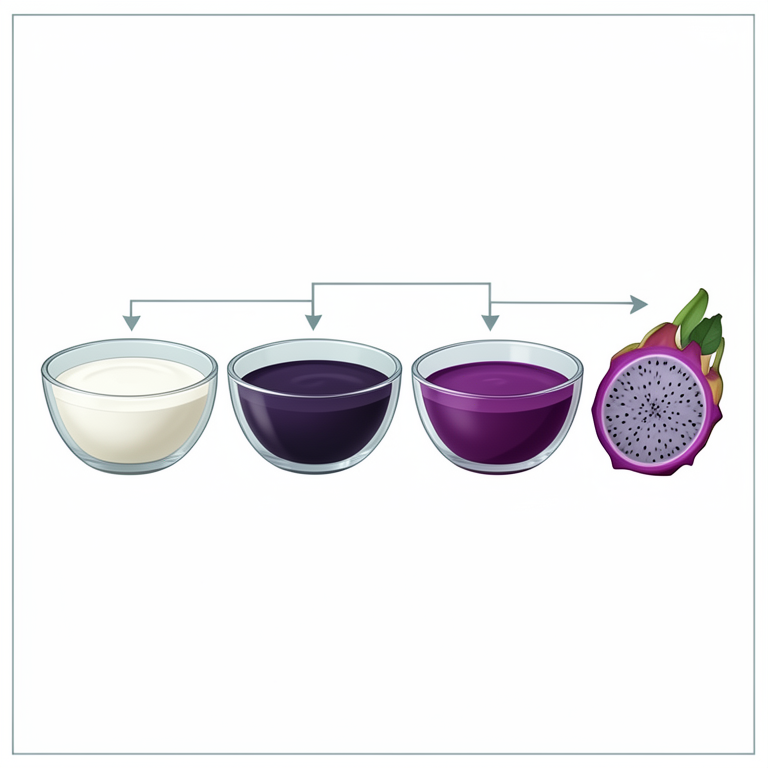
Experimental Setup
AI-generated conceptual illustration (purple dragon fruit (Hylocereus costaricensis) and yogurt). It explains the idea and does not show study data.
View source evidence ↗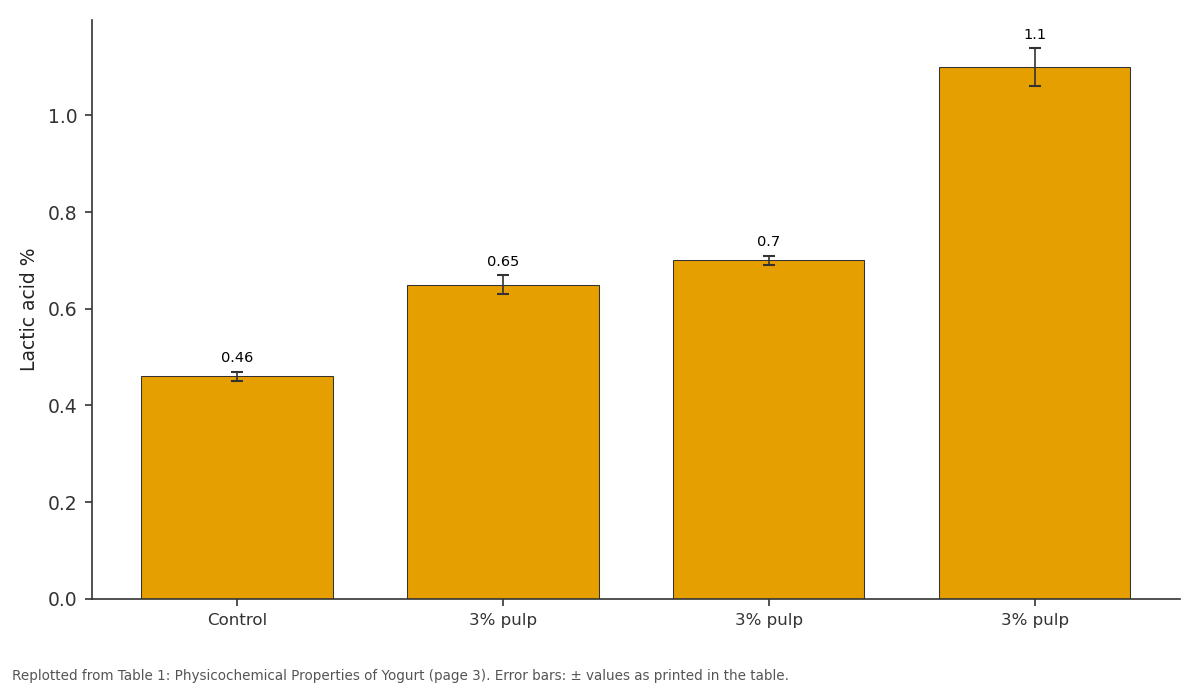
Lactic acid %: Control vs 3% pulp vs 3% pulp vs 3% pulp
Replotted from Table 1 (page 3) of the original paper. Every bar is the paper's own table value.
View source evidence ↗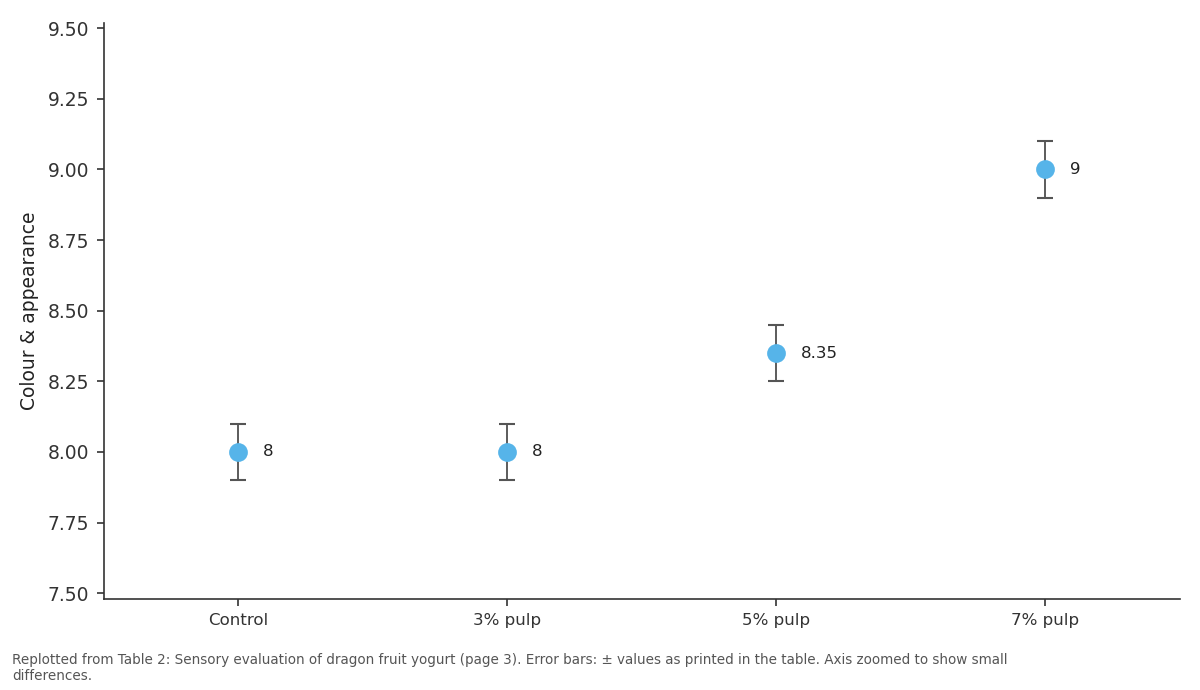
Colour & appearance: Control vs 3% pulp vs 5% pulp vs 7% pulp
Replotted from Table 2 (page 3) of the original paper. Every bar is the paper's own table value.
View source evidence ↗Figures & tables
From the original paper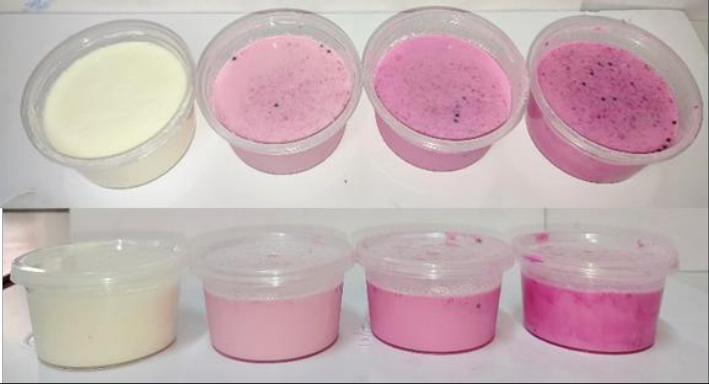 Figure 2
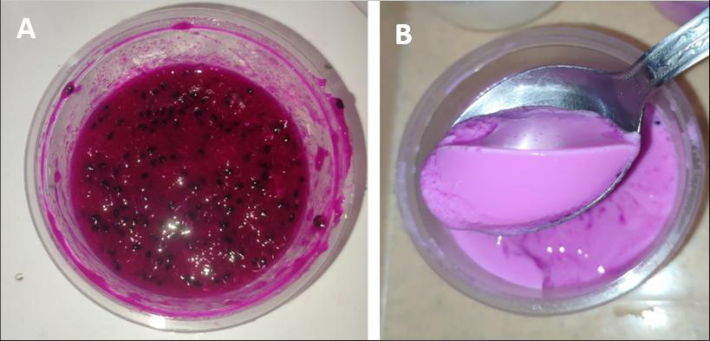 Figure 1
 Table 1
 Table 2
Introduction
Dragon fruit is a type of vine cactus that is a member of the Cactaceae family (Patwary et al., 2013) [8] . According to Liaotrakoon (2013) [1] , the plant's exotic appearance makes it appealing. Dragon fruits are becoming more and more well-liked due to its therapeutic and nutritious qualities (Sonawane, 2017) [4] . The fruit's nutritional qualities make it a significant economic fruit species globally (Rifat et al., 2019) [3] . In general, four varieties of dragon fruits are grown in various nations. Their skin is leathery and slightly leafy. Dragon fruit is classified into four species based on the color of its peel and pulp: (i) red peel with white pulp (Hylocereus undatus), originating from Vietnam and Thailand; (ii) red peel with red pulp (Hylocereus polyrhizus), found in Israel and Malaysia; (iii) red peel with purple pulp (Hylocereus costaricensis), native to Guatemala, Nicaragua, Ecuador, and Israel; and (iv) yellow peel with white pulp (Selenicereus megalanthus), originating from Colombia and Ecuador (Wakchaure et al., 2021) [6] . Dragon fruit is a nutrient-rich fruit containing antioxidants, calcium, fiber, vitamin B, vitamin C, and phosphorus. The edible portion comprises 64.50% of the total fruit weight and has a moisture content of 82.5-83.0%. It contains 0.16-0.23% protein, 0.21-0.61% fat, 6.3-8.8 mg of calcium, 30.2-36.1 mg of phosphorus, 0.5-0.61 mg of iron, and 8-9 mg of vitamin C per 100 g (Tripathi et al., 2014) [5] . All parts of the dragon fruit, including the pulp, peel, flowers, and stem, are rich in bioactive compounds such as betalains, flavonoids, tannins, and alkaloids. These compounds contribute to various biological activities in humans, including antioxidant, antimicrobial, and anticancer properties. Yogurt is a popular fermented milk product known for its numerous health benefits. It aids in improving lactose absorption, making it beneficial for individuals with lactose intolerance, and helps in managing diarrhea. Additionally, yogurt supports digestive health by alleviating constipation, urogenital infections, osteoporosis, anorexia nervosa, and premenstrual syndrome, while also promoting bone health and easing menopausal symptoms. Regular consumption of yogurt has been associated with improved metabolism, weight loss, and reduced cholesterol levels. It also enhances immune function, reduces digestive inflammation, boosts nutrient intake, and improves tolerance to antiretroviral therapy in HIV patients.
Moreover, yogurt helps maintain gut and urogenital flora balance, prevents intestinal disorders, and supports overall well-being (Wulansari et al., 2016) [7] . The incorporation of fruits into yogurt not only enhances its flavor but also enriches its nutritional and therapeutic properties while influencing the fermentation process. This study focuses on the preparation and characterization of yogurt supplemented with Hylocereus costaricensis (purple dragon fruit). The impact of this fruit addition on the physicochemical properties and antioxidant activity of yogurt is evaluated.
Materials and Methods
Materials and Methods
Starter Culture
Yoghurt culture procured from Danisco (YO MIX 883 LYO 50 DCU) was used for the study, which was available in freeze-dried form. It is a blend of defined strains of thermophilic lactic acid bacteria (Streptococcus thermophilus, Lactobacillus delbrueckii subsp. bulgaricus) for direct vat inoculation of milk, milkbase, and other food application.
Preparation of Yogurt
Raw milk was adjusted to contain 3.5% fat and 11.0% solids-not-fat by incorporating skim milk powder. A 2% starter culture was then introduced. The yogurt mixture underwent pasteurization at 90°C for 10 minutes before being cooled to 45°C. Subsequently, fruit pulp was added at varying concentrations of 3%, 5%, and 7%, and the mixture was incubated at 42 °C for four hours. After incubation, the yogurt was stored at 4 °C under refrigeration to assess the physicochemical properties.
pH and titratable acidity
The pH was recorded using a digital pH meter at 25ºC. Yogurt sample (10g) was mixed thoroughly with 10 ml of distilled water, Phenolphthalein solution (0.1%, 3 drops) was added and the yogurt suspension was titrated using 0.1 M NaOH. The mixture was stirred continuously and titrated until the indicator changed to a definite pink colour lasting for 30 seconds. The volume of NaOH required to neutralise the yogurt acid was recorded and used to calculate the content of titratable acids
Antioxidant Activity (DPPH)
The free radical scavenging activity of WSPE (Water Soluble Peptide Extract) was measured by the DPPH method with a slight modification.
Statistical Analysis
All experiments were carried out in triplicates and the mean values were tabulated. Differences between samples concerning bioactivity were tested using a two-way analysis of variance (GLM procedure), and means of samples were compared using Duncan's Multiple Range test (SPSS 29 static analysis, IBM) The incorporation of dragon fruit pulp significantly influenced the physicochemical properties of yogurt as presented in table 1. Lactic acid content increased with the addition of pulp, ranging from 0.65% to 1.10%, compared to 0.46% in the control sample. A corresponding decline in pH was observed, with values decreasing from 5.21 in the control to 4.28 in the sample with the highest pulp concentration. Furthermore, the antioxidant activity (%RSA) exhibited a notable enhancement, rising from 20.06% in the control to 49.63% in the sample with the highest pulp addition. These results indicate that dragon fruit pulp contributes to increased acidity and improved antioxidant properties in yogurt, making it a functional dairy product with enhanced health benefits. The sensory evaluation of dragon fruit yogurt, assessed using a 9-point hedonic scale, revealed variations in consumer preferences based on pulp concentration as presented in table 2. The color and appearance scores improved with increasing pulp levels, reaching the highest score of 9.00 in the 7% pulp sample, compared to 8.00 in the control. Consistency was rated highest in the control and 3% pulp samples (8.25) but showed a slight decline at higher pulp levels, with the lowest score of 7.97 recorded for the 7% pulp yogurt. Flavor scores remained relatively stable across samples, ranging from 8.25 to 8.40, with the highest rating observed in the control and 3% pulp yogurts. Overall acceptability followed a similar trend, with scores increasing slightly from 8.00 in the control to 8.35 in the 7% pulp yogurt. These results indicate that while higher dragon fruit pulp concentrations enhanced visual appeal, they had a minor impact on texture, with overall acceptability remaining favorable across all formulations.
| Parameter | Control | 3% pulp | 5% pulp | 7% pulp |
|---|---|---|---|---|
| Colour & appearance | 8.00±0.10 | 8.00±0.10 | 8.35±0.10 | 9.00±0.10 |
| Consistency | 8.25±0.10 | 8.25±0.10 | 8.10±0.15 | 7.97±0.10 |
| Flavour | 8.40±0.12 | 8.40±0.12 | 8.25±0.10 | 8.35±0.06 |
| Overall acceptability | 8.00 ±0.10 | 8.10 ±0.10 | 8.13±0.06 | 8.35±0.06 |
Table text extracted from the original PDF; superscript letters are shown inline. The original table image is below.
View original table image
| Parameter | Control | 3% pulp | 3% pulp | 3% pulp |
|---|---|---|---|---|
| Lactic acid % | 0.46 ± 0.01 | 0.65 ± 0.02 | 0.70 ± 0.01 | 1.10 ± 0.04 |
| pH | 5.21 ± 0.10 | 4.70 ± 0.21 | 4.57 ± 0.11 | 4.28 ± 0.24 |
| Antioxidant activity (%RSA) | 20.06 ± 0.65 | 42.56 ± 0.98 | 45.37 ± 0.33 | 49.63 ± 0.55 |
Table text extracted from the original PDF; superscript letters are shown inline. The original table image is below.
View original table image
Results and discussion
Results and discussion
Conclusion
The incorporation of dragon fruit (Hylocereus costaricensis) pulp into yogurt significantly enhanced its physicochemical, antioxidant, and sensory properties. The addition of pulp increased lactic acid content while reducing pH, indicating improved fermentation. Antioxidant activity (%RSA) showed a remarkable increase, highlighting the functional benefits of dragon fruit yogurt. Sensory evaluation revealed that higher pulp concentrations enhanced colour and appearance, with overall acceptability remaining favorable despite slight changes in consistency. These findings suggest that dragon fruit pulp is a valuable ingredient for developing functional dairy products with improved health benefits and consumer appeal.
Figures and tables from the paper
References
6 in the original paper- Ohol MN, Vidhate SS, Salve RK, Wayal SR, Barke SA, Nirmal SA. A brief review on: Hylocereus undatus (Dragon fruit). International Journal of Agriculture and Nutrition 2023;5(1):59-64. DOI: https://doi.org/10.33545/26646064.2023.v5.i1a.101
- Rifat T, Khan K, Islam MS. Genetic diversity in dragon fruit (Hylocereus sp.) germplasms revealed by RAPD marker. The Journal of Animal & Plant Sciences. 2019;29(3):809-818.
- Sonawane MS. Nutritive and medicinal value of dragon fruit. The Asian Journal of Horticulture. 2017;12(2):267-271.
- Wakchaure GC, Kumar S, Meena KK, Rane J, Pathak H. Dragon fruit cultivation in India: scope, constraints and policy issues. Technical Bulletin. 2021;27:47.
- Wulansari PD, Kusmayadi A. Chemical properties and characteristics of cow milk yogurt with different additional fruit and storage time. Animal Production. 2016;18(2):113-117.
- Patwary MMA, Rahman MH, Barua H, Sarkar S, Alam MS. Study on the growth and development of two dragon fruit (Hylocereus undatus) genotypes. The Agriculturists. 2013;11(2):52-57.
Cited by 1
From OpenAlex, OpenCitations and reference lists read by Scinovex
- Studies on optimization and sensory evaluation of lassi blended with dragon fruit (Selenicereus Undatus) pulp
PK Kharat, BC Andhare, DS Chauhan, AT Shinde, SS Shinde, CL Sakhare · International Journal of Advanced Biochemistry Research · 2026
The present investigation was undertaken to optimize the level of dragon fruit (Selenicereus undatus) pulp in lassi and to evaluate its sensory and physico-chemical properties. Fresh cow milk (3.5% fat, 8.5% SNF) was used to prepare lassi blended with dragon fruit pulp at four levels: T0 (control, 0%), T1 (2%), T2 (4%) and T3 (6%) on weight basis, with constant 15% sugar and 20% water addition. Sensory evaluation was performed by a semi-trained panel using a 9-point Hedonic scale. Colour and appearance scores improved significantly (p < 0.05) with increasing pulp level, ranging from 6.80 (T0)