
Research article · 2020 · Full text
International Journal of Agriculture and NutritionIdentifying bread wheat lines for high zinc, iron and low phytate concentration
Volume 2(1) · Pages 08–12 · DOI: 10.33545/26646064.2020.v2.i1a.24 ↗
Research areasPlant Micronutrient Interactions and EffectsPhytase and its ApplicationsAgricultural Science and Fertilization
Abstract
Author-writtenMicronutrient malnutrition, “hidden hunger” affects about two billion people worldwide. It is responsible for escalated morbidity and mortality rates, reduced children’s cognitive ability, diminished labor power productivity and higher chronic diseases prevalence. zinc deficiency causes impairment of physical growth, immune system and learning ability, increased risk of infections, DNA damage and cancer development. Meanwhile, iron deficiency results in tissue hypoxia and heart failure, maternal anemia, stunted and unhealthy babies (born from iron deficient mothers), children with poor attention spans, impaired fine motor skills, less capacity for memory and less work productivity. Nutrition plays a key role in improving quality of agricultural produce and well-being and productivity of the society, hence crop breeding using genetic bio fortification is best option as it reaches every house hold using the seed for cultivation specially bread wheat seed is the most common cultivated cereal in different parts of the country, thus iron and zinc bio fortified wheat will reach every household within the baked bread, thus harvest plus wheat samples provided by Kulumsa agricultural research center, wheat breeding program and the appropriate level of the micro nutrients iron (Fe) and zinc (Zn) determined by Atomic Absorption Spectrophotometer (AAS) and with the anti-nutritional factors (phytate and tannin) were also assessed using UV-Vis spectrophotometer and with respect to upper limit Recommended Daily Allowance (RDA) values per day without any possible effects of overdose intake 8HPAN121(Fe,16.94 mg/ 100g; Zn,1.218 mg/100g), 8HPAN19 (Fe,16.26 mg/ 100g; Zn,1.634 mg/100g), 7HPAN31(Fe,15.64 mg/100 g; Zn,1.97 mg/100 g) and 7HPYT44 (Fe, 17.36 mg/ 100g; Zn, 2.29 mg/ 100 g) of the harvest plus bio fortified wheat had shown promising results since the iron contents had shown to be safer to be consumed twice per day per 100 gram bread considering other sources of iron in day to day food consumed, relatively better zinc content and lower phytate contents consequently be a better candidate for parental cross breeding, adoptability and stability studies in different agro ecological zones and seasons.
Summary
Source-checkedPlain-language reading of the full paper, prepared with AI and checked against the text. Each point links to the authors' own words.
Why it matters
- Micronutrient malnutrition, known as 'hidden hunger', affects approximately two billion people globally and leads to increased mortality, morbidity, and reduced cognitive ability in children. View evidence ↗
- Deficiencies in zinc and iron can cause severe health issues, including impaired physical growth and immune function for zinc, and maternal anemia or tissue hypoxia for iron. View evidence ↗
- Phytates are anti-nutritional factors that reduce the body's ability to absorb essential minerals like iron and zinc. View evidence ↗
The question
- The study aimed to identify imported bread wheat lines from CIMMYT that possess high mineral concentrations and low phytate levels. View evidence ↗
What they did
- The researchers used Harvest Plus bread wheat lines collected from the Kulumsa Agricultural Research Center. View evidence ↗
- Iron and zinc concentrations were measured using a Flame Atomic Absorption Spectrophotometer (AAS). View evidence ↗
- Phytate and tannin levels were assessed using a UV-vis spectrophotometer at 500 nm. View evidence ↗
- Data analysis was performed using one-way ANOVA and Pearson correlation coefficients with a significance level of p < 0.05. View evidence ↗
What they found
- Across the 46 samples analyzed, the grand mean iron content was 30.50 mg/100 g. View evidence ↗
- The grand mean zinc content for the 46 samples was 7.94 mg/100 g. View evidence ↗
- Phytate levels in the 46 samples ranged from 0.03 to 0.47 µg/g. View evidence ↗
- The grand mean tannin concentration across the 46 samples was 0.11 mg/g. View evidence ↗
- Six specific lines (8HPAN100, 8HPAN95, 8HPAN74, 8HPAN43, 7HPYT4, and 8HPAN73) had iron levels exceeding the 45 mg/day upper limit for adults, potentially causing gastrointestinal distress if consumed as a single 100g bread. View evidence ↗
- Most samples were below the upper zinc intake limit, except for 7HPYT4, 8HPAN73, and 8HPAN94, which exceeded 40 mg/day. View evidence ↗
- The study found a high correlation coefficient between zinc and iron concentrations in the wheat samples. View evidence ↗
What it means
- The authors recommend four lines (8HPAN121, 8HPAN19, 7HPAN31, and 7HPYT44) as ideal candidates for parental cross breeding due to their safe iron levels, better zinc content, and low phytate. View evidence ↗
Visual summary
1 visualsIllustrations explain the paper; they do not show study data.
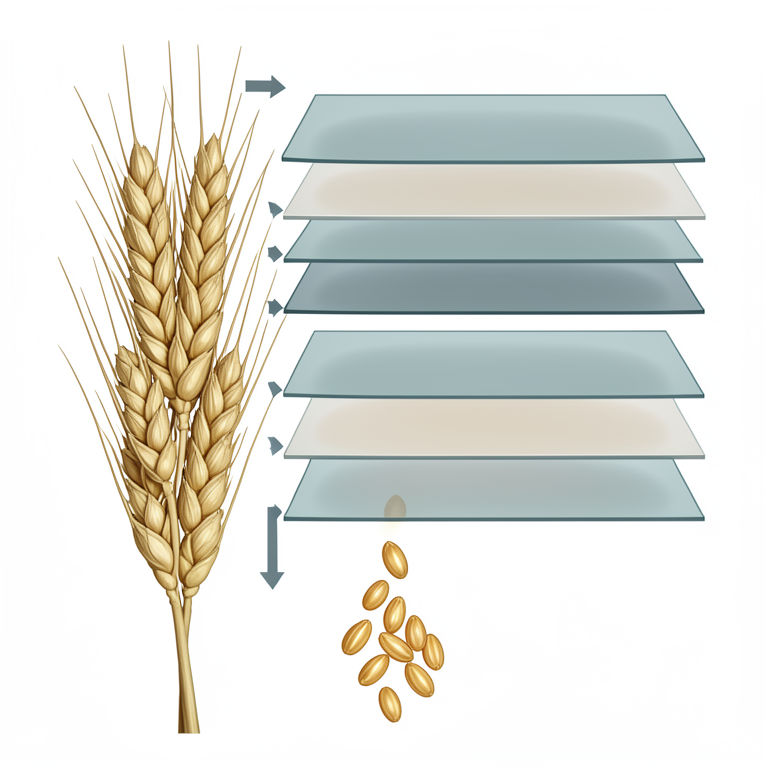
Selection Criteria for Biofortified Wheat
AI-generated conceptual illustration (bread wheat grains and spikes). It explains the idea and does not show study data.
View source evidence ↗Figures & tables
From the original paper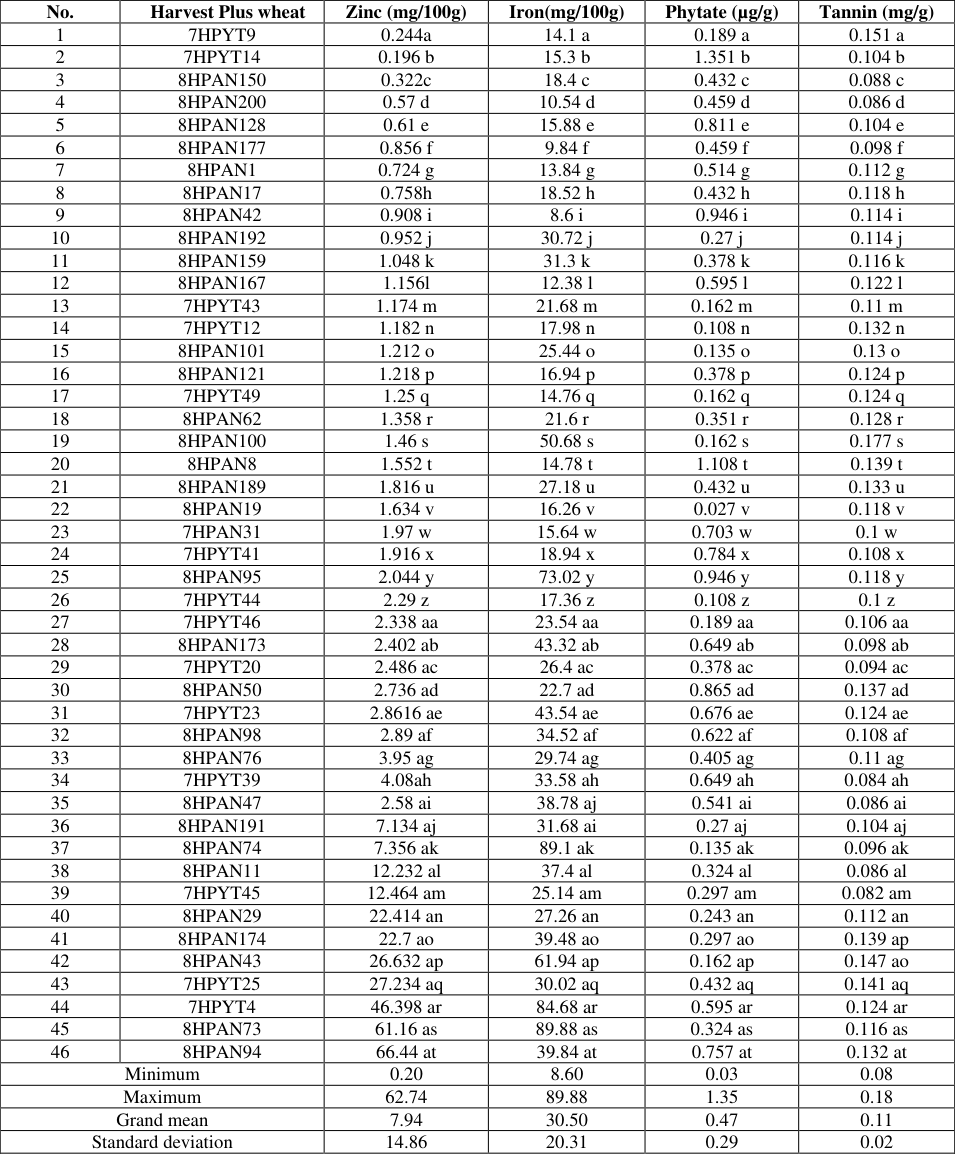 Table 1
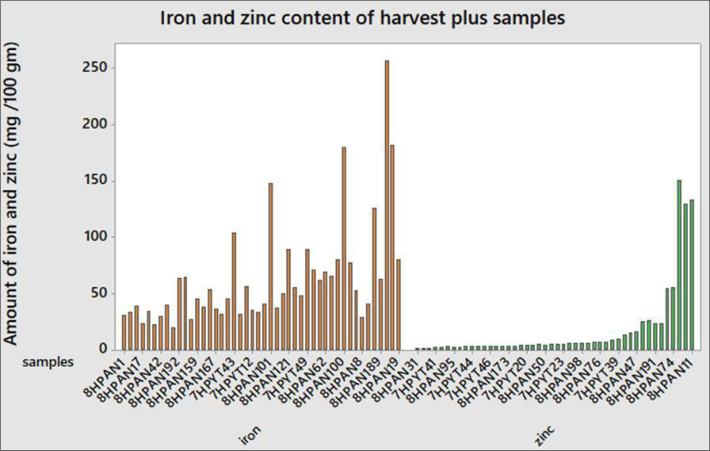 Figure 1
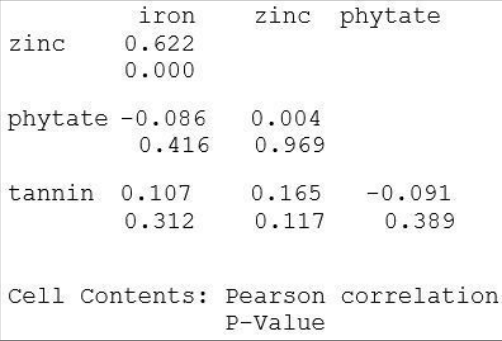 Figure 2
Introduction
Micronutrient malnutrition, "hidden hunger" affects about two billion people worldwide. It is responsible for escalated morbidity and mortality rates, reduced children's cognitive ability, diminished labor power productivity and higher chronic diseases prevalence. Zinc and iron deficiency causes mortality of 500,000 under 5 year children annually (Velu et al., 2012) [12] . Among the micronutrients, zinc deficiency causes impairment of physical growth, immune system and learning ability, increased risk of infections, DNA damage and cancer development (Cakmak, 2008; Gibson, 2006; Welch and Graham, 2002). Meanwhile, iron deficiency results in tissue hypoxia and heart failure, maternal anemia, stunted and unhealthy babies (born from iron deficient mothers), children with poor attention spans, impaired fine motor skills, less capacity for memory and less work productivity (Sramkova et al., 2009). Phytates (myoinositol hexaphosphate) reduces bioavailability of minerals such as Calcium, Iron, Zinc and Magnesium. Most of the inorganic phosphorus (Pi) present in mature cereal seeds (40-80%) is stored as phytate (Sramkova et al., 2009). Genetic bio fortification assures a sustainable, cost-effective alternative to conventional fortification (Welch and Graham, 2002). Thus the aim of the study was to identify and select CIMMYT imported bread wheat lines for high zinc and Iron concentration and lower phytate content for the minerals bioavailability and to select nutrition wise the appropriate genotypes for bread wheat cross breeding program at Kulumsa Agricultural Research Center.
The analysis was carried out at Holetta Agricultural & Nutritional Research Laboratory (iron and zinc analysis), Debrezeit Agricultural Research Center (Dry ashing and sample extraction), Kulumsa Food Science and Nutrition laboratory (Sample milling) and Melkassa Agricultural Chemistry Laboratory (Phytate and tannin analysis). Completely Randomized design (CRD) was used.
Sample preparation for iron and zinc analysis
About 1.0g of ground Harvest Plus bread wheat sample was put in aluminium dish over night at 105 o C in an oven and cooled in a desiccator. Then exactly 0.5 g of dried sample was put into a porcelain crucible and then put it in a muffle furnace, the temperature adjusted to to 450 o C, at this temperature ashed for 4 hours, and then allowed to cool inside the closed furnace overnight. The ashed material was transferred into 200 ml Erlenmeyer flask with 20 ml 20% HNO 3 . Then the acid treated sample was heated on hot plate to boiling and maintained at this temperature for 30 minutes with periodic stirring by glass rod, and allowed cool. The sample was then filtered through a no. 1 filter paper into a 100 ml volumetric flask. The contents are further washed until 90 ml of the filtrate collected, and bring to volume with distilled water. The solution was then used for the determination of iron and zinc in the Harvest Plus wheat samples. The standard curve was done and the absorbance of iron (Fe) and zinc (Zn) were measured with Flame Atomic Absorption Spectrophotometer (AAS) (Perkin-Elmer 560, Norwalk, CT) at 248.3 mm and 213.9 mm respectively. (Menaleshoa and Sorsa, 2010) [8] .
Fe and Zn (ppm) = (a-b) *V*mcf s
Where a = Concentration of (Fe and Zn) in plant digest from AAS reading (ppm). b = Concentration of (Fe and Zn) in blank digest from AAS reading (ppm). V = Total volume of digest (100 ml). s = Weight of sample (g). mcf = Moisture correction factor.
Determination of phytate content
About 0.1000 g of fresh samples were extracted with 10 ml 2.4% HCl in a mechanical shaker (Eberbach) for 1hour at an ambient temperature and centrifuged at 3000 rpm for 30 min. The clear supernatant was used for phytate estimation. A 2 ml of Wade reagent (containing 0.03% solution of FeCl3.6H2O and 0.3% of sulfosalicilic acid in water) was added to 3 ml of the sample solution (supernatant) and the mixture was mixed on a Vortex (Maxi Maxi II) for 5 s. The absorbance of the sample solutions were measured at 500 nm using UV-vis spectrophotometer (Beckman DU-64-spectrophotometer, USA). A series of standard solution were prepared containing 0, 5, 10, 20 and 40 μg/ml of phytic acid (analytical grade sodium phytate) in0.2 N HCl. A 3 ml of standard was added into 15 ml of centrifuge tubes with 3 ml of water which were used as a blank. A 1 ml of the Wade reagent was added to each test tube and the solution was mixed on a Vortex mixer for 5 s. The mixtures were centrifuged for 10 min and the absorbances of the solutions (both the sample and standard) were measured at 500 nm by using deionized water as a blank. A standard curve was made from absorbance vs. concentration. (Bulbula and Urga, 2018) [1] .
Determination of Condensed tannin
Tannin content was determined by the method of Burns (Burns, 1971). About 2.0000 g of chickpea flour was weighed in a screw cap test tube. The chickpea flour was extracted with 10 ml of 1% HCl in methanol for 24 h at room temperature with mechanical shaking. After 24 h shaking, the solution was centrifuged at 1,000 rpm for 5 min. A 1 ml of supernatant was taken and mixed with 5 ml of vanillin-HCl reagent (prepared by combining equal volume of 8% concentrated HCl in methanol and 4% Vanillin in methanol). D-catechin was used as standard for condensed tannin determination. A 40 mg of D-catechin was weighed and dissolved in 1,000 ml of 1% HCl in methanol, which was used as stock solution. A 0, 0.2, 0.4, 0.6, 0.8 and 1 ml of stock solution was taken in test tube and the volume of each test tube was adjusted to 1 ml with 1% HCl in methanol. A 5 ml of vanillin-HCl reagent was added into each test tube. After 20 min, the absorbance of sample solutions and the standard solution were measured at 500 nm by using water to zero the spectrophotometer (Bulbula and Urga, 2018) [1] .
Statistical analysis
The mean and standard deviation (SD) of means were calculated. The data were analyzed by one-way analysis of variance (ANOVA) and mean comparison was done with Least Significant Difference and correlation with person correlation coefficient using Minitab version 17 software. A level of p < 0.05 was used to indicate significant differences among the samples.
Results and Discussion
As shown in table 1 below iron Recommended Dietary Allowance (RDA) for men is 8 mg/ day and 18 mg /day for women of 19 to 50 years, the upper limit for iron intake is 45 mg/ day. Meanwhile zinc RDA for men is 11mg /day and 8 mg/day for females (Whiteney and Rolfes, 2008) [14] . The results were described forecasting the intake of 100-gram harvest plus wheat bread and assuming the suitability of each harvest plus genotype for 100-gram bread consumption frequency per day (one, two, three or four bread/s of 100-gram bread per day). Moreover, we considered other food sources of iron daily consumed and taken care in recommendation for not passing the upper limits of 45 mg/day for iron and 40 mg/ day for zinc. 7HPYT9, 7HPYT14, 8HPAN128, 8HPAN1, 8HPAN167, 8HPAN121,7HPYT49, 8HPAN8, 8HPAN19, 8HPAN31 and 7HPYT44 were having iron contents for two times consumption of 100-gram harvest plus bread. Meanwhile 8HPAN200 and 8HPAN42 iron contents were recommended for three times and four times consumption of the 100-gram bio fortified bread not exceeding the upper limit for iron intake. [16] in which among the 150 lines of bread wheat, both grain Fe and Zn concentrations correlated positively and significantly (Ficco et al., 2009) [2] , their increment rate together in the sample provides good opportunity in genetic bio fortication of the harvest plus samples in bread wheat crop breeding as male or female parent and need only focus on the adoptability and stability of bio fortified bread wheat in different agro ecological zones and seasons. Hailu Gebre-Mariam et al. (1991) [5] described the iron content of Ethiopian whole wheat grain being 1.5 mg/ 100 gm and Shahzad et al. (2014) stated that the iron and zinc concentration in whole grain of wheat are in the range of 2.9 to 7.3 mg /100 g and 0.7 to 8.5 mg /100 g, respectively and Wang et al. (2015) [13] stated zinc content of whole wheat grain to be 2 to 3.5 mg/ 100 g and that of wheat flour is about 1.5 mg/100g but the harvest plus samples analyzed in this study contained a 46 sample grand mean iron content of 30.50 mg /100 g which paves the way in cssombating Iron Deficiency Anaemia (IDA) and alleviate the impact of micronutrient deficiency on physical, mental and overall productivity of a society. The variation among wheat genotypes in zinc concentration is described to be 1.5 to 4 times differences in genotypes (Wang et al. (2015) [13] . The difference in variation in iron and zinc content in germplasm and/or cultivar is known to be two to three-fold, iron content between 4.14 to 6.77 mg/ 100 g and zinc content ranging between 3.64 to 7.38 mg/ 100 g. Kaur et al. (2020) [6] analysed 50 harvest plus genotypes from CIMMYT using energy dispersive x-ray fluorescence spectroscopy (EDXRF) instrunment and found zinc content between 2.48 mg/100 g to 4.373 mg/100 g and Zhao et al. (2009) [16] found the zinc contents to be in the range of 1.35 mg/100 g to 3.45 mg /100 g, it is in close agreement with the 46 sample grand mean of 7.94 mg/100g but the iron content found by Kaur et al. from 50 samples was 2.96 mg/100 g to 3.766 mg/100g and Graham et al. (2007) reported the iron content of the bio fortified wheat was an average of 3.5 mg/100 g, and Wozniak and Makarski (2013) [15] stated iron content of biofortified wheat in their study was 2.468 mg/100 g to 2.62 mg/100 g; not in agreement with this study as the iron contents of the 46 samples was higher with a grand mean of 30.50 mg /100 g. Kaur et al. (2020) [6] noted that those harvest plus genotypes with both high iron and zinc content showed significant decrease in grain yield. Wang et al. (2015) [13] described the phytate content of whole wheat grain to be between 6 and 10 g/ kg and that of whole wheat flour is 1.5 to 3 g/ kg, but the 46 harvest plus whole wheat samples had phytate in the range of 0.03 to 0.47 µg/g meanwhile the phytic acid value found in this study was much lower than that reported by Wang et al. (2015) [13] and the lower phytate content is beneficial in lowering the phytic acid zinc molar ratio in higher zinc genotypes and consequently impacts zinc bio availabilty and it is noted that the phytic acid (PA)/Zn zinc molar ratio less than 15 is known to be important in improved zinc bioavailability, however, the phytic acid zinc molar ratio of not bio fortified whole wheat and wheat flour are found to greater than 15 and thus low bioavailability of zinc (Wang et al., 2015) [13] . Meanwhile Mackown et al. (2008) [7] described the condensed tannin of wheat in epicatechin equivalent condensed tannin with a mean of 0.343mg/g for experimental lines but the tannin concentration in the 46 sample was grand mean of 0.11 mg/g and it is in agreement with Mackown et al. (2008) [7] and the lower tannin concentration is important in improving iron bioavailability fom bio fortified wheat. Both Iron and zinc harvest plus genotypes had shown significant difference (p<0.05) and 8HPAN100, 8HPAN95,8HPAN74, 8HPAN43,7HPYT4 and 8HPAN73 iron contents were above the upper level limit of 45 mg/ day for adults, and consuming only one bread of 100 gram of those six samples stated above may cause gastro intestinal distress, and the iron over load results in infections, fatigue, joint pain, skin pigmentation and organ damage (Whitney and Rolfes, 2008) [14] . Most of the harvest plus wheat samples had shown zinc content much lower than upper intake level per day except 7HPYT4, 8HPAN73, and 8HPAN94 above the upper limit of 40 mg / day and consuming one 100 gram of those breads of the three samples stated above may cause loss of appetite, impaired immunity, loss of High Density Lipoprotein (HDL), copper and iron deficiency (Whitney and Rolfes, 2008) [14] . But four harvest plus wheat samples 8HPAN121(Fe,16.94 mg/ 100g; Zn,1.218 mg/100g), 8HPAN19 (Fe,16.26 mg/ 100g; Zn,1.634 mg/100g), 7HPAN31(Fe,15.64 mg/100 g; Zn,1.97 mg/100 g) and 7HPYT44 (Fe, 17.36 mg/ 100g; Zn, 2.29 mg/ 100 g) had shown promising results to be a better candidate for parental cross breeding since the iron contents shown to be safer to be consumed twice per day per 100 gram bread considering other sources of iron in day to day food consumed, relatively better zinc content and lower phytate contents.
| No. | Harvest Plus wheat | Zinc (mg/100g) | Iron(mg/100g) | Phytate (µg/g) | Tannin (mg/g) |
|---|---|---|---|---|---|
| 1 | 7HPYT9 | 0.244a | 14.1 a | 0.189 a | 0.151 a |
| 2 | 7HPYT14 | 0.196 b | 15.3 b | 1.351 b | 0.104 b |
| 3 | 8HPAN150 | 0.322c | 18.4 c | 0.432 c | 0.088 c |
| 4 | 8HPAN200 | 0.57 d | 10.54 d | 0.459 d | 0.086 d |
| 5 | 8HPAN128 | 0.61 e | 15.88 e | 0.811 e | 0.104 e |
| 6 | 8HPAN177 | 0.856 f | 9.84 f | 0.459 f | 0.098 f |
| 7 | 8HPAN1 | 0.724 g | 13.84 g | 0.514 g | 0.112 g |
| 8 | 8HPAN17 | 0.758h | 18.52 h | 0.432 h | 0.118 h |
| 9 | 8HPAN42 | 0.908 i | 8.6 i | 0.946 i | 0.114 i |
| 10 | 8HPAN192 | 0.952 j | 30.72 j | 0.27 j | 0.114 j |
| 11 | 8HPAN159 | 1.048 k | 31.3 k | 0.378 k | 0.116 k |
| 12 | 8HPAN167 | 1.156l | 12.38 l | 0.595 l | 0.122 l |
| 13 | 7HPYT43 | 1.174 m | 21.68 m | 0.162 m | 0.11 m |
| 14 | 7HPYT12 | 1.182 n | 17.98 n | 0.108 n | 0.132 n |
| 15 | 8HPAN101 | 1.212 o | 25.44 o | 0.135 o | 0.13 o |
| 16 | 8HPAN121 | 1.218 p | 16.94 p | 0.378 p | 0.124 p |
| 17 | 7HPYT49 | 1.25 q | 14.76 q | 0.162 q | 0.124 q |
| 18 | 8HPAN62 | 1.358 r | 21.6 r | 0.351 r | 0.128 r |
| 19 | 8HPAN100 | 1.46 s | 50.68 s | 0.162 s | 0.177 s |
| 20 | 8HPAN8 | 1.552 t | 14.78 t | 1.108 t | 0.139 t |
| 21 | 8HPAN189 | 1.816 u | 27.18 u | 0.432 u | 0.133 u |
| 22 | 8HPAN19 | 1.634 v | 16.26 v | 0.027 v | 0.118 v |
| 23 | 7HPAN31 | 1.97 w | 15.64 w | 0.703 w | 0.1 w |
| 24 | 7HPYT41 | 1.916 x | 18.94 x | 0.784 x | 0.108 x |
| 25 | 8HPAN95 | 2.044 y | 73.02 y | 0.946 y | 0.118 y |
| 26 | 7HPYT44 | 2.29 z | 17.36 z | 0.108 z | 0.1 z |
| 27 | 7HPYT46 | 2.338 aa | 23.54 aa | 0.189 aa | 0.106 aa |
| 28 | 8HPAN173 | 2.402 ab | 43.32 ab | 0.649 ab | 0.098 ab |
| 29 | 7HPYT20 | 2.486 ac | 26.4 ac | 0.378 ac | 0.094 ac |
| 30 | 8HPAN50 | 2.736 ad | 22.7 ad | 0.865 ad | 0.137 ad |
| 31 | 7HPYT23 | 2.8616 ae | 43.54 ae | 0.676 ae | 0.124 ae |
| 32 | 8HPAN98 | 2.89 af | 34.52 af | 0.622 af | 0.108 af |
| 33 | 8HPAN76 | 3.95 ag | 29.74 ag | 0.405 ag | 0.11 ag |
| 34 | 7HPYT39 | 4.08ah | 33.58 ah | 0.649 ah | 0.084 ah |
| 35 | 8HPAN47 | 2.58 ai | 38.78 aj | 0.541 ai | 0.086 ai |
| 36 | 8HPAN191 | 7.134 aj | 31.68 ai | 0.27 aj | 0.104 aj |
| 37 | 8HPAN74 | 7.356 ak | 89.1 ak | 0.135 ak | 0.096 ak |
| 38 | 8HPAN11 | 12.232 al | 37.4 al | 0.324 al | 0.086 al |
| 39 | 7HPYT45 | 12.464 am | 25.14 am | 0.297 am | 0.082 am |
| 40 | 8HPAN29 | 22.414 an | 27.26 an | 0.243 an | 0.112 an |
| 41 | 8HPAN174 | 22.7 ao | 39.48 ao | 0.297 ao | 0.139 ap |
| 42 | 8HPAN43 | 26.632 ap | 61.94 ap | 0.162 ap | 0.147 ao |
| 43 | 7HPYT25 | 27.234 aq | 30.02 aq | 0.432 aq | 0.141 aq |
| 44 | 7HPYT4 | 46.398 ar | 84.68 ar | 0.595 ar | 0.124 ar |
| 45 | 8HPAN73 | 61.16 as | 89.88 as | 0.324 as | 0.116 as |
| 46 | 8HPAN94 | 66.44 at | 39.84 at | 0.757 at | 0.132 at |
| Minimum | 0.20 | 8.60 | 0.03 | 0.08 | |
| Maximum | 62.74 | 89.88 | 1.35 | 0.18 | |
| Grand mean | 7.94 | 30.50 | 0.47 | 0.11 | |
| Standard deviation | 14.86 | 20.31 | 0.29 | 0.02 |
Table text extracted from the original PDF; superscript letters are shown inline. The original table image is below.
View original table image
Conclusion
Nutrition plays a key role in improving quality of agricultural produce. Hence crop breeding using genetic bio fortification is best option as it reaches every house hold using the seed for cultivation specially bread wheat seed is most common cultivated in different parts of the country, thus iron and zinc bio fortified wheat will reach every household within the baked bread, meanwhile the appropriate level of the micro nutrients iron (Fe) and zinc (Zn) with respect to upper limit Recommended Daily Allowance (RDA) values per day without any possible effects of overdose intake along with the anti-nutritional factors (phytate and tannin) were assessed in the laboratory and 8HPAN121(Fe,16.94 mg/ 100g; Zn,1.218 mg/100g), 8HPAN19 (Fe,16.26 mg/ 100g; Zn,1.634 mg/100g), 7HPAN31(Fe,15.64 mg/100 g; Zn,1.97 mg/100 g) and 7HPYT44 (Fe, 17.36 mg/ 100g; Zn, 2.29 mg/ 100 g) had shown promising results since the iron contents had shown to be safer to be consumed twice per day per 100 gram bread considering other sources of iron in day to day food consumed, relatively better zinc content and lower phytate contents consequently be a better candidate for parental cross breeding, adoptability and stability studies in different agro ecological zones and seasons.
Figures and tables from the paper
References
16 in the original paper- Bulbula DD, Urga K. Study on the effect of traditional processing methods on nutritional composition and antinutritional factors in chickpea (Cicer arietinum). Cogent Food & Agriculture, 2018, 4.
- Ficco DBM, Riefolo C, Nicastro G, De Simone V, Di Gesu AM, Beleggia R, et al. Phytate and mineral elements concentration in a collection of Italian durum wheat cultivars. Field Crops Research. 2009; 111:235-242.
- Graham RD, Rosser JM. Carotenoids in staple foods: Their potential to improve human nutrition. Food and Nutrition Bulletin. 2000; 21:404-409.
- Goudia BD, Hash CT. Breeding for high grain Fe and Zn levels in cereals. International Journal of Innovation and Applied Studies. 2015; 12(2):342-354.
- Hailu Gebre-Mariam, Tanner DG, Mengistu Hulluka. eds. Wheat Research in Ethiopia: A historical perspective. Addis Ababa: IAR/CIMMYT, 1991.
- Kaur N, Kaur H, Mavi GS. Assessment of nutritional and quality traits in biofortified bread wheat genotypes. Food Chemistry, 2020, 302.
- MacKown CT, Carver BF, Edwards TJT. Occurrence of Condensed Tannins in Wheat and Feasibility for Reducing Pasture Bloat. Crop Science, 2008, 48.
- Menaleshoa M, Sorsa G. Manual for soil, plant and water Analytical methods. JIJE analytical services, Addis Ababa, Ethiopia. Unpublished manual, 2010.
- Monasterio I, Graham RD. Breeding for trace minerals in wheat. Food and Nutrition Bulletin, 2000; 21(4).
- Oury FX, Leenhardt F, Remesy C, Chanliaud E, Duperrier B, Balfourier F, et al. Genetic variability and stability of grain magnesium, zinc and iron concentrations in bread wheat. European Journal of Agronomy. 2006; 25:177-185.
- Shahzad Z, Rouached H, Rakha A. Combating Mineral Malnutrition through Iron and Zinc Biofortification of Cereals. Comprehensive Reviews in Food Science and Food Safety, 2014, 14.
- Velu G, Singh RP, Huerta-Espino J, Pe˜na RJ, Arun B, Mahendru-Singh A, et al. Performance of bio fortified spring wheat genotypes in target environments for grain zinc and iron concentrations Field Crops Research. 2012; 137:261267.
- Wang Z, Liu Q, Pan F, Yuan L, Yin X. Effect of increasing rates of zinc fertilization on phytic acid /zinc molar ratio in zinc biofortified wheat. Field Crops Research. 2015; 184:5864.
- Whitney E, Rolfes SR. Understanding nutrition. 11 th edition, Thomson Wadsworth, USA, 2018.
- Wozniak A, Makarski B. Content of minerals, total protein and wet gluten in grain of spring wheat depending on cropping systems. Journal of Elementology, 2013.
- Zhao FJ, Su YH, Dunhama SJ, Rakszegi M, Bedo Z, McGrath SP, et al. Variation in mineral micronutrient concentrations in grain of wheat lines of diverse origin. Journal of Cereal Science. 2009; 49:290-295.
Cited by 6
From OpenAlex, OpenCitations and reference lists read by Scinovex
- Population size and spatial distribution pattern of Schizaphis graminum (Hemiptera: Aphididae) on some wheat cultivars and lines ↗
Moustafa M.S. Bakry, Shimaa YE Shakal · Acta Entomology and Zoology · 2020
Field experiments were conducted at wheat program of El-Mattana Agricultural Research Station, Luxor Governorate, Egypt during two successive growing seasons (2017/2018 and 2018/2019) to study the performance of some wheat cultivars and lines to infestation by Schizaphis graminum (Rondani) (Hemiptera: Aphididae) and their spatial distribution pattern. Results indicated that the total population density of S. graminum during the first growing
- Efficacy of herbicides against diverse weed flora of wheat (Triticum aestivum L.) ↗
Abhishek Kumar, Dinesh Kumar Pandey, HP Agrawal, JR Patel, AP Agrawal · International Journal of Chemical Research and Development · 2022
The present experiment was conducted at Barrister Thakur Chhedilal College of Agriculture and research station, Bilaspur, Indira Gandhi Krishi Vishwavidyalaya, Raipur (C.G.) during Rabi season 2021-22. With a view to study the Efficacy of herbicides against diverse weed flora of wheat (Triticum aestivum L.) In wheat. The wheat variety GW322 was used for the research and the treatments were replicated
❝ 3Found by Scinovex - Participatory variety selection of bread wheat (Triticum aestivum L.) in highland areas of North Gondar, Ethiopia ↗
Yismaw Degenet, Yohannes Azene, Masresha Gashaw, Asnakew Takele · Journal of Current Research in Food Science · 2021
Wheat is one of Ethiopia\'s most important crops, serving as a source of food security, import-substitution, and raw material for the agro-processing industry. Farmers use Participatory Variety Selection (PVS) to recognize and pick improved varieties in a reasonable time frame, thus overcoming the constraints that force farmers to grow old or obsolete varieties. Eleven bread wheat varieties including the local
❝ 2Found by Scinovex - Estimation of heritability and genetic advance in 24 genotypes of bread wheat (Triticum aestivum L.) ↗
Manish Kumar, Shiv Kumar · Journal of Pharmacognosy and Phytochemistry · 2021
The present study was conducted to estimate heritability and genetic advance in 24 genotypes of wheat for 12 quantitative characters. The mean sum of square for all 12 characters is found to be significant and PCV of all characters is slightly higher than GCV which shows little influence of environment for expression of all characters. Highest estimate of GCV and
- Analysis of combining ability effects and for yield traits in F1 and F2 generation of in Winter wheat x spring wheat cross combinations (Triticum aestivum L.) under rainfed conditions ↗
Asif Ashraf Shah, Ashwani Kumar, Amardeep Kour, SK Mondal · International Journal of Chemical Studies · 2020
The present investigation was carried out at the research farm of the Division of Plant Breeding & Genetics, SKUAST –Jammu, Chatha. The experimental material of the present study comprised 20 true breeding facultative type winter wheat lines which were evaluated under rainfed conditions in a RBD. The best ten winter wheat lines (Arkaan, Blue boy, China 4435893, Drina, Drina NS…
❝ 1PDF - A study of improvement in the field of agriculture in Punjab, using Israeli technology
Urmila Urmila · International Journal of Agriculture Extension and Social Development · 2023
Israel, the Biblical holy land, known for its rich culture and infrastructure, was established on May 14, 1948. Jews from all over the world converged on Israel and developed the country with a missionary zeal. Despite having geographical conditions that do not favour farming, Israel has managed to script a success story in the field of agriculture. India, an ancient land with centuries of knowledge, expertise and experience in various fields coupled with its rich natural resources is a force to reckon with. It was with the intent of sharing the best practices and technical knowledge that in 2