
Research article · 2023 · Full text
International Journal of Agriculture Extension and Social DevelopmentA study of improvement in the field of agriculture in Punjab, using Israeli technology
Volume 6(1) · Pages 110–116 · DOI: 10.33545/26180723.2023.v6.i1b.184 ↗
Research areasAgricultural Economics and PracticesLivestock Management and Performance Improvement
Abstract
Author-writtenIsrael, the Biblical holy land, known for its rich culture and infrastructure, was established on May 14, 1948. Jews from all over the world converged on Israel and developed the country with a missionary zeal. Despite having geographical conditions that do not favour farming, Israel has managed to script a success story in the field of agriculture. India, an ancient land with centuries of knowledge, expertise and experience in various fields coupled with its rich natural resources is a force to reckon with. It was with the intent of sharing the best practices and technical knowledge that in 2006 the Israeli and Indian Agriculture Ministry signed a long-term cooperation and training deal. The deal has since been supervised by field experts from MASHAV; an international development programme of Israel's Foreign Ministry. Agriculture in Israel is a highly developed industry, despite the fact that Israeli geography does not favour farming and is not naturally conducive to it. More than half of the land area is a desert. Climate conditions and lack of water resources are unfavourable factors. Over half of Israel’s saline soil was arid or semi-arid. Only 20 per cent of the total land was arable. Israel took the challenge chin up and soon tripled the area used for farming. The production multiplied 16 times. Today, Israel produces 90 per cent of its own food requirements. It is a major exporter of fresh produce and a world leader in agricultural technology. With small and big tunnels of greenhouses and long series of greenhouse tunnels, agriculture in Israel is like an industrial produce. Half of Israel’s total agricultural produce includes fruits and vegetables. Israeli greenhouse tomatoes, cherry tomatoes, herbs, pepper, melons are of the highest international standards. Cactus plants are also grown to cater to food security. Oranges, grapefruits, apricots, grapes, peaches, mangoes, plums, dates, lemons, apples, and pears are major fruits. Another fruit that is grown is mandarin – a very sweet fruit that is seedless and with thin skin. Israeli potatoes are also of very high quality. Successful use of drip irrigation is a major contribution of Israel in agriculture. Through drip irrigation, water goes directly to roots. This saves wastage of water. Israel highly values water and knows how to save each drop. Computer-controlled drip irrigation, computerised early warning system for leaks; thermal imaging for crop water stress detection, biological pest control, new varieties of fruit and vegetables are the main achievements of Israel in the field agriculture. Dairy and desert farming are impressive in Israel. All this is despite the fact that Israel’s natural water supplies are below the United Nations definition of water poverty. Around 86 per cent of water is reused and stored after desalination through plants. Israel exports agricultural technology all over the world. Equipment is the backbone of agriculture in Israel. Israel manufactures its equipment locally. Agriculture, with its allied sectors, is the largest livelihood provider in India, more so in vast rural areas. It also contributes a significant figure to the Gross Domestic Product (GDP). Sustainable agriculture, in terms of food security, rural employment, and environmentally sustainable technologies such as soil conservation, sustainable natural resource management and biodiversity protection, is essential for holistic rural development. Indian agriculture and allied activities have witnessed a green revolution, a white revolution, a yellow revolution and a blue revolution.Punjab: The bread basket of India: Punjab State has 5.03 M hectare geographical area out of which 4.23 M hectare is under cultivation. About 75% of its population depends directly on agriculture. From 1965-66 to 2004-05, the cropping intensity increased from 126% to 186%. The area under wheat has increased by 216% and the production by 756%. The area under rice cultivation has increased by 895% and the production by 3307%. Punjab state has played a prominent role I agriculture. It has achieved self-sufficiency in food grains. It contributes 60% wheat and 40% rice to the central pool. The productivity of wheat has increased from 1236 kg/hectare to 4209 kg/hectare. Since the advent of Green Revolution, the state has made rapid strides in agricultural production. New innovative techniques were adopted to reduce the cost of cultivation. Zero-till age technology was promoted for wheat sowing amongst the farmers. An area of 3.14 lakh hectare was sown during 2004-05 which saved Rs. 42crore on the use of inputs. For increasing the efficiency and performance in the agricultural sector, the Government of India has taken several significant steps like collaborating with other nations for the latest techniques and technology.In one of such deals, India is collaborating with Israel on improvements in various sectors in agriculture. The current challenge is to look for external markets for the surplus food grains from Punjab. Therefore, negotiations in the international trade markets have become most important. There has been a growing occurrence of multinational corporations in developing countries, particularly in trading agricultural commodities. Punjab’s policymakers must bring the brains together, both domestic and international, to stand for the development strategies of Punjab. Getting the bankers, entrepreneurs, and farmer leaders on the same table and meeting their needs to make progress is essential. The latest slogan is “Innovate or Perish”. It’s time for Indians to develop their dry lands to accommodate and feed the growing population, by learning lessons from Israel. For a country like Israel where 60% of the area is desert, exporting high-value farm produce like mangoes and avocados is a matter of pride, whereas for India, among the largest food producers globally, the challenge is to counter the effects of erratic rainfall, raise productivity and use water efficiently.
Summary
Source-checkedPlain-language reading of the full paper, prepared with AI and checked against the text. Each point links to the authors' own words.
Why it matters
- Israel has achieved significant agricultural success despite unfavorable geographical conditions, including a landscape where more than half the land is desert. View evidence ↗
- Agriculture is the primary source of livelihood in rural India and contributes significantly to the national GDP. View evidence ↗
- The agricultural sector faces threats from climate change while attempting to meet the food demands of a growing population. View evidence ↗
The question
- The cooperation between India and Israel aims to share technical knowledge and best practices to improve agricultural productivity. View evidence ↗
What they did
- The partnership is implemented through 29 operational Centres of Excellence (COEs) across 12 Indian states, led by India's Ministry of Agriculture and Israel's MASHAV. View evidence ↗
- In Punjab, a center was established on a 15-acre farm, with 13 acres dedicated specifically to cultivation. View evidence ↗
- The Indo-Israel Villages of Excellence (IIVOE) program focuses on three pillars: modern infrastructure, capacity building, and market linkage. View evidence ↗
What they found
- The promotion of zero-till technology for wheat sowing in 2004-05 covered 3.14 lakh hectares and resulted in input savings of Rs. 42 crore. View evidence ↗
- Israeli company Netafim holds nearly 45% of the global market for irrigation, with its Indian branch holding a 15% domestic market share. View evidence ↗
- Through technological advancement, Israel now produces 90% of its own food requirements. View evidence ↗
What it means
- The author suggests that future cooperation should shift focus toward agribusiness and agro-value addition to make Indian agriculture more profitable. View evidence ↗
- The author concludes that current Indian government initiatives provide an ideal opportunity to align Indo-Israeli agricultural cooperation with the vision of 'New India'. View evidence ↗
Visual summary
1 visualsIllustrations explain the paper; they do not show study data.
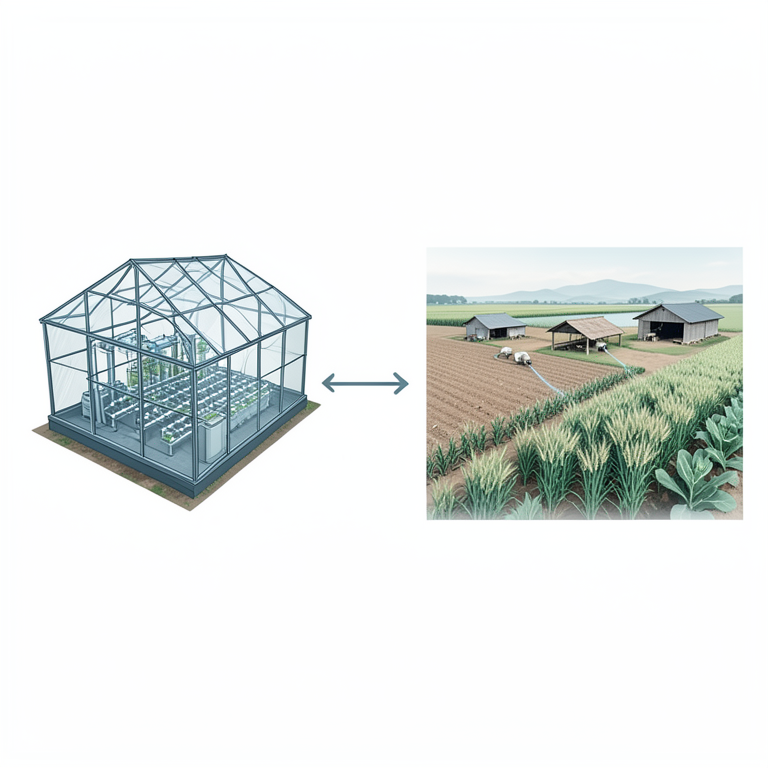
Indo-Israeli Agricultural Cooperation Model
AI-generated conceptual illustration (Wheat and vegetable crops in Punjab farmland). It explains the idea and does not show study data.
View source evidence ↗Figures & tables
From the original paper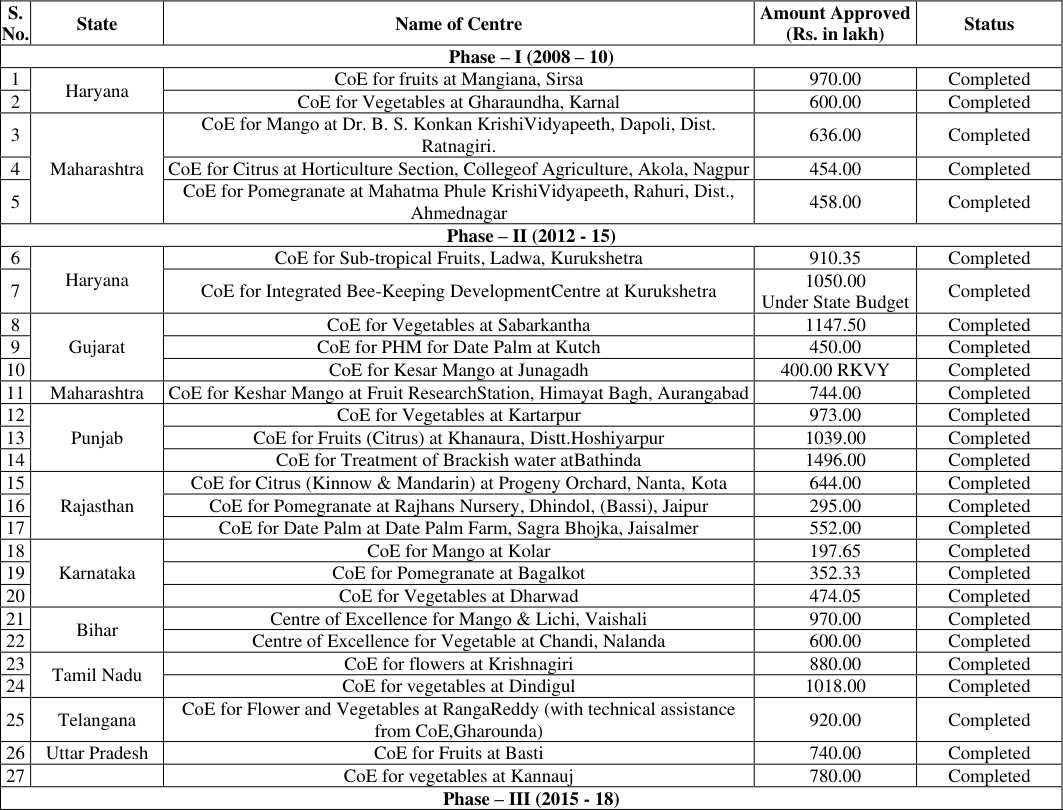 Table 1
Introduction
Food efficiency is a crucial component of security studies because the human race can't think of its survival without food. The agriculture sector is taking various efforts to accommodate population demands; however certain challenge, such as climate change, is posing threats to the agricultural sector. Many emerging countries including India still rely on agricultural products, which often requires international technological cooperation and help to get better yield. In such a case, the bilateral cooperation between India and Israel can assist both countries in getting more yields in day-by-day deteriorating scenarios. Since 1992; India and Israel initiated bilateral relations between them and worked together in various fields including food security. Agriculture is one of the most important aspects of the relationship because in both economies agriculture sector plays a critical role and they both are somehow agrarian economies. An agrarian economy is centered on the agricultural industry, such as crop cultivation and livestock raising. Agriculture accounts for around 70% of the Indian economy, which is a large percentage when compared to other countries. According to Yatish Yadav, India's agricultural output has grown, with rice production rising from 2,400 kg per hectare in 2015 to 2,659 kg per hectare in 2019. India has two goals: the first is to achieve sustainable agriculture, which entails using farm practices that do not damage the environment or natural resources, such as water. The second objective is to broaden the food basket by including more vegetables and fruits. The National Horticulture Mission of India was tasked with achieving these goals (NHM).Talking of Israel; it has evolved a variety of unique knowledge and procedures to deal with its dry and semi-arid climatic circumstances. The state has limited natural resources, which it effectively manages by incorporating technology into its agricultural operations. This system has aided the country's economic development. As a result, NHM chose Israel as a partner for India in advancing the goals outlined in India's Green Revolution. Between the two countries, agricultural cooperation has been one of the most utilized and explored. The signing of an agreement for agricultural cooperation in December 1993 was a turning point in the relations. The agreement was signed by then-Indian Agriculture Minister Balram Jhakar and his Israeli counterpart Yaakov Tour. Both states have agreed that using the technology in India will help solve the country's long-standing water logging and soil alkalinity issues. This technology could be used to combat desertification in Rajasthan and Gujarat, as well as boosting agricultural productivity in the dry areas of Maharashtra. Israel has made their desert blossom despite the limited availability of water. India can also benefit from its advances in horticulture, aquaculture, floriculture, and arid-zone farming. Rajasthan and other semi-arid states in India aim to benefit from Israeli expertise. Earlier, Israel had hosted an Agro-Tech show in May 1993. Shard Pawar, Maharashtra's then-chief minister, led a six-member group to Israel for the expo. M.S. Gill, the Union Agriculture Secretary, and Punjab Minister for Cooperation were also in the delegation list. Around roughly 600 farmers from Maharashtra and another 300 from Andhra Pradesh, Karnataka, Punjab, and Haryana took part in the expo. Following that, various joint venture proposals were developed, particularly in the field of seed production and agricultural/ industrial machinery manufacturing. Pilot projects and turnkey projects were also identified to promote Indo-Israeli agricultural collaboration. A travelling conference was also organized by Israeli and Indian experts, which included an excursion to the Indira Gandhi Canal and Rajasthan's desert areas. It was believed that by doing so, effective water management and micro-planning might be developed in these locations. Israel was also willing to transfer its technology in response to India's demands. In December 1996, the then-Israeli president, Ezer Weizman, paid a five-day visit to India, ushering in a new era of Indo-Israeli collaboration. An Indo-Israeli Research and Development Farm was inaugurated in the Indian Agricultural Research Institute, IARI at Pusa in New Delhi, during President's visit. The farm would showcase Israeli expertise in high-tech agriculture and would seek to develop new production techniques and procedures fit for India's diverse agro-climatic zones. The farm's objective was to exhibit crop cultivation technologies and crop protection methods, the two domains in which Israel excels. Several projects involving Indian state governments have also been launched. This included dairy development initiatives in Karnal between the Punjab Agro-Industries Cooperation and the Israeli Ozcot Company. In addition to the proposal for an Israeli-designed 100-cow dairy farm, the Israeli Dairy Board and the Punjab government inked an MOU to create a sophisticated satellite dairy farm in Punjab. Tahal, an Israeli water management firm working on wasteland development, irrigation and water and modern agricultural pilot projects started work in Rajasthan, Gujarat, and Tamil Nadu. Projects for the installation of tissue culture laboratories in India were offered by an Israeli agricultural enterprise. There are more than 150 joint ventures between Indian and Israeli businesses out of which the majority are in agriculture. Leading agricultural enterprises of Israel are part of these efforts, therefore, creating a win-win situation for both. Today, Israel's well-known drip irrigation system is being manufactured at three places in India. On May 11, 2006, India and Israel inked a three-year work plan for agricultural cooperation. It was the first work plan of its sort, and it was anticipated to usher in a new era of practical cooperation. Sharad Pawar, the then Agriculture Minister of India and Shalom Simhon, the Israeli Minister of Agriculture and Rural Development, signed the work plan on behalf of their respective governments in Tel Aviv. Both also intend to establish a collaborative research and development fund, which will provide seed money for joint agricultural innovation projects. The work plan also pays attention to Extension Service Systems, which provide realtime solutions and access to agricultural expertise and research and development to the farmers, an area where In May 2021, the two governments agreed to further strengthen their agricultural cooperation and signed a three-year work programme agreement for development in agriculture cooperation, affirming the ever-growing bilateral partnership and recognising the importance of agriculture and water sectors in the bilateral relationship. MIDH, India's Ministry of Agriculture and Farmers' Welfare, and MASHAV, Israel's Agency for International Development Cooperation are leading Israel's largest G2G cooperation, with 29 operational Centres of Excellence (COEs) across India in 12 states, implementing Advanced-Intensive agriculture farms with Israeli Agro-Technology tailored to local conditions. Annually, these COEs germinate more than 25 million high-quality vegetable seedlings, 387 thousand high-quality fruit plants and train more than 1.2 lakh farmers in modern technical know-how. On this occasion, Shri Narendra Singh Tomar, Minister of Agriculture and Farmers Welfare said that the agriculture sector has always been a priority for India. Prime Minister Shri Narendra Modi is committed to increasing farmers' income. This is the 5 th IIAP. According to him, "So far, we have successfully completed 4 action plans. This new work programme will further strengthen the bilateral relations and mutual cooperation between the two countries in the field of agriculture for the benefit of the farming community. The COEs established under these Israeli-based action plans are playing an important role in doubling farmers' income. The exchange of technology between India and Israel will greatly improve the productivity and quality of horticulture, thereby increasing the income of farmers". The Status of Centres of Excellence under India -Israel Cooperation is given in Table 1. In Punjab, one such centre is set up on a large agricultural farm of about 15 acres abutting the Jalandhar-Amritsar Road. Since the main objective of the centre is to promote horticulture, a maximum percentage of the area of this centre has been kept for it. Out of about 15 acres, 13 acres have been reserved for cultivation. Only three acres have been kept for necessary building infrastructure.
| S. No. | State | Name of Centre | Amount Approved (Rs. in lakh) | Status |
|---|---|---|---|---|
| Phase – I (2008 – 10) | ||||
| 1 | Haryana | CoE for fruits at Mangiana, Sirsa | 970.00 | Completed |
| 2 | CoE for Vegetables at Gharaundha, Karnal | 600.00 | Completed | |
| 3 | Maharashtra | CoE for Mango at Dr. B. S. Konkan KrishiVidyapeeth, Dapoli, Dist. Ratnagiri. | 636.00 | Completed |
| 4 | CoE for Citrus at Horticulture Section, Collegeof Agriculture, Akola, Nagpur | 454.00 | Completed | |
| 5 | CoE for Pomegranate at Mahatma Phule KrishiVidyapeeth, Rahuri, Dist., Ahmednagar | 458.00 | Completed | |
| Phase – II (2012 - 15) | ||||
| 6 | Haryana | CoE for Sub-tropical Fruits, Ladwa, Kurukshetra | 910.35 | Completed |
| 7 | CoE for Integrated Bee-Keeping DevelopmentCentre at Kurukshetra | 1050.00 Under State Budget | Completed | |
| 8 | Gujarat | CoE for Vegetables at Sabarkantha | 1147.50 | Completed |
| 9 | CoE for PHM for Date Palm at Kutch | 450.00 | Completed | |
| 10 | CoE for Kesar Mango at Junagadh | 400.00 RKVY | Completed | |
| 11 | Maharashtra | CoE for Keshar Mango at Fruit ResearchStation, Himayat Bagh, Aurangabad | 744.00 | Completed |
| 12 | Punjab | CoE for Vegetables at Kartarpur | 973.00 | Completed |
| 13 | CoE for Fruits (Citrus) at Khanaura, Distt.Hoshiyarpur | 1039.00 | Completed | |
| 14 | CoE for Treatment of Brackish water atBathinda | 1496.00 | Completed | |
| 15 | Rajasthan | CoE for Citrus (Kinnow & Mandarin) at Progeny Orchard, Nanta, Kota | 644.00 | Completed |
| 16 | CoE for Pomegranate at Rajhans Nursery, Dhindol, (Bassi), Jaipur | 295.00 | Completed | |
| 17 | CoE for Date Palm at Date Palm Farm, Sagra Bhojka, Jaisalmer | 552.00 | Completed | |
| 18 | Karnataka | CoE for Mango at Kolar | 197.65 | Completed |
| 19 | CoE for Pomegranate at Bagalkot | 352.33 | Completed | |
| 20 | CoE for Vegetables at Dharwad | 474.05 | Completed | |
| 21 | Bihar | Centre of Excellence for Mango & Lichi, Vaishali | 970.00 | Completed |
| 22 | Centre of Excellence for Vegetable at Chandi, Nalanda | 600.00 | Completed | |
| 23 | Tamil Nadu | CoE for flowers at Krishnagiri | 880.00 | Completed |
| 24 | CoE for vegetables at Dindigul | 1018.00 | Completed | |
| 25 | Telangana | CoE for Flower and Vegetables at RangaReddy (with technical assistance from CoE,Gharounda) | 920.00 | Completed |
| 26 | Uttar Pradesh | CoE for Fruits at Basti | 740.00 | Completed |
| 27 | CoE for vegetables at Kannauj | 780.00 | Completed | |
| Phase – III (2015 - 18) |
Table text extracted from the original PDF; superscript letters are shown inline. The original table image is below.
View original table image
In the larger 13-acre part of the site, an extensive network of paths has been planned so as to give access to big chunks of land in between. These chunks of land are used for cultivation, both in the open and in poly houses. The mini complex of 2 acres has been built in one of the corners on the southwest side. It houses the necessary components of the centre, including an administrative-cum-guest house block, pack house, workshop, staff quarters, canteen, guard room/retail outlet, etc. All the buildings except the pack house and workshop have been constructed using conventional building materials like brick and concrete. The buildings are either single or double storied and with an elevation of cement plaster and uniform paint to give a harmonious look. The pack house and workshop have been constructed in hi-tensile, pre-engineered steel structure popularly known as PEB or pre-engineered building which is most economical, fast to construct, precise, easy to construct, and has a long-term durability. The entire complex is linked by a simple network of roads that extends up to the cultivated area. The administrative block is the hub of all major activities. Designed to serve multifarious functions, it houses necessary administrative offices and a conference hall. A guest house wing and plant health clinic/ laboratory are located at the first-floor level. All these wings are interlinked by a spacious lobby. The triangular-shaped lobby accommodates a sculptural staircase in one corner and a seating space in the other corner. A rectangular porch gives the building an inviting entry. The double-storied administrative building is an innovative piece of modern architecture. It incorporates all the ingredients of modernity like unadorned bold and seamless facades, the ingenious www.extensionjournal.com play of spaces, volumes, forms, solids, and voids. The complex is a showcase of the architect's excellence which brings modern architecture to the remote countryside.
Transformation of traditional farms
The IIVOE programme, with its objective of increasing the net income of farmers and improving the livelihood of the individual farmer, is transforming traditional farms into modern-intensive farms based on the IIAP standards. Largescale and complete value chain approach aims at economic sustainability, but at the same time the (2006). Each IIAP phase lasts for three years. India and Israel set to jointly develop new crop varieties and share post-harvest technologies. This followed the success of the 10-year-old Indo-Israeli Agriculture Project (IIAP) wherein cherry tomatoes were grown in Haryana, mango orchards were rejuvenated in Maharashtra. All these achievements highlighted the effectiveness of the state-ofthe-art irrigation technologies to the Indian farmers. "Our goal is to help the Indian farmers by exposing them to new technologies tailored to their local needs," said Dan Alluf, counsellor of science and agriculture at MASHAV, Delhi. "There is a concentrated focus on drip irrigation and designing of better farms by using canopy management. The focus is also on the use of improved irrigation and fertigation technologies," Alluf said, adding, "Each centre showcases a range of greenhouses to farmers depending on their needs and capabilities. A unique feature is to teach the farmers the language of irrigationwhen to irrigate and by how muchto increase water use efficiency."
The current approach of Israeli projects in India, particularly in the agricultural sector, needs some major improvements. India and Israel signed the Agreement for Agricultural Cooperation in 2006, which evolved into the Indo-Israeli Agricultural Cooperation Project in 2008. During the last few years, the Indian government completely revamped its old institutions and policies. This is good time for Israel to update and align its cooperation strategy with the changed reality and vision of the New India. Now the focus should be on Agribusiness and Agro-Value Addition. Israel can participate proactively to turn the Indian Agricultural sector into a profitable enterprise.
On January 1, 2015, Prime Minister of India, Narendra Modi, replaced the Planning Commission of India with the NITI Aayog (National Institution for Transforming India). This change reflects the change in the approach of the government in India. Now the focus is on "functioning" in place of "planning". The Planning Commission of India was an institution that formulated India's five-year plans. Anat Binur, has succeeded in engineering a gluten protein that does not contain the component that celiac patients' immune system identifies as dangerous, while preserving all its positive attributes. Within a few years, the company hopes to produce a food product that will compete with the massive gluten substitutes market and take a cut out of its billions in revenues. In the future, the company hopes that the farmers will grow Ukko's "modified" wheat from the onset and thus eliminate gluten sensitivity and provide celiac patients with healthier, tastier products. Ukko's technology may also enable treating one of the most common, life-threatening food allergiespeanut allergy. Ukko's approach is unique in that it learns from the patient (with blood samples and biopsies) how to treat food, and the food, in turn, can treat the patient.
The current status of Indo-Israel cooperation in agriculture Following Defence, Agriculture is one of the key areas of India-Israel cooperation. The agricultural sector is one of the largest contributors to the GDP of India. According to the statistics obtained from the Ministry of Labour and Employment, in 2014-15, 45.7% of India's workforce was employed in agriculture. The approach of the Indian government towards agricultural overhauling is severe. This is the best time to align the Indo-Israel agricultural cooperation project with the initiative of the New India.
In May 2021, Israel and India signed a three-year work programme for cooperation in agriculture. India and Israel are already implementing the "Indo-Israel Agricultural Project Centres of Excellence" and "Indo-Israel Villages of Excellence (IIVOE)".
Conclusion
Agriculture sector is the important factor in the strong relationship between India and Israel. Both nations are majorly tried to develop their agri-cultivation for the economic growth. They are working on upgrading their scientific and technological collaboration by supporting joint research and developments projects. India and Israel established a strategic-partnership in water and agriculture sector for many years and for many decades. Food efficiency is a crucial component of security studies because the human race can't think of its survival without food. The agriculture sector is taking various efforts to accommodate population demands; however certain challenge, such as climate change, is posing threats to the agricultural sector. Many emerging countries including India still rely on agricultural products, which often requires international technological cooperation and help to get better yield. In such a case, the bilateral cooperation between India and Israel can assist both countries in getting more yields in dayby-day deteriorating scenarios. Leading agricultural enterprises of Israel are part of these efforts, therefore, creating a win-win situation for both. Today, Israel's wellknown drip irrigation system is being manufactured at three places in India.
References
7 in the original paper- Blarel N. The evolution of India's Israel policy: Continuity, change, and compromise since 1922 (1st ed.); c2015.
- India-Israel Relations since 1992. In E. Nahar (Ed.), the foreign policy of India in the 21st century challenges and prospects (1st ed.); c2011.
- Sahu S, Choudhary AS, Raj S, Ghode N, Ashish Kumar. Effect of micronutrients on yield attributes of tomato. Int. J Agric. Nutr. 2022;4(1):34-38. DOI: 10.33545/26646064.2022.v4.i1a.51
- Dr. Saini AK. Groundwater pollution, its causes, and enhancement by surface water pollution and prevention techniques. Int. J Adv. Chem. Res. 2022;4(2):346-350. DOI: 10.33545/26646781.2022.v4.i2e.132
- Kokani RC, Pawar AM. Standardization and storage studies of rice papad incorporated with tomato pulp. Int. J Agric. Food Sci. 2021;3(1):21-24. DOI: 10.33545/2664844X.2021.v3.i1a.46
- Krishna, Bhambri MC, Agrawal S, Samadhiya VK. Economic studies of quality rice (Oryza sativa L.) on different varieties under organic production system in Chhattisgarh. Int. J Adv. Chem. Res. 2022;4(2):266272. DOI: 10.33545/26646781.2022.v4.i2d.110
- Gebremichael H, Tafese M, Zegeye H, Gebregiorgis A, Gerenfess D, Demsis N, et al. Identifying bread wheat lines for high zinc, iron and low phytate concentration. Int. J Agric. Nutr. 2020;2(1):08-12. DOI: 10.33545/26646064.2020.v2.i1a.24