
Research article · 2022 · Full text
International Journal of Biology SciencesEffect of garlic (Allium sativum) and Ginger (Zingiber officinale) on the microbial and sensorial quality of smoked mackerel fish (Scomber scombrus)
Volume 4(1) · Pages 188–191 · DOI: 10.33545/26649926.2022.v4.i1c.105 ↗
Research areasMeat and Animal Product QualityIdentification and Quantification in Food
Abstract
Author-writtenThis study examined the effect of garlic (Allium sativum) and ginger (Zingiber officinale) on the microbial and sensorial quality of smoked mackerel fish (Scomber scombrus). Thirty six (36) pieces of fresh frozen Mackerel fish of 1.09kg average weight were purchased, dressed, dipped in a solution of 0% garlic or ginger (T0), 10% garlic (T1), 10% Ginger (T2) and 5% garlic and 5% ginger (T3) solution for 30 min, smoked dried and stored at 28±2 °C over the period of 60 days. Microbiological and sensory analyses were performed on the smoked fish samples. The result revealed that the garlic and ginger treatment of the smoked preserved fish sample were found very influential. The values of the total bacterial count and moulds and yeast count shows that there were significant variations (p≤ 0.05) among the samples. Samples treated with ginger and garlic had lower total bacterial count, yeast and mould count than the control. The organoleptic results showed that samples treated with garlic/ginger (T3) had the best acceptance than the other treatments.
Summary
Source-checkedPlain-language reading of the full paper, prepared with AI and checked against the text. Each point links to the authors' own words.
Why it matters
- Fish are highly perishable compared to other muscle foods, losing flexibility within a few hours after death. View evidence ↗
- The spoilage of fish is primarily caused by microbial growth, oxidation, and enzymatic autolysis. View evidence ↗
- Smoke drying is the primary method of fish preservation in northern Nigeria because many communities lack electricity for freezing. View evidence ↗
The question
- The study aimed to evaluate how garlic and ginger affect the sensory and microbial quality of smoked mackerel fish. View evidence ↗
What they did
- Thirty-six mackerel fish (average weight 1.09kg) were treated with four solutions: a control (0%), 10% garlic, 10% ginger, or a 5% garlic/5% ginger mix, then smoked and stored at 28 ± 2°C for 60 days. View evidence ↗
- Microbiological analysis involved plating 0.1ml dilutions on potato dextrose agar and incubating them at 35°C for 48–72 hours to determine bacterial and mould counts. View evidence ↗
- A 10-member panel evaluated sensory attributes, including taste, texture, and overall acceptability, every two weeks for a total of 8 weeks. View evidence ↗
- The researchers used Analysis of Variance (ANOVA) to determine statistical significance at a level of P≤0.05. View evidence ↗
What they found
- The control sample consistently received lower sensory scores for appearance, flavor, texture, and general acceptability compared to all spice-treated samples. View evidence ↗
- The combination of garlic and ginger (T3) resulted in the highest overall sensory acceptability. View evidence ↗
- The garlic/ginger treatment (T3) had an overall acceptance rate of 8.67 ± 0.34 initially, which decreased to 4.57 ± 0.30 by week 8, yet remained superior to other treatments. View evidence ↗
- The control sample (T0) had the lowest overall acceptability, starting at 8.11 ± 0.03 and dropping to 2.90 ± 0.28 by the end of storage. View evidence ↗
What it means
- The authors conclude that garlic and ginger possess antimicrobial and antioxidative properties that extend the shelf life of smoked mackerel by inhibiting mould and rancidity. View evidence ↗
- The authors suggest that using these natural preservatives can increase consumer satisfaction and help reduce protein malnutrition in Nigeria by improving fish protein intake. View evidence ↗
Visual summary
2 visualsIllustrations explain the paper; charts are replotted from the paper's own table values.
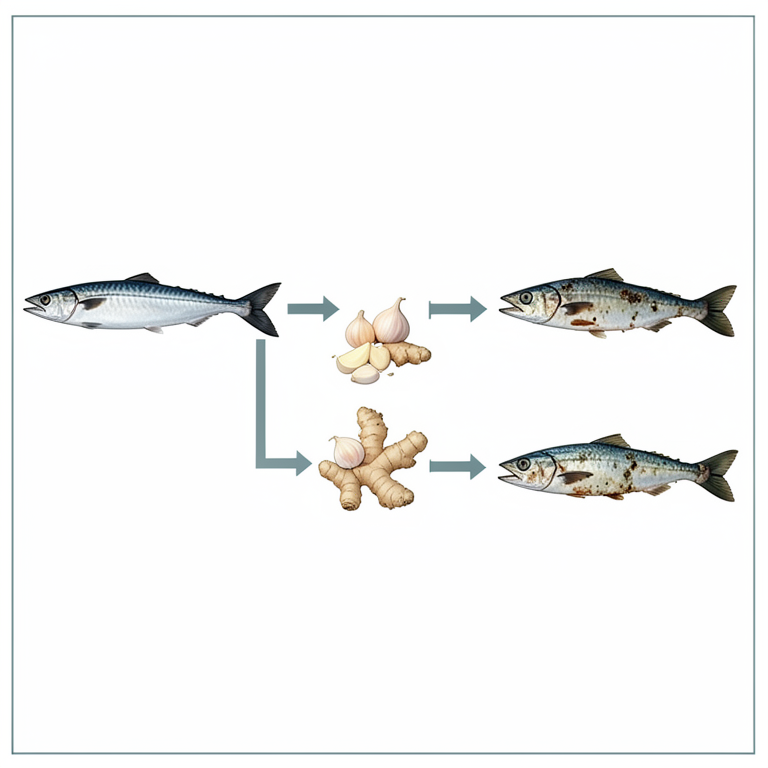
Treatment Comparison Flow
AI-generated conceptual illustration (smoked mackerel fish (Scomber scombrus)). It explains the idea and does not show study data.
View source evidence ↗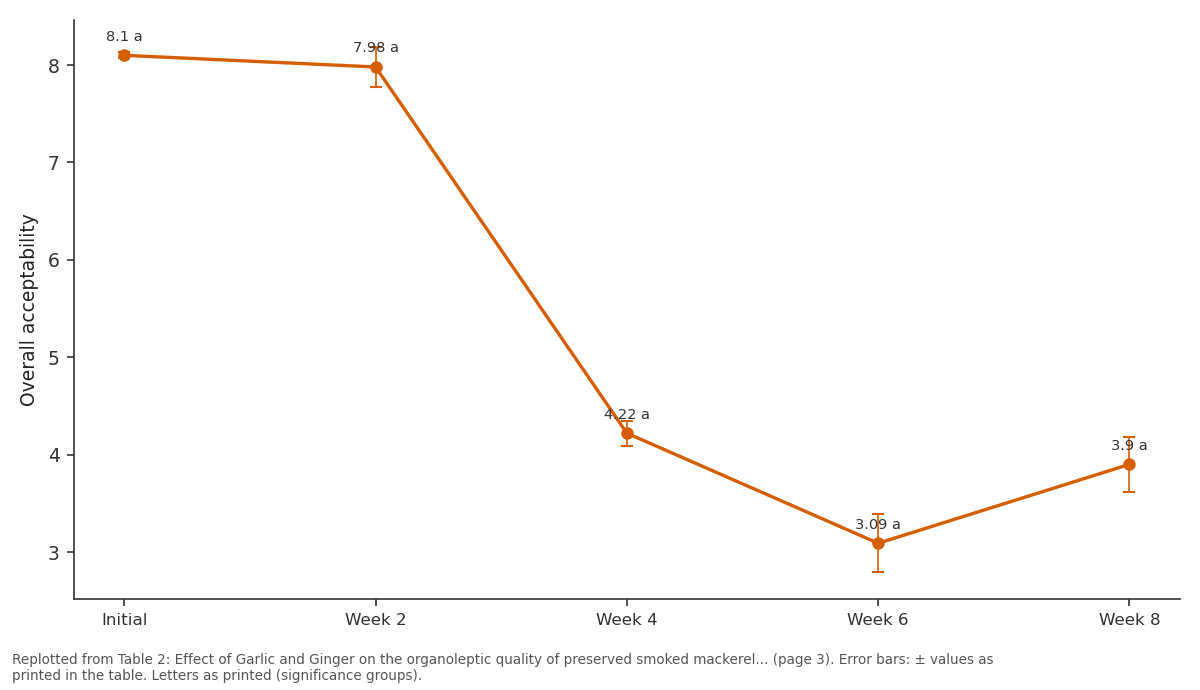
Flavour/ aroma: Initial vs Week 2 vs Week 4 vs Week 6 vs Week 8
Replotted from Table 2 (page 3) of the original paper. Every bar is the paper's own table value.
View source evidence ↗Figures & tables
From the original paper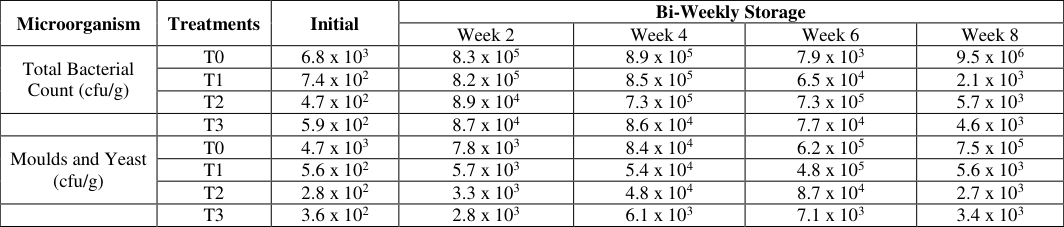 Table 1
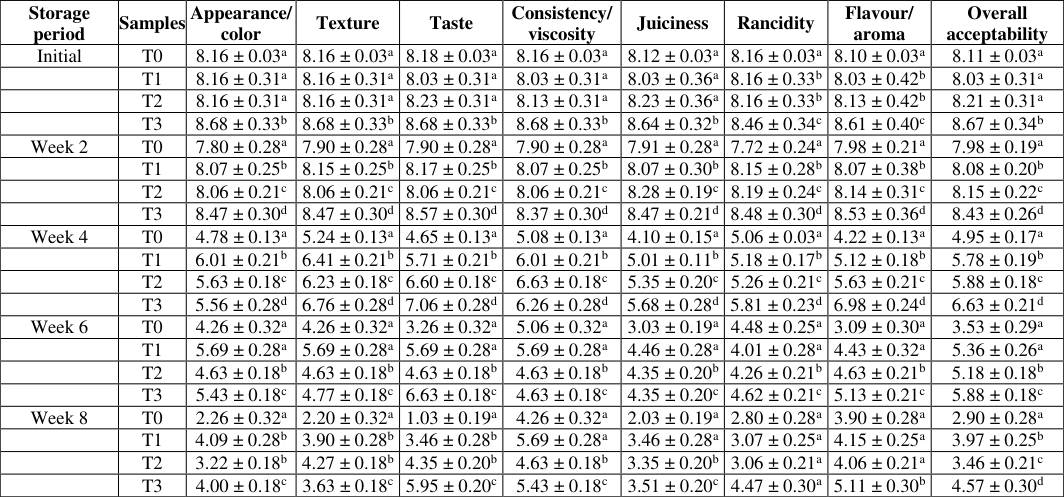 Table 2
Introduction
Fish is extremely perishable compared to other muscle foods and will enter into rigor mortis where fish lose their flexibility due to the steeping of their muscle just a few hours after death. Studies show that the spoilage of fish results from three basic factors: enzymatic autolysis, oxidation, and microbial growth (Akbary et al. 2016) [1] . Spoilage and freshness are the two qualities that have to be clearly defined. A fresh product is defined as the one whose original characters remain unchanged. Spoilage therefore is the indicative of postharvest change. This change may be graded as the change from absolute freshness to limits of acceptability to unacceptability. Spoilage is usually accompanied by change in physical characteristics. Change in colour, odour, texture, colour of eyes, color of gills and softness of the muscle are some of the characteristics observed in spoiled fish (Gawi and Sogbesan, 2019) [4] . Mackerel fish (Scomber scombrus) present problems during its processing and utilization due to the higher variations in its fat content and high enzymatic activity. The successful storage of raw mackerel for processing is, therefore, subject to the temperature used. Frozen storage at-18 to-30 °C could give a storage life of about 2-3 months. Storage with crushed ice (0 °C) would keep the fish fresh for about 48 hours (Froese et al. 2017) [3] . However, the most prominent fish preservation in northern Nigeria is smoke drying. This could be adduced to the fact that most of fish communities have no access to electricity to freeze their products. Prevailing processing technologies present critical challenges, especially in terms of safety and quality aspects, and thus there is an urgent need for the development of more efficient and safer systems (Jeya et al. 2014) [8] . Natural preservatives generally come from three sources: microorganisms, animals, and plants. Various bio-active compounds extracted from algae, mushrooms and so on can provide a potential source of new natural preservatives in the food industry (Adelaja et al. 2013) [18] . Natural preservatives guarantee that the food is free of microorganisms and safe to eat. Ideally, natural preservatives should have broad bactericidal and fungicidal activities, be non-toxic, be active at low concentrations, impart no flavor or color to food, have no pharmaceutical applications, label friendly, and finally cost effective (Mukherjee, 2020) [12] . The use of such antimicrobial compounds inhibits the growth of spoilage and pathogenic bacteria. This improves the shelf life of the product and ensures food safety. The main component responsible for the antimicrobial activity of garlic is allicin which also provides garlic its distinct flavour and aroma. Garlic inhibits the pathogenic disease-causing organisms, increases growth performance and disease resistance in fish (Idris et al., 2010) [6] . The essential oil present in garlic is responsible for the antimicrobial activity. Fresh garlic and its essential oil are applied as natural antimicrobial agent, flavouring agent and antioxidant. Ginger oil inhibits Aspergillus, a fungus known for production of aflatoxin, a carcinogen and contains spectra of biologically active compounds, such as curcumin, 6gingerol, 6-shagaols, zingiberene, bisabolene and several other types of lipids that confer on it, the properties of being pungent and a stimulant. These compounds are responsible for the unique aroma and flavor of ginger (Negbenebor et al., 2016) [13] .
Materials and Methods
The thirty six (36) pieces of experimental fish of 1.09kg average weight were sectioned into four (4) treatments (T0, T1, T2 and T3) in triplicate. The various treatments was variously spiced (garlic paste + ginger paste, garlic paste only, ginger paste only) with a control (without garlic and ginger spices). Fish smoking of various treatments was done at a regulated temperature for 48 hours. After the smoking process, the fish were stored in a carton box for 60 days where samples were taken to the laboratory bi-monthly for microbiological analysis.
Microbiological Analysis
The bacterial load and mould counts in the smoked fish samples were determined according to the method described by Ananou et al., (2007) [2] . 0.1ml of each required dilution was aseptically spread and plated on potato dextrose agar using L-shapped glass rods into a labeled petri-dish in triplicate. The petri-dish was inverted and inoculated in an incubator at 35oC for 48-72 hours. Final count of the colonies form was done using colony count.
Sensory Evaluation
Organoleptic attributes of appearance, color, juiciness, rancidity, flavor/aroma, texture, consistency/viscosity, taste and overall acceptability of the fish samples were evaluated bi-weekly for 8 weeks by a 10-member in-house consumer panelist, selected from among staff of Department of Fisheries and Aquaculture, Adamawa State University, Mubi. A 9-point hedonic scale was used with 1 for like extremely, down to 9 for dislike extremely. For the evaluation, the samples were rinsed with water for 1 min, covered with aluminum foil, heated in an oven at 80°C for 30 min and allowed to cool at ambient temperature, before presentation to the panelists. Water was provided for the panelist to rinse their mouth after each bite to eliminate the taste of the previous fish sample (Iheagwara, 2013) [7] .
Data Analysis
All data were collected and analyzed using simple descriptive statistical tool like frequency distribution, total and percentage which was used to determine differences between the samples attribute. Analysis of Variance (ANOVA) was carried out to determine the treatment levels of significance (P≤0.05). Means of data that was generated was represented using tabular and graphical representations.
Results
Table 1 presents the result of the microbial analysis carried out. The values obtained shows that there were significant differences (p<0.05) among the samples and the mould count increased as the storage duration increased. The result shows that the highest level of bacterial load was 9.5 x 10⁶ cfu/g obtained in week 8 of the control sample and the least value of the bacterial load was 2.1 x 10³ cfu/g in week 8 of Garlic treated sample. For the yeast and mould count, the highest value 8.4 x 10⁴ cfu/g in Week 4 of the control sample and the least value of 2.7 x 10³ cfu/g in week 8 of the Ginger treated sample. Consequently, the mean score result of the effect of garlic and ginger on the organoleptic quality of preserved smoked mackerel fish is shown in Table 2. There was significant variation (P≤0.05) in some of the tested parameters in panelist rating. The result shows that the control sample (T0) with no treatment of either Garlic or Ginger, received lower panel scores than the spice treated samples with regards to appearance, juiciness, flavor, rancidity, texture and general acceptability throughout the storage period. Samples treated with both garlic and ginger (T3) had the highest acceptability score. Similarly, in the freshly smoked samples (initial), the panelist found or preferred the flavor of the T3 to the control or pungent flavor of the either ginger or garlic treated smoked mackerel. When the effect of period of storage was analyzed, it was found that storage periods significantly affected the panels rating for all parameters as the mean score results continually decreasing with relation to the storage periods.
| Storage period | Samples | Appearance/ color | Texture | Taste | Consistency/ viscosity | Juiciness | Rancidity | Flavour/ aroma | Overall acceptability |
|---|---|---|---|---|---|---|---|---|---|
| Initial | T0 | 8.16 ± 0.03a | 8.16 ± 0.03a | 8.18 ± 0.03a | 8.16 ± 0.03a | 8.12 ± 0.03a | 8.16 ± 0.03a | 8.10 ± 0.03a | 8.11 ± 0.03a |
| T1 | 8.16 ± 0.31a | 8.16 ± 0.31a | 8.03 ± 0.31a | 8.03 ± 0.31a | 8.03 ± 0.36a | 8.16 ± 0.33b | 8.03 ± 0.42b | 8.03 ± 0.31a | |
| T2 | 8.16 ± 0.31a | 8.16 ± 0.31a | 8.23 ± 0.31a | 8.13 ± 0.31a | 8.23 ± 0.36a | 8.16 ± 0.33b | 8.13 ± 0.42b | 8.21 ± 0.31a | |
| T3 | 8.68 ± 0.33b | 8.68 ± 0.33b | 8.68 ± 0.33b | 8.68 ± 0.33b | 8.64 ± 0.32b | 8.46 ± 0.34c | 8.61 ± 0.40c | 8.67 ± 0.34b | |
| Week 2 | T0 | 7.80 ± 0.28a | 7.90 ± 0.28a | 7.90 ± 0.28a | 7.90 ± 0.28a | 7.91 ± 0.28a | 7.72 ± 0.24a | 7.98 ± 0.21a | 7.98 ± 0.19a |
| T1 | 8.07 ± 0.25b | 8.15 ± 0.25b | 8.17 ± 0.25b | 8.07 ± 0.25b | 8.07 ± 0.30b | 8.15 ± 0.28b | 8.07 ± 0.38b | 8.08 ± 0.20b | |
| T2 | 8.06 ± 0.21c | 8.06 ± 0.21c | 8.06 ± 0.21c | 8.06 ± 0.21c | 8.28 ± 0.19c | 8.19 ± 0.24c | 8.14 ± 0.31c | 8.15 ± 0.22c | |
| T3 | 8.47 ± 0.30d | 8.47 ± 0.30d | 8.57 ± 0.30d | 8.37 ± 0.30d | 8.47 ± 0.21d | 8.48 ± 0.30d | 8.53 ± 0.36d | 8.43 ± 0.26d | |
| Week 4 | T0 | 4.78 ± 0.13a | 5.24 ± 0.13a | 4.65 ± 0.13a | 5.08 ± 0.13a | 4.10 ± 0.15a | 5.06 ± 0.03a | 4.22 ± 0.13a | 4.95 ± 0.17a |
| T1 | 6.01 ± 0.21b | 6.41 ± 0.21b | 5.71 ± 0.21b | 6.01 ± 0.21b | 5.01 ± 0.11b | 5.18 ± 0.17b | 5.12 ± 0.18b | 5.78 ± 0.19b | |
| T2 | 5.63 ± 0.18c | 6.23 ± 0.18c | 6.60 ± 0.18c | 6.63 ± 0.18c | 5.35 ± 0.20c | 5.26 ± 0.21c | 5.63 ± 0.21c | 5.88 ± 0.18c | |
| T3 | 5.56 ± 0.28d | 6.76 ± 0.28d | 7.06 ± 0.28d | 6.26 ± 0.28d | 5.68 ± 0.28d | 5.81 ± 0.23d | 6.98 ± 0.24d | 6.63 ± 0.21d | |
| Week 6 | T0 | 4.26 ± 0.32a | 4.26 ± 0.32a | 3.26 ± 0.32a | 5.06 ± 0.32a | 3.03 ± 0.19a | 4.48 ± 0.25a | 3.09 ± 0.30a | 3.53 ± 0.29a |
| T1 | 5.69 ± 0.28a | 5.69 ± 0.28a | 5.69 ± 0.28a | 5.69 ± 0.28a | 4.46 ± 0.28a | 4.01 ± 0.28a | 4.43 ± 0.32a | 5.36 ± 0.26a | |
| T2 | 4.63 ± 0.18b | 4.63 ± 0.18b | 4.63 ± 0.18b | 4.63 ± 0.18b | 4.35 ± 0.20b | 4.26 ± 0.21b | 4.63 ± 0.21b | 5.18 ± 0.18b | |
| T3 | 5.43 ± 0.18c | 4.77 ± 0.18c | 6.63 ± 0.18c | 4.63 ± 0.18c | 4.35 ± 0.20c | 4.62 ± 0.21c | 5.13 ± 0.21c | 5.88 ± 0.18c | |
| Week 8 | T0 | 2.26 ± 0.32a | 2.20 ± 0.32a | 1.03 ± 0.19a | 4.26 ± 0.32a | 2.03 ± 0.19a | 2.80 ± 0.28a | 3.90 ± 0.28a | 2.90 ± 0.28a |
| T1 | 4.09 ± 0.28b | 3.90 ± 0.28b | 3.46 ± 0.28b | 5.69 ± 0.28a | 3.46 ± 0.28a | 3.07 ± 0.25a | 4.15 ± 0.25a | 3.97 ± 0.25b | |
| T2 | 3.22 ± 0.18b | 4.27 ± 0.18b | 4.35 ± 0.20b | 4.63 ± 0.18b | 3.35 ± 0.20b | 3.06 ± 0.21a | 4.06 ± 0.21a | 3.46 ± 0.21c | |
| T3 | 4.00 ± 0.18c | 3.63 ± 0.18c | 5.95 ± 0.20c | 5.43 ± 0.18c | 3.51 ± 0.20c | 4.47 ± 0.30a | 5.11 ± 0.30b | 4.57 ± 0.30d |
Table text extracted from the original PDF; superscript letters are shown inline. The original table image is below.
View original table image
| Microorganism | Treatments | Initial | Bi-Weekly Storage | — | — | — |
|---|---|---|---|---|---|---|
| Week 2 | Week 4 | Week 6 | Week 8 | |||
| Total Bacterial Count (cfu/g) | T0 | 6.8 x 10³ | 8.3 x 10⁵ | 8.9 x 10⁵ | 7.9 x 10³ | 9.5 x 10⁶ |
| T1 | 7.4 x 10² | 8.2 x 10⁵ | 8.5 x 10⁵ | 6.5 x 10⁴ | 2.1 x 10³ | |
| T2 | 4.7 x 10² | 8.9 x 10⁴ | 7.3 x 10⁵ | 7.3 x 10⁵ | 5.7 x 10³ | |
| T3 | 5.9 x 10² | 8.7 x 10⁴ | 8.6 x 10⁴ | 7.7 x 10⁴ | 4.6 x 10³ | |
| Moulds and Yeast (cfu/g) | T0 | 4.7 x 10³ | 7.8 x 10³ | 8.4 x 10⁴ | 6.2 x 10⁵ | 7.5 x 10⁵ |
| T1 | 5.6 x 10² | 5.7 x 10³ | 5.4 x 10⁴ | 4.8 x 10⁵ | 5.6 x 10³ | |
| T2 | 2.8 x 10² | 3.3 x 10³ | 4.8 x 10⁴ | 8.7 x 10⁴ | 2.7 x 10³ | |
| T3 | 3.6 x 10² | 2.8 x 10³ | 6.1 x 10³ | 7.1 x 10³ | 3.4 x 10³ |
Table text extracted from the original PDF; superscript letters are shown inline. The original table image is below.
View original table image
Discussion
The Microbial loads of the smoked mackerel (Scomber scombrus) fish during the 8 weeks storage is shown in Table 1. The values of the total bacterial count, mould and yeast count shows that there were significant variations (P≤0.05) among the samples. However, samples treated with ginger and garlic solution were significantly lower than the control. After 8 weeks of storage, the mould count of the control sample is 7.5 x 10⁵ cfu/g, while that of the sample treated with the Ginger solution was 2.7×10³ cfu/g followed by the sample treated with the garlic/ginger treatment with 3.4 x 10³. Likewise, the total bacterial count of the control sample is 9.5 x 10⁶ cfu/g, while that of the sample treated with the Garlic solution was 2.1×10³ cfu/g followed by the sample treated with the garlic/ginger treatment with 4.6 x 10³. This indicates the effectiveness of the garlic and ginger as an antimycotic agent. This result agrees with report by Kumolu-Johnson and Ndimele (2011) [10] , Sallem et al.
(2004) [19] , Idris et al. (2010) [6] and Tagoe et al. (2011) [17] . Also, in consonance with storage duration, samples stored at initial (freshly smoked) had the least bacterial and mould count, and were grossly more acceptable than those stored for 8 weeks. However, samples treated with ginger and garlic showed low detectable mould growth after 8 weeks of storage, thus indicating that ginger and garlic as a natural spice have antimycotic properties that can compare with synthetic antimicrobial agents, like potassium sorbate, citric acid and sodium metabisulphate (Omojowo et al., 2008, Omojowo et al., 2009) [19,13] . This result shows that the treatment of ginger had the higher antifungal effects. This result agrees with earlier results of (Negbenebor, et.al. 2016) [13] where clove and ginger individually and in combination reduced the fungal loads of smoked fish. Mould rather than bacterial growth is the major problem in this type of product because of its low water activity (Negbenebor et al., 2016) [13] . The ability of the ginger and garlic to inhibit mould growth would in a way enhance the over-all quality of the product.
The sensory properties of food products have an impact on consumer appreciation and acceptability of food (Hegazy et al., 2021) [5] . Organoleptic evaluation of food products to any food processing technology is very important in determining the consumer acceptability (Mohamed et al, 2019) [11] . The results of sensorial analysis for the smoked mackerel fish were presented in Table 2. The taste panel rating for the ginger/garlic treated smoked fish (T3) was found to be better than the other treatments in most of the parameters evaluated with an overall acceptance rate of 8.67 ± 0.34b and 4.57 ± 0.30d both at the initial and at the end of the storage period (week 8) respectively followed by T2 and T1. However, the lowest score both prior and after storage was recorded in the control sample (T0) with an overall acceptability mean score of 8.11 ± 0.03a and 2.90±0.28a respectively. This reveals that the panelist found or preferred the treated samples in terms of appearance, taste and flavor, aroma, texture and mouth feel, consistency and viscosity, and overall acceptability to that of the control sample of the smoked mackerel fish. This is in agreement with the result obtained by Sallam et al. (2014) [16] in which they examined the effects of garlic in chicken sausage for 21 days. Also, it conforms to the reports of Kumolu-Johnson and Ndimele (2011) [10] and Idris et al. (2010) [6] in their study on the antioxidative and antifungal effects of fresh garlic on the shelf life of hot smoked catfish. Generally, evaluation of sensory attributes of smoked Mackerel fish during the 8 weeks of storage depicted that smoked fish samples treated with both garlic and ginger T3 were of better quality. Besides, ginger/garlic smoked fish have higher mean scores in all the attributes than other smoked treated fish products or the control sample.
Conclusion
The present work has demonstrated that garlic (Allium sativum) and ginger (Zingiber officinale) has antioxidative and antimicrobial properties that can retard oxidative rancidity and inhibit mould growth, thus, extending the shelf life of the smoked mackerel fish under ambient storage conditions. This is justified by the low microbial load on the treated fish sample of the garlic and ginger treated samples compared to the untreated sample (T0). Organoleptically, the general pattern of consumer preference to the fish samples indicates that the garlic/ginger treated samples were
International Journal of Agriculture and Nutrition https://www.biologyjournal.net/ most acceptable than the other samples. This research however provides an alternative for consumers to find increased satisfaction with the processed fish as indicated by the sensory quality of the product. This would substantially improve fish protein intake in Nigeria and reduce protein malnutrition and its associated problems in the country.
References
17 in the original paper- Akbary P, Negahdari JY, Sondakzehi A. Effects of garlic (Allium sativum L.) extract on growth, feed utilization and carcass composition in Mugilcephalus (Linnaeus, 1758) larvae. Iranian Journal of Fisheries Sciences. 2016;15(1):552-557.
- Ananou S, Maqueda1 M, Martínez-Bueno1 M, Valdivia1 E. Biopreservation, an ecological approach to improve the safety and shelf-life of foods" Archived 2011-07-26 at the Wayback Machine In: A. MéndezVilas (Ed.) Communicating Current Research and Educational Topics and Trends in Applied Microbiology, Formatex; c2007. ISBN 978-84-6119423-0.
- Gawi GO, Fili KB, Sogbesan OA. Effect of moringa leaves and ginger rhizomes on the microbial quality of Oreochromis niloticus processed with three different kilns. Journal of Aquaculture & Marine Biology. 2019;8:2.
- Hegazy EM, Mohamed GF, Abdellatef M. Physicochemical properties and mycotoxins contents of Tilapia fish fillets after solar drying and storage. Global Veterinaria. 2021;7:138-148.
- Idris GL, Omojowo FS, Omojasola PF, Adetunji CO, Ngwu EO. The effect of different concentrations of ginger on the quality of smoked dried catfish (Clarias gariepinus). Nature and Science. 2010;8:59-63.
- Iheagwara MC. Effects of ginger extract on stability and sensorial quality of smoked mackerel (Scomber scombrus) fish. Journal of Nutrition and Food Sciences. 2013;3:199.
- Jeya KA, Venkateshwarlu G, Choukse MK, Anandan. Effect of Essential Oil and Aqueous Extract of Ginger (Zingiber officinale) on Oxidative Stability of Fish oilin-Water Emulsion. Journal of Food Processing and Technology. 2014;6:1. DOI: 10.4172/21577110.1000412.
- Bipin Koirala, Raja Babu Chaudhary. Review of garlic cultivation under zero tillage in rice straw mulch (Allium sativum). Int. J Hortic. Food Sci. 2021;3(2):0103.
- Kumolu-Johnson CA, Ndimele PE. Anti-oxidative and anti-fungal effects of fresh ginger (Zingiber officinale) treatment on the shelf life of hot-smoked Catfish (Clarias gariepinus, Burchell, 1822). Asian Journal of Biological Sciences. 2011;4:532-539.
- Mohamed GF, Hegazy EM, Abdellatef M. Physicochemical properties and mycotoxins contents of Tilapia fish-fillets after solar drying and storage. Global Veterinaria. 2019;7:138-148.
- Mukherjee S, Nath S, Chowdhury S, Chatterjee P. Antimicrobial Activity of garlic (Allium sativum) and its potential use in fish preservation and disease prevention. International Journal of Microbiology Research; c2020. ISSN: 0975-5276 & E-ISSN: 09759174:12:7, 2020, pp.-1879-1883.4.
- Omojowo FS, Omojasola PE, Ihuahi JA. Evaluation of citric acid and potassium sorbate as preservatives on the safety and shelf life of smoked catfish. Nature and Science. 2009;7:1-8.
- Sallam KI, Ishioroshi M, Samejima K. Antioxidant and antimicrobial effect of garlic on chicken sausage. Lebenson Wiss Technol. 2014;37:849-855.
- Tagoe DNA, Nyarko HD, Akpaka R. A comparison of the antifungal properties of onion (Allium cepa), ginger (Zingiber officinale) and garlic (Allium sativum) against Aspergillus flavus, Aspergillus Niger and Cladosporium herbarum. Research Journal of Medicinal Plant. 2011;5:281-287.
- Olaoye OJ, Ashley-Dejo SS, Fakoya EO, Ikeweinwe NB, Alegbeleye WO, Ashaolu FO, Adelaja OA. Assessment of socio-economic analysis of fish farming in Oyo State, Nigeria. Global Journal of Science Frontier Research Agriculture and Veterinary. 2013;13(9):45-55.
- Bensalem S, Fakhfakh M, Sallem A, Loulon M, Masmoudi N. An optimized CMOS second generation current conveyor. InProceedings. The 16th International Conference on Microelectronics, 2004. ICM 2004. 2004 Dec 6 (pp. 608-611). IEEE.
- Omojowo FS, Omojasola PF, Ihuahi JA. Microbial quality of citric acid as preservatives in smoked catfish (Clarias gariepinus). J. Bio. and Env. Sci. 2008;5(3):130-4.
Cited by 5
From OpenAlex, OpenCitations and reference lists read by Scinovex
- Larvicidal activity of Allium sativum against Aedes, Anopheles, and Culex spp.: A systematic review ↗
Virtudazo Mary Dicken, Manuel Christian John, Dimaculangan Anna Fe, Curilan Mariane Racel, Uy Jenna Eloisa, Tibangen Tricia et al. · International Journal of Mosquito Research · 2022
Over the years, mosquitoes have developed a resistance to synthetic household pesticides, and this caused a significant decline in standard protocols against vector-borne diseases, forcing the rest of the world to create alternative solutions. In response to the growing need for environmentally friendly alternatives for synthetic insecticides, this review was initiated to collect a valid information to authenticate and support
- Effect of moringa (Moringa oleifera) leaf and ginger (Zingiber officinale) rhizome marinades on the proximate and sensory qualities of smoked African catfish (Clarias gariepinus, Burchell 1822) ↗
Abubakar FB, Abdulsalam AY, H. Abdul-Azeez, Suleiman AM, IU Muhd, Mudi ZR et al. · International Journal of Fisheries and Aquatic Studies · 2024
A lot of fish are lost after harvest due to inefficient processing and preservation techniques. This study investigated the incorporation of plant additives into smoking process of African catfish to improve its proximate and sensory properties. Fourty fish of 523.25 g average weight were randomly distributed into four groups. Three different marinades; T1 (4% moringa leaf powder), T2 (4% ginger…
❝ 1PDF - Effect of bio-regulators and bio-fertilizers on growth of garlic (Allium sativum L.)
Ganpat Lal Yadav, SP Singh, Mahendra Yadav, Govind Kumar Yadav, Bhagchand Yadav · International Journal of Agriculture and Food Science · 2023
A field experiment was conducted at Horticulture Farm, S.K.N. College of Agriculture, Jobner (Jaipur) during Rabi season 2016-17 and 2017-2018. The experiment consisting of four bio-fertilizers (control, Azotobacter, PGPR (Pseudomonas) and Azotobacter + PGPR (Pseudomonas) and five bio-regulators (control, Thiourea @ 500 ppm, Thiourea @ 1000 ppm, salicylic acid @ 100 ppm and piquet chloride @ 100 ppm). The total 20 treatment combinations were tested in split-plot design with three replications. It was observed that the application of bio-fertilizers Azotobacter + PGPR (Pseudomonas) significantl
- Effect of sulphur and micronutrients on growth attributes of garlic (Allium sativum L.)
Praveen Choyal, OP Garhwal, Dr. MR Choudhary, LN Bairwa, A. C. Shivran, DK Gothwal · International Journal of Horticulture and Food Science · 2022
The field experiment was conducted at the Horticulture Farm, S.K.N. College of Agriculture, Jobner, Jaipur (Rajasthan) during Rabi seasons 2019-20 and 2020-21. The result showed that soil application of sulphur 60 kg/ha and foliar application Zinc sulphate @ 0.6% was recorded maximum plant height, number of leaves and chlorophyll content of leaves in both the years as well as in pooled analysis. Although, sulphur application at 40 kg/ha along with foliar application of zinc sulphate at 0.6 % was found at par to it.
- Potential of plants to treat argulosis disease in fresh water fish ↗
Rosidah Rosidah Rosidah, Fittrie Meyllianawaty Pratiwy · International Journal of Fisheries and Aquatic Studies · 2023
Fresh water fish, such as carp (Cyprinus carpio), koi (Cyprinus carpio), koki (Carassius auratus) and comet (Carassius auratus auratus) have great opportunities for developing aquaculture in Indonesia. However, the presence of argulosis disease caused by ectoparasites Argulus sp. be one of the obstacles. This parasitic infestation can cause fish to experience a decrease in body weight, weakness, bleeding, secondary infection,