
Research article · 2021 · Full text
International Journal of Agriculture and Food ScienceAssessment of post-harvest handling and quality of honeybee products along the value chain in SNNPR, Ethiopia
Volume 3(2) · Pages 28–35 · DOI: 10.33545/2664844x.2021.v3.i2a.54 ↗
Research areasBee Products Chemical AnalysisInsect and Pesticide ResearchInsect and Arachnid Ecology and Behavior
Abstract
Author-writtenThis study was conducted with the objective of identify post-harvest handling practice along different value chain actors of honey, major post-harvest handling problems of honey and honey products, evaluate Physical and chemical composition of honey and honey products along different value chain actors and characterize adulterant materials of honey and beeswax. The total of 120 beekeeper respondents were participated to gathered primary data regarding to honey production system, Constraints of honey and honey product handling, processing and marketing, honey harvesting and processing, honey harvesting materials, adulteration, extent of adulteration and adulterant materials of honeybee products and 45 honey samples were collected and analyzed to understand physiochemical characteristics honey were: color, moisture content, reducing sugar, sucrose, glucose, maltose content, acidity, hydroxyl methyl furfural (HMF), mineral content, pH and pollen analysis. All parameters were analyzed following the techniques proposed by the Codex Standard for Honey. A statistical analysis using SPSS 20 descriptive, frequency and Pearson correlation test of physicochemical properties of honey interdependent. Shortage of available bee forages, predators, pests and diseases were major constraints of honey production whereas market linkage problem, low price of honey, skill gap to process honey and beeswax. 67.5% of respondent beekeepers mostly used locally available material bottle gourd/”kill”/ to stored their honey in the study area. Mean moisture content, Ash content, honey acidity, electrical conductivity, pH value, HMF, fructose, glucose, sucrose, maltose, F/G ratio, G/water ratio of honey was 19.75, 0.18, 33.97 meq kg−1, 0.41 mS.cm-1, 3.45, 3.78 mg/kg and 34.61%, 30.91%, 1.96%, 1.36%, 1.13 ± 0.12 and 1.57±0.18 respectively.
Summary
Source-checkedPlain-language reading of the full paper, prepared with AI and checked against the text. Each point links to the authors' own words.
Why it matters
- Ethiopia is a major global honey producer, ranking third worldwide and first in Africa as of 2010. View evidence ↗
- Honey quality in Ethiopia is often compromised by poor storage conditions and the mixing of foreign ingredients during post-harvest handling. View evidence ↗
- The high price of honey has made illegal adulteration an attractive practice for some producers. View evidence ↗
The question
- The study aimed to assess the post-harvest handling practices and the overall quality of honey products. View evidence ↗
- Specific goals included identifying handling practices and problems across the value chain, evaluating the physicochemical composition of products, and characterizing adulterants. View evidence ↗
What they did
- Primary data on production, constraints, and handling were collected from 120 beekeeper respondents. View evidence ↗
- Forty-five honey samples were collected from beekeepers, collectors, and retailers across the South Omo Zone. View evidence ↗
- Honey samples were analyzed for moisture, pH, acidity, minerals, HMF, sugars, electrical conductivity, and ash using International Honey Commission methods. View evidence ↗
What they found
- The primary constraints to honey production were forage shortages (55%), predators like monkeys (29.2%), and pests/diseases (1.7%). View evidence ↗
- Most beekeepers relied on traditional storage; 67.5% used bottle gourds ('kill'), while only 1.7% used plastic jars exclusively. View evidence ↗
- Beekeepers reported no intentional adulteration of honey, though traditional handling practices may still degrade quality. View evidence ↗
- The mean moisture content of the honey was 19.75%, which falls within national and international quality standards. View evidence ↗
- The honey samples had a mean pH of 3.45, ranging from a minimum of 2.7 to a maximum of 4.1. View evidence ↗
- The mean HMF content was 3.78 mg/kg (range 0.00 to 29.5 mg/kg), indicating the freshness of the honey. View evidence ↗
- The honey had a mean fructose content of 34.61% (26.3%–40%) and a mean glucose content of 30.91% (27.3%–39.5%). View evidence ↗
What it means
- The authors concluded that the honey produced in the study area meets standard physicochemical properties across all measured parameters. View evidence ↗
- The authors recommend providing technical training on improved beekeeping and processing, and improving regulated market linkages. View evidence ↗
Visual summary
1 visualsIllustrations explain the paper; charts are replotted from the paper's own table values.
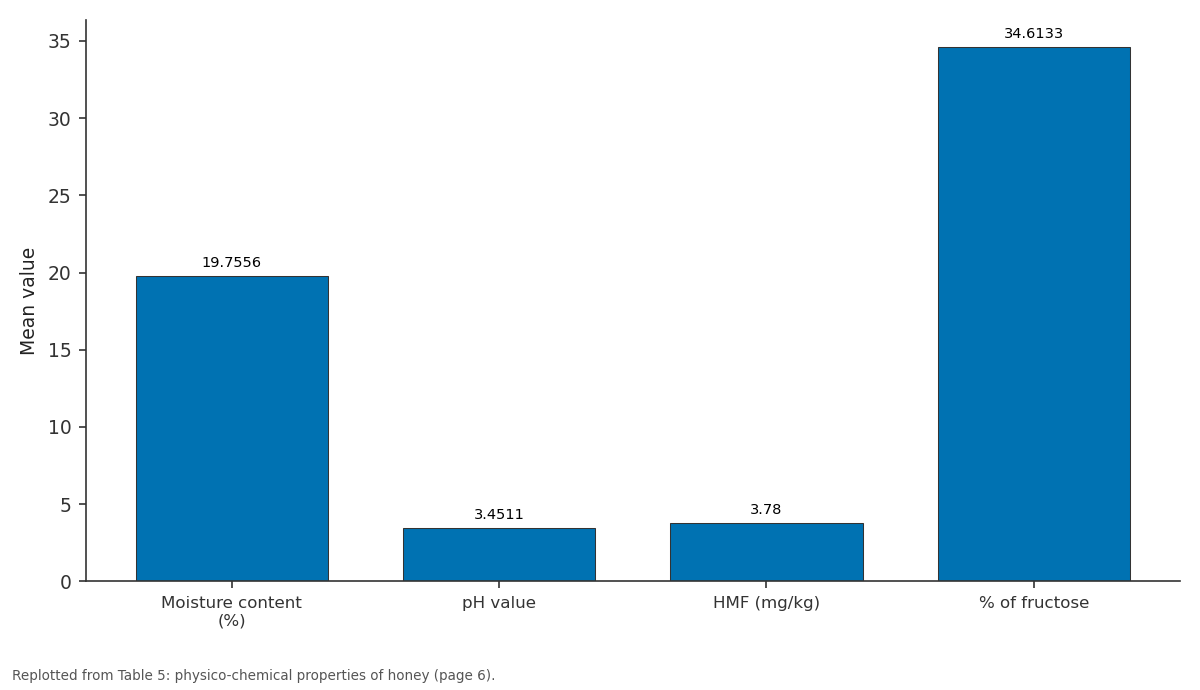
Mean: Moisture content (%) vs pH value vs HMF (mg/kg) vs % of fructose
Replotted from Table 5 (page 6) of the original paper. Every bar is the paper's own table value.
View source evidence ↗Figures & tables
From the original paper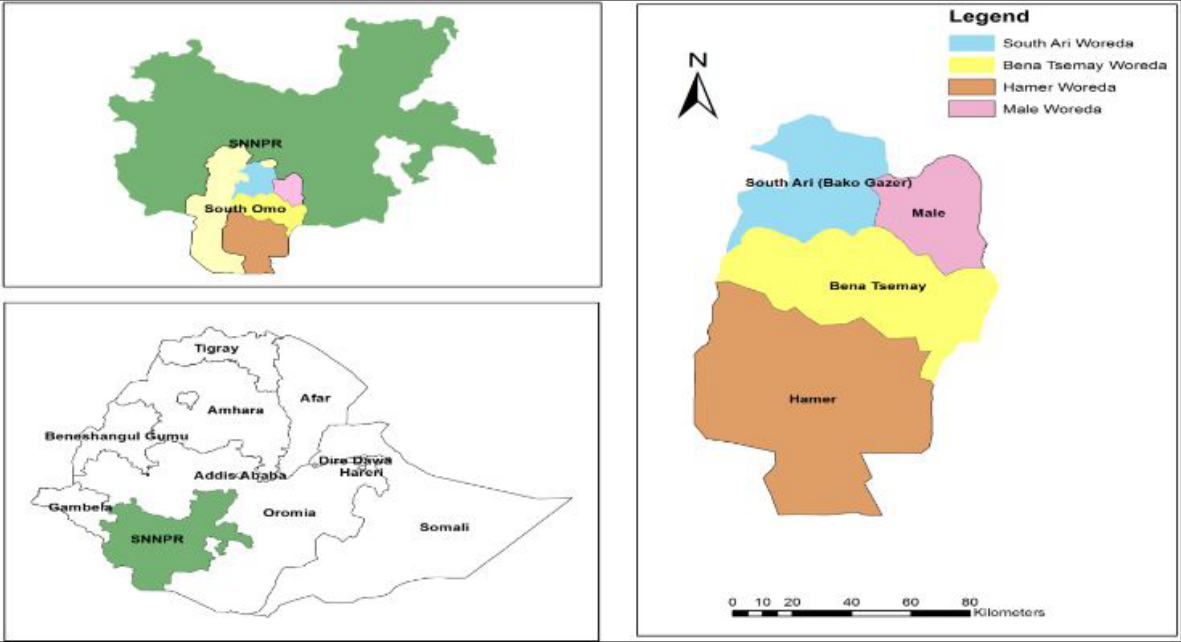 Figure 1
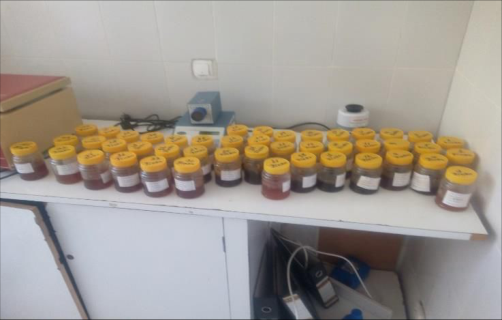 Figure 2
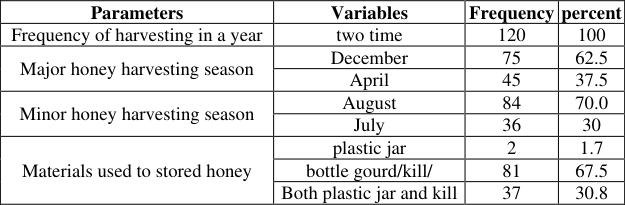 Table 1
 Table 2
 Table 3
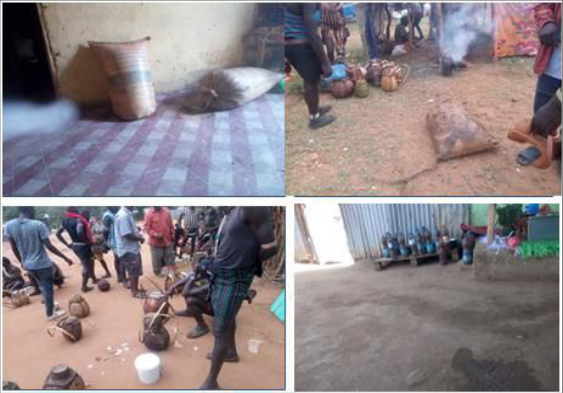 Figure 3
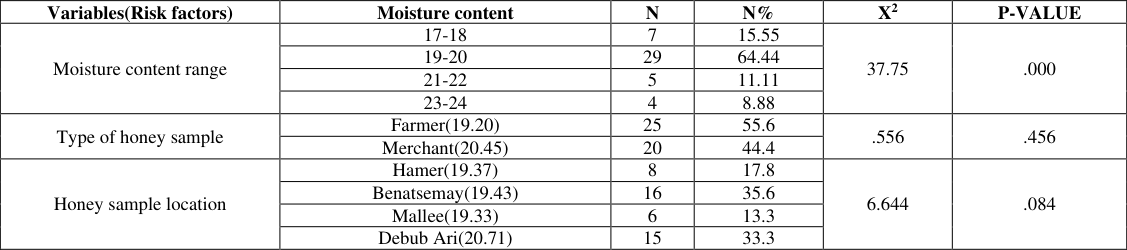 Table 4
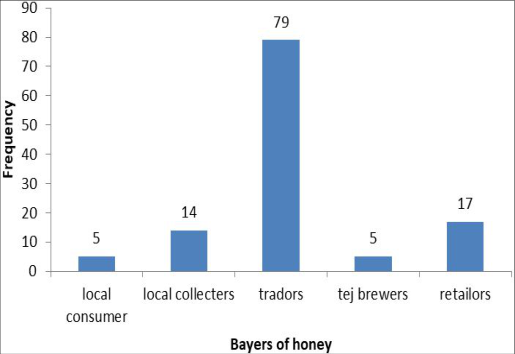 Figure 4
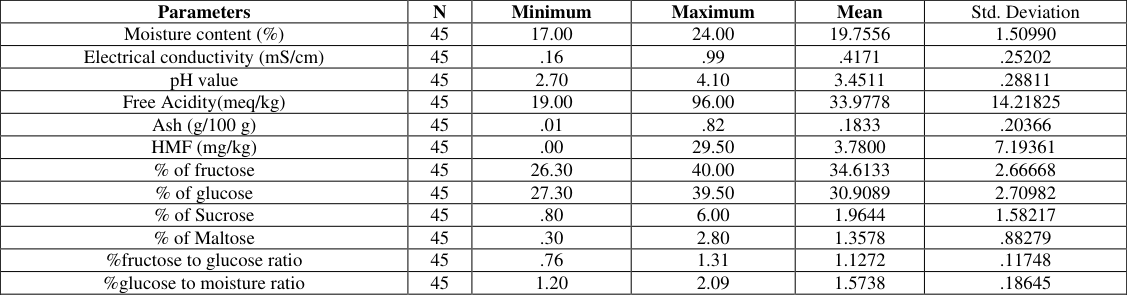 Table 5
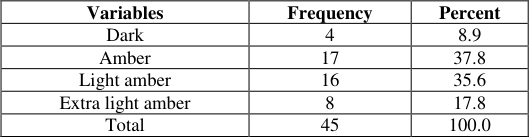 Table 6
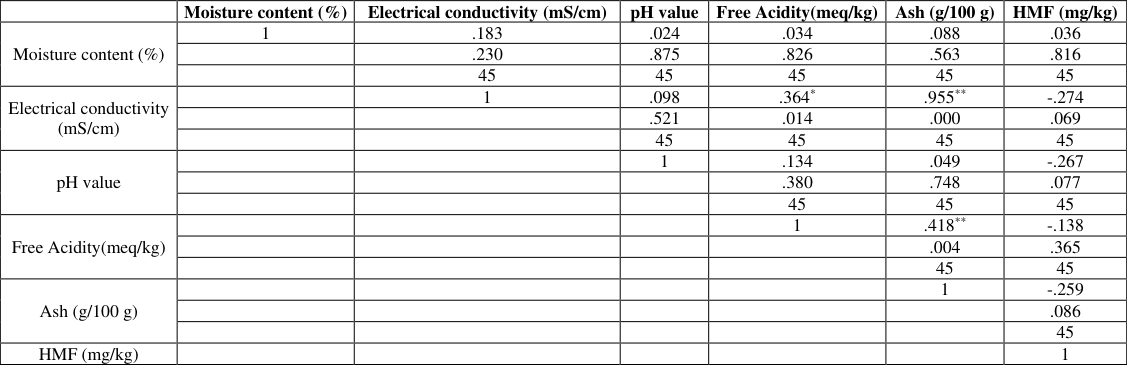 Table 7
Introduction
Honey is the natural sweet substance produced by certain species of bees, from the nectar of plants, from secretion of living part of plant. The bee collect this sugary substance of their own, deposit, reduce the water content, store and leave it in honey combs or honey pots to ripen and mature for their own consumption (Codex Alimentarius, 1989) [14] . Ethiopia is believed to possess high potential in producing honey. It is almost exclusively used for local consumption, and to a very large extent used for brewing of mead, locally called 'Tej'. There is no wedding or other cultural, religious and social events can be imagined without the honey wine 'Tej'. Ethiopia is currently ranked as the largest honey producer in Africa and the third largest worldwide by producing 45,300 tons of honey in 2010 (FAOSTAT, 2012) [16] . Also she has diverse habitat and flora for honeybees (Mohammed et al., 2006) [23] . Production and supply of honey by regions shows that Oromia accounts for over 55% of the bee colonies and 53% of the Honey production, followed by Amhara which accounts for about 20% of the colonies and 21% of the honey production. The Southern Nations, Nationalities Peoples Regional State, on the other hand, accounts for about 15% of the bee colonies and 17% of the honey production (Ayalew K., 2008) [8] . Moreover the honey produced in Ethiopia is expected to become a major commodity for acquiring foreign currency to improve the Ethiopian economy. Although Ethiopia does not have sufficient infrastructure for transporting and storing goods, the long shelf life of honey makes it an attractive export for the country. Besides these, there is low quality standard. Many post-harvest treatments as a result of poor containers, storing room conditions, and many other ingredients mixed in are among some to mention. Honey is composed primarily of the sugars, glucose and fructose while its third greatest component is water. It also contains numerous other types of sugars, acids and minerals. The sugars found in honey can be classified as monosaccharide (glucose, fructose), sucrose and oligosaccharides (White, 1980) [26] . The quality of honey for example is affected by different factors from the time it is removed from the honeybee colony until it is sold for human consumption (Keystone 2002, Sanz ml et al., 2003). Honey should have any objectionable matter, flavor, aroma, or taint absorbed from foreign matter during its processing and storage. No pollen or constituent particular to honey may be removed except where this is unavoidable in the removal of foreign inorganic or organic matter. Even if beeswax is a non-perishable product the way it is processed and handled has a great influence on its quality, quantity and marketing. In the export market the issue of quality products is very important. To become competent both in local and export markets the quality and quantity of the beeswax has to be maintained. Processing and marketing of beeswax by producer's cooperative and small-scale processor have been successfully used in many tropical countries. In Ethiopia due to International Journal of Agricu lture and Food Science www.agriculturaljournals.com lack of efficient beeswax processing methods, rendering of hand extraction method is contributing for loss of significant amount of beeswax.
The quality and quantity of crude beeswax is affected due to handling and processing method. This is may be due to sources and pre and post-harvest handling conditions. The quality of beeswax is judged from its color, purity and uniformity. Light color beeswax has the greatest value in world market. Hence it is paramount important to evaluate the quality of beeswax obtained from different sources. It is based on this background that this study is initiated with the following objectives: Now a day's honey is becoming adulterated with different ingredients. Adulteration due to relative high price of honey; therefore, this illegal practice has become more and more attractive to producers (Nuru A., 1996, Nuru A., 1999) [21] . It is a well-known problem and many methods of analysis are available to detect falsification with various types of sugars and with inexpensive sugar syrups. By carrying out the usual chemical determinations, such as the glucose, fructose, sucrose and hydroxyl methyl furfural (HMF) content and the diastase index, these adulterations of honey can easily be detected (Codex, 1989; Martin, et al., 1998) [14,11] . High levels of HMF (greater than 100 mg/kg) can also be an indicator of adulteration with inverted sugars. Cane sugar or sucrose is "inverted" by heating with a food acid, and this process creates HMF. Many food items sweetened with high fructose corn syrups, e.g. carbonated soft drinks, can have levels of HMF up to 1,000 mg/kg (White, J. W., 1992) [25] . However, in many developing countries a laboratory for the above-mentioned routine analyses is not always available. However, by simple microscopic analysis it is possible to detect adulteration of honey with cane sugar and products derived from cane sugar (White, J. W., 1992) [25] . These days, hive products adulteration, an illegal practice, is a cross cutting problem all over the world especially in developing countries. This illegal practice is greatly affecting the quality and marketing of honey and honey bee products. This has been confirmed by numerous reports from different corner of the country at all stages. Therefore, assessment of the extent, identification of materials and actors involved and characterization of adulterated hive products and information availability regarding major techniques used for identification with valuable information provision to quality control mechanisms are paramount importance.
Objectives
Objectives
Laboratory Analysis (Phase 2)
Honey samples with the volume of 0.5 kg were collected at each representative sample areas of South Omo Zone Districts namely Debub Ari, Mallee, Benatsemay and Hamer. The samples were collected from each of the beekeepers, collector and retailer, from farm gate and market places in the study areas. The totals of 45 honey samples were collected from the above actors. Purposively adulterated honey with the materials obtained from the survey were prepared and the status of pollen count and other relevant physicochemical analysis of pure (unadulterated) honey and the purposively adulterated honey were conducted using appropriate mellissopalynological procedure of pollen analysis and were used as a reference. Then pollen analysis were done for each sample collected from each of the representative sample areas at different stages and these results were compared with the bench marks, to determine whether it is adulterated or not regardless of the materials used for adulteration. Additionally, taste, aroma, color and viscosity of the adulterated honey will be characterized in such a way that consumers were able to identify. The collected samples were analyzed in collaboration with Holleta bee research center laboratory. Under the laboratory, physicochemical composition (moisture content) and chemical compositions (pH, acidity and mineral, HMF, reducing sugar and sucrose content, electrical conductivity, ash contents and pollen of the honey samples) were determined according to the Harmonized Methods of the International Honey Commission (Bogdanov, 2002) [12] and Geremew (2005) [18] .
Data management and Analysis
Statistical analysis was carried out using SPSS 20 Descriptive and frequency. Pearson correlation analysis was conducted to determine the associations between the physical properties of honey.
Result and Discussion Major constraints of honey production Production constraints
The current study revealed that in the study area shortage of valuable honey bee forages (55%) due to expansion of farm land, Predators attacking mainly monkeys (29.2%), honey bee pests and diseases (1.7%), knowledge gap to use improved beekeeping technologies also factors that have been affecting honey production and productivity.
Post-harvest constraints
During the study period honey producer beekeepers listed such post-harvest constraints like market linkage problem, Skill gap to strain honey and beeswax production and processing, Low costs of honey during harvesting season as well as during off season, inaccessible of market information due to these buyers have chance to set price of honey during that particular market day.
Honey harvesting and Post -harvest handling practice
The frequency and amount of honey harvested varied depends on flowering condition of major bee forages, honeybee colony management practices and number of beehive Kajobe R. et al 2009. In the study area there were two times honey harvesting season in a year agree with CSA, 2016 [15] , major honey harvesting periods were December and April it depends on whether condition/rainy season/ of the season and from July to August where minor honey harvesting periods correlate with availability of moisture and peak flowering period. During honey harvested, beekeepers cut and pull the fixed combs one by one and then pollen, brood and honey combs were removed and kept in locally available container called bottle gourd/"kill"/ which have narrow entrance mouth and wide body size, honey producer beekeepers after fill of the container with honey they have sealed the honey container with the mixture of cattle dung and ash until they sold honey.
67.5% of the respondents were used bottle gourd/"kill"/ to stored honey and transporting to the market and 30.8% used both plastic jar and bottle gourd/"kill"/ whereas only 1.7% respondents used plastic jar as shown in Table 1. Collectors were used plastic jars, fertilizer bags and bottle gourd/"kill"/ as observed in Fig 2 . The respondent beekeepers sometimes store their honey 1-12 months due to cheapest price of honey during harvesting season.
| Parameters | Variables | Frequency | percent |
|---|---|---|---|
| Frequency of harvesting in a year | two time | 120 | 100 |
| Major honey harvesting season | December | 75 | 62.5 |
| April | 45 | 37.5 | |
| Minor honey harvesting season | August | 84 | 70.0 |
| July | 36 | 30 | |
| Materials used to stored honey | plastic jar | 2 | 1.7 |
| bottle gourd/kill/ | 81 | 67.5 | |
| Both plastic jar and kill | 37 | 30.8 |
Table text extracted from the original PDF; superscript letters are shown inline. The original table image is below.
View original table image
Processing of honey and bees wax
According to our research result 100% of respondent beekeepers cannot be strain honey or processed their honey due to these they have been selling raw honey rather value addition. On the other hand there were also limited of beeswax collecting and processing practices in the study area at home level.
The current study revealed that, factors that affecting of strain honey, beeswax collecting and processing were lack of knowledge and awareness.
Marketing of honey and beeswax
In Ethiopia, honey and beeswax is one of the important exportable agricultural commodities which are produced in many parts of Ethiopia. In the study area honey marketing price was too cheap during the study period. As observed in Table 3 the price of crude/unstrained/ honey during harvesting season were ranges between 40-60 ETB Birr/Kg in average 50.25 ETB Birr, whereas price of crude honey during off season were ranges between 50-70 ETB Birr/Kg in average 62 ETB Birr which means during off season honey marketing price somewhat good for producers when they stored their honey keeping safe in hygiene.
| variables | N | Minimum | Maximum | Mean | Std. Deviation |
|---|---|---|---|---|---|
| Price of crude honey during harvesting season/ETB Birr? | 120 | 40.00 | 60.00 | 50.2542 | 4.56891 |
| price of crude honey during off season/ETB Birr/ | 120 | 50.00 | 70.00 | 62.0598 | 5.02286 |
Table text extracted from the original PDF; superscript letters are shown inline. The original table image is below.
View original table image
According to the current study result traders where the most honey buyers from honey producer beekeepers followed by retailors, local collectors, "Tej" brewers and local consumers as
Adulteration of honey and bees wax
The current study revealed that 100% of respondent beekeepers were implies that here is no adulteration of hone intentionally in the study area, but in traditional way of honey handling practice might be leads to poor honey quality. Even the respondent beekeepers couldn't understand what adulteration materials added in the honey, but sometimes beekeepers added dry honey combs to honey during honey harvesting complained by traders. Since there were no trends of collecting and processing of beeswax in the study area the current study excluded beeswax quality analysis.
Physic-chemical properties of honey Moisture content of honey
Moisture content is one of the most important parameter to be considered in the quality of honey. Honey is an excellent hygroscopic product and has tendency to absorb atmospheric moisture and thus readily increase its moisture levels. Further, the moisture levels may also largely depend on methods of harvesting and extraction of honey which may differ from location, species and practices Bogdanov S. et al 1999 [11] . The overall mean moisture (% by mass) content of honey in the study area was (19.75) which were found between the range of national and international standard limit. The present results agree with results of Bekele Tesfaye et al 2016 [9] , Nuru Adgaba 1999 [31] , Tadesse Belie 2009 [23] , that reported 18.8%, 20.5%, 18.8% respectively as mean test result for Bale honey, Ethiopian honey and from Burie District of Amhara Region. Most of honey samples (64.44%) moisture content between 19-20(Table 4) which were statistically not significant at (P>0.05), on the other hand there was variation of moisture content by type of honey sample and honey sample location as shown in (Table 4), but statistically there were no significant variation (P>0.05) between sample from farmer and merchants as well as samples from Hammer, Benatsemay, Mallee and Debub Ari Districts.
| Variables(Risk factors) | Moisture content | N | N% | X2 | P-VALUE |
|---|---|---|---|---|---|
| Moisture content range | 17-18 | 7 | 15.55 | 37.75 | .000 |
| 19-20 | 29 | 64.44 | |||
| 21-22 | 5 | 11.11 | |||
| 23-24 | 4 | 8.88 | |||
| Type of honey sample | Farmer(19.20) | 25 | 55.6 | .556 | .456 |
| Merchant(20.45) | 20 | 44.4 | |||
| Honey sample location | Hamer(19.37) | 8 | 17.8 | 6.644 | .084 |
| Benatsemay(19.43) | 16 | 35.6 | |||
| Mallee(19.33) | 6 | 13.3 | |||
| Debub Ari(20.71) | 15 | 33.3 |
Table text extracted from the original PDF; superscript letters are shown inline. The original table image is below.
View original table image
Ash content of Honey
The ash percentage found in honey expresses its richness in mineral content and constitutes a quality parameter. In this study, it can be seen that honey from the study area showed 0.18 mean ashes percentage below the allowable maximum and thus conform to the international regulatory standards for quality honey Bogdanov S. et al 1999 [11] . In ash content of honey samples from the study area ranged between 0.01 -0.82. The result is consistent with Nuru Adgaba 1999 [21] , who reported 0.1-1.0% ash content of honey samples of Ethiopia. This result is also agreed with findings of Tadesse Belie 2009 [23] , Gebremedhin G. 2013 [17] . Therefore, the result of current study revealed that honey produced in South Omo Zone was floral honey which is good for consumption and industrial purposes.
Acidity of Honey
When the acidity becomes high, the honey becomes sour. The recommended acidity of honey is usually less than 40 meq acid/kg of honey. Our research result showed that the overall mean of honey sample acidity in the study area was 33.97 meq kg-1 ranged from 19-96 meq kg-1 which was in accordance with the observation made by Nuru Adgaba 1999 [21] , Gebremedhin G. 2013 [17] .
Electrical Conductivity
Electric conductivity is the indication of ionizable acids and compounds in aqueous solution and it is a good criterion to know the botanical origin honey, the higher their content the higher the resulting conductivity. Almost all of the samples presented electrical conductivity values characteristic of nectar honey (≤ 0.8 mS cm-1) Bogdanov S. et al 1999 [11] , with the overall mean of electrical conductivity was 0.41 mS.cm-1 ranges from 0.16 -0.99mS.cm-1. The great differences between honeys in electric conductivity in the sample locations indicated existences of different flora species in each locality. Similar result has been reported for the honey produced from different floral sources at Bale of Ethiopia range 0.22 -1.34mS.cm-1 with overall average value of 0.69mS.cm-1 Bekele Tesfaye et al 2016 [9] , and Malaysia with mean 0.74 mS/cm and 0.41 mS/cm minimum and 0.79 mS/cm maximum values Bogdanov S. et al 2002 [12] .
Acknowledgement
AcknowledgementsAuthors would like to acknowledge SARI for financial supports. We also great fully thank to Holeta Bee Research Center Honey bee product laboratory technicians for their unconscious support and laboratory analysis of honey quality parameters.
Figures and tables from the paper
| Parameters | Variables | Frequency | percent |
|---|---|---|---|
| Trends of honey straining practice | No | 120 | 100.0 |
| Beeswax collection and processing at home | No | 120 | 100 |
| Factors affecting collecting of beeswax and processing | lack of knowledge and awareness | 120 | 100.0 |
Table text extracted from the original PDF; superscript letters are shown inline. The original table image is below.
View original table image
| Parameters | N | Minimum | Maximum | Mean | Std. Deviation |
|---|---|---|---|---|---|
| Moisture content (%) | 45 | 17.00 | 24.00 | 19.7556 | 1.50990 |
| Electrical conductivity (mS/cm) | 45 | .16 | .99 | .4171 | .25202 |
| pH value | 45 | 2.70 | 4.10 | 3.4511 | .28811 |
| Free Acidity(meq/kg) | 45 | 19.00 | 96.00 | 33.9778 | 14.21825 |
| Ash (g/100 g) | 45 | .01 | .82 | .1833 | .20366 |
| HMF (mg/kg) | 45 | .00 | 29.50 | 3.7800 | 7.19361 |
| % of fructose | 45 | 26.30 | 40.00 | 34.6133 | 2.66668 |
| % of glucose | 45 | 27.30 | 39.50 | 30.9089 | 2.70982 |
| % of Sucrose | 45 | .80 | 6.00 | 1.9644 | 1.58217 |
| % of Maltose | 45 | .30 | 2.80 | 1.3578 | .88279 |
| %fructose to glucose ratio | 45 | .76 | 1.31 | 1.1272 | .11748 |
| %glucose to moisture ratio | 45 | 1.20 | 2.09 | 1.5738 | .18645 |
Table text extracted from the original PDF; superscript letters are shown inline. The original table image is below.
View original table image
| Variables | Frequency | Percent |
|---|---|---|
| Dark | 4 | 8.9 |
| Amber | 17 | 37.8 |
| Light amber | 16 | 35.6 |
| Extra light amber | 8 | 17.8 |
| Total | 45 | 100.0 |
Table text extracted from the original PDF; superscript letters are shown inline. The original table image is below.
View original table image
| — | Moisture content (%) | Electrical conductivity (mS/cm) | pH value | Free Acidity(meq/kg) | Ash (g/100 g) | HMF (mg/kg) |
|---|---|---|---|---|---|---|
| Moisture content (%) | 1 | .183 | .024 | .034 | .088 | .036 |
| .230 | .875 | .826 | .563 | .816 | ||
| 45 | 45 | 45 | 45 | 45 | ||
| Electrical conductivity (mS/cm) | 1 | .098 | .364* | .955** | -.274 | |
| .521 | .014 | .000 | .069 | |||
| 45 | 45 | 45 | 45 | |||
| pH value | 1 | .134 | .049 | -.267 | ||
| .380 | .748 | .077 | ||||
| 45 | 45 | 45 | ||||
| Free Acidity(meq/kg) | 1 | .418** | -.138 | |||
| .004 | .365 | |||||
| 45 | 45 | |||||
| Ash (g/100 g) | 1 | -.259 | ||||
| .086 | ||||||
| 45 | ||||||
| HMF (mg/kg) | 1 |
Table text extracted from the original PDF; superscript letters are shown inline. The original table image is below.
View original table image
References
26 in the original paper- Abebe Jemberie. Honeybee Floral Phenology, Pollen Potential, Honey Quality and Management of Beekeeping in three Agro-ecologies of Sekota Woreda. MSc Thesis Presented to the School of Graduate Studies of Mekelle University, 2008, 79-84.
- Abera A, Yakob H, Yasin G. Assessment of Production System and Constraints of Bee Keeping Practices in Damot Gale Woreda, Wolaita Zone, Southern Ethiopia. Journal of Biology, Agriculture and Healthcare, 2016, 6(11).
- Abera Belay et al. Sugar profile and physicochemical properties of Ethiopian mono floral,2017:10:1080.10942912.2016.1255898
- Adebabay Kebede, Kerealem Ejigu, Tessema Aynalem, Abebe Jenberie. Assessment of the Status of Beekeeping in Amhara Region, Andassa, Ethiopia, 2007.
- Adebiyi FM, Akpam I, Obiajunwa ET, Olaniyi HB. Chemical physical characterization of Nigeria Honey. Pakistan Journal of Nutrition,2004:3:278-281.
- Adgaba N. Quality state of grading Ethiopian honey. In: Proceedings of the first National conference of the Ethiopian Beekeepers Association, Addis Ababa, Ethiopia, 1999.
- Adisu Tadele, Biniyam Eshetu, Dr Senait Getachewu, Worku Bedeke, Bereket Zeleke. Assessment of Honey Bee Production System, Honey Bee Flora and Poisonous Plants, Post-Harvest Handling and Marketing of Honey in South Omo Zone of SNNPR of Ethiopia. Journal of Biology, Agriculture and Healthcare,2016:6:13.
- Ayalew kassaye. Honey and beeswax value chain of boamprogramme; establishment of apiculture data base in Ethiopia; SNV Netherlands development organization, 2008.
- Bekele Tesfaye, Desalegn Begna, Mitiku Eshetu. Evaluation of Physico-Chemical Properties of Honey Produced in Bale Natural Forest, Southeastern Ethiopia. Int J Agricultural Sci Food Technology,2016:2(1):021-027.
- Tessegie Belie. Honeybee Production and Marketing Systems, Constraints and Opportunities in Burie District of Amahara Region, Ethiopia. M.Sc. Thesis, 2009.
- Bogdanov S, Lûllman C, Martin P, W von der Ohe, Russman H et al. Honey quality and international regulatory standards: Review by the International Honey Commission. Mitteilungen aus Leben smitteluntersuchung und Hygiene,1999:90:108-125.
- Bogdanov S. Harmonized Methods of the International Honey Commission. Swiss Bee Research Centre FAM, Liebefeld, CH-3003 Bern, Switzerland, 2002.
- Chala Kinati, Taye Tolemariam, Kebede Debele, Tadele Tolosa. Opportunities and challenges of honey production in Gomma district of Jimma zone, South-west Ethiopia. Journal of Agricultural Extension and Rural Development,2012:4(4):85-91.
- Codex Alimentarious Commission. Codex standards for sugars (honey).Supplement 2 to Codex Alimetariu Volume 3. Food and Agriculture Organization of United Nations and World Health Organization, Rome, 1989.
- CSA (Central Statistical Authority). Agricultural Sample Survey 2015/16 [2008 E.C.] report on livestock and livestock Characteristics. CSA, Addis Ababa, Ethiopia, 2016, 2.
- FAOSTAT. Food and Agriculture Commodities Production, 2012. Online. http://faostat.fao.
- Gebremedhin G, Tadesse G, Kebede E. Physiochemical characteristics of honey obtained from traditional and modern hive production systems in Tigray region, northern Ethiopia,2013:5:115-128.
- Geremew Bultosa. Food chemistry laboratory manual Department of food science and post-harvest technology, Alemaya University, Ethiopia, 2005
- Gichora M. Towards Realization of Kenya's Full Beekeeping Potential: A Case Study of Baringo District. Cuvillier Verlag Gottingen, Germany, 2003, 157.
- Kerealem Ejjgu. Honeybee production system, opportunities and challenges in Enebse Sar Midir District (Amhara Region) and Amaro Special District (Southern Nations, Nationalities and peoples Region), Ethiopia. M.Sc. thesis, Alemaya University, 2005, 133.
- Kerealem Ejigu, Nuru Adgaba, Wagayehu Bekele. The Role of Women and Indigenous Knowledge in Honeybee Production in Amaro Special Wereda and Enebse Sar Midir. Bees for development journal, 2007.
- Marchini LC, Moretti AC, Otsuki IP, Sodré G. Physicochemical composition of Apis mellifera honey samples from São Paulo state, Brazil. Quimica Nova,2007:30:1653-1657.
- Mohammed Adilo, Tadesse Woldemariam, Abebe Yadessa. Counting of Forests: Non-timber forest products and their role in the households and national economy in Ethiopia, Proceedings of the 8th Annual Conference of Agricultural Economics Society of Ethiopia, 2006, 179-196. Held on February 24-26, Addis Ababa, Ethiopia.org/site/339/default. aspx (Accessed September 28, 2012).
- Teklit Gebregiorgis, Frehiwot Mekonen. Phytochemical and Biochemical Composition of Wild Honey A Case Study in Eastern Zone Areas in Tigray Ethiopia. Journal of Nutritional Health & Food Engineering, 2016, 4(4).
- White J. Quality evaluation of honey: role of hydroxyl methyl furfuraldhyde and diastase assays. Ame bee,1992:132(11):737-743.
- White JW Jr. Detection of honey adulteration by carbohydrate analysis. JAOAC,1980:63(1):11-18.
Cited by 6
From OpenAlex, OpenCitations and reference lists read by Scinovex
- The effectiveness and oversight of quality in the harvesting and processing of honey
Mathew P Odekunle, Daniel Adams, Olusola John Adeniran · International Journal of Agriculture Extension and Social Development · 2023
This paper explores the quality control mechanisms and oversight within the honey production industry, particularly during harvesting and processing stages. Given the rising concerns over honey adulteration, contamination, and quality inconsistencies, this study evaluates the effectiveness of current regulations and standards, identifies systemic challenges, and proposes actionable recommendations to enhance quality assurance and consumer safety.
- On station performance evaluation of local honey bee colonies traits (Apis mellifera scutellata) in Gedeo zone, Ethiopia
Dinku Negash, Amare Argaw · International Journal of Veterinary Sciences and Animal Husbandry · 2022
In Ethiopia, despite the potential of apicultural resource, production and productivity are relatively low. This could be due to many factors like management, environmental factors and races of honeybees. The aim of this study was to evaluate productive potentiality trait of local honeybee colonies for further colonies multiplication purpose. We obtained 20 selected strong honeybee colonies from local beekeepers within traditional hives and transferred into movable frame hive at Dilla site. All the transferred colonies were managed properly to establish themselves and acquire uniform strength.
- Pollination efficacy of honeybee (Apis mellifera) influencing litchi fruit production ↗
Fazlah Wahid, Braj Kishor Prasad Singh, Shiva Nand Singh · Journal of Pharmacognosy and Phytochemistry · 2023
Present studies were conducted at local litchi orchards in Muzaffarpur, Bihar, from flowering (March) to harvesting (May) of litchi, during 2023. To understand the impact of wild pollinators and Apis mellifera on pollination and fruit setting of litchi, different experimental pollination treatment were used to quantify qualitative and quantitative characters of litchi. Decline in density of female flower to mature
- Sustainable practices in honey production
Stanley Herreros, Mohammad Ali · International Journal of Agriculture and Nutrition · 2023
This paper examines the multifaceted approach to sustainable practices in honey production. It is critical to address the environmental, ethical, economic, and community-driven dimensions to promote a sustainable honey industry. The decline in bee populations worldwide calls for immediate action to integrate practices that ensure the health of bees, the environment, and the livelihoods of beekeepers. This paper provides a detailed analysis of these sustainable practices, challenges encountered, and potential solutions.
- Enzyme activity of raw honey harvested from different localities of Kannad region, Aurangabad District (M. S.), India ↗
Waykar Bhalchandra, Mahesh A Joshi, Nilesh Jawalkar · Journal of Entomology and Zoology Studies · 2022
The present study deals with the enzyme activity of honey samples harvested from three different locations in the Kannad region of Aurangabad district (M. S.), India. Diastase and invertase activity was analyzed by using Schade et al., (1958) and Siegenthaler (1977) method respectively. Results clearly indicate that the honey harvested from agricultural and forest areas show the highest enzyme activity
- Deciphering pollination implications of Apis cerana, Apis mellifera L. on yield of mango (Mangifera indica) in urban landscape ↗
Puspha TC, Reddy MS · Acta Entomology and Zoology · 2022
Honeybees play a significant role in the plant–pollinator interactions of many flowering plants. The ecological consequences in urban landscape have not been well studied. The efficacy of pollination by two honey bee species, Apis cerana and Apis mellifera, in mango flowers in the field condition was examined in the present study. The number of honeybees of these two species and…
❝ 0PDF