
Research article · 2020 · Full text
International Journal of Agriculture and Food SciencePhytochemical screening and return on investment of pechay (Brassica napus L. subsp. chinensis var. Black Behi) as influenced by inorganic fertilizers (ground and foliar application) and organic fertilizer
Volume 2(1) · Pages 24–30 · DOI: 10.33545/2664844x.2020.v2.i1a.31 ↗
Research areasPlant Physiology and Cultivation StudiesBanana Cultivation and ResearchPotato Plant Research
Abstract
Author-writtenThe study was conducted to evaluate the phytochemical properties of Pechay applied with different types and levels of organic and inorganic fertilizers under different methods of application. In particular, the study aimed to determine the phytochemical components of Pechay using different nutrient sources and application methods and compute its Return on Investment (ROI). Randomized complete block design (RCBD) was used with three replications conducted at Mindanao State University-Main Campus, Marawi City. Results of the study revealed that all three replications of T2 plants showed double positive (++) in tannins while T5 plants revealed double positive (++) in flavonoids indicating that both T2 and T5 plants are having harmful levels of the phytochemicals. The results showed that all other treatments are safe from harmful phytochemical components. Based on the results of the study, considering that T2 (Rec. Rate (RR) Inorganic Fertilizer) and T5 (50% RR Inorganic Fertilizer + 50% RR Organic Fertilizer) treated plants are high in tannins and flavonoids respectively, it is therefore safe to recommend the use of T6 (50% RR Inorganic Fertilizer + 50% RR Foliar Fertilizer), T3 (RR Organic Fertilizer) and T4 (RR Foliar Fertilizer) whatever is affordable and locally available to the farmers. In areas where land area is a problem, this study showed that the use of pots can be a viable alternative to increase production and provide food in urban settings.
Summary
Source-checkedPlain-language reading of the full paper, prepared with AI and checked against the text. Each point links to the authors' own words.
Why it matters
- Producing food free from toxic phytochemical substances is a significant challenge for agricultural production in the Philippines because these substances can be detrimental to human health. View evidence ↗
- While inorganic fertilizers are important for meeting the food needs of a growing population, their high cost is a major constraint for producers. View evidence ↗
- Phytochemicals can be harmful to the human body if they exceed safe levels, yet there are limited studies evaluating these toxic components. View evidence ↗
The question
- The study aimed to identify the phytochemical components of Pechay grown with various nutrient sources and application methods, while also calculating the Return on Investment (ROI). View evidence ↗
What they did
- The research used a Randomized Complete Block Design (RCBD) with three replications at the Mindanao State University-Main Campus in Marawi City. View evidence ↗
- The experiment involved seven different fertilizer treatments, with a total of 315 pots used across the replications. View evidence ↗
- The study screened the plants for six phytochemical constituents: alkaloids, flavonoids, phytosterols, tannins, phenolics, and reducing sugar. View evidence ↗
What they found
- All tested Pechay plants showed the presence of alkaloids, flavonoids, phytosterols, tannins, and phenolics. View evidence ↗
- Plants treated with the recommended rate of inorganic fertilizer (T2) showed concentrated levels (double positive) of tannins, which are considered harmful. View evidence ↗
- Plants treated with a 50/50 mix of inorganic and organic fertilizer (T5) showed concentrated levels (double positive) of flavonoids. View evidence ↗
- Reducing sugars were absent in all treatment groups. View evidence ↗
- The overall production was found to be profitable, with a calculated Return on Investment (ROI) of 61.13%. View evidence ↗
- The treatment using the recommended rate of organic fertilizer (T3) generated the highest sales. View evidence ↗
- Organic fertilizer (vermicompost) provided the greatest profit potential because of its lower cost compared to other options. View evidence ↗
What it means
- The authors conclude that using organic fertilizer (vermicompost) is a viable, safe, and more profitable alternative for Pechay production. View evidence ↗
- The authors highly recommend the use of organic fertilizers to produce vegetables that are safe for human consumption. View evidence ↗
- The authors suggest further research into different sources of organic fertilizer and the foliar application method. View evidence ↗
Visual summary
3 visualsIllustrations explain the paper; charts are replotted from the paper's own table values.
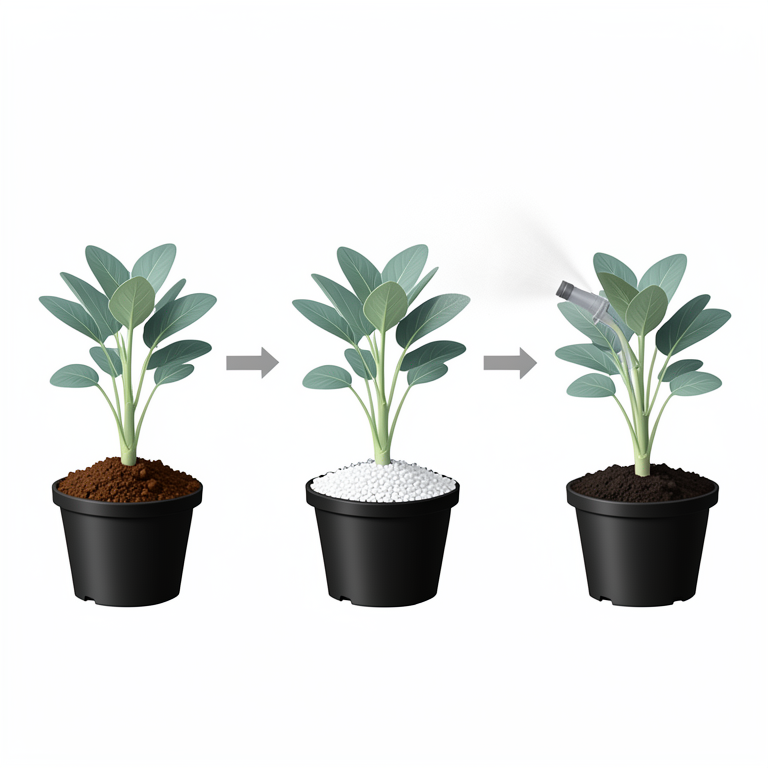
Experimental Setup Overview
AI-generated conceptual illustration (Pechay (Brassica napus L. subsp. chinensis var. Black Behi) plants in pots). It explains the idea and does not show study data.
View source evidence ↗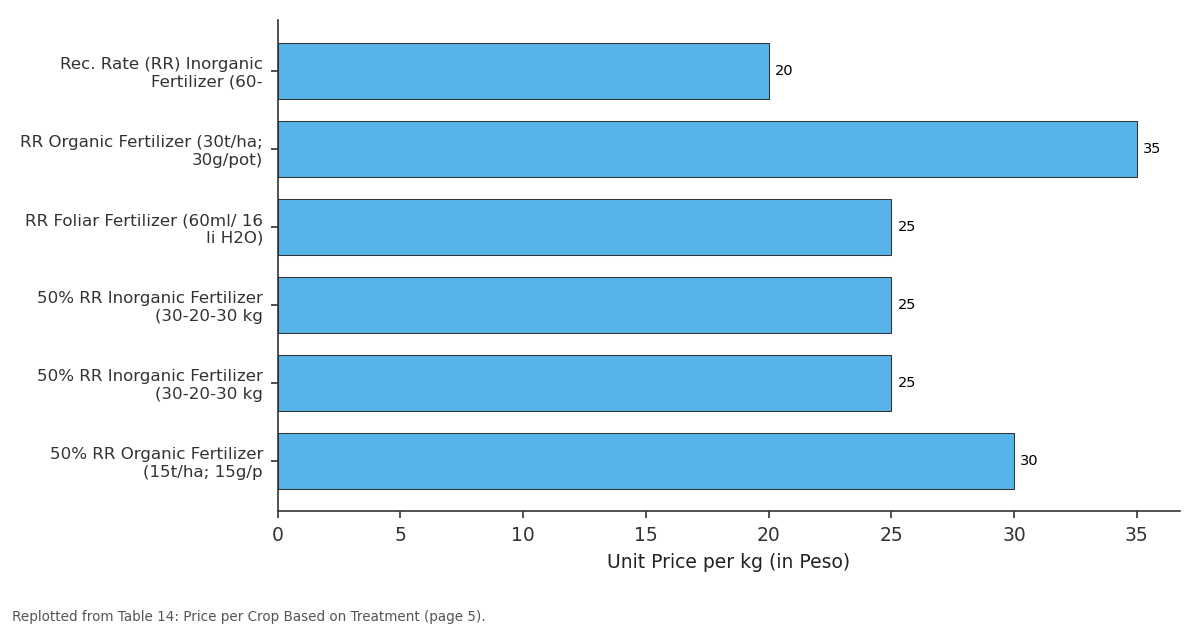
Unit Price per kg (in Peso) / -: Rec. Rate (RR)... vs RR Organic Fertilizer... vs RR Foliar Fertilizer... vs 50% RR Inorganic... vs 50% RR Inorganic...
Replotted from Table 14 (page 5) of the original paper. Every bar is the paper's own table value.
View source evidence ↗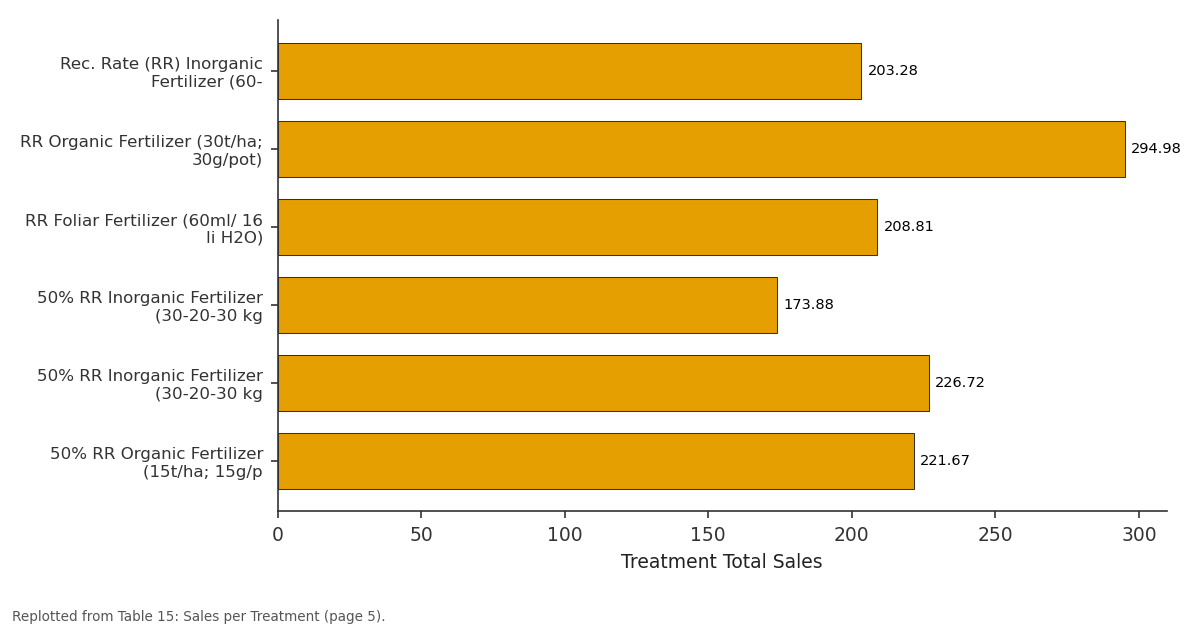
Treatme nt Total: Rec. Rate (RR)... vs RR Organic Fertilizer... vs RR Foliar Fertilizer... vs 50% RR Inorganic... vs 50% RR Inorganic...
Replotted from Table 15 (page 5) of the original paper. Every bar is the paper's own table value.
View source evidence ↗Figures & tables
From the original paper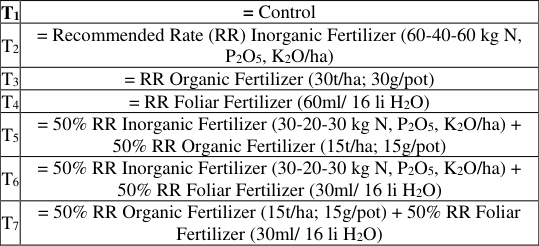 Table 1
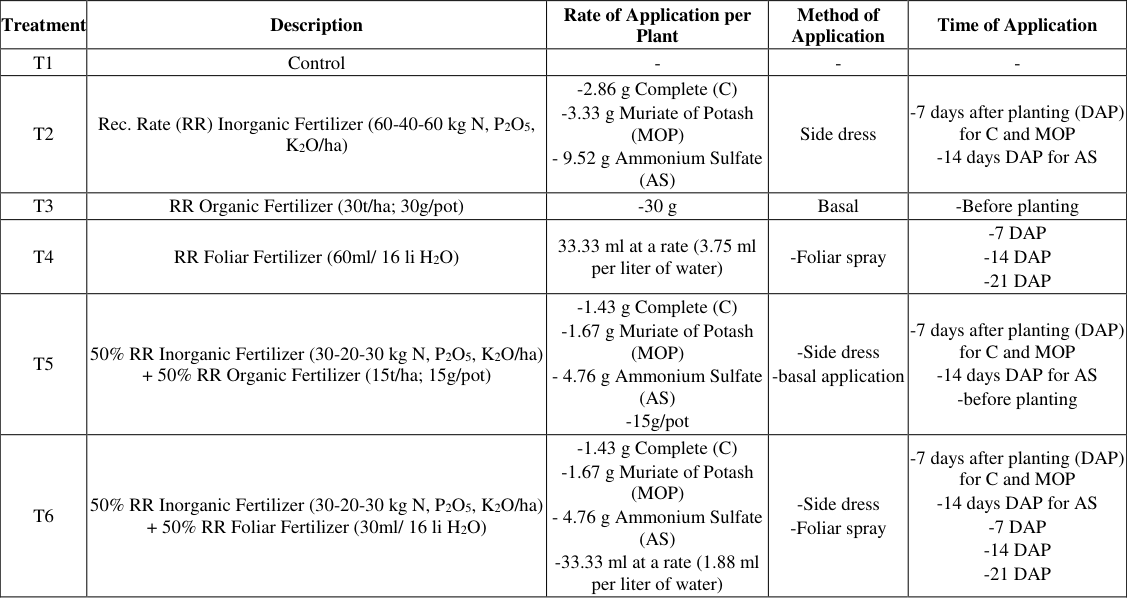 Table 2
 Table 13
 Table 14
 Table 14
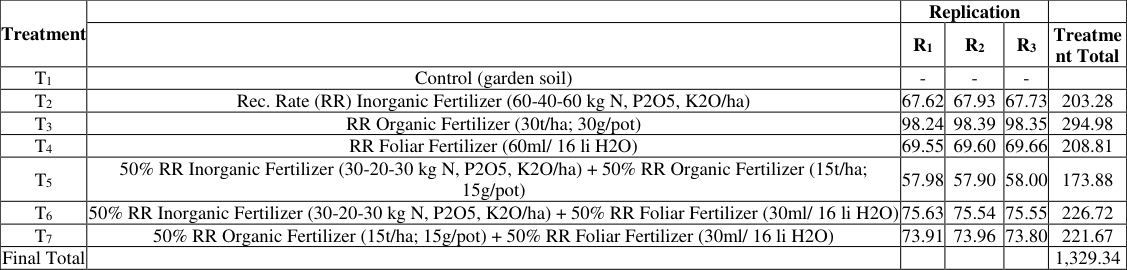 Table 15
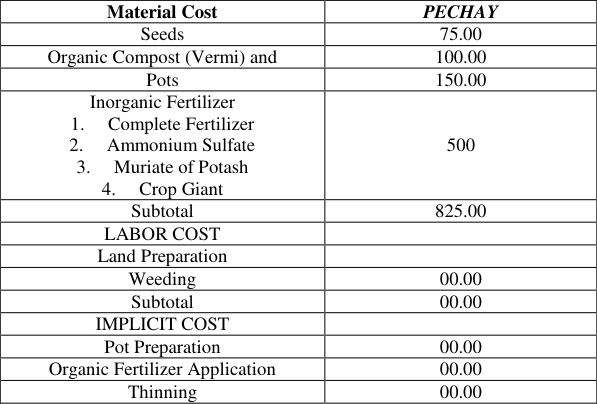 Table 16
Introduction
Phytochemical component is emerging as a major concern in agriculture food production in the Philippines. It has been a challenge to produce foods free from toxic substances which is deemed detrimental to human health. Types and levels of fertilizer applied to crops therefore are very important in crop production and play an important role in the cropping systems. In addition, relying on inorganic or chemical fertilizers is a major constraint due to its prohibitive cost though identified an important factor in meeting the food requirements of a growing population. Eleazu et al. (2012) [8] defined phytochemicals as chemical compounds formed during the plants normal metabolic processes. These chemicals are referred to as secondary metabolites which comprises of several classes and these includes; alkaloids, flavonoids, phenols, tannins, (Ndukwe et al., 2013; Nduche et al., 2015) [20,19] , coumarins, glycosides, gums, polysaccharides, terpenes, terpenoids, (Oludare and Bamidele, 2015; Singh, 2012) [22, 25] . Plants may contain other substances apart from the said chemicals. Evidence from epidemiological, in vivo, in vitro, and clinical trial data suggests that the plant-based diet can reduce the risk of chronic due to the presence of biologically active plant compounds or phytochemicals. Key et al. (2009) [13] pointed out that phytochemicals include those plant-derived compounds that have specific biological activity in human. They can be defined also as bioactive natural molecules that can be of benefits for human health (Richardson et al., 2000) [23] .
Cragg and Newman (2009) [5] identified that in terms of prevention, their beneficial effects have been described in different epidemiological investigations, which underlined, despite the limitations of these kind of studies, a reliable relationship between diets rich in phytochemical and reduction in the risk of developing several diseases, including cancer. Specifically, high intake of fruits and vegetables, the richest dietary components in phytochemicals, has been correlated to a decrease in the risk of several cancers (Danaei et al., 2005) [6] . However, one-third of all cancer deaths is estimated to be preventable by "healthy" lifestyles, including appropriate nutrition (Danaei et al., 2005) [6] . A plethora of phytochemicals, such as carotenoids, antioxidative vitamins, phenolic compounds, terpenoids, steroids, indoles, and fibers, has been considered responsible for the risk reduction (Alberts and Hess, 2008) [2] . On the other hand, phytochemicals can be assimilated to chemotherapeutics, which are frequently derived from natural substances, directly extracted from plants, or other natural sources, or chemically derived from naturally occurring compounds (Richardson et al., 2000) [23] . Behind traditional medicine, many cancer patients are currently using plant-derived compounds in the context of complementary therapies (Richardson et al., 2000) [23] . Moreover, phytochemicals can contribute to cancer prevention by influencing different stages of the tumor development, from tumor initiation through all the phases of cancer (Hanahan and Weinberg, 2011) [10] , such as cell proliferation, apoptosis, invasion and metastasis, angiogenesis, and immortality (Kroemer and Pouyssegur, 2008) [14] . However, phytochemical properties can also be harmful to human body. Limited studies had been made to evaluate the phytochemical components which are deemed toxic and harmful to human health if the amount exceeds safe levels. Hence, this study focused on the effects of phytochemical constituents of pechay (Brassica napus L. var. Black Behi).
Literature Review Antinutritional and Toxic Effects of Tannins
Tannins are plant secondary metabolites usually considered as natural non-nutrients. Moreover, some of the phytochemicals normally found associated to tannins, including alkaloids and phenolic compounds occur as toxins. Among the antinutritional and toxic effects described for tannins, decreases in food intake, growth rate, feed efficiency, net metabolizable energy, and protein digestibility are the ones mainly investigated. Other deleterious effects of tannins include damages to mucosal lining of gastrointestinal tract, alteration of excretion of certain cations, and increased excretion of proteins and essential amino acids (Chung et al., 1998) [4] . Negative effects of foods rich in plant secondary metabolites can be also by reducing food intake, associated to decreases in food organoleptic quality. Many lowmolecular weight plant secondary compounds are bitter and highmolecular weight ones, such as tannins, are usually involved in the interaction with macromolecules, particularly with salivary proteins, resulting as astringent (Hagerman, 1992) [9] .
Tannin-containing Diet on Fatty Acid
In Mueller-Harvey's (2006) review, results showed that the harmful effects of tannins in ruminant and monogastric animals can range from producing chronic or systemic disorder. Many monogastric animal species appear to be more sensitive to tannins than ruminants. Furthermore, the effects of tannins could have been confused with the effects of other compounds; high-tannin sorghums contain many co-occurring phenolics, such as the relatively rare 3-deoxyanthocyanidins and flavan-4-ols, and faba beans (Vicia faba L.) contain lectins and trypsin inhibitors. This explains why lactating pigs fed sorghum/soybean meal had a poor N balance, whereas Iberian pigs thrive on acorns.
Variability in Tannin Contents
Alkurd et al. (2008) [3] in their study showed that tannin contents of the analyzed species were highly variable, ranging from 25 mg/kg in plums and verbena to 42961 mg/kg in rosemary (on dry matter basis). It is therefore expected that due to variability in tannin content, different nutrition-health effects may result, a matter which requires other studies to clarify these effects.
Health Benefits of Flavonoids
Tiwari and Husain (2017) [28] found that flavonoids are such phytochemicals that play significant role in enhancing the human health benefits. They are good sources of natural antioxidants in human diets. Flavonoids neutralize the harmful effects of free radicals in best of ways, and thus help in prevention of diseases. Flavonoids, occurring virtually, in all plant parts, particularly photo-synthesizing plants cells are a major coloring component of flowering plants. Flavonoids have extensive biological properties that promote human health and reduce the risk of diseases.
Alkaloids
Alkaloids are group of naturally occurring chemical compounds which mostly contain basic nitrogen atoms (Tadeusz, 2007) [26] . In other word, alkaloids are nitrogenous secondary metabolites heterocyclic derivatives of amino acids or by the transamination process which confers basic characters (Diaz et al., 2015) [7] . The group includes some related compounds with neutral and even weakly acidic properties. In addition to carbon, hydrogen and nitrogen, the group may contain some other elements such as oxygen, sulphur and more rarely other elements like chlorine, bromine and phosphorus (Tadeusz, 2007) [26] . Alkaloids are classified based on biosynthetic pathways (Lu et al., 2012) [17] . Lu et al. (2012) [17] observed that, alkaloids have a wide distribution in the plant kingdom and mainly exist in higher plants, such as those belonging to the family Ranunculaceae, Leguminosae, Papaveraceae, Menispermaceae and Loganiacea. Approximately 60% of the drugs from plants are alkaloids (Sibi et al., 2014) [24] . Lu et al. (2012) [17] asserted that, alkaloids exhibit significance biological activities, examples are the relieving action of ephedrine for asthma, the analgesic action of morphine, the anticancer effects of vinblastine (Lu et al., 2012; Vaghora and Shukla, 2016) [17,30] . Quinine has been used in the treatment of malaria atropine serves as a vasodilator, berberine is used in the treatment of diarrhea, diabetes and others (Lu et al., 2012) [17] . Other important alkaloids include evodiamine, piperine, sanguinarine, matrine, tetrandrine, caffeine, codeine, tubocurarine, sanguinafine, cocaine, ajmaline, scopolamine, atropine, hyoscamine (Welegergs et al., 2015) [31] , nicotine, ergotamine.
Flavonoids
Flavonoids belong to a group of natural substances with variable phenolic structures and are found in fruits, vegetables, grains, bark, roots, stems, flowers, tea and wine (Nijveldt et al., 2001; Lakhanpal and Kumar, 2007) [21,16] . Several studies shown that more than 4000 varieties of flavonoids were identified, many of which are responsible for their attractive colours of flowers, fruits and leaves (Nijveldt et al., 2001; Lakhanpal and Kumar, 2007) [16] [21] . According to Marais et al. (2006) [18] the study of flavonoid chemistry has emerged like that of natural products from the search of new compounds with useful physiological properties. This group of natural products are categorized into classes depending on the position of the linkage of the aromatic ring to the benzopyrano (chromano) moiety as mentioned by Marais et al. (2006) [18] and these includes; flavones, flavonones, flavanols (Kumar and Pandey, 2013) [15] isoflavonones isoflavones, and anthocyanidins, (Lakhanpal and Kumar, 2007) [16] . A large number of studies showed that, flavonoids have a wide range of biological activities such as free radical scavenging, antioxidant, anti -inflammation, anti-cancer, bactericidal, regulating immunity, antivirus, (Huiduan and Jianzhong, 2016, 2017) [12] , antimutation, antitumor, Protecting liver, and anti-allergic and antidiabetes (Agrawal, 2011) [1] . A number of reports have been published which demonstrate that flavonoids can modulate arachidonic acid metabolism via the inhibition of cyclooxygenase and lipooxygenase activity (Tapas et al., 2008) [27] .
Materials and Methods
Materials and Methods
Research Design
The experiment was laid out using Randomized Complete Block Design (RCBD) with seven treatments replicated three times. A total area of 10 m x 12 m (120 m 2 ) was divided into three blocks each representing one replication. Distance between blocks is one (1) meter. Shown below are the treatments and their respective amount and types of fertilizers used.
Treatments
There were seven (7) treatment combinations used in the study. Each treatment was replicated three (3) times and consists of fifteen (15) pots per replicate. The total number of treatment replications, each considered an experimental unit was twentyone (21) as shown in Appendix Figure 2. Randomization was done through drawing of lots. The lay-out as shown in Appendix Figure 2 was done following the step-bystep procedure in RCBD experiment since it was conducted in an uncontrolled environment. The treatment combinations are the following:
Cultural Management
The variety used in this study was Black Behi from East-West Company. A total of three hundred fifteen (315) pots were used corresponding to the number of treatments and the number of replications per treatment. Each pot was 8" in diameter and 10" in depth. Soils used in this study was taken from the Dairy Farm, Mindanao State University -Main Campus, Marawi City. The soil was homogenized or mixed thoroughly to ensure that each pot for each treatment and replicate is filled with the same soil quality. Three seeds were sown per pot. Thinning was done to keep one plant per pot as the seedlings have developed their first true leaves. Watering was done uniformly and as necessary for all treatments throughout the study period. The amount of water applied per pot was 200ml per watering. Insect pests were controlled by a combination of handpicking and spraying with crushed /pounded chili solution. The pots were kept weed-free by manual hand pulling where needed and prior to treatment application. Plants were harvested by hand-pulling 45 days after sowing.
Fertilizer Application/Application of Treatments
Fertilizer Application/Application of Treatments
Phytochemical Properties Sample Collection
Pechay (Brassica napus L. var. Black Behi) was collected from a study site at Mindanao State University-Marawi City, Philippines. The plant was analyzed in the Department of Chemistry, Mindanao State University, Marawi, Philippines. The residual moisture was evaporated at room temperature thereafter the fresh leaves samples were allowed to dry completely for two weeks at a room temperature before using them for this study.
Phytochemical Screening
Screening of phytochemical constituents were carried out following the standard methods described in the laboratory manual for the UNESCO (1990). The various phytochemical constituents tested were the following: alkaloids, flavonoids, phytosterols, tannins phenolics and reducing sugar.
Test for tannins
An aliquot of 0.5 mL extract of the sample plants as added to 10 mL of distilled water in a test tube and was filtered. Two mL of 5% Ferric Chloride (FeCl) was added to the filtered sample. Brownish green or black coloration observed indicates the presence of tannins.
Test for alkaloids
Five ml of the extract was prepared in a beaker and 200 mL of 10% CH3COOH in ethanol (C2H5OH) was added. The mixture was filtered and the extract was allowed to become concentrated in a water bath until it reached one fourth of the original volume. Concentrated NH4OH was added. Formation of the white precipitate or turbidity indicated the presence of alkaloids (Trease and Evans, 1983) [29] Test for flavonoids Few drops of 1% Ammonia (NH3) solution was added to 5 mL extract of plant sample in a test tube. Yellow coloration indicated the presence of flavonoids.
Test for phytosterols
About 0.05g of the crude ethanolic extract was treated with 2mL chloroform and filtered. The filtrates were treated with few drops of concentrated sulphuric acid, shaken and allowed to stand. Appearance of golden yellow colour indicates the presence of triterpenes.
Test for phenolics About 0.03g of crude ethanolic extract was weighed and 1mL of 1% ferric chloride solution was added. Appearance of blue or green colour indicates the presence of phenols.
Test for reducing sugar About 0.03 g of crude etahnolic extract was treated with 1mL of Fehling's A and B solutions. The resulting solution was heated.
Formation of red precipitate indicates the presence of reducing sugars.
Data Gathering Procedures
Return on Investment (ROI). This was taken using the formula below.
Return on Investment (ROI) =
Return on Investment (ROI) =
Net Income
Net Income
Data Analysis Profitability Using Return of Investment (ROI)
This included all the inputs used for the study which begin from the seedling stage up to the harvesting using the formula:
Results and Discussion Phytochemical Analysis of Pechay
Based on the result, Table 13 shows a positive result of alkaloids, flavonoids, phytosterols, tannins and phenolics. However, T2 (Rec. Rate (RR) Inorganic Fertilizer) shows a double positive (++) in tannins while T5 (50% RR Inorganic Fertilizer + 50% RR Organic Fertilizer) shows a double positive (++) in flavonoids. All treatments of the study show negative (-) in R. Sugar. The result of the study conforms with Mueller-Harvey (2006) study on "The Conundrum of Tannins in Animal Nutrition and Health". Results showed that the harmful effects of tannins in ruminant and monogastric animals can range from producing chronic or systemic disorder. Many monogastric animal species appear to be more sensitive to tannins than ruminants. However, T5 (50% RR Inorganic Fertilizer + 50% RR Organic Fertilizer) which turned out double positive (++) in flavonoids is something good as shown in a study by Tiwari and Husain (2017) [28] which found that flavonoids are such phytochemicals that are good sources of natural antioxidants in human diets.
| — | Treatments | Phytochemical Components | — | — | — | — | — |
|---|---|---|---|---|---|---|---|
| Alkaloids | Flavonoids | Phytosterols | Tannins | Phenolics | R. Sugar | ||
| T1 | Control (garden soil) | + | + | + | + | + | - |
| T2 | Rec. Rate (RR) Inorganic Fertilizer | + | + | + | ++ | + | - |
| T3 | RR Organic Fertilizer | + | + | + | + | + | - |
| T4 | RR Foliar Fertilizer | + | + | + | + | + | - |
Table text extracted from the original PDF; superscript letters are shown inline. The original table image is below.
View original table image
Return on Investment (ROI)
The cost of inputs used for this study which began from the procurement of materials up to the harvesting and the output was computed to determine the profitability of the production. Return on investment measures the overall effectiveness of management generating profits with its available assets. . This means that even if T2 showed to have to have the highest marketable yield (Table 12), T3 which used vermicompost (organic fertilizer) has the greatest potential for more profit due to low fertilizer cost. On top of it being environmentally-friendly.
Figures and tables from the paper
| T1 | = Control |
|---|---|
| T2 | = Recommended Rate (RR) Inorganic Fertilizer (60-40-60 kg N, P2O5, K2O/ha) |
| T3 | = RR Organic Fertilizer (30t/ha; 30g/pot) |
| T4 | = RR Foliar Fertilizer (60ml/ 16 li H2O) |
| T5 | = 50% RR Inorganic Fertilizer (30-20-30 kg N, P2O5, K2O/ha) + 50% RR Organic Fertilizer (15t/ha; 15g/pot) |
| T6 | = 50% RR Inorganic Fertilizer (30-20-30 kg N, P2O5, K2O/ha) + 50% RR Foliar Fertilizer (30ml/ 16 li H2O) |
| T7 | = 50% RR Organic Fertilizer (15t/ha; 15g/pot) + 50% RR Foliar Fertilizer (30ml/ 16 li H2O) |
Table text extracted from the original PDF; superscript letters are shown inline. The original table image is below.
View original table image
| Treatment | Description | Rate of Application per Plant | Method of Application | Time of Application |
|---|---|---|---|---|
| T1 | Control | - | - | - |
| T2 | Rec. Rate (RR) Inorganic Fertilizer (60-40-60 kg N, P2O5, K2O/ha) | -2.86 g Complete (C) -3.33 g Muriate of Potash (MOP) - 9.52 g Ammonium Sulfate (AS) | Side dress | -7 days after planting (DAP) for C and MOP -14 days DAP for AS |
| T3 | RR Organic Fertilizer (30t/ha; 30g/pot) | -30 g | Basal | -Before planting |
| T4 | RR Foliar Fertilizer (60ml/ 16 li H2O) | 33.33 ml at a rate (3.75 ml per liter of water) | -Foliar spray | -7 DAP -14 DAP -21 DAP |
| T5 | 50% RR Inorganic Fertilizer (30-20-30 kg N, P2O5, K2O/ha) + 50% RR Organic Fertilizer (15t/ha; 15g/pot) | -1.43 g Complete (C) -1.67 g Muriate of Potash (MOP) - 4.76 g Ammonium Sulfate (AS) -15g/pot | -Side dress -basal application | -7 days after planting (DAP) for C and MOP -14 days DAP for AS -before planting |
| T6 | 50% RR Inorganic Fertilizer (30-20-30 kg N, P2O5, K2O/ha) + 50% RR Foliar Fertilizer (30ml/ 16 li H2O) | -1.43 g Complete (C) -1.67 g Muriate of Potash (MOP) - 4.76 g Ammonium Sulfate (AS) -33.33 ml at a rate (1.88 ml per liter of water) | -Side dress -Foliar spray | -7 days after planting (DAP) for C and MOP -14 days DAP for AS -7 DAP -14 DAP -21 DAP |
Table text extracted from the original PDF; superscript letters are shown inline. The original table image is below.
View original table image
| T5 | 50% RR Inorganic Fertilizer + 50% RR Organic Fertilizer | + | ++ | + | + | + | - |
|---|---|---|---|---|---|---|---|
| T6 | 50% RR Inorganic Fertilizer + 50% RR Foliar Fertilizer | + | + | + | + | + | - |
| T7 | 50% RR Organic Fertilizer + 50% RR Foliar Fertilizer | + | + | + | + | + | - |
Table text extracted from the original PDF; superscript letters are shown inline. The original table image is below.
View original table image
| — | Treatments | Unit Price per kg (in Peso) |
|---|---|---|
| T1 | Control (garden soil) | - |
| T2 | Rec. Rate (RR) Inorganic Fertilizer (60-40-60 kg N, P2O5, K2O/ha) | 20.00 |
| T3 | RR Organic Fertilizer (30t/ha; 30g/pot) | 35.00 |
| T4 | RR Foliar Fertilizer (60ml/ 16 li H2O) | 25.00 |
| T5 | 50% RR Inorganic Fertilizer (30-20-30 kg N, P2O5, K2O/ha) + 50% RR Organic Fertilizer (15t/ha; 15g/pot) | 25.00 |
| T6 | 50% RR Inorganic Fertilizer (30-20-30 kg N, P2O5, K2O/ha) + 50% RR Foliar Fertilizer (30ml/ 16 li H2O) | 25.00 |
| T7 | 50% RR Organic Fertilizer (15t/ha; 15g/pot) + 50% RR Foliar Fertilizer (30ml/ 16 li H2O) | 30.00 |
Table text extracted from the original PDF; superscript letters are shown inline. The original table image is below.
View original table image
| Treatment | — | Replication | — | — | — |
|---|---|---|---|---|---|
| R1 | R2 | R3 | Treatme nt Total | ||
| T1 | Control (garden soil) | - | - | - | |
| T2 | Rec. Rate (RR) Inorganic Fertilizer (60-40-60 kg N, P2O5, K2O/ha) | 67.62 | 67.93 | 67.73 | 203.28 |
| T3 | RR Organic Fertilizer (30t/ha; 30g/pot) | 98.24 | 98.39 | 98.35 | 294.98 |
| T4 | RR Foliar Fertilizer (60ml/ 16 li H2O) | 69.55 | 69.60 | 69.66 | 208.81 |
| T5 | 50% RR Inorganic Fertilizer (30-20-30 kg N, P2O5, K2O/ha) + 50% RR Organic Fertilizer (15t/ha; 15g/pot) | 57.98 | 57.90 | 58.00 | 173.88 |
| T6 | 50% RR Inorganic Fertilizer (30-20-30 kg N, P2O5, K2O/ha) + 50% RR Foliar Fertilizer (30ml/ 16 li H2O) | 75.63 | 75.54 | 75.55 | 226.72 |
| T7 | 50% RR Organic Fertilizer (15t/ha; 15g/pot) + 50% RR Foliar Fertilizer (30ml/ 16 li H2O) | 73.91 | 73.96 | 73.80 | 221.67 |
| Final Total | 1,329.34 |
Table text extracted from the original PDF; superscript letters are shown inline. The original table image is below.
View original table image
| Material Cost | PECHAY |
|---|---|
| Seeds | 75.00 |
| Organic Compost (Vermi) and | 100.00 |
| Pots | 150.00 |
| Inorganic Fertilizer 1. Complete Fertilizer 2. Ammonium Sulfate 3. Muriate of Potash 4. Crop Giant | 500 |
| Subtotal | 825.00 |
| LABOR COST | |
| Land Preparation | |
| Weeding | 00.00 |
| Subtotal | 00.00 |
| IMPLICIT COST | |
| Pot Preparation | 00.00 |
| Organic Fertilizer Application | 00.00 |
| Thinning | 00.00 |
Table text extracted from the original PDF; superscript letters are shown inline. The original table image is below.
View original table image
References
31 in the original paper- Agrawal AD. Pharmacological activities of flavonoids: A review. International Journal of Pharmaceutical Sciences and Nanotechnology. 2011; 4(2):1394-1398.
- Alberts DS, Hess LM. Fundamentals of Cancer Prevention. New York, Springer Verlag, 2008.
- Alkurd A, Takruri HR, Al-Sayyed H. Tannin contents of selected plants used in Jordan. Jordan Journal of Agricultural Sciences. 2008; 4(3):265-274.
- Chung KT, Lu Z, Chou MW. Mechanism of inhibition of tannic acid and related compounds on the growth of intestinal bacteria. Food and Chemical Toxicology. 1998; 36(12):1053-1060.
- Cragg G, Newman D. Nature: a vital source of leads for anticancer drug development. Phytochemistry Rev, 2009; 8:313-331.
- Danaei G, Vander Hoorn S, Lopez AD, Murray CJ, Ezzati M. Comparative Risk Assessment collaborating group (Cancers. Causes of cancer in the world: comparative risk assessment of nine behavioural and environmental risk factors. The Lancet. 2005; 366(9499):1784-1793.
- Diaz G, Miranda IL, Diaz MAN. Quinolines, isoquinolines, angustureine, and congeneric alkaloids-occurrence, chemistry, and biological activity. Phytochemicalsisolation, characterisation and role in human health, INTECH, 2015, 141-162.
- Eleazu CO, Eleazu CK, Awa E, Chukwuma SC. Comparative Study of the Phytochemical Composition of the Leaves of five Nigerian Medicinal Plants. E3 Journal of Biotechnology and Pharmaceutical Research. 2012; 3(2):4246.
- Hagerman AE, Robbins CT, Weerasuriya Y, Wilson TC, McArthur C. Tannin chemistry in relation to digestion. Rangeland Ecology & Management/Journal of Range Management Archives. 1992; 45(1):57-62.
- Hanahan D, Weinberg RA. Hallmarks of cancer: the next generation. Cell, 2011; 144:646-674.
- Huiduan L, Jianzhong Y. Optimal Enzyme-Assisted Ethanol Extraction of Flavonoids from Broccoli by RSM and Research on Antioxidant Effects. Chemical and Bimolecular Engineering. 2016; 1(1):12-20.
- Huiduan L, Jianzhong Y. Study on extract methodology of total flavonoids from ginger and hydroxyl radical scavenging effect. American Journal of Chemical and Biochemical Engineering. 2017; 1(2):21-30.
- Key TJ, Appleby PN, Spencer EA, Travis RC, Allen NE, Thorogood M, et al. Cancer incidence in British vegetarians. British Journal of Cancer. 2009; 101(1):192197.
- Kroemer G, Pouyssegur J. Tumor cell metabolism: cancer's Achilles' heel. Cancer Cell, 2008; 13:472-482.
- Kumar K, Pandey AK. Chemistry and Biological Activities of Flavonoids: An Overview. The Scientific World Journal, 2013, 1-17.
- Lakhanpal P, Kumar DR. Quercetin: A Versatile Flavonoids. Internet Journal of Medical Update. 2007; 2(2):22-37.
- Lu JJ, Bao JL, Chen XP, Huang M, Wang YT. Alkaloids Isolated from Natural Herbs as the Anticancer Agents. Evidence-Based Complementary and Alternative Medicine, 2012. doi:10.1155/2012/485012.
- Marais JPJ, Deavours B, Dixon RA, Ferreira D. The stereochemistry of flavonoids. In E. Grotewold (Ed.), The science of flavonoids (pp. 1-46). New York: Springer, 2006.
- Nduche MU, Edeoga OH, Omosun G, Nwankwo D. Evaluation of the Chemical Composition of Five Nigerian Medicinal Plants. Journal of Pharmacy and Biological Sciences. 2015; 10(2):27-31.
- Ndukwe OK, Awomukwu D, Ukpabi CF. Comparative Evaluation of Phytochemicals and Mineral Constituents of the Leaves of some Medicinal Plants in Abia State Nigeria. International Journal of Academic Research in Progressive Education and Development. 2013; 2(3):244-252.
- Nijveldt RJ, Van Nood E, Van Hoorn DEC, Boelens PG, Van Norren K, Van Leeuwen PAM, et al. Flavonoids: A review of probable mechanisms of action and potential applications. American Journal of clinical Nutrition, 2001; 74:418-425.
- Oludare OT, Bamidele OO. Phytochemical Screening of ten Nigerian Medicinal Plants. International Journal of Multidisciplinary Research and Development. 2015; 2(4):390-396.
- Richardson MA, Sanders T, Palmer JL, Greisinger A, Singletary SE. Complementary/alternative medicine use in a comprehensive cancer center and the implications for oncology. Journal of Clinical Oncology. 2000; 18(13):25052514.
- Sibi G, Aspara V, Lepakshi G. Isolation and Characterization of Antimicrobial Alkaloids from Plumera alba Flowers Against Food Borne Pathogens. American Journal of Life Sciences. 2014; 2(6-1):1-6.
- Singh R. Medicinal Plants: A Review. Journal of Plants Sciences. 2012; 3(1-1):50-55.
- Tadeusz A. Alkaloids-secrets of life. Alkaloid Chemistry, Biological, Ecological, Applications and Ecological Role, 2007, 1-2.
- Tapas AR, Sakarkar DM, Kakde RB. Flavonoids as nutraceuticals: a review. Tropical Journal of Pharmaceutical research. 2008; 7(3):1089-1099.
- Tiwari SC, Husain NISREEN. Biological activities and role of flavonoids in human health-A. Indian J Sci Res. 2017; 12(2):193-6.
- Trease GE, Evans WC. Text book of Pharmacognosy London. Bailliare Tindal. 1983; 12(193):336.
- Vaghora B, Shukla V. Impact of Different Phytochemical Classes and Ayurvedic Plants in Battle Against Cancer. International Journal of Pharma Sciences and Research. 2016; 7(10):406-418.
- Welegergs GG, Hulif K, Mulaw S, Gebretsadik H, Tekluu B, Temesgen A, et al. Isolation, Structural Elucidation and Bioactivity Studies of Tropane Derivatives of Alkaloids from Seeds Extract of Datura Stramonium. Science Journal of Chemistry. 2015; 3(5):78-83.
Cited by 7
From OpenAlex, OpenCitations and reference lists read by Scinovex
- Effect of organic manure and inorganic fertilizer on growth, yield and quality of garlic (Allium sativum L.) ↗
Akhil, Abhishek Singh, K. K. Maurya, B. Singh, Anshul Asre · International Journal of Pharmacognosy and Pharmaceutical Sciences · 2022
The experiment entitled “Effect of Organic Manure and Inorganic Fertilizer on Growth, Yield and Quality of Garlic (Allium sativum L.)” was conducted during Rabi season of the year 2021-2022 on Instructional farm of Department of Horticulture, AKS University, Satna (M.P.). The experiment was laid out in Randomized Block Design comprising of 12 treatments viz., T1- Control, T2 - 100% RDF(NPK),
- Effect of organic manures and inorganic nutrients on growth and yield of Gobhi sarson (Brassica napus L.) ↗
Sandeep Sandeep, Ratnesh Kumari · Journal of Pharmacognosy and Phytochemistry · 2021
A field experiment was conducted in the experimental field of Sant Baba Bhag Singh University, Khiala to find out the effect of organic and inorganic manures on the growth and yield of Gobhi sarson. The experiment had seven different treatments viz; T1- RDF, T2- FYM @4t/ha, T3- FYM @2t/ha + 50%RDF, T4- FYM@1t/ha +25% RDF, T5- VC @1.4t/ha, T6- VC
- Effect of organic and inorganic fertilizers on survival and performance of African catfish fry produced under artificial propagation ↗
Belay Abdissa, Haymanot Yenesew, Mohammed Oumer, Alayu Yalew · International Journal of Bioscience and Biochemistry · 2023
This study was conducted to determine the effect of organic and inorganic fertilizers on the survival and performance of African catfish fry produced under artificial propagation in a fish pond for sixty days. Two types of fertilizers chicken manure, di-ammonium phosphate (DAP), and a Control group with no fertilizer were tested in triplicate using nine concrete ponds of 10 m2.
- Bio-fertilizers for sustain agricultural production and improve soil health
Satish Kumar, Deepali Suryawanshi, Ravindra Singh Solanki, Phool Singh · International Journal of Advanced Biochemistry Research · 2023
Each person's ability to obtain food is seriously threatened by the worldwide increase in human population since agricultural land is becoming increasingly scarce and, in some cases, disappearing. Therefore, in direct to meet the huge food stipulate of the expanding population during the next few decades, agricultural productivity must be significantly boosted. Not to mention that relying heavily on chemical fertilizers to boost agricultural productivity eventually has negative effects on the environment, human being health, and top soil health. Due to their enormous potential, microbes are be
- Comparative analysis of phytochemical composition and return on investment in Pechay cultivated with organic and inorganic fertilization techniques ↗
Victoria Vysotskyi, I. V. Dmytruk · International Journal of Pharmacognosy and Life Science · 2023
This study, "Comparative Analysis of Phytochemical Composition and Return on Investment in Pechay Cultivated with Organic and Inorganic Fertilization Techniques," evaluates the effects of organic and inorganic fertilizers on the phytochemical profiles and economic outcomes of Pechay (Brassica napus L. subsp.chinensis var.Black Behi) cultivation.Through a controlled experimental design, the research assesses key phytochemical constituents-total phenolics, flavonoids, glucosinolates, vitamin C, and…
❝ 0PDF - Effect of organic raw and treated press mud with inorganic fertilizers NPK on maize (Zea mays) plant
Nayan P Chapane, Shridhar Saptale, Shriganesh R Shelke · International Journal of Advanced Chemistry Research · 2022
A pot experiment was conducted to evaluate the different combinations of sugarcane raw press mud +cow dung + inorganic fertilizer NPK at a rate of (120:60:40 kg N: P2O:K2O ha-1) and the same treatment with treated press mud. The raw and treated press mud can be used as organic fertilizer to increase the maize (Zea mays) plant height and number of leaves. T1- absolute Control,T2-Soil +cow dung 5 MT/ha- + raw press mud (RPM) 5 MT/ha-1 + inorganic fertilizer NPK at rate of 120:60:40 kg N:P2O:K2O ha-1 , T3-Soil +cow dung 5 MT/ha- + raw press mud (RPM) 7.5 MT/ha-1 + inorganic fertilizer NPK at rate
- Quantitative assessment of nickel phytoremediation potential of some Brassica species in nickel enriched soil as influenced by organic amendments ↗
AK Indoria, RS Siyag, K Sammi Reddy, K Srinivas, KL Sharma · International Journal of Chemical Studies · 2021
Screen-house experiments were conducted to evaluate the nickel phytoremediation potential of Brassica juncea, Brassica napus and Eruca sativa in nickel enriched (i.e. 0, 150, 300, 450 and 600 mg/kg soil) soils using 3% farmyard manure-amended (w/w), 3% sewage sludge-amended (w/w) and un-amended soil. The results of the study revealed that the mean stem yields of Brassica species was higher by