
Research article · 2020 · Full text
International Journal of Agriculture and Food ScienceEffects of shading material on the growth, yield and quality of green pepper (Capsicum annum L.) grown under hot and humid climatic conditions
Volume 2(2) · Pages 25–31 · DOI: 10.33545/2664844x.2020.v2.i2a.39 ↗
Research areasLeaf Properties and Growth Measurement
Abstract
Author-writtenGreen pepper (Capsicum annum L.) is one of the most popular vegetables in the Kingdom of Eswatini, with its production mainly under irrigation in open fields. Shade nets are used to modify the crop micro-environment to improve plant growth and yield. This experiment was conducted at Mphaphati, under Eswatini Water and Agricultural Development Enterprises, (ESWADE) in the summer of January and April 2018. The objective of this study was to determine the effect of plastic and net covered tunnels on the growth, yield and quality of green pepper (Capsicum annum var. Crusader L.). Shading materials were used white fiber plastic tunnel, green net tunnel (40%) and black net tunnel (40%). The treatments were arranged in Randomized Complete Block Design (RCBD) with three replications. The results revealed that plants grown under the green net covered tunnel significantly (P
Summary
Source-checkedPlain-language reading of the full paper, prepared with AI and checked against the text. Each point links to the authors' own words.
Why it matters
- Green pepper is a globally significant vegetable, consumed daily by approximately 25% of the world's population. View evidence ↗
- Eswatini relies heavily on imports from South Africa for vegetable crops, including green pepper, because it is not self-sufficient in their production. View evidence ↗
- Standard plastic tunnels in summer can reach temperatures of 50-60°C, which often leads to crop death, flower abortion, and poor yields. View evidence ↗
The question
- The study aimed to evaluate how different tunnel materials (plastic vs. shade nets) affect the growth, yield, and quality of green pepper. View evidence ↗
What they did
- The research was conducted from January to April 2018 at Mphaphati in the Lowveld region of Eswatini. View evidence ↗
- The study used six-week-old 'Crusader' cultivar green pepper seedlings. View evidence ↗
- Using a Randomized Complete Block Design with three replications, the study compared a white fiber plastic tunnel (control), a 40% black net tunnel, and a 40% green net tunnel, with 60 seedlings per treatment per replicate. View evidence ↗
What they found
- All plants in the white fiber plastic tunnel died within three weeks due to excessive heat, providing no usable growth or yield data. View evidence ↗
- At 10 weeks after transplanting (WAT), plants in the green net tunnel were significantly taller (46.6 cm) than those in the black net tunnel (43.1 cm). View evidence ↗
- At 10 WAT, the green net tunnel produced the highest number of leaves (68), compared to the black net tunnel (61). View evidence ↗
- At 10 WAT, plants in the green net tunnel had more branches (11) than those in the black net tunnel (9). View evidence ↗
- The green net tunnel resulted in the largest leaf area (90.3 cm²), while the black net tunnel resulted in the smallest (79.83 cm²). View evidence ↗
- The green net tunnel outperformed the black net tunnel in average flowers per plant (17 vs 14), fruits per plant (11 vs 9), fruit firmness (4.4 N vs 4.1 N), and total yield (30.8 t/ha vs 29.5 t/ha). View evidence ↗
What it means
- The authors concluded that 40% green netting creates a favorable micro-climate for green pepper in Eswatini's Lowveld, leading to superior growth, yield, and quality. View evidence ↗
- The authors recommend using green net tunnels for hydroponic green pepper production in high-temperature areas of the Lowveld, such as Siphofaneni. View evidence ↗
- The authors suggest that future research should test different net sizes across other agro-ecological zones in Eswatini and with other high-value vegetable crops. View evidence ↗
Visual summary
3 visualsIllustrations explain the paper; charts are replotted from the paper's own table values.
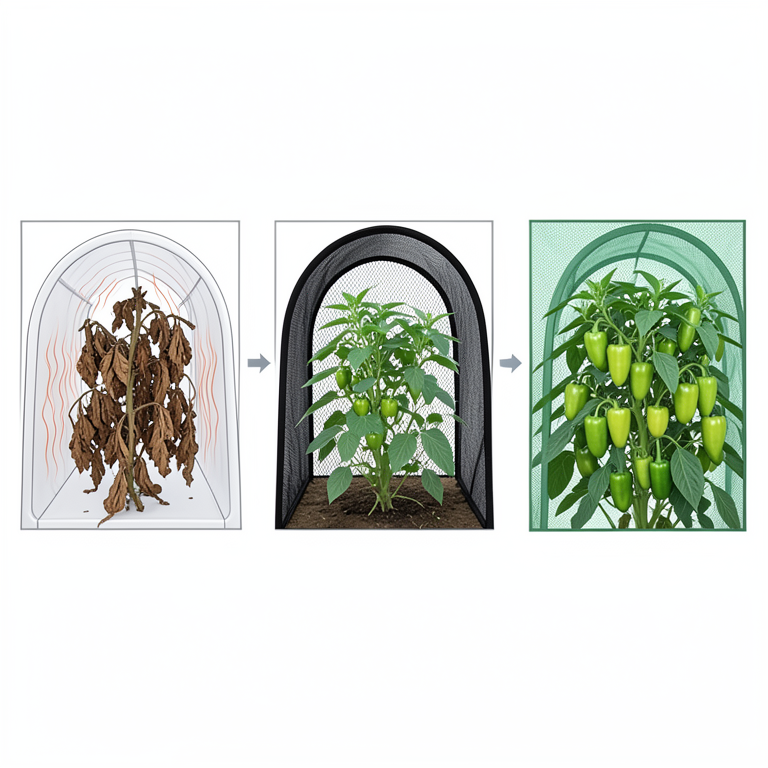
Comparison of Tunnel Materials
AI-generated conceptual illustration (green pepper plants (Capsicum annum L.) under different shading tunnels). It explains the idea and does not show study data.
View source evidence ↗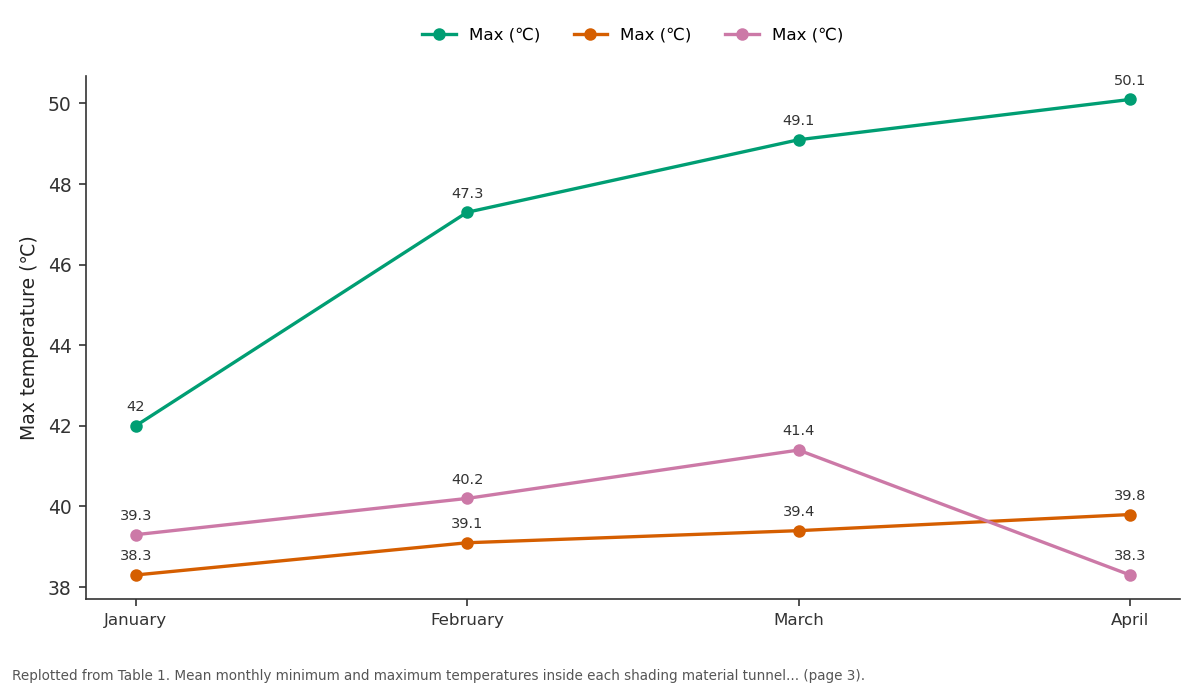
Max (℃) and Max (℃) and more: January vs February vs March vs April
Replotted from Table 1 (page 3) of the original paper. Every bar is the paper's own table value.
View source evidence ↗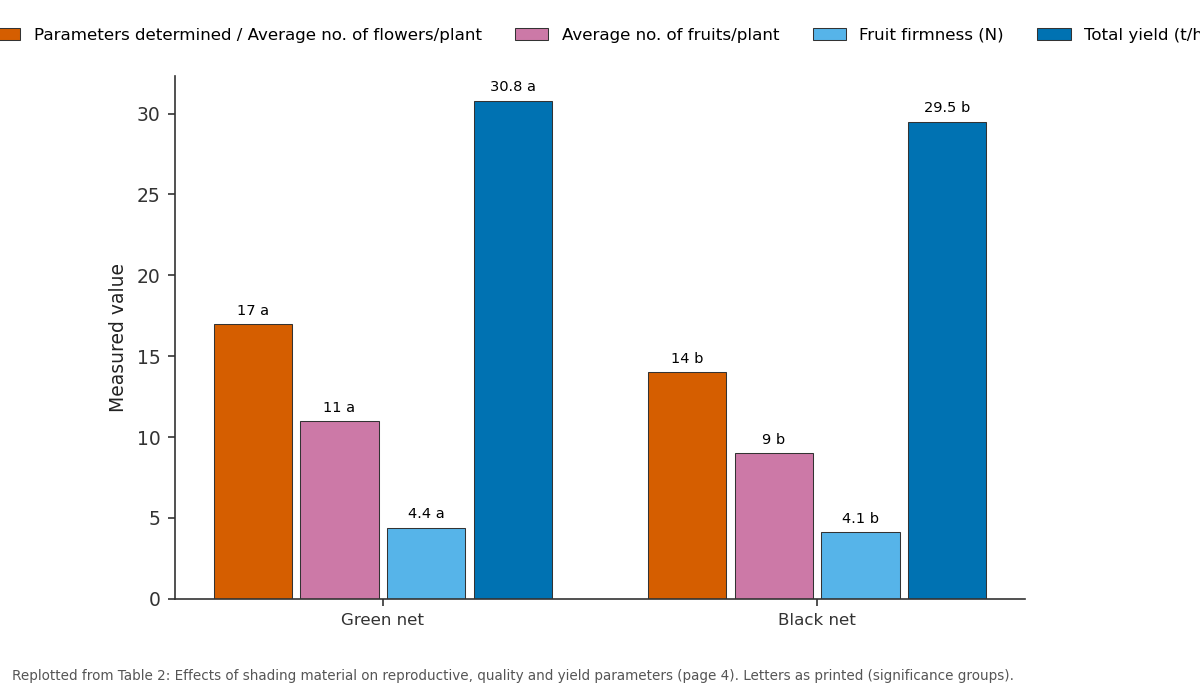
Parameters determined / Average no. of... and Average no. of fruits/plant and more: Green net vs Black net
Replotted from Table 2 (page 4) of the original paper. Every bar is the paper's own table value.
View source evidence ↗Figures & tables
From the original paper Table 1
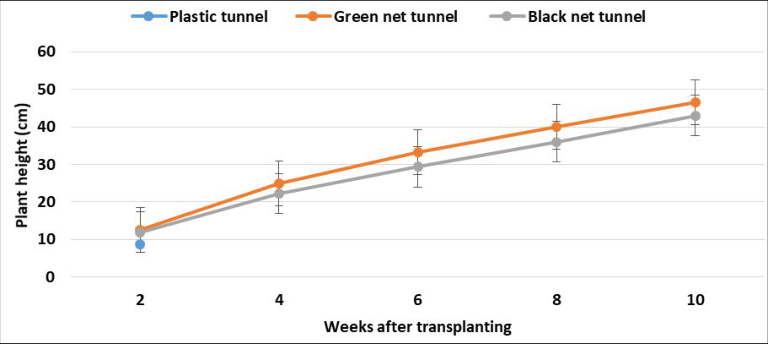 Figure 1
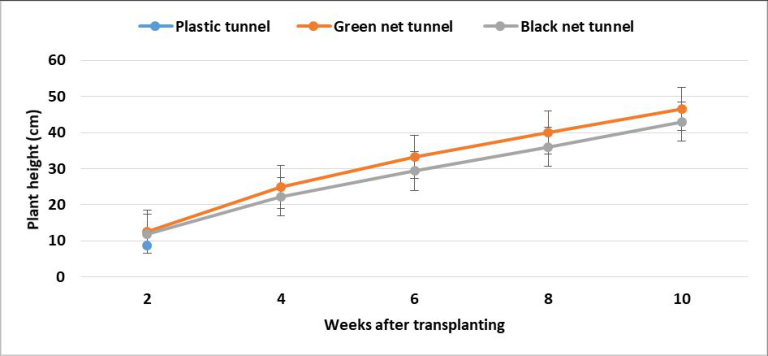 Figure 2
 Table 2
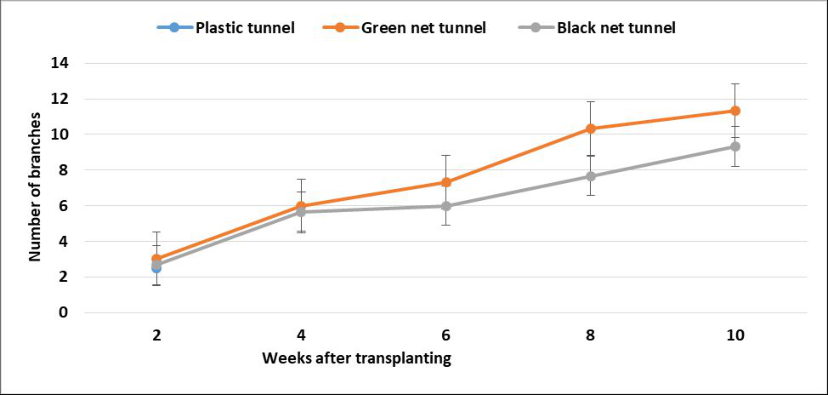 Figure 3
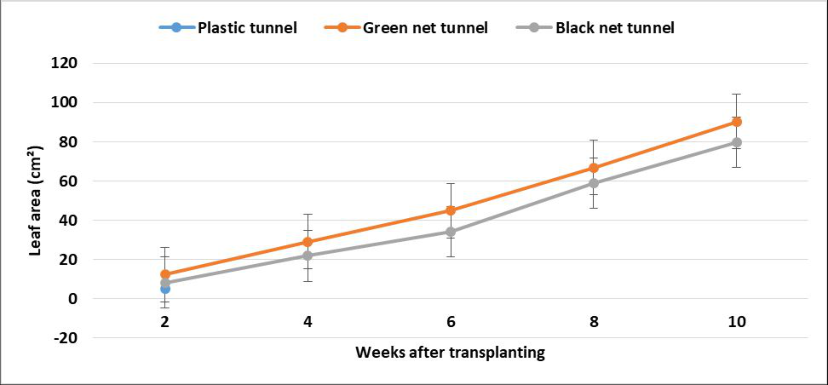 Figure 4
Introduction
Green pepper (Capsicum annum L.) belongs to the family Solanaceae. It is an important vegetable grown extensively and is one of the most varied and widely used vegetables in the world as it is reported that 25% of the world's population consumes and utilises green pepper every day (Aliyu, 2000; United States Department of Agriculture [USDA], 2008). Its popularity is based on reported nutritional and health benefits. It thrives best in a warm climate in a temperature range of 25-35˚C (Namiki, 2005). Despite the improved level of agricultural productivity, the Kingdom of Eswatini is not self-sufficient in crop production especially in vegetable crops (National Agricultural Marketing Board [NAMBoard], 2017; Dlamini, et al., 2020) [27,19] . Substantial amounts of vegetables such as green pepper, tomatoes, beetroot, carrots, onions, etc., are imported into the country from South Africa (NAMBoard, 2017; Masarirambi et al., 2020) [27,9] . Green pepper is one of the most popular vegetable crops in the Kingdom of Eswatini, produced mainly under irrigation (Masarirambi et al., 2009; Xaba, 2013) [21,22] . Currently, the demand for vegetables in Eswatini is higher than the local production and hence the gap is filled with imports from South Africa. At the NAMBoard fresh produce market, only 11% of the vegetables are from local production and the rest come from South Africa (NAMBoard, 2017) [27] . Green pepper production is significantly influenced by weather conditions suggesting the need to modify the growing environment (Food and Agricultural Organisation [FAO], 2013) [12] . The recent rise in global warming across the world has posed severe challenges to crop production (Critten and Bailey, 2002; Goren et al., 2011) [7,14] . Among others, the challenges include an increase in air temperature and intensity of solar radiation. Sustained high temperatures (35-40°C) as a result of high solar radiation can also increase the incidence of vegetable abiotic disorders as the climate changes impair cell division, leaf expansion and reproductive development (Castellano et al., 2008; Singh et al., 2011) [6,35] . The photo-selective shade netting technology has gained popularity worldwide over the years, as it has the potential to improve light quality while improving the crop quality at harvest (Meena et al., 2014; Kanwar et al., 2014) [24, 17] . Manipulation of light quality is currently applied in horticulture via photo-selective netting or films to improve yield, quality and phytochemical components (Meena et al., 2014; Singh et al., 2011). [24,35] . It is a technology that can be used as an alternative to protect crops from adverse environmental conditions, excessive solar radiation, heat and drought stress, wind and hail, flying pests, thus improving crop production, yield and quality (Singh et al., 2011; Critten and Bailey, 2002; Buthelezi et al., 2016) [35,7,5] . Net covered tunnels have been reported to provide suitable conditions to increase the yield of green pepper (Jansen and Collins, 2011; Arthurs et al., 2013) [15,3] . In the Kingdom of Eswatini, most vegetable production is carried out under open field conditions; however, to ensure availability of vegetables all year round and reduce imports, few local farmers in Mphaphathi have adopted a climate-smart method known as plastic-covered tunnels to produce horticultural crops such as green pepper, tomato and onions (NAMBoard, 2017) [27] .
Sustainability and profitable utilisation of the plastic-covered tunnel for green pepper production is threatened by high temperatures and lack of air circulation caused by the plastic cover material. During summer months, temperatures inside the plastic tunnels can be as high as 50-60˚C, thus causing the crops grown to wilt or die and often resulting in flower abortion and poor yield. These have resulted in 80% of the farmers abandoning the idea of tunnel utilisation especially in hot summer months and only grow vegetables such as green pepper in the cool winter season. Therefore, there is a need to identify alternative shading material for the tunnels which will ensure proper ventilation, promote good crop growth and yield of the vegetables such as green pepper, especially during the summer growing season. Therefore, this study aimed to determine the effect of plastic and shade net tunnel houses on the growth, yield and quality of green pepper to ensure food security and increase income for Eswatini farmers.
Materials and Methods
Materials and Methods
Experimental site
The experiment was carried out in plastic tunnels owned by ESWADE, at Mphaphati in the Lubombo region of Eswatini, Lowveld agro-ecological zone. The geographic location of Mphaphathi is 26°40'35.51" S and 31° '32' 46.63" E at an altitude of 294 m. Yearly rainfall range from 500-900 mm per year, with most of the rain falling in summer. Summer temperatures range from 25-35℃ and cold winter temperatures range from 15-20℃ (Murdoch, 1968) [25] . The experiment was carried out from the January-April 2018.
Plant materials
Six weeks old green pepper seedlings of the cultivar "Crusader" used in this study were bought from Vickery seedlings at Malkerns, Eswatini. All cultural practices were followed when raising the plants and this included irrigation through drippers, fertilisation, weeding and spraying against pests and diseases. The green pepper seedlings were transplanted into 10-liter black polyethylene bags filled with old and fresh sawdust.
Experimental design
The experiment was laid out in Randomised Complete Block Design (RCBD). There were three treatments; white fiber plastic tunnel (control), black net tunnel (40% light transmission) and green net tunnel (40% light transmission) and these were replicated three times. A total of 60 seedlings were transplanted for each treatment per replicate.
Data collection 2.4.1 Temperature inside each shading material
Daily minimum and maximum temperatures were recorded using a digital thermometer (Thermo Fisher Scientific, Waltham, Massachusetts, USA) throughout the experiment.
Growth parameters
For all vegetative growth parameters measured, 20 plants per replication were randomly selected and tagged in each treatment.
Plant height
The height of the plants was measured using a meter ruler from the base of the plant to the tip of the apical bud.
Number of leaves per plants
The total numbers of leaves per plant were determined by counting all fully opened leaves on the plants leaving the bud primordial at the shoot apex.
Number of branches per plant
The total number of branches per plant was counted on all fully developed branches on the plant stem.
Leaf area
Fully developed leaves of green pepper plants had leaf height and width measured using a 30 cm ruler and then calculated using a formula by Yeshitila and Taye (2016): -193.518 + 8.6327 L (cm) + 14.017 W (cm)
Reproductive growth parameters 2.4.3.1 Number of flowers
The numbers of flowers per plant were counted from the selected and tagged plants.
Number of fruits per plants
The fruit number per plant was counted and recorded.
Total soluble solids (TSS)
The total soluble solids (⁰Brix) content was measured using a digital Refractometer (Master 53T Brix~53%, Ohio, USA). Few drops of the green pepper juice was put on the prism which was then closed to allow the taking of the readings.
Fruit firmness
Fruit firmness (Newtons) was measured using a Penetrometer, probe 8 mm (Wagner, Fruit Test Model FT, and Italy). A single green pepper fruit was placed against a hard surface and the plunger tip forced vertically into the fruit at a constant speed, the handle was then released completely and compression in mm was noted after approximately 5 seconds (Masarirambi and Nxumalo, 2012).
The total fruit yield was calculated by multiplying the weight of the fruits (kg) per plant by the plant population per hectare and dividing it by 1000 to convert to tons (t/ha).
Data analysis
The data collected were subjected to analysis of variance (Anova) using GEN-STAT Statistical package (Payne, 2009) [29] . Where significant differences were detected, the mean separation was done using Duncan New Multiple Range Test (DNMRT) at 5% probability level (Gomez and Gomez, 1984).
Plant height
Due to excessive heat inside the white fiber plastic tunnel, all the green pepper plants died three weeks after planting; as a result, no readings were obtained from plants grown under the plastic white fiber covered tunnel. There were significant (P<0.05) differences in plant height of green pepper plants grown in a different net covered tunnels (Figure 1). At 10 WAT, the tallest plants (46.6 cm) were attained in green pepper grown in the green net covered tunnel, while the lowest plant height (43.1 cm) was obtained in green pepper grown in the black net covered tunnel.
Number of leaves
There were significant (P<0.05) differences in the number of leaves of green pepper plants grown in a different net covered tunnels (Figure 2). At 10 WAT the highest number of leaves (68) was recorded in the green pepper plants grown in the green net covered tunnel, while the lowest number of leaves (61) was obtained in plants grown under the black net covered tunnel (Figure 2).
Number of branches
There were significant (P<0.05) differences in the number of branches of green pepper plants grown in different net covered tunnels. At 10 WAT, the highest number of branches (11) was obtained in green pepper plants grown under the green net covered tunnel, while the lowest number of branches ( 9) was obtained in plants grown under the black net covered tunnel (Figure 3).
Leaf area
There were significant (P<0.05) differences in leaf area of green pepper plants grown in a different net covered tunnels (Figure 5). At 10 WAT.
Green pepper plants in the green net covered tunnel had the highest value (90.3 cm²), while the lowest leaf area (79.83 cm²) was obtained in plants grown under the black net covered tunnel Figure 4).
Discussion
At 10 WAP, the plant height of green pepper was highest under the green net covered tunnel. This may be due to enhanced photosynthesis and respiration caused by the favourable microclimate conditions in the shade net house. Green pepper plants grown in the green net covered tunnel showed the highest value of plant height than the green pepper grown in the black net covered tunnel, which obtained the lowest plant height because the black colour absorbed heat which resulted in increment of temperatures inside the tunnel, causing stress to the plant. The results agreed with the findings of Ramesh and Arumugam (2010) [31] , who reported that green pepper grown in black and green net covered tunnel, produced the highest plants than green pepper grown under white fiber plastic-covered tunnel conditions. The effect of net covered tunnels on the number of leaves was highest under plants grown in the green net tunnel. Similar results were obtained by Rajshekar et al. (2013) [30] who reported that net shade houses increased the number of leaves per plant. The lowest number of leaves was obtained in plants grown in the black net tunnel. Shahak (2008) [34] reported that superior results concerning the number of leaves per plant were found in green pepper grown in net tunnels. It was reported that green pepper plants in net covered tunnels received the highest light intensity compared to plants grown under the plastic tunnel. Under low light, plants undergo morphological changes to maximize light use. The number of flowers per plant showed significant deviation for different net covered tunnels. The highest number of flowers per plant was obtained from the green net covered tunnel at 10 WAT, while the least number of flowers were obtained from green pepper plants grown in the black net covered tunnel. Similar results were obtained by Shahak (2008) [34] who reported that green pepper plants grown under net protection accumulated the highest number of flowers per plant compared to green pepper cultivated under plastic protection. Niederwieser (2001) reported that temperatures lower than 15˚C result in poor plant growth, whereas temperatures higher than 32˚C result in flower drop and poor fruit set of green pepper. Plants grown in the green net covered tunnel showed the highest number of branches among the different net covered tunnels. These results are in agreement with findings by Kittas et al. (2009) [18] , who reported that green pepper grown in a green net covered tunnel accumulated the highest number of branches compared to other coloured nets. No significant difference was observed in the stem girth of green pepper plants grown under the green and black net covered tunnel. Farooq et al. (2015) [11] also reported that green pepper plants grown under the green net, grey net, blue net and black net tunnels were not significant on the stem girth values. The highest leaf area was obtained from green pepper plants grown in the green net covered tunnel, while the lowest leaf area was obtained from plants grown in the black net covered tunnel. Dıaz-Perez (2013) [8] reported that changes in green pepper growth (leaf area, plant height) habit and leaf weight ratio with increased shading indicated that plants underwent modifications in the allocation of assimilates, resulting in maximized light interception under net shaded conditions. According to Santana et al. (2012) [32] , plants grown in a concussive environment tend To have a larger leaf area because cells expand more under low light intensities to receive light for photosynthesis. Increases in leaf area and reduction in the thickness of the leaf blade under shade conditions are usually met in environments with low light intensity. Results of this experiment for utilisation of coloured net covered tunnels increasing leaf area of green pepper plants are in agreement with those of Bertina et al. (2009). The highest fruit firmness was obtained in plants grown under the green net covered tunnel. The lowest fruit firmness was obtained in plants grown under the black net covered tunnel. The results are in agreement with findings by Alarcon et al. (2006) [1] , who revealed that fruit firmness of lemon fruits grown under shade nets was higher than that from plants grown under the plasticcovered tunnel. The highest total fruit yield was recorded in green pepper grown under the green net covered tunnel. Variable responses of green pepper yield to different coloured nets may be attributed to the particular environmental conditions created by the net tunnel. Similar results were found by El-gizawy et al. (2007) [10] , who reported that tomato plants grown in the green net covered tunnel developed faster with higher total yield compared to those under black net covered tunnel. Similarly, Milenkovic et al. (2012) [23] confirmed that green pepper fruit yield was higher in plants grown in green net tunnels compared to those grown in black and blue net tunnels. Green pepper plants under the green net covered tunnel accumulated higher fruit weight, diameter and length compared to green pepper in the black net covered tunnel. Lopez et al. (2007) [16] reported that green net covered tunnels led to increased fruit diameter, weight, and length of tomatoes grown in hot summer temperatures. Shade nets may improve subsequent post-harvest shelf-life of green pepper. Plants previously grown under the green net covered tunnels had fruits which subsequently achieved the longest shelf-life compared to green pepper in the black net covered tunnel. Similar results were reported by Tinyane et al. (2015) [36] , who indicated that production under green net covered tunnel compared to black net covered tunnel resulted in less decay incidence, increased fruit firmness and ascorbic acid content of bell pepper fruits. Similarly, Shahak et al. (2004) [33] also reported that bell pepper fruits grown under green net covered tunnel had the longest shelf life compared to those grown under other net colours (black, blue, and grey). No significant differences were observed in the TSS values of fruits grown under green net tunnel conditions and fruits grown in black net tunnels. Valverde et al. (2002) [38] found similar results of no significance in the total soluble solids of tomatoes grown under black net tunnel compared to plants in the green net tunnel.
Conclusion and recommendation
The green net (40%) created a favourable micro-climate during the hot summer weather of the Lowveld of Eswatini resulting in better growth, yield and quality of green pepper compared to other tunnel cladding materials. Based on the results obtained in this study; 1. It is recommended that a green net tunnel should be used for green pepper production using hydroponics in the Lowveld (especially in Siphofaneni) of Eswatini where temperatures are extremely high during the summer season.
2. Further studies should be conducted to evaluate the use of different net sizes in other agro-ecological zones of Eswatini for other high-value horticultural vegetable crops.
Figures and tables from the paper
| Material | White fiber Plastic cover | — | Green net cover (40%) | — | Black net (40%) | — |
|---|---|---|---|---|---|---|
| Maximum (Max) and minimum (Min) temperature (℃) inside each shading material | ||||||
| Month | Min (℃) | Max (℃) | Min (℃) | Max (℃) | Min (℃) | Max (℃) |
| January | 24.3 | 42 | 20.4 | 38.3 | 21.6 | 39.3 |
| February | 26.8 | 47.3 | 24.2 | 39.1 | 24.2 | 40.2 |
| March | 27.5 | 49.1 | 24.3 | 39.4 | 24.8 | 41.4 |
| April | 27.7 | 50.1 | 24.3 | 39.8 | 23.1 | 38.3 |
Table text extracted from the original PDF; superscript letters are shown inline. The original table image is below.
View original table image
| Shading material | Parameters determined | — | — | — | — |
|---|---|---|---|---|---|
| Average no. of flowers/plant | Average no. of fruits/plant | Fruit firmness (N) | TSS (⁰Brix) | Total yield (t/ha | |
| Fiber plastic | 0c | 0c | 0c | 0b | 0b |
| Green net | 17a | 11a | 4.4a | 5.6a | 30.8a |
| Black net | 14b | 9b | 4.1b | 5.7a | 29.5b |
Table text extracted from the original PDF; superscript letters are shown inline. The original table image is below.
View original table image
References
39 in the original paper- Alarcon JJ, Ortuno MF, Nicola´s A, Navarro H, Torrecillas H. Improving water use efficiency of young lemon trees by shading with aluminized-plastic nets. Agricultural Water Management. 2006; 82:387-398. https://doi.org/10.1016/j. agwat.2005.08.003
- Aliyu L. The effects of organic and mineral fertilizer on growth, yield and composition ofpepper. Biological of Agricultural and Horticulture. 2000; 18:29-36. https://doi: 10.1080/01448765.2000.9754862
- Arthurs SP, Stamps RH, Giglia FF. Environmental modification inside photo selective shade houses. American Society for Horticultural Science. 2013; 48:975-979. https://doi: 10.21273/hortsci.48.8.975
- Bertin N, Gary C. Short and long-term fluctuations of the leaf mass per area of tomato plants-Implications for growth models. Annals of Botany. 1998; 82:71-81. https://doi.org/ 10.1006/anbo.1998.0647
- Buthelezi MND, Soundy P, Sivakumar D. Spectral quality of photo-selective nets improves phytochemicals and aroma volatiles in coriander leaves (Coriandrum sativum L.) after postharvest storage. Journal of Photochemistry and Photobiology B: Biology. 2016; 161:328-334. https://ijpbs. net/details.php?article=692
- Castellano S, Scarascia MG, Russo G, Hemming S. Plastic nets in Agric: A General review of types and applications. Applied Engineering in Agriculture. 2008; 24:799-808. https://doi:10.13031/2013.25368
- Critten DL, Bailey BJ. A review of greenhouse engineering developments during the 1990s. Agriculture. And Forestry Meteorology. 2002; 112(1):1-22. https://doi.org/ 10.1016/ S0168-1923(02)00057-6
- Diaz-Perez SF. Bell pepper (Capsicum annuum L.) crop as affected by shade level: micro-environment, plant growth, leaf gas exchange and leaf mineral nutrient concentration. American Socity of Horticultural Science. 2013; 48:175182. https://doi.org/10.21273/HORTSCI.48.2.175
- Dlamini VC, Nxumalo KA, Masarirambi MT, Wahome PK, Oseni TO, Zwane MG, et al. Effects of cattle manure on the growth, yield, quality and shelf life of beetroot (Beta vulgaris L. cv. Detroit Dark Red). Journal of Experimental Agriculture International. 2020; 42(1):93-104. https://doi: 10.9734/jeai/2020/v42i130455
- El-Gizawy AM, Abdallah MMF, Gomaa HM, Mohamed S S. Effect of different shading levels on tomato plants on yield and fruit quality. Acta Horticulture. 2007; 323:349-354. https://doi: 10.17660/actahortic.1993.323.32
- Farooq M, Ramzan A, Chattha MR, Qasim U, Nawab NN. Studies on the performance of green pepper (Capsicum Annum) varieties under net tunnels. Science Technology and Development. 2015; 34:145-150. https://doi: 10.3923/std. 2015.155.157
- Food and Agricultural Organisation of the United Nations [FAO]. Good Agricultural Practices for greenhouse vegetable crops: principles for Mediterranean climate areas. Rome, Italy, 2013. https://doi.org/10.1007/978-3-319-63 60 7-8
- Gomez KA, Gomez AA. Statistical Procedure for Agricultural Research. 2 nd edition. John Wiley and Sons, Singapore, 1984. https://doi.org/10.1007/978-3-319-636078
- Goren A, Alkalai-Tuvia S, Perzelan Y, Fallik E. Photoselective shade nets reduce postharvest decay development in pepper fruits. Advances in Horticultural Science. 2011; 25:26-31. https://doi: 10.13128/ahs-12781
- Jansen H, Collins GK. Changes in the properties of an acid soil amended with rice husks and effects on the growth yield of pepper. Science Technology and Development. 2011; 50:180-195. https://ijpbs.net/details.php?article=692
- López D, Carazo N, Rodrigo MC, Garcia J. Coloured shade nets effects on tomato crop quality. Acta Horticulture. 2007; 747:121-127. https://doi.org/10.17660/ActaHortic. 200707 4 mm 7012
- Kanwar MS, Mir MS, Lamo K, Akbar I. Effect of protected structures on yield and horticultural traits of bell peppers (Capsicum annum L.) in Indian cold arids. African Journal of Agriculture. 2014; 9(10):874-880. https//doi:10.5897/ AJAR2013.7882
- Kittas C, Rigakis N, Katsoulas G, Bartzanas T. Influence of shade nets on microclimate, growth and productivity of tomato. Acta Horticulture. 2009; 807:97-102. https://doi: 10.17660/ActaHortic.2009.807.10
- Masarirambi MT, Nxumalo KA, Dlamini DV, Manwa L, Mpofu M. The importance of brassica vegetables to the Kingdom of Eswatini: A Review. Current Journal of Applied Science and Technology. 2020; 39(17):103-114. https://doi.org/10.9734/cjast/2020/v39i1730758
- Masarirambi MT, Nxumalo KA. Post-harvest physiological indicators on the phenotypic variation of marula fruits (Sclerocarya birrea sub sp. caffra) in Swaziland. International Journal of Biology, Pharmacy and Applied Sciences. 2012; 1(8):1025-1039. https://ijpbs.net/details.php ?article=692
- Masarirambi MT, Mhazo N, Oseni TO, Shongwe VD. Common physiological disorders of tomato found in Swaziland. Journal of Agriculture and Social Sciences. 2009; 5:123-127. https://ijpbs.net/details.php?article=692
- Masuku M, Xaba BG. Factors Affecting the productivity and profitability of vegetable production in Swaziland. Journal of Agricultural Studies. 2013; 1:37-52. https://doi: 10.5296/ jas.v1i2.3748
- Milenković L, Ilić ZS, Đurovka M, Kapoulas N, Mirecki N, Fallik E. Yield and pepper quality as affected by light intensity using colour shade nets. Agriculture and Forestry. 2012; 58(1):19-33. https://ijpbs.net/details.php?article=692
- Meena RK, Vashisth A, Singh R, Singh B, Manjaih KM. A study on change in microenvironment under different colour shade nets and its impact on the yield of spinach (Spinacia oleracea L.). Journal of Agrometeorology. 2014; 16:104111. https://ijpbs.net/details.php?article=692
- Murdoch G. Soils and land capability in Swaziland. Swaziland Ministry of Agriculture. Mbabane, Swaziland, 1968. https://doi.org/10.1007/978-3-319-63607-8
- Namiki M. Antioxidants/antimutagens in food. Food Science and Nutrition. 1990; 29:27-300. https://doi.org/ 10.1080 /10408399009527528
- National Agricultural Marketing Board (NAMBoard). Annual report for 2017. National Agricultural Marketing Board Annual Report. Manzini Swaziland, 2017. https://doi.org/10.1007/978-3-319-63607-8
- Nxumalo KA, Masarirambi MT, Wahome PK, Fadiran AO. Effects of organic fertilisers on growth, yield and nutritional content of snow peas (Pisum sativum var. Saccharum). UNESWA Journal of Agriculture. 2019; 20:22-28. https://ijpbs.net/details.php?article=692
- Payne RW. Gensat for Windows (12th Edition). Introduction. VSN International, Hemel Hempstead England, 2009. https://doi.org/10.1007/978-3-319-63607-8
- Rajasekar M, Arumugam T, Kumar S. Influence of weather and growing environment on vegetable growth and yield. Journal of Horticulture and Forestry. 2013; 55:160-167. https://doi 10.5897/jhf2013.0317
- Kumar RS, Arumugam T. Performance of vegetables under naturally ventilated poly-house condition. Asian Journal of Advances in Basic and Applied Science. 2010; 44:770-776. https://ijpbs.net/details.php?article=692
- Santana JO, Balbino MA, Tavares TR, Bezerra RS, Farias JG. Effect of photoselective screens on the development and productivity of red and yellow-green pepper. Acta Horticulture. 2012; 956:493-500. https://doi: 10.17660/ actahortic.2012.956.58
- Shahak Y, Gussakovsky EE. Colour Nets: Crop protection and light-quality manipulation in one technology. Acta Horticulture. 2004; 659:143-151. https://doi: 10.17660/ actahortic.2004.659.17
- Shahak Y. Photo-selective netting for improved performance of horticultural crops. A review of ornamental and vegetable studies in Israel. Acta Horticulture. 2008; 770:161-168. https://doi: 10.17660/actahortic.2008.770.18
- Singh AK, Singh B, Gupta R. Performance of sweet pepper (Capsicum annum) varieties and economics under protected and open field conditions in Uttarakhand. Indian Journal of Agricultural Sciences. 2011; 81(10):973-5. https://ijpbs.net/ details.php?article=692
- Tinyane PP, Sivakumar D, van Rooyen Z. Influence of photo-selective shade nettings to improve bell pepper fruit quality at harvest and during postharvest. 'South African bell pepper Association' Yearbook, Pretoria, South Africa, 2015, 38. https://ijpbs.net/details.php?article=692
- US Dept. of Agriculture. Table 64: World bell and chill peppers, production, 1990-2007. Econ. Res. Serv., U.S. Dept. Agr. Economics, Statistics and Market Information System. United Nations, Food and Agriculture Organization, 2008. FAOStat. https://doi.org/10.1007/978-3-319-63607-8
- Valverde IM, Periago MJ, Provan G, Chesson AN. Phenolic compounds, lycopene and antioxidant activity in commercial varieties of tomato (Lycopersicum esculentum L.). Journal of Science Food and Agriculture. 2002; 82:323-330. https:// doi.org/10.1002/jsfa.1035
- Yeshitila M, Taye M. Non-destructive prediction models for estimation of leaf area for most commonly grown vegetable crops in Ethiopia. Science Journal of Applied Mathematics and Statistics. 2016; 4(5):202-216. https://doi: 10.11648/ j.sjams.20160405.13
Cited by 5
From OpenAlex, OpenCitations and reference lists read by Scinovex
- Effectiveness of bio-rationales and newer pesticides against damage due to yellow mite, Polyphagotarsonemus latus (Banks) on capsicum (Capsicum annum L.) under shade net house during summer ↗
JK Gupta, Ashok Bhatnagar, VK Agrawal · Journal of Entomology and Zoology Studies · 2021
Field experiment was conducted under shade net house at Hi-Tech Horticulture farm, Rajasthan Agricultural Research Institute (Sri Karan Narendra Agriculture University, Jobner) Durgapura, Jaipur, (Rajasthan) to investigate the effectiveness of eleven bio-rationale and newer pesticides against yellow mite, Polyphagotarsonemus latus (Banks) during summer 2014 and 2015 on capsicum (Capsicum annum L). The results revealed that during 2014 and 2015 all
- Impact of shading techniques on the growth and yield of greenhouse-grown pepper plants ↗
Carina Brunner, Hubert Gartner · International Journal of Bioscience and Biochemistry · 2022
This study evaluates the effects of different shading techniques on the growth, fruit quality, and yield of pepper plants (Capsicum spp.) cultivated in greenhouses. Considering the challenges posed by excessive solar radiation and high temperatures in greenhouse environments, this research aims to identify optimal shading strategies that can enhance plant performance and productivity. Three shading treatments-aluminized shade cloth, black shade
- Ecofriendly management of mosaic disease of chilli (Capsicum annuum L.) with plant products
Vipin Kumar, Ravindra Kumar · International Journal of Biology Sciences · 2023
A field experiment was conducted between the agricultural seasons of 2022 and 2023. Neem (Azadirachta indica L.) oil 0.03% 5ml/lit is one of seven plant products. 5% seed kernel extract of neem (Azadirachta indica L.) @ 6 ml/lit. 5 ml Karanj (Pongamia pinnata L.) oil per lit. Nimbecidine 0.03% at 4 ml/lit, Achook 0.03% at 3ml/lit, Neem gold 0.15% at 2 ml/lit, and Nimastin 0.15% at 2 ml/lit were tested against vector activity to lower the prevalence of mosaic disease. The treatment T2 with two sprayings of neem seed kernel extract 5% @ 5 ml /lit. at ten-day intervals had the lowest disease inci
- The effect of NPK mutiara fertilizer and kayabio biofertilizer on the growth and yield of chilli plants (Capsicum frustescens L) the dewata 43 F1 variety
Marisi Napitupulu, Hery Sutejo, Puji Astuti, J. Widodo · International Journal of Agriculture and Nutrition · 2022
The aims of this study were: (1) to determine the effect of NPK Mutiara fertilizer and Kayabio biofertilizer and their interactions on the growth and yield of chilli plants and (2) to obtain the appropriate dose of NPK Mutiara fertilizer and Kayabio biofertilizer for growth and yield of chilli, Dewata 43 F1 variety. The research was carried out from March to May 2020, the research site was on Jl. Toyyib Hadi Wijaya SPP/SPMA Complex, East Sempaja urban Village, North Samarinda sub District, East Kalimantan Province. The study used a Completely Randomized Design (CRD) with 4x4 factorial analysis
- Evaluation of chilli (Capsicum annum L.) F1 hybrid cultivars on biomass and fruit yield attributes, under southern zone of Karnataka
C. B. Patil, Nagaraja Kusagur, B. Manjunath · International Journal of Horticulture and Food Science · 2022
The present investigation entitled, Evaluation of Chilli F1 hybrid cultivars (capsicum annum L.) chilli F1 hybrid suitable for green and dry chilli market under zone Southern zone of Karnataka. Eight chilli F1 hybrid cultivar where evaluated during the year kharif 2021 at Agricultural & Horticultural Research Station, Katahalagere (Davangere district). The Chilli F1 hybrid cultivar were collected from I I H R. Bangaloru eight cultivars. viz. Arka Yashasvi, Ark Saanvi, Arka Gagan,.Arka Tejasvi, Arka Tanvi, H-23, H-25 and local check (Arka Harith).The results of the eight treatments revealed tha