
Research article · 2022 · Full text
International Journal of Agriculture Extension and Social DevelopmentDemonstration and participatory evaluation of apiculture technologies in Sidama National Regional state, Ethiopia
Volume 5(2) · Pages 12–16 · DOI: 10.33545/26180723.2022.v5.i2a.139 ↗
Research areasInsect and Pesticide ResearchInsect and Arachnid Ecology and BehaviorAgriculture and Rural Development Research
Abstract
Author-writtenDemonstration and Participatory evaluations of improved beekeeping technologies were conducted in Loka Abaya and Hawassa Zuriya woredas of Sidama National Regional state with the objective of demonstrating improved beekeeping technologies & strengthen research extension farmer’s linkage in beekeeping technology generation and transfer. Demonstration and evaluations of frame and transitional hive was conducted by forming farmers research groups (FRGs) at 4 peasant association (PAs) of selected district; from the demonstration an average of 25.5 kg semi-extracted and 10.5 kg crude honey per hive/annum was harvested using after and before using improved technologies respectively and bees wax purification was also demonstrated on farmers field. Partial budget analyses implied that adoption of improved beekeeping technologies make small holder beekeepers more profitable than traditional practice. Therefore, all the demonstrated and evaluated technologies have been recommended for the mandate area to further promote the technologies in to the areas where there is a gap in utilizing and disseminating the technologies.
Summary
Source-checkedPlain-language reading of the full paper, prepared with AI and checked against the text. Each point links to the authors' own words.
Why it matters
- Beekeeping is a well-established and important agricultural activity for households across most of Ethiopia. View evidence ↗
- Traditional beehives, while common, are inefficient to construct and produce low yields, averaging only 5-8 kg of honey per colony annually. View evidence ↗
The question
- The study aimed to demonstrate and evaluate improved beekeeping technologies in the Loka Abaya and Hawassa Zuriya districts of Sidama to strengthen the link between research, extension, and farmers. View evidence ↗
What they did
- The study took place over four years (2016/17 to 2020/21) in the Loka Abaya and Hawassa Zuriya districts, involving 80 and 70 food-insecure beekeeping households, respectively. View evidence ↗
- The demonstration focused on frame and transitional hives, queen rearing, colony multiplication, bee management practices, improved forage planting, and beeswax purification. View evidence ↗
- A random sample of 250 beekeepers was selected for interviews, consisting of 150 project beneficiaries and 100 non-beneficiaries. View evidence ↗
What they found
- The number of improved beehives among project beneficiaries grew from zero in 2016/17 to 300 by 2020/21. View evidence ↗
- Approximately 95.5% of bee colonies were successfully transferred to and accepted the improved frame and transitional hives. View evidence ↗
- The use of the splitting queen rearing technique resulted in approximately 89 additional bee colonies in the study area. View evidence ↗
- Improved box hives produced an average of 25.5 kg of honey per year, which was significantly higher than the 10 kg per year produced by traditional hives. View evidence ↗
- For a beekeeper with five hives, improved hives generated a net income of 11,500 ETB, compared to 4,650 ETB from Zander hives. View evidence ↗
- Farmers identified high cost as the primary constraint to adopting improved beekeeping technologies, cited by 18.5% of the combined sample. View evidence ↗
What it means
- The authors recommend that government and development partners focus on supplying improved technologies based on farmers' purchasing power and enhancing beekeepers' technical skills. View evidence ↗
Visual summary
2 visualsIllustrations explain the paper; charts are replotted from the paper's own table values.
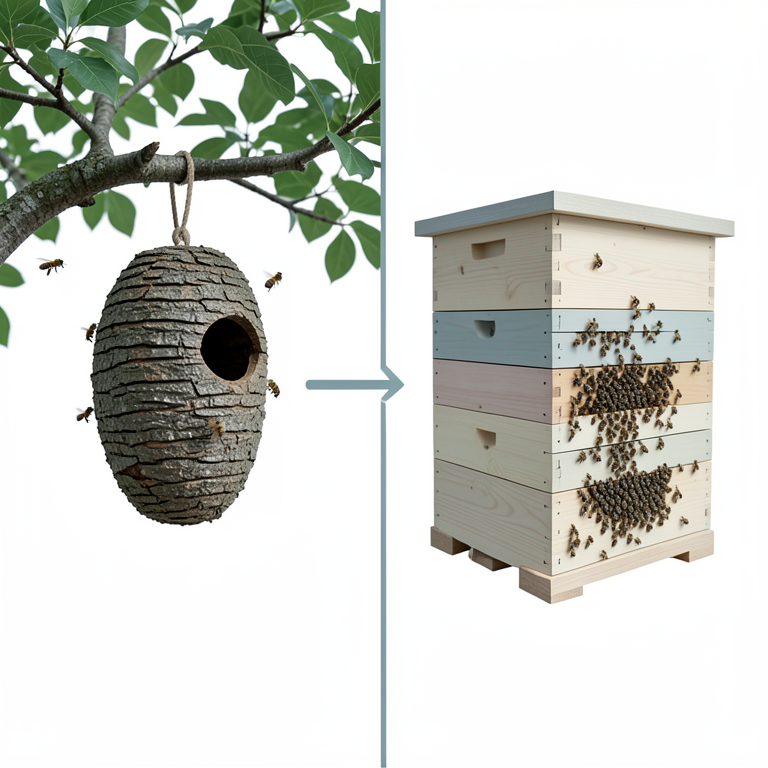
Comparison of Traditional vs. Improved Beekeeping
AI-generated conceptual illustration (African honey bees (Apis mellifera scutellata) and beehives in Ethiopia). It explains the idea and does not show study data.
View source evidence ↗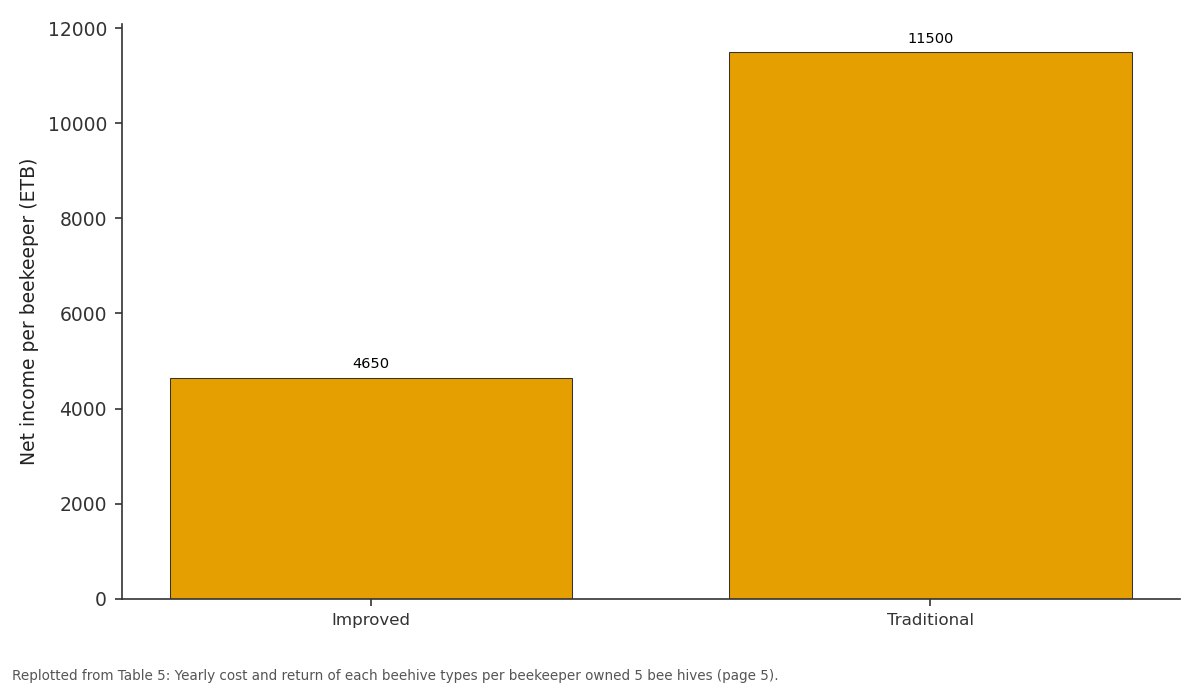
Net income per beekeeper (ETB): Improved vs Traditional
Replotted from Table 5 (page 5) of the original paper. Every bar is the paper's own table value.
View source evidence ↗Figures & tables
From the original paper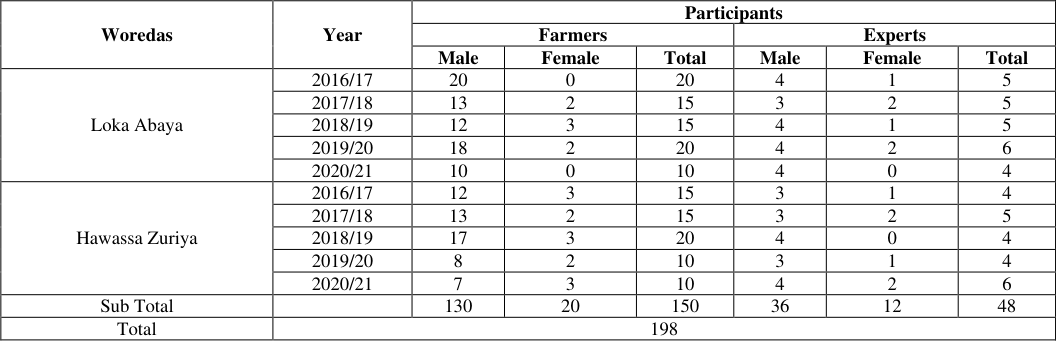 Table 1
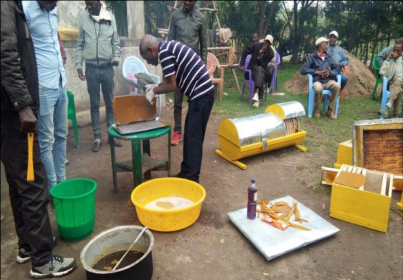 Figure 1
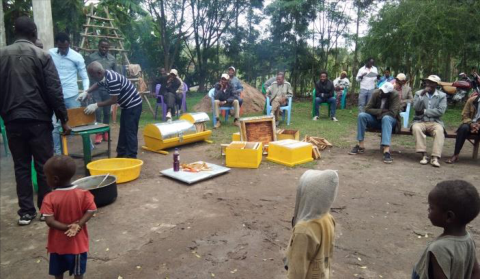 Figure 1
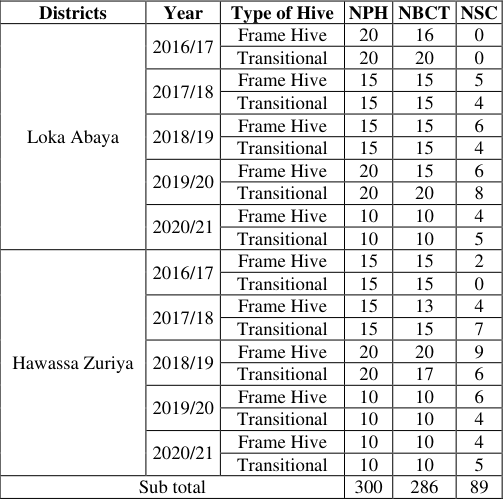 Table 2
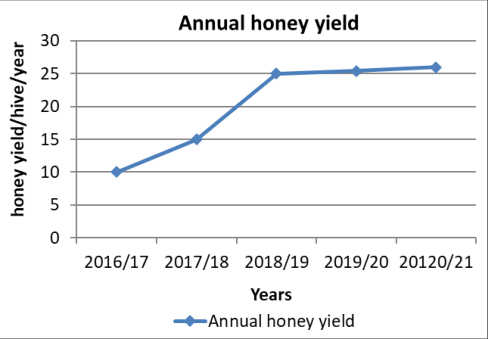 Figure 1
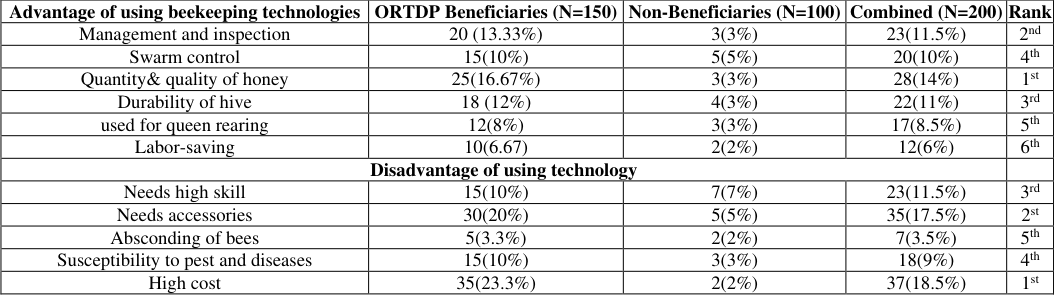 Table 3
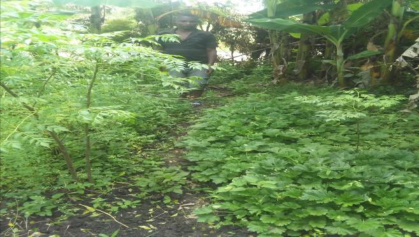 Figure 2
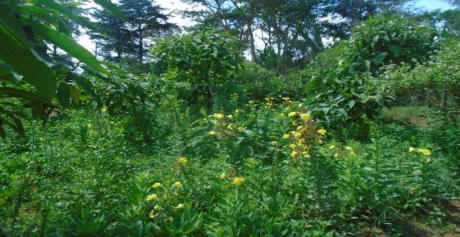 Figure 2
 Table 4
 Table 5
Introduction 1.1 Background of the study
Beekeeping is an important agricultural and traditionally well-established household activity in almost all parts of Ethiopia. Owing to its varied ecological and climatic conditions, the country is home to some of the most diverse flora and fauna in Africa, making it highly suitable for sustaining a large number of bee colonies. The country has about 10 million bee colonies and over 800 identified honey source plant (Gebremichae et al, 2018; Addisu et al, 2018) [1, 6] . It is a suitable farming activity known for its valuable products (honey, beeswax, pollen, royal jelly, bee venom and propolis) used in foods, cosmetics, medicines, and engineering industries as well as pollination services (Espolov et al., 2014; Gemechis, 2014; Gezahegn, 2016; Samuel, 2017) [5,7,9] . Sidama region is a very long-standing practice in the Beekeeping farming activities and it plays a significant role as source of additional cash income and nutrition for many subsistence farmers. In the region, the apicultural resources are immense and the natural vegetation coverage is relatively high, as a result in this area the honeybee population is dense and production is relatively high. Besides, the beekeeping potentiality the region is partly attributed to the various cultivated cash crop (Coffee and Chat), Pulse, Enest, Horticultural crops and different herbs, which are very important for source of forage (Sebsib and Yibrah, 2018) [10] . Most of the beekeeping practice in the area is dominated by backyard beekeeping using traditional beehives. There are about 36, 616 bee colonies in the region, of which about a total of 35,409 (96.7%), are managed in traditional beehives (CSA, 2019) [3] . Traditional hives are the mainstay of honey production until recently, but they are backward, time consuming to construct and give low yields compared to the improved way of production (Alemayehu et al. 2016) [2] . The productivity of traditional hives is extremely low and the average honey yield is only about 5-8 kg/per colony/per annum (MoARD, 2013) [8] . To increase production and productivity of honey bee colonies man can also stimulate honeybee colonies to multiply themselves as well as facilitate living box. Different queen rearing technologies that fit to local condition and honeybee races were developed by Hawassa Agricultural Research Center. Of these technologies, Splitting technique is simple and can be easily practiced by farmers, and 5 to 10 queens can be reared from a colony. The technology is important to increase honey bee colonies and amount of honey yield per year per household. The trend of splitting queen rearing technique around Remeda bee research station was effective and participant farmers benefited from sell of colonies and honey. Thus, this finding led us to verify and demonstrate the reliability of splitting queen rearing technique with regard to honeybee colony multiplication in improved hives under farmer's condition. In 2019/20, ORTDP was plans to supported food insecure households in the study areas. Most of the intervention woredas had no access to these technologies due to financial limitation. In order to increase the productivity of honeybee and to expand improved beekeeping technologies in a community, the project was plans to popularized and scaled up improved beekeeping technologies as well as practical improved bee management www.extensionjournal.com training. Therefore, this activity was designed to demonstrate and evaluate the improved beekeeping technologies to farmers in potential honey producing areas in Loka Abaya and Hawasssa zuriya woredas, sidama national regional state.
Material and Methods
Material and Methods
Site and farmers' selection
The activity was carried out for four years (2016/17-2020/21) in two Districts (Loka Abaya and Hawassa Zuriya) of Sidama regional state with purposively selected based on the ORTDP targets. There were 80 and 70 participating food insecure household's beekeepers in Loka Abaya and Hawassa zuriya, respectively based on their interest towards the technologies, willingness to manage the research activity. About 130 and 20 of the beneficiaries were male and female farmers respectively. Around 48 of them district agricultural office experts and development Agents (DA) had taken part in training.
Research Design and sampling technique
In each Kebeles, one FRG containing 10 members in to two demonstration sites (apiary of voluntary beekeepers) in which case a total of 4 FRGs were established containing 6 demonstration sites. Demonstration was carried out on Frame and transitional hives, queen rearing and colony multiplication, protective cloth and bee management (colony transfer, dearth period colony management, swarm control, hive inspection, and replacement of old and damaged combs), improved bee forage planting and purifications of crude bees wax in to pure beeswax. Multistage sampling procedure was used to select sample smallholder beekeepers for the interview. In the selected kebeles, the beekeepers were stratified into ORTDP beneficiary and non ORTDP beneficiary of improved beekeeping technologies. Having the list of beekeepers from each kebeles, 250 sample beekeepers (150 ORTD beneficiary and 100 non beneficiary) were selected randomly based on the probability proportional to size sampling technique from the selected kebeles.
Data analysis
The collected data (quantitative data) were analyzed by using descriptive statistics such as average and frequency distribution while qualitative data were analyzed using preference ranking.
Results and Discussion
Results and Discussion
Training of farmers and other stakeholders
From the total of 198 participants, about 150 of them were direct ORTDP beneficiaries (beekeepers) and 48 of them were district agricultural office experts. Training was organized and given for experimental farmers, development agent (DAs) and beekeeping expertise. The contents of the training were on the advantages, disadvantages traditional, transitional and improved bee hives, honey bee diseases and enemy control, colony transferring, dearth period colony management, hive inspection, honey harvesting, wax purification, foundation sheet making and colony multiplication at each Kebeles of FTC for three days. Finally, colony transferring was made with the farmers following delivering of frame and transitional hive with other required inputs. The following table illustrates the number of farmers and experts participated on the training.
Provision of improved bee hives, transferring of colony and queen rearing
One of the goals of the project was to discuss with the community and possibly demonstrate improved beehive.
The table shows that, total number of beehives offered to the farmers from 2016/17 to 2020/21. In 2016/17, there were no improved beehives belongs to the ORTDP beneficiaries in the study area while it increasing to 300 improved beehives since 2020/21. Colony transfer is preferably undertaken during honey flow period by the beekeepers in the area. Bee colonies were transferred from traditional hives to the improved hives. Out of the provided 300 improved hives around 286 of them made honey bee colonies transferring. In order to transfer the colony by using smoke they used to drive the bees from the traditional hive to the improved one, followed by the evacuation of bees from the traditional hive. During transferring, supplemental feeds, honey and bee broods were transferred from the traditional beehive to the transitional and modern beehives. Around 95.5% of bee colonies were transferred and accepted to frame & transitional hive in the area. All managements were done after transferring to transitional and modern beehives to maintain similar strength of the colony In addition to the existing colony, beekeepers were practice queen rearing by splitting technique for increasing of bee colonies in their apiary. After the training, beekeeper involves the splitting of strong colony into two or more divisions in their apiary. They can get around 89 additional colonies by splitting queen rearing technique in the area. It's have a role to the ecology and increase honey yield in the area. This means that pollination needs to be considered within the physical, environmental, and biotic context in which it takes place, which has led to the rise of the field of pollination ecology and honey yield in the area.
Trends of Honey production
The trend of honey production during the period from 2016/17 -2020/21 has been increased. The beneficiaries assumed that increased trend of honey bee products in the area. This is due to be getting of additional colonies by queen rearing training and adoption of improved beekeeping technologies in area. In all demonstration sites, the honeybees accepted the frame and transitional hive. The comparison of honey yield of improved hive with traditional hive was also done at each demonstration sites. Accordingly, the average yield obtained per annual from improved and traditional hive was increase throughout the production year. Current findings are in harmony with Amina Saied, 2019 [3] , there has been an increasing trend of using modern technologies particularly top bar and commercial hives. For instance, results suggest that, number of adopters of commercial hives have increase from 5% to 10% whereas top bar hives adopters have increased from 13% to 17% in 2017 and 2018 respectively. From this we can conclude that honeybee products production was an increasing trend due to introduction of perennial bee forage plants, introduction of different beekeeping tools like frame and transitional hive, increase awareness of improved beekeeping in the area.
Honey bee flora plantation practices
Five newly introduced honeybee forage seeds (Bacium grandflorum, Sweet clover, R. Linores, O. Fruticos (Bicha Abeba), Fagofilla fobbing) distributed to the beneficiaries. These forages were planted in front of beehive on the farm land of participating farmers to be used as supplementary feed in order to strengthen honeybees' colonies and increase honey production. Before the training, the sample households do not plant honeybee flora due to lack of awareness and honey bee flora seedling. The natural bee forage is seasonal and, hence, feed shortage occurs in some months of the year, especially from January to June. www.extensionjournal.com They also said that they will take responsibility of mobilizing the community and further committed themself to take up the project's issue to the Woreda political bureau (cabinet) level so that the plan becomes part of the Woreda's own plan.
Farmers perception of improved beekeeping technology
An analysis of farmers' knowledge, particularly their perceptions and attitudes regarding the benefits and constraints of using improved beekeeping technologies as compared to traditional one is essential for explaining why farmers prefer/not prefer the technology. Table3 shows farmers' perception for benefits that could be obtained from improved honey production as compared to the traditional one. In their observation, the benefits of improved box hive fall into mainly durability of the hive, ease of inspection and management of the hive, swarm control, labor-saving, quality and quantity of honey. Of these benefit characteristics, quantity of honey produced and quality of honey (marketability of hive products), swarm control, durability of the hive, ease of inspection and management were remarked by 11.5, 10, 14, 11, 8.5 and 6% of the farmers, respectively. For instance, farmers' perception for the quantity of honey produced from improved box hive can also be confirmed with the quantitative results. This implies that honey produced from improved box hive (25.5 kg per annual) after the technology used. It was significantly higher than the honey produced from traditional beehive (10 kg per annual per beekeepers) in the study area. On the other hand, even though, the average price of honey produced from improved box hive (100 ETB) was higher than that of the average price of honey produced from traditional beehive (200 ETB). Furthermore, not only the farmers observed the comparison of benefits between improved and traditional beehives but particularly farmers also observed the comparison of benefits of using improved box hive and they were ranked as 1 st , 2 nd , 3 rd , 4 th , 5 th , 6 th , for Quantity& quality of honey, ease of inspection and management, hive durability, swarm control, used for queen rearing and labor saving.
| Advantage of using beekeeping technologies | ORTDP Beneficiaries (N=150) | Non-Beneficiaries (N=100) | Combined (N=200) | Rank |
|---|---|---|---|---|
| Management and inspection | 20 (13.33%) | 3(3%) | 23(11.5%) | 2nd |
| Swarm control | 15(10%) | 5(5%) | 20(10%) | 4th |
| Quantity& quality of honey | 25(16.67%) | 3(3%) | 28(14%) | 1st |
| Durability of hive | 18 (12%) | 4(3%) | 22(11%) | 3rd |
| used for queen rearing | 12(8%) | 3(3%) | 17(8.5%) | 5th |
| Labor-saving | 10(6.67) | 2(2%) | 12(6%) | 6th |
| Disadvantage of using technology | ||||
| Needs high skill | 15(10%) | 7(7%) | 23(11.5%) | 3rd |
| Needs accessories | 30(20%) | 5(5%) | 35(17.5%) | 2st |
| Absconding of bees | 5(3.3%) | 2(2%) | 7(3.5%) | 5th |
| Susceptibility to pest and diseases | 15(10%) | 3(3%) | 18(9%) | 4th |
| High cost | 35(23.3%) | 2(2%) | 37(18.5%) | 1st |
Table text extracted from the original PDF; superscript letters are shown inline. The original table image is below.
View original table image
Farmers reported various constraints that hinder to using of improved beekeeping technologies. The main constraints that limits improved beekeeping technologies ORTDP beneficiaries were suggested by the farmers as price of improved inputs, need accessories, need high skill and susceptibility to pests, predators and diseases and absconding due to different natural and man-made factors.
According to the respondents' perceptions, disadvantage of using improved beekeeping technologies also ranked depending on the level of seriousness as 1 st, 2 nd, 3 rd, 4 th and 5 th, for improved inputs, need accessories, need high skill and susceptibility to pests, predators and diseases and absconding respectively (Table 3).
Partial budgeting result
Partial budget method was used to evaluate the changes from one technology to another by comparing the changes in costs and benefits associated with each practice. In this case, for the profitability analysis, comparison of the net benefits from traditional beehive and improved box hive was made in per hive basis. This analysis excludes the fixed costs such as land, bee colony, shade, labor and honey harvesting. Moreover, in this case, both hives were assumed to be used for production rather than for multiplication of bee colony. All benefits and costs should be calculated using the nearest market prices and input costs. Input requirements and their costs that vary for both improved and traditional hives were shown in Table 6. The partial budget for improved and traditional honey production practices. The result shows that traditional beehive yield on average 10 kg/hive/year at its average price of 100 ETB/kg while improved box hive yield on average 25.5 kg/hive/year at its average selling price of 200 ETB. Hence, average yield and average price of improved box hive is higher than traditional hive. Significant amount of money can be earned from selling of pure honey produced per improved hive than from traditional hive. This indicated that 11500 ETB from improved hive and 4650 ETB from Zander hive afford net income per beekeeper from 5 hives. The study clearly showed that improved beekeeping technologies were the better income generation per beekeeper from selling of honey.
Conclusion and Recommendation
Demonstration and evaluation of improved beekeeping technologies through participatory approach is one means of technology promotion to large numbers of technologies beneficiaries in areas where there is a need to popularize the technologies. According to the smallholder beekeepers perception adoption of improved beekeeping technologies has relatively high benefit over traditional practice in its ease of management and inspection, honey quantity and quality, swarm control and hive durability. Therefore, great effort need to be made by government organization and different development partners in supplying improved beekeeping technologies on the basis of farmers' purchasing power and develop technical skill of beekeepers on beekeeping technologies.
Acknowledgement
AcknowledgementsWe are extremely thankful to Operational research and technology disseminations project (ORTDP) for financial support and Hawassa Agricultural Research Center for Research material and vehicle support. Finally, we are grateful acknowledged the Loka Abaya and Hawassa zuriya Woredas Agricultural extension developmental agents for their continuous monitoring of the beneficiaries.
Figures and tables from the paper
| Woredas | Year | Participants | — | — | — | — | — |
|---|---|---|---|---|---|---|---|
| Farmers | Experts | ||||||
| Male | Female | Total | Male | Female | Total | ||
| Loka Abaya | 2016/17 | 20 | 0 | 20 | 4 | 1 | 5 |
| 2017/18 | 13 | 2 | 15 | 3 | 2 | 5 | |
| 2018/19 | 12 | 3 | 15 | 4 | 1 | 5 | |
| 2019/20 | 18 | 2 | 20 | 4 | 2 | 6 | |
| 2020/21 | 10 | 0 | 10 | 4 | 0 | 4 | |
| Hawassa Zuriya | 2016/17 | 12 | 3 | 15 | 3 | 1 | 4 |
| 2017/18 | 13 | 2 | 15 | 3 | 2 | 5 | |
| 2018/19 | 17 | 3 | 20 | 4 | 0 | 4 | |
| 2019/20 | 8 | 2 | 10 | 3 | 1 | 4 | |
| 2020/21 | 7 | 3 | 10 | 4 | 2 | 6 | |
| Sub Total | 130 | 20 | 150 | 36 | 12 | 48 | |
| Total | 198 |
Table text extracted from the original PDF; superscript letters are shown inline. The original table image is below.
View original table image
| Districts | Year | Type of Hive | NPH | NBCT | NSC |
|---|---|---|---|---|---|
| Loka Abaya | 2016/17 | Frame Hive | 20 | 16 | 0 |
| Transitional | 20 | 20 | 0 | ||
| 2017/18 | Frame Hive | 15 | 15 | 5 | |
| Transitional | 15 | 15 | 4 | ||
| 2018/19 | Frame Hive | 15 | 15 | 6 | |
| Transitional | 15 | 15 | 4 | ||
| 2019/20 | Frame Hive | 20 | 15 | 6 | |
| Transitional | 20 | 20 | 8 | ||
| 2020/21 | Frame Hive | 10 | 10 | 4 | |
| Transitional | 10 | 10 | 5 | ||
| Hawassa Zuriya | 2016/17 | Frame Hive | 15 | 15 | 2 |
| Transitional | 15 | 15 | 0 | ||
| 2017/18 | Frame Hive | 15 | 13 | 4 | |
| Transitional | 15 | 15 | 7 | ||
| 2018/19 | Frame Hive | 20 | 20 | 9 | |
| Transitional | 20 | 17 | 6 | ||
| 2019/20 | Frame Hive | 10 | 10 | 6 | |
| Transitional | 10 | 10 | 4 | ||
| 2020/21 | Frame Hive | 10 | 10 | 4 | |
| Transitional | 10 | 10 | 5 | ||
| Sub total | 300 | 286 | 89 |
Table text extracted from the original PDF; superscript letters are shown inline. The original table image is below.
View original table image
| Major items | Unit price (ETB) | Service year of items | Items per beekeeper | Improved hive | Traditional hive |
|---|---|---|---|---|---|
| Casting mold | 5000 | 10 | 1 | 500 | - |
| Honey extractor | 5000 | 10 | 1 | 500 | - |
| Beeswax cost | 300 | - | 5 | 1500 | - |
| zander hive purchasing | 3000 | 10 | 5 | 300 | |
| Traditional hive purchasing | 50 | 7 | 5 | - | 70 |
| Total production cost | 2800 | 70 |
Table text extracted from the original PDF; superscript letters are shown inline. The original table image is below.
View original table image
| Beehive type | Total production cost (ETB) | Gross return (ETB) | Net income per beekeeper (ETB) | Net income per hive (ETB |
|---|---|---|---|---|
| Improved | 70 | 5000 | 4650 | 930 |
| Traditional | 2800 | 25500 | 11500 | 2300 |
Table text extracted from the original PDF; superscript letters are shown inline. The original table image is below.
View original table image
References
5 in the original paper- Addisu B, Desalegn B, Asaminew T, Zeleke M. Physico chemical properties of Ethiopian Beeswax, the case of South Wollo Zone, Amhara Region. International Journal of Agricultural Science Food Technology. 2017;3(3):61-66.
- Alemayehu A, Yilma T, Yohannes E, Mulisa F, Habtamu A. Analysis of honey production systems in three agro ecologies of Benishangul Gumuz, Western Ethiopia. Journal of Agricultural Extension and Rural Development. 2016;8(3):29-38.
- Espolov T, Ukibayev J, Myrzakozha D, Perez-Lopez P, Ermolaev Y. Physical and Chemical Properties and Crystal Structure Transformation of Beeswax during Heat Treatment. Natural Science. 2014;6:871-877.
- Gebremichael K, Belts G, Shishay G. Beekeeping practice and honey production potential in Afar Regional State, Ethiopia See discussions, stats, and author Profiles for this Publication AT. . 2018;10(1):6682. https://www.researchgate.net/publication/329935473
- Sebsib, Yibrah. Beekeeping Practice, Opportunities, Marketing and Challenges in Ethiopia: Review Journal of Dairy & Veterinary Sciences. 2018;5(3):555662. DOI: 10.19080/JDVS.2018.05.555662
Cited by 9
From OpenAlex, OpenCitations and reference lists read by Scinovex
- Comprehensive review on improved honey production: techniques, challenges, opportunities, and future prospects in Africa ↗
Etsemeskel Tadele, Destaw Worku, Teshager Muluneh, Yitayih Ayana, Abebe Melese · Frontiers in Bee Science · 2025
Beekeeping production in Africa is important for economic development, food security, environmental conservation, and social well-being. It is important for employment, income generation, plant pollination, ecological awareness, medication, and nutrition. The objective of this review is to explore the improvement of honey production, navigating the causes that reduce honey production as well as techniques to optimize honey production, opportunities, and…
❝ 3PDF - Sustainable practices in honey production
Stanley Herreros, Mohammad Ali · International Journal of Agriculture and Nutrition · 2023
This paper examines the multifaceted approach to sustainable practices in honey production. It is critical to address the environmental, ethical, economic, and community-driven dimensions to promote a sustainable honey industry. The decline in bee populations worldwide calls for immediate action to integrate practices that ensure the health of bees, the environment, and the livelihoods of beekeepers. This paper provides a detailed analysis of these sustainable practices, challenges encountered, and potential solutions.
- Enhancing Rural Livelihoods Through Apiculture: A Review of the Impact of Beekeeping on Youth and Women’s Socioeconomic Well‐Being in Ethiopia ↗
Aklilu Getahun · Advances in Agriculture · 2026
Ethiopia, home to Africa’s largest bee population and diverse nectar‐rich flora, holds immense potential for apiculture‐led rural transformation. Despite this, honey yields remain low due to reliance on traditional methods, with average production at 5–7 kg per hive far below the 20–40 kg achievable through modern practices. This systematic review synthesizes evidence from 2018 to 2026 on how apiculture impacts…
❝ 0PDF - Exploring the role of marigold in honey bee conservation and its impact on Niger seed productivity
Gupta Prasad Panda, Satyabrata Sahoo · International Journal of Research in Agronomy · 2025
Pollination by honey bee plays a vital role in maintaining the natural balance of ecosystem and is the cornerstone of crop production. The dramatic declines in Insect pollinators including honeybees globally have raised concerns about the supply of pollination service to agriculture. Thus bring some part of agriculture land under marigold cultivation not only to generate income but also to conserve honeybees to cross pollinate their crops. The present study will discuss the economic significance of Marigold cultivation in honey bee conservation and to find out the role of honeybees on pollinat
- The significance of laboratory diagnostics in animal health in Ethiopia: A review of current practices
Abrham Belay · International Journal of Veterinary Sciences and Animal Husbandry · 2025
Animal health is crucial for Ethiopia's economy and food security, yet it faces disease challenges. Effective control relies on timely laboratory diagnostics. This review examines the role of diagnostics in Ethiopia's animal health, assessing current practices, challenges, and innovative technologies. It evaluates diagnostic infrastructure, human resources, and veterinary lab tests. While traditional methods remain important, there is a shift towards advanced molecular, serological, and point-of-care diagnostics, supported by international partnerships and the One Health approach. The review h
- Diseases infecting Honey bees
M. Kishan Tej, Y Bala Chandra, Giri Naga Harish, M Mathialagan, KS Karthilk · International Journal of Biology Sciences · 2025
Honeybees, vital pollinators essential for ecosystem health, are vulnerable to various bacterial, fungal, and viral diseases that pose a threat to honeybee colonies. As many as 60% and 90% of plant species depend upon pollinators to reproduce (Kremen et al. 2007). Since many agricultural crops depend on pollinators, bees play a vital role in the ecology, economy, and food production across all countries (Garcia-Anaya et al. 2016; Hamadache et al. 2017). Apart from pollination services honey bees also provide honey, beeswax, royal jelly, propolis and bee venom (Tej et al. 2017, Greenleaf and Kr
- Foraging behaviour of native honeybee Apis dorsata on Brassica napus ↗
M. R. Islam, Md. Ariful Islam, Krisna Chandra Saha, Hosna Kohinoor, Nazneen Ara Sultana, Saleh Mohammad Adnan · Journal of Entomology and Zoology Studies · 2024
The study was carried out at the Oilseed Research Centre of the Bangladesh Agricultural Research Institute, Gazipur, to monitor the foraging behaviour of native honeybee Apis dorsata in order to improve pollination of Brassica napus variety BARI Sarisha 8. A. dorsata was shown to have a greater foraging rate (18.91 flowers/minute) in the study. A. dorsata on B. napus was
- Impact of herbal powders on prevalence and level of varroosis infestation (Varroa destructor) in honeybee (Apis mellifera. L.) colonies in Tarai regions of Uttarakhand
Akansha Ruhela, Pramod Mall, Shweta Patel · International Journal of Advanced Biochemistry Research · 2024
Honeybee products have various properties like antioxidant, antimicrobial and anti-inflammatory. Although, various biological constraints create a menace to this pollinating insect. Out of biotic constraints, the ectoparasitic mite, Varroa destructor is the major concern to honeybee colonies. In this experiment, different herbal powders are used to fight against V. destructor. aromatic plants are used for making powders to test their varroacidal activity in the field conditions against honeybees. For present experiment to check their varroacidal activity against honeybees colonies sugar powder
- Opportunities and challenges in pollinator’s Elevational Movement in Nepal ↗
Janak Pant, Prava Dawadi · International Journal of Fauna and Biological Studies · 2024
In Nepal the migration of honeybee species and its consequences (challenges and opportunities) were not sufficiently studied. So, a survey, field and laboratory study were conducted in Chitwan (Mid-Nepal) and Baitadi (Far-western Nepal) district to determine challenges and opportunities of two species of honeybee namely, Apis cerena (Asian honeybee) and Apis mellifera (European honeybee) in their elevational migration. The study