
Research article · 2022 · Full text
International Journal of Advanced Biochemistry ResearchRisk assessment of pesticide residues in some samples of carrots (Daucus carota)
Volume 6(2) · Pages 42–48 · DOI: 10.33545/26174693.2022.v6.i2a.133 ↗
Research areasPesticide Residue Analysis and SafetyAgricultural Economics and PracticesAgricultural Practices and Plant Genetics
Abstract
Author-writtenBackground and Objective: The production of safe foods for consumption is an important issue worldwide. Pesticide application is being used in recent agricultural practices to cultivate crops. Their use can have serious impacts on the health of humans. This research work aims to assess pesticide residues in carrot samples from Kaduna and Plateau States in Northern Nigeria and their risk to human health. Materials and Methods: Ten samples of carrots were collected in two groups from Kaduna and Plateau States and analyzed for pesticide residues. Extraction was performed and analysis was performed using gas chromatography hypherated to a mass spectrophotometer. Risk assessment was carried out by determining the health risk index. Results: Results of the analysis showed that nineteen pesticides were detected. Organochlorines were the highest with Trans-nonachlor appearing in nine of the samples with the highest mean concentration being 0.064±0.003 mg/kg in samples from Plateau State and the lowest being 0.022±0.004 mg/kg in samples from Kaduna State. Organophosphates were also detected with high concentrations in samples from Plateau State with a mean concentration of 0.034±0.003 mg/kg and the lowest being 0.000±0.0001 mg/kg. The risk index was
Summary
Source-checkedPlain-language reading of the full paper, prepared with AI and checked against the text. Each point links to the authors' own words.
Why it matters
- Modern agricultural practices rely on pesticides to grow crops, but these chemicals can seriously impact human health. View evidence ↗
- There are significant concerns regarding human exposure to pesticide residues through the consumption of vegetables and fruits. View evidence ↗
- In Nigeria, farmers and consumers have reported concerns that pesticide accumulation may be affecting the quality, taste, and digestibility of agricultural products. View evidence ↗
The question
- The study aimed to evaluate the levels of pesticide residues in carrots from Kaduna and Plateau States in Northern Nigeria and determine the associated health risks. View evidence ↗
What they did
- Ten carrot samples were collected from local market vendors in the Zaria and Jos districts of Kaduna and Plateau States, Nigeria. View evidence ↗
- Pesticide residues were analyzed using gas chromatography hyphenated to a mass spectrophotometer (GC-MS). View evidence ↗
- The health risk to humans was assessed by calculating the health risk index (HRI). View evidence ↗
What they found
- The analysis identified nineteen different pesticides in the carrot samples. View evidence ↗
- Organochlorines were the most prevalent class; specifically, Trans-nonachlor was found in nine samples, with mean concentrations ranging from 0.022±0.004 mg/kg in Kaduna State to 0.064±0.003 mg/kg in Plateau State. View evidence ↗
- Organophosphate pesticides were detected, with mean concentrations reaching 0.034±0.003 mg/kg in Plateau State samples. View evidence ↗
- The health risk index (HRI) was less than 1 for all carrot samples, indicating the residues were within safety levels. View evidence ↗
- Concentrations of pyrethroids and triazole (0.026±0.003 mg/kg) were found to be above the Estimated Daily Intake (EDI). View evidence ↗
What it means
- The authors concluded that carrots from the investigated regions of Nigeria are safe for consumption regarding the nineteen pesticides tested. View evidence ↗
- The authors recommend continuous monitoring and regulation of pesticides, particularly carbamates and organophosphates, due to their widespread use in Nigerian farming. View evidence ↗
- The authors note that current safe levels do not rule out future health risks or the possibility of biomagnification as persistent pesticides accumulate in the soil. View evidence ↗
Visual summary
2 visualsIllustrations explain the paper; charts are replotted from the paper's own table values.
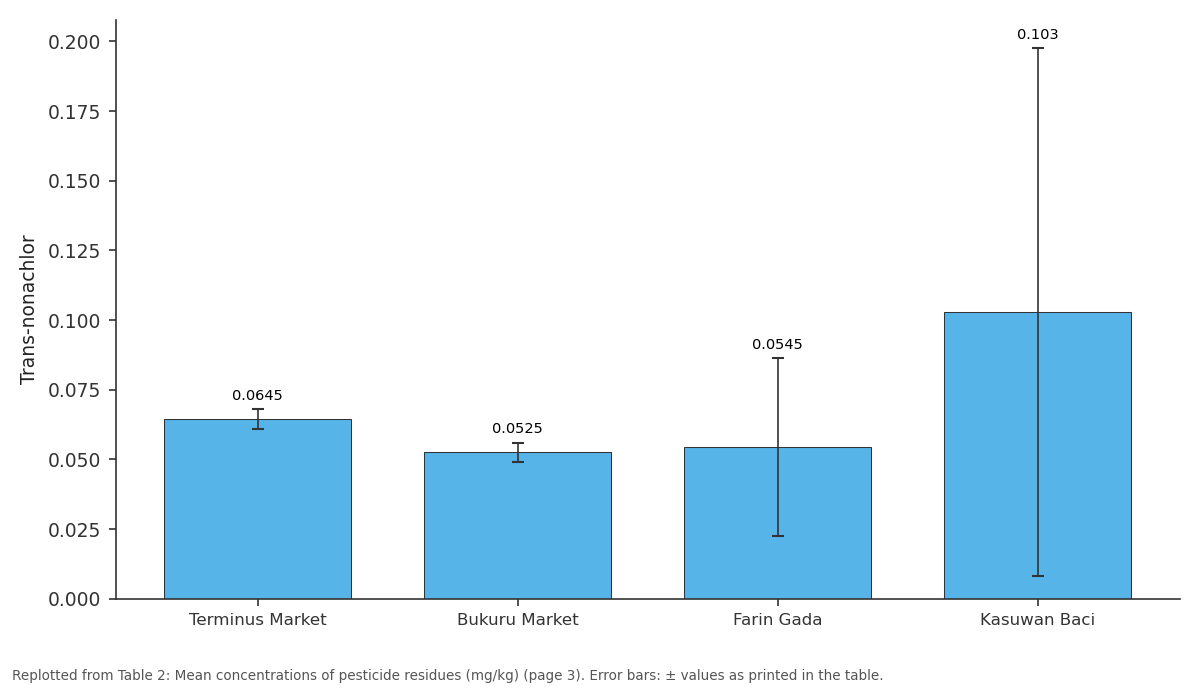
Trans-nonachlor: Terminus Market vs Bukuru Market vs Farin Gada vs Kasuwan Baci
Replotted from Table 2 (page 3) of the original paper. Every bar is the paper's own table value.
View source evidence ↗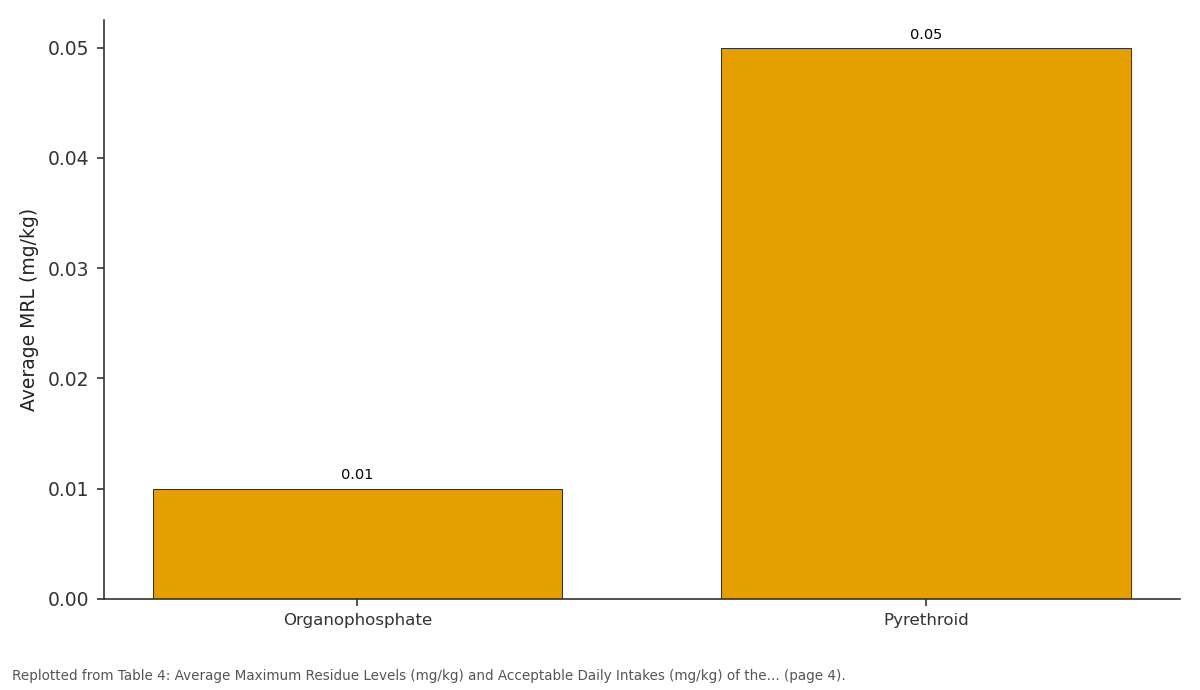
Average MRL: Organophosphate vs Pyrethroid
Replotted from Table 4 (page 4) of the original paper. Every bar is the paper's own table value.
View source evidence ↗Figures & tables
From the original paper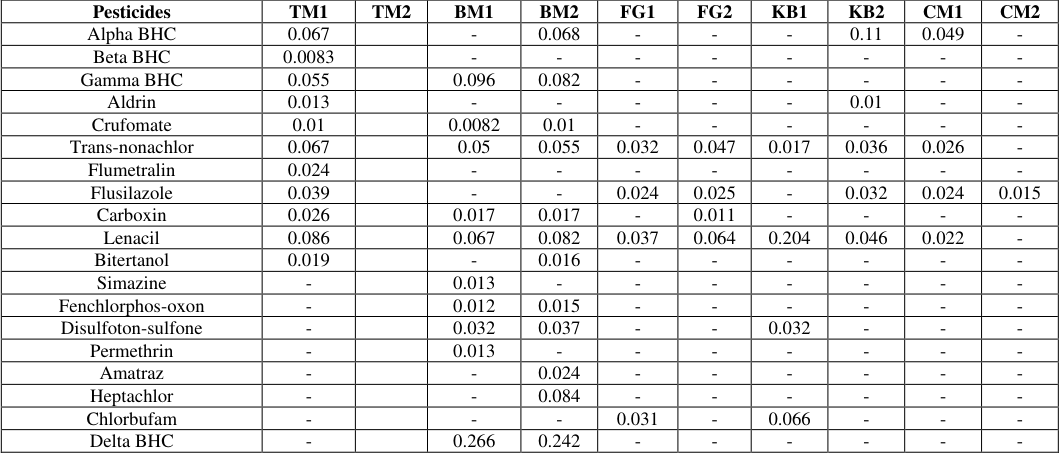 Table 1
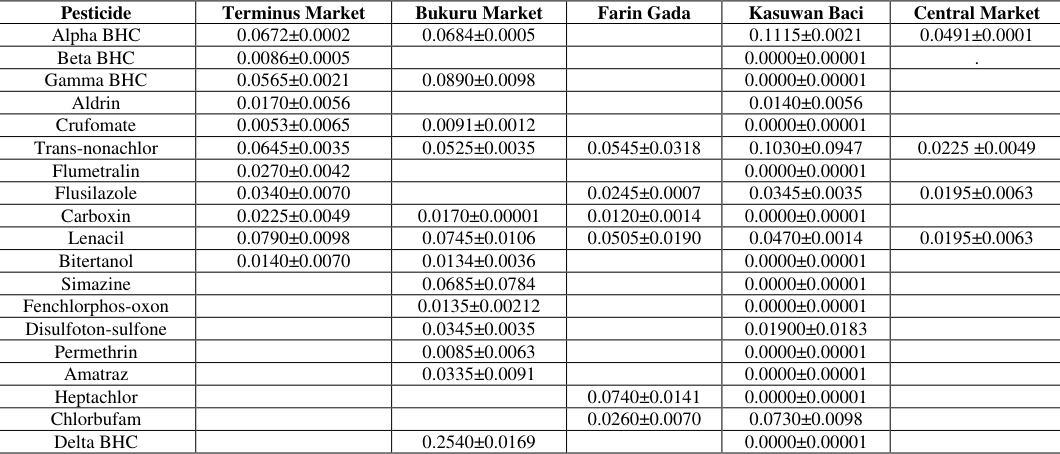 Table 2
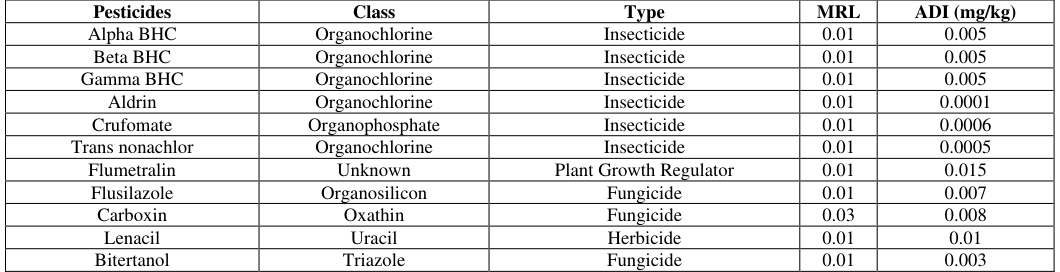 Table 3
 Table 4
 Table 4
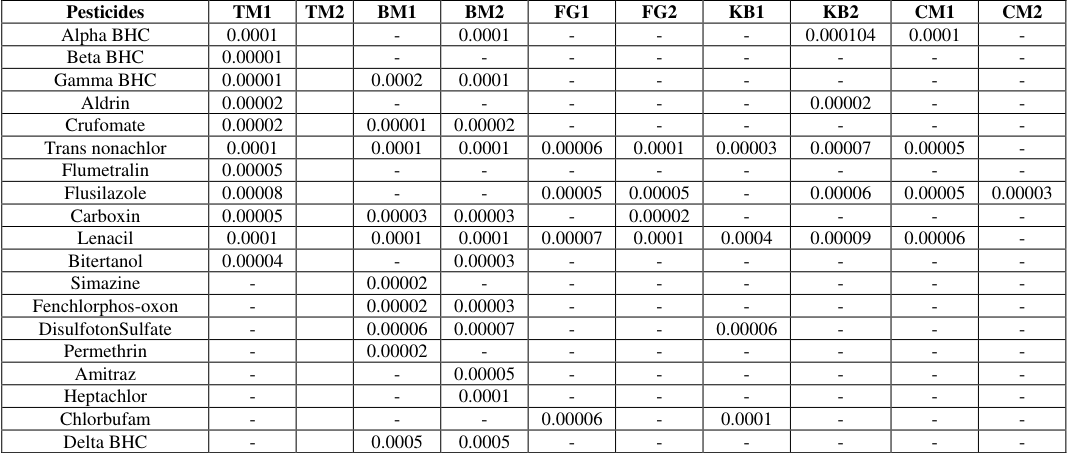 Table 5
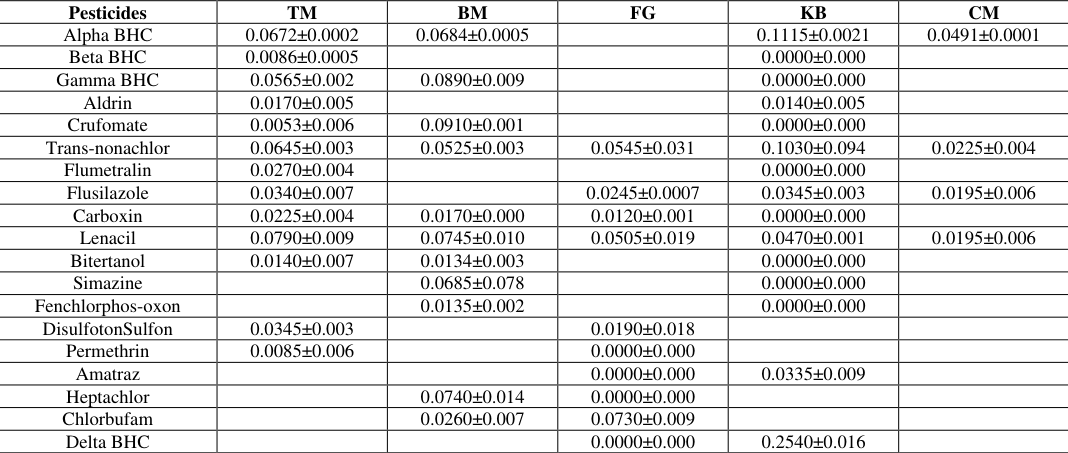 Table 6
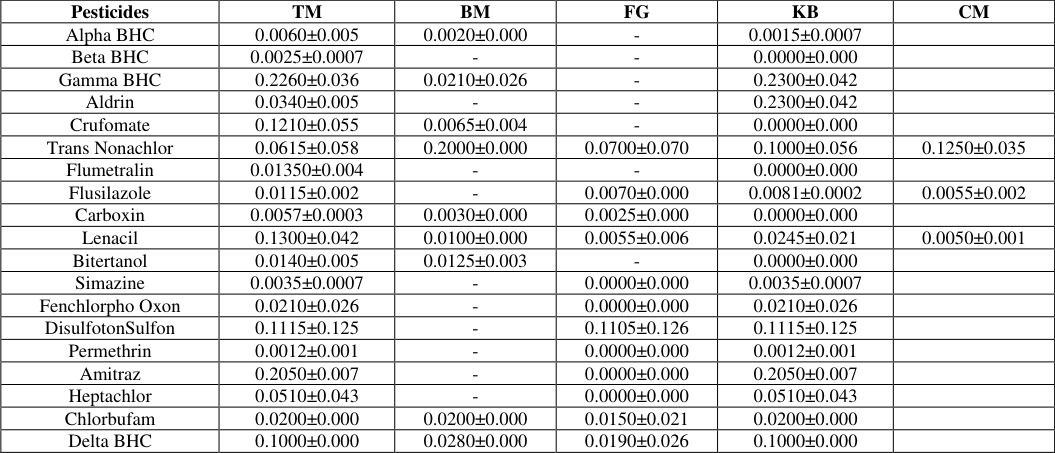 Table 7
Introduction
Pesticide application in recent agricultural practices has led to harsh impacts on the health of humans, domestic animals and the environment [1] . Although, to protect crops, control pests and eliminate yield loss while trying to maintain high-quality products, pesticide use is strictly regulated [2] . Serious concerns have been raised for human exposure to residues from fruits and vegetable consumption [2,3] . Fruits and vegetables are very vital components of the human diet. The intake of 5 or more servings per day is said to be very crucial for good health and it is encouraged for vitamin deficiency prevention and also to prevent various diseases such as cancer, genetic mutations, hormonal disorders and even infertility [4] . However, it has been widely accepted that the use of modern technologies in agriculture has led to an increase in pesticide use along with other modern inputs in developing economies [5,6] . In the USA alone, the environmental and social impact of pesticide use is estimated at USD 10 billion annually [7] . About 5 million farmworkers have been estimated to suffer from pesticide poisoning every year, and at least 20,000 die annually from exposure, mostly in developing countries [8] . Both Asia and Latin America experienced a remarkable increase in agricultural yield due to fast and widespread acceptance of Green Revolution (GR) technologies, which include widespread use of modern agricultural inputs and agrochemicals [9] . However, Sub-Saharan Africa (SSA) did not or could not participate in this drive for GR technologies of the 1970s-1980s, and therefore could not gain from the application of modern agricultural inputs and agro-chemicals [3] . Nigeria, the largest economy in Africa, is largely dependent on its agricultural sector for the supply of raw materials, food, and foreign exchange, and employs over 70% of the labour force [26] . Small-scale semi-subsistence farmers comprising more than 70 million farmers/rural citizens also dominate this sector [26] . The agricultural sector is characterized by a low level of productivity and modern technology adoption [11] . Nevertheless, with the recent change in farming methods, consumers and farmers have also started to complain about the taste, colour and digestibility of farm products due to the supposed accumulation of pesticides and other agrochemicals, and the perceived issues have received very little attention from researchers [12] . It is now clear that the physical, chemical and biological integrity of our planet is being compromised daily. The vicious processes are increasing both in quantum and in rate. The impacts have resulted in the loss of biodiversity and the destruction of both natural fauna and flora. Myriads of health implications have been reported to be associated with the prolonged use of pesticides on agricultural products. On the strength of this fact, it will be imperative to assess the level of pesticide residues in some carrot samples cultivated in certain regions of Nigeria.
Materials and methods
Materials and methods
Study area
Carrot sampling: The research work began in April 2017 and ended 4 th 2017. 10 samples of carrots were purchased from vendors in local markets from two states. The sampling location of conventional agriculture was located in the Zaria and Josubdistricts of Kaduna and Plateau States, Nigeria. These areas are developed for agricultural areas up to thousands of hectares. Fresh samples of carrots were randomly collected from each replicate. An edible portion from the bottom, mid and top of the carrot were blended and immediately transported to the laboratory in clean, sterile sample bottles after collection. The samples were stored at 4 ºC using a laboratory freezer, to avoid any degradation until ready for analysis.
Sample preparation and extraction:
A mixture of acetonitrile and n-hexane in the ratio of 1:20 was prepared with the aid of a measuring cylinder. The extraction solvent was prepared in a 1000 ml beaker. 50 g of the samples were weighed using an electronic weighing balance into a 250 ml beaker. The initial weight of the beaker was recorded as W b and the weight of the beaker with the sample was recorded as W b+s . 30 ml of the extraction solvent was introduced into 50 g of the samples contained in the beaker. The mixture was properly sealed airtight using aluminium foil and seal tape. This was allowed for 48 hours for extraction.
Analysis for pesticide residues: Pesticide residue analysis was carried out using a gas chromatography from Agilent USA hyphenated to a mass spectrophotometer (5975) with a triple-axis detector equipped with an auto-injector (10µl syringe) was used. Helium gas was used as a carrier. All chromatographic separation was performed on capillary column having specifications: length; 30cm, internal diameter 0.2µm, thickness; 250µm, treated with phenyl methyl siloxane. Other GC/MS conditions are ion source temperature (EI), 250 °C interface temperature; 300 °C, pressure; 16.2 psia, out time, 1.8mm, 1µl injector in split mode with split ratio 1:50 with injection temperature of 300 °C the column temperature started at 35 °C for 5mins and changed to 150 °C at the rate of 4 °C/min, the temperature was raised to 250 °C at the rate of 20 °C and held for 5mins. The total elution was 47.5 minutes. The supplier used Ms Software to control the system and to acquire the data; the compound was indentified by comparing the mass spectra obtained with those of the standard mass spectra from NIST Library (NISTII).
Health risk estimates:
The Estimated Daily Intake (EDI) for each pesticide residue was calculated using the formula according to [13] :
Health Risk Index: The risk of exposure to a pesticide residue was estimated based on based on potential health risk index for noncarcinogenic chemicals according to [14] using the formula:
Statistical analysis: Statistical differences among the different pesticides in the carrot samples from the different markets were determined using one-way ANOVA. All analyses were performed using Statistical Package for Social Sciences (SPSS) software (version 20).
Results
Table 1 shows the nineteen pesticides that were determined in the different carrot samples and were reported with their concentrations in mg/kg. These pesticides belong to eight different classes which include organochlorines, organophosphates, carbamates, pyrethroids, uracil, triazole and oxathiin. Table 2 reveals three organophosphate pesticide residues detected in the samples namely crufomate, fenchlorphosoxon, and disulfoton-sulfone found in samples collected from Terminus market, Bukuru market and Kasuwanbaci with concentrations ranging from 0.005±0.006 mg/kg to 0.034±0.003 mg/kg to 0.013±0.002 mg/kg respectively. Table 3 shows the different pesticide residues differentiated into classes which include organochlorines, organophosphate, pyrethroids, triazole, organosilicon, oxathiin and uracil with each having MRLs ranging from 0.05 mg/kg being the highest to 0.01 mg/kg is the lowest and the different ADI ranging from 0.01 mg/kg is the highest for Lenacil to 0.0001 mg/kg being the lowest for Aldrin. Table 4 shows that the average ADI for organochlorines, organophosphates, and other classes of pesticides are below the EDI levels with concentrations ranging from 0.003±0.002 mg/kg to 0.003±0.005 mg/kg to 0.008±0.004 mg/kg respectively. However, pyrethroids and Triazole had concentrations of 0.026±0.003 mg/kg which is above the EDI. Table 5 shows the Estimated Daily Intake for each pesticide in mg/kg. The highest concentration of Gmma BHC, Alpha BHC and Trans-nonachlor were found in carrots obtained from BM2 and TM1 with values 0.0001 mg/kg, 0.0001 mg/kg, and 0.0001 mg/kg respectively. http://www.biochemjournal.com/ The Health Risk Index (HRI) was observed to be less than 1 in all samples of carrots. The HRI estimates the safety levels of these pesticide residues in the carrots grown in these States.
| Pesticides | TM1 | TM2 | BM1 | BM2 | FG1 | FG2 | KB1 | KB2 | CM1 | CM2 |
|---|---|---|---|---|---|---|---|---|---|---|
| Alpha BHC | 0.0001 | - | 0.0001 | - | - | - | 0.000104 | 0.0001 | - | |
| Beta BHC | 0.00001 | - | - | - | - | - | - | - | - | |
| Gamma BHC | 0.00001 | 0.0002 | 0.0001 | - | - | - | - | - | - | |
| Aldrin | 0.00002 | - | - | - | - | - | 0.00002 | - | - | |
| Crufomate | 0.00002 | 0.00001 | 0.00002 | - | - | - | - | - | - | |
| Trans nonachlor | 0.0001 | 0.0001 | 0.0001 | 0.00006 | 0.0001 | 0.00003 | 0.00007 | 0.00005 | - | |
| Flumetralin | 0.00005 | - | - | - | - | - | - | - | - | |
| Flusilazole | 0.00008 | - | - | 0.00005 | 0.00005 | - | 0.00006 | 0.00005 | 0.00003 | |
| Carboxin | 0.00005 | 0.00003 | 0.00003 | - | 0.00002 | - | - | - | - | |
| Lenacil | 0.0001 | 0.0001 | 0.0001 | 0.00007 | 0.0001 | 0.0004 | 0.00009 | 0.00006 | - | |
| Bitertanol | 0.00004 | - | 0.00003 | - | - | - | - | - | - | |
| Simazine | - | 0.00002 | - | - | - | - | - | - | - | |
| Fenchlorphos-oxon | - | 0.00002 | 0.00003 | - | - | - | - | - | - | |
| DisulfotonSulfate | - | 0.00006 | 0.00007 | - | - | 0.00006 | - | - | - | |
| Permethrin | - | 0.00002 | - | - | - | - | - | - | - | |
| Amitraz | - | - | 0.00005 | - | - | - | - | - | - | |
| Heptachlor | - | - | 0.0001 | - | - | - | - | - | - | |
| Chlorbufam | - | - | - | 0.00006 | - | 0.0001 | - | - | - | |
| Delta BHC | - | 0.0005 | 0.0005 | - | - | - | - | - | - |
Table text extracted from the original PDF; superscript letters are shown inline. The original table image is below.
View original table image
| Class of Pesticide | Total MRL | Total ADI | Average MRL | Average ADI |
|---|---|---|---|---|
| Organochlorine | 0.070 | 0.0225 | 0.01±0.0000 | 0.0038±0.0021 |
| Organophosphate | 0.030 | 0.0109 | 0.01±0.0000 | 0.0036±0.0055 |
| Pyrethroid | 0.100 | 0.0520 | 0.05±0.0000 | 0.026±0.0339 |
| Triazole | 0.020 | 0.0080 | 0.01±0.0000 | 0.0265±0.0332 |
| Others | 0.070 | 0.0430 | 0.014±0.009 | 0.0086±0.0044 |
Table text extracted from the original PDF; superscript letters are shown inline. The original table image is below.
View original table image
| Simazine | Triazole | Herbicide | 0.01 | 0.005 |
|---|---|---|---|---|
| Fenchlorphos-oxon | Organophosphate | Insecticide | 0.01 | 0.01 |
| DisulfotonSulfate | Organophosphate | Acaricide | 0.01 | 0.0003 |
| Permethrin | Pyrethroid | Insecticide | 0.05 | 0.05 |
| Amitraz | Pyrethroid | Acaricide | 0.05 | 0.002 |
| Heptachlor | Organochlorine | Insecticide | 0.05 | 0.0005 |
| Chlorbufam | Carbamate | Herbicide | 0.01 | 0.003 |
| Delta BHC | Organochlorine | Insecticide | 0.01 | 0.005 |
Table text extracted from the original PDF; superscript letters are shown inline. The original table image is below.
View original table image
| Pesticides | Class | Type | MRL | ADI (mg/kg) |
|---|---|---|---|---|
| Alpha BHC | Organochlorine | Insecticide | 0.01 | 0.005 |
| Beta BHC | Organochlorine | Insecticide | 0.01 | 0.005 |
| Gamma BHC | Organochlorine | Insecticide | 0.01 | 0.005 |
| Aldrin | Organochlorine | Insecticide | 0.01 | 0.0001 |
| Crufomate | Organophosphate | Insecticide | 0.01 | 0.0006 |
| Trans nonachlor | Organochlorine | Insecticide | 0.01 | 0.0005 |
| Flumetralin | Unknown | Plant Growth Regulator | 0.01 | 0.015 |
| Flusilazole | Organosilicon | Fungicide | 0.01 | 0.007 |
| Carboxin | Oxathin | Fungicide | 0.03 | 0.008 |
| Lenacil | Uracil | Herbicide | 0.01 | 0.01 |
| Bitertanol | Triazole | Fungicide | 0.01 | 0.003 |
Table text extracted from the original PDF; superscript letters are shown inline. The original table image is below.
View original table image
| Pesticide | Terminus Market | Bukuru Market | Farin Gada | Kasuwan Baci | Central Market |
|---|---|---|---|---|---|
| Alpha BHC | 0.0672±0.0002 | 0.0684±0.0005 | 0.1115±0.0021 | 0.0491±0.0001 | |
| Beta BHC | 0.0086±0.0005 | 0.0000±0.00001 | . | ||
| Gamma BHC | 0.0565±0.0021 | 0.0890±0.0098 | 0.0000±0.00001 | ||
| Aldrin | 0.0170±0.0056 | 0.0140±0.0056 | |||
| Crufomate | 0.0053±0.0065 | 0.0091±0.0012 | 0.0000±0.00001 | ||
| Trans-nonachlor | 0.0645±0.0035 | 0.0525±0.0035 | 0.0545±0.0318 | 0.1030±0.0947 | 0.0225 ±0.0049 |
| Flumetralin | 0.0270±0.0042 | 0.0000±0.00001 | |||
| Flusilazole | 0.0340±0.0070 | 0.0245±0.0007 | 0.0345±0.0035 | 0.0195±0.0063 | |
| Carboxin | 0.0225±0.0049 | 0.0170±0.00001 | 0.0120±0.0014 | 0.0000±0.00001 | |
| Lenacil | 0.0790±0.0098 | 0.0745±0.0106 | 0.0505±0.0190 | 0.0470±0.0014 | 0.0195±0.0063 |
| Bitertanol | 0.0140±0.0070 | 0.0134±0.0036 | 0.0000±0.00001 | ||
| Simazine | 0.0685±0.0784 | 0.0000±0.00001 | |||
| Fenchlorphos-oxon | 0.0135±0.00212 | 0.0000±0.00001 | |||
| Disulfoton-sulfone | 0.0345±0.0035 | 0.01900±0.0183 | |||
| Permethrin | 0.0085±0.0063 | 0.0000±0.00001 | |||
| Amatraz | 0.0335±0.0091 | 0.0000±0.00001 | |||
| Heptachlor | 0.0740±0.0141 | 0.0000±0.00001 | |||
| Chlorbufam | 0.0260±0.0070 | 0.0730±0.0098 | |||
| Delta BHC | 0.2540±0.0169 | 0.0000±0.00001 |
Table text extracted from the original PDF; superscript letters are shown inline. The original table image is below.
View original table image
| Pesticides | TM1 | TM2 | BM1 | BM2 | FG1 | FG2 | KB1 | KB2 | CM1 | CM2 |
|---|---|---|---|---|---|---|---|---|---|---|
| Alpha BHC | 0.067 | - | 0.068 | - | - | - | 0.11 | 0.049 | - | |
| Beta BHC | 0.0083 | - | - | - | - | - | - | - | - | |
| Gamma BHC | 0.055 | 0.096 | 0.082 | - | - | - | - | - | - | |
| Aldrin | 0.013 | - | - | - | - | - | 0.01 | - | - | |
| Crufomate | 0.01 | 0.0082 | 0.01 | - | - | - | - | - | - | |
| Trans-nonachlor | 0.067 | 0.05 | 0.055 | 0.032 | 0.047 | 0.017 | 0.036 | 0.026 | - | |
| Flumetralin | 0.024 | - | - | - | - | - | - | - | - | |
| Flusilazole | 0.039 | - | - | 0.024 | 0.025 | - | 0.032 | 0.024 | 0.015 | |
| Carboxin | 0.026 | 0.017 | 0.017 | - | 0.011 | - | - | - | - | |
| Lenacil | 0.086 | 0.067 | 0.082 | 0.037 | 0.064 | 0.204 | 0.046 | 0.022 | - | |
| Bitertanol | 0.019 | - | 0.016 | - | - | - | - | - | - | |
| Simazine | - | 0.013 | - | - | - | - | - | - | - | |
| Fenchlorphos-oxon | - | 0.012 | 0.015 | - | - | - | - | - | - | |
| Disulfoton-sulfone | - | 0.032 | 0.037 | - | - | 0.032 | - | - | - | |
| Permethrin | - | 0.013 | - | - | - | - | - | - | - | |
| Amatraz | - | - | 0.024 | - | - | - | - | - | - | |
| Heptachlor | - | - | 0.084 | - | - | - | - | - | - | |
| Chlorbufam | - | - | - | 0.031 | - | 0.066 | - | - | - | |
| Delta BHC | - | 0.266 | 0.242 | - | - | - | - | - | - |
Table text extracted from the original PDF; superscript letters are shown inline. The original table image is below.
View original table image
Discussion
The essence of monitoring pesticides is to ensure that pesticide residues in fruits and vegetables do not exceed maximum residue levels (MRLs) allowed by the government or misuse of pesticides that could result in unexpected residues in food and that good agricultural practices (GAP) are maintained [14] . Pesticide residue analysis is extremely important in determining the safety of using certain pesticides [15] . Pesticide residues in fresh produce are a major consumer concern [17] . The detection of different pesticides in the tissues of the carrot samples shows that the carrot samples were exposed to pesticides at one production stage or another. The exposure could be in the field or at storage sites. The variation in the levels of the pesticide residues detected in the carrot samples from the different markets could be attributed to differences in the levels and types of pesticides used at the various locations that the carrots originated from. This is in agreement with earlier studies carried out by [16][17][18] that reported differences in pesticide residues in foods items from different locations. Some health implications have been associated with pesticide residues in food ranging from headaches and nausea to chronic impacts like cancer, reproductive harm and endocrine disruption, and others [19][20][21] . However, the risk analysis result obtained in this study seems to suggest that there is no risk as at the time of the study on the consumption of carrots. Organochlorine pesticides were detected in nine of the carrot samples that were analysed. These pesticides were found in concentrations in the samples ranging from 0.266 mg/kg being the highest in the samples gotten from Bukuru market, in Plateau State to 0.010 mg/kg being the lowest found in samples gotten from Central market, Kaduna State. Trans nonachlor, a metabolite of chlordain was found in nine samples but was absent in samples gotten from Central market site 2 in Kaduna State. This pesticide had concentrations ranging from 0.1030±0.0947 mg/kg to 0.0225±0.0049 mg/kg. Heptachlor was only detected in samples with concentrations of 0.0740±0.0141 mg/kg. In a study conducted by [22] , organochlorines such as Aldrin, dieldrin, hexachlorodiphenyl dichloroethane isomers and metabolites of DDT were found present in samples of black currant, carrots, beans, celery, cucumber, tomatoes and cereals. The organochlorine pesticides detected had an MRL of less than 1. It was observed that the HRI was less than 1 in all the cases and the standard deviation of the risk index was 0.2300±0.042 mg/kg indicating that the value was not significant for the average body weight and posed no risk. This may indicate that the organochlorine pesticide residues found in the carrot samples in this research work pose minimal risk to human health. This implies that although the carrots assessed in this study contain organochlorine pesticides in their tissues, the levels are still low to pose any risk to the consumers of such carrots as at the time of the study. This however does not eradicate the possibility of biomagnification and also possible health risks of the consumption of carrots from the same sources in future. This is because some pesticides are persistent and thus continuous application of such can lead to higher pesticide residue levels in the soil and subsequent uptake by plants with possibly to levels that can be magnified in health hazards. In the case of organophosphate pesticides found in the carrot samples, crufomate was the most predominant pesticide residue found in the analyzed carrot samples with maximum concentration levels of it 0.0091±0.001 mg/kg and a minimum value of 0.0053±0.006 mg/kg. Next to crufomate was disulfoton-sulfone and fenchlorphos-oxon. Disulfotonsulfone had concentrations ranging from 0.0345±0.003 mg/kg to 0.0345±0.003 mg/kg in samples gotten from Plateau State. The results show low concentrations of the organophosphate pesticides residues which were detected in the analyzed samples of carrots under investigation. This might be due to its rapid ability to degrade in the environment than organochlorine pesticides. In 2006 [23] , concluded that the http://www.biochemjournal.com/ OP pesticide residues were present in fruits and vegetables in the Shaanxi area of China. The results presented in Tables 1, 2 and 3 show that different pesticides were detected in the carrot samples irrespective of their location. However, a two-way analysis of variance (ANOVA) showed that pesticides detected in each carrot per location were statistically similar. More pesticides were detected in carrots from Plateau State than carrots from Kaduna State. These pesticides are flusilazole with mean concentration of 0.034±0.007 mg/kg, carboxin with mean concentration of 0.022±0.004 mg/kg, lenacil with mean concentration of 0.079±0.009 mg/kg, bitertanol with mean concentration of 0.014±0.007 mg/kg, simazine with mean concentration of 0.068±0.007 mg/kg, permethrin with mean concentration of 0.008±0.006 mg/kg, amitraz with mean concentration of 0.033±0.009 mg/kg and chlorbufam with mean concentration of 0.026±0.007 mg/kg. Because various pesticides are used globally to evade pest invasion on fruits and vegetables, pesticide monitoring is critical to ensuring that pesticides in fruits and vegetables do not exceed maximum residue levels (MRLs) allowed by World Health Organization (WHO) or relevant food safety authorities in the country. If the intended MRL of pesticides exceeds, this then causes various diseases [24] . MRLs are defined as the highest concentrations of pesticide residues (expressed in milligrams of a substance per kilogram of a commodity) likely to occur in or on food commodities after the use of plant protection products according to Good Agricultural Practice (GAP) [25] .
Conclusion
From this study, it was concluded that the figures obtained as results were generally lower than what has been recorded in some parts of the world, and lower than the standards set by WHO, suggesting that the consumption of carrots investigated in the present study in certain regions of Nigeria will be considered safe for the nineteen pesticides investigated. However, there isa need for constant monitoring of these pesticides, especially carbamates and organophosphates since they are more widely used in farming practices in Nigeria so that their usage will be regulated to prevent the consumption of pesticide residues in crops above the standard(s) set by WHO.
Significance Statement
The study discovered nineteen pesticides present in the samples of carrots obtained from certain locations in Plateau and Kaduna State. This study will help create awareness to farmers and consumers on the use of pesticides in crop cultivation and consumption of crops treated with pesticides respectively, thus, devising strategies to control both the use of pesticides in crop cultivation and consumption of crops treated with pesticides, ensuring that the use of pesticides in crop cultivation and consumption of crops treated with pesticides are within the standard range set by WHO.
Figures and tables from the paper
| Pesticides | TM | BM | FG | KB | CM |
|---|---|---|---|---|---|
| Alpha BHC | 0.0672±0.0002 | 0.0684±0.0005 | 0.1115±0.0021 | 0.0491±0.0001 | |
| Beta BHC | 0.0086±0.0005 | 0.0000±0.000 | |||
| Gamma BHC | 0.0565±0.002 | 0.0890±0.009 | 0.0000±0.000 | ||
| Aldrin | 0.0170±0.005 | 0.0140±0.005 | |||
| Crufomate | 0.0053±0.006 | 0.0910±0.001 | 0.0000±0.000 | ||
| Trans-nonachlor | 0.0645±0.003 | 0.0525±0.003 | 0.0545±0.031 | 0.1030±0.094 | 0.0225±0.004 |
| Flumetralin | 0.0270±0.004 | 0.0000±0.000 | |||
| Flusilazole | 0.0340±0.007 | 0.0245±0.0007 | 0.0345±0.003 | 0.0195±0.006 | |
| Carboxin | 0.0225±0.004 | 0.0170±0.000 | 0.0120±0.001 | 0.0000±0.000 | |
| Lenacil | 0.0790±0.009 | 0.0745±0.010 | 0.0505±0.019 | 0.0470±0.001 | 0.0195±0.006 |
| Bitertanol | 0.0140±0.007 | 0.0134±0.003 | 0.0000±0.000 | ||
| Simazine | 0.0685±0.078 | 0.0000±0.000 | |||
| Fenchlorphos-oxon | 0.0135±0.002 | 0.0000±0.000 | |||
| DisulfotonSulfon | 0.0345±0.003 | 0.0190±0.018 | |||
| Permethrin | 0.0085±0.006 | 0.0000±0.000 | |||
| Amatraz | 0.0000±0.000 | 0.0335±0.009 | |||
| Heptachlor | 0.0740±0.014 | 0.0000±0.000 | |||
| Chlorbufam | 0.0260±0.007 | 0.0730±0.009 | |||
| Delta BHC | 0.0000±0.000 | 0.2540±0.016 |
Table text extracted from the original PDF; superscript letters are shown inline. The original table image is below.
View original table image
| Pesticides | TM | BM | FG | KB | CM |
|---|---|---|---|---|---|
| Alpha BHC | 0.0060±0.005 | 0.0020±0.000 | - | 0.0015±0.0007 | |
| Beta BHC | 0.0025±0.0007 | - | - | 0.0000±0.000 | |
| Gamma BHC | 0.2260±0.036 | 0.0210±0.026 | - | 0.2300±0.042 | |
| Aldrin | 0.0340±0.005 | - | - | 0.2300±0.042 | |
| Crufomate | 0.1210±0.055 | 0.0065±0.004 | - | 0.0000±0.000 | |
| Trans Nonachlor | 0.0615±0.058 | 0.2000±0.000 | 0.0700±0.070 | 0.1000±0.056 | 0.1250±0.035 |
| Flumetralin | 0.01350±0.004 | - | - | 0.0000±0.000 | |
| Flusilazole | 0.0115±0.002 | - | 0.0070±0.000 | 0.0081±0.0002 | 0.0055±0.002 |
| Carboxin | 0.0057±0.0003 | 0.0030±0.000 | 0.0025±0.000 | 0.0000±0.000 | |
| Lenacil | 0.1300±0.042 | 0.0100±0.000 | 0.0055±0.006 | 0.0245±0.021 | 0.0050±0.001 |
| Bitertanol | 0.0140±0.005 | 0.0125±0.003 | - | 0.0000±0.000 | |
| Simazine | 0.0035±0.0007 | - | 0.0000±0.000 | 0.0035±0.0007 | |
| Fenchlorpho Oxon | 0.0210±0.026 | - | 0.0000±0.000 | 0.0210±0.026 | |
| DisulfotonSulfon | 0.1115±0.125 | - | 0.1105±0.126 | 0.1115±0.125 | |
| Permethrin | 0.0012±0.001 | - | 0.0000±0.000 | 0.0012±0.001 | |
| Amitraz | 0.2050±0.007 | - | 0.0000±0.000 | 0.2050±0.007 | |
| Heptachlor | 0.0510±0.043 | - | 0.0000±0.000 | 0.0510±0.043 | |
| Chlorbufam | 0.0200±0.000 | 0.0200±0.000 | 0.0150±0.021 | 0.0200±0.000 | |
| Delta BHC | 0.1000±0.000 | 0.0280±0.000 | 0.0190±0.026 | 0.1000±0.000 |
Table text extracted from the original PDF; superscript letters are shown inline. The original table image is below.
View original table image
References
26 in the original paper- Otitoju O, Abah MA, Otitoju GT, Okoli EC, Habibu B, Omajali PU, et al. Risk Assessment of Pesticide Residues in Water Samples from river Gongola, Adamawa State. World Journal of Advanced Research and Reviews. 2022;13(01):424-432. DOI: 10.30574/wjarr.2022.13.1.0015
- Abah MA, Otitoju O, Okoli EC, Ozioma PE, Bando DC, Zephaniah HS, et al. Determination of selected pesticide residues in leafy vegetables (Amaranthus spinosus) consumed in Donga, Taraba state. International Journal of Biochemistry, Bioinformatics and Biotechnology Studies. 2021;6(2):9-16.
- Pogăcean MO, Gavrilescu M. Plant protection products and their sustainable and environmentally friendly use. Environ. Engineering Management Journal. 2014;8(3):607-627. DOI:10.30638/eemj.2012.041
- Keikotlhaile BM, Spanoghe P. Pesticide residues in fruits and vegetables. Pesticides-Formulations, Effects, Fate. 2011;2011:243-52.
- Rahman S. Farm-level pesticide use in Bangladesh: Determinants and awareness. Agriculture, Ecosystems & Environment. 2003;95:241-252. doi.org/10.1016/S0167-8809(02)00089-0
- Rahman S. Pesticide consumption and productivity and the potential of IPM in Bangladesh. Science of the Total Environment. 2013;445-446:48-56. DOI: 10.1016/j.scitotenv.2012.12.032
- Pimentel D. Environmental and socio-economic costs of the applications of pesticides primarily in the United States. Environment, Development and Sustainability. 2005;7:229-252. doi.org/10.1007/s10668-005-7314-2
- Zhema PA, Abah MA, Emochone RY, Okoli EC, Saaku SA, Habibu B. Investigation of Trace Metal Contamination In Bread Baked and Sold In Wukari. Global Scientific Journals. 2022;10(2):20762084.doi:10.11216/gsj.2022.02.60325
- Johnson M, Hazell P, Gulati A. The role of intermediate factor markets in Asia's Green Revolution: Lessons for Africa. American Journal of Agricultural Economics. 2003;85:1211-1216. DOI:10.1111/j.00925853.2003.00532.x
- Alhassan YJ, Agbomakha FI, Sheriff SY, Manga MT. Examination of gender specific roles in sustainable land use, water management and agricultural productivity in Southern Kebbi state. International Journal of Agriculture Extension and Social Development. 2021;4(1):43-48.
- Aigbokhan BE. Poverty, Growth and Inequality in Nigeria: A Case Study; African Economic Research Consortium (AERC) Research Paper 102; African Economic Research Consortium: Nairobi, Kenya, 2000. DOI: 10.4236/me.2020.112018
- Damalas CA, Eleftherohorinos IG. Pesticide exposure, safety issues, and risk assessment indicators. International Journal Environmental Resources Public Health. 2011;8(5):1402-1419. https://doi.org/10.3390/ijerph8051402
- Dasika R, Tangirala S, Naishadham P. Pesticide residue analysis of fruits 2and vegetables. Environmental Chemistry and Ecotoxicology. 2012;4(2):19-28. doi.org/10.3390/ijerph8051402
- Keikotlhaile BM, Spanoghe P, Steurbaut W. Effects of Food Processing on Pesticide Residues in Fruits and Vegetables: A Meta-Analysis Approach. Food and Chemical Toxicology. 2010;48(1):1-6. DOI: 10.1016/j.fct.2009.10.031 http://www.biochemjournal.com/
- Botwe BO, Ntow WJ, Kelderman P, Drechsel P, Carboo D, Nartey VK, et al. Pesticide Residues Contamination Of Vegetables and Their Public Health Implications in Ghana. Journal of Environmental Issues and Agriculture in Developing Countries. 2011;3(2):118. DOI: http://dx.doi.org/10.4314/njb.v32i1.8
- Petersen A, Hamborg BJ, Andersen JH, Poulsen ME, Christensen T, Nielsen E, et al. Pesticide Residues Results from the period 2004-2011. Prepared by National Food Institute, Technical University of Denmark. c2013. p. 138. www.food.dtu.dk. DOI:10.1016/j.fct.2015.07.002
- Qin G, Zou K, Li Y, Chen Y, He F, Ding G, et al. Pesticide residue determination in vegetables from western China applying gas chromatography with spectrometry. Biomed. Chromatography. 2016;30(9):1430-1440. DOI: 10.1002/bmc.3701
- Gilden RC, Huffling K, Sattler B. Pesticides and Health Risks. Journal of Obstetric, Gynecologic & Neonatal Nursing. 2010;39:103-110. DOI: 10.1111/j.15526909.2009.01092.x
- Chiu YH, Afeiche MC, Gaskins AJ, Williams PL, Petrozza JC, Tanrikut C, et al. Fruit and vegetable intake and their pesticide residues in relation to semen quality among men from a fertility clinic. Human reproduction. 2015;30(6):1342-1351. DOI: 10.1093/humrep/dev064
- Okoli EC, Otitoju O, Abah MA, Ozioma PE, Bando DC, Zephaniah HS, et al. Ecological risk assessment of pesticide residues in fish samples from river donga in Donga, Taraba state, Nigeria. International Journal of Biochemistry, Bioinformatics and Biotechnology Studies. 2021;6(2):1-8. DOI.org/10.37745/ijbbbs.15
- Njoku KL, Ezeh FO, Obidi Akinola MO. Assessment of Pesticide Residue Levels in Vegetables sold in some Markets in Lagos State, Nigeria. Nigerian Journal of Biotechnology. 2017;32:53-60. ISSN: 0189-1731. DOI: http://dx.doi.org/10.4314/njb.v32i1.8
- Bai Y, Zhou L, Wang J. Organophosphorous pesticide residues in China. Food Chemistry. 2006;98:240-242. DOI:10.1016/j.foodchem.2005.05.070
- Khan MS, Shah MM, Mahmood Q, Hassan A, Akbar K. Assessment of pesticide residues on selected fruit and vegetables of Pakistan. Journal of Chemical Society Pakistan. 2011;33(6):816-821.DOI: http://dx.doi.org/10.4314/njb.v32i1.8
- Ojochenemi EY, Okwesili FCN, Silas VT, Moses A, Sunday G. In vitro Determination of Antioxidant Activities of the Fractions Obtained from Adansonia Digitata l. (baobab) Stem Bark Ethanolic Extract using Different Parameters. Current Trends in Biomedical Engineering & Biosciences. 2019;17(5):555972. doi: 10.19080/CTBEB.2019.17.555973
- Lozowicka B, Kaczynski P, Paritova AE, Kuzembekova GB, Abzhalieva AB, Sarsembayeva NB, et al. Pesticide residues in grain from Kazakhstan and potential health risks associated with exposure to detected pesticides. Food and Chemical Toxicology. 2014;64:238-248. DOI: 10.1016/j.fct.2013.11.038
- Jiaojiao Y, Feng Z, Li W, Sai L, Taotao H, Xuezhen Z, et al. A kinetic study on accumulation and depuration of hexavalent chromium in crucian carp (Carassius auratus) reveals the potential health risk of fish head consumption. Food Control. 2021;130:108291. DOI:10.1016/J.FOODCONT.2021.108291.
Cited by 9
From OpenAlex, OpenCitations and reference lists read by Scinovex
- Assessment of Pesticide Residue Practices and Public Health Implications in Agro-Pastoral Communities of Niger State, Nigeria ↗
Aliyu Evuti Haruna, Nma Bida Alhaji, John Yisa Adama, Monday Onakpa, Hadiza Lami Muhammed, Hussaini Anthony Makun · Journal of BioMed Research and Reports · 2024
Abstract Pesticide residues in agricultural practices pose significant risks to public health, particularly in agro-pastoral communities where knowledge of pesticide usage is often limited. This study assesses pesticide residue practices among agro-pastoralists in Niger State, Nigeria, and examines the associated public health implications. A cross-sectional survey was conducted across three agro-ecological zones (A, B, and C) using structured questionnaires. The…
❝ 1PDF - Characterization and proximate analysis of novel carrot candy product
Amit Kumar Barman, R. Samanta, Ayantika Bhakta, Anju Paul · International Journal of Advanced Chemistry Research · 2025
Proximate analysis and characterization of carrots, alongside the development of a novel carrot candy product, offer valuable insights into the nutritional potential and innovative uses of this root vegetable. Proximate analysis involves determining the moisture, ash, protein, fat, fiber, and carbohydrate content of carrots, providing a comprehensive profile of their nutritional composition. Characterization extends this analysis to include vitamins, minerals, and phytochemical content, essential for understanding the health benefits and functional properties of different type’s carrots. Build
- Bio-fortified horticultural crops: Combating hidden hunger and pathogen resistance
Prem Shanker, J. C. Das, Shruti Wankhede, D. S. Ramesh, Sachidananda Swain, Abhishek Tiwari · International Journal of Research in Agronomy · 2025
Biofortification is the enhancement of crops’ micronutrient content via breeding, biotechnology or agronomy which offers a sustainable strategy to address widespread micronutrient deficiencies or “hidden hunger”. In India, where anemia, vitamin A deficiency and other nutrient deficits affect large portions of the population, horticultural crops (fruits and vegetables) are especially promising vehicles for biofortification because of their natural richness in vitamins, minerals and antioxidants. This article reviews biofortification approaches for horticulture, including conventional breeding,
- Formulation of organic tonic for improving blood purification and gut health ↗
Payal Ramesh Hulgunde, Najiya Chand Khetiwale, Hrutuja Ramesh Sawarkar, Sen Gupta, Neha N. Rajpurohit · Journal of Pharmacognosy and Phytochemistry · 2025
The development of an organic tonic targeted at enhancing blood purification and intestinal. Health has received a lot of attention as people become more interested in natural and holistic approaches to wellbeing. This tonic is made with a combination of potent nutrients Such as beets, spinach, amla (Indian gooseberry), basil leaves, carrot, turmeric powder, and ginger. Each component in this
- Pollination Efficiency of Indigenous Insects on Major Nigerian Crops: A Case Study of Cocoa, Cashew, and Oil Palm Farms ↗
Moses Adondua Abah, Micheal Abimbola Oladosu, Sarah Oluwaseun Julius, Silas Verwiyeh Tatah, Abah Sarah Onyeoche · Trends in Biological Sciences · 2025
The pollination activities of indigenous species are crucial for sustaining food production and enhancing the yield of cocoa (Theobroma cacao), cashew (Anacardium occidentale), and oil palm (Elaeis guineensis) in Nigeria.Native pollinators especially stingless bees, flies, and beetles significantly improve pollination efficiency, resulting in better fruit yield, seed quality, and crop resilience.Their role as providers of vital ecosystem services directly influences…
❝ 0PDF - Mana-E-Hamal in Unani medicine: A review literature of single and compound medicine and traditional method for contraception ↗
Farzana Rashid, Shahzadi Sultana, Syeda Abidunnisa, Syeda Qizra, Bushra Irfana · International Journal of Unani and Integrative Medicine · 2025
Contraception is a process or technique for preventing the pregnancy. Promotion of family planning is central to the World Health Organization work on improving maternal health & is core to achieve the Millennium Development Goal. It is estimated that 90% abortion related and 20% of pregnancy related morbidity and mortality, could be prevented by the use of contraceptives. Unani physician
- Estimation of vitamins content in different parts of Moringa oleifera Lam. in Chhatarpur district (MP) ↗
Nidhi, PK Khare · International Journal of Pharmacology and Clinical Research · 2025
The "miracle tree" or "tree of life," Moringa oleifera, is prized for its many medicinal uses and amazing nutritional composition. Traditionally uses have been found for almost every part of the plant, including the leaves, pods, seeds, flowers, roots, and bark. In this research work also critically analysed Moringa oleifera plant parts for medicinal and nutritional properties to cure the
- Storage related changes in Carrot incorporated low fat frozen yoghurt
DS Kugashiya, CN Dharaiya, BM Mehta, JM Mallik, AJ Gokhale · International Journal of Agriculture and Food Science · 2025
The storage study of optimized Carrot incorporated low fat frozen yoghurt was carried out at temperature of -18±1°C up to acceptable sensory level by the judges. The results revealed that the period of storage had a significant effect on the quality characteristics of frozen yoghurt. A significant decreasing trend was noticed for total sensory score with advancement in the storage period. Acidity of frozen yoghurt showed an increasing trend. A significant decreasing trend was noticed for lactic acid bacteria count for both frozen yoghurt during storage up to 105 days. The sample of carrot inco
- An economic analysis of carrot production in Bulandshahr district of Uttar Pradesh, India
Rishabh Pratap Singh, Mukesh Kumar Maurya, Piyush Pandey · International Journal of Agriculture Extension and Social Development · 2024
The present study was conducted to know the cost of cultivation, different costs and benefit-cost ratio incurred in carrot production in different farm size groups that is marginal, small, medium and large. The research was undertaken in Sikandrabad block of Bulandshahr district of Uttar Pradesh, which was selected purposively on the basis of high production and high number of carrot growers in Sikandrabad block from which 110 growers selected from 7 villages of Sikandrabad block. The cost of cultivation of carrot varied among the size groups. The cost of cultivation incurred in carrot product