
Research article · 2025 · Full text
International Journal of Advanced Chemistry ResearchCharacterization and proximate analysis of novel carrot candy product
Volume 7(1) · Pages 50–54 · DOI: 10.33545/26646781.2025.v7.i1a.256 ↗
Research areasAgricultural Practices and Plant Genetics
Abstract
Author-writtenProximate analysis and characterization of carrots, alongside the development of a novel carrot candy product, offer valuable insights into the nutritional potential and innovative uses of this root vegetable. Proximate analysis involves determining the moisture, ash, protein, fat, fiber, and carbohydrate content of carrots, providing a comprehensive profile of their nutritional composition. Characterization extends this analysis to include vitamins, minerals, and phytochemical content, essential for understanding the health benefits and functional properties of different type’s carrots. Building on these findings, a novel carrot-based product was developed to leverage the health benefits and culinary versatility of carrots. The process of developing carrot candy integrates these nutritional insights to create a product that retains the healthful attributes of fresh carrots while enhancing their appeal through taste and convenience. This involves optimizing the candy formulation to balance sweetness, texture, and shelf-life, ensuring the retention of key nutrients during processing. Sensory evaluation and consumer acceptability studies further refine the product, ensuring it meets quality standards and consumer preferences. The research findings indicate that carrot candy can serve as a nutritious alternative to conventional sweets, providing essential vitamins, minerals, and dietary fiber in a palatable form. This innovation not only leverages the natural benefits of carrots but also promotes their consumption in diverse and enjoyable ways, potentially increasing the dietary intake of beneficial nutrients among various population groups. The study underscores the potential of carrots as a key ingredient in health-oriented food products and encourages further exploration into their diverse applications. This study focuses on the proximate analysis and characterization of carrots, along with the formulation of a novel carrot candy product. Carrots (Daucus carota subsp. sativus) are a rich source of essential nutrients, including carbohydrates, proteins, fats, vitamins, and minerals.
Summary
Source-checkedPlain-language reading of the full paper, prepared with AI and checked against the text. Each point links to the authors' own words.
Why it matters
- Carrots are highly nutritious root vegetables containing essential proteins, fats, vitamins, minerals, and carbohydrates. View evidence ↗
- The health and therapeutic benefits of carrots are largely due to their high levels of antioxidant carotenoids, especially beta-carotene. View evidence ↗
- Candying is a preservation method that involves impregnating produce with sugar syrup and drying it to ensure storage stability. View evidence ↗
The question
- The study aims to analyze the nutritional composition of carrots and develop a new carrot-based candy product. View evidence ↗
What they did
- The process began by washing, peeling, and cutting two types of carrots into small cubes. View evidence ↗
- Carrot pieces were blanched for 8 to 10 minutes and pricked with a fork to facilitate the absorption of sugar syrup. View evidence ↗
- The carrots were boiled in syrup for 10 minutes and then soaked for 8 to 10 hours. View evidence ↗
- The final candy pieces were dried in a drier at approximately 60°C for at least one hour. View evidence ↗
- A 9-point hedonic scale was used to evaluate sensory attributes, including taste, color, and overall acceptability. View evidence ↗
What they found
- The carrot candy showed moisture contents of 87.74% for orange carrots and 88.52% for red carrots, with wet basis ash contents of 0.644% and 0.758%, respectively. View evidence ↗
- The rehydration ratio for the product was determined to be 30%. View evidence ↗
What it means
- The authors conclude that the developed carrot candy is both a healthy and tasty food option. View evidence ↗
- The authors recommend consuming candied carrots in moderation as part of a balanced diet due to the added sugar. View evidence ↗
- The authors state that more research is required to fully understand the nutritional composition, sensory attributes, and storage characteristics of candied carrots. View evidence ↗
Visual summary
1 visualsIllustrations explain the paper; they do not show study data.
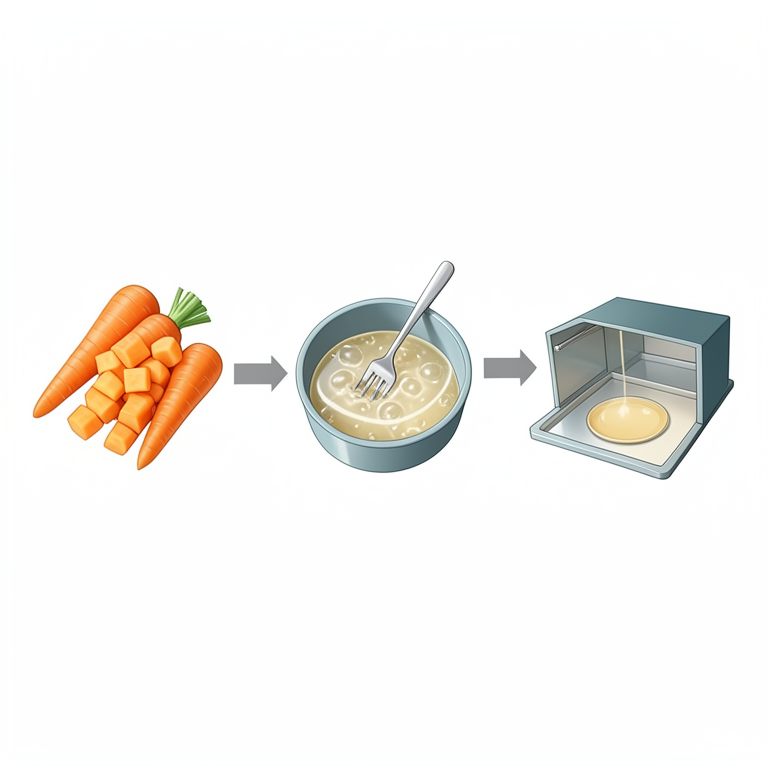
Carrot Candy Production Flowchart
AI-generated conceptual illustration (carrot candy production process). It explains the idea and does not show study data.
View source evidence ↗Figures & tables
From the original paper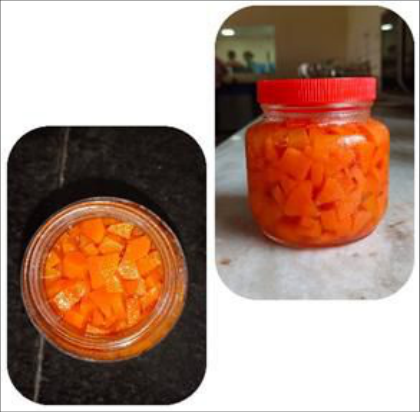 Figure 1
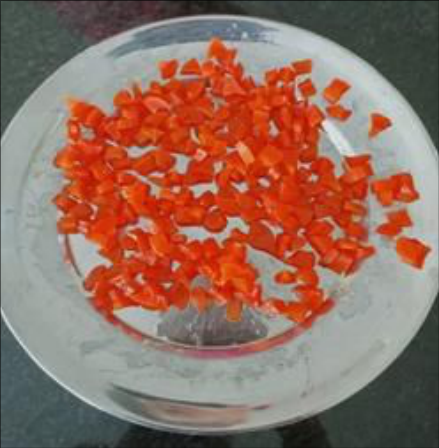 Figure 3
 Table 1
 Table 2
 Table 3A
 Table 3B
Introduction
The carrot (Daucus carota subsp. sativus) is a root vegetable known for its distinctive bright orange color, although it can also be found in purple, black, red, white, and yellow varieties. The globe over, the Apiaceae (formerly Umbelliferae) family includes the colourful, diversified crop known as carrot, which is cultivated each year for food purposes [1] . The edible portion of the carrot plant is its taproot, and it is a crop that grows well in cold climates. Dactylospermum sativus var. atrorubens Alef., also known as Eastern or Asiatic carrots, and Dactylospermum sativus var. sativus, often known as Western carrots, are the two varieties of cultivated carrots. Carrots of the Western variety are orange, red, or white in colour, whereas those of the Eastern variety are purple and yellow in colour [2] . In tropical and subtropical areas, the best months to cultivate the crop are September through November, although in temperate climates, there are several options for year-round production. In order to produce seeds, the crop needs a cold temperature. Carotenoids and flavonoids, two types of pigments that give carrots their unique hue and antioxidant qualities, are what make them a lonely coloured root crop [3] . Carrots are grown from seed and can take up to four months (120 days) to mature, but most cultivars mature within 70 to 80 days under the right conditions. They grow best in full sun but tolerate some shade. The optimum temperature is 16 to 21 °C (61 to 70 °F).
The ideal soil is deep, loose and well-drained, sandy or loamy, with a pH of 6.3 to 6.8. The heavy loamy granulometric composition of the leached black soil has a ploughing depth of 26 to 28 cm. The total amount of moisture stored in a one-meter layer of soil was 312-342 mm, with a humus layer measuring 41-45 cm [4] Rich or rocky soils should be avoided, as these will cause the roots to become hairy and/or misshapen. Irrigation is applied when needed to keep the soil moist. Fertilizer should be applied according to soil type because the crop requires low levels of nitrogen, moderate phosphate and high potash. 8.1-9.0% of humus, 0.47% of total nitrogen, 0.17% of phosphorus, and 0.65% of potassium were found in the ploughing layer [4] . The United Nations Food and Agriculture Organization (FAO) reports that world production of carrots and turnips (these plants are combined by the FAO) for 2018 was 40 million tonnes, with 45% of the world total grown in China. Over 40 million tonnes of carrots are produced annually globally, with Asia leading the way in production, followed by Europe [ Fig 1] Over the past 20 years, there has been an increase in the output of carrots globally [2] . Carrots were initially utilised medicinally before being included into cuisine. The common orange carrot has high levels of α-and β-carotene. Cultivars with white flesh have extremely little pigment. As they develop, the orange and yellow skinned varieties have higher levels of carotene [5] . Carrots are also a good source of vitamin A in the diet because of their high bioavailability of carotenoids, which makes them more bioavailable than other vegetables. Additionally, carrots contain a special mix of three flavonoids: luteolin, quercetin, and kaempferol [6][7][8] . Carrots are an excellent source of dietary fibre and the trace mineral molybdenum, which is uncommon in many other vegetables. In addition to being crucial for iron absorption, molybdenum helps in the metabolism of lipids and carbohydrates. It is also an excellent supplier of manganese and magnesium [5] . Magnesium is necessary for the formation of bone, protein, new cell growth, B vitamin activation, muscle and nerve relaxation, blood coagulation, and energy generation [9] . Manganese aids in the body's coordination of enzymes involved in the metabolism of carbohydrates. The body uses manganese as a co-factor for superoxide dismutase, an antioxidant enzyme. Carrots include potassium and magnesium, which support healthy muscular function [10][11] . Like many other colour vegetables carrot is gold mine of antioxidant, anticarcinogen, and immune enhancer benefits. Carrots' biological and therapeutic effects may be attributed to their high concentration of antioxidant carotenoids, particularly βcarotene [5,10] . Research has demonstrated that eating carrots can lower your chances of breast, colon, and lung cancer. This is because carrots have a high concentration of falcarinol, a poly-acetylene antioxidant that prevents cancer by eliminating precancerous cells seen in tumours. Carrots have anticarcinogenic qualities in this sense that help maintain the health of the lower digestive tract and prevent the formation of cancer cells in the colon. One of carrots' greatest health advantages is this [12] . Carrots are rich in βcarotene and other carotenoids, as well as vitamins C and K, thiamin (B1), riboflavin (B2), pyridoxine (B6), and folates (B9), which are essential for the metabolism of proteins, carbohydrates, and healthy development [6] . The dietary fiber-rich fractions isolated from carrot pomace that contained alcohol and water insoluble solids in addition to water insoluble dietary fibre also showed glucose-adsorption capacity and amylase inhibition activity. These findings were made after analysing the characteristics, properties, and in vitro hypoglycemic effects of various carrot water insoluble fiber-rich fractions. Significant amounts of carotenoids and polyphenols connected to the fibre matrix are also transported through the human stomach by dietary fibre [14,-16] . Carrot has also been linked to a decreased risk of heart attacks in women [17] . Researchers found that carrot consumption significantly decreased liver cholesterol and triglyceride levels, increased vitamin E levels in plasma, and improved plasma's ability to reduce ferric iron [6,18] . Researchers found that study participants with lower levels of carotenoids had higher blood glucose levels and higher insulin levels during fasting; carotenoids also decreased with increasing glucose intolerance severity. These results imply that vitamin A-and carrot-rich carotenoids may help diabetics manage their condition [19,20] . Carrots encourage the production of copious amounts of saliva and stimulate the gums. Because saliva is alkaline by nature, it balances out the germs that cause cavities and acidity. Carrots' mineral content fights oral bacteria and keeps teeth from decaying. Carrots are high in antioxidants and vitamin C, which helps to maintain healthy, colourful skin [5,6] . Vitamin C is another nutrient found in carrots that helps the body produce collagen. One form of protein that is essential for maintaining the suppleness of the skin is collagen. It slows down the ageing process and helps avoid wrinkles. Carrot juice really functions as a natural sunblock in the summer [21] . Antioxidants included in this vegetable can help heal dermatitis, rashes, acne, and other skin diseases brought on by a lack of vitamin A. But, remember not to eat too many carrots since this may cause your complexion to momentarily become yellowish-orange in colour [6]. This improved curative activity may be due to the antioxidant and anti-microbial actions of carrot root ethanolic extract, primarily flavonoids and phenolic derivatives. The regulation of collagen expression and suppression of high lipid peroxide levels may also have a role in the healing effects of wounds [22] . In terms of nutritional content, carrots are placed 10th out of 39 fruits and vegetables [23] . Carrots are eaten raw or cooked, and they are processed to provide value-added goods such chips, candies, kheer, halwa, powder, juice, drinks, preserves, and items with intermediate wetness [1] . Candy is a confection made by impregnating fruits or vegetables with sugar syrup, then draining the excess syrup and drying the finished product to make it stable for storage [24] . One of the great things about candied carrots is their versatility. They can be used in a variety of dishes and recipes, ranging from desserts to side dishes. They add a touch of sweetness and vibrant color to cakes, cookies, and muffins. They can also be enjoyed on their own as a sweet snack or used as a topping for ice cream or yogurt. It's important to note that candied carrots are a treat and should be enjoyed in moderation due to their added sugar content. While carrots themselves are nutritious, the sugar used in the candying process adds extra calories and can contribute to unhealthy levels of sugar consumption if not consumed in moderation. Some people may also find the texture of candied carrots to be different from that of raw or cooked carrots. The cooking process softens the carrots and gives them a chewier texture. This texture contrast can be enjoyable for some, but it may not be to everyone's liking.
Methodolgy
Methodolgy
Raw material
Sugar and fresh red and orange carrot in various types of carrot are collect form local market.
Preparation of candied carrot
Two different type of carrots are washed and then their outer skin is removed with the help of peeling machine. They are then cut length-wise and then cut into small cubes. These pieces are blanched in boiling water for 8-10 minutes and after cooling they are pricked with fork so that sugar syrup get absorbed easily. The sugar syrup is made of sugar solution with citric acid. Both types carrot's pieces are added individually in boiling syrup and kept for about 10 minutes. Then these pieces are kept for around 8-10 hrs. To impart color and flavour, different colors and flavours are added to the syrup. The prepared carrot candy in sugar syrup is filled into the glass bottles and scaled properly in air-tight condition. After 15 days of maturation and aging the product can be used for consumption. Finally it is stored under refrigerated condition. Some pieces are further cut into smaller sizes and are wiped with cloth for removing an' dirt or excessive coating of sugar. These people are finally dried in a drier with temperature around 60℃ for about minimum of 1 hour. After cooling it will be packed in polythene bags.
Sensory analysis
Based on sensory attributes, each customer has a different preference for noodles. A 9-point hedonic scale is the industry standard for sensory analysis, and it measures the general approval of values for the sensory score ranged from 2.7 to 7.02 [25] . The nine-point hedonic scale was used to evaluate the appearance, colour, texture, flavour, taste, mouth feel, and overall acceptability of the experimental dried noodles by the panel of judges. (9 = liked very extremely, 8 = liked very much, 7 = liked moderately, 6 = liked slightly, 5 = neither liked nor disliked, 4 = disliked slightly, 3 = disliked moderately, 2 = disliked very much, and 1 = disliked extremely) [26] .
Proximate nutrient analysis of raw carrot and carrot candy:
As a vitamin rich food, carrots are high in betacarotene and ascorbic acid. They also contain varying amounts of moisture, protein, fat, carbs, sugars, and fibre, ranging from 84 to 95%, 0.6 to 2.0%, 0.2 to 0.7, 9.58 to 10.6%, 5.4 to 7.5%, and 0.6 to 2.9%, respectively [1] (Table 10) The amounts of polyunsaturated acids (PUFA), monounsaturated acids (MUFA), and saturated fatty acids (SFA) in the total ash (15.32%), total protein (18.23%), and total lipids (4.75%) are, respectively, 921.7, 160.0, and 693.4 mg [27, 28]. The proximate composition of moisture and ash for samples of carrot candy were determined using standard procedure. The sample's moisture content were assessed using the standard AOAC method. The ash content of noodles and raw materials was determined using muffle furnace and the samples are heated at 550℃ for 5hours.
Rehydration
Rehydration is a process which is aimed at restoring the properties of a raw material when the dried material comes in contact with water. Rehydration of food materials is often carried out by soaking the dried material in water.
Result and Decision
Proximate nutrient analysis of raw carrot and carrot candy: Moisture analysis serves an important quality control function in various stages of the food product chain from raw material testing in the laboratory to incoming goods inspection. Ash content in food can be an indication of how much processing has taken place as natural foods have a lower ash content compared to more processed food. Nutritive value of raw material in present in Table 1 and carrot candy are present in Table 2.
| Sample | Moisture content (%) | — | Ash content (%) |
|---|---|---|---|
| Dry basis | Wet Basis | ||
| Orange Carrot | 87.74 | 715 | 0.644% |
| Red Carrot | 88.52 | 771 | 0.758% |
Table text extracted from the original PDF; superscript letters are shown inline. The original table image is below.
View original table image
| Parameter | Component | Composition (gm/100gm) |
|---|---|---|
| Proximate analysis | Moisture | 86-88.8 |
| Carbohydrate | 6-10.6 | |
| Protein | 0.7-1.0 | |
| Fat | 0.2-0.5 | |
| Fibre | 1.2-2.4 |
Table text extracted from the original PDF; superscript letters are shown inline. The original table image is below.
View original table image
Rehydration ratio: Rehydration ratio is the ratio of the mass of rehydrated and drained food to the mass of the original material. It is usually expressed as a percentage. Here, the rehydration ratio is 30%
Sensory evaluation
Sensory analysis is a scientific field covering all techniques for eliciting, measuring, analyzing, and interpreting human reactions to food characteristic. From this I can say that it is a healthy and tasty food. This evaluation ensures a wellbalanced and appealing product.
Acknowledgement
AcknowledgementThis work was funded by Maulana Abul Kalam Azad University of Technology, West Bengal. We, gratefully acknowledge our departmental laboratory and department of Food Science, Maulana Abul Kalam Azad University of Technology, West Bengal.
Figures and tables from the paper
| Taster | Taste | Color | Flavour | Body and Texture | Mouth feel | Overall Acceptance |
|---|---|---|---|---|---|---|
| 1 | 6 | 9 | 4 | 7 | 8 | 7 |
| 2 | 7 | 9 | 5 | 8 | 8 | 8 |
| 3 | 7 | 9 | 6 | 8 | 7 | 8 |
| 4 | 7 | 9 | 6 | 8 | 8 | 8 |
| 5 | 8 | 8 | 7 | 8 | 9 | 7 |
| 6 | 9 | 9 | 9 | 9 | 9 | 9 |
Table text extracted from the original PDF; superscript letters are shown inline. The original table image is below.
View original table image
| Taster | Taste | Color | Flavour | Body and Texture | Mouth feel | Overall Acceptance |
|---|---|---|---|---|---|---|
| 1 | 6 | 8 | 4 | 7 | 8 | 6 |
| 2 | 7 | 9 | 5 | 7 | 8 | 8 |
| 3 | 7 | 9 | 6 | 8 | 7 | 8 |
| 4 | 7 | 9 | 6 | 7 | 8 | 8 |
| 5 | 7 | 8 | 7 | 7 | 7 | 7 |
| 6 | 8 | 9 | 8 | 8 | 8 | 8 |
Table text extracted from the original PDF; superscript letters are shown inline. The original table image is below.
View original table image
References
26 in the original paper- Haq R, Prasad K. Nutritional and processing aspects of carrot (Daucus carota)-A review. South Asian J Food Technol Environ. 2015;1(1):1-14. doi:10.46370/sajfte.2015.v01i01.01.
- Akhiyarov DG, Kuznetsov BY, Ismagilov IR, Abdulvaleyev RR, Akhiyarova RM, Valitov LV, et al. Improving technology elements in multi-purpose carrot cultivation. Bulg J Agric Sci. 2019;25.
- Da Silva Dias JC. Nutritional and health benefits of carrots and their seed extracts. Food Nutr Sci. 2014;5(22):2147-2156. doi: 10.4236/fns.2014.522227.
- Singh MN, Srivastava R, Yadav DI. Study of different varieties of carrot and its benefits for human health: A review. J Pharm Phytochem. 2021;10(1):1293-1299. doi: 10.22271/phyto.2021.v10.i1r.13529.
- Ching LS, Mohamed S. Alpha-Tocopherol content in 62 edible tropical plants. J Agric Food Chem. 2001;49(6):3101-3105. doi: 10.1021/jf000891u.
- Lila MA. Anthocyanins and human health: An in vitro investigative approach. J Biomed Biotechnol. 2004;2004(5):306-313. doi: 10.1155/S111072430440401X.
- Guerrera MP. Therapeutic uses of magnesium. Am Fam Physician. 2009;80(2). Available from: www.aafp.org/afp.
- Dias JS. Major classes of phytonutriceuticals in vegetables and health benefits: A review. J Nutr Ther. 2012;1.
- Dias JS. Nutritional quality and health benefits of vegetables: A review. Food Nutr Sci. 2012;3(10):13541374. doi:10.4236/fns.2012.310179.
- Zaini R, Clench MR, Le Maitre CL. Bioactive chemicals from carrot (Daucus carota) juice extracts for the treatment of leukemia. J Med Food. 2011;14(11):1303-1312. doi: 10.1089/jmf.2010.0284.
- Chau CF, Chen CH, Lee MH. Comparison of the characteristics, functional properties, and in vitro hypoglycemic effects of various carrot insoluble fiberrich fractions. LWT -Food Sci Technol. 2004;37(2):155-160. doi: 10.1016/j.lwt.2003.08.001.
- Saura-Calixto F, Goñi I. Antioxidant capacity of the Spanish Mediterranean diet. Food Chem. 2006;94(3):442-447. doi: 10.1016/j.foodchem.2004.11.033.
- Saura-Calixto F, Serrano J, Goñi I. Intake and bioaccessibility of total polyphenols in a whole diet. Food Chem. 2007;101(2):492-501. doi: 10.1016/j.foodchem.2006.02.006.
- Oude Griep LM, Verschuren WM, Kromhout D, Ocké MC, Geleijnse JM. Colours of fruit and vegetables and 10-year incidence of CHD. Br J Nutr. 2011;106(10):1562-1569. doi: 10.1017/S0007114511001942.
- Nicolle C, Cardinault N, Aprikian O, Busserolles J, Grolier P, Rock E, Demign C, Mazur A, Scalbert A, Amouroux P, et al. Effect of carrot intake on cholesterol metabolism and on antioxidant status in cholesterol-fed rats. Eur J Nutr. 2003;42(5):254-261. doi: 10.1007/s00394-003-0419-1.
- Poudyal H, Panchal S, Brown L. Comparison of purple carrot juice and β-carotene in a high-carbohydrate, high-fat diet-fed rat model of metabolic syndrome. Br J Nutr. 2010;104(9):1322-1332. doi: 10.1017/S0007114510002308.
- Vasudevan M, Gunnam KK, Parle M. Antinociceptive and anti-inflammatory properties of Daucus carota seeds extract. J Health Sci. 2006;52(5).
- Eskicioglu V, Kamiloglu S, Nilufer-Erdil D. Antioxidant dietary fibres: Potential functional food ingredients from plant processing by-products. Czech J Food Sci. 2015;33(6):487-499. doi:10.17221/42/2015CJFS.
- Patil MVK, Kandhare AD, Bhise SD. Pharmacological evaluation of ethanolic extract of Daucus carota Linn root formulated cream on wound healing using excision and incision wound model. Asian Pac J Trop Biomed. 2012;2(2):S646-S655. doi: 10.1016/S22211691(12)60290-1.
- Acharya UR, Mishra M, Patro J, Panda MK. Effect of vitamins C and E on spermatogenesis in mice exposed to cadmium. Reprod Toxicol. 2008;25(1):84-88. doi: 10.1016/j.reprotox.2007.10.004.
- Durrani AM, Srivastava PK, Verma S. Development and quality evaluation of honey-based carrot candy. J Food Sci Technol. 2011;48(4):502-505. doi: 10.1007/s13197-010-0212-0.
- Nura M, Kharidah M, Jamilah B, Roselina K. Textural properties of laksa noodle as affected by rice flour particle size. Int Food Res J. 2011;8(1):1309-1312.
- Parvin R, Farzana T, Mohajan S, Rahman H, Rahman SS. Quality improvement of noodles with mushroom fortification and its comparison with local branded noodles. NFS J. 2020;20:37-42. doi: 10.1016/j.nfs.2020.07.002.
- Da Silva MFM, Rose TL, Gómez MM, Carvalho-Costa FA, Fialho AM, de Assis RMS, et al. G1P[8] species A rotavirus over 27 years -Pre-and post-vaccination eras -in Brazil: Full genomic constellation analysis and no evidence for selection pressure by Rotarix® vaccine. Infect Genet Evol. 2015;30:206-218. doi: 10.1016/j.meegid.2014.12.030.
- Carvalho RL, Almeida GL. Aspectos sensoriais e cognitivos do controle postural. Rev Neurocienc. 2009;17(2).
- Otitoju O, Adondua MA, Emmanuel OP, Grace OT. Risk assessment of pesticide residues in some samples of carrots (Daucus carota). Int. J. Adv. Biochem. Res. 2022;6(2):42-48. DOI: 10.33545/26174693.2022.v6.i2a.133