
Research article · 2022 · Full text
International Journal of Veterinary Sciences and Animal HusbandryWillingness to pay for assisted reproductive technologies by pastoral herd owners in southern Rangelands of Kenya
Volume 7(1) · Pages 26–31 · DOI: 10.22271/veterinary.2022.v7.i1a.401 ↗
Research areasRangeland Management and Livestock EcologyIndigenous Studies and EcologyGenetic and phenotypic traits in livestock
Abstract
Author-writtenUptake of Assisted Reproductive Technologies (ARTs) can widen and accelerate access to quality breeding stock under pastoral systems, but user participation without subsidy is uncertain when the herders have to meet the direct cost. Analysing willingness to pay (WTP) for ARTs may provide insights into potential uptake of ARTs when development agencies withdraw subsidies and private entrepreneurs take up the service delivery. This study estimated WTP for ARTs among 130 pastoral herd owners participating in Sahiwal cattle breed upgrading program implemented in Transmara Sub County in the southern rangelands of Kenya. The average WTP was KES 3,643 (USD 33.4), equivalent to 21.4% premium with reference to base price (KES 3,000) (USD 27.5). Sixty-seven percent of the pastoral herd owners expressed WTP above the hypothesized market price, twice more than those expressing WTP below the hypothesized market price (33%). The first choice attributes influencing the WTP for ARTs were high milk yield (62%), high value calves (37%), and high growth rates (1%). Gender was the only socioeconomic factor significantly (P
Summary
Source-checkedPlain-language reading of the full paper, prepared with AI and checked against the text. Each point links to the authors' own words.
Why it matters
- Livestock production is vital for pastoral communities in Kenya's Arid and Semi-arid Lands, providing essential tangible benefits like meat and milk, as well as non-tangible benefits such as insurance and dowry. View evidence ↗
- The supply of high-quality Sahiwal breeding stock is currently insufficient due to an overreliance on a small number of superior bulls from a few breeding farms. View evidence ↗
- While Assisted Reproductive Technologies (ARTs) improve access to quality breeding stock, it is unclear if pastoralists will continue using them once government and agency subsidies are removed. View evidence ↗
The question
- The study aimed to estimate the willingness to pay (WTP) for ARTs among pastoral herd owners to determine the sustainability of accessing superior genetic resources. View evidence ↗
What they did
- The research involved 130 pastoral herd owners in the Transmara Sub County of southern Kenya who were part of a Sahiwal cattle breed upgrading program. View evidence ↗
- Willingness to pay was analyzed using a double bounded dichotomous choice contingent valuation model. View evidence ↗
What they found
- The average willingness to pay was KES 3,643 (USD 33.4), which represents a 21.4% premium over the base price of KES 3,000 (USD 27.5). View evidence ↗
- Two-thirds (67%) of the herd owners were willing to pay more than the hypothesized market price, compared to 33% who were willing to pay less. View evidence ↗
- The primary attributes driving the willingness to pay were high milk yield (62%), followed by high-value calves (37%) and high growth rates (1%). View evidence ↗
- Gender was the only significant socioeconomic factor affecting WTP, with men showing a higher willingness to pay (KES 3,870) than women (KES 3,223). View evidence ↗
- There was no significant difference in WTP between production systems, although agro-pastoralists had a slightly higher mean WTP (KES 3,657) than ranchers (KES 3,560). View evidence ↗
What it means
- The authors conclude that because most herd owners are willing to pay above the base price, they are likely to continue adopting ARTs for Sahiwal cattle upgrading even without subsidies. View evidence ↗
- The findings suggest an opportunity for the private sector to deliver ARTs, provided that supportive policy interventions are implemented. View evidence ↗
Visual summary
3 visualsIllustrations explain the paper; charts are replotted from the paper's own table values.
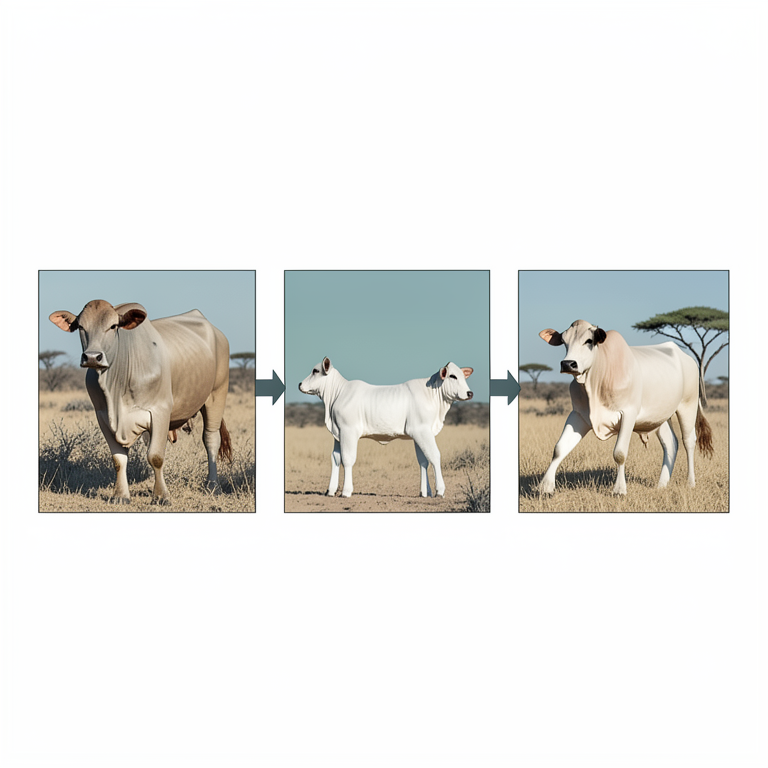
Drivers of Willingness to Pay
AI-generated conceptual illustration (Zebu cattle in the Kenyan rangelands). It explains the idea and does not show study data.
View source evidence ↗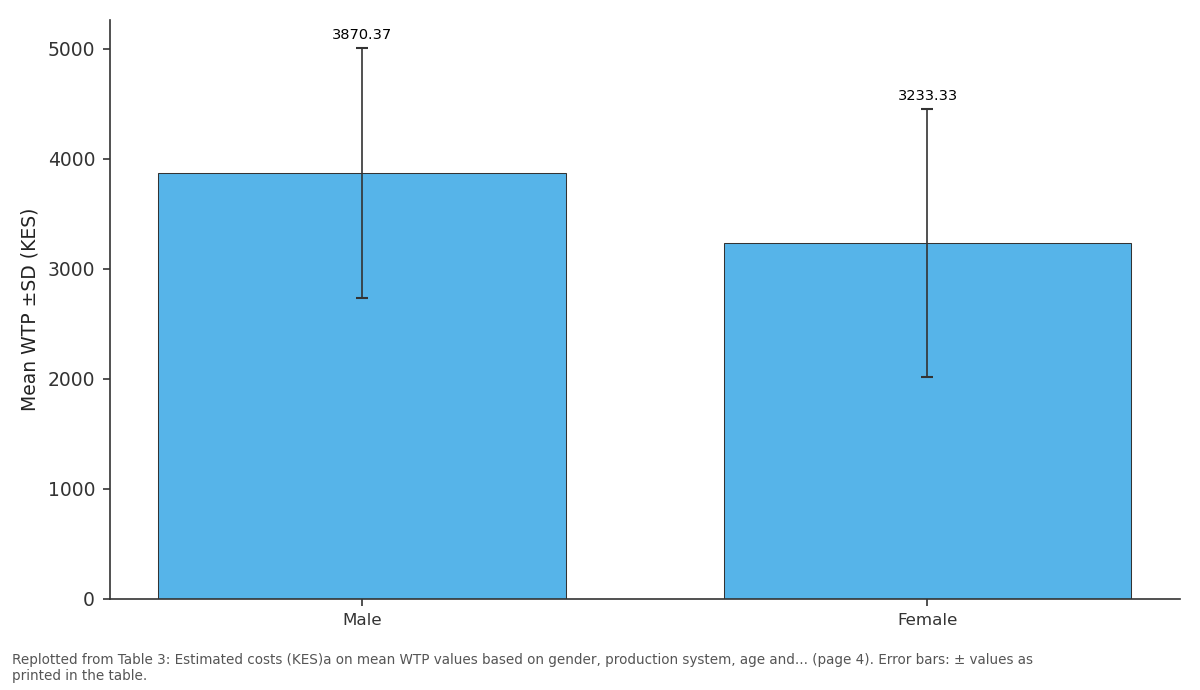
Mean WTP ±SD: Male vs Female
Replotted from Table 3 (page 4) of the original paper. Every bar is the paper's own table value.
View source evidence ↗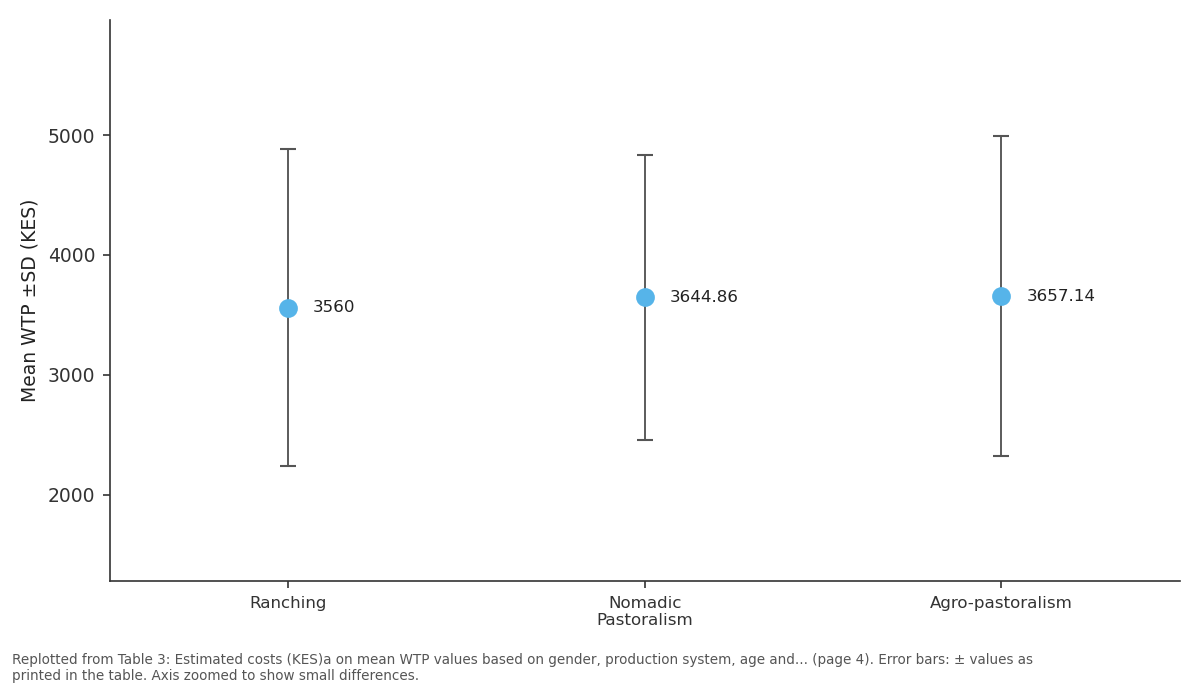
Mean WTP ±SD: Ranching vs Nomadic Pastoralism vs Agro-pastoralism
Replotted from Table 3 (page 4) of the original paper. Every bar is the paper's own table value.
View source evidence ↗Figures & tables
From the original paper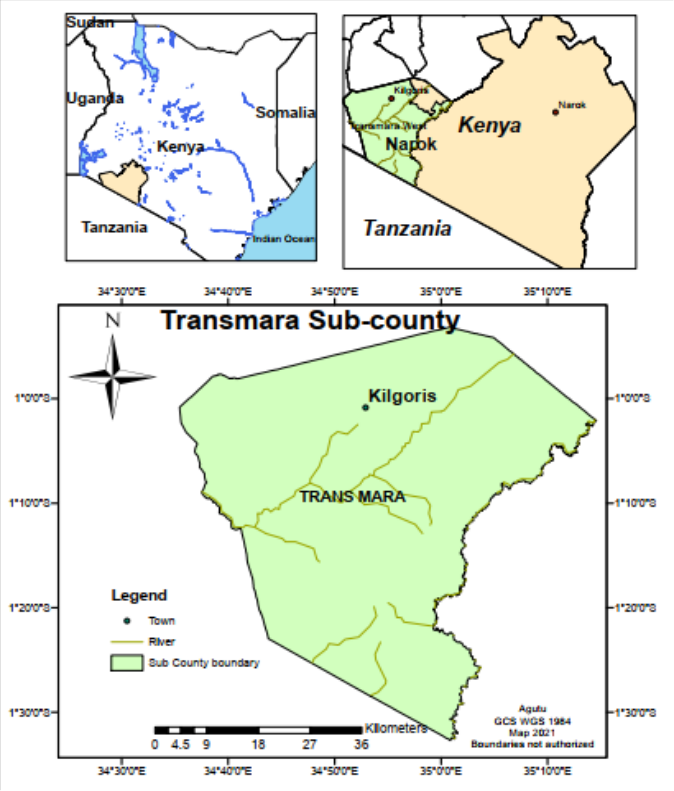 Figure 1
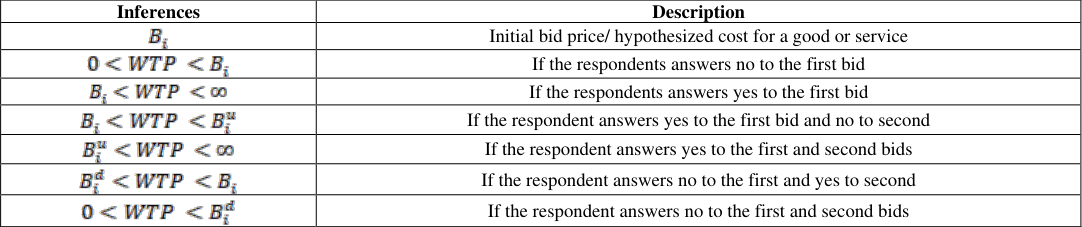 Table 1
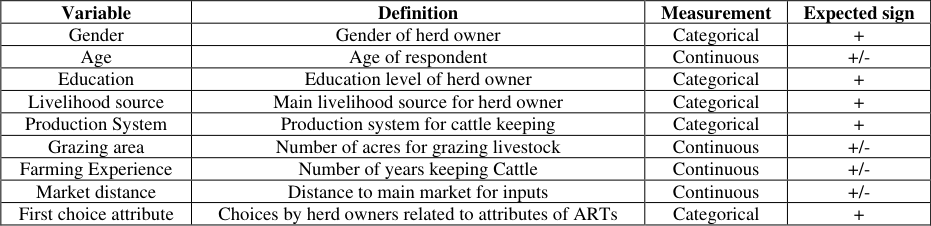 Table 2
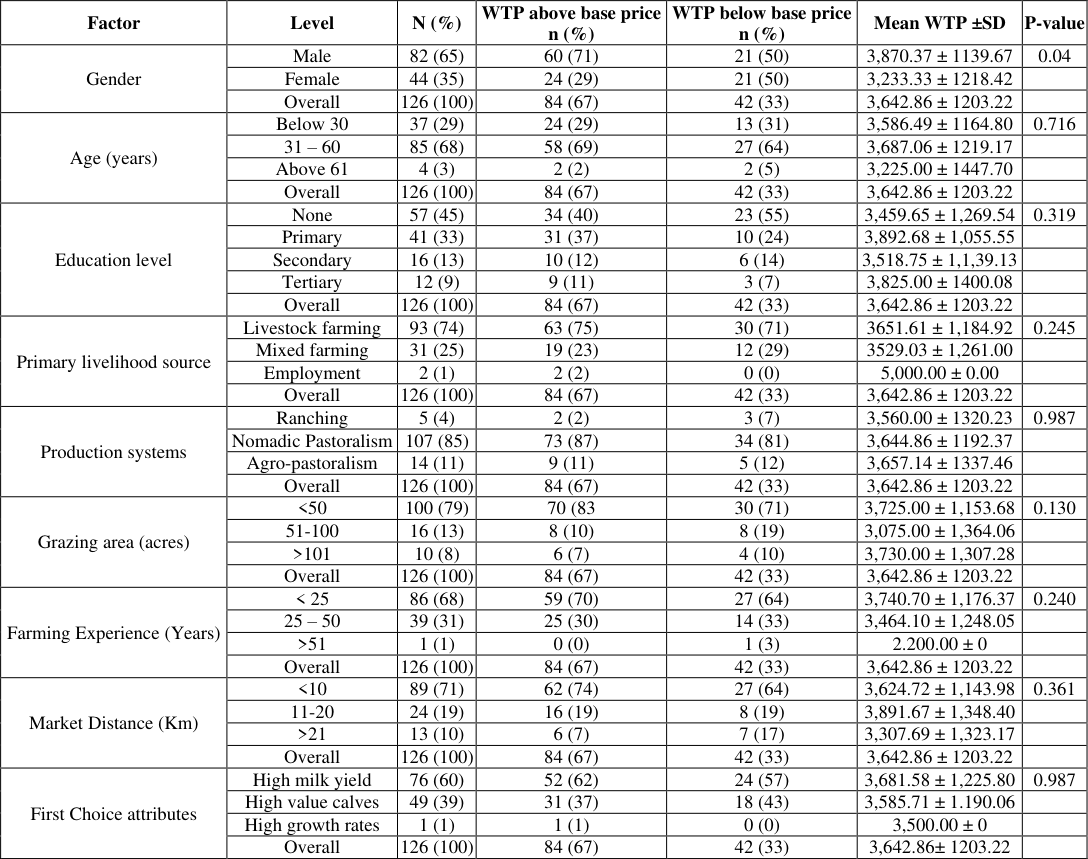 Table 3
Introduction
Livestock production in the Arid and Semi-arid Lands (ASALs) provides pastoral communities with important livelihood benefits, both tangible (meat, milk) and non-tangible (financing, insurance, and dowry) [1] . Development agencies in Kenya prioritize investments towards increasing the tangible benefits through upgrading indigenous cattle to an adaptable and more productive Sahiwal cattle breed under rangelands where the climate is increasingly variable and changing. The Sahiwal cattle breed is principally a dual-purpose (meat and milk) breed adaptable to the Kenyan pastoral rangelands [2] . Here, the demand for improved Sahiwal bulls and heifers outstrip the supply [3] . This situation emanates from multiple challenges limiting optimal utilization of the Sahiwal cattle as a livelihood improvement strategy. The supply of quality breeding stock is insufficient because of overreliance on a limited number of superior bulls initially provided by progressive breeding farms, predominantly the National Sahiwal Stud (NSS) and private ranches [2] . These breeding farms largely utilize closed nucleus breeding schemes that deploy natural bull service. This breeding strategy has been associated with increasing inbreeding levels and loss of genetic diversity among the Sahiwal cattle population in Kenyaand will be tragic, if it remains unchecked [2,3] . Effective selection efforts for resilient and productive animals are required. Continued bull services could prove expensive as they are associated with risks of disease carriers, injurious to young heifers, increasing inbreeding levels and loss of genetic diversity with intense use [3] .
To increase access to high-quality breeding stock, development agencies are supporting upscaling the use of a wide range of ARTs in the southern rangelands of Kenya [4,5] . The ARTs include artificial insemination (AI) using frozen semen, in vitro fertilization (IVF), and multiple ovulation and embryo transfer (MOET) [6,7] . Though the use of ARTs offers a comparative advantage over bull service in widening access to quality breeding stock for Sahiwal cattle upgrading, continued user participation post subsidy from the government and development agencies is uncertain when they have to meet the direct cost. For example, a previous study of AI utilization in ASALs (Narok county), observed a higher level of awareness about AI services among pastoralists (70%), but those still using bull services as breeding methods were predominating [4] . Continued use of bull services was partly attributed to preference for bull service [8] . Previous studies indicate that farmers often make decisions on adoption of new technologies based on awareness levels and enhanced efficiency in delivery, which is likely to influence their WTP for ARTs. The WTP for ARTs expressed by pastoralists should provide insight into continued use of ARTs when development agencies withdraw subsidy support and require that private entrepreneurs take up the service delivery. This study, therefore, estimated the WTP for ARTs to access superior genetic resources among pastoral herd owners. This information should interest development agencies and private service providers in the provision of sustainable breeding programs within pastoral production systems in Kenya.
Materials and methods
Materials and methods
Study site
The study was carried among the Maasai herd owners engaged in ranching, nomadic, or agro-pastoralism and utilizing a mix of pure and crossbreeds of Maasai zebu, Boran and Sahiwal breeds for livelihood benefits [9] . Pastoral livelihood predominates in this southern Kenya rangelands of Transmara South Sub-county, Narok County [10] . The study sites were Lolgorian and Pusanki divisions located between Latitude 0 o 50' and 1 o 50' South and Longitude 34 o 35' and 35 o 14' East [11] (Figure 1).
Sampling procedure
The study targeted 150 households comprising of both program beneficiaries and non-beneficiaries determined from Cochran's proportionate sample size formula [12] :
where n = sample size, z is desired confidence interval level set at 1.96 for 95% confidence interval, p is the proportion of a characteristic of the population with Sahiwal cattle breed, q = (1-p), and e is the error margin allowable for detecting a difference in the sample set at 0.05. In computation, the P was set to 0.051 being proportion = , of total number of Lolgorian and Pusanki households to households within Transmara West Sub-county [13] having at least one Sahiwal cow (pure or crossbred).
Analytical framework
The WTP was analysed using the double bounded dichotomous choice contingent valuation model (CVM), applying the analytical framework of [14] . This model uses hypothesized bid levels that reflect the cost of accessing the service as the basis for calculating the mean WTP and given that the herd owners were aware of the ARTs but unable to attach true value to the use of ARTs, a close-ended questions approach was adopted. The herd owner was initially asked if he/she was willing to pay an amount say 'B i ' for the provision of ARTs services per animal served. The level of the second bid level was contingent upon the response to the first bid; "higher than the initial bid if the response was 'yes' and this assumed that the B i ≤WTP<∞", or "lower if the response was 'no' and this assumed that the 0≤WTP< B i ". The subsequent bids played an important role in placing an upper and lower bound on the respondents' unobserved true WTP [15] . Four possible outcomes can be obtained from the double bounded dichotomous model. These are presented as yy, yn, ny and nn where yy implies that both answers are 'yes' (WTP is higher than the upper bid) and yn implies the first answer was 'yes' followed by 'no' (WTP is between the initial bid and the upper bid). On the other hand, ny implies a 'no' answer followed by 'yes' (WTP is between the lower bid and the initial bid) and nn implies 'no' answer in both (WTP is between zero and the lower bid) [14] . The possible outcomes and inferences from double bounded dichotomous choice questions on WTP are presented in Table 1. If the respondent answers no to the first and second bids = Second higher if answer to initial bid was yes; = Second higher if answer to initial bid price was no. Source: Lopez-Feldman, (2012).
| Inferences | Description |
|---|---|
| Initial bid price/ hypothesized cost for a good or service | |
| If the respondents answers no to the first bid | |
| If the respondents answers yes to the first bid | |
| If the respondent answers yes to the first bid and no to second | |
| If the respondent answers yes to the first and second bids | |
| If the respondent answers no to the first and yes to second | |
| If the respondent answers no to the first and second bids |
Table text extracted from the original PDF; superscript letters are shown inline. The original table image is below.
View original table image
The respondent was therefore assumed to make decisions following possible discrete outcomes, that is;
Where, WTP is 0 if the respondent is not willing to pay for the offered bid price and 1, if he/she is willing to pay the bid price for accessing ARTs. The dependent variable (WTP) was therefore hypothesized to be influenced by a set of socioeconomic factors attributed to the respondents (Table 2). Regression analysis was further used in establishing the relationship between identified independent factors against the dependent factor using the equation below;
| Variable | Definition | Measurement | Expected sign |
|---|---|---|---|
| Gender | Gender of herd owner | Categorical | + |
| Age | Age of respondent | Continuous | +/- |
| Education | Education level of herd owner | Categorical | + |
| Livelihood source | Main livelihood source for herd owner | Categorical | + |
| Production System | Production system for cattle keeping | Categorical | + |
| Grazing area | Number of acres for grazing livestock | Continuous | +/- |
| Farming Experience | Number of years keeping Cattle | Continuous | +/- |
| Market distance | Distance to main market for inputs | Continuous | +/- |
| First choice attribute | Choices by herd owners related to attributes of ARTs | Categorical | + |
Table text extracted from the original PDF; superscript letters are shown inline. The original table image is below.
View original table image
where, is the probability of the ith respondent's willingness to pay the hypothesized bid price for accessing ARTs, are the set of socioeconomic variables of the respondent, is the random error term, while and β are parameters of the model to be estimated.
Data analysis
The data collected with questionnaires was first processed in Microsoft Excel spreadsheet to sort, edit and clean then transferred to Statistical Packages Social Sciences (SPSS) version 26 for statistical computing. A linear regression modelling with backward elimination procedures was used to retain only variables that had significant influence on the WTP for ARTs out of all the hypothesized independent variables (Table 2).
Results
Results
Characteristics of the herd owners
From a target of 150 respondents, 130 were reached in the survey with 126 providing complete responses for analysis.
The four (4) excluded were incomplete or inconsistent responses on one or more variables. Table 3 presents the summary descriptive characteristics and mean WTP for ARTs based on gender, age, education level, primary livelihood source, production system, grazing area, farming experience, market distance, and first choice attributes of using ARTs by the sample herd owners.
| Factor | Level | N (%) | WTP above base price n (%) | WTP below base price n (%) | Mean WTP ±SD | P-value |
|---|---|---|---|---|---|---|
| Gender | Male | 82 (65) | 60 (71) | 21 (50) | 3,870.37 ± 1139.67 | 0.04 |
| Female | 44 (35) | 24 (29) | 21 (50) | 3,233.33 ± 1218.42 | ||
| Overall | 126 (100) | 84 (67) | 42 (33) | 3,642.86 ± 1203.22 | ||
| Age (years) | Below 30 | 37 (29) | 24 (29) | 13 (31) | 3,586.49 ± 1164.80 | 0.716 |
| 31 – 60 | 85 (68) | 58 (69) | 27 (64) | 3,687.06 ± 1219.17 | ||
| Above 61 | 4 (3) | 2 (2) | 2 (5) | 3,225.00 ± 1447.70 | ||
| Overall | 126 (100) | 84 (67) | 42 (33) | 3,642.86 ± 1203.22 | ||
| Education level | None | 57 (45) | 34 (40) | 23 (55) | 3,459.65 ± 1,269.54 | 0.319 |
| Primary | 41 (33) | 31 (37) | 10 (24) | 3,892.68 ± 1,055.55 | ||
| Secondary | 16 (13) | 10 (12) | 6 (14) | 3,518.75 ± 1,1,39.13 | ||
| Tertiary | 12 (9) | 9 (11) | 3 (7) | 3,825.00 ± 1400.08 | ||
| Overall | 126 (100) | 84 (67) | 42 (33) | 3,642.86 ± 1203.22 | ||
| Primary livelihood source | Livestock farming | 93 (74) | 63 (75) | 30 (71) | 3651.61 ± 1,184.92 | 0.245 |
| Mixed farming | 31 (25) | 19 (23) | 12 (29) | 3529.03 ± 1,261.00 | ||
| Employment | 2 (1) | 2 (2) | 0 (0) | 5,000.00 ± 0.00 | ||
| Overall | 126 (100) | 84 (67) | 42 (33) | 3,642.86 ± 1203.22 | ||
| Production systems | Ranching | 5 (4) | 2 (2) | 3 (7) | 3,560.00 ± 1320.23 | 0.987 |
| Nomadic Pastoralism | 107 (85) | 73 (87) | 34 (81) | 3,644.86 ± 1192.37 | ||
| Agro-pastoralism | 14 (11) | 9 (11) | 5 (12) | 3,657.14 ± 1337.46 | ||
| Overall | 126 (100) | 84 (67) | 42 (33) | 3,642.86 ± 1203.22 | ||
| Grazing area (acres) | <50 | 100 (79) | 70 (83 | 30 (71) | 3,725.00 ± 1,153.68 | 0.130 |
| 51-100 | 16 (13) | 8 (10) | 8 (19) | 3,075.00 ± 1,364.06 | ||
| >101 | 10 (8) | 6 (7) | 4 (10) | 3,730.00 ± 1,307.28 | ||
| Overall | 126 (100) | 84 (67) | 42 (33) | 3,642.86 ± 1203.22 | ||
| Farming Experience (Years) | < 25 | 86 (68) | 59 (70) | 27 (64) | 3,740.70 ± 1,176.37 | 0.240 |
| 25 – 50 | 39 (31) | 25 (30) | 14 (33) | 3,464.10 ± 1,248.05 | ||
| >51 | 1 (1) | 0 (0) | 1 (3) | 2.200.00 ± 0 | ||
| Overall | 126 (100) | 84 (67) | 42 (33) | 3,642.86 ± 1203.22 | ||
| Market Distance (Km) | <10 | 89 (71) | 62 (74) | 27 (64) | 3,624.72 ± 1,143.98 | 0.361 |
| 11-20 | 24 (19) | 16 (19) | 8 (19) | 3,891.67 ± 1,348.40 | ||
| >21 | 13 (10) | 6 (7) | 7 (17) | 3,307.69 ± 1,323.17 | ||
| Overall | 126 (100) | 84 (67) | 42 (33) | 3,642.86 ± 1203.22 | ||
| First Choice attributes | High milk yield | 76 (60) | 52 (62) | 24 (57) | 3,681.58 ± 1,225.80 | 0.987 |
| High value calves | 49 (39) | 31 (37) | 18 (43) | 3,585.71 ± 1.190.06 | ||
| High growth rates | 1 (1) | 1 (1) | 0 (0) | 3,500.00 ± 0 | ||
| Overall | 126 (100) | 84 (67) | 42 (33) | 3,642.86± 1203.22 |
Table text extracted from the original PDF; superscript letters are shown inline. The original table image is below.
View original table image
Males (65%) dominated over females, with majority (68%) being between 31 and 60 years old and having attained basic primary education (55%). Their primary livelihood source was livestock based (74%), with more than half practicing nomadic pastoralism and accessing less than 50 acres of grazing land. Majority (68%) had livestock farming experience of less than 25 years and chose high milk yield (60%) relative to other attributes as the first attribute of choice for accessing ARTs.
The mean WTP was KES 3,643.86 and was about 20% higher (p<0.05) among males (KES 3,870) than among females (KES 3,233). Within production systems, the mean WTP was 3% higher though insignificant (p>0.05), among those in agro-pastoralism than those in ranching (KES 3,657 vs KES 3,560). High milk yield as the first choice attribute had 3% and 5% higher WTP compared to high-value calves and high growth rates preferences respectively (Table 3). In general, 67% and 33% of the herd owners expressed WTP above and below the bid prices respectively. Seventy one percent (71%) and 29% of male and female herd owners expressed WTP value above the base price while an equal proportion (50%), declined the first bid with WTP below the bid price (Table 4). Middle aged herd owners (between 31-60 years) expressed 69% and 64% above and below bid WTP price respectively relative those to above 61 years who expressed 2% and 5% above and below bid WTP price respectively. Higher milk yield attribute as the first choice for using ARTs by herd owners had 62% above the bid WTP and 57% below the bid WTP; high value calves above 37% and below is 43%; and high growth rate above the bid WTP at 1%. In the regression analysis, only gender was retained a as socio-economic factor of significant (p<0.05) influence on the level of WTP for utilizing ARTs by herd owners.
Discussion
Presently, pastoral herd owners in southern Kenyan rangelands are meeting the growing demand for the quality breeding stock of Sahiwal heifers and bulls through subsidies provided by development agencies. This access to breeding technology is unsustainable because when subsidy is withdrawn, the access would have to revert to private sector delivery mechanism. The WTP for utilizing ARTs was evaluated amongst pastoralists using a double bounded contingent evaluation method based on hypothetical bid prices and subsequent follow-up bids of either above or below the bids depending on responses from initial bids [16,17] . The findings indicate that seven in ten (67%) of the pastoral herd owners would be willing to pay above the initial bid price, which reflects a high likelihood of pastoral herd owners meeting the direct cost on future access to ARTs. This suggests good prospects of continued access to Sahiwal semen for breeding purposes post subsidy support and participation of the private sector in the delivery of the ARTs to herd owners. Higher WTP for ARTs could mean that pastoral herd owners are satisfied with the off springs from ARTS under their management conditions. This could be attributed to the continuous sensitization and practical demonstration forums that the programme implemented in the area. The findings corroborates those of [18] , who reported that 66% of the herd owners expressed WTP above the bid prices. Furthermore, [10] also reported over half of the pastoral herd owners (52%) expressed willing to pay above the initial bid price for artificial insemination (AI) in Kajiado and Narok Counties. In the study, the authors focused on the perception of AI use by pastoralists as compared to the present study, that had the advantage of practical demonstrations and service delivery undertaken to enhance the community awareness levels on ARTs use. This, therefore, implies that awareness and capacity building through trainings, practical demonstrations and extension service provision, is essential for the successful introduction and adoption of ARTs in pastoral production systems. This is in line with [19] who reported that awareness through livestock trainings and demonstrations, increase farmers' probability of adopting and paying for improved dairy technologies. This is a relevant matter for extension service when planning to upscale ARTs adoption in pastoral production systems. The average WTP was an equivalent of 21.4% premium on the base price of the ARTs. The higher preminum rate demonstrate the community desire to continue utilizing ARTs towards upgrading their herd. In this regard, the agropastralists expressed a 3% higher WTP than ranchers (KES 3,657 versus KES 3,560), which is contrary to expectations. The ranchers, being commercial oriented, would be expected to express higher WTP for ARTS than the agro and nomadic pastoralists. The awareness and farm-level demonstrations were directed to the agro and nomadic pastoralist, which could explain this observation. The premium rate reported in the study is in agreement with that observed by [10] who also reported 25.4% WTP premium on AI by pastorlist from Kajiado and Narok counties. The higher premium rate presents an opportunity to the private sector participation in ARTs delivery model. This will need supportive policy interventions that target delivering superior genetic materials to pastoral herd owners. Gender was the only socioeconomic factor with significant (p<0.05) influence on, WTP with men expressing 20% higher WTP than women (KES 3,870 versus KES 3,233). Partly, a higher proportion of males than females (65% versus 35%) in the sample partly explains this. When gender differences are differentiated by first choice attribute, males expressed higher preferences for bull calves from use of ARTs to use for future breeding. Males perceived that, accessing a bull calf and raising the calf on the farm to breeding age, would be cheaper than buying one from the research stations, ranches or model farms. Furthermore, they argued that raising a bull calve on the farm, ensures more adaptability to the local environment and diseases as compared to bulls sourced outside the locality. On the other hand, females considered higher milk production as their initial reason for WTP for ARTs. To explain this observation, women value milk to feed their families for food security and nutrition goals. This corroborates with reports of [20] that women farmers express preferences for cows with higher milk potential. In other studies, female herders have been observed to trade some of the milk for family income to support other livelihood needs [21] . However, the result contradicts a study by [10] that reported insignificant influence of gender on the WTP for AI in Kajiado and Narok Counties.
Conclusions
About two-thirds of the herd owners expressed WTP above the base price, indicating a higher likelihood of pastoral herd owners adopting ARTs for upgrading Sahiwal cattle breed without reliance on subsidies. This presents an opportunity for private sector participation in ARTs delivery and upscaling in pastoral herds. This will need putting in place policy interventions supportive of efficient ARTs delivery mechanisms for pastoral herd owners.
Acknowledgements
The fieldwork for this study was supported by joint funds from the Africa Centre of Excellence in Sustainable Agriculture and Agribusiness Management (CEESAM) program at Egerton university funded by the World Bank and, Dairy Genetics Project supported by the Government of Kenya through National Research Fund and led by the Kenya Agricultural and Livestock Research Organization (KALRO). The latter was implemented in collaboration with the Livestock Recording Centre and the Kenya Animal Genetic Resources Centre. Our gratitude is to Mr. Wilson Kipeno and the many pastoralists in Transmara who shared their experiences and plight during the study.
References
13 in the original paper- Kebebe EG, Oosting SJ, Baltenweck I, Duncan AJ. Characterisation of adopters and non-adopters of dairy technologies in Ethiopia and Kenya. Tropical Animal Health and Production. 2017;49(4):681-690. doi:10.1007/s11250-017-1241-8
- Kios DK, Tsuma V, Mutembei H. Factors Affecting Adoption Of Embryo Transfer Technology In Dairy Cattle In Kenya. Advances in Social Sciences Research Journal. 2018;5(8):456-463. doi:10.14738/assrj.58.5047
- Gicheha MG, Akidiva IC, Cheruiyot RY. Genetic and economic efficiency of integrating reproductive technologies in cattle breeding programme in Kenya. Tropical Animal Health and Production. 2018;51(2):473475. doi:10.1007/s11250-018-1689-1
- Ilatsia ED, Roessler R, Kahi AK, Valle Zárate A. Breeding and conservation programmes for Sahiwal cattle genetic resources in the tropics: a review. Animal Genetic Resources/Ressources Génétiques animales/ Recursos Genéticos Animales. 2011;49:65-74. doi:10.1017/s2078633611000336
- Khainga DN, Obare G, Nyangena J. Estimating pastoralists willingness to pay for artificial insemination in arid and semi-arid lands of Kenya. Journal of Development and Agricultural Economics. 2018;10(8):262-270. doi:10.5897/JDAE2018.0920
- Government of Kenya (GoK). Trans Mara District Development Plan (2002-2008). Nairobi: Government Printer, c2008.
- Hanemann M, Loomis J, Kanninen B. Statistical Efficiency of Double-Bounded Dichotomous Choice Contingent Valuation. American Journal of Agricultural Economics. 1991;73(4):1255-1263. doi:10.2307/1242453
- Drucker AG, Gomez V, Anderson S. The economic valuation of farm animal genetic resources: A survey of available methods. Ecological Economics. 2001;36(1):118. doi:10.1016/S0921-8009(00)00242-1
- Bett RC, Bett HK, Kahi AK, Peters KJ. Evaluation and effectiveness of breeding and production services for dairy goat farmers in Kenya. Ecological Economics. 2009;68(8-9):2451-2460. doi:10.1016/j.ecolecon.2009.04.014
- Atsiaya GO, Wati LN, Ingasia OA, Lagat JK. Smallholder Farmers' Willingness to Pay for Insurance against Climate Variability Effects in Arid Land Areas of Kenya. Journal of Environment and Earth Science. 2018;8(11):52-59. https://www.iiste.org/Journals/index.php/JEES/article/vie w/45049
- Dehinenet G, Mekonnen H, Kidoido M, Ashenafi M, Bleich EG. The impact of dairy technology adoption on small holder dairy farmer's livelihoods in selected zones of Amhara and Oromiya National Regional States, Ethiopia. Global Journal of Agricultural Economics and Econometrics. 2014;2(5):126-135.
- Kariuki C, Van Arendonk J, Kahi A, Komen H. Multiple criteria decision-making process to derive consensus desired genetic gains for a dairy cattle breeding objective for diverse production systems. Journal of Dairy Science. 2017;100(6):4671-4682.
- Chawala AR, Banos G, Peters A, Chagunda MGG. Farmer-preferred traits in smallholder dairy farming systems in Tanzania. Tropical Animal Health and Production. 2019;51(6):1337-1344. doi:10.1007/s11250018-01796-9.
Cited by 8
From OpenAlex, OpenCitations and reference lists read by Scinovex
- Economic viability of using OvSynch and fixed timed artificial insemination protocol in breeding improvement of pastoral herds in the rangelands ↗
Fredrick Odiwuor Agutu, Samuel Mwanzia Mbuku, James Ombiro Ondiek, Bockline Omedo Bebe · Tropical Animal Health and Production · 2024
❝ 1 - Preferential Use of Sahiwal Bull Calves by Beneficiaries of Assisted Reproductive Technologies in Southern Rangelands of Kenya ↗
Fredrick Odiwuor Agutu, Samuel Mwanzia Mbuku, James Ombiro Ondiek, Bockline Omedo Bebe · European Journal of Agriculture and Food Sciences · 2023
Bull service is the most common insemination method in pastoral herds grazing in the rangelands. To accelerate multiplication and distribution of and access to high quality Sahiwal genetics to pastoral communities, development agencies have promoted the use of Assisted Reproductive Technologies (ARTs) in the Kenyan rangelands. However, sustainable use of ARTs is uncertain because pastoral herd owners attach high value…
❝ 1PDF - Dairy Farmers’ Willingness to Pay for Sex-sorted Semen based Artificial Insemination under an Alternative Institutional Mechanism in India ↗
Arathy Ashok, Vinayak Nikam, Vikas Kumar · Agricultural Economics Research Review · 2026
Sex-sorted semen based artificial insemination (SSS-AI) emerged as a significant breeding intervention for dairy animals to accelerate genetic improvement and enhance herd productivity by substantially increasing the probability of female calf births. In major milk-producing states in India, in spite of the potential benefits of SSS-AI, its adoption remained low due to different constraints, especially its high price premium compared…
❝ 0 - Tissue culture banana adoption in Kenya: Overcoming barriers through integrated policy support
Dennis Otieno · International Journal of Agriculture Extension and Social Development · 2025
This study examines the adoption patterns and variation across age groups of Tissue Culture Banana (TCB) technology among smallholder farmers in Meru County, Kenya, highlighting generational differences and key policy implications. The study is grounded on theoretical frameworks of adoption such as the Unified Theory of Acceptance and Use of Technology (UTAUT) and Rogers’ Diffusion of Innovations, which emphasize perceived utility, facilitating conditions, and observable results. While TCB technology offers significant agronomic and economic benefits through early maturity, higher yields, and
- Determinants of investment decisions by Sacco members: A case of Imarisha Sacco, Kenya ↗
Anastantheas Sauli Iyadi, Molson Onchomba, Jared Abongo, Edward Owino, Shem O Sam · International Journal of Financial Management and Economics · 2025
Background: Investment decision by SACCO members is influenced significantly by many variables; Arbitrary or well-founded. It is not known to what extent emotional biases and financial literacy influence such decisions. In this paper, we seek to empirically estimate the contribution of emotional biases and financial literacy to financial decisions.Objective: To empirically evaluate the influence of financial literacy and emotional biases
- A comparative synthesis of the socio-economic and adoption impacts of organic farming on smallholder households in east Africa
Joseph Mulema · International Journal of Geography Geology and Environment · 2025
Organic farming is widely promoted in East Africa as a pathway to improve smallholder livelihoods and environmental sustainability. This synthesis compares certified and non-certified organic systems across Kenya, Uganda, and Tanzania, examining socio-economic outcomes and adoption dynamics. Evidence shows that certification linked to reliable markets can reduce multidimensional poverty and raise net farm income and gross margins through price premiums and lower input costs. By contrast, “organic-by-default” subsistence farmers - who avoid synthetic inputs without market access or technical su
- Analysis of pest management strategies among sweet potato farmers: Insights from a study in Homa Bay County, Kenya
L. A. Ochieng · International Journal of Horticulture and Food Science · 2024
This research investigated the pest management strategies among sweet potato farmers in Homa Bay County, Kenya. The study focused on how farmers managed the Sweet potato weevil (Cylas puncticollis.). Using a participatory rural appraisal methodology, the study involved 269 farmers through focus group discussions, transect walks, and pairwise ranking to identify and improve Integrated Pest Management strategies suitable for the specific context. The primary method identified was re-ridging during weeding. This method was used by 26.2% of the farmers in Rachuonyo and 15.3% in Ndhiwa Sub-counties
- Developing a conceptual framework for maternity apparel manufacturing in Kenya ↗
Nelima Barasa, Rose Otieno · International Journal of Home Science · 2024
This study explores the need for appropriately fitted maternity clothing for pregnant women, emphasizing the significant physical changes they experience. Regular clothing becomes unsuitable due to varying anthropometric changes across trimesters, necessitating maternity apparel that accommodates the changes. Previous research highlights the challenges in accommodating diverse body morphologies and stresses the importance of anthropometric data in creating effective size charts.