
Research article · 2025 · Full text
International Journal of Geography Geology and EnvironmentA comparative synthesis of the socio-economic and adoption impacts of organic farming on smallholder households in east Africa
Volume 7(11) · Pages 24–32 · DOI: 10.22271/27067483.2025.v7.i11a.441 ↗
Research areasOrganic Food and AgricultureAgricultural Innovations and PracticesAgriculture, Land Use, Rural Development
Abstract
Author-writtenOrganic farming is widely promoted in East Africa as a pathway to improve smallholder livelihoods and environmental sustainability. This synthesis compares certified and non-certified organic systems across Kenya, Uganda, and Tanzania, examining socio-economic outcomes and adoption dynamics. Evidence shows that certification linked to reliable markets can reduce multidimensional poverty and raise net farm income and gross margins through price premiums and lower input costs. By contrast, “organic-by-default” subsistence farmers - who avoid synthetic inputs without market access or technical support - often remain in low-productivity traps. Food-security effects are mixed: diversified, whole-farm organic systems can support dietary diversity, but export-oriented specialization may create trade-offs if cash earnings fail to offset reduced food-crop production. Adoption intensity is highest among younger, better-educated, better-connected farmers with access to training, livestock (for manure), and assured buyers; key constraints include knowledge gaps, labor demands, and market uncertainty. Environmental co-benefits - such as enhanced soil biota and improved soil structure - reinforce long-term resilience. Researcher conclude that organic farming can deliver meaningful socio-economic gains when embedded in supportive ecosystems: farmer training and extension on agroecology, group or participatory certification, balanced whole-farm planning that safeguards food crops, facilitated market linkages, and policies that lower entry costs and reward ecosystem services.
Summary
Source-checkedPlain-language reading of the full paper, prepared with AI and checked against the text. Each point links to the authors' own words.
Why it matters
- Smallholder agriculture is critical to East African economies, with farms smaller than 3 hectares producing more than 70% of agricultural output in Kenya. View evidence ↗
- Rural communities in Kenya face severe challenges, including soil fertility depletion and low productivity, with nearly half the population living below the poverty line. View evidence ↗
- Organic farming is promoted as a sustainable, pro-poor strategy that replaces synthetic chemicals with natural processes to improve soil health and farmer income. View evidence ↗
The question
- The study aims to determine if organic farming reduces poverty and improves income, how it impacts food security, and what factors drive or hinder its adoption. View evidence ↗
What they did
- The research is a literature-based synthesis of empirical studies from East Africa focusing on socio-economic outcomes and adoption rates. View evidence ↗
- The synthesis focused on comparative data from the last decade, primarily from Kenya and Uganda, comparing organic and conventional farming. View evidence ↗
- The analysis extracted indicators including household income, gross margins, multidimensional poverty indices, and food security metrics. View evidence ↗
What they found
- Certified organic production reduced poverty rates in Kenya, with honey producers seeing an 18-percentage point lower probability of poverty and vegetable growers a 7-percentage point reduction compared to conventional farming. View evidence ↗
- Certified organic farms achieved a mean annual crop gross margin of $374, far exceeding the $55 margin of organic-by-default farms. View evidence ↗
- In Uganda, approximately half of certified organic households across coffee, cocoa, pineapple, and cotton systems experienced significant food shortages in the past year. View evidence ↗
- A 10-year trial in Kenya showed that high-input organic plots had significantly higher abundance and diversity of beneficial soil macro-fauna, specifically termites, than conventional plots. View evidence ↗
- Youth are more likely to adopt organic farming; in Uganda's organic pineapple sector, 30% of farmers were under 30, compared to only 14% over 50. View evidence ↗
- In Kenya, male-headed households showed higher adoption intensity for labor-intensive organic practices, as female-headed households often face greater labor and capital constraints. View evidence ↗
What it means
- The authors recommend a 'whole-farm organic management' approach that integrates livestock and protects subsistence food crops to prevent food security risks caused by export-crop specialization. View evidence ↗
- The authors conclude that governments should align policies and finance to lower entry barriers and reward ecosystem services to make organic farming more inclusive. View evidence ↗
Visual summary
3 visualsIllustrations explain the paper; charts are replotted from the paper's own table values.
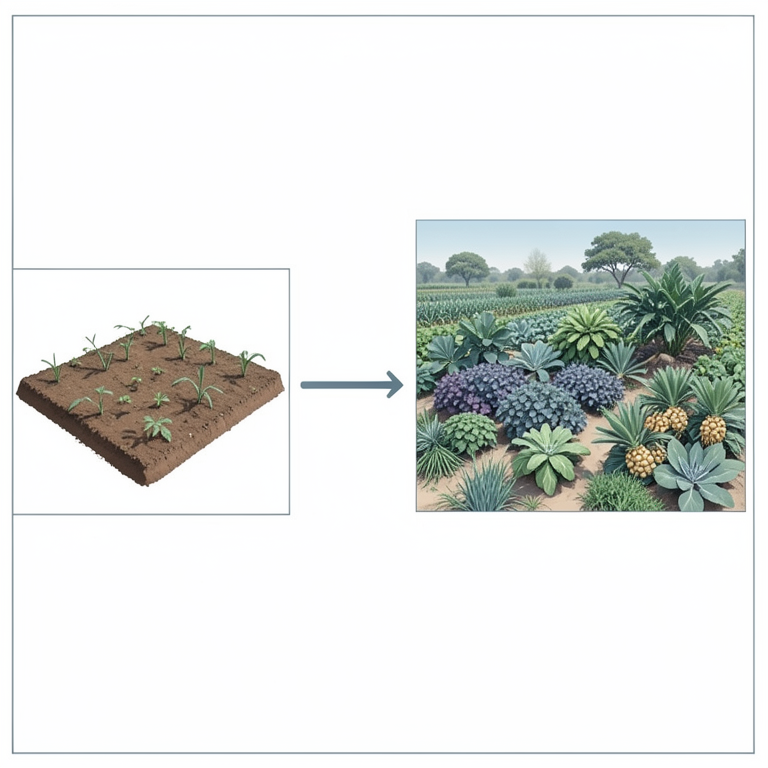
Economic Comparison of Organic Farm Types
AI-generated conceptual illustration (smallholder farms in East Africa). It explains the idea and does not show study data.
View source evidence ↗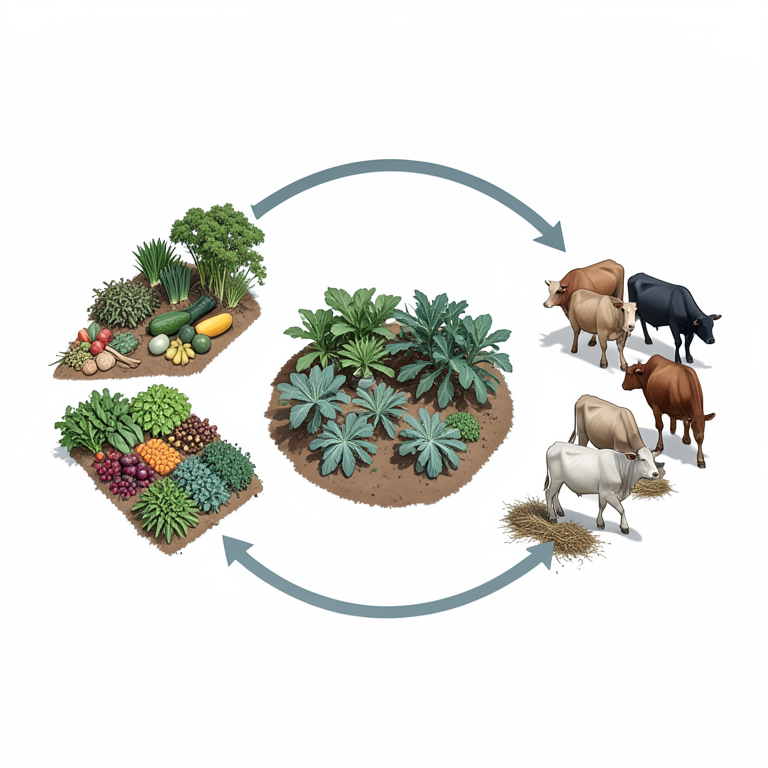
Whole-Farm Organic Management Concept
AI-generated conceptual illustration (smallholder organic farms in East Africa). It explains the idea and does not show study data.
View source evidence ↗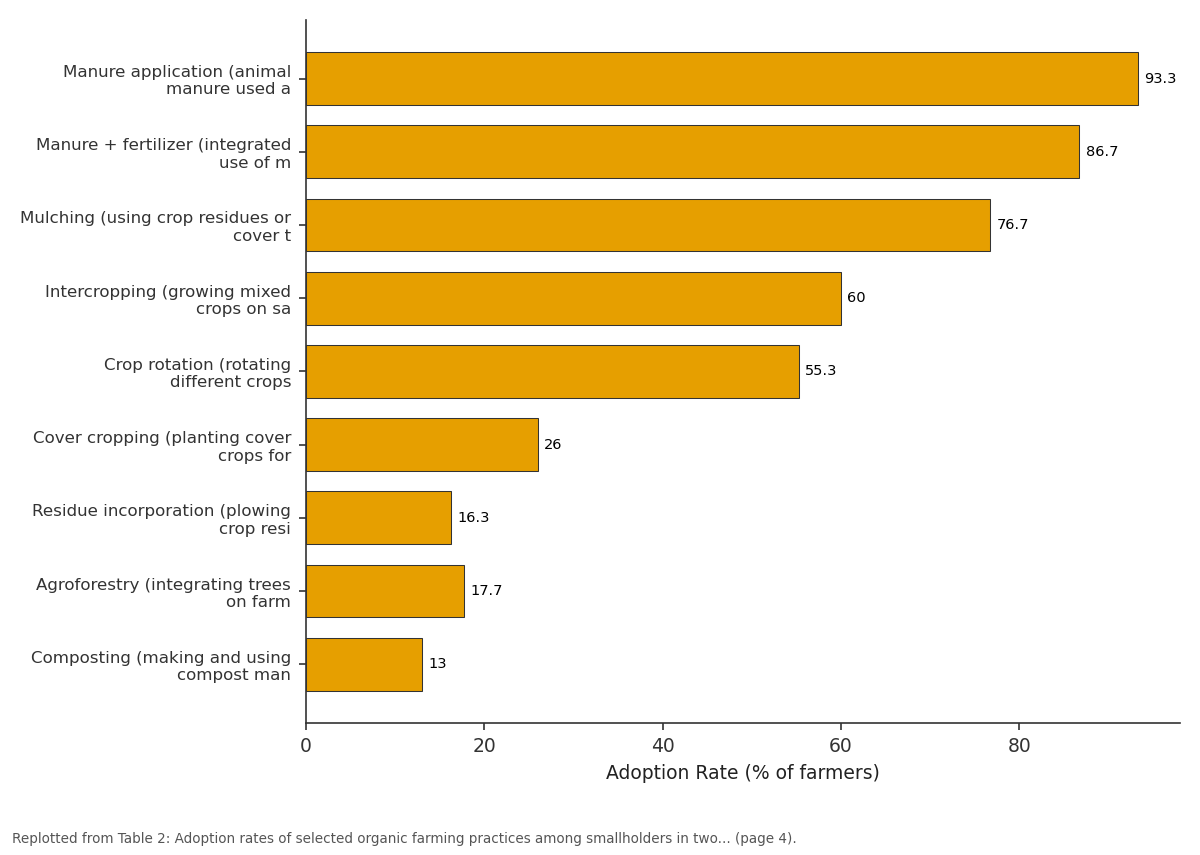
Adoption Rate (% of farmers): Manure application... vs Manure + fertilizer... vs Mulching (using crop... vs Intercropping (growing... vs Crop rotation (rotating...
Replotted from Table 2 (page 4) of the original paper. Every bar is the paper's own table value.
View source evidence ↗Figures & tables
From the original paper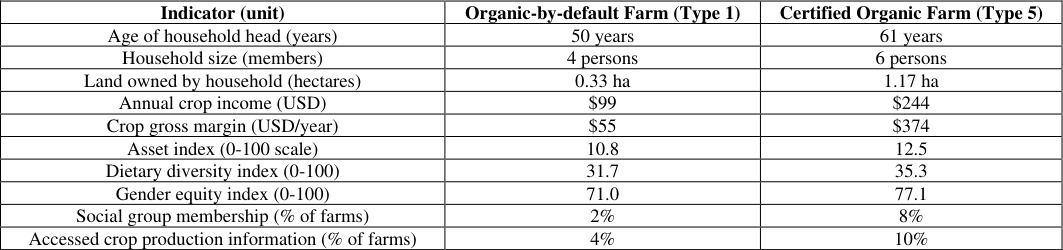 Table 1
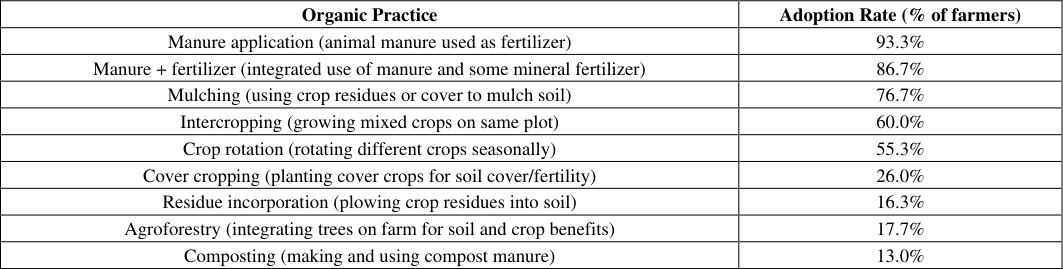 Table 2
Introduction
Smallholder agriculture is the backbone of East African economies and rural livelihoods. In countries like Kenya, farms under three (3) hectares produce over 70% of agricultural output [1, 2, 3] . The majority of East Africans depend on farming for income and food, yet poverty and food insecurity remain pervasive in rural areas [4] . Nearly half of Kenya's population lives below the poverty line, with rural communities facing chronic challenges of low productivity, soil fertility depletion, limited access to inputs and markets, and high vulnerability to pests, diseases and climate shocks [3,4,5] . Improving the welfare and resilience of smallholder households is essential for achieving sustainable development goals in the region [4,6] . Organic farming has emerged over the past two decades as a potential strategy to address some of these challenges. Organic agriculture eschews synthetic agro-chemicals in favor of natural inputs and ecological processes. It is promoted as a pro-poor, environmentally sustainable approach that can enhance soil health, biodiversity, and farmer incomes while reducing input costs and health risks [4,7] . Policy makers and development organizations have supported organic agriculture as a means to improve rural livelihoods and sustainable food systems in sub-Saharan Africa [4] . East Africa in particular has become a regional leader in organic agriculture growth. Uganda now has the second largest number of certified organic farmers in the world (after India) and the largest organic area in Africa [8] . Although still only about 1.4% of Uganda's arable land is organic, the sector's expansion has been remarkablecertified organic land increased by 14.7% between 2005 and 2011, and the value of Uganda's organic exports rose from US$4.6 million in 2003 to US$36.9 million in 2010 [8,9,10,11] . Likewise, Kenya and Tanzania have seen rising numbers of smallholders engaging in organic production for both domestic and export markets. In response, the East African Community developed the East African Organic Products Standard (EAOPS) in 2007 -the first regional organic standard in the developing world -to harmonize organic certification across Kenya, Uganda, Tanzania and beyond [4] . The EAOPS and associated programs (e.g. national organic movements and participatory guarantee systems) aim to reduce barriers to organic trade and help small farmers access premium organic markets [4] . Organic farming in East Africa takes two main forms. First, certified organic farming involves farmers who become certified (through third-party or participatory certification) to sell organic products, often targeting export markets (e.g. organic coffee, tea, cocoa, cotton, pineapples) or high-end urban consumers. Certification can enable price premiums and better market access but also imposes standards and documentation requirements. Second, many smallholders practice non-certified organic farming, sometimes called "organic-by-default" -they use little or no synthetic inputs, either by tradition or due to lack of access to agrochemicals 4 . These farmers may not identify as "organic farmers" and do not receive price premiums, but their production is effectively organic. There is also a growing movement of local organic markets serviced by smallholders under Participatory Guarantee Systems (PGS), which are alternative certification schemes based on peer review and trust. In Kenya, for example, farmer groups supported by the Kenya Organic Agriculture Network (KOAN) use PGS to supply organic produce to specialized urban markets in Nairobi [4] . Some PGS groups receive simplified certification through local bodies (e.g. Encert in Kenya) following the regional standard [4] . These diverse forms of organic agriculture imply that smallholders experience the socio-economic impacts of "going organic" in different ways depending on whether they are linked to premium markets or simply substituting inputs on subsistence plots. This paper provides a comparative synthesis of research on how organic farming affects smallholder households in East Africa, focusing on both socio-economic impacts (incomes, poverty status, yield performance, household welfare) and adoption dynamics (uptake of organic practices, factors influencing adoption). Researcher draw on case studies and surveys from Kenya and Uganda -two countries with significant organic farming engagement -to highlight outcomes for certified versus non-certified organic farmers. Key questions include: Does organic farming improve smallholders' incomes or reduce poverty? How does it affect household food security and other social dimensions? What motivates or hinders farmers from adopting organic methods, and who is most likely to do so? By comparing findings across studies, researcher aim to distill lessons on the conditions under which organic agriculture can benefit smallholders, and what challenges must be addressed for wider adoption and positive impact. The insights from this synthesis can inform policies and programs to more effectively leverage organic farming as a tool for rural development in East Africa.
Materials and Methods
This study is a literature-based synthesis drawing on empirical research from East Africa that examines socioeconomic outcomes and adoption of organic farming.
Researcher focused on studies published in the last decade that included comparative data on organic versus conventional farming among smallholders, or analyzed adoption of organic practices, in East African contexts (primarily Kenya and Uganda). Key sources include a household survey of organic vegetable and honey farmers in Kenya [7] , a farm typology study covering organic and conventional smallholders in Kenya [4] , adoption studies of organic soil management in Kenya [12] , and case studies of certified organic farming systems in Uganda [13] , among others. Both quantitative surveys (e.g. income and poverty assessments, technology adoption rates) and qualitative studies (e.g. farmer interviews on information and practices) were reviewed to capture a comprehensive picture. In reviewing socio-economic impacts, researchers extracted indicators such as household income, crop yields or gross margins, poverty rates (including multidimensional poverty indices), food security metrics, and social variables (gender roles, group membership, etc.) as reported in the studies. For adoption, researcher compiled data on adoption rates of specific organic practices and identified statistically significant determinants of adoption or "adoption intensity" (the extent of use of organic techniques) from regression analyses. Researcher paid particular attention to comparisons between certified organic farmers (those participating in formal organic certification schemes) and non-certified farmers (including conventional farmers and those practicing organic methods without certification).
Results
Results
Socio-Economic Impacts of Organic Farming
Researcher started analyzing socio-economic impacts of organic farming by looking on household income and poverty. Evidence suggests that engaging in organic farming -especially under certification for high-value markets -can improve smallholders' incomes and reduce their likelihood of poverty. A 2015 study in Kenya applied a multidimensional poverty index to compare certified organic farmers with non-organic farmers. It found that participation in certified organic production significantly reduced poverty rates [7] . Certified organic vegetable growers were about seven (7) percentage points less likely to be multidimensionally poor than if they farmed conventionally, while certified organic honey producers had an 18-percentage point lower probability of being poor 7 . Moreover, the counterfactual analysis indicated that noncertified farmers would substantially benefit if they adopted organic certification, with their probability of poverty projected to drop by approximately 7% (for vegetable farmers) to around 21% (for honey producers) [7] . These findings demonstrate a clear poverty-alleviation potential from organic farming when farmers can access organic premium prices and support. Micro-level income data from case studies reinforce this positive outlook. In central Kenya, smallholders practicing organic agriculture (in this case largely certified or under PGS) tended to have higher agricultural incomes than their conventional counterparts [4] . A farm typology survey of 488 households in Murang'a and Kajiado counties categorized farms by their degree of organic practice. The results showed that the farm types characterized by organic production had significantly greater crop revenue and gross margins on average than those characterized by purely conventional production 4 . For instance, "Type 5" farmsmostly certified organic farms in Murang'a -earned about $244 in annual crop income, compared to only $99 for "Type 1" farms that were organic-by-default subsistence farms (the poorest group) 4 . The certified organic farms also achieved a far higher crop gross margin (mean of $374 per year) than the organic-by-default farms (only $55) [4] , indicating better profitability. Even against "Type 4" conventional cash-crop farms, the organic farms showed an income advantage (Type 4 earned around $186 crop income with $349 gross margin, still lower than Type 5) [4] . These differences suggest that when organic farming is implemented with market orientation (and often with external support), it can yield superior economic returns for smallholders. Farmers save on chemical input costs and often obtain price premiums, which together improve net earnings [7] . Certified organic farmers in Kenya have reported benefiting from premium prices (10-30% above conventional) and lower input expenditures, alongside opportunities for value addition and new market linkages [7] . Such gains can translate into meaningful poverty reduction. In the Kenya study, after controlling for selection bias, certified organic households had significantly lower multidimensional poverty scores than if they had remained non-organic, confirming that the income and asset gains from organic farming helped build their livelihood assets [7] . At the same time, not all organic farmers enjoy high incomes -there is a distinction between organic market participants and organic-by-default subsistence farmers. The latter group often practices organic methods out of necessity (due to inability to purchase chemicals) and sells little produce, leading to much lower cash income. In the Kenya typology, Type 1 "organic-by-default" farms were the poorest segment, with very limited land (0.3 ha owned on average) and minimal surplus to sell 4 . These households earned under $100 in crop income per year and had a low asset index [4] . In contrast, the Type 5 certified organic farms were far better off economically -they owned more land (1.17 ha on average vs. 0.33 ha) and earned more than double the crop income of Type 1 [4] . This comparison, summarized in Table 1, underscores that organic farming's economic impact is context-dependent. Organic farms that are integrated into commercial value chains clearly outperform subsistence farms (organic or not) on income metrics. Thus, while organic agriculture has potential to raise smallholder incomes, simply being "organic" is not a guarantee of higher income -access to markets and resources is critical. The data in Table 1 highlight that certified organic farms have older household heads on average and larger familiessuggesting that more established households engage in organic export production -and they enjoy substantially higher crop revenues and gross margins than organic-bydefault subsistence farms. Notably, however, the certified organic farms in this sample did not score dramatically higher on dietary diversity or assets than the organic-bydefault group 4 . This indicates that income gains from organic cash crops do not automatically translate to diverse diets or wealth; some certified farmers may reinvest earnings into their export enterprise or face trade-offs in food crop production, as discussed below.
| Indicator (unit) | Organic-by-default Farm (Type 1) | Certified Organic Farm (Type 5) |
|---|---|---|
| Age of household head (years) | 50 years | 61 years |
| Household size (members) | 4 persons | 6 persons |
| Land owned by household (hectares) | 0.33 ha | 1.17 ha |
| Annual crop income (USD) | $99 | $244 |
| Crop gross margin (USD/year) | $55 | $374 |
| Asset index (0-100 scale) | 10.8 | 12.5 |
| Dietary diversity index (0-100) | 31.7 | 35.3 |
| Gender equity index (0-100) | 71.0 | 77.1 |
| Social group membership (% of farms) | 2% | 8% |
| Accessed crop production information (% of farms) | 4% | 10% |
Table text extracted from the original PDF; superscript letters are shown inline. The original table image is below.
View original table image
Then researcher looks at food security and dietary outcomes. One of the most crucial aspects of household welfare is food security. The impact of organic farming on food security is mixed, with evidence of both positive and negative outcomes. On one hand, organic practices (like improved soil fertility, crop diversification, and reduced input costs) can enhance yields of food crops over time and stabilize production, which should benefit food security. On the other hand, many certified organic schemes encourage a focus on cash crops for export, which could reduce the land, labor and attention given to subsistence food production on the farm. If the cash income from organic sales is insufficient or unstable, households might find themselves worse off in terms of food availability. Findings from Uganda raise cautionary flags about potential food security risks in certified organic systems. A study comparing four certified organic farming systems in Uganda (coffee, cocoa, pineapple, and cotton farmers) observed that food shortages were prevalent across all groups of certified organic farmers [13] . In fact, around half of the surveyed organic households had experienced significant food shortages in the past year [13] . The researchers identified a pattern they termed "hanging in," where some certified organic farmers barely meet organic standards ("organic by default" compliance) and struggle with low yields and persistent food insecurity [13] . In these cases, farmers devoted most of their land and inputs to the certified cash crop but did not invest in soil improvements or rotations for food crops, leading to declining food crop yields [13] . Households in the "hanging-in" cluster had suboptimal soils, fluctuating yields, and high pest pressures on both cash and food crops, and 47% of them could not maintain a balanced diet year-round [13] . The core issue was that additional income from the organic cash crop did not fully compensate for the reduction in subsistence production [13] . As one report concluded, "certified organic agriculture can contribute to a disintegration of farming systems and put food security at risk if the additional income is not sufficient to compensate for the reduced area and effort devoted to food crops" [13] . This underlines the importance of ensuring that organic conversion is holistic (whole-farm) and that farmers continue to prioritize food crops (or else earn enough to buy food). Without careful management, a poorly implemented shift to export-oriented organic farming could inadvertently worsen household food self-sufficiency.
On the positive side, other evidence suggests organic farming can support food security when practiced in a diversified manner. In the Uganda study, one cluster of farms was termed "socially-driven" -these farmers placed emphasis on food security, labor equity, and community cooperation, albeit with average economic outcomes 13 . Farms in this cluster had the best food security scores (fewer months of food shortage) compared to the more commercially oriented clusters [13] . Their workloads were shared more evenly within the household, and they were more active in farmer associations, which likely facilitated knowledge sharing and risk-pooling [13] . However, their ecological performance was only average, hinting at a tradeoff: they may not have fully exploited organic practices to boost yields, focusing first on securing food and social needs [13] . This finding implies that organic farming's benefits for food security are maximized when farmers balance cash crops with food crops and labor is allocated equitably. Additionally, diversified organic farms often cultivate a range of crops (due to organic crop rotation and polyculture principles) which can improve household dietary diversity. In Kenya, farms with more organic practices tended to have more diverse crop portfolios and slightly higher dietary diversity indices than purely conventional farms [4] . For example, organic-leaning farm clusters achieved dietary diversity index scores around 10% higher than the poorest conventional cluster 4 . Nonetheless, even some certified organic households had difficulty maintaining year-round diet diversity in Uganda [13] . This reinforces that income from organic farming must be translated into nutritional improvements, either through own food production or prudent use of earnings to purchase food.
Although the focus of this paper is socio-economic, it is worth noting that organic farming in East Africa has demonstrated important environmental benefits which indirectly support long-term socio-economic sustainability.
Long-term trial results in Kenya show that organic systems can enhance soil biodiversity and ecological resilience. Notably, researchers found significantly higher abundance and diversity of beneficial soil macro-fauna (termites) in high-input organic plots compared to high-input conventional plots in a 10-year trial [14] . Termites are critical for decomposition and soil structure in the tropics, so their greater presence under organic management signals improved soil health and potentially improved soil fertility sustainability [14] . Higher soil organic matter and biotic activity under organic practices have been linked to better moisture retention and nutrient cycling, which over time can stabilize or increase yields for smallholders [14] . Farmers practicing organic methods also avoid exposure to toxic agro-chemicals, offering health benefits such as reduced pesticide poisoning incidents (a documented problem among conventional smallholders in East Africa) 7 . In Kenya, the introduction of organic pest management training was found to improve farmers' knowledge of safer pest control and likely reduced their reliance on hazardous pesticides [15] . These improvements in health and environment, while hard to quantify in cash terms, contribute to the overall well-being of farming families and the sustainability of their livelihoods. Many smallholders themselves recognize ecosystem benefits -for example, Ugandan organic farmers associated their farming with healthier soils and appreciated the use of manure and compost for maintaining soil fertility [8,6,16,31] . Over the long run, these environmental co-benefits reinforce the socioeconomic viability of organic farming by mitigating resource degradation and input dependency.
Adoption of Organic Farming
Despite the potential benefits, the adoption of organic farming practices among smallholders in East Africa varies widely and faces several constraints. Overall, only a minority of farmers in the region have fully converted to organic methods or sought organic certification. As of the mid-2010s, certified organic producers numbered about 210,000 in Uganda and 170,000 in Tanzania, and fewer in Kenya (where organic production is often under PGS or not formally certified) [4,8] . These figures represent just a small fraction of the millions of farmers in those countries. However, many more smallholders partially adopt organic practices (such as using manure or crop rotation) without abandoning conventional inputs entirely. Understanding the intensity of adoption -which practices are adopted and to what extent -is crucial.
Recent surveys in Kenya's Central Highlands provide insights into adoption rates of specific organic soil management practices. Table 2 summarizes findings from 300 farmers in Murang'a and Tharaka-Nithi counties on their use of nine "organic-based" technologies. The technologies range from low-cost practices like manure application and intercropping (which many farmers use) to more knowledge-intensive ones like composting and agroforestry (less commonly used). These adoption rates reveal a pattern: practices that are lowcost and fit easily into existing farming systems have the highest uptake. Nearly all surveyed farmers use animal manure, a traditional fertilizer substitute, and a large majority practice intercropping and crop rotation, which have long been part of smallholder risk management. The integration of a little chemical fertilizer with manure (manure + fertilizer) is also common (87%), indicating many farmers are not strictly "organic-only" but combine methods 12 . On the other hand, more complex or laborintensive practices like composting or establishing agroforestry trees are adopted by less than 20% of farmers.
| Organic Practice | Adoption Rate (% of farmers) |
|---|---|
| Manure application (animal manure used as fertilizer) | 93.3% |
| Manure + fertilizer (integrated use of manure and some mineral fertilizer) | 86.7% |
| Mulching (using crop residues or cover to mulch soil) | 76.7% |
| Intercropping (growing mixed crops on same plot) | 60.0% |
| Crop rotation (rotating different crops seasonally) | 55.3% |
| Cover cropping (planting cover crops for soil cover/fertility) | 26.0% |
| Residue incorporation (plowing crop residues into soil) | 16.3% |
| Agroforestry (integrating trees on farm for soil and crop benefits) | 17.7% |
| Composting (making and using compost manure) | 13.0% |
Table text extracted from the original PDF; superscript letters are shown inline. The original table image is below.
View original table image
Even cover cropping (planting legumes or cover plants to protect soil) is relatively low at 26%. This suggests that knowledge, labor availability, and perhaps land constraints limit the uptake of those practices. Mulching has a higher adoption (77%), likely because farmers find value in conserving moisture and suppressing weeds, especially in drier areas like Tharaka [12] . The differences between regions (Murang'a vs Tharaka) were notable: Murang'a had more agroforestry and compost users, while Tharaka had more cover cropping and extremely high mulching rates (93%) [12] -reflecting adaptation to local climate (Tharaka being drier, mulch is critical). The determinants of adoption -why some farmers adopt more organic practices or at greater intensity -have been investigated in several studies. Common socio-economic factors emerge. First, education, farmers with more education or better access to information are more likely to adopt innovative practices [26] . In Kenya, households with more educated heads had higher adoption intensity of organic soil technologies [12] . Education likely helps farmers understand the long-term benefits of organic methods and how to implement them. Additionally, those who received training on organic techniques showed significantly greater adoption intensity [12] . This highlights the importance of agricultural extension -the survey found 76% of respondents had not been trained on organic practices [12] , indicating a gap. In Uganda, organic farmers often cited lack of readily available technical knowledge as a barrier; conventional input dealers are ubiquitous sources of advice for chemical farming, whereas information on organic pest control or soil management usually comes from NGOs or special programs and is not continuously accessible [15] . One qualitative study in Uganda reported that "information on organic pest management was provided through external sources (e.g. NGOs), and was not available at times when farmers developed an information need," unlike pesticide advice which was integrated in everyday farmer networks [15] . Thus, better information dissemination is key to adoption. Second, age, younger farmers appear more open to adopting organic innovations. In Uganda's organic pineapple sector, youth participation is high -30% of organic pineapple farmers were under 30, whereas only 14% were above 50 8 . The older generation was less involved, reportedly due to the high labor requirements and perhaps reluctance to change established practices [8,17] . Statistical analysis in Kenya likewise found the age of the household head negatively influenced adoption intensity for certain practices -older farmers were less likely to intensively adopt intercropping and integrated manure-fertilizer use [12] . Younger farmers may be more willing to experiment with organic techniques and have longer planning horizons to see the benefits, whereas older farmers might be risk-averse or physically unable to perform labor-intensive tasks like compost turning. That said, some very young farmers lack capital or land security to adopt new methods, so there is a balance -but overall, youthful, innovative outlook correlates with organic uptake. Third, gender dynamics influence adoption, particularly the role of female-headed households. The Kenya study found that having a male household head was associated with higher adoption intensity of labor-intensive practices like manure use and mulching [12] . This does not mean women are less supportive of organic methods -in fact, women often champion organic approaches -but female-headed households tend to have more labor and capital constraints. They may lack the labor (often provided by men or hired workers) to, say, collect and spread large quantities of manure or maintain cover crops. One group identified as needing special support was widowed or single women farmers and the elderly, who had much lower adoption rates due to these constraints [12] . For organic promotion to be inclusive, projects should provide labor-saving innovations or community labor-sharing for women and older farmers. Fourth, farm size and assets, larger farms and those with more livestock are better positioned to adopt organic practices. The availability of livestock (measured in Tropical Livestock Units) had a strong positive effect on adoption intensity of manure use -unsurprisingly, farmers who own more cattle or goats have more manure to apply as fertilizer [12] . Farm size was also a factor: households with more land were more likely to practice crop rotation and intercropping extensively [12] . Larger landholdings give farmers flexibility to experiment with rotations or dedicate sections to soil-improving practices without jeopardizing their entire food supply. In contrast, a very small landholder may feel they cannot afford to, for example, plant a cover crop for a season instead of a food crop. Wealth in terms of farm equipment or cash might also help, though evidence is mixed -some organic practices require minimal cash (e.g. composting) but more labor, whereas others like biopesticides might require purchasing inputs. Overall, resource endowment (land, livestock, capital) facilitates organic adoption. Fifth, market access and institutional support, the decision to pursue organic farming is heavily influenced by market opportunities and institutional context. In Kenya, distance to markets was a decisive factor for certifying organic honey producers -farmers far from markets were much less likely to join organic schemes due to the difficulty of selling their product or accessing organic buyer collection points 7 . Conversely, where NGOs or companies set up collection centers and provide guaranteed purchase, farmers are more inclined to adopt organic production [7] . The presence of an organic cooperative or contract with an organic exporter strongly drives adoption of full organic conversion. Many certified organic farmers in East Africa joined because a private company or development project facilitated the process -providing training, covering certification costs, and assuring a market [4] . For example, in Murang'a (Kenya), hundreds of smallholders became certified organic avocado and macadamia producers through contracts with export firms that handled certification and paid a premium [4] . In such cases, adoption is essentially enabled from the top down. Lacking these institutional supports, few farmers would independently pursue certification given the costs and paperwork involved. Participatory Guarantee Systems (PGS) offer another route: local NGOs and farmer associations organize groups and provide a form of certification for local organic markets, lowering barriers for small farmers. The NOFA group in Kajiado, Kenya is an example where farm families adopted organic methods under a PGS and collectively sell at an organic market in Nairobi 4 . Thus, adoption at scale often requires organizational frameworks -either cooperatives, NGOs, or companies that aggregate smallholders and provide extension services. Where farmers are isolated or only producing for informal local markets with no premium, the incentive to formally adopt organic standards is weaker (though they may still use some organic practices for costsaving reasons). Lastly, perceived profitability and labor demands, farmers perform their own cost-benefit analysis when deciding to adopt a new practice. Organic methods can be laborintensive (e.g. composting, regular manure application, weeding without herbicides) and may initially give lower yields during the soil transition period. Studies have noted that high labor requirements deter adoption, especially for older farmers [8] . If family labor is scarce or expensive to hire, farmers may stick to less laborious conventional methods unless they clearly see a payoff. The Uganda pineapple study found that "high labor costs are the key deterrents for older people to adopt organic enterprises" 16 . On the flip side, profit motivation attracts younger farmersthe same study reported that innovation and profit potential were major drivers for youth to enter organic pineapple farming [16] . When organic produce commands a premium or new market niche, entrepreneurial farmers are willing to invest the extra effort. If those profit signals disappear or premiums erode, adoption might stall. In this regard, some Kenyan farmers adopt a "partial organic" approach: they use manure and reduce chemical fertilizer to save money but will use a pesticide or fertilizer if needed to avoid crop failure. They weigh immediate yield and pest pressure against longer-term soil health. The availability of organic inputs also affects adoption -for instance, if a bio-pesticide or botanical spray is accessible and affordable, a farmer is more likely to reduce synthetic pesticide use. Where such alternatives are lacking, farmers may continue with chemicals despite interest in organic practices. In aggregate, current adoption of organic farming in East Africa can be described as enthusiastic but limited. A subset of smallholders -often those linked with export projects, younger farmers, or members of organic groups -have embraced organic agriculture fully. They are the minority, yet their numbers are growing as global demand for organic products rises and as local organic markets slowly expand. The majority of smallholders practice a hybrid agriculture, combining organic and inorganic techniques pragmatically. For example, a farmer might intercrop maize with a nitrogen-fixing legume and apply manure (organic practices), but also use a little synthetic fertilizer or a dose of pesticide on occasion. This incremental adoption is a function of risk management and resource limits. Over time, as more success stories of organic farming circulate, adoption could accelerate. Indeed, information flows play a role: Kenyan farmers who had access to extension information on crop production and input use were significantly more likely to practice organic techniques or even consider certification [4] .
One promising sign in farmers adoption of organic farming is that farmers engaged in organic production tend to stick with it once they see the benefits. Retention in organic certification schemes in East Africa is reportedly high, as farmers appreciate stable prices and improved farm management skills (e.g. record-keeping, quality control) [7,18,19] . Many organic farmers also cite non-monetary motivations such as improved personal health (avoiding pesticide exposure) and environmental ethics as reasons they continue with organic farming [7, 19. 20. 21, 22, 23, 24] . These intrinsic motivations can spur adoption among peers via demonstration effects. For example, neighbors observing a successful organic farmer who has healthy crops and good profits might be inspired to try those methods, especially if they can learn directly from that farmer. This points to the value of farmer-to-farmer extension and organic farmer field schools in spreading adoption.
Discussion
The comparative evidence presented above reveals a nuanced picture of organic farming's role in East African smallholder livelihoods. There are clear socio-economic benefits associated with organic agriculture in this regionnotably, higher net incomes, reduced poverty likelihood, and enhanced social capital for farmers who successfully integrate into organic value chains [4,7] . At the same time, there are critical challenges and trade-offs -particularly regarding food security and labor -that temper the universal applicability of organic farming as a development panacea [8,13] . In this discussion, we synthesize these insights, contrasting the impacts on certified vs. non-certified organic farmers, and explore what is needed to support wider adoption while safeguarding smallholder welfare.
Certified vs. Non-Certified Organic Farming
A key distinction emerging from the findings is between commercialized organic farming (with certification) and subsistence-level organic practice (without certification). Certified organic farmers in East Africa generally operate in organized structures -they are members of cooperatives or contracted by exporters, receive training, and produce one or two high-value cash crops under organic standards. This model has proven effective in linking smallholders to lucrative markets and delivering economic gains. For instance, Kenyan farmers certified for organic vegetables or honey enjoyed premium prices and significant poverty reduction compared to if they sold locally without certification 7 . Certification schemes often come as part of development projects or private initiatives that provide resources (e.g. inputs like organic seeds, technical assistance, facilitated market access). Thus, the certified organic pathway can be seen as high-input organic (not in synthetic inputs, but in terms of information, labor, and management input) -it optimizes organic practices, sometimes even achieving higher productivity than traditional farming through efficient organic methods and improved varieties. The reward is higher income and sometimes better resilience (e.g. diversified export income). On the other hand, non-certified organic farming tends to be either "organic-by-default" -low-input, traditional farming by resource-poor households -or partial adoption by farmers experimenting with organic methods for selffinanced benefits (like using manure to save fertilizer cost). These non-certified farmers typically lack market premiums and may not implement a comprehensive set of organic practices (they might do a bit of mulching and manure use but also face pest/disease issues and yield limitations). Researcher synthesis show that organic-by-default subsistence farms are often among the poorest segments, with the lowest landholdings and incomes 4 . They benefit from the cost-saving aspect of organic (not spending on chemicals) but may suffer from low productivity if not using any inputs at all. In other words, for many such farmers, being "organic" is not a strategic choice but a reflection of marginalization -these households cannot afford agrochemicals and thus rely on indigenous practices. Without external support, they also do not achieve the yield improvements that well-supported organic farmers can. This underscores that organic farming per se is not automatically empowering for the poorest farmers unless it is accompanied by yield-enhancing knowledge and market linkages. Simply avoiding chemicals does not guarantee prosperity; indeed, yields might remain low if soil fertility is not managed properly (a common issue in organic-bydefault systems).
Food Security
The discussion on food security highlights that organic farming initiatives must safeguard subsistence needs. The Ugandan case where certified organic farmers faced frequent food shortages is a stark reminder that development projects should not encourage farmers to abandon food cropping entirely in favor of export crops 13 . A more balanced approach is promoting "organic whole-farm management", wherein the entire farm (cash and food crops, as well as any livestock) is managed organically and synergistically. Positive effects of organic certification on agroecosystem health cannot be taken for granted so there is a need for full-farm conversion and comprehensive organic principles to avoid food security risks [13] . This means in practice: intercropping or rotating food crops with export crops, using some of the organic methods (like compost, manure, bio-pesticides) on food crops as well, and not overspecializing in a single cash crop. It might also involve livestock integration, which can provide manure for crops and an extra source of food/income (milk, meat). Indeed, integrated organic croplivestock systems could greatly benefit smallholders, but as studies show, they are underutilized. For example, many East African organic crop farmers keep some animals but struggle to meet organic feed standards or lack grazing land 25 . As a result, livestock are often not contributing optimally (e.g. farmers in Uganda with organic pineapples had to feed cows with crop residues and sometimes resorted to non-organic feed from neighbors, violating organic rules 25 ). It is proposed as solution for this problem that there is a need for community-based resource sharing for organic livestock -e.g. group grazing schemes or cut-and-carry fodder banks -and a "whole farm" certification that covers mixed farming, to encourage synergy between crop and animal husbandry [27] . They argue that a secure market for organic milk and meat is needed to justify the effort [27] . If such integration is achieved, it can close nutrient loops and enhance food security (milk is an important protein source) while still maintaining organic integrity.
Labor and Gender Considerations
Organic farming typically requires more labor for tasks like weeding (since herbicides are not used), manure collection/spreading, and diversified cropping. This can be a constraint but also an opportunity for rural employment if managed well. Labor availability is one reason younger farmers adopt organic more readily -they can supply labor themselves or have young families to help. To ease labor bottlenecks, collective action can help (e.g. communal work groups for activities like compost turning or pest handpicking). Mechanization appropriate for small organic farms (like cheap weeders or solar-powered irrigation pumps to enable cover crops in dry areas) could also alleviate labor issues. From a gender perspective, it's important that the additional labor burden of organic practices does not fall disproportionately on women. In a study in Ugandan coffee, it was noted that certification can increase women's participation in training and marketing (empowering) but also increased the time women spend on farm work [13] . Programs should therefore consciously involve both men and women in planning labor allocation for organic farming and consider technologies or practices that reduce drudgery (for instance, using animal draft power for weeding or transporting manure). Encouragingly, some organic projects include gender equality as a goal, forming women's groups for organic production and ensuring women benefit from premiums. The slight edge in gender equity index observed on organic farms hints that organic initiatives can create more equitable decision-making environments [4] . Women in Uganda's organic pineapple groups, for example, gained more control over income from pineapple sales, because the enterprise was seen as "new" and not traditionally maledominated [8] . To sustain this, interventions might provide joint certification registration for husbands and wives and include modules on gender roles in organic training.
Knowledge and Information Networks
A recurring theme is that knowledge gaps hinder adoption. Conventional agriculture in Africa has decades of infrastructure (agro-dealers, extension agents promoting fertilizer, etc.) behind it, whereas organic agriculture knowledge often travels through NGOs, pilot projects, or farmer-to-farmer exchange. Strengthening the knowledge network for organic farming is crucial. Governments and universities in East Africa have begun to pay more attention to organic agriculture, but extension services remain skewed towards conventional practices. Mainstreaming basic organic techniques into national extension messages could normalize organic options. The 2020 Ugandan study strongly recommends leveraging existing information channels to spread organic pest management knowledge 15 . This is a practical idea: training agro-dealers to sell botanical pesticides or biofertilizers and advise on their use could make organic info as accessible as advice on chemical inputs, reaching farmers "where they are." Additionally, successful organic farmers can serve as local champions. If each organic farmer converts a few neighbors by demonstration and mentorship, adoption could grow exponentially at the community level [28] .
Market Development and Policy Support
For certified organic farming to thrive and expand among smallholders, market demand must keep growing and be reliable. East Africa exports a variety of organic products mainly to Europe and the US. These markets have continued to expand, and initiatives like the EAOPS and regional organic trade fairs have helped East African farmers showcase their products [29,30] . However, dependence on export markets can be risky due to fluctuating global prices and stringent standards. Diversifying local and regional organic markets is important. Urbanization and a rising middle class in Africa might spur more domestic demand for organic produce for health and quality reasons. Governments can assist by creating awareness of organic foods and perhaps setting aside spaces for organic farmers in city markets. Policy-wise, some East African governments have begun to develop Organic Agriculture Policies (e.g. Uganda drafted a National Organic Agriculture Policy). Implementing these policies -providing training, research, and possibly incentives -could greatly encourage adoption. Another policy angle is to incorporate organic practices into climate change adaptation and soil conservation programs, given their environmental benefits. For example, Kenya's extension programs on sustainable land management could emphasize composting and agroforestry, which are essentially organic practices.
Reconciling Yield and Sustainability
Critics often question whether organic farming can match the yields of conventional farming needed for food security. In East Africa, yield comparisons vary by crop and system. Long-term trials have found that after an initial transition period, organic yields can approach those of conventional systems, especially for crops like maize, if best practices are followed [13,14] . For export perennial crops (coffee, cocoa), organic management has in cases shown slightly lower yields but higher net income due to premiums and lower costs [13] . Thus, while a yield gap may exist in certain scenarios, it is often not as large as presumed, and economic return can still favor organic when premiums are considered. Moreover, organic systems have advantages in drought years or on degraded soils, where they outperform conventional due to better soil moisture retention and structure. This resilience is valuable for smallholders facing climate variability. Policymakers should recognize that productivity and sustainability need not be opposing goals -organic farming attempts to achieve both, and with adequate R&D (for instance, breeding of crop varieties suited to organic conditions, or improved biopesticides) the productivity of organic smallholders can improve further.
Ensuring Inclusive Benefits
One important discussion point is how to make sure that the growth of organic agriculture benefits poorer farmers, not just relatively better-off early adopters. If organic certification schemes primarily attract those who already have some capital and education (since they have the capacity to meet standards), there's a risk of excluding marginal farmers. Deliberate inclusion strategies are needed: for example, group certification can allow even a small farmer with 0.2 hectare to join if they are part of a cooperative, whereas individually they might not afford the process. NGO and government programs could target resource-poor farmers for organic training, perhaps subsidizing initial costs like biopesticide kits or providing livestock to generate manure. The evidence shows that once these farmers adopt and see returns, they can escape some aspects of poverty [7] . Realizing that potential means lowering the entry barriers to organic farming for the poor -be it through micro-credit for organic inputs, guaranteed purchase agreements, or farmer-to-farmer mentorship.
Conclusion
Organic farming offers a viable pathway to more sustainable and remunerative smallholder agriculture in East Africa, but its benefits depend on context and support: certification tied to dependable markets can lift incomes and reduce poverty, while non-certified "organic-by-default" systems deliver soil and cost gains yet seldom transform livelihoods without training and market access. To avoid food-security tradeoffs -especially where export crops displace staplesconversion should follow whole-farm organic management that safeguards subsistence production and, where possible, integrates livestock. Adoption scales fastest among younger, better-informed farmers embedded in strong groups and assured markets, pointing to practical levers: agroecologyfocused extension, farmer-to-farmer learning, group or subsidized certification, initial support for organic inputs, and reliable purchase agreements. Governments and partners should align policy, research, and climate-finance instruments to lower entry barriers, reward ecosystem services, and expand local and export organic markets. Blending certified value-chain opportunities with widespread dissemination of yield-raising organic practices can make the transition inclusive -improving cash income, food availability, and environmental resilience without overburdening the most vulnerable farmers.
References
30 in the original paper- Altieri MA. Agroecology, small farms, and food sovereignty. Monthly Review. 2009;61(3):102-113.
- Davis B, Di Giuseppe S, Zezza A. Are African households (not) leaving agriculture? Patterns of households' income sources in rural Sub-Saharan Africa. Nutrient Cycl Agroecosyst. 2017;100:1-18.
- Salami A, Kamara AB, Brixiova Z. Smallholder Agriculture in East Africa: Trends, Constraints and Opportunities. Tunis: African Development Bank; 2010.
- Kamau JW, Stellmacher T, Biber-Freudenberger L, Borgemeister C. Organic and conventional agriculture in Kenya: A typology of smallholder farms in Kajiado and Murang'a counties. J Rural Stud. 2018;57:171-185.
- Tittonell P, Giller KE. When yield gaps are poverty traps: the paradigm of ecological intensification in African smallholder agriculture. Field Crop Res. 2013;143:76-90.
- WFP. Comprehensive food security and vulnerability survey: Summary report Kenya. 2016.
- Ayuya OI, Gido EO, Bett HK, Lagat JK, Kahi AK, Bauer S. Effect of certified organic production systems on poverty among smallholder farmers: Empirical evidence from Kenya. World Dev. 2015;67:27-37.
- Kwikiriza N, Mugisha J, Kledal PR, Karantininis K, Namuwooza C. Tracing Uganda's global primary organic pineapple value chain. Afr Crop Sci J. 2016;24(1):15-33.
- Gailhard YU, Bojnec S. Farm size and participation in agri-environmental measures: Farm-level evidence from Slovenia. Land Use Policy. 2015;46:273-282.
- Nandi R, Bokelmann W, Nithya VG, Dias G. Smallholder organic farmers' attitudes, objectives and barriers towards production of organic fruits and vegetables in India: A multivariate analysis. Emirates J Food Agric. 2015;27(5) (no page numbers provided in your source).
- Vanslembrouck I, Van Huylenbroeck G, Verbeke W. Determinants of the willingness of Belgian farmers to participate in agri-environmental measures. J Agric Econ. 2002;53(3):489-511.
- Mwaura GG, Kiboi MN, Bett EK, Mugwe JN, Muriuki A, Nicolay G, Ngetich FK. Adoption intensity of selected organic-based soil fertility management technologies in the Central Highlands of Kenya. Front Sustain Food Syst. 2021;4:570190.
- Templer N, Hauser M, Owamani A, Kamusingize D, Ogwali H, Mulumba L, Onwonga RT, Adugna BT, Probst L. Does certified organic agriculture increase agroecosystem health? Evidence from four farming systems in Uganda. Int J Agric Sustain. 2018;16(2):150-166.
- Anyango JJ, Bautze D, Fiaboe KKM, Lagat ZO, Muriuki AW, Stöckli S, Riedel J, Onyambu GK, Musyoka MW, Karanja EN, Adamtey N. The impact of conventional and organic farming on soil biodiversity conservation: A case study on termites in the long-term farming systems comparison trials in Kenya. BMC Ecol. 2020;20(1):13.
- Diemer N, Staudacher P, Atuhaire A, Fuhrimann S, Inauen J. Smallholder farmers' information behavior differs for organic versus conventional pest management strategies: A qualitative study in Uganda. J Clean Prod. 2020;257:120465.
- Rundgren G. Organic Exports -a way to a better life? 2008. doi:10.13140/RG.2.1.5066.2486.
- Beriso G, Tadessea A, Motuma G. Review factors affecting smallholder farmers' livelihood diversification in Ethiopia. South Asian J Agric Sci. 2022;2(2):21-28.
- Donovan J, Poole N. Changing asset endowments and smallholder participation in higher value markets: Evidence from certified coffee producers in Nicaragua. Food Policy. 2014;44:1-13.
- Kilcher L. How organic agriculture contributes to sustainable development. J Agric Rural Dev Trop Subtrop. 2007;89(Suppl):31-49.
- Asfaw S, Mithofer D, Waibel H. Agrifood supply chain, private-sector standards, and farmers' health: Evidence from Kenya. Agric Econ. 2010;41(3-4):251263.
- Barham BL, Weber JG. The economic sustainability of certified coffee: Recent evidence from Mexico and Peru. World Dev. 2012;40(6):1269-1279.
- Bennett M, Franzel S. Can organic and resourceconserving agriculture improve livelihoods? A synthesis. Int J Agric Sustain. 2013;11(3):193-215.
- Beuchelt TD, Zeller M. Profits and poverty: Certification's troubled link for Nicaragua's organic and fairtrade coffee producers. Ecol Econ. 2011;70(7):1316-1324.
- Reardon T, Barrett CB, Berdegue JA, Swinnen JFM. Agrifood industry transformation and small farmers in developing countries. World Dev. 2009;37(11):17171727.
- Kiggundu M, Kabi F, Vaarst M, Nalubwama S, Odhong C. Management and use of dairy cattle feed resources on smallholder certified organic pineapple farms in Central Uganda. J Agric Environ Int Dev. 2014;108(2):207-225.
- Agutu FO, Ondiek JO, Mbuku SM, Bebe BO. Willingness to pay for assisted reproductive technologies by pastoral herd owners in Southern Rangelands of Kenya. Int J Vet Sci Anim Husbandry. 2022;7(1):26-31. DOI:10.22271/veterinary.2022.v7.i1a.401.
- Vaarst M, Smolders G, Wahome R, Odhong C, Kiggundu M, Kabi F, Nalubwama S, Halberg N. Options and challenges for organic milk production in East African smallholder farms under certified organic crop production. Livest Sci. 2019;220:1-9.
- Schwindenhammer S. Authority pooling and regional organic agriculture standard-setting: Evidence from East Africa. J Environ Policy Plan. 2016;18(1):102120.
- Idu EE, Fadiji TO, Osho-Lagunju B. Influence of socioeconomic characteristics of women farmers on access to improved rice seeds in north-central Nigeria. International Journal of Agriculture Extension and Social Development. 2023;6(1):81-86. DOI: 10.33545/26180723.2023.v6.i1b.173
- Bolwig S, Odeke M. Household food security effects of certified organic export production in tropical Africa: A gendered analysis. Bennekom: Export Promotion of Organic Products from Africa (EPOPA); 2007.