
Research article · 2022 · Full text
International Journal of Veterinary Sciences and Animal HusbandryStudy on prevalence of indigestible foreign bodies in rumen and reticulum of cattle slaughtered at Bedeno Woreda Municipal Abattoir, Eastern Ethiopia
Volume 7(3) · Pages 01–05 · DOI: 10.22271/veterinary.2022.v7.i3a.415 ↗
Research areasAnimal Diversity and Health StudiesAnimal health and immunology
Abstract
Author-writtenFrom October 2020 to April 2021, a cross-sectional study was undertaken at Bedeno Woreda Municipal Abattoir in Eastern Ethiopia with the goal of identifying and characterizing the prevalence of cattle indigestible rumen and reticulum foreign body, as well as its risk variables. This study included 384 cattle that were chosen at random. Prior to postmortem examination, an ante mortem examination was used to characterize a specific animal. A total of 154 (40.1%) of the 384 cattle evaluated were found to have indigestible foreign materials in their rumen and reticulum. Female cattle (54.4 percent) had a substantially greater prevalence of foreign bodies (2 = 25.817, p 0.05) than male cattle (29.0 percent). In terms of breed, the prevalence of foreign bodies was higher in cross breed (56.2 percent) animals than in local breed animals (38.6 percent). Poor (71.2 percent) had substantially more foreign bodies collected (2 = 69.138, p 0.05) than medium (52.9) and good (52.9). Score for bodily condition (18). The results showed that age has a significant connection (2 = 40.626, p 0.05) among different age groups of animals for foreign bodies (21.4 percent in young, 40.8 percent in adults, and 70.3 percent in old). The rumen was shown to have a higher percentage of foreign bodies (78.0%) than the reticulum (10.1%), with the remaining percent present in both the rumen and the reticulum. Plastic (53.4%) was the most commonly found foreign material in the rumen, while metallic material (35.3%) was found in the reticulum. The findings of this study revealed that improper solid waste garbage disposal in habitats poses a considerable danger of animal and environmental damage. As a result, the responsible government and community should focus their efforts on preventing the problem from worsening.
Summary
Source-checkedPlain-language reading of the full paper, prepared with AI and checked against the text. Each point links to the authors' own words.
Why it matters
- Improper disposal of indigestible materials like plastic and metal in urban and rural areas leads to their accumulation in the forestomachs of grazing animals, which can cause health issues. View evidence ↗
- The ingestion of indigestible foreign bodies can lead to weight loss, reduced productivity, impaired reproduction, and death. View evidence ↗
- Rumen and reticulum foreign body disorders cause significant economic losses due to animal mortality and decreased productivity. View evidence ↗
The question
- The study aimed to determine the prevalence of indigestible foreign bodies in cattle slaughtered at the Bedeno Woreda Municipal Abattoir in Eastern Ethiopia. View evidence ↗
What they did
- The study was conducted from October 2020 to April 2021, using ante-mortem inspections to record animal characteristics followed by post-mortem examinations. View evidence ↗
- A total of 384 cattle were randomly selected for the study. View evidence ↗
- The rumen and reticulum of the cattle were incised and visually inspected to identify foreign bodies. View evidence ↗
- Data were analyzed using frequency distribution, Chi-square, or Fisher’s exact tests, with statistical significance set at p < 0.05. View evidence ↗
What they found
- Foreign bodies were most frequently found in the rumen (78.0%), followed by both the rumen and reticulum (12.0%), and the reticulum alone (10.1%). View evidence ↗
- Plastics were the most common foreign materials in the rumen (53.4%), while metallic materials were the most common in the reticulum (35.3%). View evidence ↗
What it means
- The authors concluded that the high frequency of foreign bodies, especially plastics, indicates widespread environmental contamination by solid waste in the study area. View evidence ↗
Visual summary
3 visualsIllustrations explain the paper; charts are replotted from the paper's own table values.
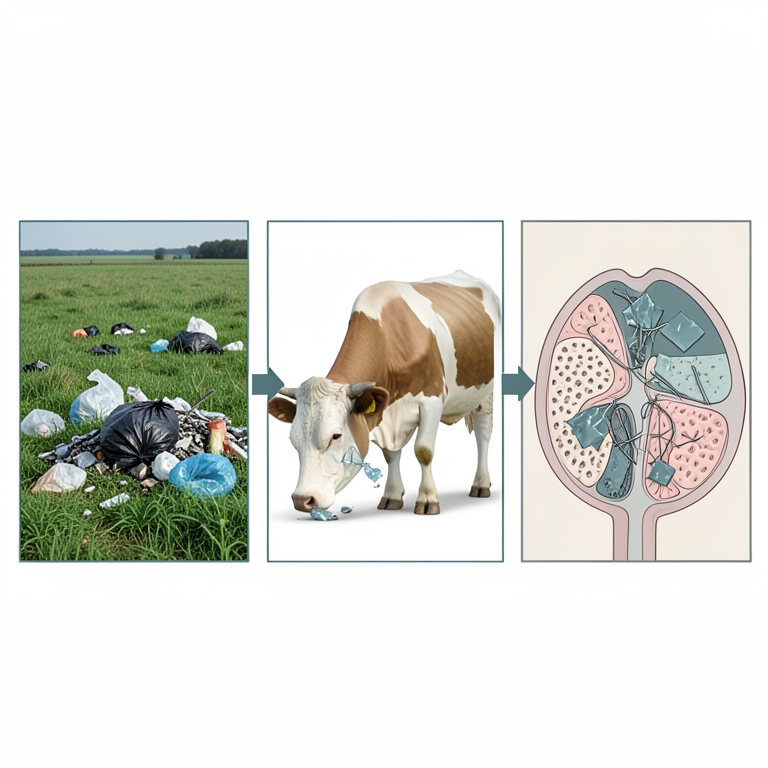
Environmental Cycle of Foreign Body Ingestion
AI-generated conceptual illustration (grazing cattle in an Ethiopian landscape). It explains the idea and does not show study data.
View source evidence ↗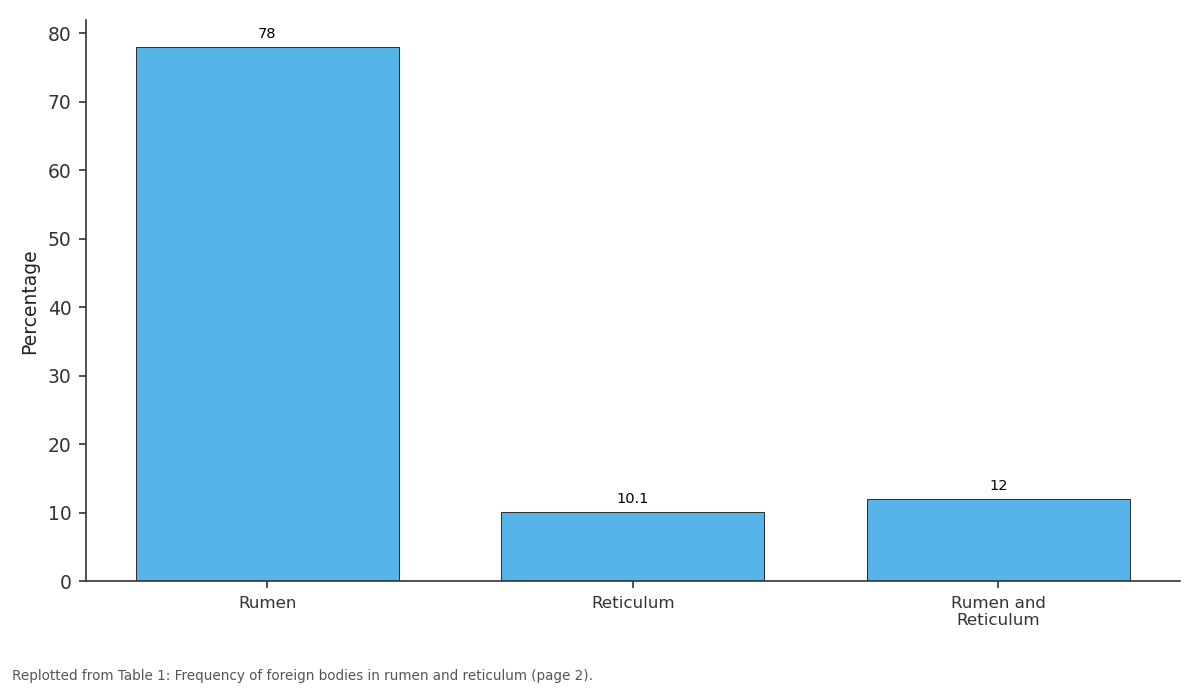
Percentage: Rumen vs Reticulum vs Rumen and Reticulum
Replotted from Table 1 (page 2) of the original paper. Every bar is the paper's own table value.
View source evidence ↗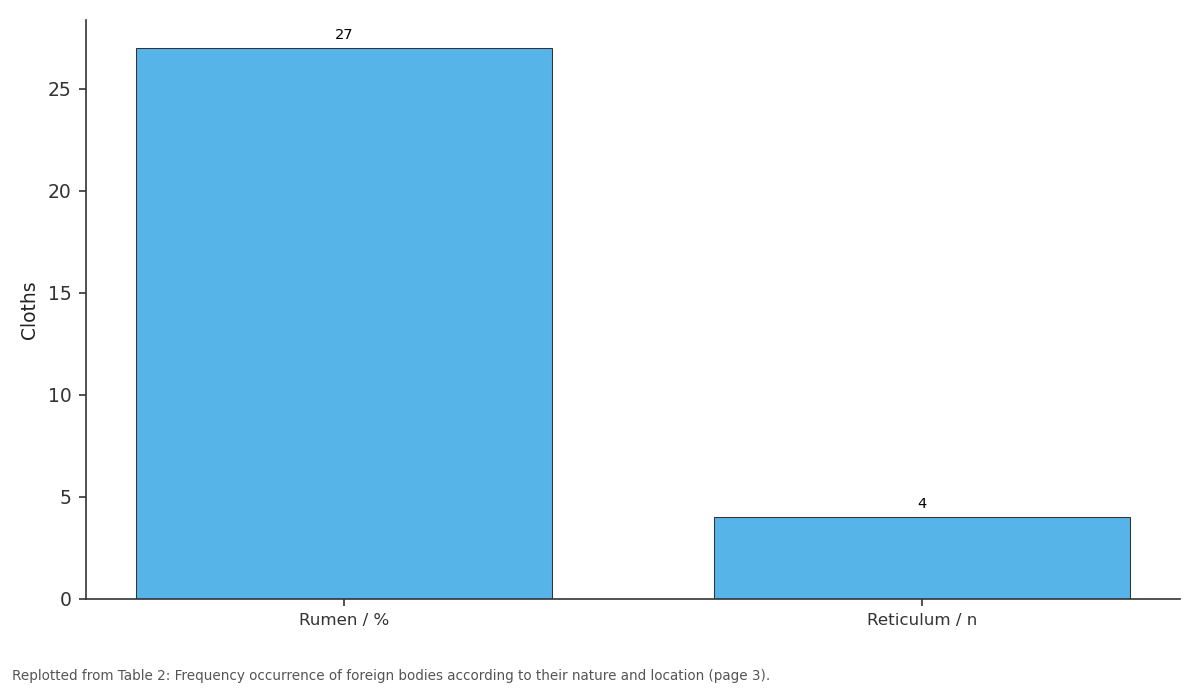
Cloths: Rumen / % vs Reticulum / n
Replotted from Table 2 (page 3) of the original paper. Every bar is the paper's own table value.
View source evidence ↗Figures & tables
From the original paper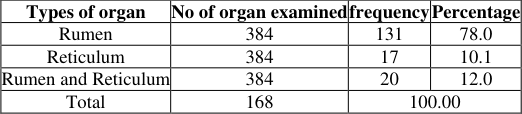 Table 1
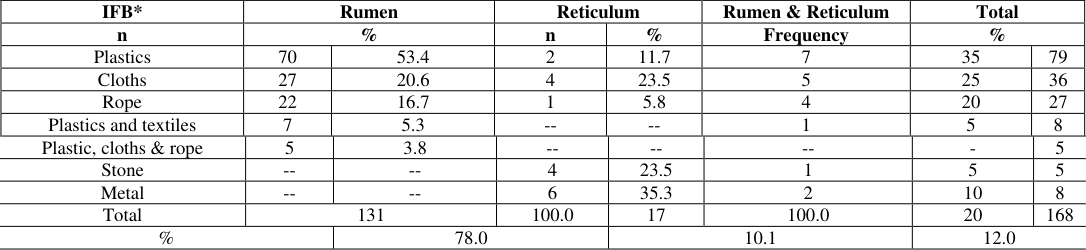 Table 2
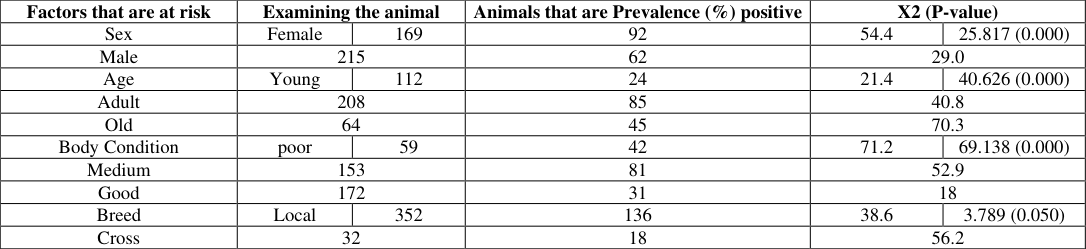 Table 3
Introduction
Ethiopia is thought to have Africa's greatest livestock population. The country's overall cattle population is estimated to be around 59.5 million. Females account for 55.5% of this total, while males account for 44.5%, with a total of 60 million goats and sheep (CSA, 2017) [1] . This Livestock provides high-quality food for human consumption and contributes to the country's economic development by producing hides, skins, manure as fertilizer, income, and foreign exchange, as well as drought power in working agriculture to help smallholder farmers increase their output (CSA, 2015) [2] . However, due to frequent livestock diseases, poor management systems and poor genetic performance, appropriate veterinary services, lack of government attention, and recurring drought, livestock contributions to the country's economic development are below their predicted potential (Desiye and Mersha. 2012; Abdela and Jilo, 2016) [3,4] . Due to pollution, one of the growing concerns for free-grazing animals is environmental pollution In cities and villages, there are no recycling companies, environmental cultures are being cleaned up, and plastic, leather, and metal are being disposed of improperly. These compounds are indigestible and build up in the rumen and reticulum of grazing animals, potentially causing health problems (Baumont, 1996; Ghurashi et al., 2009) [5,4] . Solid waste contamination from residential and commercial sources is a prevalent issue in developing countries (Bwatota et al. 2018) [7] Foreign body ingestion is a non-infectious illness of the forestomach in animals that have been shown to block the digestive activities of the gastero intestinal tract (Remi-Adewunmi et al., 2004) [8] . Disease pathogenesis frequently begins with the consumption of indigestible material, which results in a slow loss of weight, reproduction, feed absorption and productivity, as well as mortality (Mushonga et al. 2015) [9] . Ingestion is linked to nutritional deficits, grazing area contamination, and inadequate feeding management (Negash et al. 2015) [10] . Foreign bodies in rumen and reticulum disorders have a high economic impact due to severe productivity losses and animal death (Radostitis et al., 2007; Berrie et al., 2015) [11,12] . When a foreign body penetrates an organ, it causes local traumatic reticulo-peritonitis. Localized abscesses and severe fibrous adhesions between the organs may major complications (Berrie et al., 2015) [12] . In addition to plastics, nails, rubber, wire, wood, and ropes, livestock, particularly cattle, have been known to eat indigestible material such as plastics, nails, rubber, wire, wood, and ropes, particularly during periods of drought and feed scarcity (Shiferaw et al. 2013) [13] . Cattle with a lack of extremely sensitive prehensile organs such as the lips and tongue consume foreign materials with or without food (Singh and Nigam 1981; Mekuanint et al. 2017) [14,15] . Metallic and nonmetallic foreign bodies are classed as indigestible foreign substances (Misk et al., 2001) [17] . In Ethiopia, there is relatively little information about the quantity and prevalence of indigestible foreign materials in cattle's foreguts; yet, many animals are managed in contaminated areas. As a result, the primary goal of this research was to-
Study Population
The research animals are cattle that were brought in for slaughter from Bedeno and the neighboring districts. These animals were raised in traditional extensive and semiintensive management techniques, resulting in local breeds.
Research Methodology
In order to determine the prevalence and types of indigestible foreign bodies swallowed by cattle in the research region, a cross-sectional study was done, with risk factors such as sex, age, physical condition, and breed taken into account. The research took place between October 2020 and April 2021.
Research Methodologies
An ante mortem inspection was performed on selected animals prior to post mortem examination to document the animals' sex, age, breed, and bodily condition. According to (CABSESP, 2013) [17] , the cattle's age was classified as young, adult, and old, and their body condition score was classified as bad, medium, and good, with some modifications, according to (Nicholson and Butterworth, 1986) [18] . Those animals who passed the anti-mortem inspection were subjected to a post-mortem examination.
Their rumen and reticulum were incised and visually examined before being documented.
Determination of Sample Size
Because there has been no extensive study on the incidence of indigestible foreign bodies in this specific area, the sample size for the study was calculated using Thursfields formula (2005) [19] , with an expected prevalence of 50%, an accepted error of 5%, and a confidence level of 95%. As a result, 384 cattle were included in the study.
Where, n is the required sample size, d is the desired absolute precision, and Pexp is the predicted prevalence, a total of 384 animals will be chosen at random for the study.
Data Analysis and Management
For data management, the collected data were saved in a Microsoft Excel database system and analyzed using SPSS software. To analyze the variations in the occurrence of foreign bodies among categorical variables, frequency distribution, Chi-square, or Fisher's exact tests were used. Statistical significance is defined as a P-value of less than 0.05.
Results
Results
Frequency of foreign bodies in the rumen and reticulum
As a whole 384 cattle were evaluated for the presence of indigestible rumen and reticulum foreign bodies during the investigation. 154 (40.1%) of the animals tested positive for foreign bodies in their rumen and reticulum. There was a statistically significant difference in the prevalence of foreign bodies in the rumen and reticulum (p 0.05). Various types of foreign bodies were identified. 3). This was a statistically significant change (p0.05). Total foreign body prevalence was 71.2%, 52.9%, and 18%, respectively, in the poor, medium, and well-body conditioned groups of animals (Table 3). There were 32 cross breeds and 352 native breeds among the 384 animals tested. Foreign bodies were found in both breeds, albeit in varying amounts. The prevalence of foregut foreign bodies was higher in cross breeds (56.2%) than in purebreds.
| Factors that are at risk | Examining the animal | — | Animals that are Prevalence (%) positive | X2 (P-value) | — |
|---|---|---|---|---|---|
| Sex | Female | 169 | 92 | 54.4 | 25.817 (0.000) |
| Male | 215 | 62 | 29.0 | ||
| Age | Young | 112 | 24 | 21.4 | 40.626 (0.000) |
| Adult | 208 | 85 | 40.8 | ||
| Old | 64 | 45 | 70.3 | ||
| Body Condition | poor | 59 | 42 | 71.2 | 69.138 (0.000) |
| Medium | 153 | 81 | 52.9 | ||
| Good | 172 | 31 | 18 | ||
| Breed | Local | 352 | 136 | 38.6 | 3.789 (0.050) |
| Cross | 32 | 18 | 56.2 |
Table text extracted from the original PDF; superscript letters are shown inline. The original table image is below.
View original table image
Discussion
The prevalence of foreign bodies in the rumen and reticulum of cattle slaughtered at the Bedeno Woreda Municipal Abattoir was found to be 40.1% (154/384) in the current study. This data is consistent with Negash et al. (2015) [10] , who found that 43.4% (144/332) of calves slaughtered at Haramaya University and Haramaya Municipal Abattoirs had foreign bodies. Shiferaw et al. (2013) [13] , found 41.8% (167/400) of cattle in ruminants murdered at Addis Ababa Abattoir Enterprise, and Mekuanint et al. (2017) [15] found 35.7% (137/384) of cattle in ruminants slaughtered at Addis Ababa Abattoir Enterprise. However, the prevalence of foreign bodies in the current study is higher than some reports from other regions of Ethiopia and abroad. Such as Tesfaye et al. (2012a) [20] who reported 23.9% (92/384) prevalence of foreign body from cattle slaughtered at Hirna municipal abattoirs, Bassa and Tesfaye (2017) [21] , who reported 17.16% (103/600), prevalence of foreign body from cattle slaughtered at Wolaita Sodo municipal Rahel (2011) [22] , as well as Ushula and Nana (2017) [23] , found 17.07% (55/300), and 18.3% (55/300) prevalence in cattle slaughtered in Hawasa Municipal Abattoir, respectively. Mushonga et al. (2015) [9] , from Rwanda found 17.4% (219/1261) prevalence, whereas Bwatota et al. (2018) [7] , from Tanzania, recorded 24.02% prevalence. Khurshaid et al., (2013) [24] , on the other hand, found a substantially greater prevalence of foreign bodies 59.14% (207/350) of cattle slain in Khyber Pakhtunkhwa, Pakistan, and 77.41% recorded by Ismael et al. (2007) [25] of adult dairy cattle cases in Jordan suffering from recurrent rumen tympani with indigestible foreign materials. These differences in the occurrence of foreign bodies between research regions could be linked to inefficient grazing environment disposal of indigestible waste and poor animal management in rural, urban, and pre-urban settings. The discrepancy, according to Roman and Hiwot (2010) [26] , is attributable to the provenance of the animals given for slaughter and the waste management methods utilized by the two groups of countries.
The increased frequency of foreign bodies in the current study region is most likely due to the extensive usage and incorrect disposal of plastic bags and other indigestible materials. The scarcity of grazing pasture in this research area is exacerbated by the fact that tiny rural agricultural land is nearly entirely filled by chat (known locally as "Jimaa"), and the area is frequently hit by drought, resulting in a shortage of animal feed. Because of these conditions, animals were more likely to consume indigestible foreign stuff that was strewn over the area. Specifically, nutritional deficits calcium, phosphorus, and other micronutrients cause animals to eat indigestible foreign material indiscriminately (Hailat et al., 1996) [27] . The number of indigestible foreign bodies was found to be higher none the rumen (78.0%) than the reticulum (10.1%), with the rest of the proportion occurring in both. Tesfaye et al. (2012a) [20] discovered 67.3% in the rumen and 32.7% in the reticulum, Negash et al. (2015) [10] , found 87.9% in the rumen and 5.0 percent in the reticulum from all ruminants, and Shiferaw et al. (2013) [13] , found 88% in the rumen and 14.4% in the reticulum. The presence of more foreign bodies in the rumen than in the reticulum is attributable to the rumen's higher volume and position as the primary site of ingesta accumulation (Hailat et al., 1996) [27] . Ingested feed with a high density and tiny size settles toward the rumen's reticulum and bottom, while feed with a low density floats in the rumen. It's possible that gravity is at blame (Hailat et al., 1996; Bwatota et al. 2018) [27. 7] . Plastic the most common indigestible foreign elements encountered none the rumen were 53.4%, followed by 20.6% textiles, 16.7% rope, and 35.5% metal. The majority of the reporters agree with this conclusion. Mekuanint et al., (2017) [15] , found 46.1% of plastic bags in the rumen of sheep in Jordan, Hailat et al. (1996) [27] , found 74% in the rumen of sheep in Jordan, and Remi-Adewnmi et al., (2004) [8] , Berrie et al. (2015) [12] observed 42.3% of plastics from cattle slaughtered in Gondar Elfora Abattoir, whereas documented 85% of plastics from rumen impaction of cattle, sheep, and goats slaughtered at Addis Ababa Abattoir Enterprise. Bwatota et al. (2018) [7] found 50.5% plastic bags in cattle butchered at Morogoro Municipal Slaughterhouse in Tanzania. Plastic bags are more common than other rumen and reticulum ingestible foreign bodies, according to the majority of reporters. The growing incidence of plastic bags and other non-metabolic foreign entities in various countries is attributable to fast globalization industrialization, waste disposal, increased urbanization (Reddy et al., 2014) [28] . Lack of recycling industry in most developing countries, overcrowding of herds due to insufficient food, and the easy movement of plastics from one location to another by wind Gravity is to blame for the high metallic predominance in the reticulum. Foreign bodies were found in the fore stomachs of 54.4% of female cattle and 29.0% of male cattle, respectively, in the current investigation. This conclusion was consistent with the findings of most reports, such as Berrie et al. (2015) [12] , who found that 87% of dairy cattle were impacted by foreign bodies. Vikhaya et al., (2017) [29] also reported 66.2% female and 33.8% male at Queens Town Abattoir in South Africa, and 56.1% female and 43.9% male at East London Abattoir in South Africa. Mushonga et al., (2017) [9] and colleagues reports 20.0% female and 15.7% male crossbred cattle from Rwanda, while Bwatota et al., (2018) [7] reported 61.5% female crossbred cattle and 23.0% male crossbred cattle from Tanzania. The causes for this disparity could be linked to the degree of milk yield, which necessitates a significant demand for nourishment throughout female animal pregnancies and lactation periods (Berrie et al. 2015) [12] , Another factor could be the female animal's smaller stomach capacity a sufficient supply of food during their advanced pregnancy Aged cattle had a larger incidence than other age groups, according to Ushula and Nana (2017) [23] 63.6%, Desiye and Mersha (2012) [3] 80%, and others. The same 70.3% of findings were evaluated in this study. This is due to the buildup of various foreign bodies in the foregut of cattle throughout the course of their lives. When comparing cattle with different body conditions, the majority of indigestible foreign bodies were detected in cattle with low body conditions. The findings of this study revealed a 71.2 percent prevalence of poor body condition, which is substantially greater (2 = 69.138, p 0.05) than the 52.9% prevalence of medium body condition and the 18.0% prevalence of good body condition. This conclusion is in agreement with the reports of Mushonga et al. (2015) [9] , Negash et al. (2015) [10] , Ushula and Nana (2017) [23] , Bassa and Tesfaye, (2017) [20] , Bwatota et al. (2018) [7] and other comparable reports. Indigestible debris stuck in the ruminal area, interfering with normal rumen and reticulum function (Remi-Adewnmi et al., 2004) [8] , and reducing the absorption of volatile fatty acids and minerals, causes body condition loss. The accumulation of ingested foreign substances makes it difficult for animals to maintain a healthy body condition. In this study, the prevalence of foreign bodies was shown to be higher in crossbred cattle (56.2%) than in native breed cattle (38.6%). This disparity could be explained by the higher output of crossbred animals compared to local breeds. Due to their higher productivity than local breeds, cross breed animals have more feeding ability and a higher desired hunger. The reported result agrees with Desiye and Mersha's report, (2012) [3] . Bwatota et al. (2018) [7] found 70% in crossbreed and 10.77% in local breed, while Rahel (2010) [22] found 42.3 percent in crossbreed and 22.7% in local breed. Foreign bodies were found to be present in 58.82% of cross breeds.
Conclusions and recommendations
The frequency of rumen and reticulum foreign bodies in cattle was found to be high in the research area. This study suggested that solid waste foreign bodies material, particularly plastics, was widely distributed in the environment. Accumulation of indigested material none the fore stomach of an animal reduces the producer's economy owing to lost production, prevents the animal from achieving healthy physical condition, and may even result in the animal's death. The following recommendation should be forwarded based on the preceding conclusions: To eliminate plastics and other indigestible environmental contaminants, the community should promote the use of biodegradable paper bags, and the responsible government and community should focus on preventing the situation from getting worse. To prevent pollution of the environment, the government should enact rules regarding proper trash disposal from families and factories, as well as require factories to replace non-biodegradable plastics with biodegradable plastic paper. Farmers must correctly manage their herds by providing nutrients and maintaining control.
Acknowledgements
First and foremost, I would like to express my appreciation to Allah for bringing me here, and I will continue to beg him for everything good through my daily prayers. Next, I'd like to express my gratitude and heartfelt appreciation to my mother for her unwavering support in every manner. Then, I'd want to express my gratitude to my advisor: Moa Melaku (DVM, MSc, Associate Professor) for his unwavering assistance, constructive advice, and time commitment to revising this article. I also appreciate his real and enthusiastic support, advice, insight, and scientific and professional counsel. Finally, I'd like to express my gratitude to all of my friends who have helped me in various ways.
Figures and tables from the paper
| Types of organ | No of organ examined | frequency | Percentage |
|---|---|---|---|
| Rumen | 384 | 131 | 78.0 |
| Reticulum | 384 | 17 | 10.1 |
| Rumen and Reticulum | 384 | 20 | 12.0 |
| Total | 168 | 100.00 |
Table text extracted from the original PDF; superscript letters are shown inline. The original table image is below.
View original table image
| IFB* | Rumen | — | Reticulum | — | Rumen & Reticulum | Total | — |
|---|---|---|---|---|---|---|---|
| n | % | n | % | Frequency | % | ||
| Plastics | 70 | 53.4 | 2 | 11.7 | 7 | 35 | 79 |
| Cloths | 27 | 20.6 | 4 | 23.5 | 5 | 25 | 36 |
| Rope | 22 | 16.7 | 1 | 5.8 | 4 | 20 | 27 |
| Plastics and textiles | 7 | 5.3 | -- | -- | 1 | 5 | 8 |
| Plastic, cloths & rope | 5 | 3.8 | -- | -- | -- | - | 5 |
| Stone | -- | -- | 4 | 23.5 | 1 | 5 | 5 |
| Metal | -- | -- | 6 | 35.3 | 2 | 10 | 8 |
| Total | 131 | 100.0 | 17 | 100.0 | 20 | 168 | |
| % | 78.0 | 10.1 | 12.0 |
Table text extracted from the original PDF; superscript letters are shown inline. The original table image is below.
View original table image
References
23 in the original paper- Central Statistical Agency. Central Statistics Agency, agricultural sample survey (2016/17). Statistical bulletin 585, Addis Ababa, Ethiopia, 2017.
- Central Statistical Agency. Federal Democratic Republic of Ethiopia. Central Statistical Agency (CSA). Agricultural sample Survey 2010 (2001 E.C). Report on livestock and livestock characteristics (Private peasant holding), Addis Abeba, 2015, 2.
- Abattoir, South West Ethiopia. Amer Eu J Sc Res. 2012;7(4):160-167.
- Abdela N, Jilo K. Impact of Climate Change on Livestock Health: A Review. Global Vet. 2016;16(5):419-424.
- Baumont R. Palatability and feeding behaviour in ruminants. A review, Annales de Zootechnie. 1996;45(5):385-400.
- Ghurashi MAH, Seri HI, Bakheit AH, Ashwag EMA. Effect of surgical removal of foreign body from goat's rumen with special reference to the prevalence of foreign body in goats in Southern Darfur. Austr. Jour. Basic. Appl. Sci. 2009;3(2):664-668.
- Bwatota SF, Makungu M, Nonga HE. Occurrences of Indigestible Foreign Bodies in Cattle Slaughtered at Morogoro Municipal Slaughterhouse, Tanzania. J Vet Med, 2018, Article ID 4818203.
- Remi-Adewunmi BD, Gyang EO, Osinowo AO. Abattoir survey of foreign body rumen impacton in ruminants, Nigerian Vet J. 2004;25(2):32-38.
- Mushonga B, Habarugira G, Musabyemungu A, Udahemuka JC, Jaja FI, Pepe D. Investigations of foreign bodies in the fore-stomach of cattle at Ngoma Slaughterhouse, Rwanda. J.S. Afr. Vet. Assoc. 2015;86(1):1-6.
- Negash S, Sibhat B, Sheferaw D. A postmortem study on indigestible foreign bodies in the rumen and reticulum of ruminants, eastern Ethiopia. Onderstepoort J Vet Res. 2015;82(1):1-5.
- Berrie T, Mossie B, Anteneh B. Study on Rumen and Reticulum Foreign Body in Slaughtered Cattle at Gondar Elfora Abattoir. World J. Biol. Med. SC. 2015;2(4):133150.
- Sheferaw D, Gebru F, Asrat M, Tesfaye D, Debela E. Ingestion of indigestible foreign materials by free grazing ruminants in Amhara Region, Ethiopia. Trop. Anim. Heal. Prod. 2014;46(1):247-250. http://dx.doi.org/10.1007/s11250-013-0484-2
- Singh AP, Nigam JM. Radiography of the foreign bodies in the bovine. Bovine Practice. 1981;2(6):7-13.
- Mekuanint S, Alemneh T, Asredie T. Indigestible Rumen Foreign Bodies -Causes of Rumen Impaction in Cattle, Sheep and Goats Slaughtered at Addis Ababa Abattoir Enterprise, Ethiopia. J Veter Sci Med. 2017;5(1):5.
- Misk NA, Semieka MA, Ali, S. El-M. Varieties and sequellae of ingested foreign bodies in buffaloes and cattle. Assiut, Vet Med J. 2001;46(91):250-273.
- Bassa K, Tesfaye W. Study on rumen and reticulium foreign bodies in cattle slaughtered at Wolaita Sodo municipal Abattoir, Ethoipia. Int. J. Adv. Multidiscip. Res. 2017;4(1):11-19. http://dx.doi.org/10.22192/ijamr.2017.04.01.002
- Rahel M. Study on fore stomach foreign body in cattle slaughtered at Hawassa municipal abattoir. 2011;25(2):32-38. DVM thesis, School of Veterinary Medicine, Jimma.
- Ushula B, Nana T. Prevalence of Rumen and Reticulum Foreign Bodies in Cattle Slaughtered at Hawassa Municipal Abattoir, Southern Ethiopia. WJPLS. 2017;1(3):521-534.
- Khurshaid A, Ikhwan K, Asim A, Muhammad M, Anwarud D, Yasir A, et al. Prevalence of indigestible rumen and reticulum foreign bodies in Achai cattle at different regions of Khyber Pakhtunkhwa, Pakistan. Asian Research Publishing Network. 2013;8(8):580-586.
- Ismael Z, Majabi A, Al-qudah K. Clinical and surgical findings and outcome following rumenotomy in adult dairy cattle affected with recurrent rumen tympany associated with non-metalic foreign bodies. American journal of Animal and Veterinary Sciences. 2007;2(3):6670.
- Hailat N, Nouh S, Al-Darraji A, Lafi S, Al-Ani F, AlMajali A. Prevalence and pathology of foreign bodies (plastics) in Awassi sheep in Jordan, Small Ruminant Res. 1996;24(1):43-48. http://dx.doi.org/10.1016/S09214488(96)00938-8
- Reddy RY, Asha LP, Sandeep S. Review On Metallic And Non-Metallic Foreign Bodies A Threat To Livestock And Environment. Inter J Food, Agr Vet Sc. 2014;4(1):614.
- Vikhaya V, Leocadia Z, Kenneth, Ishmael FJ. Association between the Prevalence of Indigestible Foreign Objects in the Gastrointestinal Tract of Slaughtered Cattle and Body Condition Score. S Afr J Anim. 2017;7(11):80.
Cited by 11
From OpenAlex, OpenCitations and reference lists read by Scinovex
- STUDY ON ASSESSMENT OF FOREIGN BODY IN RUMEN AND RETICULUM OF CATTLE SLAUGHTERED AT BOKO TOWN SLAUGHTER HOUSE OF FEDIS DISTRICT, EASTERN ETHIOPIA ↗
International Research Journal of Modernization in Engineering Technology and Science · 2022
A cross-sectional study methods and systematic random sampling approach was used from November, 2020 to April, 2021 at Boko Town slaughter house of Fedis district, Eastern Ethiopia, with the objectives to assess the prevalence of rumen and reticulum foreign bodies, identify the types of foreign bodies and the associated risk factors for the occurrence of foreign bodies.From the total of…
❝ 3PDF - Study on Prevalence and Associated Risk Factors of Indigestible Foreign Bodies in Rumen and Reticulum of Cattle Slaughtered at Selected Districts of East Ararge Zone Municipal Abattoirs ↗
Asledin Mohammed · Public Health Open Access · 2024
Ingestion of indigestible foreign bodies by ruminants is becoming a common worldwide problem which is the associated with a shortage of feed as well as increased pollution of grazing lands with indigestible materials. A cross-sectional study was conducted from April 2023 to March 2024 with the aim of assessing the prevalence of indigestible foreign bodies and associated risk factors in…
❝ 2PDF - Indigestible Foreign Bodies in the Rumen and Reticulum of Cattle Slaughtered at ELFORA Abattoir, Kombolcha Town, Amhara Region, Ethiopia ↗
Teshager Dubie, Sahle Demse Killu, Ashenafi Syoum, Fanuel Bizuayehu Yihunie · Veterinary Medicine International · 2026
Any nondigestible material ingested by an animal that cannot be broken down by digestive enzymes or rumen microorganisms and remains within the gastrointestinal tract, potentially causing mechanical or functional disturbances, is referred to as an indigestible foreign body. This study aims to evaluate the occurrence of indigestible foreign bodies in the rumen and reticulum of cattle slaughtered at the Kombolcha…
❝ 1PDF - Investigation of Adult Paramphistomum and Indigestible Foreign Bodies in the Fore Stomach of Cattle Slaughtered in Gondar Elfora Abattoir, Ethiopia ↗
Zemenu Bitew · Asian Journal of Biological Sciences · 2025
Background and Objective: Paramphistomum is an emerging gastrointestinal fluke that importantly affects livestock health and production worldwide.Thus, the current study was conducted to assess the prevalence and intensity of Paramphistomum and foreign bodies and to identify associated factors for, slaughtered cattle in Gondar Elfora Abattoir.Materials and Methods: A cross-sectional study was conducted to assess the prevalence of adult Paramphistomum and…
❝ 1PDF - Assessment on Indigestible Foreign Bodies of Cattle and Associated Risk Factors at Selected Slaughtere House of East Hararghe Zone, Ethiopia ↗
Asledin M · Open Access Journal of Veterinary Science & Research · 2024
A cross-sectional study was conducted from April 2023 to March 2024 with the aim of assessing the prevalence of indigestible foreign bodies and associated risk factors in cattle slaughtered at selected districts of east Ararghe municipal abattoirs. A total of 384 cattle were selected randomly and examined to check for the presence of indigestible foreign bodies in the rumen and…
❝ 1PDF - Prevalence and Associated Risk Factors of Indigestible Foreign Bodies in the Forestomach of Slaughtered Cattle: A Cross‐Sectional Study in Eastern Ethiopia ↗
Andnet Yirga Assefa, Mekoya Tefera Mamo, Temsegen Sendekie Ayalew · Veterinary Medicine International · 2026
Indigestible foreign bodies (IFBs) can impair digestion and reduce animal productivity, thereby posing a serious economic burden on livestock owners and the national economy. A cross-sectional study was conducted from November 2024 to March 2025 to assess the prevalence and associated risk factors of IFBs in the forestomach of cattle slaughtered at Haramaya University and Haramaya Municipal Abattoirs, Oromia region,…
❝ 0PDF - A retrospective study on prevalence of traumatic reticuloperitonitis (TRP) and its sequelae in cattle ↗
FAISAL RASHEED PARRAY, SYED ASHAQ HUSSAIN, Shafayat Ahmad Beigh, Raja Aijaz Ahmad, Zahid Amin Kashoo, Yasir Afzal Beigh et al. · The Indian Journal of Animal Sciences · 2026
This retrospective study was carried out to document prevalence of TRP and its sequelae in cattle. The prevalence of TRP was studied over a period of one-year (November 2023 to October 2024). The diagnosis of TRP was based on clinical examination, radiography and/or ultrasonography. The prevalence of TRP was 1.97%. The sequelae of TRP were traumatic pericarditis, generalized peritonitis, reticular…
❝ 0PDF - Health implications of foreign bodies in cattle's rumen and reticulum in Bedeno Woreda Municipal Abattoir, Eastern Ethiopia
Berhane Tesfay Woldemichael, Semhar Mehari Gebrehiwet, Yohannes Kidane Haile, Rahel Beraki Tewolde · International Journal of Agriculture and Nutrition · 2024
The growing problem of solid waste contamination on communal grazing lands in eastern Ethiopia creates a direct pathway through which non-biodegradable materials enter the digestive systems of free-ranging cattle. This research examined the health implications of foreign body accumulation in the rumen and reticulum of cattle slaughtered at the Bedeno Woreda Municipal Abattoir, West Hararghe Zone, eastern Ethiopia. A cross-sectional investigation was carried out between October 2021 and March 2022, during which 398 cattle were assessed through ante-mortem evaluation and post-mortem forestomach
- Review on the epidemiology and its public health importance on Middle East Respiratory Syndrome corona virus ↗
Sufian Abdo Jilo, Sadik Zakir Abadura, Mohammed Edris Adem, Asefa Desalew Fereda, Belcha Debele Kibi, Habtamu Hibistu Alemu et al. · International Journal of Clinical Biology and Biochemistry · 2023
The Middle Eastern Respiratory Syndrome Mers-Cov is a new zoonotic beta corona virus of the C lineage identified in dromedary camels in East Africa and the Arabian Peninsula that exhibits the dipeptidyl peptidase 4 (DPP4) receptor. It was first described in the Saudi Arabian kingdom of Saud in September of 2012, and worldwide in May of 2019. Camels are usually
- Prevalence and impact of foreign bodies in the rumen and reticulum of slaughtered cattle in eastern Ethiopia: A case study of Bedeno Woreda ↗
Abdulkadir Muhammed Hassen, Fatuma Ahmed Osman · South Asian Journal of Agricultural Sciences · 2023
What happens when cattle inadvertently consume non-food items scattered across grazing lands? This research examined the prevalence and impact of indigestible foreign bodies lodged in the rumen and reticulum of cattle slaughtered at Bedeno Woreda Municipal Abattoir in eastern Ethiopia. A cross-sectional research design was adopted between October 2021 and March 2022, during which 384 cattle were selected through systematic…
❝ 0PDF - Etiology and pathological consequences of indigestible foreign bodies in cattle rumen and reticulum at Bedeno Woreda Abattoir
Hassan Abdi Farah, Amina Osman Elmi, Yusuf Mohamed Adan, Sahra Ibrahim Jama · International Journal of Biology Sciences · 2023
Nearly four out of every ten cattle slaughtered at municipal abattoirs in the Horn of Africa region harbor indigestible foreign materials in their forestomach compartments. This research investigated the etiological factors and pathological consequences associated with the presence of foreign bodies in the rumen and reticulum of cattle slaughtered at Bedeno Woreda Municipal Abattoir, located in the West Hararghe Zone of eastern Ethiopia. A cross-sectional research was conducted from November 2021 to April 2022, incorporating both ante-mortem assessment and post-mortem inspection of 420 cattle