
Research article · 2023 · Full text
International Journal of Biology SciencesEtiology and pathological consequences of indigestible foreign bodies in cattle rumen and reticulum at Bedeno Woreda Abattoir
Volume 5(1) · Pages 215–221 · DOI: 10.33545/26649926.2023.v5.i1c.563 ↗
Research areasAnimal health and immunologyVeterinary Equine Medical ResearchEffects of Environmental Stressors on Livestock
Abstract
Author-writtenNearly four out of every ten cattle slaughtered at municipal abattoirs in the Horn of Africa region harbor indigestible foreign materials in their forestomach compartments. This research investigated the etiological factors and pathological consequences associated with the presence of foreign bodies in the rumen and reticulum of cattle slaughtered at Bedeno Woreda Municipal Abattoir, located in the West Hararghe Zone of eastern Ethiopia. A cross-sectional research was conducted from November 2021 to April 2022, incorporating both ante-mortem assessment and post-mortem inspection of 420 cattle selected through systematic random sampling. Each animal was evaluated for age, sex, body condition, breed type, and geographic origin prior to slaughter. Following evisceration, the rumen and reticulum were carefully opened, and all foreign materials were collected, classified, photographed, and weighed. Gross pathological changes in the forestomach wall were recorded for every positive case. The overall prevalence of foreign bodies was 41.2% (173 of 420 cattle). Plastic materials constituted the dominant foreign body type at 28.9%, followed by cloth and textile fragments (21.6%), metallic objects (18.3%), leather fragments (11.7%), rope and twine (8.4%), stones and gravel (6.2%), and mixed items (4.9%). The rumen alone accounted for 58.7% of all positive cases, the reticulum alone for 19.4%, and both compartments simultaneously for 21.9%. Age, body condition, and sex were all significantly associated with foreign body occurrence (p
Summary
Source-checkedPlain-language reading of the full paper, prepared with AI and checked against the text. Each point links to the authors' own words.
Why it matters
- In the Horn of Africa, a significant proportion of cattle slaughtered at municipal abattoirs contain indigestible foreign materials in their forestomach. View evidence ↗
- Cattle are more likely to ingest human-made waste when natural forage is scarce during dry seasons in semi-arid regions. View evidence ↗
- Metallic objects are particularly dangerous because they can penetrate the reticulum wall and lead to traumatic reticulopericarditis, which may cause heart failure and death. View evidence ↗
The question
- The study aimed to investigate the causes and pathological effects of foreign bodies in the rumen and reticulum of cattle at the Bedeno Woreda Municipal Abattoir. View evidence ↗
What they did
- The research was a cross-sectional study conducted at the Bedeno Woreda Municipal Abattoir between November 2021 and April 2022. View evidence ↗
- The study used systematic random sampling to enroll 420 cattle, selecting every third animal from the slaughter line. View evidence ↗
- Recovered foreign materials were cleaned, dried, weighed, and sorted into seven specific categories, including plastics, metals, and textiles. View evidence ↗
- The mucosal surfaces of the rumen and reticulum were graded for pathology from 'no visible change' to 'severe' (transmural inflammation, abscess, or adhesion). View evidence ↗
What they found
- The overall prevalence of foreign bodies in the studied cattle was 41.2%, affecting 173 out of 420 animals. View evidence ↗
- Plastic materials were the most common foreign body (28.9%), followed by cloth/textiles (21.6%) and metallic objects (18.3%). View evidence ↗
- The rumen was the most frequent site for foreign body accumulation, accounting for 58.7% of cases. View evidence ↗
- Poor body condition was the strongest risk factor, with these cattle being 3.26 times more likely to have foreign bodies than those in good condition. View evidence ↗
- The highest prevalence (63.1%) occurred in cattle older than seven years in poor body condition, while the lowest (14.3%) was in young cattle in good condition. View evidence ↗
- Among positive cattle, 67.6% had mucosal damage, with 34.1% mild, 22.5% moderate, and 11.0% severe. View evidence ↗
- Three positive cattle (1.7%) showed gross findings consistent with traumatic reticulopericarditis. View evidence ↗
What it means
- The authors conclude that environmental pollution is the primary cause of foreign body ingestion in the Bedeno area, as evidenced by the prevalence of plastics. View evidence ↗
- The authors recommend integrated interventions including waste management, community education, nutritional support for vulnerable cattle, and better abattoir surveillance. View evidence ↗
- The study was limited by its cross-sectional design and the lack of histological examinations to detect early microscopic changes. View evidence ↗
Visual summary
3 visualsIllustrations explain the paper; charts are replotted from the paper's own table values.
Synergistic Risk Factors
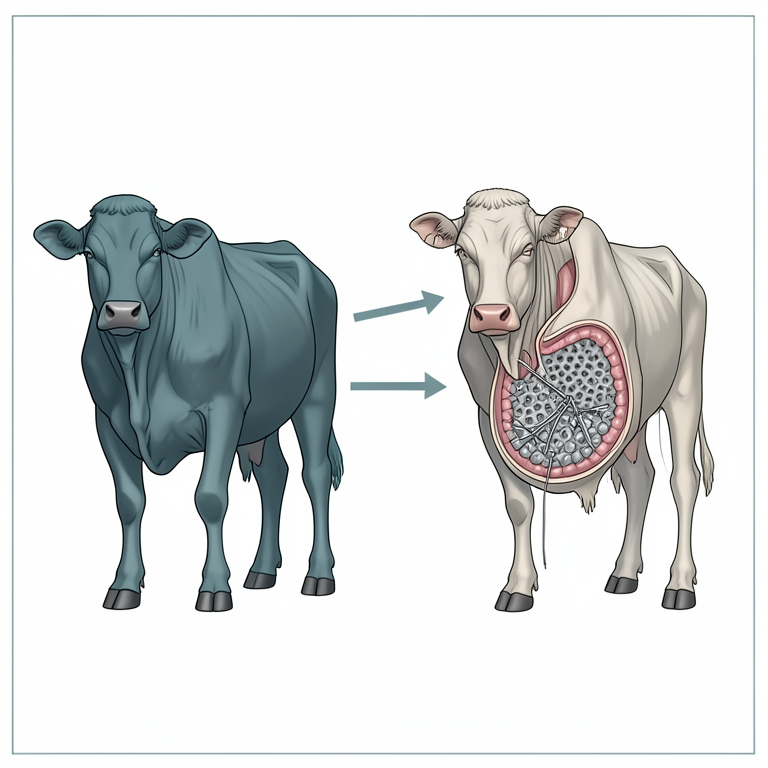
AI-generated conceptual illustration (Adult cattle rumen and reticulum). It explains the idea and does not show study data.
View source evidence ↗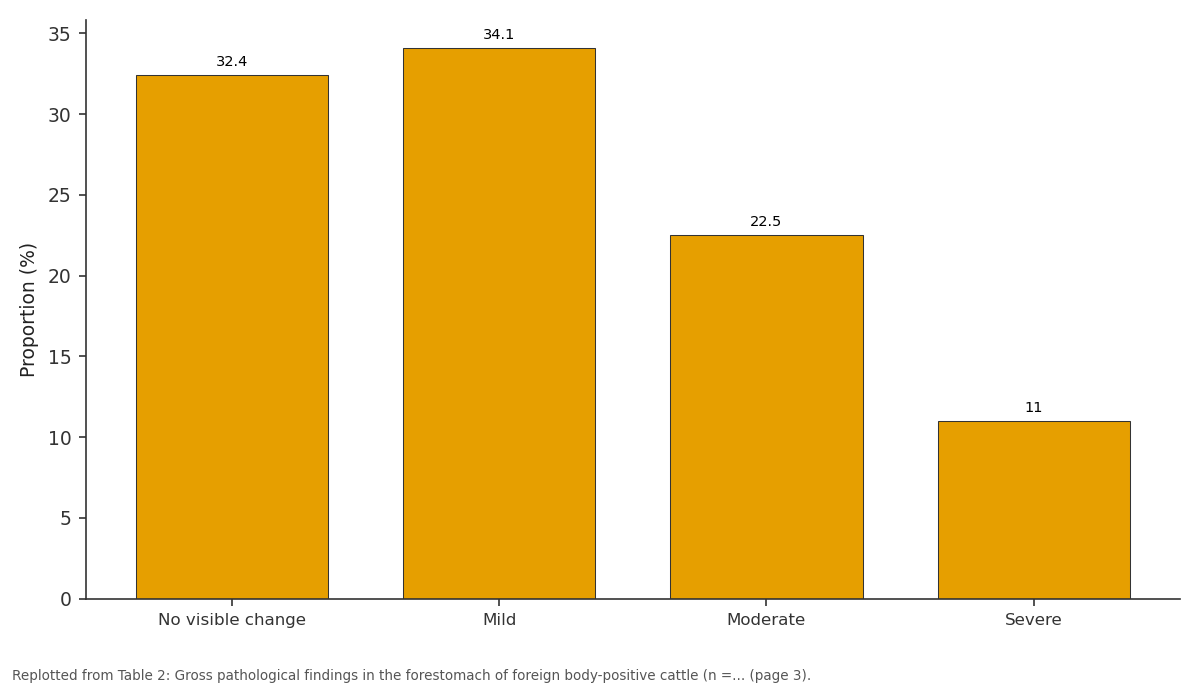
Proportion (%): No visible change vs Mild vs Moderate vs Severe
Replotted from Table 2 (page 3) of the original paper. Every bar is the paper's own table value.
View source evidence ↗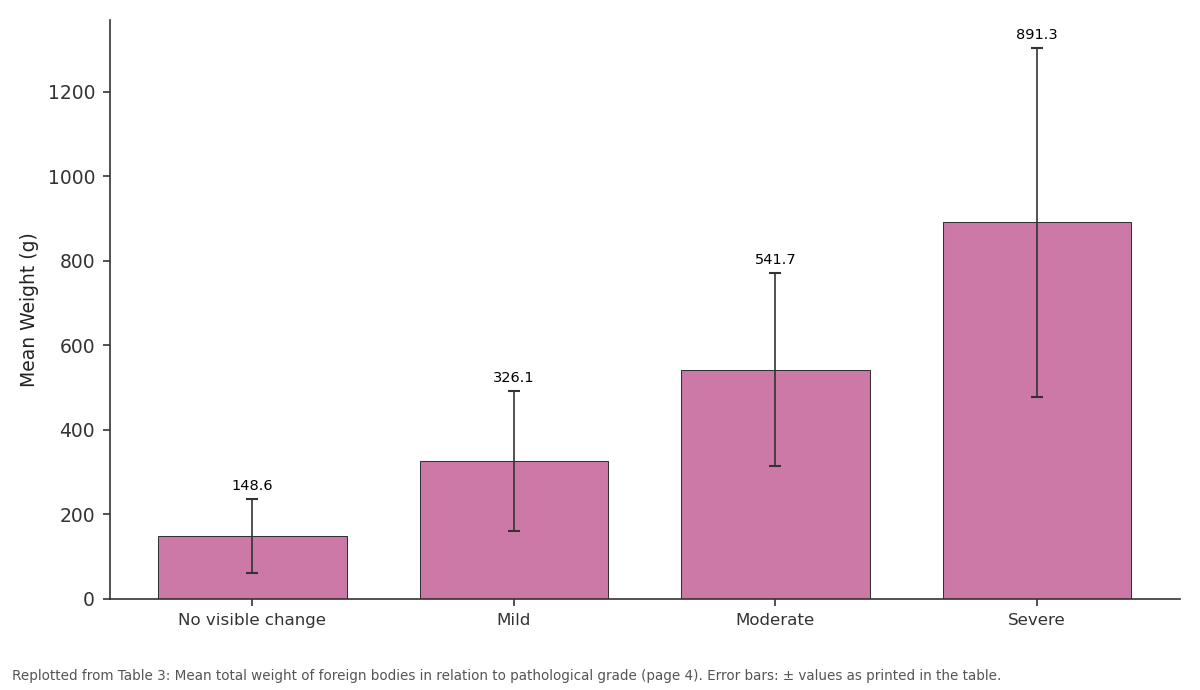
Mean Weight (g): No visible change vs Mild vs Moderate vs Severe
Replotted from Table 3 (page 4) of the original paper. Every bar is the paper's own table value.
View source evidence ↗Figures & tables
From the original paper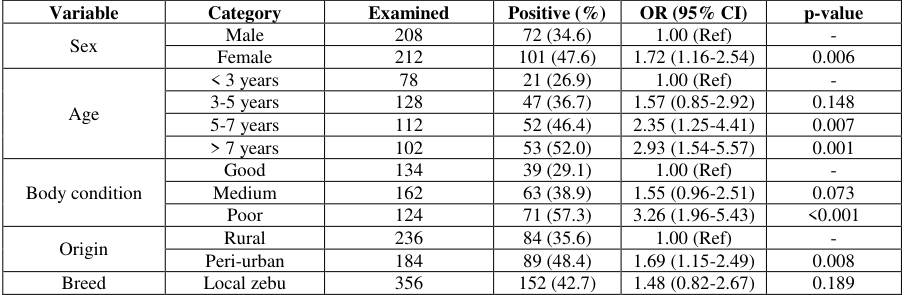 Table 1
 Table 2
 Table 3
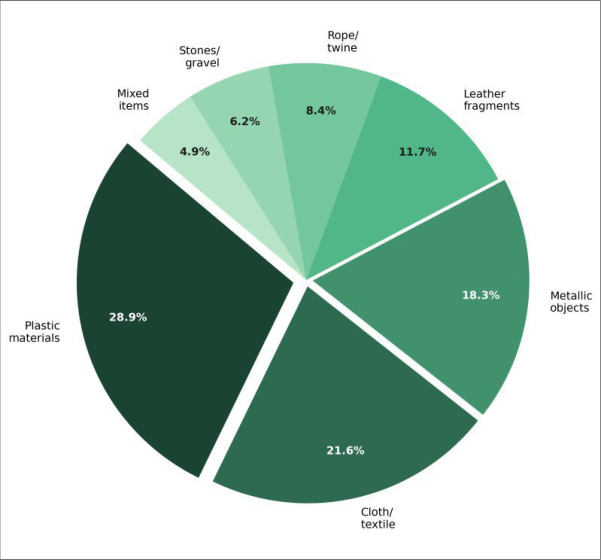 Figure 1
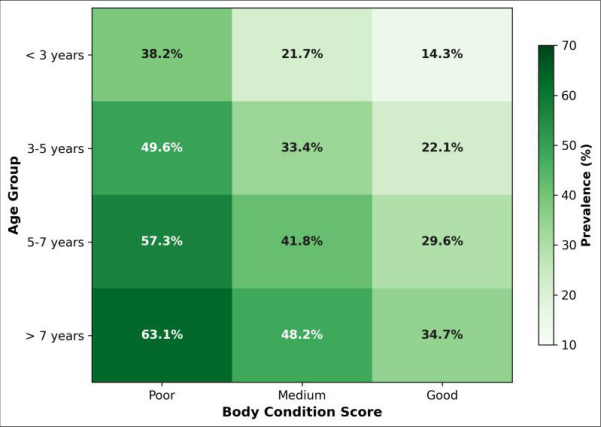 Figure 2
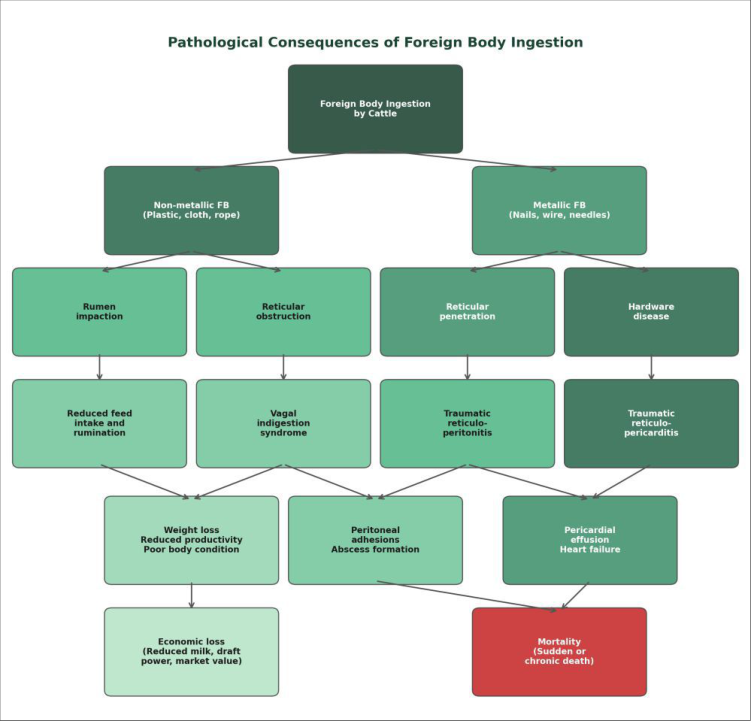 Figure 3
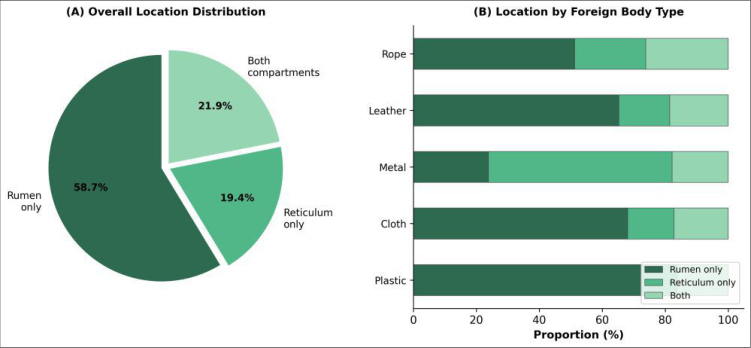 Figure 4
Introduction
An estimated 30% to 60% of cattle slaughtered at abattoirs across sub-Saharan Africa carry foreign bodies in their rumen, reticulum, or both compartments, according to data compiled from post-mortem examinations conducted over the past two decades [1,2] . This range, while broad, consistently points to a problem of considerable magnitude that extends beyond simple curiosity and into the domain of animal welfare, food production economics, and public health policy. In the Horn of Africa, where livestock represents the backbone of rural livelihoods, the ingestion of non-food materials by cattle carries consequences that ripple outward from the individual animal to entire pastoral communities [3] . The etiology of foreign body ingestion in cattle rests on an intersection of animal behavior, environmental conditions, and human activity. Cattle are obligate herbivores that rely on a prehensile tongue to gather forage, and they lack the dental and oral mechanisms that would allow them to reject small inedible items mixed in with their feed [4] . When natural forage becomes scarce, as routinely occurs during dry seasons in semi-arid zones, cattle expand their foraging range and become less selective about what they consume. This behavioral shift brings them into closer contact with anthropogenic waste deposited around settlements, markets, and roadways [5] . Plastic bags, cloth fragments, nails, wire segments, and leather scraps all enter the ruminant forestomach through this pathway, often without producing immediate clinical signs [6] . But the consequences of foreign body accumulation are far from benign. Non-metallic materials such as plastics and textiles can form large, compacted masses within the rumen that physically obstruct normal ruminal contractions and interfere with the passage of digesta through the reticuloomasal orifice [7] . Over time, this leads to a cascade of digestive impairment: reduced voluntary feed intake, decreased rumination efficiency, altered volatile fatty acid profiles, and progressive weight loss [8] . Metallic foreign bodies pose an even more immediate threat. Sharp objects that settle in the reticulum can penetrate the reticular wall during forceful contractions, advancing through the diaphragm and occasionally reaching the pericardial sac. The resulting condition, traumatic reticulopericarditis, often progresses to heart failure and death if not diagnosed and treated promptly [9,10] . Pathological changes associated with foreign body presence range from mild mucosal irritation to severe transmural inflammation, abscess formation, and peritoneal adhesions. The severity of tissue damage tends to correlate with both the type and the total mass of ingested material, as well as the duration of exposure [7,11] . Few investigations, however, have systematically documented the spectrum of gross pathological findings alongside prevalence data in Ethiopian abattoir settings. Most existing reports have focused primarily on prevalence and risk factor analysis without detailed characterization of the tissue-level consequences [12,13] . Bedeno Woreda, positioned in the West Hararghe Zone of the Oromia Region in eastern Ethiopia, represents a locality where the conditions favoring foreign body ingestion converge. The area supports a large cattle population managed under extensive and semi-intensive systems, and its proximity to growing market towns exposes grazing cattle to substantial volumes of discarded waste [14] . Previous investigations at the Bedeno Woreda Municipal Abattoir have confirmed foreign body prevalence rates above 30%, yet the pathological dimension of the problem has not been adequately addressed [11] . This research was therefore designed to fill that gap by combining prevalence estimation with a systematic assessment of the etiological factors and gross pathological consequences of foreign body ingestion in cattle slaughtered at the Bedeno Woreda Municipal Abattoir. Understanding the relationship between foreign body type, load, and tissue damage is necessary for developing effective prevention strategies and for informing meat inspection protocols that protect both animal welfare and consumer safety.
Research Area Description
The research was centered on the Bedeno Woreda Municipal Abattoir, which operates within Bedeno town in the West Hararghe Zone of the Oromia Regional State, eastern Ethiopia. Bedeno Woreda lies at coordinates ranging from approximately 8°50'N to 9°05'N latitude and 41°25'E to 41°45'E longitude, with elevations spanning 1,400 to 2,200 meters above sea level. The woreda encompasses a land area of around 780 square kilometers and had an estimated cattle population of 94,300 head at the time of data collection, based on district livestock office records. Mixed crop-livestock farming dominates the agricultural landscape, with sorghum, maize, and groundnut serving as the principal crops alongside the rearing of cattle, goats, and camels. The municipal abattoir functions as the sole licensed slaughter facility within the woreda, handling an average throughput of 18 to 22 cattle daily. Bedeno town has experienced rapid population growth over the past decade, which has intensified waste generation and reduced the availability of uncontaminated grazing land around the urban fringe. Open waste disposal along access roads and market peripheries has been identified as a persistent issue by local environmental authorities.
Climatic and Environmental Conditions
Bedeno Woreda falls within the semi-arid to sub-humid agro-ecological zone, characterized by a bimodal rainfall regime. The short rains (belg) typically occur between March and May, and the long rains (meher) extend from June through September. Total annual precipitation ranges from 600 to 850 millimeters, with marked inter-annual variability that periodically triggers localized drought conditions. Mean daily temperatures fluctuate between 16°C and 28°C across the elevational gradient. The dry season, stretching from October through February, is the period of greatest forage deficit, during which cattle are forced to range more widely and forage more indiscriminately. Soil degradation resulting from overgrazing and deforestation has reduced the carrying capacity of communal grazing reserves. Surface water availability contracts sharply during dry months, concentrating livestock around shared watering points that are often located near settlement edges where waste accumulates. The convergence of feed scarcity and environmental pollution during these months creates the conditions most conducive to foreign body ingestion.
Material and Methods
Material and Methods
Material
This cross-sectional research was conducted at the Bedeno Woreda Municipal Abattoir from November 2021 to April 2022, a period covering both the dry season and the onset of the short rains. Ethical clearance was obtained from the Institutional Animal Ethics Committee of Hargeisa Metropolitan University (Protocol No. HMU-IAEC-2021-031, dated October 3, 2021). A total of 420 cattle were enrolled in the research through systematic random sampling, selecting every third animal on the daily slaughter line until the target was met. The sample size was calculated using the formula for prevalence estimation with an expected prevalence of 40%, 95% confidence, and 5% precision, yielding a minimum requirement of 369 animals, which was rounded up to 420 for added statistical power. Equipment and consumables included disposable gloves, stainless steel trays, graduated plastic containers, an electronic precision balance (0.1 g accuracy), a digital camera, sample storage bags, and pre-printed data recording forms. All recovered foreign materials were washed, airdried, weighed individually and collectively, and classified into seven categories: plastic materials, cloth and textile fragments, metallic objects, leather fragments, rope and twine, stones and gravel, and mixed items.
Methods
Ante-mortem examination preceded slaughter for each enrolled animal. Data collected included estimated age (categorized as less than 3 years, 3 to 5 years, 5 to 7 years, or greater than 7 years based on dental examination), sex, body condition score (poor, medium, or good per established guidelines [15] ), breed type (local zebu or crossbred), and origin (peri-urban or rural). Following slaughter and evisceration, the rumen and reticulum were separated from the remaining gastrointestinal tract, opened along the greater curvature using a scalpel, and their contents emptied onto clean trays. Visual inspection was complemented by systematic manual palpation to identify embedded or concealed items. Each foreign body was photographed in situ before removal. The mucosal surface of both compartments was then examined for gross pathological changes, which were graded as: no visible change, mild (hyperemia and superficial edema), moderate (erosion and focal ulceration), or severe (transmural inflammation, abscess, or adhesion formation). All data were entered into Microsoft Excel and analyzed using STATA version 17.0. Prevalence was expressed as a percentage with 95% confidence intervals. Associations between foreign body occurrence and categorical risk factors were tested with the Pearson chi-square statistic. Odds ratios and their 95% confidence intervals were computed. A p-value below 0.05 was considered significant.
Results
A total of 173 out of 420 cattle (41.2%) examined during the research period were positive for at least one type of indigestible foreign body in the rumen, reticulum, or both. The following tables and figures present the detailed findings regarding foreign body prevalence, type distribution, anatomical location, risk factor associations, and pathological consequences. Figure 1 depicts the relative contribution of each foreign body category to the total. Plastic materials dominated at 28.9%, closely followed by cloth and textile fragments at 21.6%. Metallic objects accounted for 18.3%, making them the third most common type but by far the most pathologically significant due to their capacity for reticular wall penetration. The remaining categories, including leather (11.7%), rope (8.4%), stones (6.2%), and mixed items (4.9%), collectively formed 31.2% of the total. Figure 4 shows that the rumen was the primary site of foreign body accumulation (58.7%), which is expected given its larger volume and capacity. Panel B breaks down the location pattern by material type, revealing that metallic objects behaved differently from all other categories: 58.4% of metallic foreign bodies were found in the reticulum alone, compared to only 11.3% to 22.6% for non-metallic types. This reflects the gravitational settling of dense metallic items into the reticulum's honeycomb-structured floor.
Comprehensive Interpretation
The results of this research reveal that foreign body ingestion in cattle at the Bedeno Woreda Municipal Abattoir is not only prevalent but also pathologically consequential. The 41.2% overall prevalence, combined with the finding that over two-thirds of affected animals exhibited mucosal damage, paints a picture of a problem that extends beyond simple contamination into active tissue injury. The doseresponse relationship between foreign body mass and pathological severity suggests that early detection and environmental interventions could prevent progression from mild to severe disease. The synergistic interaction of age and body condition in driving prevalence means that the most vulnerable animals are those least able to compensate physiologically for the burden they carry.
Discussion
The 41.2% prevalence recorded in this research is comparable to rates reported by several other Ethiopian abattoir-based investigations but sits at the higher end of the spectrum. Negash and colleagues [2] documented 34.2% at Ambo, while Tesfaye and co-workers [5] reported 43.7% in the Haramaya District, a locality geographically proximate to Bedeno. The slightly elevated prevalence in the present research may reflect the rapid peri-urban expansion that Bedeno town has experienced, which has intensified waste generation and reduced the buffer zone between settlement areas and grazing lands [14] . The dominance of plastic materials as the most common foreign body type mirrors findings across Ethiopia and other East African countries [1,6,16] . Plastic bags are lightweight, widely distributed, and easily carried by wind onto pasture, making them the most accessible non-food item for grazing cattle. The Ethiopian government's 2007 regulation restricting thin plastic bag production and import has had limited practical effect in rural and peri-urban settings, where enforcement infrastructure remains weak [17] . Interventions targeting plastic pollution at the community level, such as organized clean-up campaigns and incentives for biodegradable packaging, appear necessary to complement regulatory approaches. The pathological findings add an important dimension to the existing literature. While most Ethiopian research on this topic has limited itself to prevalence and type characterization, this research demonstrates that a majority of positive cattle (67.6%) already exhibit macroscopic tissue changes. The correlation between foreign body weight and pathological severity is consistent with observations by Mushonga and colleagues [11] in Rwanda, who noted that heavier ruminal loads were associated with more advanced mucosal erosion. The three cases suggestive of traumatic reticulopericarditis, though representing only 1.7% of positive animals, underscore the potentially fatal consequences of metallic foreign body penetration [9,10] . The age and body condition interactions shown in the heatmap analysis deserve particular attention. Older cattle in poor condition face a compounded risk, where the physiological demands of aging and nutritional stress combine with a longer cumulative exposure to contaminated environments [8,18] . This finding suggests that supplementary feeding programs targeting older, emaciated animals during dry season months could serve a dual purpose: improving nutritional status and reducing the drive to scavenge on waste-contaminated land.
The research was limited by its cross-sectional design, which captures a single point-in-time snapshot rather than a longitudinal picture of foreign body accumulation. Additionally, histological examination was not performed, meaning that early microscopic changes may have been missed in animals classified as having no visible pathology. Future investigations incorporating histopathological analysis and ante-mortem diagnostic techniques such as reticular radiography would provide a more complete understanding of the progression from ingestion to clinical disease. The strong influence of age and body condition on foreign body prevalence and pathological severity provides actionable information for targeted prevention. Older cattle in poor nutritional status are the most vulnerable subpopulation, and directing supplementary feeding resources toward these animals during the dry season could reduce their reliance on scavenging and, consequently, their exposure to foreign materials. Veterinary extension services should incorporate foreign body awareness into their regular outreach activities, educating herders about the early signs of impaction, the dangers of metallic object ingestion, and the importance of maintaining cattle in adequate body condition throughout the year. The discovery that metallic foreign bodies disproportionately accumulate in the reticulum and are associated with the most severe pathological outcomes, including reticulopericarditis, reinforces the need for specific measures targeting metallic waste. Improved disposal of construction debris, fencing wire, and discarded metal implements around grazing areas would reduce the availability of these particularly hazardous items. In settings where metallic contamination cannot be entirely prevented, the prophylactic use of reticular magnets in high-risk cattle could be explored as a supplementary protective measure. In summary, the findings of this research underscore that the ingestion of indigestible foreign bodies by cattle in eastern Ethiopia is a problem with real and measurable consequences for animal health, welfare, and economic productivity. The data support a case for integrated interventions that combine environmental waste management, community education, targeted nutritional support for vulnerable animals, and strengthened abattoir surveillance systems. Without such coordinated action, the burden of foreign body-related morbidity and mortality in the cattle population of Bedeno Woreda and similar localities across the Horn of Africa will persist and likely worsen as urbanization and waste generation continue to grow.
Conclusions
Conclusions
Acknowledgement
Acknowledgements Funding Sources
Figures and tables from the paper
| Variable | Category | Examined | Positive (%) | OR (95% CI) | p-value |
|---|---|---|---|---|---|
| Sex | Male | 208 | 72 (34.6) | 1.00 (Ref) | - |
| Female | 212 | 101 (47.6) | 1.72 (1.16-2.54) | 0.006 | |
| Age | < 3 years | 78 | 21 (26.9) | 1.00 (Ref) | - |
| 3-5 years | 128 | 47 (36.7) | 1.57 (0.85-2.92) | 0.148 | |
| 5-7 years | 112 | 52 (46.4) | 2.35 (1.25-4.41) | 0.007 | |
| > 7 years | 102 | 53 (52.0) | 2.93 (1.54-5.57) | 0.001 | |
| Body condition | Good | 134 | 39 (29.1) | 1.00 (Ref) | - |
| Medium | 162 | 63 (38.9) | 1.55 (0.96-2.51) | 0.073 | |
| Poor | 124 | 71 (57.3) | 3.26 (1.96-5.43) | <0.001 | |
| Origin | Rural | 236 | 84 (35.6) | 1.00 (Ref) | - |
| Peri-urban | 184 | 89 (48.4) | 1.69 (1.15-2.49) | 0.008 | |
| Breed | Local zebu | 356 | 152 (42.7) | 1.48 (0.82-2.67) | 0.189 |
Table text extracted from the original PDF; superscript letters are shown inline. The original table image is below.
View original table image
| Pathological Grade | Description | Frequency | Proportion (%) |
|---|---|---|---|
| No visible change | Normal mucosa | 56 | 32.4 |
| Mild | Hyperemia, superficial edema | 59 | 34.1 |
| Moderate | Erosion, focal ulceration | 39 | 22.5 |
| Severe | Transmural inflammation, adhesions | 19 | 11.0 |
| Total | - | 173 | 100.0 |
Table text extracted from the original PDF; superscript letters are shown inline. The original table image is below.
View original table image
| Pathological Grade | n | Mean Weight (g) | Range (g) |
|---|---|---|---|
| No visible change | 56 | 148.6±87.3 | 12.8-412.0 |
| Mild | 59 | 326.1±164.8 | 34.5-789.2 |
| Moderate | 39 | 541.7±228.4 | 118.3-1,247.6 |
| Severe | 19 | 891.3±412.7 | 287.4-2,163.5 |
Table text extracted from the original PDF; superscript letters are shown inline. The original table image is below.
View original table image
References
19 in the original paper- Hailat N, Al-Darraji A, Lafi S, Al-Ani F. Occurrence of foreign bodies in the gastrointestinal tract of cattle from Jordan. Acta Vet Brno. 1998;67(1):43-47.
- Negash S, Sibhat B, Sheferaw D. A postmortem survey of indigestible foreign bodies in the rumen and reticulum of ruminants in and around Ambo Town. Ethiop Vet J. 2015;19(2):35-44.
- Ramaswamy V, Sharma HR. Plastic bags: threat to environment and cattle health: a retrospective analysis from India. Environ Sci Pollut Res Int. 2011;18(8):1291-1298.
- Vanitha V, Nambi AP, Jeyaraja K, Gowri B. Occurrence of indigestible foreign bodies in ruminants. Tamilnadu J Vet Anim Sci. 2010;6(3):116-119.
- Tesfaye D, Daba D, Mekibib B, Fekadu A. Gastrointestinal tract foreign body impaction in cattle: a post-mortem investigation in Haramaya District. Glob Vet. 2012;8(5):508-512.
- Sheferaw D, Fikreysus G, Mesfin D, Tesfaye D, Debela E. Ingestion of indigestible foreign materials by free grazing ruminants in Amhara Region, Ethiopia. Trop Anim Health Prod. 2014;46(1):247-250.
- Igbokwe IO, Kolo MY, Egwu GO. Rumen impaction in sheep with indigestible foreign bodies in the semi-arid region of Nigeria. Small Rumin Res. 2003;49(2):141147.
- Otsyina HR, Nguhiu-Mwangi J, Mogoa EG, Mbuthia PG, Ogara WO. Prevalence of indigestible rumen foreign bodies in cattle slaughtered at Dagoretti Slaughterhouse, Nairobi. Bull Anim Health Prod Afr. 2015;63(2):107-113.
- Braun U, Gotz M, Marmier O. Ultrasonographic findings in cows with traumatic reticulopericarditis. Vet Rec. 1993;133(9):197-198.
- Athar H, Mohindroo J, Singh K, Kumar A, Randhawa CS. Clinical, haematobiochemical and radiographic findings in bovines with traumatic reticulopericarditis. Vet Res Commun. 2010;34(1):35-43.
- Ame MK, Usman AM, Mokria DE, Abdella M. Study on prevalence of indigestible foreign bodies in rumen and reticulum of cattle slaughtered at Bedeno Woreda Municipal Abattoir, Eastern Ethiopia. Int J Vet Sci Anim Husbandry. 2022;7(3):1-5. doi:10.22271/veterinary.2022.v7.i3a.415.
- Remi-Adewunmi BD, Gyang EO, Osinowo AO. Abattoir survey of foreign body rumen impaction in small ruminants. Niger Vet J. 2004;25(2):32-38.
- Sileshi N, Demeke S, Fesseha H. Foreign body examination in ruminants slaughtered at Addis Ababa Abattoir Enterprise. J Vet Med Anim Health. 2020;12(2):57-63.
- Kassahun B, Mekonnen G. Assessment of waste management practices and their impact on grazing lands in the West Hararghe Zone, Ethiopia. Ethiop J Environ Stud Manag. 2019;12(4):378-389.
- Nicholson MJ, Butterworth MH. A guide to condition scoring of zebu cattle. Addis Ababa: International Livestock Centre for Africa; 1986.
- Bwatota SF, Makungu M, Nonga HE. Occurrence of indigestible foreign bodies in cattle slaughtered at Morogoro Municipal Slaughterhouse. J Vet Med. 2018;2018:4818203.
- Kassa G. Review on plastic bag waste management challenges in Ethiopia and possible solutions. Environ Sci Pollut Res Int. 2021;28(24):30147-30159.
- Berrie K, Tadesse E, Mossie B, Abebaw D. Foreign body ingestion in cattle at Gondar Elfora Abattoir: prevalence and risk factors. J Vet Med Anim Health. 2015;7(5):163-167.
- Fromsa A, Mohammed N. Prevalence of indigestible foreign bodies in small ruminants slaughtered at Luna Export Abattoir, Modjo. J Anim Vet Adv. 2011;10(12):1598-1602.