
Research article · 2024 · Full text
International Journal of Agriculture and NutritionHealth implications of foreign bodies in cattle's rumen and reticulum in Bedeno Woreda Municipal Abattoir, Eastern Ethiopia
Volume 6(2) · Pages 127–133 · DOI: 10.33545/26646064.2024.v6.i2b.341 ↗
Research areasAnimal health and immunologyEffects of Environmental Stressors on LivestockHelminth infection and control
Abstract
Author-writtenThe growing problem of solid waste contamination on communal grazing lands in eastern Ethiopia creates a direct pathway through which non-biodegradable materials enter the digestive systems of free-ranging cattle. This research examined the health implications of foreign body accumulation in the rumen and reticulum of cattle slaughtered at the Bedeno Woreda Municipal Abattoir, West Hararghe Zone, eastern Ethiopia. A cross-sectional investigation was carried out between October 2021 and March 2022, during which 398 cattle were assessed through ante-mortem evaluation and post-mortem forestomach inspection. Foreign bodies were recovered from 151 animals (37.9%), and each positive case was further evaluated for gross pathological changes, including mucosal inflammation, wall thickening, ulceration, and adhesion formation. Plastic bags were the most common foreign body (34.4%), followed by cloth and textile fragments (20.5%), metallic objects (15.9%), and other materials including leather, rope, and mixed debris (29.2%). Metallic foreign bodies produced the most severe health effects, with 78.6% of cases showing mucosal inflammation and 28.4% exhibiting adhesion formation. A health impact scoring system, developed for this research, confirmed that metallic objects scored highest (mean: 84.2 out of 100) on a composite weight loss index, followed by plastic bags (71.6) and mixed materials (67.8). Animals from peri-urban areas in poor body condition showed the highest combined prevalence and health impact scores. Age was significantly associated with the severity of pathological findings, as cattle older than seven years had the highest proportion of severe outcomes (28.8% with transmural changes) compared to just 5.7% in animals under three years. The research establishes that the health consequences of foreign body ingestion in Bedeno Woreda cattle extend well beyond simple mechanical obstruction, encompassing a spectrum of inflammatory and degenerative changes that compromise animal welfare, reduce productivity, and diminish the economic value of carcasses. These findings support calls for integrated environmental and veterinary interventions targeting waste reduction on grazing lands and improved monitoring of at-risk cattle populations.
Summary
Source-checkedPlain-language reading of the full paper, prepared with AI and checked against the text. Each point links to the authors' own words.
Why it matters
- Solid waste contamination on communal grazing lands in eastern Ethiopia allows non-biodegradable materials to enter the digestive systems of free-ranging cattle. View evidence ↗
- Non-metallic foreign bodies like plastic and rope can obstruct digestive motility and reduce the space available for microbial fermentation in the rumen. View evidence ↗
- Metallic foreign bodies are particularly dangerous because they settle in the reticulum and can penetrate the wall, potentially leading to fatal pericarditis. View evidence ↗
The question
- The study aimed to evaluate the health implications of foreign bodies in cattle at the Bedeno Woreda Municipal Abattoir, focusing on pathological changes, a composite health impact score, and predictive host and environmental factors. View evidence ↗
What they did
- The researchers used systematic random sampling to enroll 398 cattle from the slaughter line. View evidence ↗
- The cross-sectional study took place at the Bedeno Woreda Municipal Abattoir in eastern Ethiopia between October 2021 and March 2022. View evidence ↗
- A composite health impact score (0-100) was created by weighting pathological grade (40%), foreign body weight relative to rumen capacity (30%), and body condition score (30%). View evidence ↗
- Environmental assessments were conducted via 200-meter transect walks at three grazing sites to record plant diversity and waste density. View evidence ↗
What they found
- Foreign bodies were found in 37.9% (151 of 398) of the examined cattle. View evidence ↗
- Plastic bags were the most frequent foreign body (34.4%), while metallic objects were the least common of the primary categories (15.9%). View evidence ↗
- Metallic objects caused the most severe damage, with the highest rates of mucosal inflammation (78.6%), ulceration (52.1%), and adhesion (28.4%), and the highest mean health impact score (84.2/100). View evidence ↗
- The highest prevalence (58.3%) and health impact score (72.3) occurred in peri-urban cattle in poor condition, whereas rural cattle in good condition had the lowest (16.9% and 28.1, respectively). View evidence ↗
- Peri-urban grazing areas had lower plant diversity (Shannon index 1.24 vs 2.18) and significantly higher waste density (34.7 vs 6.3 items per hectare) than rural sites. View evidence ↗
What it means
- The authors recommend restricting access to contaminated peri-urban areas, cleaning communal pastures, and providing supplementary dry-season feed to prevent foreign body ingestion. View evidence ↗
- Interventions targeting young cattle to reduce ingestion are recommended to prevent the cumulative cycle of tissue damage seen in older animals. View evidence ↗
- Study limitations include the lack of histopathological confirmation for grading, the cross-sectional design, and small sample sizes for environmental assessments. View evidence ↗
Visual summary
3 visualsIllustrations explain the paper; charts are replotted from the paper's own table values.
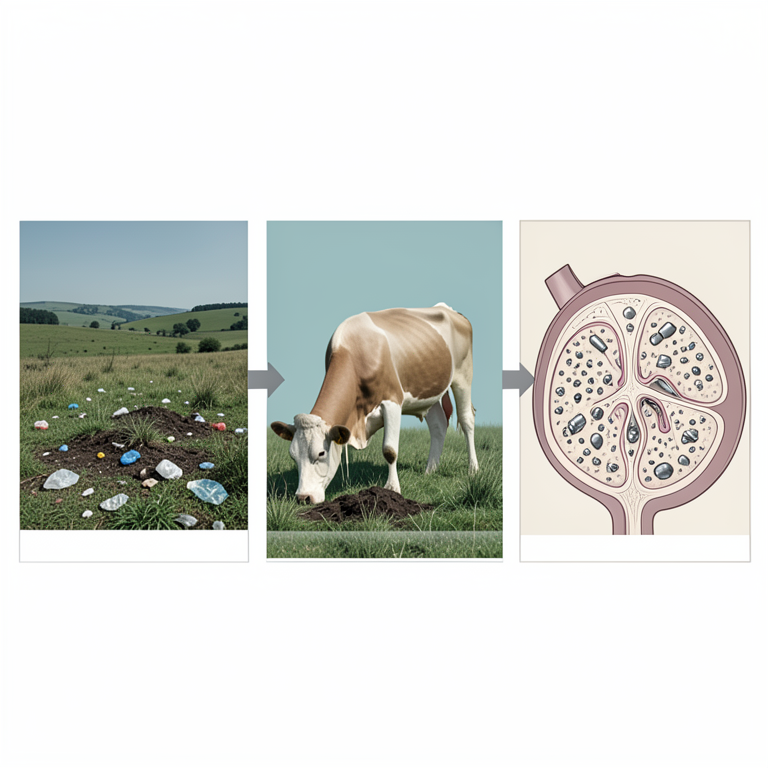
Environmental Contamination Pathway
AI-generated conceptual illustration (cattle in a peri-urban grazing environment). It explains the idea and does not show study data.
View source evidence ↗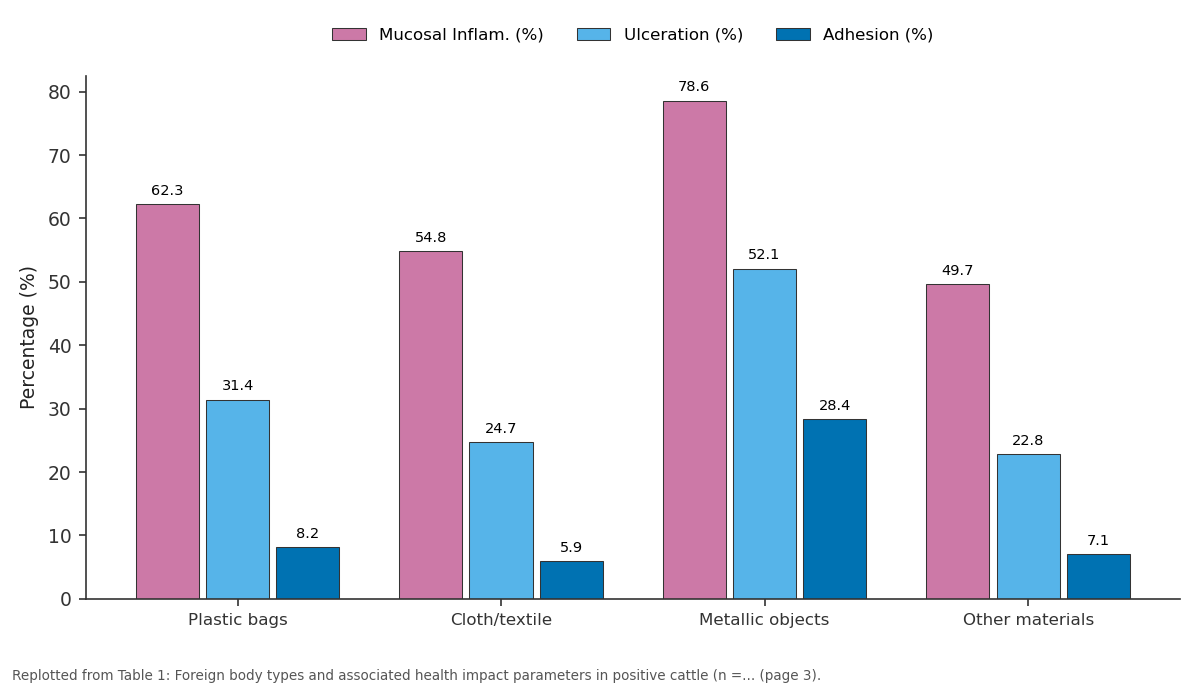
Mucosal Inflam. (%) and Ulceration (%) and more: Plastic bags vs Cloth/textile vs Metallic objects vs Other materials
Replotted from Table 1 (page 3) of the original paper. Every bar is the paper's own table value.
View source evidence ↗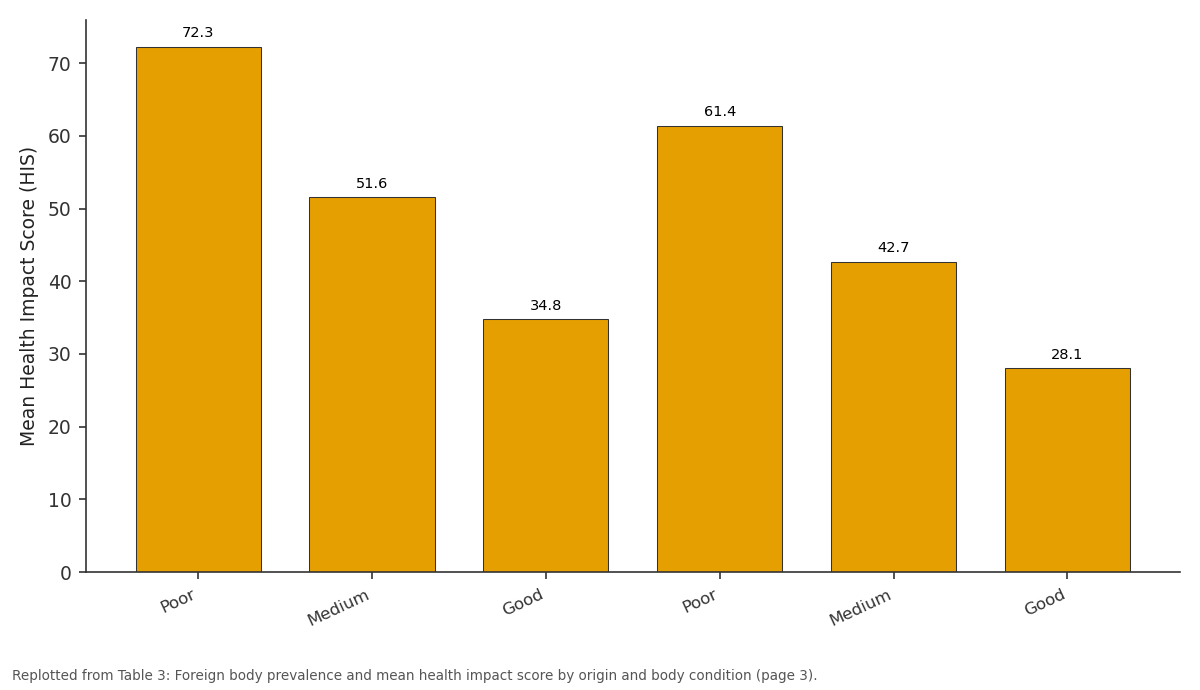
Mean HIS: Poor vs Medium vs Good vs Poor vs Medium
Replotted from Table 3 (page 3) of the original paper. Every bar is the paper's own table value.
View source evidence ↗Figures & tables
From the original paper Table 1
 Table 2
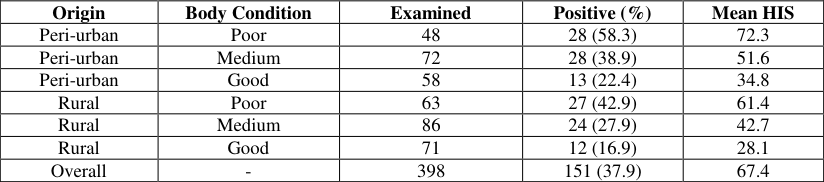 Table 3
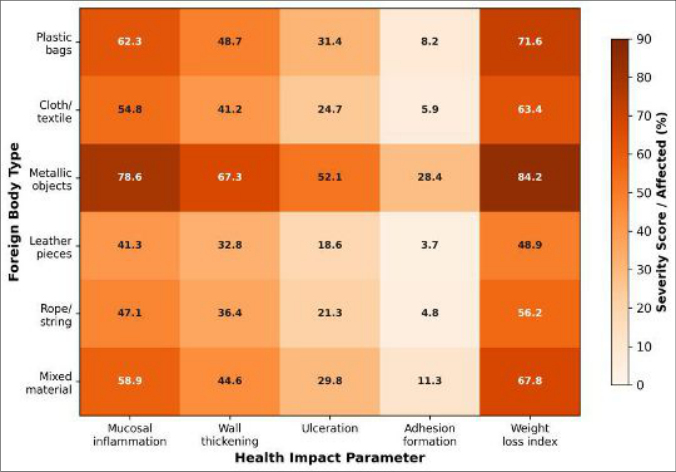 Figure 1
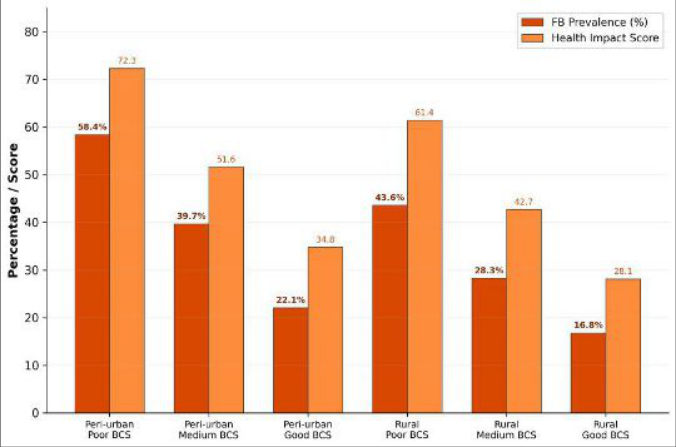 Figure 2
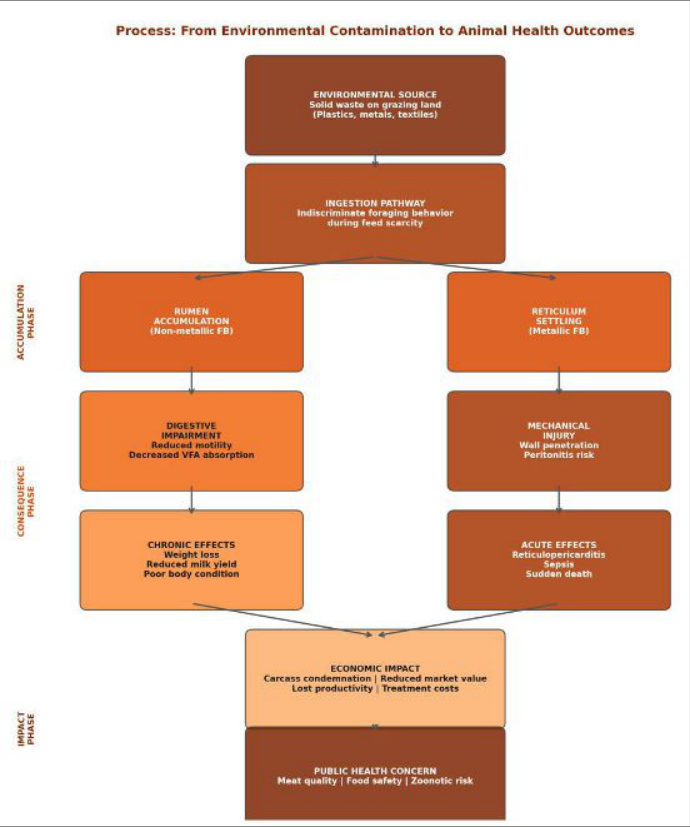 Figure 3
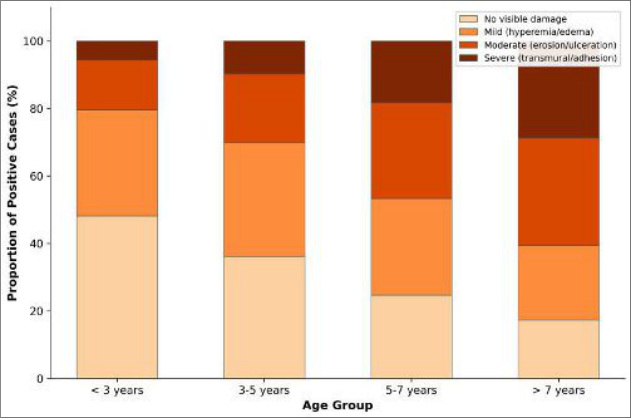 Figure 4
Introduction
Across the semi-arid lowlands and mid-highlands of eastern Ethiopia, a quiet crisis is unfolding at the intersection of environmental degradation and livestock health. The disposal of non-biodegradable waste on open land, along roadsides, and around market centers has turned communal grazing areas into reservoirs of ingestible hazards for free-ranging cattle [1,2] . The health consequences of this contamination, while well recognized in veterinary literature, are often underestimated by livestock keepers and local authorities who lack access to systematic data on the scope of the problem [3] . Foreign bodies that enter the bovine forestomach can produce a range of health outcomes depending on their physical properties, quantity, and duration of residence. Non-metallic materials such as plastic bags, cloth, and rope tend to accumulate gradually in the rumen, forming tangled masses that obstruct normal digestive motility and reduce the volume available for microbial fermentation [4,5] . Over weeks and months, the resulting impairment in volatile fatty acid production and nutrient absorption leads to progressive weight loss, declining milk output, and a deteriorating body condition that may not be attributed to its true cause [6] . Metallic foreign bodies, including nails, wire fragments, and metal scraps, pose an additional and more immediate danger. Their weight causes them to settle in the reticulum, and their sharp edges can penetrate the reticular wall during forceful contractions, initiating a cascade that may progress from localized peritonitis to fatal pericarditis [7,8] . The health implications extend beyond the individual animal. Cattle that carry large foreign body loads are less productive, contribute less to household food security, and command lower prices at market due to reduced carcass weight and quality [3] . In severe cases, organs or entire carcasses may be condemned during meat inspection, representing a total economic loss for the owner. From a public health perspective, the presence of metallic objects and the inflammatory changes they cause in the forestomach tissue raise questions about meat safety for consumers, particularly in settings where inspection capacity is limited [9] . Bedeno Woreda, situated in the West Hararghe Zone of the Oromia Region, typifies the environmental conditions that drive this problem. The area's bimodal rainfall pattern creates extended dry seasons during which cattle forage more widely and less selectively, and its growing urban center generates waste that persistently contaminates surrounding grazing areas [10,11] . Although the prevalence of foreign bodies at the Bedeno Woreda Municipal Abattoir has been documented in earlier work [9] , a focused assessment of the health implications, including the typespecific pathological impact and the interaction between environmental exposure and tissue-level damage, hasn't been undertaken. This research was therefore designed to evaluate the health implications of foreign body accumulation in the rumen and reticulum of cattle at the Bedeno Woreda Municipal Abattoir, with emphasis on characterizing the pathological changes associated with different foreign body types, quantifying a composite health impact score, and identifying the host and environmental factors that predict the most severe outcomes. The results aim to inform evidence-based interventions at the interface of environmental management and veterinary public health.
Material and Methods
Material and Methods
Material
This cross-sectional research was conducted at the Bedeno Woreda Municipal Abattoir, West Hararghe Zone, Oromia Regional State, eastern Ethiopia, from October 2021 to March 2022. Ethical clearance was granted by the Institutional Research Ethics Committee of Asmara Institute of Environmental and Agricultural Research (Protocol No. AIEAR-IREC-2021-024, dated September 22, 2021). A total of 398 cattle were enrolled through systematic random sampling, with every second animal on the slaughter line selected during scheduled visits conducted three days per week. The sample size was calculated assuming an expected prevalence of 38%, a 95% confidence level, and 5% precision, requiring a minimum of 362 animals. Equipment included structured data recording forms, disposable examination gloves, stainless steel trays and basins, an electronic precision balance (0.1 g accuracy), a hand-held magnifying lens for mucosal examination, a digital camera, measuring tape, and labeled sample bags. All foreign bodies were recovered, washed, air-dried, individually weighed and collectively weighed per animal, counted, and classified into four primary categories: plastic bags, cloth and textile fragments, metallic objects, and a combined group of leather, rope, stones, and mixed materials.
Methods
Ante-mortem evaluation preceded slaughter for each animal. Variables collected included estimated age (by dentition, grouped as less than 3 years, 3 to 5 years, 5 to 7 years, or greater than 7 years), sex, body condition score (poor, medium, or good), and origin (peri-urban or rural). Postmortem examination involved ligation and separation of the rumen and reticulum from the remaining gastrointestinal tract, incision along the greater curvature, and complete emptying of contents onto inspection trays. Both visual inspection and systematic manual palpation were conducted. Each foreign body was photographed and recorded by type, count, weight, and location (rumen, reticulum, or both). The mucosal surface of both compartments was then examined for gross pathological changes, which were graded using a four-tier scale: no visible change, mild (hyperemia and superficial edema), moderate (erosion and focal ulceration), and severe (transmural inflammation, abscess, or adhesion formation). A composite health impact score was developed for each positive animal by combining the pathological grade (weighted 40%), the total foreign body weight as a proportion of estimated rumen capacity (weighted 30%), and the body condition score (weighted 30%) into a normalized index ranging from 0 to 100, with higher values indicating greater impact. Data were entered into Microsoft Excel and analyzed using SPSS version 26.0. Descriptive statistics, chi-square tests, Spearman correlations, and one-way ANOVA were applied as appropriate. Statistical significance was set at p<0.05.
Biodiversity Assessment of Grazing Environments
An ancillary assessment of the grazing land biodiversity was conducted to contextualize the foreign body findings within the broader environmental landscape. Transect walks were carried out on three representative communal grazing sites within Bedeno Woreda during the dry season (December 2021 and January 2022). At each site, plant species composition, ground cover percentage, and the density of anthropogenic waste per hectare were recorded along 200meter transects. The grazing areas closest to Bedeno town showed the lowest plant species diversity (Shannon index: 1.24) and the highest waste density (an average of 34.7 nonbiodegradable items per hectare), compared to more remote rural sites which averaged a Shannon index of 2.18 and only 6.3 waste items per hectare. Grass species dominance was reduced near peri-urban zones, replaced in part by unpalatable shrubs and bare ground. This biodiversity gradient corresponded with the spatial distribution of foreign body prevalence, as cattle originating from periurban areas with lower biodiversity and higher waste loads showed significantly higher foreign body occurrence.
Soil and Water Quality Observations
Surface soil samples and water samples from shared cattle watering points were collected at the same three grazing sites to assess the extent of environmental contamination. Soil samples from peri-urban grazing areas contained visible microplastic fragments at a density of approximately 18.3 particles per kilogram of topsoil (0 to 10 centimeter depth), compared to 4.1 particles per kilogram at the most remote rural site. Water samples from watering points nearest to Bedeno town showed elevated turbidity (mean 48.6 NTU versus 12.3 NTU at rural sites) and contained floating plastic debris in two of three collections. While these observations were qualitative rather than quantitative in rigor, they support the conclusion that peri-urban grazing environments in Bedeno Woreda are substantially more contaminated than their rural counterparts, providing a plausible environmental explanation for the higher foreign body prevalence observed in cattle from these areas.
Results
Of the 398 cattle examined, 151 (37.9%) were found to harbor foreign bodies in the rumen, reticulum, or both. The following tables and figures present the foreign body type distribution, associated health impacts, pathological grading, and the interaction of host and environmental factors with health outcomes. . This pattern confirms that environmental exposure and nutritional status interact to determine both the likelihood and the severity of foreign body-related health effects.
Figure 1 provides a visual summary of the relationship between foreign body type and five health impact parameters. The darkest cells, indicating the highest severity, cluster in the metallic objects row, particularly for wall thickening (67.3%), ulceration (52.1%), and adhesion formation (28.4%). The weight loss index column shows uniformly high values across all foreign body types, confirming that even non-metallic materials carry significant nutritional consequences when present in sufficient quantity. Figure 2 displays the paired prevalence and health impact data across six origin-body condition combinations. In every category, the health impact score exceeds the prevalence percentage, indicating that positive animals tend to carry clinically meaningful foreign body loads rather than trivial quantities. The peri-urban poor body condition group shows the widest gap between prevalence and impact, suggesting that animals in this category not only ingest foreign material more frequently but also suffer more pronounced consequences per unit of exposure. Figure 4 shows the progressive shift in pathological severity across age groups. The proportion of cases with no visible damage (lightest segment) shrinks from 48.2% in the youngest group to 17.3% in the oldest, while the proportion with severe changes (darkest segment) expands from 5.7% to 28.8%. This visual pattern confirms that the health consequences of foreign body ingestion worsen with age, likely reflecting both cumulative exposure and the diminished capacity of older animals to compensate for the physiological burden.
Comprehensive Interpretation: These results demonstrate that foreign body ingestion in cattle at the Bedeno Woreda Municipal Abattoir carries measurable and type-specific health consequences. The 37.9% overall prevalence, when combined with the finding that over 70% of positive animals exhibit some degree of mucosal pathology, reveals a population-level health burden that is both widespread and clinically relevant. The health impact scoring system provides a way to compare the relative harm inflicted by different foreign body categories and to identify the subpopulations, particularly peri-urban cattle in poor body condition and older age groups, where the health consequences are most concentrated. The environmental data from the biodiversity and soil assessments add ecological depth by linking the spatial pattern of contamination to the spatial pattern of disease.
Discussion
The 37.9% prevalence reported here is consistent with findings from other Ethiopian abattoir investigations, falling within the commonly cited range of 28% to 45% across different localities [1,3,12] . The addition of a health impact assessment to the standard prevalence framework reveals dimensions of the problem that prevalence figures alone cannot capture. Specifically, the finding that metallic foreign bodies, though less common than plastics, produce disproportionately severe health outcomes aligns with clinical observations by Braun [7] and Athar and colleagues
International Journal of Agriculture and Nutrition https://www.agriculturejournal.net [8] , who documented the progressive pathological cascade from reticular penetration to peritonitis and pericarditis. The composite health impact score, while developed specifically for this research and therefore requiring validation in other settings, offers a practical tool for comparing the health burden across foreign body types and across animal subpopulations. Its structure, weighting pathological severity, foreign body load, and body condition, attempts to capture both the direct tissue effects of foreign material and the broader nutritional context in which those effects occur [6,13] . The approach could be refined through inclusion of histopathological data and blood biochemistry parameters in future investigations. The ancillary environmental data, though limited in scope, provide an ecological frame for the animal-level findings. The negative correlation between grazing land biodiversity and foreign body prevalence is consistent with the understanding that degraded environments with reduced forage availability push cattle toward scavenging on contaminated ground [2,10] . And the soil microplastic data, while preliminary, point to a contamination gradient that extends from the visible surface waste into the soil matrix itself, potentially affecting cattle through routes beyond direct ingestion of large debris items [14,15] . The age-dependent severity pattern has important practical implications. Older cattle accumulate foreign material over years and develop progressively more severe mucosal damage that may become irreversible at advanced stages [9,16] . This suggests that early-life interventions to reduce foreign body ingestion, such as restricting young cattle's access to heavily contaminated areas, could prevent the establishment of the cumulative damage cycle. Limitations of this research include the absence of histopathological confirmation of the gross pathological grading, the crosssectional design, and the small sample sizes in the environmental assessment component.
Conclusions
This research has documented that foreign body ingestion in cattle slaughtered at the Bedeno Woreda Municipal Abattoir is not merely prevalent at 37.9% but also carries demonstrable and type-specific health consequences. The development and application of a composite health impact score has allowed a more nuanced comparison of the harm inflicted by different foreign body categories than prevalence data alone can provide. Metallic objects, while less common than plastic bags, produce the most severe tissue damage and the highest overall health impact scores, reinforcing the particular danger posed by sharp, dense foreign materials in the reticulum. The interaction between environmental contamination and animal health is clearly demonstrated by the data. Cattle from peri-urban areas, where grazing land biodiversity is low and waste density is high, showed both higher prevalence and more severe health outcomes than their rural counterparts. This environmental gradient mirrors the soil contamination data collected from representative grazing sites, providing ecological evidence that the problem is rooted in the degradation of the grazing environment rather than in any behavioral abnormality of the cattle themselves. The age-dependent progression in pathological severity carries a clear message for prevention strategy. Because foreign body damage accumulates over time and may become irreversible at advanced stages, interventions that reduce ingestion in young and middle-aged cattle could prevent the severe outcomes observed in older animals. Restricting access to heavily contaminated peri-urban grazing areas, organizing regular clean-up of communal pastures, and providing supplementary dry-season feeding are all measures that could interrupt the cycle of exposure, accumulation, and progressive tissue damage. From an environmental management perspective, the findings underscore the interconnectedness of waste management, ecosystem health, and livestock welfare. The biodiversity data suggest that grazing land degradation and waste contamination are co-occurring problems that reinforce each other: as plant diversity declines and bare ground expands, discarded waste becomes more accessible to foraging cattle. Reversing this trend requires coordinated action across multiple sectors, including municipal waste collection, environmental restoration of degraded grazing areas, and community education about the links between waste disposal practices and livestock health. The health impact scoring approach introduced in this research, while requiring further validation, offers a framework that could be adopted in other abattoir surveillance programs across the Horn of Africa. Routine monitoring that combines prevalence data with health impact assessment would generate the evidence base needed to evaluate whether interventions are producing measurable improvements over time. Without such monitoring, the burden of foreign body-related morbidity in eastern Ethiopian cattle will continue to grow alongside the expanding volumes of non-biodegradable waste entering their grazing environments.
Acknowledgement
Acknowledgements
Figures and tables from the paper
| FB Type | n (%) | Mucosal Inflam. (%) | Ulceration (%) | Adhesion (%) | Mean HIS |
|---|---|---|---|---|---|
| Plastic bags | 52 (34.4) | 62.3 | 31.4 | 8.2 | 71.6 |
| Cloth/textile | 31 (20.5) | 54.8 | 24.7 | 5.9 | 63.4 |
| Metallic objects | 24 (15.9) | 78.6 | 52.1 | 28.4 | 84.2 |
| Other materials | 44 (29.2) | 49.7 | 22.8 | 7.1 | 57.3 |
| Total | 151 (100) | 58.9 | 30.1 | 11.3 | 67.4 |
Table text extracted from the original PDF; superscript letters are shown inline. The original table image is below.
View original table image
| Age Group | n | No Damage (%) | Mild (%) | Moderate (%) | Severe (%) |
|---|---|---|---|---|---|
| < 3 years | 19 | 48.2 | 31.4 | 14.7 | 5.7 |
| 3-5 years | 38 | 36.1 | 33.8 | 20.3 | 9.8 |
| 5-7 years | 47 | 24.7 | 28.6 | 28.4 | 18.3 |
| > 7 years | 47 | 17.3 | 22.1 | 31.8 | 28.8 |
| Total | 151 | 29.8 | 28.5 | 25.2 | 16.5 |
Table text extracted from the original PDF; superscript letters are shown inline. The original table image is below.
View original table image
| Origin | Body Condition | Examined | Positive (%) | Mean HIS |
|---|---|---|---|---|
| Peri-urban | Poor | 48 | 28 (58.3) | 72.3 |
| Peri-urban | Medium | 72 | 28 (38.9) | 51.6 |
| Peri-urban | Good | 58 | 13 (22.4) | 34.8 |
| Rural | Poor | 63 | 27 (42.9) | 61.4 |
| Rural | Medium | 86 | 24 (27.9) | 42.7 |
| Rural | Good | 71 | 12 (16.9) | 28.1 |
| Overall | - | 398 | 151 (37.9) | 67.4 |
Table text extracted from the original PDF; superscript letters are shown inline. The original table image is below.
View original table image
References
17 in the original paper- Tiruneh R, Yesuwork H. Foreign bodies in the rumen and reticulum of cattle at Addis Ababa Abattoir Enterprise, Ethiopia. East Afr J Sci. 2010;4(1):53-57.
- Kassa G. Plastic bag waste and its environmental and health implications in Ethiopia: a critical analysis. Environ Sci Pollut Res. 2021;28(24):30147-30159. International Journal of Agriculture and Nutrition https://www.agriculturejournal.net
- Negash S, Sibhat B, Sheferaw D. Postmortem survey of indigestible foreign bodies in the rumen and reticulum of ruminants around Ambo Town. Ethiop Vet J. 2015;19(2):35-44.
- Igbokwe IO, Kolo MY, Egwu GO. Rumen impaction in sheep with indigestible foreign bodies in semi-arid Nigeria. Small Rumin Res. 2003;49(2):141-147.
- Vanitha V, Nambi AP, Jeyaraja K, Gowri B. Occurrence and characterization of indigestible foreign bodies in ruminants. Tamil Nadu J Vet Anim Sci. 2010;6(3):116-119.
- Otsyina HR, Nguhiu-Mwangi J, Mogoa EG, Mbuthia PG, Ogara WO. Prevalence of indigestible rumen foreign bodies at Dagoretti Slaughterhouse, Nairobi, Kenya. Bull Anim Health Prod Afr. 2015;63(2):107113.
- Braun U. Traumatic pericarditis in cattle: clinical, radiographic and ultrasonographic findings. Vet J. 2009;182(2):176-186.
- Athar H, Mohindroo J, Singh K, Kumar A, Randhawa CS. Haematobiochemical and radiographic observations in bovines with traumatic reticulopericarditis. Vet Res Commun. 2010;34(1):35-43.
- Ame MK, Usman AM, Mokria DE, Abdella M. Study on prevalence of indigestible foreign bodies in rumen and reticulum of cattle slaughtered at Bedeno Woreda Municipal Abattoir, Eastern Ethiopia. Int J Vet Sci Anim Husbandry. 2022;7(3):1-5. doi:10.22271/veterinary.2022.v7.i3a.415.
- Tesfaye D, Daba D, Mekibib B, Fekadu A. Environmental pollution in the gastrointestinal tract of cattle at Haramaya District, eastern Ethiopia. Glob Vet. 2012;8(5):508-512.
- Kassahun B, Mekonnen G. Waste management practices and their effects on grazing resources in West Hararghe Zone. Ethiop J Environ Stud Manag. 2019;12(4):378-389.
- Fromsa A, Mohammed N. Prevalence of indigestible foreign bodies in small ruminants at Luna Export Abattoir, Modjo, Ethiopia. J Anim Vet Adv. 2011;10(12):1598-1602.
- Berrie K, Tadesse E, Mossie B, Abebaw D. Foreign body ingestion and associated risk factors in cattle at Gondar Elfora Abattoir. J Vet Med Anim Health. 2015;7(5):163-167.
- Rillig MC, Ziersch L, Hempel S. Microplastic transport in soil by earthworms. Sci Rep. 2017;7(1):1362.
- Ng EL, Huerta Lwanga E, Eldridge SM, Johnston P, Hu HW, Geissen V, Chen D. An overview of microplastic and nanoplastic pollution in agroecosystems. Sci Total Environ. 2018;627:1377-1388.
- Bwatota SF, Makungu M, Nonga HE. Occurrence of indigestible foreign bodies in cattle at Morogoro Municipal Slaughterhouse, Tanzania. J Vet Med. 2018;2018:4818203.
- Hailat N, Al-Darraji A, Lafi S, Al-Ani F. Occurrence of foreign bodies in the gastrointestinal tract of cattle from Jordan. Acta Vet Brno. 1998;67(1):43-47.