
Research article · 2021 · Full text
International Journal of Biology SciencesPrevalence and antibiotic susceptibility patterns of Staphylococcus aureus in locally pasteurised cow-milk sold at dutse metropolis, Jigawa state, Nigeria
Volume 3(1) · Pages 29–33 · DOI: 10.33545/26649926.2021.v3.i1a.26 ↗
Research areasMilk Quality and Mastitis in Dairy CowsProbiotics and Fermented FoodsFood Safety and Hygiene
Abstract
Author-writtenGlobally, Antibiotic resistant bacteria have remained an important public health problem Staphylococcus aureus is one of the leading causes of foodborne disease outbreaks due to its ability to produce staphylococcal enterotoxins. This aimed at determining the prevalence of antibiotic susceptibility patterns of Staphylococcus aureus in locally pasteurised cow-milk sold at Dutse metropolis. A total of 70 samples were obtained and transported to the Microbiology laboratory of Drugs Manufacturing Unit of Aminu Kano Teaching Hospital for analysis. Staphylococcus aureus were isolated using Mannitol salt agar followed by some biochemical test such as catalase and coagulase and API-Staph Identification. Antibiotics susceptibility patterns of S. aureus were determine using Kirby–Bauer disk diffusion method. In this study the total prevalence of S. aureus was 47.1 %. The result demonstrated the presence of S. aureus in all milk samples which indicated that 40.6% of the samples were positive for S. aureus. The study also revealed that the Staphylococcus aureus isolates demonstrated varying degrees of susceptibility and resistance to different antimicrobials with Penicillin recorded the highest resistance 10(30.3%), and the highest sensitive antibiotic was Cefoxitin 2(6.0%). This study showed presence of S. aureus in all the milk samples collected from different locations within Dutse metropolis. However, Penicillin was the most resistant antibiotic against the isolated S. aureus with Cefoxitin having the highest rate of sensitivity among all the antibiotics tested. The pasteurisation process of local Cow milk should be properly pasteurised to avoid contamination bacteria such as S. aureus. Antibiotics should be used according to the prescribed directives.
Summary
Source-checkedPlain-language reading of the full paper, prepared with AI and checked against the text. Each point links to the authors' own words.
Why it matters
- Antibiotic-resistant bacteria are a significant global public health concern. View evidence ↗
- Staphylococcus aureus is a primary cause of foodborne disease outbreaks because it can produce enterotoxins. View evidence ↗
- Milk and dairy products are significant sources of staphylococcal food poisoning because milk supports the growth of S. aureus. View evidence ↗
The question
- The study aimed to determine the prevalence and antibiotic susceptibility patterns of S. aureus in locally pasteurized cow milk sold in the Dutse metropolis. View evidence ↗
What they did
- The researchers used a cluster sampling strategy to collect 14 samples from each of five areas in Dutse metropolis. View evidence ↗
- A total of 70 milk samples were collected for analysis. View evidence ↗
- S. aureus was isolated using Mannitol salt agar and confirmed via catalase, coagulase, and API-Staph identification tests. View evidence ↗
- Antibiotic susceptibility was determined using the Kirby-Bauer disk diffusion method. View evidence ↗
What they found
- The overall prevalence of S. aureus in the collected milk samples was 47.1%. View evidence ↗
- The Yantifa area showed the highest prevalence of S. aureus at 27.2%. View evidence ↗
- Penicillin was the antibiotic with the highest resistance rate among the isolates at 30.3% (10 isolates). View evidence ↗
- Cefoxitin was the most effective antibiotic, with the highest sensitivity rate (only 6.0% or 2 isolates were resistant). View evidence ↗
- Resistance was also observed for other antibiotics, including cefoxitine (18.1%), clindamycine (15.1%), ofloxacine (12.1%), gentamycine (12.1%), tetracycline (9.0%), and erythromycin (6.0%). View evidence ↗
What it means
- The authors conclude that local cow milk must be properly pasteurized to prevent contamination by bacteria like S. aureus. View evidence ↗
- The authors recommend that antibiotics be used strictly according to prescribed directives to combat resistance. View evidence ↗
Visual summary
1 visualsIllustrations explain the paper; they do not show study data.
Study Workflow
AI-generated conceptual illustration (cow milk and Staphylococcus aureus bacteria). It explains the idea and does not show study data.
View source evidence ↗Figures & tables
From the original paper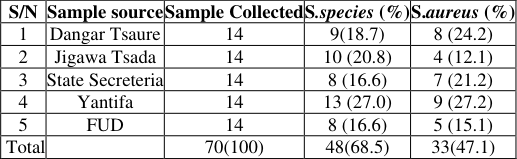 Table 1
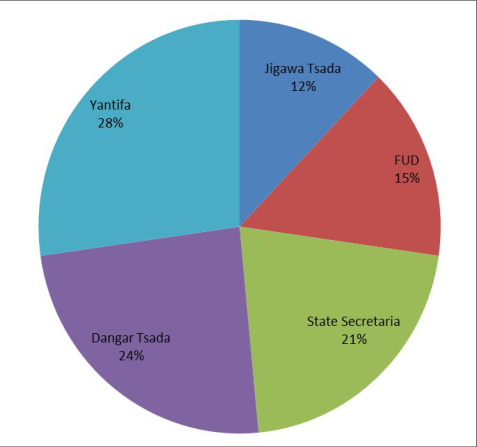 Figure 1
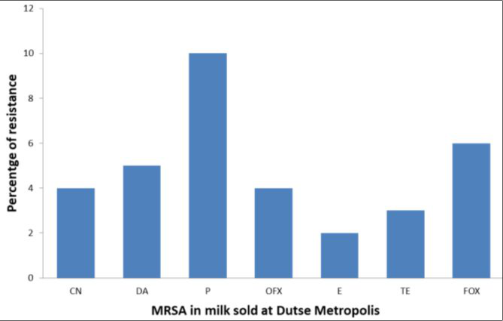 Figure 2
Introduction
Globally, Antibiotic resistant bacteria have remained an important public health problem (Normanno et al., 2007). (Mansori and Khaleghi, 1997; Lee, 2003; Ikeagwu et al., 2008). Associated with this concern, is the mutual affirmation that both medical and veterinary use of antimicrobial agents in promoting the emergence and rise in the prevalence of these resistant pathogens. Many researchers have investigated the role of animal food products such as meat (Bhargava, 2011) and milk (Strastkova et al., 2009; Virgin et al., 2009; Tǜrkyilmaz et al., 2010) [32,38] as sources of resistant zoonotic bacteria. In 2015 microbial food poisoning accounted for 53.7% offood poisoning inChina, of which Staphylococcus aureus was an important pathogenic factor in this cases (Wu et al., 2018).Approximately Staphylococcus aureus causes 241, 000 cases of food poisoning annually (Scallan et al., 2011; Kadariyat et al.,2014). Staphylococcus aureus is one of the leading causes of foodborne disease outbreaks due to its ability to produce staphylococcal enterotoxins (Tenhagen et al., 2014; Hennekinne et al., 2012) [33,16] . The on-going explosion of antibiotic resistant infections continues to plague global healthcare (Spellberget al., 2008). Methicillin resistance staphylococcus aureus (MRSA) is at present the most commonly identified antibiotic resistant pathogen in many parts of the world, including Europe, the Americas, Middle East, East Asia and North Africa (Grundmannet al., 2006).Cases of Livestock-associated(LA-MRSA) have been reported in humans but little or no work in cattle has been documented in Nigeria (Umaru et al., 2013; Mai-siyama et al., 2014) [37,21] . Between 1996 and 1997, the prevalence of MRSA, determined in eight African countries, was relatively high in Nigeria, Kenya and Cameroon and low in Tunisia and Algeria (Fadeyi et al., 2010; Nwankwo et al., 2010) [11] . In Nigeria, MRSA colonization and infection have been reported in humans with varying prevalence of between 20 and 60% (Olonitola et al., 2007) [26] . Milk is considered as an excellent medium for growing of many microorganisms. Milk can be contaminated with several bacteria during milking process from the milking personnel, utensils used for milking (Rehman et al., 2014) [28] . Besides, microorganisms may enter the udder through teat canal, and the bacteria may come out through milk (Smith et al., 2007) [30] . Staphylococcus aureusis one of the two major contaminants of milk. The presence of the pathogen in milk largely depends on fecal contamination, and the presence of pathogen in faeces mainly originates from feed contamination (Aycicek et [2] . Food borne diseases are of great concern around the world. However, this is an important issue in developing countries where poor sanitation is maintained during collection and processing of milk from cattle (Le et al., 2003).Staphylococcal food poisoning is a common cause of food borne illness in humans (Pillsbury et al., 2013) [27] . This occurs following ingestion of staphylococcal enterotoxins which are heat resistant and are produced in food following contamination by staphylococci, typically Staphylococcus aureus. Milk is a good substrate for S. aureus growth and among the foods implicated in staphylococcal food poisoning (SFP), milk and dairy products play an important role, since enterotoxigenic strains of S. aureushave been frequently isolated in them (Normannoet al.,2007) [24] . In addition, the number and types of microorganisms in milk immediately after milking are affected by biotic factors like animal health and its cleanliness and abiotic factors such as air, soil, grass, faeces, season and milking equipment (Uddin et al., 2011) [36] . It is also hypothesized that in feeding and housing strategies of animals may influence the microbial quality of milk (Coorevits, 2008) [6] . Public health problems associated with the consumption of unpasteurized raw milk and its products have been well documented (De Valk et al., 2000; De Buyser et al., 2001 and Harrington et al., 2002) [9,8,15] . So, examination for the presence and number of specific microorganisms is therefore an integral part of any quality control or quality assurance plan. However, there is scarcity of data regarding the prevalence of S. aureus in pasteurised cow milk in Dutse metropolis. Therefore, this study intended to bridge in the gap by determining the prevalence of S. aureus in locally pasteurised cow milk in Dutse metropolis.
Material and Methods
Material and Methods
Study area
The study was carried out in Dutse metropolis, Dutse local Government of Jigawa State Nigeria. Jigawa State is located at the centre of Northern Nigeria with the coordinate's 11°46′ 39'' North, 9° 20′ 3'' East. The state shares boundaries with Republic of Niger and other northern state in the in the North-West region of Nigeria. Statistically an estimated 3.8million people living in Jigawa, the state is mostly populated by Hausa and Fulani Ethnic tribes, other ethnic groups are also present like Kanuri and Fulfulde. Agriculture and Cattle rearing are the major occupation of about 80% of the people actively engaged in the 27 local governments within the State.
Sampling strategy
The Raw milk samples were selected within Dutse Metropolis using cluster sampling Strategy, Five (5) areas (Dangantsaure, Jigawa Tsada, State Secretariat, Yantifa, and Federal University Dutse represented as A, B, C, D and E respectively) were considered as clusters. In each cluster, fourteen (14) samples were selected by simple random sampling
Sample collection and processing
A total of 70 samples (14 from each location), were obtained, the Samples were collected in a sterile containers, using a standard hygienic protocols ,placed in ice -packed coolers and taken to the laboratory. Samples were analysed at Microbiology laboratory of Drugs Manufacturing Unit (DMU) of Aminu Kano Teaching Hospital (AKTH) within 6 hours of collection.
Isolation and Identification of Staphylococcus aureus
The isolation of Staphylococcus aureus were according to the procedure described by Imani fooladi et al. (2010).The raw milk samples were collected from different locations (A-E) in Dutse Metropolis. Dairy samples of raw milk were diluted in the ratio 1/100 in normal saline. From each solution produced, 10ml were pipetted and transferred to 90 mls peptone water, 9% NaCl. Were added and incubated at 37̊ C for 24h. In the second phase, 1ml from each previously cultured medium was thentransferred to Mannitol Salt Agar (MSA) and incubated for 24h. Yellow colonies with transparent yellow zone on Mannitol Salt agar were considered as presumptive Staphylococcus aureus. They were picked and stored on nutrient agar slants for further confirmatory tests. The isolates were identified phenotypically using catalase, coagulase and API-Staph identification.
Antibiotic Susceptibility Screening
The antibiotic susceptibility tests for S. aureus isolates were performed according to the Kirby-Bauer method as described by Kirby-Bauer disk diffusion method to determine the antibiotic susceptibility pattern. Diameter, evaluation and interpretation were carried out according to the Clinical and Laboratory's' standards Institutes (CLSI, 2019).The antimicrobial agents used were Erythromycin (15ug), Penicillin G (10ug), Clindamycin (2ug), Gentamicin (10ug), Ofloxacin (5ug), Tetracycline (30ug) and Cefoxitin. Isolates were incubated using Muller Hilton Agar (MHA) categorized as either susceptible or resistant according to guide lines of Clinical and Laboratory Standards Institute CLSI (2019). Staphylococcus aureus ATCC 25923 were used as quality control standard strain.
Data Analysis
The raw data was first entered into excel spread sheet. Prevalence and Antibiotic susceptibility patterns were generated and presented in tables and graphs.
Results and Discussion
The study was designed to determine the prevalence, antimicrobial susceptibility profile of Staphylococcus aureuss and MRSA isolated from locally fermented raw milk products in Dutse Metropolis.In this study the total prevalence of S. aureus is 47.1 % which is higher than the study conducted in Debrezeit, Ethiopia 29.1% (André,et al, 2008) [1] 27.0% (Belmamoun, et al 2016) [3] In the other side, the study done by Daka et al. (2012) [7] , in Southern Ethiopia the prevalence was reported as 40.6% which is closer to the current studythe difference may come due to probability of high contamination due to poor hygienic standards. The presence of S. aureus tends to reduce the quality of the milk through their metabolic activities and could precipitate food poisoning due to elaboration of toxins that could lead to illnesses when consumed by humans.
There are so many results of prevalence by different researchers in different countries. For example in Morocco, it was found 40% prevalence of S. aureus (Akkou et al., 2016), 36.9% in Palestine (Nazari et al., 2014) [23] , 75% in Bangladesh (Thaker et al., 2013) [34] and 61% in India (Fagundes et al., 2010) [12] which are higher than the result found in this study. The difference may be resulted from their sampling sites includes much number of local milk collection and distribution sites. Over the years, milk and milk products have been known as vehicles for the transmission of bacterial pathogens to man (Revathi et al., 2012). S. aureus is considered to be the most common mammary pathogen found in bovine mastitis in the whole world and is an obvious contributor to milk contamination (André,et al 2008) [1] This difference can be attributed to the fact that the most of these researchers indicated higher prevalence carried out their samples on farms, while our study was interested in the locally pasteurised cow milkthat underwent several means of transport and manipulations before arriving to the consumers. In the other hand there are researches done and found to have lower prevalence than this study like 18.18% prevalence of S. aureus found in Turkey by Ekici et al. (2004) [10] . The results in those studies are lower than this study might be due to environmental contamination at milk distribution site. In addition, those studies may have a better prevention and hygienic environment than study area of this research. Mastitis presence will also be the factor as Asperger and Zangeri said about 40% of the cases would be associated with the presence of mastitis. Environmental contamination during raw milk handling also results S. aureus to get a chance contaminating the milk [19][20][21] . The result demonstrated the presence of S. aureus in all milk samples. Similar studies conductedin Morocco, Brazil, Ethiopia and Kenya reported prevalence of S. aureus to be 40%, 68%, 48.75% and 30.6% respectively (Bendahou et al., 2008), (de Oliveira et al.,2011), (Daka et al., 2012) [7] , (Shitandi et al., 2004).Similar to this study, the high prevalence were from milk samples collected from sale points and markets. However, the difference in prevalence may be due to the fact that our samples were collected from a smaller geographical area within a shorter period compared to those reported elsewhere. The high levels of S. aureus in milk relates to poor hygiene practices and also the health status of the animals. Daka et al. (2012) [7] reported 40.6 % in South Ethiopia. The difference in the prevalence rate was due to variation in the sanitary condition of udder, size of sampling and geographic region (Sadashiva and Kaliwal, 2013 and Shopsin et al., 2000). In this study we described the isolation and antibiotic susceptibility characterization of S. aureus from milk obtained from five different areas in Dutse Metropolis. Our results indicate that 40.6% of the samples were positive for S. aureus and Several studies have been conducted in South Africa to evaluate the prevalence of S. aureus in milk (Shitandi, 2004; Lee, 2003; Gundogan et al., 2006). The results reported in our study were similarly high when compared to those studies (Shitandi, 2004; Gundogan et al., 2006) [29] . Although the prevalence of S. aureus has been reported to vary with the size and geographic region of the area sampled, a high proportion of these bacteria in milk relates to poor hygiene practices. Based on observations made during the collection of samples, we therefore report that improper hygiene and poor management practices contributed to the presence of S. aureus in the milk, especially in those from the Yantifaarea., also may be attributed to untreated groundwater was used to wash the containers that were used for milking. This may have contributed to the high level of S. aureus isolated. Improving the hygienic conditions of the milking environment and/or utensils may reduce the prevalence of S. aureus in milk and prevent its transmission to humans. The Study also revealed that the staphylococcus aureus isolates demonstrated varying degrees of susceptibility and resistance to different antimicrobials. Penicillin with 10(30.3%) recorded the highest resistance. Similar results have been observed for strains isolated from milk, dairy products, and dairy workers ( the increasing levels of resistance may be associated with the ill use of antibiotics in various works of life. However, the isolates were also resistant to erythromycin, tetracycline, ofloxacine, gentamycine, clindamycine and cefoxitine with 2(6.0%), 3(9.0%), 4(12.1%), 4(12.1%), 5(15.1%) and 6(18.1%) respectively. According to Ojo et al., (2016), antimicrobial usage in food-producing animals has remained a major factor contributing to the emergence and dissemination of antimicrobial resistant bacterial strains.
Figures and tables from the paper
| S/N | Sample source | Sample Collected | S.species (%) | S.aureus (%) |
|---|---|---|---|---|
| 1 | Dangar Tsaure | 14 | 9(18.7) | 8 (24.2) |
| 2 | Jigawa Tsada | 14 | 10 (20.8) | 4 (12.1) |
| 3 | State Secreteria | 14 | 8 (16.6) | 7 (21.2) |
| 4 | Yantifa | 14 | 13 (27.0) | 9 (27.2) |
| 5 | FUD | 14 | 8 (16.6) | 5 (15.1) |
| Total | 70(100) | 48(68.5) | 33(47.1) |
Table text extracted from the original PDF; superscript letters are shown inline. The original table image is below.
View original table image
References
38 in the original paper- André MCD, Campos MRH, Borges LJ, Kipnis A, Pimenta FC, Serafini AB. Comparison of Staphylococcus aureus isolates from food handlers, raw bovine milk and minas frescal cheese by antibiogram and pulsed-field gel electrophoresis following Small digestion. Food Control,2008:19:200-20712.
- Aycicek HS, Cakiroglu K, Stevenson TH. Incidence of Staphylococcus aureus in ready to eat meals from military cafeterias in Ankara. Turkey. Food control,2005:16:531534.
- Belmamoun AR, Reguig KB, Bouazza S, Mustapha, MD. Subclinical mastitis on the raw milk as a risk factor for the transmission of Staphylococcus aureus and coagulasenegative staphylococci, multidrug resistance in Sidi Bel Abbes, Algeria. Advance Environmental Biolology,2016:10(6):1-11.
- Bhargava K, Wang X, Donabedian S, Zervos M, da Rocja L Zhang Y. "Methicillin-resistant Staphylococcus aureus in retail meat, Detroit, Nichigan, USA", Emergence Infectious Disease,2011:17(6):1135-1137.
- CLSI. Document M31-S1: Performance Standards for Antimicrobial Disk and Dilution Susceptibility Tests for Bacteria Isolated from Animals; Informational Supplement,2004:24(17):1-33.
- Coorevits. Comparative analysis of the diversity of aerobic-spore-forming bacteria in raw milk from organic and conventional dairy farms. Applied Microbiology,2008:31:126-140.
- Daka D, Gsilassie G, Yihdego D. Antibiotic resistance Staphylococcus aureus isolated from cow's milk in the Hawassa area, South Ethopia. Annual Clinical Microbiology Antimicrobial,2012:11:26-31.
- De Buyser ML, Dufour B, Maire M, Lafarge V. Implication of milk and milk products in foodborne diseases in France and in different industrialized countries. International Journal of Food Microbiology,2001:67(1):1-17.
- De Valk H, Delarocque AE, Colomb G, Ple S, Godard E, Grimot P et al. A Community-wide outbreak of Salmonella enteric Serotype Typhimurium infection associated with eating a raw milk soft cheese in France. Epidemiological Infection,2000:124:1-7.
- Ekici K, Bozkurt H, Isleyici O. Isolation of some pathogens from raw milk of different milch animals. Pakistan Journal of Nutrition,2004:3:161-162.
- Fadeyi A, Bolagi BO, Oyedepo OO, Adesiyun OO, Adeboye MAN, Olarewaju TO et al. "Methicillinresistance Staphylococcus aureus carriage amongst healthcare workers of the critical care units in a Nigerian hospital", American Journal of Infectious Diseases,2010:6(1):18-23.
- Fagundes H, Barchesi L, Filho AN, Ferreira LM, Oliveira C.A.F. The occurrence of Staphylococcus aureus in raw milk produced in dairy farms in the sãopaulo state, Brazil. Brazilian Journal Microbiology,2010:41(2):376-380.
- Grundmann H, Aires-de-Sousa M, Boyce J, Tiemersma E. Emergence and resurgence of Methicillin resistant Staphylococcus aureus as a public health threat. Lancet,2006:368:874-85.
- Gündoğan N, Citak S, Turan E. Slime production, DNase activity and antibiotic resistance of Staphylococcus aureus isolated from raw milk, pasteurized milk and ice cream samples. Journal of Food Control,2002:17:389392. 10.1016/j.foodcont.2005.01.006.
- Harrington P, Archer J, Davis JP, Croft DR, Varma JK, EIC officers. Outbreak of Campylobacter jejuni infections associated with drinking unpasteurized milk procured through a cow-leasing Program. Wisconsin, 2001. Morbidity and Mortality Weekly Report,2002:51:548549.
- Hennekinne JA, De Buyser ML, Dragacci S. Staphylococcus aureus and Its Food Poisoning Toxins: Characterization and Outbreak Investigation. FEMS Microbiology, Rev,2012:36:815-36.
- Ikeagwu IJ, Amadi ES, Iroha IR. Antibiotic sensitivity pattern of Staphylococcus aureus in Abakaliki, Nigeria", Pakistan Journal of Medical Sciences,2008:24:230-235.
- Kadariya, Jhalka, Tara C. Smith, Dipendra Thapaliya. Staphylococcus aureus and Staphylococcal Food-Borne Disease: An Ongoing Challenge in Public Health. Biomedical Medical Research International, 2014, 2:9.
- Le Loir Y, Baron F, Gautier M. Staphylococcus aureus and food poisoning. Genetic and Molecular Research Journal,2003:2(1):63-67.
- Lee JH. Methicillin (oxacillin)-resistant Staphylococcus aureus strains isolated from major food animals and their potentials transmission to humans", Applied Environmental Microbiology,2003:69(11):6489-6494.
- Mai-siyama IB, Okon KO, Adamu NB, Askira UM, Isyaka TM, Adamu SG et al. Methicillin resistant Staphylococcus aureus (MRSA) colonization rate among ruminant animals slaughtered for human consumption and contact persons in Maiduguri, Nigeria. African Journal of Microbiology Research,2014:8(27):2643-2649.
- Mansouri S, Khaleghi M. Antibacterial resistance pattern and frequency of Methicillin resistant Staphylococcus aureus, International Journal of Medical Sciences,1997:22:93-99.
- Nazari R, Godarzi H, Baghi FR, Moeinrad M. Enterotoxin gene profiles among Staphylococcus aureus isolated from raw milk. Iranian Journal of Veterinary Research,2014:15(4):409-412.
- Normanno G, Corrente M, Salandra GL, Dambrosio A, Quaglia NC, Parisi A et al. Methicillin-Resistant Staphylococcus aureus (MRSA) in Foods of Animal Origin Product in Italy. International. Journal of Food Microbiology,2007:117:219-22.
- Nwanko, BOK; Sale, A; Magaji, A and Ihesiulor G. Methicillin-resistant S. aureus. African Journal of Clinical Experimental Microbiology,2010:11(1):29-33.
- Olonitola OS, Olayinka BO, Onalapo JA. Absence of mecA in MRSA isolated from non-hospital source in Zaria, Nigeria.International Journal of Natural and Applied Sciences,2007:13(2):160-164.
- Pillsbury A, Chiew M, Bates J, Sheppeard V. An outbreak of staphylococcal food poisoning in a commercially catered buffet. Communicable Diseases Intelligence,2013:37( 2).
- Rehman MU, Rashid M, Sheikh JA, Bhat MA. Molecular epidemiology and antibiotic resistance pattern of enteropathogenic Escherichia coli isolated from bovines and their handlers in Jammu, India. Journal of Advanced Veterinary and Animal Research,2014:1:177-181.
- Shitandi A, Sternesjö Ǻ. Prevalence of multidrug resistant Staphylococcus aureus in milk from large and small-scale producers in Kenya. Journal of Dairy Sciences,2004:87:4145-4149. 10.3168/jds.S00220302(04)73557-2
- Smith K, Peter K, Daniela H, Melchior S. Food borne pathogenic microorganisms and natural toxins. Food drug Administration Center Food Safety. Applied Nutrition,2007:10:119-150.
- Spellberg B, guidos R, gilbert D, Bradley J, Boucher HW, Scheld WM. infectious diseases society of America. The epidemic of antibiotic resistance infections: a call to action for the medical community from the infectious diseases society of America. Clinical Infectious Diseases,2008:46:155-64.
- Strastkova Z, Karpiskova S, Karpiskova R. Occurrence of methicillin-resistant strains of Staphylococcus aureus at goat breeding farm, Veterinary Medicine,2009:54(9):41942.
- Tenhagen B-A, Vossenkuhl B, Käsbohrer A, Alt K †, Kraushaar B, Guerra B et al. Methicillin-Resistant Staphylococcus aureus in Cattle Food Chains - Prevalence, Diversity, and Antimicrobial Resistance in Germany. Journal of Animal Sciences,2014:92:2741-51.
- Thaker HC, Brahmbhatt MN, Nayakv. Isolation and Identification of Staphylococcus aureus from Milk and Milk Products and Their Drug Resistance Patterns in Anand, Gujarat. Veterinary World,2013:6(1):10-13.
- Tüirkyilmaz S, Tekbiyik S, Oryasin E, Bozdogan B. Molecular epidemiology and antimicrobial resistance mechanisms of methicillin resistant Staphylococcus aureus isolated from bovine milk, Zoonotic Public Health,2010:7:140-147.
- Uddin MA, Motazzim-ul-Haque HM, Noor R. Isolation and identification of pathogenic Escherichia coli, Klebsiella spp. and Staphylococcus spp. in raw milk samples collected from different areas of Dhaka city, Bangladesh. Stamford Journal of Microbiology,2011:1:19-23.
- Umaru, GaliAbaka, JunaidKabir, Veronica J. Umoh, Mohammed Bello, and Jacob K. P. Kwaga, 2013. Methicillin-Resistant Staphylococcus aureus (MRSA) in Fresh and Fermented Milk in Zaria and Kaduna, Nigeria. International Journal of Drug Resistance. Technology,2011:3:(3):67-75.
- Virgin JE, Van Slyke TM, Lombard JE, Zadoks RN. "Methicillin-resistant Staphylococcus aureus detection in US bulk tank milk", Dairy Science,2009:92:4988-4991.
Cited by 7
From OpenAlex, OpenCitations and reference lists read by Scinovex
- Antibacterial activities of honey against Escherichia coli and Staphylococcus aureus: A potential treatment for bacterial infections and alternative to antibiotics ↗
Steward Mudenda, Christabel Nang Andu Hikaambo, Billy Chabalenge, Ruth Lindizyani Mfune, Webrod Mufwambi, Moses Ngazimbi et al. · Journal of Pharmacognosy and Phytochemistry · 2023
The global problem of antimicrobial resistance (AMR) has increased interest in natural products, such as honey in the treatment of diseases. This study evaluated the antibacterial activities of honey against Escherichia coli (E. coli) and Staphylococcus aureus (S. aureus). This cross-sectional study was conducted from November 2020 to May 2021 using E. coli and S. aureus as indicator organisms. The
❝ 12PDF - Assessment of Soil Physicochemical Properties in The Parklands of Northern Nigeria ↗
I. Abdulrashid, S. A. Adeduntan, Adekunle V.A.J., B. R. Wali · African Journal of Environment and Natural Science Research · 2024
A study was conducted to examine the soil physicochemical properties and nutrients status in parklands of northern Nigeria. Soil samples were collected using soil auger close to mature trees, tree saplings and seedlings from three states (viz. Bauchi, Jigawa and Kano) in different depths (0–15 cm, and 16–30 cm) and analyzed for soil physical and chemical properties. Soil pH was…
❝ 2PDF - Green synthesis of gold nano-conjugates using commonly used citrus species and evaluation of its In-vitro antibacterial efficacy against Staphylococcus aureus: A comparative study ↗
Sudeshna Sengupta, Moumita Saha, Nishan Ranjan Ghosh, Malavika Bhattacharya, Sirshendu Chatterjee · International Journal of Herbal Medicine · 2023
Nanotechnology belongs to one of the areas of modern science, demonstrated numerous positive developments in the realm of medical research, basically deals with the particle size ranging between 1-100 nm. Out of so many methods for developing the metal nanoparticles, the green approach for metal nanoparticles preparation is less hazardous, eco-friendly and cost effective. According to various literature studies, plants
- Phenotypic determination of virulence attributes of S. aureus and P. aeruginosa isolated from clinical specimens in Port Harcourt, Rivers State ↗
Robinson, Victor Kasi, Akani NP, Amadi LO, Wemedo SA · Journal of Advances in Microbiology Research · 2023
Staphylococcus aureus and Pseudomonas aeruginosa are common opportunistic pathogens frequently encountered in clinical settings, responsible for a wide range of infections. This study aimed to determine the pathogenicity of Staphylococcus aureus and Pseudomonas aeruginosa isolated from clinical specimens in Port Harcourt, Rivers State, Nigeria. A total of 589 specimens: wounds (133), ear swab (107), urine (170) and stools (184) obtained
- Prevalence and antimicrobial susceptibility profile of Staphylococcus aureus isolated from marketed milk and cheese in Ilorin, Nigeria ↗
Journal of Sustainable Veterinary and Allied Sciences · 2023
The irrational use of drugs, especially antimicrobials as growth promoters, and in the management of disease conditions without proper diagnosis has led to a higher incidence of multidrug resistance/antimicrobial resistance, which is a leading cause of death both in humans and animals. Improper diagnosis, irrational use of drugs and lack of adherence to withdrawal periods are factors incriminated in the…
❝ 1PDF - Phenotypic characterization of Methicillin-resistant Staphylococci isolated from wounds and nasal swabs in selected hospitals across some Northwestern States, Nigeria ↗
Joel Damilare Ajagbe, A. S. Kumurya, Usman Aliyu Dutsinma, B. Ega, L B Binta, D. E. Bitet · UMYU Journal of Microbiology Research (UJMR) · 2024
Methicillin-resistant Staphylococci (MRS) remain important opportunistic pathogens most frequently identified worldwide. The study aimed to determine the phenotypic characteristics of Methicillin-resistant Staphylococci, their antibiotic susceptibility patterns, and the sociodemographic characteristics of the isolates from wounds and nasal swabs in selected hospitals across some states in Northwestern Nigeria. A total of 806 wounds and nasal swabs were collected from patients admitted…
❝ 0PDF - Post-surgical discharging breast sinuses treated homoeopathically: A case report ↗
Hasinur Jahan, Bandona Gain · International Journal of Homoeopathic Sciences · 2023
Breast sinus may form as a complication of breast abscess due to inadequate drainage of the abscess or it may be due to injudicious antibiotic treatment. Breast abscesses are frequently encountered among women in their childbearing years, particularly during lactation, primarily attributed to Staphylococcus aureus infection. In instances of hospital-acquired cases, a notable propensity for penicillin resistance is observed, and…
❝ 0PDF