
Research article · 2021 · Full text
International Journal of Agriculture and Food ScienceStandardization and storage studies of rice papad incorporated with tomato pulp
Volume 3(1) · Pages 21–24 · DOI: 10.33545/2664844x.2021.v3.i1a.46 ↗
Research areasFood Science and Nutritional Studies
Abstract
Author-writtenIn study preparation of Papad was successfully done. The aim to prepare Papad as a nutritional point of view and to provide convenience to the consumer. Papad is a traditional food item typically made from pulses flour & cereal flour, dough or batter. Papad are usually flat, crisp, round, wafers-like product. For preparation of Papad Rice flour, tomato pulp, sesame seed, salt, red chili powder, cumin and Papad khar used. All the mixed together with other ingredient. Then making a smooth dough then make small balls and rolling into thin sheet by the help of roller pin. Dry the Papad. For the preparation of Tomato Papad three trials were taken among the three trials, T2 get highest score on the basis of sensory evaluation. Proximate composition of Papad was Moisture content (11.3%), Ash (0.92%), Fat (7.2%), and Protein (3.1%), Carbohydrate (58%), Energy (350 kcal) were best among all the levels of Papad prepared recorded highest score in all the quality attributes and good storage ability. It was concluded that the Papad made from Tomato pulp can be store for six months in Low density polyethylene pouches at room temperature. So the Papad made from Tomato Pulp can be satisfy the consumer in accepts and quality.
Summary
Source-checkedPlain-language reading of the full paper, prepared with AI and checked against the text. Each point links to the authors' own words.
Why it matters
- Papad is a traditional Indian snack often used as a meal accompaniment or in soups. View evidence ↗
- Tomatoes are a globally significant crop and a rich source of vitamins A and C, as well as the antioxidant lycopene. View evidence ↗
- The growth of papad production for domestic and export markets has created a need for standardized quality evaluation. View evidence ↗
The question
- The study aimed to develop a papad that is nutritionally beneficial and convenient for consumers. View evidence ↗
What they did
- The production process involved steam cooking the dough at 100 °C for 15 minutes and drying the final product in a tray dryer at 70 °C for 4 hours. View evidence ↗
- Sensory evaluation was conducted by 10 semi-trained academic staff using a 9-point Hedonic scale to rate attributes like color, flavor, and texture. View evidence ↗
- Storage stability was tested over 180 days at room temperature (27°C-33°C) using low-density polyethylene (LDPE) pouches. View evidence ↗
What they found
- The T2 formulation received the highest overall sensory acceptance score of 8.2, outperforming T1 and T3. View evidence ↗
- The raw papad had an average diameter of 11.1 cm and width of 0.8 mm, which increased to 17.4 cm in diameter and 1.5 mm in width after frying. View evidence ↗
- The product remained satisfactory for up to 180 days of storage, although moisture content decreased after the first 15 days. View evidence ↗
What it means
- The authors concluded that tomato pulp-based papad can be stored for six months at room temperature in LDPE pouches. View evidence ↗
- The T2 formulation was determined to be the superior version due to its higher sensory acceptability. View evidence ↗
Visual summary
3 visualsIllustrations explain the paper; charts are replotted from the paper's own table values.
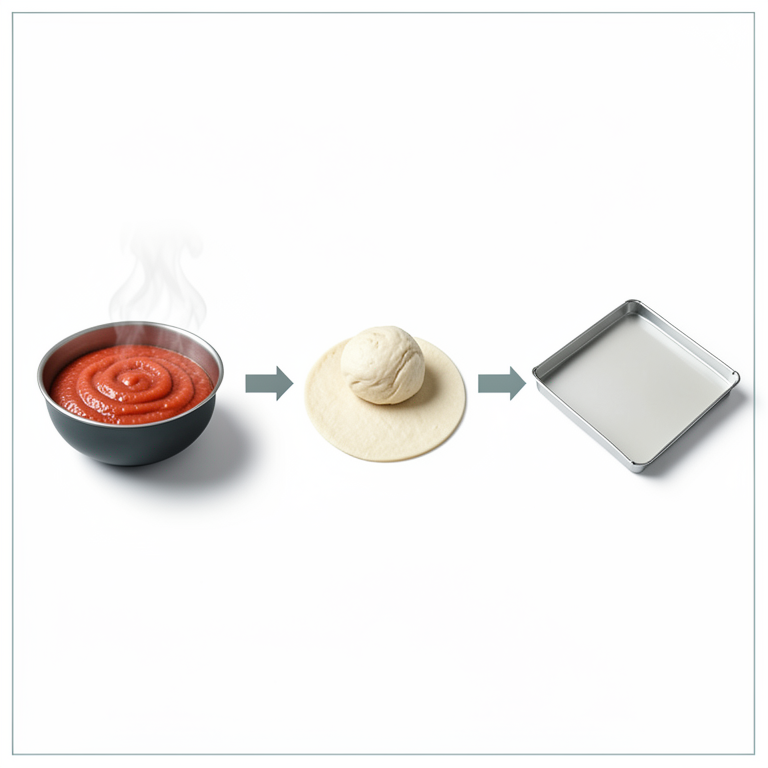
Production Process Flow
AI-generated conceptual illustration (rice papad with tomato pulp). It explains the idea and does not show study data.
View source evidence ↗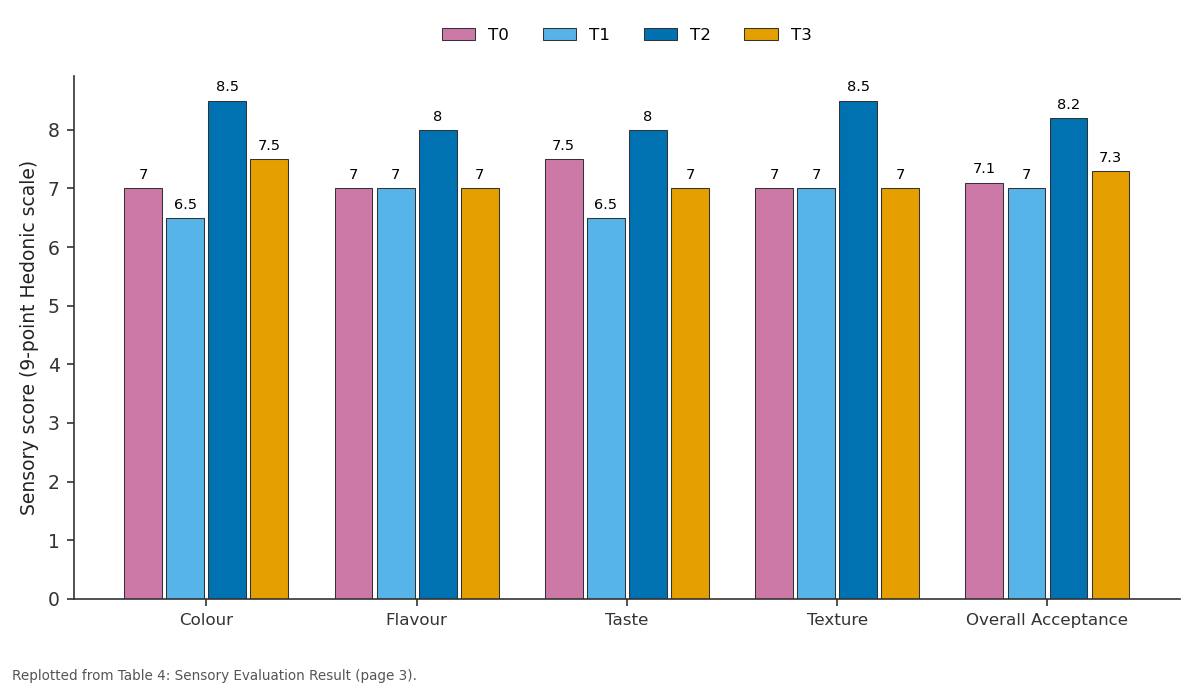
T0 and T1 and more: Colour vs Flavour vs Taste vs Texture vs Overall Acceptance
Replotted from Table 4 (page 3) of the original paper. Every bar is the paper's own table value.
View source evidence ↗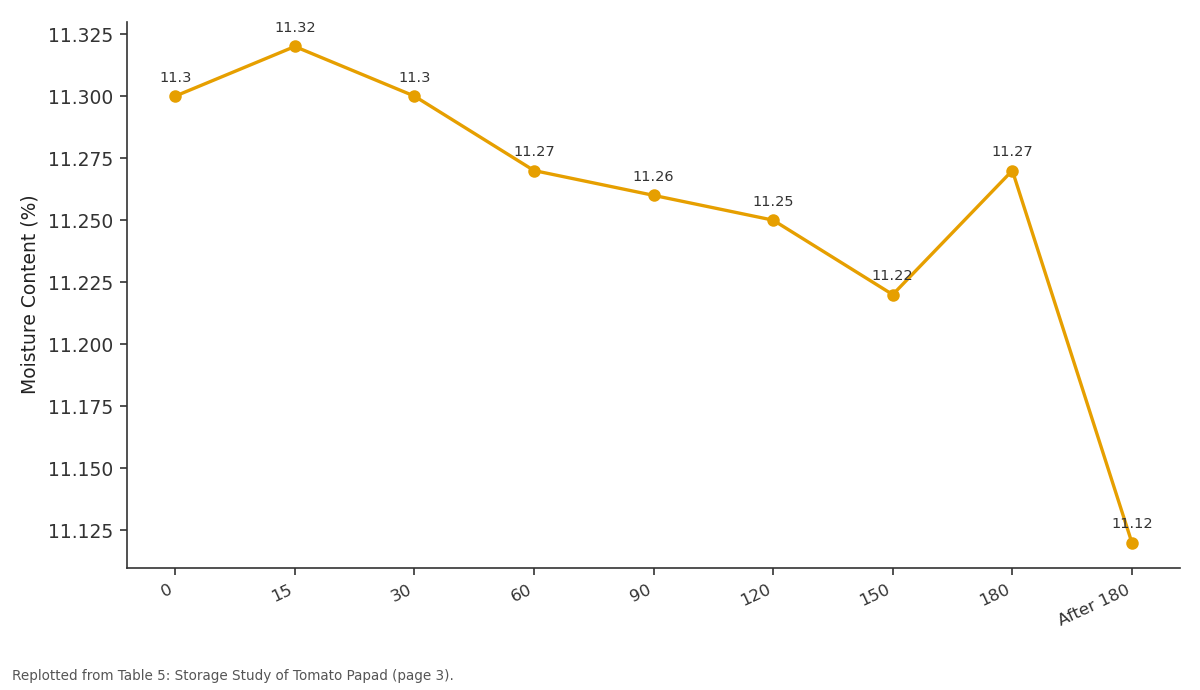
Moisture Content: 0 vs 15 vs 30 vs 60 vs 90
Replotted from Table 5 (page 3) of the original paper. Every bar is the paper's own table value.
View source evidence ↗Figures & tables
From the original paper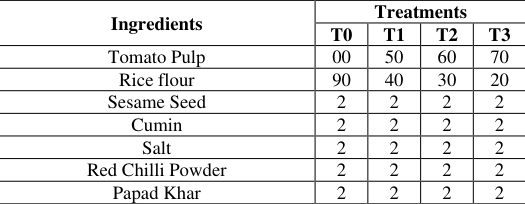 Table1
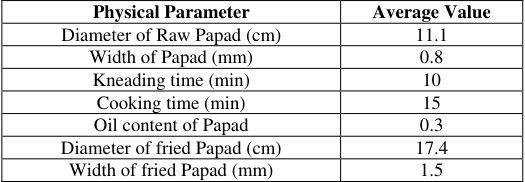 Table 2
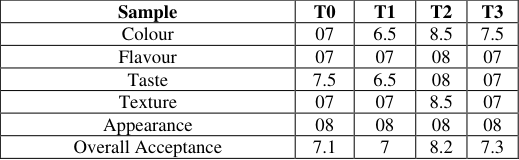 Table 4
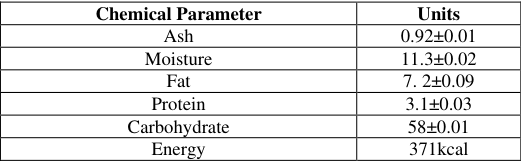 Table 3
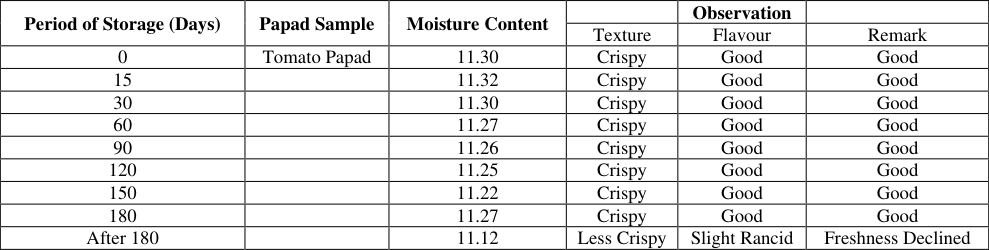 Table 5
Introduction
Papad is a delicious traditional Indian snack food used as an accompaniment with meals and snacks and croutons in soups. In recent years, it has gained recognition as India's unique contribution to international menu. Papads have crunchy waferlike taste and are normally consumed after roasting or frying. The papad industry in India is predominantly a cottage industry and is mainly started for women empowerment and social welfare. Increased mass production of papad for domestic consumption and export has necessitated standardization and quality evaluation of the finished product. The commercial production of papads is more than 55,000 tonnes of which 12,000 tonnes are being exported. Various small scale and national brands are into papad manufacturing in India (Awalgaonkar et al., 2015) [3] . In India, black gram papad is a commercial product and the variations in quality (Senthil, 2006). Papad is one of the popular snack items and it is very tasty so, used in every Indian diet since older days. It is consumed either as such often frying or roasting or as adjunct along with vegetable soups and curries. It is usually made from a blend of cereal flour, edible starch and pulse flour with common salt, spices, edible oil, and mucilaginous additives (Agrawal et al. 2016) [14] . Tomato, Solanum lycopersicum L. (Solanaceae) is native to South America, especially Peru and the Galapagos Island (Mattew, 2011). Peralta and Spooner (2007) [13] reported that the origin of tomato was traced to Peru and Mexico. Tomato is rich in protein with a trace amount of fat (Olaniyi et al., 2010) [12] and also contains many vitamins and minerals that ensure good health. It is an excellent source of vitamins B6, ascorbic acid, and niacin and minerals that function as cofactors in enzymatic activities (Nour et al., 2013; Luthria et al., 2006) [11] . Tomato (Solanum lycopersicum) is one of the world's major fruits. India ranks second position in tomato production after China. On a global scale, tomatoes are the most important vegetable crop with about 182.2 million tons of production (FAO stat, 2013). The production of tomato in Andhra Pradesh is 22.86 tonnes/ha and Telangana is 20.18 tonnes/ha (Horti stat, 2015) [5] . Tomato is one of the most important vegetable crops in Telangana supporting the livelihood and improving the economic life of many tomato growers in the state. It is often called "poor man's orange" because they are good source of vitamins, particularly vitamin A and C. It is also a rich source of natural lycopene, a carotenoid possessing antioxidative activity (Purkayastha 2011). Some of the Indian tomato varieties are Sankranti, Pusaruby, Arkaalok and Arka abha, Vaibhav (Kumar et al., 2015) [8] . Nutritive value of tomato fruit, it contains moisture (94.5 g), fat (0.01 g), protein (1.0 g), carbohydrates (3.9 g), phosphorus (0.02 g), iron (1.0 g), calorific value (21 Kcal), carotene (350 mg), vitamin-C (32 mg), thiamin (0.7 mg), niacin (0.04 mg), per 100 g of edible portion (National Horticulture Board Websites, Database, 2011-12). Several epidemiological studies have underlined the beneficial effect of tomato consumption in the prevention of chronic diseases such as cancer and cardiovascular disease (Klipstein-Grobush et al., 2000; Giovannucci et al., 2002) [7,4] . Rice (oryza sativa) is a one the most important crop in world belongs to family Poaceae approximately 95% of its production is Asia. Brown rice is a superior to other polished rice as it has high dietary fiber, amild laxative which prevents gastrointestinal disorders and healthy food for diabetic patients. (Krishnaveni and Dhanalakshmi, 2014) [9] . Rice contains approximately 7.3% protein, 2.2% fat, 64.3% available carbohydrate, 0.8% fiber and 1.4% ash content (Zhou et al., 2002) [18] . Rice contain lower quantities of phytochemicals, in the form of flavones/flavonols (21-24µ/g) and ¥-orzanol (12.3-8.2µ/g), together with trace levels of carotenoids lutein and zeaxanthin. Neither Anthocyanins nor procyanidins were detected in rice. By describing the profile the heterogeneous mixture of phytochemicals present in different rice varieties. (J. Agric, 2013) [6] Toxin contamination in rice can create a health risk for the consumers. In this study, the measurement of 23 mycotoxins in rice samples (n = 180) was performed using a validated LC-MS/MS method. A food frequency questionnaire was used to get rice consumption data for the assessment of mycotoxin dietary exposure, before calculating the health risk in adults and children of north and south regions of the Pakistani Punjab province. The prevalence of aflatoxin B 1 (56%), aflatoxin B 2 (48%), nivalenol (28%), diacetoxyscirpenol (23%), fumonisin B 1 (42%), zearalenone (15%), HT-2 toxin (10%), deoxynivalenol (8%), and ochratoxin A (6%) was estimated in samples with a mean concentration range between 0.61 and 22.98 µg/kg. (Saima. Majeedet.al, 2018).
Materials and Methods
Materials and Methods
Ingredients, Chemical and Equipments
Raw materials required during present investigation were procured from local market of Saralgaon such as Rice Flour, Tomato, Red Chilli Powder, Cumin, Sesame seed, Papad khar, Salt, etc. Most of the chemicals and equipments used in this investigation were of analytical grade which are obtained from College of Food Technology Saralgaon, Thane.
Physical and Chemical Analysis
Chemical Analysis such as moisture is determined by using hot air oven, fat is determined by Soxhlet apparatus and protein is determined by using Kjeldahl's method. Acidity is determined by using titration method and pH is measured by digital pH meter. All quality parameters were determined by AOAC (2000).
Statistical analysis
The analysis of variance of the data obtained was done by using Completely Randomized Design (CRD) for different treatments as per the method given by Panse and Sukhatme (1967). The analysis of variance revealed at significance of P<0.05 level S.E. and C.D. at 5per cent level is mentioned wherever required.
Organoleptic Evaluation
Prepared product were evaluated for sensory characteristics in terms of appearance, color, flavor, aftertaste, texture and overall acceptability by 10 semi-trained panel members comprised of academic staff members using 9-point Hedonic scale. Judgments were made through rating the product on a 9 point Hedonic scale with corresponding descriptive terms ranging from 9 'like extremely' to 1 'dislike extremely'. The obtained results were recorded in sensory score card.
Formation of Tomato Papad
Papad prepared with incorporation varying levels of Tomato Pulp with Rice flour were investigated. The formulation was made by varying levels of Rice flour, Tomato pulp, viz., 00g:90g, 50g:40g, 60g:30g, 70g:20g percent respectively and data given are illustrated in table. As evident in sensory evaluation the color score were higher for the Sample T2.
Results and Discussion
Results and Discussion
Sensory Evaluation of Papad
The Texture and taste score were 8 higher than T1 and T3 sample.
Overall acceptability (8.2) of T2 sample is more acceptable than sample T1 and T3.
Conclusion
In the current study finally it is concluded that Papad prepared from Rice flour from Tomato pulp has high Nutrition quality and also its is rich in Protein, carbohydrates and some vital minerals such as phosphorus and iron, and it is an excellent source of vitamins B6, ascorbic acid, and niacin has great health benefits. The lycopene content in tomato reduce risk of cancer. The present investigation carried out for information of Papad in which T2 sample found more superior than sample T1 and T3 so, T2 sample is more acceptable on its sensory attributes.
Figures and tables from the paper
| Ingredients | Treatments | — | — | — |
|---|---|---|---|---|
| T0 | T1 | T2 | T3 | |
| Tomato Pulp | 00 | 50 | 60 | 70 |
| Rice flour | 90 | 40 | 30 | 20 |
| Sesame Seed | 2 | 2 | 2 | 2 |
| Cumin | 2 | 2 | 2 | 2 |
| Salt | 2 | 2 | 2 | 2 |
| Red Chilli Powder | 2 | 2 | 2 | 2 |
| Papad Khar | 2 | 2 | 2 | 2 |
Table text extracted from the original PDF; superscript letters are shown inline. The original table image is below.
View original table image
| Physical Parameter | Average Value |
|---|---|
| Diameter of Raw Papad (cm) | 11.1 |
| Width of Papad (mm) | 0.8 |
| Kneading time (min) | 10 |
| Cooking time (min) | 15 |
| Oil content of Papad | 0.3 |
| Diameter of fried Papad (cm) | 17.4 |
| Width of fried Papad (mm) | 1.5 |
Table text extracted from the original PDF; superscript letters are shown inline. The original table image is below.
View original table image
| Sample | T0 | T1 | T2 | T3 |
|---|---|---|---|---|
| Colour | 07 | 6.5 | 8.5 | 7.5 |
| Flavour | 07 | 07 | 08 | 07 |
| Taste | 7.5 | 6.5 | 08 | 07 |
| Texture | 07 | 07 | 8.5 | 07 |
| Appearance | 08 | 08 | 08 | 08 |
| Overall Acceptance | 7.1 | 7 | 8.2 | 7.3 |
Table text extracted from the original PDF; superscript letters are shown inline. The original table image is below.
View original table image
| Chemical Parameter | Units |
|---|---|
| Ash | 0.92±0.01 |
| Moisture | 11.3±0.02 |
| Fat | 7. 2±0.09 |
| Protein | 3.1±0.03 |
| Carbohydrate | 58±0.01 |
| Energy | 371kcal |
Table text extracted from the original PDF; superscript letters are shown inline. The original table image is below.
View original table image
| Period of Storage (Days) | Papad Sample | Moisture Content | — | Observation | — |
|---|---|---|---|---|---|
| Texture | Flavour | Remark | |||
| 0 | Tomato Papad | 11.30 | Crispy | Good | Good |
| 15 | 11.32 | Crispy | Good | Good | |
| 30 | 11.30 | Crispy | Good | Good | |
| 60 | 11.27 | Crispy | Good | Good | |
| 90 | 11.26 | Crispy | Good | Good | |
| 120 | 11.25 | Crispy | Good | Good | |
| 150 | 11.22 | Crispy | Good | Good | |
| 180 | 11.27 | Crispy | Good | Good | |
| After 180 | 11.12 | Less Crispy | Slight Rancid | Freshness Declined |
Table text extracted from the original PDF; superscript letters are shown inline. The original table image is below.
View original table image
References
17 in the original paper- FAO STAT. Food and agriculture organization of the United Nations. Rome Italy, 2014. http://faostat.fao.org.
- Gauri Awalgaonkar, Shatabhisa Sarkar, Sandip B Bankar, Rekha S Singhal. Xylanase as a processing aid for papads, an Indian traditional food based on black gram. LWT-Food Science and Technology. 2015:62(2). DOI: 10.1016/ j.lwt.2015.02.034.
- Giovannucci E, Rimm EB, Liu Y, Stampfer MJ, Willett WC. A prospective study of tomato products, lycopene, and prostate cancer risk. Journal of National Cancer Institute.2002:94:391-398.
- Horticultural statistics at a glance. Horticulture statistics division. Government of India. Oxford University press.2015:1-437.
- Agric J, Food Chem. Effect of Cerium Oxide Nanoparticles on the Quality of Rice (Oryza sativa L.) Grains, 2013.
- Klipstein-Grobush K, Launer LJ, Geleijnse JM, Boeing H, Hofmann A, Witteman JC. et al. Serum carotenoids and atherosclerosis: the Rotterdam Study. Atherosclerosis. 2000:148:49-56.
- Kumar S, Gowda PHR, Mallikarjuna NM. Evaluation of selected F6 tomato lines for extended shelf life. Journal of Breeding and Genetics.2015:47(4):326-334.
- Marimuthu Krishnaveni, Ravi Dhanalakshmi. Phytoconstituent Study of Brown Rice. World Journal of Pharmaceutical Research.2014:3(8):1092-1099.
- Matthew T. Post-Harvest Microbial Deterioration of Tomato (Lycopersicon e sculentum) Fruits. Report and Opinion. 2011:L3(4):52-57.
- Nour V, Trandafir I, Ionica ME. Antioxidant compounds, mineral content and antioxidant activity of several tomato cultivars grown in South-western Romania. Notulae Botanicae Horti Agrobotanici.2013:41(1):136-142.
- Olaniyi JO, Akanbi Olaniyi JO, Akanbi WB, Adejumo TA, Akande OG. Growth, fruit yield and nutritional quality of tomato varieties. African Journal of Food Science. 2010:4(6):398-402.
- Peralta IE, Spooner DM. History, origin and early cultivation of tomato (Solanaceae). In: Razdan, M. K., Mattoo, A. K. (eds). Genetic Improvement of Solanaceous Crops, Vol. 2. Enfield, USA. Science Publishers.2007:1-27.
- Payal Agrawal, Neha Chaudhary, Sachin Karoulia. Development of Gluten Free Papad Using Buckwheat [Fagopyrum Esculentum] and Guar Gum [Cyamopsis Tetragonolobus]. International Journal For Research In Enigineering Science and Technology,2016:3(5).
- Purkayasta MD. Physicochemical properties of five different tomato cultivars of Meghalaya, India and their suitability in food processing. Asian Journal of Food and Agro-Industry. Utilization of finger millets and soy flour in the preparation of papad.2011:4(3):187-203.
- Senthi V. Efficacy Various Preservation For Preserving Whole Tomato Concentrate. Indian Food Packer. 1994:48(1):11-15.
- Yeh AI. Preparation and application Champange, E.T. ed. Rice: Chemistry and Technology, 3rdedn. St Paul, MN: American of Cereal Chemist.2004:495-540.
- Zhou Z, Robards K, Helliwell S, Blanchard C. Composition and functional properties of rice. International Journal of Food Science and Technology.2002:37:849-868.
Cited by 4
From OpenAlex, OpenCitations and reference lists read by Scinovex
- A study of improvement in the field of agriculture in Punjab, using Israeli technology
Urmila Urmila · International Journal of Agriculture Extension and Social Development · 2023
Israel, the Biblical holy land, known for its rich culture and infrastructure, was established on May 14, 1948. Jews from all over the world converged on Israel and developed the country with a missionary zeal. Despite having geographical conditions that do not favour farming, Israel has managed to script a success story in the field of agriculture. India, an ancient land with centuries of knowledge, expertise and experience in various fields coupled with its rich natural resources is a force to reckon with. It was with the intent of sharing the best practices and technical knowledge that in 2
- Host preference analysis of Phenacoccus solenopsis Tinsley (Hemiptera: Pseudococcidae) on three different host plants. ↗
Anam Zia, Masarrat Haseeb · Journal of Entomology and Zoology Studies · 2023
The cotton mealy bug Phenacoccus solenopsis Tinsley is sap sucking polyphagous pest over 154 plant species of vegetables, fruit and ornamentals including cotton in India and worldwide. Among vegetable plant species, brinjal (Solanum melongena L.), tomato (Solanum lycopersicum L.), okra (Abelmoschus esculentus) etc., are severely damaged. Present studies were carried out to investigate the impact of these three host plant
- Pathogenicity of Fusarium oxysporum f. sp. lycopersici (Sacc.) isolates in causing tomato wilt disease on two tomato (Solanum lycopersicum L) varieties
Abdulkadir HB, Ekefan EJ, Gwa Vi · International Journal of Horticulture and Food Science · 2023
Pathogenicity test of Fusarium oxysporum isolates in causing tomato wilt disease (TWD) was carried out on two tomato varieties (UC 82B and Rio-grande). During the 2015 cropping season, the experiment was conducted in a screen house at the Federal University of Agriculture, Makurdi\\\\\\\'s Teaching and Research Farm. A 2 x 11 factorial was used in the experiment, which was replicated three times using a completely randomized design (CRD). Together with an uninoculated control, the F. oxysporum isolates that were evaluated were coded as FoAs1, FoAs2, FoAg, FoNb, FoSb, FoAm, FoAk, FoOr, FoAd, an
- Management of tomato pests using effective macrooganism (EM) bio-pesticide as alternative pests control method in Bambili, Cameroon ↗
Cyril Roméo Heumou, Tiburce Gangué, Seino Richard Akwanjoh, Yana Wenceslas, Igore Mistel Keutchazoue, Champlain Djiéto‐Lordon · Acta Entomology and Zoology · 2022
Tuta absoluta, Bemisia tabaci and Macrosiphum eurphorbiae are important pests of tomato in Cameroon. The effect of EM a biopesticide containing Bacillus thuringiensis as active ingredient was evaluated on the suppression of these pests. A completely randomized design with 4 treatments [control (T0); EM 10 ml/l (T1); EM 20 ml/l (T2); EM 30 ml/l (T3)] and 3 replications were used.…
❝ 0PDF