
Research article · 2023 · Full text
International Journal of Horticulture and Food SciencePathogenicity of Fusarium oxysporum f. sp. lycopersici (Sacc.) isolates in causing tomato wilt disease on two tomato (Solanum lycopersicum L) varieties
Volume 5(2) · Pages 23–29 · DOI: 10.33545/26631067.2023.v5.i2a.174 ↗
Research areasPlant Pathogens and Fungal Diseases
Abstract
Author-writtenPathogenicity test of Fusarium oxysporum isolates in causing tomato wilt disease (TWD) was carried out on two tomato varieties (UC 82B and Rio-grande). During the 2015 cropping season, the experiment was conducted in a screen house at the Federal University of Agriculture, Makurdi\\\\\\\'s Teaching and Research Farm. A 2 x 11 factorial was used in the experiment, which was replicated three times using a completely randomized design (CRD). Together with an uninoculated control, the F. oxysporum isolates that were evaluated were coded as FoAs1, FoAs2, FoAg, FoNb, FoSb, FoAm, FoAk, FoOr, FoAd, and FoUAM. All the isolates of F. oxysporum tested were pathogenic, causing wilt on the plants from 3 weeks after inoculation (WAI), with severity of wilt been significantly higher (p≤0.05) in FoUAM. Isolates of F. oxysporum showed significant difference (p≤0.05) both in incidence and severity compared with the control. Effect of F. oxysporum isolates on some agronomic characteristics such as plant height, number of fruits, fruit weight and number of branches on the two varieties of tomato at 12 weeks after sowing (WAS) was significantly different (p≤0.05) with the control experiment. Highest severity score of 5.00 was calculated in FoUAM while the least of 4.33 was in FoSb compare with uninoculated value of 2.50. It is, therefore, concluded that the two tomato varieties are pathogenic to F. oxysporum isolates and illicit disease in tomato hence reduced the yield of the crop.
Summary
Source-checkedPlain-language reading of the full paper, prepared with AI and checked against the text. Each point links to the authors' own words.
Why it matters
- Fusarium wilt, caused by the pathogen Fusarium oxysporum f. sp. lycopersici, is a significant threat that can reduce tomato yields by 30% to 40%. View evidence ↗
- Very few tomato cultivars exhibit resistance to this specific pathogen, making it a persistent challenge for production. View evidence ↗
The question
- The study aimed to identify which isolates of F. oxysporum are most pathogenic and how they affect the growth of two specific tomato varieties. View evidence ↗
What they did
- The researchers used a 2 x 11 factorial design with three replications to test ten F. oxysporum isolates and one control on two tomato varieties: UC 82B and Rio-grande. View evidence ↗
- Agronomic data, including plant height, number of branches, fruit count, and fruit weight, were also tracked weekly up to 12 weeks after sowing. View evidence ↗
What they found
- Every tested isolate of F. oxysporum proved to be pathogenic, with symptoms appearing 3 weeks after inoculation. View evidence ↗
- The FoUAM isolate was the most virulent, reaching a maximum severity score of 5.00 and 100% incidence, compared to the control's severity of 2.50 and incidence of 57%. View evidence ↗
- Among the pathogenic isolates, FoSb caused the lowest disease severity with a score of 4.33. View evidence ↗
- Inoculation significantly reduced plant height; the control group averaged 141.20 cm, while the shortest plants were those inoculated with FoAg at 107.70 cm. View evidence ↗
- Comparing the two varieties, Rio-grande produced more branches, but UC 82B exhibited greater plant height, fruit count, and fruit weight. View evidence ↗
What it means
- The authors concluded that all ten tested isolates of F. oxysporum are pathogenic and cause wilt disease in both Rio-grande and UC 82B tomato varieties. View evidence ↗
- The authors recommend implementing measures to reduce the incidence and severity of tomato wilt to improve crop yields and food security. View evidence ↗
Visual summary
3 visualsIllustrations explain the paper; charts are replotted from the paper's own table values.
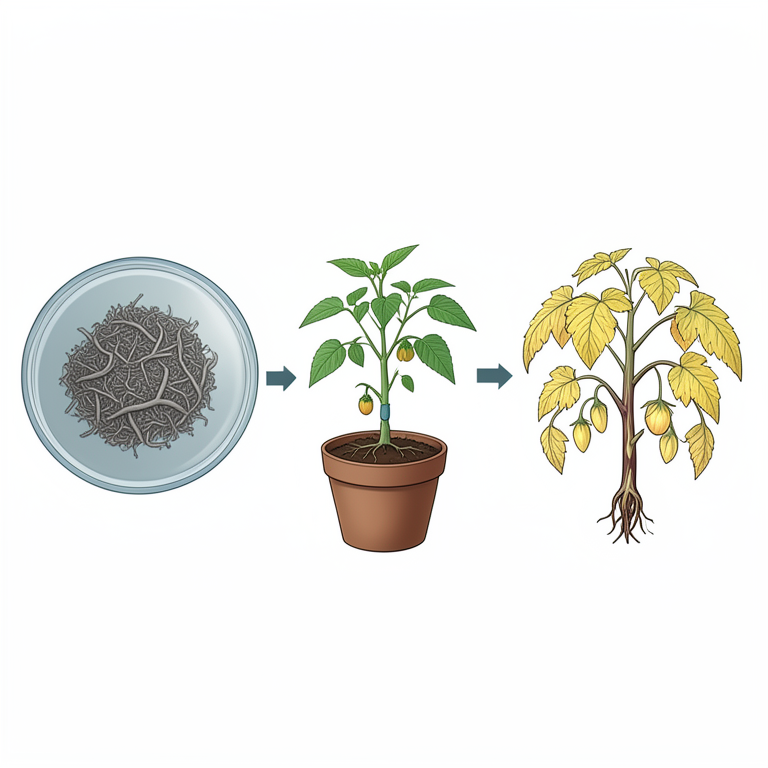
Pathogenicity Testing Workflow
AI-generated conceptual illustration (tomato plants and Fusarium oxysporum fungus). It explains the idea and does not show study data.
View source evidence ↗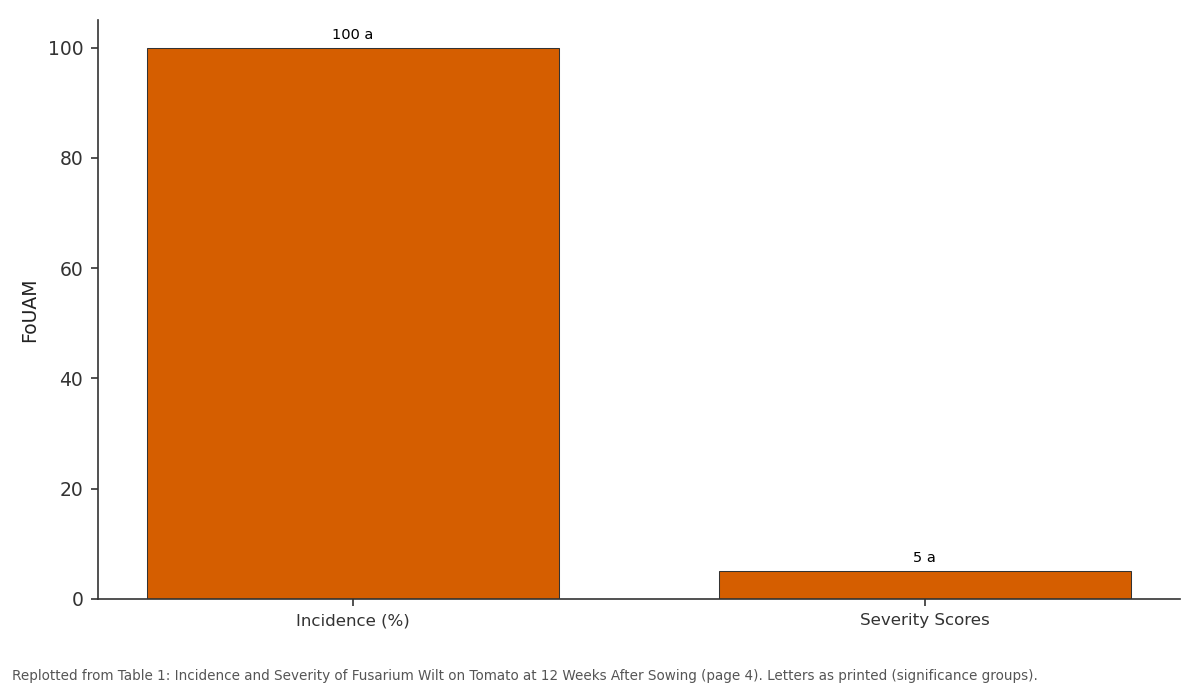
FoUAM: Incidence (%) vs Severity Scores
Replotted from Table 1 (page 4) of the original paper. Every bar is the paper's own table value.
View source evidence ↗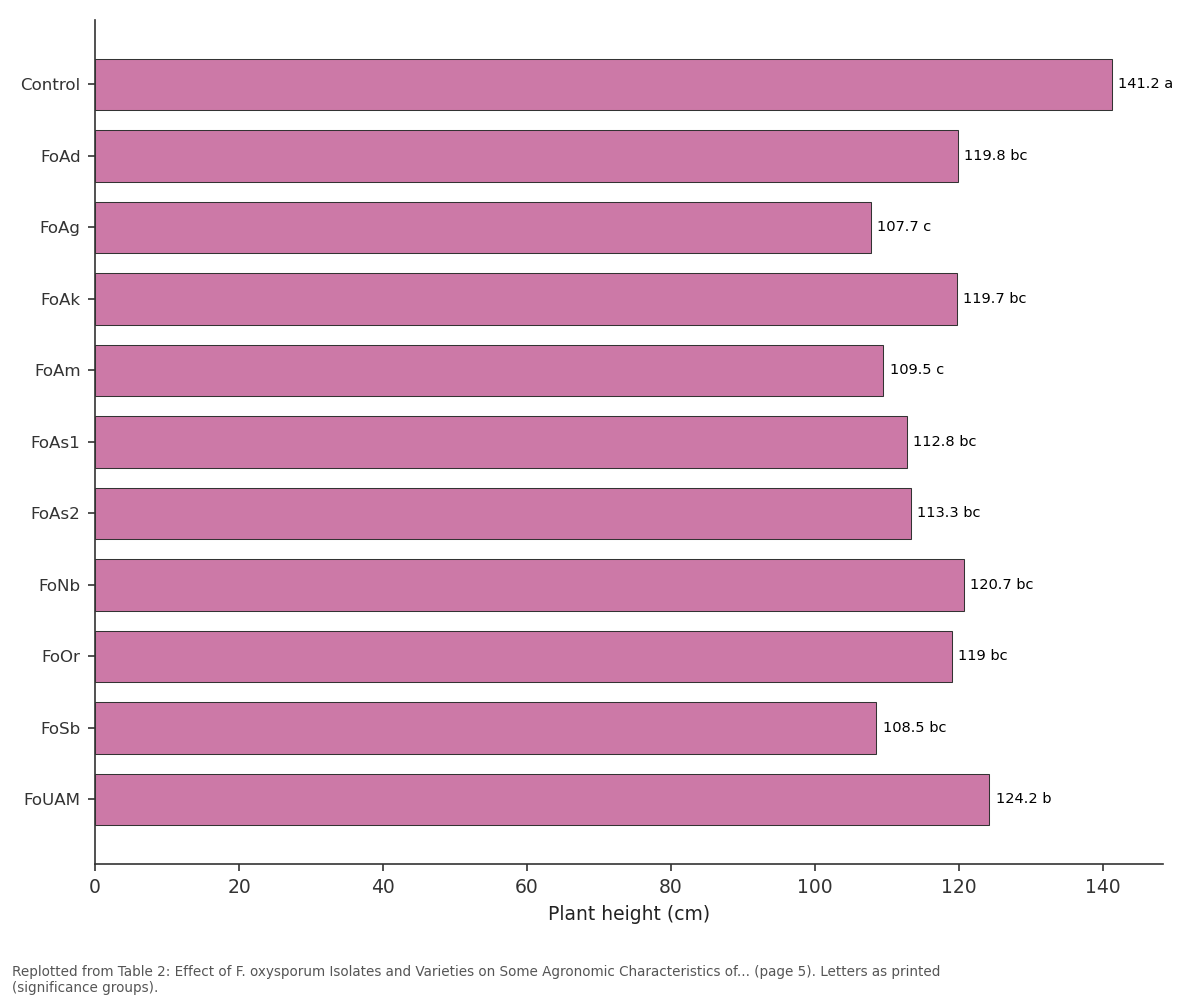
Plant height (cm): Control vs FoAd vs FoAg vs FoAk vs FoAm
Replotted from Table 2 (page 5) of the original paper. Every bar is the paper's own table value.
View source evidence ↗Figures & tables
From the original paper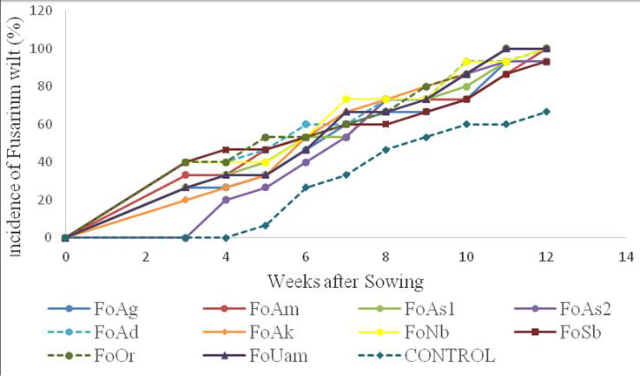 Figure 1
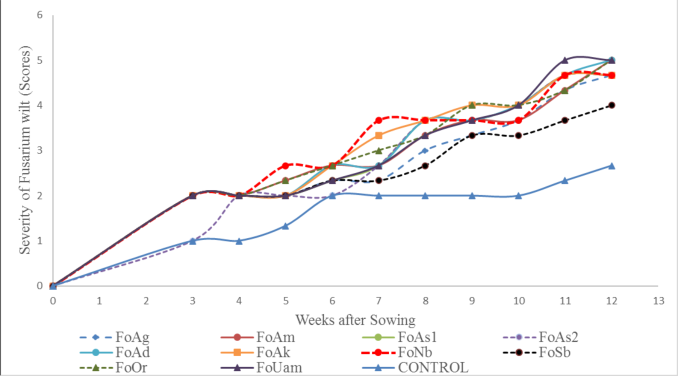 Figure 2
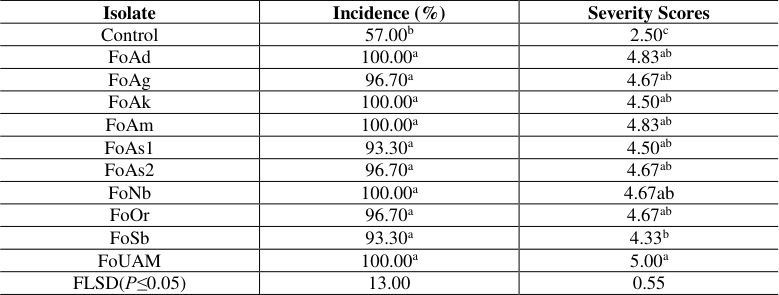 Table 1
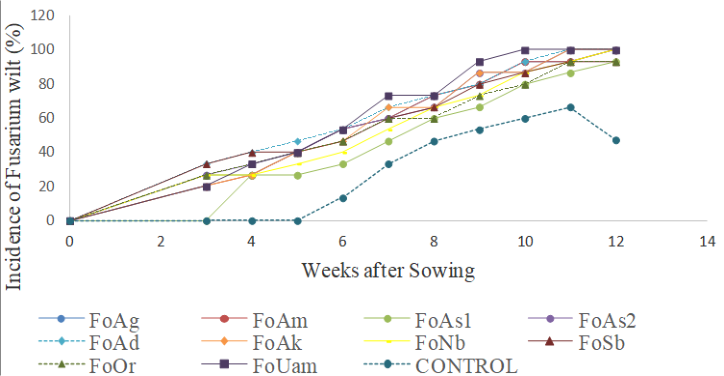 Figure 3
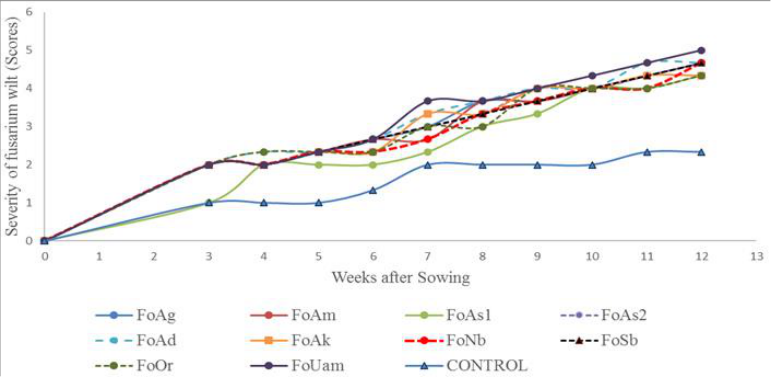 Figure 4
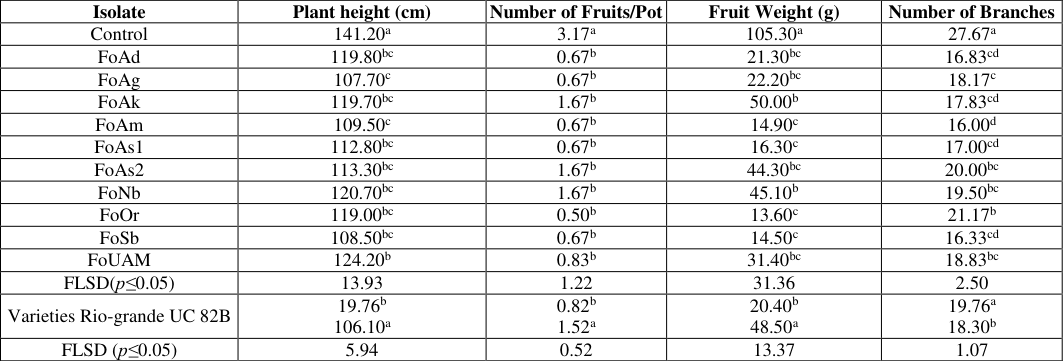 Table 2
Introduction
The crop known as tomatoes (Solanum lycopersicum L.) is thought to have come from the Andes of South America (Naika et al., 2005) [24] . With an anticipated production of 180,766,329 metric tonnes, it is one of the most significant vegetables grown worldwide (FAO, 2019) [11] . Nigeria is one of the world's top producers, coming in second place to Egypt as the continent's top producer (FAO, 2020) [12] . Tomatoes are eaten raw in salads or cooked in sauces, soups, and various meat or fish meals. They are also high in sugar, dietary fiber, vital amino acids, vitamins, and minerals (Naika et al., 2005) [24] . The crop is occasionally processed to make ketchup, juices, and purées. In some cases, it is canned and dried which can be preserved for a long period (Naika et al., 2005) [24] . Tomato is produced in large amount annually but it's availability throughout the year is limited by certain factors such as pests, diseases, storage facilities (Ahmed et al., 2013) [2] . Soil-borne diseases and pests present a major challenge to the production of horticultural and other crops grown in fields and in greenhouses inclusive. According to several studies (Egel and Martyn, 2013; Sani and Gwa, 2018; Mamkaa and Gwa, 2018) [10,21,28] , Fusarium oxysporum is one of the pathogens linked to producing major infections on a wide variety of sensitive hosts, including tomato, cowpea, pepper, sweet potatoes, cabbage, eggplant, and groundnut. Within the species, there are more than 100 host-specific Formae Speciales. For instance, F. oxysporum f. sp. cubense infects bananas while F. oxysporum f. sp. batatas affects sweet potatoes. Tomato vascular wilt is caused by F. oxysporum f. sp. lycopersici. muskmelon and cantaloupe are targeted by F. melonis. Rots caused by pathogens on fresh tomatoes have been reported to be as high as 60% in Nigeria (Kutama et al., 2007; Sani and Gwa, 2018) [20,28] .
Numerous pathogens have been documented to cause illnesses in tomatoes, the most significant of which are Fusarium oxysporum f. sp. lycopersici (Sacc.) (Fusarium wilt) and Fusarium solani f. sp. Eumartii (Akrami and Yousefi, 2015) [4] . According to reports, Fusarium wilt alone can reduce tomato yields by up to 30 to 40% (Anita and Rabeeth, 2009) [5] . Fusarium oxysporum Schlect f. sp. radicis-lycopersici roots, the cause of Fusarium stem and root rot, is a soil-borne tomato disease that is commonly found in greenhouse tomato production (Roberts et al., 2001; Pavlou & Vakalounakis, 2005) [27,25] . All plant growth stages are susceptible to fungal pathogens such as Fusarium oxysporum f. sp. lycopersici (Sacc.), which enters plants through the roots and causes significant economic losses by producing wilting and necrosis in a variety of crop plants (Cotxarrera et al., 2002) [6] . Evidently, only a few numbers of tomato cultivars have been found to be resistant to F. oxysporum f. sp. lycopersici (Sacc.). It is, therefore, necessary to know which of the F. oxysporum isolates are more pathogenic in causing tomato wilt disease and responsible in reducing growth on the two varieties of tomato.
Materials and Methods
Materials and Methods
Site of experimental
The area is in Nigeria's Southern Guinea Savannah Agroecological zone, with latitudes of 7 o 45' North and longitudes of 8 o 37' east. The average elevation above sea level is 97 meters.
Preparation of Culture Medium
The manufacturer's instructions were followed to prepare the Potato Dextrose Agar (PDA) medium, which involved dissolving 39 g of PDA in 1 liter of distilled water. The mixes were autoclaved for 15 minutes at 121 ºC and 33 kg P.S.I. (Ritchie, 1991) [26] . After allowing the molten medium to cool to around 40 °C, 0.16 g/L of streptomycin sulfate was added to stop bacterial growth. The mixture was then thoroughly mixed and 20 ml was poured into 9 cm Petri plates, where it was allowed to harden.
Isolation of Fusarium oxysporum
After removing any residues, stem samples exhibiting symptoms of wilt were cleaned under running tap water. Each stem was then cut into approximately 5mm pieces and submerged in 5% sodium hypochlorite for two minutes to purify the surface. The samples were then rinsed in four separate changes of sterile distilled water and allowed to dry on sterile filter paper (Gwa and Akombo, 2016, Gwa and Ekefan, 2017a) [13][14] . On a laminar air flow chamber, four pieces were plated on each Petri dish with Potato Dextrose Agar (PDA). For three days, the plates were incubated at room temperature. Following duration of three (3) days, various mycelia of developing fungus were aseptically sub-cultured onto freshly prepared Potato Dextrose Agar plates using a flamed inoculation needle. Sub-cultures of F. oxysporum-typical fungal growths were used. Then, using an identification guide and a compound microscope, a pure culture of F. oxysporum was recognized (Agrios, 2005) [3] . The following codes were assigned to the F. oxysporum isolates based on the location of collection: Asase1 (FoAs1), Asase2 (FoAs2), Agromiller (FoAg), Northbank (FoNb), Southbank (FoSb), Amih (FoAm), Orduen (FoOr), Adudu (FoAd), and University of Agriculture Makurdi (FoUAM).
Test of Pathogenicity of Fusarium oxysporum Isolates
Pathogenicity test of the isolates obtained above was done in a screen house at the Federal University of Agriculture, Makurdi. The treatments consisted of two tomato varieties (UC 82B and Rio-Grande) and ten (10) isolates of Fusarium oxysporum a control inoculated with sterilized distilled water (SDW). Three replications of the 2 x 11 factorial set of treatments were set up in a completely randomized design (CRD). The pots were filled with 5 kg sterilized sandy loamy soil and watered using sterilized distilled water. The seeds were sowed in three-liter capacity pots, one pot made up a treatment with two plants per pot. The soil was inoculated separately with 5 ml of spore suspension of the different isolates of F. oxysporum containing 1 x 10 6 spores/ml with syringes two weeks following sowing and the control experiment were inoculated with 5 ml SDW. Spore concentrations were determined using a haemocytometer. The inoculated soils were covered with plastic bags for 48 hours after inoculation to maintain high relative humidity and create condition suitable for infection.
Data Collected (a) Disease incidence and severity. 1. The incidence and severity of Fusarium wilts disease were measured every week from three weeks after sowing (WAS) to twelve WAS. 2. The number of diseased plants was counted physically, and the resulting number was divided by the total number of plants evaluated in each treatment to determine the disease incidence. Using the following formula, the results were converted to a percentage.
(ii). A 1-5 scale created by De Cal et al. (1995) [9] was used to rate the disease's severity on tomato plants, as explained below:
Statistical analysis
Genstat was used to make an analysis of variance on all the obtained data. Fisher's Least Significant Difference (Cochran and Cox, 1992) [7] were used to separate substantially different means at the 5% level of probability using the Statistical Package (Discovery Edition 12).
Results
Results
Pathogenicity test of Fusarium oxysporum isolates on Tomato Plants Effect of F. oxysporum isolates on the incidence and severity of Fusarium wilt in Rio Grande
The disease progression curves for Fusarium wilt caused by Fusarium oxysporum isolates on tomato over a period of 12 weeks are displayed in Figure 1. The first signs of Fusarium wilt appeared three weeks after sowing (WAS). Incidence of the disease was lower in the control where the plants were not inoculated. Each and every F. oxysporum isolate tested were pathogenic, causing wilt on the plant. At 12 WAS the plant treated with Fusarium wilt exhibited a 100% incidence from isolates of FoAk, FoAm, FoAd, FoNb, FoOr and FoUam while the uninoculated control had the least Fusarium wilt incidence of 66.67%.
Effect of F. oxysporum isolates on the incidence and severity of Fusarium wilt in UC 82B
The disease progression curve of Fusarium wilt incidence caused by Fusarium oxysporum isolates on UC 82B over a 12-week period is displayed in Figure 3. The first signs of Fusarium wilt were noticed three weeks after sowing (WAS). The control, where the plants weren't inoculated, had the lowest disease incidence. Every isolate of F. oxysporum that was tested proved to be pathogenic and caused the plant to wilt. When the plant was inoculated with FoAk, FoAm, FoAd, FoNb, FoOr, FoAs2, and FoUam at 12 WAS, the incidence of Fusarium wilt was 100%. The incidence and degree of severity of Fusarium wilt in tomatoes at 12 weeks post-sowing are displayed in Table 1.
| Isolate | Incidence (%) | Severity Scores |
|---|---|---|
| Control | 57.00b | 2.50c |
| FoAd | 100.00a | 4.83ab |
| FoAg | 96.70a | 4.67ab |
| FoAk | 100.00a | 4.50ab |
| FoAm | 100.00a | 4.83ab |
| FoAs1 | 93.30a | 4.50ab |
| FoAs2 | 96.70a | 4.67ab |
| FoNb | 100.00a | 4.67ab |
| FoOr | 96.70a | 4.67ab |
| FoSb | 93.30a | 4.33b |
| FoUAM | 100.00a | 5.00a |
| FLSD(P≤0.05) | 13.00 | 0.55 |
Table text extracted from the original PDF; superscript letters are shown inline. The original table image is below.
View original table image
When plants treated with different isolates of Fusarium oxysporum were compared to the uninoculated control, the incidence of Fusarium wilt was considerably (p<0.05) lower in the former. The incidence of Fusarium wilt caused by the several Fusarium isolates that were investigated did not differ significantly. Each and every isolate had a pathogenic potential. The disease was substantially more severe (p<0.05) in FoUAM than in the other categories.
Effect of Isolates of Fusarium oxysporum and Variety on Some Agronomic Characteristics of Tomato Plant at 12 weeks after sowing
Table 2 shows the effect of F. oxysporum isolates and types on a few agronomic traits of tomatoes 12 weeks after sowing. Plant height in the uninoculated control group was considerably (p≤0.05) higher than in the plants inoculated with different F. oxysporum isolates. Plant height varied significantly (p≤0.05) depending on which isolate was used to inoculate the tomato. Plants inoculated with isolates of F. oxysporum produced substantially fewer fruits per plant than the uninoculated control (p≤0.05). Among the inoculated plants, there was no discernible variation in the quantity of fruits produced by each plant.
| Isolate | Plant height (cm) | Number of Fruits/Pot | Fruit Weight (g) | Number of Branches |
|---|---|---|---|---|
| Control | 141.20a | 3.17a | 105.30a | 27.67a |
| FoAd | 119.80bc | 0.67b | 21.30bc | 16.83cd |
| FoAg | 107.70c | 0.67b | 22.20bc | 18.17c |
| FoAk | 119.70bc | 1.67b | 50.00b | 17.83cd |
| FoAm | 109.50c | 0.67b | 14.90c | 16.00d |
| FoAs1 | 112.80bc | 0.67b | 16.30c | 17.00cd |
| FoAs2 | 113.30bc | 1.67b | 44.30bc | 20.00bc |
| FoNb | 120.70bc | 1.67b | 45.10b | 19.50bc |
| FoOr | 119.00bc | 0.50b | 13.60c | 21.17b |
| FoSb | 108.50bc | 0.67b | 14.50c | 16.33cd |
| FoUAM | 124.20b | 0.83b | 31.40bc | 18.83bc |
| FLSD(p≤0.05) | 13.93 | 1.22 | 31.36 | 2.50 |
| Varieties Rio-grande UC 82B | 19.76b 106.10a | 0.82b 1.52a | 20.40b 48.50a | 19.76a 18.30b |
| FLSD (p≤0.05) | 5.94 | 0.52 | 13.37 | 1.07 |
Table text extracted from the original PDF; superscript letters are shown inline. The original table image is below.
View original table image
Fruit weight in the uninoculated control group was considerably (p≤0.05) higher than in the plants infected with the different F. oxysporum isolates. fruit weights of the different F. oxysporum isolates varied significantly as well.
When compared to the infected plants, the uninoculated control had a considerably (p≤0.05) larger number of branches. Table 2 shows that Rio-grande had significantly (p≤0.05) more branches than UC 82B, while UC 82B had significantly (p≤0.05) more plant height, fruits, and fruit weight than Rio-grande.
Discussion
Many diseases impact tomato farming, with Fusarium oxysporum-caused wilt disease being one of the most dangerous in major tomato-growing regions of the world (Anita and Rebeeth, 2009) [5] . In this study, a pathogenicity test of ten Fusarium oxysporum isolates revealed that every isolate was pathogenic on tomato plants, resulting in fruit rot.
The isolate FoUAM was the most virulent, causing severe infections on tomato. This result is similar with those of Joshi et al. (2013) [19] , who in their pathogenicity test found majority of F. oxysporum isolates to be pathogenic on tomato. They discovered that at least one tomato plant had wilt symptoms due to the isolates; however, when nonpathogenic isolates were injected into the tomato plant, wilt did not appear. Using commercially engineered tomato varieties derived from the resistance genes, one option for managing the Fusarium wilt disease is varietal resistance (McGovern, 2015) [23] . Fusarium wilt disease enters a plant by its roots and spreads through its xylem fibers, obstructing water flow and resulting in withering of the entire plant (Cox et al., 2019) [8] .
The high incidence of 93% to 100% found in this study is consistent with previous research by McGovern (2015) [23] and Heydari et al. (2007) [15] . The authors stated that Tomato Wilt Disease (TWD) is 100% common in the United States. Conversely, Houterman et al. (2007) [30] found that in the USA, there was less infection of between 0% and 29% on resistant cultivars but 100% on susceptible cultivars. AbdelFattah and Al-Amri (2012) [1] found a similar outcome, reporting 53-71% disease incidence and 47-78% disease severity of TWD in Egypt. The results of this investigation differ from those of Ishikawa et al. (2005) [18] , who found a 50% disease severity in Japan, and Mandal et al. (2009) [22] , who claimed a 40% incidence of TWD in Japan. The study's findings show the incidence, severity, and damage caused by Fusarium wilt.
Conclusion
Tomato is a crop that is affected by different isolates of Fusarium oxysporum in farmers' fields cutting across three Local Government Areas of Benue State which include Gboko, Makurdi and Tarka. Pathogenicity tests of all the ten isolates carried out on two healthy tomato varieties Riogrande and UC 82B confirmed that the isolates were pathogenic causing tomato wilt disease on the two tomato varieties tested. It is, therefore, recommended that appropriate measures be taken to reduce the incidence and severity of tomato wit disease to increase yield and enhance food security.
Figures and tables from the paper
References
24 in the original paper- Abdel-Fattah G, Al-Amri S. Induced systemic resistance in tomato plants against Fusarium oxysporum f. sp. lycopersici by different kinds of compost. African Journal of Biotechnology. 2012;11(61):12454-12463.
- Ahmed O, Aliyu TH, Orisasasona MD, Ojumoola OA, Kayode RMO, Badmos AHA. Control of Postharvest Loss of Tomato fruits Caused by Fusarium verticillioides (Saccardo) Nuremberg with Aqueous Leaf Extracts of Azadirachta indica. Juss and Vernonia amygdalina L. International Journal of Phytofuels and Allied Science. 2013;2(1):42-56.
- Akrami M, Yousefi Z. Biological Control of Fusarium wilt of Tomato (Solanum lycopersicum) by Trichoderma spp. as Antagonist Fungi. Biological Forum -An International Journal. 2015;7(1):887-892.
- Anita A, Rabeeth M. Control of Fusarium wilt of tomato by bioformulation of Streptomyces griseus in green house production. African Journal of Basic and Applied Sciences. 2009;1(1):9-14.
- Cotxarrera L, Trillas-Gay MI, Steinberg C, Alabouvette BT. Use of sewage sludge compost and Trichoderma asperellum Isolates to Suppress Fusarium wilt of Tomato. Soil Biology and Biochemistry. 2002;34(4):467-478.
- Cox KL, Babilonia K, Wheeler T, He P, Shan L. Return of old foes-recurrence of bacterial blight and Fusarium wilt of cotton. Current opinion in Plant Biology. 2019;50:95-103.
- De Cal A, Pascual S, Iarena I, Malgajero P. Biological control of Fusarium oxysporum f. sp. lycopersici. Plant Pathology. 1995;44(5):909-917.
- Egel D, Martyn R. Fusarium wilts of water melon and other cucurbits. Plant Health Instructor. 2013;10:1094.
- Food and Agriculture Organization of the United Nations. FAOSTAT statistical database. [Rome]: FAO; c2019. http://www.fao.org/faostat/en/#data/QC/visualize. Retrieved on 15/05/2021.
- Food and Agriculture Organization of the United Nations; c2020. FAOSTAT statistical database. [Rome]: FAO. http://www.fao.org/faostat/en/#data/QC/visualize.Retrie ved on 12/05/2021.
- Gwa VI, Akombo RA. Studies on the antimicrobial potency of five crude plant extracts and chemical fungicide in in vitro control of Aspergillus flavus, causal agent of white yam (Dioscorea rotundata) tuber rot. Journal of Plant Science Agricultural Research. 2016;1(1):1-8.
- Heydari A, Misaghi I, Balestra G. Preemergence herbicides influence the efficacy of fungicides in controlling cotton seedling damping off in the field. International Journal of Agricultural Research. 2007;2(12):1049-1053.
- Kokani RC, Pawar AM. Standardization and storage studies of rice papad incorporated with tomato pulp. International Journal of Agriculture and Food Science. 2021;3(1):21-24.
- Youssef RM, Kaf NHA, Abboud R, Tawaha ARMA. New record of Aphanogmus clavicornis Thomson (Hymenoptera: Ceraphronidae) as a larval parasitoid of tomato leaf miner Tuta absoluta (Meyrick) in Syria. International Journal of Biological Sciences. 2022;4(2):181-185.
- Ishikawa R, Shirouzu K, Nakashita H, Lee HY, Motoyama T, Yamaguchi I, et al. Foliar spray of validamycin A or validoxylamine A controls tomato Fusarium wilt. Phytopathology. 2005;95(10):12091216.
- Joshi M, Srivastava R, Sharma AK, Prakash A. Isolation and characterization of Fusarium oxysporum, a wilt causing fungus, for its pathogenic and nonpathogenic nature in tomato (Solanum lycopersicum). Journal of Applied and Natural Science. 2013;5(1):108117
- Kutama AS, Aliyu BS, Mohammed I. Fungal pathogens associated with tomato wicker baskets. Science World Journal. 2007;2(2):38-39.
- Mamkaa DP, Gwa VI. Effect of Moringa oleifera and Vernonia amygdalina Leaf Extracts against Aspergillus flavus and Lasiodiplodia theobromae Causing Rot of Cowpea (Vigna unguiculata (L.) Walp) Seeds. Applied Science Research and Review. 2018;5(1,2):1-7.
- Mandal S, Mallick N, Mitra A. Salicylic acid induced resistance to Fusarium oxysporum f. sp. lycopersici in tomato. Plant physiology and Biochemistry. 2009;47(7):642-649.
- McGovern RJ. Management of tomato diseases caused by Fusarium oxysporum. Crop Prot. 2015;73:78-92.
- Pavlou GC, Vakalounakis DJ. Biological control of root and stem rot of green-house cucumber, caused by Fusarium oxysporum f. sp. Radicis cucumerinum, by lettuce soil amendment. Crop Protection. 2005;24(2):135-140.
- Sani S, Gwa VI. Fungicidal Effect of Azadiracta indica and Zingiber officinale Extracts in the Control of Fusarium oxysporum and Rhizoctonia solani on Tomato (Solanum lycopersicum) Fruits. Innovative Techniques in Agriculture. 2018;2(4):439-448.
- Houssien AA, Ahmed SM, Ismail AA. Activation of Tomato Plant Defense Response Against Fusarium Wilt Disease Using Trichoderma harzianum and Salicylic Acid under Greenhouse Conditions. Research Journal of Agriculture and Biological Sciences. 2010;6(3):328-338.
- Houterman PM, Speijer D, Dekker HL, de Koster CG, Cornelissen BJ, Rep M. The mixed xylem sap proteome of Fusarium oxysporum infected tomato plants. Molecular plant pathology. 2007;8(2):215-221.
Cited by 3
From OpenAlex, OpenCitations and reference lists read by Scinovex
- Non-Destructive Fruit Quality Assessment Techniques for Standardizing Phytochemical Content in Pharmaceutical Botanicals ↗
Mekdes Alemu, Tesfaye Girma · International Journal of Pharmaceutical and Clinical Research · 2025
Pharmaceutical botanicals are increasingly recognized as vital resources for drug discovery due to their rich phytochemical profiles. Ensuring consistency and quality in these botanicals, however, remains a challenge because conventional destructive methods for phytochemical analysis are labor-intensive, time-consuming, and unsuitable for large-scale quality assurance. This study investigated the application of non-destructive techniques, particularly near-infrared spectroscopy (NIRS) and hyperspectral imaging (HSI),…
- Comparative genomics of fruit firmness in cherry tomato and other tomato varieties ↗
K. Ofori · International Journal of Pharmacognosy and Life Science · 2024
Fruit firmness is a crucial trait affecting the shelf life, transportability, and consumer preference of tomatoes. This research paper delves into the comparative genomics of fruit firmness in cherry tomatoes and other tomato varieties. By analyzing the genetic basis of this trait, we aim to identify key genes and molecular pathways involved in regulating fruit firmness. The study employs advanced
- Harnessing pichia pastoris for efficient co-expression of ACC deaminase and PMEI fusion protein
Bhola Raj Joshi, Chintan Kapadia, A B Vaidya · International Journal of Veterinary Sciences and Animal Husbandry · 2024
The post-harvest losses are mainly due to over-ripening of fruits or vegetables. The main hormone responsible for fruit ripening is ethylene, which is also produced in excess under stress conditions. ACC (1-aminocyclopropane-1-carboxylic acid) is a precursor of ethylene. Enzyme ACC deaminase breaks ACC and thus helps reduce ethylene levels in plants. Pectin is a major part of the plant cell wall, and enzyme pectin methylesterase (PME) breaks the pectin, ultimately loosening the cell wall, which greatly affects physiochemical plant activities. Enzyme pectin methylesterase inhibitor (PMEI) inhib