
Research article · 2020 · Full text
International Journal of Agriculture Extension and Social DevelopmentImpact of climate change on post-harvest value chain
Volume 3(2) · Pages 76–80 · DOI: 10.33545/26180723.2020.v3.i2b.060 ↗
Research areasFood Waste Reduction and SustainabilitySeed and Plant BiochemistryBioeconomy and Sustainability Development
Abstract
Author-writtenGlobal warming has led to complex and direct change in the climate with great impacts in sub- Saharan Africa, especially countries which are dependent on smallholder rain-fed agriculture. The study therefore, was conducted through review of published literature to enumerate and categorize different external environmental factors that influences the post-harvest value chain discussed in research from various parts of the globe. The study followed a systematic review to evaluate already published literature from 2006-2018 with the aim of analyzing the effects of the climate parameters in order to design an adaptive strategy and monitor the extent of climate change effects on post-harvest value chain. The results suggested that among the variables of concern that pose threats to post-harvest agriculture include trends in; general increase in temperature, more frequent occurrence of dry spells and drought, high winds, carbon dioxide concentration, ozone effects, heavy precipitation and erratic rainfall. The results also suggested that 15% of SSA annual cereal production is lost due to climate change trends with projected fluctuations in the parameters more losses are expected in future if adaptation strategies are not designed. With the increasing temperature and relative humidity ranges, pre-harvest activities are affected that in turn affect postharvest value chains. Therefore, successful application of postharvest technical solutions is dependent on anticipated climatic changes in sub-Saharan Africa (SSA) projections, which suggests that by the year 2030, temperatures across SSA will have risen by about 1 °C compared to those of 1980–1999 (Lobell et al., 2008). Consequently, there is need for an integrated and innovative approach to the global effort to ensure sustainable food production and consumption to cater for the rapidly increasing population and curb the issue of food insecurity in Africa.
Summary
Source-checkedPlain-language reading of the full paper, prepared with AI and checked against the text. Each point links to the authors' own words.
Why it matters
- Global warming is causing complex climate changes that significantly impact sub-Saharan African countries reliant on smallholder rain-fed agriculture. View evidence ↗
- Historically, climate change research in agriculture has prioritized food production and global supply over the post-harvest value chain. View evidence ↗
- Temperature changes directly affect the shelf-life of stored products, with higher temperatures increasing spoilage, particularly for perishable foods. View evidence ↗
The question
- The study aims to assess the general effects of climate change on post-harvest life and identify specific external environmental parameters that impact the post-harvest value chain. View evidence ↗
What they did
- The author conducted a systematic review of relevant articles from PubMed published between 2002 and 2018. View evidence ↗
- Out of 52 initially reviewed articles, 29 were selected for descriptive analysis after 23 were excluded for focusing primarily on pre-harvest factors. View evidence ↗
What they found
- Climate change trends are associated with a 15% loss of annual cereal production in sub-Saharan Africa. View evidence ↗
- Projections indicate that temperatures across sub-Saharan Africa will rise by approximately 1 °C by 2030 compared to the 1980–1999 period. View evidence ↗
- Atmospheric CO2 levels 50% higher than normal were found to increase potato tuber malformation by approximately 63%, degrading grading and processing quality. View evidence ↗
- Ozone concentrations of 0.04lL/L may potentially extend the storage life of seedless cucumbers and broccoli. View evidence ↗
- Higher temperatures and moist weather can lead to grain being harvested with moisture levels exceeding the 12-14% required for stable storage. View evidence ↗
- FAO projections indicate that approximately 1.3 billion tons of food are lost or wasted globally every year. View evidence ↗
What it means
- The author concludes that implementing established good post-harvest management practices is a clear strategy to reduce losses and build resilience against climate change. View evidence ↗
- The author notes that uncertainty remains regarding future climate projections, specifically in downscaling them and understanding their probability and magnitude. View evidence ↗
Visual summary
1 visualsIllustrations explain the paper; they do not show study data.
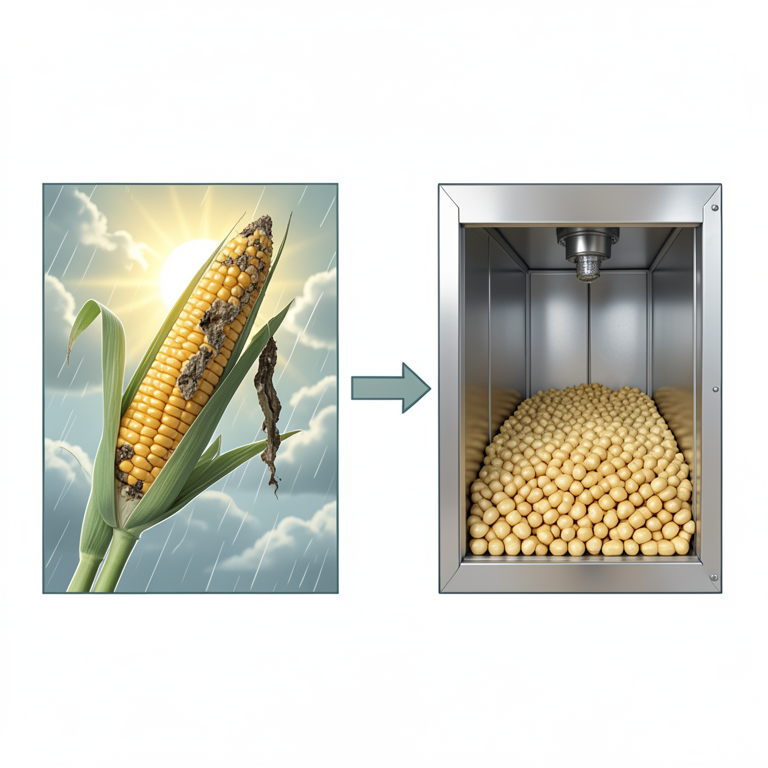
Climate-Driven Post-Harvest Degradation
AI-generated conceptual illustration (maize grains and storage silos). It explains the idea and does not show study data.
View source evidence ↗Figures & tables
From the original paper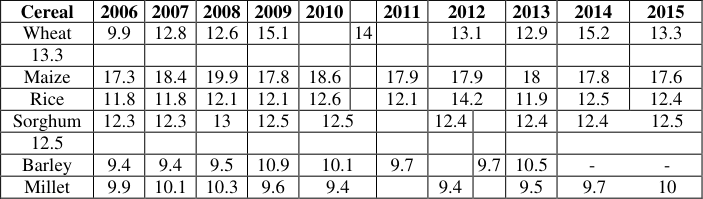 Table 1
Introduction
Climate change is one of the most pressing environmental threats facing humanity worldwide. The drastic change is accelerating as a result of anthropogenic activities, and have an adverse effect on agricultural production in Africa and other parts of the world (Ziervogel, et al. 2006). Its impacts have been felt in the short term, resulting from shifts in rainfall patterns and more frequent and intense extreme weather events, as well in the long term, caused by changing temperatures and precipitation patterns. Until recently, most assessments of the impact of climate change on food systems and the agriculture sector have focused on the implications for production and global supply of food, with less consideration on the post-harvest value chain (FAO, 2008) The shifts in rainfall patterns leads to floods as well as droughts with poor and unpredictable yields, contributing to pests and crop diseases prevalence in response to climate variation which poses a potential threat to the agricultural system. Less attention has been on the cases of post-harvest losses as a result of changing climate, and in order to achieve food security by 2030 as projected, most researchers are moving towards dealing with the post-harvest management practices to reduce post-harvest losses. Generally, research on global climate change and the impact on food systems focuses on the effects of climate change on agricultural production such as the impact on land use, pollution and biodiversity at the expense of post-harvest value chain issues such as transportation, storage, processing and packaging. Higher temperatures as a result of climate change will reduce shelf-life of stored products while lower temperatures will extend the shelf-life. This will have a serious post-harvest implication on all crops, especially perishable foods which easily spoil with increases in temperature. Furthermore, the proliferation of pests and crop disease can increase due to temperature increases and pose a significant threat to effective storage. (FAO, 2008) [4] . The population to be fed is on the rise as projected to double by 2050, In the meantime, while the number of people who are food insecure is increasing (FAO 2010) [4] worldwide, massive quantities of food are lost due to spoilage on the journey to the consumer. (FAO, 2011). Therefore, the review focuses on; 1) Assessing general effects of climate change in post-harvest life. 2) Determine the external environmental parameters of concern and their effect on PH value chain. The findings are key in informing involved stakeholders on the impact of climate on regional post-harvest value chains so as to identify major opportunities and challenges facing food security. Thus develop research hypotheses to test the bio-physical and chemical factors that affect food safety and storage. www.extensionjournal.com
Methodology
The search strategy was designed by the author to identify articles that address the effects of climate change on postharvest value chain with regard to losses in quality and quantity of products from harvest to consumption. A filter of subject-related key words was used to obtain relevant articles from PubMed from the year 2002-2018. The filter for defining Post-Harvest Losses (PHL) was comprised of the following phrase and words; as the degradation in both quality and quantity of a food product from harvest to consumption/temperature, relative humidity, gases in storage, Ozone exposure, rainfall patterns and carbon dioxide concentration. Quality loss entails the loss on nutrients, caloric composition, which in turn affect the acceptability of a product. However, quantity loss involves the amount of produce that never reaches the consumption stage. Some of the parameters of concern were obtained from most current FAO publications, (FAO, 2018) as well as publications from individual researchers that outlined indepth, the external factors of concern in PH value chain.
Selection of articles
The study undertook the article selection process following two steps; i) Preliminary review of titles using the key words. (ii) Review of article abstracts. The selected abstracts had to address post-harvest losses with consideration to the external parameters and their effect on Post-Harvest (PH) value chain. Thus the articles were eliminated based on inconsistency with the search strategy and criteria, this followed the article review form to classify and describe the characteristics of each article including study aims, parameters discussed and the mentioned effects on PH value chain. The process, therefore, involved a 3part-cartegorization system to reflect common external factors that pose a serious challenge to agricultural produce after harvesting. However, categorization of the factors varied slightly across the articles reviewed.
Results
A total of 52 articles were reviewed using the article review form out of which 23 were eliminated as they did not specifically address in depth the environmental factors of concern at PH but focused on factors at pre-harvest that influence both quality and quantity at PH. Therefore, the remaining 29 were analyzed in summaries and descriptive.
Climate trends and post-harvest losses
Post-harvest losses (PHL) is a factor that contributes to food insecurity however, it has received less attention (World Bank, 2011; Aulakh and Regmi, 2013) [15,1] . These losses are attributed to climate change which pose greater challenges directly and indirectly in all the stages of the food chain and impose a threat to production processes as well as the post-harvest processes that in turn influence food security. PHL are defined as measurable quantitative and qualitative food loss from the time of harvest to the time the food reaches the end consumers by (Hodgeset al., 2011; World Bank, 2011) [15,8] . Which leads to loss in desirable qualitative and quantitative features of a product, either cereal, vegetable or fruit and this can be as a result of the poor growth conditions and management practices. Based on the evidence of drastic effects of unpredictable changes in temperature, there is need to focus on the effect of climate change on post-harvest agricultural processes like processing, preservation, packaging and storage. According to Folorunsho Olayemi, (2006) there is need to further push research in the area of post-harvest management, especially regarding issues of climate change and its effects on storage, preservation, processing and packaging. Climate change contributes drastically to the losses as a result of fluctuations in temperature ranges as well as precipitation that affects the drying, threshing and storage processes in cereals as well as pose an effect to packaging of horticultural crops that are considered as perishable products. These factors contribute a lot to the acceptability of the produce in export markets as well as home markets. Despite the challenges of high temperatures, moderated and Low temperature has been used to extend the shelf life of fruits and vegetables, while the negative effect of low temperature (<10 o C) on the shelf life of tropical plants and commodities. Low storage temperature has additional benefit of protecting non-appearance quality attributes: texture, nutrition, aroma and flavor. Most distribution chains rarely have the facilities to store each commodity under ideal conditions therefore, requires handlers have to make choices on appropriate temperatures and Relative humidity. These choices can lead to physiological stress and loss of shelf life and quality. This limitation, especially late in the handling chain during retailing, requires all participants in the distribution chain to increase their understanding of the need to improve management of handling, temperature, Carbon dioxide concentration and RH, to limit post-harvest losses in quality as well as quantity as shown by example in table 1, on losses in cereal by percentage.
| Cereal | 2006 | 2007 | 2008 | 2009 | 2010 | — | 2011 | 2012 | — | 2013 | 2014 | 2015 |
|---|---|---|---|---|---|---|---|---|---|---|---|---|
| Wheat | 9.9 | 12.8 | 12.6 | 15.1 | 14 | 13.1 | 12.9 | 15.2 | 13.3 | |||
| 13.3 | ||||||||||||
| Maize | 17.3 | 18.4 | 19.9 | 17.8 | 18.6 | 17.9 | 17.9 | 18 | 17.8 | 17.6 | ||
| Rice | 11.8 | 11.8 | 12.1 | 12.1 | 12.6 | 12.1 | 14.2 | 11.9 | 12.5 | 12.4 | ||
| Sorghum | 12.3 | 12.3 | 13 | 12.5 | 12.5 | 12.4 | 12.4 | 12.4 12.5 | ||||
| 12.5 | ||||||||||||
| Barley | 9.4 | 9.4 | 9.5 | 10.9 | 10.1 | 9.7 | 9.7 | 10.5 | - - | |||
| Millet | 9.9 | 10.1 | 10.3 | 9.6 | 9.4 | 9.4 | 9.5 | 9.7 10 |
Table text extracted from the original PDF; superscript letters are shown inline. The original table image is below.
View original table image
Climate Parameters of concern in postharvest value chain
In trying to assess the effects of climate change, much focus has been on temperature rise and fluctuating Relative Humidity that are key factors that contribute to post-harvest life. Temperature increase affects photosynthesis directly, causing alterations in sugars, organic acids, flavonoids contents, firmness and antioxidant activity. Higher www.extensionjournal.com temperatures can increase the capacity of air to absorb water vapor and, consequently, generate a higher demand for water. Higher evapotranspiration indices could lower or deplete the water reservoir in soils, creating water stress in plants during dry seasons. For example, water stress is of great concern in fruit production, because trees are not irrigated in many production areas around the world. According to (Henson, 2008) water stress not only reduces crop productivity but also tends to accelerate fruit ripening. Effect of climate change is depicted from the production process thus will look at various parameters and how to contribute and influence PHL.
Harvest time and post-harvest
Harvesting of fruits and vegetables occurs in different times of the year depending on cultivar, climate conditions, pest control, cultural practices, exposure to direct sunlight, temperature management and maturity index, among other important pre-harvest factors. After harvesting, respiration is the major process to be controlled in order to maintain the harvest quality however, its largely dependent on the product specific characteristics (Saltveit, 2002) [13] and has become a challenge to deal with in the world of changing climate. Therefore, to minimize undesirable changes farmers are forced to adopt a series of techniques to extend the shelf-life of perishable plant products coupled with Postharvest technologies that comprise different methods of packaging, rapid cooling, storage under refrigeration as well as modified atmospheres and transportation under controlled conditions to curb the changes that climate changes will impose.
Effects of temperature in postharvest
Rise in temperature has been discussed in light of global warming that has led to climate change over time, which poses a drastic challenge to agricultural production. The quality of plant produce is affected by various environmental factors that are no longer steady as in the earlier decades, of which temperature is of greater influence as it possesses credible challenge in increasing the rate of respiration and withering. Thompson, (2002) [16] notes that Effects of temperature during the production process impact the duration of shelf-life since the higher the temperature the greater the rate of water loss therefore, influencing juice retention in fruits as well as healthy appearance of vegetables e.g. lettuce and other horticultural crops. Farmers are therefore adopting cooling strategies to deal with pulp temperature as a way of reducing PHLs. These include; Rapid cooling of Fruit and vegetable crops generally after harvesting and before packing operations. These techniques have been used over time to remove field heat from fresh produce, which help to extend shelf-life and reduce pulp temperature. This is achieved through cooling the product to the lowest safe storage temperature within hours of harvest. By reducing the respiration rate and enzyme activity, produce quality is extended as evidenced by lower ripening/senescence, maintenance of firmness, inhibition of pathogenic microbial growth and minimal water loss (Talbot & Chau, 2002). Rapid cooling methods such as forced-air cooling, hydro cooling and vacuum cooling demand considerable amounts of energy (Thompson, 2002) [16] . Therefore, with the changing climatic conditions, fruit and vegetable crops are harvested with higher pulp temperatures, which will demand more energy for proper cooling, making the procedure limited to medium and small scale producers which succumb into PHL. The facilities required to deal with the pulp temperature are probably away from the production site thus in the transportation stages the produce quality is compromised and in turn contribute to higher postharvest losses. Exposure of different produce to higher temperatures possess different challenges, even though high temperature is associated with proper ripening of some fruits and in terms of fruit setting, change of color, ethylene concentrations and Mineral accumulation.
Carbon dioxide concentration and postharvest losses
Agriculture as a sector has contributed to higher carbon concentration in the atmosphere through, greenhouse emissions and change in land use practices. This has led to warming effect, explained by the fact that CO 2 and other gases absorb the Earth's infrared radiation, trapping heat. Since a significant part of all the energy emanated from Earth occurs in the form of infrared radiation, increased CO 2 concentrations mean that more energy will be retained in the atmosphere, contributing to global warming (Lloyd & Farquhar, 2008) [10] . However, Carbon dioxide concentrations in the atmosphere have increased to approximately 35% from pre-industrial times to 2005 (IPCC, 2007). This constrains crop growth and in turn influence the quality of the produce that lead to deterioration in the shelf-life contributing to PHLs. The effects of CO 2 concentration during the growth period determines the produce quality parameters desired for grading, packaging and storage. For instance, Hogy and Fangmeier (2009) studied the effects of high CO 2 concentrations on the physical and chemical quality of potato tubers and observed that increases in atmospheric CO 2 (50% higher) increased tuber malformation in approximately 63%, resulting in poor processing quality and grading qualities.
Ozone exposure and postharvest losses
Ozone in the troposphere is the result of a series of photochemical reactions involving carbon monoxide (CO), methane (CH 4 ) and other hydrocarbons in the presence of nitrogen species (NO + NO 2 ). (Mauzerall & Wang, 2001) [11] . It forms during periods of high temperature and solar radiation, normally during summer seasons. The effects of ozone exposure have been studied, and its effects on postharvest value chain noted. Ozone enter plant tissues through the stomata, leading to direct cellular damage, especially in the palisade cells (Mauzerall & Wang, 2001) [11] . Exposure to low ozone concentration leads to leaf chlorosis as well as premature senescence that interfere with the quality of leafy vegetables in terms of overall appearance, color and flavor compounds. (Felzer et al., 2007) [5] . Higher ozone concentrations also have effects on photosynthetic and respiratory processes, however, the effects vary within crop species. For instance, Ozone at the concentration of 0.04lL/L appeared to have potential for extending the storage life of broccoli and seedless cucumbers. (Tzortzakisa, Borlanda, Singletona, & Barnes, 2007). This causes physiological disorders that lower postharvest quality of fruit and vegetable crops destined for both fresh market and processing by causing such symptoms as yellowing (chlorosis) in leafy vegetables, alterations in www.extensionjournal.com starch and sugars contents of fruits and in underground organs of crops like; onions, garlic, sweet and Irish potatoes. Finally, contributing to PHL as the produce cannot meet the desired, market qualities.
Rainfall pattern and postharvest losses
Increased evaporation rate from the earth's surface due to hot air leads to build up of water vapor in the atmosphere that in turn fall back in the form of precipitation leading to floods and drought in certain areas. The changes in climate overtime lead to changes in rainfall patterns in terms of distribution, type, reliability and intensity. These unpredictable and unseasonal rains can dampen the matured crop before harvesting and result in mould growth, which may later reduce the grain quality, cause some of the grain to be discarded, and increase risks of aflatoxin or other mycotoxin contamination (Hodges et al., 2011; USAID Rwanda, 2012) [8] . Chegere (2017) [2] has shown that harvesting when weather conditions are damp (compared to when the weather is sunny) correlates with higher prestorage and storage losses. In case unfavorable damp weather conditions occur during and after crop harvesting, drying becomes difficult, making the produce to be stored with high moisture content which may cause rotting or germination and increased risk of mycotoxin contamination.
Light effect on postharvest
Light influences crop production in the farm and the effects are as well displayed during postharvest. Different Light aspects influence agriculture, that is: light intensity and light duration. These influences the quality of fruits as well as vegetables. The effects showed during the growth period becomes manifest at storage. For instance, high light intensity and longer light duration favors fruit ripening while on the other hand it leads to wilting and loss of quality in leafy vegetables.
Discussion
This paper focuses on some of the effects of climate change on postharvest agriculture and how it contributes to postharvest food losses. Adverse weather condition indeed affects agricultural produce in one way or the other, however, the response displayed by different crops vary within species. Some of these conditions improve produce quality while some contribute to drastic postharvest losses. For example, high light intensity and longer light duration favors fruit ripening while on the other hand, it leads to wilting and loss of quality in leafy vegetables. The changing climate and postharvest losses was reviewed to monitor the effects of various phenomena on crop quality that can reduce or contribute to PHLs. Looking at current literature on statistics of postharvest losses, it is evident that the effects of climate change during the production process contribute drastically to losses in quality that is desired for post-harvest value chain. This contributes to the situation of food insecurity and over reliance on importation, which in turn is a disadvantage to the production population who produce much and invest more in terms of labor and inputs, yet limited return due to unreliable climate patterns. PHL cause not only the loss of the economic value of the food produced but also the waste of scarce resources such as labor, land, and water, as well as non-renewable resources such as fertilizer and energy, all of which are used to produce, process, handle, and transport food (FAO, 2011). Production of food that will not be consumed results in unnecessary greenhouse gas emissions which may accelerate climate change (FAO, 2011; World Bank, 2011) [15] . Other factors like poor transport, handling and storage facilities for highly perishable produce also contribute to post harvest losses. However unpredictable climatic factors pose greater challenge of all. For instance, looking at the parameters above, global warming expands pest and disease territories due to pest outbreaks in new areas, which increase the frequency of outbreaks of field and storage pests and disease invasions (Epstein, 2001). As a result, more losses of food will occur while the crop is in the field and during storage due to loss of desired storage qualities. Studies by D'Souza et al. (2004) [3] and Kovats et al. (2005) document that crop diseases reports are more frequently preceded by weeks of higher local temperature. Higher temperatures cause shorter life cycles of insect pests and diseases, which may foster reproduction and buildup of field and storage pests and diseases. The rising mean temperature will also increase the rate of crop drying in the field, which will reduce the opportunity for pest attacks but also increases the risk that the grain will become too dry, which makes it shriveled and hard to shell (Stathers et al., 2013). Overly dry grain becomes brittle and can crack after threshing or during milling and thus has low viability hence mass losses in the grain sector. Increased temperatures and moist weather conditions could result in grain being harvested with more than the 12-14% moisture required for stable storage (FAO, 2008). Generally moist, humid conditions favor the growth of mold. Furthermore, some fungi perform better at higher temperatures. Therefore, increasing average temperatures and moist conditions following periods of heavy precipitation or floods would be expected to favor mold growth and could lead to changes in the range of latitudes at which certain fungi are able to compete (FAO, 2008). This increases the risk of fungal growth and mycotoxin contamination of stored crops. Higher humidity and temperature may reduce the effectiveness of the active ingredients of some commercial grain protectants and may increase chemical and biodeterioration of the crop (Stathers et al., 2013). These climate change events may also increase chemical and bio deterioration of stored products, leading to shorter shelf life. Projected statistics by FAO (2011) shows that about 1.3 billion tons of food are globally wasted or lost per year (Gustavasson, et al. 2011). Therefore, the reduction of these losses would increase the amount of food for human consumption and enhance food security, a growing concern with rising food prices due to losses and increased weather variability.
Climate-smart post-harvest agricultural adaptation opportunities
The fear of future losses associated with effects of climate change, can be mitigated by adoption of postharvest adaptation strategies. For instance, according to the report by FAO 2011; Growing and/or storing crops and varieties which are less susceptible to post-harvest pest attack; Prompt harvesting; Adequate and protected drying; Maintenance of the physical storage structures; Careful store cleaning and hygiene; Accurate estimation of food stock www.extensionjournal.com requirements; Protection and monitoring of grain to be stored for more than three months; Use of low greenhouse gases emission food preparation methods; Understanding and application of basic food safety principles; Increasing farmer access to market information and transport options; Use of early warning seasonal forecasts to project how the climatic conditions might impact on food storage or marketing strategies; Use of more water, energy and resource efficient processing, packaging and transport operations; Ensuring plant breeders evaluate post-harvest as well as pre-harvest crop characteristics; and Helping farmers to learn from others' and their own experiments.
Conclusion and recommendation
Climate change interacting with other drivers of change will have serious impacts on postharvest agriculture and livelihoods in Sub-Saharan Africa; from household, local to national and even international scale. However, uncertainty exists regarding future climate projections; there are difficulties in downscaling the projections, understanding their probability, likely magnitude, and the diverse impacts and feedback implications. This uncertainty serves to highlight just how vital it is to strengthen postharvest actors' and systems' ability to adapt to climate and other change. The recent 'Missing Food' report estimated SSA's current postharvest cereal grain losses at US$ 4 billion/year (World Bank et al. 2011) [15] . With climate change interacting with rising resource scarcity, population growth, and concern about environmental costs, action clearly needs to be taken to address this meaningless waste of increasingly valuable food, and the resources (land, nutrients, water, inputs and labor) that were used to produce it. Both pre and postharvest agriculture must become more efficient. Better postharvest management and the associated loss reduction will build resilience against current and future climate-related shocks, and reduce the need for compensatory agricultural intensification, land use change and damage to environmental services, including carbon sequestration. Strengthened postharvest systems protect food and seed stocks against loss and deterioration thereby improving food and nutrition security and acting as a buffer against the subsequent season's crop loss, high food prices and the erosion of important assets, in addition to offering income generation opportunities. Therefore, there is need to have the many already known good postharvest management practices into use to reduce losses and build resilience to climate change impacts is an obvious adaptation option.
References
16 in the original paper- Aulakh J, Regmi A. Post-harvest Food Losses Estimation: Development of Consistent Methodology. Paper presented at the Agricultural and Applied Economics Association 2013. AAEA & CAES Joint Annual Meeting. August 4-6, 2013, Washington, DC (accessed on September 21, 2015) 2013.
- Chegere MJ. Post-harvest Losses, Intimate Partner Violence and Food Security in Tanzania. PhD thesis, Economic Studies No. 230, University of Gothenburg, Sweden 2017.
- D'Souza RM, Becker NG, Hall G, Moodie KBA. Does Ambient Temperature Affect Foodborne Disease? Epidemiology 2004;15:86-92.
- FAO and World Bank. FAO/World Bank Workshop on Reducing Post-Harvest Losses in Grain Supply Chains in Africa; Lessons Learned and Practical Guidelines. Rome, Italy 2010.
- Felzer BS, Cronin T, Reilly JM, Melillo JM, Wang X. Impacts of ozone on trees and crops. Compters Rendus Geoscience 2007;339:784-798.
- Hanson C, Lipinski B, Friedrich J, O'Connor C, James K. What's Food Loss and Waste Got to Do with Climate Change? A Lot, Actually. World Resource; Institute. http://www.wri.org/blog/2015/12/whatsfoodloss-and-waste-got-do-climate-change-lot-actually (accessed July 2017) 2015.
- Hodges RJ. Postharvest Weight Losses of Cereal Grains in Sub-Saharan Africa. Mimeo 2012.
- Hodges RJ, Buzby JC, Bennett B. Postharvest Losses and Waste in Developed and Less Developed Countries: Opportunities to Improve Resource Use. Journal of Agricultural Science 2011;149:37-45.
- Hudson U, Messa M. Position Paper on Food Losses and Waste 2015. Slow Food. https://www.slowfood.com/sloweurope/wpcontent/uploads/ING-position-paper-foodwaste.pdf
- Lloyd J, Farquhar GD. Effects of rising temperatures and [CO 2 ] on the physiology of tropical forest trees. Philosophical Transactions of the Royal Society of Biological Sciences 2008;363:1811-1817.
- Mauzerall DL, Wang X. Protecting agricultural crops from the effects of tropospheric ozone exposure: Reconciling science and standard setting in the United States, Europe, and Asia. Annual Review of Energy and the Environment 2001;26:237-268.
- Rembold F, Hodges R, Bernard M, Knipschild H, Léo O. The African Postharvest Losses Information System (APHLIS). An Innovative Framework to Analyses and Compute Quantitative Postharvest Losses for Cereals under Different Farming and Environmental Conditions in East and Southern Africa 2011.
- Saltveit ME. Respiratory metabolism 2002. <http://www.ba.ars.usda.gov/hb66/ 019respiration.pdf>Accessed 22.03.09
- Teshome Y, Leweye A. A review on the status of postharvest loss in vegetable crop and their management options. Int. J Agric. Food Sci. 2020;2(1):31-40. DOI: 10.33545/2664844X.2020.v2.i1a.32
- World Bank. Missing Food: The Case of Post-Harvest Grain Losses in Sub-Saharan Africa. Report No.60371AFR 2011.
- Thompson JE. Cooling horticultural commodities. In A. A. Kader (Ed.), Postharvest technology of horticultural crops (3 rd ed.,). Oakland: Univ. of Calif. Agric. and Natural Resources [Pub. 3311] 2002, 97-112.
Cited by 1
From OpenAlex, OpenCitations and reference lists read by Scinovex
- From farm to fork: a review of strategies for sustainable reduction of post-harvest losses in Sub-Saharan Africa ↗
Kurai Gareth Mawoneke, Takudzwa Rusike, Humphrey Masimba Makumbirofa, Joel Mukwidigwi · Cogent Food & Agriculture · 2025
Post-harvest losses (PHL) represent a critical barrier to food security, economic stability, and sustainable development in Sub-Saharan Africa (SSA), with annual losses estimated at 30–50% for key commodities. This review synthesizes recent literature (2015–2024) to analyze the multifaceted causes of PHL and evaluate effective mitigation strategies. The primary drivers of PHL include biological threats (insect pests, microbial pathogens, rodents), inadequate…
❝ 4PDF