
Research article · 2017 · Full text
International Journal of Veterinary Sciences and Animal HusbandryPrevalence and multiplex PCR for enterotoxin genes of Staphylococcus aureus isolates from subclinical mastitis and kareish cheese
Volume 2(6) · Pages 29–33
Research areasIdentification and Quantification in FoodMilk Quality and Mastitis in Dairy CowsProbiotics and Fermented Foods
Abstract
Author-writtenAim: Staphylococcus aureus was categorized as a contagious pathogen incriminated in subclinical mastitis as well as in dairy products. From public health view, this organism causing food poisoning outbreaks via contamination of food products with its toxins. This study highlight the prevalence of Staphylococcus aureus among subclinical mastitic cases as well as cheese samples and the dominant enterotoxigenic genes. Methodology: examination of 100 samples (50 from subclinical mastitis, and 50 kareish cheese) from Sadat city, Menoufia province. Results & Interpretation: bacteriological culturing on selective and specific medium revealed that 26.7% and 30% in subclinical mastitis and kareish cheese respectively were due to S. aureus. Furthermore, multiplex PCR proved to be efficient technique for detection of different enterotoxins genes. The sea, seb and see genes were the most prevalent genes among the tested S. aureus isolates. Although, no detection of sec and sed genes were observed. In conclusion, it can be concluded that molecular characterization of S. aureus and its enterotoxins genes will be beneficial in designing control and preventive measures of S. aureus infection in human and animals.
Summary
Source-checkedPlain-language reading of the full paper, prepared with AI and checked against the text. Each point links to the authors' own words.
Why it matters
- Staphylococcus aureus is a significant pathogen in the dairy industry, causing approximately 50% of intramammary infections and leading to economic losses through reduced milk production and increased veterinary costs. View evidence ↗
- S. aureus enterotoxins are well-known causes of human food poisoning, typically occurring when contaminated milk or food products are consumed. View evidence ↗
- Enterotoxins are critical virulence factors that contribute to food poisoning and toxic shock syndrome, and they are notably resistant to high temperatures and pasteurization. View evidence ↗
The question
- The study aimed to determine the prevalence of S. aureus and use multiplex PCR to identify specific enterotoxin genes in samples from subclinical mastitis and kareish cheese. View evidence ↗
What they did
- The researchers examined 100 samples from Sadat City, Menoufia province, consisting of 50 samples from subclinical mastitis and 50 samples of kareish cheese. View evidence ↗
- S. aureus was isolated by streaking samples onto Baird-Parker agar and 10% sheep-blood agar, followed by incubation at 37°C for 24 to 48 hours. View evidence ↗
- Isolates were identified using biochemical and virulence tests, including catalase, coagulase, haemolysis activity, and DNase testing. View evidence ↗
- Multiplex PCR was performed using a 50-µl reaction mixture containing DNA template, specific primers, and Emerald Amp Max PCR Master Mix. View evidence ↗
What they found
- S. aureus was detected in 26.7% of the subclinical mastitis samples and 30% of the kareish cheese samples. View evidence ↗
- Among 10 tested S. aureus isolates, the sea and see genes were the most common (60%), followed by seb (50%), while sec and sed genes were not detected. View evidence ↗
- In the subclinical mastitis samples, the sea, seb, and see enterotoxin genes were each detected at a rate of 20%. View evidence ↗
- In kareish cheese samples, the sea and see enterotoxins were detected in 40% of isolates, while the seb enterotoxin was found in 30%. View evidence ↗
What it means
- The authors concluded that S. aureus is a contagious cause of both intramammary infections in dairy farms and food poisoning outbreaks globally. View evidence ↗
- The identified enterotoxin genes are believed to play a critical role in the pathogenicity of S. aureus in both food poisoning and subclinical mastitis. View evidence ↗
- The authors state that future research is needed to use these genes for the genotyping of S. aureus isolates originating from milk. View evidence ↗
Visual summary
2 visualsIllustrations explain the paper; charts are replotted from the paper's own table values.
Study Workflow
AI-generated conceptual illustration (Cattle udders, Kareish cheese, and Staphylococcus aureus bacteria). It explains the idea and does not show study data.
View source evidence ↗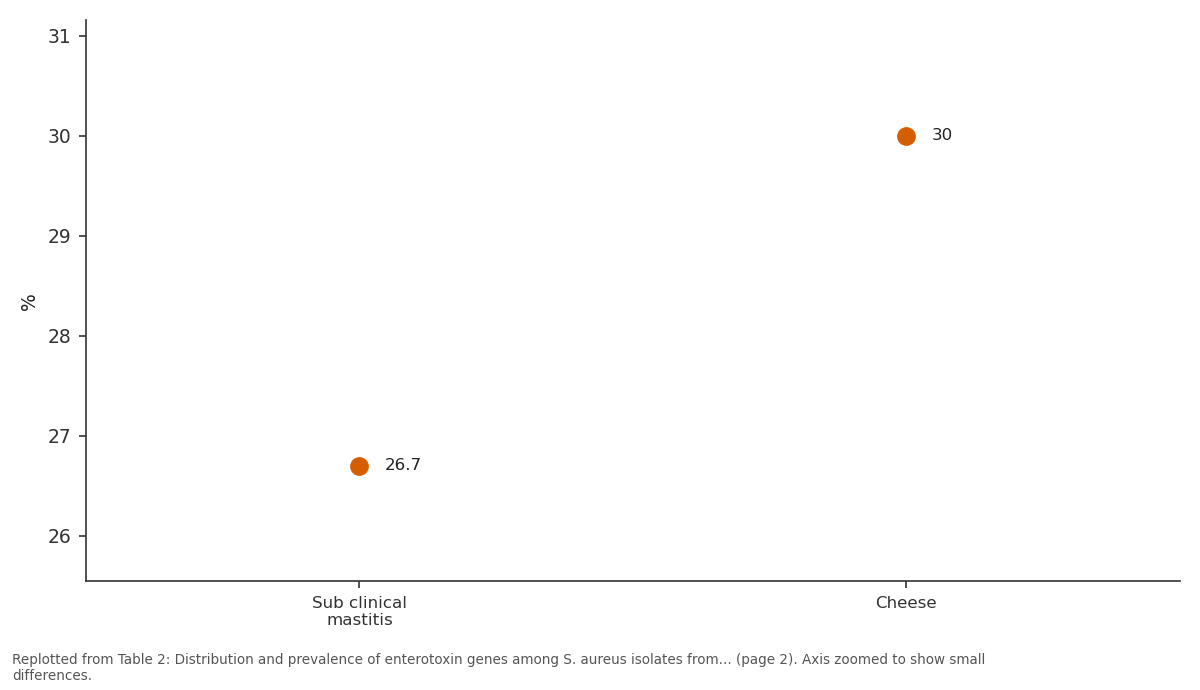
%: Sub clinical mastitis vs Cheese
Replotted from Table 2 (page 2) of the original paper. Every bar is the paper's own table value.
View source evidence ↗Figures & tables
From the original paper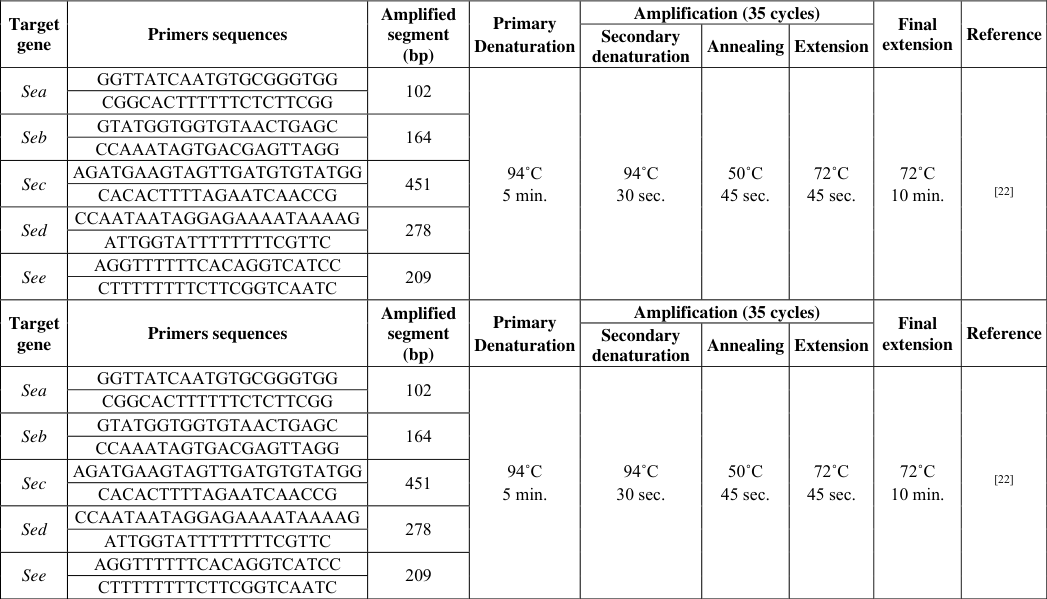 Table 1
 Table 2
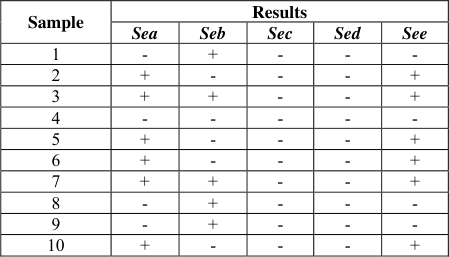 Table 3
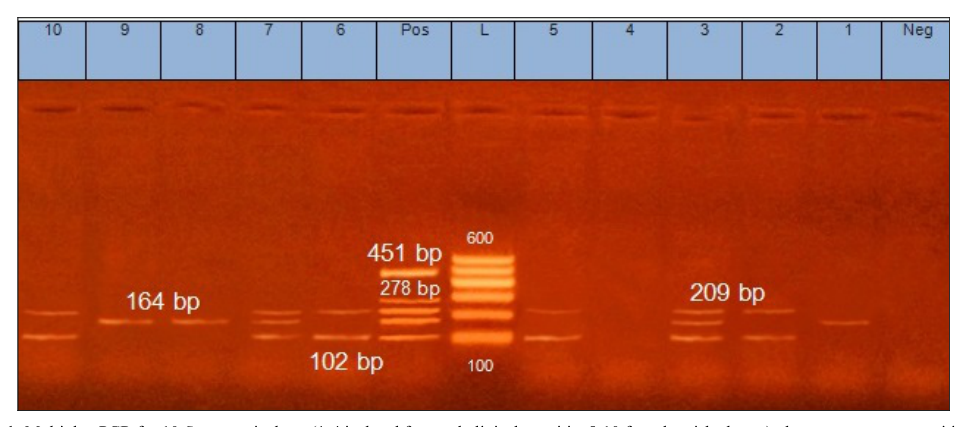 Figure 1
Introduction
Staphylococcus aureus was responsible for wide range of illness in human and animals. In the dairy industry, it causes about 50% of intramammary infection [1,2] . The losses due to S. aureus subclinical mastitis include higher losses in milk production, increase culling rate, veterinary and treatment cost [3] . This organism was frequently inhabitant in the skin of udder microbiota [4] under special circumstances, invade and colonized into udder tissues of dairy animals leading to inflammation and may produce serious form of mastitis [5] . Regarding food poisoning outbreaks, enterotoxins of S aureus considered the most famous detecting in foods poisoning in human [6] . Thus assured via consumption of contaminated food products and milk products by S. aureus toxins [7] . In generally, early study of [8] reported that 14% to 40% of all human food poisoning outbreaks were associated with staphylococcal enterotoxins, that manifested at first by sudden onset of fever, vomiting, nausea, abdominal cramps and diarrhea [9, 10] . The existence of some virulence factors as enzymes, toxins, surface antigens, and capsule have an important role in S aureus pathogenicity as in intramammary infection, it depends on the induction of immunosuppression [11] through stimulating of the proinflammatory cytokines and T-cell that evoked the inflammatory features. One of these factors is enterotoxins which proved to be more tolerance to pasteurization and higher temperature [12] . The enterotoxins constitute and reported as an important virulence agent involved in food poisoning and toxic shock syndrome [13] . The most commonly identified genes were (SEA, SEB, SEC, SED, and SEE) [14] . In Brazilian study the higher frequency and detection of both see and seb genes in clinical and subclinical mastitis [15] . However, other studies [16,17] have been described a new genes such as (SEG, SHE, SEI, SEJ, SEK, SEL, SEM, SEN, and SEO). Therefore this study aimed to estimate the prevalence and applying of multiplex PCR for identifying of enterotoxin genes from S. aureus isolates from subclinical mastitis and kareish cheese.
Material and Methods
Sampling and processing of collected specimens Milk samples were collected aseptically in a 5 ml sterile plastic tubes (50 samples). Then samples examined for subclinical mastitis by CMT that done according to [18] . Mastitic milk samples were centrifuged and sediment were streaked on specific medium. Another 50 kareish cheese, were randomly collected from supermarkets in Sadat City. Each sample about 10 gm was collected in a sterile plastic bag. All collected samples were transported in cool ice boxes and transported into the laboratory for further investigation.
Isolation and identification of S. aureus
The processed samples from mastitic milk and kareish cheese were streaked into Baird-Parker agar (Oxoid Ltd.) and 10% sheep-blood agar. Plates were incubated for 24-48 h at 37°C. Then, examination of the suspected colonies of S. aureus was done through Gram staining as according [19] . The biochemical and virulence properties as catalase, coagulase as determined by [20] , haemolysis activity on blood agar and Deoxyribonuclease (DNase) testing onto DNase agar [21] .
Multiplex PCR for detection of enterotoxin genes of S. aureus isolates DNA extraction:
The extraction of DNA from samples was performed using the QIA amp DNA Mini kit (Qiagen Germany, GmbH) with modifications from the manufacturer's recommendations. Briefly, 200 µl of the sample suspension was incubated with 10 µl of proteinase K and 200 µl of lysis buffer at 56 O C for 10 min. After incubation, 200 µl of 100% ethanol was added to the lysate. The sample was then washed and centrifuged following the manufacturer's recommendations. Nucleic acid was eluted with 100 µl of elution buffer provided in the kit.
Oligonucleotide Primer. Primers used were supplied from Metabion (Germany) are listed in table (1) For multiplex PCR of enterotoxins, Primers were applied in a 50-µl reaction containing 25 µl of Emerald Amp Max PCR Master Mix (Takara, Japan), 1 µl of each primer of 20 pmol concentration, 16 µl of water, and 7 µl of DNA template. The reaction was performed in an Applied biosystem 2720 thermal cycler.
Analysis of the PCR Products
The products of PCR were separated by electrophoresis on 1.5% agarose gel (Applichem, Germany, GmbH) in 1x TBE buffer. For gel analysis, 40 µl of the multiplex PCR products were loaded in each gel slot. Gelpilot 100 bp DNA ladder (Qiagen, Germany, GmbH) was used to determine the fragment sizes. The gel was photographed by a gel documentation system (Alpha Innotech, Biometra) and the data was analyzed through computer software.
The results of enterotoxin genes in S. aureus isolates from subclinical mastitis milk and kareish cheese illustrated in table (3) revealed that sea and see enterotoxin genes were the most prevalent among 10 S. aureus isolates with 60% followed by seb (50%), while no detection for sec and sed enterotoxin genes in any tested samples. Samples from 1-4 isolated from subclinical mastitis while 5-10 from kareish cheese. In subclinical mastitis all the detected enterotoxin genes (sea, seb and see) with the same percentage 20%. In contrast, the sea and see enterotoxin detected in 40% followed by seb enterotoxin 30% in kareish cheese.
3.
Multiplex PCR for detection of enterotoxins genes in S. aureus isolates from subclinical mastitis and kareish cheese.
Discussion
Mastitis constitutes the major economic and productive disease in dairy cows all over the world. Mastitic milk can possess a serious hazard to human consumers due to higher bacterial count or toxins [23,24] . The incidence of subclinical mastitis form has become more prevalent 15-40 times than clinical form [23] so, this form of mastitis may act as continues source of new infection to mammary glands [25] that often ended by serious form of clinical mastitis [26] . One of the adverse effect on the milk quality due to subclinical mastitis is the decreasing of shelf life period of raw milk [27] . Many studies proved that Staphylococcus aureus is a major bacteria existed in bovine mastitis [28] . This study revealed that the prevalence rate of S. aureus from subclinical mastitis was 26.7%. Nearly similar findings in Egypt reported by [29,30] they estimated S. aureus prevalence were 28.2% and 29.16% respectively. Additionally, [31] recorded (29%) in Bangladesh. On the other hand, higher prevalence (55.58%) was reported in the study of [32] . However, [33] mentioned that approximately 30%-40% of all mastitis cases caused by S. aureus. In contrast, the prevalence rate in kareish cheese was 30% in our study. These nearly in contact with [34] who detected S. aureus isolates in 27% from 200 milk and cheese samples in Iran. Although, a little lower prevalence rate 25% had been recovered from 100 Iranian white and feta cheese samples by [35] . The higher prevalence 75% and 46% has been obtained by [36,37] respectively. The lower prevalence (10%, 9.5%, and 7.7%) were observed in different countries in the studies of [38,39,40] in Iran, turkey and European countries respectively. The observed variation in prevalence of S. aureus especially in milk products may be reflect the level of sanitary measures in milk manufacture or due to the differences in technological methods in cheese manufacture [35] . Regarding staphylococcus food poisoning that considered a major etiology of gastroenteritis in human [41] . This depend on the ability of Staphylococcus aureus to produce toxins or virulence factors that facilitated the disease occurrence [42] . The S. auerus enterotoxins (SE), particular SEA-SEE were the most classical discovered genes in cattle, sheep and goats milk [1,43] Showed that the host environment played a role in the adaptation of S. auerus in target host through production of SE. Modern molecular techniques as multiplex PCR has successfully adapted for detection of enterotoxins in S. aureus isolates from subclinical mastitis milk and Karich-cheese was done in this work as showed in fig 1 and table (3). It's clear that sea and see enterotoxin genes were the most prevalent among the tested S. aureus isolates followed by seb, while no detection for sec and sed enterotoxin genes. In subclinical mastitis enterotoxin genes (sea, seb and see) were detected in 20%. In contrast, the sea and see enterotoxin detected in 40% followed by seb enterotoxin 30% in Karich-cheese. These were parallel to results of [44] who revealed the sea gene was the most prevalent gene, followed by seb, sec, sed and see. Furthermore, [45] found that sea gene was the prevalent SEs (36.7%) followed by seb (17.4%), see (16.5%), sec-1 (11.01%), and sed (6.4%). Although, disconnected with [46] reported lower prevalence (1.6%) of sea gene. The absence of sec gene in our study can be explained that the sec gene has three subtypes (sec1, sec2, and sec3) that classified according to antigenic properties or the diversity in the sequencing of enterotoxin C [47] . There was no detection of sed gene in our findings. This almost observed in the result of [48] and [44] found that sed was the lowest dominant enterotoxins genes in very low percentage 0.5% *
Conclusion
Our results concluded that Staphylococcus aureus was identified as one of the contagious cause of intramammary infection in the dairy farm as well as food poisoning outbreak worldwide. The pathogenicity of this organism relies on some virulence agents as enterotoxins that exert a toxic effect on host cell or in food products. Several enterotoxins genes, particularly, (sea, seb, sec, sed, and see) genes were the most identified from S. aureus isolates of milk origin. These genes appear to have a critical role in the pathogenicity of S. aureus in subclinical mastitis and food poisoning cases. Further studies about the using of these genes in genotyping of S. aureus isolates of milk origin are needed in future.
Figures and tables from the paper
| Source of samples | total nu of samples | Positive Staphylococci species | Staphylococcus aureus | — | Negative | — |
|---|---|---|---|---|---|---|
| 100 | 35 | Number | % | Number | % | |
| Sub clinical mastitis | 50 | 15 | 4 | 26.7% | 11 | 73.35 |
| Cheese | 50 | 20 | 6 | 30% | 14 | 70% |
Table text extracted from the original PDF; superscript letters are shown inline. The original table image is below.
View original table image
| Sample | Results | — | — | — | — |
|---|---|---|---|---|---|
| Sea | Seb | Sec | Sed | See | |
| 1 | - | + | - | - | - |
| 2 | + | - | - | - | + |
| 3 | + | + | - | - | + |
| 4 | - | - | - | - | - |
| 5 | + | - | - | - | + |
| 6 | + | - | - | - | + |
| 7 | + | + | - | - | + |
| 8 | - | + | - | - | - |
| 9 | - | + | - | - | - |
| 10 | + | - | - | - | + |
Table text extracted from the original PDF; superscript letters are shown inline. The original table image is below.
View original table image
References
48 in the original paper- Zschöck M, Kloppert B, Wolter W, Hamann HP, Lämmler CH. Pattern of enterotoxin genes seg, seh, sei and sej positive Staphylococcus aureus isolated from bovine mastitis. Vet Microbiol. 2005; 108:243-249.
- Taverna F, Negri A, Piccinini R, Zecconi A, Nonnis S, Ronchi S et al. Characterization of cell wall associated proteins of a S. aureus isolated from bovine mastitis. Vet Microbiol. 2007; 119(2-4):240-247.
- Middleton JR, Fox LK, Gay JM, Tyler JW, Besser TE. Use of pulsed-field gel electrophoresis for detecting differences in Staphylococcus aureus strain populations between dairy herds with different cattle importation practices. Epidemiol Infect. 2002; 129(2):387-395.
- Boboš S, Vidić B. Mammary gland of ruminant's pathomorfology (in Serbian). Monography, Poljoprivredni fakultet Novi Sad, Naučni Institut za veterinarstvo "Novi Sad", Serbia, Novi Sad, 2005.
- Rajić Savić N, Katić V, Velebit B. Characteristics of coagulase positive staphylococci isolated from milk in cases of subclinical mastitis. Acta Vet-Belgrade. 2014; 64(1):115-123.
- Gilmour A, Harvey J. Staphylococci in milk and milk products. J Appl Bacteriol. 1990; 69:147-166.
- Chiang YC, Liao WW, Fan CM, Pai WY, Chiou CS, Tsen HY. PCR detection of Staphylococcal enterotoxins (SEs) N, O, P, Q, R, U, and survey of SE types in Staphylococcus aureus isolates from food-poisoning cases in Taiwan. Int J Food Microbiol. 2008; 121:66-73.
- Holmberg SD, Blake PA. Staphylococcal food poisoning in the United States. New facts and old misconceptions. JAMA. 1984; 251:487-489.
- Omoe K, Hu DL, Takahashi-Omoe H, Nakane A, Shinagawa K. Identification and characterization of a new staphylococcal enterotoxin-related putative toxin encoded by two kinds of plasmids. Infect Immun. 2003; 71:6088-6094.
- Le Loir Y, Baron F, Gautier M. S. aureus and food poisoning. Genet Mol Res, 2003; 2(1):63.
- Akineden Ö, Annemüller C, Hassan AA, Lämmler C, Wolter W, Zschöck M. Toxin genes and other characteristics of Staphylococcus aureus isolates from milk of cows with mastitis. Clin. Diagn. Lab. Immun. 2001; 8:959-964.
- Asao T, Kumeda Y, Kawai T. An extensive outbreak of staphylococcal food poisoning due to low-fat milk in Japan: estimation of enterotoxin A in the incriminated milk and powdered skim milk. Epidemiol Infect, 2003; 130:33-40.
- Orwin PM, Fitzgerald JR, Leung DY, Gutierrez JA, Bohach GA, Schlievert PM. Characterization of Staphylococcus aureus enterotoxin L. Infect Immun. 2003; 71(5):2916-2919.
- Letertre C, Perelle S, Dilasser F, Fach P. Identification of a new putative enterotoxin SEU encoded by the egc cluster of Staphylococcus aureus. J Appl Microbiol 2003; 95:38-43.
- Nader AF, Ferreira LM, Amaral LA et al. Production of enterotoxins and toxic shock syndrome toxin by Staphylococcus aureus strains isolated from bovine mastitis. Arq Bras Med Vet Zootec.2007; 59:1316-1318.
- Orwin PM, Leung DY, Donahue HL, Novick RP, Schlievert PM. Biochemical and biological properties of staphylococcal enterotoxin K. Infect Immun. 2001; 69(1):360-366.
- Omoe K, Hu DL, Omoe HT, Nakane A, Shinagawa K. Comprehensive analysis of classical and newly described staphylococcal superantigenic toxin genes in Staphylococcus aureus isolates. FEMS Microb Lett. 2005; 246(2):191-198.
- Schalm O, Noorlander O. Experiments and observations leading to development of California Mastitis Test. J. Am Vet Med Assoc, 1957; 130:199-204.
- Quinn PJ, Carter ME, Makrkey BK, Carter GR. Clinical veterinary microbiology.mosby year book Europ Limited, Lynton House, London, 1994, 109-126.
- APHA. Standard Methods for the Examination of dairy products 15 th Ed., Americana public Health Association Washington, DC. USA, 1992.
- Murray PR, Baron EJ, Jorgensen JH. Manual of Clinical Microbiology, 8th ed. American Society for Microbiology, Washington, DC, 2003.
- Mehrotra M, Wang G, Johnson M. Multiplex PCR for detection of genes for Staphylococcus aureus enterotoxins, exfoliative toxins, toxic shock syndrome toxin 1, and methicillin resistance. Journal of Clinical Microbiology. 2000; 38(3):1032-1035.
- Seegers H, Fourichon C, Beaudeau F. Production effects related to mastitis and mastitis economics in dairy cattle herds> Veterinary Research. 2003; 34:475-491.
- González RN, Wilson DJ. Mycoplasmal mastitis in dairy herds. Vet Clin North Am Food Anim Pract. 2003; 19(1):199-221.
- Oliver SP, Gillespie BE, Headrick SJ, Moorehead H, Lunn P, Dowlen HH et al. Efficacy of extended ceftiofur intramammary therapy for treatment of subclinical mastitis in lactating dairy cows. J. Dairy Sci. 2004; 87:2393-2400.
- Reksen O, Sølverød L, Branscum AJ, Østerås O. Relationships between milk culture results and treatment for clinical mastitis or culling in Norwegian dairy cattle. J. Dairy Sci. 2006; 89:2928-2937.
- Busato A, Trachsel P, Schällibaum M, Blum JW. Udder health and risk factors for subclinical mastitis in organic dairy farms in Switzerland. Prev. Vet. Med. 2000; 44:205-220.
- Haran KP, Godden SM, Boxrud D, Jawahir S, Bender JB, Serevatsan S. Prevalence and Characterization of Staphylococcus aureus, Including Methicillin-Resistant Staphylococcus aureus, Isolated from Bulk Tank Milk from Minnesota Dairy Farms. J. Clin. Microbiol. 2011; 50(3):688-695.
- Enany ME, Younes S, AL-gammal AM, Salem M, El Dieb HA. Prevalence of coagulase (coa) gene and mec A gene of S. aureus isolated from bovine clinical mastitis. Seuz Canal Veterinary Medicine Journal. 2013; XVIII(1):147-157.
- Eman-Abdeen E, Mousa W, Heba H, Saher R. PCR for detection of virulence and antibiotics resistance genes of Staphylococcus aureus from clinical mastitis in Egypt. International Journal of Basic and Applied Sciences. 2015; 4(3):315-319.
- Islam MA, Kabir SM, Rahman MT. Molecular detection and characterization of Staphylococcus aureus isolated from raw milk sold in different markets of Bangladesh. Bangl. J. Vet. Med. 2016; 14(2):277-282.
- Marija P, Stanko B, Branko V, Zoran R, Vera K, Miodrag R et al. Prevalence and molecular characterization of enterotoxin-producing strains of Staphylococcus aureus isolated from serbian dairy cows. Acta Veterinaria-Beograd. 2016; 66(4):466-477.
- Bedane A, Kasim G, Yohannis T, Habtamu T, Asseged B, Demelash B. Study on Prevalence and Risk Factors of Bovine Mastitis in Borana Pastoral and Agro-Pastoral Settings of Yabello District, Borana Zone, Southern Ethiopia American-Eurasian. J. Agric. & Environ. Sci. 2012; 12(10):1274-1281.
- Saadat YR, Imani Fooladi AA, Shapouri R, Hosseini MM, Deilami-Khiabani Z. Prevalence of enterotoxigenic Staphylococcus aureus in organic milk and cheese in Tabriz, Iran. Iran J Microbiol. 2014; (5):345-359.
- Arefi F, Mohsenzadeh M, Razmyar J. Isolation, antimicrobial susceptibility and mecA gene analysis of methicillin-resistant Staphylococcus aureus in Iranian white cheeses. Iranian Journal of Veterinary Research, Shiraz University. 2013, 127 -131.
- Jørgensen HJ, Mørk T, Caugant DA, Kearns A, Rørvik LM. Genetic Variation among Staphylococcus aureus Strains from Norwegian Bulk Milk. Appl Environ Microbiol. ; 2005; 71:8352-8361.
- Marhamatizadeh MH, Karim G, Nikafrooz R, Peikar J. Survey on the white traditional cheese by Staphylococcus aureus in Kazeroun. In: 16th National Congress of Iran Food Industry. 12-13 April, Gorgan, Iran. 2006, 1-10.
- Imani-Fooladi AA, Tavakoli HR, Naderi A. Detection of enterotoxigenic Staphylococcus aureus isolates in domestic dairy products. Iran J Microbial. 2010; 2:137142.
- Can YH, Celik HT. Detection of entertoxigenic and antimicrobial resistant Staphylococcus aureus in Turkish cheese. Food Control. 2012; 24:100-103.
- Akineden O, Hassan A, Schneider E, Usleber E. Enterotoxigenic properties of Staphylococcus aureus isolated from goats milk cheese. Int. J. Food Microbiol. 2008; 124: 211-216.
- Scherrer D, Corti S, Muehlherr JE, Zweifel C, Stephan R. Phenotypic and genotypic characteristics of Staphylococcus aureus isolates from raw bulk-tank milk samples of goats and sheep. Veterinary Microbiology. 2004; 101:101-107.
- Haveri M, Roslof A, Rantala L, Pyorala S. Virulence genes of bovine Staphylococcus aureus from persistent and non-persistent intramammary infections with different clinical characteristics. J. Appl. Microbiol. 2007; 103:993-1000.
- Banks MC, Kamel NS, Zabriskie JB, Larone DH, Ursea D, Posnett DN. Staphylococcus aureusexpress unique superantigens depending on the tissue source. J Infect Dis. 2003; 187(1):77-86.
- Priscila LM, Danilo FMR, Luiza P, Lisiane AM, Maria AVPB, Maria LRS. Detection of Enterotoxigenic Potential and Determination of Clonal Profile in Staphylococcus aureus and Coagulase-Negative Staphylococci Isolated from Bovine Subclinical Mastitis in Different Brazilian States. Toxins. 2016; 8104.
- Seyoum ET, Mekonene TK, Woldetsadik DA, Zewudie BM, Wondwossen A, Gebreyes WA. Enterotoxin gene profile of Staphylococcus aureus isolates recovered from bovine milk produced in central Ethiopia. J Infect Dev Ctries. 2016; 10(2):138-142.
- Ertas N, Gonulalan Z, Yildirim Y, Kum E. Detection of Staphylococcus aureus enterotoxins in sheep cheese and dairy desserts by multiplex PCR technique. Int J Food Microbiol. 2010; 15(142):74-77.
- Balaban N, Rasooly A. Staphylococcal enterotoxins. Int. J. Food Microbiol. 2000; 61:1-10.
- Calsolari RAO, Pereira VCP, Júnior JPA, Cunha MLRS. Determination of toxigenic capacity by RT-PCR in coagulase-negative staphylococci and Staphylococcus aureus isolated from newborns in Brazil. Microbiol. Immunol. 2011; 55:394-407.
Cited by 1
From OpenAlex, OpenCitations and reference lists read by Scinovex
- Prevalence and Characterization of Coagulase Positive Staphylococci from Food Products and Human Specimens in Egypt ↗
Eman El-Shahat Abdeen, Walid Saad Mousa, Sarah Y. Abdelsalam, Hanim Shabaan Mohammed Heikal, Reyad Rabea Shawish, Mohammed Nooruzzaman et al. · Antibiotics · 2021
Methicillin-resistant Staphylococcus aureus (MRSA) strains have veterinary and public health importance as they are responsible for a wide range of difficult to treat infections and food poisoning. Two hundred samples (50 samples each of minced meat, beef luncheon, Karish cheese, and human samples (pus swab from open wounds)) were cultured, and MRSA strains were identified using disk diffusion tests and…
❝ 28PDF