
Research article · 2026 · Full text
International Journal of Agriculture and NutritionA novel strategy for improved digestibility: Designer milk nutrition
Volume 8(9) · Pages 32–35 · DOI: 10.33545/26646064.2026.v8.i9a.762 ↗
Research areasDigestive system and related healthMicrobial Metabolites in Food BiotechnologyProteins in Food Systems
Abstract
Author-writtenMost people lose some lactase activity in the small intestine after childhood. Many traditional dairy products, such as ripened cheeses, are naturally lactose-free. Over the last few decades, new technologies have been developed to produce lactose-free fresh dairy products to meet the needs of people with lactose intolerance. This article reviews recent advances and technological developments in producing lactose-free milk in the dairy industry.
Summary
Source-checkedPlain-language reading of the full paper, prepared with AI and checked against the text. Each point links to the authors' own words.
Why it matters
- Lactose intolerance, caused by a deficiency in the enzyme β-galactosidase, affects more than 70% of the global population. View evidence ↗
The question
- The objective of this paper is to review the recent technological developments and advances used to produce lactose-free milk within the dairy industry. View evidence ↗
What they did
- Acid hydrolysis is a method where the pH is typically adjusted to 1.2 and the temperature is raised to 150 °C for a short duration. View evidence ↗
- Membrane separation uses ultrafiltration (UF) membranes with molecular weight cutoffs between 1,000 and 500,000 Daltons to separate lactose from milk. View evidence ↗
What they found
- Hydrolyzing 70% of the lactose in milk increases the product's sweetness by an amount equivalent to adding approximately 2% sucrose. View evidence ↗
- Commercial lactose-free milk is defined as containing less than 0.25 g of lactose per 100 g of milk. View evidence ↗
- Acid hydrolysis results in a brown product that requires further processing, including decolorization and neutralization, before it can be used. View evidence ↗
- The use of immobilization for the enzyme (specifically a neutral-pH enzyme from Kluveromyces lactis) provided a shelf life of 100 days. View evidence ↗
- Combining ultrafiltration and diafiltration produces lactose-free milk with a genuine taste, though it increases production costs by 20-30%. View evidence ↗
Visual summary
1 visualsIllustrations explain the paper; they do not show study data.
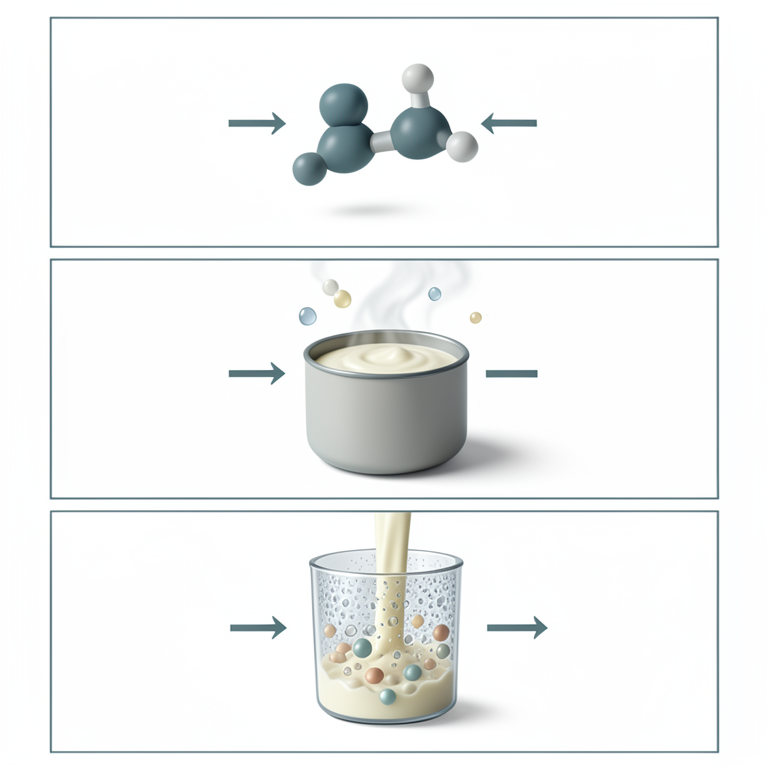
Comparison of Lactose Reduction Methods
AI-generated conceptual illustration (cow milk). It explains the idea and does not show study data.
View source evidence ↗Introduction
Milk is a complex fluid rich in fat, carbohydrate, protein, minerals, and vitamins. Lactose is a major carbohydrate in bovine milk, with concentrations ranging from 4.5 to 5.0 g/100 ml. The small intestine absorbs it and hydrolyzes it into glucose and galactose using β-galactosidase on the mucosal membrane of enterocytes. Many people cannot digest lactose properly because they lack intestinal β-galactosidase, and they may have difficulty consuming milk and dairy products (Jurado et al., 2002) [1] . Excessive lactose in the large intestine can cause tissue dehydration due to osmotic effects, poor calcium absorption due to low acidity, and fermentation by microflora, resulting in diarrhea, bloating, flatulence, and watery stools (Puri et al., 2010) [2] . In fact, more than 70% of the world population cannot use lactose or lactose-containing products because of lactose intolerance caused by a lack of β-galactosidase activity (Harju, 2003; Jelen et al., 2003; Vasiljevic et al., 2003) [3,4,5] . Lactose is digested by an enzyme that is present during infancy, but a genetic deficiency in β-galactosidase activity in the small intestine of adults leads to lactose intolerance (Jackson et al., 2001) [6] . However, most Asians and Negroes, including some Caucasians, become deficient in digesting lactose due to gradual loss of lactase after weaning (Kim, 1994; Boey, 2001; Jackson et al., 2001) [8,7,6] . Thus, consuming more than 20-50 g of lactose on an empty stomach causes lactose intolerance symptoms in lactase-deficient individuals. Industrially, milk lactose is reduced by enzymatic hydrolysis to glucose and galactose, using a β-galactosidase isolated from several sources. The final product (low lactose milk or lactose-hydrolyzed milk) is slightly sweeter and easier to absorb in the intestinal tract than untreated milk. Moreover, lactose-reduced milk, yogurt, and ripened cheeses are the best sources for people with lactose intolerance. It is a source of bioavailable calcium, and deficiency can lead to osteoporosis (Bannan et al., 1996) [9] . Lactose-hydrolyzed milk and dairy products have received much attention since the 1970s, when the first β-galactosidases enzyme preparation became commercially available. Lactases were first proposed for dairy applications in 1950 (Van Dam et al., 1950) [10] . Nowadays, lactase is one of the most important enzymes used in food processing (Panesar et al., 2006) [11] . It is commercially available for consumers with lactose intolerance (Tossavainen et al., 2003) [12] and is marketed successfully by Valio Ltd. (Mattila-Sandholm et al., 2003) [13] .
Lactose hydrolysis
Lactose hydrolysis is a promising process in the food industry for the development of lactose free products (Pessela et al., 2003) [14] . In addition, it increases product sweetness, which in many cases allows lower added sugar levels. Hydrolyzing 70% of the lactose in milk increases sweetness by an amount corresponding to adding about 2% sucrose (Zadow, 1986) [15] . Furthermore, lactose hydrolysis lowers the freezing point and speeds fermentation in the medium. Commercial lactose-free milk contains less than 0.25 g lactose per 100 g of milk and is manufactured by enzymatic hydrolysis, which breaks down lactose in milk into glucose and galactose. Demand for lactose-free dairy products has increased by approximately 20% per year since 1997 (Jelen et al., 2003) [4] . The high lactose content in milk products such as ice cream, frozen milks, whey spreads, concentrated products, and condensed milk leads to excessive lactose crystallization, resulting in products with a mealy, sandy, or gritty texture. Using β-galactosidase to process such products could reduce lactose concentrations to acceptable levels and improve some technological and sensorial qualities of dairy foods, e.g., increasing digestibility, softness, creaminess, etc. (Zadow, 1993) [16] . Also, hydrolyzing this sugar could help develop additives like galactooligosaccharides for animal and human diets (Ladero et al., 2000) [17] .
Industrial production of lactose-hydrolyzed products
Using hydrolyzed milk in yogurt and cheddar cheese manufacture accelerates acidification because lactose hydrolysis is normally the ratelimiting step, reducing yogurt set time and accelerating the development of structure and flavor in cheese (Puri et al., 2010) [2] . Moreover, monosaccharides formed by lactose hydrolysis ferment more easily than lactose, reducing the time from starter-culture addition to reaching the desired low pH in products such as cottage cheese and yogurt. In addition, glucose and galactose considerably increase product sweetness (about 50%). Therefore, yogurts require less added sweetener, resulting in fewer calories in the final product (Johansen et al., 2002) [18] . Cheese made from hydrolyzed milk ripens more quickly than cheese made from normal milk (Kim, 1997) [19] . In milk powder, a certain amount of amorphous lactose is hygroscopic and crystallizes when stored for a long time in the presence of moisture (Hogan et al., 2013) [20] . Most notably, lactose is the main source of instability in spray-dried milk powder. Lactose hydrolysis is also more desirable at high lactose concentrations in condensed milk and can lead to excessive lactose crystallization, resulting in products with a mealy, sandy, or gritty texture. For this reason, using β-galactosidase before the condensing operation can reduce lactose to a level where it is no longer a problem (Zadow, 1992) [21] . Enzymatic hydrolysis of lactose has been proposed to offer several benefits for industrial application, including developing lactose-hydrolyzed products as one possible approach to reduce lactose intolerance, which affects more than half of the world's population (Suarez et al., 1997) [22] . Galacto-oligosaccharides form during lactose hydrolysis and favor the growth of intestinal bacterial microflora (Mahoney, 1998) [23] . In addition, improvement in the technological and sensory characteristics of foods containing hydrolyzed lactose was observed by Zadow (1992. Lactose hydrolysis alleviates problems related to lactose intolerance and improves dairy processing. This can be achieved using the following method.
Hydrolysis of lactose
Hydrolysis of lactose
Acid hydrolysis
Acid hydrolysis is viable only for protein-free streams such as ultrafiltration (UF) permeate of milk or whey. pH can be adjusted by direct acid addition or by treating the permeate with an ion exchange resin. Typically, pH is adjusted to 1.2 and temperature to 150 °C for a short period. The hydrolyzed product is brown and requires neutralization, demineralization, and decolorization before use. Corrosiveness of the conditions is a major engineering design challenge in this process. Thus, it has not been commercially adopted to any significant extent (Zadow, 1986) [15] . Several processes based on ion exchange resins have been developed, working typically at pH 1.2 and at 90-98 °C (Thompkinson et al., 1991) [24] . Browning of the neutralized reaction mixture is the biggest problem, increasing processing costs and creating disposal issues. Industrially, this process has been used only for pure lactose solutions
Hydrolysis with soluble enzymes (β-galactosidase)
Lactase (β-D-galactosidase; β-D-galactoside galactohydrolase, E.C. 3.2.1.23) is widely distributed in nature and can be isolated from sources such as plants (almonds, peaches, apricots, apples), animal organs, yeasts, bacteria, and fungi (Richmond et al., 1981) [25] . It is a hydrolytic enzyme that catalyzes the breakdown of lactose into glucose and galactose, which are sweeter, more soluble, and more di-gestible than lactose (Haider et al., 2009) [26] . Compared with animal and plant sources, microorganisms produce enzymes at higher yields, lowering β-galactosidase costs (Santos et al., 1998) [27] . It occurs in a variety of microorganisms, including yeasts (mainly K. lactis and K. fragilis), which have GRAS (generally recognized as safe) status and are commercially important (Harju, 1987) [28] . Enzymatic hydrolysis of lactose produces lactose-reduced milk and derived dairy products that lactose-intolerant people can consume (Haider et al., 2008; Heyman, 2006) [29,30] . In addition, it catalyzes the formation of galacto-oligosaccharides, which are prebiotic additives also known as healthy foods (Grosova et al., 2008) [31] . The hydrolysis rate of lactose in milk depends on β-galactosidase activity, which in turn depends on substrate concentration, pH, temperature, contact time, enzyme activity, and cost. Unlike the enzymatic method, the acidic method causes problems such as protein denaturation in the lactose solution, brown color formation, and undesirable by-product production. Therefore, the enzymatic method is a better choice for food applications (Pessela et al., 2003) [14] . In addition, the enzymatic process offers several benefits, including no by-products, no degradation of compounds in dairy products, and no additional off-flavors, odors, or colors. Furthermore, enzyme-treated milk retains its original nutritional value, especially since glucose and galactose are not removed (Ladero et al., 2000) [17] . In addition, it increases the product's sweetness, which in many cases allows reducing added sugar. Hydrolyzing 70% of the lactose in milk increases sweetness by an amount corresponding to adding about 2% sucrose (Zadow, 1986) [15] . Commercial lactose-free milk contains less than 0.25 g lactose per 100 g of milk and is produced by enzymatic hydrolysis, which breaks down milk lactose into glucose and galactose.
Immobilization technique
Immobilization technology is economically important because it can be reused many times (Kallioinen et al., 2008) [32] . Enzyme parameters are the main factors that determine the technology and the relative costs of the lactose hydrolysis process. Because β-galactosidase is expensive, direct addition to the substrate is not economically viable (Mahoney, 1997) [33] . Enzyme immobilization can overcome this problem using various techniques and matrices. Immobilized biocatalysts can be reused several times, which reduces process costs (Genari et al., 2003) [34] . In addition, immobilized enzymes offer several benefits over free enzymes, including easy separation from the reaction solution, no product contamination by the enzyme, operational and long-term stability, continuous processing, and multi-enzyme reaction systems (Dervakos et al., 1991) [35] . Thus, enzyme immobilization is widely used in industrial applications because it enhances stability, improves reusability, reduces inhibition by reaction products, and increases selectivity toward non-natural substrates, making the process cost-effective and viable (Iyer et al., 2008; Mateo et al., 2007) [36,37] . The application of immobilized β-galactosidase in the dairy industry for lactose hydrolysis has attracted researchers' attention because of its potential benefits (German, 1997) [38] . Immobilized β-galactosidase for lactose hydrolysis is usually used to reduce enzyme and processing costs. β-galactosidases with a neutral pH optimum are not very stable when immobilized with classical techniques such as adsorption or covalent linkage (Mahoney, 1997) [33] . Bakken et al., 1992 [39] studied the use of immobilized Bacillus circulans lactase for hydrolysis of skim milk. At hydrolysis temperatures of 20-50 °C, microbial growth could not be avoided, and at higher temperatures, the enzyme was significantly inactivated. The only known commercial application for lactose hydrolysis in milk involved immobilizing a neutral-pH enzyme from Kluveromyces lactis by entrapping it on porous cellulose acetate fibers (Dinelli, Marconi, & Morisi, 1976; Mahoney, 1997; Pastore, Morisi, & Zaccardelli, 1974) [33] . Immobilization gave the enzyme a shelf life of 100 days (Morisi et al., 1973) [40] .
Membrane separation
Ultrafiltration membranes (UF) having a molecular weight cutoff in the range of 1,000-500,000 Daltons can be used for the separation of lactose from milk. Lactose can easily pass through the membrane and be retained in the permeate, while fat and milk proteins are retained in the retentate. The permeate containing lactose was hydrolyzed with βgalactosidase and returned to the UF retentate to maintain mineral content (Kulkarni et al., 2001) [41] . Diafiltration is a modification of the ultrafiltration process in which lactose can be removed completely from the milk. In diafiltration, water is added to the milk to wash more molecules through the membrane and remove more lactose into the permeate. Combining ultrafiltration and diafiltration produces low concentrations of lactose and salts. This is often the method of choice for manufacturers because, although it increases the price by 20-30%, it produces lactose-free milk with the genuine taste of milk (Shakeel, 2009) [42] . SNAM Progetti produced low-lactose milk using this technology at the Centrale di Latte in Milan (Mahoney, 1997; Panesar et al., 2006) [33,11] . A batchwise process achieved about 75% lactose hydrolysis. This application has been developed further (Cerlesi, 2000) [43] , but the main goal here was not to minimize enzyme costs but rather to keep the end product free from enzyme residues
Conclusion
Lactose hydrolysis can be a promising process in the food industry for developing lactose-free products that people with lactose intolerance can consume. It also helps in preventing lactose crystallization in many dairy products. Immobilization technology is economically important because it allows repeated enzyme reuse. Thus, the application of immobilized β-galactosidase in the dairy industry for lactose hydrolysis has attracted researchers' attention. Membrane technology has also gained more importance because of its energy-saving process. A suitable, economically feasible process for lactose hydrolysis using β-galactosidase may alleviate lactose intolerance in humans and crystallization defects in dairy products.
References
43 in the original paper- Jurado E, Camacho F, Luzon G, Vicaria JM. A new kinetic model proposed for enzymatic hydrolysis of lactose by a β galactosidase from Kluyveromycesfragilis. EnzyMicrobTechnol. 2002;31:300309.
- Puri MS, Gupta P, Pahuja A, Kaur JR, Kanwar JF Kennedy. Appl. Biochem. Biotechnol. 2010;160:98-108.
- Harju M. Chromatographic and enzymatic removal of lactose from milk. International Dairy Federation Bulletin. 2003;389:4-8.
- Jelen P, Tossavainen O. Low lactose and lactose-free milk and dairy products -prospects, technologies and applications. The Australian Journal of Dairy Technology. 2003;58:161-165.
- Vasiljevic T, Jelen P. Retention of b-galactosidase activity in crude cellular extracts from Lactobacillus delbrueckii ssp. Bulgaricus 11842 upon drying. International Journal of Dairy Technology. 2003;56(2):111-116.
- Jackson KA, Savaiano DA. Lactose maldigestion, calcium intake, and osteoporosis in African-, Asian-, and Hispanic-Americans. J. Am. Coll. Nutr. 2001;20:198S-207S.
- Boey CC. Lactase deficiency among Malaysian children with recurrent abdominal pain. J. Paediatr. Child Health. 2001;37:157160.
- Bannan PM, Levitt MD. Calcium, dairy products and osteoporosis: implications of lactose intolerance. Primary Care Update for OB/GYNS. 1996;3(4):146-151.
- Van Dam B, Revallier-Warfermins JG, Van Dam-Schermerhorn LC. Preparation of lactase from Saccharomyces fragilis. Neth. J. of Milk Dairy. 1950;4:96-114.
- Panesar PS, Panesar R, Singh RS, Kennedy JF, Kumar H. Microbialproduction, immobilization and applications of b-Dgalactosidase. Journal of Chemical Technology and Biotechnology. 2006;81:530-543.
- Tossavainen O, Sahlstein J. Process for producing a lactose-free milk product. WO 03/094623. 2003.
- Mattila-Sandholm T, Saarela M. Functional dairy products. Woodhead Publishing Ltd. 2003:9-10.
- Pessela B, Mateo C, Fuentes M, Vian A, Garcia JL, Carrascosa AV, Guisan JM, Lafuente RF. The immobilization of a thermophilic b-galactosidase on sepabeads supports decreases product inhibition complete hydrolysis of lactose in dairy products. Enzyme MicrobTechnol. 2003;33:199-205.
- Zadow JG. Lactose hydrolysed dairy products. Food Technology in Australia. 1986;38:460-462, 471.
- Zadow JG. Economic considerations related to the production of lactose and lactose by-products. International Dairy Federation Bulletin. 1993;289:10-15.
- Ladero M, Santos A, Garcia JL, Garcia-Ochoa F. Kinetic modelling of lactose hydrolysis with a b-galactosidase from Kluyveromycesfragilis. Enzyme Microb Technol. 2000;27:58392.
- Johansen AG, Vegarud GE, Skeie S. Seasonal and regional variation in the composition of whey from Norwegian Cheddar-type and Dutchtype cheeses. International Dairy Journal. 2002;12:621629.
- Kim SH. Differences in the hydrolysis of lactose and other substrates by β-D-galactosidase from Kluyveromyceslactis. J. Dairy Sci. 1997;80:2264-2269.
- Hogan SA, Callaghan D. Moisture sorption and stickiness behavior of hydrolysed whey protein/lactose powders. Dairy Sci. & Technol. 2013;93:505-521.
- Zadow JG. Whey and lactose processing. In: Zadow JG, editor. London and New York: Elsevier Applied Sciences; 1992.
- Suarez FL, Savaiano WA. Diet, genetics, and lactose intolerance. Food Technology. 1997;51:74-76.
- Mahoney RR. Galactosyl-oligosaccharide formation during lactose hydrolysis: a review. Food Chemistry. 1998;63:147-154.
- Thompkinson DK, Mathur BN, Rajore RB. Process alternatives for lactose hydrolysis. Indian Dairyman. 1991;43:394-402.
- Richmond ML, Gray JI, Stine CM. Beta-galactosidase: review of recent research related to technological application, nutritional concerns, and immobilization. Journal of Dairy Science. 1981;64:1759-1771.
- Santos A, Ladero M, Garcia-Ochoa F. Kinetic modelling of lactose hydrolysis by a β-galactosidase from Kluyveromycesfragilis. Enzyme and Microbial Technology. 1998;22:558-567.
- Harju M. Lactose hydrolysis. Bulletin of International Dairy Federation. 1987;212:50-54.
- Haider T, Husain Q. Hydrolysis of milk/whey lactose by -galactosidase: A comparative study of stirred batch process and packed bed reactor prepared with calcium alginate entrapped enzyme. ChemEngProc Process Intens. 2008;48:576-580.
- Heyman B. Lactose Intolerance in Infants, Children and Adolescents. Pediatrics. 2006;118:1279-1286.
- Grosova Z, Rosenberg M, Rebros M. Perspectives and applications of immobilised beta-galactosidase in food industry-A review. Czech Journal of Food Sciences. 2008;26(1):1-14.
- Nutrition https://www.agriculturejournal.net 26646072, 2026, 8(9), Downloaded from https://www.doi.org/10.33545/26646064.2026.v8.i9a.762 by International Journal of Agriculture and Nutrition on [19/09/2026]. See the Terms and Conditions (https://www.agriculturejournal.net) for rules of use; OA articles are governed by the applicable Creative Commons License
- Mahoney RR. Lactose: enzymatic modification. In: Fox PF, editor. Advanced dairy chemistry (2nd ed.). Lactose, water, salts and vitamins, Vol. 3. London, UK: Chapman & Hall; 1997:77-125.
- Genari AN, Passos FV, Passos FI. Configuration of bioreactor for milk lactose hydrolysis. Journal of Dairy Science. 2003;86:27832789.
- Dervakos GA, Webb C. On the merits of viable-cell immobilization. Biotechnology Advances. 1991;9:559-612.
- Iyer PV, Ananthanarayan L. Enzyme stability and stabilizationaqueous and non-aqueous environment. Process Biochem. 2008;43:1019-1032.
- Mateo C, Palomo JM, Fernandez-Lorente G, Guisan JM, Fernandez-Lafuent R. Improvement of enzyme activity, stability and selectivity via immobilization techniques. Enzyme Microb Technol. 2007;40:1451-1463.
- German JH. Applied enzymology of lactose hydrolysis. Milk Powders for the Future. 1997:81-87.
- Bakken AP, Hill CG Jr, Amundson CH. Hydrolysis of lactose in skim milk by immobilized β-galactosidase (Bacillus circulans). Biotechnology and Bioengineering. 1992;39(4):408-417.
- Morisi F, Pastore M, Viglia A. Reduction of lactose content of milk by entrapped b-galactosidase I. Characteristics of b-galactosidase from yeast and Escherichia coli. Journal of Dairy Science. 1973;56:1123-1127.
- Kulkarni SS, Funk EW, Li NM. Ultrafiltration: Introduction and definitions. In: Ho WS, Sirkar KK, editors. Membrane Handbook. Norwell, Massachusetts. 2001:393-397.
- Shakeel-Ur-Rehman. Reduced lactose and lactose-free dairy products. In: McSweeney PLH, Fox PF, editors. Advanced dairy chemistry (3rd ed.). Lactose, water, salts and minor constituents, Vol. 3. New York, NY, USA: Springer Science and Business Media; 2009:98-104.
- Harju M. Chromatographic and enzymatic removal of lactose from milk. IDF Bulletin. 2004;389:4-8.
- Jackson KA, Savaiano DA. Lactose maldigestion, calcium intake, and osteoporosis in African-, Asian-, and Hispanic-Americans. J. Am. Coll. Nutr. 2001;20:198S-207S.
- Zadow JG. Lactose: properties and uses. Journal ofDairy Science. 1984;67:2654e2679.