
Research article · 2026 · Full text
International Journal of Agriculture and NutritionNovel thermal techniques for enhancing the storage life and quality of agricultural produce: A review
Volume 8(9) · Pages 168–176 · DOI: 10.33545/26646064.2026.v8.i9c.758 ↗
Research areasFood Drying and ModelingPostharvest Quality and Shelf Life ManagementMicrobial Inactivation Methods
Abstract
Author-writtenPost-harvest losses remain a significant global challenge, affecting food security, economic sustainability, and the availability of high-quality agricultural produce. Conventional thermal preservation methods such as hot-air drying, blanching, pasteurization, and sterilization have been extensively employed to reduce microbial spoilage and extend storage life; however, these techniques often result in prolonged processing times, high energy consumption, and deterioration of nutritional, physicochemical, and sensory attributes. Consequently, novel thermal technologies have emerged as efficient alternatives that provide rapid, uniform, and energy-efficient heating while minimizing quality degradation. This review critically examines recent advances in thermal preservation technologies for enhancing the storage life and quality of agricultural produce. Major technologies discussed include infrared (IR) heating, microwave (MW) heating, radio frequency (RF) heating, ohmic heating, and hybrid thermal processing systems. Their working principles, mechanisms of heat transfer, and applications in preserving cereals, pulses, fruits, vegetables, oilseeds, spices, nuts, and minimally processed products are comprehensively reviewed. Particular emphasis is placed on their effectiveness in microbial inactivation, enzyme deactivation, insect disinfestation, moisture reduction, drying kinetics, and shelf-life extension, as well as their influence on nutritional retention, color, texture, flavor, antioxidant activity, and overall product quality. The review further highlights recent developments in hybrid thermal processing, intelligent process control, artificial intelligence (AI), Internet of Things (IoT)-based monitoring, renewable energy integration, and sustainable post-harvest management strategies. Current challenges associated with equipment cost, process optimization, heating uniformity, scalability, and commercial implementation are also discussed. Overall, novel thermal technologies offer considerable potential for improving processing efficiency, reducing post-harvest losses, enhancing food safety, and supporting sustainable agri-food systems. Continued research on process optimization, industrial-scale applications, and integration with smart digital technologies will accelerate the commercialization of these advanced preservation methods and contribute to resilient and sustainable food supply chains.
Summary
Source-checkedPlain-language reading of the full paper, prepared with AI and checked against the text. Each point links to the authors' own words.
Why it matters
- Novel thermal technologies have been developed as more efficient alternatives to provide faster and more uniform heating while reducing quality loss. View evidence ↗
The question
- The review aims to critically evaluate recent advances in novel thermal technologies used to extend the storage life of agricultural produce without compromising safety, quality, or sustainability. View evidence ↗
What they did
- The review synthesizes evidence from laboratory studies, pilot-scale tests, and commercial applications across a wide range of agricultural products, including cereals, fruits, and vegetables. View evidence ↗
What they found
- Infrared heating uses electromagnetic radiation with wavelengths between 0.75 and 1000 μm to transfer heat directly to the product surface. View evidence ↗
- Microwave drying typically employs frequencies of 915 MHz or 2.45 GHz to create volumetric heating through dielectric polarization. View evidence ↗
Visual summary
1 visualsIllustrations explain the paper; they do not show study data.
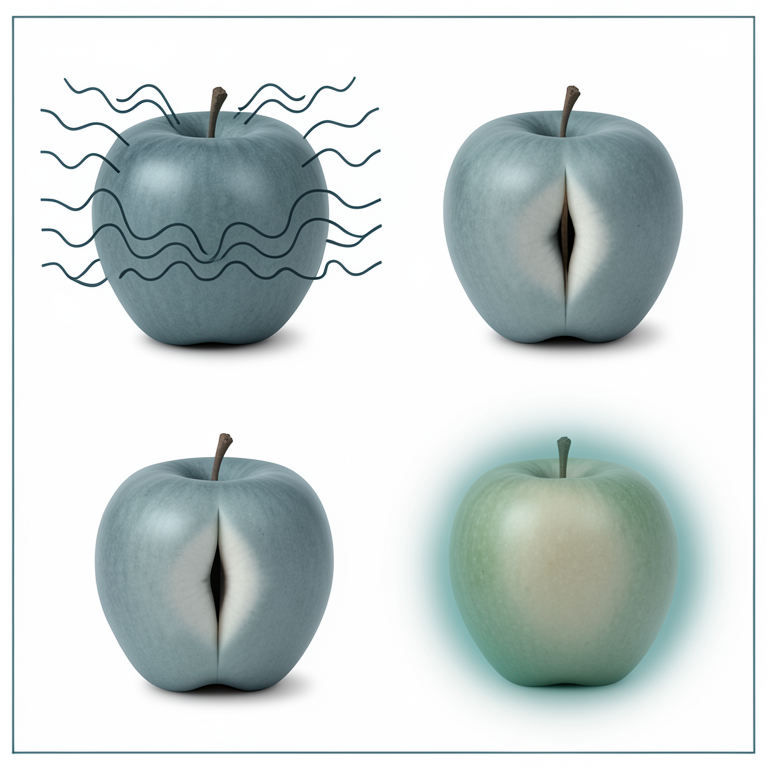
Comparison of Heat Transfer Mechanisms
AI-generated conceptual illustration (whole apples). It explains the idea and does not show study data.
View source evidence ↗Figures & tables
From the original paper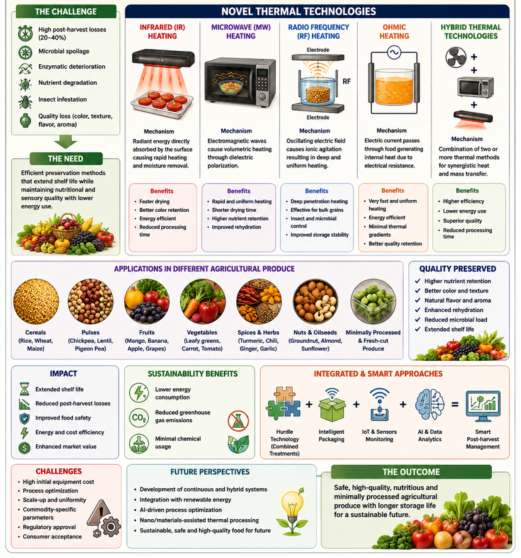 Figure 1
Introduction
Introduction
Importance of post-harvest preservation
Post-harvest preservation is a critical component of the agricultural value chain, directly influencing food security, nutritional quality, marketability, and economic sustainability. Despite significant improvements in agricultural productivity, substantial quantities of harvested produce are lost before reaching consumers because of microbial spoilage, insect infestation, enzymatic degradation, moisture migration, respiration, and unfavourable storage conditions. The Food and Agriculture Organization (FAO) estimates that approximately 14% of food produced globally is lost between harvest and retail, while losses in fruits and vegetables can exceed 30-40% in developing countries due to inadequate post-harvest infrastructure and ineffective preservation practices. These losses reduce food availability, increase production costs, and contribute to unnecessary depletion of natural resources such as land, water, and energy. Thermal preservation has long been recognized as one of the most effective approaches for extending the storage life of agricultural commodities by reducing microbial contamination, inactivating spoilage enzymes, controlling insect infestation, and lowering moisture content to safe storage levels. Conventional thermal treatments such as hot-air drying, blanching, pasteurization, sterilization, and hot-water treatment have been widely employed in the preservation of cereals, pulses, fruits, vegetables, spices, nuts, and other agricultural products (Sruthy et al., 2022) [1] . Although these techniques are reliable and relatively economi cal, prolonged exposure to elevated temperatures often results in degradation of heat-sensitive nutrients, pigment destruction, texture softening, flavor deterioration, excessive energy consumption, and reduced overall product quality.
To overcome these limitations, considerable research has focused on the development of novel thermal technologies that provide rapid, uniform, and energy-efficient heating while minimizing quality losses. Unlike conventional heating, which primarily relies on conduction and convection, advanced thermal technologies utilize innovative heat-transfer mechanisms that improve process efficiency and product quality (Krishnamurthy et al., 2008) [2] . Among these technologies, infrared (IR) heating, microwave (MW) heating, radio frequency (RF) heating, ohmic heating, dielectric heating, and hybrid thermal processing systems have emerged as promising alternatives for post-harvest preservation. These technologies accelerate heat and mass transfer, reduce processing time, improve microbial inactivation, and enhance drying efficiency while preserving nutritional, physicochemical, and sensory characteristics (Anumudu et al., 2024) [3] . Infrared heating transfers thermal energy through electromagnetic radiation directly to the product surface, resulting in rapid moisture removal and improved drying efficiency. Microwave heating generates volumetric heating through dielectric polarization of water molecules, enabling faster internal moisture evaporation and shorter drying periods. Radio frequency heating provides deeper penetration and more uniform heating in bulk agricultural commodities, making it particularly suitable for grain disinfestation, drying, and stabilization during storage (Zhou et al., 2018) [4] . Ohmic heating produces internal heat by passing alternating electrical current through conductive food materials, ensuring rapid and homogeneous temperature distribution with minimal thermal gradients. Hybrid thermal technologies, including microwave-assisted hot-air drying, infrared-assisted drying, radio frequency-hot air processing, and microwave-vacuum drying, combine multiple heating mechanisms to maximize drying efficiency while reducing energy consumption and maintaining product quality (Banerjee et al., 2022) [5] . Novel thermal technologies have demonstrated considerable potential for preserving a wide range of agricultural commodities, including cereals, pulses, oilseeds, spices, medicinal plants, fruits, vegetables, nuts, and minimally processed products. Compared with conventional thermal methods, these technologies generally achieve superior retention of vitamins, phenolic compounds, carotenoids, antioxidants, natural pigments, texture, flavor, and rehydration characteristics because of their shorter processing times and improved heating uniformity (Divya et al., 2025) [6] . In addition, rapid microbial destruction, enzyme inactivation, insect disinfestation, and moisture reduction contribute significantly to extending storage life and improving food safety. The growing emphasis on sustainable food systems, energy conservation, and reduction of post-harvest losses has accelerated research into intelligent thermal processing technologies. Recent developments include the integration of thermal processing with artificial intelligence (AI), Internet of Things (IoT)-based monitoring systems, computational modeling, digital process control, renewable energy sources, and smart drying systems (Ayoub, 2026) [7] . These innovations facilitate real-time optimization of processing parameters, improve energy efficiency, reduce greenhouse gas emissions, and enhance the consistency and safety of preserved agricultural products. Furthermore, hybrid preservation strategies that combine advanced thermal technologies with novel packaging systems and mild preservation treatments have shown promising potential for improving storage stability while maintaining fresh-like quality (Allai et al., 2022) [8] . Although remarkable progress has been achieved in the development of advanced thermal technologies, several challenges continue to limit their widespread commercial adoption. High capital investment, equipment complexity, optimization of process parameters, non-uniform heating in heterogeneous products, and scalability remain significant concerns (Marina et al., 2025) [9] . Commodity-specific processing conditions, regulatory compliance, and economic feasibility must also be carefully evaluated before industrial implementation. Addressing these challenges through continued technological innovation, process optimization, and multidisciplinary research will be essential for maximizing the benefits of novel thermal preservation technologies. This review provides a comprehensive overview of recent advances in novel thermal technologies for enhancing the storage life of agricultural produce. It discusses the principles, mechanisms, applications, advantages, limitations, and future prospects of infrared heating, microwave heating, radio frequency heating, ohmic heating, dielectric heating, and hybrid thermal processing. The review also highlights their effects on microbial safety, drying efficiency, nutritional retention, physicochemical properties, sensory quality, energy consumption, and sustainability, thereby providing valuable insights for researchers, food technologists, industry professionals, and policymakers involved in post-harvest management.
Objectives and scope of the review
Objectives and scope of the review
Objectives
The primary objective of this review is to critically evaluate recent advances in novel thermal technologies employed for enhancing the storage life of agricultural produce while maintaining quality, safety, and sustainability. Specifically, this review aims to:
Examine the major causes of post-harvest deterioration affecting the storage life and quality of agricultural commodities.
Describe the principles, mechanisms, and operational characteristics of novel thermal technologies, including infrared heating, microwave heating, radio frequency heating, ohmic heating, dielectric heating, and hybrid thermal processing.
Evaluate the effectiveness of these technologies in microbial inactivation, enzyme deactivation, insect disinfestation, moisture reduction, and shelf-life extension.
Compare novel thermal technologies with conventional thermal preservation methods regarding processing efficiency, energy consumption, nutritional retention, physicochemical quality, and sensory characteristics.
Summarize recent research findings and commercial applications of advanced thermal preservation technologies for fruits, vegetables, cereals, pulses, oilseeds, spices, and other agricultural commodities.
Discuss the integration of thermal technologies with digital innovations, including artificial intelligence (AI), Internet of Things (IoT), automation, computational modeling, and smart process control.
Identify current challenges, technological limitations, research gaps, and future opportunities for sustainable industrial implementation.
Scope of the review
This review focuses exclusively on novel thermal technologies used for post-harvest preservation of agricultural produce. It covers the scientific principles, mechanisms of heat transfer, technological developments, and practical applications of infrared heating, microwave heating, radio frequency heating, ohmic heating, dielectric heating, and hybrid thermal processing systems. The review includes evidence from laboratory investigations, pilot-scale studies, and commercial applications involving cereals, pulses, fruits, vegetables, spices, oilseeds, nuts, medicinal plants, and minimally processed agricultural products. Special emphasis is placed on the influence of these technologies on storage stability, microbial safety, enzyme inactivation, drying kinetics, moisture migration, physicochemical properties, nutritional quality, sensory characteristics, and energy efficiency. The review also addresses sustainability aspects, including reduced processing time, lower energy consumption, environmental benefits, and integration with intelligent monitoring systems, automation, and renewable energy technologies. Finally, current research trends, industrial challenges, commercialization prospects, and future directions are discussed to provide a comprehensive understanding of the role of novel thermal technologies in modern post-harvest preservation and sustainable food systems.
Novel technologies in post-harvest preservation
In recent years, research and industrial focus have shifted from conventional preservation methods to novel technologies that aim to minimize post-harvest losses while maintaining the fresh-like quality of produce. Traditional methods such as refrigeration, hot-water treatment, and chemical fumigation, though effective, often have limitations in terms of nutrient degradation, sensory quality changes, chemical residues, and environmental concerns. To address these challenges, innovative non-thermal and eco-friendly techniques have been developed, which not only extend shelf life but also ensure food safety and sustainability. One of the most promising approaches is cold plasma technology (Özdemir et al., 2023) [10] , which utilizes reactive oxygen and nitrogen species, UV photons, and charged particles to inactivate surface pathogens and delay spoilage. It has shown effectiveness in microbial decontamination of fresh produce without raising the temperature significantly, thereby retaining texture, color, and nutrients. Similarly, ultraviolet-C (UV-C) irradiation (Yuan et al., 2022; Tripathi et al., 2024) [12,11] and pulsed light treatments (Avalos-Llano et al., 2018) [13] are gaining popularity for surface sanitation, owing to their ability to reduce microbial populations in a residue-free and environmentally friendly manner (Liu et al., 2024) [14] . These light-based technologies are simple to apply and are particularly suitable for fresh-cut produce and packaging lines. Another group of emerging methods includes high-pressure processing (HPP) and pulsed electric fields (PEF). These techniques are widely used for fruit juices, pulps, and minimally processed liquid foods. By disrupting microbial cell membranes and inactivating enzymes without significant heating, they help preserve bioactive compounds, vitamins, and sensory properties. Ultrasound is another promising tool that relies on acoustic cavitation to disrupt microbial cells, enhance cleaning efficiency, and sometimes improve penetration of sanitizers. Often, ultrasound is combined with mild heat (thermosonication) or pressure (manosonication) to enhance its efficacy. Chemical-free sanitization is also being advanced through ozone treatment (aqueous or gaseous), which acts as a strong oxidizing agent against bacteria, fungi, and viruses. Ozone leaves no chemical residues and decomposes into oxygen, making it environmentally safe. Similarly, plasma-activated water (PAW) is being investigated as a sanitizer that combines reactive species with water treatment, suitable for washing fresh fruits and vegetables. Beyond microbial inactivation, innovations in packaging and storage systems are transforming post-harvest management. Modified atmosphere packaging (MAP) and controlled atmosphere (CA) storage regulate oxygen, carbon dioxide, and ethylene concentrations to slow respiration, delay ripening, and reduce spoilage. Recent advances include edible coatings enriched with natural antimicrobials, antioxidants, and nanomaterials, which serve as protective barriers against moisture loss and microbial contamination. Nanotechnology-based packaging films with active components are also being developed to improve gas permeability, prevent oxidation, and extend shelf life.
Figure 1. Graphical Abstract for Novel Thermal Technologies for different Agricultural Produce
Collectively, these novel technologies represent a paradigm shift from conventional preservation toward minimally processed, safe, and high-quality produce that meets consumer demand and international trade requirements. Moreover, when applied in combination as hurdle technologies, they provide synergistic benefits, allowing lower treatment intensities while maintaining efficacy. Despite challenges such as high equipment costs, regulatory approval, and scale-up issues, these methods hold great promise in reducing post-harvest losses, ensuring food safety, and promoting sustainability in the agri-food sector.
Overview of traditional vs. emerging preservation methods
Conventional postharvest preservation techniques, including drying, refrigeration, freezing, thermal processing, chemical fumigation, and conventional packaging, have long been employed to reduce microbial spoilage and extend the storage life of agricultural produce. These methods are generally well established, cost-effective, and suitable for large-scale commercial applications. However, they often have limitations such as nutrient degradation, undesirable changes in texture, flavour, and colour, high energy consumption, chemical residues, and relatively shorter shelf-life extension for highly perishable commodities (Postharvest Technology of Horticultural Crops; Postharvest: An Introduction to the Physiology and Handling of Fruit and Vegetables).
In contrast, modern preservation techniques such as cold plasma, ultraviolet-C (UV-C) irradiation, pulsed electric fields (PEF), high-pressure processing (HPP), ozone treatment, ultrasound, edible coatings, modified atmosphere packaging (MAP), active packaging, intelligent packaging, and nanotechnology-based systems offer effective alternatives for maintaining product quality while minimizing quality deterioration. These technologies improve microbial safety, preserve nutritional and sensory attributes, reduce the use of synthetic preservatives, and significantly enhance shelf life (Misra et al., 2017; Opara et al., 2014) [15,16] . Nevertheless, challenges including high capital investment, specialized equipment requirements, regulatory approval, and scalability remain barriers to their widespread commercial adoption (Novel Food Preservation and Microbial Assessment Techniques; Emerging Technologies for Food Processing). Overall, integrating conventional methods with emerging non-thermal technologies represents a promising strategy for sustainable posthar vest management by balancing food safety, quality retention, economic feasibility, and environmental sustainability.
Limitations of traditional storage and drying
Traditional storage and drying methods remain widely used because of their simplicity and low cost; however, they are associated with several limitations that compromise the quality, safety, and shelf life of agricultural produce. Open sun drying is highly dependent on weather conditions and exposes produce to dust, insects, rodents, birds, and microbial contamination, resulting in significant postharvest losses and deterioration in nutritional and sensory quality. Furthermore, prolonged drying durations and uncontrolled temperatures can lead to losses of heat-sensitive vitamins, discoloration, lipid oxidation, and reduced product quality (FAO, 2023) Similarly, conventional storage systems often provide inadequate control over temperature, relative humidity, oxygen, and carbon dioxide levels, creating favourable conditions for insect infestation, fungal growth, mycotoxin production, moisture migration, and physiological deterioration. These factors contribute to quantitative losses through weight reduction and qualitative losses including nutrient degradation, off-flavor development, texture changes, discoloration, and reduced market value. In addition, conventional preservation methods such as chemical fumigation and synthetic preservatives may leave chemical residues, contribute to the development of resistant pest populations, and raise concerns regarding food safety and environmental sustainability Although improved drying technologies and controlled storage systems have reduced some of these limitations, the increasing demand for minimally processed, high-quality, and chemical-free foods has accelerated the development of modern non-thermal preservation technologies that better retain nutritional and sensory attributes while extending shelf life (Misra et al., 2017; Kitinoja et al., 2002) [15,17] .
Novel thermal technologies
Novel thermal technologies have emerged as advanced alternatives to conventional heating methods for postharvest preservation and food processing. Unlike traditional thermal processing, which relies primarily on conduction and convection for heat transfer, novel thermal technologies employ innovative heating mechanisms that provide rapid, uniform, and energy-efficient heating while minimizing quality deterioration. These technologies include infrared (IR) heating, microwave (MW) heating, radio frequency (RF) heating, ohmic heating, and hybrid thermal processing systems. Their ability to reduce processing time, improve energy efficiency, enhance microbial safety, and better preserve nutritional and sensory quality has led to increasing adoption in the preservation of fruits, vegetables, cereals, pulses, spices, dairy products, meat, seafood, and processed foods Infrared heating transfers thermal energy through electromagnetic radiation directly to the product surface, resulting in rapid surface heating and efficient moisture removal. Microwave and radio frequency technologies generate volumetric heating by converting electromagnetic energy into heat within the food matrix through dielectric polarization, thereby overcoming the slow heat transfer limitations of conventional surface heating (Zhang et al., 2006) [18] . Ohmic heating produces internal heat by passing an alternating electric current through electrically conductive food materials, ensuring rapid and uniform temperature distribution. Hybrid systems integrate two or more thermal technologies, such as microwave-assisted hot-air drying, infrared-assisted drying, or radio frequency-hot air processing, to maximize heat and mass transfer efficiency while minimizing processing time and quality losses. The application of novel thermal technologies offers several advantages over conventional processing methods. Rapid heating significantly reduces processing time and energy consumption while improving microbial inactivation and enzyme deactivation. Shorter exposure to elevated temperatures minimizes degradation of heat-sensitive nutrients, including vitamin C, carotenoids, phenolic compounds, and antioxidants, thereby preserving nutritional quality. Furthermore, these technologies generally improve color retention, texture, flavor, rehydration capacity, and overall sensory characteristics compared with traditional hot-air drying or prolonged thermal treatments. Their improved heating efficiency also reduces non-uniform heating, minimizes case hardening, and enhances drying kinetics, making them particularly suitable for high-value agricultural commodities (Orsat et al., 2006) [19] . Novel thermal technologies have found extensive applications in postharvest preservation. Infrared heating is widely employed for surface drying, blanching, roasting, and enzyme inactivation. Microwave and radio frequency heating are increasingly used for drying, disinfestation of stored grains, pasteurization, tempering, and microbial decontamination because of their deep penetration and rapid volumetric heating characteristics. Ohmic heating has demonstrated considerable potential for processing liquid, semi-solid, and particulate foods owing to its rapid and uniform heating, which minimizes thermal gradients and preserves product quality (Kumar, 2018; Astráin-Redín et al., 2024) [21,20] . Hybrid thermal systems further improve preservation efficiency by combining the strengths of different heating mechanisms, leading to enhanced shelf-life extension and reduced energy consumption. Despite their numerous advantages, novel thermal technologies also present certain challenges. High initial investment, specialized equipment requirements, non-uniform heating in products with irregular geometry or heterogeneous composition, and process optimization complexities remain important limitations. Factors such as dielectric properties, electrical conductivity, moisture content, product geometry, and processing parameters significantly influence heating performance and product quality (Nelson et al., 2012) [22] . Consequently, careful optimization of operating conditions and equipment design is essential to ensure consistent processing and commercial feasibility. Recent advances have focused on integrating novel thermal technologies with non-thermal preservation methods, intelligent process control, Internet of Things (IoT)-based monitoring, artificial intelligence (AI), and smart packaging systems. Such integrated preservation approaches enable real-time process optimization, predictive quality monitoring, improved energy efficiency, and enhanced food safety. Future developments are expected to emphasize sustainable processing, renewable energy integration, hybrid preservation systems, and digital automation to further improve the commercial applicability of novel thermal technologies in modern food preservation (Misra et al., 2017; Wolfert et al., 2017) [15,23] . However, novel thermal technologies represent a significant advancement in postharvest preservation by providing rapid, uniform, and energy-efficient heating while maintaining the nutritional, physicochemical, microbiological, and sensory quality of agricultural products (Sruthy et al., 2022) [1] . Their continued development, optimization, and integration with emerging digital technologies will play a crucial role in reducing postharvest losses, improving food safety, enhancing processing efficiency, and supporting sustainable food production systems.
Infrared (IR) heating
Infrared (IR) heating is a thermal processing technology that transfers heat through electromagnetic radiation with wavelengths ranging from approximately 0.75 to 1000 μm. Unlike conventional heating, which relies on conduction and convection, infrared radiation is absorbed directly by the surface of the product and converted into heat, resulting in rapid and energy-efficient heating. Depending on the wavelength, infrared radiation is classified as near-infrared (NIR; 0.75-1.4 μm), mid-infrared (MIR; 1.4-3 μm), and far-infrared (FIR; 3-1000 μm). The penetration depth and heating efficiency depend on the product's moisture content, composition, surface characteristics, and the wavelength of the emitted radiation (Huang et al., 2021) [24] . Infrared heating has gained considerable attention in postharvest preservation because of its ability to rapidly reduce surface moisture, inactivate spoilage microorganisms and insects, and improve drying efficiency while minimizing quality deterioration (Priya et al., 2026) [ 25] . In grain and seed storage, infrared treatment can lower moisture content to safe storage levels, thereby reducing fungal growth, insect infestation, and mycotoxin contamination (Sirohi et al., 2021) [26] . Compared with conventional hot-air drying, infrared drying generally requires shorter processing times, lower energy consumption, and better retention of color, vitamins, antioxidant compounds, and sensory attributes due to reduced exposure to prolonged heating. In addition to drying, infrared heating has been investigated for surface decontamination of fruits, vegetables, cereals, pulses, spices, and nuts. The rapid heating effect effectively reduces microbial load while maintaining product quality. Infrared treatment has also been reported to improve enzyme inactivation, reduce drying-induced shrinkage, and enhance the rehydration properties of dehydrated products (Nowak et al., 2004) [27] . When combined with other technologies such as hot-air drying, microwave heating, vacuum drying, or modified atmosphere storage, infrared processing further enhances drying kinetics, product safety, and storage stability. While these advantages, infrared heating has certain limitations. The shallow penetration depth may result in non-uniform heating, particularly in thick or densely packed products. Excessive infrared intensity or prolonged exposure can cause surface overheating, case hardening, discoloration, and quality deterioration (Prashanth, 2023) [28] . Therefore, optimization of processing parameters, including radiation intensity, exposure time, product thickness, and moisture content, is essential to achieve uniform heating and maintain product quality (Kumar et al., 2022) [29] .
Microwave (MW) drying: Rapid dehydration and quality effects
Microwave (MW) drying is an advanced thermal drying technology that uses electromagnetic waves, typically at frequencies of 915 MHz or 2.45 GHz, to generate heat within food materials through dielectric heating. Unlike conventional hot-air drying, where heat is transferred from the surface inward by conduction and convection, microwave energy penetrates the material and causes polar molecules, particularly water, to oscillate rapidly, producing volumetric heating (Kumar et al., 2017) [30] . This internal heat generation accelerates moisture evaporation and significantly reduces drying time while improving energy efficiency. Microwave drying has been widely investigated for preserving cereals, pulses, fruits, vegetables, spices, herbs, and other agricultural commodities because of its rapid dehydration capability. The technology effectively lowers moisture content to safe storage levels, thereby inhibiting microbial growth, insect infestation, enzymatic activity, and biochemical deterioration during storage. Compared with conventional drying methods, microwave drying substantially shortens processing time, reduces energy consumption, and minimizes exposure to prolonged heating, thereby improving processing efficiency (Vadivambal et al., 2008) [31] . The rapid drying achieved by microwave processing generally results in superior retention of nutritional and sensory quality. Studies have demonstrated improved preservation of heat-sensitive vitamins, phenolic compounds, antioxidant activity, natural pigments, flavor, and color due to the shorter drying duration. Microwave drying also enhances product rehydration capacity and reduces structural shrinkage compared with conventional hot-air drying. Furthermore, microwave treatment can reduce microbial populations and insect pests, contributing to improved storage stability and food safety. Even though these advantages, microwave drying presents several technical challenges. Non-uniform distribution of microwave energy may create localized hot spots, leading to uneven moisture removal, overheating, thermal degradation, texture changes, and reduced product quality. Excessive microwave power may also cause case hardening, surface scorching, cracking, and deterioration of sensitive bioactive compounds (Nan-nan, 2022) [32] . Consequently, microwave drying is frequently combined with hot-air drying, vacuum drying, infrared heating, or freeze drying to improve heating uniformity, product quality, and overall drying efficiency.
Regardless of, microwave drying represents a promising postharvest preservation technology that offers rapid dehydration, enhanced energy efficiency, and improved retention of nutritional and sensory characteristics. Continued optimization of microwave power, exposure time, sample thickness, and hybrid drying systems is essential for maximizing drying performance while ensuring product quality and storage stability (Banerjee et al., 2022) [5] .
Radio frequency (RF) heating: Deep penetration heating
Radio frequency (RF) heating is an advanced dielectric heating technology that utilizes electromagnetic waves in the frequency range of 1-300 MHz, with 13.56, 27.12, and 40.68 MHz being the industrial frequencies most commonly approved for food processing. Similar to microwave heating, RF heating generates heat by causing polar molecules and ions within food materials to oscillate under an alternating electromagnetic field (Okeke et al., 2014) [33] . However, owing to its lower operating frequency and longer wavelength, RF energy penetrates much deeper into food materials than microwave energy, resulting in more uniform volumetric heating, particularly in bulky, thick, or densely packed agricultural commodities. Radio frequency heating has emerged as an effective postharvest preservation technology for grains, pulses, nuts, spices, dried fruits, seeds, and other stored agricultural products. Its deep penetration enables rapid and uniform heating throughout the product bulk, facilitating efficient moisture reduction, insect disinfestation, microbial inactivation, and enzyme deactivation while minimizing quality deterioration. RF treatment is particularly valuable in grain storage because it effectively controls internal insect pests and storage fungi without relying on chemical fumigants, thereby reducing pesticide residues and environmental concerns (Zhang et al., 2006) [18] . Compared with conventional hot-air heating, RF processing offers significantly shorter treatment times, lower energy consumption, and improved heating uniformity. The rapid volumetric heating minimizes thermal gradients and helps preserve color, texture, nutritional quality, and sensory characteristics. Studies have also demonstrated that RF heating effectively reduces microbial populations and insect infestations while maintaining germination capacity in seeds when appropriate processing conditions are employed. Consequently, RF technology has gained considerable attention as a sustainable alternative for quarantine treatment, postharvest disinfestation, drying, and storage stabilization of agricultural commodities (Gao et al., 2023) [34] . While these advantages, several challenges limit the widespread commercial adoption of RF heating. Heating uniformity may still be influenced by product geometry, dielectric properties, moisture distribution, bulk density, and electrode configuration. Inappropriate process parameters can result in localized overheating, uneven moisture removal, or quality degradation. Furthermore, the relatively high capital cost of RF equipment and the need for precise process optimization restrict its application, particularly in small-scale industries. Therefore, on-going research focuses on improving equipment design, modelling electromagnetic field distribution, and integrating RF heating with complementary preservation technologies to enhance processing efficiency and product quality. In spite of, radio frequency heating offers significant advantages over conventional thermal processing due to its deep penetration, rapid volumetric heating, effective pest and microbial control, and superior preservation of product quality (Jiang et al., 2019) [35] . Its ability to provide chemical-free disinfestation and efficient drying makes RF heating a promising technology for sustainable postharvest storage and preservation of agricultural produce.
Ohmic heating: Fast and uniform heating
Ohmic heating, also known as electrical resistance heating or Joule heating, is an advanced thermal processing technology in which an alternating electric current passes directly through a food material, generating heat due to its electrical resistance. Unlike conventional heating methods that rely on conduction or convection, ohmic heating produces rapid and uniform volumetric heating throughout the prod uct (Kaur et al., 2015) [36] . The rate of heating depends on the electrical conductivity of the food, the applied voltage gradient, temperature, and product composition. Since heat is generated internally, temperature gradients are minimized, resulting in improved heating uniformity and reduced processing time. Ohmic heating has attracted considerable attention for processing liquid, semi-solid, and particulate foods because of its ability to achieve rapid microbial inactivation while preserving product quality. In postharvest preservation, it has been investigated for blanching, pasteurization, sterilization, enzyme inactivation, dehydration pretreatment, and extraction of bioactive compounds. The rapid and uniform heating minimizes thermal damage, thereby enhancing the retention of vitamins, pigments, antioxidants, flavor compounds, and textural properties compared with conventional thermal processing. Consequently, ohmic heating contributes to improved shelf life, product safety, and nutritional quality of processed agricultural commodities (Sastry et al., 2002) [37] . In storage applications, ohmic heating is increasingly being explored as a pretreatment before drying and preservation. It accelerates moisture removal by disrupting cellular structures, thereby improving drying kinetics and reducing overall drying time. The technology has also demonstrated effectiveness in reducing microbial populations and inactivating spoilage enzymes responsible for quality deterioration during storage. Furthermore, the short processing duration and high energy efficiency make ohmic heating an environmentally friendly alternative to conventional thermal treatments. Studies have reported successful applications in fruits, vegetables, fruit juices, dairy products, liquid foods, and several plant-based materials where uniform heating is essential to maintain quality (Icier et al., 2005) [
Whereas it has numerous advantages, the commercial application of ohmic heating is limited by several factors. The technology is most suitable for foods with adequate electrical conductivity, whereas products with low conductivity require formulation adjustments or additional processing aids. Electrode corrosion, electrochemical reactions, and equipment costs remain important technical challenges. In addition, optimization of voltage gradients, processing time, electrode materials, and product characteristics is necessary to ensure uniform heating without affecting sensory quality or nutritional value (Patel et al., 2018) [39] . Nevertheless, ohmic heating represents a promising thermal preservation technology because of its ability to provide rapid, uniform, and energy-efficient heating while maintaining the nutritional, microbiological, and sensory quality of agricultural products. Its integration with drying, pasteurization, and other emerging preservation technologies offers significant potential for improving postharvest storage stability and food safety (Khama, 2024) [40] .
Hybrid techniques: Combining thermal methods for enhanced efficiency
Hybrid thermal processing combines two or more heating technologies to overcome the limitations of individual methods and improve processing efficiency, product quality, and energy utilization.
Common hybrid systems include microwave-hot air drying, infraredhot air drying, radio frequency-hot air drying, microwave-vacuum drying, infrared-microwave drying, and ohmic heating combined with conventional thermal processing (Abbaspour-Gilandeh et al., 2021) [41] . These integrated approaches capitalize on the strengths of each technology, resulting in faster heat and mass transfer, improved heating uniformity, reduced processing time, and enhanced retention of nutritional and sensory attributes. In postharvest preservation, hybrid drying technologies have demonstrated significant advantages over conventional drying methods. For example, microwave-assisted hot-air drying accelerates internal moisture migration through volumetric heating, while hot air removes surface moisture, thereby reducing drying time and energy consumption. Similarly, infrared-assisted hot-air drying enhances surface heating and moisture evaporation, improving drying rates and minimizing quality deterioration (Sun et al., 2023) [42] . Radio frequency combined with hot-air drying provides deep and uniform heating, making it particularly effective for drying grains, pulses, nuts, and other bulk agricultural commodities. Microwave-vacuum drying further enables rapid dehydration at low temperatures, thereby preserving heat-sensitive nutrients, pigments, flavors, and bioactive compounds (Udhayakumar et al., 2025) [43] . Hybrid thermal techniques also contribute to improved microbial safety and storage stability. The combined treatments effectively reduce microbial populations, insect infestation, and enzymatic activity while maintaining desirable color, texture, aroma, and rehydration characteristics. Shorter processing times minimize thermal degradation of vitamins, antioxidants, and phenolic compounds, resulting in higher-quality dried products. Furthermore, the improved energy efficiency of hybrid systems aligns with the increasing demand for sustainable and environmentally friendly food processing technologies (Miletic et al., 2026) [44] . While these advantages, several challenges remain in the commercial implementation of hybrid thermal technologies. The integration of multiple heating systems increases equipment complexity, capital investment, and operational costs. In addition, optimization of processing parameters, including power input, temperature, airflow, exposure time, and product characteristics, is essential to ensure uniform heating and prevent quality deterioration. Process control, equipment design, and scalability also require further investigation to facilitate industrial adoption. Although, hybrid thermal processing represents a promising approach for postharvest preservation by combining the advantages of different heating technologies to achieve rapid drying, enhanced energy efficiency, improved product quality, and extended storage life. Continued research on process optimization and industrial-scale applications is expected to further expand the use of hybrid technologies in sustainable food preservation.
Future prospects
Novel thermal technologies are expected to play a pivotal role in the future of post-harvest preservation by providing sustainable, energyefficient, and high-quality processing solutions. Rapid advancements in infrared (IR), microwave (MW), radio frequency (RF), ohmic heating, and hybrid thermal systems are enabling greater process efficiency while minimizing quality deterioration and reducing post-harvest losses. Future developments are likely to focus on improving heating uniformity, increasing energy efficiency, reducing equipment costs, and expanding commercial-scale applications across a diverse range of agricultural commodities. The integration of thermal technologies with digital agriculture and Industry 4.0 is anticipated to revolutionize post-harvest processing. Artificial intelligence (AI), machine learning (ML), Internet of Things (IoT)-based sensors, digital twins, and real-time process monitoring systems can optimize processing parameters, predict product quality, and automate thermal operations with minimal human intervention. Intelligent control systems capable of continuously monitoring temperature, moisture content, dielectric properties, and product quality will enable precision thermal processing while reducing energy consumption and processing variability. Hybrid preservation systems combining thermal technologies with complementary non-thermal techniques such as cold plasma, ultraviolet-C (UV-C), ozone treatment, pulsed electric fields (PEF), highpressure processing (HPP), edible coatings, and modified atmosphere packaging are expected to become increasingly important. These integrated approaches can exploit synergistic preservation effects, allowing lower processing intensities while maintaining microbial safety, nutritional quality, and sensory attributes. Sustainability will remain a major driver for future technological development. The utilization of renewable energy sources, waste heat recovery systems, energy-efficient microwave and radio frequency generators, and environmentally friendly processing equipment will contribute to reducing greenhouse gas emissions and operational costs. Furthermore, advances in computational modeling, electromagnetic simulation, computational fluid dynamics (CFD), and finite ele ment modeling will improve equipment design and process optimization, enabling more uniform heating and higher processing efficiency. Future research is also expected to expand the application of thermal technologies to emerging agricultural products, functional foods, medicinal plants, bioactive ingredients, and minimally processed products. As consumer demand for safe, minimally processed, and high-quality foods continues to increase, novel thermal technologies are likely to become integral components of sustainable post-harvest management and climate-resilient food systems.
Areas needing more research
Although significant progress has been achieved in the development of novel thermal preservation technologies, several scientific, technological, and commercial challenges require further investigation before widespread industrial adoption can be achieved. One of the primary research priorities is improving heating uniformity, particularly for agricultural commodities with irregular shapes, heterogeneous compositions, and variable moisture distributions. Uneven heat transfer may result in localized overheating, incomplete microbial inactivation, quality deterioration, and inconsistent product performance. Advanced computational modeling, sensor-based monitoring, and adaptive process control should therefore be developed to improve temperature distribution and process reliability. Further research is required to establish commodity-specific processing protocols for different fruits, vegetables, cereals, pulses, oilseeds, spices, nuts, and medicinal plants. Standardized operating parameters, including power intensity, exposure time, temperature, moisture content, product geometry, and loading conditions, remain insufficient for many commodities, limiting industrial implementation. Additional studies should investigate the long-term effects of novel thermal technologies on nutritional composition, phytochemicals, antioxidant activity, volatile compounds, protein functionality, starch digestibility, and sensory quality during extended storage. More comprehensive shelf-life studies under commercial storage conditions are also needed to validate laboratory findings. The integration of thermal technologies with artificial intelligence, machine learning, IoT-enabled monitoring, robotics, and digital process optimization remains in its early stages. Future research should focus on developing intelligent processing platforms capable of automatically adjusting operating parameters based on real-time product characteristics and quality indicators. Economic feasibility and life-cycle assessment studies are equally important. Comparative evaluations of capital investment, operational costs, energy consumption, environmental impacts, carbon footprint, and return on investment are required to facilitate technology transfer from research laboratories to commercial industries. Moreover, largescale pilot studies and industrial validation are essential for demonstrating the technical and economic viability of these technologies. Finally, regulatory harmonization, international processing standards, consumer acceptance, and safety assessment should receive greater attention to facilitate commercialization and global adoption of advanced thermal preservation technologies.
Conclusion
Novel thermal technologies have emerged as promising alternatives to conventional thermal preservation methods for enhancing the storage life, quality, and safety of agricultural produce. Technologies including infrared heating, microwave heating, radio frequency heating, ohmic heating, and hybrid thermal processing offer rapid, uniform, and energy-efficient heating that effectively reduces microbial contamination, inactivates spoilage enzymes, controls insect infestation, and accelerates moisture removal while minimizing quality deterioration. Compared with conventional thermal processing, these advanced technologies generally provide superior retention of nutritional value, color, texture, flavor, antioxidant activity, and overall sensory quality because of shorter processing times and improved heating efficiency.
The increasing integration of thermal technologies with artificial intelligence, Internet of Things (IoT)-based monitoring, digital automation, computational modeling, renewable energy systems, and intelligent packaging represents a significant advancement toward smart and sustainable post-harvest preservation. Hybrid processing strategies that combine multiple thermal or thermal and non-thermal technologies further improve preservation efficiency by exploiting synergistic effects while reducing energy consumption and environmental impact. Despite considerable technological progress, challenges related to equipment cost, heating uniformity, process optimization, scalability, commodity-specific processing conditions, and regulatory approval continue to limit widespread commercial implementation. Addressing these challenges through multidisciplinary research, advanced process control, computational modelling, and industrial-scale validation will be essential for maximizing the potential of novel thermal technologies. Overall, novel thermal preservation technologies provide an effective and sustainable approach for reducing post-harvest losses, improving food quality and safety, enhancing processing efficiency, and supporting resilient agri-food supply chains. Continued innovation, commercialization, and integration with digital technologies are expected to accelerate their adoption, contributing significantly to global food security, environmental sustainability, and the development of next-generation post-harvest preservation systems.
Acknowledgement
AcknowledgmentsThe authors sincerely thank the Post Harvest Technology Centre, Bapatla, for providing the necessary facilities and institutional support during the preparation of this review.
Figures and tables from the paper
References
44 in the original paper- Sruthy G, Sandhya K, Cr K, Mythri R, Sharma M. Thermal processing technologies for foodThermal processing technologies for food. 2022:263-300.
- Krishnamurthy K, Khurana H, Soojin J, Irudayaraj J, Demirci A. Infrared Heating in Food Processing: An Overview. Comprehensive Reviews in Food Science and Food Safety. 2008;7:2-13.
- Anumudu CK, Onyeaka H, Ekwueme CT, Hart A, IsaacBamgboye F, Miri T. Advances in the Application of Infrared in Food Processing for Improved Food Quality and Microbial Inactivation. Foods (Basel, Switzerland). 2024;13(24).
- Zhou X, Wang S. Recent developments in radio frequency drying of food and agricultural products: A review. Drying Technology. 2018;37:1-16.
- Banerjee B, Janghu S. Role of Food Microwave Drying in Hybrid Drying Technology. 2022. International Journal of Agriculture and Nutrition https://www.agriculturejournal.net 26646072, 2026, 8(9), Downloaded from https://www.doi.org/10.33545/26646064.2026.v8.i9c.758 by International Journal of Agriculture and Nutrition on [29/09/2026]. See the Terms and Conditions (https://www.agriculturejournal.net) for rules of use; OA articles are governed by the applicable Creative Commons License
- Divya, Joshi S, Appukuttan J, Chandrapala J, Majzoobi M. Impact of Conventional and Advanced Techniques on Stability of Natural Food Colourants. Foods. 2025;14:3187.
- Ayoub A. Integration of Artificial Intelligence in Food Processing Technologies. Processes. 2026;14:513.
- Allai F, Azad ZRAA, Mir N, Gul K. Recent Advances in NonThermal Processing Technologies for Enhancing Shelf Life and Improving Food Safety. Applied Food Research. 2022;3:100258.
- Marina J, Cunha D, Prestes AA, Pimentel TC, Prudencio ES. Current Insights into Thermal and Non-Thermal Technologies Used to Mediate Milk and Dairy Products Processing. 2025:1-33.
- Özdemir E, Başaran P, Kartal S, Akan T. Cold plasma application to fresh green leafy vegetables: Impact on microbiology and product quality. Comprehensive Reviews in Food Science and Food Safety. 2023.
- Tripathi A, Meena R, Sobhanan A, Koley TK, Meghwal M, Giuffrè AM. Influence of ultraviolet-C irradiation treatment on quality and shelf life of mung bean sprouts during storage. Italian Journal of Food Science. 2024;36(4):180-192.
- Yuan J, Wang H, Li Y, Chen L, Zheng Y, Jiang Y, Tang Y, Li X, Li J, Wang L. UV-C irradiation delays browning of fresh-cut "Fuji" apples. Journal of Food Processing and Preservation. 2022.
- Avalos-Llano KR, Martín-Belloso O, Soliva-Fortuny R. Effect of pulsed light treatments on quality and antioxidant properties of fresh-cut strawberries. Food Chemistry. 2018.
- Liu Q, Xiong X, Li L, Li B, Zhang L, Wang H, Liu T. Impact of Indirect Cold Plasma Combined with Modified Atmosphere Packaging on Quality Attributes of Fresh Produce. ACS Food Science & Technology. 2024;4(7):1690-1699.
- Misra NN, Koubaa M, Roohinejad S, Juliano P, Alpas H, Inácio RS, Saraiva JA, Barba FJ. Landmarks in the historical development of twenty first century food processing technologies. Food Research International (Ottawa, Ont.). 2017;97:318-339.
- Opara U, Pathare P. Bruise damage measurement and analysis of fresh horticultural produce-A review. Postharvest Biology and Technology. 2014;91:9-24.
- Kitinoja L, Kader A. Small-Scale Postharvest Handling Practices: A Manual for Horticultural Crops (4 th Edition). 2002.
- Zhang M, Tang J, Mujumdar AS, Wang S. Trends in microwaverelated drying of fruits and vegetables. Trends in Food Science & Technology. 2006;17(10):524-534.
- Orsat V, Changrue V, Raghavan V. Microwave drying of fruits and vegetables. Stewart Postharvest Review. 2006;2:1-7.
- Astráin-Redín L, Ospina S, Cebrián G, Álvarez-Lanzarote I. Ohmic Heating Technology for Food Applications, From Ohmic Systems to Moderate Electric Fields and Pulsed Electric Fields. Food Engineering Reviews. 2024;16(2):225-251.
- Kumar T. A Review on Ohmic Heating Technology: Principle, Applications and Scope. INTERNATIONAL JOURNAL OF AGRICULTURE, ENVIRONMENT AND BIOTECHNOLOGY. 2018;11:680-687.
- Nelson S, Trabelsi S. Factors Influencing the Dielectric Properties of Agricultural and Food Products. The Journal of Microwave Power and Electromagnetic Energy: A Publication of the International Microwave Power Institute. 2012;46:93-107.
- Wolfert S, Ge L, Verdouw C, Bogaardt MJ. Big Data in Smart Farming -A review. Agricultural Systems. 2017;153:69-80.
- Huang D, Pei Y, Tang X, Luo L, Sunden B. Application of infrared radiation in the drying of food products. Trends in Food Science & Technology. 2021;110.
- Priya R, Kumar S, Sahu HK, Jangde S. Advances in thermal and non-thermal preservation strategies for improving the storage stability of fruit juices. 2026;8(2025):273-281.
- Sirohi R, Tarafdar A, Gaur V, Singh S, Raveendran S, R R, Kumar S, Pandey A. Technologies for disinfection of food grains: Advances and way forward. Food Research International. 2021;145.
- Nowak D, Lewicki P. Infrared drying of apple slices. Innovative Food Science & Emerging Technologies -INNOV FOOD SCI EMERG TECHNOL. 2004;5:353-360.
- Prashanth S. Importance of Non-Destructive Testing and Its Application. 2023;9(3):1-172.
- Kumar P, Chakraborty S, Pal L. Infrared Radiation: Principles and Applications in Food Processing. 2022:349-373.
- Kumar C, Karim A. Microwave-Convective Drying of Food Materials: A Critical Review. Critical Reviews in Food Science and Nutrition. 2017;59.
- Vadivambal R, Jayas D. Non-uniform Temperature Distribution During Microwave Heating of Food Materials-A Review. Food and Bioprocess Technology. 2008;3:161-171.
- Nan-nan A. Factors affecting energy efficiency of microwave drying of foods: an updated understanding. Critical Reviews in Food Science and Nutrition. 2022.
- Okeke C, Abioye A. Microwave Heating Applications in Food Processing. 2014;9:6.
- Gao J, Wu M, Du S, Zhang H, Wang S, Ling B. Recent advances in food processing by radio frequency heating techniques: A review of equipment aspects. Journal of Food Engineering. 2023;357:111609.
- Jiang H, Gu Y, Gou M, Xia T, Wang S. Radio frequency pasteurization and disinfestation techniques applied on low-moisture foods. Critical Reviews in Food Science and Nutrition. 2019;60:1-14.
- Kaur N, Singh AK. Ohmic Heating: Concept and Applications-A Review. Critical Reviews in Food Science and Nutrition. 2015.
- Sastry SK, Yousef A, Cho HY, Unal R, Salengke S, Wang WC, Lima M, Kulshrestha S, Wongsa P, Sensoy I. Ohmic heating and moderate electric field (MEF) processing. In Engineering and Food for the 21st Century. 2002:785-793.
- Icier F, Ilicali C. The effects of concentration on electrical conductivity of orange juice concentrates during ohmic heating. European Food Research and Technology. 2005;220:406-414.
- Patel A, Singh M. Ohmic Heating for Food Products-A Review. Current Journal of Applied Science and Technology. 2018;27:1-7.
- Khama R. Advancements in food preservation technologies: enhancing food quality, safety, and sustainability. Brazilian Journal of Technology. 2024;7:e76174.
- Abbaspour-Gilandeh Y, Kaveh M, Fatemi H, Aziz M. Combined Hot Air, Microwave, and Infrared Drying of Hawthorn Fruit: Effects of Ultrasonic Pretreatment on Drying Time, Energy, Qualitative, and Bioactive Compounds' Properties. Foods. 2021;10:1006.
- Sun X, Guo Z, Wang G, Cai C, Wang Z. HOT AIR DRYING, IMPACT OF INFRARED DRYING, AND COMBINED HOT AIR-INFRARED DRYING ON ALFALFA DRYING QUALITY AND PERFORMANCE. INMATEH Agricultural Engineering. 2023:441-450.
- Udhayakumar K, Murugesan R. Advanced Dehydration by Vacuum Drying: Safeguarding Nutritional and Functional Quality by Kaviya Dharshini and Ranjani M. 2025;6:6-13.
- Miletic N, Lukyanov A, Petkovic M. Nonthermal Pretreatment Technologies to Improve Drying Efficiency and Quality in FreshCut Fruits and Vegetables: A Comprehensive Review. Foods. 2026;15:568. International Journal of Agriculture and Nutrition https://www.agriculturejournal.net 26646072, 2026, 8(9), Downloaded from https://www.doi.org/10.33545/26646064.2026.v8.i9c.758 by International Journal of Agriculture and Nutrition on [29/09/2026]. See the Terms and Conditions (https://www.agriculturejournal.net) for rules of use; OA articles are governed by the applicable Creative Commons License 45. Of THE S. FOOD AND AGRICULTURE REVEALING THE TRUE COST. 2023. How to cite this article: Jeelani SM, Rao VV, Raja DS, Pavani M, Murakonda S, Edukondalu L, et al. Novel thermal techniques for enhancing the storage life and quality of agricultural produce: A review. International Journal of Agriculture and Nutrition. 2026;8(9):168-176. doi: https://www.doi.org/10.33545/2664606