
Research article · 2026 · Full text
International Journal of Horticulture and Food ScienceAgaranth’ - an edible biopolymer
Volume 8(8S) · Pages 17–23 · DOI: 10.33545/26631067.2026.v8.i8sa.834 ↗
Research areasNanocomposite Films for Food PackagingPolysaccharides Composition and ApplicationsPolymer-Based Agricultural Enhancements
Abstract
Author-writtenThis report presents a comprehensive exploration into the development of ‘Agaranth’, an edible biopolymer film formulated using agar, glycerol, pectin, and clove oil. The motivation behind this project arises from the growing need for sustainable and biodegradable alternatives to plastic-based food packaging, especially in the context of environmental impact and food safety. Agaranth was developed with a focus on enhancing the physical and functional properties of traditional agar-based films. The incorporation of glycerol improved film flexibility, pectin contributed to structural integrity, and clove oil was used for its natural preservative and aromatic properties. Together, these components resulted in a film that is not only biodegradable and edible but also more functional and consumer-friendly compared to conventional options. The formulation was evaluated through various physical parameters including thickness, solubility, acid solubility, moisture content, heat sealability, and tear strength. The results suggest that Agaranth holds significant promise as an innovative edible packaging material, with potential applications in food wrapping. It’s simple formulation process and reliance on natural, plant-based ingredients position it as a viable eco-friendly alternative, particularly suitable for markets aiming to reduce plastic usage.
Summary
Source-checkedPlain-language reading of the full paper, prepared with AI and checked against the text. Each point links to the authors' own words.
Why it matters
- There is an increasing global demand for biodegradable food packaging to reduce the environmental damage and pollution caused by traditional petroleum-based plastics. View evidence ↗
- While agar-based films offer good oxygen barriers and transparency, they are typically too brittle and have poor water resistance, requiring additives to improve their function. View evidence ↗
The question
- The primary objective of the study was to develop 'Agaranth', a bio-edible film composed of agar, glycerol, pectin, and clove oil. View evidence ↗
What they did
- The Agaranth film was formulated using a 2:1 ratio of agar to pectin. View evidence ↗
- The mixture of agar, glycerol, and pectin was dissolved in distilled water and heated to between 90 °C and 100 °C with continuous stirring. View evidence ↗
- The cast solutions were dried at ambient temperatures of 25-30 °C for a period of 24 to 48 hours. View evidence ↗
- The physical properties of the film were evaluated by measuring thickness with a micrometer, and using specialized analyzers for bursting strength, tear strength, and moisture content. View evidence ↗
What they found
- The Agaranth film had a uniform average thickness of 0.087 mm. View evidence ↗
- The film demonstrated a bursting strength of 2.405 kg/cm², indicating mechanical stability. View evidence ↗
- The tear strength of Agaranth (72 g cm) was found to be comparable to that of standard butter paper (73 g cm). View evidence ↗
- The moisture content of the film was measured between 11% and 13%. View evidence ↗
- The film completely dissolved in boiling water within 40 to 50 seconds. View evidence ↗
- The water solubility of the Agaranth film was calculated to be 73%. View evidence ↗
- The film showed high susceptibility to acidic conditions, with an acid solubility of approximately 90% in 1M HCl. View evidence ↗
What it means
- The authors conclude that Agaranth is a viable, sustainable alternative to plastic packaging due to its mechanical strength, heat sealability, and biodegradability. View evidence ↗
- The authors state that specific tests, such as zone of inhibition studies, are still needed to quantify the actual antimicrobial preservative action of clove oil within the film. View evidence ↗
- Further studies on taste neutrality, mouthfeel, and consumer acceptance are required for the film to be used in direct edible applications. View evidence ↗
Visual summary
1 visualsIllustrations explain the paper; they do not show study data.
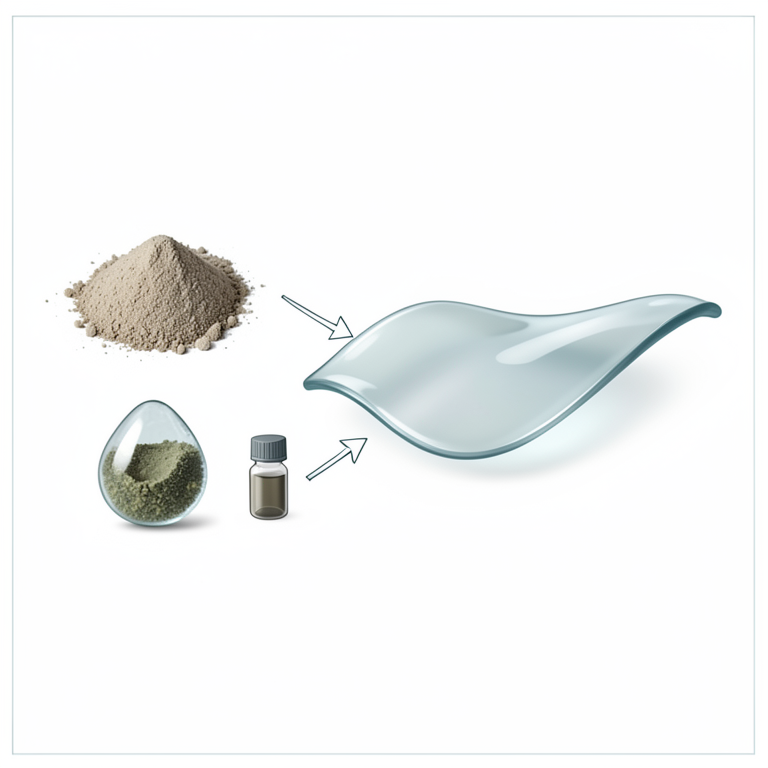
Agaranth Composition
AI-generated conceptual illustration (a transparent edible biopolymer film made from agar, pectin, glycerol, and clove oil). It explains the idea and does not show study data.
View source evidence ↗Figures & tables
From the original paper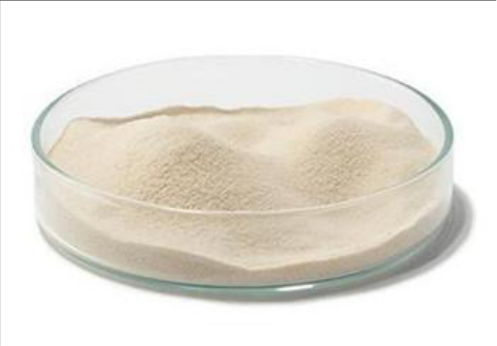 Figure 1
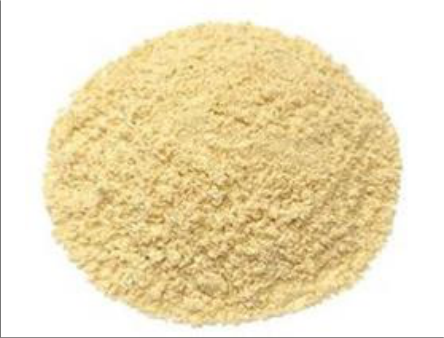 Figure 2
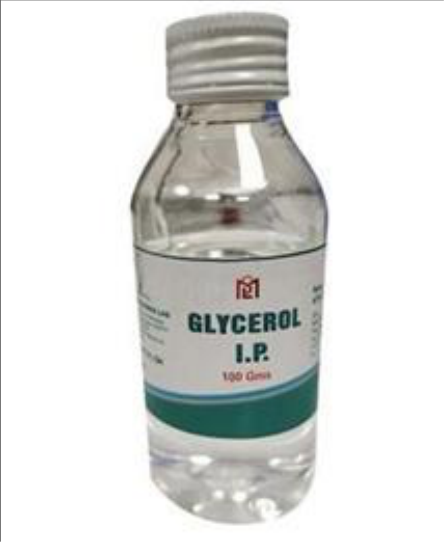 Figure 3
 Figure 4
 Table 1
 Table 2
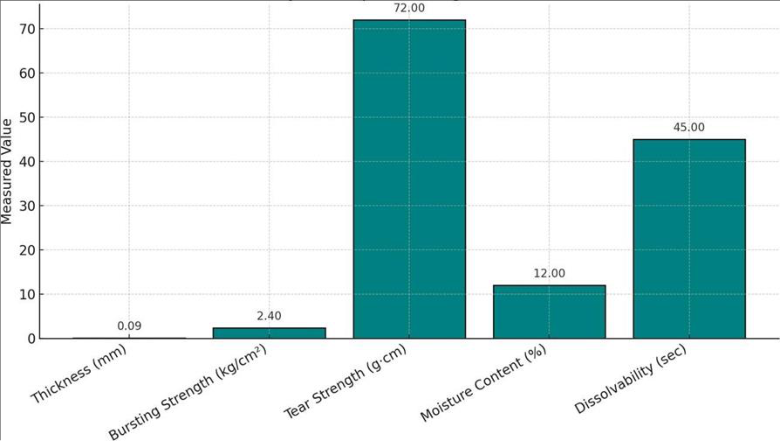 Figure 5
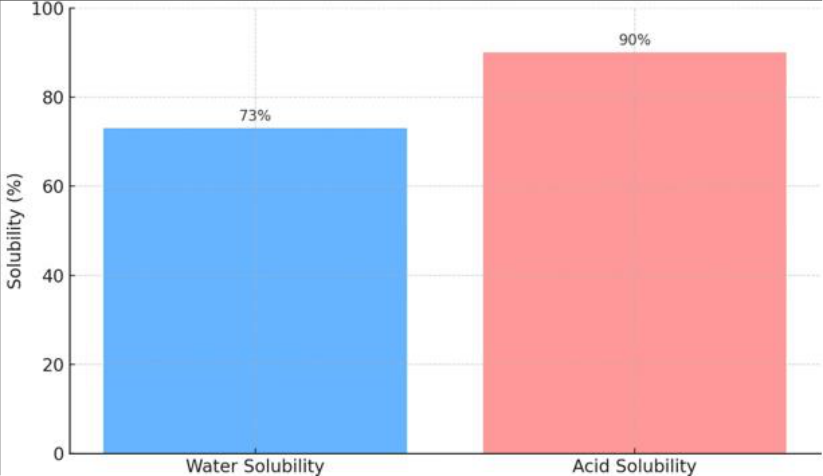 Figure 6
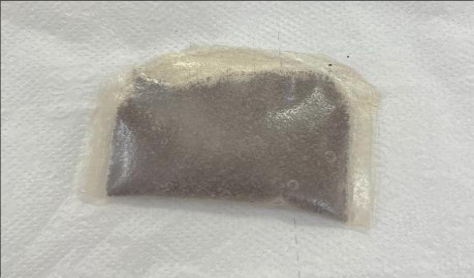 Figure 7
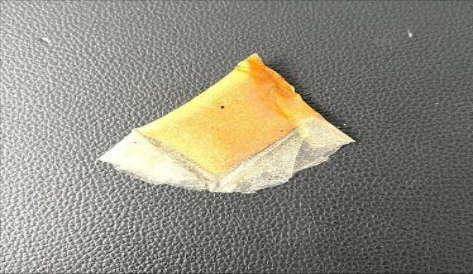 Figure 8
Introduction
The investigation of sustainable, biodegradable substitutes for traditional food packaging has been prompted by the growing global concern over plastic pollution and food safety. Among these, bio-edible films have become a ground-breaking idea that blends practical food preservation with environmental sustainability. Usually composed of natural polymers, these films are intended to either biodegrade without causing environmental damage or be consumed with the food product.
Background of Biodegradable Packaging
The increasing awareness about environmental sustainability and the harmful impact of plastic pollution has led to an urgent global demand for biodegradable alternatives to synthetic packaging. Traditional petroleum-based plastics are non-biodegradable, persist in the environment for hundreds of years, and contribute significantly to land and marine pollution. According to global waste reports, millions of tons of plastic packaging waste are generated annually, with a very small fraction being recycled effectively. Biodegradable packaging materials, particularly those derived from natural polymers, offer a promising solution by being environmentally friendly, renewable, and capable of decomposing naturally. These materials can reduce the carbon footprint and provide functional properties such as barrier resistance, mechanical integrity, and even antimicrobial activity. The food packaging industry, in particular, is witnessing a paradigm shift toward edible and compostable packaging systems to extend shelf life, maintain quality, and reduce packaging waste. In this context, the development of novel biopolymer-based packaging solutions, such as Agaranth, is of significant relevance.
Introduction to Agar and Its Derivatives
Agar is a natural polysaccharide extracted from red seaweed (typically Gelidium and Gracilaria species), widely recognized for its gelling, thickening, and stabilizing properties. Composed primarily of agarose and agaropectin, it forms strong thermo-reversible gels even at low concentrations. Traditionally used in microbiological media, food products, and pharmaceuticals, agar's film-forming ability has attracted attention in biodegradable packaging development.
Agar-based films are transparent, odourless, and exhibit excellent oxygen barrier properties. However, due to their brittleness and low water resistance, they are often blended with plasticizers such as glycerol or combined with other polymers and active compounds to improve functionality. Derivatives and composites of agar, including agar-glycerol and agar-pectin blends, have shown improved flexibility, antimicrobial activity, and mechanical properties, making them suitable for edible packaging applications.
Concept and Development of Agaranth:
The creation of Agaranth, a unique bio-edible film made from glycerol, agar, pectin, and clove oil, is the main goal of this study. Each of these components has been chosen with attention to improve the mechanical, barrier, and bioactive qualities of the film: Agar: Red algae are the natural source of agar, a polysaccharide that is well known for its exceptional gel-forming properties. Pectin: Pectin, which comes from fruits like apples and citrus, enhances agar's capacity to form films and provides flexibility, while also helping to regulate moisture retention. Glycerol: Glycerol, a non-toxic plasticizer, improves the flexibility and decreases the brittleness of biopolymer films, increasing the versatility of Agaranth for food product coating or wrapping. Clove oil: Eugenol-rich clove oil is added because of its well-established antibacterial and antioxidant qualities, which improve the film's ability to prolong food shelf life and stop microbiological contamination. In the area of active packaging, where the container itself actively interacts with the product to preserve food, Agaranth is a noteworthy advancement. Its edible quality improves the consumer experience and reduces packaging waste, particularly in functional and health-conscious food products. Formulating Agaranth with the ideal ratios of each ingredient and assessing its mechanical strength, moisture content, transparency, solubility, antibacterial activity, and consumer acceptance are the goals of this study. Because essential oils can affect flavor and scent, the development procedure involves testing clove oil at different concentrations to balance its antibacterial effectiveness with sensory acceptability. The food packaging sector could benefit greatly from the introduction of such films, particularly for perishable, minimally processed, and ready-to-eat goods. Furthermore, Agaranth offers small-and medium-sized food producers looking for environmentally responsible substitutes a scalable and affordable option by utilizing easily accessible natural resources. This thesis lays the foundation for future research into bioactive edible films as useful packaging materials that offer both sustainability and usefulness. It adds to the expanding corpus of studies that aims to lessen packaging's negative environmental effects while upholding strict guidelines for food safety and quality.
Scope and Objective
The scope of this study centers on the development and characterization of Agaranth, an innovative edible biopolymer film formulated using agar, glycerol, pectin, and clove oil. This research explores its potential as a sustainable alternative to conventional plastic packaging by analysing its physical, chemical, and functional properties.
The objective is to optimize the composition and processing parameters of Agaranth to achieve desirable qualities such as tensile strength, water and acid solubility, moisture resistance, and biodegradability. The study also aims to evaluate the feasibility of using natural bioactive components like clove oil to enhance the film's antimicrobial and functional attributes.
Ultimately, this work seeks to contribute to the growing field of eco-friendly packaging materials by providing a foundation for the commercial viability of biopolymer films in the food and pharmaceutical industries.
Materials required
The following materials were utilized in the formulation of the edible biopolymer film Agaranth:
Agar -A natural polysaccharide extracted from red algae, serving as the primary film-forming agent.
Glycerol -Used as a plasticizer to impart flexibility and prevent brittleness in the film. Pectin -A plant-derived polysaccharide that enhances the structural integrity and cohesiveness of the film. Clove Oil -Incorporated for its natural antimicrobial properties and to improve the shelf life and aroma of the film.
Methodology for Film Preparation Preparation of Agar-Glycerol-Pectin Mixture
The edible biopolymer film, Agaranth, was formulated using agar and pectin in a 2:1 ratio. A defined quantity of agar, glycerol and pectin was dissolved in distilled water and heated to 90 °C-100 °C under continuous stirring until a homogenous solution was obtained.
Incorporation of Clove Oil
Once the agar-glycerol-pectin mixture reached a consistent viscosity, clove oil was added dropwise. The mixture was stirred vigorously to achieve even distribution of the essential oil within the matrix.
Casting and Drying of the Film
The prepared solution was cast onto clean, levelled Petri dishes or glass plates and spread uniformly to ensure even thickness. The films were allowed to dry at ambient conditions (25-30 °C) for 24-48 hours until a transparent, peelable film was formed.
Evaluation of Physical Properties
The dried Agaranth films were subjected to the following physical property tests:
Thickness -Measured using a micrometer screw gauge at multiple points to assess uniformity.
Methodology
Measure the thickness at five different locations on the film (four corners and center) Calculate the average thickness using the formula:
Bursting Strength -Evaluated using a shear (bursting) strength analyser to determine the film's bursting strength.
Calculation Method
The film is clamped and pressure is applied until it bursts. The bursting strength (kg/cm² or kPa) is the maximum pressure applied at rupture.
Tear Strength-Evaluated using a tear strength analyser to determine the film's tear strength
Calculation Method
The energy required to propagate a tear in the film is measured.
The reading is taken directly from the instrument and expressed as force needed to tear.
Moisture Content -Determined by oven-drying method, assessing the percentage of water retained in the film.
Calculation Method
A pre-weighed film sample is placed on the analyser's pan. The instrument automatically heats the sample and records the weight loss. Moisture content is calculated by the instrument using the formula:
The final value is displayed directly as a percentage (%).
Dissolvability: Measured by immersing film samples in boiling water and noting down the for the film to dissolve properly.
Calculation Method
Film sample is immersed in boiling water.
The time taken (in seconds or minutes) for the film to completely dissolve is recorded.
Can be reported as 𝐷𝑖𝑠𝑠𝑜𝑙𝑢𝑡𝑖𝑜𝑛 𝑇𝑖𝑚𝑒 (𝑚𝑖𝑛) = 𝑇𝑖𝑚𝑒 𝑡𝑎𝑘𝑒𝑛 𝑓𝑜𝑟 𝑐𝑜𝑚𝑝𝑙𝑒𝑡𝑒 𝑑𝑖𝑠𝑖𝑛𝑡𝑒𝑔𝑟𝑎𝑡𝑖𝑜𝑛 𝑖𝑛 𝑏𝑜𝑖𝑙𝑖𝑛𝑔 𝑤𝑎𝑡𝑒𝑟
Heat Salability: Determined by sealing the film from its sides by using a hand sealing machine
Calculation/Observation Method
The film was sealed from the sides using a hand sealing machine under standard conditions (fixed temperature and time). Sealability was evaluated qualitatively by visually inspecting whether a proper seal was formed.
The sample was considered heat-sealable if the film adhered firmly and consistently along the sealed edges without peeling or tearing.
Evaluation of chemical properties Water Solubility
Definition: Water solubility refers to the percentage of the film that dissolves in water over a fixed time under controlled conditions. It indicates the film's behaviour in moist or aqueous environments, which is crucial for food contact and biodegradability.
Methodology:
The water solubility of the prepared active films was assessed according to ASTM standard D570-98. Initially, film samples were pre-dried in hot air at 80 °C for 24 hours, and their initial weight (W1) was recorded. Subsequently, the films were immersed in 30 ml of doubledistilled water at room temperature for 24 hours, followed by squeezing out excess water using sanitary paper. Afterward, the films were dried again for a day at 80 °C, and the final film weight (W2) was recorded Eelager et al., (2023). The percentage of water solubility was calculated using the equation provided in the study Where, the specimen samples' initial and final weights are denoted by W1 and W2
Acid Solubility Definition: Acid solubility measures how much of the film dissolves in dilute acidic solutions (usually pH ~3-4). This simulates exposure to acidic foods or gastric fluids (important for edible or ingestible packaging).
Methodology: After being dried for 24 hours at 80 °C in an hot air oven, a two-centimetre diameter sample was sliced from the edible film, and its initial weight was measured. Samples were then gently mixed and immersed in 100 mL of distilled water, and they were left undisturbed for 24 hours. Following their removal, the enlarged samples were dried for 24 hours at 40 °C, and the final dry weight was recorded. The equation was utilized to ascertain the films' solubility. The sample's acid solubility was determined using the same method outlined above, but the film was then dried and measured to get the final dry weight after being immersed in a measuring glass filled with hydrochloric acid (1 M) for 24 hours.
Data Analysis
Perform different tests to determine the significant factors affecting the quality of the Agaranth biopolymer film, such as plasticizer ratio, drying time, and incorporation of essential oil. Determine the optimal level of each parameter (e.g., agarglycerol-pectin ratio, clove oil concentration, drying temperature) to achieve the desired film properties, including strength, solubility, and moisture resistance.
In conclusion, applying a factorial design of experiments can assist in identifying the optimal formulation and processing conditions for Agaranth, ensuring maximum efficiency in film performance, stability, and biodegradability.
Results and Discussions
After conducting a series of experiments on the development of "Agaranth," an edible biopolymer film made using agar, glycerol, pectin, and clove oil, various physical, chemical, and functional properties were evaluated to determine the film's suitability for food packaging applications.
Results
The experimental analysis indicated that each of the components agar, glycerol, pectin, and clove oil had a significant impact on the quality and performance of the biopolymer film. The results are given in the following tabular and graphical form: Result Summary: The film exhibited a uniform average thickness of 0.087 mm, ensuring consistency in structure. The bursting strength was found to be 2.405 kg/cm², indicating good mechanical stability. Tear strength of Agaranth (72 g cm) was comparable to standard butter paper (73 g cm), showing its potential for practical applications. The moisture content ranged between 11-13%, aligning well with food-safe packaging films. The film demonstrated good heat sealability, confirmed via hand sealing. Water solubility of the film was 73%, and acid solubility reached 90%, showcasing its biodegradable nature and reactivity under different environmental conditions. The dissolution time in boiling water was observed to be 40-50 seconds, suggesting it is suitable for soluble packaging applications.
Discussion
The experimental outcomes showed that the proportion and synergy between agar, glycerol, pectin, and clove oil were crucial in influencing Agaranth's mechanical strength, solubility, and sealability. Glycerol acted as a plasticizer to enhance flexibility, while pectin contributed to film strength and integrity. Clove oil added antimicrobial properties and influenced dissolution characteristics. These findings suggest that Agaranth can be a viable alternative to synthetic plastic films in food packaging, particularly for single-use, soluble applications. The high acid and water solubility indicates excellent biodegradability, aligning with sustainability goals.
Conclusions and Future Directions Conclusion
Agaranth represents a groundbreaking innovation in the realm of sustainable and biodegradable food packaging. Developed using a synergistic blend of agar, glycerol, pectin, and clove oil, this edible biopolymer film has demonstrated excellent performance in terms of mechanical strength, heat sealability, and solubility under various conditions. The optimized formulation not only ensures functionality and safety for food contact applications but also supports environmental goals by offering a viable alternative to traditional plastic-based packaging materials. The mechanical integrity provided by agar and pectin, the flexibility imparted by glycerol, and the natural antimicrobial properties of clove oil collectively make Agaranth a multifaceted solution tailored for the modern food industry. Its biodegradable and edible nature aligns with current global sustainability efforts, particularly in reducing plastic waste and supporting eco-friendly packaging initiatives. Agaranth's versatility and performance make it suitable not just for wrapping or coating food items, but also as an active packaging material that can potentially extend shelf life and enhance product safety. Its rapid solubility in hot water and high acid solubility further open doors for single-use applications, particularly in pre-measured food packets, sauces, and spices where dissolvability is an asset.
Future Directions
Building on the promising results of this study, several avenues exist to further improve and expand the application of Agaranth:
Incorporation of Natural Colorants and Bioactive Compounds
Adding natural pigments (such as beetroot, turmeric, or spirulina) or bioactive agents (like antioxidants and essential oils) could enhance the film's aesthetic appeal and functional benefits. This could also enable active packaging that interacts positively with the food product.
Shelf-Life and Barrier Property Evaluation
Long-term studies on moisture, oxygen, and microbial barrier properties under varying environmental conditions will help determine Agaranth's effectiveness in real-world packaging scenarios.
Diversification into Other Industries
Agaranth's biodegradable and edible properties can be explored beyond food such as in pharmaceutical packaging, where single-dose drug delivery wrappers can be safely ingested or dissolved; or in agriculture, where the film could be used to make seed tapes or biodegradable plant wraps.
Antimicrobial and Antifungal Validation
Although clove oil has known antimicrobial effects, specific tests (e.g., zone of inhibition studies against food spoilage microorganisms) are needed to quantify its preservative action within the biopolymer matrix.
Consumer Safety and Sensory Acceptance
Studies on taste neutrality, mouthfeel, and consumer acceptance are crucial if the film is to be used in direct edible applications (e.g., edible wrappers for snacks, premeasured masala pouch or candies).
Figures and tables from the paper
| Test | Calculation/ Methodology | Result |
|---|---|---|
| Thickness | T1- 0.09mm T2- 0.08mm T3- 0.09mm T(av)= 0.26/3 = 0.0866666 mm | 0.087mm |
| Bursting Strength | T1- 2.24 kg/cm2 T2- 2.57 kg/cm2 T(av)= 4.81/2= 2.405 kg/cm2 | 2.405 kg/cm2 |
| Tear Strength | Standard Butter Paper= 73 g cm | Agaranth= 72 g cm |
| Moisture Content | Determined using a moisture analyser | 11-13% |
| Heat Sealability | Determined using hand sealing machine | Yes |
| Dissolvability | Determined by immersing the film in boiling water and noting the time taken for it to dissolve completely | 40-50 seconds in boiling water |
Table text extracted from the original PDF; superscript letters are shown inline. The original table image is below.
View original table image
References
20 in the original paper- ASTM International. Standard test method for tensile properties of thin plastic sheeting (D882-12). West Conshohocken, PA: ASTM International; 2013.
- Bonilla J, Fortunati E, Atarés L, Chiralt A, Kenny JM. Physical, structural and antimicrobial properties of polyvinyl alcohol-chitosan biodegradable films. Food Hydrocolloids. 2014;35:463-470.
- Falguera V, Quintero JP, Jiménez A, Muñoz JA, Ibarz A. Edible films and coatings: structures, active functions and trends in their use. Trends in Food Science & Technology. 2011;22(6):292-303.
- Gutiérrez TJ. Polysaccharides: sources, characteristics and applications as edible coatings and films. Food Science and Technology International. 2017;23(5):395412.
- Gunaratne A, Hoover R. Effect of heat-moisture treatment on the structure and physicochemical properties of tuber and root starches. Carbohydrate Polymers. 2002;49(4):425-437.
- Harvard Health Publishing. Plant-based plastics: are they sustainable? [Internet]. 2019 [cited 2025 May 24]. Available from: Harvard Health Publishing.
- Jiménez A, Fabra MJ, Talens P, Chiralt A. Edible and biodegradable starch-based films: development and characterization. Journal of Food Engineering. 2012;109(3):372-379.
- Jouki M, Yazdi FT, Mortazavi SA, Koocheki A. Quince seed mucilage films incorporated with oregano essential oil: physical, thermal, and antibacterial properties. Food Hydrocolloids. 2014;36:9-19.
- Jouki M, Yazdi FT, Koocheki A. Extraction, optimization and characterization of pectin from quince peel (Cydonia oblonga). Carbohydrate Polymers. 2012;92(2):1981-1987.
- Kanmani P, Rhim JW. Antimicrobial and physicalmechanical properties of agar-based films incorporated with grapefruit seed extract. Carbohydrate Polymers. 2014;102:708-716.
- Krochta JM, De Mulder-Johnston C. Edible and biodegradable polymer films: challenges and opportunities. Food Technology. 1997;51(2):61-74.
- Lin D, Zhao Y. Edible coatings for fresh and minimally processed fruits and vegetables: innovations and perspectives. Comprehensive Reviews in Food Science and Food Safety. 2007;6(3):60-75.
- Mahajan PV, Oliveira FAR, Macedo I. Effect of temperature and storage time on the antimicrobial properties of clove oil incorporated edible films. Journal of Food Science and Technology. 2008;45(3):326-332.
- NCBI. Dietary flaxseed as a strategy for improving human health [Internet]. 2019 [cited 2025 May 24]. Available from: National Center for Biotechnology Information.
- Ojagh SM, Rezaei M, Razavi SH, Hosseini SMH. Novel chitosan-based film with cinnamon essential oil for preservation of rainbow trout. Food Chemistry. 2010;122(1):161-166.
- Pelissari FM, Grossmann MVE, Yamashita F, Pineda EAG. Antimicrobial, mechanical, and barrier properties of cassava starch-chitosan films with oregano oil. Journal of Agricultural and Food Chemistry. 2009;57(16):7499-7504.
- Rhim JW, Wang LF. Preparation and characterization of carrageenan-based nanocomposite films reinforced with clay mineral and silver nanoparticles. Applied Clay Science. 2013;83-84:118-123.
- Shit SC, Shah PM, Banerjee S. Development of agar and pectin-based edible films: a comparative analysis. Polymer Bulletin. 2021;78:1125-1136.
- Sobral PJA, dos Santos JS, Garcia FT. Effect of glycerol concentration on physical properties of gelatinbased films. Food Hydrocolloids. 2005;19(4):741-748.
- Tharanathan RN. Biodegradable films and composite coatings: past, present and future. Trends in Food Science & Technology. 2003;14(3):71-78.