
Research article · 2026 · Full text
International Journal of Agriculture and NutritionIn ovo feeding and its impact on performance post-hatch
Volume 8(8) · Pages 107–114 · DOI: 10.33545/26646064.2026.v8.i8b.740 ↗
Research areasAnimal Nutrition and PhysiologyReproductive Physiology in LivestockMeat and Animal Product Quality
Abstract
Author-writtenA Review The physiological basis and practical application of in ovo feeding as well as early post-hatch feeding have been reviewed with an emphasis on their effect interactions with hatchability, quality of chicks, growth, and performance in broiler chickens. The peri-hatch period is described as an important transition because it is when increasing energy demand coincides with changes in oxygen availability and glycogen utilization as well as the switch from dependence on egg resources to outside feed and water. This review also discussed the roles of mitochondria, oxidative balance, AMPK-mTOR axes in nutrient utilization, tissue growth together with intestinal maturation, amniotic-fluid consumption, programming intestinal barriers, microbiomes, and mucosal immunity. Evidence shows that feed and water given early support metabolic status, hydration, and initial intestinal development; however the effects of delayed feeding vary with duration, strain, sex, and age at measurement not all changes persisting to market age. Technical controls for in ovo feeding are reviewed: injection site timing depth characteristics of the solution used volume and dose microbial purity differences between manual and automated application as well as incubation condition interaction. The use of carbohydrates amino acids vitamins antioxidants probiotics prebiotics plant-derived compounds is also evaluated. This evidence further stresses that the efficacy of any such substance will depend on a clearly defined physiological objective and safe dose window plus improvement in one metabolic or molecular indicator does not mean improved performance. In ovo interventions may induce functional programming that persists after hatch and may improve selected aspects of heat tolerance however responses are not uniform and may be beneficial or restrictive. The review concludes that successful application requires integrated assessment of hatchability chick quality performance plus intestinal immune metabolic functions together with protocol standardization appropriate experimental units verification of safety reproducibility commercial feasibility.
Summary
Source-checkedPlain-language reading of the full paper, prepared with AI and checked against the text. Each point links to the authors' own words.
Why it matters
- Modern broiler chickens have higher growth rates and feed efficiency, but this has increased their metabolic needs and vulnerability during embryonic development and hatching. View evidence ↗
- The peri-hatch period is a critical transition where birds shift from relying on egg resources to external feed and water while facing increased energy demands and changing oxygen levels. View evidence ↗
- Nutritional deficiencies or poor conditions during incubation can negatively impact hatch weight, uniformity of the flock, and subsequent growth. View evidence ↗
The question
- The review aims to examine the physiological basis and practical use of in ovo and early post-hatch feeding and how they interact to affect hatchability, chick quality, and overall performance. View evidence ↗
What they did
- In ovo feeding involves injecting solutions into the egg; the amniotic fluid is typically the preferred site for nutrients targeting the intestines. View evidence ↗
- The safety of in ovo solutions depends on multiple physical and chemical properties, including pH, osmolality, and volume, rather than just the concentration of the active substance. View evidence ↗
- Incubation temperatures (36.5, 37.0, and 37.5 degrees C) can interact with specific nutrients like glucose and vitamin D3 to affect development and hatchability. View evidence ↗
What they found
- In a comparison of amino acids, methionine increased hatchability by approximately 5.8% and daily gain by about 8.8%. View evidence ↗
- Providing feed and water within two hours of hatching accelerates the switch to anabolic metabolism and increases muscle protein and glycogen compared to a 48-hour delay. View evidence ↗
- Hatcher feeding in 100,000 Ross 308 eggs increased intestinal villus surface area and crypt depth in the first week, though these benefits mostly disappeared by the end of the production cycle. View evidence ↗
- Myo-inositol caused metabolic changes that lasted until day 35, but these were associated with reduced growth starting from day 14. View evidence ↗
- Naringin increased chick length and numerically raised hatchability from 83.3% to 88.3%, but the change in hatchability was not statistically significant. View evidence ↗
What it means
- The authors conclude that successful in ovo feeding requires a comprehensive assessment of hatchability, chick quality, and metabolic functions, alongside standardized protocols and safety verification. View evidence ↗
- The authors note that improving a single molecular or metabolic marker does not automatically translate to improved overall performance. View evidence ↗
Visual summary
1 visualsIllustrations explain the paper; they do not show study data.
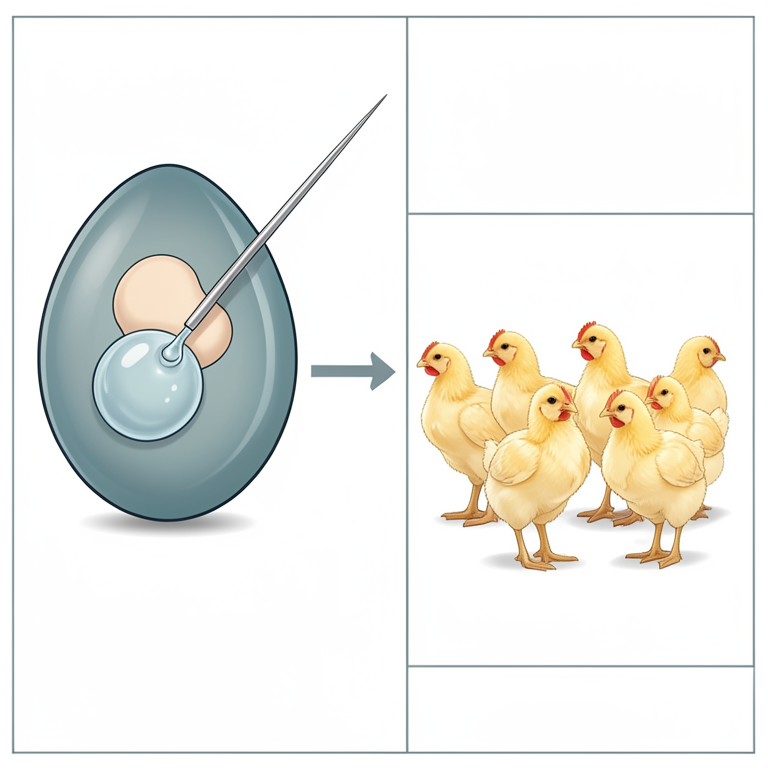
Study overview
AI-generated conceptual illustration (chicken embryos inside eggs and hatched broiler chicks). It explains the idea and does not show study data.
View source evidence ↗Introduction
Advances in genetic selection, management, and nutrition in the poultry industry have resulted in increased growth rate and feed conversion efficiency in broiler chickens. However, these advances have also increased metabolic demands and the susceptibility of birds to disturbances during embryonic development and the peri-hatch period. During incubation, the embryo depends on limited resources available within the egg; therefore, efficiency with which these resources are used as well as incubation conditions influence organ development, chick quality, and ability of a bird to express its genetic potential after hatch (Kpodo & Proszkowiec-Weglarz, 2023; Givisiez et al., 2020) [27,18] . The peri-hatch period is when two things happen at once: the change from breathing through the eggshells to breathing with lungs and the shift from using yolk for energy to using outside food and water. This period also sees the intestines mature rapidly and some microbial colonization begin. If there is any nutritional inadequacy or poor incubation conditions, they will show up in hatch weight, flock uniformity, and later growth. On the other hand, in ovo feeding and early access to feed can help support this stage if they are done with the right dose, place, and time (Arevan et al., 2023; Roura et al., 2025) [3,48] .
Physiological basis of embryo development and the pre-hatch period 2.1 Metabolic changes and energy difficulties during the pre-hatch period
The egg has proteins, fats, vitamins, and minerals. It does not have much carbohydrate or free glucose. During the last days of incubation, glucose grows in importance since pipping, breathing, and moving need energy that is quickly available. The hatchability success depends on the balance between glycogen stores and how much more efficiently the liver and muscles can use the existing substrates (Zangerônimo et al., 2023) [59] . The pattern of metabolism shifts with the development of the oxygen supply. Initially, there is a relatively greater dependence on glycolysis, but later, as the efficiency of the chorioallantoic membrane increases, more fatty-acid oxidation occurs. During internal pipping, oxygen availability decreases in relation to increasing muscular demand; thus glucose and glycogen assume relatively greater importance and genes related to energy production are reprogrammed in that muscle responsible for hatching (Givisiez et al., 2020; Dayan & Uni, 2024) [18,10] . Glycogen deficiency drives the embryo to utilize glycerol and some amino acids for gluconeogenesis, potentially leading to the use of some muscle protein reserves. Creatine plays a role in the swift reformation of ATP during contraction; however, metabolomic assessments indicate that nutrient types supplied in ovo change energy and amino acid pathways within the liver and muscles right after hatching (Dayan et al., 2023; Yehia et al., 2025) [11,57] . These results back the application of strategies that modify energy stocks as long as they do not enhance solution osmolality or decrease hatchability. Some carbohydrate treatments or treatments with bee-pollen extract have been related to modifications in glycogen stocks and chick quality; however, the reaction relies on concentration, carrier, and injection location, and an improvement in one parameter should not be broadly applied to other performance parameters (Pawłowska et al., 2024; Park & Kim, 2025) [42,40] .
Mitochondria and oxidative balance during the prehatch stage
Mitochondria adjust to substrate and oxygen availability during the embryonic-to-neonatal transition. They have roles beyond ATP production, such as energy sensing and regulating differentiation and apoptosis. The in ovo injection of alpha-ketoglutaric acid has demonstrated that changing a citric acid cycle intermediate can impact some metabolites and antioxidant status; this supports the idea that evaluating mitochondrial function may serve as an independent target for in ovo feeding (Gupta et al., 2022) [20] . Reactive oxygen species have signaling roles at physiological concentrations, but when their production exceeds the capacity of antioxidant enzymes and compounds, oxidation of membranes, proteins, and DNA can occur. Superoxide dismutase, catalase, and glutathione peroxidase work together with vitamin E, carotenoids, and selenium in the protection of embryonic tissues; especially the liver and muscles at hatch (Araújo & Lara, 2023) [2] . Results under heat stress indicate that changes in oxidativestatus indicators do not always correlate with changes in body weight. Alpha-ketoglutaric acid increased CAT and GPX1 expression and decreased NOX1, NOX4, HSP70, and body temperature without completely restoring growth. Thus, MDA, glutathione, enzyme activity, oxygen consumption, ATP/ADP ratio, and actual performance should be assessed together when evaluating an injected substance (Gupta et al., 2024) [21] .
Nutrient regulation of hormonal axes and AMPK-mTOR pathways
Thyroid hormones, insulin, IGF-1, and growth hormone are all signaling molecules that interact with intracellular sensor molecules of energy and nutrients. AMPK is activated at low energy availability to support pathways that produce energy and inhibit anabolic processes that are expensive in terms of energy. mTORC1 responds to amino acids, energy, and growth factors; it stimulates translation as well as cell proliferation. A direct molecular study in chickens indicated that the AMPK-mTOR axis responds to stress and takes part in linking cellular energy status to the regulation of cellular responses. This finding supports the importance of measuring the phosphorylation status of its components when interpreting the effects of nutritional interventions (Hu et al., 2021) [24] . Substances that are injected might work as metabolic signals instead of just acting as nutritional materials (Das et al., 2021) [8] . Leucine activated mTOR signaling and supported early growth in quail embryos; however, the response depends on species and dose, and findings from quail cannot be transferred directly to broiler chickens without verification. In broiler chickens, N-carbamylglutamate improved carcass yield, muscle-fiber development, and meat quality; however, phosphorylation of mTOR, S6K, and 4E-BP1 should be measured prior to attributing the effect to a specific pathway (Ndunguru et al., 2024; Wang et al., 2024) [37, 55] . Reports on nicotinamide riboside indicate that enhanced support for muscle development might be associated with modifications in carcass-part yields or muscle myopathies depending on sex and genetic background. Consequently, muscle fibers, satellite cells, capillary density, collagen, and hypoxia should be assessed in conjunction with weight so that an increase in size of the muscle is not misinterpreted as a sole advantage (Maynard et al., 2024) [33] .
Embryonic gastrointestinal development and the role of amniotic-fluid consumption
The growth of the intestines speeds up in the last days before hatching. The baby bird starts drinking the fluid around it on about day 17 of its development, which lets some stuff go into its tummy before it hatches. Feeding inside the egg uses this natural process to give food to the lining of the intestines and get the tiny hairs, digestive juices, and tools for moving food ready before real eating starts (Givisiez et al., 2020; Reicher et al., 2021) [18,46] . Methionine injection showed that a suitable dosage could connect changes in shape with the function of barriers. Relative gut weights, villus height, crypt depth, and transepithelial electrical resistance increased along with ZO-1, Claudin-1, and cell growth by activating the JAK2/STAT3 pathway; the 10-mg dose gave a more balanced response compared to other doses (Chen et al., 2021) [6] .
Cellular programming of the intestinal barrier and intestinal organoid models
Histological measurements have limitations in assessing intestinal maturation because elongated villi can develop without a concurrent enhancement in nutrient transport or tight-junction integrity. Chicken intestinal organoids offer an alternative platform for evaluating barrier permeability, cell proliferation, as well as responses to toxins and additives, permitting the effect of any given substance to be disentangled from the myriad of environmental factors found within the entire bird (Kang & Lee, 2024) [25] . One hundred Cobb 500 fertile eggs were injected with 0.2 mL of a 3% glutamine solution on embryonic day 18 and were sampled at hatch and on post-hatch days 3 and 14. Improved villus morphology, epithelial proliferation and differentiation; increased numbers of goblet and enteroendocrine cells plus the transporters SGLT1, B0AT1, EAAT3 as well as the ZO-2 glucose absorption barrier integrity enhanced at hatch some effects on peptide and alanine transport that persisted until day 14 (Yu et al., 2024) [58] . Prebiotics might function via epithelial cells and the microbiome. XOS and MOS changed genes related to nutrient transport, defense, and barrier function. On the other hand, XOS2 and XOS3 changed antibodies, metabolites, and predicted microbial pathways after hatch. These results confirm the need for combining tissue measurements with electrical resistance permeability and transporter activity metagenomic and metabolomic analyses (Bełdowska et al., 2024; Das et al., 2024) [5,9] .
Early post-hatch feeding and its physiological and productive effects
The time taken to get access to feed and water is based on the hatch window size and sorting, vaccination, and transport activities; hence, the real deprivation time will vary between chicks in the same batch. New studies indicate that access within two hours hastens the switch to anabolic metabolism and raises T3, T4, IGF-1, glycogen, and muscle protein compared with a 48-hour delay (Li et al., 2022) [28] . Hatching systems that supply feed and water can enhance hydration and early metabolic condition, as well as lessen the impact of hatch time; however, later results are contingent on the strain. Individual hatch time and actual access to feed should be documented, and the moment when a batch is taken out of the hatcher should not be considered as the start of deprivation for every chick (Smets, Eeckhaut, et al., 2026; Smets, Cleiren, et al., 2026b) [53,7,51] . The combination of an in ovo probiotic and a post-hatch nutritional gel has been shown to increase early body weight, enhance villi and digestive enzymes, elevate levels of IgA, IgM, IL-6, and IL-10 while temporarily reducing corticosterone. This suggests that embryonic conditioning supports but does not replace exogenous feeding (Hassanlou et al., 2026) [22] .
Management practices and the effect of delayed feeding on the intestine
Reducing deprivation can be achieved by narrowing the hatch window, improving temperature and ventilation uniformity, shortening sorting and transportation time, or providing feed within the hatcher. Some effects of deprivation are temporary, according to long-term data. Others are dependent on delay length, strain, and sex; hence, permanent damage or total compensatory growth should not be assumed without sequential measurements (Cleiren et al., 2026) [7] . The first week is the peak time for growth in the gut; at this time, the relative weight of the gut, the area available for absorption, enzyme secretion, and transporter expression are all increasing. A recent review article offered a physiological basis that associated villi, crypts, and goblet cells with digestive function rather than presenting them as isolated measures (Ravindran & Abdollahi, 2021) [45] . In a commercial comparison of hatcher feeding versus conventional feeding in about 100,000 Ross 308 eggs, increased villus surface area duodenum and ileum. Crypt depth increased in jejunum and ileum during the first week. However, most differences did not persist until the end of the production cycle. This shows that the histological benefit is early concentrated and does not mean that all indicators are still changed (Gaweł et al., 2025) [15] . Postponing feeding for either 24 or 36 hours resulted in short-term decreases in certain villus parameters, increased PepT1 levels, decreased Muc2, and changed the distribution of goblet cells; however, some differences vanished by 168 hours. When comparing delays of 2, 24, and 48 hours, it was found that the extended delay diminished villus development and tight junction expression as well as negatively affected early growth (Li et al. 2022) [28] .
Early feeding, mucosal immunity, and the gut-liver axis
Nutrients, microbial by-products, and immune signals travel from the gut to the liver via the portal vein, while bile acids and liver proteins alter intestinal conditions. Therefore, glucose, uric acid, triglycerides, and acute-phase proteins should be assessed together with intestinal permeability, cytokines, and the microbiome (Amevor et al., 2025) [1] . Mucosal immune response develops through contact with early microbial colonizers. Lactic acid bacteria given in ovo resulted in a more balanced antimicrobial peptide and antigen presentation pattern compared to some other intestinal isolates. Reviews of microbiomes support the interpretation of such findings based on microbial functions and metabolites rather than the abundance of a single bacterial genus (Rodrigues et al., 2021; Aruwa et al., 2021) [47, 4] . The answer varies with genetic differences and age. There were interactions between strain and early feeding for IFNgamma and B cells, but not all changes lasted until market age. Therefore, sequential measurements should be used to distinguish the early effect from the long-term response (Marcato et al., 2024) [31] .
In ovo feeding technology: Concept, application, and technical controls 4.1 Concept and rationale
In ovo feeding is when a nutritional or bioactive solution or suspension is introduced into one of the compartments of an egg embryo before it hatches, with the aim of supporting a particular tissue or function. This should not be confused with early post-hatch feeding. There cannot be any single protocol for all substances since responses depend on dose, timing, site of injection, egg characteristics, and incubation conditions (Kpodo & Proszkowiec-Weglarz, 2023; Park & Kim, 2025) [27,40] .
Injection sites and timing
Injection sites include the air cell, amniotic fluid, yolk sac, and allantoic fluid; however, amniotic fluid is generally considered the best site for nutrients that are meant to reach the intestine. In a study with carvacrol, it was found that injecting on embryonic day 12 lowered hatchability compared to an injection on day 17.5. The three sites tested on day 17.5 did not differ significantly in hatchability. The surfactant also changed the distribution of the compound between egg fluids and tissues (Meijer et al., 2024) [35] . Needle length and depth should be regulated, and the deposition site should be verified with a dye or tracer. A recent study comparing sites using 500 microliters on embryonic day 18 found no major differences in hatchability but confirmed that needle length alone does not guarantee correct delivery (Pawłowska et al., 2022) [41] .
Solution characteristics, dose, and safety
The safety of a solution is based on its pH, osmolality, viscosity, solubility, stability, temperature, and volume instead of just the concentration of the active ingredient. The carrier or surfactant can also change how the compound moves between egg fluids and tissues (Meijer et al., 2024) [35] . When comparing doses, the type and volume of carrier should be standardized. The depth of the needle and its placement in the intended compartment should also be confirmed (Pawłowska et al., 2022) [41] . Egg weight, embryonic age, injection timing, and injection volume should be reported because these factors create variation in the response to vitamins and nutrients administered in ovo (Ncho et al., 2024) [36] . The dose-response curve for oregano essential indicated that lower doses might be tolerated; however, at higher doses, navel quality worsened and hatchability decreased. Therefore, efficacy studies should be preceded by a graded safety study that covers embryonic mortality, hatchability, and chick quality (Niknafs et al., 2024) [38] . When probiotics or organic materials are used, microbial purity and the viability of the beneficial organism after preparation and injection are very important. A study with Bacillus subtilis and raffinose used control groups, multiple doses, and different combinations so that the effects of the active substance, solvent, and interactions between components could be separated (Shehata et al., 2024) [49] .
Manual and automated injection and commercial standardization
Manual injection allows more flexibility but is subject to the variability of the operator's experience. Automated injection offers higher throughput and better volume consistency, although it does not ensure 100% delivery to the correct site. The compatibility of solution viscosity, particles, and probiotics with the pump, needles, and sanitation cycles should be tested before commercial application since successful automation will rely on solution stability and accurate deposition as well as maintenance of material viability after passing through the system (Das et al., 2021; Kpodo & Proszkowiec-Weglarz, 2023) [8,27] . The process of injection is not independent of the conditions under which it is done. The temperatures 36.5, 37.0, and 37.5 degrees C had interactions with glucose and vitamin D3 regarding their effects on hatchability, organ development, bone mineralization, and blood metabolites. Therefore, the protocol should be validated using a factorial design and across different egg weights and breeder flock ages before generalization (Okai et al., 2026) [39] .
Nutrients and bioactive substances used in in ovo feeding
Every compound must correspond with a specific physiological issue: carbs relate to energy storage, amino acids pertain to tissue growth and signaling pathways, vitamins plus antioxidants are linked with membrane safeguarding, while probiotics and prebiotics deal with barrier function as well as the microbiome. The mere fact of joining together more elements does not imply a greater effectiveness since the interactions and osmolality can convert the mixture into an extra load for the embryo.
Support of energy status and tissue development
Meta-analyses have shown that effects of carbohydrates differ by type of sugar, dose, site, and timing. Also, an improvement in hatch weight does not necessarily mean an improvement in final performance. Therefore, carbohydrates should be considered as a tool to alleviate energetic stress rather than something that is normally added to all eggs (Zangerônimo et al., 2023) [59] . In a trial comparing arginine, leucine, and methionine, methionine improved hatchability by around 5.8% and daily gain by about 8.8% while decreasing oxidative and inflammatory parameters. Leucine decreased hatchability at the dose used. A cluster-bean peptide given at 2 mg/egg also enhanced digestive enzymes and some liver, kidney, and immune parameters into the later stages, underlining the critical role of both dose and compound type (Ge et al., 2025; El-Fakhrany et al., 2025) [14] .
Vitamins and antioxidants
A meta-analysis of vitamins found that heavier eggs, smaller injection volumes, and later injection were positively correlated with hatchability, vitamin E with hatch weight, and vitamin C with the feed conversion ratio. Vitamin C was shown to speed up certain events in hatching in a recent study and lower the rectal temperature and corticosterone levels of birds, which indicates that it should be assessed through thermal and hepatic indicators rather than just body weight (Ncho et al., 2024; Du et al., 2025) [36,13] . Biotin is involved in gluconeogenesis, fatty-acid synthesis, and amino-acid metabolism. An experiment where it was injected together with L-carnitine indicated that embryonic day 18 is a better time for injection than an earlier day and that not all improvements in body weight and feed conversion are maintained until market age. It should thus be applied to solve a particular metabolic problem rather than used as a general additive (Kosba & Sherif, 2025) [26] . Carotenoids, vitamin E, and selenium coexist in the antioxidant defense system. Organic selenium has been studied and shown that hatchability and physiological status depend on the form and dose of selenium; liver and oxidative-status indicators should be measured in addition to hatchability and chick quality (Araújo & Lara, 2023; Ghane-Khoshkebijari et al., 2024) [2,17] .
Preparation of the intestine and microbiome
Bacillus subtilis and raffinose, used alone or in combination, improved some traits related to hatching. They also decreased coliforms and E. coli while enhancing villus development. Moreover, these treatments increased the expression of MUC2, OCLN, SGLT1, and EAAT3; with the best responses linked to certain combinations. GOS plus Lactiplantibacillus plantarum also changed antioxidant capacity, gene expression, and plasma metabolites which supports the integration of microbial analyses with barrier function and metabolomics (Shehata et al., 2024; Mangan et al., 2024) [49,30] .
Plant compounds and natural bioactive substances
Chemical characterization is essential for plant extracts due to variations in cultivar, extraction, and storage that affect the concentration of active compounds. The ConPhyMP guidelines state that the name of the plant is not enough to guarantee scientific reproducibility. Embryotoxicity tests have indicated that some preparations can be organotoxic and reduce hatchability even though they are used therapeutically post-hatch (Heinrich et al., 2022; Tchodo et al., 2024) [23,54] . Naringin did not significantly improve hatchability even though it numerically increased from 83.3% to 88.3% and increased chick length. This is an example where one must differentiate between numerical and statistical significance. However, in a more recent study, carvacrol was reported to reduce the inflammatory response to an LPS challenge, indicating that an immunological objective can be achieved without improving hatchability. (Peşmen, 2025; Meijer et al., 2025) [43,34] .
Long-term effects, challenges, and future prospects 6.1 Physiological programming and heat tolerance
Pre-programming is defined as the persistence of a functional change after the stimulus has been removed. If it is transient at the molecular level, then pre-programming cannot be claimed. In the myo-inositol experiment, changes in acylcarnitines, phospholipids, amino acids, and serotonin persisted up to day 35; however, these changes coincided with reduced growth from day 14 onward. This indicates that metabolic imprinting may have either a beneficial or restrictive effect (Shomina et al., 2026) [50] . Some combinations of amino acids decreased facial temperature and MDA under heat stress without maintaining growth improvement through the finisher phase. Taurine also enhanced weight gain and antioxidant ability during heat exposure, providing initial evidence of changes related to DNA methylation. However, these findings will not prove permanent thermal memory (Yehia et al., 2024; Gupta et al., 2026) [56,19] . These results highlight the importance of separating heat tolerance from general performance and measuring body temperature, respiration, behavior, water and feed intake, HSP70, Nrf2, and intestinal barrier function with a thermoneutral control group to establish if a compound is an enhancer of general performance or a specific conditioning agent.
Standardization, precision in ovo feeding, and omics
Applications should shift from a fixed dose for all eggs to protocols that consider egg weight, flock age, strain, and embryo position, with imaging systems and variable dosing applied only after their benefits have been established. Slow-release carriers or nanoparticles may protect compounds or extend their effects but must first prove biocompatibility and absence of adverse effects on embryonic development before being used. An in ovo calcium carbonate nanoparticle inoculation study demonstrated the possibility of an extended response at a biocompatible dose while underscoring the necessity to assess hatchability, embryonic growth, and target tissues in testing such systems (Roura et al., 2025; Matuszewski et al., 2021) [48,32] . Transcriptomics, proteomics, metabolomics, and epigenetic analysis elucidate biological pathways. However, a change in a gene or metabolite is not indicative of benefit if there is no corresponding functional outcome. Stable isotopes, Ussing chambers, organoids, and mitochondrial respiration measurements can be used to assess nutrient fate, barrier efficiency, and energy function. In the end, hatchability and chick quality as well as performance are the true outcomes that matter (Dehau et al., 2022) [12] . The egg must be treated as the experimental unit for hatchability. The cage or pen should be the experimental unit for collective feed intake because increasing birds in a cage does not make up for an insufficient number of replicate cages, and variation among birds should be separated from variation among cages when estimating experimental power (Pesti et al., 2023) [44] . Mortality should also be recorded by developmental stage, together with hatch-window duration, navel quality, and hydration status. Batch, hatcher, breeder flock, and sex should be included in the statistical models. Cost, application speed, and solution stability should also be evaluated before commercial feasibility is determined (Park & Kim, 2025) [40] . Results from both rapidly and more gradually growing strains demonstrate that early feeding impacts growth and meat quality differently. Consequently, protocols should always be validated across multiple genetic backgrounds instead of depending on an average that masks specific responses between strains (Smets, Cleiren, et al., 2026a) [52] .
Conclusion
In ovo feeding and early feeding are two interlinked phases that start with management of the breeder-flock, egg, and incubation and end at the rate at which the chick is allowed access to feed and water. The success will depend on proper matching of the substance, dose, site, and time to physiological need plus proven benefit without detriment to hatchability or chick quality. Future studies should associate each intervention with a clear objective and relevant indicators, and differentiate temporary improvement from a permanent programming and reduction of a stress indicator from restoration of performance. In this manner, the technology can evolve from an experimental means of adding nutrients to a precise tool that can be standardized and used in commercial applications.0
References
35 in the original paper- Amevor FK, Uyanga VA, Wu L, Xu D, Shu G, Wang Y, et al. Enhancing poultry health and productivity through the liver-gut axis with integrated nutritional and immunological approaches: A mini-review. Frontiers in Physiology. 2025;16:1537099. doi: 10.3389/fphys.2025.1537099.
- Araújo ICS, Lara LJC. Perspectives on vitamin E, canthaxanthin and selenium to chick embryo antioxidant protection. World's Poultry Science Journal. 2023;79(2):265-283. doi: 10.1080/00439339.2023.2192885.
- Arevan J, Sadeghi G, Karimi A. Effect of in ovo feeding and its interaction with post-hatch feeding procedure on hatchability, some organs development and post-hatch performance in broiler chickens. Veterinary Medicine and Science. 2023;9(3):12691280. doi: 10.1002/vms3.1121.
- Aruwa CE, Pillay C, Nyaga MM, Sabiu S. Poultry gut health -microbiome functions, environmental impacts, International Journal of Agriculture and Nutrition https://www.agriculturejournal.net microbiome engineering and advancements in characterization technologies. Journal of Animal Science and Biotechnology. 2021;12:119. doi: 10.1186/s40104-021-00640-9.
- Bełdowska A, Siwek M, Biesek J, Barszcz M, Tuśnio A, Gawin K, et al. Impact of in ovo administration of xylo-and mannooligosaccharides on broiler chicken gut health. Poultry Science. 2024;103(12):104261. doi: 10.1016/j.psj.2024.104261.
- Chen M-J, Zhou J-Y, Chen Y-J, Wang X-Q, Yan H-C, Gao C-Q. The in ovo injection of methionine improves intestinal cell proliferation and differentiation in chick embryos by activating the JAK2/STAT3 signaling pathway. Animal Nutrition. 2021;7(4):1031-1038. doi: 10.1016/j.aninu.2021.03.009.
- Cleiren N, Smets R, Janssens GPJ, Duchateau L, Lourenço M, Delezie E, et al. Immediate and long-term effects of post-hatch feed deprivation on performance, intestinal morphology and nutrient metabolism in onfarm hatched broilers. Poultry Science. 2026;105(9):107171. doi: 10.1016/j.psj.2026.107171.
- Das R, Mishra P, Jha R. In ovo feeding as a tool for improving performance and gut health of poultry: A review. Frontiers in Veterinary Science. 2021;8:754246. doi: 10.3389/fvets.2021.754246.
- Das R, Mishra P, Mishra B, Jha R. Effect of in ovo feeding of xylobiose and xylotriose on plasma immunoglobulin, cecal metabolites production, microbial ecology, and metabolic pathways in broiler chickens. Journal of Animal Science and Biotechnology. 2024;15:62. doi: 10.1186/s40104-02401022-7.
- Dayan J, Uni Z. Gene ontology defines pre-post-hatch energy dynamics in the complexus muscle of broiler chickens. BMC Genomics. 2024;25:1180. doi: 10.1186/s12864-024-11103-6.
- Dayan J, Melkman-Zehavi T, Reicher N, Braun U, Inhuber V, Mabjeesh SJ, et al. Supply and demand of creatine and glycogen in broiler chicken embryos. Frontiers in Physiology. 2023;14:1079638. doi: 10.3389/fphys.2023.1079638.
- Dehau T, Ducatelle R, Van Immerseel F, Goossens E. Omics technologies in poultry health and productivity - Part 1: Current use in poultry research. Avian Pathology. 2022;51(5):407-417. doi: 10.1080/03079457.2022.2086447.
- Du S, Zhou J, Ao X, Zhu Y. Effects of in ovo feeding of vitamin C on embryonic development, hatching process, and chick rectal temperature of broiler embryos. Frontiers in Veterinary Science. 2025;11:1505801. doi: 10.3389/fvets.2024.1505801.
- El-Fakhrany HH, Ibrahim ZA, Ashour EA, Alagawany M. The impact of in ovo injection of cluster bean peptide on hatchability, growth performance, carcass characteristics, digestive enzymes, and blood indices of broiler chickens. BMC Veterinary Research. 2025;21:200. doi: 10.1186/s12917-025-04636-9.
- Gaweł A, Bobrek K, Madej JP. Early posthatch feeding influences small intestine development in broiler chickens. Poultry Science. 2025;104(11):105861. doi: 10.1016/j.psj.2025.105861.
- Ge H, Huang Z, Feng J, Zhang M. In ovo feeding of arginine, leucine, and methionine in broiler breeders' eggs during summer: Effects on hatchability and chick oxidation, inflammation, and apoptosis. Animals. 2025;15(13):1930. doi: 10.3390/ani15131930.
- Ghane-Khoshkebijari F, Seidavi A, Bouyeh M. Effects of in ovo injection of organic selenium on the hatchability of broiler breeder hen eggs and resulting chick physiology and performance. Veterinary Medicine and Science. 2024;10(3):e1443. doi: 10.1002/vms3.1443.
- Givisiez PEN, Moreira Filho ALB, Santos MRB, Oliveira HB, Ferket PR, Oliveira CJB, et al. Chicken embryo development: Metabolic and morphological basis for in ovo feeding technology. Poultry Science. 2020;99(12):6774-6782. doi: 10.1016/j.psj.2020.09.074.
- Gupta V, Hwang Y-J, Delmonte MA, Ncho CM, Choi Y-H. Effects of in ovo taurine administration on cyclic heat stress in broiler chickens. Poultry Science. 2026;105(4):106450. doi: 10.1016/j.psj.2026.106450.
- Gupta V, Ncho CM, Goel A, Jeong C-M, Choi Y-H. Effects of in ovo injection of alpha-ketoglutaric acid on hatchability, growth, plasma metabolites, and antioxidant status of broilers. Antioxidants. 2022;11(11):2102. doi: 10.3390/antiox11112102.
- Gupta V, Ncho CM, Goel A, Jeong C-M, Choi Y-H. In ovo feeding of alpha-ketoglutaric acid improves hepatic antioxidant-gene expression, plasma antioxidant activities and decreases body temperature without affecting broiler body weight under cyclic heat stress. Poultry Science. 2024;103(6):103749. doi: 10.1016/j.psj.2024.103749.
- Hassanlou A, Khalilzadeh S, Hosseini BS, Hassani R, Ebrahimi M. Comparative and combined effects of in ovo probiotic injection and early feeding on growth development, intestinal morphology, ileum microbiota, digestive enzymes, and immune responses in broiler chickens. Poultry Science. 2026;105(5):106596. doi: 10.1016/j.psj.2026.106596.
- Heinrich M, Jalil B, Abdel-Tawab M, Echeverría J, Kulić Ž, McGaw LJ, et al. Best practice in the chemical characterisation of extracts used in pharmacological and toxicological research: The ConPhyMP guidelines. Frontiers in Pharmacology. 2022;13:953205. doi: 10.3389/fphar.2022.953205.
- Hu X, Kong L, Xiao C, Zhu Q, Song Z. The AMPKmTOR signaling pathway is involved in regulation of food intake in the hypothalamus of stressed chickens. Comparative Biochemistry and Physiology Part A: Molecular & Integrative Physiology. 2021;258:110979. doi: 10.1016/j.cbpa.2021.110979.
- Kang TH, Lee SI. Establishment of a chicken intestinal organoid culture system to assess deoxynivalenolinduced damage of the intestinal barrier function. Journal of Animal Science and Biotechnology. 2024;15:30. doi: 10.1186/s40104-023-00976-4.
- Kosba MA, Sherif SK. Effect of in ovo-injection by saline, biotin, and L-carnitine on hatchability and subsequent broiler chicken's performance. Egyptian Poultry Science Journal. 2025. doi: 10.21608/epsj.2025.72900.1158.
- Kpodo KR, Proszkowiec-Weglarz M. Physiological effects of in ovo delivery of bioactive substances in broiler chickens. Frontiers in Veterinary Science. 2023;10:1124007. doi: 10.3389/fvets.2023.1124007. International Journal of Agriculture and Nutrition https://www.agriculturejournal.net thermoregulatory status in broiler chicks but is associated with breed-specific differences in later walking ability. Poultry Science. 2026b;105(8):107121. doi: 10.1016/j.psj.2026.107121.
- Smets R, Cleiren N, Delezie E, Lourenço M, Tuyttens FAM, Norton T, et al. Impact of early feeding on growth and meat quality in fast-and slower-growing broiler strains. Poultry Science. 2026a;105(6):106800. doi: 10.1016/j.psj.2026.106800.
- Smets R, Eeckhaut V, Blomme F, Van Rysselberghe N, Tuyttens FAM, Duchateau L, et al. Early feeding in the hatcher influences physiological indicators of nutritional status and hydration in broiler chicks during the immediate post-hatch period. Poultry Science. 2026;105(10):107409. doi: 10.1016/j.psj.2026.107409.
- Tchodo FG, Dakpogan HB, Adjei-Mensah B, N'nanle O, Karou SD, Pitala W, et al. In ovo toxicopathological effects of medicinal plants used against coccidiosis on chicken embryos development and hatchability. Poultry Science. 2024;103(12):104435. doi: 10.1016/j.psj.2024.104435.
- Wang Y, Ayalew H, Wang J, Wu S, Qiu K, Qi G, et al. N-carbamylglutamate in ovo feeding improves carcass yield, muscle fiber development, and meat quality in broiler chickens. Journal of the Science of Food and Agriculture. 2024;104(13):8089-8098. doi: 10.1002/jsfa.13639.
- Yehia ME, Alfonso-Avila AR, Prus J-MA, Ouellet V, Alnahhas N. The potential of in ovo-fed amino acids to alleviate the effects of heat stress on broiler chickens: Effect on performance, body temperature, and oxidative status during the finisher phase. Poultry Science. 2024;103(7):103821. doi: 10.1016/j.psj.2024.103821.
- Yehia ME, Alfonso-Avila AR, Prus J-MA, Ouellet V, Alnahhas N. Effect of in ovo-fed amino acids on muscle and liver metabolome of broiler chickens at 24 h post-hatch. Frontiers in Physiology. 2025;16:1542426. doi: 10.3389/fphys.2025.1542426.
- Yu L-E, Mann P, Schlitzkus L, Ghiselli F, Sanders M, Hadimundeen A, et al. In-ovo glutamine administration enhances intestinal development and functions in broiler chickens: Insights from enteroid models. The Journal of Nutrition. 2024;154(4):1175-1188. doi: 10.1016/j.tjnut.2024.02.007.
- Zangerônimo MG, Resende CO, Leão APA, Pereira LJ, Geraldo A, Pinto JT, et al. In ovo feeding of carbohydrates for broilers: A meta-analysis. Animal Feed Science and Technology. 2023;299:115610. doi: 10.1016/j.anifeedsci.2023.115610.