
Research article · 2026 · Full text
International Journal of Geography Geology and EnvironmentPharmacological and antioxidant activities of fruits of Opilia amentacea
Volume 8(8) · Pages 39–43 · DOI: 10.22271/27067483.2026.v8.i8a.847 ↗
Research areasMedicinal Plant ResearchPhytochemicals and Antioxidant ActivitiesPhytochemicals and Medicinal Plants
Abstract
Author-writtenOpilia amentacea Roxb., is an underutilized medicinal plant with considerable ethnopharmacological importance. The present study aimed to evaluate the primary and secondary phytochemical constituents and antioxidant potential of its fruit extracts using aqueous, ethanol and n-hexane solvents. Qualitative phytochemical analysis revealed the presence of proteins and carbohydrates as primary metabolites. Secondary metabolite screening showed that the aqueous extract contained abundant tannins, saponins, flavonoids and reducing sugars, along with terpenoids and steroids, whereas the ethanol extract exhibited tannins, flavonoids, terpenoids, steroids and reducing sugars. Quantitative estimation revealed tannins as the predominant phytochemical, followed by saponins, phenols and flavonoids. Antioxidant activity was evaluated using the DPPH free radical scavenging assay and among the extracts, the aqueous extract exhibited the highest antioxidant activity with 56.35% inhibition at 1.0 mg/ml, followed by the n-hexane extract (54.08%) and the ethanol extract (47.18%). The superior antioxidant activity of the aqueous extract corresponded with its richer phytochemical composition, particularly its higher abundance of tannins, saponins and flavonoids. The findings indicate that O. amentacea fruits are a valuable source of bioactive phytochemicals with significant antioxidant potential, providing scientific support for their traditional medicinal use. The study indicates the potential of this lesser-known medicinal species for the development of natural antioxidant formulations and encourages further phytochemical isolation and pharmacological investigations to explore its therapeutic applications.
Summary
Source-checkedPlain-language reading of the full paper, prepared with AI and checked against the text. Each point links to the authors' own words.
Why it matters
- Opilia amentacea is a medicinal plant that is currently underutilized despite its significant importance in ethnopharmacology. View evidence ↗
- Various parts of the plant, such as fruits, leaves, roots, and stem bark, are used in traditional folk medicine in India and Africa to treat various conditions. View evidence ↗
- In traditional healthcare, the plant is utilized as a tonic and for managing hypertension and diabetes. View evidence ↗
The question
- The study aimed to analyze the antioxidant potential and the primary and secondary phytochemicals in the fruit extracts of O. amentacea using three different solvents. View evidence ↗
What they did
- Mature fruits of O. amentacea were collected from Kapilash in the Dhenkanal district of Odisha for the evaluation. View evidence ↗
- The researchers used aqueous, ethanol, and n-hexane solvents to qualitatively screen for primary metabolites (proteins, carbohydrates) and secondary metabolites (tannins, saponins, flavonoids, etc.). View evidence ↗
- Quantitative analysis was performed to measure the total levels of tannins, saponins, phenols, and flavonoids. View evidence ↗
- The DPPH free radical scavenging assay was used to test antioxidant activity across a concentration range of 0.0625 to 1.0 mg/ml. View evidence ↗
What they found
- Primary metabolites including proteins and carbohydrates were found in aqueous and ethanol extracts, but were completely absent in the n-hexane extract. View evidence ↗
- Secondary metabolite screening showed that tannins and flavonoids were in aqueous and ethanol extracts, while saponins were only found in the aqueous extract. View evidence ↗
- Tannins were identified as the most abundant secondary metabolite, measured at a concentration of 35.31 mg/ml. View evidence ↗
- Quantitative results showed saponins at 20.7%, phenolic compounds at 2.21 mg/ml, and flavonoids at the lowest level of 0.20 mg/ml. View evidence ↗
- The aqueous extract showed the strongest antioxidant activity, with inhibition levels rising from 49.34% to 56.35% as concentration increased from 0.0625 to 1.0 mg/ml. View evidence ↗
- The n-hexane extract showed moderate antioxidant activity (48.72% to 54.08%), while the ethanol extract had the lowest activity (39.85% to 47.18%). View evidence ↗
What it means
- The authors conclude that O. amentacea fruits are rich in bioactive phytochemicals and possess antioxidant potential, which provides scientific support for their traditional medicinal use. View evidence ↗
- The authors recommend further research into toxicity assessment, in vivo pharmacological evaluation, and phytochemical isolation to fully validate the plant's medicinal applications. View evidence ↗
Visual summary
1 visualsIllustrations explain the paper; they do not show study data.
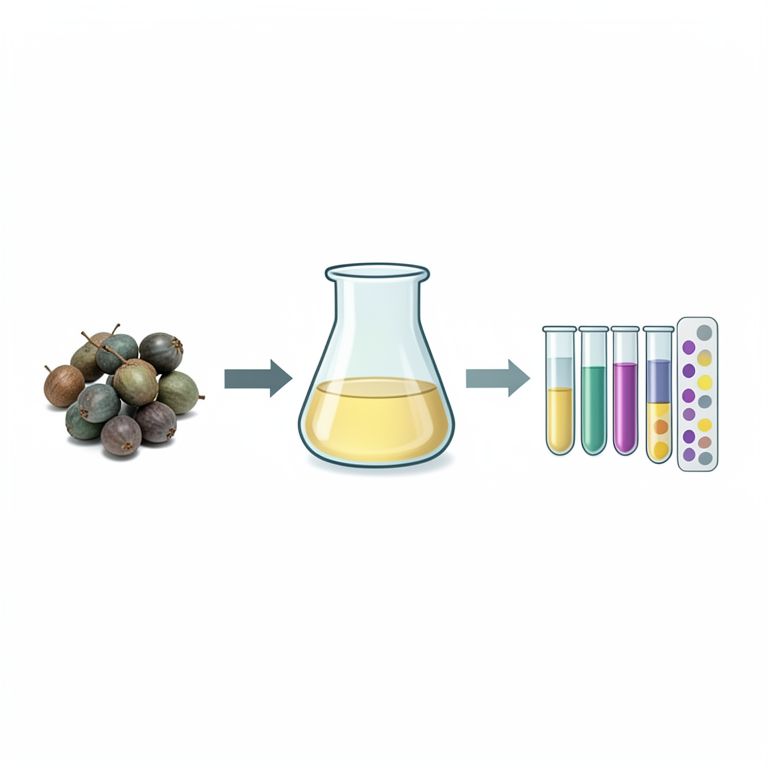
Experimental Workflow
AI-generated conceptual illustration (Opilia amentacea fruits). It explains the idea and does not show study data.
View source evidence ↗Figures & tables
From the original paper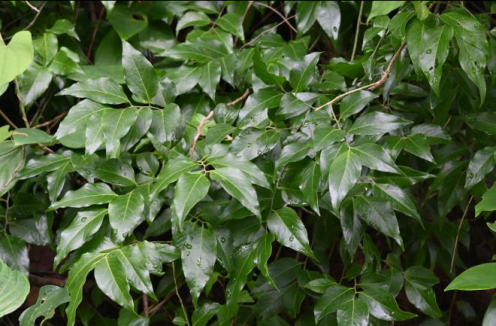 Figure 1
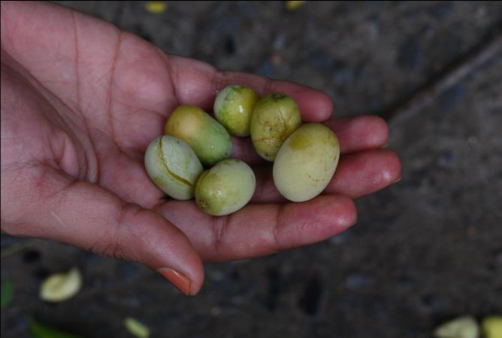 Figure 2
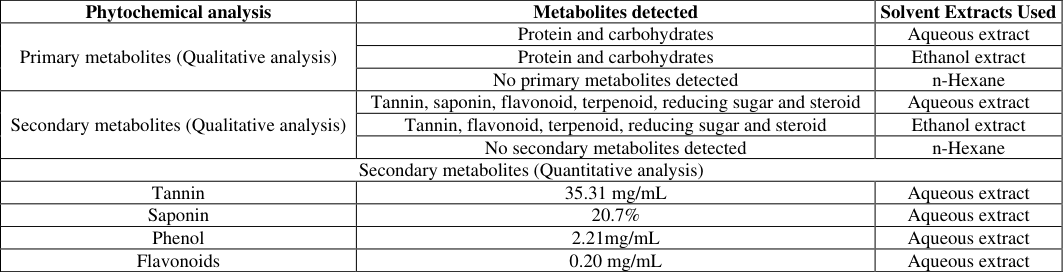 Table 1
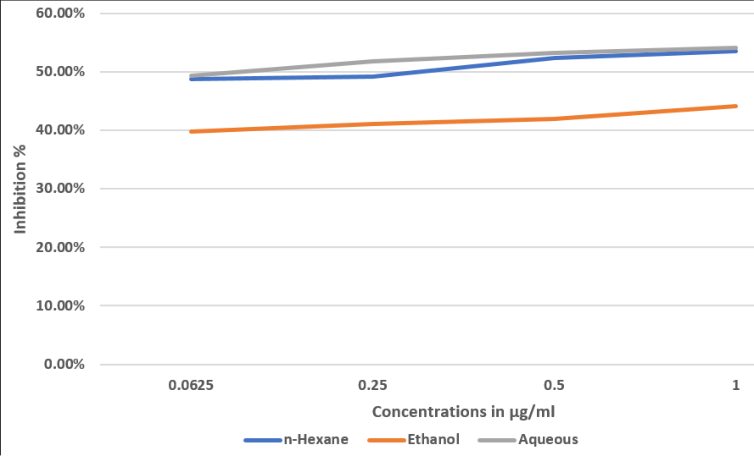 Figure 3
Introduction
India is recognized as one of the world's megadiverse countries, harboring nearly 8% of the global biodiversity and approximately 7,500 medicinal plant species used in traditional healthcare systems. A vast number of lesser-known medicinal plants remain inadequately explored despite their long history of use in indigenous medicine (Sadasivam and Manickam 2009) [11] . These underutilized species constitute an invaluable reservoir of bioactive compounds and represent an important resource for future drug discovery, biodiversity conservation, and sustainable healthcare (Isabelle et al., 2022) [4] . Less-known medicinal plants have been used for centuries by indigenous and tribal communities, particularly in biodiversity-rich regions such as the Eastern and Western Ghats, the Himalayas, Northeast India, the Andaman and Nicobar Islands and central Indian forests. Many of these plants have not yet undergone comprehensive phytochemical, pharmacological, or toxicological evaluation, leaving their therapeutic potential largely untapped (Bhuvaneswari et al., 2019) [1] . Opilia amentacea Roxb. is one of the less known medicinal plants distributed throughout tropical Africa. Beyond Africa, O. amentacea extends into the Indian subcontinent, particularly India and Sri Lanka where it thrives from lowland regions to moderately elevated habitats and is commonly found climbing on shrubs and small trees in well-drained soils. O. amentacea has been extensively used in African and Indian folk medicine. Different plant parts, including the leaves, roots, stem bark and fruits, are employed to treat a wide range of ailments. Leaf preparations are commonly used for the management of inflammation, fever, gastrointestinal disorders, diarrhea, dysentery, wounds, skin infections, rheumatism and pain. Root and stem bark extracts are used for treating malaria, jaundice, respiratory infections, urinary disorders, and parasitic diseases, while fruits are consumed for their nutritional value and medicinal benefits. The plant is also used as a tonic and in the management of diabetes and hypertension in several traditional healthcare systems (Boly et al., 2023) [2] . The present aims to determine the qualitative primary and secondary metabolites, quantitative phytochemical compounds and antioxidant activities of fruits of O. amentacea.
Methodology
During a floristic survey conducted at Kapilash, Dhenkanal district, Odisha, mature fruits of Opilia amentacea Roxb. were collected for pharmacological evaluation, including phytochemical screening and antioxidant activity analysis.
Test for primary metabolites
The test for primary metabolites involved three solvent (aqueous, ethanol and n-hexane) extracts of fruits of O. amentacea to detect the presence of protein, carbohydrate, starch, sucrose, lipid and amino acid using standard process (Marndi et al., 2024; Kumar et al., 2013) [8,5] .
Protein (Millon's test):
One millilitre of stem extract filtrate was mixed with 2-5 drops of Millon's reagent and heated in a water bath for 30 min. Development of a pink colour indicated the presence of proteins.
Carbohydrate (Fehling's test):
One millilitre of stem extract filtrate was treated with 2-5 drops each of Fehling's solutions A and B and heated in a water bath for 30 min. Formation of an orange to brick-red precipitate indicated the presence of reducing carbohydrates.
Test for Secondary metabolites (Qualitative)
The test for secondary metabolites involved three solvent (aqueous, ethanol and n-hexane) extracts of fruits of O. amentacea to detect the presence of tannin, saponin, flavonoid, terpenoids, phenolic compounds, reducing sugars, steroids and alkaloids using standard process (Marndi et al. 2024) [8] .
Tannin (Lead acetate test): One millilitre of leaf extract was mixed with 3-5 drops of 10% lead acetate. Formation of a gelatinous precipitate indicated the presence of tannins.
Saponin (Foam test):
One millilitre of leaf extract was mixed with 1 ml of distilled water and shaken vigorously. Persistent froth indicated the presence of saponins.
Flavonoids (Alkaline reagent test):
One millilitre of leaf extract was treated with 2 ml of 2% NaOH followed by 3-4 drops of dilute HCl. A yellow colour that became colourless confirmed the presence of flavonoids.
Terpenoids (Salkowski test):
One millilitre of leaf extract was mixed with chloroform, heated briefly, and concentrated H₂SO₄ was added. A reddish-brown interface indicated the presence of terpenoids.
Phenolic compounds (Ferric chloride test):
One millilitre of leaf extract was treated with a few drops of 5% FeCl₃. A dark bluish-black colour confirmed the presence of phenolic compounds.
Reducing sugars (Fehling's test): One millilitre of leaf extract was mixed with Fehling's solutions A and B and heated. A red-orange precipitate indicated the presence of reducing sugars.
Steroids (Salkowski test):
One millilitre of leaf extract was mixed with chloroform and concentrated H₂SO₄. Formation of a red upper layer, yellow lower layer, and green fluorescence indicated the presence of steroids.
Alkaloids (Dragendorff's test):
One millilitre of leaf extract was treated with 3-4 drops of Dragendorff's reagent. A reddish-brown precipitate confirmed the presence of alkaloids.
Quantitative estimation of secondary metabolites
The quantitative evaluation of selective secondary metabolites involving total phenol, total tannin, total saponin and total flavonoid were estimated using standard process (Chang et [3,9,10,11,13,14] .
Total Phenol: Phenols were extracted with 60% methanol, and the content was estimated using the Folin-Ciocalteu method. Absorbance was recorded at 515 nm and total phenol was calculated from a standard curve.
Total Tannin: Tannins were extracted with distilled water and quantified using the Folin-Ciocalteu method with tannic acid as the standard. Absorbance was measured at 720 nm.
Total Saponin: Saponins were extracted with aqueous ethanol, purified using diethyl ether and n-butanol, dried to constant weight, and expressed as total saponin content.
Total Flavonoid: Flavonoids were estimated by the aluminium chloride colorimetric method. Absorbance was measured at 510 nm, and flavonoid content was determined using a quercetin standard curve. [7] Dried leaf powder (1 g) was extracted separately with distilled water and ethanol by maceration in 10 mL solvent for 48 h. The filtered extracts were concentrated, reconstituted in 1% DMSO, and evaluated for antioxidant activity using the DPPH radical scavenging assay (Abubakar and Haque, 2020). Equal volumes of extract and 0.1 mM DPPH solution were incubated in the dark for 10 min, and absorbance was measured at 517 nm. Quercetin was used as the standard, and antioxidant activity was expressed as percentage radical scavenging activity (Majhi et al., 2026) [7] .
DPPH Radical Scavenging Assay (Majhi et al., 2026)
DPPH Radical Scavenging Assay (Majhi et al., 2026)
% Inhibition = [(Absorbance of control -Absorbance of sample)/Absorbance of control] × 100
% Inhibition = [(Absorbance of control -Absorbance of sample)/Absorbance of control] × 100
Result And Discussion Morphology
It is a woody, scandent shrub or climbing liana belonging to the family Opiliaceae. The stems are slender, glabrous and twining. The leaves are simple, alternate, entire, elliptic to ovate-elliptic, leathery and glabrous, with an acute to acuminate apex and a short petiole. The inflorescences are axillary or terminal spikes bearing numerous small, greenish-yellow to creamy-white, bisexual flowers. The flowers are inconspicuous, fragrant and possess a simple perianth with exserted stamens. The fruit is a small, fleshy, globose to ovoid drupe that turns red to purplish-black upon maturity and contains a single hard seed (Fig. 1 &2). The species flowers mainly during spring to early summer, while fruits mature during the rainy to post-rainy season, depending on the local climate (Saxena and Brahmam 1994) [12] .
Qualitative Phytochemical Analysis of Primary Metabolites
The qualitative phytochemical screening of primary metabolites detected proteins in both the aqueous and ethanol extracts but were absent in the n-hexane extract. Carbohydrates were strongly present in the aqueous extract and moderately present in the ethanol extract, while they were absent in the n-hexane extract. Starch, sucrose, lipids, and amino acids were not detected in any of the extracts (Table 1).
| Phytochemical analysis | Metabolites detected | Solvent Extracts Used |
|---|---|---|
| Primary metabolites (Qualitative analysis) | Protein and carbohydrates | Aqueous extract |
| Protein and carbohydrates | Ethanol extract | |
| No primary metabolites detected | n-Hexane | |
| Secondary metabolites (Qualitative analysis) | Tannin, saponin, flavonoid, terpenoid, reducing sugar and steroid | Aqueous extract |
| Tannin, flavonoid, terpenoid, reducing sugar and steroid | Ethanol extract | |
| No secondary metabolites detected | n-Hexane | |
| Secondary metabolites (Quantitative analysis) | ||
| Tannin | 35.31 mg/mL | Aqueous extract |
| Saponin | 20.7% | Aqueous extract |
| Phenol | 2.21mg/mL | Aqueous extract |
| Flavonoids | 0.20 mg/mL | Aqueous extract |
Table text extracted from the original PDF; superscript letters are shown inline. The original table image is below.
View original table image
Qualitative Phytochemical Analysis of Secondary Metabolites
The qualitative phytochemical screening demonstrated the presence of several important secondary metabolites in the fruit of Opilia amentocea. Tannins and flavonoids were strongly present in both aqueous and ethanol extracts but absent in the n-hexane extract. Saponins showed strong presence only in the aqueous extract and were absent in both ethanol and n-hexane extracts. Terpenoids and steroids were detected in aqueous and ethanol extracts but were absent in the n-hexane extract. Reducing sugars were strongly present in the aqueous extract and moderately present in the ethanol extract. Phenolic groups and alkaloids were not detected qualitatively in any of the extracts (Table 1).
Quantitative Phytochemical Analysis
The quantitative estimation of selected secondary metabolites revealed that tannins were the most abundant phytochemical, with a concentration of 35.31 mg/ml. Saponins were also present in a considerable amount (20.7%), indicating that they constitute a significant proportion of the fruit extract. Phenolic compounds were detected at 2.21 mg/ml, while flavonoids were present at 0.20 mg/ml, showing the lowest quantified metabolite among those analysed (Table 1).
DPPH Radical Scavenging Assay
The antioxidant activity of Opilia amentacea fruit extracts was evaluated using the DPPH free radical scavenging assay at concentrations ranging from 0.0625 to 1.0 mg/ml. Among the tested extracts, the aqueous extract demonstrated the highest antioxidant activity, with inhibition increasing from 49.34% at 0.0625 mg/ml to 56.35% at 1.0 mg/ml (Fig. 3).
The n-hexane extract showed moderate activity, with inhibition values ranging from 48.72% to 54.08% over the same concentration range. In contrast, the ethanol extract exhibited the lowest radical scavenging activity, increasing from 39.85% to 47.18%. The study indicates that the antioxidant constituents present in the fruits of O. amentacea are effective hydrogen or electron donors capable of neutralizing free radicals. The superior activity of the aqueous extract suggests that water extracted a greater proportion of polar antioxidant compounds, such as phenolics, flavonoids, tannins and other hydrophilic phytochemicals, which are well known for their free radical scavenging properties. The comparatively lower activity of the ethanol extract may reflect lower concentrations or reduced extraction efficiency of these bioactive constituents under the extraction conditions used. The moderate antioxidant activity observed in the n-hexane extract indicates the presence of non-polar antioxidant compounds, including terpenoids and lipid-soluble phytochemicals, although their contribution was lower than that of the polar constituents extracted in water. The present study demonstrates that the fruit of O. amentacea contains several biologically important primary and secondary metabolites. Water demonstrated the most efficient solvent, extracting a wider range and greater intensity of phytochemicals than ethanol and n-hexane. This observation agrees with the principle that polar solvents effectively dissolve polar phytochemicals such as tannins, flavonoids, saponins, carbohydrates and proteins. The detection of proteins and carbohydrates in the aqueous and ethanol extracts indicates that the fruits possess valuable nutritional constituents. The stronger reaction for carbohydrates in the aqueous extract suggests a higher concentration of water-soluble carbohydrates, which may contribute to the nutritional value of the fruit. The absence of starch, sucrose, lipids, and amino acids may indicate that these compounds are either absent, present below detectable limits, or not extractable under the experimental conditions used. Among the secondary metabolites, tannins, flavonoids, saponins, terpenoids and steroids were identified, whereas alkaloids were absent. Tannins and flavonoids exhibited strong positive reactions in both aqueous and ethanol extracts. These compounds are widely recognized for their antioxidant, antimicrobial, antiinflammatory and free radical scavenging properties. Their presence may therefore contribute significantly to the medicinal potential traditionally associated with O. amentocea.
Conclusion
O. amentacea fruits are a rich source of biologically active phytochemicals with appreciable antioxidant potential. The predominance of tannins, saponins and phenolic compounds, together with significant DPPH radical scavenging activity, supports the traditional medicinal use of the species and demonstrates its potential as a natural source of antioxidant and therapeutic agents. Further studies involving phytochemical isolation, bioactivity-guided fractionation, toxicity assessment and in vivo pharmacological evaluation are recommended to validate its medicinal applications and facilitate the development of plant-based pharmaceutical formulations.
Figures and tables from the paper
References
15 in the original paper- Bhuvaneswari S, Subashini G, Renugadevi B. Antimicrobial activity and phytochemical analysis of Opilia amentacea medicinal plant extracts against bacteria causing diarrhoea. Journal of Emerging Technologies and Innovative Research. 2019;6(4):346354.
- Boly R, Boly AGL, Kabre WLMEB, Traore KT, Kabore B, Sawadogo OYL, et al. Anti-inflammatory and antioxidant properties of the aqueous extracts of the leaves of Opilia amentacea (Opiliaceae). Pharmacology & Pharmacy. 2023;14:329-347.
- Chang CC, Yang MH, Wen HM, Chern JC. Estimation of total flavonoid content in propolis by two complementary colorimetric methods. Journal of Food and Drug Analysis. 2002;10(3):3-5.
- Isabelle ST, Felix GFD, Machioud SM, Marc AJ. Toxicological effects of Opilia amentacea Roxb., a medicinal plant used in traditional African medicine. The Journal of Phytopharmacology. 2022;11(6):391396.
- Kumar S, Behera SP, Jena PK. Validation of tribal claims on Dioscorea pentaphylla through phytochemical screening and evaluation of antibacterial activity. Plant Science Research. 2013;35:55-61.
- Magid AA, Abdellah A, Pecher V, Pasquier L, Harakat D. Flavonol glycosides and lignans from the leaves of Opilia amentacea. Phytochemistry Letters. 2017;21:8489.
- Majhi S, Pradhan MK, Marndi S, Rout S, Jethy S. Gliricidia sepium (Jacq.) Kunth (Fabaceae): antioxidant potential of the flowers of a shade tree. Journal of Biodiversity and Conservation. 2026;10(1):117-124.
- Marndi S, Barik M, Kumar S. Phytochemical and cytotoxicity analysis of Eulophia explanata Lindl. (tuber extracts). African Journal of Biological Sciences. 2024;6(Si4):2751-2756.
- Obadoni BO, Ochuko PO. Phytochemical studies and comparative efficacy of the crude extracts of some homeostatic plants in Edo and Delta States of Nigeria. Global Journal of Pure and Applied Sciences. 2001;8:203-208.
- Raina AP, Misra RC. Phytochemical evaluation of Costus speciosus (Koen.) J.E. Sm. germplasm from Eastern India-an important antidiabetic plant. Medicinal Plants. 2023;15(4):723-731.
- Sadasivam S, Manickam A. Biochemical methods. 3rd ed. New Delhi: New Age International Publishers; 2009.
- Saxena HO, Brahmam M. The flora of Orissa. Vol. I, Ranunculaceae to Fabaceae. Bhubaneswar: Regional Research Laboratory and Orissa Forest Development Corporation Limited; 1994.
- Shirazi OU, Khattak MMAK, Shukri NAM, Nasyriq MNA. Determination of total phenolic, flavonoid content and free radical scavenging activities of common herbs and spices. Journal of Pharmacognosy and Phytochemistry. 2014;3(3):104-108.
- Swain T, Hillis WE. The phenolic constituents of Prunus domestica. I. The quantitative analysis of phenolic constituents. Journal of the Science of Food and Agriculture. 1959;10:63-68.
- Youl O, Bassave BRHM, Yougbare S, Yaro B, Traore TK, Boly R, et al. Phytochemical screening, polyphenol and flavonoid contents, and antioxidant and antimicrobial activities of Opilia amentacea Roxb. (Opiliaceae) extracts. Applied Biosciences. 2023;2:493512.