
Research article · 2026 · Full text
International Journal of Horticulture and Food ScienceEffect of low-voltage DC electrical stimulation on seed germination and seedling growth in two winter crop species
Volume 8(8) · Pages 32–38 · DOI: 10.33545/26631067.2026.v8.i8a.830 ↗
Research areasMagnetic and Electromagnetic EffectsSeed Germination and PhysiologyBiofield Effects and Biophysics
Abstract
Author-writtenA pot experiment was conducted at St. Xavier's College (Autonomous), Ahmedabad, Gujarat, India, over a 41-day winter observation window (December-January), to evaluate the effect of low-voltage direct-current (9 V DC) electrical stimulation on seed germination and seedling growth in two winter crop species: fenugreek (Trigonella foenum-graecum) and black mustard (Brassica nigra). Two copper rods connected to a 9 V battery were inserted into treated pots; control pots received no stimulation. Germination percentage, shoot length, root length, and Seed Vigour Index I (SVI-I) were recorded at regular intervals. Germination percentage was higher in treated pots for both crops, with the largest gain recorded in fenugreek (2.38-fold). Final shoot length was higher under treatment in black mustard, while fenugreek did not show a treated shoot advantage by Day 41. Final root length was higher under treatment in fenugreek; in black mustard the control was slightly ahead at the final observation. SVI-I was higher under treatment in both crops. The results indicate that the electroculture response appeared to differ between the two species under the experimental conditions used, and provide germination and growth data for fenugreek under DC electrical stimulation for the first time.
Summary
Source-checkedPlain-language reading of the full paper, prepared with AI and checked against the text. Each point links to the authors' own words.
Why it matters
- Electroculture is of increasing interest as a method to improve crop establishment without relying on chemical inputs. View evidence ↗
- There is a lack of controlled electroculture data for fenugreek, which is a significant legume crop in India. View evidence ↗
- Existing electroculture research often uses short growing periods, leaving the consistency of treatment effects during early growth unclear. View evidence ↗
What they did
- The experiment took place at St. Xavier's College in Ahmedabad, India, from mid-December to late January (approximately 41 days). View evidence ↗
- Treated pots featured two 30 cm copper rods inserted 1-2 cm deep and connected to a 9 V battery to create a DC circuit. View evidence ↗
- The study used approximately 500 black mustard seeds and 250 fenugreek seeds per treatment group. View evidence ↗
- Researchers measured the shoot and root length of three representative seedlings per pot and recorded the overall germination percentage. View evidence ↗
What they found
- In fenugreek, the treated group showed a 2.38-fold increase in germination compared to the control by Day 37 (62.0% vs 26.0%). View evidence ↗
- Treated fenugreek plants had significantly longer roots at Day 41 (2.50 cm) compared to the control (1.20 cm). View evidence ↗
- Contrary to root growth, treated fenugreek shoot length was shorter than the control at Day 41 (6.30 cm vs 7.40 cm). View evidence ↗
- Black mustard germination was faster in the treated group, with 40.0% germinated by Day 4 compared to 17.2% in the control. View evidence ↗
- In black mustard, root length showed no meaningful difference between treated (1.90 cm) and control (2.10 cm) groups at Day 41. View evidence ↗
What it means
- The authors conclude that a simple 9 V DC electroculture system effectively increases the germination percentage of both tested winter crops. View evidence ↗
- The study's findings are based on descriptive comparisons of means without the use of formal inferential statistics. View evidence ↗
Visual summary
1 visualsIllustrations explain the paper; they do not show study data.
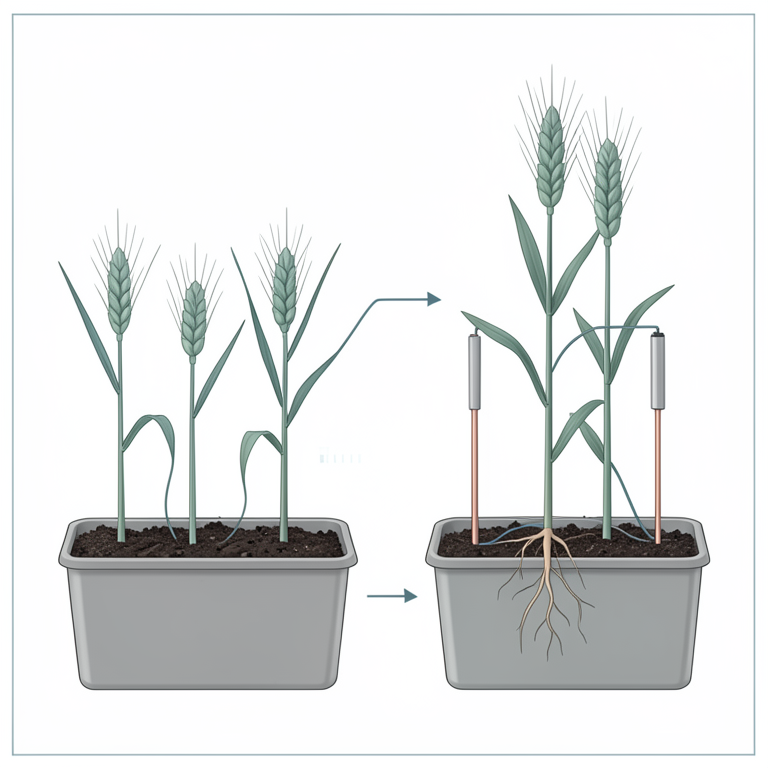
DC Electroculture Setup
AI-generated conceptual illustration (wheat and barley seedlings in rectangular plant pots). It explains the idea and does not show study data.
View source evidence ↗Figures & tables
From the original paper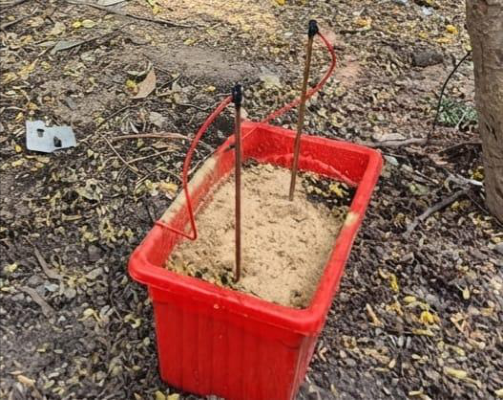 Figure 1A
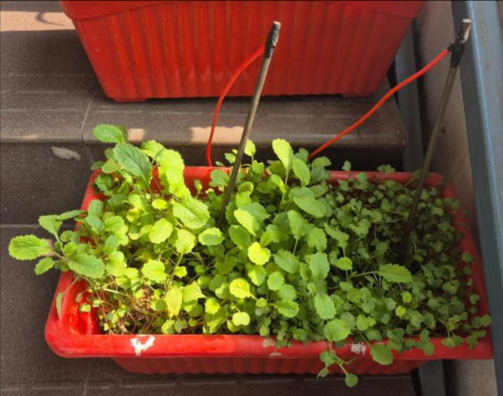 Figure 1B
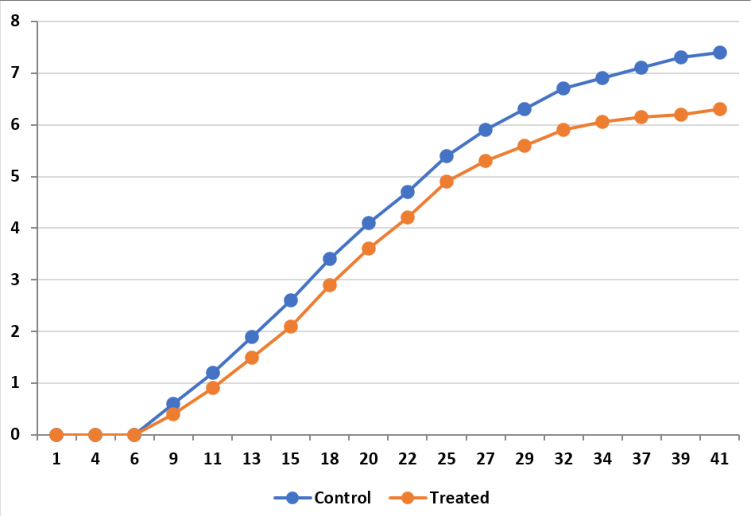 Figure 2
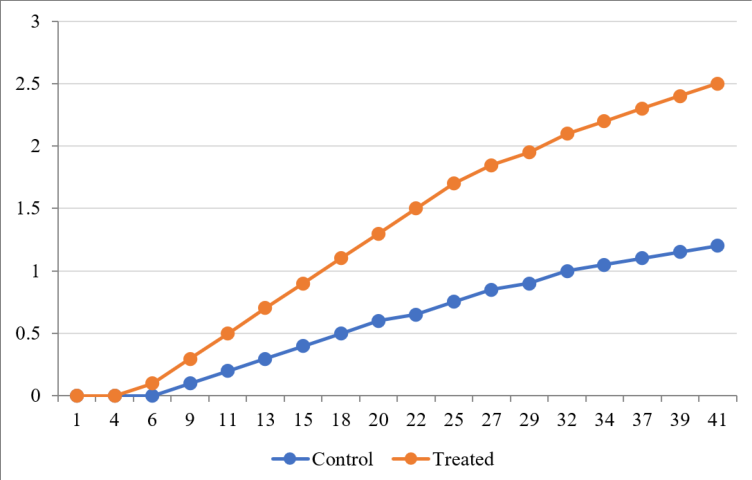 Figure 3
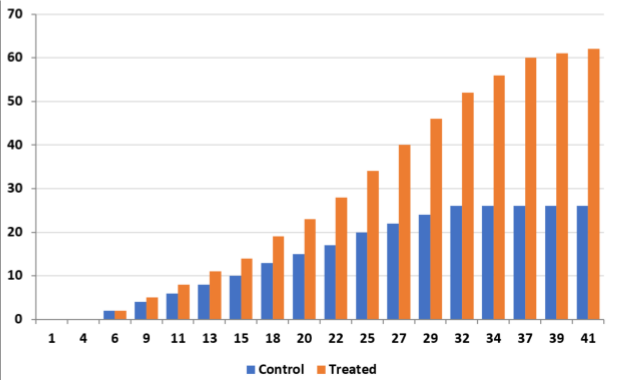 Figure 4
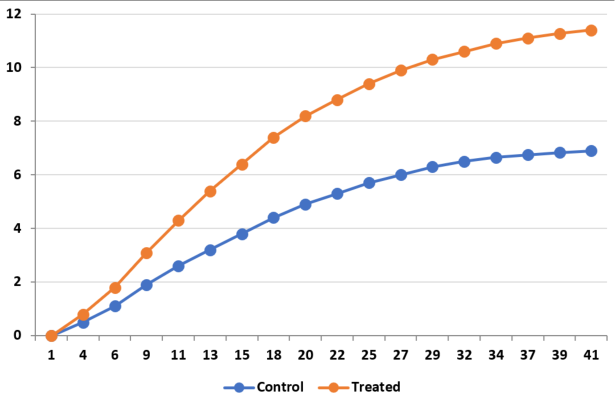 Figure 5
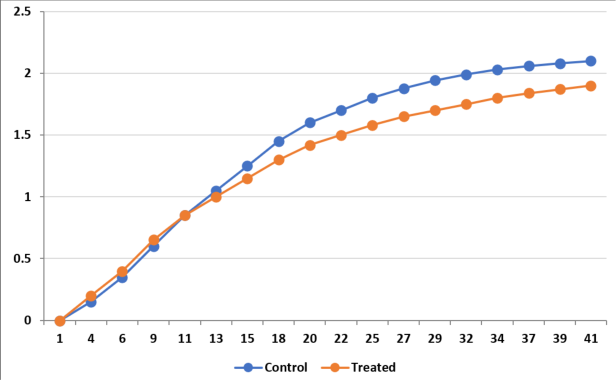 Figure 6
 Table 1
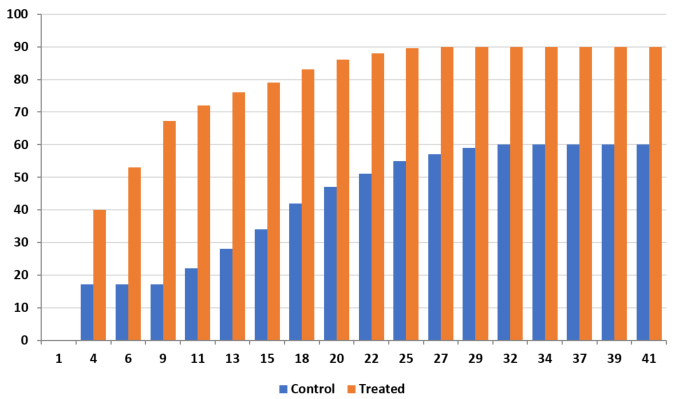 Figure 7
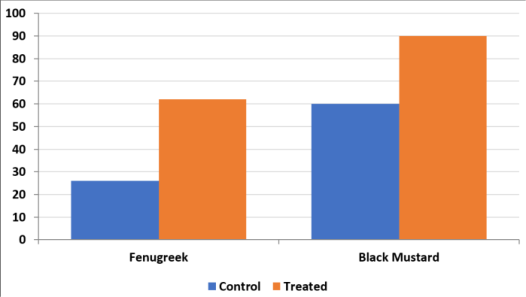 Figure 8
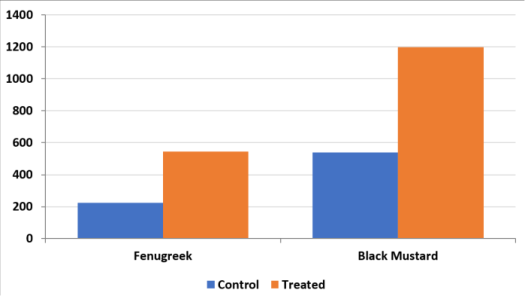 Figure 9
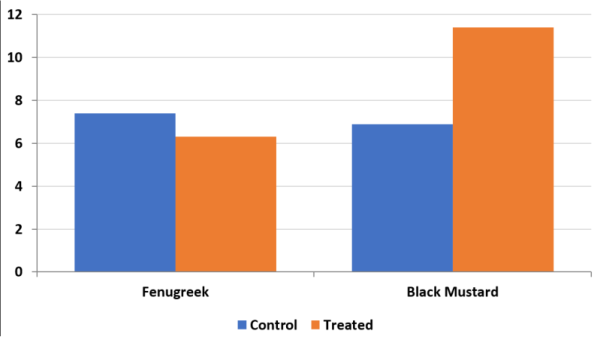 Figure 10
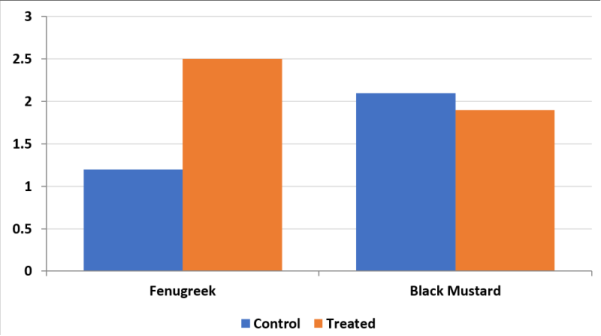 Figure 11
Introduction
The application of electric current to soil or growing media to stimulate seed germination and plant growth has been studied for more than two centuries. Interest in this approach has increased in recent years because it offers a way to improve crop establishment without the use of chemical inputs. However, the published evidence is inconsistent. Some studies report clear improvements in germination percentage and seedling vigour [1,3,7,8] , while others find no meaningful effect [5] . The outcome appears to depend on the type of treatment used. Continuous low-voltage current, brief high-voltage pulses, plasma discharge, and electromagnetic fields are physically distinct interventions and do not always produce comparable results [2,6,9] . Work specifically on low-voltage Direct Current (DC) is more limited. Studies show that the applied field strength matters considerably. In at least one species, a mild field improved height, root length, and biomass, whereas a stronger field applied under identical conditions suppressed the same parameters, indicating that higher voltage is not necessarily beneficial [4] . In contrast, passive copper-rod electrodes relying only on naturally occurring soil potentials, without any external power source, have failed to produce consistent yield benefits in home-garden vegetable species [5] . Several studies using active low-voltage DC treatment, including on wheat, radish, and other vegetables, have reported improved germination percentage, shoot and root elongation, and overall seedling vigour relative to untreated controls [2,3,7,8] . Two gaps in the existing literature were identified. First, no controlled electroculture data appear to be available for fenugreek (Trigonella foenum-graecum), an important legume crop in India. Second, most electroculture experiments are conducted over a single short growing period, so within-trial consistency of the treatment effect across the full course of establishment and early growth is not well established. The present study was therefore designed to evaluate the effect of a 9 V DC treatment on germination percentage, shoot length, root length, and Seed Vigour Index I (SVI-I) over a 41-day winter growing period in two crops fenugreek and black mustard (Brassica nigra) chosen to represent a legume and an oilseed crop grown under comparable conditions.
Materials and Methods
Materials and Methods
Study site and experimental timeline
The experiment was carried out at St. Xavier's College (Autonomous), Ahmedabad, Gujarat, India. The trial ran from mid-December to the end of January, covering approximately 41 days, and included black mustard and fenugreek.
Experimental design
For each species, pots were divided into two groups: a treated group receiving DC electrical stimulation and a control group receiving no stimulation. Within each species, all growing conditions including watering, light exposure, growing medium, and pot placement were kept identical between the treated and control groups. Growing media differed between species: black mustard was grown in cocopeat and fenugreek in a vermicompost and garden-soil mixture. Comparisons between species should therefore be interpreted with this difference in mind. This within-species arrangement was used to isolate the effect of the applied electric current.
Seed material and pre-sowing preparation
Seeds of each species were inspected for visible damage and then soaked in distilled water for 12 hours before sowing. Seeds floating after soaking were discarded as a low-cost screen against non-viable seeds. Approximately 500 seeds of black mustard and approximately 250 seeds of fenugreek were sown per treatment group. All seeds were sown at a depth of 1-2 cm.
Growing media and pot set-up
Rectangular plastic pots (14 cm high × 33 cm long × 18 cm wide), each filled with approximately 1 kg of growing medium, were used. The growing medium varied by species: black mustard was grown in cocopeat, and fenugreek in a vermicompost and garden-soil mixture. Pots were kept outdoors under natural light and watered daily with tap water. Pots grown in cocopeat received a weekly supplement of diluted hydroponic nutrient solution because cocopeat holds few nutrients on its own; pots in other media did not.
Electrical stimulation treatment
In each treated pot, two copper rods (30 cm long) were inserted vertically into the growing medium at opposite ends of the pot to a depth of 1-2 cm. One rod was connected to the positive terminal and the other to the negative terminal of a 9 V battery, completing a simple DC circuit through the growing medium. Because the current through the medium depends on substrate resistance, which varies with moisture content, voltage rather than current was the fixed parameter. Batteries were replaced approximately once per week. Control pots had no electrodes and received no stimulation; all other growing conditions were identical to the treated group. The electrode configuration before sowing is shown in Fig. 1A, and the resulting seedling establishment is illustrated in Fig. 1B.
Observations and data collection
Germination percentage and seedling growth measurements were recorded at regular intervals throughout the trial. At each observation, three representative seedlings were selected from each pot for shoot and root length measurement. Germination percentage was scored across the whole pot. The present study used cross-sectional sampling, meaning three different seedlings were measured at each observation point rather than the same three plants being followed over time. Day-to-day variation in mean values should therefore be interpreted as sampling variation arising from this cross-sectional approach. Germination percentage (%) was calculated as the number of germinated seeds divided by total seeds sown, multiplied by 100. Shoot length (cm) was measured from the base of the stem to the tip of the longest leaf. Root length (cm) was measured from the root-shoot junction to the tip of the longest primary root. Both were recorded as the mean of three seedlings per pot at each interval. Seed Vigour Index I (SVI-I) was calculated as germination percentage multiplied by the sum of mean shoot length and mean root length at the final observation, following the standard formula used in seed-quality testing. All comparisons reported are descriptive differences between treated and control means (n = 3 seedlings per measurement); no formal inferential statistics were computed.
Results
Results are presented separately for each crop. Day numbers refer to the 41-day winter observation window used for both crops.
Fenugreek (Trigonella foenum-graecum)
Germination and growth were negligible until approximately Day 6. At Day 41, control shoot length was 7.40 cm; the treated group reached 6.30 cm, remaining 1.10 cm below the control. Despite a positive treatment response in germination and root length throughout the trial, treated shoot length had not surpassed the control by the end of the 41-day window.
Black mustard (Brassica nigra)
Black mustard showed the largest treatment-control separation in this study. At Day 41, treated shoot length was 11.40 cm versus 6.90 cm in controls, a difference of 4.50 cm. Treatment-related differences were evident throughout the observation period and increased progressively over time Root length at Day 41 stood at 2.10 cm in the control and 1.90 cm in the treated group. The two groups were closely matched at the final observation, with the control holding a marginal 0.20 cm advantage consistent with sampling variability rather than a biologically meaningful divergence.
Summary of final values across all crops
Table 1 presents the final germination percentage, shoot length, root length, and SVI-I for both crops. Figs. 8-11 present these data graphically.
| Crop | Germ. % Ctrl / Trt | Final Shoot (cm) Ctrl / Trt | Final Root (cm) Ctrl / Trt | SVI-I Ctrl | SVI-I Trt |
|---|---|---|---|---|---|
| Fenugreek | 26.0 / 62.0 | 7.40 / 6.30 | 1.20 / 2.50 | 223.6 | 545.6 |
| Black Mustard | 60.0 / 90.0 | 6.90 / 11.40 | 2.10 / 1.90 | 540.0 | 1197.0 |
Table text extracted from the original PDF; superscript letters are shown inline. The original table image is below.
View original table image
Discussion
Germination percentage was consistently higher in the treated group for both crops. The size of the effect varied considerably, however, from a 30 percentage-point advantage in black mustard to a more than two-fold advantage in fenugreek. This pattern is consistent with the broader electroculture literature, which reports that electrical treatment tends to increase germination across dicot species, but that the magnitude of the response differs between species and can vary even when conditions are otherwise identical [1,3,7] . No prior electroculture data for fenugreek could be located, so the results for this species represent new observations rather than confirmation of published species-matched findings. Shoot length showed a pattern that appeared to differ between the two species under the experimental conditions used. Black mustard responded strongly and consistently, with treated plants finishing 4.50 cm ahead of controls by Day 41. This finding is consistent with published work applying electrical or plasma treatment to this species [6] . Electrical stimulation did not improve shoot length in fenugreek during the 41-day observation period; at the final observation the treated group reached 6.30 cm compared to 7.40 cm in the control. At the same time, germination (62.0% versus 26.0%) and root length (2.50 cm versus 1.20 cm) were both higher in the treated group, indicating a positive treatment response in those dimensions. Whether shoot length would have caught up or exceeded the control beyond Day 41 cannot be determined from the present data. Root length responded positively to treatment in one of the two crops (fenugreek). In black mustard, the two groups were closely matched at Day 41 (control 2.10 cm, treated 1.90 cm), a marginal difference consistent with sampling variability rather than a biologically meaningful divergence.
Several studies have proposed that electric-field treatment improves root development through electro-migration of ions in the growing medium, which is thought to increase nutrient availability at the root-soil interface [4] . This mechanism could explain the positive root response observed in fenugreek, since root tissue is in direct contact with the treated substrate. However, no soil-chemistry measurements were taken in the present study, so this explanation remains a hypothesis. SVI-I was higher in the treated group for both crops: 545. Because the two species were grown in different media cocopeat for black mustard and a vermicompost-garden-soil mixture for fenugreek growth differences between species may reflect substrate effects rather than species identity alone. Black mustard germination counts from Day 9 onward are approximate field estimates, as precise counting was not feasible at the seed densities used. The treatment effect is best evaluated from within-species comparisons; replication across additional growing periods and media would strengthen conclusions about consistency and generalisability.
Conclusion
A simple 9 V DC electroculture set-up increased germination percentage in both winter crops tested. Final shoot length was higher under treatment in black mustard (Brassica nigra), where the treated advantage reached 4.50 cm by Day 41. In fenugreek, the treated shoot (6.30 cm) remained below the control (7.40 cm) at Day 41, while the treated root length (2.50 cm) substantially exceeded the control (1.20 cm), indicating a positive root response despite the shoot shortfall. SVI-I was higher under treatment in both crops, with values of 545.6 versus 223.6 in fenugreek and 1197.0 versus 540.0 in black mustard. These findings provide germination and growth data for fenugreek under DC electrical stimulation for the first time. The response appeared to differ between the two species under the experimental conditions used; however, because the two species were grown in different growing media, this difference cannot be attributed to species identity alone. Future work should include larger and longitudinally tracked sample sizes, formal statistical testing, direct measurements of soil chemistry to clarify the role of electromigration in the observed root and germination responses, and replication across additional growing periods to test the consistency of the treatment effect over time.
Figures and tables from the paper
References
9 in the original paper- Acosta-Santoyo G, Herrada RA, De Folter S, Bustos E. Stimulation of the germination and growth of different plant species using an electric field treatment with IrO2-Ta2O5|Ti electrodes. J Chem Technol Biotechnol. 2018;93(5):1488-1494. https://doi.org/10.1002/jctb.5517
- Ahmed Z, Manzoor MF, Ahmad N, Zeng XA, Din ZU, Roobab U, et al. Impact of pulsed electric field treatments on the growth parameters of wheat seeds and nutritional properties of their wheat plantlets juice. Food Sci Nutr. 2020;8(5):2490-2500. https://doi.org/10.1002/fsn3.1540
- Bhagyawant RU, Patil MB. Effect of electroculture on seed germination of certain crop plants. Biosci Discov. 2021;12(2):69-72.
- Chen XY, Ling M, Deng LY, Du ML, Yang YY, Wang C, Chen K. Effects of low-voltage direct current electric field on the growth of Astragalus adsurgens Pall. and soil enzyme activity in root system. Hubei Agric Sci. 2021;60(8):102-106.
- Chier M, Oakey A, Budny ML, Lemoine NP. Passive electroculture using copper rods does not improve yield in home container vegetable gardening. PLoS ONE. 2025;20(8):e0329615. https://doi.org/10.1371/journal.pone.0329615
- Guragain RP, Baniya HB, Shrestha B, Guragain DP, Subedi DP. Germination enhancement of mustard (Brassica nigra) seeds using dielectric barrier discharge (DBD). AIP Adv. 2023;13(3):035338. https://doi.org/10.1063/5.0146955
- Morales C, Solís S, Bacame FJ, Reyes-Vidal MY, Manríquez J, Bustos E. Electrical stimulation of Cucumis sativus germination and growth using IrO2Ta2O5|Ti anodes in Vertisol pelic. Appl Soil Ecol. 2021;161:103864. https://doi.org/10.1016/j.apsoil.2020.103864
- Patil MB. Effect of electroculture on seed germination and growth of Raphanus sativus L. Afr J Plant Sci. 2018;12(12):350-353. https://doi.org/10.5897/AJPS2018.1716
- Pelesz A, Fojcik M. Effect of high static electric field on germination and early stage of growth of Avena sativa and Raphanus sativus. J Electrostatics. 2024;130:103939. https://doi.org/10.1016/j.elstat.2024.103939