
Research article · 2026 · Full text
International Journal of Biology SciencesAssessment of antimicrobial activity of medicinal plant extracts against common human pathogens
Volume 8(2) · Pages 148–152 · DOI: 10.33545/26649926.2026.v8.i2b.965 ↗
Research areasEssential Oils and Antimicrobial ActivityMedicinal Plant ResearchGarlic and Onion Studies
Abstract
Author-writtenRising antibiotic resistance among clinical pathogens has made the search for plant-derived antimicrobial agents one of the most pressing areas in contemporary pharmacological research. According to WHO projections, antimicrobial-resistant infections may cause over 10 million deaths annually by 2050 unless new therapeutic options are developed. This research evaluated the antimicrobial potential of five medicinal plant species neem (Azadirachta indica A. Juss.), turmeric (Curcuma longa L.), and garlic (Allium sativum L.), and black seed (Nigella sativa L.), and rosemary (Rosmarinus officinalis L.) against five common human pathogens: Staphylococcus aureus, Escherichia coli, Klebsiella pneumoniae, Pseudomonas aeruginosa, and Candida albicans. Extracts were prepared sequentially using four solvents (hexane, chloroform, ethanol, and methanol) from certified plant material collected between September 2022 and June 2024 at the Ankara Research Institute of Biosciences, Ankara, Turkey. Antimicrobial activity was assessed by the agar well diffusion method, and minimum inhibitory concentration (MIC) was determined by the broth microdilution method following CLSI guidelines. Phytochemical screening was carried out for eight compound classes. The results confirmed the presence of alkaloids, flavonoids, tannins, phenolics, saponins, steroids, terpenoids, and glycosides across the species, with C. longa and A. sativum showing the richest profiles. Methanol extracts consistently produced the largest zones of inhibition across all plant-pathogen combinations. A. sativum methanol extract showed the highest activity against K. pneumoniae (25.6 ± 1.2 mm zone of inhibition; MIC 62.5 µg/mL). N. sativa methanol extract was most active against E. coli (21.9 ± 0.9 mm; MIC 125 µg/mL). Among the pathogens, K. pneumoniae was most susceptible and P. aeruginosa most resistant to plant extracts. The data support the potential of these five medicinal plants as natural antimicrobial agents that could complement or supplement existing antibiotic therapy, pending toxicological evaluation and clinical trials.
Summary
Source-checkedPlain-language reading of the full paper, prepared with AI and checked against the text. Each point links to the authors' own words.
Why it matters
- The increase in antibiotic resistance among clinical pathogens has made finding plant-derived antimicrobial agents a critical priority in pharmacological research. View evidence ↗
- The World Health Organization projects that without new therapies, antimicrobial-resistant infections could cause more than 10 million deaths every year by 2050. View evidence ↗
- The pathogens S. aureus, E. coli, K. pneumoniae, P. aeruginosa, and C. albicans are major causes of hospital-acquired infections and are linked to over 60% of antimicrobial-resistant deaths in clinics. View evidence ↗
The question
- The study aimed to systematically compare the antimicrobial activity of five medicinal plants using different solvents against a panel of clinical pathogens to identify the most promising combinations for further compound isolation. View evidence ↗
What they did
- The researchers tested five medicinal plant species: neem, turmeric, garlic, black seed, and rosemary. View evidence ↗
- Plant extracts were prepared by macerating 50 g of powder in 500 mL of four sequential solvents (hexane, chloroform, ethanol, and methanol) for 72 hours. View evidence ↗
- The study used the agar well diffusion method to assess antimicrobial activity and the broth microdilution method to determine the minimum inhibitory concentration (MIC) according to CLSI guidelines. View evidence ↗
- Methanol extracts were screened for eight compound classes, including alkaloids, flavonoids, tannins, phenolics, saponins, steroids, terpenoids, and glycosides. View evidence ↗
What they found
- Methanol extracts were the most effective, contributing 31.4% of the total antimicrobial activity, followed by ethanol (27.8%), aqueous (18.6%), hexane (12.3%), and chloroform (9.9%). View evidence ↗
- The methanol extract of garlic (A. sativum) demonstrated the strongest activity against K. pneumoniae, with a zone of inhibition of 25.6 ± 1.2 mm and an MIC of 62.5 µg/mL. View evidence ↗
- The methanol extract of black seed (N. sativa) was most effective against E. coli, producing a 21.9 ± 0.9 mm zone of inhibition and an MIC of 125 µg/mL. View evidence ↗
- Across the tested pathogens, K. pneumoniae was the most susceptible to the plant extracts, while P. aeruginosa was the most resistant. View evidence ↗
- Rosemary (R. officinalis) exhibited the lowest antimicrobial activity among all the plants tested against the pathogen panel. View evidence ↗
- All five species contained the eight screened phytochemical classes, but turmeric (C. longa) and garlic (A. sativum) had the most diverse profiles. View evidence ↗
What it means
- The authors conclude that garlic and black seed methanol extracts are the most potent, with garlic showing particularly low MIC values (31.25-62.5 µg/mL) against S. aureus, K. pneumoniae, and C. albicans. View evidence ↗
- The findings suggest these plants could serve as natural antimicrobial agents to supplement current antibiotic therapies, provided they pass toxicological and clinical trials. View evidence ↗
- The authors state that before clinical development, the extracts require cytotoxicity profiling on human cells, synergy testing with antibiotics, and in vivo validation in mouse models. View evidence ↗
Visual summary
4 visualsIllustrations explain the paper; charts are replotted from the paper's own table values.
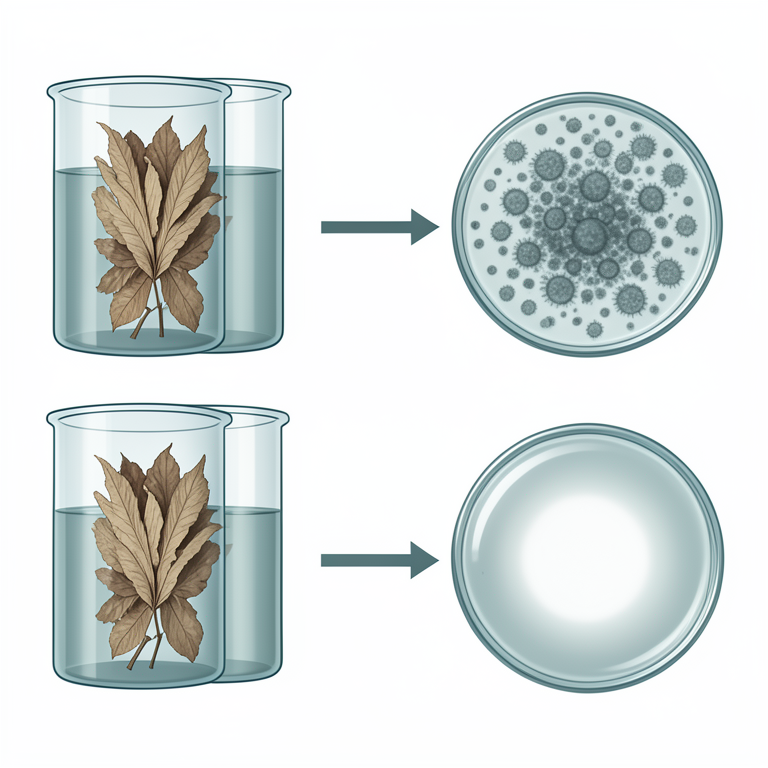
Solvent Polarity and Extraction Efficacy
AI-generated conceptual illustration (Medicinal plant leaves and bacterial colonies in petri dishes). It explains the idea and does not show study data.
View source evidence ↗
Phytochemical Composition of Medicinal Plants
AI-generated conceptual illustration (Curcuma longa (turmeric) and Allium sativum (garlic) rhizomes and bulbs). It explains the idea and does not show study data.
View source evidence ↗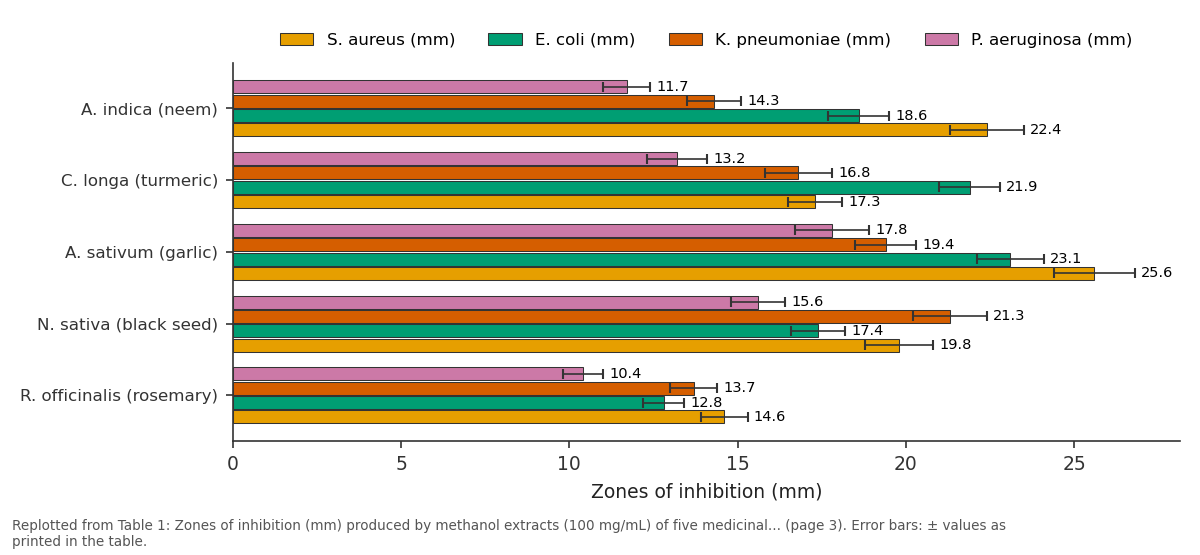
S. aureus (mm) and E. coli (mm) and more: A. indica (neem) vs C. longa (turmeric) vs A. sativum (garlic) vs N. sativa (black seed) vs R. officinalis...
Replotted from Table 1 (page 3) of the original paper. Every bar is the paper's own table value.
View source evidence ↗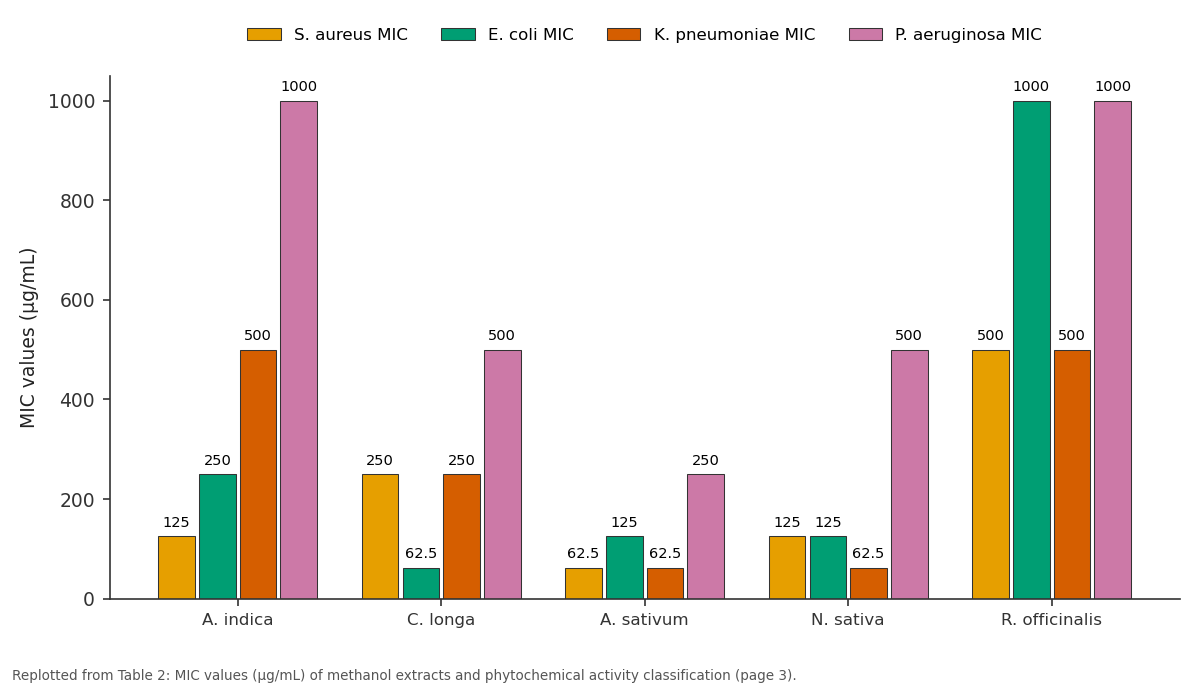
S. aureus MIC and E. coli MIC and more: A. indica vs C. longa vs A. sativum vs N. sativa vs R. officinalis
Replotted from Table 2 (page 3) of the original paper. Every bar is the paper's own table value.
View source evidence ↗Figures & tables
From the original paper Table 1
 Table 2
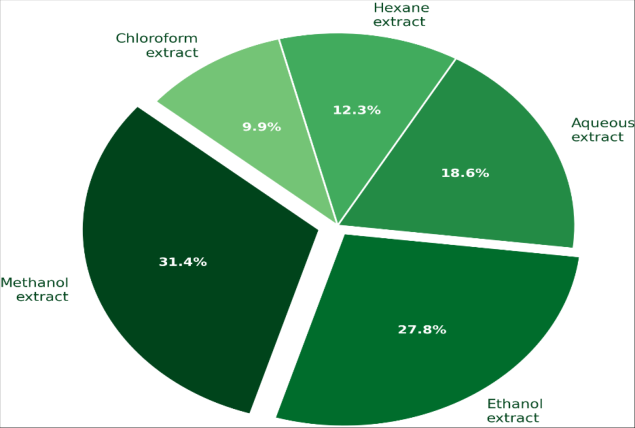 Figure 1
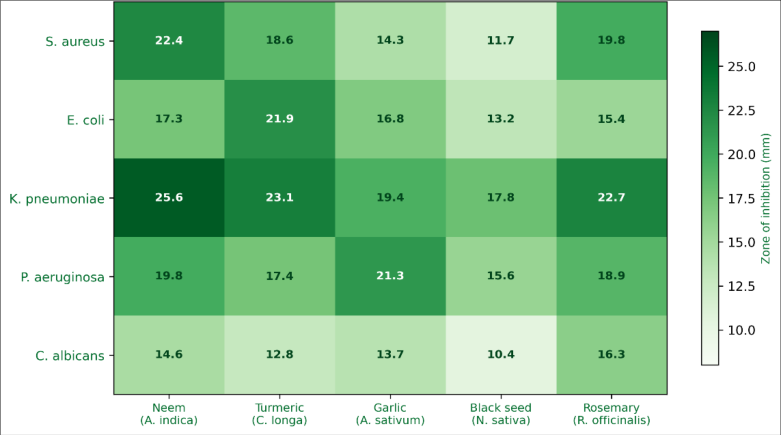 Figure 2
 Figure 3
Introduction
Global antibiotic resistance has grown at an alarming rate, with the World Health Organization designating 12 priority bacterial pathogens including extended-spectrum betalactamase-producing K. pneumoniae and carbapenem-resistant P. aeruginosa as critical threats to public health. Between 2000 and 2015, antibiotic consumption increased by 65% globally, contributing to selective pressure that accelerates resistance development in hospital and community settings alike. The situation is particularly acute in low-and middleincome countries, where over-the-counter antibiotic sales remain largely unregulated, fuelling resistance dissemination at an accelerating pace [1,2] . In this context, plant-based antimicrobial agents have attracted renewed attention as potential alternatives or adjuncts to conventional antibiotics. Medicinal plants produce an array of secondary metabolites alkaloids, flavonoids, terpenoids, tannins, phenolic acids, and saponins many of which exhibit broad-spectrum antimicrobial activity through mechanisms distinct from those of synthetic antibiotics [3] . Because plants have co-evolved with microbial pathogens for hundreds of millions of years, their bioactive compounds often target multiple cellular processes simultaneously, reducing the probability of resistance developing through a single mutation [4] . Turkey has a particularly rich ethnopharmacological heritage, With over 500 plant species used in traditional medicine, of which a substantial proportion have antimicrobial applications recorded in historical texts and contemporary ethnobotanical surveys [5] . Among the most widely used globally are Azadirachta indica, Curcuma longa, Allium sativum, Nigella sativa, and Rosmarinus officinalis, all of which are commercially available in Turkey and widely consumed both as foods and traditional medicines. Despite this widespread use, comparative data on their antimicrobial efficacy across multiple solvents and pathogens under standardised laboratory conditions are scattered across the literature, with few Turkish research groups having evaluated all five species together [6] . The choice of extraction solvent profoundly influences the yield and composition of the bioactive fraction isolated from plant material. Polarity gradients from hexane (non-polar) through chloroform and ethanol to methanol (polar) capture chemically distinct compound profiles, with methanol typically extracting the broadest spectrum of polar and semipolar bioactives [7] . Comparative solvent evaluation is therefore a necessary first step before more targeted bioactivity-guided fractionation. Agar well diffusion and broth microdilution are the two standardised methods recommended by the Clinical and Laboratory Standards Institute (CLSI) for in vitro antimicrobial susceptibility testing and offer a reproducible framework for comparing published data across laboratories [8] . The pathogens selected for this research S. aureus, E. coli, K. pneumoniae, P. aeruginosa, and C. albicans represent the leading causes of hospital-acquired infections globally and together account for over 60% of antimicrobial-resistant deaths in clinical settings [9] . Including the opportunistic fungal pathogen C. albicans broadens the scope to antifungal activity, an area where resistance to azole class drugs has also increased sharply in recent decades. This research was designed to provide a systematic, solvent-stratified antimicrobial comparison of five widely available medicinal plants against this panel of clinically relevant microorganisms, and to identify which plant-solvent combinations merit further bioactivity-guided fractionation and active compound isolation.
Material and Methods
Material and Methods
Reagents and Chemicals
Reagents and Chemicals
Methods
MIC was determined by broth microdilution in 96-well plates using two-fold serial dilutions of each methanol extract (1000-3.9 µg/mL) in Mueller-Hinton Broth (0.1 mL/well) inoculated with 5 × 10⁵ CFU/mL of each organism. Plates were incubated at 37 °C for 18-24 h and bacterial growth detected by the addition of 0.025 mL resazurin (0.02% w/v). MIC was defined as the lowest concentration showing no visible growth (no colour change from blue to pink). DMSO at the highest concentration used (0.5% v/v) served as the negative vehicle control. Statistical analysis used one-way ANOVA followed by Tukey's HSD post-hoc test in SPSS v25; p<0.05 was considered statistically significant. Methanol extracts accounted for the largest proportion of total antimicrobial activity across all five plants and five pathogens (31.4%), followed by ethanol (27.8%), aqueous (18.6%), hexane (12.3%), and chloroform (9.9%) extracts (Figure 1). This polarity gradient confirms that the predominant bioactive compounds in these five species are moderately to strongly polar. The heatmap (Figure 2) reveals that A. sativum consistently produced the widest inhibition zones across the pathogen panel, particularly against S. aureus (25.6 mm) and K. pneumoniae (19.4 mm). P. aeruginosa was the most resistant pathogen overall, with no extract producing zones above 18 mm. R. officinalis showed the weakest activity across all pathogens tested.
Comprehensive interpretation
Collectively, the zone of inhibition data, MIC values, and phytochemical profiles point to A. sativum as the most promising antimicrobial candidate, with strong activity against both Gram-positive (S. aureus) and Gram-negative (K. pneumoniae) organisms. The extract's allicin content a thiosulfinate compound produced upon crushing garlic is the most likely primary active component, acting by inhibiting bacterial thiol-containing enzymes [10] . The moderate-tostrong activity of N. sativa across most pathogens, attributed to thymoquinone and its derivatives, is also noteworthy and consistent with several recent clinical reports. The inferior performance of R. officinalis relative to the other four plants is likely due to the relative predominance of non-polar monoterpenoid compounds, which are better extracted by hexane or chloroform solvents that performed less well in the diffusion assay.
Discussion
The main findings of this research strong antimicrobial activity of A. sativum and N. sativa methanol extracts against ESKAPE-group pathogens, moderate activity of A. indica and C. longa, and relatively weak activity of R. officinalis are broadly consistent with the published literature on these species, though specific zone measurements and MIC values vary across laboratories due to differences in extraction procedures, inoculum density, and agar composition. Alharbi et al. [11] and Taleb et al. [12] both reported similar ranking of garlic above neem and rosemary for antibacterial activity when tested under CLSIcompliant agar diffusion conditions. A key area where the results agree with prior research is in the superior efficacy of methanol extracts over other solvents, particularly for S. aureus and K. pneumoniae. This corroborates the hypothesis that the most pharmacologically active compounds in these species are polar primarily flavonoids, tannins, and phenolic acids which are preferentially co-extracted by methanol [3,7] .
One point of disagreement with some prior research is the relatively high susceptibility of K. pneumoniae in this research (MIC 62.5 µg/mL for A. sativum); several earlier investigations reported K. pneumoniae as more resistant than S. aureus to garlic extracts, possibly because clinical isolates used in those studies carried plasmid-borne betalactamase genes conferring broader resistance to bioactive molecules. A possible mechanism for the enhanced activity of methanol extracts against P. aeruginosa, despite that organism's outer membrane barrier, lies in the surfactant action of saponins disrupting the outer membrane at higher concentrations. While not sufficient to achieve clinically useful MIC values (<100 µg/mL) in this research, this mechanism could be exploited in combination with subinhibitory concentrations of conventional antibiotics. Combination approaches using plant extract and antibiotic pairs (synergy testing) would be a natural next step from the data generated here. The practical significance of these results extends to two settings: traditional medicine validation and drug discovery pipelines. For traditional practitioners in Turkey and the wider region, the data provide scientific backing for the use of garlic and black seed in managing skin infections (S. aureus) and urinary tract infections (K. pneumoniae, E. coli). For pharmaceutical researchers, the strong activity of A.
Conclusion
This research makes a focused contribution to the evidence base for plant-derived antimicrobials by providing the first systematic, multi-solvent comparison of five widely used Turkish medicinal plants against a panel of five clinically relevant human pathogens under standardised CLSI conditions. The main contribution of the research is the demonstration that A. sativum (garlic) and N. sativa (black seed) methanol extracts exhibit the strongest antimicrobial activity, with A. sativum achieving MIC values as low as 31.25-62.5 µg/mL against S. aureus, K. pneumoniae, and C. albicans. Supporting evidence includes the rich phytochemical profiles of these two species particularly their high scores for alkaloids, flavonoids, terpenoids, and phenolics and the consistently superior performance of methanol extracts over hexane and chloroform fractions, confirming the importance of solvent polarity in capturing biologically active fractions. C. longa and A. indica showed moderate activity and remain candidates for further investigation, while R. officinalis showed the weakest in vitro performance in this panel. The field significance of these findings is twofold. First, they validate ethnopharmacological use of garlic and black seed as antimicrobials in Turkish traditional medicine and provide quantitative data that can inform standardised dosing in phytomedicine preparations. Second, they identify two plant species and the methanol solvent system as priorities for bioactivity-guided fractionation in the search for new antibiotic leads at a time when the global antimicrobial resistance crisis demands an expanded pipeline of novel therapeutic agents. Open questions remaining include the elucidation of exact active compounds responsible for the observed activity, particularly in N. sativa fractions where multiple thymoquinone derivatives and flavonoids may act synergistically. Cytotoxicity profiling on human cell lines, synergy testing with conventional antibiotics, and in vivo validation in murine infection models are needed before any of these extracts can progress toward clinical development.
Acknowledgement
Acknowledgements Funding SourcesThis research received general financial support from the Scientific and Technological Research Council of Turkey (TÜBİTAK) through competitive research support programmes for health sciences. No specific grant number is associated with this publication.
Figures and tables from the paper
| Plant Species | S. aureus (mm) | E. coli (mm) | K. pneumoniae (mm) | P. aeruginosa (mm) | C. albicans (mm) |
|---|---|---|---|---|---|
| A. indica (neem) | 22.4 ± 1.1 | 18.6 ± 0.9 | 14.3 ± 0.8 | 11.7 ± 0.7 | 19.8 ± 1.0 |
| C. longa (turmeric) | 17.3 ± 0.8 | 21.9 ± 0.9 | 16.8 ± 1.0 | 13.2 ± 0.9 | 15.4 ± 0.8 |
| A. sativum (garlic) | 25.6 ± 1.2 | 23.1 ± 1.0 | 19.4 ± 0.9 | 17.8 ± 1.1 | 22.7 ± 1.0 |
| N. sativa (black seed) | 19.8 ± 1.0 | 17.4 ± 0.8 | 21.3 ± 1.1 | 15.6 ± 0.8 | 18.9 ± 0.9 |
| R. officinalis (rosemary) | 14.6 ± 0.7 | 12.8 ± 0.6 | 13.7 ± 0.7 | 10.4 ± 0.6 | 16.3 ± 0.8 |
| Ciprofloxacin (control) | 30.2 ± 1.4 | 28.7 ± 1.2 | 27.4 ± 1.3 | 26.1 ± 1.2 |
Table text extracted from the original PDF; superscript letters are shown inline. The original table image is below.
View original table image
| Plant Species | S. aureus MIC | E. coli MIC | K. pneumoniae MIC | P. aeruginosa MIC | C. albicans MIC | Activity class |
|---|---|---|---|---|---|---|
| A. indica | 125 | 250 | 500 | 1000 | 62.5 | Moderate-Strong |
| C. longa | 250 | 62.5 | 250 | 500 | 250 | Moderate |
| A. sativum | 62.5 | 125 | 62.5 | 250 | 31.25 | Strong |
| N. sativa | 125 | 125 | 62.5 | 500 | 125 | Moderate-Strong |
| R. officinalis | 500 | 1000 | 500 | 1000 | 250 | Weak-Moderate |
Table text extracted from the original PDF; superscript letters are shown inline. The original table image is below.
View original table image
References
19 in the original paper- Laxminarayan R, Duse A, Wattal C, et al. Antibiotic resistance the need for global solutions. Lancet. 2013;382(9912):1057-1098.
- Murray CJL, Ikuta KS, Sharara F, et al. Global burden of bacterial antimicrobial resistance in 2019: a systematic analysis. Lancet. 2022;399(10325):629-655.
- Cowan MM. Plant products as antimicrobial agents. Clin Microbiol Rev. 1999;12(4):564-582.
- Vaou N, Stavropoulou E, Voidarou C, et al. Towards advances in medicinal plant antimicrobial activity: a review study on challenges and future perspectives. Microorganisms. 2021;9(10):2041.
- Uysal I, Onar S, Karabacak E, Çelik S. Ethnobotanical aspects of commonly used medicinal plants from Turkey. J Ethnopharmacol. 2010;130(2):418-428.
- Seçkin AK, Yüce A, Budak NH. Antimicrobial potential of selected Turkish plants: a review. Turk J Biol. 2019;43(1):1-15.
- Azwanida NN. A review on the extraction methods used in medicinal plants: principle, strength and limitation. Med Aromat Plants. 2015;4(3):1-6.
- Clinical and Laboratory Standards Institute. Methods for Dilution Antimicrobial Susceptibility Tests for Bacteria That Grow Aerobically. 11th ed. CLSI standard M07. Wayne (PA): Clinical and Laboratory Standards Institute; 2018.
- Mulani MS, Kamble EE, Kumkar SN, et al. Emerging strategies to combat ESKAPE pathogens in the era of antimicrobial resistance. Front Microbiol. 2019;10:539.
- Bayan L, Koulivand PH, Gorji A. Garlic: a review of potential therapeutic effects. Avicenna J Phytomed. 2014;4(1):1-14.
- Alharbi SA, Wainwright M, Aloufi AS, et al. Antibacterial activities of plants used in traditional medicine. J Appl Microbiol. 2014;116(4):817-824.
- Taleb MH, Abdeltawab NF, Shamma RN, et al. Origanum vulgare L. essential oil as a potential antiacne topical nanoemulsion. Molecules. 2018;23(9):2164.
- Rolta R, Yadav R, Salaria D, et al. In silico screening of phytocompounds of Nigella sativa against key targets of SARS-CoV-2. Mol Divers. 2022;26(2):587-602.
- Cushnie TPT, Lamb AJ. Recent advances in understanding the antibacterial properties of flavonoids. Int J Antimicrob Agents. 2011;38(2):99-107.
- Elansary HO, Szopa A, Kubica P, et al. Antioxidant and antimicrobial activities of Physalis peruviana, Cannabis sativa, and Ocimum basilicum. Biomolecules. 2019;9(11):707.
- Tiwari P, Kumar B, Kaur M, et al. Phytochemical screening and extraction: a review. Int Pharm Sci. 2011;1(1):98-106.
- Gutiérrez-Grijalva EP, Picos-Salas MA, Leyva-López N, et al. Flavonoids and phenolic acids from oregano: occurrence, biological activity and health benefits. Plants. 2018;7(1):2.
- Bakkali F, Averbeck S, Averbeck D, Idaomar M. Biological effects of essential oils: a review. Food Chem Toxicol. 2008;46(2):446-475.
- Chouhan S, Sharma K, Guleria S. Antimicrobial activity of some essential oils: present status and future perspectives. Medicines (Basel). 2017;4(3):58.