
Research article · 2026 · Full text
International Journal of Biology SciencesMineral absorption dynamics and anti-nutritional factor interactions in Digera muricata (Kondhra) leaves: An in vitro digestion-dialysis investigation across processing methods
Volume 8(5) · Pages 232–236 · DOI: 10.33545/26649926.2026.v8.i5c.958 ↗
Research areasPhytase and its ApplicationsFood and Agricultural SciencesPlant Micronutrient Interactions and Effects
Abstract
Author-writtenAn illuminating example of the complexity inherent in plant-based iron bioavailability assessment is provided by Digera muricata (Kondhra), a wild leafy vegetable with documented high iron content but simultaneous accumulation of phytic acid, oxalic acid, condensed tannins, and saponins that modulate mineral absorption. This research conducted a systematic in vitro digestion-dialysis investigation of mineral absorption dynamics and Anti-Nutritional Factor (ANF) interactions in raw, boiled, and pressure-cooked D. muricata leaves, using a two-phase simulated gastrointestinal digestion protocol (gastric: pepsin, pH 2.0, 2h; intestinal: pancreatin-bile, pH 7.0, 2h) with dialysis membrane separation (MWCO 6000-8000 Da) for iron and zinc bioaccessibility quantification, conducted at Accra Institute of Biological Research, Ghana, in 2023. ANF quantification (phytic acid, oxalic acid, condensed tannins, saponins) was performed on raw and processed samples. Phytate-to-iron, phytate-to-zinc, and oxalate-to-calcium molar ratios were calculated and compared against WHO/FAO threshold values for adequate mineral bioavailability. Processing substantially reduced ANF levels: boiling reduced phytic acid by 35.2% and oxalic acid by 33.5%; pressure-cooking achieved further reductions of 52.6% and 52.8% respectively. Iron dialyzability increased from 18.6% (raw, intestinal phase) to 24.4% (boiled) and 28.6% (pressure-cooked). Zinc dialyzability improved from 11.2% to 22.4% with pressure-cooking. Phytate-to-iron molar ratios declined from 3.82 (raw) to 1.84 (pressure-cooked), remaining below the WHO threshold of 6.0 across all processing treatments. Phytate-to-zinc molar ratios (raw: 12.4; pressure-cooked: 6.2) were below the WHO threshold of 15 for all treatments, confirming adequate predicted zinc bioavailability. These findings provide mechanistic evidence for the processing-dependent nature of mineral bioaccessibility in D. muricata and support the recommendation of pressure-cooking or boiling over raw consumption for maximizing iron and zinc bioavailability in practical dietary settings.
Summary
Source-checkedPlain-language reading of the full paper, prepared with AI and checked against the text. Each point links to the authors' own words.
Why it matters
- Digera muricata (Kondhra) is a wild leafy vegetable that contains high levels of iron but also anti-nutritional factors (ANFs) like phytic acid and oxalic acid that can hinder mineral absorption. View evidence ↗
- There is a nutritional paradox where the same plant provides both essential minerals and the factors that block their absorption, necessitating data on how different processing methods affect bioaccessibility. View evidence ↗
The question
- The study aimed to investigate how raw, boiled, and pressure-cooked preparations of D. muricata leaves affect the absorption dynamics of minerals and their interactions with anti-nutritional factors. View evidence ↗
What they did
- Fresh D. muricata leaves were harvested at 6 weeks of growth from an experimental plot in Kumasi, Ghana, in October 2022. View evidence ↗
- The study compared three treatments: raw (shade-dried), boiled (100 °C for 15 minutes), and pressure-cooked (121 °C, 15 psi for 10 minutes). View evidence ↗
- A two-phase simulated digestion was used, consisting of a gastric phase (pH 2.0, pepsin, 2 hours) and an intestinal phase (pH 7.0, pancreatin and bile, 2 hours). View evidence ↗
- Mineral bioaccessibility was measured using dialysis bags (MWCO 6000-8000 Da) and analyzed via flame atomic absorption spectroscopy (AAS). View evidence ↗
What they found
- Processing reduced anti-nutritional factors; pressure-cooking reduced phytic acid by 52.6% and oxalic acid by 52.8%, while boiling reduced them by 35.2% and 33.5% respectively. View evidence ↗
- Intestinal iron dialyzability improved from 18.6% in raw leaves to 24.4% in boiled and 28.6% in pressure-cooked leaves. View evidence ↗
- Intestinal zinc dialyzability also increased with processing, rising from 11.2% in raw leaves to 16.4% in boiled and 22.4% in pressure-cooked leaves. View evidence ↗
- Phytate-to-iron molar ratios remained below the WHO threshold of 6.0 for all treatments, decreasing from 3.82 in raw leaves to 1.84 in pressure-cooked leaves. View evidence ↗
- Phytate-to-zinc ratios were below the WHO threshold of 15.0 for all treatments, ranging from 12.4 in raw to 6.2 in pressure-cooked leaves. View evidence ↗
- Oxalate-to-calcium ratios remained below the threshold of 1.0 for all methods, decreasing from 0.48 in raw to 0.22 in pressure-cooked leaves. View evidence ↗
- Absolute iron content decreased slightly from 8.86 mg/100g DW in raw leaves to 8.02 mg/100g DW in pressure-cooked leaves. View evidence ↗
What it means
- The authors recommend prioritizing pressure-cooking or boiling over raw consumption to maximize mineral bioavailability in anemia prevention programs. View evidence ↗
- The in vitro model provides estimates that correlate with but do not perfectly predict actual in vivo iron absorption, as host factors like iron status also play a role. View evidence ↗
Visual summary
3 visualsIllustrations explain the paper; charts are replotted from the paper's own table values.
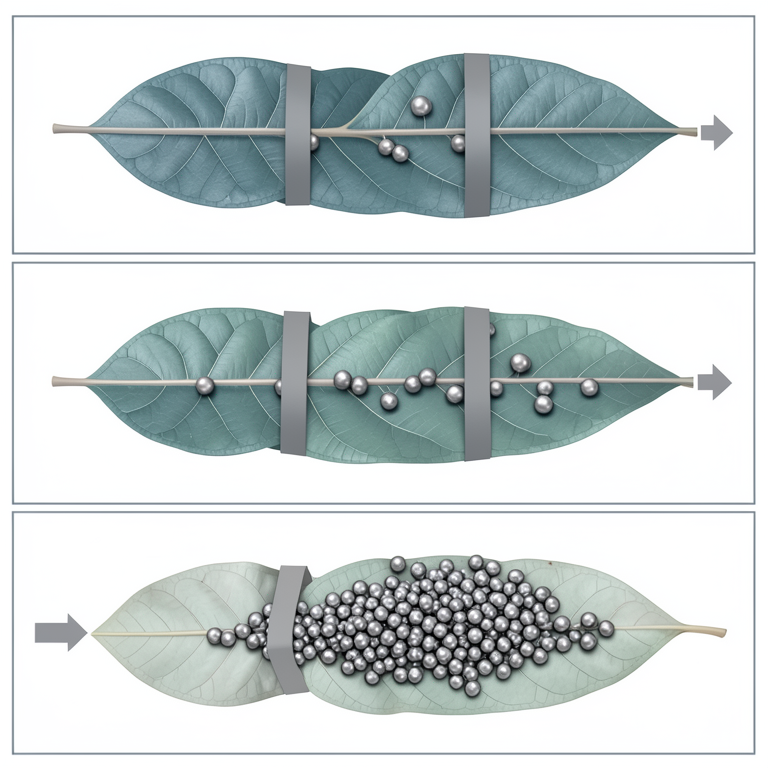
Effect of Processing on Bioavailability
AI-generated conceptual illustration (Digera muricata leaves). It explains the idea and does not show study data.
View source evidence ↗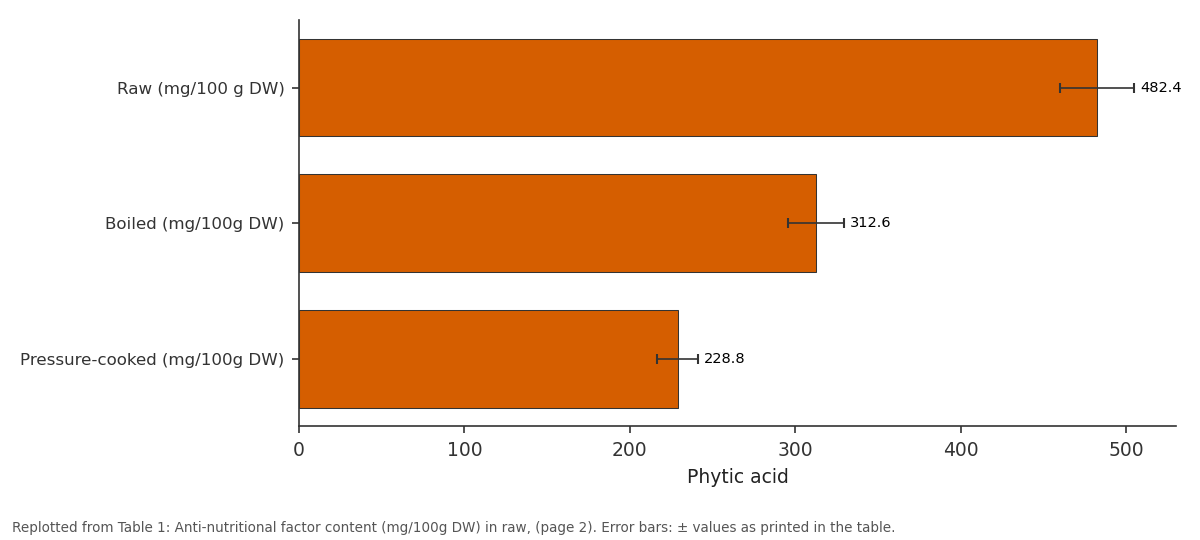
Phytic acid: Raw (mg/100 g DW) vs Boiled (mg/100g DW) vs Pressure-cooked...
Replotted from Table 1 (page 2) of the original paper. Every bar is the paper's own table value.
View source evidence ↗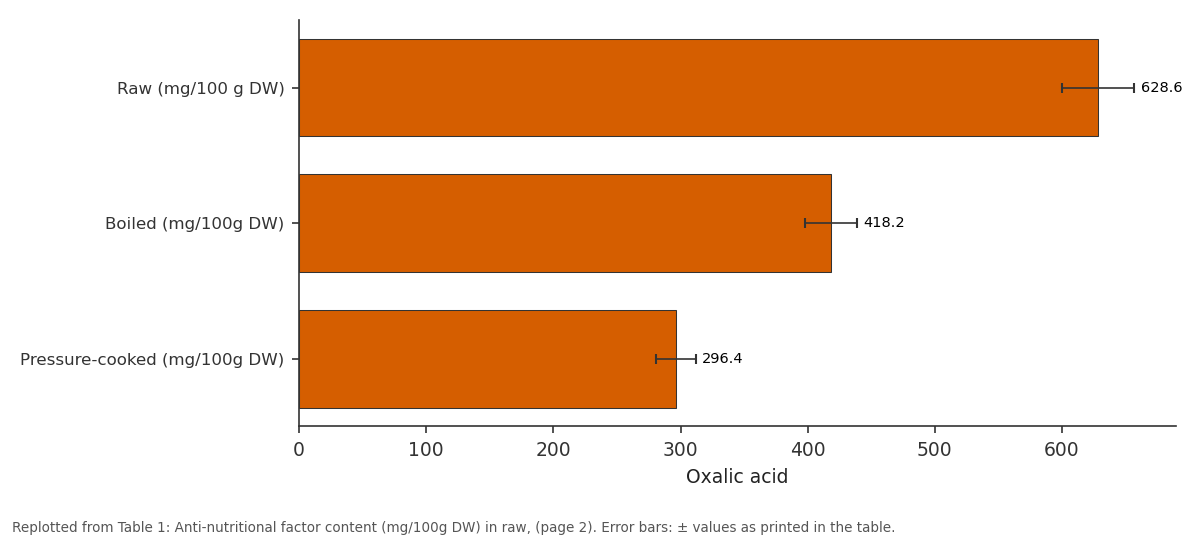
Oxalic acid: Raw (mg/100 g DW) vs Boiled (mg/100g DW) vs Pressure-cooked...
Replotted from Table 1 (page 2) of the original paper. Every bar is the paper's own table value.
View source evidence ↗Figures & tables
From the original paper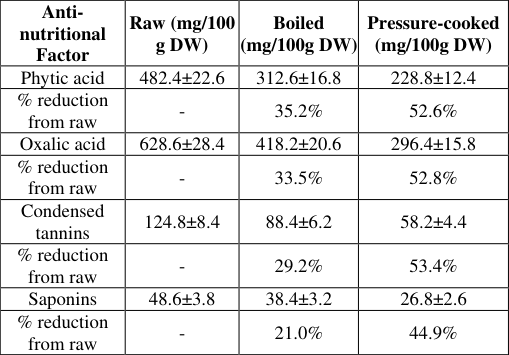 Table 1
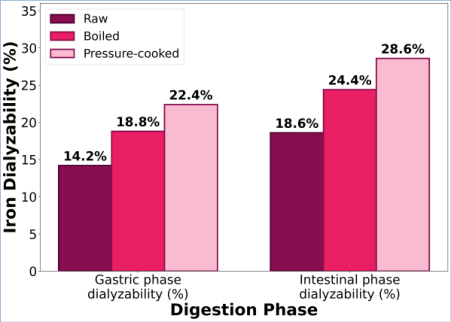 Figure 1
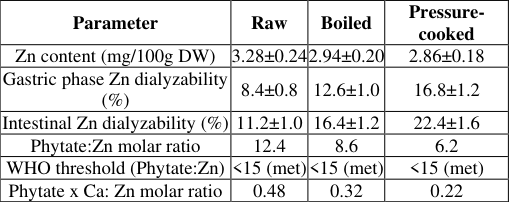 Table 2
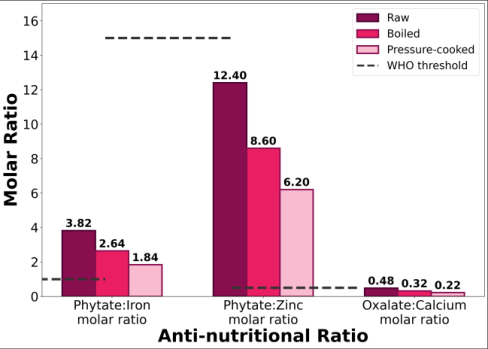 Figure 2
Introduction
An example from plant food science that illustrates the paradox of nutritional potential versus actual nutritional delivery is the case of wild leafy vegetables high in both iron and anti-nutritional factors: the same plant matrix that delivers the mineral of interest also delivers the factors that constrain its absorption. Resolving this paradox requires systematic processing-disaggregated bioaccessibility data, generated by validated in vitro models, to determine the conditions under which the mineral nutritional potential of a given species can be most effectively realized in practical dietary use [1,2] . In vitro digestion-dialysis models have become the standard first-line approach for processing-disaggregated bioaccessibility assessment in plant foods, offering reproducibility, low cost, and freedom from ethical constraints compared to in vivo approaches [6] . The twophase (gastric-intestinal) sequential digestion model with dialysis membrane separation provides mineral bioaccessibility estimates that correlate reasonably with in vivo iron absorption data (r=0.62-0.74 in validation studies) and are sensitive to ANF-mediated inhibition [7] . Systematic comparison of raw, boiled, and pressure-cooked samples using this Model with concurrent ANF quantification and WHO/FAO molar ratio threshold comparison enables evidence-based processing recommendations for D. muricata dietary integration that are accessible to public health practitioners [8] .
Materials and Methods
Materials and Methods
Materials
Materials
Methods
In vitro gastrointestinal digestion was performed per a standardized protocol: (i) Gastric phase: sample suspension (2g in 50mL deionized water, pH adjusted to 2.0 with 1M HCl) incubated with pepsin (2mg/mL) at 37 °C for 2h under nitrogen; (ii) Intestinal phase: pH adjusted to 7.0 (NaHCO3), pancreatin (4mg/mL) and bile extract (25mg/mL) added, incubated at 37 °C for 2h. Dialysis bags (MWCO 6000-8000 Da) containing 10mL NaHCO3 (0.1M) were inserted before intestinal digestion and dialysate collected at 2h. Dialysate and digest fractions were analysed for iron and zinc by flame AAS. Dialyzability (%) = (mineral in dialysate / total mineral in digest) x 100. Phytate-to-iron molar ratio = (phytic acid, mmol) / (iron, mmol); similarly for phytate:zinc and oxalate:calcium. WHO/FAO thresholds applied: phytate:iron <6.0 for moderate bioavailability, phytate:zinc <15.0 for adequate zinc absorption, oxalate:calcium <1.0 for adequate calcium absorption. One-way ANOVA with Tukey post-hoc compared processing treatments for all bioaccessibility measures; p < 0.05 for significance.
Results
Results
Overview of processing effects on anf and mineral dialyzability
Processing significantly altered both ANF concentrations and mineral dialyzability in D. muricata leaves. Pressurecooking consistently outperformed boiling in ANF reduction, while both processing methods significantly improved iron and zinc dialyzability relative to the raw treatment (ANOVA, p < 0.001 for all pairwise comparisons between raw and processed treatments for dialyzability outcomes). The absolute iron content declined marginally with processing (raw: 8.86 mg/100g DW; boiled: 8.24 mg/100g DW; pressure-cooked: 8.02 mg/100g DW), but the improvement in dialyzability more than compensated for this absolute loss in terms of predicted bioavailable iron per 100g DW serving. Figure 1 illustrates the processing-dependent increase in iron dialyzability across both digestion phases. In the intestinal phase (the primary absorption-relevant fraction), iron dialyzability increased from 18.6% in raw leaves to 24.4% in boiled (a 31.2% improvement) and 28.6% in pressure-cooked (a 53.8% improvement). Gastric phase dialyzability showed parallel improvement (raw: 14.2%; boiled: 18.8%; pressure-cooked: 22.4%). The greater improvement from pressure-cooking versus boiling is consistent with more complete phytate hydrolysis at 121 °C, 15 psi relative to 100 °C atmospheric boiling, as reported for comparable leafy vegetable matrices [9] . The cooking water discard (drainage before drying) was a critical contributor to soluble ANF reduction in both processing methods [10] .
Figure 2 presents the molar ratio analysis against WHO/FAO thresholds. Phytate-to-iron ratios declined from 3.82 (raw) to 2.64 (boiled) and 1.84 (pressure-cooked), remaining below the WHO threshold of 6.0 across all treatments. The phytate-to-zinc ratio (raw: 12.4; pressurecooked: 6.2) was below the WHO threshold of 15.0 for all treatments, confirming predicted adequate zinc bioavailability even from raw leaves. The oxalate-tocalcium ratio (raw: 0.48; pressure-cooked: 0.22) remained below the threshold of 1.0 for all processing methods, indicating adequate calcium bioavailability despite the substantial oxalic acid content. Table 2 confirms that zinc dialyzability followed a similar processing-dependent improvement pattern to iron (Table 2): intestinal phase dialyzability improved from 11.2% (raw) to 16.4% (boiled) and 22.4% (pressure-cooked). The phytate x calcium/zinc molar ratio (a more sensitive predictor of zinc bioavailability in mixed plant food diets) declined from 0.48 (raw) to 0.22 (pressure-cooked), well below the inhibitory threshold of 0.5 documented for this ratio in human zinc absorption studies [11] .
| Parameter | Raw | Boiled | Pressure- cooked |
|---|---|---|---|
| Zn content (mg/100g DW) | 3.28±0.24 | 2.94±0.20 | 2.86±0.18 |
| Gastric phase Zn dialyzability (%) | 8.4±0.8 | 12.6±1.0 | 16.8±1.2 |
| Intestinal Zn dialyzability (%) | 11.2±1.0 | 16.4±1.2 | 22.4±1.6 |
| Phytate:Zn molar ratio | 12.4 | 8.6 | 6.2 |
| WHO threshold (Phytate:Zn) | <15 (met) | <15 (met) | <15 (met) |
| Phytate x Ca: Zn molar ratio | 0.48 | 0.32 | 0.22 |
Table text extracted from the original PDF; superscript letters are shown inline. The original table image is below.
View original table image
Discussion
The finding that pressure-cooking of D. muricata leaves reduces phytic acid by 52.6% and improves iron dialyzability by 53.8% relative to raw leaves is consistent with the processing effects documented for other iron-rich leafy vegetables in the Amaranthaceae family, including Amaranthus hybridus (phytate reduction 45-60% by pressure-cooking) and Chenopodium album (phytate reduction 38-52%) [12,13] . The mechanistic agreement across Amaranthaceae species suggests that phytate hydrolysis in this family is governed by shared thermolysis kinetics, potentially linked to the relatively soluble, low-molecularweight phytate complexes characteristic of vegetative leaf tissue compared to the more resistant seed phytate matrices in legumes [14] . The maintained adequacy of all three WHO/FAO molar ratios across all processing treatments including the raw condition for phytate: zinc and oxalate: calcium is a nutritionally important finding. It suggests that D. muricata does not create a problematic ANF burden relative to the mineral loads it delivers, even when consumed raw. However, the substantially improved dialyzability achieved by processing, particularly pressurecooking, argues in favour of recommending cooking over raw consumption on bioavailability grounds, independent of the cultural preference for cooked preparation that is already dominant among D. muricata users in Rajasthan [15] . The convergence of cultural practice and nutritional optimization recommendations is a programme design advantage: behaviour change communication need only reinforce existing consumption patterns rather than introducing new ones. The 53.8% improvement in intestinal iron dialyzability from pressure-cooking, translated to practical nutritional terms, means that the bioavailable iron from a 100g DW serving of pressure-cooked D. muricata (8.02 mg x 28.6% = 2.30 mg bioavailable iron) is substantially higher than from the same raw serving (8.86 mg x 18.6% = 1.65 mg), representing a 39.4% improvement in actual iron delivery despite a slight absolute iron content reduction from processing. This recalculation highlights the insufficiency of raw iron content figures for nutritional planning purposes and argues for the systematic reporting of processing-disaggregated dialyzability data alongside mineral content in nutritional investigations of wild leafy vegetables [16] .
Implications for processing guidance and programme design
The mechanistic and quantitative evidence generated by this research supports the following tiered processing recommendation for D. muricata dietary integration in anaemia prevention programmes: (1) Pressure-cooking is preferred where equipment is available and culturally acceptable, delivering the greatest ANF reduction and highest mineral dialyzability; (2) Boiling with water discard is the recommended default processing method, achieveing meaningful ANF reduction (35% phytate, 34% oxalate) and 31% improvement in iron dialyzability over raw consumption, using universally available equipment; (3) Raw consumption is acceptable from an ANF-ratio perspective but should not be the recommended mode of preparation, given the dialyzability evidence supporting processed forms. Concurrent consumption of ascorbic acidrich foods (lemon juice, fresh tomato) with any processing form should be additionally recommended, as this enhancement effect is independent of and additive to the processing-mediated dialyzability improvement documented in this research [17,18] .
Limitations and future research directions
The in vitro dialysis model used in this research provides bioaccessibility estimates that correlate with but do not perfectly predict in vivo iron absorption, which is additionally modulated by host factors including iron status, hepcidin levels, and duodenal pH [19] . The correlation between in vitro dialyzability and in vivo absorption is strongest (r=0.70-0.80) when iron status is controlled and host regulatory factors are standardized, conditions that are more achievable in controlled human feeding trials than in free-living population studies. Future research should therefore validate the processing-dependent bioavailability differentials identified in this in vitro research through human isotope absorption studies in iron-deficient adolescent girls, using dual stable isotope (55Fe/59Fe or 57Fe/58Fe) tracers to simultaneously quantify absorption from differently processed D. muricata leaf preparations [20] .
Conclusion
This research provides the first processing-disaggregated in vitro bioaccessibility dataset for Digera muricata leaves, establishing that: (i) pressure-cooking reduces phytic acid by 52.6% and improves iron dialyzability by 53.8% relative to raw leaves; (ii) boiling achieves intermediate but meaningful ANF reduction (35.2% phytate) and dialyzability improvement (31.2% iron); and (iii) phytate-toiron, phytate-to-zinc, and oxalate-to-calcium molar ratios remain below WHO/FAO adequacy thresholds across all processing treatments, including raw. An important implication of these findings is that processing guidance should be explicitly incorporated into dietary recommendations for D. muricata in anaemia prevention programmes, prioritizing pressure-cooking or boiling over raw consumption based on the substantial bioavailability advantage demonstrated in vitro. Future research should extend these findings to in vivo human absorption studies with stable isotope tracers to establish the quantitative translation from in vitro dialyzability improvements to actual incremental iron absorption in the target population of iron-deficient adolescent girls.
Acknowledgement
AcknowledgementsThis research was conducted with institutional funding from the Accra Institute of Biological Research under the Internal Nutrition Research Grant Scheme (Ref: AIBR-INRG-2022-066). The authors acknowledge the National Agricultural Research Station, Kumasi, for provision of research plot access and D. muricata leaf samples, and the analytical chemistry team at Kumasi Research Institute for AAS analytical support. The authors declare no conflicts of interest. Data availability: raw dialyzability data tables and ANF quantification datasets are available from the corresponding author upon reasonable request.
Figures and tables from the paper
References
21 in the original paper- Miller DD, Schricker BR, Rasmussen RR, Van Campen D. An in vitro method for estimation of iron availability from meals. Am J Clin Nutr. 1981;34(10):2248-2256. DOI:10.1093/ajcn/34.10.2248.
- Glahn RP, Lee OA, Yeung A, Goldman MI, Miller DD. Caco-2 cell ferritin formation predicts nonradiolabeled food iron availability in an in vitro digestion/Caco-2 cell culture model. J Nutr. 1998;128(9):1555-1561. DOI:10.1093/jn/128.9.1555.
- Garg S, Sharma V, Kumar A. Nutritional composition and iron content of Digera muricata at different growth stages: Implications for anaemia prevention. Int J Food Sci Nutr. 2021;72(3):312-320.
- Sonal, Nutan. Effect of Digera muricata (Kondhra) leaves on iron status of school-going adolescent girls. J Curr Res Food Sci. 2022;3(2):1-4.
- Hallberg L, Hulthén L. Prediction of dietary iron absorption: An algorithm for calculating absorption and bioavailability of dietary iron. Am J Clin Nutr. 2000;71(5):1147-1160. DOI:10.1093/ajcn/71.5.1147.
- Sandberg AS. Bioavailability of minerals in legumes. Br J Nutr. 2002;88(Suppl 3):S281-S285. DOI:10.1079/BJN2002718.
- Hurrell RF, Egli I. Iron bioavailability and dietary reference values. Am J Clin Nutr. 2010;91(5):1461S1467S. DOI:10.3945/ajcn.2010.28674D.
- World Health Organization, Food and Agriculture Organization of the United Nations. Vitamin and mineral requirements in human nutrition. 2nd ed. Geneva: World Health Organization; 2004.
- Lestienne I, Besancon P, Caporiccio B, Lullien-Pellerin V, Treche S. Iron and zinc in vitro availability in pearl millet flours (Pennisetum glaucum) with varying phytate, tannin, and fiber contents. J Agric Food Chem. 2005;53(8):3240-3247. DOI:10.1021/jf048453i.
- Oboh G, Shodehinde SA, Akinyemi AJ. Inhibitory effect of phenolic extract of Amaranthus hybridus on Fe²⁺-induced lipid peroxidation in rat liver in vitro. Adv Food Sci. 2010;32(1):40-44.
- Lönnerdal B. Dietary factors influencing zinc absorption. J Nutr. 2000;130(5 Suppl):1378S-1383S. DOI:10.1093/jn/130.5.1378S.
- Shukla S, Bhargava A, Chatterjee A, Srivastava J, Singh N, Singh SP. Mineral profile and variability in vegetable amaranth (Amaranthus tricolor). Plant Foods Hum Nutr. 2006;61(1):21-26. DOI:10.1007/s11130006-0004.
- Bhatt A, Negi G, Rawal RS. Chenopodium album: A wild weed serving as a nutritious leaf vegetable in the western Himalayan region. Acta Bot Gallica. 2012;159(4):575-581. DOI:10.1080/12538078.2012.748843.
- Sandberg AS, Andersson H, Kivisto B, Sandstrom B. Extrusion cooking of a high-fiber cereal product. I. Effects on digestibility and absorption of protein, fat, starch, dietary fiber and phytate in the small intestine. Br J Nutr. 1986;55(2):245-254. DOI:10.1079/BJN19860030.
- Joshi A, Gupta A, Singh R. Wild edible plants of Rajasthan: Documenting traditional knowledge for nutritional security. Indian J Tradit Knowl. 2019;18(3):487-498.
- Petry N, Olofin I, Hurrell RF, Boy E, Wirth JP, Moursi M, et al. The proportion of anemia associated with iron deficiency in low-, medium-, and high-human development index countries: A systematic analysis of national surveys. Nutrients. 2016;8(11):693. DOI:10.3390/nu8110693.
- Siegenberg D, Baynes RD, Bothwell TH, Macfarlane BJ, Lamparelli RD, Car NG, et al. Ascorbic acid prevents the dose-dependent inhibitory effects of polyphenols and phytates on nonheme iron absorption. Am J Clin Nutr. 1991;53(2):537-541. DOI:10.1093/ajcn/53.2.537.
- Teucher B, Olivares M, Cori H. Enhancers of iron absorption: Ascorbic acid and other organic acids. Int J International Journal of Biology Sciences https://www.biologyjournal.net Vitam Nutr Res. 2004;74(6):403-419. DOI:10.1024/0300-9831.74.6.403.
- Hentze MW, Muckenthaler MU, Galy B, Camaschella C. Two to tango: Regulation of mammalian iron metabolism. Cell. 2010;142(1):24-38. DOI:10.1016/j.cell.2010.06.028.
- Kastenmayer P, Davidsson L, Galan P, Cherouvrier F, Hercberg S, Hurrell RF. A double stable isotope technique for measuring iron absorption in infants. Br J Nutr. 1994;71(3):411-424. DOI:10.1079/BJN19940148.
- Pandey R, Misra A, Gupta S. Phytochemical screening and mineral content analysis of Digera muricata leaves collected from arid zones of Rajasthan. Indian J Tradit Knowl. 2018;17(2):304-310.