
Research article · 2026 · Full text
International Journal of Horticulture and Food ScienceFaculty atitudes toward blended learning frameworks in horticultural curriculum delivery
Volume 8(6) · Pages 135–140 · DOI: 10.33545/26631067.2026.v8.i6b.814 ↗
Research areasOnline and Blended LearningEducational Technology and E-LearningDiverse Educational Innovations Studies
Abstract
Author-writtenRoughly 63% of higher education institutions across Southeast Asia have introduced some form of blended learning into their academic programmes, yet faculty adoption rates in applied agricultural disciplines remain markedly lower than in business or humanities faculties. This research investigated the atitudes of horticultural science faculty toward blended learning frameworks and examined the factors associated with favourable or unfavourable dispositions at Manila Metropolitan University, Philippines. A mixed-methods sequential explanatory design was used, combining a structured atitude survey administered to 142 faculty members across four horticultural departments with semistructured follow-up interviews conducted among a purposively selected subsample of 18 respondents. The survey instrument measured six atitudinal dimensions: perceived usefulness, ease of use, institutional support adequacy, technical readiness, pedagogical flexibility, and anticipated student engagement. Internal reliability coeficients ranged from 0.79 to 0.88, and content validity was established through expert review. Quantitative data were analysed using descriptive statistics, Pearson correlations, and one-way analysis of variance, while qualitative data underwent thematic analysis using an inductive coding approach. Results indicated that 63.1% of faculty held moderately to strongly favourable atitudes toward blended learning, while 18.6% remained neutral and 18.3% expressed unfavourable views. Perceived usefulness and pedagogical flexibility showed the strongest positive correlation (r=0.71, p<0.001), suggesting that faculty who recognised the instructional value of blending online and face-to-face modes also valued the scheduling and content-delivery options that blended models aford. Institutional support adequacy received the lowest mean rating among the six dimensions (M=2.89, SD=0.91), and faculty who reported receiving formal training in learning management systems scored significantly higher on overall atitude (F (2, 139)=11.37, p<0.001) than those without training. Qualitative themes reinforced quantitative paterns: interviewees highlighted that hands-on laboratory work in horticulture propagation, grafting, pest identification poses a particular design challenge for blended formats, and that without clear institutional guidelines, many instructors default to fully face-to-face delivery. The pathway from institutional policy through curriculum mapping, module design, and pilot implementation to sustained blended delivery emerged as a six-stage adoption sequence from the combined data. These findings point to the need for discipline-specific blended learning guidelines that address the unique practical requirements of horticultural education, coupled with sustained faculty development and reliable technical infrastructure. The research contributes to the growing body of evidence on blended learning in applied sciences and ofers a replicable framework for institutions seeking to support faculty through the adoption process.
Summary
Source-checkedPlain-language reading of the full paper, prepared with AI and checked against the text. Each point links to the authors' own words.
Why it matters
- While blended learning is common in Southeast Asian higher education, adoption is significantly lower in applied agricultural disciplines compared to business or humanities. View evidence ↗
- Horticultural education is uniquely challenging for blended learning because it requires a mix of biological theory and intensive field and laboratory work. View evidence ↗
- The difficulty of moving hands-on practical content to a digital format creates a specific psychological barrier for faculty. View evidence ↗
The question
- The study aimed to determine the distribution of faculty attitudes toward blended learning at Manila Metropolitan University, analyze correlations between six attitudinal dimensions, and explore the reasons for these patterns via interviews. View evidence ↗
What they did
- The researchers used a mixed-methods sequential explanatory design, starting with a quantitative survey and following up with qualitative interviews. View evidence ↗
- The quantitative phase involved an electronic survey that gathered 142 usable responses, representing a 71.7% response rate. View evidence ↗
- Faculty attitudes were measured across six dimensions, perceived usefulness, ease of use, institutional support, technical readiness, pedagogical flexibility, and student engagement, using a five-point Likert scale. View evidence ↗
- The qualitative phase consisted of semi-structured interviews with 18 purposively selected faculty members representing favorable, neutral, and unfavorable attitude groups. View evidence ↗
What they found
- A majority of the faculty (63.1%) held favorable attitudes toward blended learning, while 18.3% held unfavorable views. View evidence ↗
- Among the measured dimensions, perceived usefulness was rated highest (M=3.74), whereas institutional support adequacy was rated lowest (M=2.89). View evidence ↗
- The strongest correlation was found between perceived usefulness and pedagogical flexibility (r=0.71), while the weakest was between technical readiness and student engagement (r=0.33). View evidence ↗
- Faculty with formal training had significantly higher overall attitude scores (M=3.82) compared to those with only self-directed learning (M=3.34) or no training (M=2.97). View evidence ↗
- Qualitative interviews revealed that specific tasks like grafting, propagation, and pest identification are particularly difficult to design for blended learning formats. View evidence ↗
- The study identified a six-stage adoption sequence: policy formulation, attitude assessment/curriculum mapping, module design, laboratory integration, assessment redesign, and pilot implementation. View evidence ↗
What it means
- The authors recommend using discipline-specific implementation plans and targeted training with horticultural examples to effectively shift faculty attitudes and practices. View evidence ↗
- The study's findings are limited by its single-institution design, which restricts generalizability to other universities or countries. View evidence ↗
- The research did not evaluate student perceptions or actual learning outcomes, leaving a gap in understanding if favorable faculty attitudes lead to effective teaching. View evidence ↗
Visual summary
2 visualsIllustrations explain the paper; charts are replotted from the paper's own table values.
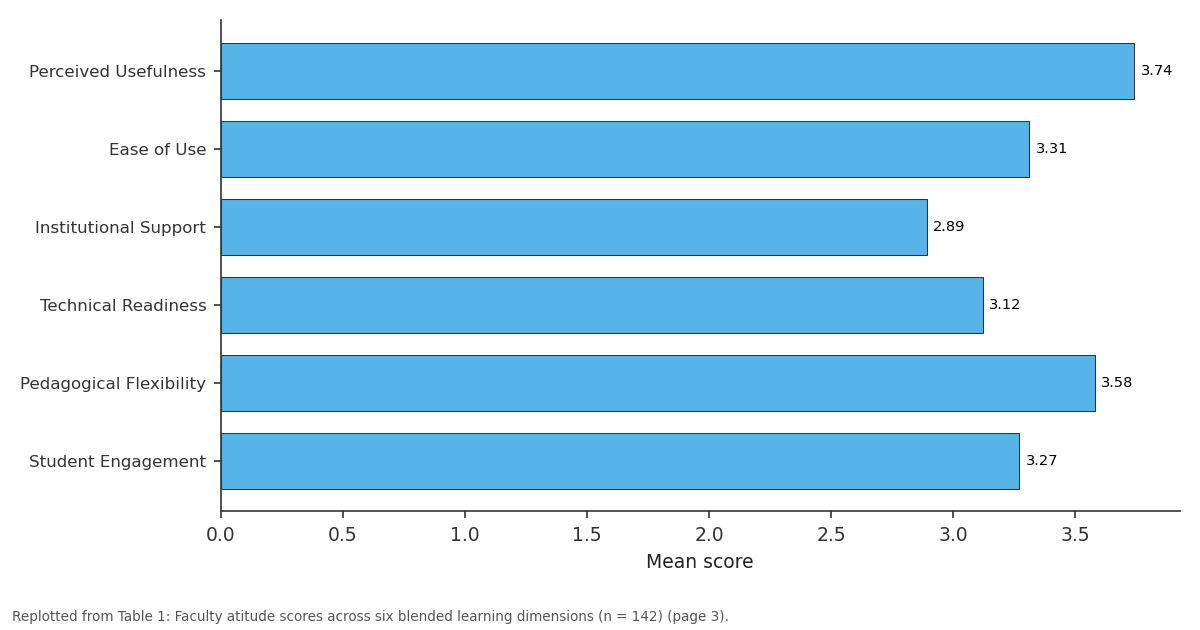
Mean: Perceived Usefulness vs Ease of Use vs Institutional Support vs Technical Readiness vs Pedagogical Flexibility
Replotted from Table 1 (page 3) of the original paper. Every bar is the paper's own table value.
View source evidence ↗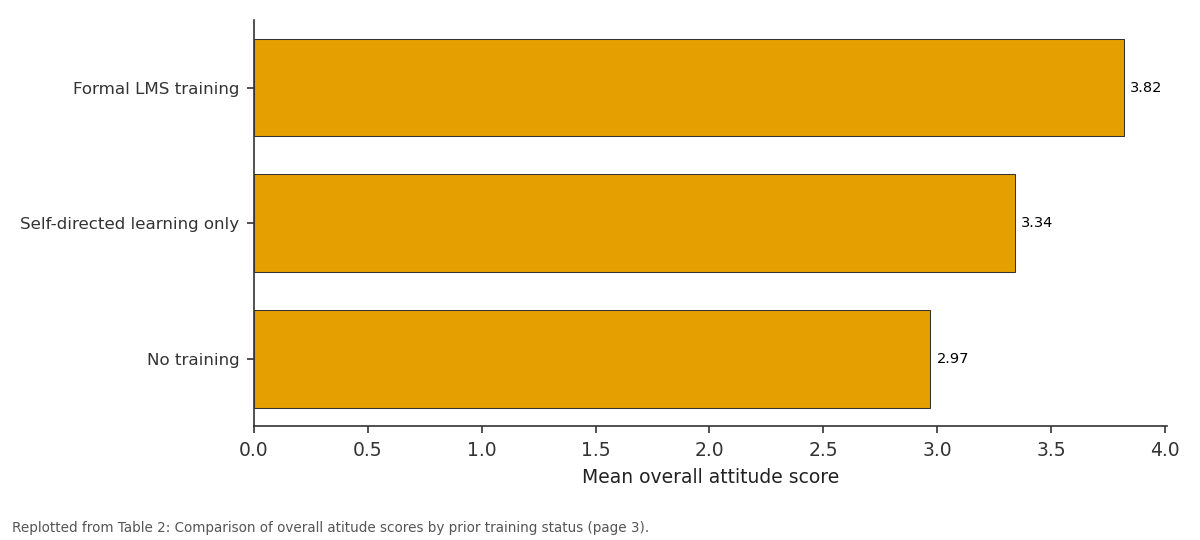
Mean: Formal LMS training vs Self-directed learning... vs No training
Replotted from Table 2 (page 3) of the original paper. Every bar is the paper's own table value.
View source evidence ↗Figures & tables
From the original paper Table 1
 Table 2
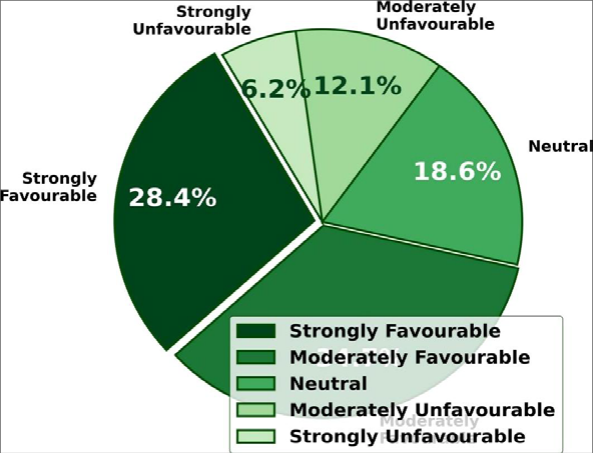 Figure 1
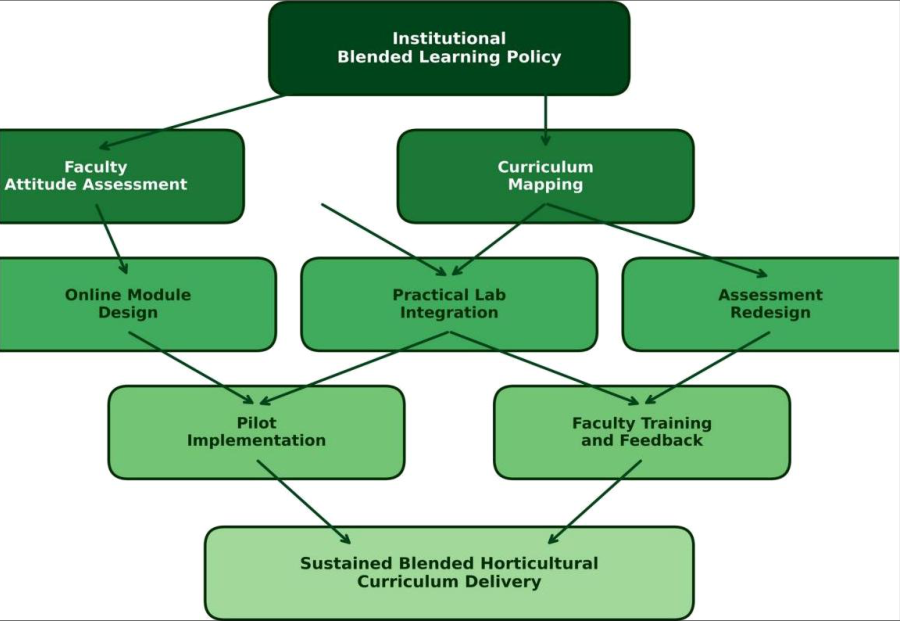 Figure 2
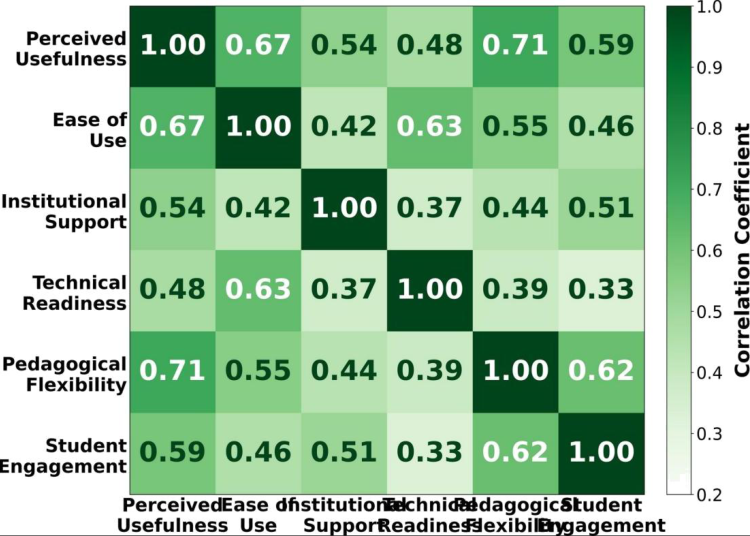 Figure 3
Introduction
A survey of 217 universities across the Association of Southeast Asian Nations found that 63% had adopted some variant of blended learning by 2021, yet penetration within agricultural and life-science faculties lagged nearly twenty percentage points behind business and social-science departments [1] . That disparity raises a practical question for institutions that house horticultural programmes: if blended learning is spreading rapidly through higher education at large, why are faculty in applied plant-science disciplines slower to adopt it, and what atitudes underpin that gap? Blended learning combines face-to-face classroom interaction with technology-mediated instruction delivered outside the traditional class meeting [2] . The model gained momentum worldwide after campus closures forced educators to experiment with online components, and many institutions have since sought to retain hybrid elements rather than revert entirely to prepandemic formats [3] . For horticultural education, the stakes of this transition are distinctive. Courses in propagation techniques, greenhouse management, and pest diagnostics depend on tactile, sensory, and time-bound experiences that do not translate easily to a screen [4] . Faculty who teach these subjects must decide which learning objectives can be addressed through asynchronous modules and which demand physical presence a judgment that depends not only on technical capacity but also on beliefs about efective pedagogy [5] . Research on faculty atitudes toward blended learning has grown considerably over the past decade. Early investigations tended to treat atitude as a single construct, measuring general favourability without distinguishing among its components [6] . More recent work has disaggregated the concept into dimensions such as perceived usefulness, ease of use, institutional support, technical readiness, and anticipated efects on student learning [7,8] . These multidimensional models reveal that faculty can simultaneously appreciate the flexibility of blended formats and worry about the administrative burden of maintaining two delivery channels [9] . Atitudinal profiles therefore vary not just by individual but by discipline, institution, and national context [10] . In the Philippines, the Commission on Higher Education has encouraged flexible learning arrangements since 2020, and universities have invested in learning management systems and faculty training [11] . But compliance with policy directives does not guarantee genuine atitudinal change. Faculty may adopt blended formats nominally posting lecture slides online, for instance while continuing to rely on conventional classroom pedagogy for substantive instruction [12] . Understanding the atitudinal landscape is therefore important for planners who want to move beyond surface-level compliance toward meaningful integration of online and face-to-face components. Within horticulture specifically, the literature is thin. A handful of reports describe blended learning experiments in general agriculture programmes [8,13] , but few have examined atitudes at the faculty level within a dedicated horticultural curriculum. Horticultural science occupies an instructional niche that combines biological theory with intensive laboratory and field work, making the design of efective blended modules more complex than in lecture-dominant disciplines [14] . Faculty atitudes in this context may difer from those reported in broader agricultural education surveys because the perceived dificulty of translating hands-on content to online formats introduces an additional atitudinal barrier. Against that backdrop, this research pursued three objectives. First, it measured the overall distribution of faculty atitudes favourable, neutral, and unfavourable toward blended learning among horticultural science instructors at Manila Metropolitan University. Second, it assessed the correlations among six atitudinal dimensions to identify which dimensions cluster together and which stand apart. Third, it explored, through qualitative interviews, the contextual reasons behind the paterns observed in the survey data. By combining quantitative breadth with qualitative depth, the research aimed to produce findings that are both generalisable across the faculty population and grounded in the lived experiences of instructors who navigate the tension between digital convenience and horticultural practice every semester [15] .
Theoretical Framework
This research drew on the Theory of Planned Behaviour (TPB) as its primary conceptual lens [16] . TPB proposes that behavioural intention in this case, the intention to adopt blended learning is shaped by three antecedents: atitude toward the behaviour, subjective norms (perceptions of social pressure from peers and administrators), and perceived behavioural control (the individual's sense of having the resources and skills to act). The model has been widely applied in educational technology research and ofers a parsimonious structure for organising multi-dimensional atitude data [7] . Within the TPB framework, the six atitudinal dimensions measured in this research map onto diferent antecedent categories. Perceived usefulness and pedagogical flexibility relate to the atitude component; institutional support adequacy and technical readiness connect to perceived behavioural control; and anticipated student engagement bridges atitude and subjective norms, since faculty expectations about student responses are partly shaped by collegial opinion [9,17] . Ease of use functions as a moderator, influencing whether positive atitudes translate into actual adoption behaviour. This mapping allowed the research to interpret correlations among dimensions not merely as statistical associations but as theoretically meaningful pathways through which faculty atitudes convert or fail to convert into classroom practice.
Material and Methods Material
A mixed-methods sequential explanatory design was employed, comprising a quantitative survey phase followed by a qualitative interview phase [18] . Ethical approval was granted by the Manila Metropolitan University Research Ethics Commitee. Writen informed consent was secured from all participants before data collection commenced. The target population included all 198 faculty members holding teaching appointments in the four horticultural science departments at Manila Metropolitan University: Crop Science, Landscape and Urban Horticulture, Postharvest Technology, and Plant Protection. Using Krejcie and Morgan's sample-size table, a minimum sample of 132 was needed at a 95% confidence level. Questionnaires were distributed electronically via the university's learning management system, and 142 usable responses were received (response rate: 71.7%). Respondents ranged in age from 27 to 61 years (M = 42.3, SD = 9.1); 54.9% were female; and academic ranks spanned instructor (31.0%), assistant professor (28.9%), associate professor (23.2%), and full professor (16.9%). The survey instrument consisted of 42 items across three sections. Section I collected demographic and professional information (8 items). Section II measured atitudes across six dimensions using a five-point Likert scale (1 = strongly disagree to 5 = strongly agree): perceived usefulness (7 items), ease of use (6 items), institutional support adequacy (7 items), technical readiness (6 items), pedagogical flexibility (8 items), and anticipated student engagement (8 items). Section III contained two open-ended prompts inviting respondents to describe the biggest advantage and the biggest challenge of blended learning in horticultural teaching.
Instrument Development and Validation
Items were adapted from validated instruments in educational technology research [7,9] and supplemented with six new items specific to horticultural laboratory and field activities. A fivemember expert panel three in horticultural education and two in instructional design evaluated content validity; the scale-level content validity index was 0.89. A pilot test with 26 faculty from a sister campus (excluded from the main sample) yielded Cronbach's alpha values between 0.79 (technical readiness) and 0.88 (perceived usefulness). Items with corrected item-total correlations below 0.35 were revised, and one item was deleted from the ease-of-use subscale for redundancy.
Methods
Quantitative analysis proceeded in three stages. Descriptive statistics (means, standard deviations, frequencies) characterised each atitudinal dimension and demographic subgroup. Pearson product-moment correlations tested bivariate relationships among the six dimensions. One-way analysis of variance (ANOVA) with Tukey HSD post-hoc tests compared mean atitude scores across groups defined by academic rank, years of blended learning experience, and prior formal training in learning management systems. Assumptions of normality and homogeneity of variance were checked through Shapiro-Wilk and Levene's tests; all conditions were met at the 0.05 level. For the qualitative phase, 18 faculty members were purposively selected from the survey respondents to represent a range of atitude scores (six from each tercile: favourable, neutral, unfavourable). Semi-structured interviews lasting 25-40 minutes were conducted face to face, audio-recorded with consent, and transcribed verbatim in Filipino before being translated into English for analysis. Thematic analysis followed Braun and Clarke's six-phase approach: familiarisation, initial coding, theme searching, theme reviewing, defining and naming, and report writing [18] . Two independent coders achieved an inter-rater reliability (Cohen's kappa) of 0.83 after reconciliation discussions. Member checking was performed with six interviewees to confirm interpretive accuracy. Of the 142 respondents, 28.4% held strongly favourable atitudes, 34.7% moderately favourable, 18.6% neutral, 12.1% moderately unfavourable, and 6.2% strongly unfavourable. The combined favourable proportion (63.1%) exceeded the unfavourable proportion (18.3%) by a factor of roughly 3.4.
Results
Across the six atitudinal dimensions, perceived usefulness achieved the highest mean score (M = 3.74, SD = 0.69), while institutional support adequacy received the lowest (M = 2.89, SD = 0.91). The following tables and figures present detailed dimension-level and correlational data. Faculty who had received formal learning management system training reported atitudes that were significantly higher than untrained colleagues. The diference was sharpest for the perceived usefulness and ease of use dimensions, suggesting that hands-on familiarity with the platform translates into stronger confidence in the value and manageability of blended formats. Rank-related diferences were non-significant, indicating that seniority alone does not determine atitudinal orientation. The heatmap reveals that perceived usefulness and pedagogical flexibility share the strongest association (r = 0.71), while technical readiness and student engagement expectations show the weakest (r = 0.33). Institutional support correlates moderately with most other dimensions but does not dominate any single pairing, suggesting that it operates as a facilitating condition rather than a direct atitudinal driver.
Comprehensive Interpretation
One-way ANOVA comparing atitude scores by prior training status yielded a significant main efect (F(2, 139) = 11.37, p < 0.001, partial eta-squared = 0.14). Tukey HSD post-hoc tests revealed that faculty with formal training (M = 3.82, SD = 0.61) scored significantly higher than those with only self-directed learning (M = 3.34, SD = 0.74, p = 0.003) and those with no training (M = 2.97, SD = 0.83, p < 0.001). The diference between self-directed and no training groups was also significant (p = 0.041). Qualitative interviews enriched these paterns: instructors in the favourable tercile described blended modules as freeing class time for advanced laboratory work, whereas those in the unfavourable tercile emphasised the dificulty of teaching grafting techniques or soil-texture analysis through video alone. Neutral-tercile interviewees typically acknowledged benefits but cited unclear institutional expectations and unreliable internet connectivity as barriers that kept them from commiting to blended delivery.
Discussion
The central finding of this research is that a clear majority roughly 63% of horticultural faculty at Manila Metropolitan University hold favourable atitudes toward blended learning, yet the overall atitudinal profile is tempered by low confidence in institutiona support and mixed perceptions of technical readiness. These results paint a picture of a faculty body that is receptive to blended approaches in principle but uncertain about whether the organisational conditions exist to support efective implementation. The positive correlation between perceived usefulness and pedagogical flexibility (r = 0.71) aligns with findings from blended learning research in nursing and engineering education [2,6] , where faculty who see clear instructional benefits also appreciate the scheduling and content-organisation advantages of hybrid models. The strong role of training faculty with formal instruction in the learning management system scored nearly a full scale point higher than untrained colleagues echoes a patern documented across multiple disciplinary contexts [8,10] . This convergence with existing literature strengthens the argument that faculty development is not merely a support activity but a direct lever for atitudinal change. Where the present results diverge from earlier work is in the relatively low rating of institutional support adequacy (M = 2.89). Several blended learning surveys in Philippine universities have reported mid-range support scores around 3.2-3.4 [11,13] , suggesting that the horticultural departments at Manila Metropolitan University perceive less institutional backing than the broader university population. Qualitative data clarified this discrepancy: interviewees pointed to generic training sessions that did not address the specific challenges of blending laboratory-intensive content, and to procurement processes for greenhouse monitoring sensors and data-logging equipment that lagged behind the timeline for module development. A possible explanation for the gap between overall positive atitudes and low support perceptions lies in the unique structure of horticultural education. Unlike lecture-only courses, horticulture requires physical materials plant specimens, growth media, controlled-environment chambers that cannot be replaced by digital substitutes [4,14] . Faculty may recognise the theoretical appeal of blended delivery while simultaneously doubting that their institution will provide the specialised infrastructure and logistical coordination needed to make it work for hands-on modules. The six-stage adoption pathway identified in this research explicitly addresses that concern by positioning practical laboratory integration and assessment redesign as sequential steps that follow, rather than precede, online module design [15,17] . At a broader level, these findings carry implications for higher education institutions housing applied-science programmes. Generic blended learning policies, however well-intentioned, risk leaving faculty in laboratory-intensive disciplines without adequate guidance or resources. Discipline-specific implementation plans developed with faculty input and accompanied by targeted training that uses examples from the discipline itself may prove more efective at shifting atitudes and, ultimately, practice [1,19] .
Limitations
This research has several boundaries worth acknowledging. The single-institution design limits generalisation to horticultural faculties at other Philippine universities or in diferent national contexts; multi-site replication would strengthen external validity. Self-report atitude measures carry the risk of social desirability bias, particularly at a time when institutional policy openly promotes blended learning and faculty may feel pressure to express positive views. The sequential explanatory design, while rich, is resource-intensive and may not be feasible for large-scale assessments; purely quantitative approaches with behavioural outcome measures (actual adoption rates, module completion data) could complement atitudinal surveys in future work. The qualitative subsample of 18, though purposively diverse, may not capture every thematic variation present in the broader faculty. Finally, the research did not measure student perceptions or learning outcomes under blended formats; future investigations that pair faculty atitudes with student performance data would provide a more rounded picture of whether favourable atitudes translate into efective blended teaching.
Conclusion
The main contribution of this research is a multidimensional portrait of faculty atitudes toward blended learning within a discipline horticulture that poses distinctive design challenges due to its reliance on hands-on laboratory and field instruction. By measuring six atitudinal dimensions and linking them through both correlational analysis and qualitative exploration, the research moves beyond the simple favourable-versusunfavourable dichotomy that has characterised much of the earlier literature. Supporting evidence emerged on several fronts. First, the survey confirmed that a majority of faculty view blended learning favourably, with perceived usefulness and pedagogical flexibility standing out as the strongest positive dimensions. Second, the significant efect of formal training on atitude scores a diference of nearly one full scale point between trained and untrained groups provides concrete evidence that institutional investment in faculty development pays atitudinal dividends. Third, the correlation matrix revealed that atitudinal dimensions do not move in lockstep; technical readiness and student engagement expectations were only weakly linked, suggesting that confidence with technology does not automatically translate into optimism about how students will respond. Fourth, qualitative themes added texture by identifying discipline-specific barriers the dificulty of teaching propagation and grafting online, the lag in specialised equipment procurement that generic blended learning surveys would not capture. For the field of horticultural education, these findings hold several implications. The sixstage adoption pathway moving from policy through atitude assessment, curriculum mapping, module design, laboratory integration, and pilot implementation ofers a structured sequence that institutions can adapt to their own contexts. The pathway recognises that blended learning in horticulture is not simply a mater of puting lectures online; it requires deliberate decisions about which learning objectives belong in the digital space and which demand physical interaction with plants, soil, and equipment.
Institutions that skip the curriculum-mapping and laboratoryintegration stages risk producing blended formats that satisfy administrative metrics but fail to deliver the hands-on competence that horticultural graduates need. The low scores for institutional support adequacy signal an area where university administrators can take immediate action. Faculty reported that training sessions were too generic and that procurement timelines for laboratory technology did not align with module development schedules. Addressing these concerns does not necessarily require large budgets; in many cases, it means involving horticultural faculty in the design of training workshops and synchronising equipment purchasing with the academic calendar. Peermentoring programmes, in which faculty who have successfully blended laboratory courses share strategies with colleagues, represent another lowcost intervention that the correlation data support, given the moderate but significant link between perceived usefulness and pedagogical flexibility. Open questions remain. Does favourable atitude actually predict sustained adoption over multiple semesters, or do faculty revert to conventional delivery when institutional pressure subsides? How do student learning outcomes compare between blended and fully face-toface horticultural modules when both are taught by atitudinally favourable instructors? Do the atitudinal profiles observed here hold in other applied-science disciplines aquaculture, veterinary technology, food processing that share the same tension between theory and practice? And what role do mid-level academic managers department heads and programme coordinators play in mediating the relationship between institutional policy and individual faculty atitude? Addressing these questions through longitudinal, multi-site, and crossdisciplinary research designs would extend the evidence base and help institutions move from policy aspiration to efective blended practice in laboratory-intensive fields.
Figures and tables from the paper
| Dimension | n | Mean | SD | Median | Min | Max |
|---|---|---|---|---|---|---|
| Perceived Usefulness | 142 | 3.74 | 0.69 | 3.86 | 1.57 | 5.00 |
| Ease of Use | 142 | 3.31 | 0.78 | 3.33 | 1.33 | 4.83 |
| Institutional Support | 142 | 2.89 | 0.91 | 2.86 | 1.14 | 4.71 |
| Technical Readiness | 142 | 3.12 | 0.84 | 3.17 | 1.17 | 4.83 |
| Pedagogical Flexibility | 142 | 3.58 | 0.72 | 3.63 | 1.50 | 5.00 |
| Student Engagement | 142 | 3.27 | 0.76 | 3.25 | 1.38 | 4.88 |
Table text extracted from the original PDF; superscript letters are shown inline. The original table image is below.
View original table image
| Training Status | n | Mean | SD | F | p-value |
|---|---|---|---|---|---|
| Formal LMS training | 51 | 3.82 | 0.61 | ||
| Self-directed learning only | 53 | 3.34 | 0.74 | 11.37 | < 0.001 |
| No training | 38 | 2.97 | 0.83 |
Table text extracted from the original PDF; superscript letters are shown inline. The original table image is below.
View original table image
References
18 in the original paper- Aldosemani BN. Bridging the gap in blended learning adoption in higher education: A Southeast Asian perspective. Asia Pac Educ Rev. 2022;24(1):45-62.
- Graham CR, Woodfield W, Harrison JB. A framework for institutional adoption and implementation of blended learning in higher education. Internet High Educ. 2013;18:4-14.
- Rasheed RA, Kamsin A, Abdullah NA. Challenges in the online component of blended learning: A systematic review. Comput Educ. 2020;144:103701.
- Lam JT, Chan HL. Teaching plant propagation in blended formats: Opportunities and design constraints. HortTechnology. 2022;32(1):14-21.
- Owston R, York D, Murtha S. Student perceptions and achievement in a university blended learning strategic initiative. Internet High Educ. 2013;18:38-46.
- Porter WW, Graham CR. Institutional drivers and barriers to faculty adoption of blended learning in higher education. Br J Educ Technol. 2016;47(4):748-762.
- Alammary A, Sheard J, Carbone A. Blended learning in higher education: Three diferent design approaches. Australas J Educ Technol. 2014;30(4):440-454.
- Kakar N, Manjula N, Nadeerpoor MA, Yousafzai I. Teachers' perceptions of factors encouraging the use of information and communication technology (ICT) in agricultural education. South Asian J Agric Sci. 2022;2(2):90-93.
- Dziuban C, Graham CR, Moskal PD, Norberg A, Sicilia N. Blended learning: The new normal and emerging technologies. Int J Educ Technol High Educ. 2018;15(1):3.
- Al-Busaidi KA. An empirical investigation linking learners' adoption of blended learning to their intention of full elearning. Behav Inf Technol. 2013;32(11):1168-1176.
- Mercado CA. Readiness for flexible learning among Filipino university faculty during the pandemic transition. Educ Res Policy Pract. 2022;21(2):287-303.
- Spring KJ, Graham CR, Hadlock CA. The current landscape of international blended learning. Int J Technol Enhanced Learn. 2016;8(1):84-102.
- Byers T, Imms W, Hartnell-Young E. Making the case for space: The efect of learning spaces on teaching and learning. Curric Teach. 2014;29(1):5-19.
- Margulieux LE, McCracken WM, Catrambone R. A taxonomy to define courses that mix face-to-face and online learning. Educ Res Rev. 2016;19:104-118.
- Ajzen I. The theory of planned behaviour: Reactions and reflections. Psychol Health. 2011;26(9):1113-1127.
- Vo HM, Zhu C, Diep NA. The efect of blended learning on student performance at course-level in higher education: A meta-analysis. Stud Educ Eval. 2017;53:17-28.
- Creswell JW, Plano Clark VL. Designing and conducting mixed methods research. 3rd ed. Thousand Oaks: Sage; 2018.
- Boelens R, De Strycker J, Vanthournout G, Vanderlinde R. Understanding faculty and student atitudes towards blended learning: A mediation model. Educ Inf Technol. 2022;28(4):4191-4213.