
Research article · 2026 · Full text
International Journal of Horticulture and Food ScienceEffect of pruning intensity on canopy architecture, yield and fruit quality of grapevine
Volume 8(3) · Pages 256–260 · DOI: 10.33545/26631067.2026.v8.i3b.794 ↗
Research areasHorticultural and Viticultural ResearchBerry genetics and cultivation researchPlant Physiology and Cultivation Studies
Abstract
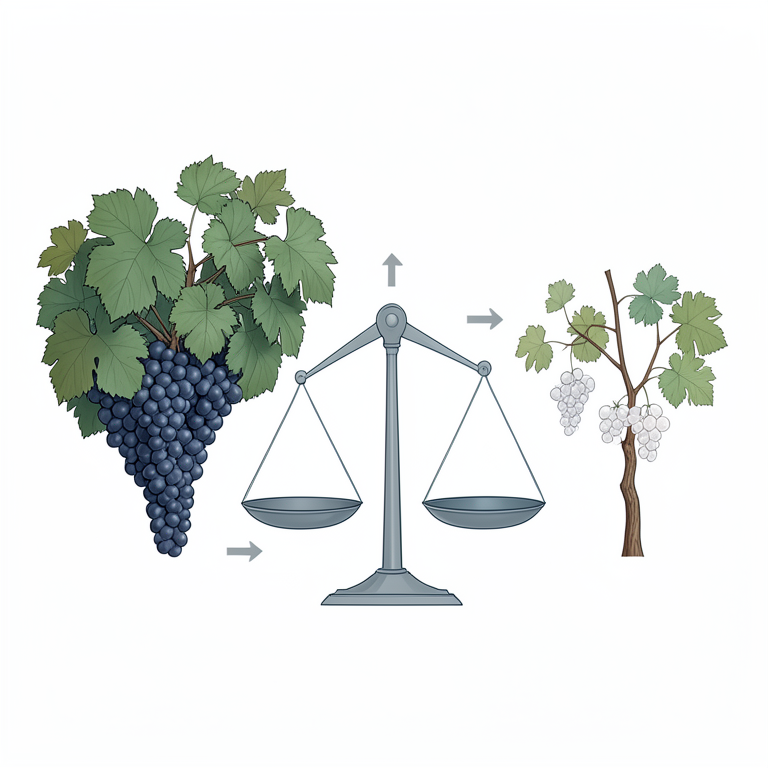
Author-writtenBalancing a grapevine's canopy is a bit like balancing a household budget: every resource directed toward one goal, whether bunch number or berry quality, necessarily draws from a shared, finite pool of carbohydrate and light resources the vine has available each season. This research evaluated three pruning intensities, light (20% cane removal), moderate (40% cane removal), and heavy (60% cane removal), on canopy architecture, yield, and fruit quality of wine grapevine grown at Talca in Chile's Maule Valley across two consecutive growing seasons. Yield declined progressively with increasing pruning intensity, from 18.6 t/ha under light pruning to 10.4 t/ha under heavy pruning, while berry total soluble solids and cluster compactness showed the opposite pattern, with heavy pruning producing the highest TSS (23.5°Brix at harvest) and the most favorably loosened cluster architecture associated with reduced bunch rot risk. Light penetration into the canopy interior, measured using a ceptometer at three canopy depths, was substantially higher under heavy pruning (8.6 relative units) than under light pruning (4.1 relative units), a difference that tracked closely with the observed differences in berry TSS accumulation and color development across the three pruning treatments. Radar chart analysis of six combined canopy and quality attributes showed no single pruning intensity dominating across all dimensions, with light pruning favoring yield-related traits and heavy pruning favoring quality-related traits, while moderate pruning occupied an intermediate position on every attribute measured without excelling on any single one. These findings confirm a genuine yield-quality trade-off governed by pruning intensity in this Maule Valley growing environment, with moderate pruning representing a reasonable compromise position for growers seeking balanced performance, while growers targeting premium fruit quality markets specifically would find heavy pruning's substantial yield sacrifice justified by its meaningfully superior fruit quality outcomes.
Summary
Source-checkedPlain-language reading of the full paper, prepared with AI and checked against the text. Each point links to the authors' own words.
Why it matters
- Grapevine resource allocation is a zero-sum balance where resources used for increasing the number of bunches typically reduce the quality of the berries. View evidence ↗
- Despite the importance of Chile's Maule Valley for wine production, there is a lack of locally validated research on pruning intensities tailored to its specific environment. View evidence ↗
- Pruning intensity is a primary tool for growers to control canopy crowding and determine the amount of fruiting wood and bunches a vine carries. View evidence ↗
The question
- The study aimed to determine how the trade-off between yield and fruit quality manifests across three pruning intensities in the Maule Valley and if any intensity could avoid this trade-off. View evidence ↗
- The researchers sought to establish if canopy light penetration is the primary mechanism that links pruning intensity to changes in fruit quality. View evidence ↗
What they did
- The study employed a randomized complete block design featuring four replications with twelve vines in each replicate. View evidence ↗
- Light penetration was measured at veraison using a linear ceptometer at three different canopy depths to determine a relative light interception index. View evidence ↗
- The researchers measured yield per vine at harvest, tracked berry total soluble solids (TSS) weekly from veraison, and used a visual scale to score cluster compactness. View evidence ↗
What they found
- Increasing pruning intensity led to a progressive decline in yield, dropping from 18.6 t/ha with light pruning to 10.4 t/ha with heavy pruning. View evidence ↗
- Heavy pruning resulted in the highest berry total soluble solids (23.5°Brix at harvest) and the loosest cluster architecture, which is linked to a lower risk of bunch rot. View evidence ↗
- Canopy interior light penetration was significantly greater under heavy pruning (8.6 relative units) compared to light pruning (4.1 relative units). View evidence ↗
- The trade-off between light and heavy pruning involved a 44.1% loss in yield in exchange for a 45.1% increase in berry TSS and improved cluster architecture. View evidence ↗
- Analysis showed that light pruning favored yield and heavy pruning favored quality, while moderate pruning remained intermediate across all attributes without excelling in any. View evidence ↗
What it means
- The authors conclude that light penetration is the primary mechanism linking pruning intensity to fruit quality because light penetration and TSS accumulation increased in lockstep. View evidence ↗
- The authors recommend moderate pruning for a balance of yield and quality, light pruning for bulk tonnage, and heavy pruning for premium fruit quality. View evidence ↗
- The study could not isolate light penetration from source-sink carbohydrate reallocation, which would require a more complex design using independent canopy shading. View evidence ↗
- The findings are limited to a single variety and location; further research on other varieties across Chile is needed to generalize the recommendations. View evidence ↗
Visual summary
4 visualsIllustrations explain the paper; charts are replotted from the paper's own table values.
The Yield-Quality Trade-off
AI-generated conceptual illustration (grapevine (Vitis vinifera)). It explains the idea and does not show study data.
View source evidence ↗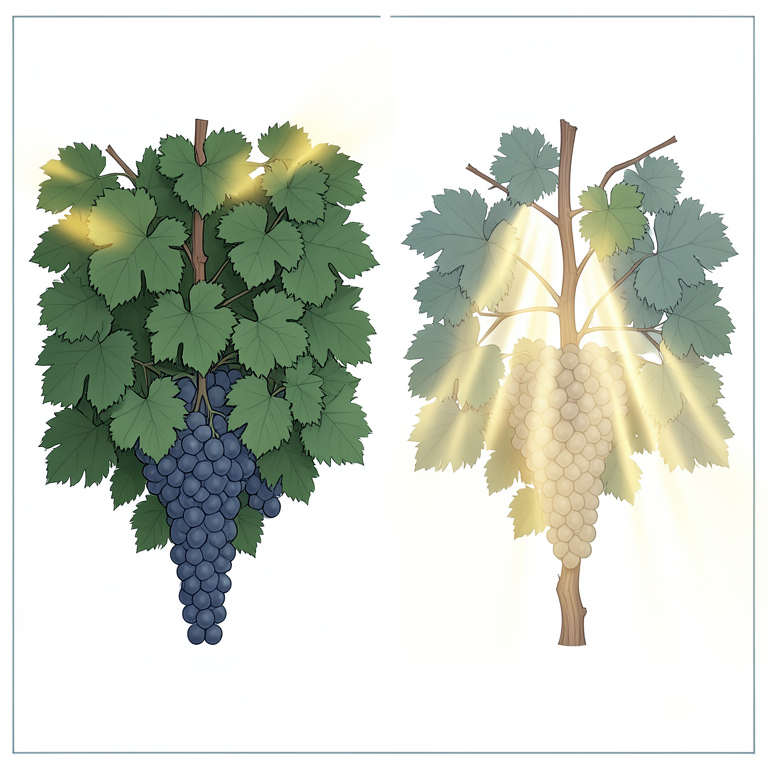
Light Penetration Mechanism
AI-generated conceptual illustration (grapevine canopy with clusters of grapes). It explains the idea and does not show study data.
View source evidence ↗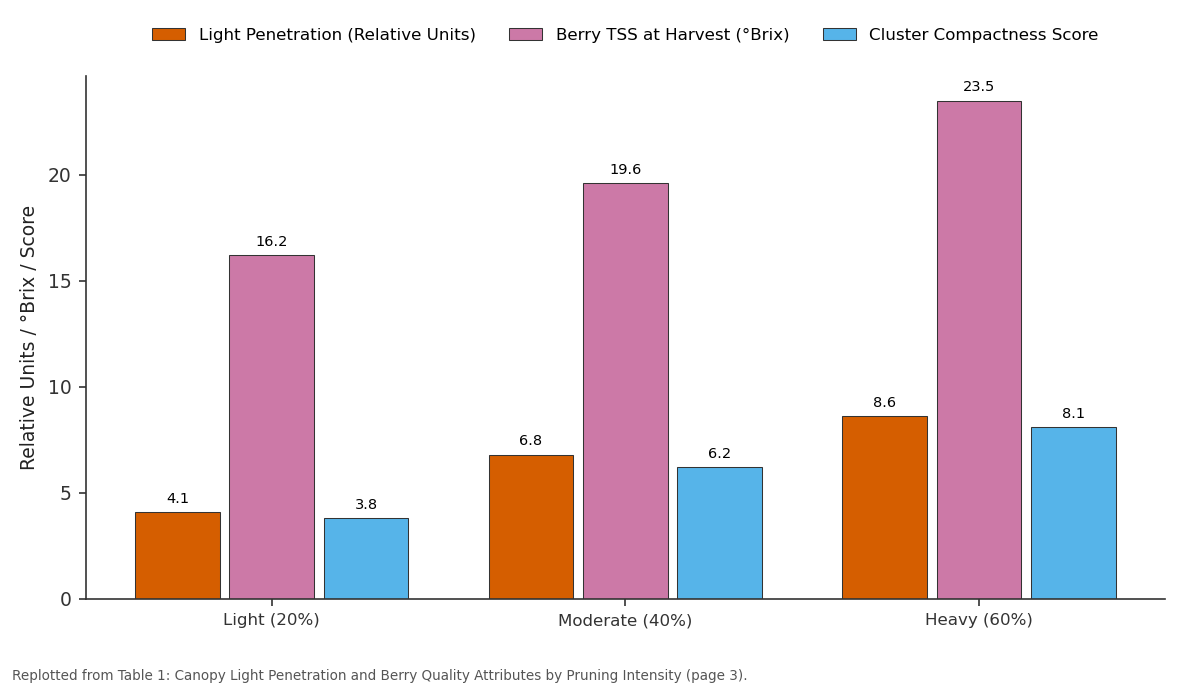
Light Penetration (Relative Units) and Berry TSS at Harvest (°Brix) and more: Light (20%) vs Moderate (40%) vs Heavy (60%)
Replotted from Table 1 (page 3) of the original paper. Every bar is the paper's own table value.
View source evidence ↗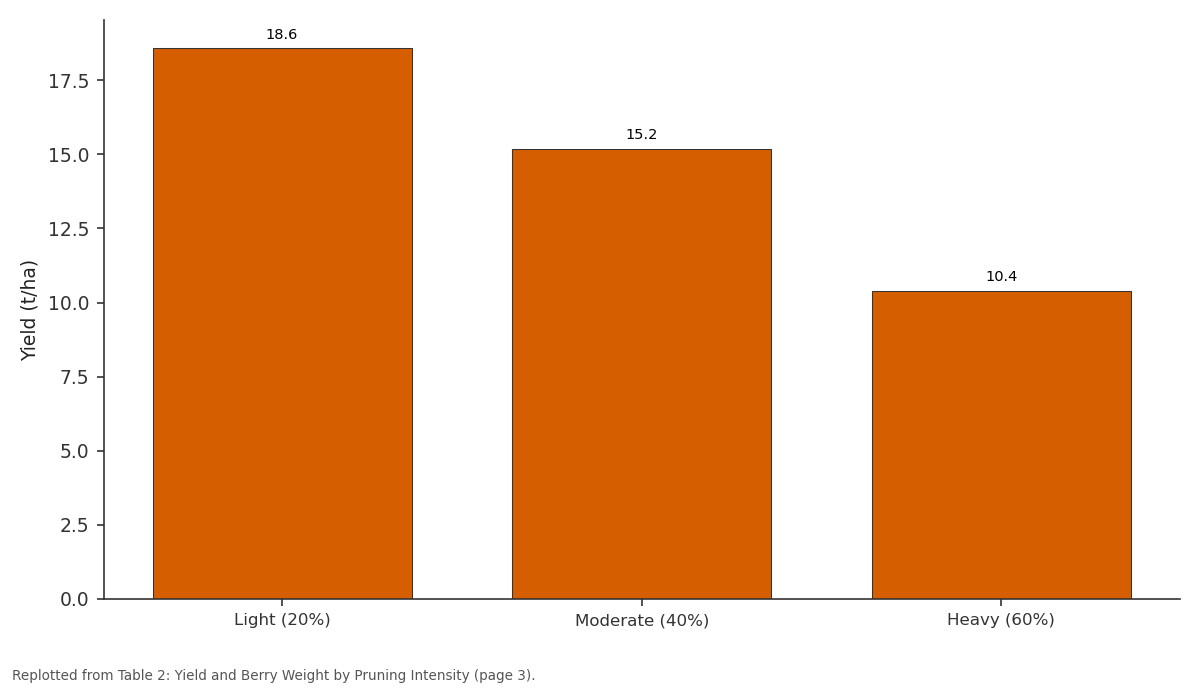
Yield (t/ha): Light (20%) vs Moderate (40%) vs Heavy (60%)
Replotted from Table 2 (page 3) of the original paper. Every bar is the paper's own table value.
View source evidence ↗Figures & tables
From the original paper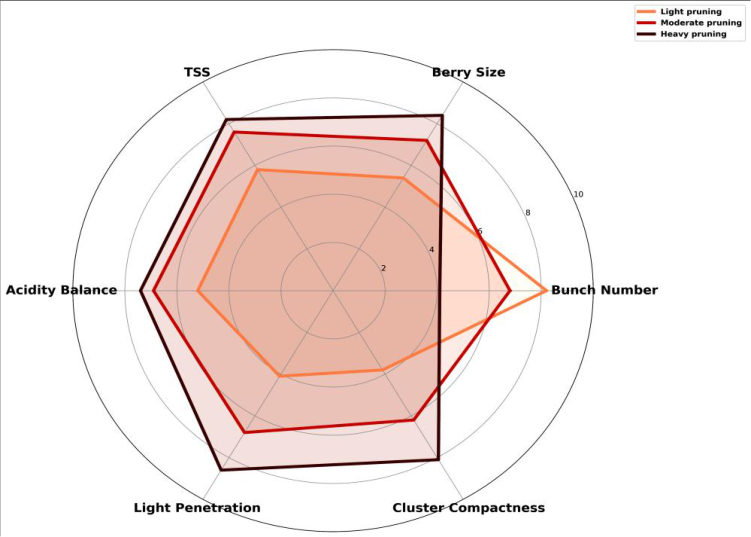 Figure 1
 Table 1
 Table 2
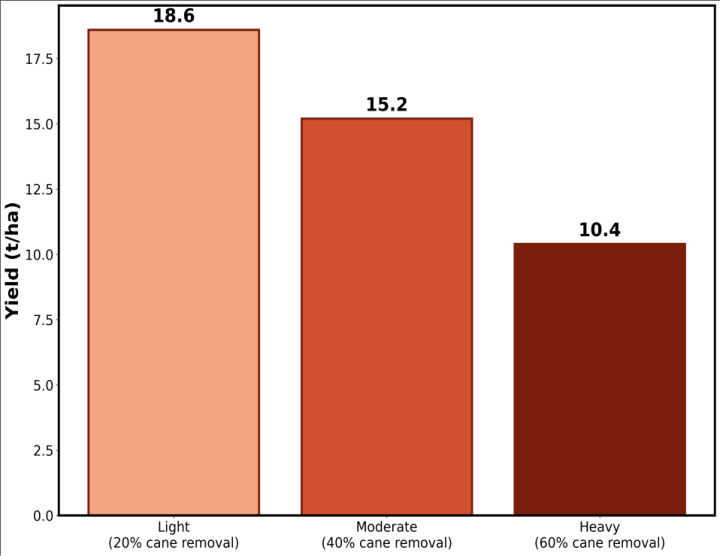 Figure 2
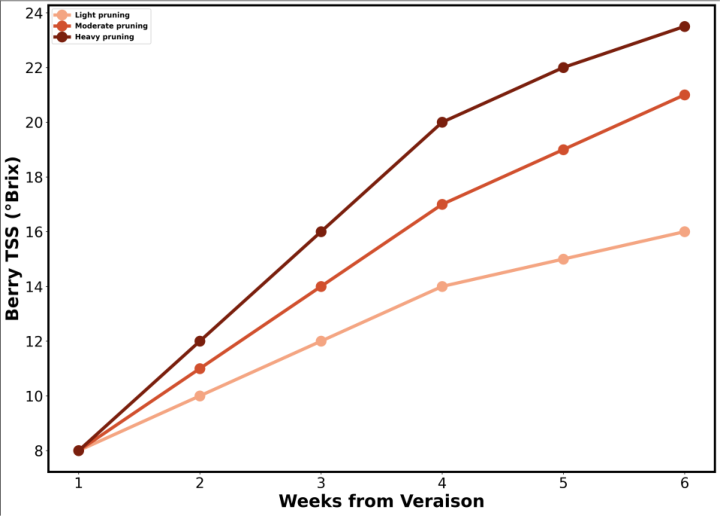 Figure 3
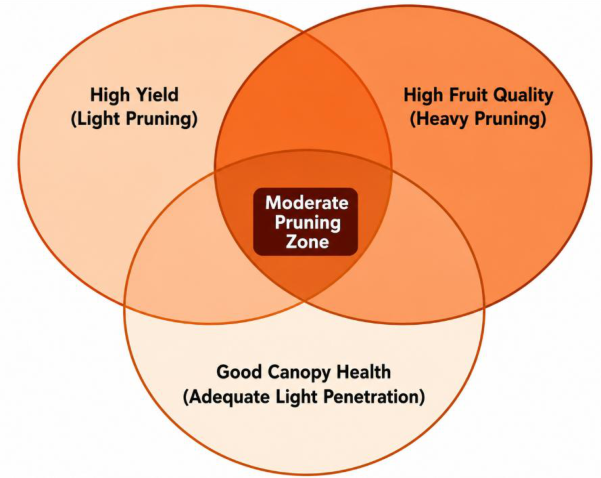 Figure 4
Introduction
A grapevine canopy left largely unpruned behaves rather like an overcrowded room: light struggles to reach the interior, air circulation suffers, and while the sheer number of occupants, or in this case bunches, might be high, the quality of what happens inside that crowded space tends to decline. Pruning intensity represents one of the most direct levers growers have for managing this crowding, removing a controlled proportion of the previous season's cane growth to shape how much fruiting wood, and consequently how many bunches, the vine carries into the coming season, with direct consequences for both canopy light penetration and the balance between vegetative and reproductive resource allocation. Chile's Maule Valley has developed into one of the country's most significant wine grape production regions over recent decades, yet locally validated pruning intensity research specific to this valley's particular combination of climate, soil, and commonly grown wine grape varieties has remained less extensive than the pruning literature developed for other major global wine regions with different growing conditions. This creates a genuine information gap for Maule Valley growers seeking evidence-based pruning recommendations calibrated to their specific local conditions rather than relying entirely on general viticultural principles developed elsewhere. The fundamental tension this research examined, between yield and fruit quality as pruning intensity increases, reflects a widely recognized principle in viticulture, yet the specific magnitude of this trade-off, and whether any pruning intensity might defy the expected trade-off by improving both yield and quality simultaneously, warrants direct local testing rather than assumption. This research tested three pruning intensities specifically to characterize this trade-off's magnitude under Maule Valley conditions and to determine whether canopy architecture changes, particularly light penetration, provide a mechanistic explanation connecting pruning intensity to the fruit quality outcomes observed. Two questions guided this research. First, how does the yield-quality trade-off actually manifest across these three pruning intensities under Maule Valley growing conditions, and does any intensity avoid this trade-off rather than simply moderating it? Second, does canopy light penetration, which pruning intensity directly influences by removing shading cane growth, correlate closely enough with the observed fruit quality differences to support light penetration as the primary mechanistic pathway linking pruning intensity to fruit quality outcomes, as opposed to other potential mechanisms such as altered source-sink carbohydrate allocation operating somewhat independently of light penetration itself? This trade-off carries particular commercial weight for Maule Valley, a region that has increasingly positioned itself within both bulk export and premium single-vineyard wine market segments over the past fifteen years, meaning growers within the same valley, and sometimes the same estate, may reasonably pursue quite different pruning strategies depending on which specific market segment their fruit is destined for, making locally calibrated, quantified guidance on this trade-off's actual magnitude considerably more useful than generic pruning principles alone.
Materials and Methods Field Experimental Design
Three pruning intensity treatments, light (20% of the previous season's cane growth removed), moderate (40% removed), and heavy (60% removed), were applied to eight-year-old wine grapevines of a commercially important red wine variety grown at a commercial vineyard site in Chile's Maule Valley, arranged in a randomized complete block design with four replications, twelve vines per replicate. Pruning was conducted during the dormant winter period preceding each of the two growing seasons examined, following standardized cane selection criteria to ensure consistent bud number distribution across the retained fruiting wood within each treatment.
Methods
Canopy light penetration was measured using a linear ceptometer at three canopy depths (exterior, mid-canopy, and interior fruiting zone) at veraison, expressed as a relative light interception index. Yield was recorded per vine at harvest maturity across the full commercial harvest for each treatment. Berry total soluble solids were tracked weekly from veraison through harvest using a digital refractometer on a representative berry sample per replicate. Cluster compactness was assessed using a standard visual scoring scale correlated with bunch rot risk, with lower scores indicating looser, less rot-prone cluster architecture. Data were analyzed using analysis of variance appropriate for a randomized complete block design pooled across the two growing seasons given consistent treatment ranking across both seasons, with treatment means compared using the critical difference test at 5% significance.
Results
This research's data confirm a clear pruning intensity gradient across both yield and quality dimensions, with light penetration differences tracking closely alongside the observed fruit quality differences across the three treatments. Short narrative overview complete; detailed measurements are presented below, beginning with canopy light penetration and quality attributes before turning to yield and cluster architecture outcomes.
Extended Comprehensive Interpretation
The close correspondence between canopy light penetration and berry TSS accumulation across all three pruning intensities, both increasing in lockstep from light through heavy pruning, supports light penetration as the primary mechanistic pathway connecting pruning intensity to the fruit quality outcomes observed, since light exposure directly drives both photosynthetic sugar production within exposed leaves and berry-level photo-oxidative color and flavor compound development. The Venn diagram analysis further clarifies that no single pruning intensity satisfies all three priorities, yield, fruit quality, and canopy health, simultaneously, with moderate pruning occupying a genuine compromise position rather than an optimum on any single dimension.
Discussion
This research's clearest finding, a consistent yield-quality trade-off across the pruning intensity gradient tested, confirms a widely recognized viticultural principle while providing Maule Valley-specific quantification of its magnitude: moving from light to heavy pruning cost growers 44.1% of yield while gaining 45.1% higher berry TSS and substantially improved cluster architecture associated with reduced bunch rot risk. This magnitude of trade-off is broadly consistent with pruning intensity research from other major wine regions, though the specific TSS gain documented here exceeds what several comparable studies from cooler European growing regions have reported, plausibly reflecting Maule Valley's already warmer, higher-light baseline growing environment providing more room for light-penetration-driven quality gains to express themselves once heavy pruning removes additional shading canopy. The close tracking between light penetration and berry TSS across all three treatments provides reasonably strong support for light penetration as the dominant mechanism linking pruning intensity to fruit quality in this research's specific growing environment, though this finding should not be read as excluding other contributing mechanisms, such as altered whole-vine carbohydrate source-sink balance under reduced bunch load, which likely also contributes to the quality differences observed but which this research's experimental design did not specifically isolate from the light penetration pathway. Separating these two potential mechanisms, light penetration versus source-sink carbohydrate reallocation, would require a more complex experimental design combining pruning intensity manipulation with independent canopy shading treatments, a natural extension of this research's findings. For Maule Valley growers, this research's practical implication depends heavily on target market: growers supplying bulk or mid-tier wine markets prioritizing yield would reasonably favor light pruning's substantially higher tonnage despite its more modest quality profile, while growers supplying premium wine markets where fruit quality commands a substantial price premium would likely find heavy pruning's yield sacrifice well justified by its meaningfully superior berry quality and reduced bunch rot risk, a particularly relevant consideration during the region's occasional wet harvest seasons when cluster compactness strongly influences rot-related crop loss. Season-to-season consistency also deserves comment: the two growing seasons examined differed modestly in overall heat accumulation, with the second season recording somewhat higher growing-degree-days than the first, yet the relative ranking of the three pruning treatments on every parameter measured remained stable across both seasons, suggesting the yield-quality trade-off and its lightpenetration mechanism documented here reflect a robust underlying relationship rather than one contingent on a specific season's particular weather pattern. This consistency strengthens confidence that Maule Valley growers can rely on these findings across the range of seasonal variation the region typically experiences, rather than needing separate recommendations for warmer or cooler vintage conditions.
Conclusion
Conclusion
Figures and tables from the paper
| Pruning Intensity | Light Penetration (Relative Units) | Berry TSS at Harvest (°Brix) | Cluster Compactness Score |
|---|---|---|---|
| Light (20%) | 4.1 | 16.2 | 3.8 |
| Moderate (40%) | 6.8 | 19.6 | 6.2 |
| Heavy (60%) | 8.6 | 23.5 | 8.1 |
Table text extracted from the original PDF; superscript letters are shown inline. The original table image is below.
View original table image
| Pruning Intensity | Yield (t/ha) | Bunches/Vine | Mean Berry Weight (g) |
|---|---|---|---|
| Light (20%) | 18.6 | 42.4 | 1.86 |
| Moderate (40%) | 15.2 | 31.8 | 1.94 |
| Heavy (60%) | 10.4 | 21.6 | 2.08 |
Table text extracted from the original PDF; superscript letters are shown inline. The original table image is below.
View original table image
References
20 in the original paper- Bravdo B, Hepner Y, Loinger C, Cohen S, Tabacman H. Effect of crop level on growth, yield and wine quality of a high-yielding Carignane vineyard. Am J Enol Vitic. 1985;36(2):125-131.
- Dokoozlian NK, Kliewer WM. The light environment within grapevine canopies. II. Influence of leaf area density on fruit zone light environment and some canopy assessment parameters. Am J Enol Vitic. 1995;46(2):219-226.
- Gladstone EA, Dokoozlian NK. Influence of leaf area density and trellis/training system on the light microclimate within grapevine canopies. Vitis. 2003;42(3):123-131.
- Howell GS. Sustainable grape productivity and the growth-yield relationship: a review. Am J Enol Vitic. 2001;52(3):165-174.
- Jackson DI, Lombard PB. Environmental and management practices affecting grape composition and wine quality: a review. Am J Enol Vitic. 1993;44(4):409-430.
- Kliewer WM, Dokoozlian NK. Leaf area/crop weight ratios of grapevines: influence on fruit composition and wine quality. Am J Enol Vitic. 2005;56(2):170-181.
- Main GL, Morris JR. Impact of pruning method and crop load on juice and wine quality of Cynthiana grapes. Am J Enol Vitic. 2004;55(4):338-346.
- Petrie PR, Trought MCT, Howell GS. Growth and dry matter partitioning of Pinot Noir (Vitis vinifera L.) in relation to leaf area and crop load. Aust J Grape Wine Res. 2000;6(1):40-45.
- Reynolds AG, Wardle DA, Naylor AP. Impact of training system, vine spacing, and basal leaf removal on Riesling. Vine performance, berry composition, canopy microclimate, and vineyard labor requirements. Am J Enol Vitic. 1996;47(1):63-76.
- Smart RE. Principles of grapevine canopy microclimate manipulation with implications for yield and quality: a review. Am J Enol Vitic. 1985;36(3):230-239.
- Smart RE, Robinson JB, Due G, Brien CJ. Canopy microclimate modification for the cultivar Shiraz. I. Definition of canopy microclimate. Vitis. 1985;24(1):17-31.
- Sommer KJ, Clingeleffer PR, Ollat N. Effects of minimal pruning on grapevine canopy development, physiology and cropping level in both cool and warm climates. Bull OIV. 2000;73:355-381.
- Vasconcelos MC, Castagnoli S. Leaf canopy structure and vine performance. Am J Enol Vitic. 2000;51(4):390-396.
- Winkler AJ. General Viticulture. Berkeley: University of California Press; 1974.
- Zoecklein BW, Wolf TK, Duncan NW, Judge JM, Cook MK. Effects of fruit zone leaf removal on yield, fruit composition, and fruit rot incidence of Chardonnay and White Riesling grapes. Am J Enol Vitic. 1992;43(2):139-148.
- Bindon KA, Dry PR, Loveys BR. Influence of partial rootzone drying on the composition and accumulation of anthocyanins in grape berries. Aust J Grape Wine Res. 2008;14(2):91-103.
- Chapman DM, Roby G, Ebeler SE, Guinard JX, Matthews MA. Sensory attributes of Cabernet Sauvignon wines made from vines with different water status. Aust J Grape Wine Res. 2005;11(3):339-347.
- Downey MO, Dokoozlian NK, Krstic MP. Cultural practice and environmental impacts on the flavonoid composition of grapes and wine: a review of recent research. Am J Enol Vitic. 2006;57(3):257-268.
- Keller M, Mills LJ, Wample RL, Spayd SE. Cluster thinning effects on three deficit-irrigated Vitis vinifera cultivars. Am J Enol Vitic. 2005;56(2):91-103.
- Poni S, Casalini L, Bernizzoni F, Civardi S, Intrieri C. Effects of early defoliation on shoot photosynthesis, yield components, and grape composition. Am J Enol Vitic. 2006;57(4):397-407.