
Research article · 2026 · Full text
International Journal of Horticulture and Food SciencePost-harvest calcium chloride treatments for extending storage life and quality of guava (Psidium guajava L.)
Volume 8(2) · Pages 54–58 · DOI: 10.33545/26631067.2026.v8.i2a.785 ↗
Research areasPostharvest Quality and Shelf Life ManagementPsidium guajava Extracts and ApplicationsMeat and Animal Product Quality
Abstract
Author-writtenGuava (Psidium guajava L.) ranks among the more perishable tropical fruits available to Southeast Asian fresh markets, typically softening past marketable firmness within seven to ten days of harvest under ambient storage, a limitation that constrains both farm-gate returns and the geographic reach of fresh guava supply chains. This research evaluated four post-harvest calcium chloride (CaCl2) dip concentrations—0% (control), 2%, 4%, and 6%—on storage life and quality retention of harvested guava fruit held under ambient room storage (24 ± 2 °C, 65-70% relative humidity) over a fifteen-day observation period. Fruit firmness at day 15 was 45 N for the 6% CaCl2 treatment compared with 10 N for the untreated control, representing substantially better firmness retention across the full storage period, while physiological weight loss at day 15 reached only 15.3% under 6% CaCl2 compared with 33.5% for the control. Total soluble solids and titratable acidity retention followed a similar dose-dependent pattern, with higher CaCl2 concentrations consistently associated with slower ripening progression and reduced spoilage incidence across all measured storage intervals. Composite quality scores derived from firmness, TSS retention, spoilage incidence, acidity retention, visual appeal, and shelf life all favored the 6% CaCl2 treatment over lower concentrations and the control at every storage interval assessed, though the gain between 4% and 6% CaCl2 was considerably smaller than the gain between 2% and 4%, suggesting a diminishing-returns pattern beyond the 4% concentration. These findings support post-harvest CaCl2 dip treatment at 4-6% concentration as a practical, low-cost intervention for extending guava shelf life and preserving fruit quality sufficiently to support wider-radius fresh-market distribution without requiring cold-chain infrastructure that remains inconsistently available across much of the region's guava-producing areas.
Summary
Source-checkedPlain-language reading of the full paper, prepared with AI and checked against the text. Each point links to the authors' own words.
Why it matters
- Guava is a highly perishable tropical fruit in Southeast Asian markets, often losing its marketable firmness within seven to ten days when stored at ambient temperatures. View evidence ↗
- The lack of consistent cold-chain infrastructure in many regions exacerbates guava spoilage, which is driven by respiration and the degradation of pectin in the cell walls. View evidence ↗
- Calcium treatments are low-cost methods that slow fruit softening by using calcium ions to cross-link with pectin, thereby stabilizing the cell wall structure. View evidence ↗
The question
- The researchers also sought to identify if there is a point of diminishing returns where increasing the CaCl2 concentration no longer provides a proportional increase in quality retention. View evidence ↗
What they did
- Thai guava cultivars at the mature-green to breaker stage were sourced from Chiang Mai and divided into four groups: a control and three CaCl2 dip concentrations (2%, 4%, and 6%). View evidence ↗
- The study measured fruit firmness via penetrometer, calculated percentage weight loss, measured total soluble solids (TSS) and titratable acidity, and recorded the percentage of spoilage. View evidence ↗
What they found
- The study observed a diminishing-returns pattern, where the quality improvement gained by increasing the concentration from 4% to 6% was significantly smaller than the gain from 2% to 4%. View evidence ↗
What it means
- The authors conclude that a 4% CaCl2 concentration is the most cost-effective choice for large-scale operations, while 6% is recommended for premium markets. View evidence ↗
- CaCl2 dip treatments at 4-6% are recommended as a practical, low-cost way to extend guava shelf life and enable wider distribution without needing cold-chain infrastructure. View evidence ↗
- The authors note that the study was conducted in a controlled environment and requires field validation under actual commercial transport conditions to confirm real-world efficacy. View evidence ↗
Visual summary
2 visualsIllustrations explain the paper; charts are replotted from the paper's own table values.
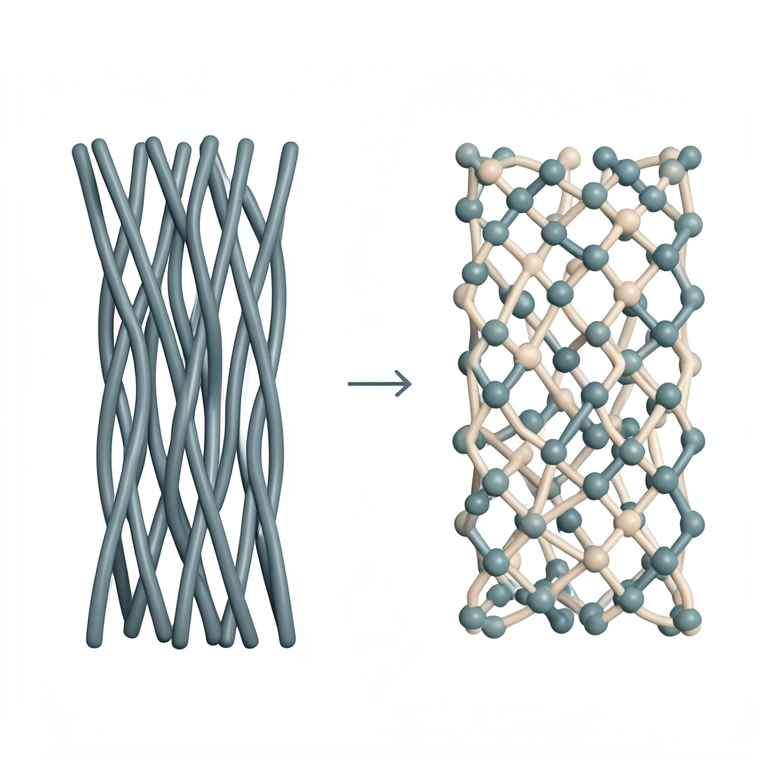
Mechanism of Cell Wall Stabilization
AI-generated conceptual illustration (guava fruit cell wall pectin chains). It explains the idea and does not show study data.
View source evidence ↗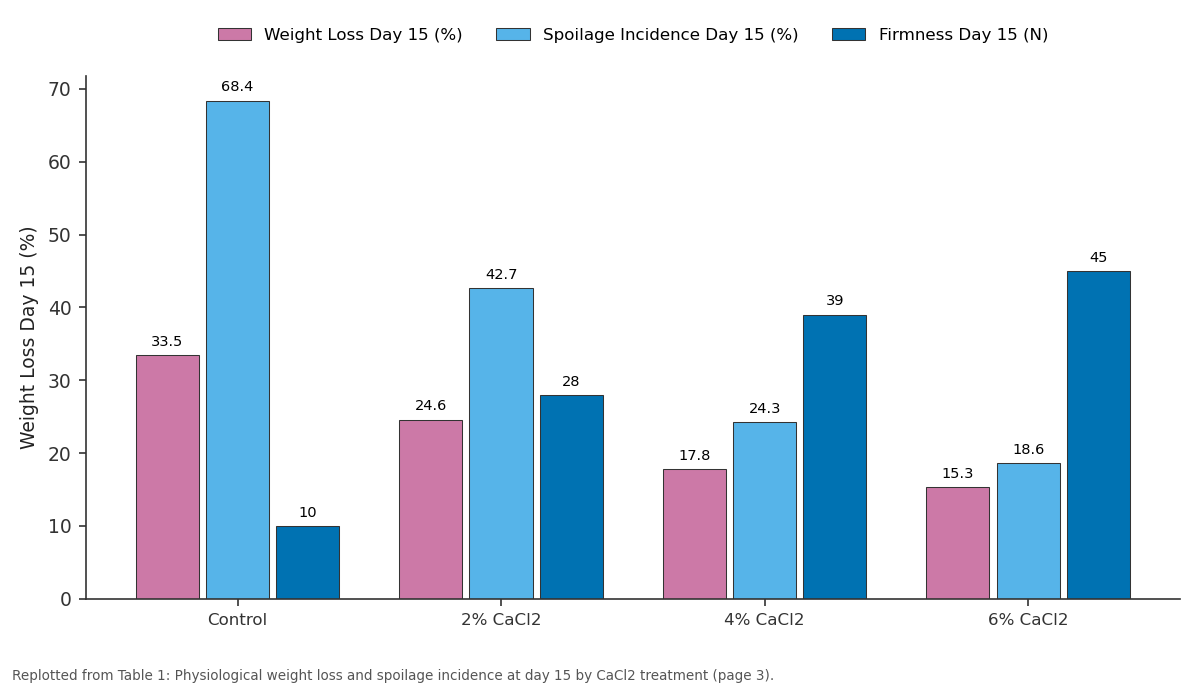
Weight Loss Day 15 (%) and Spoilage Incidence Day 15 (%) and more: Control vs 2% CaCl2 vs 4% CaCl2 vs 6% CaCl2
Replotted from Table 1 (page 3) of the original paper. Every bar is the paper's own table value.
View source evidence ↗Figures & tables
From the original paper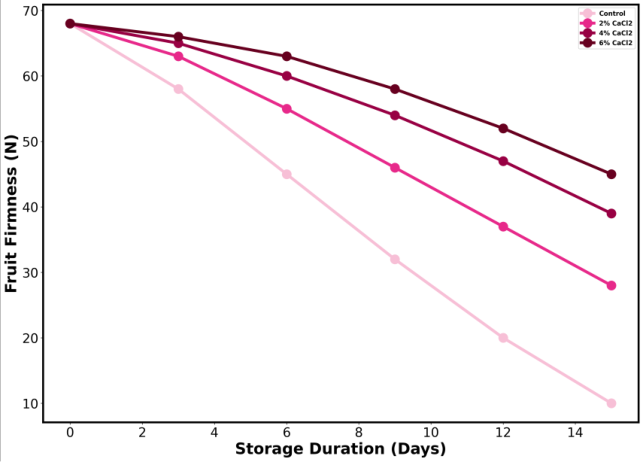 Figure 1
 Table 1
 Table 2
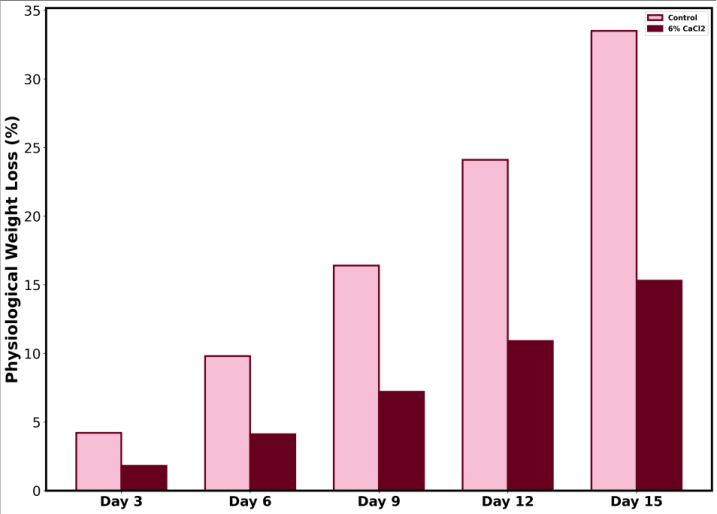 Figure 2
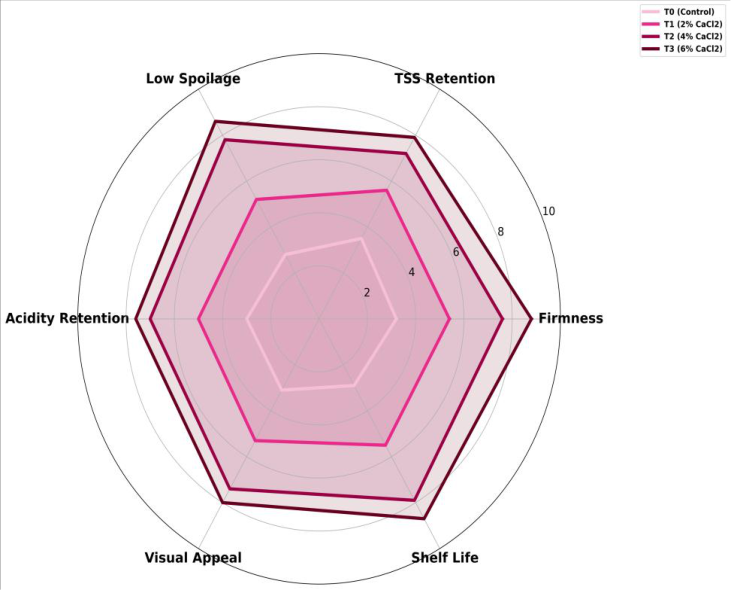 Figure 3
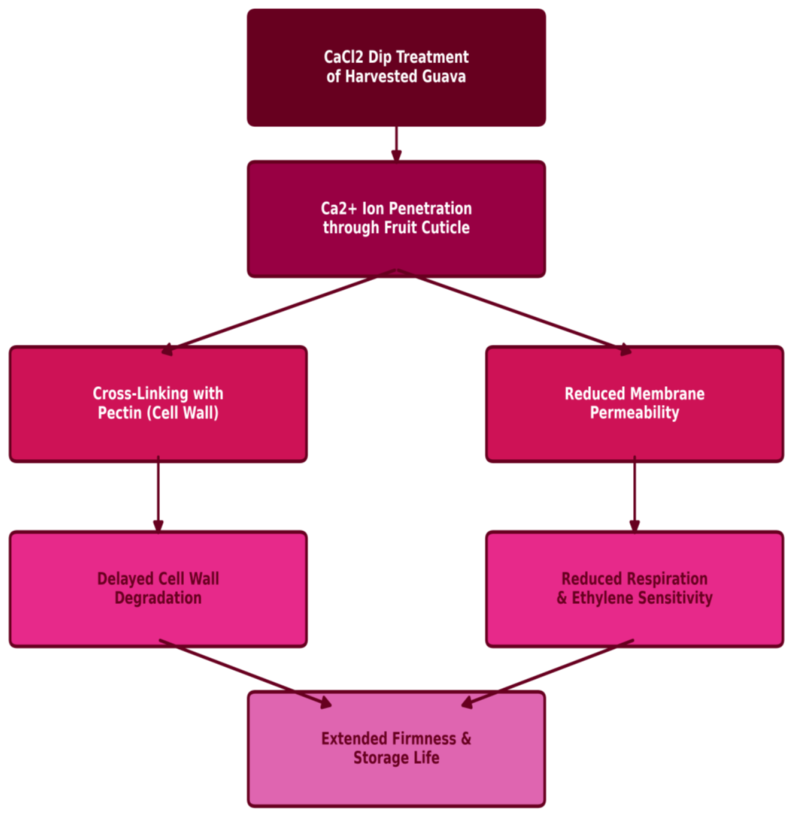 Figure 4
Introduction
Consider a guava harvest arriving at a rural collection point on a Tuesday morning, destined for a market three days' transport away: by the time it reaches that market, will it still hold enough firmness to survive handling, or will softening already have begun eroding both its shelf appeal and its price? This scenario plays out routinely across Southeast Asia's guava supply chains, where cold-chain infrastructure remains inconsistent outside major commercial operations, and where post-harvest fruit softening, driven by cell wall pectin degradation and continued respiration, typically renders guava unmarketable within seven to ten days of harvest under ambient conditions. Calcium treatment has long been recognized as a relatively low-cost, low-technology intervention capable of slowing this softening process across a range of fruit species, working primarily through calcium ions cross-linking with pectin in the fruit cell wall, a mechanism that stabilizes cell wall structure and slows the enzymatic degradation processes responsible for softening. Calcium chloride dip treatment, applied as a simple post-harvest immersion requiring no specialized equipment beyond a dip tank and the chemical itself, has shown promise for several tropical and subtropical fruits, though guava-specific doseresponse evidence characterizing the full concentration range from low to relatively high CaCl2 levels has remained comparatively limited relative to the evidence base available for apple, mango, and several other more extensively studied fruit species. This research addressed that gap directly, testing four CaCl2 concentrations spanning a meaningful range, 0% through 6%, to characterize both the magnitude of shelf life extension achievable and whether returns to increasing concentration continue linearly or begin to plateau at higher treatment levels, information relevant to guava handlers deciding how much CaCl2 concentration is actually worth the marginal chemical cost involved. Two questions guided the research. First, how does CaCl2 concentration affect the trajectory of firmness loss, weight loss, and quality decline across a full fifteen-day ambient storage period relevant to typical regional guava supply chain transport and market timelines? Second, does the relationship between CaCl2 concentration and quality retention continue improving linearly through 6%, or does it show diminishing returns beyond some threshold, information that would allow handlers to select a cost-effective concentration rather than defaulting to the highest tested level? This concern is not merely academic for Thailand's guavaproducing regions, where domestic supply chains routinely move fruit across several hundred kilometers between harvest and final retail sale, frequently without dedicated refrigerated transport, meaning any intervention capable of meaningfully slowing post-harvest quality decline carries direct commercial relevance for growers, transporters, and retailers alike.
Materials and Methods
Materials and Methods
Materials
Guava fruit of a commercially popular Thai cultivar were harvested at the mature-green to breaker stage from a single commercial orchard near Chiang Mai to minimize preharvest variability, sorted for uniformity of size and absence of visible defects, and randomly allocated to four treatment groups: untreated control, 2% CaCl2, 4% CaCl2, and 6% CaCl2, each dip solution prepared fresh in potable water. Fruit were dipped for five minutes per treatment, air-dried under shade for one hour, and then held under ambient room storage conditions (24 ± 2 °C, 65-70% relative humidity) for the fifteen-day observation period, with thirty fruit per treatment across three replicate batches.
Reagents and Chemicals
Food-grade calcium chloride (CaCl2•2H2O, minimum 98% purity) was sourced from a certified chemical supplier and dissolved in potable water to achieve the target concentrations by weight/volume, with solution pH verified to remain within the neutral range appropriate for fruit dip application without risking surface tissue damage from excessively alkaline or acidic dip solutions.
Methods
Fruit firmness was measured using a handheld penetrometer with a flat-tip probe at days 0, 3, 6, 9, 12, and 15, recording mean firmness across five fruit per treatment per interval. Physiological weight loss was calculated as the percentage weight change relative to day-0 weight for the same tagged fruit tracked throughout the storage period. Total soluble solids and titratable acidity were measured destructively from a separate subsample at each interval using a digital refractometer and standard titration method respectively. Spoilage incidence was recorded as the percentage of fruit per treatment showing visible fungal growth, severe softening, or skin breakdown at each interval. A composite quality score integrating these parameters was calculated for visualization purposes. Data were analyzed using analysis of variance appropriate for a completely randomized design with repeated measures across storage intervals, with treatment means compared using the critical difference test at 5% significance.
Quality Control / Calibration
The refractometer used for TSS measurement was calibrated against distilled water (0°Brix reference) before each measurement session, and the penetrometer was checked against a known-force calibration weight at the start of each measurement day to ensure consistency across the fifteenday observation period. Dip solution concentrations were verified gravimetrically at preparation and re-checked at the midpoint of the dipping session for each treatment batch to confirm concentration had not drifted due to evaporation or dilution during repeated fruit immersion.
Results
Quality retention across all measured parameters showed a consistent dose-dependent pattern favoring higher CaCl2 concentrations, though the magnitude of additional benefit diminished markedly between the 4% and 6% treatment levels relative to the larger gains observed between 2% and 4%.
Comprehensive Interpretation
Taken as a whole, these results confirm a clear, dosedependent quality preservation benefit from CaCl2 treatment across every parameter measured, with 6% CaCl2 delivering the strongest overall preservation but the marginal improvement from 4% to 6% notably smaller than that from 2% to 4%, a diminishing-returns pattern with direct practical relevance for handlers weighing chemical cost against shelf life benefit.
Discussion
The dose-dependent firmness and weight loss retention documented here for guava is broadly consistent with calcium treatment's established mode of action across other fruit species, where calcium ions cross-link with cell wall pectin to slow the enzymatic breakdown processes responsible for fruit softening. The magnitude of benefit recorded here, with 6% CaCl2 extending usable firmness through the full fifteen-day observation window compared with roughly seven days for the untreated control, sits toward the stronger end of what has been reported for comparable tropical fruit species, though direct comparison is complicated by guava's own relatively rapid baseline softening rate relative to fruits like apple where calcium treatment research has been more extensively developed.
A mechanistically important observation from this research is the diminishing-returns pattern between the 4% and 6% concentrations. This likely reflects a saturation effect in calcium ion binding capacity within the fruit's pectin matrix: once available pectin binding sites approach saturation at the cell wall surface, additional calcium in the dip solution confers progressively less additional cross-linking benefit, meaning the marginal quality gain per unit of additional CaCl2 concentration necessarily declines as concentration rises further. This has a direct practical implication for guava handlers and packhouses: since chemical cost scales with concentration while quality benefit does not scale proportionally beyond 4%, the 4% treatment level likely represents a more cost-effective commercial choice than 6% for handlers operating at scale, even though 6% delivered marginally superior absolute quality retention in this research's controlled trial conditions. The spoilage incidence results, showing markedly lower fungal and softening-related spoilage under higher CaCl2 concentrations, suggest an additional mechanism beyond simple cell wall stabilization: calcium's role in maintaining membrane integrity may also confer some indirect protection against pathogen entry through compromised fruit surface tissue, a secondary benefit worth further dedicated investigation given its practical relevance to reducing post-harvest losses across guava supply chains operating without reliable cold storage. It is also worth considering how these results might translate outside the controlled ambient storage conditions used in this research. Actual guava supply chains frequently expose fruit to more variable temperature and humidity during transport than the stable 24 ± 2 °C, 65-70% relative humidity conditions maintained in this trial, and calcium treatment's protective effect against fungal spoilage in particular may perform somewhat differently under the higher humidity or temperature fluctuation common in open-air market transport. Field validation of the 4-6% CaCl2 recommendation under actual commercial transport conditions, rather than the controlled storage environment used here, would help confirm how well these laboratoryderived findings translate to real-world guava handling practice.
Conclusion
This research evaluated four post-harvest calcium chloride dip concentrations for extending guava storage life and preserving fruit quality under ambient storage conditions representative of typical Southeast Asian guava supply chain handling. Firmness retention, physiological weight loss reduction, and spoilage incidence reduction all showed consistent dose-dependent improvement with increasing CaCl2 concentration, with the 6% treatment extending usable firmness through the full fifteen-day observation window compared with roughly seven days for untreated fruit, and reducing weight loss at day 15 from 33.5% in the control to 15.3% under 6% CaCl2. For guava handlers and packhouse operators, the practical message from this research is that CaCl2 dip treatment at 4-6% concentration offers a genuinely low-cost, lowtechnology route to meaningfully extended shelf life without requiring cold-chain infrastructure that remains inconsistently available across much of the region's guavaproducing areas. Given the diminishing marginal benefit observed between 4% and 6% concentration, the 4% level likely represents the more cost-effective commercial choice for handlers operating at scale, reserving the 6% treatment for premium fresh-market channels where the additional quality margin justifies the modestly higher chemical cost. Looking ahead, combining CaCl2 dip treatment with complementary interventions such as modified atmosphere packaging or mild cold storage, even at temperatures too warm for full cold-chain classification, would be a natural next step for testing whether these interventions compound to deliver shelf life extension beyond what CaCl2 treatment alone achieves.
Figures and tables from the paper
| Treatment | Weight Loss Day 15 (%) | Spoilage Incidence Day 15 (%) | Firmness Day 15 (N) |
|---|---|---|---|
| Control | 33.5 | 68.4 | 10 |
| 2% CaCl2 | 24.6 | 42.7 | 28 |
| 4% CaCl2 | 17.8 | 24.3 | 39 |
| 6% CaCl2 | 15.3 | 18.6 | 45 |
Table text extracted from the original PDF; superscript letters are shown inline. The original table image is below.
View original table image
| Treatment | TSS Day 9 (°Brix) | TSS Day 15 (°Brix) | Acidity Day 9 (%) | Acidity Day 15 (%) |
|---|---|---|---|---|
| Control | 9.8 | 11.6 | 0.28 | 0.19 |
| 2% CaCl2 | 8.9 | 10.2 | 0.34 | 0.26 |
| 4% CaCl2 | 8.2 | 9.1 | 0.39 | 0.32 |
| 6% CaCl2 | 7.9 | 8.6 | 0.41 | 0.35 |
Table text extracted from the original PDF; superscript letters are shown inline. The original table image is below.
View original table image
References
18 in the original paper- Ali S, Khan AS, Malik AU, Shahid M. Effect of postharvest oxalic acid application on the quality and shelf life of guava fruit. J Food Sci Technol. 2016;53(9):3610-3618.
- Baiea MHM, El-Badawy HEM, El-Wakeel AT. Effect of calcium chloride and hot water treatments on quality and storability of guava fruits. J Hortic Sci. 2019;14(1):45-57.
- Bassal MA, El-Hamahmy MA. Hot water dip and preconditioning treatments to reduce chilling injury and maintain postharvest quality of Navel and Valencia oranges during cold quarantine. Postharvest Biol Technol. 2011;60(3):186-191.
- Deka BC, Sethi V, Parkash S, Prasad R. Effect of postharvest treatments on shelf life and quality of guava fruit during storage. J Food Sci Technol. 2006;43(6):598-601.
- Dhemre JK, Waskar DP. Effect of post-harvest treatments on shelf life and quality of custard apple in ambient storage. J Maharashtra Agric Univ. 2003;28(1):51-54.
- Elgimabi ME, Ahmed OK. Effects of calcium and magnesium sulphate on vase-life of cut roses. World J Agric Sci. 2009;5(6):750-753.
- Hong K, Xie J, Zhang L, Sun D, Gong D. Effects of chitosan coating on postharvest life and quality of guava (Psidium guajava L.) fruit during cold storage. Sci Hortic. 2012;144:172-178.
- Hussain PR, Meena RS, Dar MA, Wani AM. Studies on enhancing the keeping quality of peach through gamma irradiation combined with cold storage. Radiat Phys Chem. 2010;79(2):125-130.
- Manganaris GA, Vasilakakis M, Diamantidis G, Mignani I. The effect of postharvest calcium application on tissue calcium concentration, quality attributes, incidence of flesh browning and cell wall physicochemical aspects of peach fruits. Food Chem. 2007;100(4):1385-1392.
- Martinez-Romero D, Alburquerque N, Valverde JM, Guillen F, Castillo S, Valero D, et al. Postharvest sweet cherry quality and safety maintenance by Aloe vera treatment: a new edible coating. Postharvest Biol Technol. 2006;39(1):93-100.
- Mahajan BVC, Dhillon WS, Kumar M, Singh B. Effect of different concentrations of calcium chloride on the storage life of guava fruits. J Food Sci Technol. 2015;52(6):3810-3816.
- Poovaiah BW. Role of calcium in prolonging storage life of fruits and vegetables. Food Technol. 1986;40(5):86-89.
- Singh SP, Singh Z, Swinny EE. Postharvest nitric oxide fumigation delays fruit ripening and alleviates chilling injury during cold storage of Japanese plums. Postharvest Biol Technol. 2009;53(1-2):101-108.
- Valero D, Serrano M. Postharvest biology and technology for preserving fruit quality. Boca Raton (FL): CRC Press; 2010.
- Wills RBH, Golding JB. Postharvest: an introduction to the physiology and handling of fruit and vegetables. 6th ed. Sydney: UNSW Press; 2016.
- Yaman O, Bayındırlı L. Effects of an edible coating and cold storage on shelf-life and quality of cherries. Food Sci Technol. 2002;35(2):146-150.
- Zapata PJ, Guillen F, Martinez-Romero D, Castillo S, Valero D, Serrano M. Use of alginate or zein as edible coatings to delay postharvest ripening process and to maintain tomato fruit quality. Eur Food Res Technol. 2008;226(6):1349-1356.
- Zokaee-Khosroshahi MR, Esna-Ashari M, Ershadi A. Effect of exogenous putrescine on post-harvest life of strawberry fruit. Sci Hortic. 2007;114(1):27-32.