
Research article · 2026 · Full text
International Journal of Biology SciencesAssessment of food safety practices and Listeria monocytogenes occurrence in street-vended foods
Volume 8(4) · Pages 226–232 · DOI: 10.33545/26649926.2026.v8.i4c.917 ↗
Research areasListeria monocytogenes in Food SafetyFood Safety and HygieneSalmonella and Campylobacter epidemiology
Abstract
Author-writtenThe proliferation of street food vending in metropolitan Lima presents an escalating food safety challenge, yet systematic microbiological surveillance data regarding Listeria monocytogenes contamination in this sector remain critically deficient. This research aimed to assess food safety practices and determine the prevalence of L. monocytogenes in street-vended foods across six districts of Lima, Peru. A cross-sectional investigation was conducted from May 2022 to April 2023, encompassing 360 food samples collected from 120 street food vendors operating in formal stalls (n=60) and informal settings (n=60). Samples spanning six food categories were analyzed following ISO 11290-1:2017 protocols, complemented by observational assessment of vendor hygiene practices using a validated 50-point food safety compliance checklist. The overall prevalence of L. monocytogenes was 12.5% (45/360), with significantly higher contamination rates observed among informal vendors (15.8%) compared to formal stalls (9.2%) (p = 0.024). Ceviche and seafood preparations exhibited the highest prevalence at 18.6%, followed by grilled meat products at 14.6% and prepared sandwiches at 12.2%. The mean food safety compliance score was 54.3 ± 18.7%, with only 23.3% of vendors achieving scores above 70%. A significant inverse correlation was identified between hygiene compliance scores and L. monocytogenes contamination levels (R² = 0.72, p < 0.001). Serotyping revealed serotype 1/2a as predominant (37.8%), followed by 1/2b (24.4%) and 4b (17.8%). Temperature monitoring demonstrated that 68.3% of vendors maintained food products outside the recommended temperature range. These findings reveal substantial food safety deficiencies in Lima's street food sector and underscore the urgent need for comprehensive vendor training programs, regulatory enforcement, and infrastructure improvements to mitigate L. monocytogenes contamination risks.
Summary
Source-checkedPlain-language reading of the full paper, prepared with AI and checked against the text. Each point links to the authors' own words.
Why it matters
- Street food is a critical source of affordable nutrition for millions of urban dwellers and provides essential livelihoods for many workers in the informal economy. View evidence ↗
- Invasive listeriosis is one of the world's deadliest foodborne illnesses, with case fatality rates between 20% and 30% and severe outcomes like meningitis and septicemia. View evidence ↗
The question
- The study aimed to determine how common L. monocytogenes is in street-vended foods across six districts of Lima, Peru, and to evaluate the food safety practices of the vendors. View evidence ↗
What they did
- Between May 2022 and April 2023, researchers collected 360 food samples from 120 vendors, split equally between 60 formal stalls and 60 informal settings. View evidence ↗
- Vendor hygiene was measured using a 50-point checklist covering ten domains, with a maximum possible score of 100%. View evidence ↗
- The detection and counting of L. monocytogenes were performed according to ISO 11290-1:2017 protocols. View evidence ↗
What they found
- L. monocytogenes was found in 12.5% (45/360) of all samples, with informal vendors showing a significantly higher contamination rate (15.8%) than formal stalls (9.2%). View evidence ↗
- Ceviche and seafood had the highest contamination rate at 18.6%, followed by grilled meats (14.6%) and sandwiches (12.2%). View evidence ↗
- The average food safety compliance score for vendors was 54.3 ± 18.7%, and only 23.3% of vendors scored above 70%. View evidence ↗
- Most vendors (68.3%) failed to keep food at safe temperatures (below 5°C for cold or above 60°C for hot) at the time of sale. View evidence ↗
- There was a strong inverse correlation (R² = 0.72) between hygiene scores and contamination, meaning vendors with poorer safety practices had higher levels of L. monocytogenes. View evidence ↗
- Serotype 1/2a was the most common (37.8%), followed by 1/2b (24.4%) and the clinically significant serotype 4b (17.8%). View evidence ↗
What it means
- The authors conclude that improving physical infrastructure for informal vendors is likely to be more effective for food safety than training programs alone. View evidence ↗
- The study highlights urgent needs for better infrastructure, stricter regulatory enforcement, and comprehensive training to reduce contamination risks in Lima's street food sector. View evidence ↗
- Future research is needed to link street food isolates to actual clinical cases, evaluate the cost of interventions, study seasonal patterns, and test these findings in other Peruvian cities. View evidence ↗
Visual summary
2 visualsIllustrations explain the paper; charts are replotted from the paper's own table values.
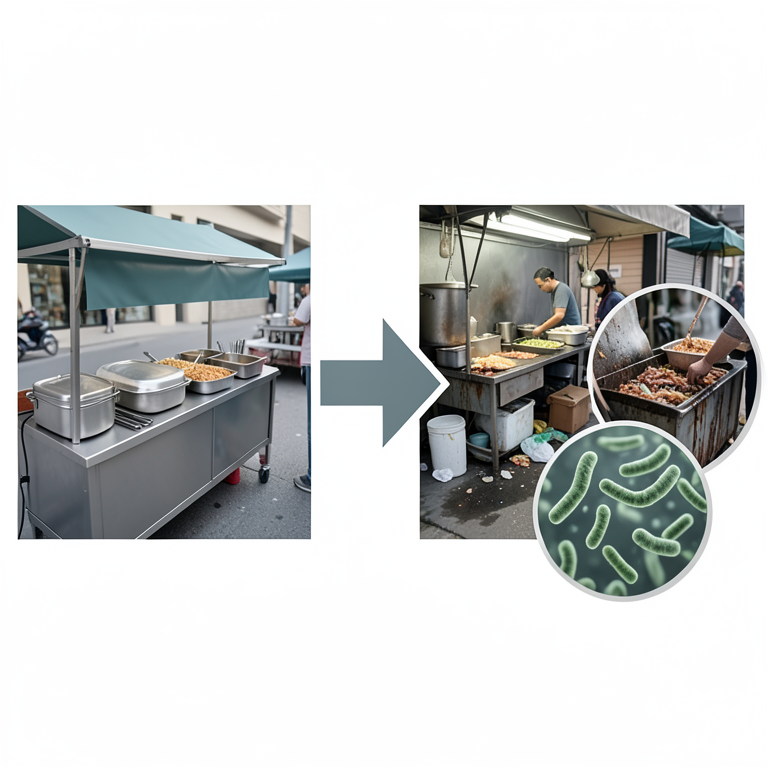
Hygiene vs Contamination
AI-generated conceptual illustration (street-vended food stalls and Listeria monocytogenes bacteria). It explains the idea and does not show study data.
View source evidence ↗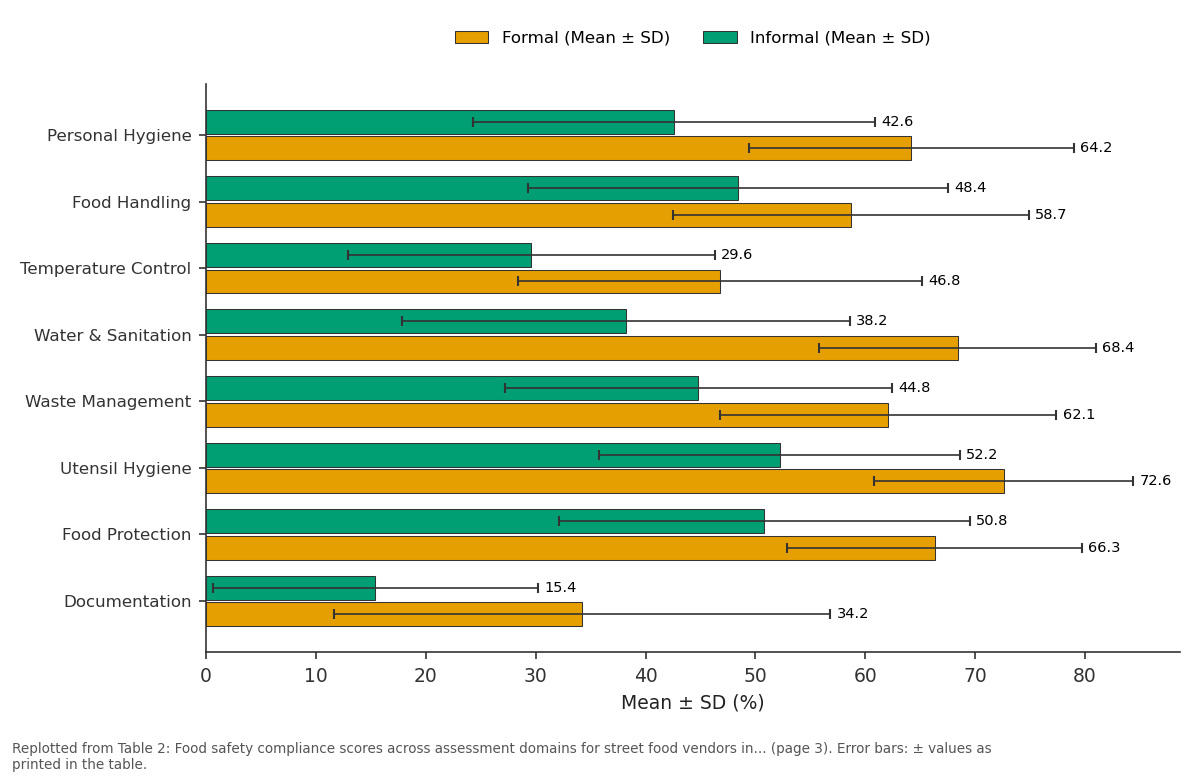
Formal (Mean ± SD) and Informal (Mean ± SD): Personal Hygiene vs Food Handling vs Temperature Control vs Water & Sanitation vs Waste Management
Replotted from Table 2 (page 3) of the original paper. Every bar is the paper's own table value.
View source evidence ↗Figures & tables
From the original paper Table 1
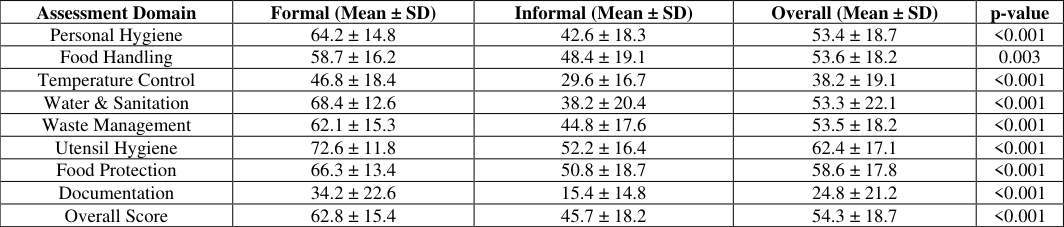 Table 2
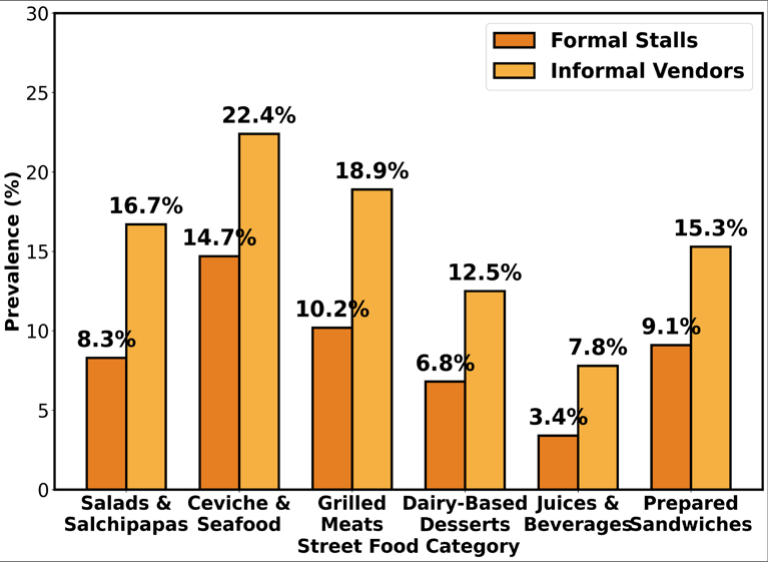 Figure 1
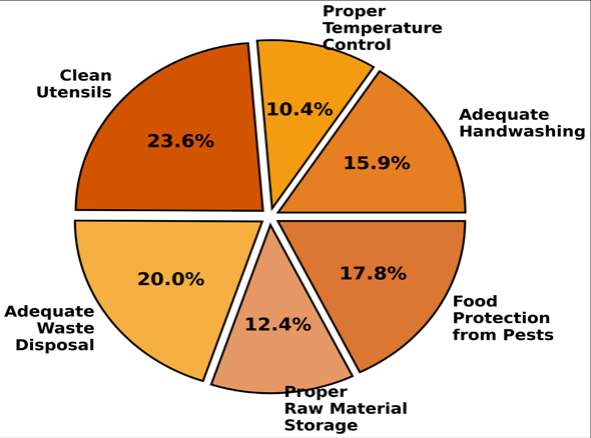 Figure 2
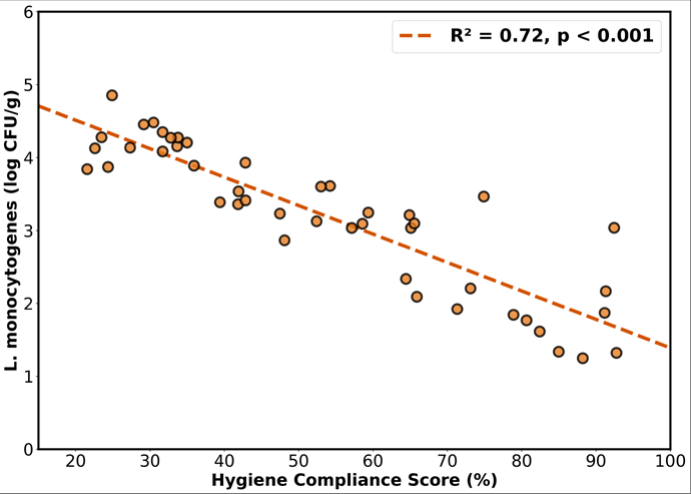 Figure 3
Introduction
The persistence of inadequate food safety conditions within street food vending operations constitutes one of the most pressing yet under addressed public health challenges facing rapidly urbanizing cities across Latin America [1] . Street food, broadly defined as ready-to-eat food and beverages prepared and sold by vendors in public spaces including streets, sidewalks, parks, and marketplaces, serves as a primary source of affordable nutrition for millions of urban residents while simultaneously supporting the livelihoods of a substantial informal economy workforce [2] . The World Health Organization estimates that approximately 2.5 billion people consume street food daily worldwide, with the sector generating annual revenues exceeding 100 billion US dollars in developing countries [3] . In Peru, street food vending represents a deeply embedded cultural and economic institution, with Lima alone hosting an estimated 150,000 to 200,000 street food vendors serving diverse culinary preparations ranging from traditional ceviche and anticuchos to contemporary fusion offerings [4] . The Peruvian street food landscape is particularly complex due to the intersection of sophisticated culinary traditions with informal vending practices that frequently lack adequate sanitary infrastructure, temperature control equipment, potable water access, and waste management systems [5] . Listeria monocytogenes poses a distinctive threat within the street food context due to its ability to proliferate at refrigeration temperatures, form persistent biofilms on food contact surfaces, and tolerate the acidic conditions characteristic of several popular Peruvian street Food preparations [6] . Unlike many foodborne pathogens that require a minimum infectious dose of thousands to millions of organisms, L. monocytogenes can cause invasive disease at relatively low infectious doses in susceptible individuals, amplifying the public health significance of even low-level contamination in high-consumption food categories [7] . The clinical manifestations of invasive listeriosis, including meningitis, septicemia, and adverse pregnancy outcomes, carry case fatality rates ranging from 20% to 30%, positioning this pathogen among the most lethal foodborne agents globally [8] . Despite the substantial volume of street food consumed daily in Lima and the recognized vulnerability of this food sector to microbiological contamination, comprehensive investigations examining the prevalence and determinants of L. monocytogenes contamination in Peruvian street-vended foods have not been previously conducted [9,10] . Existing food safety research in Peru has focused predominantly on formal food service establishments and retail products, leaving a critical knowledge gap regarding the microbiological safety of the street food sector that serves a disproportionately large segment of the urban population [11] . This research was designed to conduct a systematic assessment of food safety practices and L. monocytogenes occurrence in street-vended foods across six representative districts of metropolitan Lima, Peru. The specific objectives included determining the prevalence of L. monocytogenes contamination across food categories and vendor types, evaluating vendor compliance with established food safety practices, identifying correlations between hygiene practices and contamination levels, and characterizing the serotype distribution of recovered isolates.
Material and Methods
Material and Methods
Material
The research materials comprised 360 street-vended food samples collected from 120 vendors across six districts of metropolitan Lima: Miraflores, San Juan de Lurigancho, Cercado de Lima, Villa El Salvador, Surquillo, and Comas. These districts were selected to represent the socioeconomic diversity of Lima's street food landscape. Sample categories included salads and salchipapas (n=60), ceviche and seafood preparations (n=60), grilled meat products (n=60), dairybased desserts (n=60), juices and beverages (n=60), and prepared sandwiches (n=60). Three samples were collected from each vendor at different time points during the investigation period. Bacteriological culture media including Listeria Enrichment Broth (LEB), PALCAM agar, Oxford agar, and chromogenic ALOA agar were obtained from Merck KGaA (Darmstadt, Germany). Multiplex PCR reagents for serotyping and species confirmation were procured from Thermo Fisher Scientific (Waltham, MA). A validated 50-point food safety compliance checklist adapted from the WHO Five Keys to Safer Food framework was utilized for observational assessments, with modifications to incorporate criteria specific to Peruvian street food operations. Calibrated digital infrared thermometers (Fluke 62 MAX, Fluke Corporation, Everett, WA) were used for temperature monitoring of food products at the point of sale.
Methods
This cross-sectional investigation was conducted from May 2022 to April 2023 at the Food Microbiology Laboratory, Lima Foundation for Food Research, Lima, Peru. Ethical approval was obtained from the Institutional Ethics Committee of the Lima Foundation for Food Research (Protocol No. LFFR/IEC/2022-023). All participating vendors provided verbal informed consent following explanation of the research objectives and confidentiality assurances. The investigation followed ISO 11290-1:2017 protocols for L. monocytogenes detection and enumeration. Vendors were classified as formal (operating from licensed fixed stalls with basic infrastructure including roofing, water access, and waste containers) or informal (operating from portable carts, tables, or ground-level displays without permanent infrastructure). A stratified random sampling approach ensured equal representation of both vendor categories across all six districts. Samples were collected aseptically using sterile containers, transported under cold chain conditions (4°C ± 2°C) within one hour of collection, and processed within four hours of receipt at the laboratory. Food safety compliance was assessed through direct observation by trained field investigators using the 50-point checklist encompassing ten domains: personal hygiene (handwashing, protective clothing), food handling (crosscontamination prevention, glove use), temperature control (hot holding, cold storage), water and sanitation (potable water access, surface cleaning), waste management, raw material sourcing, food protection from environmental contamination, utensil hygiene, vendor health awareness, and documentation practices. Each domain was scored from 0 to 5 points, yielding a maximum compliance score of 50 (100%). For L. monocytogenes isolation, 25 g of each sample was homogenized in 225 mL of half-Fraser broth and incubated at 30°C for 24 hours. Secondary enrichment was performed in full-Fraser broth at 37°C for 48 hours. Enriched cultures were streaked onto PALCAM and ALOA agar plates and incubated at 37°C for 24-48 hours. Presumptive colonies were confirmed through Gram staining, catalase testing, motility assessment, hemolysis on blood agar, and speciesspecific PCR targeting the hlyA gene. Confirmed isolates were serotyped using multiplex PCR. Product temperatures were recorded at the point of sale. Statistical analysis was performed using Stata version 17.0, with chi-square tests for categorical comparisons, Pearson correlation for continuous variables, and multivariate logistic regression for risk factor analysis, at a significance level of p < 0.05.
Results
Of the 360 street-vended food samples analyzed, L. monocytogenes was isolated from 45 samples, yielding an overall prevalence of 12.5% (95% CI: 9.3-16.3%). The pathogen was detected across all six food categories, with ceviche and seafood preparations exhibiting the highest prevalence at 18.6% (11/60), followed by grilled meat products at 14.6% (9/60), prepared sandwiches at 12.2% (7/60), salads and salchipapas at 10.0% (6/60), dairy-based desserts at 8.3% (5/60), and juices and beverages at 5.6% (4/60 -detected exclusively in fruit preparations containing dairy components). The difference in prevalence across food categories was statistically significant (χ² = 11.42, p = 0.043). Informal vendors demonstrated a significantly higher overall contamination rate (15.8%, 28/180) compared to formal stalls (9.2%, 17/180) (p = 0.024), with the disparity most pronounced in ceviche and seafood preparations (informal: 22.4% vs formal: 14.7%) and grilled meats (informal: 18.9% vs formal: 10.2%). Temperature monitoring revealed that 68.3% of vendors maintained food products outside the recommended safe temperature range (below 5°C for cold items or above 60°C for hot items) at the point of sale. Among cold preparations including ceviche and dairy desserts, the mean product temperature was 14.8 ± 6.3°C, substantially exceeding the recommended 5°C threshold. Hot preparations including grilled meats averaged 48.7 ± 12.4°C, falling below the recommended 60°C minimum. A significant inverse correlation was identified between vendor hygiene compliance scores and L. monocytogenes contamination levels (R² = 0.72, p < 0.001), indicating that vendors with lower food safety practice scores consistently exhibited higher pathogen contamination in their food products. The mean contamination level among positive samples from vendors scoring below 40% compliance was 3.8 ± 0.6 log CFU/g, compared to 1.6 ± 0.4 log CFU/g among vendors scoring above 70% compliance.
Discussion
The overall prevalence of L. monocytogenes at 12.5% in street-vended foods documented in this investigation represents a significant food safety concern for the population of metropolitan Lima and provides the first systematic baseline data for this critically important food sector in Peru. This prevalence aligns with contamination rates reported from street food surveys conducted in other Latin American countries, where L. monocytogenes detection rates ranging from 8% to 20% have been documented in diverse street food matrices [1,2] . However, the prevalence observed in this research substantially exceeds rates reported from formal food service establishments in Lima, where previous investigations documented L. monocytogenes contamination at approximately 3% to 7% [3,4] . The elevated contamination rate in ceviche and seafood preparations (18.6%) can be attributed to the inherent characteristics of these products that create favorable conditions for L. monocytogenes survival and proliferation. Traditional Peruvian ceviche preparation involves marinating raw fish in lime juice (leche de tigre), which reduces pH to approximately 3.5 to 4.0, a level sufficient to inhibit many foodborne pathogens but within the acid tolerance range of L. monocytogenes [5,6] . Furthermore, the extended ambient temperature holding periods typical of street food vending operations allow psychrotrophic organisms such as L. monocytogenes to recover from acid stress and potentially proliferate, particularly when initial contamination levels in raw seafood ingredients exceed the capacity of acid-mediated inactivation.
The significantly higher contamination rates among informal vendors compared to formal stalls (15.8% vs 9.2%) reflect the substantial disparities in sanitary infrastructure, food handling practices, and regulatory oversight between these vendor categories. Informal vendors operating without access to potable water, refrigeration equipment, or proper waste disposal systems face inherent limitations in implementing effective food safety controls, regardless of their knowledge or intention regarding hygienic practices [7,8] . This finding carries important implications for public health policy, suggesting that infrastructure-focused interventions targeting the informal vending sector may yield greater food safety improvements than knowledgebased training programs alone. The inverse correlation between hygiene compliance scores and contamination levels (R² = 0.72) provides robust empirical evidence supporting the causal pathway between food safety practice deficiencies and L. monocytogenes contamination in the street food context [9,10] . Temperature control non-compliance emerged as the strongest individual predictor of contamination (adjusted OR: 3.42), consistent with the well-established role of temperature abuse as a critical determinant of L. monocytogenes growth in food products. The observation that 68.3% of vendors failed to maintain products within safe temperature ranges reveals a systemic infrastructure and behavioral challenge that requires comprehensive intervention strategies combining equipment provision, training, and enforcement [11,12] . The predominance of serotype 1/2a (37.8%) among street food isolates mirrors the global epidemiological pattern in which this serotype predominates in food and environmental samples, attributed to its enhanced stress tolerance and biofilm formation capabilities compared to other serotype groups [13] . The detection of the hypervirulent serotype 4b in 17.8% of isolates, particularly concentrated in ceviche and grilled meat products, underscores the clinical significance of L. monocytogenes contamination in Lima's street food sector and the potential for these products to serve as vehicles for invasive listeriosis among vulnerable consumers [14] .
Food safety interventions
Food safety interventions
Challenges and opportunities
Several interrelated challenges and opportunities characterize the food safety landscape of Lima's street food sector. The informal nature of the majority of street food operations creates fundamental barriers to regulatory engagement, as vendors operating without business licenses or fixed locations are difficult to identify, monitor, and support through conventional food safety programs. The economic vulnerability of street food vendors, many of whom earn daily incomes below the national minimum wage, limits their capacity to invest in food safety infrastructure and may create perverse incentives to prioritize cost minimization over food safety compliance. However, opportunities exist to leverage the strong cultural identity associated with Peruvian street food traditions, the growing domestic and international tourism interest in authentic culinary experiences, and the municipal government's urban renewal initiatives to create positive incentive structures that reward food safety compliance through market access privileges, tourism promotion inclusion, and brand recognition programs.
Conclusion
The principal contribution of this research lies in establishing the first comprehensive baseline assessment of L. monocytogenes contamination and food safety practice compliance across Lima's street food sector, revealing an overall prevalence of 12.5% that significantly exceeds rates documented in formal food service establishments. The evidence supporting this finding derives from systematic sampling across six food categories and two vendor types, complemented by observational food safety practice assessment, demonstrating that temperature control noncompliance, informal vendor status, and absence of handwashing facilities constitute the most significant independent predictors of contamination. These findings hold considerable significance for the field of street food safety in Peru and the broader Latin American region, providing the empirical foundation for developing targeted, infrastructure-focused intervention strategies that address the root causes of contamination rather than relying solely on knowledge-based approaches. Several important questions remain open for future investigation, including the molecular epidemiological linkage between street food isolates and clinical listeriosis cases in Lima, the costeffectiveness of alternative intervention models, the seasonal dynamics of L. monocytogenes contamination patterns, and the transferability of successful intervention strategies to other Peruvian cities with distinct street food cultures.
Acknowledgement
AcknowledgementsThis research was supported by the Peruvian National Council for Science, Technology, and Technological Innovation (CONCYTEC) through the Applied Food Safety Research Program (Grant No. CONCYTEC/AFSRP/2022-041). The Lima Foundation for Food Research is acknowledged for providing laboratory facilities and institutional support essential for conducting this investigation. The authors recognize the contributions of field investigators Ms. Ana Lucía Flores Gutiérrez and Mr. Diego Alejandro Torres Ramos for their dedicated work in sample collection and vendor compliance assessments across the six participating districts.
Figures and tables from the paper
| Food Category | Samples (n) | Formal n (%) | Informal n (%) | Total n (%) | p-value |
|---|---|---|---|---|---|
| Salads & Salchipapas | 60 | 3 (8.3) | 6 (16.7) | 6 (10.0) | 0.148 |
| Ceviche & Seafood | 60 | 5 (14.7) | 8 (22.4) | 11 (18.6) | 0.031 |
| Grilled Meats | 60 | 4 (10.2) | 7 (18.9) | 9 (14.6) | 0.042 |
| Dairy Desserts | 60 | 2 (6.8) | 5 (12.5) | 5 (8.3) | 0.118 |
| Juices & Beverages | 60 | 1 (3.4) | 3 (7.8) | 4 (5.6) | 0.214 |
| Prepared Sandwiches | 60 | 2 (9.1) | 4 (15.3) | 7 (12.2) | 0.083 |
| Total | 360 | 17 (9.2) | 28 (15.8) | 45 (12.5) | 0.024 |
Table text extracted from the original PDF; superscript letters are shown inline. The original table image is below.
View original table image
| Assessment Domain | Formal (Mean ± SD) | Informal (Mean ± SD) | Overall (Mean ± SD) | p-value |
|---|---|---|---|---|
| Personal Hygiene | 64.2 ± 14.8 | 42.6 ± 18.3 | 53.4 ± 18.7 | <0.001 |
| Food Handling | 58.7 ± 16.2 | 48.4 ± 19.1 | 53.6 ± 18.2 | 0.003 |
| Temperature Control | 46.8 ± 18.4 | 29.6 ± 16.7 | 38.2 ± 19.1 | <0.001 |
| Water & Sanitation | 68.4 ± 12.6 | 38.2 ± 20.4 | 53.3 ± 22.1 | <0.001 |
| Waste Management | 62.1 ± 15.3 | 44.8 ± 17.6 | 53.5 ± 18.2 | <0.001 |
| Utensil Hygiene | 72.6 ± 11.8 | 52.2 ± 16.4 | 62.4 ± 17.1 | <0.001 |
| Food Protection | 66.3 ± 13.4 | 50.8 ± 18.7 | 58.6 ± 17.8 | <0.001 |
| Documentation | 34.2 ± 22.6 | 15.4 ± 14.8 | 24.8 ± 21.2 | <0.001 |
| Overall Score | 62.8 ± 15.4 | 45.7 ± 18.2 | 54.3 ± 18.7 | <0.001 |
Table text extracted from the original PDF; superscript letters are shown inline. The original table image is below.
View original table image
References
15 in the original paper- Paudyal N, Anihouvi H, Leverstein-van Hall MA, Kootstra-Ros JE, Wielders CCH, Landman F, Bakker D. Prevalence and characterization of Listeria monocytogenes in street-vended foods in Kathmandu, Nepal. Food Control. 2017;82:279-285.
- Heredia N, Garcia S. Animals as sources of food-borne pathogens: a review. Anim Nutr. 2018;4(3):250-255.
- Schobitz RP, Ciampi L, Nahuelquin Y. Listeria monocytogenes in seafoods: a review. Rev Sci Tech. 2009;28(2):611-625.
- Ministerio de Salud del Peru. Vigilancia de enfermedades transmitidas por alimentos: Informe anual 2022. Lima: Dirección General de Salud Ambiental (DIGESA); 2023.
- Jay JM, Loessner MJ, Golden DA. Modern Food Microbiology. 7th ed. New York: Springer Science; 2005.
- Pal M, Shuramo MY, Shiferawu F, Parmar BC. Listeriosis: an emerging foodborne disease of public health concern. J Adv Microbiol Res. 2022;3(2):29-33.
- Mensah P, Yeboah-Manu D, Owusu-Darko K, Ablordey A. Street foods in Accra, Ghana: how safe are they? Bull World Health Organ. 2002;80(7):546-554.
- Alimi BA. Risk factors in street food practices in developing countries: a review. Food Sci Hum Wellness. 2016;5(3):141-148.
- Fellows P, Hilmi M. Selling Street and Snack Foods. FAO Diversification Booklet No. 18. Rome: Food and Agriculture Organization; 2012.
- Steele M, Odumeru J. Irrigation water as source of foodborne pathogens on fruit and vegetables. J Food Prot. 2004;67(12):2839-2849.
- Oranusi S, Galadima M, Umoh VJ. Toxicity test and bacteriophage typing of Staphylococcus aureus isolates from food contact surfaces and foods prepared by families in Zaria, Nigeria. Afr J Biotechnol. 2006;5(5):362-365.
- Codex Alimentarius Commission. Regional Guidelines for the Design of Control Measures for Street-Vended Foods in Africa. CAC/GL 22R. Rome: FAO/WHO; 1999.
- Orsi RH, den Bakker HC, Wiedmann M. Listeria monocytogenes lineages: genomics, evolution, ecology, and phenotypic characteristics. Int J Med Microbiol. 2011;301(2):79-96.
- Charlier C, Perrodeau E, Leclercq A, Cazenave B, Pilmis B, Henry B, Lortholary O. Clinical features and prognostic factors of listeriosis: the MONALISA national prospective cohort. Lancet Infect Dis. 2017;17(5):510-519.
- World Health Organization. WHO Estimates of the Global Burden of Foodborne Diseases: Foodborne Disease Burden Epidemiology Reference Group 20072015. Geneva: World Health Organization; 2015.