
Research article · 2026 · Full text
International Journal of Agriculture and NutritionImpact of dietary energy to protein ratio on growth performance, carcass characteristics, and meat quality of broiler chickens
Volume 8(7) · Pages 34–40 · DOI: 10.33545/26646064.2026.v8.i7a.701 ↗
Research areasAnimal Nutrition and PhysiologyMeat and Animal Product QualityEnergy and Environment Impacts
Abstract
Author-writtenForest being the most important resosurce for the welfare of humankind, provide many tangible and intangible benefits to human beings. In many countries, people are dependent on forests for various produces of which fuelwood is the main component. Fuelwood is the principal energy service provider to about 70% of the Indian population as it is extensively used for cooking and heating purposes. Lack of alternative sources of fuelwood makes the rural population mostly dependent on adjoining forest resources which ultimately results in the depletion of forest resources. The aim of present study was to examine the patterns of fuelwood consumption and their ecological implications in two villages namely village Chhani and village Lanchan of Bhaderwah forest division (J&K). The study was based on general survey and interview and it was observed that 12 plant species such as Pinus wallichiana, Pinus roxburgii, Cedrus deodara, Quercus floribunda, Quercus leucotrichophora, Quercus semicarpifolia, Lyonia ovalifolia, Aesculus indica, Pyrus pashia, Indigofera species, Alnus nitida and Abies pindraw were utilized as source of fuel wood in the study area. However, C. deodara, Q. floribunda and P. wallichiana were the most exploited fuel wood plant species. The preference for these species were due to ease of their availability and better fuel quality. Increase in fuel wood harvest caused intense forest degradation and biodiversity loss. The forests of the study area demand immediate attention in order to conserve the depleting forest structure. The policy makers must provide a sustainable solution to reduce the overexploitation of forest resources.
Summary
Source-checkedPlain-language reading of the full paper, prepared with AI and checked against the text. Each point links to the authors' own words.
Why it matters
- The ratio of energy to protein in broiler feed is critical because it controls whether nutrients are used to build lean muscle or stored as fat, affecting both growth rate and carcass composition. View evidence ↗
- Excessively high energy-to-protein ratios lead to fatter birds with lower breast meat yields and higher abdominal fat, which can reduce market value. View evidence ↗
- The Ethiopian highland environment has moderate temperatures (18-25°C during the day), creating a different thermoregulatory environment than tropical lowlands where most previous research was conducted. View evidence ↗
The question
- The study aimed to evaluate how three different dietary energy-to-protein ratios affect the growth, carcass traits, organ development, and meat quality of commercial broilers in the Ethiopian highlands. View evidence ↗
What they did
- The experiment used 270 day-old Cobb 500 broiler chicks of mixed sex. View evidence ↗
- Three treatments were tested: a low ratio (12.5 MJ ME/kg, 200 g CP/kg), a medium breed-standard ratio (13.0 MJ ME/kg, 210 g CP/kg), and a high ratio (13.5 MJ ME/kg, 180 g CP/kg). View evidence ↗
- The birds were fed these diets across two phases: a starter phase (days 1-21) and a finisher phase (days 22-42). View evidence ↗
What they found
- The medium energy-to-protein ratio resulted in the highest final body weight (2.18 kg), significantly outperforming the low (1.92 kg) and high (2.08 kg) ratios. View evidence ↗
- Feed conversion was most efficient in the medium ratio group (1.68) compared to the low (1.82) and high (1.74) groups. View evidence ↗
- The medium ratio group achieved the highest dressing percentage (73.5%), while the low ratio group had the lowest (70.2%). View evidence ↗
- Breast meat yield was significantly lower in the high ratio group (22.1%) compared to the medium (24.2%) and low (23.8%) groups. View evidence ↗
- Abdominal fat increased linearly as the energy-to-protein ratio rose, moving from 1.4% in the low ratio group to 2.8% in the high ratio group. View evidence ↗
- Breast meat crude protein was significantly lower in the high ratio group (21.5%) than in the medium (24.2%) or low (23.8%) groups. View evidence ↗
- Breast meat crude fat was significantly higher in the high ratio group (3.5%) compared to the medium (2.2%) and low (1.8%) groups. View evidence ↗
What it means
- The authors conclude that a medium energy-to-protein ratio (13.0 MJ ME/kg with 210 g CP/kg) is optimal for growth, carcass quality, and meat nutrition for Cobb 500 broilers in the Ethiopian highlands. View evidence ↗
- The authors suggest further research into how different broiler genotypes interact with these ratios, the use of dynamic ratio adjustments, and the effects of altitude-related physiology. View evidence ↗
Visual summary
3 visualsIllustrations explain the paper; charts are replotted from the paper's own table values.
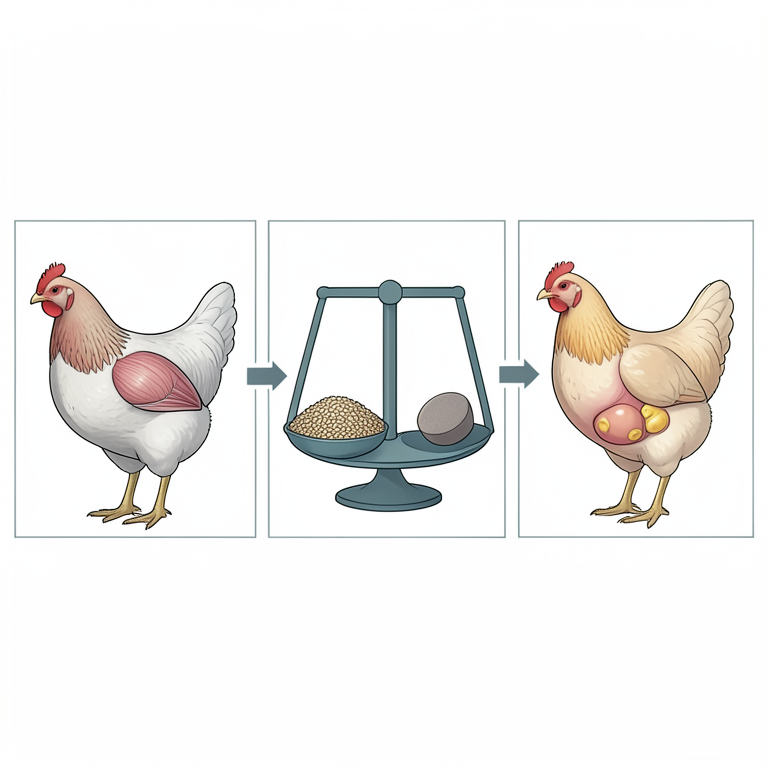
Metabolic Partitioning Concept
AI-generated conceptual illustration (broiler chickens). It explains the idea and does not show study data.
View source evidence ↗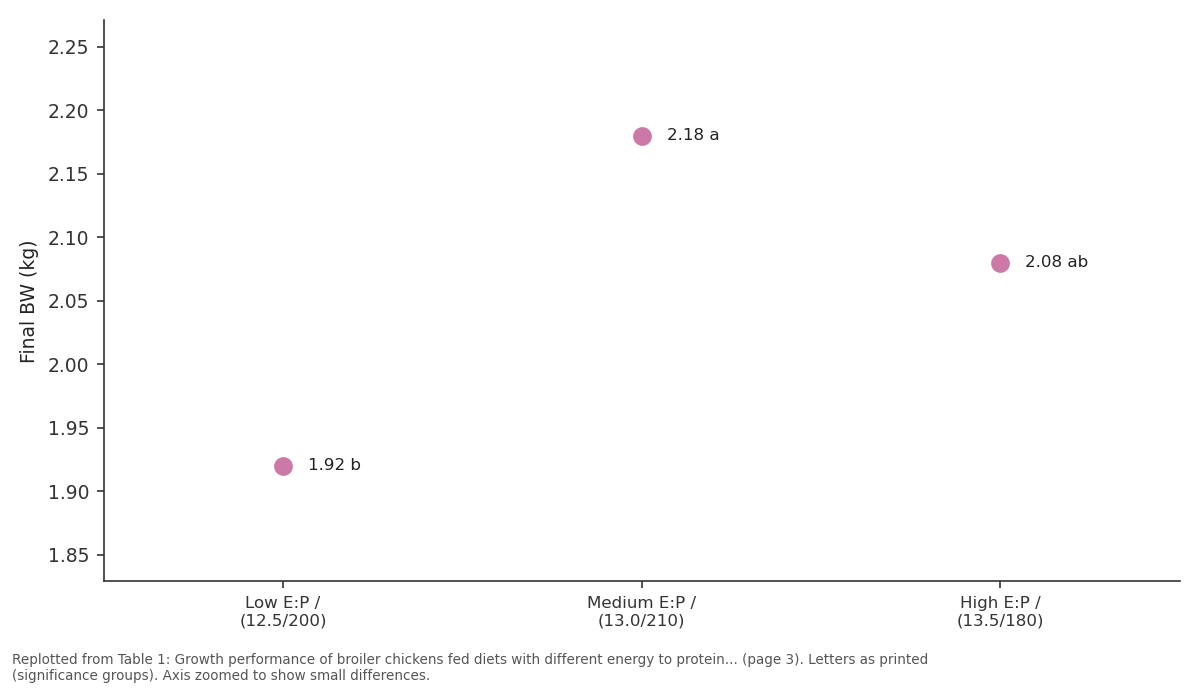
Final BW (kg): Low E:P / (12.5/200) vs Medium E:P / (13.0/210) vs High E:P / (13.5/180)
Replotted from Table 1 (page 3) of the original paper. Every bar is the paper's own table value.
View source evidence ↗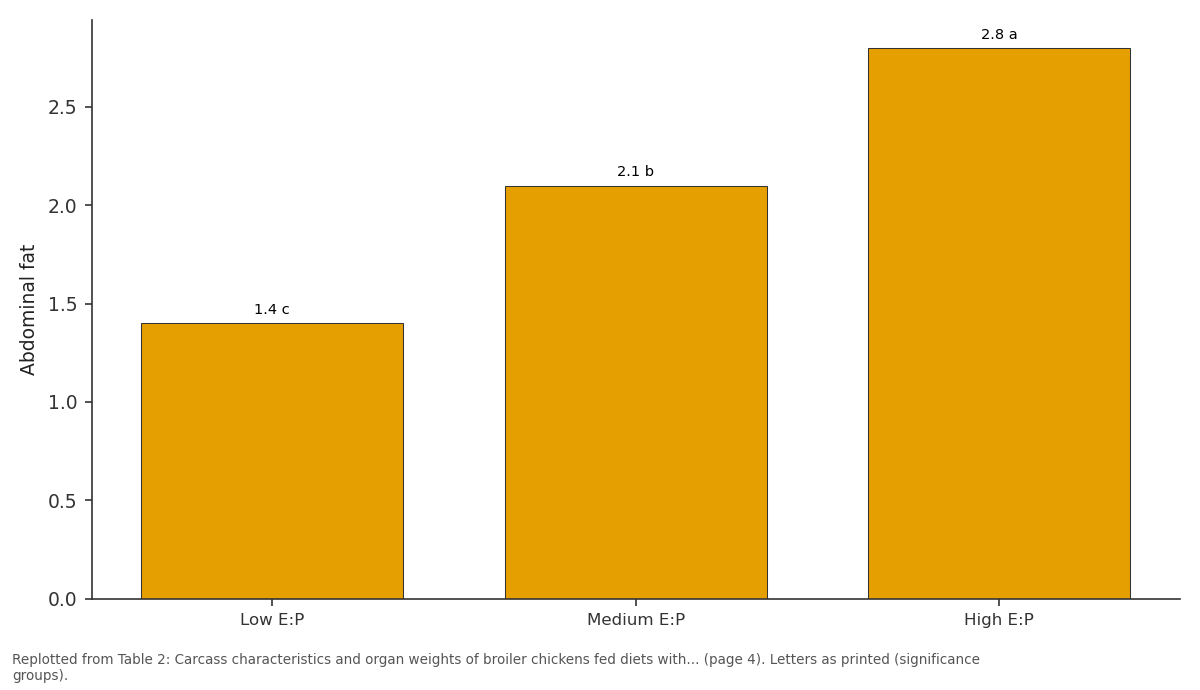
Abdominal fat: Low E:P vs Medium E:P vs High E:P
Replotted from Table 2 (page 4) of the original paper. Every bar is the paper's own table value.
View source evidence ↗Figures & tables
From the original paper Table 1
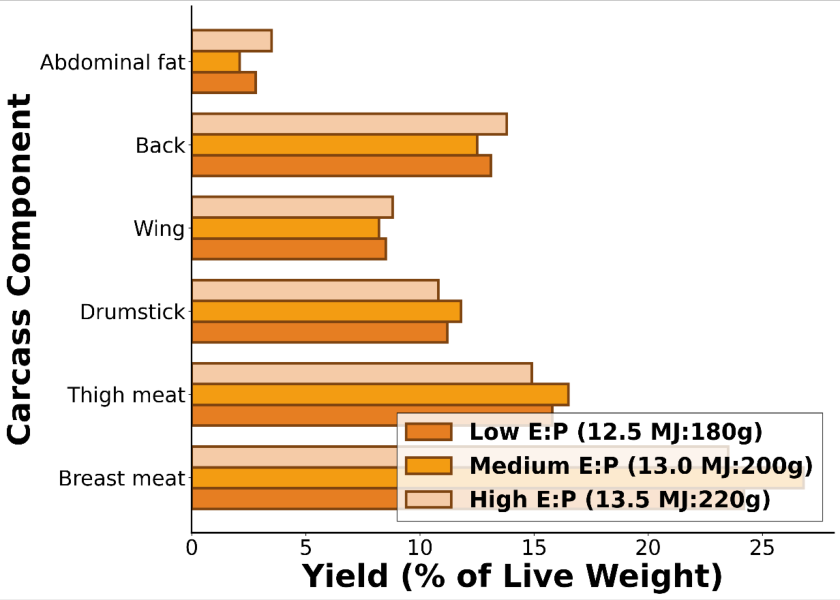 Figure 1
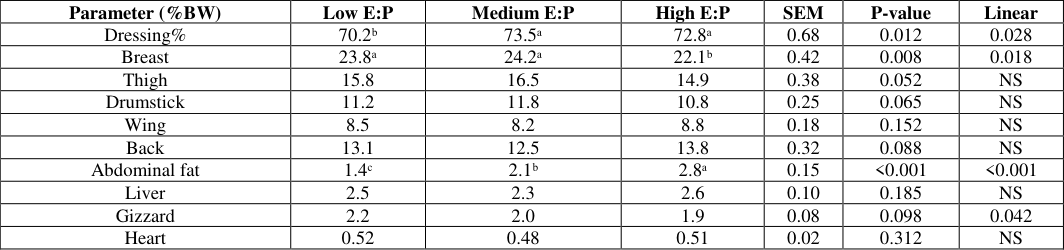 Table 2
 Figure 2
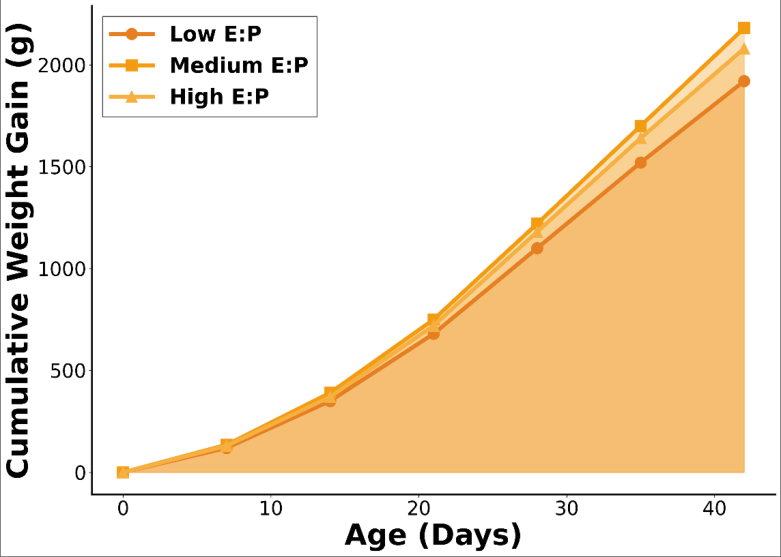 Figure 3
Introduction
The persistent challenge of balancing dietary energy and protein concentrations in broiler feed formulations to simultaneously optimize growth rate, feed efficiency, carcass composition, and production economics represents one of the most complex and commercially consequential decisions confronting poultry nutritionists and feed formulators worldwide [1] . The energy to protein ratio, defined as the proportion of metabolizable energy calories to crude protein grams in the complete diet, governs the metabolic partitioning of absorbed nutrients between lean tissue accretion and lipid deposition, thereby determining both the rate of body weight gain and the proportional contribution of muscle protein versus adipose tissue to that gain [2] . Diets formulated with excessively high energy to protein ratios promote accelerated fat deposition at the expense of lean tissue growth, producing heavier but fatter carcasses with reduced breast meat yield percentages and elevated abdominal fat pad weights that diminish consumer acceptability and market value [3] . Conversely, diets with inadequate energy to protein ratios constrain the metabolic capacity for protein synthesis by limiting the non-protein energy supply necessary to fuel the energetically expensive processes of amino acid activation, peptide bond formation, and tissue protein turnover, resulting in reduced growth rates and impaired feed conversion efficiency despite adequate amino acid availability [4] . The optimal energy to protein ratio for commercial broiler production is not a fixed value but rather varies according to broiler genotype, production phase, environmental temperature, ingredient availability, and the relative economic values of different carcass components in specific market contexts [5] . Modern fast-growing broiler genotypes have been selected for High growth rates and feed conversion efficiency under controlled environmental conditions with precisely balanced nutrient profiles, and deviations from the recommended energy to protein balance can disproportionately affect body composition partitioning in these genetically improved lines compared to slower-growing heritage breeds [6] . The environmental temperature exerts a particularly important modulating influence on the optimal energy to protein ratio, as birds maintained in warm environments voluntarily reduce feed intake to minimize the metabolic heat increment associated with digestion and nutrient metabolism, thereby requiring higher nutrient concentrations per unit of feed consumed to meet maintenance and growth requirements [7] . The Ethiopian highland environment, characterized by moderate daytime temperatures of 18 to 25 degrees Celsius with cooler nighttime conditions, presents a distinct thermoregulatory context that differs substantially from the hot tropical lowlands where much of the existing research on energy to protein ratio optimization has been conducted [8] . Under these cooler conditions, broiler chickens maintain higher voluntary feed intake levels compared to heatstressed birds, potentially reducing the dietary energy and protein concentrations required to achieve target nutrient intakes and thereby influencing the optimal energy to protein ratio for maximum production efficiency [9] . Despite the growing importance of the Ethiopian poultry sector, which has experienced rapid expansion driven by urbanization, rising household incomes, and government promotion of poultry as a pathway to food security and rural livelihood improvement, comparatively little research has been conducted to establish environment-specific nutritional recommendations for commercial broiler production under highland conditions [10] . The present research was therefore undertaken to evaluate the effects of three dietary energy to protein ratios on growth performance, carcass characteristics, organ development, and meat quality attributes of commercial broiler chickens reared under Ethiopian highland conditions, with the objective of identifying the optimal energy to protein balance that maximizes production efficiency and carcass value for the local market context.
Material and Methods
Material and Methods
Material
This research was conducted at the Poultry Research Facility of the Addis Ababa Foundation for Agricultural Research, Addis Ababa, Ethiopia, situated at an elevation of approximately 2,355 meters above sea level, between July and September 2023. The experimental protocol was approved by the Foundation's Research Ethics Review Board (Reference: AAFAR/RERB/2023/AN-014), and all animal management procedures complied with Ethiopian national regulations and institutional guidelines for the ethical use of animals in research. A total of 270 day-old Cobb 500 broiler chicks of mixed sex were procured from a commercial hatchery in Debre Zeit. Upon arrival, chicks were individually weighed, wingtagged, and randomly allocated to three dietary treatment groups following a completely randomized design. Each treatment consisted of six replicate pens housing 15 birds per pen. The three experimental treatments were defined by their target energy to protein ratios: Treatment 1 represented a low energy to protein ratio (12.5 MJ ME/kg with 200 g CP/kg, ratio of 62.5 kJ/g CP), Treatment 2 represented the medium or breed-standard ratio (13.0 MJ ME/kg with 210 g CP/kg, ratio of 61.9 kJ/g CP), and Treatment 3 represented a high energy to protein ratio (13.5 MJ ME/kg with 180 g CP/kg, ratio of 75.0 kJ/g CP).
Methods
All experimental diets were formulated using yellow maize, soybean meal, wheat bran, soybean oil, limestone, dicalcium phosphate, salt, vitamin-mineral premix, DL-methionine, and L-lysine hydrochloride. The diets were prepared for both the starter phase (days 1 to 21) and the finisher phase (days 22 to 42), with the energy to protein ratios maintained proportionally across both phases by adjusting the concentrations of soybean oil (as the primary energyvariable ingredient) and soybean meal (as the primary protein-variable ingredient). All diets met or exceeded the minimum requirements for essential amino acids, vitamins, and minerals as specified by the Cobb 500 broiler management guide. Diet samples from each batch were analyzed for proximate composition to confirm formulation accuracy. The birds were housed in a semi-enclosed poultry house with concrete flooring and deep litter management using teff straw as bedding material. Pen dimensions were 2.0 m by 1.8 m. Due to the highland altitude, brooding temperature was maintained at 34 degrees Celsius during the first four days using infrared heat lamps and subsequently reduced by 2 degrees Celsius every three days until reaching the ambient temperature range of 16 to 24 degrees Celsius by the end of the brooding period. Supplementary heating was provided during nighttime hours throughout the experimental period to maintain a minimum temperature of 18 degrees Celsius. A lighting program of 23 hours light and 1 hour darkness was implemented using combined natural and artificial illumination. Feed and clean water were provided ad libitum. Standard vaccination protocols against Newcastle disease and infectious bursal disease were implemented. Individual body weights were recorded weekly, and feed consumption was measured per replicate at weekly intervals. Feed conversion ratio was calculated as total feed consumed divided by total body weight gain for each replicate and each production phase. On day 42, three birds per replicate representing the mean body weight were selected following a 12-hour feed withdrawal period and humanely slaughtered by cervical dislocation. Hot carcass weight was recorded immediately after bleeding and defeathering. Eviscerated carcass weight was determined after removal of head, feet, and visceral organs. Dressing percentage was calculated as eviscerated carcass weight divided by pre-slaughter live weight expressed as a percentage. Individual carcass components including breast, thighs, drumsticks, wings, back, and neck were weighed and expressed as percentages of live body weight. The abdominal fat pad, defined as the fat tissue surrounding the gizzard, bursa of Fabricius, and extending within the pelvic cavity, was carefully dissected and weighed. Internal organs including liver, heart, gizzard, spleen, and pancreas were excised and weighed. Meat quality analysis was performed on breast meat samples collected from one bird per replicate. Proximate composition including moisture, crude protein, crude fat, and ash content was determined according to AOAC standard methods. Meat pH was measured at 45 minutes post-mortem and at 24 hours post-mortem using a calibrated pH meter with a penetrating electrode inserted directly into the pectoralis major muscle. Drip loss was determined by suspending standardized breast meat samples in sealed containers at 4 degrees Celsius for 24 hours and expressing the weight loss as a percentage of initial sample weight. Cooking loss was measured by cooking vacuum-sealed breast samples in a water bath at 80 degrees Celsius for 30 minutes and expressing the weight difference as a percentage. All data were subjected to one-way analysis of variance using SAS statistical software version 9.4. Treatment means were compared using Duncan's Multiple Range Test at a significance level of P < 0.05. Linear and quadratic effects of energy to protein ratio were assessed using polynomial orthogonal contrasts.
Results
Growth performance results over the 42-day experimental period demonstrated significant treatment effects for final body weight, body weight gain, and feed conversion ratio, while feed intake showed numerical but non-significant differences among dietary treatments. The detailed growth performance data are presented in Table 1. The medium energy to protein ratio treatment produced the highest final body weight of 2.18 kg, which was significantly greater than both the low ratio at 1.92 kg and the high ratio at 2.08 kg. The feed conversion ratio was most efficient in the medium ratio group at 1.68, compared to 1.82 for the low ratio and 1.74 for the high ratio. The quadratic contrast was significant for final body weight and feed conversion ratio, confirming that the medium ratio represents an optimum rather than an extreme of the response range. The cumulative weight gain trajectories depicted in Figure 3 demonstrate that treatment differences became increasingly apparent from the third week onward, with the medium ratio group establishing a clear growth advantage during the grower phase that was maintained through the conclusion of the finisher phase. The convergence of the low and high ratio trajectories during the final week suggests that both suboptimal and excessive energy to protein ratios constrain late-stage muscle protein accretion, albeit through different metabolic mechanisms: energy limitation in the low ratio group and amino acid dilution in the high ratio group. Meat quality analysis of breast muscle samples revealed significant treatment effects on proximate composition. Crude protein content of breast meat was 23.8, 24.2, and 21.5 percent for the low, medium, and high ratio groups respectively, with the high ratio value being significantly lower than the other two treatments. Crude fat content showed the inverse pattern, with values of 1.8, 2.2, and 3.5 percent for the low, medium, and high ratio groups, the high ratio value being significantly elevated. Meat pH values at 45 minutes post-mortem ranged from 6.18 to 6.32 and did not differ significantly among treatments. Drip loss and cooking loss were numerically higher in the high ratio group but did not reach statistical significance, suggesting that the energy to protein ratio exerts a more pronounced influence on chemical composition than on physical water-holding properties of the meat.
| Parameter | Low E:P | Medium E:P | High E:P | SEM | P-value | Linear | Quadratic |
|---|---|---|---|---|---|---|---|
| (12.5/200) | (13.0/210) | (13.5/180) | |||||
| Initial BW (g) | 42.2 | 42.4 | 42.3 | 0.28 | 0.902 | NS | NS |
| Final BW (kg) | 1.92ᵇ | 2.18ᵃ | 2.08ᵃᵇ | 0.05 | 0.004 | 0.082 | 0.003 |
| BWG (kg) | 1.88ᵇ | 2.14ᵃ | 2.04ᵃᵇ | 0.05 | 0.005 | 0.095 | 0.003 |
| Feed intake (g) | 4,050 | 4,180 | 4,120 | 72.5 | 0.128 | NS | NS |
| FCR | 1.82ᵃ | 1.68ᵇ | 1.74ᵃᵇ | 0.03 | 0.012 | 0.155 | 0.008 |
| Mortality (%) | 3.3 | 2.2 | 4.4 | 0.88 | 0.425 | NS | NS |
Table text extracted from the original PDF; superscript letters are shown inline. The original table image is below.
View original table image
Discussion
The finding that the medium energy to protein ratio optimizes growth performance confirms the fundamental nutritional principle that maximum growth efficiency requires a precise balance between dietary energy supply and amino acid availability, and that deviations in either direction result in measurable performance penalties [1] . The mechanism underlying the reduced growth performance in the low energy to protein ratio treatment involves the metabolic diversion of dietary amino acids from protein synthesis toward gluconeogenesis and oxidative energy production pathways when the non-protein energy supply is insufficient to meet the ATP requirements for tissue protein accretion and maintenance [2] . This amino acid catabolism for energy purposes effectively reduces the biological value of the dietary protein, resulting in increased nitrogen excretion and reduced efficiency of conversion from dietary protein to body protein [4] . The elevated abdominal fat deposition in the high energy to protein ratio group is consistent with the lipogenic response to excess dietary energy relative to protein, which has been documented extensively in the broiler nutrition literature and represents a commercially undesirable outcome that reduces carcass value and consumer acceptability [3] . The mechanism involves the hepatic conversion of excess dietary glucose and other energy substrates to fatty acids through de novo lipogenesis, followed by the transport of synthesized triglycerides via very low-density lipoproteins to peripheral adipose tissue depots for storage [5] . The abdominal fat pad is particularly responsive to energy excess because it represents the primary depot for rapidly mobilizable energy reserves in avian species, and its expansion occurs preferentially when the rate of de novo lipogenesis exceeds the rate of fatty acid oxidation for energy production. The significant reduction in breast meat crude protein content observed in the high ratio treatment provides direct evidence that the amino acid dilution effect of elevated energy to protein ratios extends beyond growth rate depression to fundamentally alter the chemical composition and nutritional value of the edible carcass components [6] . This finding has important implications for the nutritional contribution of poultry meat to human dietary protein intake, particularly in developing countries where poultry meat serves as a critical source of high-quality animal protein for food-insecure populations [7] . The elevation of intramuscular fat content in the high ratio group, while potentially enhancing sensory attributes such as juiciness and flavor perception in certain culinary contexts, represents a less desirable outcome from the perspective of consumers seeking lean protein sources for health-conscious dietary patterns [8] . The performance of the medium energy to protein ratio under the specific environmental conditions of the Ethiopian highland represents a validation of the breedstandard recommendations developed by the primary breeder under temperate climate conditions, suggesting that the moderate daytime temperatures characteristic of this highland environment approximate the thermal conditions assumed in the original nutritional modeling [10] . This finding contrasts with reports from tropical lowland environments where voluntary feed intake depression necessitates upward adjustments in nutrient density to compensate for reduced feed consumption, resulting in modified optimal energy to protein ratios that differ from breed-standard specifications [9] . The highland-specific validation established in this research provides Ethiopian poultry producers with confidence that the manufacturer's recommended nutritional specifications are appropriate for their production conditions, eliminating the need for costly empirical reformulation exercises.
Environmental considerations
The dietary energy to protein ratio exerts significant downstream effects on the environmental footprint of broiler production through its influence on nitrogen and phosphorus excretion patterns, ammonia emissions from poultry litter, and the greenhouse gas intensity per unit of marketable meat produced [11] . Diets with excessively low energy to protein ratios generate elevated nitrogen excretion due to the increased catabolism of amino acids for energy purposes, with the resulting uric acid nitrogen subsequently converted to ammonia through microbial urease activity in the litter environment. Conversely, diets with high energy to protein ratios produce carcasses with increased fat and reduced protein content per unit of live weight, effectively increasing the amount of feed required to produce each kilogram of edible meat protein and thereby increasing the feed-related environmental burden per functional unit of nutritional output. The medium energy to protein ratio, by optimizing the efficiency of nitrogen retention and minimizing excess nutrient excretion, represents the most environmentally responsible formulation strategy among the three options evaluated in this research [12] .
Policy implications
The findings of this research carry implications for national poultry development policies and feed quality regulatory frameworks in Ethiopia and across the broader East African region [13] . The demonstration that precise energy to protein ratio management significantly influences both production efficiency and meat nutritional quality provides scientific justification for establishing mandatory feed labeling requirements that include energy and protein content declarations, enabling producers to make informed purchasing decisions and hold feed manufacturers accountable for nutritional accuracy. Additionally, the significant treatment effects on meat proximate composition suggest that dietary manipulation at the farm level can influence the nutritional contribution of poultry meat to national food and nutrition security objectives, providing a policy-relevant connection between animal nutrition science and public health outcomes that should inform the design of livestock development programs in protein-deficient regions [14] .
Technological Advancements
Recent advances in precision nutrition technologies offer promising opportunities for optimizing energy to protein ratio management in commercial broiler production systems with greater accuracy and real-time responsiveness than conventional fixed-formula approaches [15] . Near-infrared spectroscopy-based ingredient analysis systems enable rapid non-destructive assessment of energy and protein content in individual ingredient batches, allowing feed manufacturers to adjust formulation parameters on a batch-by-batch basis to maintain consistent energy to protein ratios despite the inherent variability in raw material composition [16] . Additionally, the development of mathematical optimization models incorporating real-time environmental temperature data, growth curve monitoring, and dynamic nutrient requirement predictions offers the potential for adaptive feeding programs that adjust the energy to protein ratio throughout the production cycle in response to changing environmental conditions and growth trajectory deviations, an approach particularly relevant for highland production environments where diurnal temperature fluctuations can substantially influence nutrient requirements.
Conclusion
The principal contribution of this research is the demonstration that the medium energy to protein ratio of 13.0 MJ ME/kg with 210 g CP/kg optimizes growth performance, carcass quality, and meat nutritional composition of Cobb 500 broiler chickens under Ethiopian highland production conditions, validating the breedstandard nutritional recommendations for this specific environmental context. This conclusion is supported by the significantly higher final body weight of 2.18 kg, the most efficient feed conversion ratio of 1.68, the highest breast meat yield of 24.2 percent, and the superior meat crude protein content of 24.2 percent achieved by the medium ratio treatment compared to both low and high ratio alternatives. These findings have important implications for the rapidly growing Ethiopian poultry industry, providing evidence-based nutritional guidance that enables producers and feed manufacturers to formulate diets that maximize production efficiency, carcass value, and the nutritional contribution of poultry meat to national food security. Questions warranting further investigation include the interaction between energy to protein ratio and broiler genotype under highland conditions, the effects of dynamic ratio adjustment strategies that modify the energy to protein balance across production phases, and the impact of altitude-related physiological adaptations on the metabolic partitioning of dietary energy and protein in commercial broiler genotypes.
Acknowledgement
Acknowledgements
Figures and tables from the paper
| Parameter (%BW) | Low E:P | Medium E:P | High E:P | SEM | P-value | Linear |
|---|---|---|---|---|---|---|
| Dressing% | 70.2ᵇ | 73.5ᵃ | 72.8ᵃ | 0.68 | 0.012 | 0.028 |
| Breast | 23.8ᵃ | 24.2ᵃ | 22.1ᵇ | 0.42 | 0.008 | 0.018 |
| Thigh | 15.8 | 16.5 | 14.9 | 0.38 | 0.052 | NS |
| Drumstick | 11.2 | 11.8 | 10.8 | 0.25 | 0.065 | NS |
| Wing | 8.5 | 8.2 | 8.8 | 0.18 | 0.152 | NS |
| Back | 13.1 | 12.5 | 13.8 | 0.32 | 0.088 | NS |
| Abdominal fat | 1.4ᶜ | 2.1ᵇ | 2.8ᵃ | 0.15 | <0.001 | <0.001 |
| Liver | 2.5 | 2.3 | 2.6 | 0.10 | 0.185 | NS |
| Gizzard | 2.2 | 2.0 | 1.9 | 0.08 | 0.098 | 0.042 |
| Heart | 0.52 | 0.48 | 0.51 | 0.02 | 0.312 | NS |
Table text extracted from the original PDF; superscript letters are shown inline. The original table image is below.
View original table image
References
16 in the original paper- National Research Council. Nutrient Requirements of Poultry. 9th rev ed. Washington (DC): National Academies Press; 1994.
- Leeson S, Summers JD. Broiler Breeder Production. Nottingham: Nottingham University Press; 2010. p. 188-215.
- Kamran Z, Sarwar M, Nisa M, Nadeem MA, Mahmood S, Babar ME, et al. Effect of low-protein diets having constant energy-to-protein ratio on performance and carcass characteristics of broiler chickens from one to thirty-five days of age. Poult Sci. 2008;87(3):468-474.
- Dozier WA, Price CJ, Kidd MT, Corzo A, Anderson J, Branton SL. Growth performance, meat yield, and economic responses of broilers fed diets varying in metabolizable energy from thirty to fifty-nine days of age. J Appl Poult Res. 2006;15(3):367-382.
- Adewoye ED, Akinfala EO. Optimizing broiler nutrition and feed formulation strategies: a comprehensive review for the Nigerian poultry industry. Zool Entomol Lett. 2023;3(2):70-76.
- Allameh S, Toghyani M. Effect of dietary energy and protein levels on growth performance, carcass and meat quality of broiler chickens. J Livest Sci. 2019;10:1-8.
- Maiorka A, Santin E, Dahlke F, Boleli IC, Furlan RL, Macari M. Posthatching water and feed deprivation affect the gastrointestinal tract and intestinal mucosa development of broiler chicks. J Appl Poult Res. 2003;12(4):483-492.
- Mbajiorgu CA, Ng'ambi JW, Norris DD. Effect of varying dietary energy to protein ratio level on growth and productivity of indigenous Venda chickens. Asian J Anim Vet Adv. 2011;6(4):344-352.
- Cheng TK, Hamre ML, Coon CN. Responses of broilers to dietary protein levels and amino acid supplementation to low protein diets at various environmental temperatures. J Appl Poult Res. 1997;6(1):18-33.
- Lemme A, Ravindran V, Bryden WL. Ileal digestibility of amino acids in feed ingredients for broilers. Worlds Poult Sci J. 2004;60(4):423-438.
- Elwinger K, Tufvesson M, Lagerkvist G, Unelius R. Factors affecting ammonia emissions from laying-hen manure. Acta Agric Scand A Anim Sci. 2008;58(2):7784. International Journal of Agriculture and Nutrition https://www.agriculturejournal.net
- Tallentire CW, Leinonen I, Kyriazakis I. Breeding for efficiency in the broiler chicken: a review. Agron Sustain Dev. 2016;36(4):66.
- Shapiro BI, Gebru G, Desta S, Negassa A, Nigussie K, Aboset G, et al. Ethiopia Livestock Sector Analysis: A 15-Year Livestock Sector Strategy. ILRI Project Report. Nairobi: International Livestock Research Institute; 2017.
- Mottet A, Tempio G. Global poultry production: current state and future outlook and challenges. Worlds Poult Sci J. 2017;73(2):245-256.
- De Marchi M, Riovanto R, Penasa M, Cassandro M. At-line prediction of fatty acid profile in chicken breast using near infrared reflectance spectroscopy. Meat Sci. 2012;90(3):653-657.
- Pomar C, Remus A. Precision pig feeding: a breakthrough toward sustainability. Anim Front. 2019;9(2):52-59.