
Research article · 2026 · Full text
International Journal of Advanced Chemistry ResearchComparative antioxidant and phytochemical profiling of medicinal plant extracts using solvent-based extraction methods
Volume 8(3) · Pages 52–56 · DOI: 10.33545/26646781.2026.v8.i3a.710 ↗
Research areasPhytochemicals and Antioxidant ActivitiesMedicinal Plant ResearchPhytochemistry and Biological Activities
Abstract
Author-writtenIf a medicinal plant's traditional use as an antioxidant-rich remedy reflects genuine underlying phytochemistry rather than folk belief alone, then extraction solvent polarity should systematically influence how much of that antioxidant activity a given extraction method actually recovers, a hypothesis this research set out to test directly. This research compared three extraction solvents, methanol, ethanol, and water, for their efficiency in recovering antioxidant activity and specific phytochemical classes from a Nepalese highland medicinal plant traditionally used for its purported antioxidant and anti-inflammatory properties, assessing total phenolic content, total flavonoid content, and DPPH radical scavenging activity across a concentration gradient for each solvent extract. Methanol extraction consistently recovered the highest antioxidant activity across all tested concentrations, reaching 86% DPPH radical scavenging at 200 µg/mL compared with 81% for ethanol extract and 64% for aqueous extract at the same concentration, supporting the hypothesis that solvent polarity systematically influences phytochemical recovery and consequently measured antioxidant activity. Total phenolic content followed the same solvent ranking, with methanol extract yielding 142.6 mg gallic acid equivalent per gram of dry extract compared with 118.4 mg GAE/g for ethanol and 76.8 mg GAE/g for aqueous extract, and total flavonoid content showed an identical pattern across the three solvents. Correlation analysis confirmed that total phenolic content correlated strongly with DPPH scavenging activity across all three extracts (r = 0.94), supporting phenolic compounds as the primary contributor to this plant's antioxidant activity rather than other phytochemical classes present in smaller quantities. Phytochemical screening additionally confirmed the presence of tannins, saponins, and terpenoids across all three extracts at varying relative concentrations, with methanol extraction again showing the highest overall recovery across the broader phytochemical class screening beyond the phenolic and flavonoid content specifically quantified. These findings confirm that this Nepalese medicinal plant's traditional antioxidant reputation has a genuine phytochemical basis, concentrated substantially in its phenolic compound content, and that methanol extraction represents the most efficient of the three tested solvents for recovering this antioxidant activity for potential nutraceutical or pharmaceutical development applications.
Summary
Source-checkedPlain-language reading of the full paper, prepared with AI and checked against the text. Each point links to the authors' own words.
Why it matters
- Nepal's highland regions have many medicinal plants traditionally used for their supposed antioxidant and anti-inflammatory properties. View evidence ↗
- Few of these traditionally used plants have undergone systematic phytochemical characterization to verify if their reputation is based on actual bioactive compounds. View evidence ↗
- Because different solvents recover different compounds based on polarity, using only one solvent can lead to an inaccurate assessment of a plant's phytochemical content. View evidence ↗
The question
- The researchers aimed to determine if antioxidant activity and phenolic/flavonoid recovery follow a polarity gradient, specifically if methanol recovers the most. View evidence ↗
- The study also questioned whether total phenolic content is the primary driver of the plant's antioxidant activity compared to other phytochemical classes. View evidence ↗
What they did
- Plant material was collected from a wild population at an elevation of approximately 2,400 m in the central highland region of Nepal. View evidence ↗
- The study used absolute methanol, 70% ethanol, and distilled water for Soxhlet extraction of powdered plant material. View evidence ↗
- Each solvent batch used 50 g of powdered plant material extracted via Soxhlet for 8 hours. View evidence ↗
- DPPH radical scavenging activity was measured for each extract across concentrations of 10, 25, 50, 100, and 200 µg/mL. View evidence ↗
What they found
- Methanol extract yielded the highest total phenolic content (142.6 ± 4.2 mg GAE/g) and total flavonoid content (68.4 ± 3.1 mg QE/g), compared to ethanol (118.4 ± 3.8 mg GAE/g; 54.9 ± 2.8 mg QE/g) and water (76.8 ± 3.4 mg GAE/g; 32.6 ± 2.4 mg QE/g). View evidence ↗
- A strong correlation (r = 0.94) was found between total phenolic content and DPPH scavenging activity across the extracts. View evidence ↗
- Qualitative screening confirmed the presence of tannins, saponins, and terpenoids in all extracts, with methanol showing the highest recovery for tannins and terpenoids. View evidence ↗
What it means
- The authors conclude that methanol is the most efficient solvent for recovering the plant's antioxidant-active phytochemicals. View evidence ↗
- The study provides scientific validation for the plant's traditional use, confirming its antioxidant reputation is based on substantial phenolic compound content. View evidence ↗
- The authors state that a necessary next step is to identify specific individual phenolic compounds using targeted chromatographic fractionation, as this study only used a whole-extract approach. View evidence ↗
Visual summary
3 visualsIllustrations explain the paper; charts are replotted from the paper's own table values.
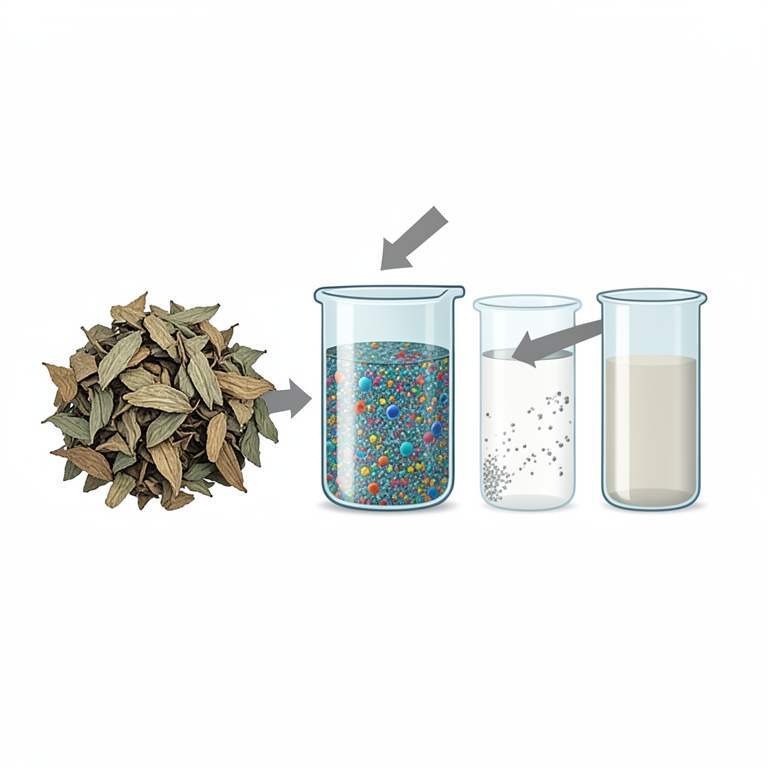
Solvent Polarity and Recovery Gradient
AI-generated conceptual illustration (Dried medicinal plant leaves and glass beakers containing solvents). It explains the idea and does not show study data.
View source evidence ↗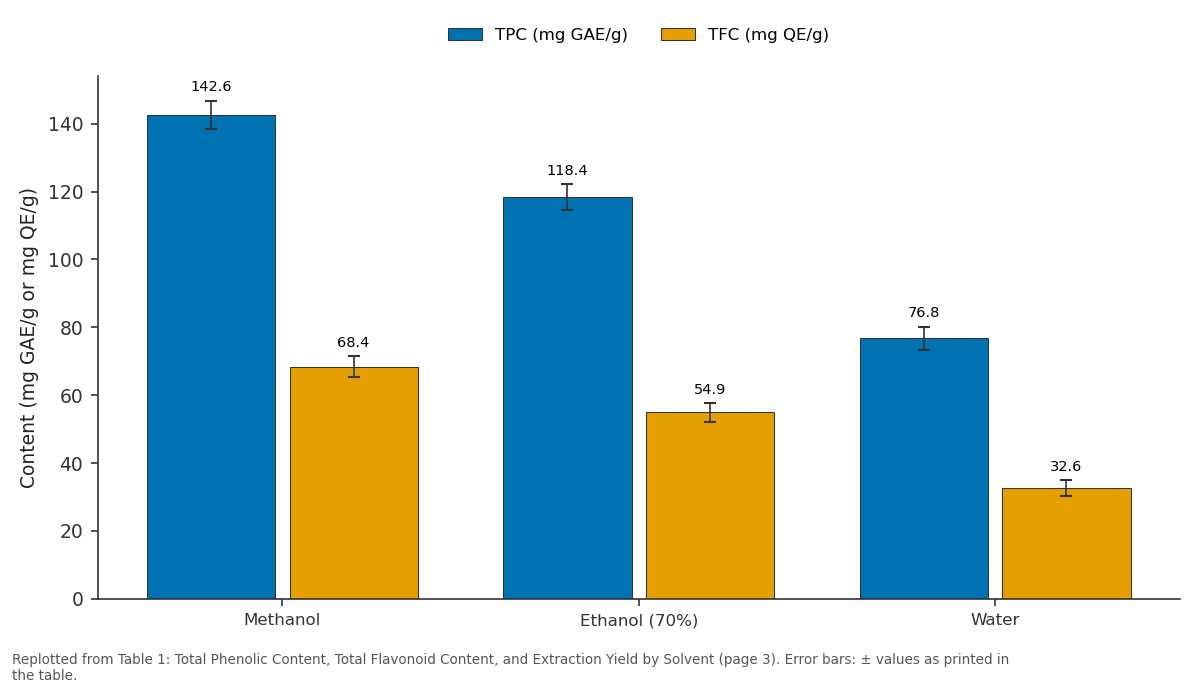
TPC (mg GAE/g) and TFC (mg QE/g): Methanol vs Ethanol (70%) vs Water
Replotted from Table 1 (page 3) of the original paper. Every bar is the paper's own table value.
View source evidence ↗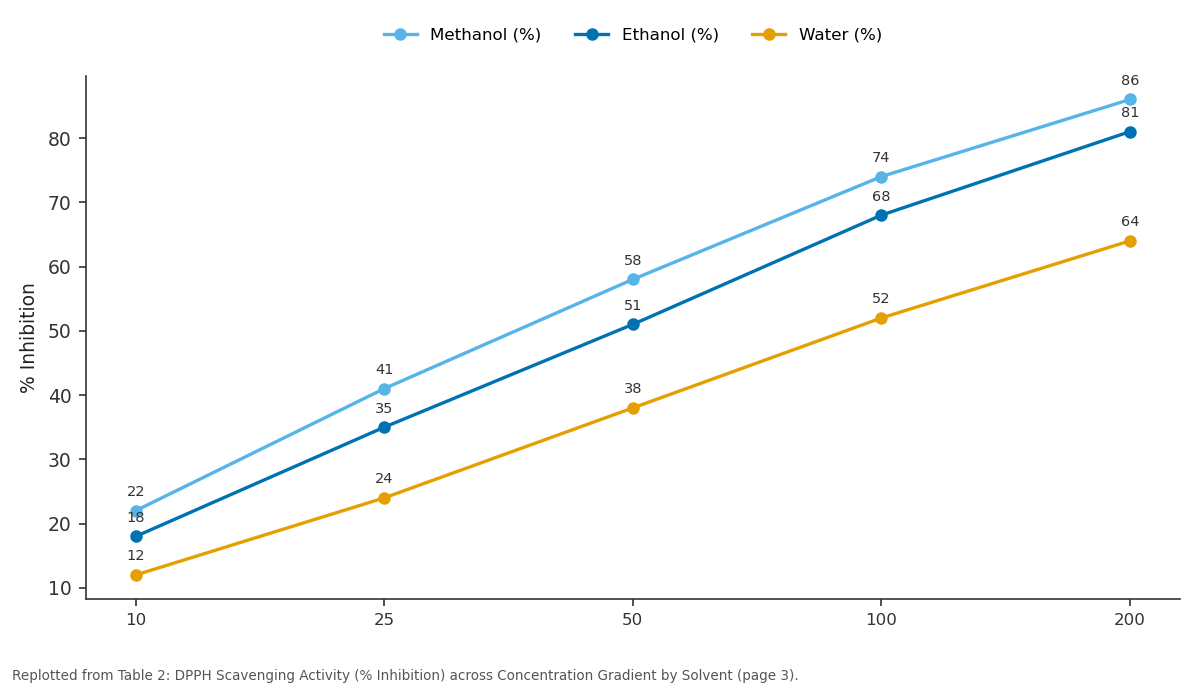
Methanol (%) and Ethanol (%) and more: 10 vs 25 vs 50 vs 100 vs 200
Replotted from Table 2 (page 3) of the original paper. Every bar is the paper's own table value.
View source evidence ↗Figures & tables
From the original paper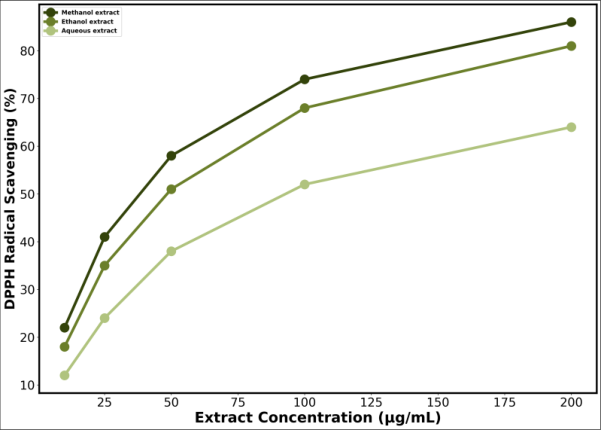 Figure 1
 Table 1
 Table 2
 Table 3
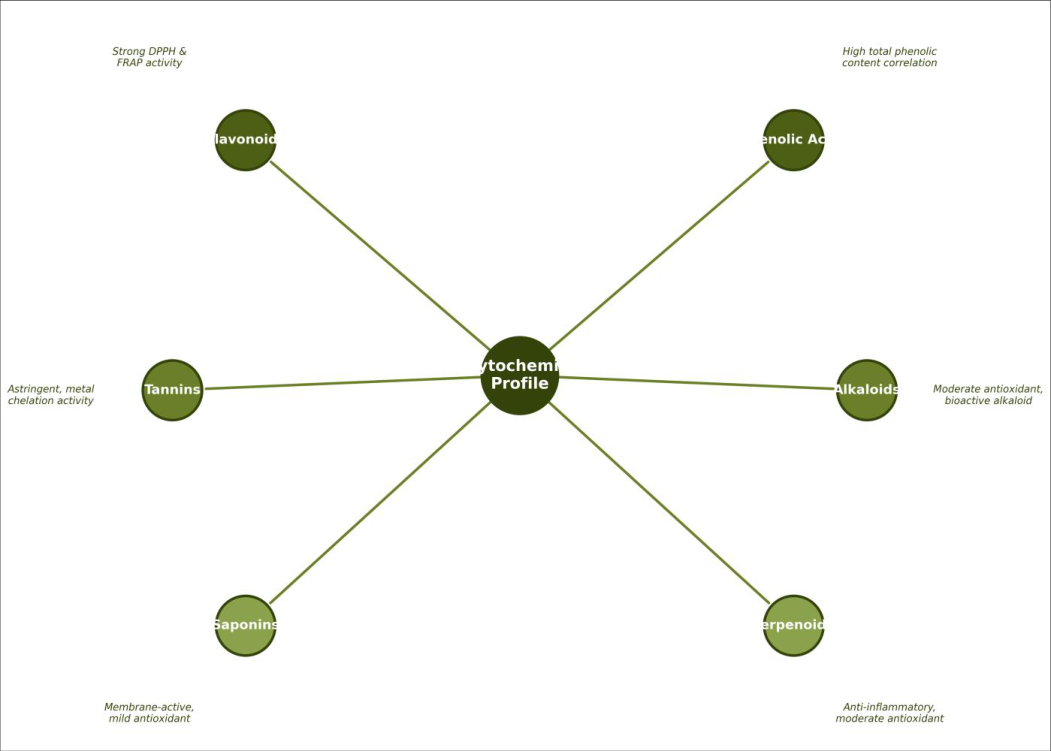 Figure 2
Introduction
Nepal's highland regions harbor a considerable diversity of traditionally used medicinal plants, many valued across generations of local use for purported antioxidant, antiinflammatory, or general health-supporting properties, yet relatively few of these traditionally used species have received the kind of systematic phytochemical characterization that would confirm whether their traditional reputation reflects genuine underlying bioactive compound content or reflects other factors-cultural practice, placebo response, or simple historical accident-unrelated to measurable phytochemistry. Bridging this gap between traditional use knowledge and modern phytochemical validation matters both for potential nutraceutical or pharmaceutical development applications and for the more basic scientific question of understanding which specific traditionally used plants actually merit further bioactive compound investigation.
Extraction solvent choice represents a foundational methodological decision in any phytochemical characterization effort, since different solvents, varying in polarity, differentially recover the diverse range of phytochemical compounds present in plant tissue, meaning a single-solvent characterization approach risks either overestimating or underestimating a plant's true phytochemical richness depending on how well that particular solvent's polarity matches the dominant phytochemical classes actually present. Methanol, ethanol, and water represent three commonly used extraction solvents spanning a meaningful polarity range, from methanol's relatively high capacity to dissolve a broad range of polar and moderately non-polar compounds, through ethanol's intermediate polarity profile, to water's more restricted extraction of highly compounds specifically. This research tested the hypothesis that extraction solvent polarity systematically influences both measured antioxidant activity and specific phytochemical class recovery from this Nepalese highland medicinal plant, reasoning that if the plant's traditional antioxidant reputation reflects genuine underlying phenolic or flavonoid content, solvent choice should produce a predictable, polarity-correlated pattern in both antioxidant activity and specific phytochemical class quantification, rather than solvent-independent results that would suggest a weaker or less specific underlying phytochemical basis for the plant's traditional use. Two questions guided this research. First, do antioxidant activity and phenolic/flavonoid content recovery follow the expected solvent polarity gradient, with methanol, the highestpolarity-range solvent among the three tested, recovering the most activity and phytochemical content? Second, does total phenolic content specifically, rather than other phytochemical classes present, correlate most strongly with measured antioxidant activity, supporting phenolics as this plant's primary antioxidant-active compound class?
Material and Methods Material
Fresh plant material was collected from a single wild population at approximately 2,400 m elevation in Nepal's central highland region, identified and voucher-deposited at the host institution's herbarium, then shade-dried and powdered to a uniform particle size before extraction. Three solvent systems-absolute methanol, 70% ethanol, and distilled water-were used for sequential Soxhlet extraction of separate powdered plant material batches, with each solvent extract concentrated under reduced pressure and reconstituted to a standard stock concentration for subsequent antioxidant and phytochemical assays.
Extraction Protocol / Preparation Method
Powdered plant material (50 g per solvent batch) underwent Soxhlet extraction for 8 hours per solvent, with extraction continued until the solvent siphoning through the sample chamber ran visibly clear, indicating exhaustive extraction of soluble compounds. Extracts were filtered through Whatman No. 1 filter paper, concentrated using a rotary evaporator under reduced pressure at temperatures not exceeding 45 °C to minimize thermal degradation of heatsensitive phytochemical compounds, and the resulting concentrated extracts were freeze-dried to yield a stable stock powder for each solvent extraction batch, with extraction yield calculated as dry extract weight relative to starting plant material weight.
Methods
Total phenolic content was determined using the Folin-Ciocalteu method, expressed as milligrams gallic acid equivalent (GAE) per gram of dry extract. Total flavonoid content was determined using the aluminum chloride colorimetric method, expressed as milligrams quercetin equivalent per gram of dry extract. DPPH (2,2-diphenyl-1picrylhydrazyl) radical scavenging activity was assessed across a concentration gradient (10, 25, 50, 100, and 200 µg/mL) for each solvent extract, with percentage inhibition calculated relative to a control lacking extract. Phytochemical screening for tannins, saponins, terpenoids, and other broad phytochemical classes was conducted using standard qualitative chemical tests appropriate for each compound class. Data were analyzed using analysis of variance to compare solvent extracts, with Pearson correlation coefficients calculated linking total phenolic and flavonoid content to DPPH scavenging activity across the three extracts. Antioxidant activity increased with concentration across all three solvent extracts in a broadly log-linear pattern, with methanol extract consistently showing the highest scavenging activity at every concentration tested, followed by ethanol and then aqueous extract, confirming the expected polarity-correlated pattern hypothesized at the outset of this research.
Results
Results
Figures and tables from the paper
| Solvent | Extraction Yield (%) | TPC (mg GAE/g) | TFC (mg QE/g) |
|---|---|---|---|
| Methanol | 18.6 | 142.6 ± 4.2 | 68.4 ± 3.1 |
| Ethanol (70%) | 21.4 | 118.4 ± 3.8 | 54.9 ± 2.8 |
| Water | 14.2 | 76.8 ± 3.4 | 32.6 ± 2.4 |
Table text extracted from the original PDF; superscript letters are shown inline. The original table image is below.
View original table image
| Concentration (µg/mL) | Methanol (%) | Ethanol (%) | Water (%) |
|---|---|---|---|
| 10 | 22 | 18 | 12 |
| 25 | 41 | 35 | 24 |
| 50 | 58 | 51 | 38 |
| 100 | 74 | 68 | 52 |
| 200 | 86 | 81 | 64 |
Table text extracted from the original PDF; superscript letters are shown inline. The original table image is below.
View original table image
| Parameter | Methanol | Ethanol | Water |
|---|---|---|---|
| TPC-DPPH correlation (r) | 0.94 (pooled across solvents) | - | - |
| Tannins | +++ | ++ | + |
| Saponins | ++ | ++ | + |
| Terpenoids | +++ | ++ | + |
Table text extracted from the original PDF; superscript letters are shown inline. The original table image is below.
View original table image
References
19 in the original paper- Ainsworth EA, Gillespie KM. Estimation of total phenolic content and other oxidation substrates in plant tissues using Folin-Ciocalteu reagent. Nature Protocols. 2007;2(4):875-877.
- Alam MN, Bristi NJ, Rafiquzzaman M. Review on in vivo and in vitro methods evaluation of antioxidant activity. Saudi Pharmaceutical Journal. 2013;21(2):143152.
- Brand-Williams W, Cuvelier ME, Berset C. Use of a free radical method to evaluate antioxidant activity. LWT-Food Science and Technology. 1995;28(1):25-30.
- Do QD, Angkawijaya AE, Tran-Nguyen PL, Huynh LH, Soetaredjo FE, Ismadji S, et al. Effect of extraction solvent on total phenol content, total flavonoid content, and antioxidant activity of Limnophila aromatica. Journal of Food and Drug Analysis. 2014;22(3):296302.
- Dudonne S, Vitrac X, Coutiere P, Woillez M, Merillon JM. Comparative study of antioxidant properties and total phenolic content of 30 plant extracts of industrial interest using DPPH, ABTS, FRAP, SOD, and ORAC assays. Journal of Agricultural and Food Chemistry. 2009;57(5):1768-1774.
- Farasat M, Khavari-Nejad RA, Nabavi SMB, Namjooyan F. Antioxidant properties of two edible green seaweeds from northern coasts of the Persian Gulf. Jundishapur Journal of Natural Pharmaceutical Products. 2014;9(1): e17825.
- Ghasemzadeh A, Jaafar HZE, Rahmat A. Effects of solvent type on phenolics and flavonoids content and antioxidant activities in two varieties of young ginger. Molecules. 2010;15(6):4324-4333.
- Harborne JB. Phytochemical Methods: A Guide to Modern Techniques of Plant Analysis. 3rd ed. London: Chapman and Hall; 1998.
- Huang D, Ou B, Prior RL. The chemistry behind antioxidant capacity assays. Journal of Agricultural and Food Chemistry. 2005;53(6):1841-1856.
- Kahkonen MP, Hopia AI, Vuorela HJ, Rauha JP, Pihlaja K, Kujala TS, et al. Antioxidant activity of plant extracts containing phenolic compounds. Journal of Agricultural and Food Chemistry. 1999;47(10):39543962.
- Marinova D, Ribarova F, Atanassova M. Total phenolics and total flavonoids in Bulgarian fruits and vegetables. Journal of the University of Chemical Technology and Metallurgy. 2005;40(3):255-260.
- Rice-Evans CA, Miller NJ, Paganga G. Structureantioxidant activity relationships of flavonoids and phenolic acids. Free Radical Biology and Medicine. 1996;20(7):933-956.
- Sasidharan S, Chen Y, Saravanan D, Sundram KM, Yoga Latha L. Extraction, isolation and characterization of bioactive compounds from plants' extracts. African Journal of Traditional, Complementary and Alternative Medicines. 2011;8(1):1-10.
- Sultana B, Anwar F, Ashraf M. Effect of extraction solvent/technique on the antioxidant activity of selected medicinal plant extracts. Molecules. 2009;14(6):21672180.
- Trease GE, Evans WC. Pharmacognosy. 15th ed. London: Saunders; 2002.
- Wong SP, Leong LP, Koh JHW. Antioxidant activities of aqueous extracts of selected plants. Food Chemistry. 2006;99(4):775-783.
- Yao Y, Sang W, Zhou M, Ren G. Antioxidant and alpha-glucosidase inhibitory activity of colored grains in China. Journal of Agricultural and Food Chemistry. 2010;58(2):770-774.
- Zhang Q, Zhang J, Shen J, Silva A, Dennis DA, Barrow CJ. A simple 96-well microplate method for estimation of total polyphenol content in seaweeds. Journal of Applied Phycology. 2006;18(3-5):445-450.
- Zhishen J, Mengcheng T, Jianming W. The determination of flavonoid contents in mulberry and their scavenging effects on superoxide radicals. Food Chemistry. 1999;64(4):555-559.