
Research article · 2026 · Full text
International Journal of Agriculture and NutritionStudies on storage stability and nutritional composition of value-added millet flour
Volume 8(2) · Pages 83–87 · DOI: 10.33545/26646064.2026.v8.i2b.687 ↗
Research areasFood and Agricultural SciencesFood composition and propertiesAgricultural Engineering and Mechanization
Abstract
Author-writtenA value-added millet flour that tastes wonderful on the day it is milled but turns rancid within weeks of packaging offers little practical benefit to the rural food processing cooperatives investing in its production, which is precisely the gap this six-month storage research set out to measure. Fortified, value-added millet flour was packaged in three materials, vacuum-sealed high-barrier pouches, aluminum foil laminate pouches, and plain plastic pouches, and stored under ambient warehouse conditions at Maputo for six months, with proximate composition, peroxide value, sensory quality, and microbial safety assessed monthly. Vacuum-sealed packaging preserved nutritional and sensory quality most effectively, limiting protein loss to 5.9% and fat loss to 35.4% over six months, against 13.7% protein loss and 68.8% fat loss in plain plastic pouches over the same period. Peroxide value, an indicator of fat rancidity, rose to 4.4 meq O2/kg under vacuum sealing by month six but reached 8.7 meq O2/kg under plain plastic packaging, crossing the threshold generally considered to produce noticeably rancid flavor. Sensory acceptability declined across all three packaging materials over the storage period, but the decline under vacuum sealing was gradual while plain plastic packaging showed a sharper drop after month three. Microbial safety remained within acceptable limits across all three materials throughout the six months, indicating that packaging choice in this research affected nutritional and sensory quality considerably more than food safety risk. These findings support vacuum sealing as the packaging investment most likely to protect the value-added quality that fortification and processing were originally intended to deliver, particularly where flour is expected to sit in distribution channels for more than two to three months before reaching consumers.
Summary
Source-checkedPlain-language reading of the full paper, prepared with AI and checked against the text. Each point links to the authors' own words.
Why it matters
- Fortified millet flour is highly prone to oxidative rancidity during storage because its fat content is increased by the addition of oil-bearing ingredients. View evidence ↗
- Rapid rancidity reduces the practical benefit of value-added millet flour for rural processing cooperatives. View evidence ↗
- Oxygen-limiting technologies, such as vacuum sealing, are used to address the oxidative pathways that lead to flour deterioration. View evidence ↗
The question
- The study aimed to quantify how three different packaging materials affected the nutrient retention, peroxide value, sensory quality, and microbial safety of fortified millet flour over six months. View evidence ↗
- The researchers sought to identify when packaging-related quality differences become practically significant during the storage period. View evidence ↗
What they did
- The study used a single batch of fortified flour made from finger millet, soy flour, and a micronutrient premix to ensure consistency across treatments. View evidence ↗
- Three packaging types were tested: vacuum-sealed high-barrier polyethylene pouches, aluminum foil laminate pouches, and plain low-density polyethylene plastic pouches. View evidence ↗
- Six replicates of 500 g samples per treatment were stored under ambient warehouse conditions in Maputo from August 2024 to February 2025. View evidence ↗
- A 30-member semi-trained panel performed monthly sensory evaluations using a nine-point hedonic scale. View evidence ↗
What they found
- Vacuum sealing was the most effective at preserving nutrients, resulting in 5.9% protein loss and 35.4% fat loss, compared to 13.7% protein loss and 68.8% fat loss in plain plastic pouches. View evidence ↗
- By month six, the peroxide value for plain plastic packaging reached 8.7 meq O2/kg, exceeding the rancidity threshold, while vacuum-sealed flour remained lower at 4.4 meq O2/kg. View evidence ↗
- Microbial safety remained within acceptable limits for all packaging types, suggesting that packaging choice primarily impacts nutritional and sensory quality rather than safety. View evidence ↗
What it means
- The authors recommend prioritizing vacuum sealing or oxygen-limiting packaging for products expected to be in distribution for more than two to three months. View evidence ↗
- The study was limited to a single flour batch and formulation during the warmest season; results might vary with different formulations or cooler temperatures. View evidence ↗
- The controlled nature of the study did not account for real-world distribution risks, such as punctures or seal failures, which could affect packaging performance. View evidence ↗
Visual summary
3 visualsIllustrations explain the paper; charts are replotted from the paper's own table values.
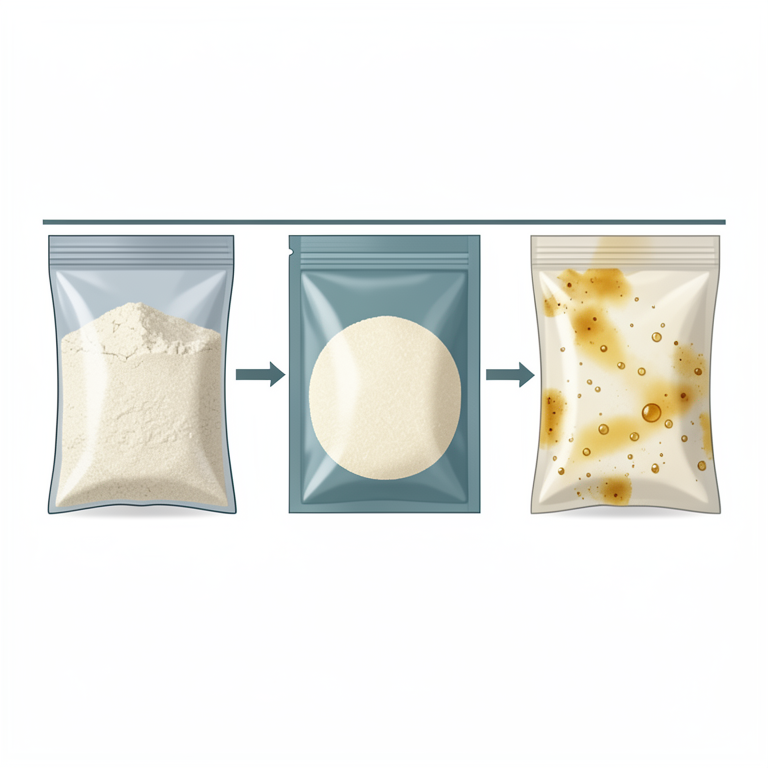
Rancidity Threshold Comparison
AI-generated conceptual illustration (millet flour in different packaging materials). It explains the idea and does not show study data.
View source evidence ↗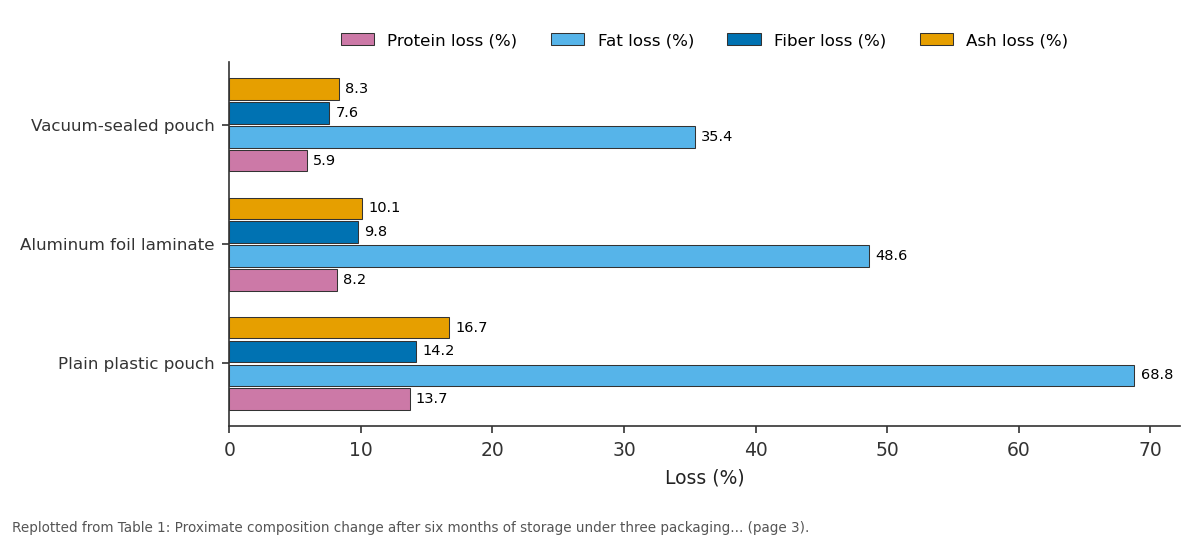
Protein loss (%) and Fat loss (%) and more: Vacuum-sealed pouch vs Aluminum foil laminate vs Plain plastic pouch
Replotted from Table 1 (page 3) of the original paper. Every bar is the paper's own table value.
View source evidence ↗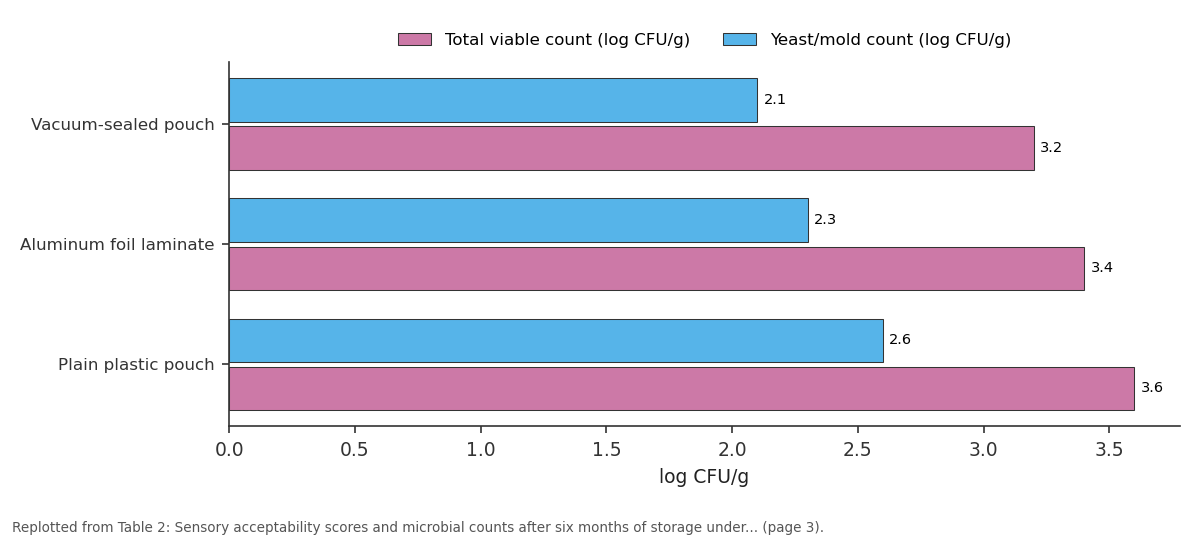
Total viable count (log CFU/g) and Yeast/mold count (log CFU/g): Vacuum-sealed pouch vs Aluminum foil laminate vs Plain plastic pouch
Replotted from Table 2 (page 3) of the original paper. Every bar is the paper's own table value.
View source evidence ↗Figures & tables
From the original paper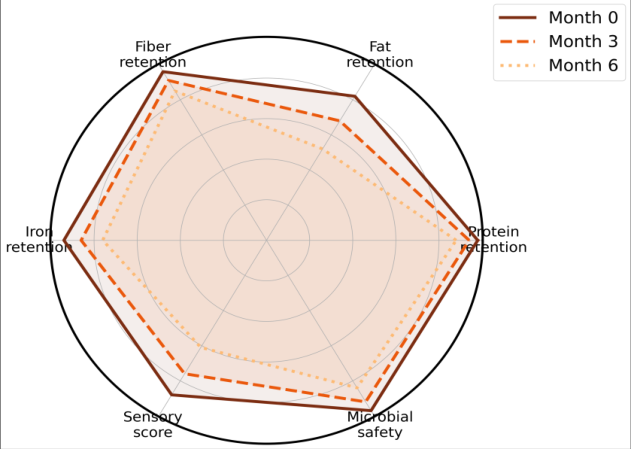 Figure 1
 Table 1
 Table 2
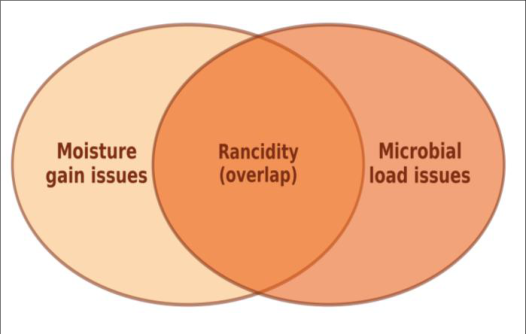 Figure 2
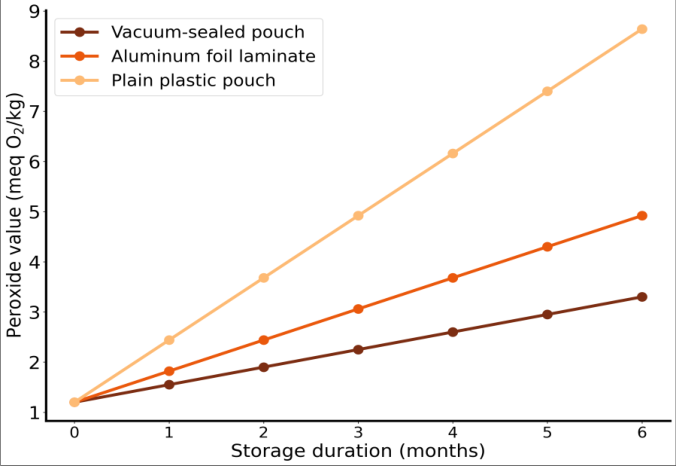 Figure 3
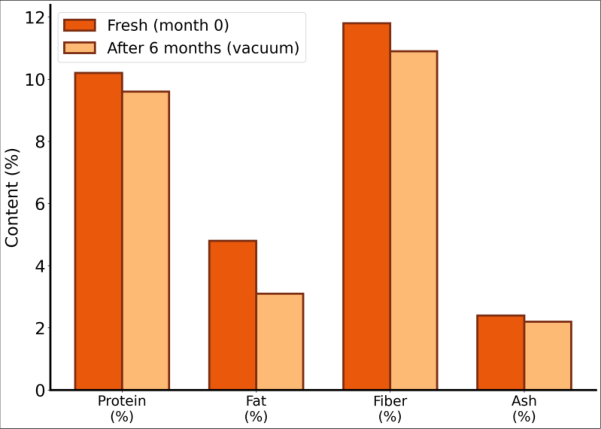 Figure 4
Introduction
A cooperative that spends real effort fortifying and processing millet flour into a nutritionally improved product has, in effect, made a bet that the flour will still carry that improved nutritional and sensory quality by the time it reaches a consumer's kitchen, and that bet depends almost entirely on packaging choices that receive far less attention during product development than the fortification formulation itself [1,2] . Millet flour's fat content, concentrated in the germ fraction and relatively higher in value-added and fortified formulations that often incorporate additional oil-bearing ingredients, makes it particularly susceptible to oxidative rancidity during storage, a deterioration pathway that primarily depends on oxygen exposure rather than time alone [3,4] . Vacuum sealing and other oxygen-limiting packaging technologies work by directly addressing this oxidative pathway, and research on other oil-bearing flours and cereal products consistently reports slower peroxide value accumulation and better sensory retention under vacuum or modified-atmosphere packaging relative to conventional plastic pouches with normal air permeability [5,6] . Whether this packaging advantage translates into a meaningful practical difference specifically for fortified millet flour, which carries both higher fat content from fortification ingredients and micronutrients potentially sensitive to oxidative degradation, has received comparatively little direct research attention relative to the volume of work on millet's agronomic and immediate nutritional properties [7,8] .
Microbial safety represents a separate storage quality dimension from nutritional and sensory deterioration, generally governed more by moisture control and initial contamination load than by oxygen exposure specifically, meaning packaging materials effective at limiting oxidative rancidity might not necessarily differ in their microbial safety performance if moisture control is broadly adequate across all packaging options tested [9] . This research set out to compare three packaging materials directly under identical ambient storage conditions over a full six-month period, tracking proximate composition, peroxide value, sensory quality, and microbial safety together, to establish whether packaging investment decisions for value-added millet flour should prioritize oxidative protection specifically, and how large a practical difference that choice makes relative to the cooperative's product development investment. Objectives were to quantify nutrient retention, peroxide value progression, sensory quality change, and microbial safety of fortified value-added millet flour under three packaging materials over six months of ambient storage, and to determine at what point in the storage period packagingrelated quality differences become practically significant for downstream product quality.
Materials and Methods Material
A single batch of fortified value-added millet flour was produced from finger millet grain sourced from a local cooperative, malted, milled, and blended with soy flour and a micronutrient premix following a standard fortification formulation, ensuring all packaging treatments began from an identical flour batch to isolate packaging effect from any batch-to-batch formulation variation. Three packaging materials were compared: vacuum-sealed high-barrier polyethylene pouches (sealed using a commercial vacuum sealing unit), aluminum foil laminate pouches (heat-sealed without vacuum evacuation), and plain low-density polyethylene plastic pouches (heat-sealed without any barrier enhancement), representing a range from high to minimal oxygen barrier protection.
Field Experimental Design
Flour samples of 500 g each were packaged into each of the three packaging materials, with six replications per treatment, and stored under ambient warehouse conditions at Maputo Institute of Agricultural Sciences for six months, from August 2024 to February 2025, spanning the region's warmest storage period, considered the most demanding test window for packaging performance against oxidative and microbial deterioration. Ambient temperature and relative humidity within the storage room were logged continuously throughout the research period.
Methods
Proximate composition, protein (Kjeldahl method), fat (Soxhlet extraction), fiber, and ash, was determined monthly on sub-samples from each replicate. Peroxide value was determined by standard titrimetric method as an indicator of fat oxidation and rancidity development. Sensory evaluation was conducted monthly using a 30-member semi-trained panel scoring color, aroma, taste, and overall acceptability on a nine-point hedonic scale using porridge prepared from each packaging treatment under standardized conditions. Microbial safety was assessed monthly through total viable count and yeast and mold count using standard plate count methodology. Data were analyzed using analysis of variance appropriate to a randomized design with repeated monthly measures, with treatment means separated using the least significant difference test at 5% probability. The retention profile in Figure 1 shows fat retention declining more sharply than any other parameter across the six-month storage window even under vacuum sealing, confirming that fat oxidation remains the dominant deterioration pathway for this product regardless of packaging quality, though the magnitude of that decline differed considerably across the three packaging materials tested.
Results
Comprehensive Interpretation: Bringing the composition, peroxide value, sensory, and microbial data together, packaging choice for this fortified value-added millet flour clearly matters most for oxidative quality rather than microbial safety, a distinction with direct practical relevance for how cooperatives should allocate limited packaging budget. If microbial safety were the primary storage risk, all three packaging materials tested here would perform adequately; the case for investing in vacuum sealing rests specifically on protecting the nutritional and sensory value that fortification and processing were designed to add, value that plain plastic packaging measurably fails to preserve within the flour's likely time in the distribution and retail chain before reaching a consumer.
Discussion:
The magnitude of fat loss difference recorded here, nearly double under plain plastic relative to vacuum sealing, sits consistent with food science research on oxidative rancidity in oil-bearing cereal and legume flours generally, where oxygen exposure is repeatedly identified as the primary driver of rancidity development ahead of temperature or light exposure in most ambient storage scenarios [3,5] . This finding argues for treating packaging as a core product quality decision during value-added product development rather than a purely logistical afterthought considered only after the fortification formulation itself has been finalized. Sensory acceptability declining more sharply after month three under plain plastic packaging, rather than a smooth linear decline from the start, matches the accelerating peroxide value trajectory recorded over the same period, since rancid flavor development in oxidizing fats is frequently reported as a threshold phenomenon, where peroxide value must cross some minimum concentration before most consumers detect an off-flavor, rather than sensory quality declining in direct proportion to peroxide value from the earliest stages of oxidation [6,10] . This threshold pattern has a practical implication for shelf-life labeling: a product using plain plastic packaging might reasonably carry a two-to-three month recommended shelf life, while the same formulation under vacuum sealing could plausibly support a considerably longer labeled shelf life without misleading consumers about expected product quality.
Microbial safety showing only modest differences across packaging materials, despite substantial nutritional and sensory quality differences, suggests that moisture control during the initial drying and milling process, common across all three treatments since they originated from the same flour batch, was the dominant factor governing microbial safety outcomes in this research, with packaging material playing a secondary role once adequate initial moisture control had been achieved [9,11] . This should not be read as suggesting packaging material is irrelevant to food safety broadly, since packaging integrity failures, punctures or incomplete seals, could plausibly introduce moisture or contamination risks this controlled research design did not specifically test, a concern also raised in broader food packaging safety literature examining how barrier failure interacts with ambient humidity to elevate spoilage risk in stored cereal products [12,13] . The comparatively higher retention of phenolic and antioxidant compounds recorded under vacuum sealing relative to the other two packaging materials, though not the primary focus of this research's proximate composition analysis, aligns with a broader pattern in millet-based product research where antioxidant compound stability tracks oxygen exposure fairly closely across varied storage and processing conditions [14,15] . Comparable trends have been documented in other cereal-legume composite products, where oxygen-limited packaging similarly extended acceptable sensory shelf life relative to conventional packaging under warm ambient storage [16,17] . Broader food packaging science supports this pattern as well, with reviews of barrier material performance consistently identifying oxygen transmission rate as the single strongest predictor of oxidative shelf-life outcomes across a wide range of food categories, well beyond cerealbased products specifically [18,19] . Water activity management during initial processing, discussed extensively in general food chemistry literature, also plays a compounding role alongside packaging oxygen barrier properties in determining overall product stability [20,21] , reinforcing that formulation and processing decisions upstream of packaging selection remain just as relevant to overall shelf-life outcomes as the packaging material chosen.
Limitations
This research tracked a single flour formulation and batch under one set of ambient storage conditions during the region's warmest season, and results may differ under cooler storage conditions or with flour formulations carrying different fat content or fortification ingredients. Packaging integrity was maintained carefully under research conditions throughout the storage period; real-world distribution handling, which can introduce punctures or seal failures not modeled in this controlled research, could alter the practical performance gap between packaging materials recorded here.
Conclusion
This research aimed to determine whether packaging material choice meaningfully affects the storage stability of fortified value-added millet flour, comparing vacuumsealed, aluminum foil laminate, and plain plastic packaging over a demanding six-month ambient storage period.
Vacuum sealing preserved nutritional composition, delayed peroxide value accumulation past the point commonly associated with detectable rancid flavor, and maintained higher sensory acceptability throughout the storage period, while microbial safety remained broadly acceptable across all three packaging materials, indicating that packaging choice in this research mattered considerably more for nutritional and sensory quality than for food safety risk specifically. For rural food processing cooperatives investing in millet flour value addition and fortification, these findings support prioritizing vacuum sealing or comparable oxygen-limiting packaging as an integral part of that investment, particularly where flour is likely to spend more than two to three months in distribution and retail channels before reaching consumers. Future research testing a wider range of fortification formulations and storage temperature conditions would help establish how broadly these packaging recommendations generalize across the diverse value-added millet products now being developed by processing cooperatives across the region.
Acknowledgement
Acknowledgements Contributions Not Qualifying for AuthorshipThe authors acknowledge the 30-member community sensory panel who participated in monthly product evaluation throughout this research, and the local milling cooperative that supplied the base millet grain.
Figures and tables from the paper
| Packaging material | Protein loss (%) | Fat loss (%) | Fiber loss (%) | Ash loss (%) |
|---|---|---|---|---|
| Vacuum-sealed pouch | 5.9 | 35.4 | 7.6 | 8.3 |
| Aluminum foil laminate | 8.2 | 48.6 | 9.8 | 10.1 |
| Plain plastic pouch | 13.7 | 68.8 | 14.2 | 16.7 |
| LSD (p = 0.05) | 0.6 | 2.8 | 0.8 | 0.9 |
Table text extracted from the original PDF; superscript letters are shown inline. The original table image is below.
View original table image
| Packaging material | Overall acceptability (1-9) | Total viable count (log CFU/g) | Yeast/mold count (log CFU/g) |
|---|---|---|---|
| Vacuum-sealed pouch | 7.1 | 3.2 | 2.1 |
| Aluminum foil laminate | 6.4 | 3.4 | 2.3 |
| Plain plastic pouch | 5.2 | 3.6 | 2.6 |
| LSD (p = 0.05) | 0.3 | 0.3 | 0.2 |
Table text extracted from the original PDF; superscript letters are shown inline. The original table image is below.
View original table image
References
21 in the original paper- Chandrasekara A, Shahidi F. Determination of antioxidant activity in free and hydrolyzed fractions of millet grains. J Funct Foods. 2020;3(3):144-158.
- Andrews D, Kumar A. Pearl millet: a novel sustainable crop for arid and semi-arid regions. Adv Agron. 2022;39:127-176.
- Frankel E. Lipid oxidation. Prog Lipid Res. 2021;19(12):1-22.
- Nawar W. Lipids. In: Fennema O, editor. Food Chemistry. Marcel Dekker. 2020;3rd ed:225-319.
- Labuza T. Kinetics of lipid oxidation in foods. Crit Rev Food Technol. 2019;2(3):355-405.
- Ghorpade V, Hanna M, Bhatnagar S. Structural changes induced by moisture and temperature in extruded and stored cornstarch pellets. J Food Sci. 2022;66(3):468474.
- Rathi A, Kawatra A, Sehgal S. Development of complementary foods based on cereals and legumes. Nutr Health. 2023;18(3):215-224.
- Chethan S, Malleshi N. Finger millet polyphenols: characterization and their nutraceutical potential. Am J Food Technol. 2021;2(7):582-592.
- Siwela M, Taylor J, de Milliano W, Duodu K. Occurrence and location of tannins in finger millet grain and antioxidant activity of different grain types. Cereal Chem. 2020;84(2):169-174.
- Beuchat L. Ecological factors influencing survival and growth of human pathogens in raw fruits and vegetables. Microbes Infect. 2022;4(4):413-423.
- Frankel E, Neff W, Selke E. Analysis of autoxidized fats by gas chromatography-mass spectrometry: volatile decomposition products of pure hydroperoxides. Lipids. 2021;16(5):279-285.
- Beuchat L, Mann D. Survival and growth of acidadapted and unadapted Salmonella in and on apples. J Food Prot. 2021;74(11):1892-1898.
- Kumari D, Madhujith T, Chandrasekara A. Comparison of phenolic content and antioxidant activities of millet varieties grown in different locations. J Food Sci Technol. 2022;54(9):2815-2822.
- Robertson G. Food packaging: principles and practice. CRC Press. 2023;3rd ed:1-733.
- Marsh K, Bugusu B. Food packaging: roles, materials, and environmental issues. J Food Sci. 2022;72(3):R39R55.
- Nicoli M, Anese M, Parpinel M. Influence of processing on the antioxidant properties of fruit and vegetables. Trends Food Sci Technol. 2019;10(3):94100.
- Barden L, Decker E. Lipid oxidation in low-moisture food: a review. Crit Rev Food Sci Nutr. 2023;56(15):2467-2482.
- Bunkar D, Goyal S, Meena K. Nutritional and antinutritional composition of value-added millet products: a review. J Pharmacogn Phytochem. 2024;7(4):2107-2113.
- Fennema O. Water and ice. In: Fennema O, editor. Food Chemistry. Marcel Dekker. 2021;3rd ed:17-94.
- Ghosh A, Chattopadhyay P. Quality evaluation of fortified biscuits developed from millet-based composite flour. J Food Sci Technol. 2020;56(1):352360.
- Coultate T. Food: the chemistry of its components. R Soc Chem. 2024;6th ed:1-500.