
Research article · 2026 · Full text
International Journal of Biology SciencesPrevalence and antibiotic susceptibility of pathogenic bacteria isolated from frozen fish products in Bangkok, Thailand
Volume 8(5) · Pages 191–195 · DOI: 10.33545/26649926.2026.v8.i5c.907 ↗
Research areasFood Safety and HygieneSalmonella and Campylobacter epidemiologyAntibiotic Resistance in Bacteria
Abstract
Author-writtenApproximately 2.5 billion people in Southeast Asia depend on fish as a primary source of dietary protein, yet the microbiological safety of frozen fish products in the region remains insufficiently documented. This research investigated the prevalence and antibiotic susceptibility patterns of pathogenic bacteria isolated from frozen fish products sold across three categories of retail outlets in Bangkok, Thailand. A total of 150 frozen fish samples, comprising five commercially important species, were collected from wet markets, supermarkets, and street vendors during the period from March to September 2024. Standard microbiological techniques were employed for bacterial isolation and identification, while antibiotic susceptibility testing was conducted using the Kirby-Bauer disc diffusion method. Eight bacterial species were identified from 132 positive samples (88.0%), with Escherichia coli (25.4%), Salmonella spp. (19.2%), and Staphylococcus aureus (17.8%) being the most prevalent. Wet markets showed significantly higher contamination rates (94.0%) compared to supermarkets (78.0%) and street vendors (92.0%). High resistance rates were observed against ampicillin (82.3%), tetracycline (71.5%), and co-trimoxazole (63.8%), while amikacin (11.5%) and imipenem (8.5%) retained high efficacy. Multi-drug resistance was detected in 48.2% of isolates. The findings highlight the need for improved regulatory oversight and hygiene standards across all retail channels for frozen fish in Bangkok.
Summary
Source-checkedPlain-language reading of the full paper, prepared with AI and checked against the text. Each point links to the authors' own words.
Why it matters
- Fish is a primary protein source for about 2.5 billion people in Southeast Asia, but the microbiological safety of frozen fish products in this region is not well-documented. View evidence ↗
- In tropical countries, high temperatures and cold chain failures can cause bacteria to grow even in frozen fish, making microbiological safety a critical concern. View evidence ↗
The question
- The study aimed to determine how common pathogenic bacteria are and how they respond to antibiotics in frozen fish sold at three types of retail outlets in Bangkok. View evidence ↗
What they did
- Researchers collected 150 samples of five fish species (Nile tilapia, pangasius, barramundi, mackerel, and snapper) from 10 wet markets, 10 supermarkets, and 10 street vendors. View evidence ↗
- Antibiotic susceptibility was tested using the Kirby-Bauer disc diffusion method on Mueller-Hinton agar, following CLSI guidelines. View evidence ↗
- Multi-drug resistance (MDR) was defined as the bacteria being resistant to three or more different classes of antimicrobial agents. View evidence ↗
What they found
- Pathogenic bacteria were found in 88.0% of the samples (132 out of 150), with eight different bacterial species identified. View evidence ↗
- The most common bacteria found were Escherichia coli (25.4%), Salmonella spp. (19.2%), and Staphylococcus aureus (17.8%). View evidence ↗
- Contamination rates were highest in wet markets (94.0%) and street vendors (92.0%), and significantly higher in wet markets than in supermarkets (78.0%). View evidence ↗
- The bacteria showed high resistance to ampicillin (82.3%), tetracycline (71.5%), and co-trimoxazole (63.8%). View evidence ↗
- Amikacin (11.5% resistance) and imipenem (8.5% resistance) remained highly effective against the isolates. View evidence ↗
- Multi-drug resistance was found in 48.2% of all isolates, with the highest rates in Salmonella spp. (57.9%) and E. coli (56.0%). View evidence ↗
What it means
- The authors conclude that there is a need for better hygiene standards and regulatory oversight for frozen fish across all retail channels in Bangkok. View evidence ↗
- The authors state that high multi-drug resistance rates may make first-line antibiotic treatments ineffective for infections caused by contaminated fish. View evidence ↗
- The study notes that the molecular mechanisms of resistance and the transfer of resistance genes from aquaculture to humans remain unknown. View evidence ↗
Visual summary
2 visualsIllustrations explain the paper; charts are replotted from the paper's own table values.
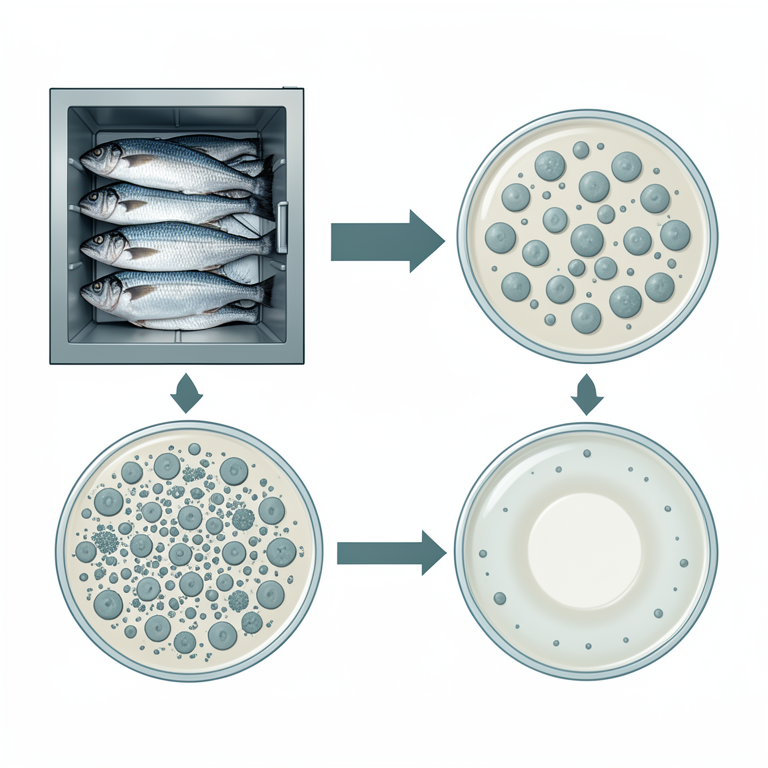
Antibiotic Efficacy Spectrum
AI-generated conceptual illustration (frozen fish fillets and bacterial colonies in petri dishes). It explains the idea and does not show study data.
View source evidence ↗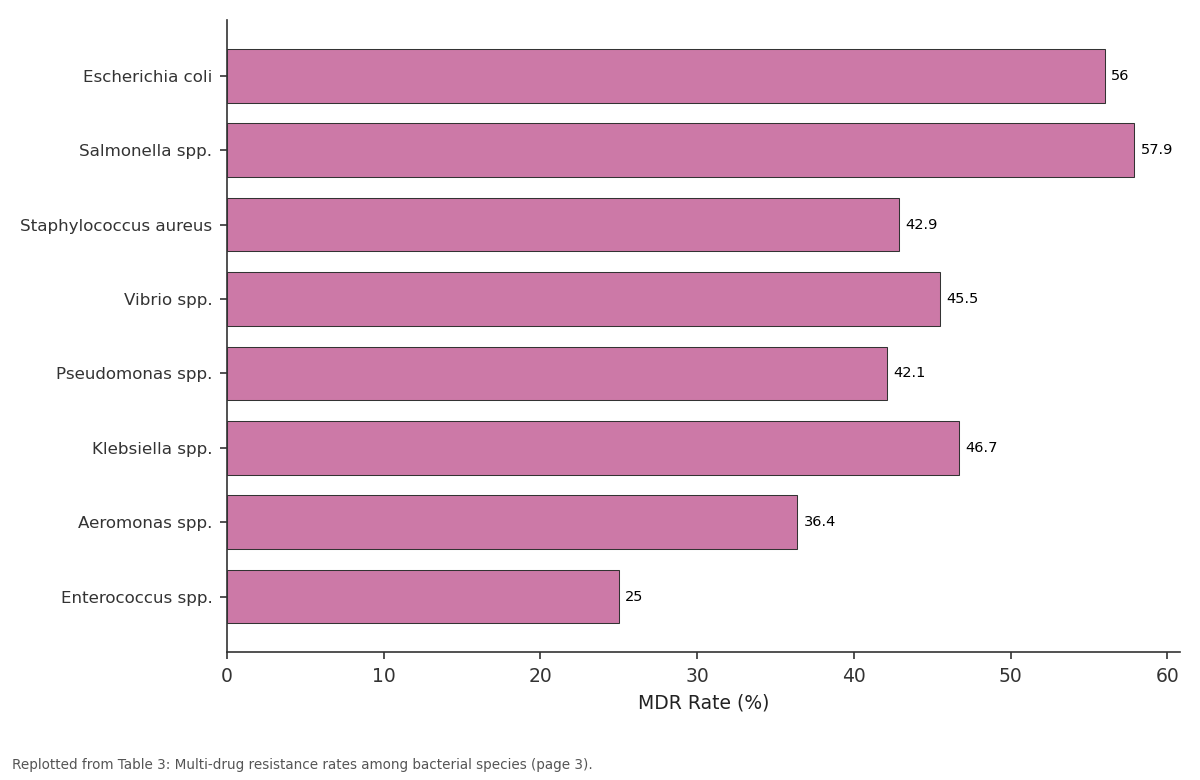
MDR Rate (%): Escherichia coli vs Salmonella spp. vs Staphylococcus aureus vs Vibrio spp. vs Pseudomonas spp.
Replotted from Table 3 (page 3) of the original paper. Every bar is the paper's own table value.
View source evidence ↗Figures & tables
From the original paper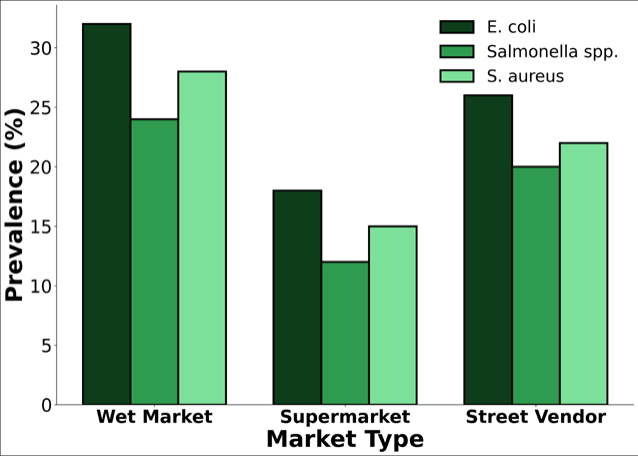 Figure 1
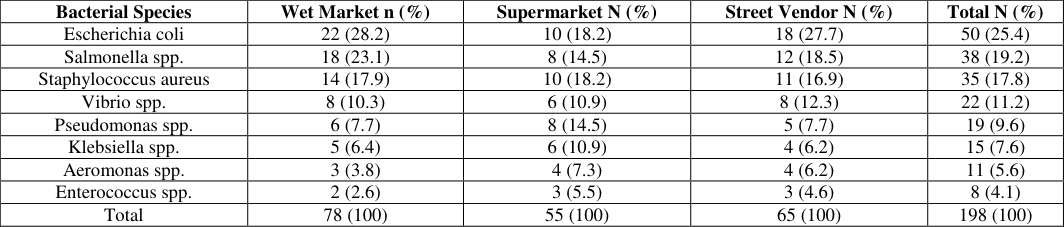 Table 1
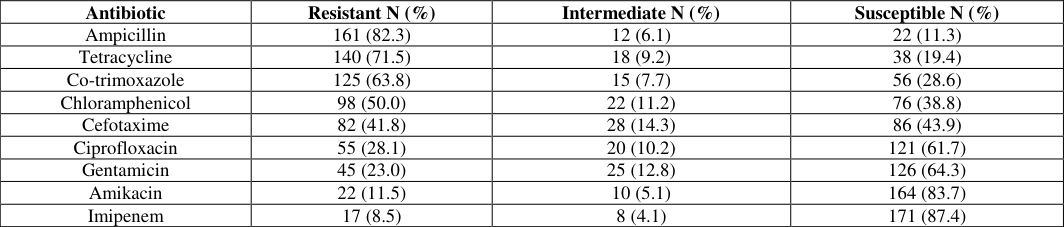 Table 2
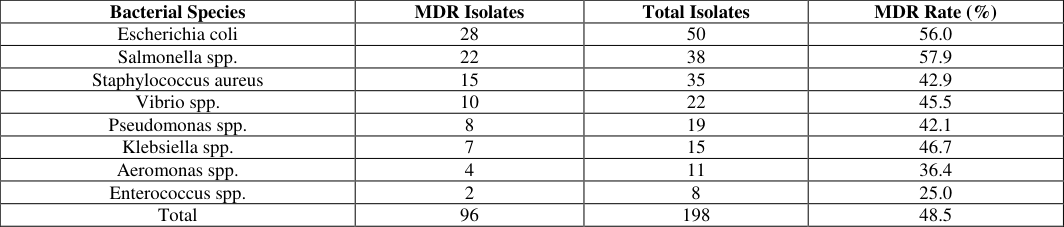 Table 3
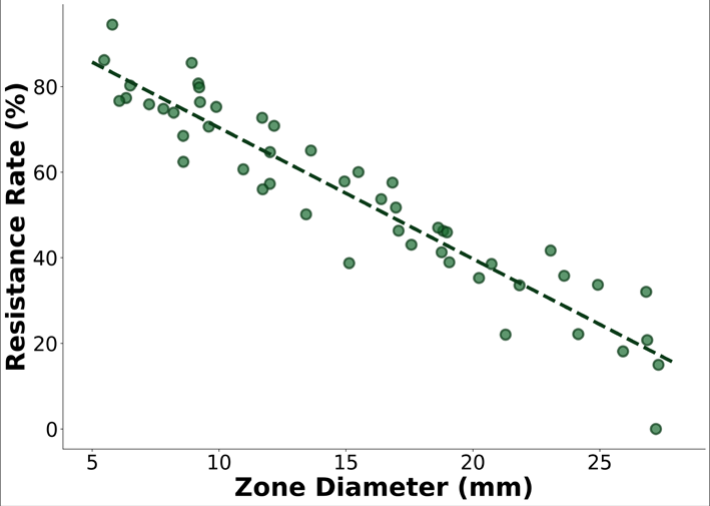 Figure 2
Introduction
According to the Food and Agriculture Organization of the United Nations, global fish consumption reached a record high of 20.5 kilograms per capita in 2022, with the Asia-Pacific region accounting for over 70% of total consumption. Thailand, as one of the leading fish-producing and fish-consuming countries in Southeast Asia, has witnessed a remarkable increase in the demand for frozen fish products driven by rapid urbanization, changing consumer lifestyles, and the convenience offered by frozen food products. Bangkok, the capital and largest metropolitan area of Thailand with a population exceeding ten million, represents one of the largest single markets for frozen fish products in the country, supplied through an extensive network of wet markets, modern supermarkets, and informal street vendors. The microbiological safety of frozen fish products has emerged as a critical concern for food safety authorities in tropical countries, where elevated ambient temperatures and frequent interruptions in cold chain infrastructure can accelerate bacterial proliferation even in frozen products. While the freezing process effectively reduces microbial metabolic activity, it does not guarantee the elimination of pathogenic organisms that may have contaminated the fish during capture, processing, transportation, or retail display [1,3] . Several pathogenic bacteria, including Salmonella species, Escherichia coli, Vibrio species, and Listeria monocytogenes, have been documented to survive freezing temperatures and resume growth upon thawing, posing significant risks to consumer health [4] . The escalating global crisis of antimicrobial resistance has added another dimension to concerns about bacterial contamination of food products. The aquaculture sector, which contributes substantially to the frozen fish supply chain, has been identified as a significant Reservoir of antimicrobial-resistant bacteria due to the prophylactic and therapeutic use of antibiotics in fish farming operations [5,6] . Thailand, with its extensive aquaculture industry, faces particular challenges in managing antimicrobial use in food animal production, and previous investigations have documented concerning levels of resistance among bacteria isolated from aquaculture products [7] . Despite the importance of frozen fish products in the Thai diet and economy, comprehensive data on the bacterial contamination levels and antimicrobial resistance patterns across different retail channels remain limited. Most previous research has focused on fresh fish or specific pathogen groups, without providing a holistic assessment of the microbiological quality of frozen products across the diverse retail landscape of Bangkok [8] . The present research was therefore designed to determine the prevalence and antibiotic susceptibility profiles of pathogenic bacteria isolated from frozen fish products sold in wet markets, supermarkets, and street vendor outlets across Bangkok, Thailand.
Material and methods
Material and methods
Material
This research was carried out at the Food Microbiology Laboratory of Bangkok Metropolitan University, Bangkok, Thailand, from March to September 2024. A total of 150 frozen fish samples comprising five species (Nile tilapia, pangasius, barramundi, mackerel, and snapper) were collected from 30 retail outlets stratified across three categories: wet markets (10 outlets, 50 samples), supermarkets (10 outlets, 50 samples), and street vendors (10 outlets, 50 samples). Samples were procured in their original packaging, maintained at frozen temperatures during transport using insulated containers with dry ice, and processed within three hours of collection. All microbiological media, including tryptic soy agar, MacConkey agar, xylose lysine deoxycholate agar, Baird-Parker agar, and thiosulfate citrate bile salts sucrose agar, were obtained from Merck KGaA, Germany. Antimicrobial discs for nine antibiotics (ampicillin 10 µg, tetracycline 30 µg, ciprofloxacin 5 µg, gentamicin 10 µg, amikacin 30 µg, cefotaxime 30 µg, chloramphenicol 30 µg, co-trimoxazole 25 µg, and imipenem 10 µg) were sourced from Oxoid Limited, United Kingdom.
Methods
Frozen fish samples were thawed at 4°C for 12 hours prior to analysis. A 25-gram portion of fish flesh with skin was aseptically excised from each sample and homogenized in 225 mL of buffered peptone water using a stomacher at 230 rpm for two minutes. Serial decimal dilutions were prepared, and appropriate dilutions were surface-plated onto selective media for targeted isolation of specific bacterial groups. Tryptic soy agar was used for total aerobic plate count at 37°C for 24 to 48 hours. MacConkey agar facilitated the recovery of coliforms and other Gramnegative enteric organisms, while xylose lysine deoxycholate agar was used for Salmonella detection following pre-enrichment in Rappaport-Vassiliadis broth at 42°C for 24 hours. Baird-Parker agar supplemented with egg yolk tellurite emulsion was employed for Staphylococcus aureus isolation, and thiosulfate citrate bile salts sucrose agar was used for Vibrio species recovery. Presumptive isolates were identified through standard biochemical testing protocols, including Gram staining, catalase, oxidase, coagulase, indole, methyl red, Voges-Proskauer, citrate utilization, and triple sugar iron reactions. Confirmation of Salmonella isolates was performed using polyvalent somatic antisera. Antimicrobial susceptibility testing followed the Kirby-Bauer disc diffusion method on Mueller-Hinton agar in accordance with Clinical and Laboratory Standards Institute guidelines. Zone diameters were measured after 18 to 24 hours of incubation at 37°C and interpreted using published breakpoints. Multi-drug resistance was defined as resistance to agents from three or more antimicrobial classes. Ethical clearance was obtained from the Bangkok Metropolitan University Research Ethics Committee (Reference: BMU-REC-2024-031). Statistical analysis was performed using chi-square tests with significance set at p<0.05. Bacterial contamination was detected in 132 of 150 frozen fish samples examined (88.0%). A total of 195 bacterial isolates belonging to eight genera were recovered. The distribution of retail outlet categories revealed that wet markets exhibited the highest contamination rate (94.0%), followed by street vendors (92.0%) and supermarkets (78.0%). The difference in contamination rates between wet markets and supermarkets was statistically significant (p<0.01). The prevalence of bacterial species varied across outlet types, as illustrated in Figure 1. The overall antimicrobial resistance profiles are presented in Table 2. Ampicillin resistance was the most prevalent (82.3%), followed by tetracycline (71.5%) and cotrimoxazole (63.8%). Imipenem demonstrated the highest efficacy, with only 8.5% resistance. Multi-drug resistance analysis (Table 3) revealed that 48.2% of all isolates were resistant to three or more antimicrobial classes, with the highest multi-drug resistance rates observed in Salmonella spp. (57.9%) and Escherichia coli (56.0%). A significant inverse correlation was observed between the zone of inhibition diameter and the corresponding resistance rate (r = -0.82, p<0.001), as depicted in Figure 2.
| Bacterial Species | MDR Isolates | Total Isolates | MDR Rate (%) |
|---|---|---|---|
| Escherichia coli | 28 | 50 | 56.0 |
| Salmonella spp. | 22 | 38 | 57.9 |
| Staphylococcus aureus | 15 | 35 | 42.9 |
| Vibrio spp. | 10 | 22 | 45.5 |
| Pseudomonas spp. | 8 | 19 | 42.1 |
| Klebsiella spp. | 7 | 15 | 46.7 |
| Aeromonas spp. | 4 | 11 | 36.4 |
| Enterococcus spp. | 2 | 8 | 25.0 |
| Total | 96 | 198 | 48.5 |
Table text extracted from the original PDF; superscript letters are shown inline. The original table image is below.
View original table image
| Antibiotic | Resistant N (%) | Intermediate N (%) | Susceptible N (%) |
|---|---|---|---|
| Ampicillin | 161 (82.3) | 12 (6.1) | 22 (11.3) |
| Tetracycline | 140 (71.5) | 18 (9.2) | 38 (19.4) |
| Co-trimoxazole | 125 (63.8) | 15 (7.7) | 56 (28.6) |
| Chloramphenicol | 98 (50.0) | 22 (11.2) | 76 (38.8) |
| Cefotaxime | 82 (41.8) | 28 (14.3) | 86 (43.9) |
| Ciprofloxacin | 55 (28.1) | 20 (10.2) | 121 (61.7) |
| Gentamicin | 45 (23.0) | 25 (12.8) | 126 (64.3) |
| Amikacin | 22 (11.5) | 10 (5.1) | 164 (83.7) |
| Imipenem | 17 (8.5) | 8 (4.1) | 171 (87.4) |
Table text extracted from the original PDF; superscript letters are shown inline. The original table image is below.
View original table image
Results
Results
Discussion
The present research provides a comprehensive assessment of the prevalence and antibiotic susceptibility patterns of pathogenic bacteria in frozen fish products across three distinct retail outlet categories in Bangkok. The overall contamination rate of 88.0% demonstrates that frozen fish products widely available to consumers in the Thai capital harbor a diverse range of potentially pathogenic bacteria. This finding is broadly consistent with previous investigations conducted in tropical and subtropical regions, although direct comparisons must account for differences in sampling methodology, target organisms, and local market conditions [9,10] . The significantly higher contamination rate observed in wet markets (94.0%) compared to supermarkets (78.0%) agrees with the general understanding that modern retail facilities with controlled cold chain infrastructure provide better conditions for maintaining microbiological quality. However, the high contamination rate among street vendor samples (92.0%) presents a contrasting scenario, disagreeing with the assumption that smaller-scale vendors handle fewer products and therefore pose lower contamination risks. This discrepancy may be explained by the limited access to adequate refrigeration equipment and the frequent interruption of cold chain maintenance observed at street vendor locations during the sampling period. The higher prevalence of Salmonella spp. in wet markets (23.1%) compared to supermarkets (14.5%) further supports this observation, as wet market environments typically feature open-air display of products and greater potential for crosscontamination [11,12] . The antimicrobial resistance patterns observed in this research reflect broader regional and global trends of increasing resistance to commonly used first-line antibiotics. The high resistance rates to ampicillin (82.3%) and tetracycline (71.5%) are consistent with the welldocumented widespread use of these agents in both human clinical practice and aquaculture operations across Southeast Asia [13,14] . The relatively preserved susceptibility to imipenem (8.5% resistance) and amikacin (11.5% resistance) suggests that these reserve antibiotics remain effective options, though their efficacy should be continuously monitored given the emerging trends of carbapenem resistance in Enterobacteriaceae globally [15] . The broader implications of these findings extend beyond immediate food safety concerns. The detection of multi-drug resistant organisms in nearly half of all isolates indicates that frozen fish products may serve as vehicles for the dissemination of antimicrobial resistance through the food chain, potentially compromising therapeutic options for food-borne infections. The establishment of integrated surveillance programs linking aquaculture antibiotic use data with retail product monitoring and clinical resistance data would represent a significant step toward addressing this challenge within the One Health framework [16,17,18] .
Public health implications
The findings of this research carry significant public health implications for Bangkok and similar rapidly urbanizing cities in Southeast Asia. The high prevalence of pathogenic bacteria, particularly Salmonella spp. and E. coli, in frozen fish products available through all three retail channels indicates that consumers face substantial risks of food-borne illness if proper cooking and handling practices are not followed. The elevated multi-drug resistance rates further complicate the clinical management of infections arising from contaminated fish consumption, as first-line antimicrobial therapies may prove ineffective.
Data availability statement
The datasets generated and analyzed during this research are available from the corresponding author upon reasonable request. All data supporting the findings have been included within the manuscript.
Conclusion
The main contribution of this research lies in providing the first comprehensive comparison of bacterial contamination and antimicrobial resistance across three distinct frozen fish retail channels in Bangkok. The supporting evidence demonstrates that 88.0% of samples harbored pathogenic bacteria, with significantly higher contamination in wet markets and street vendor outlets compared to supermarkets. The significance of these findings to the field of food microbiology and public health is underscored by the detection of multi-drug resistance in 48.2% of isolates, indicating that frozen fish products represent an important reservoir of resistant organisms in the urban food supply chain. Open questions remain regarding the molecular mechanisms driving multi-drug resistance in these isolates and the extent to which resistance genes are transferred from aquaculture environments to retail products and ultimately to human pathogens.
Acknowledgement
AcknowledgementsThis research was funded by the Bangkok Metropolitan University Research Development Fund. The authors
Figures and tables from the paper
| Bacterial Species | Wet Market n (%) | Supermarket N (%) | Street Vendor N (%) | Total N (%) |
|---|---|---|---|---|
| Escherichia coli | 22 (28.2) | 10 (18.2) | 18 (27.7) | 50 (25.4) |
| Salmonella spp. | 18 (23.1) | 8 (14.5) | 12 (18.5) | 38 (19.2) |
| Staphylococcus aureus | 14 (17.9) | 10 (18.2) | 11 (16.9) | 35 (17.8) |
| Vibrio spp. | 8 (10.3) | 6 (10.9) | 8 (12.3) | 22 (11.2) |
| Pseudomonas spp. | 6 (7.7) | 8 (14.5) | 5 (7.7) | 19 (9.6) |
| Klebsiella spp. | 5 (6.4) | 6 (10.9) | 4 (6.2) | 15 (7.6) |
| Aeromonas spp. | 3 (3.8) | 4 (7.3) | 4 (6.2) | 11 (5.6) |
| Enterococcus spp. | 2 (2.6) | 3 (5.5) | 3 (4.6) | 8 (4.1) |
| Total | 78 (100) | 55 (100) | 65 (100) | 198 (100) |
Table text extracted from the original PDF; superscript letters are shown inline. The original table image is below.
View original table image
References
18 in the original paper- Novotny L, Dvorska L, Lorencova A, Beran V, Pavlik I. Fish: a potential source of bacterial pathogens for human beings. Vet Med Czech. 2004;49(9):343-358.
- Feldhusen F. The role of seafood in bacterial foodborne diseases. Microbes Infect. 2000;2(13):1651-1660.
- Gram L, Huss HH. Microbiological spoilage of fish and fish products. Int J Food Microbiol. 1996;33(1):121137.
- Ghaly AE, Dave D, Budge S, Brooks MS. Fish spoilage mechanisms and preservation techniques: review. Am J Appl Sci. 2010;7(7):859-877.
- Cabello FC. Heavy use of prophylactic antibiotics in aquaculture: a growing problem for human and animal health and for the environment. Environ Microbiol. 2006;8(7):1137-1144.
- Heuer OE, Kruse H, Grave K, Collignon P, Karunasagar I, Angulo FJ. Human health consequences of use of antimicrobial agents in aquaculture. Clin Infect Dis. 2009;49(8):1248-1253.
- Soonthornchaikul N, Garelick H, Jones H, Sheridan J, Patterson MF. Prevalence of Salmonella in retail foods in Thailand. Int J Food Microbiol. 2006;105(1):17-28.
- Mohammed BG, Ali JF, Mohaisen IK. Identification and antibiogram of aerobic and anaerobic bacteria isolated from frozen fish retailed at public markets in Misan City, Iraq. J Adv Microbiol Res. 2022;3(2):9195.
- Oramadike CE, Ogunbanwo ST. Prevalence and antimicrobial susceptibility of Salmonella in retail frozen fish in Lagos. Niger Food J. 2015;33(2):86-91.
- Herrera FC, Santos JA, Otero A, Garcia-Lopez ML. Occurrence of foodborne pathogenic bacteria in retail prepackaged portions of marine fish in Spain. J Appl Microbiol. 2006;100(3):527-536.
- Kumar R, Datta TK, Lalitha KV. Salmonella grows vigorously on seafood and expresses its virulence factors at refrigeration temperatures. BMC Microbiol. 2015;15:254.
- Budiati T, Rusul G, Wan-Abdullah WN, Arip YM, Ahmad R, Thong KL. Prevalence, antibiotic resistance and plasmid profiling of Salmonella in catfish. Int J Food Microbiol. 2013;162(2):174-181.
- Rico A, Phu TM, Satapornvanit K, Min J, Shahabuddin AM, Henriksson PJ, et al. Use of veterinary medicines, feed additives and probiotics in four major internationally traded aquaculture species farmed in Asia. Aquaculture. 2013;412-413:231-243.
- Done HY, Venkatesan AK, Halden RU. Does the recent growth of aquaculture create antibiotic resistance threats different from those associated with land animal production in agriculture? AAPS J. 2015;17(3):513524.
- Nordmann P, Naas T, Poirel L. Global spread of carbapenemase-producing Enterobacteriaceae. Emerg Infect Dis. 2011;17(10):1791-1798.
- Robinson TP, Bu DP, Carrique-Mas J, Fevre EM, Gilbert M, Grace D, et al. Antibiotic resistance is the quintessential One Health issue. Trans R Soc Trop Med Hyg. 2016;110(7):377-380.
- Singer AC, Shaw H, Rhodes V, Hart A. Review of antimicrobial resistance in the environment and its relevance to environmental regulators. Front Microbiol. 2016;7:1728.
- Watts JE, Schreier HJ, Lanska L, Hale MS. The rising tide of antimicrobial resistance in aquaculture: sources, sinks and solutions. Mar Drugs. 2017;15(6):158.