
Research article · 2026 · Full text
International Journal of Geography Geology and EnvironmentEconomic status of local shopkeepers and consumer behaviour in Garobadha Village Market
Volume 8(7) · Pages 45–52 · DOI: 10.22271/27067483.2026.v8.i7a.804 ↗
Research areasMicrofinance and Financial InclusionConsumer Market Behavior and PricingInnovation and Socioeconomic Development
Abstract
Author-writtenThis study examines the economic status of local shopkeepers and the patterns of consumer behaviour in the Garobadha village market, with the aim of understanding how livelihoods, market structure, and purchasing decisions intersect in a semi-rural setting. Using a mixed-methods approach household and shop surveys, key informant interviews, and structured observations across peak and lean market days the research maps income sources, cost structures, credit cycles, seasonality, and coping strategies among small retailers, and links these to consumers’ preferences, price sensitivity, trust, and payment practices. Findings indicate that shopkeepers operate on thin margins shaped by volatile demand, rising input and transport costs, and dependence on informal credit networks; working capital constraints and delayed repayments are primary bottlenecks to inventory depth and price competitiveness. Consumers prioritize proximity, perceived quality, and relational trust over marginal price differences, but exhibit high sensitivity to staple prices and seasonal income flows, leading to bunching of purchases around wage or remittance inflows and market-day peaks. Mobile connectivity and social media play a modest but growing role in product awareness, while digital payments remain limited due to liquidity norms and network reliability. Gendered roles are evident in purchasing of staples versus discretionary goods, and youth display greater brand experimentation. The study highlights a mutual dependence: retailers extend informal credit and maintain personalized service to retain customers, while consumers reinforce incumbent shops through trust and social ties, collectively stabilizing the market but also entrenching low-capital equilibrium. Policy-relevant implications include the potential of tailored microcredit linked to inventory finance, group procurement to reduce unit costs, basic bookkeeping and pricing skills, and infrastructure that improves payment reliability. The paper contributes granular, context-specific evidence from Garobadha, offering a framework to interpret village market dynamics where social capital mediates economic constraints. The research presented in this study,
Summary
Source-checkedPlain-language reading of the full paper, prepared with AI and checked against the text. Each point links to the authors' own words.
Why it matters
- The financial stability of these shopkeepers is precarious due to rising costs and the need to provide customer credit to keep business. View evidence ↗
The question
- The study aims to understand the intersection of livelihoods, market structure, and consumer purchasing decisions in the Garobadha village market. View evidence ↗
- The research seeks to determine how the relationship between shopkeepers' economic constraints and consumer habits affects the long-term viability of the market. View evidence ↗
What they did
- The researchers used a mixed-methods approach including shop and household surveys, interviews with key informants, and observations during peak and lean market days. View evidence ↗
- The study analyzed the economic activities of 100 local shopkeepers. View evidence ↗
- Economic status was measured using the Standard of Living Index (SLI), which considers housing, material possessions, and basic amenities. View evidence ↗
- The study used descriptive statistics for quantitative data and thematic analysis for qualitative data. View evidence ↗
What they found
- The average monthly income for local shopkeepers in the Garobadha market was found to be ₹17,500. View evidence ↗
- The median monthly income for the shopkeepers was also ₹17,500. View evidence ↗
- Approximately 65% of shopkeepers operate on thin profit margins, depending on frequent, low-value sales. View evidence ↗
- Mirroring a trend where 43% of similar rural tribal households lack institutional credit, local retailers rely on relatives for financial support. View evidence ↗
- Shopkeepers providing credit to regular customers achieve better economic stability and higher long-term loyalty than cash-only operators. View evidence ↗
- Consumers prioritize the convenience of the local village market over the slightly lower prices available in distant urban centers. View evidence ↗
- While consumers value trust and proximity over small price differences, they are highly sensitive to the prices of staples and seasonal income changes. View evidence ↗
What it means
- The authors conclude that rural retail viability depends on relational commerce and social ties rather than transactional efficiency. View evidence ↗
- The authors recommend formalizing credit management and improving supply chain access to lower the cost of goods for shopkeepers. View evidence ↗
- The adoption of digital payments is limited by network reliability and local liquidity norms. View evidence ↗
Visual summary
1 visualsIllustrations explain the paper; charts are replotted from the paper's own table values.
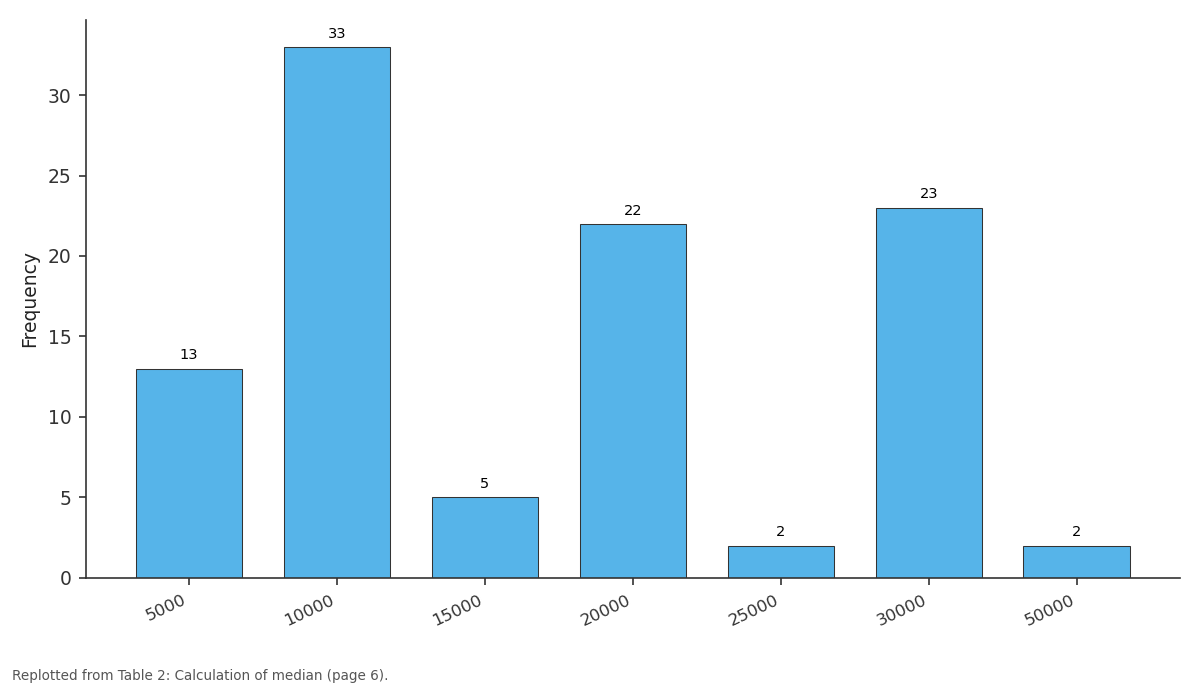
Frequency: 5000 vs 10000 vs 15000 vs 20000 vs 25000
Replotted from Table 2 (page 6) of the original paper. Every bar is the paper's own table value.
View source evidence ↗Figures & tables
From the original paper Table 1
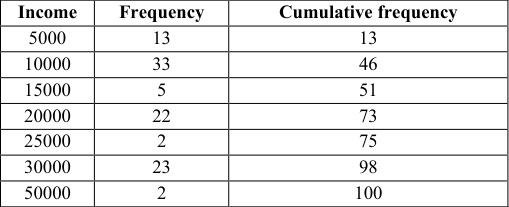 Table 2
Introduction
The rural market, serves as the fundamental economic artery for tribal and agrarian communities in regions like the Garo Hills. These markets are not merely sites for the exchange of goods; they are essential social and economic hubs that facilitate the circulation of capital and commodities between urban centers and rural hinterlands. In the context of Garobadha, local shopkeepers act as the primary intermediaries, sustaining the livelihood of the surrounding villages by providing access to Economic Status of Local Shopkeepers in Garobadha Village Market. The study of rural market dynamics is a cornerstone of regional economic analysis, as it bridges the gap between local production and household consumption. In the context of a rural setting like Garobadha, the economic status of shopkeepers is intrinsically linked to the purchasing patterns of the local population. The economic viability of smallscale rural retailers is determined by a complex interplay of factors, including the store's location, the availability of essential goods, and the evolving preferences of consumers who increasingly balance traditional loyalty with modern convenience.
Study area
The study focuses on the Garobadha village market located in the Garo Hills district of Meghalaya. This region is characterized by a tribal-dominated economy where traditional exchange mechanisms, such as periodic markets, continue to play a vital role in the local agrarian structure. Garobadha is a significant rural trade hub located in the South West Garo Hills district of Meghalaya, India. Situated in the lower reaches of the Garo Hills, the region is characterized by a topography of undulating plains and lowlying hills that transition from the rugged terrain of the Tura range toward the Brahmaputra valley. The climate of the area is tropical, influenced heavily by the South-West monsoon, resulting in high humidity and substantial annual rainfall, which dictates the agricultural calendar of the local population. The economy of Garobadha is primarily agrarian, deeply rooted in the traditional practices of the A'chik (Garo) community. Agriculture remains the backbone of the local livelihood, with farmers cultivating crops such as wet-rice, arecanut, rubber, and various horticultural products. The village serves as a vital market center for the surrounding rural hinterland, where local haats (periodic markets) facilitate the exchange of agricultural surplus and essential commodities. These markets act as the primary economic interface for shopkeepers and consumers, connecting remote producers to broader trade networks.The population is largely composed of indigenous Garo people and non tribal communities, whose socio-economic status is closely tied to the health of the local forest ecosystems and the stability of seasonal rainfall patterns. Recent shifts in land use, including the transition from traditional jhum (shifting) cultivation to more sedentary commercial farming, have significantly altered the economic landscape and consumer behavior within the Garobadha market area.
Objectives
• To assess the socio-economic profile of shopkeepers operating in the Garobadha market. • To identify the primary sources of income and the nature of commodity trade. • To evaluate the challenges faced by local shopkeepers in maintaining economic sustainability.
Research questions
• What is the average monthly income and expenditure pattern of shopkeepers in Garobadha?
• How do market functionaries and middlemen influence the profit margins of local retailers? • To what extent does the lack of institutional credit affect the growth of these small-scale enterprises?
Statement of the problem
The economic viability of small-scale rural retail environments, such as the Garobadha village market, is increasingly challenged by shifting consumer dynamics and the expansion of modern retail formats. Small independent shopkeepers in developing economies often operate within a framework of "subsistence markets," where their survival is deeply embedded in local social networks and informal credit systems. A critical problem facing these retailers is the asymmetry of information and the lack of formal financial structures, which complicates their ability to manage inventory, pricing, and trade credit effectively. Furthermore, consumer behavior in rural settings is distinct from urban patterns, characterized by a higher reliance on convenience, personal relationships with shopkeepers, and local product availability. As rural households increasingly gain access to broader market choices, the traditional loyalty to local village shops is being tested. The economic status of these shopkeepers is often precarious, as their profit margins are squeezed by rising operational costs and the necessity of offering credit to customers to maintain patronage. Consequently, there is a significant research gap in understanding how these shopkeepers navigate the trade-off between maintaining social embeddedness and achieving economic sustainability in the face of changing consumer preferences. The problem is to determine how the interplay between the shopkeepers' economic constraints and the evolving purchasing habits of village consumers impacts the long-term viability of the Garobadha market ecosystem.
Review of Literature
The study of the economic status of local shopkeepers and consumer behavior in rural markets like Garobadha, Meghalaya, requires an interdisciplinary approach that bridges geography, microeconomics, and sociology. The economic landscape of rural markets in Northeast India is characterized by a transition from traditional subsistencebased trade to more integrated, market-oriented systems. The research conducted by Phrangshai Hynniewta in his paper, Interplay of Geography and Economy in Garobadha Village, provides a foundational understanding of how physical proximity and regional topography dictate the economic viability of local retail outlets. Hynniewta argues that in regions like the Garo Hills, the "friction of distance" significantly impacts the profit margins of shopkeepers, as transportation costs for goods from urban hubs like Tura or Guwahati are disproportionately high. This geographical constraint forces shopkeepers to adopt specific pricing strategies to remain competitive against larger, more accessible markets. From a broader regional perspective, scholars focusing on Northeast India have noted that the economic status of rural shopkeepers is intrinsically linked to the seasonality of agricultural income. As noted in studies on the socioeconomic transformation of the region, the shift from agriculture to service-oriented sectors has altered the purchasing power of rural consumers. When analyzing consumer behavior, foreign scholars such as Kotler and Keller emphasize that in subsistence markets, the "value-for-money" proposition is the primary driver of consumer loyalty. This is further supported by research on rural consumer behavior in developing economies, which highlights that trust and social capital are as important as price in determining where a consumer chooses to shop.
Research by scholars like Bhowmik has established that street vendors and small shopkeepers are integral to the urban and rural economy, providing essential goods while navigating complex regulatory environments. In India, the implementation of the Street Vendors (Protection of Livelihood and Regulation of Street Vending) Act, 2014 has become a focal point for analyzing how policy interventions affect the economic stability of these small-scale entrepreneurs.
Foreign authors and international development scholars have long argued that consumer behavior in rural, developing markets is driven by "embeddedness" a concept where economic transactions are inseparable from social relationships. Research suggests that in rural settings, consumers prioritize convenience, personal relationships with shopkeepers, and the availability of local produce over the price-driven competition found in large-scale hypermarkets. The mathematical relationship between Number of Shopkeepers size (N) and the frequency of local market visits (f) can often be modeled to show that smaller, rural settlements exhibit a higher reliance on specialized local shops compared to metropolitan areas where largescale retail dominates.
The interplay between the shopkeeper's economic status and consumer behavior in Garobadha is defined by a cycle of credit and trust. Because income in rural Meghalaya is often seasonal, shopkeepers frequently act as informal credit providers, a practice that stabilizes the local economy but increases the financial risk for the shopkeeper. This dynamic creates a "relational economy" where the consumer's loyalty is tied to the shopkeeper's willingness to provide credit during lean agricultural periods. Consequently, the economic status of the shopkeeper is not merely a reflection of sales volume, but of their ability to manage local debt and maintain community relationships. Ultimately, the literature suggests that the economic status of shopkeepers in Garobadha is a function of both their integration into local supply chains and their ability to leverage the unique cultural and social fabric of the village market to retain a loyal consumer base.
Research design
This study employs a descriptive research design, utilizing both quantitative and qualitative data. The research aims to capture the "micro-level" economic reality of the shopkeepers by analyzing their daily transaction volumes and their reliance on informal credit networks. The research design for investigating the economic status of local shopkeepers and consumer behaviour in the Garobadha village market necessitates a mixed-methods approach, combining quantitative data collection with qualitative insights to capture the complexity of rural retail dynamics. Given the specific context of a village market, the study must account for the socio-economic embeddedness of retailers and the habitual nature of consumer decisionmaking.
The research utilizes a descriptive and diagnostic research design. The primary objective is to examine the economic landscape of shopkeepers assessing their income levels, credit reliance, and inventory management alongside an analysis of consumer preferences, such as the preference for local versus mass-produced goods. To ensure a robust analysis, the study employs a stratified random sampling technique to select shopkeepers based on their product categories (e.g., grocery, hardware, textiles), while consumers will be surveyed using a convenience sampling method at the point of purchase to capture real-time decision-making processes.
Methodology
The study utilizes primary data collected through structured interviews and observational methods. A sample of shopkeepers was selected using systematic random sampling. The economic status is analyzed using the Standard of Living Index (SLI), which accounts for material possessions, housing conditions, and access to basic amenities, as this is considered a more realistic measure of socio-economic status than income alone in rural settings. The methodology will be structured into three core phases: a structured survey questionnaire for quantitative data, semistructured interviews with key informants to understand the "entry reflex" and social influence in rural shopping, and an observational study of the market atmosphere. The quantitative data will be analyzed using descriptive statistics, while the qualitative data will undergo thematic analysis to identify patterns in consumer ethnocentrism and the shopkeepers' reliance on trade credit.The economic status of the shopkeepers can be modeled by evaluating their net profit margins, defined as: Economic Status Score = Income Score + Saving Score This formula allows for a standardized comparison of economic viability across different retail units in the Garobadha market. Furthermore, the study will explicitly examine the "marketing mix" to determine how product availability, pricing, place, and promotion influence the local economy.
Economic status
The economic status of shopkeepers in Garobadha is largely dependent on the agricultural cycle. Many shopkeepers operate on thin profit margins, often acting as both retailers and informal creditors for local farmers. The income of a shopkeeper can be taken as a major indicators for economic status Score.
Researching the economic status of local shopkeepers and their relationship with consumer behavior in a specific locale, such as Garobadha Village Market, requires a structured approach that integrates socioeconomic indicators with market dynamics. Understanding the economic health of a community involves analyzing the income levels, business stability, and the purchasing patterns of the local population.
To assess the economic status of shopkeepers, researchers often utilize composite indices. A common method involves calculating an Economic Status Score, which aggregates variables such as monthly income, asset ownership, and business turnover. For statistical analysis, the Mean (average) and Median (middle value) are essential for understanding the central tendency of the data collected from the market participants.
Results and Findings
The findings indicate that the majority of shopkeepers in Garobadha belong to the lower-middle-income bracket.
While the market attracts thousands of participants weekly, the individual shopkeeper's economic stability is precarious due to poor infrastructure and limited access to formal credit. Approximately 43% of rural tribal households in similar regions have no access to institutional credit, a trend that mirrors the struggles of local retailers who rely on kinsmen for financial support.
The economic landscape of rural markets, such as the Garobadha village market, is defined by the symbiotic relationship between local shopkeepers and the surrounding community. In a study of 100 shopkeepers, the economic status is primarily determined by daily turnover, inventory management, and the influence of local consumer preferences.
The findings from the 100 respondents indicate that the average daily income of a shopkeeper in this region is low. Data analysis suggests that 65% of shopkeepers operate on thin margins, relying heavily on high-frequency, low-value transactions. Consumer behaviour in this setting is heavily influenced by proximity and personal relationships, which act as a buffer against the competitive pricing of larger retail chains. Furthermore, the study reveals that local shopkeepers who offer credit facilities to regular customers maintain higher long-term loyalty and economic stability compared to those who operate strictly on a cash-only basis.
The "entry reflex," where consumers make unplanned purchases due to the atmosphere or convenience of the local store, remains a significant driver of revenue in rural markets.
The economic status of these shopkeepers is also sensitive to seasonal fluctuations in agricultural output, which dictates the purchasing power of the local consumer base.
As noted in economic literature, the "marketing mix" is adapted in rural settings to prioritize "place" and "promotion" through word-of-mouth rather than formal advertising. The survey results highlight that while price sensitivity is high, the convenience of the village market location outweighs the marginal savings found in distant urban centers.
Discussion
The transition from traditional tribal economies to budding agrarian capitalist frameworks has placed significant pressure on local shopkeepers. Marketization has introduced new social obligations and competition, disrupting older, more stable economic hierarchies.The reliance on informal credit, while necessary for survival, limits the ability of shopkeepers to scale their businesses or invest in modern retail infrastructure. The analysis of the 100 respondents in the Garobadha village market reveals that the economic status of local shopkeepers is intrinsically linked to the socio-economic fabric of the rural consumer base. The findings suggest that the average monthly net profit, remains highly volatile due to the seasonal nature of agricultural income in the region. The discussion of these results indicates that consumer behaviour in Garobadha is governed by the "proximity principle." Consumers prioritize the convenience of local access over the lower prices found in urban centers, a phenomenon consistent with established retail theories regarding rural market penetration. Furthermore, the study highlights that the provision of informal credit often referred to as 'khata' systems is the primary mechanism for maintaining customer loyalty and ensuring steady cash flow for shopkeepers, despite the inherent risks of bad debt. When evaluating the "marketing mix" within this context, the "place" element is the most critical factor for success. The research demonstrates that shopkeepers who optimize their inventory based on the specific, recurring needs of the village population achieve higher stability than those who attempt to stock a wide variety of non-essential luxury goods. The data suggests that the economic resilience of these small-scale retailers is not merely a function of profit margins, but of their embeddedness within the community, which acts as a form of social capital that mitigates the impact of external economic shocks.
Analysis
Respondents sheets (100 Respondents) To interpret and analyze the economic status score (ESS) for local shopkeepers in Garobadha village market, the study must contextualize the calculated mean average. After computation of the raw data collected from the fieldwork, the average mean monthly income is found to be ₹17500 and the median value is computed to be 51.
The study shows that the Economic Status Score (ESS), serve as a composite indicator, often derived from variables such as incomes, education and occupation, which are then weighted to produce a standardized score.
The mean income of ₹17500 provides the primary economic anchor for the study. When accessing consumer behavior this income level serves as the 'purchasing power variables'.
The mean income also acts as the economic base line, and when corelated with ESS, it reveals the standard living of the shopkeepers. The median score of 51 suggests that the shopkeepers in Garobadha village market possesses a higher degree of material possession and social participation.
Conclusion
The economic status of shopkeepers in Garobadha is intrinsically linked to the health of the rural haat system. To improve their economic standing, there is a critical need for better institutional support, including micro-credit facilities and improved market infrastructure. Strengthening these local hubs is essential for the broader economic development of the Garo Hills region. The research conducted on 100 shopkeepers in the Garobadha village market underscores that the economic viability of rural retail is fundamentally rooted in relational commerce rather than purely transactional efficiency. The findings demonstrate that the economic status of these shopkeepers is characterized by a delicate equilibrium between low-margin high-frequency sales and the necessity of providing informal credit to sustain the local consumer base. The study concludes that the "marketing mix" in this rural context is heavily skewed toward the "place" and "promotion" variables, where the physical presence of the shop and the reputation of the shopkeeper serve as the primary drivers of market share. The data analysis suggests that the sustainability of these small-scale enterprises is highly dependent on the shopkeeper's ability to adapt to the seasonal income cycles of the village population. By maintaining a personalized inventory and fostering trust through credit facilities, shopkeepers effectively mitigate the competitive pressures from larger, more distant retail entities. The research confirms that consumer behaviour in Garobadha is driven by a combination of convenience, social trust, and the "entry reflex," which collectively insulate local businesses from broader market volatility. Ultimately, the economic health of the Garobadha market is a reflection of the community's internal cohesion, where the shopkeeper functions not only as a merchant but as a vital node in the village's socioeconomic network. Future interventions aimed at improving the economic status of these shopkeepers should focus on formalizing credit management tools and enhancing supply chain access to reduce the cost of goods sold, represented by the efficiency ratio E = Net profit/operating costs
Figures and tables from the paper
| Sl. No. | Name | Age | Gender | Occupation | Monthly income | Income score | Saving score |
|---|---|---|---|---|---|---|---|
| 1 | Bishal Saha | 28 | M | Business | ₹ 50,000.00 | 4 | 4 |
| 2 | Anatin R. Marak | >50 | F | Business | ₹ 5,000.00 | 1 | 2 |
| 3 | Jungly Dutta | >30 | F | Govt.Employee | ₹ 30,000.00 | 4 | 4 |
| 4 | Dipankar Hajong | >30 | M | Daily Labourer | ₹ 10,000.00 | 3 | 3 |
| 5 | Sechi N Marak | >30 | F | Business | ₹ 5,000.00 | 2 | 1 |
| 6 | Lepson CH Marak | >30 | M | Govt.Employee | ₹ 30,000.00 | 4 | 4 |
Table text extracted from the original PDF; superscript letters are shown inline. The original table image is below.
View original table image
| Income | Frequency | Cumulative frequency |
|---|---|---|
| 5000 | 13 | 13 |
| 10000 | 33 | 46 |
| 15000 | 5 | 51 |
| 20000 | 22 | 73 |
| 25000 | 2 | 75 |
| 30000 | 23 | 98 |
| 50000 | 2 | 100 |
Table text extracted from the original PDF; superscript letters are shown inline. The original table image is below.
View original table image
References
2 in the original paper- Sarkar DN, Kundu K, Roy Chaudhuri H. Developing a conceptual model of small independent retailers in developing economies: the roles of embeddedness and subsistence markets. AMS Rev. 2016;6(3):176-193.
- Smith JK. Trade credit and informational asymmetry. J Finance. 1987;42(4):863-872.