
Research article · 2026 · Full text
International Journal of Horticulture and Food ScienceDragon fruit as a climate-resilient fruit crop for sustainable horticulture: Opportunities and challenges
Volume 8(7) · Pages 18–26 · DOI: 10.33545/26631067.2026.v8.i7a.774 ↗
Research areasClimate change impacts on agriculturePlant Stress Responses and ToleranceBotanical Research and Applications
Abstract
Author-writtenClimate change is increasingly threatening agricultural sustainability through rising temperatures, water scarcity, and soil degradation, necessitating the identification of climate-resilient crops. Dragon fruit (Hylocereus/Selenicereus spp.), commonly known as pitaya, has emerged as a promising fruit crop owing to its adaptability to harsh environmental conditions and low input requirements. This review examines the potential of dragon fruit as a climate-resilient crop by highlighting its physiological and molecular adaptations to drought, heat, salinity, and marginal soils. The crop's Crassulacean Acid Metabolism (CAM) photosynthetic pathway, efficient water-use, and stress-responsive mechanisms contribute to its resilience under adverse conditions. In addition, dragon fruit possesses high nutritional and nutraceutical value and offers significant economic opportunities through fresh consumption and value-added products. Despite its potential, challenges such as limited genetic diversity, pollination constraints, disease incidence, and inadequate region-specific production technologies remain. Continued research, breeding efforts, and climate-smart management strategies are essential to promote sustainable dragon fruit cultivation and enhance agricultural resilience.
Summary
Source-checkedPlain-language reading of the full paper, prepared with AI and checked against the text. Each point links to the authors' own words.
Why it matters
- Climate change threatens global agricultural sustainability via soil degradation, water scarcity, and rising temperatures, making the search for climate-resilient crops essential. View evidence ↗
- Dragon fruit (Hylocereus/Selenicereus spp.), or pitaya, is a promising crop because it requires low inputs and adapts well to harsh environments. View evidence ↗
- Dragon fruit is a nutrient-dense functional food containing vitamins, minerals, and bioactive compounds like betalains and flavonoids that provide health-promoting and antioxidant properties. View evidence ↗
The question
- The review aims to evaluate the potential of dragon fruit as a climate-resilient crop for sustainable horticulture. View evidence ↗
What they did
- The authors analyzed physiological and molecular adaptations to stress, management practices, nutritional value, economic potential, and barriers to adoption. View evidence ↗
What they found
- The Crassulacean Acid Metabolism (CAM) pathway enables dragon fruit to absorb CO2 at night, reducing daytime water loss and enhancing drought resilience. View evidence ↗
- Some dragon fruit genotypes show moderate salinity tolerance, maintaining growth at electrical conductivity levels above 10 dS m⁻¹. View evidence ↗
- The transcription factor HpbHLH43 is a key molecular regulator for both heat tolerance and flowering in dragon fruit. View evidence ↗
- The HuTZF3 gene improves tolerance to salinity and heat by reducing oxidative damage and enhancing antioxidant defenses. View evidence ↗
- Dragon fruit can grow in soils with a pH range of 5.5 to 8.5, though it performs optimally in slightly acidic to neutral soils (pH 6.0-7.0). View evidence ↗
- A foliar spray consisting of 5% kaolin, 0.5% seaweed extract, and 0.5% neem soap reduced canopy temperatures by 4.2-5.1°C and lowered oxidative stress markers. View evidence ↗
- Commercial production is limited to a narrow genetic base, dominated primarily by S. undatus, S. polyrhizus, and S. megalanthus. View evidence ↗
- Sustainable production is threatened by several diseases, including stem rot, anthracnose, stem canker, brown spot, bacterial soft rot, and viral infections. View evidence ↗
What it means
- To realize the full potential of dragon fruit, the authors recommend targeted breeding, supportive policies, value-chain development, and climate-smart management. View evidence ↗
- Significant knowledge gaps remain regarding pollination biology, nutrient requirements, irrigation scheduling, and genotype-environment interactions across different agroecological zones. View evidence ↗
Visual summary
1 visualsIllustrations explain the paper; they do not show study data.
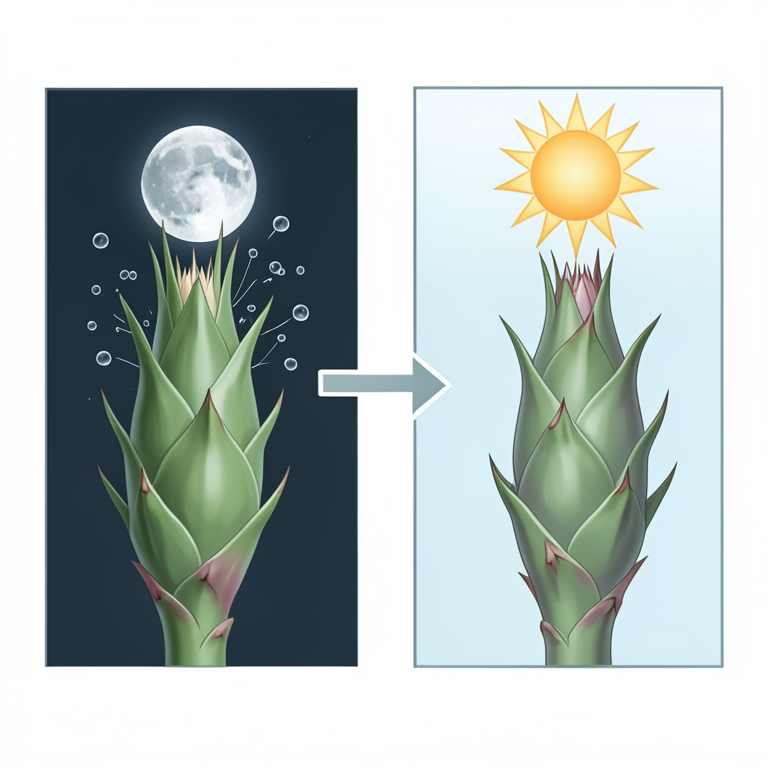
CAM Photosynthesis Cycle
AI-generated conceptual illustration (Dragon fruit plant (Hylocereus undatus)). It explains the idea and does not show study data.
View source evidence ↗Figures & tables
From the original paper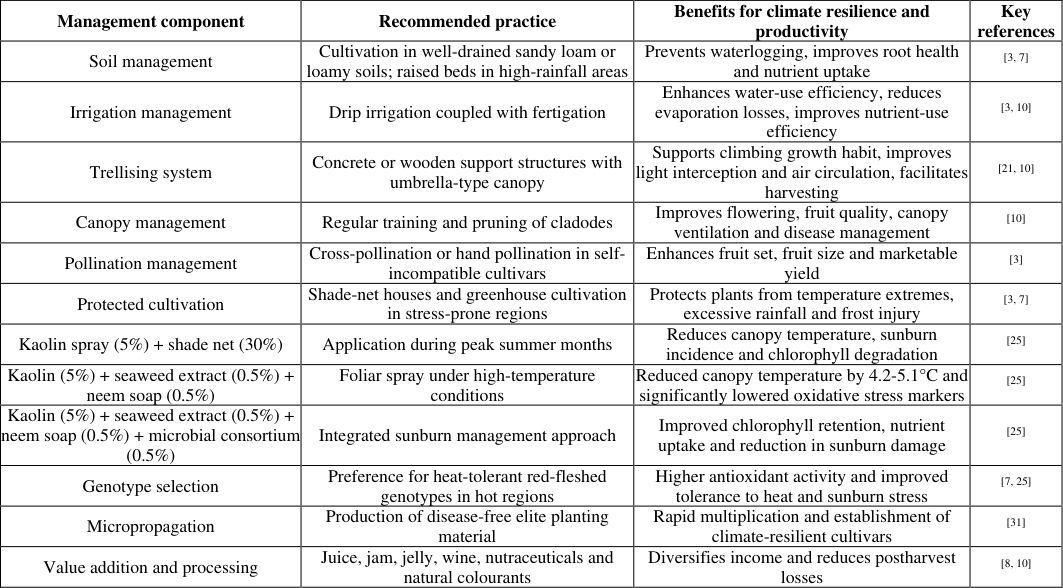 Table 1
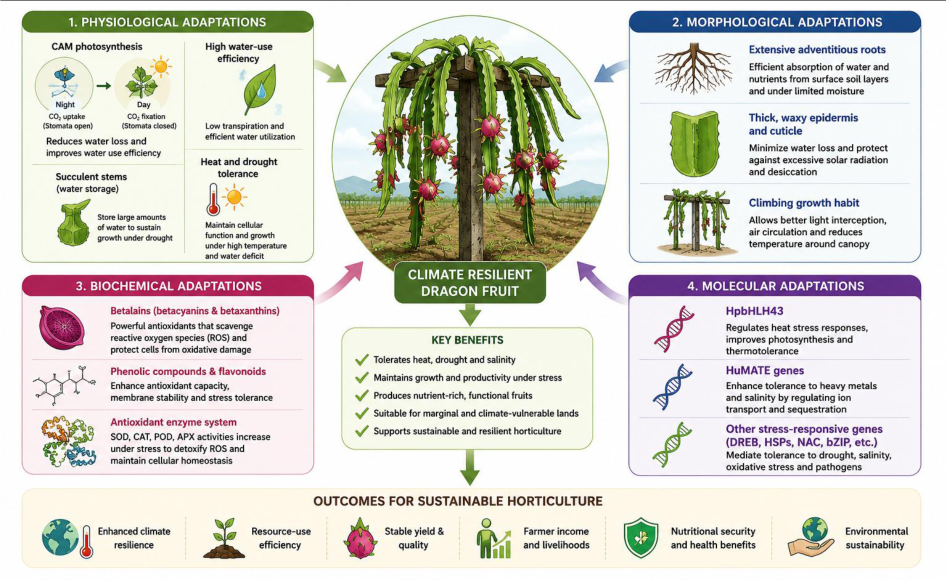 Figure 1
Introduction
Climate change has emerged as one of the most significant threats to global agricultural sustainability, manifested through rising temperatures, erratic precipitation patterns, prolonged droughts, floods, and an increasing frequency of extreme weather events. These climatic disruptions adversely affect crop productivity, water availability, soil health, and overall food security, particularly in arid and semi-arid regions where agricultural systems are highly vulnerable [1,2] . Consequently, the identification and promotion of climateresilient crops capable of maintaining productivity under environmental stress have become essential for ensuring future food and nutritional security. Underutilized horticultural crops have gained increasing attention in recent years due to their adaptability to marginal environments and relatively low input requirements. Among these, dragon fruit, commonly known as pitaya or pitahaya, has emerged as a promising climateresilient fruit crop. Dragon fruit belongs to the family Cactaceae and comprises several species under the genera Hylocereus and Selenicereus, native to tropical and subtropical regions of Central and South America. Recent taxonomic revisions have placed most commercially cultivated species, including Hylocereus undatus, H. polyrhizus, and H. megalanthus, within the genus Selenicereus, although the former nomenclature remains widely used in scientific literature and commercial production systems [3] . The crop exhibits remarkable adaptability to adverse environmental conditions, including drought, high temperatures, poor soil fertility, and limited water availability, making it particularly suitable for cultivation in climate-stressed and water-scarce regions [4][5][6][7] . Owing to these attributes, dragon fruit cultivation has expanded rapidly across Asia, Australia, the Americas, and several Mediterranean and South Asian countries, driven by increasing consumer demand, high market value, and growing recognition of its environmental resilience [7] .
A key factor underlying the climate resilience of dragon fruit is its Crassulacean Acid Metabolism (CAM) photosynthetic pathway, which allows carbon dioxide uptake primarily during the night while minimizing daytime water loss through transpiration. This specialized physiological adaptation substantially improves water-use efficiency and contributes to the crop's exceptional drought tolerance under changing climatic conditions [7] . In addition, its succulent stems serve as waterstorage organs, enabling sustained growth and productivity during prolonged dry periods. Beyond its environmental adaptability, dragon fruit is increasingly recognized as a nutrient-dense functional food. The fruit is rich in dietary fibre, vitamins, minerals, betalains, phenolic compounds, flavonoids, and other bioactive constituents that contribute to its antioxidant, antiinflammatory, and health-promoting properties [8,9] . These nutritional attributes, together with its attractive appearance and diverse processing potential, have enhanced its popularity in both domestic and international markets. Recent studies have highlighted the growing significance of dragon fruit in sustainable horticulture, climate adaptation strategies, nutritional security, and value-added food industries.
Furthermore, advances in agronomic management, postharvest technologies, genetic improvement, and breeding approaches have created new opportunities to enhance crop productivity, fruit quality, and market competitiveness [10] . Given its resilience to environmental stresses, expanding commercial importance, and potential contribution to sustainable agricultural systems, dragon fruit is increasingly regarded as a viable alternative fruit crop for climate-vulnerable regions. This review critically examines the potential of dragon fruit (Hylocereus/Selenicereus spp.) as a climate-resilient fruit crop for sustainable horticulture. Particular emphasis is placed on its physiological and molecular adaptations to abiotic stresses, cultivation and management practices under changing climatic conditions, nutritional and nutraceutical attributes, economic prospects, challenges to large-scale adoption, and future research priorities for enhancing its role in climate-smart agriculture.
Climate Resilience of Dragon Fruit
Dragon fruit possesses a range of physiological, biochemical, and molecular adaptations that enable it to withstand drought, heat, salinity, and adverse soil conditions. These climate-resilience mechanisms are summarized in Figure 1 and discussed in detail in the following sections
Drought Tolerance and Water-Use Efficiency
One of the most distinctive characteristics of dragon fruit (Hylocereus spp. and Selenicereus spp.) is its exceptional tolerance to drought stress, a trait derived from its evolutionary adaptation as a cactus species. Dragon fruit utilizes the Crassulacean Acid Metabolism (CAM) photosynthetic pathway, whereby stomata open predominantly during the night to absorb carbon dioxide and remain closed during the day, thereby substantially reducing transpirational water loss and improving water-use efficiency [6,7] . This physiological mechanism enables the crop to maintain growth and productivity under conditions of limited water availability, making it particularly suitable for arid and semi-arid agroecosystems [4,6,7] . In addition to CAM photosynthesis, dragon fruit possesses succulent photosynthetic stems that serve as water-storage organs, allowing plants to withstand prolonged dry periods. Although the crop develops a relatively shallow root system, it exhibits an extensive network of adventitious roots capable of rapidly absorbing moisture following rainfall or irrigation events, thereby maximizing water acquisition in drought-prone environments [3,7] . These morphological and physiological adaptations collectively contribute to its high level of drought resilience compared with many conventional fruit crops. Recent studies have demonstrated that dragon fruit can sustain satisfactory growth and fruit production under deficit irrigation regimes, requiring substantially less water than many tropical fruit species. Consequently, the crop is increasingly being promoted as a climate-resilient alternative for regions experiencing water scarcity and heightened climatic uncertainty [7,10] . Furthermore, emerging evidence suggests that certain dragon fruit genotypes exhibit moderate tolerance to saline conditions, maintaining acceptable growth and physiological performance at electrical conductivity levels exceeding 10 dS m⁻¹. However, considerable variation exists among species and cultivars, highlighting the need for further screening and breeding efforts to identify salt-tolerant genotypes suitable for cultivation in degraded and saltaffected soils [3,11] .
Heat Stress Adaptation
The ability of dragon fruit (Hylocereus spp. and Selenicereus spp.) to withstand elevated temperatures is an important attribute that enhances its suitability for cultivation under changing climatic conditions. As global warming intensifies, the identification of physiological and molecular mechanisms conferring heat tolerance has become increasingly relevant for sustaining fruit production in tropical and subtropical regions. Dragon fruit has demonstrated the capacity to maintain growth, flowering, and fruit development under high-temperature environments where many conventional fruit crops experience significant yield reductions [3,7] . Recent molecular studies have revealed several genes associated with heat-stress adaptation in dragon fruit. Among these, the basic helix-loop-helix (bHLH) transcription factor HpbHLH43 has been identified as a crucial regulator of both flowering and thermotolerance. Expression of HpbHLH43 is significantly induced under high-temperature conditions, and its overexpression has been shown to accelerate floral bud development while enhancing plant tolerance to heat stress. These findings suggest that HpbHLH43 may serve as a promising genetic target for breeding climate-resilient dragon fruit cultivars capable of maintaining reproductive success under elevated temperatures [12] . In addition, CCCH-type zinc finger proteins have emerged as important components of the heat-stress response network in dragon fruit. The gene HuTZF3 has been reported to improve tolerance to both heat and salinity stresses by enhancing antioxidant defense systems and reducing oxidative damage. Overexpression of HuTZF3 promotes the activity of antioxidant enzymes such as catalase (CAT) and peroxidase (POD), thereby improving reactive oxygen species (ROS) scavenging and maintaining cellular homeostasis under stress conditions [13] . These molecular adaptations contribute to enhanced stress resilience and highlight potential avenues for markerassisted selection and genetic improvement [13,14] .
Collectively, advances in understanding the genetic and physiological basis of heat tolerance in dragon fruit provide valuable opportunities for developing cultivars better adapted to future climatic challenges. The integration of molecular breeding, genomics, and conventional selection approaches could play a pivotal role in enhancing the crop's resilience to increasing temperature extremes associated with climate change.
Soil Adaptability
One of the key attributes contributing to the climate resilience of dragon fruit (Hylocereus spp. and Selenicereus spp.) is its remarkable adaptability to a wide range of soil conditions. Unlike many commercial fruit crops that require fertile and well-structured soils, dragon fruit can successfully grow in sandy, sandy loam, loamy, clayey, and gravelly soils, provided adequate drainage is maintained [3,7] . Its extensive root system, coupled with its cactus-derived physiology, enables efficient utilization of limited soil moisture and nutrients, facilitating growth under suboptimal edaphic conditions. The crop has demonstrated considerable potential for cultivation on marginal and degraded lands, including rocky terrains, wastelands, eroded landscapes, and drought-prone areas where conventional fruit crops often fail to establish economically viable production systems [10] . This adaptability offers significant opportunities for sustainable land-use planning by enabling the productive utilization of underexploited lands [6] without competing with staple food crops for fertile agricultural land. Consequently, dragon fruit is increasingly being promoted as a suitable crop for climate-smart horticulture and resource-conserving agricultural systems. Dragon fruit also exhibits a broad tolerance to soil reaction, growing successfully across a pH range of approximately 5.5-8.5, although optimum growth, nutrient uptake, and fruit yield are generally observed in slightly acidic to neutral soils (pH 6.0-7.0) [3,7] . Furthermore, its moderate tolerance to salinity and low-fertility soils enhances its suitability for cultivation in environmentally constrained regions where soil degradation poses a major challenge to agricultural productivity. These characteristics collectively position dragon fruit as a promising candidate for sustainable horticultural expansion under changing climatic conditions. Collectively, these physiological, biochemical, and molecular adaptations enable dragon fruit to maintain growth and productivity under diverse environmental stresses, making it a promising climate-resilient fruit crop. The major mechanisms contributing to climate resilience in dragon fruit are summarized in Figure 1.
Nutritional and Economic Significance 3.1 Nutritional Profile and Health Benefits
Beyond its agronomic resilience, dragon fruit (Hylocereus spp. and Selenicereus spp.) has gained considerable attention as a nutrient-rich functional food owing to its diverse array of essential nutrients and bioactive compounds. The fruit is an excellent source of dietary fibre, vitamin C, B-complex vitamins, minerals such as calcium, phosphorus, magnesium, potassium, and iron, as well as health-promoting phytochemicals that contribute to human nutrition and well-being [8,9] . The nutritional composition varies among species and cultivars [15,16] , with red-fleshed varieties generally exhibiting higher concentrations of antioxidants and bioactive compounds than white-fleshed types. Dragon fruit is particularly valued for its high antioxidant capacity, which is primarily attributed to betalains, phenolic acids, flavonoids, and other secondary metabolites. These compounds play a crucial role in scavenging reactive oxygen species and reducing oxidative stress, thereby contributing to the prevention of various chronic diseases. Numerous studies have reported that dragon fruit exhibits anti-inflammatory, antidiabetic, antihyperlipidemic, antimicrobial, and cardioprotective properties [17][18][19][20] , highlighting its potential as a functional food and nutraceutical ingredient [8][9][10] . The fruit's relatively low caloric value, moderate sugar content, and high dietary fibre concentration further enhance its suitability for healthy diets and the management of metabolic disorders such as obesity and type 2 diabetes. Dietary fibre improves gastrointestinal health, promotes satiety, and supports glycaemic regulation, while bioactive compounds may contribute to improved lipid metabolism and insulin sensitivity [8,7] . In addition to the edible pulp, dragon fruit peel represents a valuable source of pectin, dietary fibre, natural pigments (betalains), and phenolic compounds. Recent studies have highlighted the potential utilization of peel waste in the development of natural food colourants, functional ingredients, biodegradable packaging materials, and valueadded food products, thereby supporting circular bioeconomy approaches and reducing postharvest waste [9,10] . Given its rich nutritional profile and health-promoting properties, dragon fruit has considerable potential to contribute to nutritional security and dietary diversification, particularly in developing regions where micronutrient deficiencies remain prevalent.
Economic Potential and Market Dynamics
Dragon fruit (Hylocereus spp. and Selenicereus spp.) has emerged as a high-value horticultural crop with considerable economic potential in both domestic and international markets. Increasing consumer awareness regarding its nutritional, functional, and health-promoting properties, coupled with its distinctive appearance and year-round market demand, has contributed to the rapid expansion of the global dragon fruit industry [7,10] . The global market for dragon fruit continues to grow steadily, driven by rising demand for exotic fruits, functional foods, and plant-based nutraceutical products, particularly in Asia-Pacific, North America, and Europe [3] . The crop presents significant livelihood opportunities for smallholder and resource-poor farmers due to its high market value, relatively low water requirement, and adaptability to marginal environments. Vietnam remains the world's largest producer and exporter of dragon fruit, accounting for a substantial share of global production and trade. Commercial cultivation has also expanded rapidly in countries such as China, Thailand, Indonesia, Israel, Australia, and India, reflecting the crop's growing economic significance [7,10] . In India, cultivation has increased considerably over the past decade [5] , particularly in Gujarat, Maharashtra, Karnataka, Andhra Pradesh, Telangana, Tamil Nadu, and the northeastern states, driven by favorable market prices and increasing consumer demand [3] .
Beyond fresh fruit consumption, dragon fruit offers extensive opportunities for value addition and agroprocessing. The fruit can be processed into juices, jams, jellies, beverages, syrups, wines, fermented products, dehydrated snacks, and nutraceutical formulations, thereby extending shelf life and enhancing market value [8,10] . Furthermore, bioactive compounds extracted from the pulp and peel, including betalains, pectin, dietary fibre, and phenolic compounds, have attracted interest from the food, pharmaceutical, and cosmetic industries. Utilization of processing by-products not only generates additional income streams but also supports sustainable waste management and circular bioeconomy initiatives. Given its high profitability, expanding market demand, and diverse value-added applications, dragon fruit represents a promising crop for income diversification, rural entrepreneurship, and climate-resilient agricultural development. Its cultivation can contribute to improving farm incomes while simultaneously supporting nutritional security and sustainable horticultural production systems under changing climatic conditions.
Cultivation Practices and Management
Dragon fruit cultivation involves a range of climate-smart management practices that influence plant establishment, productivity, fruit quality, and resilience under changing environmental conditions. These practices include propagation methods, irrigation and nutrient management, canopy training, pollination strategies, and heat-stress mitigation measures. A summary of the major cultivation and management practices and their contributions to productivity and climate resilience is presented in Table 1.
Propagation and Establishment
Successful cultivation of dragon fruit (Hylocereus spp. and Selenicereus spp.) depends largely on the availability of high-quality planting material and the adoption of efficient establishment methods. Vegetative propagation through stem cuttings remains the most widely adopted method due to its simplicity, cost-effectiveness, and ability to maintain genetic fidelity. This approach ensures the preservation of desirable cultivar traits, facilitates uniform orchard establishment, and enables earlier flowering and fruiting compared with seed-derived plants, often allowing commercial production within one to two years after planting [3,10] . Stem cuttings obtained from healthy and mature cladodes are generally preferred for propagation. Cuttings measuring approximately 15-30 cm in length exhibit higher rooting success and vigorous early growth when planted in welldrained growing media under moderate shade conditions. Successful establishment is promoted by maintaining adequate soil moisture while avoiding waterlogging, as excessive moisture can predispose cuttings to fungal infections and stem rot [7] . Furthermore, the development of adventitious roots from cladode tissues facilitates rapid establishment and adaptation to diverse growing environments. Although seed propagation is occasionally employed in breeding and genetic improvement programmes, its commercial use is limited due to high genetic variability, prolonged juvenile periods, and inconsistent expression of desirable traits among progenies [21] . Nevertheless, sexual reproduction remains important for generating novel genetic variability and developing improved cultivars with enhanced fruit quality and stress tolerance. In recent years, plant tissue culture and micropropagation techniques have received increasing attention as alternative methods for the large-scale multiplication of elite genotypes [10, 22] . In vitro propagation offers several advantages, including rapid multiplication, year-round availability of planting material, and the production of disease-free plants with high genetic uniformity [10] . However, widespread commercial adoption remains constrained by challenges such as microbial contamination, phenolic exudation, somaclonal variation, and the relatively high cost of tissue culture facilities. Continued optimization of culture media, sterilization protocols, and acclimatization procedures is required to improve the efficiency and economic feasibility of micropropagation systems for dragon fruit.
Production Systems and Management Practices
Successful cultivation of dragon fruit (Hylocereus spp. and Selenicereus spp.) requires the adoption of suitable production systems and management practices that maximize plant growth, yield, and fruit quality across diverse agroecological conditions. Open-field cultivation remains the dominant production system in tropical and subtropical regions owing to favourable climatic conditions and lower production costs. However, protected cultivation systems, including shade-net houses and greenhouses, are increasingly being adopted in areas characterized by extreme temperatures, irregular rainfall, or frost risk. These systems provide improved control over environmental conditions, enhance water-use efficiency, and facilitate year-round production [3,10] .
Soil and Water Management
Efficient soil and water management is essential for sustainable dragon fruit production. Although the crop exhibits considerable drought tolerance, prolonged waterlogging can severely affect root health and predispose plants to stem and root rot diseases. Therefore, cultivation in well-drained soils, raised beds, or mounds is recommended, particularly in areas receiving high rainfall [7] . Drip irrigation has emerged as the preferred irrigation method due to its ability to deliver water directly to the root zone while minimizing losses through evaporation and runoff. The integration of drip irrigation with fertigation further enhances nutrient-use efficiency [3,23] and supports sustainable production in water-limited environments [3] .
Canopy Management and Trellising
As a climbing cactus with a semi-epiphytic growth habit, dragon fruit requires support structures for optimum growth and productivity. Trellising systems not only provide mechanical support but also improve canopy architecture, light interception, air circulation, and harvesting efficiency [21] . Regular pruning and training are important management practices that remove overcrowded or unproductive cladodes, promote flowering, enhance fruit quality, and reduce disease incidence by improving canopy ventilation [10] . Proper canopy management also facilitates uniform sunlight distribution, which is essential for maximizing photosynthetic activity and fruit development.
Pollination Management
Pollination is a critical factor influencing fruit set and yield in dragon fruit. Many commercially cultivated genotypes exhibit varying degrees of self-incompatibility and rely on cross-pollination for optimum fruit production. In regions where natural pollinators such as bats, moths, and bees are scarce, manual pollination is frequently employed to improve fruit set, fruit size, and market quality [3,24] . The development of self-compatible cultivars and pollinatorfriendly production systems remains an important research priority for reducing labour requirements and improving productivity.
Sunburn Mitigation and Heat Management
Increasing temperatures and intense solar radiation associated with climate change can cause sunburn injury in dragon fruit, leading to reduced fruit quality, tissue damage, and economic losses. Recent studies have demonstrated the effectiveness of protective sprays, biostimulants, and microbial-based formulations in mitigating heat stress and sunburn damage. Foliar applications of reflective compounds such as kaolin, together with biostimulant-based treatments, have been shown to reduce canopy temperature, enhance antioxidant enzyme activity, and alleviate oxidative stress under high-radiation conditions [7] . Genotypic differences in tolerance have also been reported, with redfleshed dragon fruit often exhibiting greater antioxidant capacity and enhanced stress tolerance than white-fleshed cultivars. These findings highlight the importance of integrating genotype selection with adaptive crop management strategies to improve resilience under increasingly harsh climatic conditions. Overall, the adoption of climate-smart management practices, including efficient irrigation, optimized canopy architecture, improved pollination strategies, and heat-stress mitigation measures, will play a crucial role in maximizing the productivity and sustainability of dragon fruit cultivation under future climate scenarios.
Challenges and Constraints 5.1 Abiotic Stress Challenges
Although dragon fruit (Hylocereus spp. and Selenicereus spp.) is widely recognized for its adaptability to harsh environments, several abiotic factors continue to constrain its productivity under changing climatic conditions. Increasing temperatures, erratic rainfall patterns, prolonged droughts, and extreme weather events can adversely affect vegetative growth, flowering, pollination, fruit set, and fruit quality [7] . High-temperature episodes during flowering may reduce pollen viability, impair fertilization, and increase floral bud and fruit drop, ultimately reducing yield. Likewise, excessive solar radiation can induce sunburn injury on stems and fruits, resulting in tissue damage, reduced marketability, and economic losses [25] ( Karunakaran et al., 2025). Despite exhibiting moderate tolerance to drought and salinity, substantial variability exists among species and genotypes regarding their response to environmental stresses. Some accessions maintain satisfactory growth under saline conditions, whereas others exhibit reduced growth, physiological dysfunction, and yield decline under elevated salt concentrations [3] . These genotype-specific responses highlight the need for systematic evaluation and breeding programs aimed at improving resilience to emerging climate-related stresses.
Biotic Stresses
The expansion of dragon fruit cultivation has been accompanied by the emergence and spread of several diseases and insect pests that threaten sustainable production. Major diseases reported across producing regions include stem canker, anthracnose, brown spot, bacterial soft rot, stem rot, and viral infections [10,23] , all of which can significantly reduce yield and fruit quality if not properly managed [3,10] . Increasing climatic variability may further exacerbate disease incidence by creating favourable conditions for pathogen development and dissemination. Vegetative propagation through stem cuttings, while highly effective for maintaining genetic uniformity, also increases the risk of transmitting pathogens when infected or uncertified planting materials are used. Informal exchange of cuttings among farmers, a common practice in newly established production areas, can accelerate the spread of diseases across regions [7] . In addition, insect pests affecting flowers, young fruits, and stems can cause direct yield losses and serve as vectors for disease transmission. Therefore, the development of integrated pest and disease management strategies is essential for sustaining commercial production.
Genetic Limitations and Knowledge Gaps
Limited genetic diversity within commercial dragon fruit cultivation remains a major constraint to long-term crop improvement. Although the genus comprises numerous species and genetic resources, commercial production is dominated by a few species [7,14] , particularly Selenicereus undatus (syn. Hylocereus undatus), S. polyrhizus and S. megalanthus [21,7] . The narrow genetic base restricts breeding progress and may increase vulnerability to emerging pests, diseases, and climatic stresses. Furthermore, systematic breeding programs aimed at developing region-specific cultivars remain limited. Considerable knowledge gaps persist regarding genotype × environment interactions, stress physiology, nutrient requirements, irrigation scheduling, canopy management, and pollination biology under different agroecological conditions [3] . In several newly emerging production regions, cultivation practices are often adopted from geographically distinct production systems without adequate local validation, resulting in suboptimal resource use and reduced productivity. Addressing these research gaps is crucial for developing evidence-based recommendations and improving crop performance under diverse environmental conditions.
Socioeconomic Challenges
Despite its increasing popularity and high market value, dragon fruit cultivation faces several socioeconomic constraints that limit widespread adoption. Smallholder farmers often encounter difficulties in accessing quality planting material, technical guidance, credit facilities, and organized markets [5,7] . In many regions, inadequate postharvest infrastructure, including cold storage, grading, packaging, and transportation facilities, contributes to quality deterioration and market losses. The highly perishable nature of the fruit necessitates efficient supply chains and value-addition strategies to maximize profitability. Although domestic demand for dragon fruit continues to rise in countries such as India, local production remains insufficient to meet market requirements, creating dependence on imports and limiting opportunities for domestic growers [3] . Furthermore, fluctuations in market prices, limited export infrastructure, and lack of farmer awareness regarding quality standards can reduce economic returns. Strengthening extension services, improving market linkages, supporting farmer cooperatives, and promoting value-added processing industries will be essential for realizing the full economic potential of dragon fruit within climate-resilient horticultural systems.
Opportunities for Sustainable Development 6.1 Dragon Fruit in Climate-Smart Agriculture
Dragon fruit (Hylocereus spp. and Selenicereus spp.) possesses several attributes that align closely with the objectives of climate-smart agriculture, namely enhancing productivity, improving resilience to climate change, and supporting environmental sustainability. Its drought tolerance, efficient water-use through Crassulacean Acid Metabolism (CAM) photosynthesis, and ability to thrive under low-input conditions make it particularly suitable for climate-vulnerable regions [7] . Compared with many conventional fruit crops, dragon fruit requires relatively lower irrigation inputs and can be cultivated on marginal lands, thereby reducing pressure on fertile agricultural areas and contributing to sustainable resource utilization. As a perennial crop, dragon fruit also contributes to long-term carbon sequestration and soil conservation, generating additional environmental benefits within sustainable production systems [3] .
Integration into Sustainable Farming Systems
The adaptability of dragon fruit offers significant opportunities for integration into diversified and sustainable farming systems. The crop can be incorporated into agroforestry systems, mixed orchards, and intercropping arrangements, thereby enhancing biodiversity, improving resource-use efficiency, and reducing production risks associated with monoculture farming [10] . Its compatibility with organic farming practices further increases its relevance for sustainable horticulture [23] . Organic dragon fruit production has gained momentum in several countries due to increasing consumer demand for pesticide-free and environmentally friendly products. Such production systems can enhance soil health, reduce environmental contamination, and provide access to premium-value markets [7] .
Molecular Breeding and Genomic Resources
Recent advances in molecular biology, genomics, and transcriptomics have opened new avenues for dragon fruit improvement. The identification of stress-responsive genes associated with heat tolerance, salinity tolerance, antioxidant defense, and flowering regulation provides valuable resources for breeding climate-resilient cultivars [13] . The development of molecular markers and genomic tools can facilitate marker-assisted selection, accelerate breeding programs [22,14] , and support the development of region-specific varieties with enhanced stress tolerance, disease resistance, yield potential, and fruit quality characteristics. Emerging technologies such as genome editing and functional genomics may further contribute to the development of improved cultivars capable of adapting to future climatic challenges.
Value Addition and Market Diversification
The expanding demand for functional foods and nutraceutical products creates substantial opportunities for value addition in dragon fruit production systems. The fruit contains betalains, phenolic compounds, dietary fibre, and antioxidants that have applications in food, pharmaceutical, cosmetic, and health-related industries [8,9] . Dragon fruit pulp can be processed into juices, jams, jellies, wines, fermented beverages, and dietary supplements, while peelderived pigments have considerable potential as natural food colourants and antioxidant ingredients [26][27][28] . These diversified value chains can enhance farm profitability, reduce postharvest losses, and promote rural entrepreneurship. Furthermore, the utilization of processing by-products contributes to circular bioeconomy approaches [27, 29] and sustainable waste management practices [10] .
Future Research Directions
Despite the increasing recognition of dragon fruit as a climate-resilient horticultural crop, several research gaps must be addressed to fully realize its potential within sustainable agricultural systems.
Genetic Improvement and Cultivar Development
Future research should prioritize the collection, characterization, and evaluation of dragon fruit genetic resources to broaden the crop's genetic base. Breeding programs focused on improving drought tolerance, heat tolerance, salinity tolerance, disease resistance, yield stability, and fruit quality are essential for developing cultivars adapted to diverse agroecological conditions [7,17] .
Development of Region-Specific Production Technologies
There is a need for location-specific recommendations regarding irrigation scheduling, nutrient management, canopy architecture, pollination management, and protected cultivation systems. Such research would enable optimization of productivity while minimizing resource use under varying climatic conditions [3] .
Climate-Resilient Stress Management Strategies
Further investigations are required to refine technologies for mitigating heat stress, sunburn injury, drought, and salinity. Research on biostimulants, microbial inoculants, shademanagement practices, and integrated stress management approaches could significantly improve crop resilience under future climate scenarios [25] (Karunakaran et al., 2025).
Postharvest Management and Value Addition
Given the highly perishable nature of dragon fruit, research should focus on extending shelf life through improved storage, packaging, transportation, and processing technologies. Development of innovative value-added products and efficient utilization of peel and processing byproducts will further enhance economic returns and reduce food losses [10,30] .
Socioeconomic and Policy Research
Comprehensive socioeconomic studies are needed to evaluate the impacts of dragon fruit cultivation on farm income, livelihood diversification, nutritional security, and rural development. Research should also examine barriers to adoption, market access constraints, supply-chain efficiency, and policy interventions required to support sustainable expansion of dragon fruit cultivation among smallholder farmers [5,7] .
Genomics, Biotechnology and Precision Horticulture
Emerging technologies such as genomic selection, gene editing, remote sensing, artificial intelligence, and precision irrigation offer promising opportunities for enhancing production efficiency and climate resilience. Future research should explore the integration of these technologies into dragon fruit cultivation systems to support sustainable intensification and improved resource-use efficiency.
Management component
Recommended practice Benefits for climate resilience and productivity
Key references
Key references
Soil management
Cultivation in well-drained sandy loam or loamy soils; raised beds in high-rainfall areas Prevents waterlogging, improves root health and nutrient uptake [3, 7] Irrigation management Drip irrigation coupled with fertigation Enhances water-use efficiency, reduces evaporation losses, improves nutrient-use efficiency [3, 10] Trellising system Concrete or wooden support structures with umbrella-type canopy Supports climbing growth habit, improves light interception and air circulation, facilitates harvesting [21, 10] Canopy management Regular training and pruning of cladodes Improves flowering, fruit quality, canopy ventilation and disease management [10] Pollination management Cross-pollination or hand pollination in selfincompatible cultivars Enhances fruit set, fruit size and marketable yield [3] Protected cultivation Shade-net houses and greenhouse cultivation in stress-prone regions Protects plants from temperature extremes, excessive rainfall and frost injury [3, 7] Kaolin spray (5%) + shade net (30%) Application during peak summer months Reduces canopy temperature, sunburn incidence and chlorophyll degradation [25] Kaolin (5%) + seaweed extract (0.5%) + neem soap (0.5%) Foliar spray under high-temperature conditions Reduced canopy temperature by 4.2-5.1°C and significantly lowered oxidative stress markers [25] Kaolin (5%) + seaweed extract (0.5%) + neem soap (0.5%) + microbial consortium (0.5%) Integrated sunburn management approach Improved chlorophyll retention, nutrient uptake and reduction in sunburn damage [25] Genotype selection Preference for heat-tolerant red-fleshed genotypes in hot regions Higher antioxidant activity and improved tolerance to heat and sunburn stress [7, 25] Micropropagation Production of disease-free elite planting material Rapid multiplication and establishment of climate-resilient cultivars [31] Value addition and processing Juice, jam, jelly, wine, nutraceuticals and natural colourants Diversifies income and reduces postharvest losses
Conclusion
Dragon fruit (Hylocereus/Selenicereus spp.) is a promising climate-resilient fruit crop with significant potential for sustainable horticulture under changing climatic conditions. Its drought tolerance, heat resilience, efficient water-use through CAM photosynthesis, and adaptability to marginal soils enable successful cultivation in climate-vulnerable regions. In addition, its rich nutritional profile and high market value contribute to food security, livelihood diversification, and rural economic development.
However, challenges such as limited genetic diversity, emerging diseases, and the lack of region-specific production technologies continue to restrict its full potential. Addressing these constraints through targeted breeding, climate-smart management practices, value-chain development, and supportive policies will be crucial. With continued research and investment, dragon fruit can play an important role in enhancing climate adaptation, sustainable land use, and resilient horticultural production systems worldwide.
Acknowledgement
AcknowledgementsAuthor is thankful to chairman, Department of Botany, Dr. Manmohan Singh Bengaluru City University, Bengaluru, India for his support.
References
31 in the original paper- IPCC. Climate Change 2023: Synthesis Report. Geneva: Intergovernmental Panel on Climate Change; 2023.
- FAO. The State of Food and Agriculture 2021: Making Agrifood Systems More Resilient to Shocks and Stresses. Rome: Food and Agriculture Organization of the United Nations; 2021.
- Ali A, Dhillon A, Sharma N, Chandana MR, Menaka M, Vishwakarma PK, et al. Exploring dragon fruit in India: From taxonomy to nutritional benefits and sustainable cultivation practices. Appl Fruit Sci. 2024;66(4):641-1655.
- Nangare DD, Taware PB, Singh Y, Kumar PS, Bal SK, Ali S, et al. Dragon Fruit: A Potential Crop for Abiotic Stressed Areas. Tech Bull. 2020;46:1-24.
- Wakchaure GC, Kumar S, Meena KK, Rane J, Pathak H. Dragon Fruit Cultivation in India: Scope, Constraints and Policy Issues. Tech Bull. 2021;27:1-47.
- Yadav A, Dhakar MK, Arunachalam A, Jha S, Garg S, Gangwar N, et al. A review on the scope of adoption of underutilized climate smart dragon fruit (Hylocereus spp.) cultivation. Appl Fruit Sci. 2024;66(1):297-309.
- Pavan PR, Kerutagi MG, Naika MB, Prakasha DP, Kumar VK. Potentiality of dragon fruit for climate resilience and nutritional security: A critical review. Agric Food Secur. 2025;14(1):56.
- Arivalagan M, Karunakaran G, Roy TK, Dinsha M, Sindhu BC, Shilpashree VM, et al. Biochemical and nutritional characterization of dragon fruit (Hylocereus species). Food Chem. 2021;353:129426.
- Al-Mekhlafi NA, Mediani A, Ismail NH, Abas F, Dymerski T, Lubinska-Szczygeł M, et al. Metabolomic and antioxidant properties of different varieties and origins of dragon fruit. Microchem J. 2021;160:105687.
- Mondol MSA, Akbar U, Mandal O, Rani A, Dar AH, Chatterjee A, et al. Advances in agronomic practices, postharvest technologies, and medicinal potential of dragon fruit (Hylocereus spp.): A comprehensive updated review. J Agric Food Res. 2025;22:102157.
- Kokani N, Kakade VD, Morade A, Tayade SA, Safakal OU, Chavan SB, et al. Responses of dragon fruit (Selenicereus undatus) to NaCl-induced salinity stress. Inter J. 2024;10(2):103-112.
- Yang Z, Cai X, Shang C, Hou Q, Xiao L, Wen X. Heatinduced HpbHLH43 involves in promoting floral bud induction via activating HpSOC1 in pitaya. Sci Hortic. 2024;338:113773.
- Xu W, Jian S, Li J, Wang Y, Zhang M, Xia K. Genomic identification of CCCH-type zinc finger protein genes reveals the role of HuTZF3 in tolerance of heat and salt stress of pitaya (Hylocereus polyrhizus). Int J Mol Sci. 2023;24(7):6359.
- Yadav A, Garg S, Kumar S, Alam B, Arunachalam A. A review on genetic resources, breeding status and strategies of dragon fruit. Genet Resour Crop Evol. 2025;72(3):2511-2531.
- Yasmin A, Sumi MJ, Akter K, Rabbi RHM, Almoallim HS, Ansari MJ, et al. Comparative analysis of nutrient composition and antioxidant activity in three dragon fruit cultivars. PeerJ. 2024;12:e17719.
- Chen SY, Islam MA, Johnson JB, Xu CY, Mazhar MS, Naiker M. Comparative analysis of shelf-life, antioxidant activity, and phytochemical contents of Australian-grown and imported dragon fruit under ambient conditions. Horticulturae. 2024;10(10):1048.
- Nishikito DF, Borges ACA, Laurindo LF, Otoboni AMB, Direito R, Goulart RDA, et al. Antiinflammatory, antioxidant, and other health effects of dragon fruit and potential delivery systems for its bioactive compounds. Pharmaceutics. 2023;15(1):159.
- Rathi S, Gigi S. Nutrition and therapeutic potential of the dragon fruit: A qualitative approach. Pharmacogn Res. 2023;16(1):1-9.
- Bhadauria S, Mansi TC, Chaurasia S. Exploring the therapeutic potential of dragon fruit: An insightful review. International Journal of Pharmacognosy. 2024;11(6):222-234.
- Chatterjee D, Mansuri S, Poonia N, Kesharwani P, Lather V, Pandita D. Therapeutic potential of various functional components present within dragon fruit: A review. Hybrid Adv. 2024;6:100185.
- Mizrahi Y. Vine-cacti pitayas: The new crops of the world. Rev Bras Frutic. 2014;36(1):124-138.
- Li P, Ma X, Li Z, Yao H, Lu G, Hu H, et al. A review on the advances of dragon fruit. Trop Plants. 2024;3(1):1-11.
- Belbase P, Balaji Bhaskar M. Sustainable cultivation of dragon fruit: Integrated nutrient and pest management strategies for enhanced productivity and environmental stewardship. Agron. 2025;15(11):2514.
- Jadhav P, Dhumal SS, Boraiah KM, Kate P, Kakade VD, Basavaraj PS, et al. Floral and pollination biology of dragon fruit reveals strategies for enhancing productivity through pollination management and reproductive window extension. Sci Rep. 2025;15(1):37296.
- Karunakaran G, Kanupriya C, Arivalagan M, Laxman RH, Prakash K, Manjunath BL, et al. Sunburn mitigation in dragon fruit (Hylocereus spp.): Unravelling genotype-specific physiological and biochemical responses. Front Plant Sci. 2025;16:1661147.
- Tripathi M, Diwan D, Shukla AC, Gaffey J, Pathak N, Dashora K, et al. Valorization of dragon fruit waste to value-added bioproducts and formulations: A review. Crit Rev Biotechnol. 2024;44(6):1061-1079.
- Cheong KL, Li J, Tang D, Wang M, He Y, Liew A, et al. From waste to wealth: A review of emerging approaches for utilizing dragon fruit (pitaya) waste polysaccharides in value-added bioproducts. Int J Biol Macromol. 2025;334:149051.
- Kumari S, Thakur D, Singh S, Bakshi M, Singh SK. Dragon fruit: Exploring bioactive compounds and their promising role in functional food innovation and valueadded products. J Food Compos Anal. 2025;141:107370.
- Li G, He Y, Liew A, Huang C, Song B, Jia X, et al. Dietary polysaccharides from dragon fruit pomace, a co-product of the fruit processing industry, exhibit therapeutic potential in high-fat diet-induced metabolic disorders. Food Res Int. 2025;203:115818.
- Chen SY, Xu CY, Mazhar MS, Naiker M. Nutritional value and therapeutic benefits of dragon fruit: A comprehensive review with implications for establishing Australian industry standards. Molecules. 2024;29(23):5676.
- Abdelzaher RA, Nassar SA, Ashmawy E, Vendrame WA. Accelerated dragon fruit production through integrated tissue culture and micro-grafting techniques. Horticul Res J. 2025;3(6):130-150.