
Research article · 2026 · Full text
International Journal of Horticulture and Food ScienceEffect of microencapsulation on the amino acid profile and melting behaviour of Spirulina (Limnospira platensis) fortified milk chocolate
Volume 8(6) · Pages 116–120 · DOI: 10.33545/26631067.2026.v8.i6b.770 ↗
Research areasMicroencapsulation and Drying ProcessesFood Chemistry and Fat AnalysisProteins in Food Systems
Abstract
Author-writtenSpirulina is an important alternative protein source due to its high protein content, essential amino acids, vitamins, and minerals. Protein malnutrition and food insecurity remain major challenges to sustainable development, poverty reduction, and nutritional security worldwide. Therefore, fortification of milk chocolate with Spirulina offers a novel approach to enhancing its nutritional value by providing high-quality protein and essential nutrients while improving the development of functional food products. The present study aims to microencapsulate Spirulina using maltodextrin and then fortifying encapsulated microcapsules into milk chocolate in order to assess its impact on the amino acid profile and melting properties. The amino acid content and melting property were determined by the High-Performance Liquid Chromatography (HPLC) system and Differential Scanning Calorimetry method. Results obtained from the amino acid content showed histidine (12.03 mg), isoleucine (6.87 mg), and phenylalanine (20.67 mg), alanine (3.28 mg), glycine (3.21 mg), serine (2.16 mg), arginine (2.19 mg), tyrosine (3.21 mg), glutamic acid (22.21 mg), and aspartic acid (8.60 mg) were significantly increased in the treatment sample. The incorporation of encapsulated spirulina caused minor disruption in the structural arrangement and crystallization of cocoa butter triacylglycerols resulting into lower melting temperatures. Thus, fortification of encapsulated spirulina microcapsules into a chocolate product increases the quality of protein and maintains a stable structure compared with the conventional chocolate.
Summary
Source-checkedPlain-language reading of the full paper, prepared with AI and checked against the text. Each point links to the authors' own words.
Why it matters
- Global challenges such as food insecurity and protein malnutrition make the development of nutritionally enhanced foods a priority for sustainable development. View evidence ↗
- Spirulina is considered a valuable alternative protein source because it is rich in vitamins, minerals, and essential amino acids. View evidence ↗
- A major barrier to using Spirulina in food is its negative impact on sensory quality, specifically its unappealing green color and undesirable aroma and flavor. View evidence ↗
The question
- The study aimed to evaluate how fortifying milk chocolate with maltodextrin-microencapsulated Spirulina affects the chocolate's melting properties and amino acid profile. View evidence ↗
What they did
- Spirulina was microencapsulated using a spray-drying technique with maltodextrin as the carrier material in a 1:3 ratio. View evidence ↗
- The treatment chocolate was prepared by adding 2.512% encapsulated Spirulina during the final 20 minutes before the conching process. View evidence ↗
- High-Performance Liquid Chromatography (HPLC) was used to determine the amino acid composition of both the control and treatment chocolate samples. View evidence ↗
- Differential Scanning Calorimetry (DSC) was employed to analyze the melting behavior of the chocolate samples. View evidence ↗
What they found
- The treatment chocolate showed a significant increase in the content of phenylalanine (20.67 mg), histidine (12.03 mg), and isoleucine (6.87 mg). View evidence ↗
- Non-essential amino acids were also increased in the treatment chocolate, specifically glutamic acid (22.21 mg) and aspartic acid (8.60 mg). View evidence ↗
- The addition of encapsulated Spirulina led to a significant decrease in the levels of leucine, valine, and lysine. View evidence ↗
- The treatment chocolate had lower melting temperatures than the control, with a peak temperature of 34.47 °C (vs 36.52 °C) and an end temperature of 38.5 °C (vs 40.5 °C). View evidence ↗
- The reduction in melting temperature suggests that encapsulated Spirulina disrupted the cocoa butter crystal network, creating a less stable fat arrangement. View evidence ↗
- Despite the changes, both the control and fortified chocolates remained within the typical melting range for high-quality chocolate. View evidence ↗
What it means
- The authors state that the fortification process did not significantly compromise the desirable melting properties of the milk chocolate. View evidence ↗
Visual summary
1 visualsIllustrations explain the paper; they do not show study data.
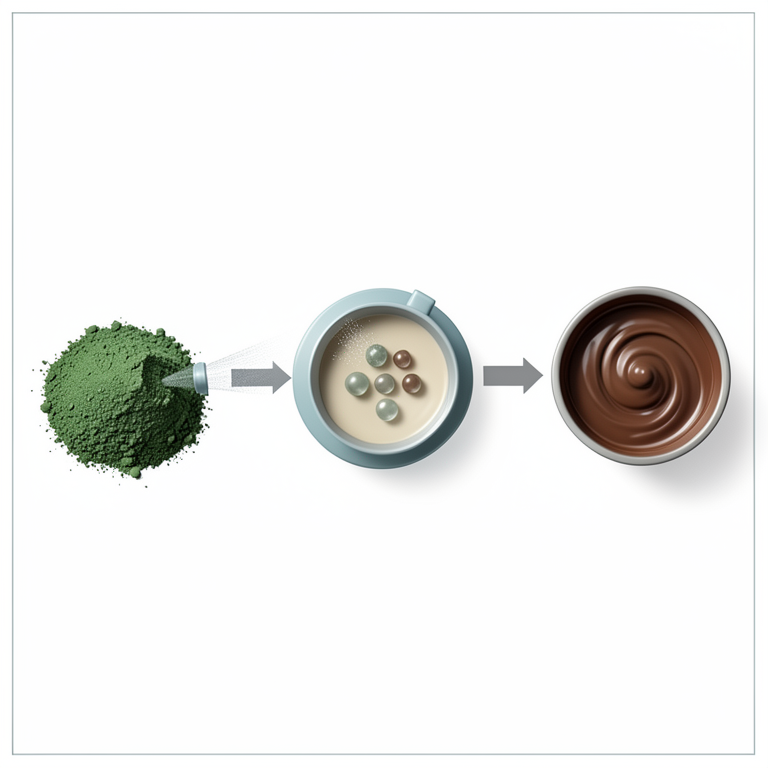
Fortification Process Flow
AI-generated conceptual illustration (Spirulina (Limnospira platensis) powder and milk chocolate). It explains the idea and does not show study data.
View source evidence ↗Figures & tables
From the original paper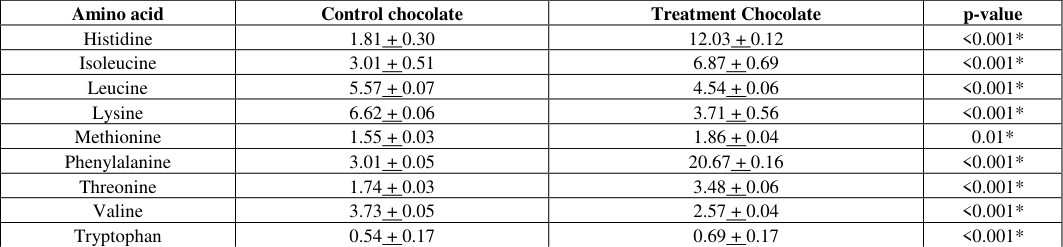 Table 1
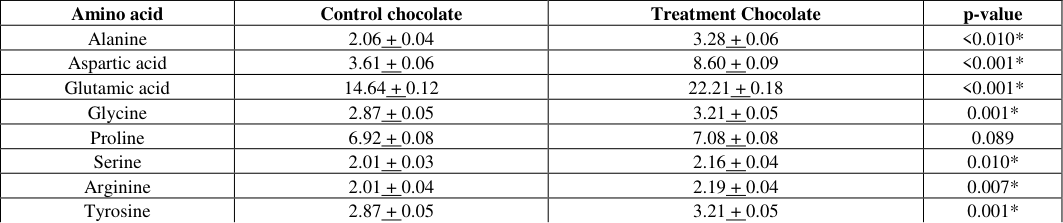 Table 2
 Table 3
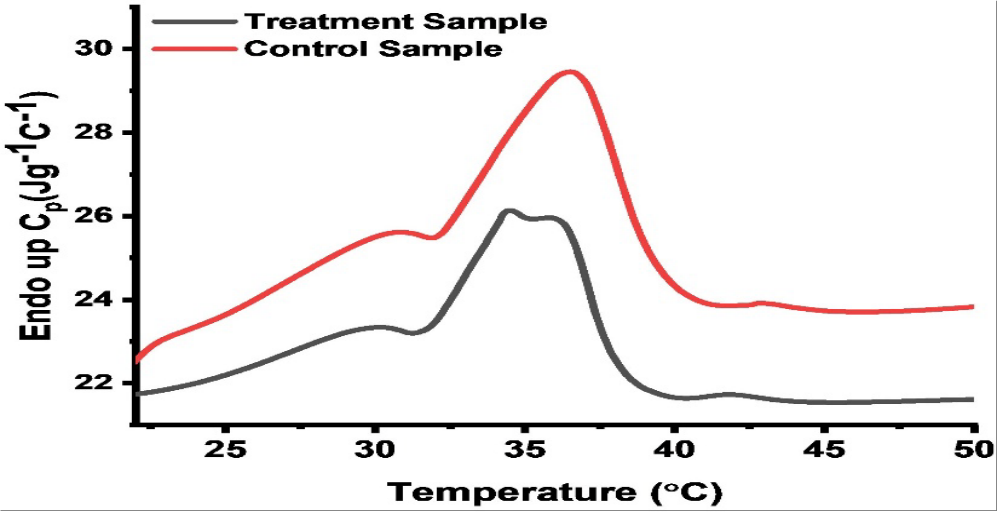 Figure 1
Introduction
Chocolate is the high popular confectionery item among children and adults, and is beneficial in providing calorie needs. Commercial variations include; dark, milk, and white chocolate available in the market, with a combination of ingredients such as cocoa butter, milk, and cocoa mass (Afoakwa et al., 2009) [1] . Different types of bioactive compounds like polyphenols, xanthines, vitamins, and minerals, etc. are present in cocoa beans (Jalil and Ismail 2008) [14] . In recent years, there has been an increasing trend in the fortification of chocolate, especially for children and the elderly (Potter et al., 2013, Rathod & Annapure 2016) [22,23] . Thus, enrichment of milk chocolate with microalgae becomes a novel protein source for not only increasing nutritional composition but also increasing antioxidant capacity. Spirulina (Limnospira platensis) holds a promising position among different protein alternatives due to its high amino acid content, protein, fatty acids, vitamins, and mineral contents. Spirulina contains around 65-70% of protein (dry weight), which is much higher than any natural food source and is safer for human consumption. Spirulina protein is easily digested and is appropriate for malnourished children (Chaiklahan et al., 2011; Li et al., 2006). Both species, Arthrospira platensis and Arthrospira maxima, are commonly used as a dietary supplement. Spirulina has a long prehistoric significance on earth and has been used in the form of food by humans for centuries (Vigani et al., 2015) [25] . Spirulina contains a unique blend of phytonutrients that no other plant source can provide. It has all 18 amino acids, including all essential amino acids in a balanced proportion (Kim and Kang 2011; Fradique et al., 2010) [10,15] . Spirulina has been widely fortified in a diverse range of food products, including smoothies, juice, confectionery, baked desserts, muffins, salad dressings, frozen desserts, popcorn, snacks, corn chips, breakfast cereals, and instant Meals (Bashira et al., 2016) [4] . Although several studies have fortified/ enriched Spirulina into food products, one of the primary limitations reported in all those studies was its adverse effect on sensory quality. In addition to the green appearance, which is often unappealing, the biomass frequently imparts an undesirable flavour and aroma. To overcome this challenge, spray-drying is one of the most cost-effective, scalable, and rapid drying process with relatively short exposure time, minimizing thermal degradation of heat-sensitive compounds such as antioxidants, pigments, vitamins and protein. It also masks the sensory properties of the product while preserving the bioactive compounds. Maltodextrin is the most popular wall material in the industry due to its affordability, neutral flavor, and aroma (Ozyurt et al., 2022) [21] . Furthermore, maltodextrin offers protection from external forces and a robust barrier against oxidation of core elements. It is obvious that using a carrier agent like maltodextrin to microencapsulate Spirulina will benefit the industry and enable the creation of novel functional meals. Therefore, the present study aims to microencapsulate Spirulina with maltodextrin-based carrier material, and then fortify encapsulated microcapsules into milk chocolate in order to assess its impact on the amino acid profile and melting behaviour.
Method Microencapsulation of Spirulina
Spirulina was spray-dried using maltodextrin as carrier material in 1:3 ratio. The solution was homogenously mixed in a magnetic stirrer using distilled water at 40 °C for 45 minutes. After obtaining a single-phase suspension of 30% (w/v), the mixture was atomized using a spray-dryer (SM Scientech, Kolkata, India) with inlet temperature of 160 °C, an outlet temperature of 108 °C, a flow rate of 11 mL/ min, and a nozzle diameter of 0.7 mm (Deupa et al., in press) [8] .
Chocolate preparation
Dry ingredients (35% cocoa butter, 32.825% fine sugar powder, 16.663% skim milk powder, 0.55% soy lecithin) were mixed to obtained homogenously mixture for 1 hour 45 minutes using a table top wet grinder at 50 °C. Last 20 minutes before conching 2.512% of encapsulated Spirulina was added to the treatment chocolate. Followed by tempering and demoulding. The control and treatment chocolate samples were stored at 12 + 5 °C in aluminium foil seal wrap.
Amino acid profile
Amino acid composition of control and treatment chocolate was determined by the High-Performance Liquid Chromatography (HPLC) system (Agilent 1260 Infinity II, Agilent Technologies, and USA) using Sigma-Aldrich amino acid standard mixture containing all 18 amino acids as a reference standard. The HPLC was equipped with a quaternary pump, autosampler, column oven and UV detector. Data acquisition was performed through OpenLab CDS software. Chromatographic separation was achieved on a C18 reverse-phase Agilent ZORBAX Eclipse AAA column (4.6 x 150 nm, 5 µm), especially designed for amino acid analysis, maintained at a constant temperature of 40ºC. The flow rate was 1.0 mL/min with an injection volume of 5 µL. Detection was carried out at 338 (OPA derivatives), 262 nm (FMOC derivatives), with a run time of 8 minutes. For sample analysis, 50 mg of the solid sample was dissolved in 5 mL of 6N HCl in a sealed container, flushed with nitrogen gas to prevent oxidation, and then incubated for 24 hours at 110ºC. After cooling, the hydrolyzed solution was filtered using a 0.22 µm syringe filter, and the final volume was adjusted to 10 mL using deionized water. Before injection, the amino acid is derivatized to improve detection sensitivity. Primary amino acids were derivatized by mixing 10 µL of the sample solution with 70 µL of Ortho-Phthalaldehyde (OPA) reagent, vortexing for 30 seconds, and allowing the reaction to continue for 2 minutes. Secondary amino acids were derivatized by adding 10 µL of 9-fluorenylmethoxycarbonyl (FMOC) reagent and allowing the reaction to stand for 1 minute. The derivatized samples were injected immediately due to the limited stability of OPA-derived adducts (Ozbal et al., 2022) [20] .
Melting properties
The melting behaviour of chocolate was determined using Differential Scanning Calorimetry (DSC) (Hitachi, DSC7020) as per Glicerina et al., (2013) [11] method. Five mg of each sample was placed into pans with a hermetic lid. The sample was heated from 10 to 50 °C at a heating rate of 10 °C/min in N2 stream. The Onset temperature (Tonset), peak temperature (Tpeak), end temperature (Tend), and energy required for the complete melting of the chocolate (∆H) were calculated using thermograms. The Tonset refers to the beginning temperature of the melting of sample. The Tpeak refers to the greatest temperature of the melting point. ∆H is the amount of energy required to melt the fat sample. All the thermal parameters were related to crystal type.
Statistical analysis
All values were recorded in triplicate, and the data set is presented as mean + standard deviation. Analysis of variance (ANOVA) was used at a level of significance for data in a normal distribution. All calculations were performed in SPSS software version 20.0 (IBM CORP., Armonk, NY, USA).
Results and discussion
The present study aimed to microencapsulate Spirulina using maltodextrin as a carrier material with the spraydrying technique. Particle size analysis, polydispersity index, water activity, surface electron morphology, and X-ray diffraction (XRD) were used to characterize the physical and morphological properties of microencapsulated Spirulina (Deupa et al., in press) [8] . The microencapsulated Spirulina has a polydispersity index of 0.795 + 0.03, particle size of 2.18 + 2.91 and low water activity (0.23 + 0.01 Aw). When coated with a carrier material, the morphological study of microencapsulated Spirulina revealed a smooth surface and uniform structure. The XRD result demonstrated that the microencapsulated Spirulina had an amorphous character (~19.80°) and that the spray-drying procedure did not promote crystallization; instead, it preserved the amorphous nature of maltodextrin. The spray-dried Spirulina microcapsules effectively improve the storage stability and functional property of maltodextrin-based carrier material. Moreover, the spraydried Spirulina microcapsules were fortified into a chocolate product to study their impact on the amino acid content and melting properties of control and treatment samples.
Amino acid content
Table 1 shows the essential amino acid content of the control and the treatment chocolate sample. All nine essential amino acids were detected in the formulations. A similar profile of essential amino acids was reported by De Oliveira et al., (2021) [7] for chocolate milk formulation enriched with encapsulated Spirulina LEB-18. Histidine, threonine, and tryptophan content were found to be in trace amounts in control chocolate. The addition of encapsulated Spirulina resulted in a significant decrease the lysine, valine, and leucine content. Histidine (12.03 mg), isoleucine (6.87 mg), and phenylalanine (20.67 mg) content were significantly increased in the treatment chocolate. In accord with the present study, Ozbal et al., (2022) [20] fortified Arthrospira platensis (0.5%, 1%, 2%, and 4%) into milk chocolate, and showed an increase in histidine and phenylalanine content in comparison with the control chocolate. Similarly, the fortification of Arthrospira platensis (5%, 10%, and 15%) increases the amino acid content of cookies in comparison with the control sample with microalgae (El Nakib et al., 2019). Spirulina protein offers more balance and high-quality amino acid content compared with the wide range of plant and animal-based protein sources such as legumes, soyabean, nuts and oilseeds, meat, fish, seafoods, and eggs (which is one of the best sources of complete protein) (Yaishana et al., 2026) [26] . According to the Food and Agriculture Organization (FAO) of the United States, Spirulina (Limnospira platensis) has a notably high quantity of essential amino acids (Becker, 2007) [5] . In comparison to eggs and soybeans, microalgae have higher-quality concentrations of amino acids such tryptophan, valine, isoleucine, lysine, histidine, methionine, and threonine (Koyande et al., 2019, Shirmohammadi et al., 2026) [17,24] . The bioactive peptides obtained from Spirulina protein of estrogen possess strong antioxidant, antiviral, antiproliferative, antihypertensive, anticoagulant, antidiabetic, anti-obesity, and anticancer properties. Consequently, Spirulina has found to be an important source of bioactive compounds for development of functional food, animal feed, and nutraceutical products. The incorporation of encapsulated Spirulina in treatment chocolate increases the histidine content (~12.03 mg) which act as a precursor of histamine and play an important role in insulin resistance, obesity, hypertension, dyslipidemia, neurodegenerative disorders, muscle performance, inflammatory bowel disease, rheumatoid arthritis, cancer and preservation of organs from transplantation and cardiac surgery (Holecek, 2020) [13] . The increased isoleucine content (~6.87 mg) in treatment chocolate is advantageous, as isoleucine is a Branched Chain Amino Acid (BCAA) involved in the synthesis of muscle protein, energy metabolism, glucose utilization, and mitochondrial function Additionally, the BCAAs have a significant impact on hepatic encephalopathy symptoms, cancer cachexia, muscle recovery, and muscle health (Holecek, 2018) [12] . Similarly, phenylalanine is a precursor to tyrosine, which is then transformed into catecholamine neurotransmitters, including non-epinephrine, dopamine, and epinephrine. These substances protect against neurological illnesses, stress response, mood enhancement, concentration, motivation, and cognitive function (Akram et al., 2020) [2] . Therefore, treatment chocolate sample increase the essential amino acid content and protein quality further its value as a functional food, by providing several health advantages like immunological support, muscle contractions, hypercholesteremia, mood regulation, and energy homeostasis. Table 2 displays the non-essential amino acid profiles of the control and treatment chocolate samples. A similar non-essential profile was reported for Spirulina biomass by Da Silva et al., (2021) [6] . A slight but statistically significant increase was seen in the nonessential amino acids such as alanine, glycine, serine, arginine, and tyrosine content (p<0.05). Among the nonessential amino acids, glutamic acid (22.21 mg) and aspartic acid (8.60 mg) were significantly higher in the treatment chocolate following the incorporation of encapsulated Spirulina, indicating a potential enhancement of the characteristic umami and slightly bitter flavour profile (Dewi et al., 2016) [9] . The distinctive seaweed-like taste of Spirulina is primarily attributed to the high concentrations of glutamic acid and aspartic acid, which are known to impart the savoury flavour commonly associated with marine-derived foods (Ault, 2004) [3] .
| Amino acid | Control chocolate | Treatment Chocolate | p-value |
|---|---|---|---|
| Alanine | 2.06 + 0.04 | 3.28 + 0.06 | <0.010* |
| Aspartic acid | 3.61 + 0.06 | 8.60 + 0.09 | <0.001* |
| Glutamic acid | 14.64 + 0.12 | 22.21 + 0.18 | <0.001* |
| Glycine | 2.87 + 0.05 | 3.21 + 0.05 | 0.001* |
| Proline | 6.92 + 0.08 | 7.08 + 0.08 | 0.089 |
| Serine | 2.01 + 0.03 | 2.16 + 0.04 | 0.010* |
| Arginine | 2.01 + 0.04 | 2.19 + 0.04 | 0.007* |
| Tyrosine | 2.87 + 0.05 | 3.21 + 0.05 | 0.001* |
Table text extracted from the original PDF; superscript letters are shown inline. The original table image is below.
View original table image
| Amino acid | Control chocolate | Treatment Chocolate | p-value |
|---|---|---|---|
| Histidine | 1.81 + 0.30 | 12.03 + 0.12 | <0.001* |
| Isoleucine | 3.01 + 0.51 | 6.87 + 0.69 | <0.001* |
| Leucine | 5.57 + 0.07 | 4.54 + 0.06 | <0.001* |
| Lysine | 6.62 + 0.06 | 3.71 + 0.56 | <0.001* |
| Methionine | 1.55 + 0.03 | 1.86 + 0.04 | 0.01* |
| Phenylalanine | 3.01 + 0.05 | 20.67 + 0.16 | <0.001* |
| Threonine | 1.74 + 0.03 | 3.48 + 0.06 | <0.001* |
| Valine | 3.73 + 0.05 | 2.57 + 0.04 | <0.001* |
| Tryptophan | 0.54 + 0.17 | 0.69 + 0.17 | <0.001* |
Table text extracted from the original PDF; superscript letters are shown inline. The original table image is below.
View original table image
Melting properties
The melting behaviour of control and treatment chocolate fortified using spray-dried encapsulated Spirulina was determined with a DSC instrument (Figure 1). The control sample had a higher peak melting temperature (36.52 °C) and end melting temperature (40.5 °C) compared with the treatment sample (Tpeak= 34.47 °C and Tendset= 38.5 °C) compared with the control sample, suggesting enhanced thermal stability and a more orderly crystalline structure. The lower melting temperature of treatment sample indicate that the addition of encapsulated spirulina altered the organization network of cocoa butter crystal resulting into less stable fat crystal arrangement. The melting characteristics of the chocolate is strongly influence by the composition and polymorphic behaviour of cocoa butter, which is due to the presence of monounsaturated symmetrically arranged triacylglycerols, namely POP, POS, and SOS (where P= Palmitic acid, O= Oleic acid, and S= Stearic acid) (Loisel et al., 1998) [19] . These triacylglycerols crystallize into stable polymorphic forms that are responsible for the characteristic melting range of well-tempered chocolate, typically range between 34 and 38 °C. Similar findings were reported by Konar et al. (2018) [16] , who found that melting enthalpies and peak temperatures are greatly impacted by variations in the fat composition and formulation of chocolate. Although cocoa butter was a predominant source of fat in the current study, the addition of encapsulated Spirulina may interfere with the packing and crystallization of cocoa butter triacylglycerols. However, both samples showed a melting transition within the typical range of high-quality chocolate, suggesting that the fortification process did not significantly affect the desired melting properties of final product.
Conclusion
The quality of protein is dependent on the amount of essential amino acid content. The result obtained from the present study showed that spray-dried encapsulated Spirulina significantly increased histidine, isoleucine, phenylalanine, alanine, glycine, serine, arginine, tyrosine, glutamic acid, and aspartic acid. Spirulina-enriched milk chocolate showed a slight decrease in the peak and end melting temperature compared with the control, indicating mild reduction in thermal stability. Although, the characteristic melting temperature reported in treatment sample is in range with that of high-quality chocolate, and therefore, suggesting that the fortification process did not substantially compromise the desirable melting properties of spirulina-enriched milk chocolate. Thus, Spirulina is an important natural source of bioactive compounds for nutrition. The fortification of encapsulated Spirulina into
Figures and tables from the paper
| Sample | Tonset ( °C) | Tpeak ( °C) | Tendset ( °C) |
|---|---|---|---|
| Control chocolate | 31.5 + 0.10 | 36.52 + 0.07 | 40.5 + 0.10 |
| Treatment chocolate | 32.5 + 0.10 | 34.47 + 0.07 | 38.5 + 0.10 |
Table text extracted from the original PDF; superscript letters are shown inline. The original table image is below.
View original table image
References
26 in the original paper- Afoakwa EO, Paterson A, Fowler M, Vieira J. Comparison of rheological models for determining dark chocolate viscosity. Int J Food Sci Technol. 2009;44(1):162-167. doi:10.1111/j.13652621.2008.01710.x.
- Akram M, Daniyal M, Ali A, Zainab R, Shah SMA, Munir N, Tahir IM. Role of phenylalanine and its metabolites in health and neurological disorders. In: Synucleins: Biochemistry and Role in Diseases. London: IntechOpen; 2020.
- Ault A. The monosodium glutamate story: The commercial production of MSG and other amino acids. J Chem Educ. 2004;81(3):347.
- Bashir S, Sharif MK, Butt MS, Shahid M. Functional properties and amino acid profile of Spirulina platensis protein isolates. Pak J Sci Ind Res. 2016;59(1):12-19.
- Becker EW. Micro-algae as a source of protein. Biotechnol Adv. 2007;25(2):207-210.
- da Silva SP, do Valle AF, Perrone D. Microencapsulated Spirulina maxima biomass as an ingredient for the production of nutritionally enriched and sensorially well-accepted vegan biscuits. LWT. 2021;142:110997.
- De Oliveira TTB, dos Reis IM, de Souza MB, da Silva Bispo E, Maciel LF, Druzian JI, et al. Microencapsulation of Spirulina sp. LEB-18 and its incorporation in chocolate milk: Properties and functional potential. LWT. 2021;148:111674.
- Deupa H, Shankar P, Panwar P. Microencapsulation of Spirulina using spray drying technique: Impact on morphological and structural characteristics. J Microencapsul. 2026. Forthcoming.
- Dewi EN, Amalia U, Mel M. The effect of different treatments on the amino acid contents of microalgae Spirulina sp. Aquat Procedia. 2016;7:59-65. doi:10.1016/j.aqpro.2016.07.008.
- Fradique M, Batista AP, Nunes MC, Gouveia L, Bandarra NM, Raymundo A. Incorporation of Chlorella vulgaris and Spirulina maxima biomass in pasta products. Part 1: Preparation and evaluation. J Sci Food Agric. 2010;90(10):1656-1664.
- Glicerina V, Romani S. Advances in yield stress measurements for chocolate. In: Advances in Food Rheology and Its Applications. Cambridge: Woodhead Publishing; 2017. p. 707-730.
- Holecek M. Branched-chain amino acids in health and disease: Metabolism, alterations in blood plasma, and as supplements. Nutr Metab (Lond). 2018;15(1):33.
- Holecek M. Histidine in health and disease: Metabolism, physiological importance, and use as a supplement. Nutrients. 2020;12(3):848.
- Jalil AMM, Ismail A. Polyphenols in cocoa and cocoa products: Is there a link between antioxidant properties and health? Molecules. 2008;13(9):2190-2219. doi:10.3390/molecules13092190.
- Kim SK, Kang KH. Medicinal effects of peptides from marine microalgae. Adv Food Nutr Res. 2011;64:313323.
- Konar N, Toker OS, Rasouli Pirouzian H, Oba S, Genc Polat D, Palabiyik I, et al. Enrichment of milk chocolate by using EPA and DHA originated from various origins: Effects on product quality. Sugar Tech. 2018;20(6):745-755.
- Koyande AK, Chew KW, Rambabu K, Tao Y, Chu DT, Show PL. Microalgae: A potential alternative to health supplementation for humans. Food Sci Hum Wellness. 2019;8(1):16-24.
- Li ZY, Guo SY, Li L. Study on the process, thermodynamical isotherm and mechanism of Cr(III) uptake by Spirulina platensis. J Food Eng. 2006;75(1):129-136.
- Loisel C, Keller G, Lecq G, Bourgaux C, Ollivon M. Phase transitions and polymorphism of cocoa butter. J Am Oil Chem Soc. 1998;75(4):425-439.
- Ozbal B, Çelekli A, Gun D, Bozkurt H. Effect of Arthrospira platensis incorporation on nutritional and sensory attributes of white chocolate. Int J Gastron Food Sci. 2022;28:100544.
- Ozyurt G, Sakarya Y, Durmus M. Chemical and physical characterization of spray dried fish oil with different combination ratios of wall component. J Food Process Preserv. 2022;46(12):e17223. doi:10.1111/jfpp.17223.
- Potter R, Stojceska V, Plunkett A. The use of fruit powders in extruded snacks suitable for children's diets. LWT Food Sci Technol. 2013;51(2):537-544.
- Rathod RP, Annapure US. Effect of extrusion process on antinutritional factors and protein and starch digestibility of lentil splits. LWT Food Sci Technol. 2016;66:114-123.
- Shirmohammadi P, Fazeli F, Zoghi A, Khorshidian N, Mohammadi M. Effect of Spirulina platensis enrichment on the physicochemical and sensory properties of pasta. Sci Rep. 2026.
- Vigani M, Parisi C, Rodríguez-Cerezo E, Barbosa MJ, Sijtsma L, Ploeg M, et al. Food and feed products from micro-algae: Market opportunities and challenges for the EU. Trends Food Sci Technol. 2015;42(1):81-92.
- Yaishana T, Bora S, Afzia N, Ghosh T. A comprehensive review on Spirulina composition, properties, extraction of protein using ultrasonication and its food application. Food Sci Biotechnol. 2026;35(4):763-774.