
Research article · 2026 · Full text
International Journal of Biology SciencesAnalysis of the ability of banana soil-derived Bacillus firmus bacteria to reach and persist in the gut environment and their behaviour against pathogens
Volume 8(6) · Pages 133–139 · DOI: 10.33545/26649926.2026.v8.i6b.871 ↗
Research areasProbiotics and Fermented FoodsPlant-Microbe Interactions and ImmunityEntomopathogenic Microorganisms in Pest Control
Abstract
Author-writtenThis study aimed to isolate and characterize Bacillus firmus from soil samples in Tirupur District to evaluate its probiotic and antimicrobial potential. Spore-forming bacteria were enriched using heat treatment and isolated on Chromogenic Bacillus Agar Base, followed by basic morphological and biochemical screening. To test its suitability as a probiotic, the isolate was evaluated for gastrointestinal survival (pH 2–9 and 0.3% bile salts) and biofilm formation using a standard tube adhesion assay. The strain's antibacterial activity against the opportunistic pathogens Pseudomonas aeruginosa and Pseudomonas otitidis was measured using the agar well diffusion method. Additionally, the isolate's safety was evaluated through antibiotic susceptibility testing against eight standard drugs. Molecular analysis via 16S rRNA sequencing confirmed the isolate as Bacillus firmus strain BAC20 (Accession: PZ336189.1). Results showed that BAC20 has an active metabolism and excellent in vitro adhesion capabilities, producing a biofilm absorbance of 1.45 at 600 nm. The strain also exhibited a strong safety profile, proving susceptible to all tested antibiotics, with maximum sensitivity to moxifloxacin (24 mm) and novobiocin (22 mm). Due to its strong adherence, metabolic activity, and confirmed safety, B. firmus BAC20 represents a highly suitable strain for commercial probiotic applications in aquaculture.
Summary
Source-checkedPlain-language reading of the full paper, prepared with AI and checked against the text. Each point links to the authors' own words.
Why it matters
- Bacillus firmus is a versatile, spore-forming bacterium frequently found in the nutrient-rich rhizosphere soil of banana plants. View evidence ↗
- Aquatic species such as Tilapia are highly susceptible to dangerous infections caused by Pseudomonas species, including P. aeruginosa and P. otitidis. View evidence ↗
- Effective probiotics must be able to survive extreme stomach acidity and the toxic effects of bile salts in the upper intestine. View evidence ↗
The question
- The study aims to explore the probiotic potential of Bacillus firmus isolated from banana plant soil. View evidence ↗
- The research specifically tests the strain's ability to survive in a simulated gut environment and its effectiveness in inhibiting common pathogens. View evidence ↗
What they did
- Soil samples were collected from a depth of 5 cm in Kalipalayam, Tirupur District. View evidence ↗
- To selectively enrich spore-forming Bacillus species, soil suspensions were heat-treated at 80°C for 10 minutes. View evidence ↗
- pH tolerance was tested by introducing cultures into nutrient broth at pH levels of 2, 3, 4, 7, and 9. View evidence ↗
- Bile salt tolerance was evaluated by inoculating isolates into nutrient broth containing 0.3% bile salt. View evidence ↗
- Antibiotic susceptibility was tested using a panel of eight antibiotic discs, including Levofloxacin, Moxifloxacin, and Vancomycin, with a 24-hour incubation at 37°C. View evidence ↗
What they found
- Out of 46 isolated colonies, 12 were Gram-positive, and only one strain (BAC20) showed antagonistic activity against P. aeruginosa and P. otitidis. View evidence ↗
- Strain BAC20 survived all tested pH levels, with the highest growth observed at pH 7 (0.366±0.015 absorbance) and pH 9 (0.314±0.024 absorbance). View evidence ↗
- BAC20 was sensitive to all tested antibiotics with zones of 10 mm or more, except for vancomycin, which showed a smaller zone of 8 mm. View evidence ↗
- The adhesion capacity of strain BAC20 was significantly higher than the control, with an absorbance of 1.45±0.04 compared to 0.42±0.04. View evidence ↗
- Molecular analysis via 16S rRNA gene sequencing confirmed that the isolate is Bacillus firmus with 99.9% similarity. View evidence ↗
What it means
- The authors conclude that strain BAC20 has substantial potential as a biocontrol agent due to its antagonistic activity against P. aeruginosa and P. otitidis. View evidence ↗
- Based on its safety, metabolic activity, and adherence, the authors recommend B. firmus BAC20 for commercial probiotic use in aquaculture. View evidence ↗
Visual summary
2 visualsIllustrations explain the paper; charts are replotted from the paper's own table values.
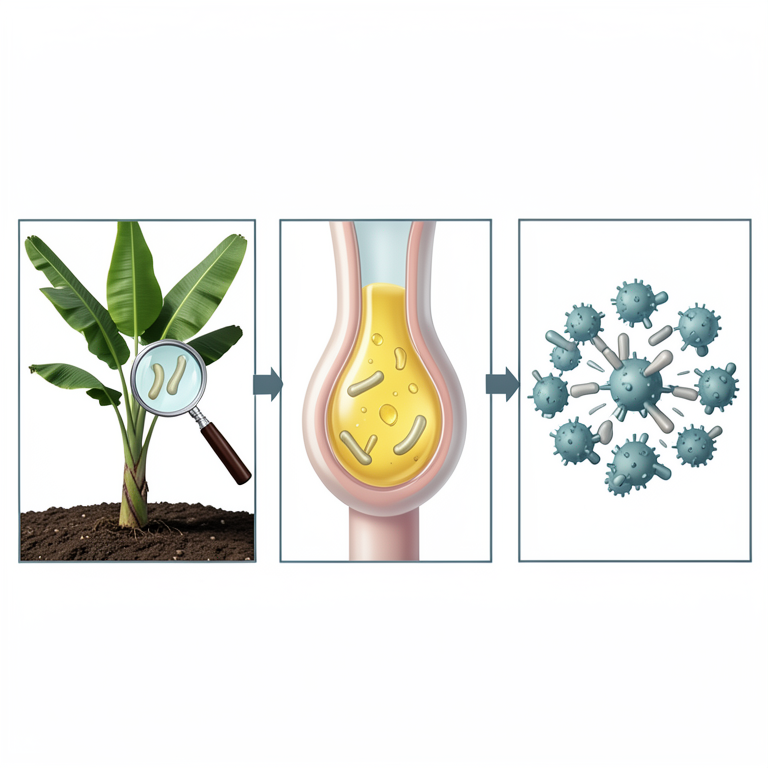
Experimental Workflow
AI-generated conceptual illustration (Banana plant soil and Bacillus firmus bacteria). It explains the idea and does not show study data.
View source evidence ↗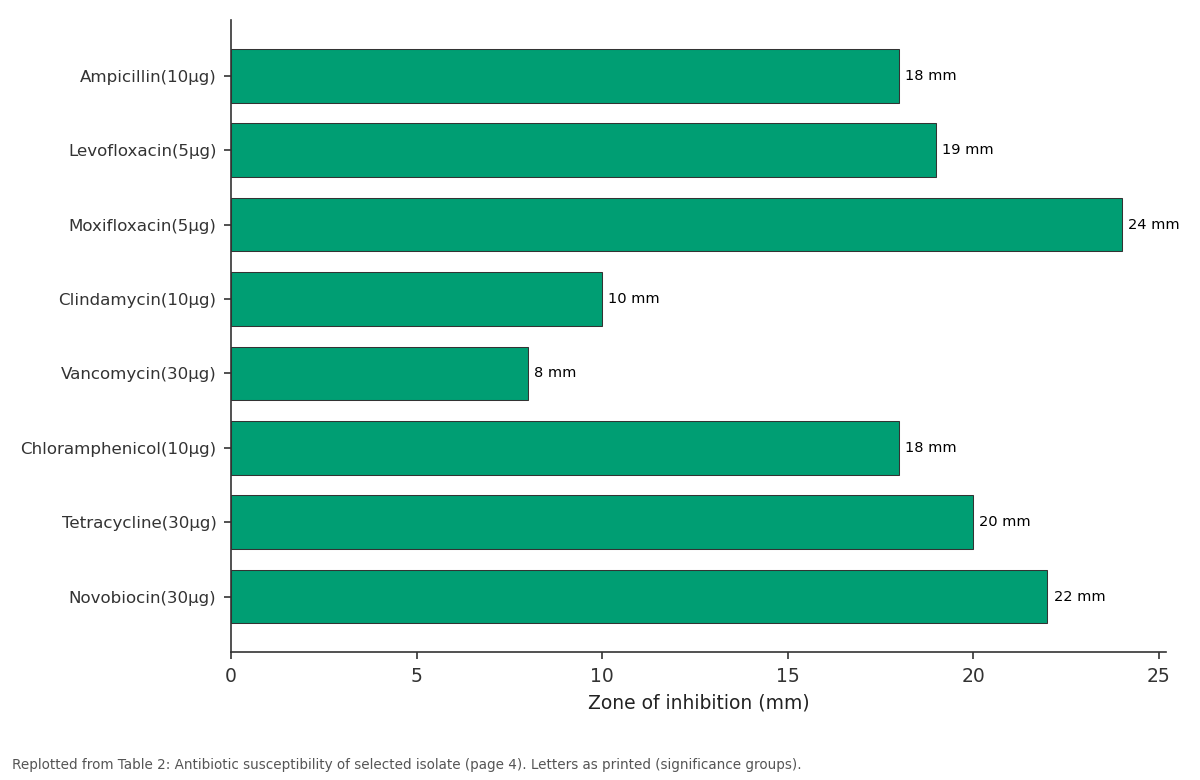
Zone of inhibition: Ampicillin(10μg) vs Levofloxacin(5μg) vs Moxifloxacin(5μg) vs Clindamycin(10μg) vs Vancomycin(30μg)
Replotted from Table 2 (page 4) of the original paper. Every bar is the paper's own table value.
View source evidence ↗Figures & tables
From the original paper Table 1
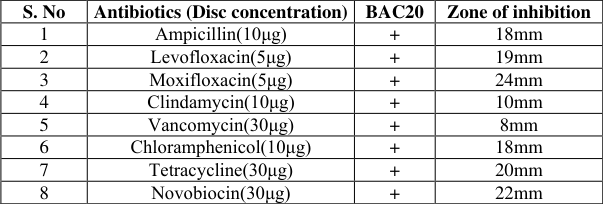 Table 2
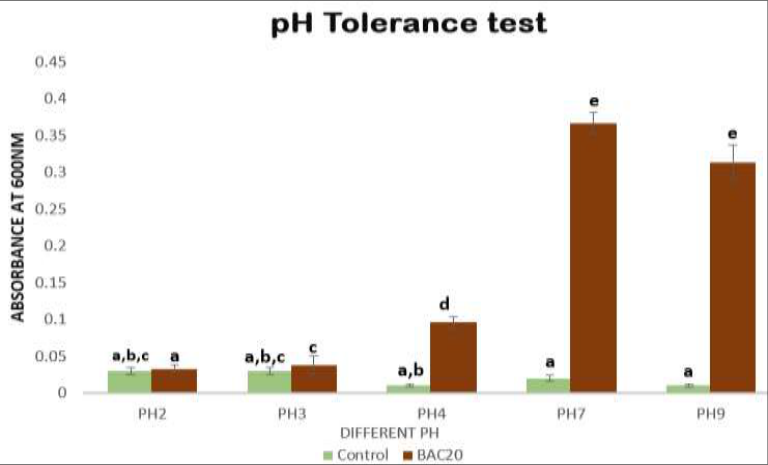 Figure 1
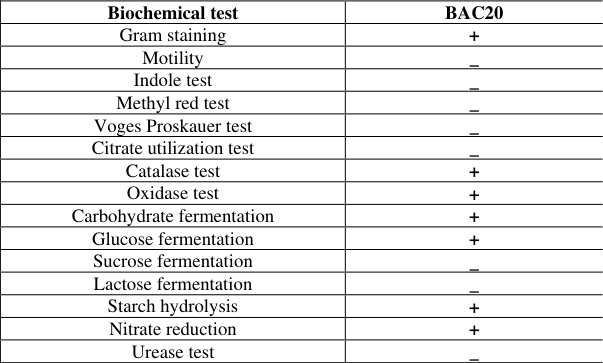 Table 3
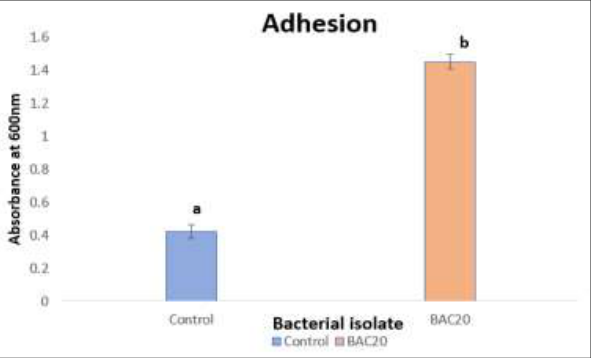 Figure 2
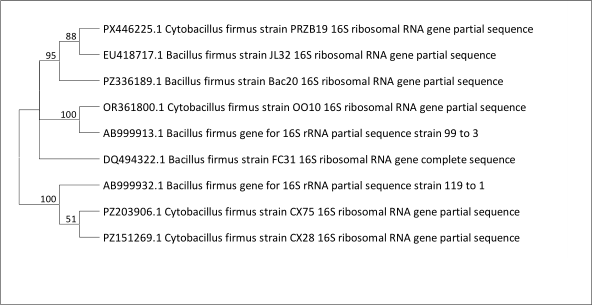 Figure 3
Introduction
Bacillus firmus is a versatile, spore-forming bacterium found in many natural habitats. It is most commonly isolated from soil, especially the nutrient-rich soil around the roots (rhizosphere) of crops like bananas (Musa paradisiaca) [14] . Like other Bacillus species, B. firmus produces a wide variety of helpful enzymes and natural compounds [29] . Because of these traits, it is gaining attention not as a pathogen, but as a beneficial microbe with strong potential for use as a probiotic and natural biological control agent in farming and aquaculture [9] . For a probiotic to be effective, it must survive the difficult journey through the host's digestive system. The bacteria must withstand high acid levels in the stomach and the toxic effects of bile salts in the upper intestine [11] . Once there, successful probiotics need to attach to the intestinal lining to grow and remain in the highly competitive gut environment [20] . Spore-forming bacteria such as B. firmus have a major advantage here: their tough outer spores protect them from extreme acidity and digestive enzymes as they pass through the gut [17] . The need for these resilient probiotics is growing due to the rising threat of bacterial diseases in crowded farming and aquaculture setups. Important fish species, like Tilapia (Oreochromis niloticus), are highly vulnerable to bacterial infections that cause severe illness and death [2] . Some of the most dangerous pathogens in aquatic systems are Pseudomonas species, especially Pseudomonas aeruginosa and Pseudomonas otitidis [26] . These bacteria cause bleeding, skin damage, and high death rates, largely because they are resistant to many drugs and can form protective biofilms [10] . Bacillus firmus fights off these pathogens in several ways. It produces natural antimicrobial compounds (such as bacteriocins and lipopeptides) that break down the cell walls of harmful bacteria [22] . In addition, through a process called competitive exclusion, B. firmus attaches to the gut lining and multiplies. This physically blocks pathogens from attaching and uses up the nutrients they need to survive [3] . Recent studies show that soil-derived Bacillus strains have strong probiotic potential [25] . For example, Rengpipat et al. found that adding Bacillus to animal diets improved their immune systems and disease resistance. Other studies suggest that bacteria from highly competitive soil environments are often better at fighting off harmful pathogens [24] . Despite this, there is still very little data on how well B. firmus isolated from banana soil survives in the gut, the beneficial compounds it produces, or its specific ability to stop pathogens. Therefore, this study aims to explore the probiotic potential of Bacillus firmus isolated from the soil around banana plants (Musa paradisiaca). Even though bananas are widely grown, the rich bacteria in their soil have rarely been studied for probiotic use [28] . To see if this tough, soil-dwelling bacterium can function inside a host, this research tests its ability to survive and persist in a simulated gut environment. Additionally, the study examines how well this B. firmus strain can fight and inhibit common pathogens. Ultimately, this research hopes to identify a new, sustainable alternative to using antibiotics.
Materials and Methods
Materials and Methods
Sample Collection and Bacterial Isolation
Collection of soil samples: Soil samples were collected from Kalipalayam, Tirupur District, at a depth of 5 cm using sterile spatulas and transferred into sterile polyethene bags. The samples were air-dried at room temperature for 5-7 days. One gram of soil sample was suspended in 9 mL of sterile distilled water and mixed thoroughly. The suspension was heat-treated at 80°C for 10 minutes to eliminate nonspore-forming bacteria and selectively enrich spore-forming Bacillus species. After cooling, the suspension was serially diluted up to 10⁻⁶ using sterile distilled water. From appropriate dilutions, 0.1 mL aliquots were spread onto nutrient agar plates and incubated at 30-37°C for 24-48 hours. Distinct colonies were selected and further streaked onto Chromogenic Bacillus Agar Base to selectively isolate Bacillus species. The plates were incubated at 37°C for 24 hours [8] .
Identification of Bacillus firmus
Isolates were initially screened based on their morphological and biochemical characteristics.
Morphological tests Screening of Gram-Positive Bacteria:
The bacterial culture is derived from MRS broth with the help of an inoculation loop. The inoculation loop containing the culture was applied to a clear glass slide. A smear slide was made and air-dried. The dried smear was heatfixed, then flooded with crystal violet for 1 min. It was gently washed with tap water, smeared with Gram's iodine for 1 min, washed again, and gently smeared with 95% ethyl alcohol (added drop by drop). After a gentle wash with tap water, the smear was counterstained with safranin solution for 45 sec, washed with tap water, and air-dried with tissue paper [6] . Motility: To observe bacterial motility using the hanging drop method, a thin ring of petroleum jelly was first applied around the well of a depression slide. A single loopful of bacterial culture was then placed onto the centre of a clean coverslip. The depression slide was carefully inverted over the coverslip so that the drop hung freely within the well without touching the slide surface. Once the slide was flipped over, the drop was examined under a microscope to evaluate the movement of the organisms [6] .
In Vitro Gastrointestinal Survivability
To evaluate the ability of B. firmus to reach the gut alive, the strain was subjected to simulated gastrointestinal conditions [12] . pH Tolerance Assay: The fresh culture of separate strains was introduced into the Nutrient broth at varying pH levels (2, 3, 4, 7 and 9). The pH levels were regulated with 1N HCl and 1N NaOH. The test tubes that were inoculated were incubated for 24 hours at 37°C. Following a 24-hour incubation, bacterial growth was evaluated utilizing a spectrophotometer by measuring the optical density at 600 nm, and this was then compared to the broth without inoculation. Bile salt tolerance: Fresh culture of bacterial isolates was inoculated into nutrient broth (Hi-media) containing 0.3% bile salt and incubated at 37°C for 24 h. Absorbance was measured by a spectrophotometer at 600 nm. Untreated nutrient broth served as a control. Adhesion: Biofilm formation and adhesion of the bacterial strains were determined by the Standard tube method. The bacterial strain was added to Luria Broth and incubated for 48h at 37°C without shaking. The culture was decanted post-incubation, and glass vials were washed with H₂O, fixed with a 2.5% glutaraldehyde solution, washed again with H₂O and stained later with a 0.4% primary stain (Crystal violet stain). The stain was dissolved in ethanol: acetone (80:20 v/v), and the optical density was measured at 600 nm [30] .
Antimicrobial Activity
The antibacterial behaviour of B. firmus strain bac20 was tested against common opportunistic pathogens, specifically Pseudomonas aeruginosa and Pseudomonas otitidis. B. firmus bac20 was grown in nutrient broth for 48 hours, after which the culture was centrifuged, and the liquid supernatant was collected and filtered. Using the agar well diffusion method [27] , the target pathogens (P. aeruginosa and P. otitidis) were spread evenly across the surface of Mueller-Hinton agar plates. Small wells were punched into the agar, and the filtered B. firmus bac20 supernatant was added to the wells. The plates were incubated at 37 °C for 24 hours, and the diameter of the clear zones around the wells (zones of inhibition) was measured in millimetres to quantify the antibacterial effect.
Biochemical Tests
Various biochemical tests were performed for the identification of isolated bacterial strains based on standard protocols [21] . The ability to ferment glucose and lactose, and to move, was determined using standard methods.
Antibiotic Susceptibility Test
The antibiotic susceptibility of the isolate was evaluated using the semi-quantitative disc diffusion technique [4] , beginning with the inoculation of the culture into Tryptic Soy Broth and incubation at 37°C for 12 hours. Prepared Mueller Hinton agar plates were allowed to solidify before 0.1 ml of the broth culture was uniformly spread across the surface using an L-rod. A diverse panel of antibiotic discs, including Levofloxacin (5 µg), Moxifloxacin (5 µg), Clindamycin (10 µg), Vancomycin (30 µg), Ampicillin (10 µg), Chloramphenicol (10 µg), Tetracycline (30 µg), and Novobiocin (30 µg), was applied to the agar, followed by a 24-hour incubation period at 37°C. Finally, the diameters of the resulting inhibition zones were measured using a ruler and colony counter, with the bacterial response ultimately classified as Sensitive (S), Intermediate (I), or Resistant (R).
Molecular Identification
The bacterial isolates were molecularly characterized by amplification of the 16S ribosomal RNA gene [33] . The obtained nucleotide sequences were compared with existing gene sequences available in the National Centre for Biotechnology Information (NCBI) using the BLAST program. The sequences were later submitted to the NCBI GenBank database, and accession numbers were retrieved. Evolutionary analysis was performed in MEGA12 [19] .
Statistical Analysis
All experiments were performed in triplicate. The data were recorded as mean ± standard deviation (SD). Statistical significance was analysed using One-Way Analysis of Variance (ANOVA), with a p-value of less than 0.05 considered statistically significant [34] .
Results
Results
Isolation of bacteria and their antimicrobial activity:
The study aimed to isolate novel Gram-positive bacteria for potential use as probiotics. On this basis, only Grampositive bacteria were selected for further analysis. A total of 46 morphologically distinct bacterial colonies were isolated from banana soil samples. Out of the 46 isolates, only 12 were Gram-positive. Among these, a single isolate (BAC20) exhibited antagonistic activity against the Gramnegative bacteria Pseudomonas aeruginosa and Pseudomonas otitidis. The results of this antimicrobial activity are presented in Table 1.
| S.N. | Bacterial fish pathogens | BAC20 |
|---|---|---|
| 01 | Pseudomonas aeruginosa | *** |
| 02 | Pseudomonas otitidis | *** |
Table text extracted from the original PDF; superscript letters are shown inline. The original table image is below.
View original table image
pH tolerance test: The selected bacterial strain was tested for pH tolerance and showed good results under various culture conditions. The bacterial strain survived all the tested pH levels, but higher growth was observed at pH 7, followed by pH 9 and pH 4 (Fig. 1). Groups sharing identical statistical markers exhibited no significant difference in absorbance, with the maximum growth observed at pH 7 and pH 9. The growth of bacteria was enhanced up to the neutral pH, when the pH range was expanded. The results showed that the isolated bacteria could survive in an acidic environment, but grew flourishingly in neutral and alkaline conditions. The absorbance detected at pH 2, pH 3, pH 4, pH 7, and pH 9 are 0.033±0.005, 0.038±0.012, 0.096±0.008, 0.366±0.015 and 0.314±0.024, respectively. Antibiotic susceptibility test: Antibiotic susceptibility of selected strain is shown in Table 2. The strain was found sensitive to βlactam antibiotic (Ampicillin), fluoroquinolones (Levofloxacin, Moxifloxacin), lincosamide (Clindamycin), glycopeptide (Vancomycin), amphenicol (Chloramphenicol), polyketide (Tetracycline), and aminocoumarin (Novobiocin). The strain showed sensitivity to all tested antibiotics (10 mm or more zone of inhibition); however, it showed less sensitivity to vancomycin (8 mm zone of inhibition).
| S. No | Antibiotics (Disc concentration) | BAC20 | Zone of inhibition |
|---|---|---|---|
| 1 | Ampicillin(10μg) | + | 18mm |
| 2 | Levofloxacin(5μg) | + | 19mm |
| 3 | Moxifloxacin(5μg) | + | 24mm |
| 4 | Clindamycin(10μg) | + | 10mm |
| 5 | Vancomycin(30μg) | + | 8mm |
| 6 | Chloramphenicol(10μg) | + | 18mm |
| 7 | Tetracycline(30μg) | + | 20mm |
| 8 | Novobiocin(30μg) | + | 22mm |
Table text extracted from the original PDF; superscript letters are shown inline. The original table image is below.
View original table image
Adhesion:
The adhesion capacity of the isolated bacterial strain was determined using the standard tube method, and the strain showed satisfactory results, as shown in Fig. 2.
The absorbance measured for the adhesion capacity of the isolate (BAC20) and the control is approximately 1.45±0.04 and 0.42±0.04, respectively.
Biochemical characterization of BAC20 strain:
The important facts required for correctly identifying the genus of isolated bacteria can be revealed through biochemical reactions. On the basis of biochemical criteria, the results revealed that strain BAC20 was found to be Gram-positive. It was found that the strain could ferment glucose and could not utilize sucrose or lactose. The strain was found to be non-motile and urease negative, but tested positive for catalase, oxidase, starch hydrolysis, and nitrate reduction. All other biochemical tests of the selected strain are presented in Table 3.
| Biochemical test | BAC20 |
|---|---|
| Gram staining | + |
| Motility | |
| Indole test | _ |
| Methyl red test | _ |
| Voges Proskauer test | _ |
| Citrate utilization test | _ |
| Catalase test | _ + |
| Oxidase test | + |
| Carbohydrate fermentation | + |
| Glucose fermentation | + |
| Sucrose fermentation | |
| Lactose fermentation | _ |
| Starch hydrolysis | _ + |
| Nitrate reduction | + |
| Urease test |
Table text extracted from the original PDF; superscript letters are shown inline. The original table image is below.
View original table image
Molecular identification:
The 16S rRNA gene analysis of the isolate showed 99.9% similarity with Bacillus firmus. The obtained sequences were deposited in the GenBank database, and the accession number for the isolate was acquired as Bacillus firmus strain Bac20 PZ336189.1. The phylogenetic tree was constructed using MEGA 12 software (Fig. 3).
Discussion
Pseudomonas aeruginosa and Pseudomonas otitidis are renowned as severe opportunistic pathogens that cause widespread infections and significant challenges in both clinical and agricultural settings due to their intrinsic resistance to various treatments. In our study, the isolated Bacillus firmus strain (BAC20), recovered from banana soil, showed significant antagonistic activity against both P. aeruginosa and P. otitidis. Soil-dwelling Bacillus species are widely recognized for their robust capacity to produce a diverse array of secondary metabolites [13] . Bacillus species possess several mechanisms for microbial antagonism, which include competition for nutrients and the synthesis of antimicrobial peptides, lipopeptides and bacteriocins that disrupt the cell membranes of Gram-negative pathogens [23] . Similar to our findings, previous studies have successfully isolated Bacillus strains from rhizosphere soil that exhibit strong antimicrobial activity against Pseudomonas species [7] . In this study, the isolated strain was able to survive in a highly acidic pH range (2-4) while demonstrating flourishing growth in neutral to alkaline conditions (pH 7-9). The purpose of choosing this pH range was to determine whether the bacteria could survive the harsh acidic conditions often encountered in various host or environmental niches, as well as to figure out which pH is suitable for optimal proliferation. The highest growth was observed at pH 7 and pH 9. Our findings align with those reported [18] and later, who noted that many soil-derived Bacillus species exhibit alkali-tolerant properties, enabling them to thrive in neutral and slightly alkaline environments while maintaining survival mechanisms (like endospore formation) during acidic stress [35] . The strain was also evaluated for antibiotic susceptibility, an essential parameter since environmental or probiotic bacteria can sometimes serve as reservoirs for antimicrobial resistance (AMR) genes, which could potentially be transferred to pathogenic bacteria [36] . From our results, the isolate showed broad susceptibility to all tested antibiotics, including β-lactams (Ampicillin), fluoroquinolones (Levofloxacin, Moxifloxacin), and polyketides (Tetracycline). The bacteria showed slightly less sensitivity to the glycopeptide vancomycin, which is a common observation in some robust Gram-positive soil isolates due to cell wall thickening [16] . Overall, the high susceptibility profile of the isolate mirror's findings [1] , confirming its relative safety and lack of widespread acquired resistance mechanisms. The adhesion property of bacterial strains is a critical factor that contributes to successful environmental colonization, biofilm formation, and cellular interaction. Adhesion is thought to be promoted by a combination of extracellular polymeric substances (EPS) and passive factors that include electrostatic and hydrophobic interactions [5] . In this study, the isolated strain showed highly significant adhesion capabilities (absorbance of 1.45) compared to the uninoculated control. Strong adhesion properties in Bacillus species have similarly been reported [31] , emphasizing its role in establishing stable communities in soil and host environments. Finally, the isolated strain is Gram-positive, non-motile, catalase and oxidase-positive, capable of starch hydrolysis and nitrate reduction, and possesses the ability to ferment glucose while being unable to utilize lactose and sucrose. Our biochemical characterization results are highly consistent with the established metabolic profile of Bacillus firmus documented in Bergey's Manual of Systematic Bacteriology [15,32] . While the isolate was presumptively identified using in vitro and biochemical tests, the definitive identification was confirmed via 16S rRNA sequencing, demonstrating a 99.9% similarity to Bacillus firmus.
Conclusion
The novel bacterial strain BAC20, successfully isolated from banana soil, was morphologically, biochemically, and molecularly identified as Bacillus firmus (GenBank accession number PZ336189.1). The strain demonstrated significant antagonistic activity against the severe opportunistic pathogens Pseudomonas aeruginosa and Pseudomonas otitidis, highlighting its substantial potential as a biocontrol agent. Furthermore, the isolate exhibited robust survival across a broad pH range, with optimal growth in neutral-to-alkaline conditions (pH 7-9), alongside excellent adhesion capabilities, both of which are critical for successful environmental colonisation and probiotic applications. Importantly, its broad-spectrum susceptibility to common antibiotics confirms its safety profile, minimizing the risk of serving as a reservoir for antimicrobial resistance genes.
References
36 in the original paper- Adimpong DB, Sørensen KI, Thorsen L, StuerLauridsen B, Jakobsen M, Jespersen L. Antimicrobial susceptibility of Bacillus strains isolated from primary starters for African traditional bread production and characterization of the bacitracin operon. Appl Environ Microbiol. 2012;78(22):7903-7914.
- Aly SM, Ahmed YA, Ghareeb AA, Mohamed MF. Studies on Bacillus subtilis and Lactobacillus acidophilus as potential probiotics on the immune response and resistance of Tilapia nilotica (Oreochromis niloticus) to challenge infections. Fish Shellfish Immunol. 2008;25(1-2):128-136.
- Balcázar JL, de Blas I, Ruiz-Zarzuela I, Cunningham D, Vendrell D, Múzquiz JL. The role of probiotics in aquaculture. Vet Microbiol. 2006;114(3-4):173-186.
- Bauer AW, Kirby WM, Sherris JC, Turck M. Antibiotic susceptibility testing by a standardized single disk method. Am J Clin Pathol. 1966;45(4):493-496.
- Boks NP, Norde W, van der Mei HC, Busscher HJ. Forces involved in bacterial adhesion to hydrophilic and hydrophobic surfaces. Microbiology. 2008;154(10):3122-3133.
- Cappuccino JG, Sherman N. Microbiology: A Laboratory Manual. 10th ed. Boston: Pearson; 2014.
- Chen Y, Yan F, Chai Y, Liu H, Kolter R, Losick R, et al. Biocontrol of tomato wilt disease by Bacillus subtilis isolates from natural environments depends on conserved genes mediating biofilm formation. Environ Microbiol. 2013;15(3):848-864.
- Claus D, Berkeley RCW. Genus Bacillus. In: Sneath PHA, Mair NS, Sharpe ME, Holt JG, editors. Bergey's Manual of Systematic Bacteriology. Vol. 2. Baltimore: Williams & Wilkins; 1986. p. 1105-1139.
- Cutting SM. Bacillus probiotics. Food Microbiol. 2011;28(2):214-220.
- Defoirdt T, Sorgeloos P, Bossier P. Alternatives to antibiotics for the control of bacterial disease in aquaculture. Curr Opin Microbiol. 2011;14(3):251-258.
- Duc LH, Hong HA, Barbosa TM, Henriques AO, Cutting SM. Characterization of Bacillus probiotics available for human use. Appl Environ Microbiol. 2004;70(4):2161-2171.
- Dunne C, O'Mahony L, Murphy L, Thornton G, Morrissey D, O'Halloran S, et al. In vitro selection criteria for probiotic bacteria of human origin: correlation with in vivo findings. Am J Clin Nutr. 2001;73(2 Suppl):386S-392S.
- Fira D, Dimkić I, Berić T, Lozo J, Stanković S. Biological control of plant pathogens by Bacillus species. J Biotechnol. 2018;285:44-55.
- Glick BR. Plant growth-promoting bacteria: mechanisms and applications. Scientifica (Cairo). 2012;2012:963401.
- Gordon RE, Haynes WC, Pang CH. The Genus Bacillus. Agriculture Handbook No. 427. Washington (DC): U.S. Department of Agriculture; 1973.
- Gueimonde M, Sánchez B, de Los Reyes-Gavilán CG, Margolles A. Antibiotic resistance in probiotic bacteria. Front Microbiol. 2013;4:202.
- Hong HA, Duc LH, Cutting SM. The use of bacterial spore formers as probiotics. FEMS Microbiol Rev. 2005;29(4):813-835.
- Horikoshi K. Alkaliphiles: some applications of their products for biotechnology. Microbiol Mol Biol Rev. 1999;63(4):735-750.
- Kumar S, Stecher G, Suleski M, Sanderford M, Sharma S, Tamura K. MEGA12: Molecular Evolutionary Genetics Analysis version 12 for adaptive and green computing. Mol Biol Evol. 2024;41(12).
- Llewellyn MS, Boutin S, Hoseinifar SH, Derome N. Teleost microbiomes: the state of the art in their characterization, manipulation and importance in aquaculture and fisheries. Front Microbiol. 2014;5:207.
- MacFaddin JF. Biochemical Tests for Identification of Medical Bacteria. 3rd ed. Philadelphia: Lippincott Williams & Wilkins; 2000.
- Perez KJ, Viana JS, Lopes FC, Pereira JQ, Dos Santos DM, Oliveira JS, et al. Bacillus spp. isolated from puba as a source of biosurfactants and antimicrobial lipopeptides. Front Microbiol. 2017;8:61.
- Perez KJ, Viana JS, Lopes FC, Pereira JQ, Dos Santos DM, Oliveira JS, et al. Bacillus spp. isolated from puba as a source of bacteriocins and antimicrobial lipopeptides. Front Microbiol. 2015;6:1221.
- Raaijmakers JM, Paulitz TC, Steinberg C, Alabouvette C, Moënne-Loccoz Y. The rhizosphere: a playground and battlefield for soilborne pathogens and beneficial microorganisms. Plant Soil. 2009;321(1-2):341-361.
- Rengpipat S, Rukpratanporn S, Piyatiratitivorakul S, Menasaveta P. Immunity enhancement in black tiger shrimp (Penaeus monodon) by a probiont bacterium (Bacillus S11). Aquaculture. 2000;191(4):271-288.
- Roberts RJ. Fish Pathology. 4th ed. Oxford: WileyBlackwell; 2012.
- Schillinger U, Lücke FK. Antibacterial activity of Lactobacillus sake isolated from meat. Appl Environ Microbiol. 1989;55(8):1901-1906.
- Soares CRFS, Siqueira JO, Carvalho JGD, Moreira FMS. Soil and root fungi characterization and arbuscular mycorrhizal fungi in banana crops in southern Minas Gerais State. Cienc Agrotecnol. 2006;30:158-164.
- Stein T. Bacillus subtilis antibiotics: structures, syntheses and specific functions. Mol Microbiol. 2005;56(4):845-857.
- Stepanović S, Vuković D, Dakić I, Savić B, ŠvabićVlahović M. A modified microtiter-plate test for quantification of staphylococcal biofilm formation. J Microbiol Methods. 2000;40(2):175-179.
- Vlamakis H, Chai Y, Beauregard P, Losick R, Kolter R. Sticking together: building a biofilm the Bacillus subtilis way. Nat Rev Microbiol. 2013;11(3):157-168.
- Vos P, Garrity G, Jones D, Krieg NR, Ludwig W, Rainey FA, et al., editors. Bergey's Manual of Systematic Bacteriology. Vol. 3: The Firmicutes. New York: Springer; 2011.
- Weisburg WG, Barns SM, Pelletier DA, Lane DJ. 16S ribosomal DNA amplification for phylogenetic study. J Bacteriol. 1991;173(2):697-703.
- Zar JH. Biostatistical Analysis. 5th ed. Upper Saddle River (NJ): Pearson Prentice Hall; 2010.
- Zhang Y, Yang X, Li J, Zhou Z. Characterization of a robust Bacillus strain capable of thriving under multiple environmental stressors. J Appl Microbiol. 2018;124(1):162-171.
- Zheng M, Zhang W, Shen M, Hou J, Wang Y. Antibiotic resistance and safety assessment of Bacillus strains isolated from environmental and food sources. Food Control. 2017;80:267-272.