
Research article · 2026 · Full text
International Journal of Biology SciencesProspects and practices of vanilla (Vanilla planifolia) cultivation in Assam: A scientific review
Volume 8(6) · Pages 100–104 · DOI: 10.33545/26649926.2026.v8.i6b.865 ↗
Research areasPlant Growth and Agriculture TechniquesBiochemical and biochemical processesAgricultural Economics and Practices
Abstract
Author-writtenVanilla (Vanilla planifolia Andrews), a tropical orchid prized for its aromatic pods, ranks as the second-most expensive spice globally after saffron. It finds extensive use in the food, pharmaceutical, and cosmetic industries. Despite its global demand and high market value, vanilla cultivation remains underexplored in India due to challenges such as manual pollination, long gestation period, and post-harvest curing complexities. However, Assam, with its humid subtropical climate, diffused light under natural forest canopies, organic-rich soils, and year-round rainfall, provides an ideal agro-ecological niche for vanilla cultivation. This review evaluates the scientific, agronomic, and economic feasibility of promoting vanilla as a commercial crop in Assam. Economically, vanilla offers high returns, with yields of 300 to 600 kilogram cured beans per hectare potentially generating Rs 15-25 lakh annually, while initial input costs range between Rs 3–5 lakh. Intercropping with banana, ginger, or turmeric improves resource use efficiency and provides income during the crop’s non-bearing phase. Field trials in Karbi Anglong and Jorhat have demonstrated successful adaptation of vanilla cultivation under scientific management, including use of support trees, organic inputs, and community-led curing techniques. The scope for vanilla cultivation in Assam is significant, particularly in tribal, forest-adjacent, and agro-forestry based systems. Vanilla can diversify farm income, promote export-oriented horticulture, and enhance livelihoods, especially for smallholders. However, constraints such as unavailability of planting material, labor for pollination, and limited processing infrastructure must be addressed. With proper scientific guidance, market linkages, and policy integration under horticulture and tribal development programs, Assam can emerge as a promising vanilla producing region in India.
Summary
Source-checkedPlain-language reading of the full paper, prepared with AI and checked against the text. Each point links to the authors' own words.
Why it matters
- Vanilla is a highly valuable tropical orchid and is the second most expensive spice in the world, following saffron. View evidence ↗
- In India, vanilla cultivation is not widely explored because of the difficulties associated with manual pollination, a long growth period before harvest, and complex curing processes. View evidence ↗
- Assam's warm, humid, and partially shaded environment makes it highly suitable for the scientific cultivation of Vanilla planifolia. View evidence ↗
The question
- The review aims to evaluate the scientific, ecological, and economic feasibility of growing vanilla in Assam, while identifying challenges and opportunities for scaling production. View evidence ↗
What they did
- The analysis considers Assam's humid subtropical climate, characterized by annual rainfall of 1,800 to 2,500 mm, relative humidity of 70–90%, and temperatures between 18 °C and 35 °C. View evidence ↗
- Ideal vegetative propagation uses stem cuttings measuring 60–120 cm with at least 5–10 nodes. View evidence ↗
- A recommended planting spacing of 2.5 × 1.5 meters is used to ensure proper airflow and vine training. View evidence ↗
- Nutrient management involves applying 40–60: 20–30: 60–100 g of NPK per vine annually, divided into 2 to 3 applications. View evidence ↗
What they found
- Manual pollination in the region can result in a pod set of 80–90%. View evidence ↗
- Cured pods have a vanillin content of 1.5–2.5% and are worth 4–5 times more than green pods. View evidence ↗
- Vanilla can generate Rs 15-25 lakh annually from yields of 300 to 600 kg of cured beans per hectare, against initial costs of Rs 3–5 lakh. View evidence ↗
- Depending on market prices (Rs 15,000 to 25,000/kg), potential returns can reach Rs 45 to 90 lakhs per hectare for yields of 300–600 kg/ha. View evidence ↗
- Despite a long gestation period of 3–4 years, vanilla is economically viable with a benefit-cost ratio between 2.5 and 3.8. View evidence ↗
What it means
- The authors conclude that Assam has immense potential for vanilla cultivation due to its biodiversity and favorable tropical climate. View evidence ↗
- The authors recommend policy support and public-private partnerships to establish vanilla as a niche income source for small farmers in Assam. View evidence ↗
- The adoption of vanilla is currently limited by a lack of quality planting materials and insufficient technical knowledge among farmers. View evidence ↗
- Substandard bean quality and marketability are caused by non-standardized processing and inadequate curing infrastructure. View evidence ↗
Figures & tables
From the original paper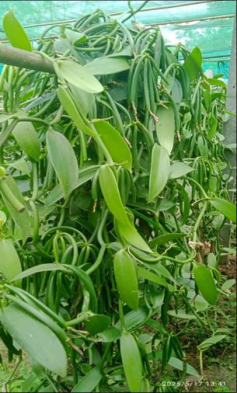 Figure 1
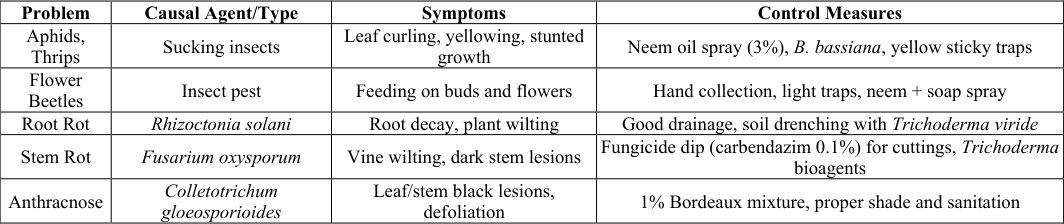 Table 1
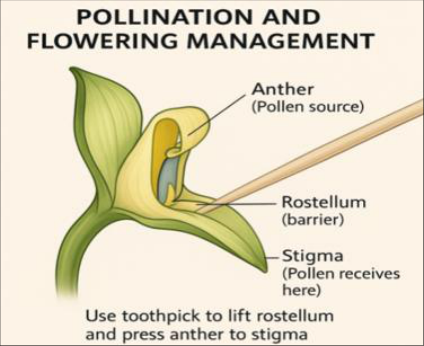 Figure 2
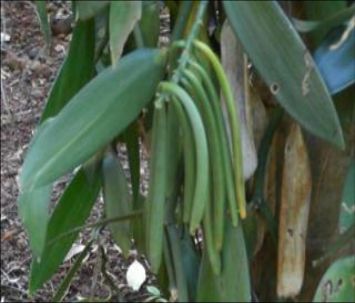 Figure 3
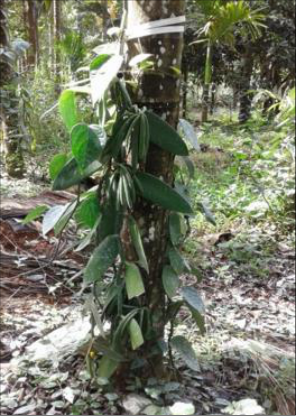 Figure 4
Introduction
Vanilla (Vanilla planifolia Andrews) is a tropical climbing orchid renowned for its aromatic pods, which yield vanillin, an essential flavoring compound extensively used in food, beverages, cosmetics, and pharmaceuticals (Krishnan, 2017) [13] . Globally, vanilla is the second-most expensive spice after saffron due to its labor-intensive pollination and curing processes. Originally native to Mexico, where it is pollinated by endemic Melipona bees, vanilla cultivation has expanded to regions like Madagascar, Indonesia, and India through manual pollination (Bory et al., 2008) [3] . In India, commercial production has been limited to the southern states of Kerala, Karnataka, and Tamil Nadu. However, inconsistent prices, high labor demands, and lack of organized market channels have restricted large-scale adoption (Krishnan, 2017) [13] . Assam, with its humid subtropical climate, high rainfall, rich organic soils, and natural tree cover, offers promising conditions for vanilla cultivation (Figure 1) (Gogoi & Dutta, 2023) [8] . The region's biodiversity, coupled with the presence of agro-forestry systems in tribal and hill areas, makes it a suitable candidate for promoting vanilla as a niche, high-value crop. Vanilla can also be integrated into existing cropping systems for income diversification and sustainable land use. This review aims to assess the scientific basis, agro-ecological feasibility, and economic potential of vanilla cultivation in Assam, while highlighting key challenges, recent trials, and future opportunities for scaling up production in the region. Farmer, Goalpara, Assam)
Agroclimatic Suitability of Assam for Vanilla Cultivation
Assam's agroclimatic conditions are highly favorable for the scientific cultivation of Vanilla planifolia, a crop that thrives in warm, humid, and partially shaded environments. The state lies in the Eastern Himalayan foothills and experiences a humid subtropical climate, with annual rainfall ranging from 1,800 to 2,500 mm high relative humidity (70-90%), and an average temperature range of 18 °C to 35 °C all ideal for vanilla growth and flowering (Singh et al., 2021) [20] . Vanilla requires filtered sunlight, which can be naturally provided under tree canopies, making Assam's forest-fringe and hill regions particularly suitable. Soils in Assam primarily loamy to sandy loam, rich in organic matter and well-drained further support the growth of vanilla vines. The use of live support trees like Gliricidia, Erythrina, Arecanut and banana within agroforestry systems can optimize space and microclimate (Gogoi & Dutta, 2023) [8] . Regions such as Karbi Anglong, Dima Hasao, and parts of Upper Assam (Jorhat, Golaghat etc) have shown promising microclimatic adaptability. The integration of vanilla in existing agroforestry and tribal farming models holds potential for sustainable, high-value cultivation in the state.
Botanical Aspects of Vanilla
Vanilla planifolia Andrews is a perennial, herbaceous, climbing orchid belonging to the family Orchidaceae. It is the most commercially cultivated species among over 100 vanilla species worldwide. The plant exhibits monopodial growth, characterized by a fleshy, green, photosynthetic stem with adventitious aerial roots emerging from each node. These roots anchor the vine to support structures such as living trees, wooden stakes, or trellises (Bory et al., 2008; Sreedhar et al., 2020) [21] . Leaves are thick, leathery, alternate, and oblong lanceolate, playing an essential role in photosynthesis and moisture retention. Vanilla flowers are hermaphroditic and borne in axillary racemes. Despite containing both male (anther) and female (stigma) reproductive parts, natural pollination rarely occurs outside its native range due to the presence of a physical barrier the rostellum. As a result, hand pollination is essential in regions like India (Krishnan, 2017; Saji et al., 2014) [13,17] . Flowering begins 2-3 years after planting, and pods (capsules) mature in 6-9 months post-pollination. Each vine can support 20-30 flowers per season, though only selected flowers are pollinated to prevent plant stress. Mature pods are odorless and flavorless until cured, a process that chemically transforms glucovanillin into vanillin-the principal flavor compound (Hegde, 2018; Saini & Sharma, 2022) [10,16] .
Propagation and Planting Techniques
Vanilla (Vanilla planifolia) is propagated vegetatively using stem cuttings, as seed germination is slow, erratic, and dependent on specific mycorrhizal fungi (Sreedhar et al., 2020) [21] . Vegetative propagation ensures uniformity and early flowering. Cuttings of 60-120 cm in length with at least 5-10 nodes are ideal. The basal 3-4 nodes are defoliated, treated with fungicide (e.g., carbendazim 0.1%) to prevent rot, and air-cured for 2-3 days before planting (Krishnan, 2017; Das et al., 2023) [13,5] . Propagation is done under 50% shade using polybags or raised nursery beds until rooting. [3,5] . This propagation method has shown promising results in recent field trials in Assam. [5,19] . Daily monitoring is critical during peak flowering. Proper shade (50%), pruning, and adequate nutrients promote synchronized flowering and pod uniformity.
Nutrient and Water Management
Nutrient and Water Management
Pests and Diseases
Vanilla cultivation in Assam is challenged by various pests and diseases that significantly impact vine health and pod yield. Among pests, sucking insects such as aphids and thrips are common, especially during dry months.
Harvesting and Curing
Vanilla pods (Figure 3) are harvested 6-9 months after pollination, when the tips begin to yellow, indicating optimal maturity. Harvesting too early reduces vanillin content, while delayed harvesting increases the risk of pod splitting and microbial infestation (Kalita & Das, 2025) [12] . In Assam, harvesting typically occurs from October to December under protected shade-grown conditions. The curing process is essential to transform raw, flavorless pods into aromatic vanilla. It comprises four key stages: 1. Killing: Pods are dipped in hot water (60-65 °C) for 2-3 minutes to arrest vegetative growth and initiate enzymatic conversion of glucovanillin to vanillin (Krishnan et al., 2021) [13] . 2. Sweating: Pods are wrapped in cotton and kept in wooden boxes for 36-48 hours to facilitate fermentation. 3. Drying: Gradual sun-drying for 2-3 hours/day followed by shade drying prevents case-hardening and mold growth (Sreedhar et al., 2020) [21] . 4. Conditioning: Pods are stored in airtight containers for 2-3 months to stabilize aroma and improve vanillin concentration.
Properly cured pods fetch 4-5 times more market value than green pods and exhibit a vanillin content of 1.5-2.5%, depending on cultivar and curing quality. Some value added products of Vanilla are Vanilla Extract, Vanilla Sugar, Vanilla Paste, Vanilla Essential Oil (Oleoresin) used widely in baking, confectionery, cosmetics, perfume, pharmaceutical and beverages industries. (ICAR-IISR, 2023)
Economics of Vanilla Cultivation
Vanilla is a high-value spice crop with potential returns of Rs 45 to 90 lakhs/ha from 300-600 kg/ha cured bean yield, depending on management and market price (Rs 15,000 to 25,000/kg). Initial investments of Rs 3 to 4 lakhs/ha cover shade structures, planting material, and labor-intensive operations like hand pollination and curing. Intercropping with Arecanut, turmeric, banana, or ginger can enhance early-stage income. (Figure 4) Though vanilla has a long gestation period (3-4 years), its benefit-cost ratio ranges from 2.5 to 3.8, making it economically viable under Assam's agro-climatic conditions. (TNAU, 2021; ICAR-IISR, 2023).
Challenges and Constraints
Despite being a high-value crop, vanilla cultivation in Assam faces several significant constraints. A primary challenge is the lack of quality planting material and limited technical knowledge among farmers, which restricts its adoption (Baruah & Gogoi, 2025) [2] . Vanilla requires manual pollination, a highly labor-intensive and timesensitive process that increases production costs and limits scalability (Sarma & Hussain, 2024) [18] . The long gestation period of 3-4 years before economic returns discourages small and marginal farmers seeking quicker income sources. Additionally, poor market linkages and the absence of organized procurement systems result in price volatility and reduced farmer confidence. Inadequate curing infrastructure and non-standardized processing techniques often produce substandard beans, affecting vanillin quality and marketability (Kalita & Das, 2025) [12] . To overcome these barriers, investment in farmer training, propagation units, cooperative marketing, and value-chain infrastructure is essential to support vanilla as a profitable, sustainable crop in Assam.
Recommendations and Way Forward
To promote vanilla cultivation in Assam, capacity building through Krishi Vigyan Kendras (KVKs) is essential, especially in manual pollination and curing. Establishing model demonstration plots will encourage wider adoption. Integration with National Horticulture Mission schemes and convergence with tribal development programs can offer financial and institutional support. Formation of vanilla growers' cooperatives is vital for curing, branding, and collective marketing. Promoting organic certification and developing export linkages can enhance market value. Finally, public-private partnerships must be encouraged for building essential post-harvest infrastructure, ensuring longterm sustainability and profitability for farmers in the region. (MoA&FW, 2023).
Conclusion
Assam holds immense potential for vanilla cultivation, owing to its favourable tropical climate, rich biodiversity, and growing focus on organic and high-value crops. The state's humid conditions and availability of natural shade trees provide an ideal environment for vanilla vines (Gogoi & Kalita, 2025) [2] . Scientific practices-such as shade regulation, organic fertilization, and manual pollinationcan significantly improve productivity and bean quality (Sarma & Hussain, 2024) [18] . However, realizing this potential requires targeted interventions, including farmer training, demonstration plots, and investment in post-harvest infrastructure. Strengthening market linkages, introducing price assurance mechanisms, and promoting organic certification will enhance economic viability. Government initiatives under the Mission Organic Value Chain Development (MOVCD) and National Horticulture Mission (NHM) should be harnessed to scale up production. With policy support, public-private partnerships, and institutional engagement, vanilla can emerge as a niche income-generating crop for small and marginal farmers in Assam's agroeconomy.
Figures and tables from the paper
| Problem | Causal Agent/Type | Symptoms | Control Measures |
|---|---|---|---|
| Aphids, Thrips | Sucking insects | Leaf curling, yellowing, stunted growth | Neem oil spray (3%), B. bassiana, yellow sticky traps |
| Flower Beetles | Insect pest | Feeding on buds and flowers | Hand collection, light traps, neem + soap spray |
| Root Rot | Rhizoctonia solani | Root decay, plant wilting | Good drainage, soil drenching with Trichoderma viride |
| Stem Rot | Fusarium oxysporum | Vine wilting, dark stem lesions | Fungicide dip (carbendazim 0.1%) for cuttings, Trichoderma bioagents |
| Anthracnose | Colletotrichum gloeosporioides | Leaf/stem black lesions, defoliation | 1% Bordeaux mixture, proper shade and sanitation |
Table text extracted from the original PDF; superscript letters are shown inline. The original table image is below.
View original table image
References
21 in the original paper- Assam Agricultural University. Extension bulletin on vanilla promotion under agroforestry systems. Jorhat: Assam Agricultural University; 2025.
- Baruah S, Gogoi B. Indian Journal of Plantation Economics. 2025;43(1):55-60.
- Bory S, Grisoni M, Duval MF, Lebrun P. Biodiversity and preservation of vanilla: a review. Plant Genet Resour. 2008;6(3):285-294.
- Das J, Gogoi B, Deka MK. Scientific approach to vanilla propagation under Eastern Himalayan conditions. Assam J Hortic Sci. 2023;14(1):58-64.
- Das J, Gogoi B, Nath D. Integrated nutrient and irrigation strategies for sustainable vanilla cultivation in Assam. J NEH Agric Innov. 2024;2(1):41-47.
- Gogoi B, Deka P. Shade and moisture management in plantation crops of Assam. Assam Hortic Bull. 2022;10(1):35-42.
- Gogoi B, Dutta P. Agroforestry-based horticultural systems in Assam. North East Hortic J. 2023;12(1):5158.
- Gogoi B, Kalita M. Evaluating vanilla as a supplementary income crop in Upper Assam. Northeast Hortic Rev. 2025;12(1):44-49.
- Hegde N. Vanilla cultivation and post-harvest management. AgriTech Today. 2018;5(1):12-16.
- ICAR-Indian Institute of Spices Research. Vanilla cultivation and processing guidelines. Kozhikode: ICAR-Indian Institute of Spices Research; 2023.
- Kalita R, Das J. Post-harvest processing and quality enhancement in vanilla: a case from Assam. Indian J Hortic Sci. 2025;82(1):65-72.
- Krishnan R. Vanilla cultivation in India: scope and challenges. Indian J Spices. 2017;24(2):19-26.
- Krishnan R, Babu KN, Peter KV. Spice crops processing and value addition. Singapore: Springer; 2021. International Journal of Biology Sciences https://www.biologyjournal.net
- Ministry of Agriculture and Farmers Welfare. Operational guidelines for Mission on Integrated Development of Horticulture (MIDH). New Delhi: Government of India; 2023.
- Saini R, Sharma A. Chemistry of vanilla curing: a review. J Spices Aromat Crops. 2022;31(1):35-41.
- Saji KV, Sreekumar S, Sheela VL. Vanilla: botany and cultivation practices. J Plant Crops. 2014;42(2):115123.
- Sarma D, Hussain M. Agri-Economics Research Review. 2024;38(2):101-108.
- Sharma A, Sarmah B. Nutrient response of vanilla under semi-organic management. North-East Hortic Rev. 2023;11(2):60-66.
- Singh B, Das R, Ahmed S. Scope of high-value crops in North-East India. Indian Farming. 2021;71(3):43-46.
- Sreedhar RV, Nagesh KP, Ravindran PN. Advances in vanilla research. Curr Sci. 2020;119(6):1055-1062.
- Tamil Nadu Agricultural University. Vanilla - horticultural crops production techniques. Coimbatore: Tamil Nadu Agricultural University; 2021.