
Research article · 2026 · Full text
International Journal of Advanced Chemistry ResearchPreparation and characterization of triamterene complex with Diethyl 1-chlorohydrazine-1, 2-dicarboxylate
Volume 8(6) · Pages 01–07 · DOI: 10.33545/26646781.2026.v8.i6a.681 ↗
Research areasSynthesis and Characterization of Heterocyclic CompoundsSynthesis and biological activitySynthesis and Reactivity of Heterocycles
Abstract
Author-writtenA triamterene complex was synthesized by a using 2-chloroquinoline-3-carbonitrile as a starting material. The reaction processed in mild conditions with alkyl amine and appropriate substituted aryl nitrile to give the desired derivative in good yields. The respective structure of synthesized compound confirmed by IR, ¹H NMR, ¹³C NMR and mass spectrometry. The proposed research work offers a simple, cost effective and general entry into the synthesis of quinoline fused triamterene derivatives, which are biologically potent and significant. The study also provides future applications of the useful intermediates of the quinoline based nitrogen heterocycles for broad pharmacological application.
Summary
Source-checkedPlain-language reading of the full paper, prepared with AI and checked against the text. Each point links to the authors' own words.
Why it matters
- Nitrogen-containing heterocyclic compounds are important in pharmaceutical design because they exhibit various biological activities, including antimicrobial, anticancer, and antibacterial properties. View evidence ↗
- Quinoline derivatives specifically are known for a wide range of biological activities, such as antitumor, antimalarial, and antibacterial effects. View evidence ↗
- Triamterene is a potassium-sparing diuretic used clinically to treat edema and hypertension resulting from renal or heart failure. View evidence ↗
The question
- The study aims to design a new quinoline-fused triamterene derivative using a synthetic route that is both cost-effective and simple. View evidence ↗
What they did
- The synthesis of the triamterene complex utilized 2-chloroquinoline-3-carbonitrile as the starting material. View evidence ↗
- The first step involved refluxing 1 mmol of 2-aminoquinoline-3-carbonitrile in 2 mL of ethanol with a catalytic amount of K2CO3 for 2 to 3 hours. View evidence ↗
- The structure of the synthesized compound was confirmed using mass spectrometry, IR, 1H NMR, and 13C NMR. View evidence ↗
What they found
- The synthesis of the triamterene derivative resulted in a good yield of 72.1%. View evidence ↗
- The synthesized compound was found to have a melting point of 105 °C. View evidence ↗
- IR spectroscopy identified characteristic stretching bands, including NH2 at 3357 cm-1, C=N at 1622 cm-1, and aromatic C=C at 1600 cm-1. View evidence ↗
- NMR analysis showed aromatic protons at δ 7.4-8.9 and 7.2-7.8 ppm in 1H NMR, and carbon signals at δ 165, 149, 135, 130, and 110 ppm in 13C NMR. View evidence ↗
What it means
- The authors conclude that they have reported an economical, scalable, and efficient route for synthesizing a fused triamterene derivative. View evidence ↗
- The authors suggest that this efficient design of N-based compounds may have future applications in synthesis and medicine. View evidence ↗
Figures & tables
From the original paper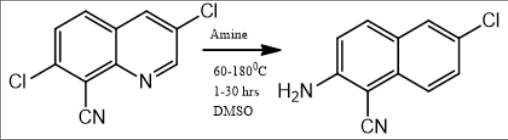 Figure 3
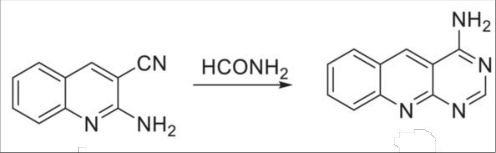 Figure 10
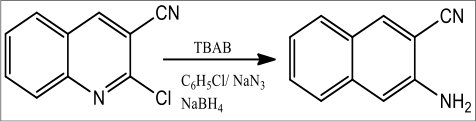 Figure 1
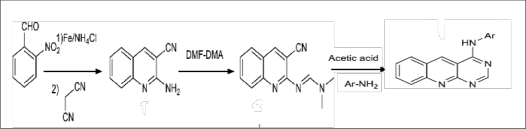 Figure 7
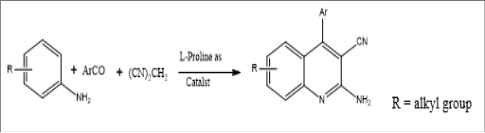 Figure 2
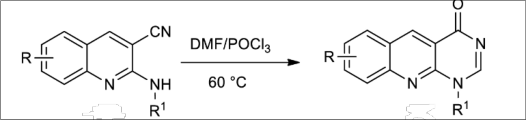 Figure 8
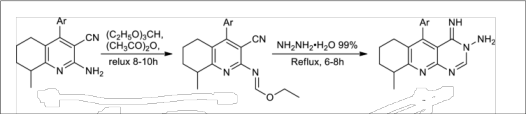 Figure 9
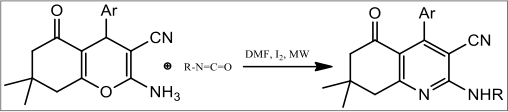 Fig. 4
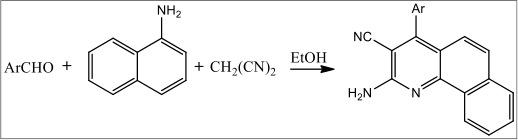 Fig. 5
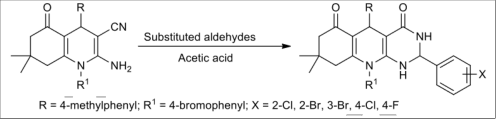 Fig. 11
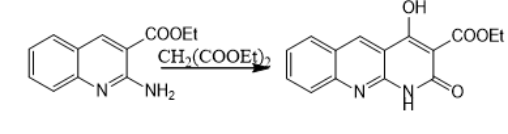 Figure 6
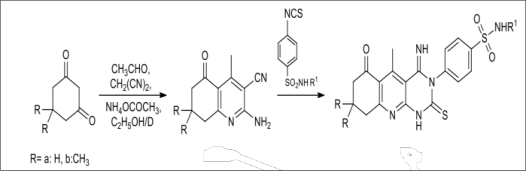 Fig. 12
 Table 1
 Table 2
 Table 3
 Table 4
Introduction
Hetero-cycles compound, have one odd ring atom other than carbon, like nitrogen, oxygen or sulfur. In various natural product the nitrogen containing hetero-cycles are an core part, such as vitamins, drugs, alkaloids, dyes etc. The nitrogen containing hetero cyclic compound exhibit various biological activities such as antibacterial, anticancer, and antimicrobial properties. Thus they are extensively consider in chemical and pharmaceutical fields for molecular design [1-5, 7, 9, 20, 27, 40, 56] . In this paper the synthesis of triamterene derivative which is a heterocyclic nitrogen compounds from 2-aminoquinoline as an precursor has been discussed. Quinoline derivatives have been shown various kind of biological activities such as antimalarial, antitumor, antibacterial, anthelmintic, antiplatelet and antiasthmatic [10,23,27] . Amongst various aminoquinoline derivatives Ortho-aminoquinoline derivatives are very significant because as they possess strong biological activity and are significant intermediates for the synthesis of new heterocyclic compounds [6,8,23,31,48] . As reported Cheng [8] 2-aminoquinoline derivatives as a potential inhibitors of protein cleaving enzyme 1 (BACE1), which involved in Alzheimer's disease. Reporting result confirms the utility of ortho-aminoquinoline as a valuable precurssor for developing new drugs [8,40] . Related studies show that nitrogen-containing compound can be modified and improve synthetic value and biological activity [2,5,7,11,13,15,37,39,49,51,55] . Beside structural diversity, substitution pattern and basicity of nitrogen heterocycles as well as C2 amination and metalcomplex studies show the synthetic and material relevance of aminopyridine-type systems [18,24,41,45,52,54,56] which further support their importance in medicinal and synthetic chemistry, justifies the present design a new quinoline-fused triamterene derivative using a simple and cost-effective synthetic route [3,4,20,29] .
Review of Literature
Several methods for synthesizing aminoquinoline derivatives have been reported using 2chloroquinoline-3-carbonitrile, as shown in Fig. 1 [31] . Ali Khalafi-Nezhad [36] reported a multi-component reaction for the formation of aminoquinoline derivatives (Fig. 2). As reported in the patent by Helmut Hagen. [31,47] amination of chloro-cyanoquinoline (Fig. 3), Jiang et al. [28] described amination followed by intramolecular nitrogen insertion under high-temperature (Fig. 4) Ralkyl group. Shujiang Tu [46] reporetd a synthesis with aminonaphthyridine (Fig. 5). Several nitrogen-based heterocycles have synthesized from 2-aminoquinoline as precursors. For example, benzo[b] [1,8] naphthyridine derivatives synthesis (Fig. 6) [6] . Further, the synthesis of pyrimidoquinoline derivatives from intermolecular cyclization using DMF-DMA reported (Fig. 7) [22] . Pyrimido [4,5] quinolines can also be formed under Vilsmeier-Haack reaction conditions (Fig. 8) [48] . The synthesis of pyrimido [4,5] quinolin-4(1H)-ones in the presence of an acid catalyst has also been reported (Fig. 9) (Dow, 1995). [48] Another research report disclose synthesis of pyrimido [4,5] quinoline-2(1H)-one/thione derivatives using thiourea or urea (Fig. 10) [14] . Recently, the synthesis reported from 2-amino-dimethyl-5oxo-hexahydroquinoline-3-carbonitrile and acetic acid (Fig. 11) [22] .
Fig. 11: Synthesis of pyrimido [4,5] quinolone Further using DMF, sulfonamide isothiocyanates, and 2aminoquinoline-3-carbonitrile as the starting precursor through intermolecular cyclization synthesis has also been reported (Fig. 12) [22, 12, 16, 17, 19, 21, 25, 26, 30, 34, 38, 42-44, 50, 57, 58, 17, 19, 25, 26, 42-44] . The Aminoquinolines are very important compounds that have biological activities and are members of the Quinoline class of Heterocyclic which has been well studied in recent decades. They exist in several isomeric forms such as 2aminoquinoline, 2, 4-aminoquinoline and 4-aminoquinoline.
They have multiple pharmacological properties that have generated interest in their use as synthetic precursors and medicine scaffolds [8,10,23,27,40] . The present work is directed towards the synthesis of pyrimidine derivatives with the aim of devising an efficient synthetic procedure and studying their spectral properties using cost effective and readily available reagents [6,22,31,36,47,48] . It is also evaluated the role of basicity and steric hindrance with respect to the formation of isomeric product [18,41] . Aniline was used as a starting material to prepare the orthoaminoquinoline precursor under standard conditions for Vilsmeier-Haack reactions. The following reactions are represented in a schematic way: intramolecular cyclization and functional group transformation of the precursor [31,36,48] . The major steps involved in this transformation are outlined in Scheme 1.
Scheme 1: Formation of the precursor.
Triamterene is a nitrogen containing heterocyclic medication with diuretic properties which spares potassium. It is diuretic, euresis and antipotassium diuretic due to its effect on the distal renal tubule [53] . Triamterene is clinically effective as a treatment for hypertension and edema caused by heart failure, renal failure, and other diseases. It has the property of retaining potassium, which is good for patients who are losing potassium through diuretics [53] .
Scheme 2: Formation of the final derivative.
Scheme 2. Synthesis of a triamterene derivative from an 2-aminoquinoline-3-carbonitrile precursor.
Molecular formula: C 19 H 10 N 5 O.
General Procedure for the Synthesis of the Triamterene Derivative
The precursor molecule ortho-aminoquinoline were used to synthesize the triamterene 3-phenyl-1, 2, 4-triazino [5,6] quinolin-4(3H)-3 derivative. Alkylamine, in EtOH and were used for treatment of the precursor. This reaction led to formation of the triamterene derivative by an intramolecular cyclization of the intermediate formed. The reaction was followed using thin-layer chromatography (TLC) with silica gel as a stationary phase and an ethyl acetate/petroleum ether mixture as the mobile phase. Melting points were measured by a digital melting point apparatus. Silica gel thin layer (0.25 mm, 60G F254) plates were used for the TLC. Synthetic compound was characterized by spectroscopic techniques.
Step 1: Formation of the intermediate: A solution of 2aminoquinoline-3-carbonitrile (1 mmol) was prepared in ethanol (2 mL) containing ethanol (15%). A catalytic amount of K2CO₃ were then added. The reaction mixture was refluxed for 2-3 h and the completion of the reaction was followed by TLC. Once the mixture was completed it was taken out and allowed to Pour in ice-cold water at room temperature. Reaction mixture was casted into ice cold water and yellow green precipitation was obtained. The precipitate was filtered, washed with ethanol and dried for overnight.
Step 2: Cyclization with C6H11ClN2O4: The imine intermediate (1 mmol) was dissolved in ethanol (5 mL). Substituted Diethyl 1-chlorohydrazine-1, 2-dicarboxylate in EtOH (1 mmol) and a small amount of 1, 3 binucleophile (1 mmol) were added to the alcoholic solution. The triamterene derivative was prepared by refluxing the mixture at 80-90 °C for 2 h. The reaction product was then worked up with ice-cold water. The solid material was filtered, washed, dried overnight and recrystallized from ethanol to give the pure compound. values should be repeated to check for consistency. This method is performed with inexpensive reagents and has a good functional group tolerance. This makes it possible that it can find application in scale-up and subsequent heterocycle variation [32-35].
Conclusion
In the current study, a fused triamterene derivative was synthesized in a simple and efficient manner, with an economical and scalable route, was reported. Synthetic compound has good yield and characterized with standard spectroscopic method. An alternative to classical synthetic approaches of related N-containing heterocyclic systems is provided by the work. Nitrogen heterocycles continue to play a significant role in organic and medicinal chemistry as many biologically active compounds feature nitrogen as an important heteroatom. Their structures provide wide opportunities for chemical modification, and their structure can aid in optimizing physicochemical and pharmacokinetic properties. The study suggests that the efficient design and synthesis of N-based compounds is possible with future applications in medicines and synthesis [3,4,20] .
Acknowledgement
AcknowledgementThe authors thank the Department of Chemistry, IIT Roorkee, for analytical support. S. U. acknowledges Swami Vivekanand Subharti University for technical assistance.
Figures and tables from the paper
| Sr. No. Exp. | Solvent (0.3 M unless noted) | Base (equiv) | C6H11ClN2O4 (equiv) | Temp. (°C) | Time | Method |
|---|---|---|---|---|---|---|
| 1 | EtOH | K₂CO₃ (0.5) | 1.0 | 80 | 2h | Oil Bath |
| 2 | MeOH | K₂CO₃ (0.5) | 1.0 | 80 | 2.5h | Oil Bath |
| 3 | DMF | K₂CO₃ (0.5) | 1.0 | 90 | 3h | Oil Bath |
| 4 | DMSO | K₂CO₃ (0.5) | 1.0 | 90 | 5h | Oil Bath |
| 5 | EtOH/Water (5:1) | K₂CO₃ (0.5) | 1.0 | 90 | - | Oil Bath |
| 6 | CH3CN | K₂CO₃ (0.5) | 1.0 | 109 | 6h | Oil bath |
| 7 | PhCH3 | K₂CO₃ (0.5) | 1.0 | 150+ | - | Oil Bath |
Table text extracted from the original PDF; superscript letters are shown inline. The original table image is below.
View original table image
| Sr. No. Exp. | Solvent (0.3 M unless noted) | Base (equiv) | C6H11ClN2O4 (equiv) | Temp. (°C) | Time | Method |
|---|---|---|---|---|---|---|
| 1 | EtOH | K₂CO₃ (0.5) | 1.0 | 80 | 2h | Oil Bath |
| 2 | EtOH | Na₂CO₃(0.5) | 1.0 | 90 | 2h | Oil Bath |
| 3 | EtOH | NaOH(0.5) | 1.0 | 100 | 6h | Oil Bath |
| 4 | EtOH | KOH (0.5) | 1.0 | 100 | 6h | Oil Bath |
| 5 | EtOH | NaI (0.5) | 1.0 | 90 | 5 h | Oil Bath |
| 6 | EtOH | KI (0.5) | 1.0 | 130 | 5 h | Oil bath |
Table text extracted from the original PDF; superscript letters are shown inline. The original table image is below.
View original table image
| Sr. No. Exp. | Solvent (0.2 M unless noted) | Base (equiv) | C6H11ClN2O4 (equiv) | Temp. (°C) | Method |
|---|---|---|---|---|---|
| 1 | EtOH | K₂CO₃ (0.5) | 0.5 | 80 | Oil Bath |
| 2 | EtOH | K₂CO₃ (0.5) | 1.0 | 80 | Oil Bath |
| 3 | EtOH | K₂CO₃ (0.5) | 2.5 | 80 | Oil Bath |
| 4 | EtOH | K₂CO₃ (0.5) | 3 | 80 | Oil Bath |
Table text extracted from the original PDF; superscript letters are shown inline. The original table image is below.
View original table image
| Sr. No. Exp. | Solvent (0.3 M unless noted) | 1, 3 binucleophile (equiv) | C6H11ClN2O4 (equiv) | Temp. (°C) | Time | Method |
|---|---|---|---|---|---|---|
| 1 | EtOH | Guanidine.HCl (1) | 1.0 | 80 | 2h | Oil Bath |
| 2 | EtOH | Urea (1) | 1.0 | 80 | - | Oil Bath |
| 3 | EtOH | Thiourea (1) | 1.0 | 90 | - | Oil Bath |
| 4 | EtOH | Azide (1) | 1.0 | 90 | - | Oil Bath |
| 5 | EtOH | Diazoalkane (1) | 1.0 | 90 | - | Oil Bath |
Table text extracted from the original PDF; superscript letters are shown inline. The original table image is below.
View original table image
References
58 in the original paper- Ahmed D, Awad SM. Synthesis, molecular modelling and biological evaluation of novel pyrimidine derivatives as anti-inflammatory agents. Journal of Pharmaceutical Research International. 2020;15:49-67.
- Alsughayer A, Elassar A, Mustafa Z. Synthesis, structure analysis and antibacterial activity of new potent sulfonamide derivatives. Journal of Biomaterials and Nanobiotechnology. 2011;2(2):143-149.
- Altaf A, Shahzad A, Gul A, Rasool Z, Badshah N. A review on the medicinal importance of pyridine derivatives. Journal of Drug Design and Medicinal Chemistry. 2015;1(1):1-11.
- Babaee S, Zolfigol MA. 1,10-Phenanthroline-based molten salt as a bifunctional sulfonic acid catalyst: application to the synthesis of N-heterocycle compounds via anomeric based oxidation. ChemistrySelect. 2018;3:8947-8954.
- Castillo R, Cordoba R. Pyridinium Nheteroarylaminides: synthesis of Nheteroarylpolyamines. Tetrahedron. 2009;65(47):97829790.
- Chandra A, Upadhyay S, Singh B, Sharma N, Singh RM. Base-catalyzed cyclization reaction of 2chloroquinoline-3-carbonitriles and guanidine hydrochloride: a rapid synthesis of 2-amino-3Hpyrimido[4,5-b]quinolin-4-ones. Tetrahedron. 2011;67(47):9219-9224.
- Chavan P, Deodhar M. Synthesis and analgesic activity of new pyridine-based heterocyclic derivatives. Medicinal Chemistry Research. 2012;21(1):27-37.
- Cheng Y. From fragment screening to in vivo efficacy: optimization of a series of 2-aminoquinolines as potent inhibitors of beta-site amyloid precursor protein cleaving enzyme 1 (BACE1). Journal of Medicinal Chemistry. 2011;54:5836.
- Cui Z, Chen S, Wang Y, Gao C, Chen Y, Jiang Y. Design, synthesis and evaluation of azaacridine derivatives as dual-target EGFR and Src kinase inhibitors for antitumor treatment. European Journal of Medicinal Chemistry. 2017;136:372-381.
- Daoud R. The multidrug resistance protein is photoaffinity labeled by a quinoline-based drug at multiple sites. Biochemistry. 2000;39:6094.
- Dojer B, Pevec Belaj A. Two new zinc(II) acetate with 3-and 4-aminopyridine: syntheses and structural properties. Acta Chimica Slovenica. 2015;62(2):312318.
- Shi DQ, Niu LH, Yao H, Jiang H. An efficient synthesis of pyrimido[4,5-b]quinoline derivatives via three-component reaction in aqueous media. Journal of Heterocyclic Chemistry. 2009;46(2):237-242.
- Dueke-Eze CU, Fasina TM. Synthesis, characterization and solvent effects on the electronic absorption spectra of aminopyridine Schiff bases. Asian Journal of Chemistry. 2013;25:8505-8508.
- Eswaraiah MC. Synthesis, spectral and molecular characterization of some novel 2,5-disubtituted-1,3,4oxadiazole derivatives and evaluation of in vivo antitumor activity. International Journal of Pharmaceutical Sciences and Research. 2017;8:570.
- Falih MS, Jinzeel NA, Abood NK. Synthesis and characterization of new 2-amino pyridine derivatives. Iraqi National Journal of Chemistry. 2013;52:453-465.
- Fathy U, Gouhar RS, Younis A, El-Ghonemy DH. Synthesis of novel pyrimido[4,5-b]quinoline-4-one derivatives and assessment as antimicrobial and antioxidant agents. Pharmacognosy Journal. 2020;13(2):550-562.
- Foroughi Kaldareh M, Mokhtary M, Nikpassand M. Nicotinic acid-supported cobalt ferrite-catalyzed onepot synthesis of substituted chromeno[3,4-b]quinolines. Applied Organometallic Chemistry. 2020;34(4):5469.
- Gal ED, Maria JF. Enhanced basicity of push-pull nitrogen bases in the gas phase. Chemical Reviews. 2016;116(22):13454-13511.
- Gholami A, Mokhtary M. Choline chloride/oxalic acid (ChCl/Oxa) catalyzed one-pot synthesis of novel azo and sulfonated pyrimido[4,5-b]quinoline derivatives. Dyes and Pigments. 2020;180:108453.
- Gupta D, Pathak D, Kapoor P. A comprehensive review on synthesis and biological activity of Schiff bases. International Research Journal of Pharmacy. 2019;10(5).
- Wu H. Efficient one-pot synthesis of spirooxindole derivatives catalyzed by L-proline in aqueous medium. Journal of Combinatorial Chemistry. 2010;12:3.
- Ibrahim M, Hanan H, Kadry. Review: synthesis and anticancer activity of pyrimido[4,5-b]quinolines in the last twenty years. Chemical Papers. 2024;78:27292755.
- Inglis SR. Tandem Cu-catalyzed ketenimine formation and intramolecular nucleophile capture: synthesis of 1,2-dihydro-2-iminoquinolines from 1-(oacetamidophenyl)propargyl alcohols. Journal of Medicinal Chemistry. 2004;47:5405.
- Kaga JH, Chiba S. Revisiting the Chichibabin reaction: C2 amination of pyridines with a NaH-iodide composite. Asian Journal of Organic Chemistry. 2019;8:1058-1060.
- Jalili F, Zarei M, Zolfigol MA, Khazaei A. Application of novel metal-organic framework [Zr-UiO-66-PDCInternational Journal of Advanced Chemistry Research https://www.chemistryjournals.net SO3H]FeCl4 in the synthesis of dihydrobenzo[g]pyrimido[4,5-b]quinoline derivatives. RSC Advances. 2022;12(15):9058-9068.
- pyrimidines via anomeric based oxidation. Microporous and Mesoporous Materials. 2020;294:109865.
- Jayashree BS, Thomas S, Nayak Y. Design and synthesis of 2-quinolones as antioxidants and antimicrobials: a rational approach. Medicinal Chemistry Research. 2010;19(2):193-209.
- Jiang B. Comprising the amination along with intramolecular nitrogen insertion. Journal of Combinatorial Chemistry. 2010;12(4):482-487.
- John SE, Gulati S, Shankaraiah N. Recent advances in multi-component reactions and their mechanistic insights: a triennium review. Organic Chemistry Frontiers. 2021;8:4237-4287.
- Kalhor S, Zarei M, Sepehrmansourie H. Novel uric acid-based nano organocatalyst with phosphorous acid tags: application for synthesis of new biologicallyinterest pyridines with indole moieties via a cooperative vinylogous anomeric based oxidation. Molecular Catalysis. 2021;507:111549.
- Kamal M, El-Gaml. Synthesis and antimicrobial evaluation of new polyfunctionally substituted heterocyclic compounds derived from 2-cyano-N-(3cyanoquinolin-2-yl)acetamide. American Journal of Organic Chemistry. 2015;5(1):1-9.
- Lakrout S, Amir H. A simple and eco-sustainable method for the sulfonylation of amines under microwave-assisted solvent-free conditions. RSC Advances. 2014;4(31):16027-16032.
- Mei L, Ming TH. Synthesis and crystal structure of mononuclear bis(2-aminopyridine) zinc complex. Asian Journal of Chemistry. 2008;20(8):6589-6593.
- Moradi S, Zolfigol MA. An efficient catalytic method for the synthesis of pyrido[2,3-d]pyrimidines as biologically drug candidates by using novel magnetic nanoparticles as a reusable catalyst. Applied Organometallic Chemistry. 2018;32:4043-4061.
- Nandi J, Sankar VK. Synthesis and docking studies of Schiff bases derived from 4-aminopyridine. Journal of Pharmaceutical and Scientific Innovation. 2012;1(5):911.
- Nezhad AK. ChemInform abstract: L-proline-promoted three-component reaction of anilines, aldehydes and barbituric acids/malononitrile: regioselective synthesis of 5-arylpyrimido[4,5-b]quinoline-diones and 2-amino4-arylquinoline-3-carbonitriles in water. Green Chemistry. 2012;14(10):2876-2884.
- Qassem JK, Mahmoud DZ. Synthesis, characterization and antibacterial activity of some aminoacid derivatives. International Journal of ChemTech Research. 2017;10(3):604-612.
- Rasooll MM, Zarei M, Zolfigol MA. Novel nanoarchitectured carbon quantum dots with phosphorous acid tags as an efficient catalyst for the synthesis of multisubstituted 4H-pyran with indole moieties under mild conditions. RSC Advances. 2021;11:2599526007.
- Rehman R, Abdul H, Qadir M. One pot synthesis of some novel sulfonamide derivatives containing-NH2 group: spectral characterization and biological evaluation. Medicinal Chemistry. 2017;7:252-256.
- Samadi A, Marco-Contelles J, Soriano Álvarez-Pérez E. Multipotent drugs with cholinergic and neuroprotective properties for the treatment of Alzheimer and neuronal vascular diseases. I. Synthesis, biological assessment, and molecular modeling of simple and readily available 2-aminopyridineand 2-chloropyridine-3,5dicarbonitriles. Bioorganic and Medicinal Chemistry. 2010;18(16):5861-5872.
- Sánchez-Viesca F, Gómez R. Electric hindrance and dipole moments in 2-aminopyridine nitration. American Journal of Chemistry. 2015;5(1):19-22.
- Sepehrmansouri H, Zarei M. Multilinker phosphorous acid anchored En/MIL-100(Cr) as a novel nanoporous catalyst for the synthesis of new N-heterocyclic pyrimido[4,5-b]quinolines. Molecular Catalysis. 2020;481:110303-110320.
- Sepehrmansourie H. Silica sulfuric acid (SSA): as a multipurpose catalyst. Iranian Journal of Catalysis. 2020;10:175-179.
- Sepehrmansourie H, Zarei M, Zolfigol MA. Application of novel nanomagnetic metal-organic frameworks as a catalyst for the synthesis of new pyridines and 1,4dihydropyridines via a cooperative vinylogous anomeric based oxidation. Scientific Reports. 2021;11:1-15.
- Sharma G, Narula AK. Synthesis and optoelectronic properties of three Eu(III)-dipicolinate complexes based on α-picolinic acid, 2-aminopyridine and 2hydroxypyridine as secondary ligands. Journal of Materials Science: Materials in Electronics. 2015;26(2):1009-1017.
- Shujiang T. One-pot synthesis of N-substituted azapodophyllotoxin derivatives under microwave irradiation. Journal of Heterocyclic Chemistry. 2007;44(3):735-738.
- Singh JB, Mishra K, Gupta T, Singh RM. Coppercatalyzed cascade reaction: synthesis of pyrimido[4,5b]quinolinones from 2-chloroquinoline-3-carbonitriles with (aryl)methanamines. New Journal of Chemistry. 2018;42(5):3310-3314.
- Singh RM, Sharma N, Kumar R, Asthana M, Upadhyay S. An alternative synthesis of pyrimido[4,5-b]quinoline4-ones via metal-free amination in water and VilsmeierHaack cyclization. Tetrahedron. 2012;68(50):1031810325.
- Sobola AO, Watkins GM. Synthesis, characterization and biological study of Cu(II) complexes of aminopyridine and (aminomethyl) pyridine Schiff bases. Journal of the Serbian Chemical Society. 2018;83(7-8):809-819.
- Tabibi T, Esmaeili AA. Efficient and green synthesis of novel hexahydro-5H-thiazolo[2',3':2,3]pyrimido[4,5b]quinoline derivatives. Molecular Diversity. 2023;27(1):477-486.
- Tawfiq MT. Identification of new heterocyclic compounds synthesized from 4-aminopyridine and evaluation their antibacterial effect. World Journal of Experimental Bioscience. 2016;4(2):98-107.
- Thomas J, Murray. Synthesis of heterocyclic compounds containing three contiguous hydrogen bonding sites in all possible arrangements. Comprehensive Heterocyclic Chemistry. 1984;2:581627.
- U.S. National Library of Medicine. Triamterene capsule, USP: clinical pharmacology. DailyMed. Accessed May 20, 2026.
- Vamos M, Cosford ND. 2-Aminopyridines via reaction of pyridine N-oxides and activated isocyanides. Journal of Organic Chemistry. 2014;79(5):2274-2280.
- Vidya UG. Synthesis, characterization and biological studies of new Cu(II) complex derived from 9anthraldelyde and 2-aminopyridine. Research Journal of Recent Sciences. 2016;5(7):41-43.
- Vitaku E, Smith DT, Njardarson JT. Analysis of the structural diversity, substitution patterns, and frequency of nitrogen heterocycles among U.S. FDA-approved pharmaceuticals. Journal of Medicinal Chemistry. 2014;57(24):10257-10274.
- Vinoth N, Lalitha A. Catalyst-free three-component synthesis, antibacterial, antifungal, and docking studies of spiroindoline derivatives. Polycyclic Aromatic Compounds. 2022;42(2):517-533.
- Zarei M, Karamian R, Farida SHM. Novel nano-size and crab-like biological-based glycoluril with sulfonic acid tags as a reusable catalyst: its application to the synthesis of new mono-and bis-spiropyrans and their in vitro biological studies. New Journal of Chemistry. 2018;42:14308-1431